
Article

Seasonal and Interannual Variation in Martian Gravity Waves at Different Altitudes from the Mars Climate Sounder

1
National Satellite Meteorological Center (National Center for Space Weather), Beijing 100081, China
2
CAS Key Laboratory of Geospace Environment, University of Science and Technology of China, Hefei 230026, China
3
Key Laboratory of Space Weather, China Meteorological Administration, Beijing 100081, China
4
Innovation Center for FengYun Meteorological Satellite (FYSIC), Beijing 100081, China
5
National Key Laboratory of Deep Space Exploration, School of Earth and Space Sciences, University of Science and Technology of China, Hefei 230026, China
6
Key Laboratory of Planetary Science and Frontier Technology, Institute of Geology and Geophysics, Chinese Academy of Sciences, Beijing 100029, China
*
Author to whom correspondence should be addressed.
Remote Sens. 2026, 18(2), 319; https://doi.org/10.3390/rs18020319 (registering DOI)
Submission received: 3 November 2025 / Revised: 26 December 2025 / Accepted: 13 January 2026 / Published: 17 January 2026

Highlights

What are the main findings?
  • Based on observational data, this study reveals that gravity waves with vertical wavelengths ranging from 9 to 15 km exhibit complex global distributions at altitudes between 10 and 70 km. In addition, these distributions exhibit night–day variations, as well as seasonal and interannual variations.
  • The global distribution and seasonal and interannual variations in gravity waves are associated with topography, polar jets, and large dust storms.
What is the implication of the main finding?
  • The interannual variations in gravity waves imply that, in addition to the known large dust storms, complex interannual variations may also exist in atmospheric activity over the polar jets and complex topography at mid-to-low latitudes on Mars.

Abstract

Gravity waves (GWs) are an important dynamic process in the planetary atmosphere. They are typically excited by convection, topography, or other sources from the lower atmosphere and propagate upwards. The GWs have a significant effect on the global atmospheric circulation on Mars. However, the lack of high-resolution data from previous observations has resulted in an insufficient understanding of GWs in the Martian atmosphere, particularly in terms of its global distribution and long-term evolution characteristics at different altitudes. Based on multiple years of Mars Climate Sounder (MCS) limb observations on board the Mars Reconnaissance Orbiter (MRO), we conducted a detailed study of the global distribution, seasonal and interannual variations in Martian atmospheric GWs with vertical wavelengths ranging from 9 to 15 km at three different altitude ranges, i.e., the low-altitude range of 200–20 Pa (Lp, ~10–30 km), the mid-altitude range of 20–2 Pa (Mp, ~30–50 km), and the high-altitude range of 2–0.2 Pa (Hp, ~50–70 km). The results indicate complex regional and north–south differences, as well as night–day variations, in the spatial distribution of GWs. Particularly, a three-wave structure of the GW activity is observed over mountainous regions in the mid-to-low latitudes of the Northern Hemisphere. The peak longitude range of this structure closely matches the mountainous terrain. In addition, our results reveal the presence of bands of GW aggregations in the mid- to-high latitudes of the Northern Hemisphere in the Mp and Hp layers, which may be caused by the instability of the polar jet. There are also obvious seasonal and interannual variations in GW activities, which are related to topography, polar jets, and large dust storms. The interannual variations in GWs imply that, in addition to the well-known large seasonal dust storms, complex interannual variations in atmospheric activity over the polar jets and in the complex topography at mid-to-low latitudes on Mars may also exist, which deserve further studies in the future.

1. Introduction

Gravity waves (GWs) are oscillations caused by the displacement of an air parcel, which is restored to its initial position by gravity. Most of GWs excited from the lower atmosphere propagate upward and mainly influence the middle and upper atmosphere. GWs play an important role in driving the global atmospheric circulation in the middle and upper atmosphere through their energy and momentum deposition into the mean flow. Also, they can change the thermal and constituent structures in the mesosphere and lower thermosphere. GWs are ubiquitous in the atmospheres of Earth and terrestrial planets, including Mars. GWs on Mars have been previously observed by multiple instruments using various detection methods [1,2,3,4,5,6,7]. Due to the thinner atmosphere, GWs have a greater effect on the background conditions and global atmospheric circulation on Mars. Previous model studies have suggested that the contribution of resolved, small-scale GWs to the total eddy forcing is almost equal to that of planetary waves and tides [8]. In addition, dust storms are extreme weather events and can significantly affect the background atmosphere and its climatological state on Mars [9]. The relationship between dust storms and GWs has been studied in recent years [10,11,12]. Observational and simulation studies suggest that GW energy changes abruptly during dust storms through a variety of mechanisms. For example, dust can modulate the excitation of GWs by affecting the convective and baroclinic stabilization of the atmosphere [11] or a potential deep jet system [13]. Overall, the change in GW energy in different atmospheric layers during dust storms is different.
Previous studies on GWs in the Martian atmosphere are relatively limited due to the constraints of observational resolution. Many studies in this field are case studies or simulations, rather than comprehensive investigations. Although there are several studies examining the global or seasonal distribution of Martian GW activity in the lower atmosphere using Mars Global Surveyor (MGS) radio occultation measurements and the Mars Climate Sounder (MCS) onboard the Mars Reconnaissance Orbiter (MRO), these studies primarily focus on the lower atmosphere [7,10,14]. Also, there are limitations in the abovementioned studies. As is well known, most of GWs can be excited by convection and/or orography or other sources. The correlation of GWs with orography has been well studied on Earth over the past few years. On Mars, GWs in most areas in the lower atmosphere do not correlate well with the orography, except the mountainous Tharsis region, as observed by MGS radio occultation measurements [7]. Note that the coverage of MGS radio occultation data is limited and unevenly distributed due to its measurement strategy, which may lead to biased judgments on the correlation between GWs and topography. In contrast, more recent studies using higher-resolution and evenly distributed MCS data suggested that the distribution of GWs is related to orography and surface roughness in certain seasons [15]. However, the MCS data used in Heavens et al. [14] are nadir and off-nadir observations, which are more sensitive to high-frequency GWs with short horizontal and long vertical wavelengths [10,16]. In addition, Ji et al. [17] studied the climatological GWs from the troposphere to the lower thermosphere (20–180° km) measured by ACS/TGO, but only 1.5 years of data were used, and the ACS/TGO data exhibit uneven and insufficient spatial coverage resulting from solar occultation measurements.
The MCS on board the MRO has obtained profiles of atmospheric temperature, dust, and water ice opacity in the Martian lower and middle atmosphere for more than eight years. MCS limb observations can provide more information for GW studies on Mars. It is more sensitive to lower frequency waves with long horizontal wavelength and short vertical wavelength, which are different from methods based on MCS nadir/off nadir views [10,16]. In addition, it extends the measurement altitude range to higher altitudes up to 80 km. Wu et al. [13] have used these temperature profiles to investigate GWs with the vertical wavelength of 9 to 15 km in the lower and middle atmosphere, but only during major dust storms. In this paper, we further take advantage of the MCS limb observations to comprehensively investigate the global distribution, seasonal and inter-annual variability of GWs, and their response to the potential excitation sources such as topography, atmospheric jets, dust storms, and solar radiation variations. In contrast to previous studies, the period considered in this paper covers 8 full Martian years, including periods with and without dust storms. In addition, GW activity from the lower to the middle atmosphere is examined and compared individually.

2. Materials and Methods

The MCS is one of the instruments onboard the MRO, which has been in operation since September 2006. The profiles of temperature, dust, and water ice distribution within the Martian atmosphere have been observed using nine channels across the visible and infrared spectrum. The MCS is capable of measuring atmospheric properties from the surface up to approximately 80 km in a sun-synchronous polar orbit, covering latitudes from 85°S to 85°N [18]. The orbit passes through local times (LT) of approximately 3:00 and 15:00. It observes the atmosphere in both nadir/off-nadir and limb sounding at regular intervals [19].
According to the temperature profile, the Martian atmosphere is vertically stratified into the following layers: the troposphere (the lower atmosphere) below 50 km; the mesosphere (the middle atmosphere) between 50 and 100 km; and the thermosphere (the upper atmosphere) above 100 km [20]. As the atmospheric activity at different altitudes is to be investigated and compared, the MCS temperature profiles are divided into three altitude ranges in this work. These include the low-pressure range of 200–20 Pa (Lp, which corresponds to an altitude range of ~10–30 km), the mid-altitude pressure range of 20–2 Pa (Mp, ~30–50 km), and the high-altitude pressure range of 2–0.2 Pa (Hp, ~50–70 km). The three altitude ranges (Lp, Mp, and Hp) correspond to the lower troposphere, upper troposphere, and lower mesosphere of the Martian atmosphere, respectively. This makes it convenient to compare GW characteristics in different atmospheric layers. The lower edge is truncated below 200 Pa because MCS retrievals have limited vertical coverage in the case of high opacity, thereby reducing the data quality, especially during the dust storm conditions. The upper truncation of 0.2 Pa is selected for the purpose of excluding MCS data with measurement errors. Measurement errors in MCS temperature increase rapidly above ~0.2 Pa, reaching values of up to ~10 K. These values are comparable to, or greater than, the GW amplitude, which is typically less than 10 K. The influence of measurement error has been discussed in detail in Figure 1 of [13].
Then, the GW intensity is estimated for each temperature profile using the conventional method of dividing the measured MCS temperature profile (T) into the mean background ( T ¯ ) and GW components ( T ): T = T ¯ + T . This procedure has been widely used to obtain GWs in previous studies on Mars and Earth [7,13,21,22]. Previous studies have also proven the good performance of the third-order polynomial fit in extracting GWs within the 10–30 km altitude range using MGS radio occultation temperature profiles [7,13]. Therefore, we use a cubic polynomial fit on each of the three altitude ranges to obtain the background temperature T ¯ in altitude coordinate. During the fitting procedure, the upper and lower boundaries were extended by ~3–5 km for each altitude range due to the poor performance of the fitting polynomials at the ends of the range [21]. Thus, a cubic polynomial fit was finally employed for each profile, typically with a vertical range of ~30 km. The minimum vertical wavelength that can be extracted using the above procedure is ~10 km, which complies with the Nyquist sampling theorem, providing a vertical resolution of ~5 km for the MCS temperature measurements [23]. Furthermore, a high-pass filter was used to remove signals with wavelengths greater than 15 km, which could be aliased by larger waves, such as thermal tides and planetary waves [13]. Consequently, the vertical wavelength spectrum of GWs obtained by the above processing method has a dominant range of approximately 9 to 15 km, as has been demonstrated in [13] (see their Figure 1). Finally, following the methodologies previously established by Creasey et al. [7] and Starichenko et al. [21], we calculated the potential energy per unit mass, Ep:
E p = 1 2 ( g N ) 2 ( T T ¯ ) 2 ¯ ,
where N represents the Brunt–Väisäla frequency and g denotes the gravitational force. Subsequently, the Ep is averaged over the corresponding pressure range for each layer (Hp, Mp, and Lp), which can describe the intensity of GW activity. The Ep values calculated from profiles of each local time and altitude range are further averaged onto a regular grid of 2.5° latitudes and 5° longitudes for the results presentation in this paper. The aforementioned method and its rationale have been used and thoroughly elucidated by Wu et al. [13].

3. Results

3.1. Global Distribution of GW Activity

GWs can be generated by many kinds of sources, including topography, convection, and wind shear in the lower atmosphere. As a result, the characteristics of GWs, such as intensity, wavelength, and frequency spectrum, are typically distinct in different locations, different altitudes, or at varying times. This section presents a comprehensive analysis of the global distribution of GWs at three different altitude ranges. The data have been analyzed separately for daytime and nighttime GWs. Additionally, according to convention, we use solar longitude (Ls) to denote Martian seasons: Ls = 0–90° is Northern Hemisphere spring, Ls = 90–180° is Northern Hemisphere summer, Ls = 180–270° is Northern Hemisphere autumn, and Ls = 270–360° is Northern Hemisphere winter.

3.1.1. Lp-Layer

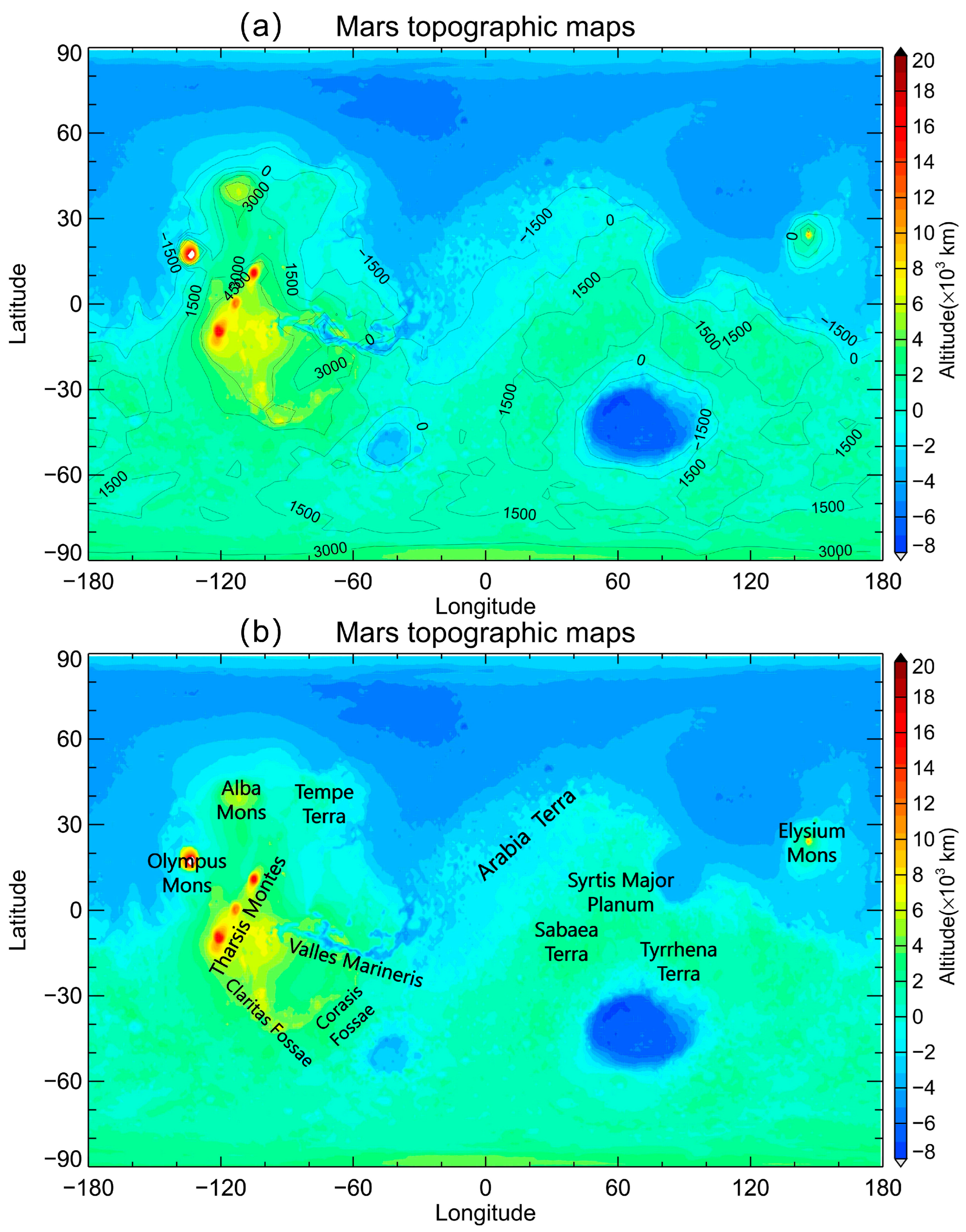
The global distribution of nighttime and daytime GWs at the Lp layer (200–20 Pa, ~10–30 km) is shown in Figure 1. We can see that the Lp-layer GWs are generally correlated with the topography (Figure 2) around Tharsis Montes, Alba Mons, Olympus Mons, Tempe Terra, Valles Marineris, Claritas Fossae, Corasis Fossae, Syrtis Major Planum, Arabia Terra, Sabaea Terra, Tyrrhena Terra, and Elysium Mons, especially during the day. There is a stronger connection between GWs and the topography during the 0–180° Ls period than during the 180–360° Ls period (which includes the dust storm season). This may be because dust storms create more abundant excitation sources of GWs, such as shear instabilities in the enhanced night jets in the equatorial region during large dust storms [10,11,13,14].
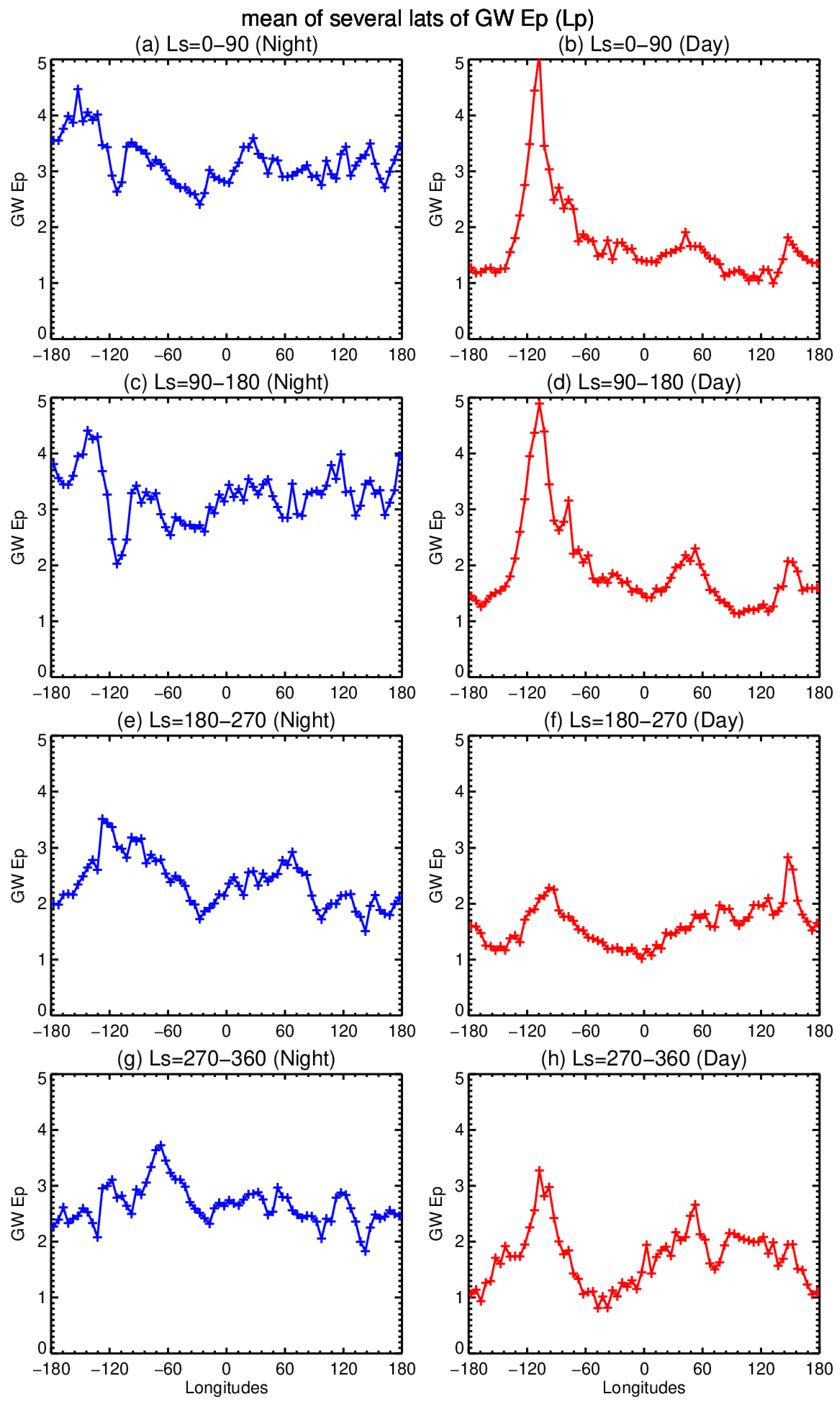
Additionally, the topography of Mars exhibits a pronounced north–south dichotomy, with a three-wave structure formed by the alternating distribution of mountains and plains at mid-to-low latitudes of the Northern Hemisphere [20]. Previous studies have found that this three-wave topographic structure affects the formation and latitudinal distribution of non-migrating thermal tides [24]. Similarly, GW Ep, as shown in Figure 1, exhibits a correlation with the three-wave topographic structure in the mid-to-low latitudes of the Northern Hemisphere. Specifically, GW activity is strongest near mountainous regions, with GW Ep reaching up to 5 J/kg. To illustrate this three-wave structure of GWs more clearly, we select GW Ep within the latitude range where the structure is most prominent and display its variation with longitude in Figure 3. Figure 3 shows that the peaks of the three-wave structure in GWs occur around ~120° W, ~60°E, and ~150°E, which aligns well with the longitudinal ranges of three mountainous regions: Tharsis Montes and Alba Mons; Arabia Terra and Sabaea Terra; and Elysium Mons, respectively (see also Figure 1b,d).
In general, GWs in the Southern Hemisphere are weaker during 180–360° Ls than during 0–180° Ls, especially in mountainous or other complex terrain areas. That may be caused by the GW reduction induced by the enhanced stability within the dust storm, which occurs frequently in the second half of the year [10]. In addition, the behavior of GWs in the two Hemispheres is distinct. Most of the GWs in the Northern Hemisphere are stronger than those in the Southern Hemisphere. This could be attributed to the different topographic characteristics between the two hemispheres: the Northern Hemisphere is dominated by a greater variety of topographical features, including mountains, plains, and valleys, resulting in a higher degree of topographical variation; in contrast, the Southern Hemisphere is characterized by relatively flatter terrain when compared to the Northern Hemisphere.
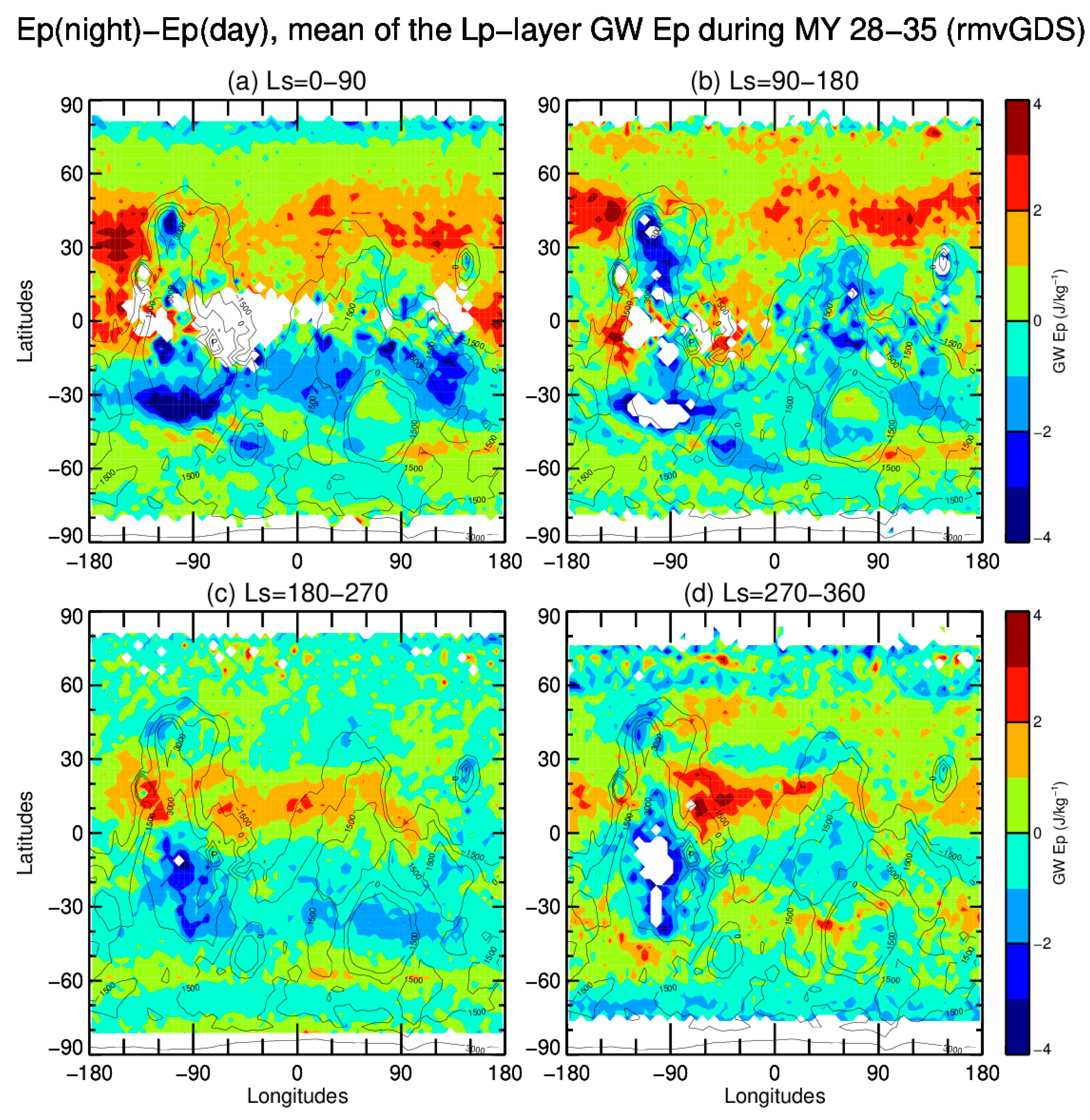
Moreover, Figure 1 also shows that there are night–day variations in GW activity and that it varies with season and latitude. Figure 4 provides a clearer illustration of the differences in GW Ep between night and day. We can see that GWs are generally stronger during the night than during the day in the Northern Hemisphere. Specifically, the night–day difference in the GW Ep can be up to 4 J/kg at latitudes of 20–50°N in the Northern Hemisphere during the 0–180° Ls season and at latitudes of 0–30°N near the equator during the 180–360° Ls season, which may be related to instabilities caused by nocturnal jets [25]. However, GWs in the Southern Hemisphere are generally stronger during the day than during the night throughout the year, which may be related to daytime convection activities [26]. Heavens et al. [14] also found that most GWs are more significant during the day than during the night, except in the equatorial region and areas of complex topography, which is partially consistent with our comparison results. The difference between our results and those of previous studies may be due to several factors, which will be discussed in detail in Section 4.

3.1.2. Mp-Layer

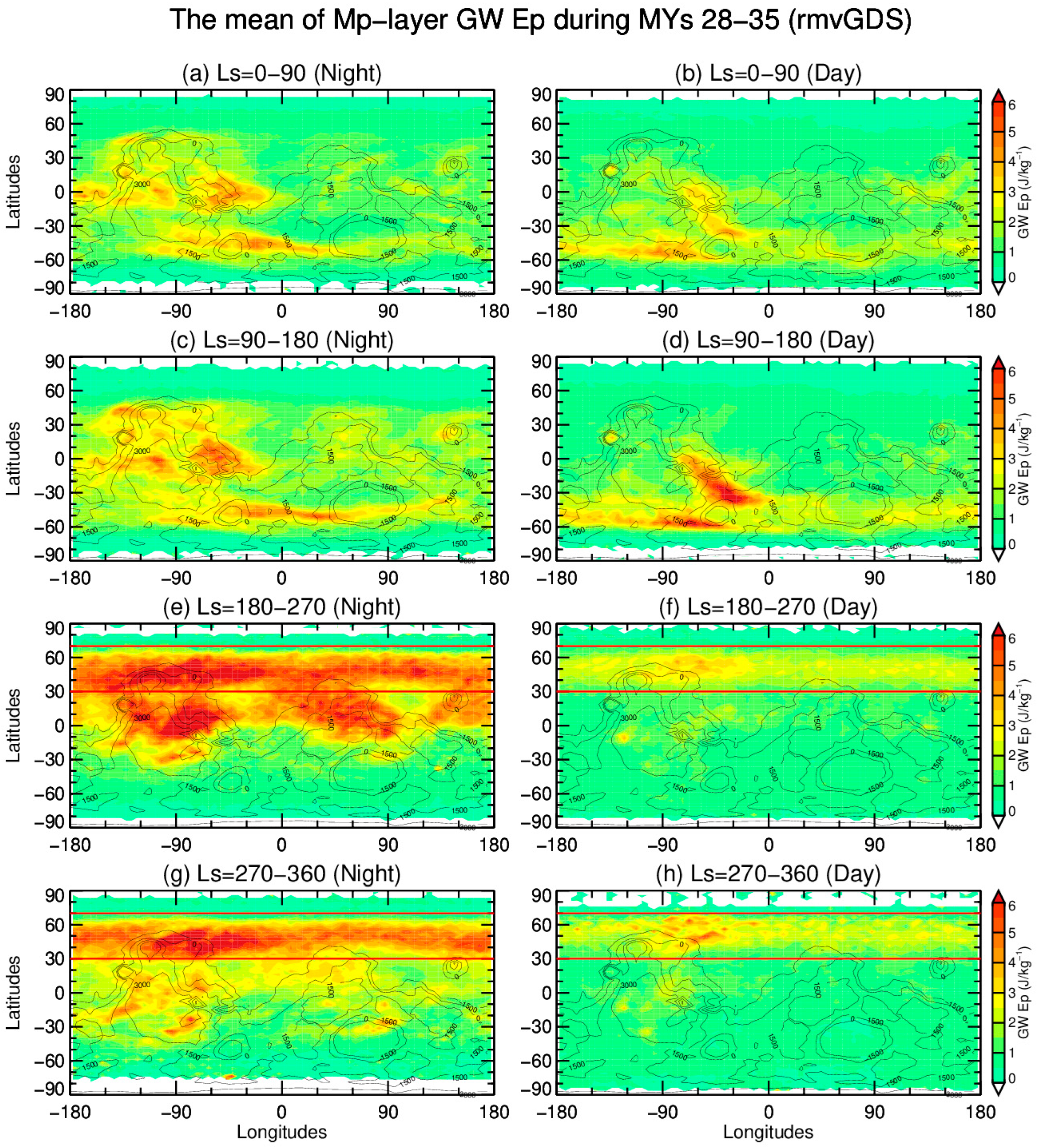
The global distribution of nighttime and daytime GWs at the Mp layer (20–2 Pa, ~30–50 km) is presented in Figure 5. Generally, GW activity is stronger in the Southern Hemisphere than in the Northern Hemisphere during 0–180° Ls, but stronger in the Northern Hemisphere than in the Southern Hemisphere during 180–360° Ls. Previous studies have shown that the enhancement of GWs is most significant at low and middle latitudes or near the equator during large dust storms [13,17]. However, our results show that GWs during 180–360° Ls are also enhanced at middle and high latitudes (between ~30°N and ~60°N) of the Northern Hemisphere.
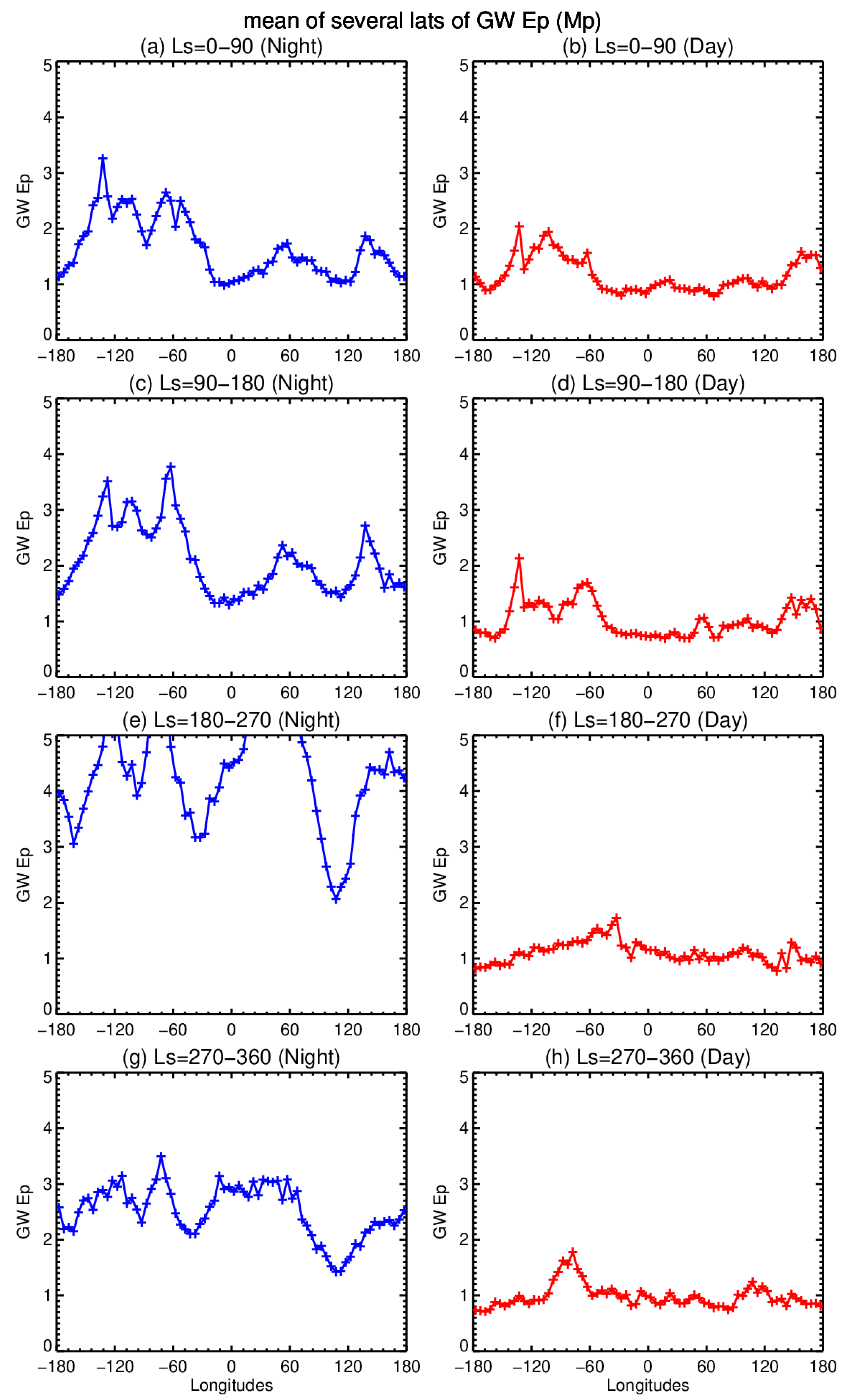
The distribution of Mp-layer GWs mostly correlates with topography, except during the daytime in the second half of the year (Figure 5). At night, the intensity of GW activity is higher (with GW Ep up to 6 J/kg) around mountainous areas, such as Tharsis montes, Olympus Mons, Valles Marineris, Alba Mons, Syrtis Major Planum, Arabia Terra, Sabaea Terra, Tyrrhena Terra, Elysium Mons and other locations with significant topographic variations, as shown in Figure 5a,c,e,g. During the day, the intensity of GW activity is higher (with GW Ep up to 5 J/kg) in the vicinity of Olympus Mons and Valles Marineris, and shows a correlation with topographic features, as shown in Figure 5b,d. The correlation between GWs and topographic features is more evident at night than during the day, during 180–360° Ls. There is also a significant three-wave structure related to topography at night throughout the year, as shown in Figure 6.
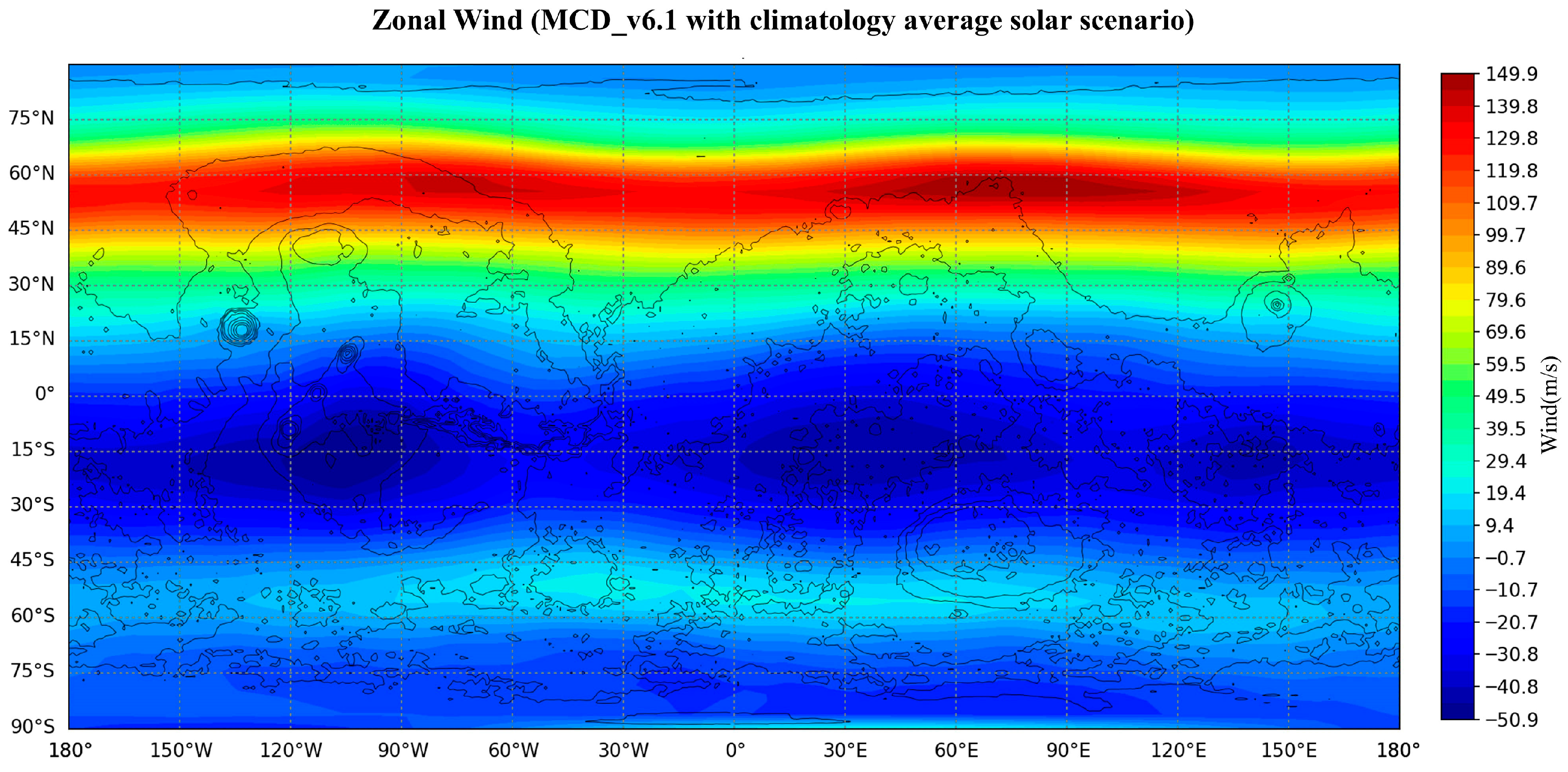
The situation is more complicated in the second half of the year (Figure 5e–h). The intensity distribution of GWs seems to be associated with other excitation sources in addition to topography. Figure 5e–h shows a band of GW concentration located in the latitudes from 30°N to 60°N during 180–360° Ls, which is much more distinct during the night. The latitudinal range (~30°N–60°N) of the banded features (the areas marked by the two red lines in Figure 5e–h) is similar to the locations of the northern polar jet obtained from the Mars Climate Database (MCD version 6.1) (Figure 7). This suggests that the GW activity during the 180–360° Ls period may be related to the polar jet system and the corresponding instabilities. Additionally, it should be noted that in the latitude range of the banded feature, GWs also exhibit significant correlation with terrain such as Alba Mons and Tempe Terra, which is more pronounced at night. This may reflect the modulating effect of polar jet–terrain interactions on the distribution characteristics of GWs. Spontaneous adjustments around regions of polar jet imbalance may be the mechanism for generating these GWs [27].
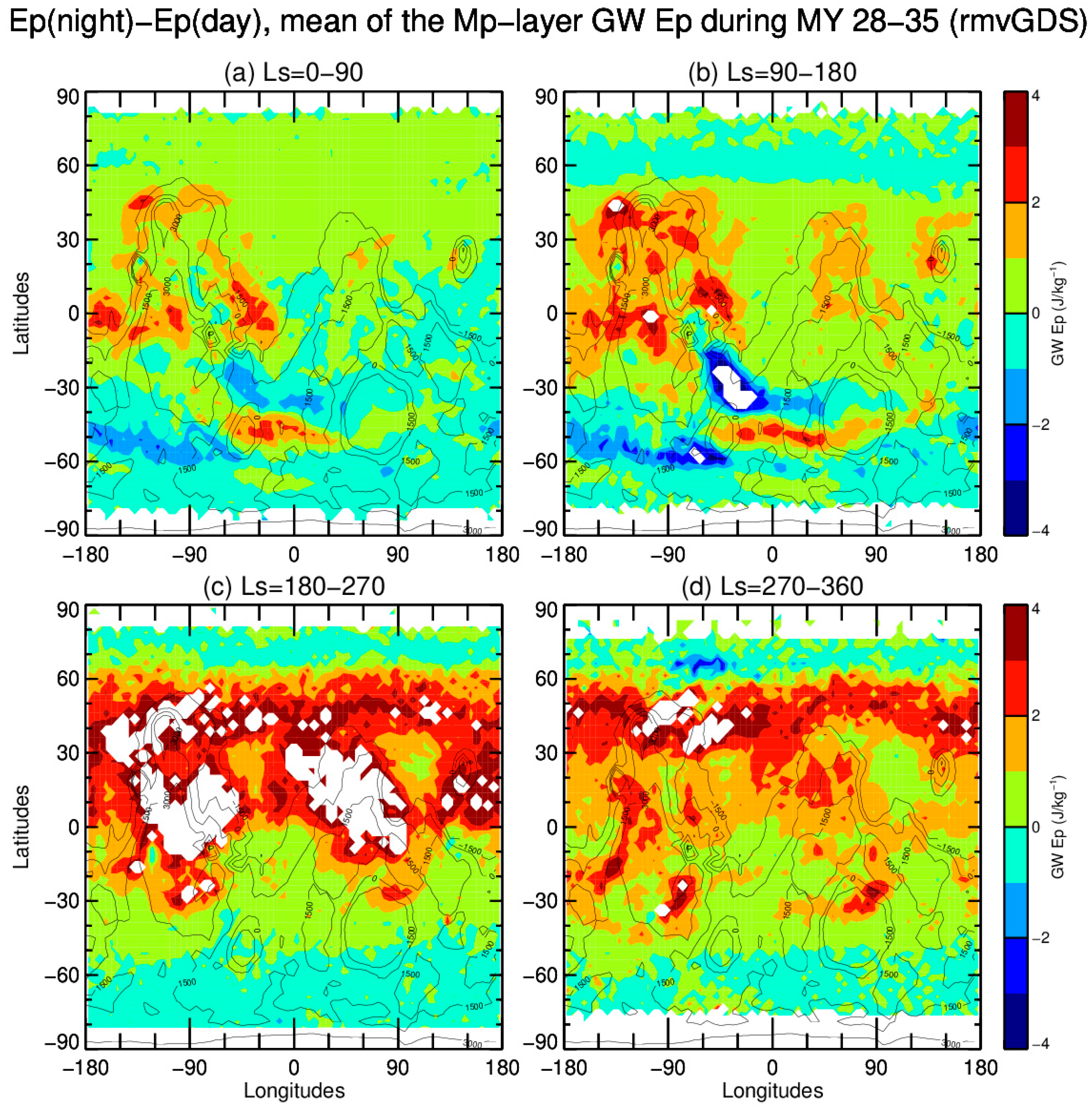
Additionally, the GW activity observed at night is generally stronger than that observed during the day, especially during 180–360° Ls. To provide detailed information on the difference between daytime and nighttime GWs Ep at the Mp layer, we calculated the difference between the two, as shown in Figure 8. Nighttime GW activity is generally stronger by up to 4 J/kg than daytime GW activity in areas north of 30°S, especially in areas with mountain regions (Figure 8).

3.1.3. Hp-Layer

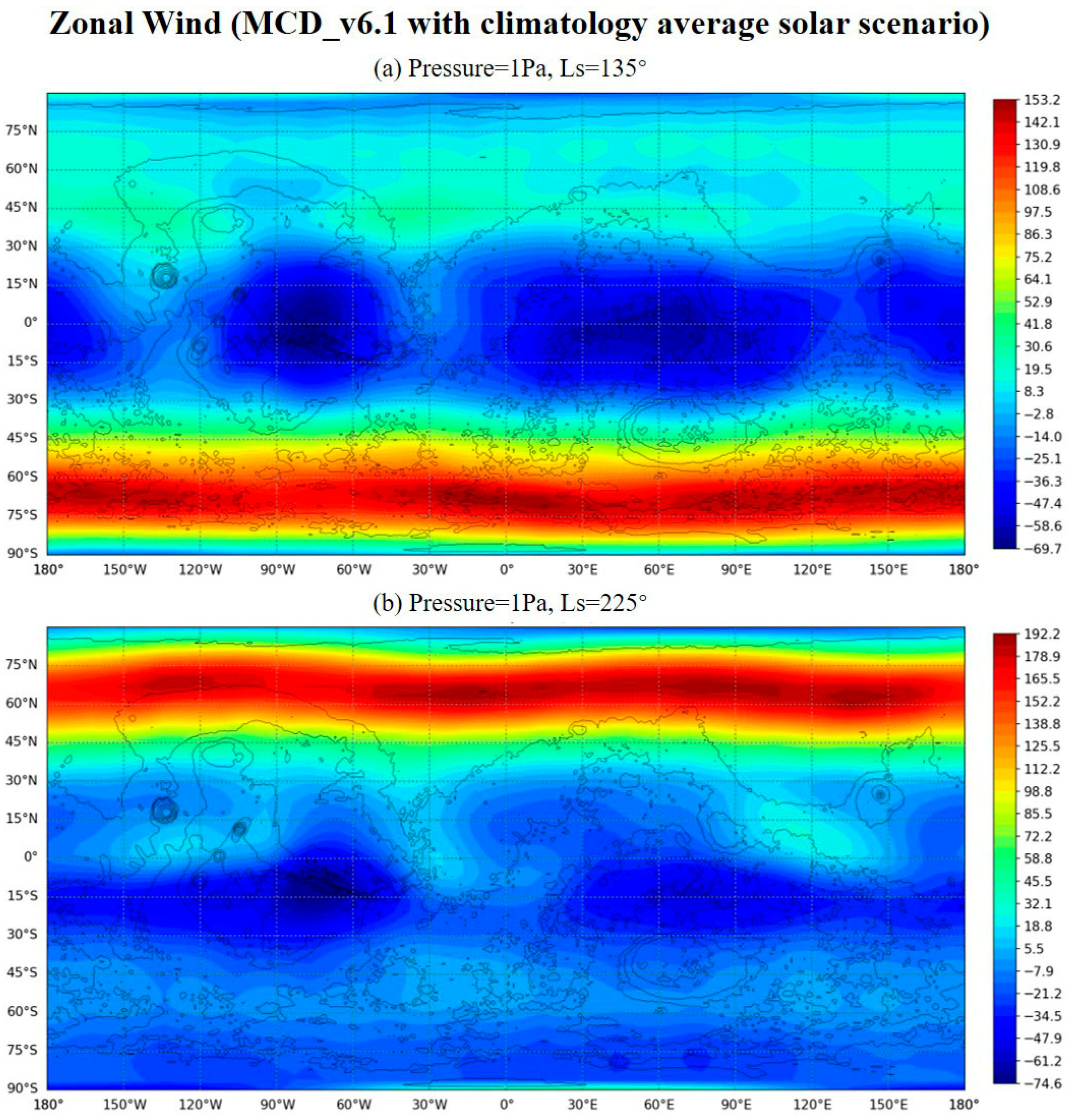
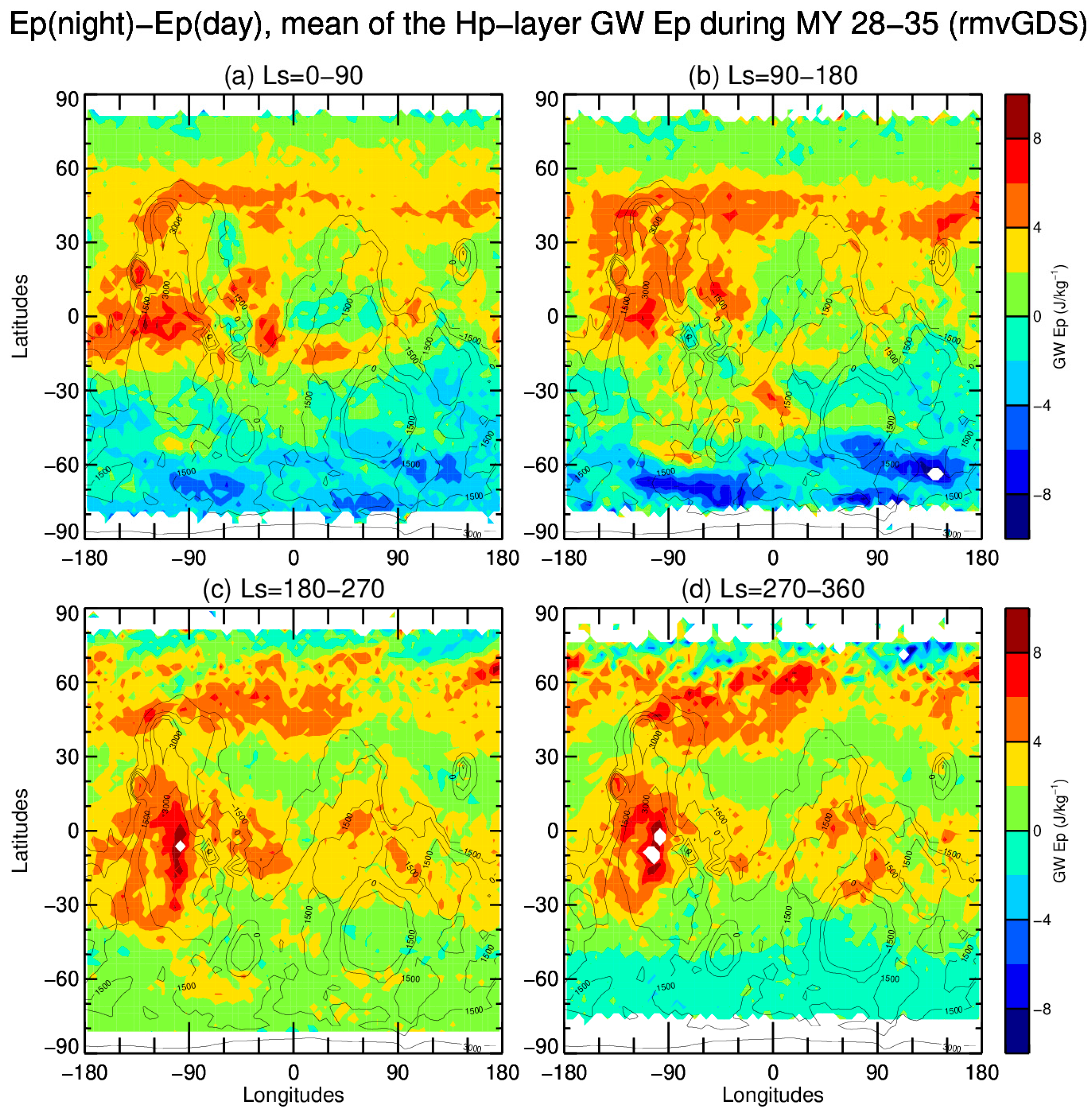
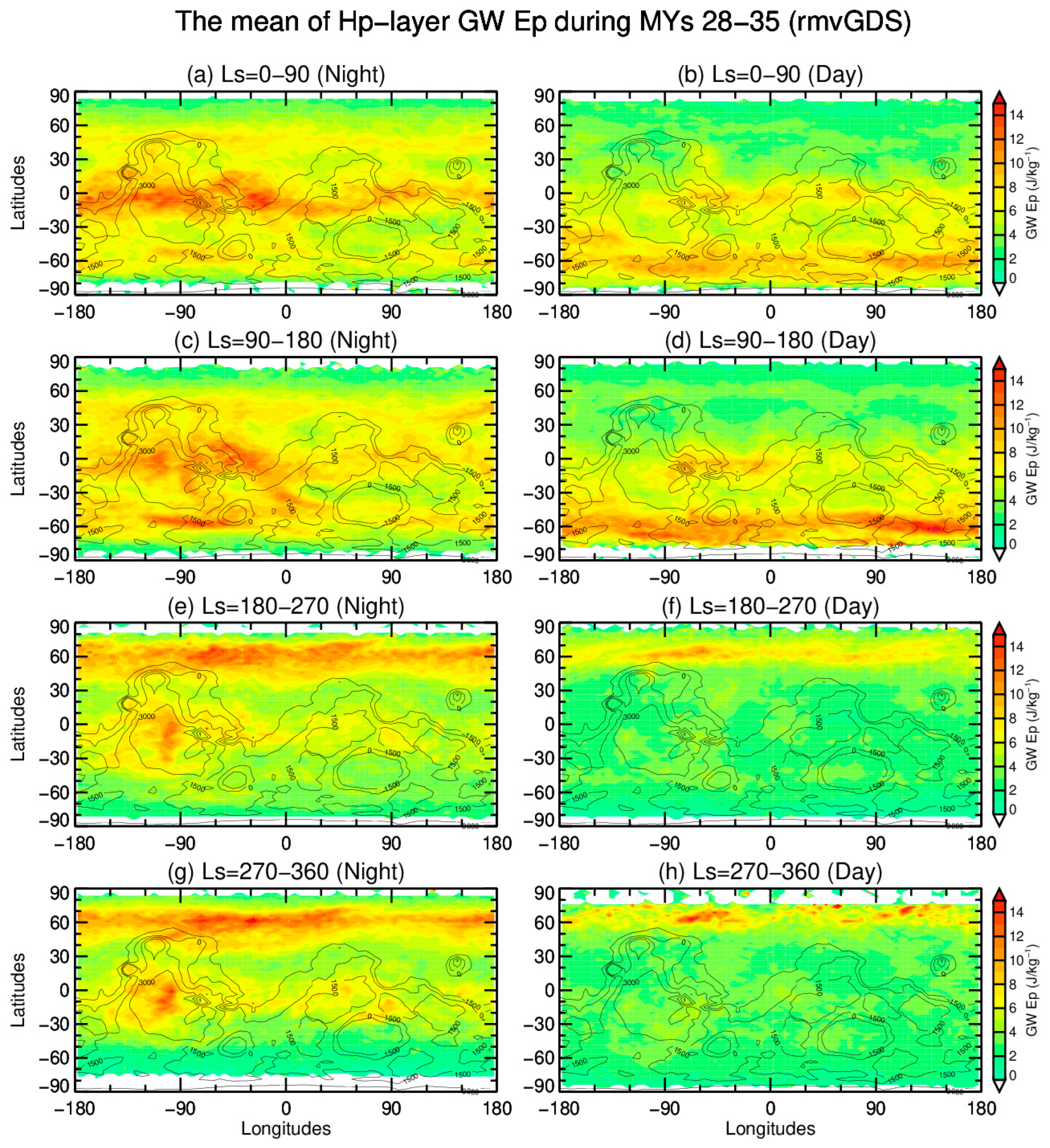
Figure 9 shows the spatial distribution of GWs at the Hp layer (2–0.2 Pa, ∼50–70 km). The global distribution of Hp-layer GWs is similar to that of Mp-layer GWs in most regions, especially the band of GW concentration observed in the Northern Hemisphere at mid-to-high latitudes. However, there are also some notable differences. When propagating upwards, the amplitude of atmospheric waves gradually increases in order to maintain energy conservation, given the exponential decrease in atmospheric density. Consequently, the GW activity is found to be much stronger at the Hp layer than at the Mp layer, by a factor of 2–3. The band of GW activity is evident at mid-to-high latitudes (~40°N–75°N) in the Northern Hemisphere throughout the year, with greater prominence at night than during the day, as shown in Figure 9. The band of Hp-layer GW activity at mid-to-high latitudes (~45°N–75°N) in the Southern Hemisphere is evident in the 0–180° Ls, especially during the day (Figure 9a–d), which is not prominent at the Mp layer. Furthermore, Hp-layer GW activity at the equator is also observed to exhibit banded features at 0–180° Ls, especially during the nighttime (Figure 9a,c), which is not prominent at the Mp layer. The latitudinal range of the banded features in the GWs at mid-to-high latitudes is similar to the locations of the polar jet obtained from the MCD version 6.1, as shown in Figure 10. Overall, most GWs are stronger by up to 8 J/kg at night than during the day in most regions, except at high latitudes of the Southern Hemisphere (Figure 11). A comparison of Figure 8 and Figure 11 reveals that the night–day differences at the Hp layer GW activity are larger than those at the Mp layer by a factor of 2, with a similar distribution pattern.

3.2. Seasonal Variations in GW Activity

Characteristics of GWs can be significantly modified by variations in the GW sources and the background atmosphere on Earth and Mars. This section examines the seasonal variations in GWs. In contrast to the 90° Ls averaged results in Section 3.1, this section presents a more detailed characterization of the seasonal variability at different latitudes and altitudes. To examine the temporal evolution of the Martian atmospheric GWs in the climatology state, we averaged data from all years except those with global dust storms.
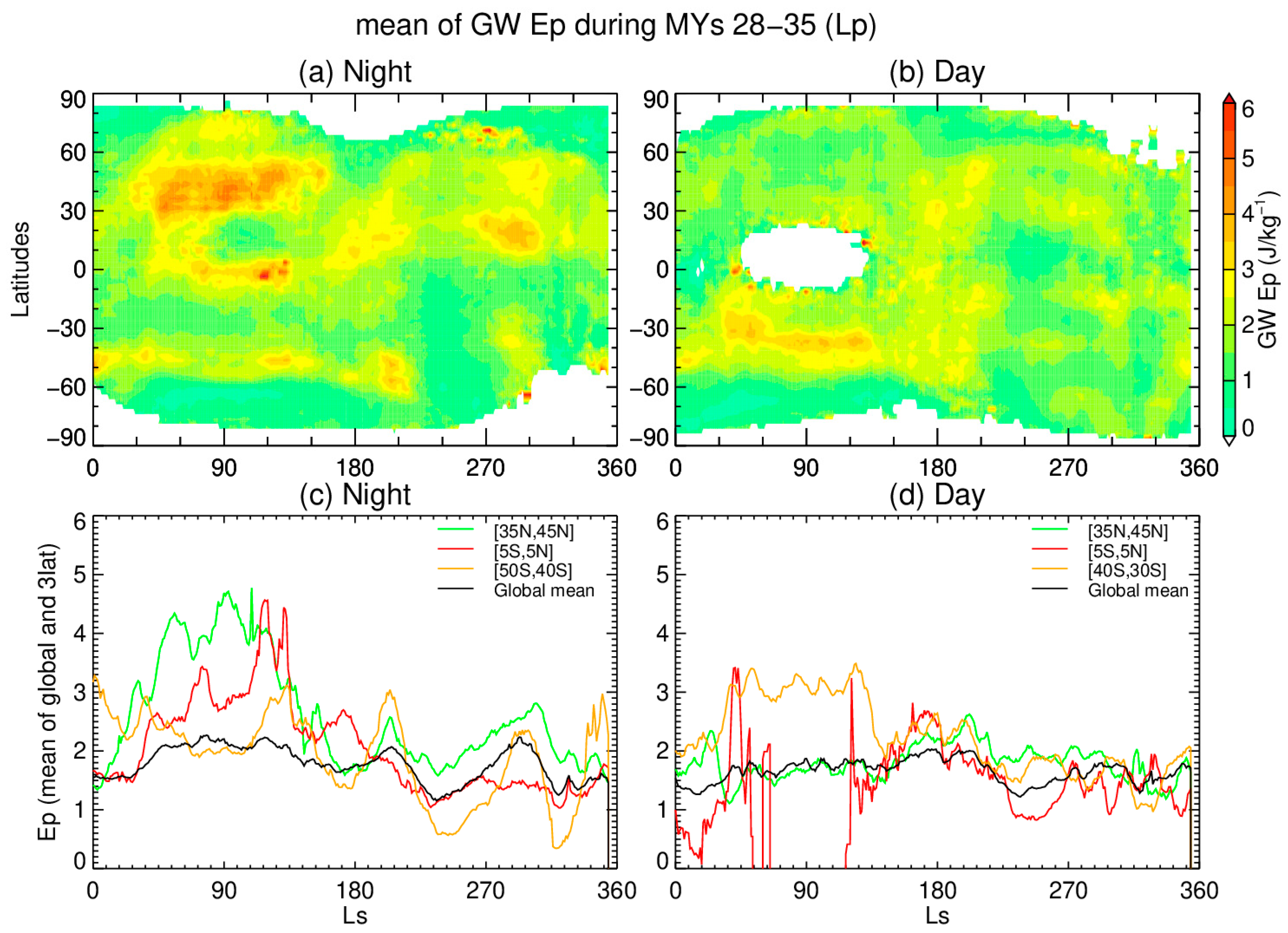
Figure 12 illustrates the seasonal variations in zonal mean GWs at the Lp layer in the lower atmosphere, averaged from MYs 28 to 35, without MYs 28 and 34 global dust storm years. Due to the different background atmosphere and sources between night and day, we show variations in the GW characteristics at night and day, separately. From Figure 12a,b, we can see that three latitudinal bands (30° N–60° N, 10° S–10° N, and 40° S–60° S) of GWs persist throughout the year, albeit with certain intervals. The three bands are also evident in the GW global distribution averaged using a 90° Ls window, as shown in Section 3.1. To further illustrate the temporal evolution of GWs in different latitudes in greater detail, Figure 12c,d present the evolution characteristics of the averaged GWs within three specific latitudinal regions: the Northern Hemisphere mid-to-high latitudes (35° N–45° N), the equator (5° S, 5° N), the Southern Hemisphere mid-to-high latitudes (30° S–40° S), together with the global mean.
During the night, the Lp-layer GWs in the Northern Hemisphere band and equatorial band are two times stronger in the first half of the year than in the second. But there are several weak peaks in the second half of the year at ~210° Ls and ~310° Ls in the Northern Hemisphere, and at 60–130° Ls, 170–180° Ls, and 270–300° Ls in the equatorial band. GWs in the Southern Hemisphere band are slightly stronger in the first half of the year and weaker in the second, with two peaks at ~210° Ls and ~300° Ls. Additionally, the GWs in the Northern Hemisphere and in the equatorial region show a tendency to migrate northward in accordance with seasonal alterations, especially near the fall equinox. Furthermore, the GWs in both the Northern and Southern Hemispheres are weakened during large seasonal dust storms, typically the A and C seasonal storms occurring at 210–250° Ls and 310–330° Ls, just between the GW peaks of the three latitudinal bands in the second half years. This finding of the Lp-layer GW reduction during large dust storms is similar to previous studies [10,11,13].
During the day, GWs are relatively weak. GWs show an obvious seasonal variation in the Southern Hemisphere and a slight seasonal variation in the Northern Hemisphere. The temporal variation in GWs in the equatorial region is not fully characterized due to a lack of data within the 40–140° Ls range. The seasonal variation in the global mean of GWs is slight compared with the three specific latitudinal bands, especially during the daytime.
Overall, most of the Lp-layer GWs are significantly stronger in the first half of the year and weaker in the second, except in the Northern Hemisphere during the day. Both nighttime and daytime Lp-layer GWs are weakened during large dust storms. Numerical simulations have indicated that the observed reduction is attributable to the convective and baroclinic stabilization of the atmosphere, a phenomenon induced by the extensive vertical distribution of dust [13,14]. Seasonal variations in GWs are more significant at night than during the day, except in the Southern Hemisphere.
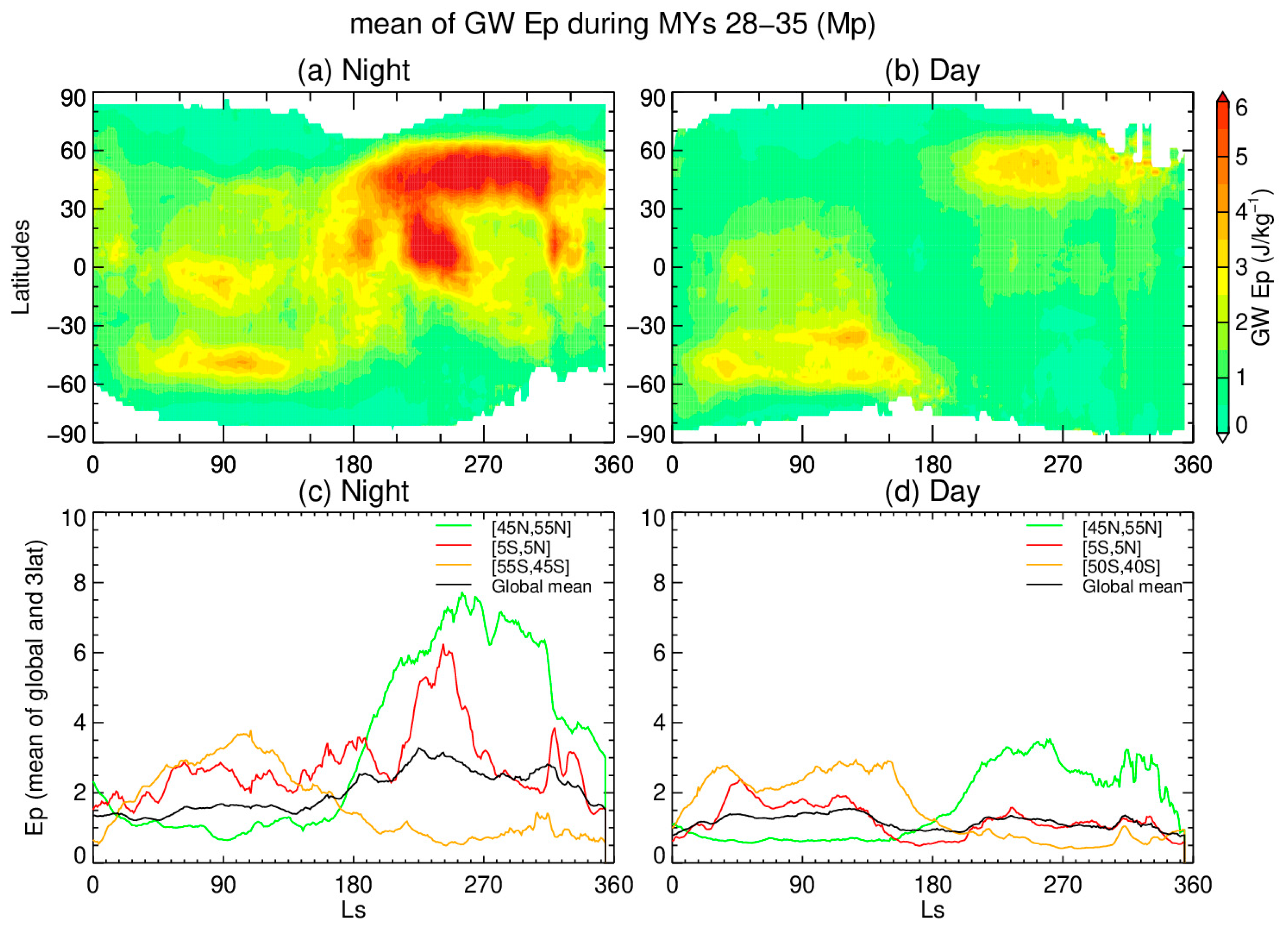
Figure 13 shows a significant seasonal variation in GWs at the Mp layer, which is very different from that at the Lp layer. GWs at mid-to-high latitudes of both hemispheres are strong in the local autumn and winter except for those in the equator, which is similar to Ji et al. [17]. That may be related to planetary waves or instability within the polar jets in the winter hemisphere. Apparently, GWs during the night are stronger than those during the day by a factor of 2 in the Northern Hemisphere. The intensity of GWs in the Northern Hemisphere is enhanced in the second half of the year at the Mp layer, which is opposite to that of the Lp layer. Figure 13c,d provides a more detailed illustration of the temporal evolution of Mp-layer GWs at different latitude ranges, in a similar way to Figure 12c,d. In the Northern Hemisphere, the Mp-layer GWs at mid-to-high latitudes are stronger in the second half of the year and are more noticeable at night than during the day. At the equator, the GW Ep exhibits an obvious enhancement of 4 J/kg during A storms (~240° Ls) and a weak enhancement of 2 J/kg during C storms (~330° Ls) at night. In contrast, the enhancement during the day is not significant. This indicates that the impact of dust storms on GW activity in the equatorial region differs between day and night. In the Southern Hemisphere, the Mp-layer GWs at mid-to-high latitudes are stronger in the first half of the year and decrease by a factor of 2 in the second. The effect of dust storms on the enhancement of GWs is negligible compared to that at the equator. In general, the effect of seasonal dust storms on GWs varies considerably with latitude at the Mp layer. The above phenomenon may be caused by the fact that the height of the dust tops in the Southern Hemisphere is raised higher than that at the equator during dust storms. This results in a higher altitude for the stable atmospheric layer within dust storms in the Southern Hemisphere than at the equator and in the Northern Hemisphere.
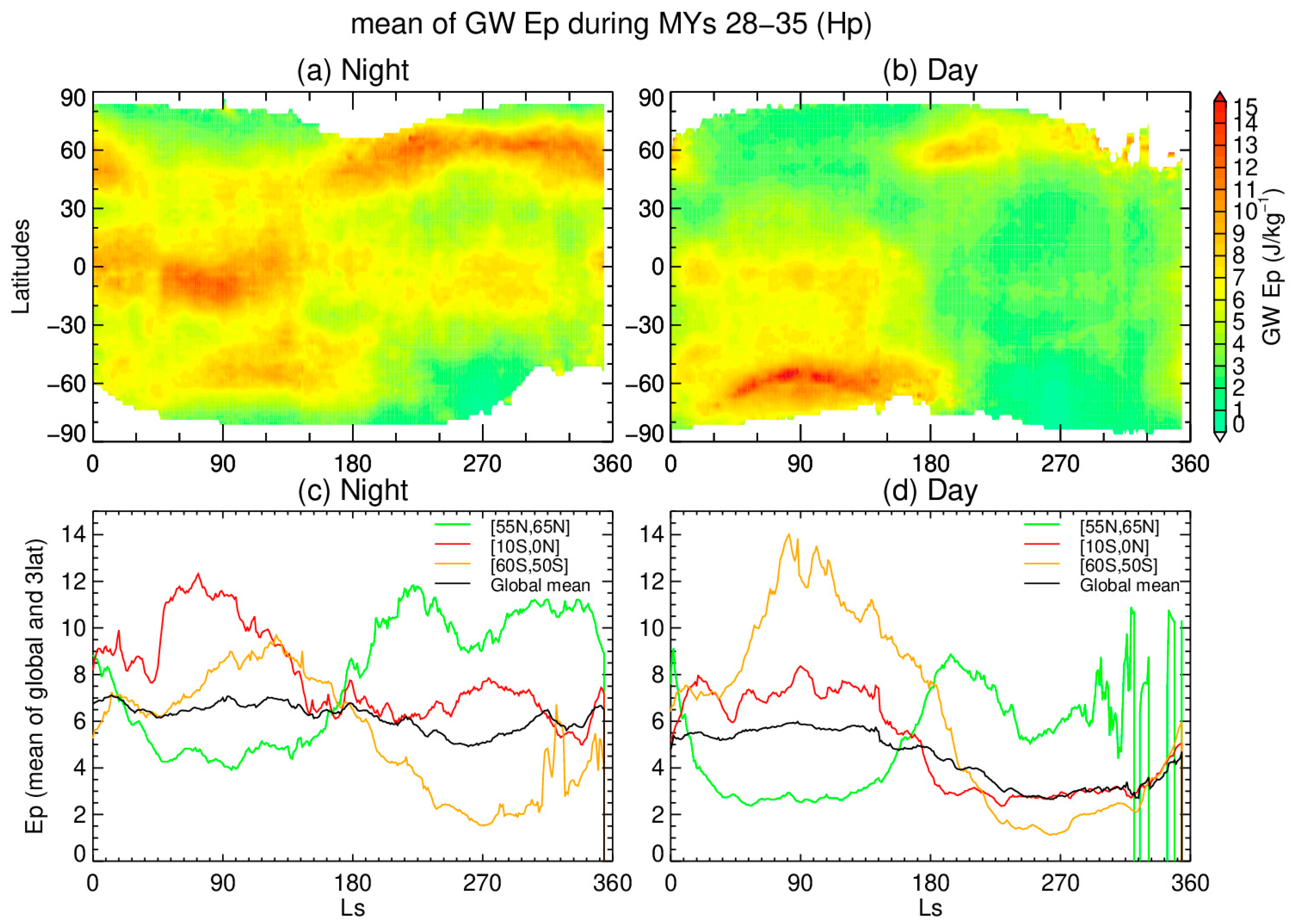
Figure 14 shows the temporal evolution of GWs at the Hp layer. As illustrated in Figure 14a,b, the time evolution characteristics of GWs are similar to those of the Mp layer, with GW activity being pronounced during the local autumn and winter seasons in both hemispheres but being strong in the first half of the year in the equatorial region. However, the intensity of the Hp-layer GW activity is much greater than that of the Mp layer. Figure 14c,d shows the temporal evolution of the global and latitudinal averaged GW intensity, which is also similar to that at the Mp layer. This indicates that most GWs from the Mp layer can propagate upward to the Hp layer, thereby governing the spatial distribution and temporal evolution of GWs at higher altitudes. However, there are still some differences remaining. For example, GW activity at the Hp layer in the equatorial region and the Southern Hemisphere is much stronger in the first half of the year than in the second, as compared to the Mp layer. It also responds less to large seasonal dust storms. In addition, the seasonal variation in Hp-layer GWs at mid-to-high latitudes in the Southern Hemisphere during the day is more pronounced than that at night.

3.3. The Interannual Variability of GWs

The data analyzed in Section 3.1 and Section 3.2 represent multi-year averages of the GW intensities, which cannot reflect the differences in GWs from year to year. Previous research has not extensively addressed the interannual variability of GWs. This section is dedicated to an investigation of the interannual variability of GWs. In order to quantitatively analyze the extent of the interannual variability of GWs, we estimate the variance of GW Ep of multiple years to represent the interannual variability of GW activity.
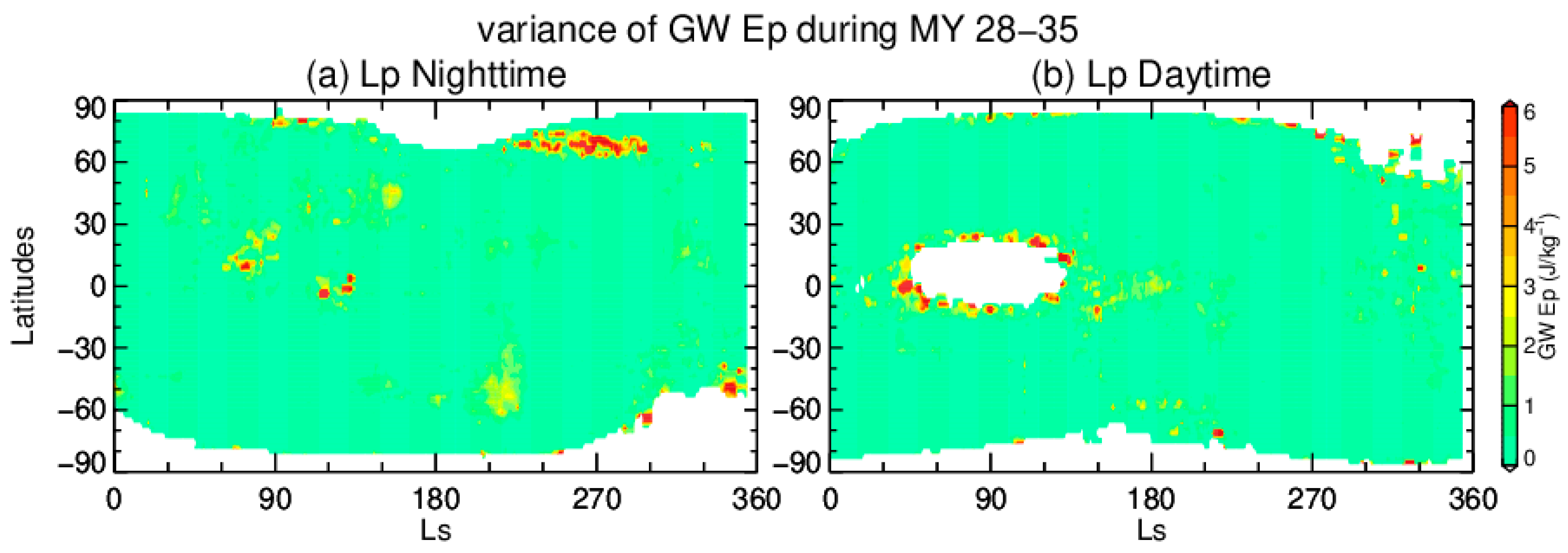
Figure 15 illustrates the interannual variability of GW activity at the Lp layer. During the night, the GW variances in several regions are relatively large, including region 1 (0–50°N, 60–150° Ls) and region 2 (~60°N, 230–300° Ls) in the Northern Hemisphere, and region 3 (30–60°S, 200–240° Ls) in the Southern Hemisphere. As discussed in Section 3.1 and Section 3.2, GWs occurring between 0 and 50°N as well as 60 and 150° Ls are primarily topography driven (see Figure 1a–d). GWs occurring at ~60°N and 230–300° Ls coincide with the location of relatively weak polar jets in the lower atmosphere during Northern Hemisphere winters (see Figure 1e–h). Meanwhile, GWs occurring at 30–60°S and 200–240° Ls match the timing and latitude of Type A seasonal dust storms (see Figure 12 and Figure 13). Based on the location and time of these regions, the interannual variability of GWs in region 1 is correlated with topography, while region 2 may be correlated with interannual variability of the polar jets, and region 3 is correlated with interannual variability of A storms. During the day, the region exhibiting the greatest variance is located near the equator, which may be correlated with the topography, specifically in the vicinity of mountains or valleys such as the Tharsis region and Valles Marineris.
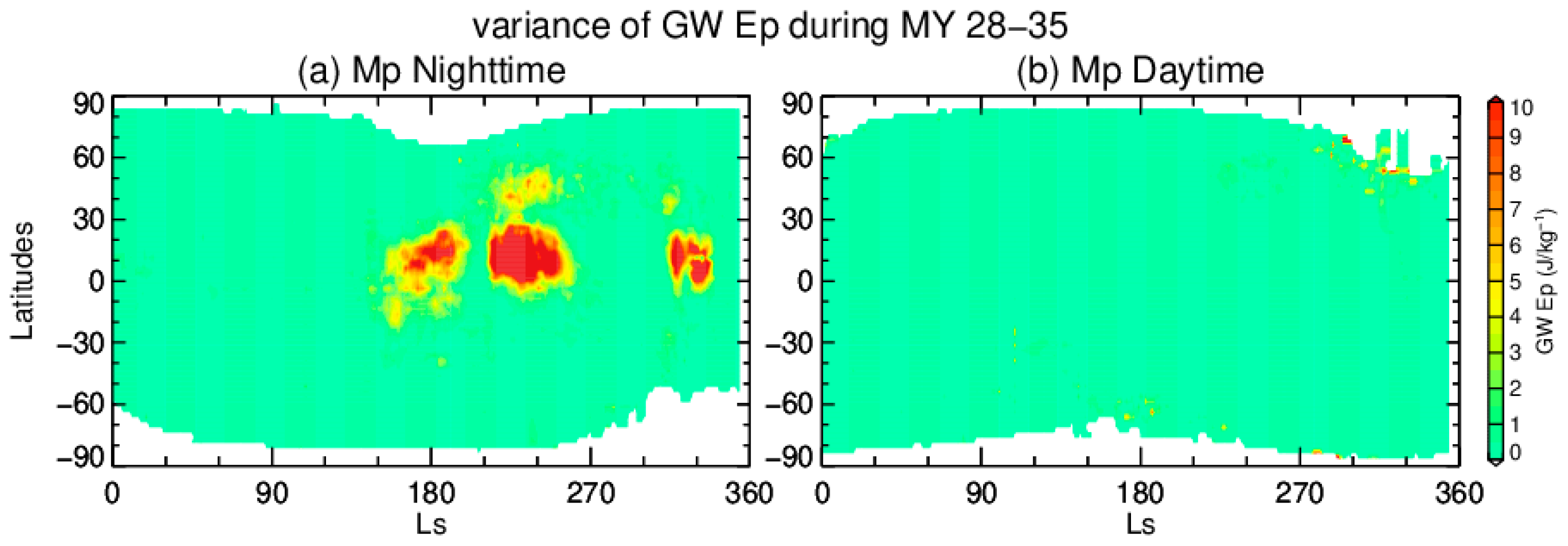
Figure 16 illustrates the interannual variability of GW activity at the Mp layer. From this figure, it can be concluded that the latitudinal range with large variance is located at the northern edge of the dust storm near 240° Ls, 330° Ls, and 180° Ls, respectively. Of these times with high variance, 210–250° Ls is consistent with the timing of A storm, indicating that it may be related to the interannual variability in the timing of A storm. 310–330° Ls is consistent with the timing of C storm, indicating that it is possibly related to the interannual variability in the timing of C storm. In particular, 150–180° Ls is consistent with the timing of Z storm [28], indicating that it is related to the interannual variability in the timing of Z storm. This is the first finding to show that, in addition to A and C seasonal storms, the Z storm can also enhance GW activity at the Mp layer. In addition, there is a pronounced interannual variability in GWs during the night, whereas a very slight interannual variability during the day. Since convection is much smaller during the night than during the day, the cause of the phenomenon may not be convection, but rather the enhanced nocturnal jets and the shear instability caused by seasonal dust storms [13].
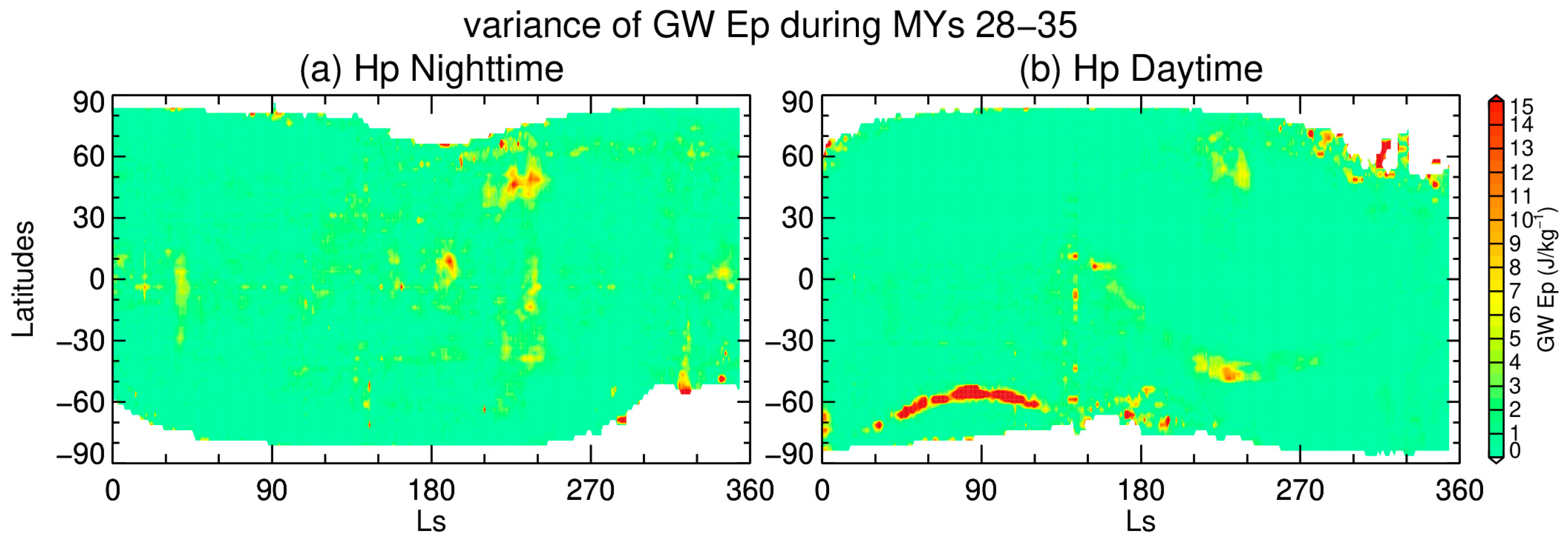
Figure 17 shows the interannual variability of GW activity at the Hp layer. We can see that the GW variances in several random regions are relatively large at night. This makes it difficult to determine their possible causes. During the day, the GW variances are relatively large in several regions, e.g., region 4 (~60°S, 40–120° Ls), region 5 (~60°S, ~230° Ls), and region 6 (~60°N, ~230° Ls). Of these areas with high variance, regions 5 and 6 may be associated with the interannual variability in the timing of A seasonal storms. Region 4 may be associated with interannual variability of the polar jets.
The above results demonstrate that there are significant differences in the interannual variabilities of GWs at different altitudes. The sources causing the interannual variabilities of GWs also vary with altitude.

4. Discussion

Section 3 demonstrates that the intensity distributions of GWs at three different altitude ranges exhibit distinct global patterns and temporal variations. However, there are also similarities in GW activity at different altitudes, suggesting that some waves originate from the same source and propagate to different altitudes, resulting in cross-layer effects. For example, a comparison of Figure 1 and Figure 5 shows that GW activity varies with altitude. During 0–180° Ls, the Mp-layer GW activity is weaker and markedly different from the Lp-layer GW activity in the middle and high latitudes of the Northern Hemisphere and in parts of the equatorial region (shown in Figure 1a–c and Figure 5a–c). During 180–360° Ls, the GW activity is much more widespread at the Mp layer than at the Lp layer. In addition, the intensity of the GWs is particularly high at the Mp layer, which is much stronger than that at the Lp layer (shown in Figure 1e–h and Figure 5e–h). In addition, Mp-layer nighttime GW activity is stronger than the Lp layer in areas of complex topography (Figure 5e,g), suggesting that some of the GWs excited by complex topography can propagate to higher altitudes. Night–day differences in Mp-layer GW activity during 180–360° Ls are much more significant than those in Lp-layer GW activity (shown in Figure 4 and Figure 8). In addition, the difference in GW activity between the two altitude layers at night is larger than that during the day, as shown in Figure 1e–h and Figure 5e–h. In addition, the occurrence of the band of GW concentrations in the Northern Hemisphere at the Hp layer is observed at latitudes closer to the North Pole than those at the Mp layer, which is consistent with the variation in latitude of the jet with altitude. This suggests that the banded GW activity at these different altitudes may be caused by the same excitation source, polar jets, which have a deeper vertical distribution in the atmosphere. As for the dust storm effects, recent studies showed that global dust events can enhance GW activity in the upper atmosphere [12]. However, our findings suggested that GWs in the lower atmosphere are weakened during large dust storms. The observed reduction is attributable to the convective and baroclinic stabilization of the atmosphere, a phenomenon induced by the extensive vertical distribution of dust [13,14]. The increase in GWs in the upper atmosphere during large dust storms may be generated by excitation sources at higher altitudes [13].
The results obtained in this paper largely agree with those of previous GW studies. However, there are also many differences. For example, in terms of the correlation between topography and GWs, Figure 3 of Section 3 shows that the peaks of the three-wave structure in GWs occur around ~150°W, ~60°E, and ~120°E, which aligns well with the longitudinal ranges of mountainous regions. However, Creasey et al. [7] suggested that GWs in most areas of the lower atmosphere do not correlate well with the orography except in the mountainous Tharsis region, using MGS radio occultation data [7]. The coverage of the data they used is limited and unevenly distributed due to the measurement strategy employed, which may lead to biased judgments on the correlation between GWs and topography (Figure 1b,d). In addition, the night–day comparison result of the GWs in our study is quite different from the results of previous studies [14,17]. Ji et al. [17] suggested that daytime GWs are stronger than nighttime GWs from the troposphere to the upper atmosphere. However, the detection principles of the data they used differ significantly from those of MCS, and the data coverage is uneven. Consequently, their results can only reveal the characteristics of a part of GWs. Heavens et al. [14] suggested that most of the GW activity is stronger on the dayside than on the nightside. Although Heavens et al. [14] also found that GWs during the night are stronger than those during the day near the equator and in certain mountainous areas, there is still a difference in latitude and timescale. One reason for these discrepancies is the different altitude ranges focused on by the two studies. It should be noted that the altitude range of the Heavens et al. [14] study is limited to the lower atmosphere, corresponding to the Lp layer. And our results of GWs at the Lp layer are an average between 200 and 20 Pa (~10–30 km), whereas Heavens et al. [14] studied several specific altitudes. Another possibility is that the spectrum of GWs extracted in our study is different from previous studies. Limb observations are sensitive to low-frequency GWs with long horizontal wavelengths, short vertical wavelengths, while nadir and off-nadir observations tend to be sensitive to higher frequency GWs with short horizontal wavelengths and long vertical wavelengths [10,16]. We focus on GWs with vertical wavelengths of 9–15 km using MCS temperature profiles, which take advantage of MCS limb observations. In contrast, Heavens et al. [14] focused on GWs with horizontal wavelengths of 10–30 km and vertical wavelengths greater than 35 km in nadir observations, or GWs with horizontal wavelengths of 10–100 km and vertical wavelengths of about half the corresponding horizontal wavelengths in off-nadir observations. Overall, the different wavelengths and altitudes of GWs, as well as the observational strategy used to collect the data, may explain the inconsistencies in night–day differences and correlations with topography observed in our study and previous ones. This will also enhance our knowledge and understanding of the characteristics of a more comprehensive spectral range of GWs in different layers of the Martian atmosphere.
As for the seasonal and interannual variations in the GW activity, the result also shows distinct characteristics for different altitude ranges. Most of the Lp-layer GWs are stronger in the first half of the year and weaker in the second half. This is more consistent with recent studies on GWs in the Martian lower atmosphere [17]. However, the seasonal variations in Mp-layer and Hp-layer GWs are different from the Lp-layer GWs, which are both strong in the local autumn and winter seasons. In addition, the intensity of the GW generally increases with altitude. And the GW moves north or south towards the polar region with altitude in the winter hemispheres, especially for the Northern Hemisphere (Figure 13 and Figure 14), which is consistent with the change in the position of the polar jets with altitude. This is also evident in Section 3.1 when Figure 5 and Figure 9 are compared using seasonal-averaged data with a 90° Ls window. But Figure 13 and Figure 14 show more details about the seasonal variations in the latitude positions of the GW band. In addition, Figure 12, Figure 13 and Figure 14 confirm previous findings based on multi-year observational data that large dust storms can weaken GWs at the Lp layer and strengthen them at the Mp layer. Overall, the seasonal and interannual variations in GWs are related to three factors: complex topography at mid-to-low latitudes, polar jets, and large seasonal dust storms. Seasonal variations in the Martian atmosphere are well known, but interannual variations have been less studied. The interannual variations in GWs imply that, in addition to the well-known large seasonal dust storms, complex interannual variations in atmospheric activity over the polar jets and in the complex topography at mid-to-low latitudes on Mars may also exist, which deserve further studies in the future.

5. Conclusions

In this work, we conducted a detailed analysis of the global distribution and time evolution of Martian GWs at different altitude layers based on the MCS temperature profiles obtained over 8 Martian years, excluding global dust storm years MYs 28 and 34. The results show that GWs with vertical wavelengths ranging from 9 to 15 km exhibit complex global distributions at three different altitude layers, i.e., the low-altitude range of 200–20 Pa (Lp layer, ~10–30 km), the mid-altitude range of 20–2 Pa (Mp layer, ~30–50 km), and the high-altitude range of 2–0.2 Pa (Hp layer, ~50–70 km). And, these distributions exhibit diurnal, seasonal, and interannual variations, which are related to topography, polar jets, and large seasonal dust storms.
The results indicate complex regional and north–south differences, as well as night–day variations, in the spatial distribution of GWs. At the Lp and Mp layers, GW activity is typically stronger in complex terrain such as mountainous and canyon regions, with the correlation varying with altitude. Particularly, a three-wave structure of the GW activity is observed over mountainous regions in the mid-to-low latitudes of the Northern Hemisphere. The peak longitude range of this structure closely matches the mountainous terrain, indicating that the three-wave structure is associated with mountainous topography. In addition, our results reveal the presence of bands of GW aggregations in the mid-to-high latitudes of the Northern Hemisphere at the Mp and Hp layers, and also two bands in the Southern Hemisphere and near the tropics at the Hp layer. The characteristics of these bands vary by season, altitude, and local time. The occurrence of the band of GW concentrations in the Northern Hemisphere’s Hp layer is observed at latitudes closer to the North Pole than at the Mp layer. This is consistent with the variation in latitude of the polar jets with altitude. There is also an apparent day/night difference in some regions, which is stronger at night than during the day in most parts, especially in the tropics and the Northern Hemisphere. As altitude increases, the diurnal variation grows more pronounced, with regions where nighttime GWs are stronger than daytime ones becoming more widespread. The latter half of the year exhibits greater diurnal variation and stronger nighttime GWs than the first half.
GW activity exhibits obvious seasonal variations, which are more significant during the night than during the day in the Northern Hemisphere and equatorial region, while the opposite is true in the Southern Hemisphere. The night–day differences in the seasonal variations in them are more significant in the Northern Hemisphere. GW activity at the Lp layer is stronger in the spring and summer, except during the day in the Northern Hemisphere. Meanwhile, GW activity at the Mp and Hp layers is particularly pronounced at mid-to-high latitudes during the local autumn and winter, characterized by an increase in strength and a shift in direction toward the polar region with increasing altitude. This aligns closely with the variation in the polar jets with respect to altitude, which suggests a stronger correlation with the polar jets. The variations in GWs at different altitudes during large seasonal dust storms are different. Using multi-year observational data, this study further confirms previous findings that large dust storms can weaken GWs at the Lp layer and strengthen them at the Mp layer [13].
There are also remarkable interannual variations in GW activity. At the Lp layer, these variations are most pronounced near the equator in the first half of the year and in the high-latitude regions of the Northern Hemisphere in the second half. These variations are close to complex topography and may also be caused by interannual changes in dust storms. At the Mp layer, regions with significant interannual variations are concentrated near the equator during periods of regional dust storms, suggesting that these variations are caused by the interannual variations in the timing of dust storms. Interannual variations are pronounced at night but very weak during the day, which may be related to the enhanced nocturnal jet streams and the shear instability caused by seasonal dust storms at night. Conversely, at the Hp layer, interannual variations are more pronounced during the day rather than at night. And, they are concentrated in the mid-to-high latitudes of the Southern Hemisphere in the first half of the year and the Northern Hemisphere in the second half. The factors contributing to substantial interannual variability in GWs include interannual variations in topography-induced dynamics, polar jets, and the timing of seasonal dust storms. The interannual variations in GWs imply that, in addition to the known large dust storms, complex interannual variations may also exist in atmospheric activity over the polar jets and complex topography at mid-to-low latitudes on Mars.

Author Contributions

Conceptualization, J.L.; methodology, J.L.; validation, B.C. and T.L.; investigation and data curation, J.L. and B.C.; funding acquisition, J.L., B.C. and W.Z.; writing—original draft preparation, J.L.; writing—review and editing, J.L., Z.W., T.L. and W.Z.; visualization, J.L. All authors have read and agreed to the published version of the manuscript.

Funding

This research is supported by the National Natural Science Foundation of China through grants U2442202, 42004133, 42375119, 42241135; the Key Laboratory of Geospace Environment, Chinese Academy of Sciences, University of Science & Technology of China; and the China Meteorological Administration’s ‘Ionospheric Forecast and Alerting’ Youth Innovation Team (CMA2024QN09).

Data Availability Statement

The Mars Climate Sounder (MCS) data presented in this study are available for download at https://pds-atmospheres.nmsu.edu/data_and_services/atmospheres_data/MARS/atmosphere_temp_prof.html (accessed on 2 January 2024). The wind data from MCD version 6.1 can be downloaded from the following: Martian Server home page: gateway to the Mars Climate Database (LMD/AOPP/IAA/ESA/CNES) (accessed on 1 July 2025).

Acknowledgments

The authors thank the MCS team and the LMD Planetology team for making the datasets available online.

Conflicts of Interest

The authors declare no conflicts of interest.

References

  1. Briggs, G.A.; Leovy, C.B. Mariner 9 observations of the Mars north polar hood. J. Bull. Am. Meteorol. Soc. 1974, 55, 278–296. [Google Scholar] [CrossRef]
  2. Pirraglia, J.A. Martian atmospheric Lee waves. Icarus 1976, 27, 517–530. [Google Scholar] [CrossRef]
  3. Magalhães, J.A.; Schofield, J.T.; Seiff, A. Results of the Mars Pathfinder atmospheric structure investigation. J. Geophys. Res. Planets 1999, 104, 8943–8955. [Google Scholar] [CrossRef]
  4. Fritts, D.C.; Wang, L.; Tolson, R.H. Mean and gravity wave structures and variability in the Mars upper atmosphere inferred from Mars Global Surveyor and Mars Odyssey aerobraking densities. J. Geophys. Res. 2006, 111, A12304. [Google Scholar] [CrossRef]
  5. Wang, H.; Ingersoll, A.P. Martian clouds observed by Mars Global Surveyor Mars Orbiter Camera. J. Geophys. Res. Planets 2002, 107(E10), 5078. [Google Scholar] [CrossRef]
  6. Hinson, D.P.; Simpson, R.A.; Twicken, J.D.; Tyler, G.L.; Flasar, F.M. Initial results from radio occultation measurements with Mars Global Surveyor. J. Geophys. Res. 1999, 104, 26997–27012. [Google Scholar] [CrossRef]
  7. Creasey, J.E.; Forbes, J.M.; Hinson, D.P. Global and seasonal distribution of gravity wave activity in Mars’ lower atmosphere derived from MGS radio occultation data. Geophys. Res. Lett. 2006, 33, L01803. [Google Scholar] [CrossRef]
  8. Kuroda, T.; Medvedev, A.S.; Hartogh, P.; Takahashi, M. On Forcing the Winter Polar Warmings in the Martian Middle Atmosphere during Dust Storms. J. Meteorol. Soc. Japan. Ser. II 2009, 87, 913–921. [Google Scholar] [CrossRef]
  9. Kass, D.M.; Kleinböhl, A.; McCleese, D.J.; Schofield, J.T.; Smith, M.D. Interannual similarity in the Martian atmosphere during the dust storm season. Geophys. Res. Lett. 2016, 43, 6111–6118. [Google Scholar] [CrossRef]
  10. Heavens, N.G.; Kass, D.M.; Kleinböhl, A.; Schofield, J.T. A multiannual record of gravity wave activity in Mars’s lower atmosphere from on-planet observations by the Mars Climate Sounder. Icarus 2020, 341, 113630. [Google Scholar] [CrossRef]
  11. Kuroda, T.; Medvedev, A.S.; Yiğit, E. Gravity Wave Activity in the Atmosphere of Mars During the 2018 Global Dust Storm: Simulations With a High-Resolution Model. J. Geophys. Res. Planets 2020, 125, e2020JE006556. [Google Scholar] [CrossRef]
  12. Yiğit, E.; Medvedev, A.S.; Benna, M.; Jakosky, B.M. Dust Storm-Enhanced Gravity Wave Activity in the Martian Thermosphere Observed by MAVEN and Implication for Atmospheric Escape. Geophys. Res. Lett. 2021, 48, e2020GL092095. [Google Scholar] [CrossRef]
  13. Wu, Z.; Li, J.; Li, T.; Cui, J. Gravity Waves in Different Atmospheric Layers During Martian Dust Storms. J. Geophys. Res. Planets 2022, 127, e2021JE007170. [Google Scholar] [CrossRef]
  14. Heavens, N.G.; Pankine, A.; Battalio, J.M.; Wright, C.; Kass, D.M.; Kleinböhl, A.; Piqueux, S.; Schofield, J.T. Mars Climate Sounder Observations of Gravity-wave Activity throughout Mars’s Lower Atmosphere. Planet. Sci. J. 2022, 3, 57. [Google Scholar] [CrossRef]
  15. Heavens, N.G.; Richardson, M.I.; Lawson, W.G.; Lee, C.; McCleese, D.J.; Kass, D.M.; Kleinböhl, A.; Schofield, J.T.; Abdou, W.A.; Shirley, J.H. Convective instability in the martian middle atmosphere. Icarus 2010, 208, 574–589. [Google Scholar] [CrossRef]
  16. Wu, D.L.; Preusse, P.; Eckermann, S.D.; Jiang, J.H.; Juarez, M.d.l.T.; Coy, L.; Wang, D.Y. Remote sounding of atmospheric gravity waves with satellite limb and nadir techniques. Adv. Space Res. 2006, 37, 2269–2277. [Google Scholar] [CrossRef]
  17. Ji, Q.; Zhu, X.; Sheng, Z.; Zhang, J.; Zhang, Y. Climatological Gravity Waves in the Middle and Upper Atmosphere of Mars Based on ACS/TGO Observations. Astrophys. J. 2023, 953, 106. [Google Scholar] [CrossRef]
  18. McCleese, D.J.; Schofield, J.T.; Taylor, F.W.; Calcutt, S.B.; Foote, M.C.; Kass, D.M.; Leovy, C.B.; Paige, D.A.; Read, P.L.; Zurek, R.W. Mars Climate Sounder: An investigation of thermal and water vapor structure, dust and condensate distributions in the atmosphere, and energy balance of the polar regions. J. Geophys. Res. 2007, 112, E05S06. [Google Scholar] [CrossRef]
  19. Kleinböhl, A.; Schofield, J.T.; Kass, D.M.; Abdou, W.A.; Backus, C.R.; Sen, B.; Shirley, J.H.; Lawson, W.G.; Richardson, M.I.; Taylor, F.W.; et al. Mars Climate Sounder limb profile retrieval of atmospheric temperature, pressure, and dust and water ice opacity. J. Geophys. Res. 2009, 114, E10006. [Google Scholar] [CrossRef]
  20. Haberle, R.M.; Clancy, R.T.; Forget, F.; Smith, M.D.; Zurek, R.W. (Eds.) The Atmosphere and Climate of Mars; Cambridge Planetary Science; Cambridge University Press: Cambridge, UK, 2017; pp. i–i. [Google Scholar]
  21. Starichenko, E.D.; Belyaev, D.A.; Medvedev, A.S.; Fedorova, A.A.; Korablev, O.I.; Trokhimovskiy, A.; Yiğit, E.; Alday, J.; Montmessin, F.; Hartogh, P. Gravity Wave Activity in the Martian Atmosphere at Altitudes 20–160 km From ACS/TGO Occultation Measurements. J. Geophys. Res. Planets 2021, 126, e2021JE006899. [Google Scholar] [CrossRef]
  22. Tsuda, T.; Nishida, M.; Rocken, C.; Ware, R.H. A Global Morphology of Gravity Wave Activity in the Stratosphere Revealed by the GPS Occultation Data (GPS/MET). J. Geophys. Res. Atmos. 2000, 105, 7257–7273. [Google Scholar] [CrossRef]
  23. Salby, M.L. Sampling Theory for Asynoptic Satellite Observations. Part I: Space-Time Spectra, Resolution, and Aliasing. J. Atmos. Sci. 1982, 39, 2577–2600. [Google Scholar] [CrossRef]
  24. Moudden, Y.; Forbes, J.M. Insight into the seasonal asymmetry of nonmigrating tides on Mars. Geophys. Res. Lett. 2014, 41, 2631–2636. [Google Scholar] [CrossRef]
  25. Chatain, A.; Spiga, A.; Banfield, D.; Forget, F.; Murdoch, N. Seasonal Variability of the Daytime and Nighttime Atmospheric Turbulence Experienced by InSight on Mars. Geophys. Res. Lett. 2021, 48, e2021GL095453. [Google Scholar] [CrossRef]
  26. Imamura, T.; Watanabe, A.; Maejima, Y. Convective generation and vertical propagation of fast gravity waves on Mars: One- and two-dimensional modeling. Icarus 2016, 267, 51–63. [Google Scholar] [CrossRef]
  27. Sato, K.; Yoshiki, M. Gravity Wave Generation around the Polar Vortex in the Stratosphere Revealed by 3-Hourly Radiosonde Observations at Syowa Station. J. Atmos. Sci. 2008, 65, 3719–3735. [Google Scholar] [CrossRef]
  28. Steele, L.J.; Kleinböhl, A.; Kass, D.M. Observations of Ubiquitous Nighttime Temperature Inversions in Mars’ Tropics After Large-Scale Dust Storms. Geophys. Res. Lett. 2021, 48, e2021GL092651. [Google Scholar] [CrossRef]
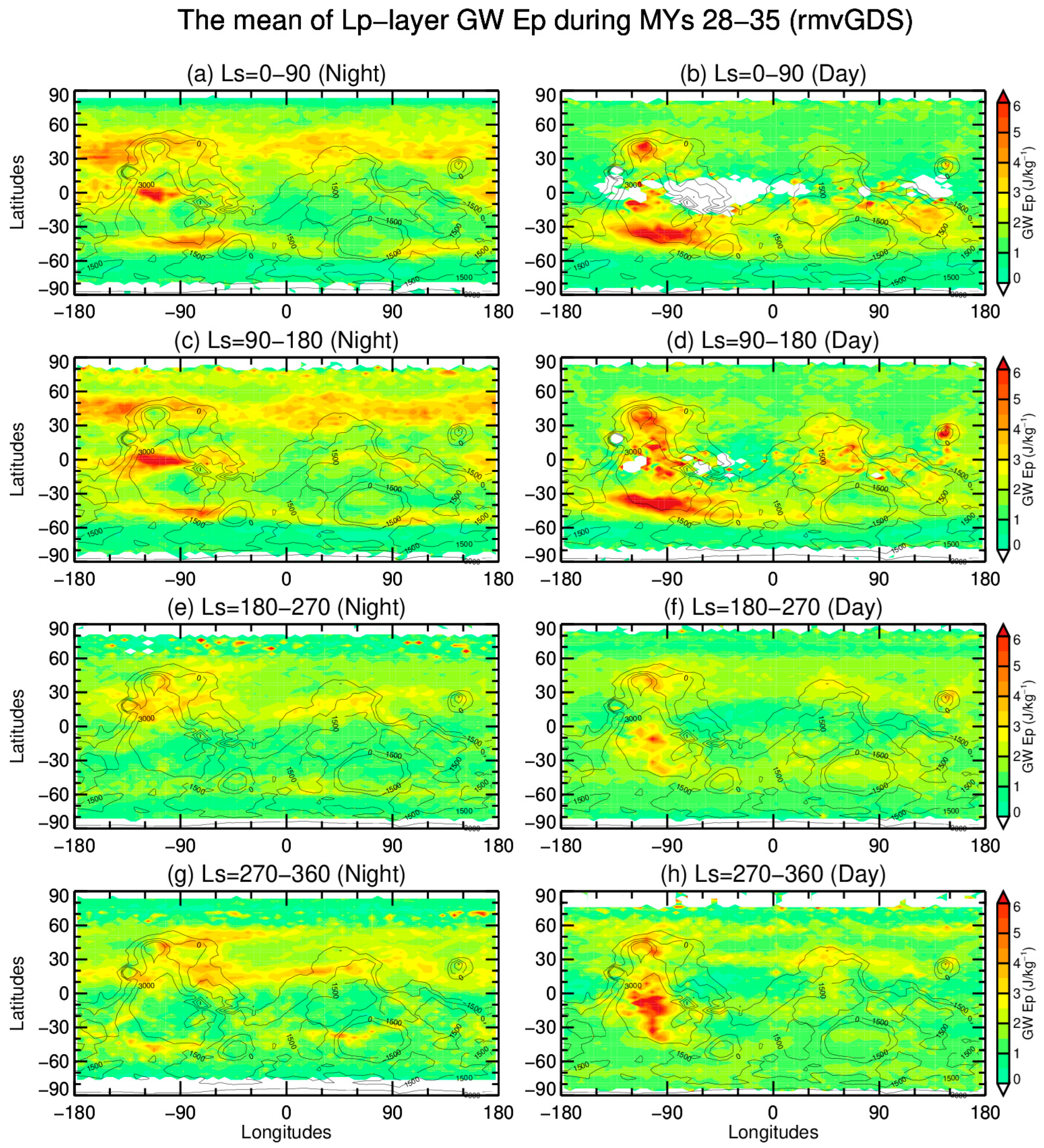
Figure 1. The global distribution of the multi-year mean of the Lp-layer GW Ep from MYs 28 to 35 without global dust storm years: (a) nighttime, 0–90° Ls, (b) daytime, 0–90° Ls, (c) nighttime, 90–180° Ls, and (d) daytime, 90–180° Ls, (e) nighttime, 180–270° Ls, (f) daytime, 180–270° Ls, (g) nighttime, 270–360° Ls, (h) daytime, 270–360° Ls. The year is divided into four seasons, corresponding to the ranges 0–90° Ls for spring, 90–180° Ls for summer, 180–270° Ls for autumn, and 270–360° Ls for winter. The black contours represent the Martian topography. The spatial resolution of the figure is 2.5° of latitude and 5° of longitude. The blank area in the figure is due to the lack of data.
Remotesensing 18 00319 g001
Figure 2. The topographical map of Mars, showing (a) the contour lines of surface altitude above the Mars geoid, and (b) the main topographical features mentioned in this work.
Remotesensing 18 00319 g002
Figure 3. The zonal mean Lp-layer GW Ep from MYs 28 to 35 without global dust storm years for certain latitude ranges: (a) 30–50°N, nighttime, 0–90° Ls, (b) 30–50°N, daytime, 0–90° Ls, (c) 30–50°N, nighttime, 90–180° Ls, (d) 30–50°N, daytime, 90–180° Ls, (e) 10–30°N, nighttime, 10–30°N, 180–270° Ls, (f) 10–30°N, daytime, 180–270° Ls, (g) 10–30°N, nighttime, 270–360° Ls, and (h) 10–30°N, daytime, 270–360° Ls.
Remotesensing 18 00319 g003
Figure 4. The night–day differences in the Lp-layer GW Ep from MYs 28 to 35 without global dust storm years: (a) 0–90° Ls, (b) 90–180° Ls, (c) 180–270° Ls, and (d) 270–360° Ls. The blank area in the figure is due to the lack of data.
Remotesensing 18 00319 g004
Figure 5. The same as Figure 1, but for the Mp-layer GW Ep. The two red lines in panels (eh) mark the banded features in the GW distribution.
Remotesensing 18 00319 g005
Figure 6. The zonal mean Mp-layer GW Ep from MYs 28 to 35 without global dust storm years for latitude range of 10–30°N: (a) nighttime, 0–90° Ls, (b) daytime, 0–90° Ls, (c) nighttime, 90–180° Ls, (d) daytime, 90–180° Ls, (e) nighttime, 180–270° Ls, (f) daytime, 180–270° Ls, (g) nighttime, 270–360° Ls, and (h) daytime, 270–360° Ls.
Remotesensing 18 00319 g006
Figure 7. The zonal wind (color shading) at 50 Pa, at Ls = 225° during the night (LT = 3.0 h), from MCD version 6.1. The red band represents the polar jet. The figure is obtained from https://www-mars.lmd.jussieu.fr/mcd_python/ (accessed on 1 July 2025).
Remotesensing 18 00319 g007
Figure 8. The night–day differences of the Mp-layer GW Ep from MYs 28 to 35 without global dust storm years: (a) 0–90° Ls, (b) 90–180° Ls, (c) 180–270° Ls, and (d) 270–360° Ls. The blank area in the figure is due to the lack of data.
Remotesensing 18 00319 g008
Figure 9. The same as Figure 1, but for the Hp-layer GW Ep. The range of the colorbar in this figure differs from that in Figure 1 and Figure 5.
Remotesensing 18 00319 g009
Figure 10. The nighttime zonal wind (color shading) at 1 Pa, (a) Ls = 135° and (b) Ls = 225°, from MCD version 6.1. The red band represents the polar jet. The figure is obtained from https://www-mars.lmd.jussieu.fr/mcd_python/ (accessed on 1 July 2025).
Remotesensing 18 00319 g010
Figure 11. The night–day differences in the Hp-layer GW Ep from MYs 28 to 35 without global dust storm years: (a) 0–90° Ls, (b) 90–180° Ls, (c) 180–270° Ls, and (d) 270–360° Ls.
Remotesensing 18 00319 g011
Figure 12. Seasonal variations in zonal mean GW activity at the Lp layer averaged from MYs 28 to 35, excluding global dust storm years MY 28 and 34. (a) Nighttime and (b) daytime. (c,d) show further averaged results at specific latitudinal bands or global means. The blank area in the figure is due to the lack of data.
Remotesensing 18 00319 g012
Figure 13. Seasonal variations in zonal mean GW activity at the Mp layer averaged from MYs 28 to 35, excluding global dust storm years MY 28 and 34. (a) Nighttime and (b) daytime. (c,d) show further averaged results at specific latitudinal bands or global means.
Remotesensing 18 00319 g013
Figure 14. Seasonal variations in zonal mean GW activity at the Hp layer averaged from MYs 28 to 35, excluding global dust storm years MY 28 and 34. (a) Nighttime and (b) daytime. (c,d) show further averaged results at specific latitudinal bands or global means.
Remotesensing 18 00319 g014
Figure 15. The variance of Lp-layer GW Ep during multi-years from MY 28 to MY 35, excluding global dust storm years MY 28 and 34. The blank area in the figure is due to the lack of data.
Remotesensing 18 00319 g015
Figure 16. The same as Figure 15, but for the Mp-layer.
Remotesensing 18 00319 g016
Figure 17. The same as Figure 15, but for the Hp layer.
Remotesensing 18 00319 g017
Disclaimer/Publisher’s Note: The statements, opinions and data contained in all publications are solely those of the individual author(s) and contributor(s) and not of MDPI and/or the editor(s). MDPI and/or the editor(s) disclaim responsibility for any injury to people or property resulting from any ideas, methods, instructions or products referred to in the content.