Cryosphere Ecological Vulnerability in the Qilian Mountains Region: Trends, Drivers, and Adaptation

Highlights
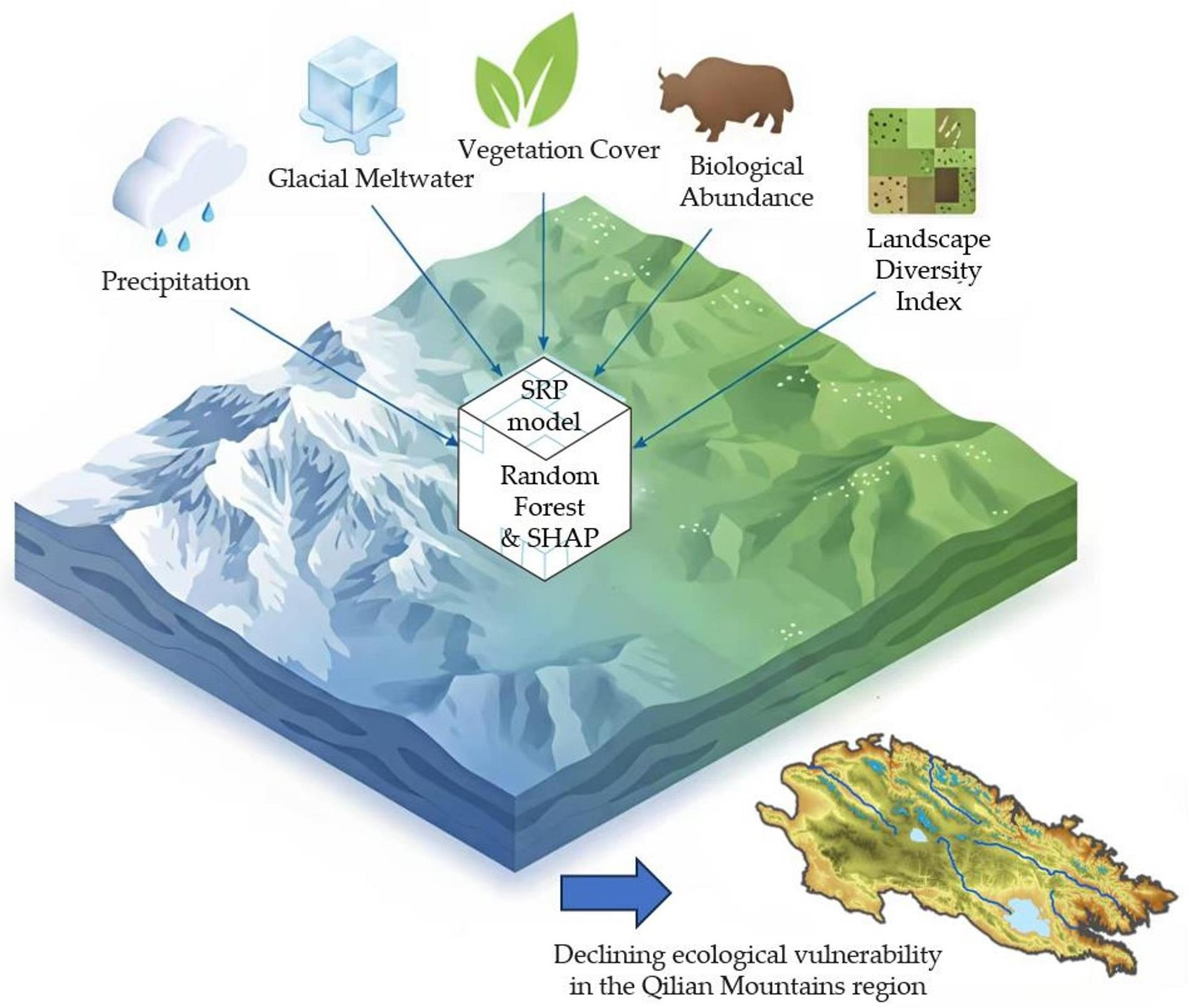
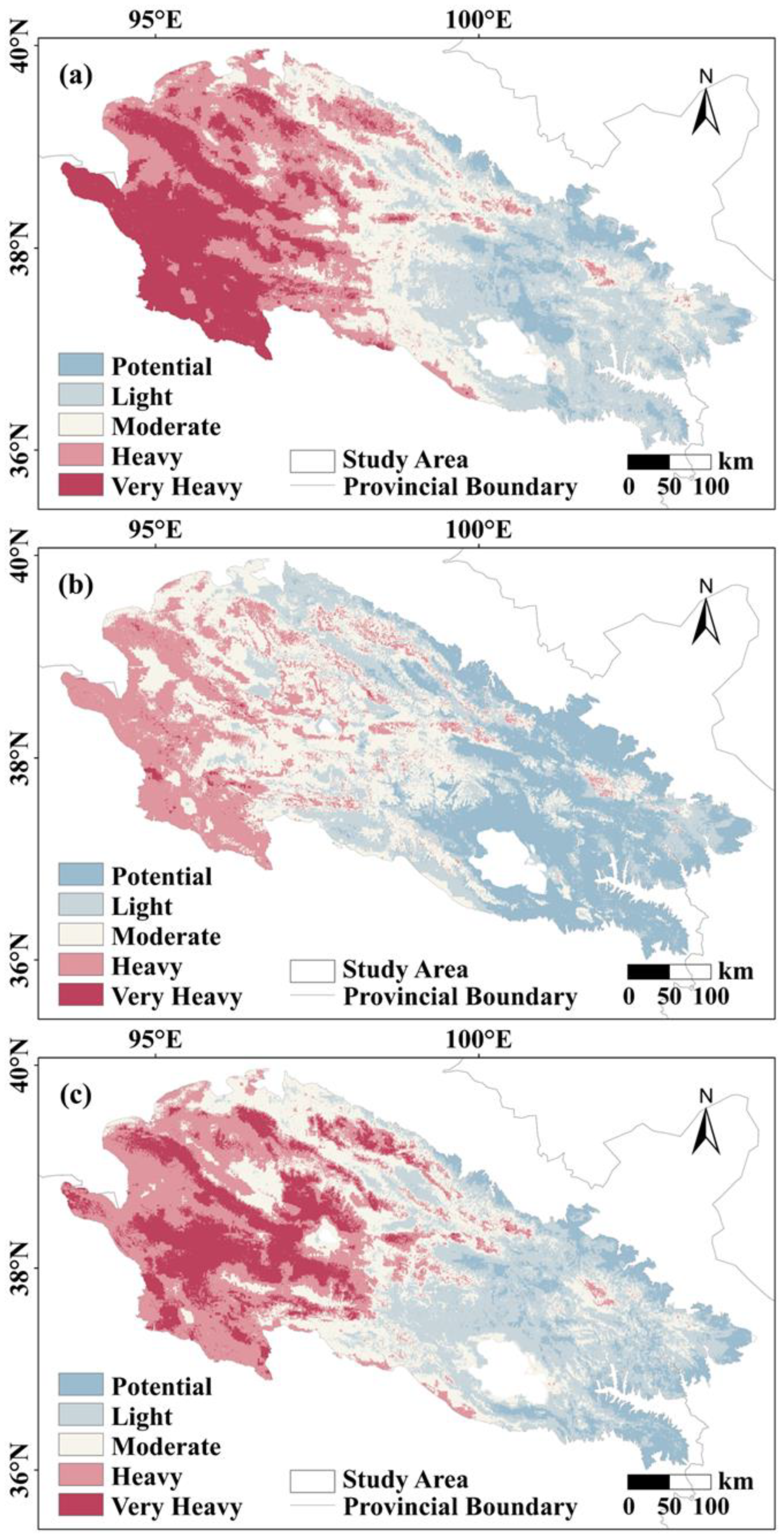
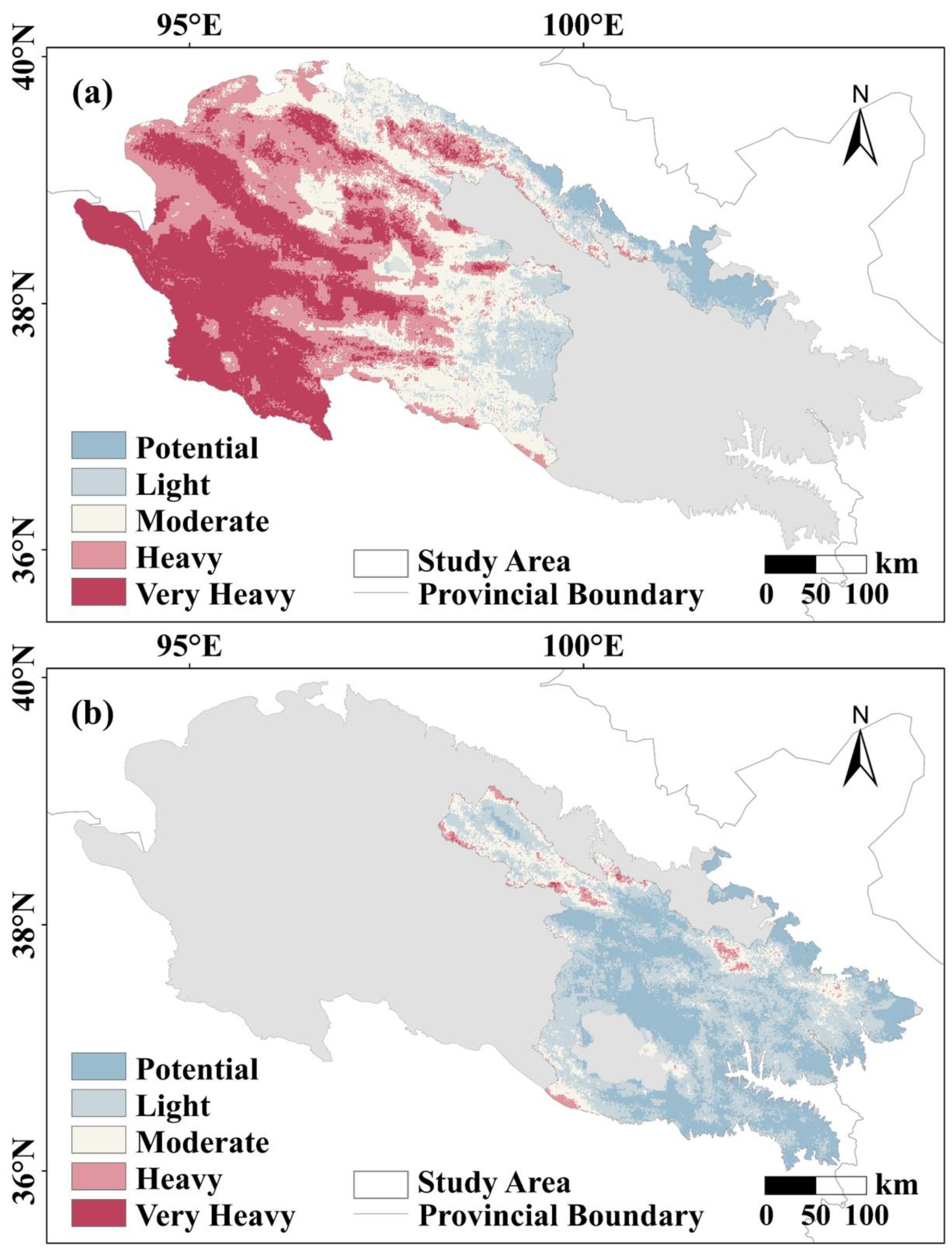
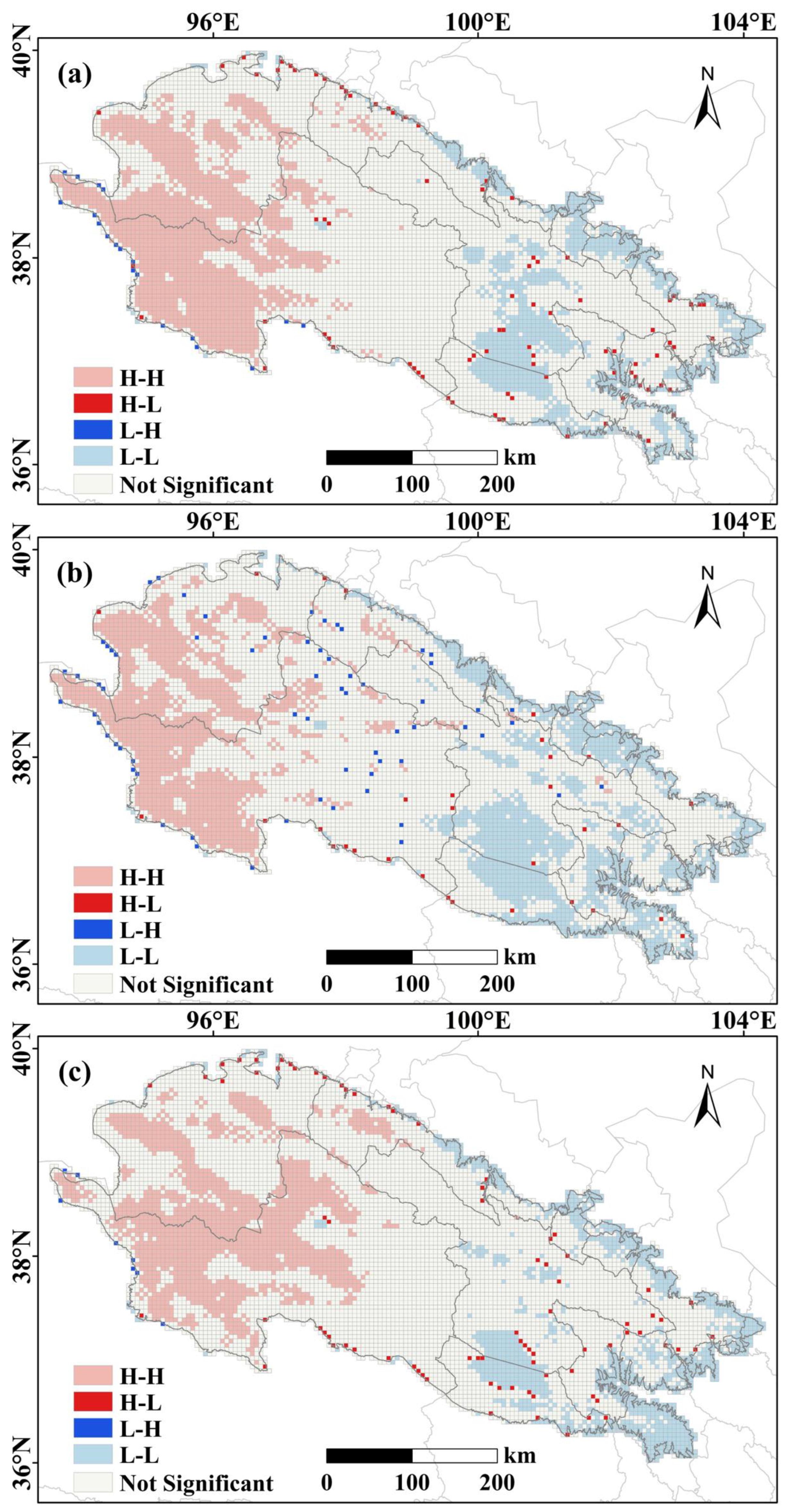
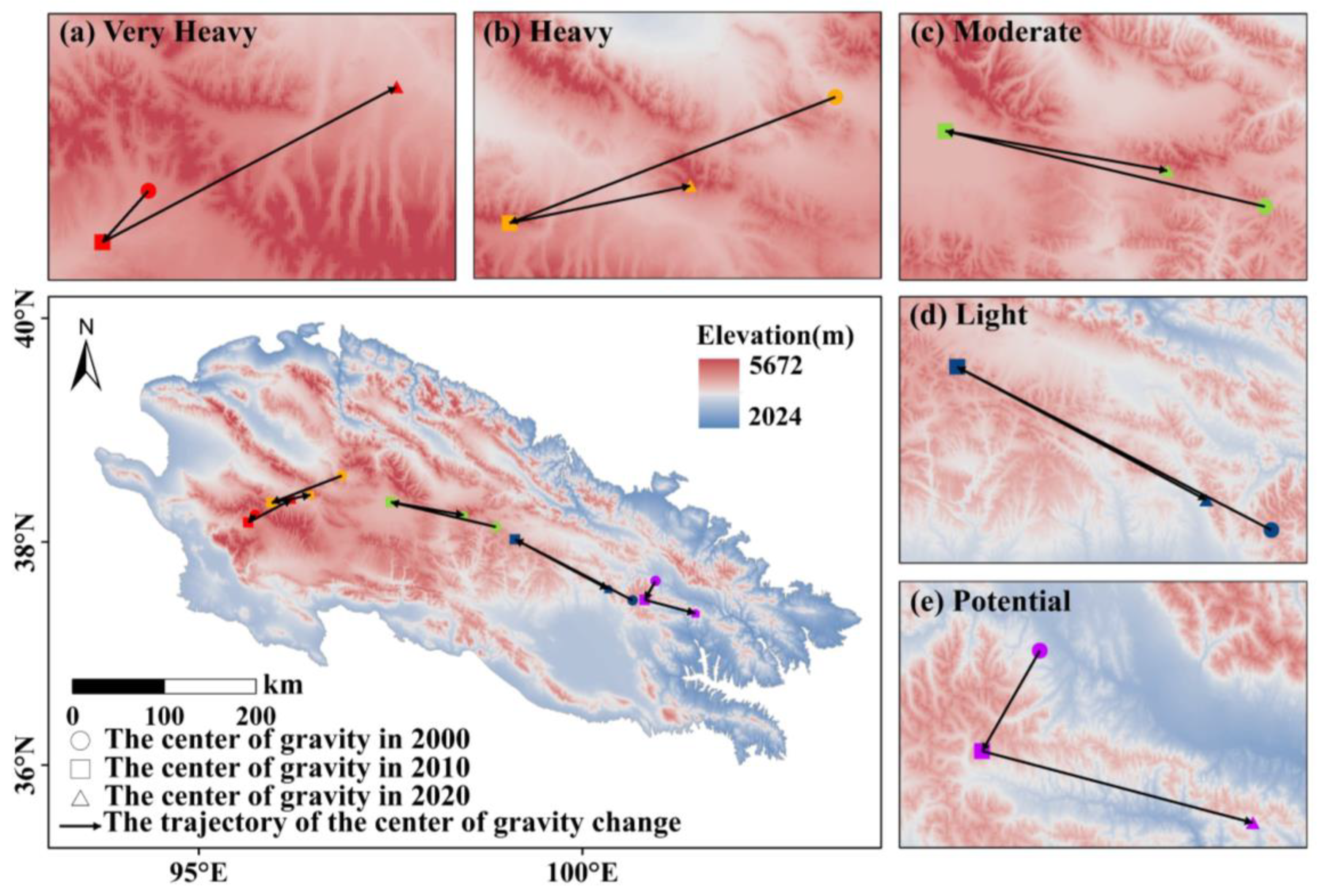
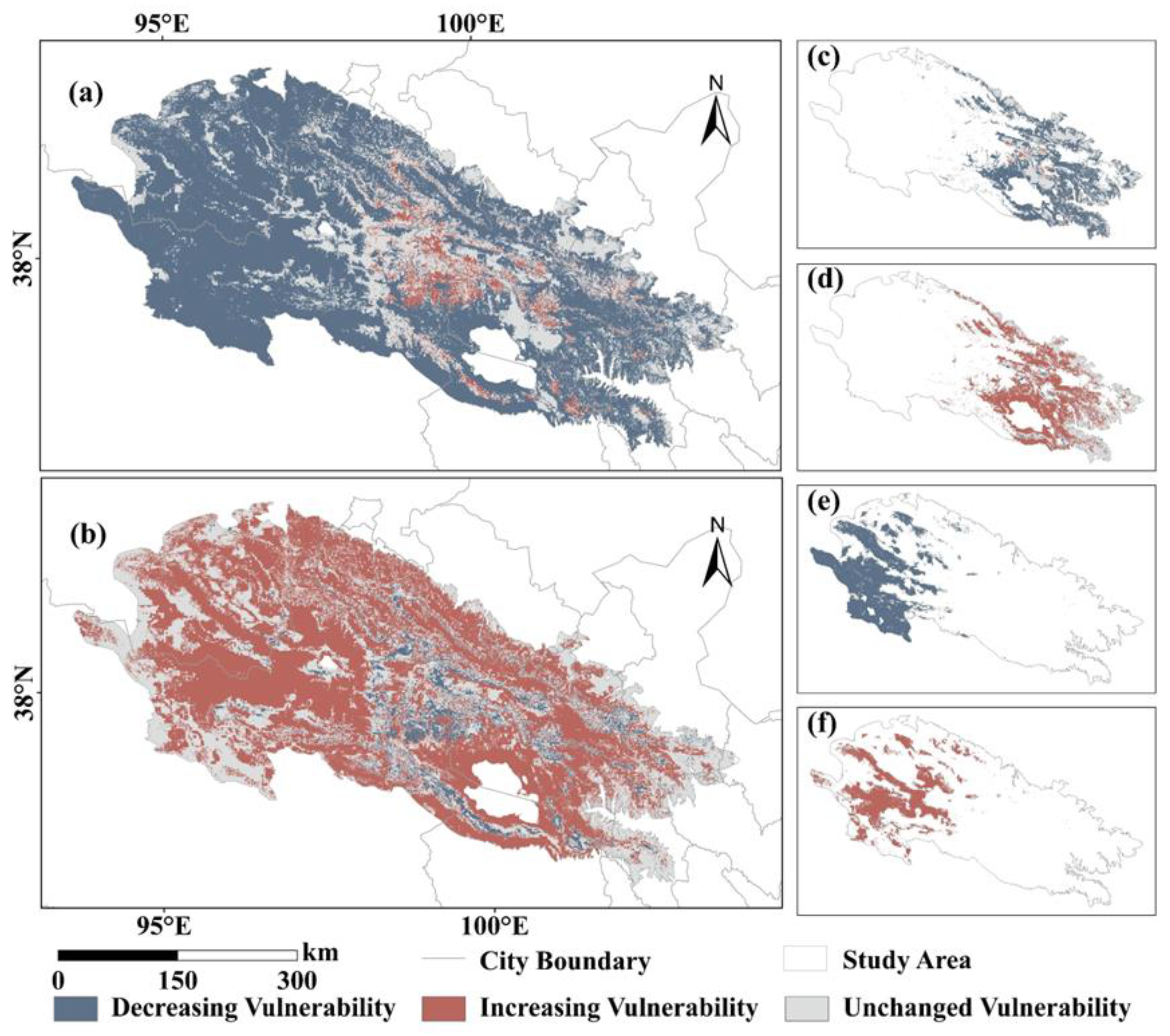
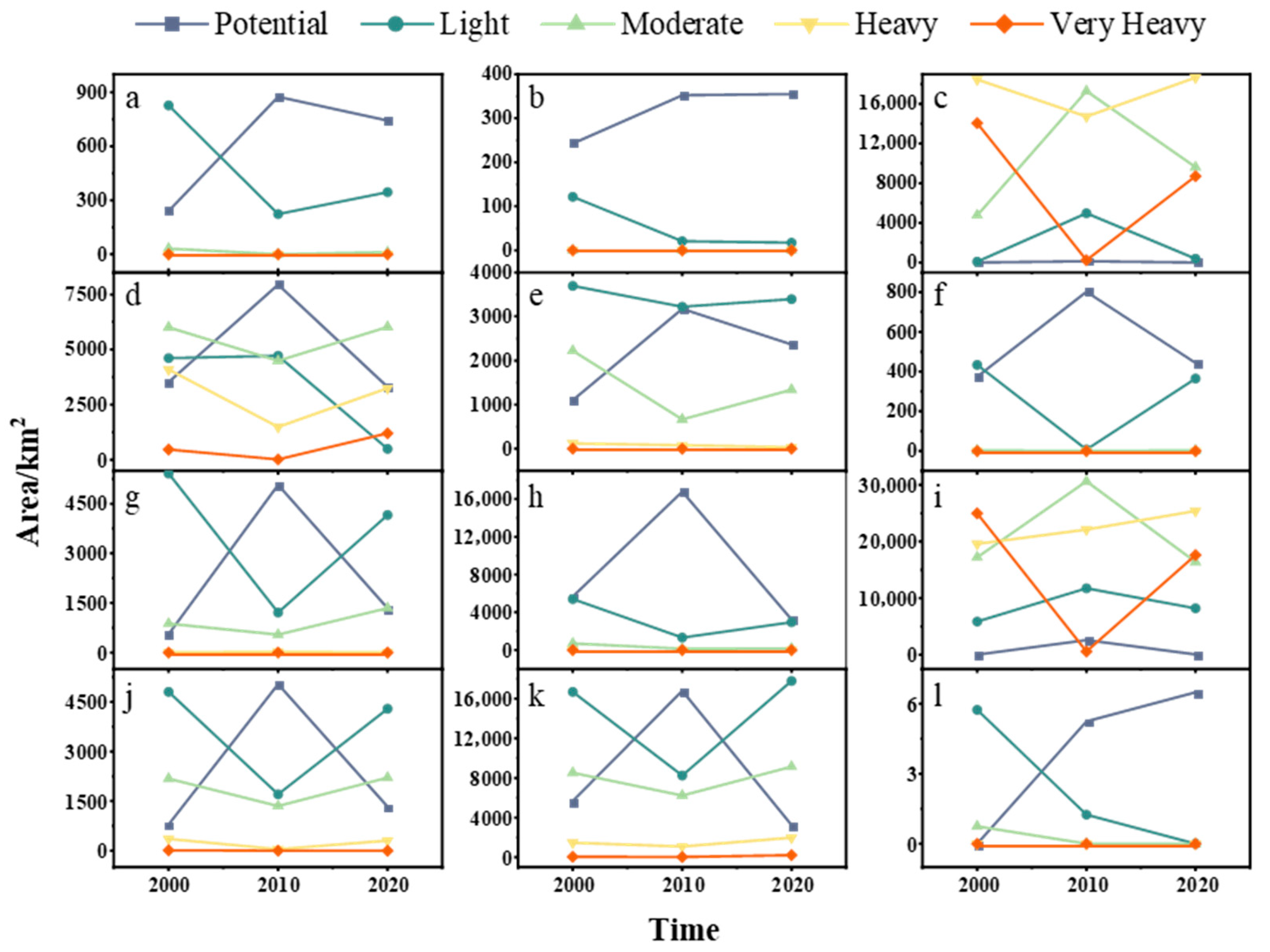
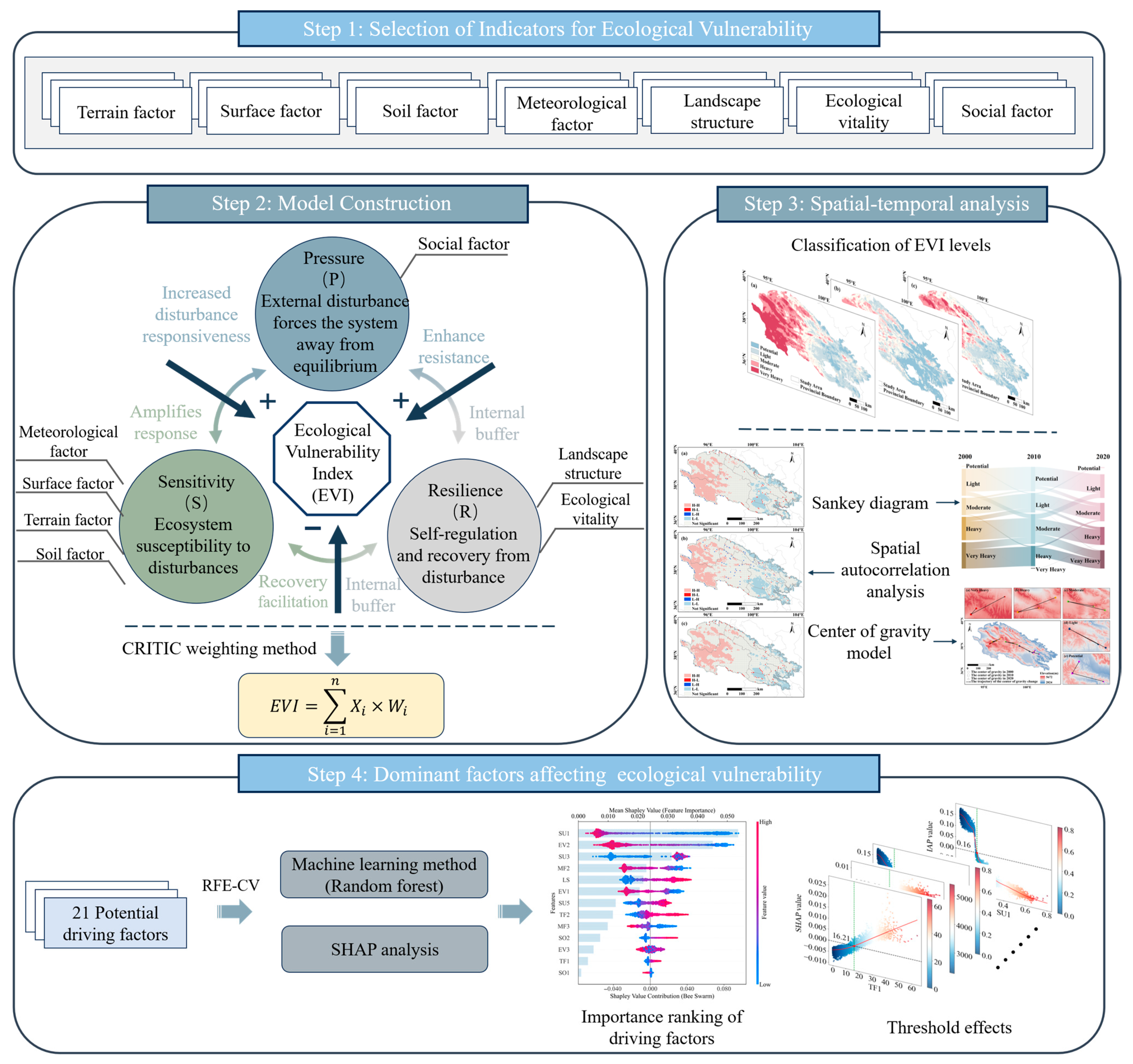
- EVI of the Qilian Mountains region showed minor regional changes but more pronounced local shifts, with ecological pressure trending eastward.
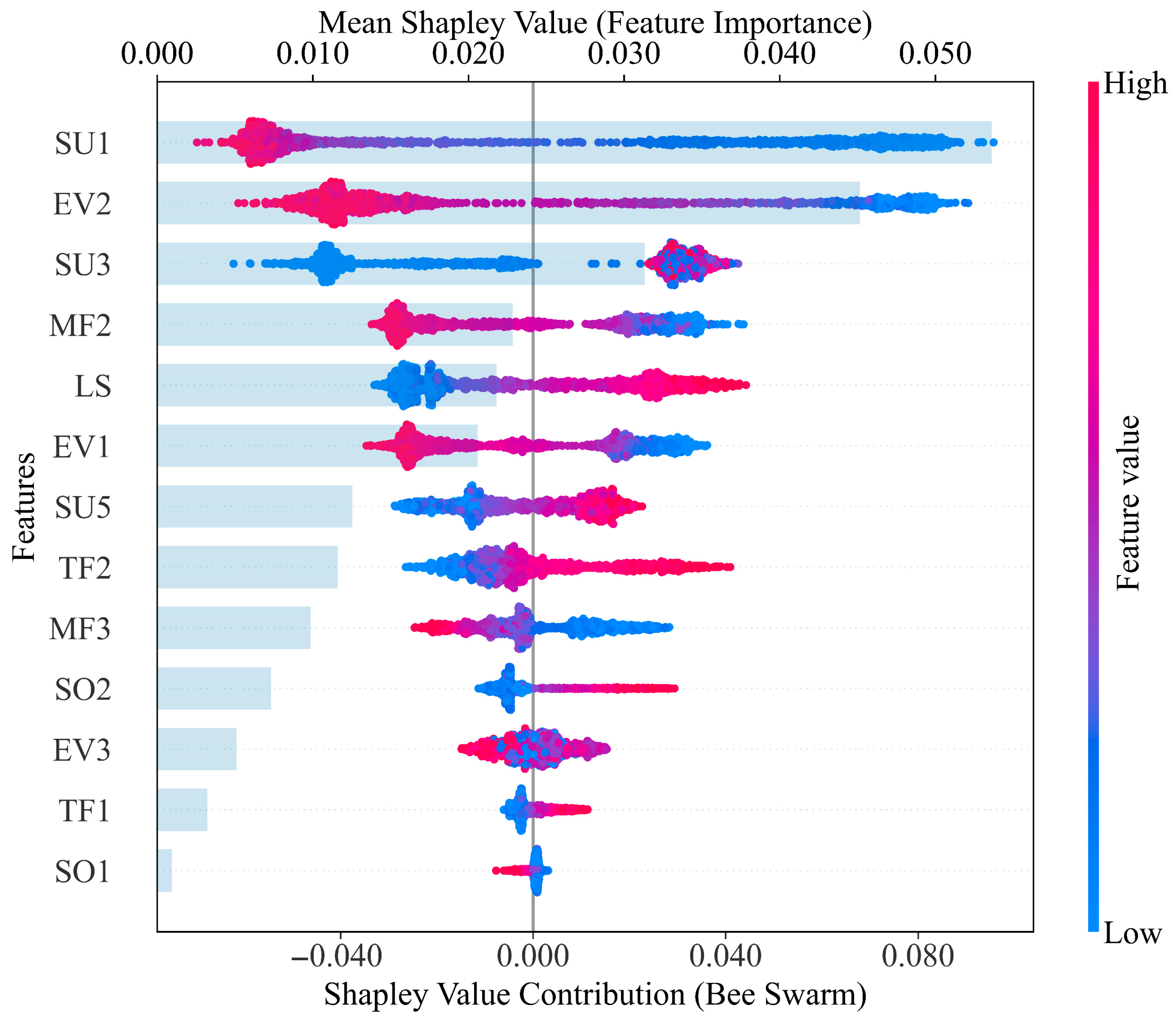
- Natural factors have a greater impact on the EVI of the Qilian Mountains region than socio-economic ones, and a unique finding is the prominent influence of glacial meltwater volume and the Freeze–thaw disaster risk index.
- Ecological degradation is already apparent in certain localities, demanding urgent and enhanced measures for ecological protection and restoration. In the long run, enhancing vegetation coverage will be conducive to mitigating ecological vulnerability.
- The unexpected prominence of cryospheric elements as key drivers of ecological vulnerability offers a new perspective for guiding future ecological restoration strategies. Concurrently, monitoring key indicator thresholds is essential for informing targeted ecological management of the Qilian Mountains region.
Abstract
1. Introduction
2. Data and Methods
2.1. Study Area
2.2. Data Sources
2.3. Ecological Vulnerability Index (EVI)
2.4. The Ecological Vulnerability Assessment Methods
2.5. Spatial Analysis
2.6. RF–SHAP Interpretable Machine Learning Model
3. Result
3.1. The Temporal Characteristics of EVI
3.2. The Spatial Characteristics of EVI
3.3. The Driving Forces of the EVI
4. Discussion
4.1. The Spatio-Temporal Patterns of EVI
4.2. Driving Forces of EVI
4.3. Limitation and Outlook
5. Conclusions
- (1)
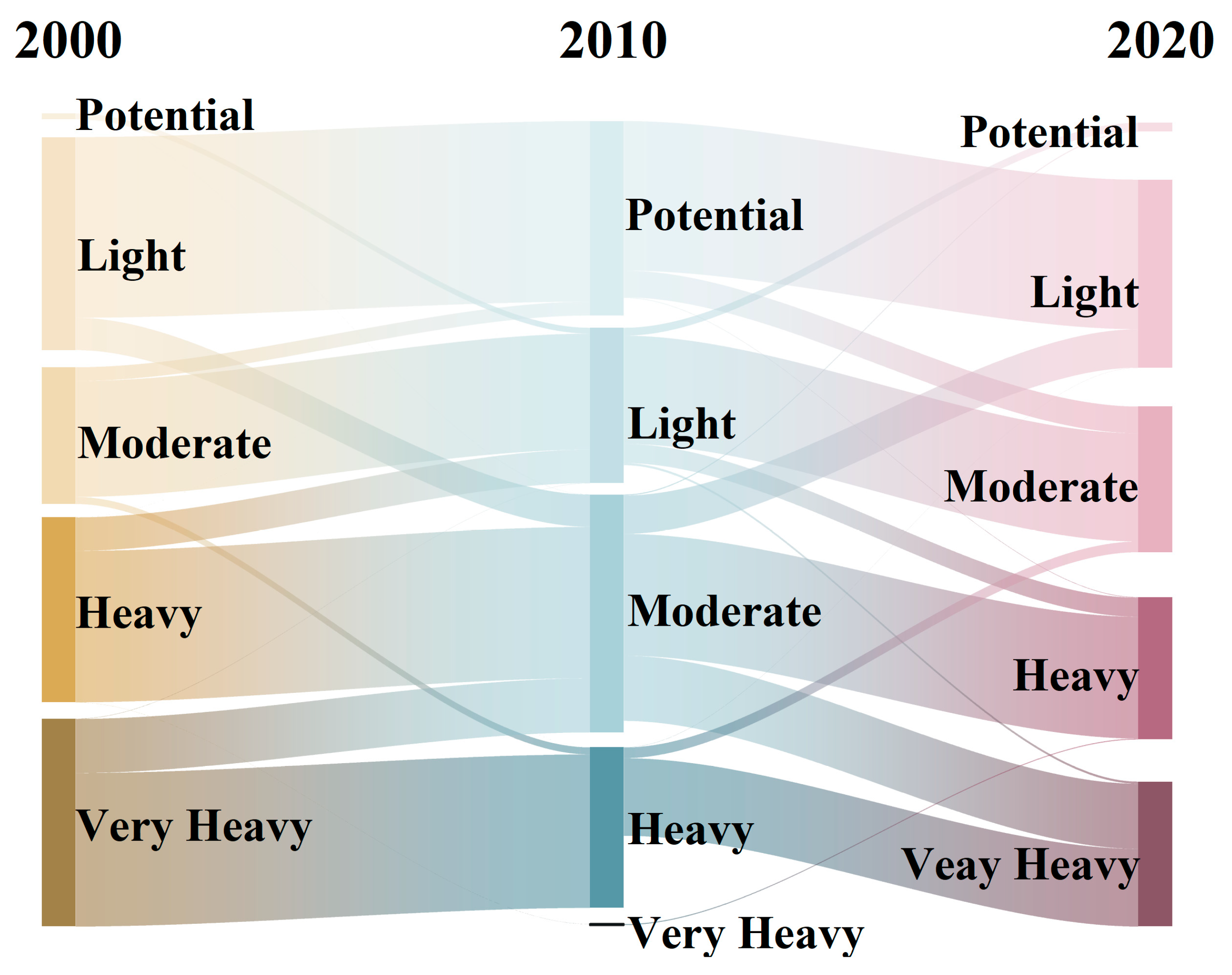
- The region has undergone a clear transition in regional ecological vulnerability from high to low levels. This trend strongly suggests that the environmental governance policies enacted by local and national authorities have been highly effective, contributing to substantial ecological improvements and paving the way for sustainable regional development. While the study area is characterized by a spatial pattern of high vulnerability in the west and low in the east, the environmental pressure in the eastern region is projected to rise gradually.
- (2)
- The dominant drivers of ecological vulnerability in the study area are natural factors. Notably, the distinct prominence of glacier and permafrost elements as key drivers of local vulnerability underscores the amplifying effect of climate change on alpine ecosystems, offering a new perspective for future ecological restoration strategies. Furthermore, enhancing vegetation coverage remains critical for mitigating ecological vulnerability.
- (3)
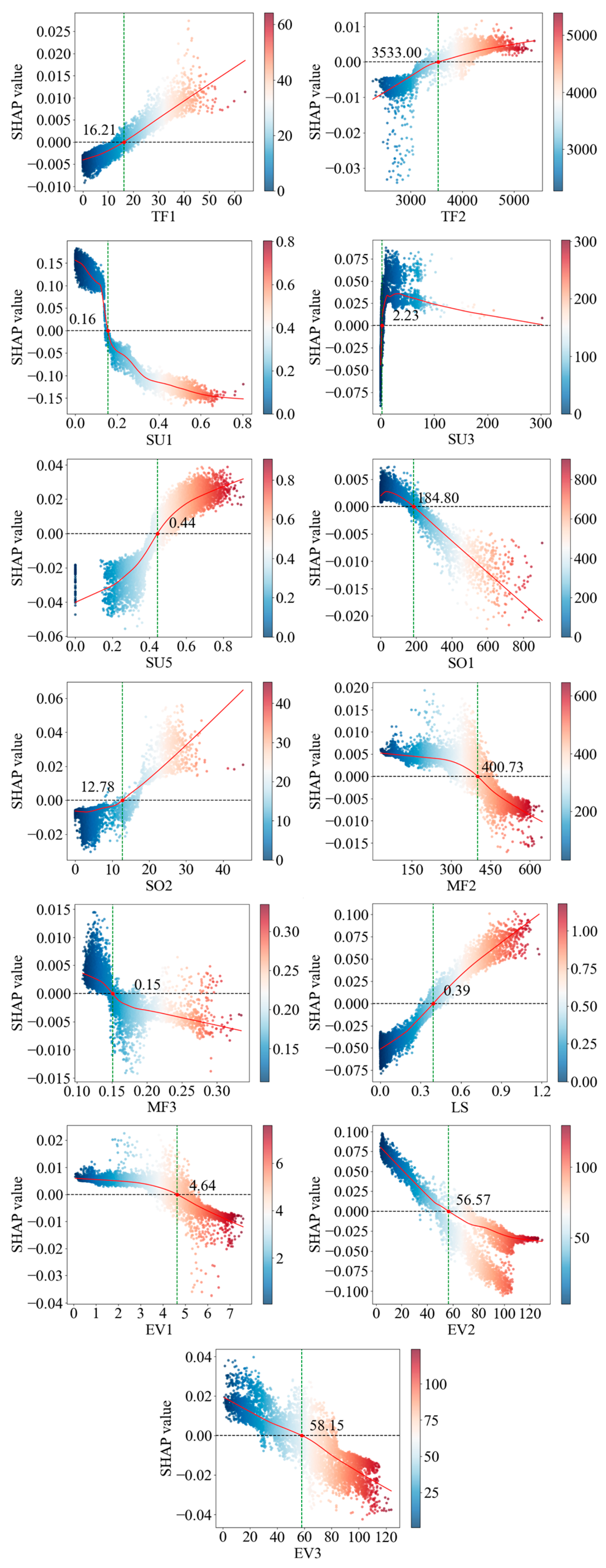
- Based on the validated reliability of the RF–SHAP model in quantifying feature contributions and nonlinear relationships, this study proposes a threshold-based, zone-specific management strategy. By implementing interventions in low-threshold zones and early warning monitoring in high-threshold zones, this strategy provides a scientific basis for constructing a regional ecological early-warning system and preventing the ecosystem from crossing irreversible tipping points.
Author Contributions
Funding
Data Availability Statement
Conflicts of Interest
References
- Bertram, G.C.L.; Burton, I.; Kates, R.W.; White, G.F. The Environment as Hazard. Geogr. J. 1979, 145, 126. [Google Scholar] [CrossRef]
- Ge, Y.; Zhang, H.; Dou, W.; Chen, W.; Liu, N.; Wang, Y.; Shi, Y.; Rao, W. Mapping Social Vulnerability to Air Pollution: A Case Study of the Yangtze River Delta Region, China. Sustainability 2017, 9, 109. [Google Scholar] [CrossRef]
- Timmerman, P. Vulnerability, Resilience and the Collapse of Society; Royal Meteorological Society: London, UK, 1981. [Google Scholar]
- Kasperson, J.X.; Kasperson, R.E.; Turner, B.L. Vulnerability to global environmental change. In Social Contours of Risk; Routledge: London, UK, 2012; Volume 2, pp. 245–285. [Google Scholar] [CrossRef]
- Liu, Y.Q. Spatial-Temporal Evolution and Ecological Vulnerability of Ecological Environmental Factors in Ulan Buh Desert; Inner Mongolia Agricultural University: Inner Mongolia, China, 2022. [Google Scholar]
- IPCC. Climate Change 2014: Impacts, Adaptation, and Vulnerability. In Contribution of Working Group II to the Fifth Assessment Report; Cambridge University Press: Cambridge, UK, 2014. (In Chinese) [Google Scholar]
- Jiang, T.; Li, X.; Chao, Q.; Yuan, J.; Lin, E. Highlights and Understanding of Climate Change 2014: Impacts, Adaptation, and Vulnerability. Progress. Inquisitiones Mutat. Clim. 2014, 10, 157–166. [Google Scholar]
- Ippolito, A.; Sala, S.; Faber, J.H.; Vighi, M. Ecological vulnerability analysis: A river basin case study. Sci. Total Environ. 2010, 408, 3880–3890. [Google Scholar] [CrossRef]
- Lamsal, P.; Kumar, L.; Atreya, K.; Pant, K.P. Vulnerability and impacts of climate change on forest and freshwater wetland ecosystems in Nepal: A review. Ambio 2017, 46, 915–930. [Google Scholar] [CrossRef]
- Pandey, R.; Bardsley, D.K. Social-ecological vulnerability to climate change in the Nepali Himalaya. Appl. Geogr. 2015, 64, 74–86. [Google Scholar] [CrossRef]
- Logez, M.; Bouraï, L.; Tronquart, N.H.; Argillier, C. Ecological Vulnerability of Aquatic Ecosystems-A Review. Environ. Manag. 2024, 75, 192–204. [Google Scholar] [CrossRef]
- Zhuang, L.; Huang, L.; Zhao, C.; Zheng, G.; Tang, W.; Zhou, D.; Zhu, J. Identification and assessment of the mudflat ecological vulnerability dominated by coastline evolution in Jiangsu. Ecol. Indic. 2024, 168, 112761. [Google Scholar] [CrossRef]
- Li, Q.; Shi, X.; Wu, Q. Effects of protection and restoration on reducing ecological vulnerability. Sci. Total Environ. 2021, 761, 143180. [Google Scholar] [CrossRef]
- Xiao, H.; Shao, H.; Long, J.; Zhang, S.; He, S.; Wang, D. Spatial-temporal pattern evolution and geological influence factors analysis of ecological vulnerability in Western Sichuan mountain region. Ecol. Indic. 2023, 155, 110980. [Google Scholar] [CrossRef]
- Zhu, Y.; Hou, K.; Chang, Y.; Li, X.; Yang, K. Analysis of Ecological Vulnerability Control Strategies for Typical River Valley Cities in Northwest China: A Perspective of Spatial Heterogeneity. Land Degrad. Dev. 2024, 35, 5626–5647. [Google Scholar] [CrossRef]
- Zhang, M.; Zhou, Y.; Sang, S. Vulnerability analysis of the economic-social-ecological complex system of Island tourism destinations. PLoS ONE 2025, 20, e0324714. [Google Scholar]
- Gao, T.G.; Zhang, T.J.; Cao, L.; Kang, S.C.; Sillanpää, M. Reduced winter runoff in a mountainous permafrost region in the northern Tibetan Plateau. Cold Reg. Sci. Technol. 2016, 126, 36–43. [Google Scholar] [CrossRef]
- Navas, A.; Ramírez, E.; Gaspar, L.; Lizaga, I.; Stott, T.; Rojas, F.; Latorre, B.; Dercon, G. The impact of glacier retreat on Andean high wetlands: Assessing the geochemical transfer and sediment provenance in the proglacial area of Huayna-Potosí (Bolivia). Geomorphology 2024, 460, 109250. [Google Scholar] [CrossRef]
- Losapio, G.; Lee, J.R.; Fraser, C.I.; Gillespie, M.A.K.; Kerr, N.R.; Zawierucha, K.; Hamilton, T.L.; Hotaling, S.; Kaufmann, R.; Kim, O.S. Impacts of deglaciation on biodiversity and ecosystem function. Nat. Rev. Biodivers. 2025, 1, 371–385. [Google Scholar] [CrossRef]
- Milner, A.M.; Khamis, K.; Battin, T.J.; Brittain, J.E.; Barrand, N.E.; Füreder, L.; Cauvy-Fraunié, S.; Gíslason, G.M.; Jacobsen, D.; Hannah, D.M.; et al. Glacier shrinkage driving global changes in downstream systems. Proc. Natl. Acad. Sci. USA 2017, 114, 9770–9778. [Google Scholar] [CrossRef]
- Wright, S.N.; Thompson, L.M.; Olefeldt, D.; Connon, R.F.; Carpino, O.A.; Beel, C.R.; Quinton, W.L. Thaw-induced impacts on land and water in discontinuous permafrost: A review of the Taiga Plains and Taiga Shield, northwestern Canada. Earth-Sci. Rev. 2022, 232, 104104. [Google Scholar] [CrossRef]
- Ding, L.K.; Hu, W.J.; Chen, B.; Loh, K.H.; Jilian, L.S.; Lee, L.K.; Qiu, S.T.; Gu, H.F.; Zheng, X.Q.; Liang, S.S.; et al. Ecological vulnerability assessment of tropical seagrass beds andcoral reefs: A case study of Sibu-Tinggi Archipelago, Malaysia. Chin. J. Ecol. 2022, 41, 2479–2488. [Google Scholar] [CrossRef]
- Xue, L.Q.; Wang, J.; Zhang, L.C.; Wei, G.H.; Zhu, B.L. Spatiotemporal analysis of ecological vulnerability and management in the Tarim River Basin, China. Sci. Total Environ. 2019, 649, 876–888. [Google Scholar] [CrossRef]
- Ye, H.; Bai, D.; Wang, J.L.; Tan, S.C.; Liu, S.Y. Assessment of Ecosystem Vulnerability in the Tropic of Cancer (Yunnan Section). Remote Sens. 2025, 17, 219. [Google Scholar] [CrossRef]
- Luo, M.; Jia, X.; Zhao, Y.; Zhang, P.; Zhao, M. Ecological vulnerability assessment and its driving force based on ecological zoning in the Loess Plateau, China. Ecol. Indic. 2024, 159, 11658. [Google Scholar] [CrossRef]
- Feng, Z.; Liu, X.P.; Zhang, J.Q.; Wu, R.; Ma, Q.Y.; Chen, Y.N. Ecological vulnerability assessment based on multi-sources data and SD model in Yinma River Basin, China. Ecol. Model. 2017, 349, 41–50. [Google Scholar] [CrossRef]
- Tian, J.H.; Guo, C.C.; Wang, J.H. Quantitative Assessment of the Ecological Vulnerability of Baiyangdian Wetlands in the North China Plain. J. Resour. Ecol. 2021, 12, 814–821. [Google Scholar] [CrossRef]
- Sun, Z.; Liu, Y.; Sang, H. Spatial-Temporal Variation and Driving Factors of Ecological Vulnerability in Nansi Lake Basin, China. Int. J. Environ. Res. Public Health 2023, 20, 2653. [Google Scholar] [CrossRef]
- Zhang, X.Q.; Zheng, Y.P.; Yang, Y.; Ren, H.; Liu, J.W. Spatiotemporal evolution of ecological vulnerability on the Loess Plateau. Ecol. Indic. 2025, 170, 113060. [Google Scholar] [CrossRef]
- Zhang, Y.Q.; Xiong, K.N.; Chen, Y.; Bai, X. Spatiotemporal changes and driving factors of ecological vulnerability in karst World Heritage sites based on SRP and geodetector: A case study of Shibing and Libo-Huanjiang karst. npj Herit. Sci. 2025, 13, 65. [Google Scholar] [CrossRef]
- Jiang, B.H.; Chen, W.; Dai, X.A.; Xu, M.; Liu, L.F.; Sakai, T.; Li, S.L. Change of the spatial and temporal pattern of ecological vulnerability: A case study on Cheng-Yu urban agglomeration, Southwest China. Ecol. Indic. 2023, 149, 110161. [Google Scholar] [CrossRef]
- Li, Y.H.; Fan, Q.; Wang, X.; Xi, J.C.; Wang, S.Y.; Yang, J. Spatial and Temporal Differentiation of Ecological Vulnerability Under the Frequency of Natural Hazard Based on SRP Model: A Case Study in Chaoyang County. Geogr. Sci. 2015, 35, 1452–1459. [Google Scholar] [CrossRef]
- Wang, Z.Y.; Xiong, H.X.; Zhang, F.W.; Qiu, Y.; Ma, C.M. Sustainable development assessment of ecological vulnerability in arid areas under the influence of multiple indicators. J. Clean. Prod. 2024, 436, 140629. [Google Scholar] [CrossRef]
- Bao, T.A.; Xi, G.L. Impact of grassland storage balance management policies on ecological vulnerability: Evidence from ecological vulnerability assessments in the Selinco region of China. J. Clean. Prod. 2023, 426, 139178. [Google Scholar] [CrossRef]
- Das, U.; Behera, B. Geospatial assessment of ecological vulnerability of fragile Eastern Duars Forest integrating GIS-based AHP, CRITIC and AHP-TOPSIS models. Geomat. Nat. Hazards Risk 2024, 15, 2330529. [Google Scholar] [CrossRef]
- Wu, C.S.; Huang, C.; Liu, G.H.; Liu, Q.S. Assessment of ecological vulnerability in the Yellow River Delta using the FuzzyAnalytic Hierarchy Process. Acta Ecol. Sin. 2018, 38, 4584–4595. [Google Scholar]
- Wang, Z.; Zhong, Y.; Chai, S.L.; Niu, S.F.; Yang, M.L.; Wu, G.R. Product design evaluation based on improved CRITIC and Comprehensive Cloud-TOPSIS—Applied to automotive styling design evaluation. Adv. Eng. Inform. 2024, 60, 102361. [Google Scholar] [CrossRef]
- He, S.; Nong, L.; Wang, J.; Zhong, X.; Ma, J. Revealing various change characteristics and drivers of ecological vulnerability in the mountains of southwest China. Ecol. Indic. 2024, 167, 112680. [Google Scholar] [CrossRef]
- Aghaloo, K.; Sharifi, A. Balancing priorities for a sustainable future in cities: Land use change and urban ecosystem service dynamics. J. Environ. Manag. 2025, 382, 125460. [Google Scholar] [CrossRef]
- Ayanlade, A.; Smucker, T.A.; Nyasimi, M.; Sterly, H.; Weldemariam, L.F.; Simpson, N.P. Complex climate change risk and emerging directions for vulnerability research in Africa. Clim. Risk Manag. 2023, 40, 100497. [Google Scholar] [CrossRef]
- Santos, F.; Graw, V.; Bonilla, S. A geographically weighted random forest approach for evaluate forest change drivers in the Northern Ecuadorian Amazon. PLoS ONE 2019, 14, e0226224. [Google Scholar] [CrossRef]
- Anees, S.A.; Mehmood, K.; Khan, W.R.; Sajjad, M.; Alahmadi, T.A.; Alharbi, S.A.; Luo, M. Integration of machine learning and remote sensing for above ground biomass estimation through Landsat-9 and field data in temperate forests of the Himalayan region. Ecol. Inform. 2024, 82, 102732. [Google Scholar] [CrossRef]
- Wang, F.; Wang, Y.; Zhang, K.; Hu, M.; Weng, Q.; Zhang, H. Spatial heterogeneity modeling of water quality based on random forest regression and model interpretation. Environ. Res. 2021, 202, 111660. [Google Scholar] [CrossRef]
- Wang, H.; Liang, Q.; Hancock, J.T.; Khoshgoftaar, T.M. Feature selection strategies: A comparative analysis of SHAP-value and importance-based methods. J. Big Data 2024, 11, 44. [Google Scholar] [CrossRef]
- Zhou, M.; Li, Y. Spatial distribution and source identification of potentially toxic elements in Yellow River Delta soils, China: An interpretable machine-learning approach. Sci. Total Environ. 2024, 912, 169092. [Google Scholar] [CrossRef] [PubMed]
- Gui, J.; Wang, X.F.; Li, Z.X.; Zou, H.M.; Li, A.J. Research on the response of vegetation change to human activities intypical cryosphere areas: Taking the Qilian Mountains as an example. J. Glaciol. Geocryol. 2019, 41, 1235–1243. [Google Scholar]
- Li, X.; Gou, X.; Wang, N.; Sheng, Y.; Jin, H.; Qi, Y.; Song, X.; Hou, F.; Li, Y.; Zhao, C.; et al. Tightening ecological management facilitates green development in the Qilian Mountains. Chin. Sci. Bull. 2019, 64, 2928–2937. [Google Scholar] [CrossRef]
- Gui, J.; Li, Z.; Xue, J.; Du, F.; Cui, Q. The effect of freeze-thaw action on the dynamic change of supra-permafrost water sources: A stable isotope perspective. J. Environ. Manag. 2024, 356, 120536. [Google Scholar] [CrossRef]
- Guo, J.; Zheng, W.; Li, Y.; Su, Q.; Zhang, D.; Wei, S.; Sun, X.; Yang, F. Quantitative geomorphological analyses reveal late Cenozoic uneven tectonic expansion at the North Qilian Shan. Earth Surf. Process. Landf. 2025, 50, e70090. [Google Scholar] [CrossRef]
- Li, T.; Zhao, J.; Wu, G.L. Glaciers retreat-induced gravelization encroached alpine hillside grassland: A case study in Qilian Mountain, China. Catena 2025, 254, 108905. [Google Scholar] [CrossRef]
- Liu, Z.; Si, J.; He, X.; Jia, B.; Zhou, D.; Wang, C.; Zhu, X.; Qin, J.; Ndayambaza, B.; Bai, X. The impact of desertification on soil health stability in Semi-Arid alpine Regions: A case study of the Qilian Mountains in the northeastern Tibetan Plateau, China. Ecol. Indic. 2024, 163, 112098. [Google Scholar] [CrossRef]
- Wang, X.; Pang, G.; Yang, M.; Wan, G.; Liu, Z. Precipitation changes in the Qilian Mountains associated with the shifts of regional atmospheric water vapour during 1960–2014. Int. J. Climatol. 2018, 38, 4355–4368. [Google Scholar] [CrossRef]
- Zuo, Y.F.; Li, Y.H.; He, K.N.; Wen, Y.S. Temporal and spatial variation characteristics of vegetation coverage and quantitative analysis of its potential driving forces in the Qilian Mountains, China, 2000–2020. Ecol. Indic. 2022, 143, 109429. [Google Scholar] [CrossRef]
- Sun, M.P.; Ma, W.Q.; Yao, X.J.; Zhang, M.J.; Li, Z.Q.; Qin, D.H. Assessment and spatiotemporal characteristics of service value ofglaciers in the Qilian Mountains. Acta Geogr. Sin. 2021, 76, 178–190. [Google Scholar]
- Tian, H.; Yang, T.; Liu, Q. Climate change and glacier area shrinkage in the Qilian mountains, China, from 1956 to 2010. Ann. Glaciol. 2014, 55, 187–197. [Google Scholar] [CrossRef]
- Peng, C.Y.; Sheng, Y.; Wu, J.C.; Cao, W.; He, B.B. Simulation of the permafrost distribution in the Qilian Mountains. J. Glaciol. Geocryol. 2021, 43, 158–169. [Google Scholar]
- Jin, Z.; Zhao, Q.; Qin, X.; Zhang, J.; Li, Y.; Liu, Y.; Chen, J. The cryosphere change will intensify the summer drought in Qilian Mountains, northeastern of the Tibetan plateau. J. Hydrol. Reg. Stud. 2023, 47, 101401. [Google Scholar] [CrossRef]
- Li, J.; He, H.; Zeng, Q.; Chen, L.; Sun, R. Dataset of Soil Conservation Capacity Preventing Water Erosion in China (1992–2019). Sci. Data Bank 2023, 10, 319. [Google Scholar] [CrossRef]
- Luers, A.L.; Lobell, D.B.; Sklar, L.S.; Addams, C.L.; Matson, P.A. A method for quantifying vulnerability, applied to the agricultural system of the Yaqui Valley, Mexico. Glob. Environ. Change 2003, 13, 255–267. [Google Scholar] [CrossRef]
- Wu, G.; Tian, J.; Feng, X.; Ren, Y.; Bao, W.; He, C.; Yu, T.; Wu, J. Spatiotemporal variation and driving factors of ecological vulnerability in arid and semi-arid regions: A case study of Ningxia, China. Catena 2025, 259, 109378. [Google Scholar] [CrossRef]
- Wu, X.; Zhu, C.; Yu, J.; Zhai, L.; Zhang, H.; Yang, K.; Hou, X. Ecological Vulnerability in the Red Soil Erosion Area of Changting under Continuous Ecological Restoration: Spatiotemporal Dynamic Evolution and Prediction. Forests 2022, 13, 2136. [Google Scholar] [CrossRef]
- Cai, Y.; Guo, X.; Liu, J.; Wang, D.; Zheng, J. Ecological geological vulnerability assessment in Northern Shanxi Province (China) based on sensitivity resilience pressure (SRP) model. Sci. Rep. 2025, 15, 8063. [Google Scholar] [CrossRef]
- Zhang, H.; Liu, Y.; Li, J.; Tian, P.; Zhong, J.; Gong, H. Evaluation and analysis of coastal complex ecological resilience based on multidimensional data: A case study of East China Sea. Ecol. Indic. 2023, 155, 110981. [Google Scholar] [CrossRef]
- Zou, T.H.; Chang, Y.X.; Chen, P.; Liu, J.F. Spatial-temporal variations of ecological vulnerability in Jilin Province (China), 2000 to 2018. Ecol. Indic. 2021, 133, 108429. [Google Scholar] [CrossRef]
- Li, Y.; Xie, W.; Sui, K.; Zhang, D.; Wan, Q. Revealing various change characteristics and drivers of ecological vulnerability in the Luan river basin based on the SRP model. Sci. Rep. 2025, 15, 33021. [Google Scholar] [CrossRef] [PubMed]
- Li, Y.; Liu, J.; Zhu, Y.; Wu, C.; Zhang, Y. Spatiotemporal Differentiation and Attribution Analysis of Ecological Vulnerability in Heilongjiang Province, China, 2000–2020. Sustainability 2025, 17, 2239. [Google Scholar] [CrossRef]
- Zhang, X.; Wang, L.; Fu, X.; Li, H.; Xu, C. Ecological vulnerability assessment based on PSSR in Yellow River Delta. J. Clean. Prod. 2017, 167, 1106–1111. [Google Scholar] [CrossRef]
- Wu, X.; Huang, X. Research on the geometric weighting-coupling degree method for the urban ecological environment vulnerability index. Ecol. Indic. 2024, 162, 112023. [Google Scholar] [CrossRef]
- Zhang, Y.; Su, L.X. Ecological Vulnerability Assessment and Driving Factor Analysis in the Middle Section of Yellow River Basin Based on SRP Model. Huan Jing Ke Xue Huanjing Kexue 2025, 46, 5134–5144. [Google Scholar] [CrossRef]
- Kang, H.; Tao, W.; Chang, Y.; Zhang, Y.; Xuxiang, L.; Chen, P. A feasible method for the division of ecological vulnerability and its driving forces in Southern Shaanxi. J. Clean. Prod. 2018, 205, 619–628. [Google Scholar] [CrossRef]
- Chen, Y.L.; Shen, S.L.; Zhou, A.N. Assessment of red tide risk by integrating CRITIC weight method, TOPSIS-ASSETS method, and Monte Carlo simulation. Environ. Pollut. 2022, 314, 120254. [Google Scholar] [CrossRef]
- Aubréville, A.; Chevalier, A. Climats, Forêts et Désertification de l’Afrique Tropicale/Par A. Aubréville; préface de Aug. Chevalier; Geographical, Maritime and Colonial Publishing Company: Paris, France, 1949. [Google Scholar]
- Mu, X.; Kun, J.; Zhao, W.; Liu, S.; Wei, X.; Wang, B. Spatio-temporal changes of ecological vulnerability across the Qinghai-Tibetan Plateau. Ecol. Indic. 2021, 123, 107274. [Google Scholar] [CrossRef]
- Breiman, L. Random Forests. Mach. Learn. 2001, 45, 5–32. [Google Scholar] [CrossRef]
- Lundberg, S.; Lee, S.I. A Unified Approach to Interpreting Model Predictions. In Proceedings of the NIPS, Long Beach, CA, USA, 4–9 December 2017. [Google Scholar]
- Demarchi, L.; Kania, A.; Ciężkowski, W.; Piórkowski, H.; Oświecimska-Piasko, Z.; Chormański, J. Recursive Feature Elimination and Random Forest Classification of Natura 2000 Grasslands in Lowland River Valleys of Poland Based on Airborne Hyperspectral and LiDAR Data Fusion. Remote Sens. 2020, 12, 1842. [Google Scholar]
- Wang, Y.; Niu, R.; Lin, G.; Xiao, Y.; Ma, H.; Zhao, L. Estimate of soil heavy metal in a mining region using PCC-SVM-RFECV-AdaBoost combined with reflectance spectroscopy. Environ. Geochem. Health 2023, 45, 9103–9121. [Google Scholar] [CrossRef] [PubMed]
- Lee, E.J.; Piao, D.; Song, C.; Kim, J.; Lim, C.-H.; Kim, E.; Moon, J.; Kafatos, M.; Lamchin, M.; Jeon, S.W.; et al. Assessing environmentally sensitive land to desertification using MEDALUS method in Mongolia. For. Sci. Technol. 2019, 15, 210–220. [Google Scholar] [CrossRef]
- Zhang, Q.; Cao, G.C.; Zhang, L.L.; Zhao, M.L.; Li, J.T. Dynamic Evaluation Map and Driving Force Analysis of Ecological Environment Quality on the Southern Slope of Qilian Mountains Based on GEE. Environ. Sci. 2025, 46, 4534–4544. [Google Scholar] [CrossRef]
- Zhang, X.Y.; Wei, W.; Zhou, L.; Guo, Z.C.; Li, Z.Y.; Zhang, J.; Xie, B.B. Analysis on spatio-temporal evolution of ecological vulnerability in arid areas of Northwest China. Acta Ecol. Sin. 2021, 41, 4707–4719. [Google Scholar] [CrossRef]
- Feng, J.; Jiang, Z. Strategies to Protect Forestry in Qilian Mountain Nature Reserve. In Proceedings of the 2019 9th International Conference on Social Science and Education Research(SSER 2019), Kitakyushu, Japan, 25–27 October 2019; p. 4. [Google Scholar]
- Lu, F.; Hu, H.; Sun, W.; Zhu, J.; Liu, G.; Zhou, W.; Zhang, Q.; Shi, P.; Liu, X.; Wu, X.; et al. Effects of national ecological restoration projects on carbon sequestration in China from 2001 to 2010. Proc. Natl. Acad. Sci. USA 2018, 115, 4039–4044. [Google Scholar] [CrossRef]
- Zhang, Y.; Wang, R.H.; Lu, C.W.; Zhou, L.M. Simulation and prediction of habitat quality in the Qilian Mountain Nature Reserve. J. Nanjing For. Univ. (Nat. Sci. Ed.) 2024, 48, 135–144. [Google Scholar]
- Qian, D.; Yan, C.; Xiu, L.; Feng, K. The impact of mining changes on surrounding lands and ecosystem service value in the Southern Slope of Qilian Mountains. Ecol. Complex. 2018, 36, 138–148. [Google Scholar] [CrossRef]
- Yuan, M.; Ouyang, J.; Zheng, S.; Tian, Y.; Sun, R.; Bao, R.; Li, T.; Yu, T.; Li, S.; Wu, D.; et al. Research on Ecological Effect Assessment Method of Ecological Restoration of Open-Pit Coal Mines in Alpine Regions. Int. J. Environ. Res. Public Health 2022, 19, 7682. [Google Scholar] [CrossRef]
- Xing, Z.; Peng, S.; Du, W.; He, Y.; Chong, S.; Feng, F.; Yu, P.; She, C.; Xu, D. Hydrogeological changes caused by opencast coal mining in steppe zone: A case study of Shengli 1 open-pit coal mine. Desalination Water Treat. 2018, 121, 126–133. [Google Scholar] [CrossRef]
- Krabbenhoft, K.; Kirby, D.; Biondini, M.; Halvorson, G.; Nilson, D. Topoedaphic unit analysis: A site classification system for reclaimed mined lands. CATENA 1993, 20, 289–301. [Google Scholar] [CrossRef]
- Wang, C.; Zhu, Y.; Wu, Z.; Xu, X. Ecological Vulnerability Evaluation and Change Analysis of the Tianshan Area Along the Pipeline of the “West-to-East Gas Transmission” Project Based on the SRP Model. Sustainability 2025, 17, 4301. [Google Scholar] [CrossRef]
- Ouyang, Z.; Zheng, H.; Xiao, Y.; Polasky, S.; Liu, J.; Xu, W.; Wang, Q.; Zhang, L.; Xiao, Y.; Rao, E.M.; et al. Improvements in ecosystem services from investments in natural capital. Science 2016, 352, 1455–1459. [Google Scholar] [CrossRef] [PubMed]
- Li, M.; Wu, P.; Ma, Z.; Pan, Z.; Lv, M.; Yang, Q.; Duan, Y. The Increasing Role of Vegetation Transpiration in Soil Moisture Loss across China under Global Warming. J. Hydrometeorol. 2022, 23, 253–274. [Google Scholar] [CrossRef]
- Zhang, Y.; Gao, T.; Kang, S.; Shangguan, D.; Luo, X. Albedo reduction as an important driver for glacier melting in Tibetan Plateau and its surrounding areas. Earth-Sci. Rev. 2021, 220, 103735. [Google Scholar] [CrossRef]
- Jin, X.-Y.; Jin, H.-J.; Iwahana, G.; Marchenko, S.S.; Luo, D.-L.; Li, X.-Y.; Liang, S.-H. Impacts of climate-induced permafrost degradation on vegetation: A review. Adv. Clim. Change Res. 2021, 12, 29–47. [Google Scholar] [CrossRef]
- Bao, R.; Ma, H.; Zhang, W. Ecological vulnerability evaluation and driving factors analysis of thesouthern foothills of the Qilian Mountains. J. Qinghai Univ. 2025, 43, 101–120. [Google Scholar]
- Yang, X.; Zhang, Z.; Zhou, H.; Liu, F.; Yu, H.; Zhao, B.; Wang, X.; Li, H.; Shi, Z. Social–Ecological Factors and Ecosystem Service Trade-Offs/Synergies in Vegetation Change Zones of Qilian Mountain National Park During 2000–2020. Remote Sens. 2025, 17, 1402. [Google Scholar] [CrossRef]
- Zhang, L.; Yang, L.; Zohner, C.M.; Crowther, T.W.; Li, M.; Shen, F.; Guo, M.; Qin, J.; Yao, L.; Zhou, C. Direct and indirect impacts of urbanization on vegetation growth across the world’s cities. Sci. Adv. 2022, 8, eabo0095. [Google Scholar] [CrossRef]
- Fang, Z.; Ding, T.; Chen, J.; Xue, S.; Zhou, Q.; Wang, Y.; Wang, Y.; Huang, Z.; Yang, S. Impacts of land use/land cover changes on ecosystem services in ecologically fragile regions. Sci. Total Environ. 2022, 831, 154967. [Google Scholar] [CrossRef]
- Zhang, B.T.; Li, Z.X.; Feng, Q.; Lu, Z.X.; Zhang, B.J.; Cheng, W.J. Evolution of ecosystem service values in Qilian Mountains based on land-use change from 1990 to 2020. Acta Ecol. Sin. 2024, 44, 4187–4202. [Google Scholar] [CrossRef]
- Liu, X.R.; Feng, T.J.; Zhang, Y.F.; Liu, Y.B.; Wang, P. Vegetation restoration affects soil hydrological processes in typical natural and planted forests on the Loess Plateau. J. Hydrol. 2025, 650, 132465. [Google Scholar] [CrossRef]
- Hallett, L.M.; Stein, C.; Suding, K.N. Functional diversity increases ecological stability in a grazed grassland. Oecologia 2017, 183, 831–840. [Google Scholar] [CrossRef] [PubMed]
- Willis, K.J.; Jeffers, E.S.; Tovar, C. What makes a terrestrial ecosystem resilient? A complex set of biotic and abiotic factors determines the resilience of an ecosystem. Science 2018, 359, 988–989. [Google Scholar] [CrossRef] [PubMed]
- Huss, M.; Hock, R. Global-scale hydrological response to future glacier mass loss. Nat. Clim. Change 2018, 8, 135–140. [Google Scholar] [CrossRef]
- Qin, J.; Ding, Y.; Shi, F.; Cui, J.; Chang, Y.; Han, T.; Zhao, Q. Links between seasonal suprapermafrost groundwater, the hydrothermal change of the active layer, and river runoff in alpine permafrost watersheds. Hydrol. Earth Syst. Sci. 2024, 28, 973–987. [Google Scholar] [CrossRef]
- Kang, E.S. Review and Prospect of Studies on Hydrology of Cold and Dry Regions in China. J. Glaciol. Geocryol. 1998, 20, 238–244. [Google Scholar] [CrossRef]
- Sun, B.Y.; Ren, F.P.; Ding, W.F.; Zhang, G.H.; Huang, J.Q.; Li, J.M.; Zhang, L. Effects of freeze-thaw on soil properties and water erosion. Soil Water Res. 2021, 16, 205–216. [Google Scholar] [CrossRef]
- Shu, Y.; Liu, S.; Wang, Z.; Xiao, J.; Shi, Y.; Peng, X.; Gao, H.; Wang, Y.; Yuan, W.; Yan, W.; et al. Effects of Aerosols on Gross Primary Production from Ecosystems to the Globe. Remote Sens. 2022, 14, 2759. [Google Scholar] [CrossRef]
- Yue, X.; Unger, N. Aerosol optical depth thresholds as a tool to assess diffuse radiation fertilization of the land carbon uptake in China. Atmos. Chem. Phys. 2017, 17, 1329–1342. [Google Scholar] [CrossRef]
- Terwayet Bayouli, O.; Zhang, W.; Terwayet Bayouli, H. Combining RUSLE model and the vegetation health index to unravel the relationship between soil erosion and droughts in southeastern Tunisia. J. Arid. Land 2023, 15, 1269–1289. [Google Scholar] [CrossRef]
- Masroor, M.; Sajjad, H.; Rehman, S.; Singh, R.; Hibjur Rahaman, M.; Sahana, M.; Ahmed, R.; Avtar, R. Analysing the relationship between drought and soil erosion using vegetation health index and RUSLE models in Godavari middle sub-basin, India. Geosci. Front. 2022, 13, 101312. [Google Scholar] [CrossRef]
- Zeng, W.; Tian, Y.; Zhai, J.; Sun, W.; Sun, Y.; Li, R.; Yang, Q. Soil erosion resilience under climate extremes: Disentangling the impacts of vegetation restoration and rainfall intensification across China. Ecol. Indic. 2025, 178, 113994. [Google Scholar] [CrossRef]
- Groffman, P.M.; Baron, J.S.; Blett, T.; Gold, A.J.; Goodman, I.; Gunderson, L.H.; Levinson, B.M.; Palmer, M.A.; Paerl, H.W.; Peterson, G.D.; et al. Ecological Thresholds: The Key to Successful Environmental Management or an Important Concept with No Practical Application? Ecosystems 2006, 9, 1–13. [Google Scholar] [CrossRef]
- Scheffer, M.; Carpenter, S.; Foley, J.A.; Folke, C.; Walker, B. Catastrophic shifts in ecosystems. Nature 2001, 413, 591–596. [Google Scholar] [CrossRef]



| Target Layer | Category of Index | Element Layer | Indicator Layer | Indicator Code | Data Sources | Spatial Resolution | Type of Relationship |
|---|---|---|---|---|---|---|---|
| Ecological vulnerability | Ecological sensitivity | Terrain factor | Slope gradient | TF1 | Resource and Environmental Science Data Platform | 30 m | Positive |
| Elevation | TF2 | 30 m | Positive | ||||
| Topographic relief | TF3 | 30 m | Positive | ||||
| Surface factor | Fractional vegetation cover | SU1 | National Tibetan Plateau Data Center | 250 m | Negative | ||
| Snow cover duration | SU2 | National Earth System Science Data Center | 500 m | Negative | |||
| Glacial meltwater volume | SU3 | [57] | 500 m | Negative | |||
| Snow disaster index | SU4 | National Earth System Science Data Center | 500 m | Positive | |||
| Freeze–thaw disaster risk index | SU5 | Gansu Provincial Industry Technology Center of Intelligent | 500 m | Positive | |||
| Equipment and Big Data for Disaster Prevention | |||||||
| Soil factor | Soil and water conservation capacity | SO1 | [58] | 1 km | Negative | ||
| Soil erosion intensity | SO2 | Resource and Environmental Science Data Platform | 1 km | Positive | |||
| Meteorological factor | Annual average temperature | MF1 | National Cryosphere Desert Data Center | 1 km | Negative | ||
| Annual precipitation | MF2 | National Cryosphere Desert Data Center | 1 km | Negative | |||
| Aerosol optical depth | MF3 | National Earth System Science Data Center | 1 km | Positive | |||
| Ecological resilience | Landscape structure | Landscape diversity index | LS | National Cryosphere Desert Data Center | 30 m | Positive | |
| Ecological vitality | Hydrological index | EV1 | National Cryosphere Desert Data Center | 500 m | Negative | ||
| Biological abundance | EV2 | National Cryosphere Desert Data Center | 500 m | Negative | |||
| Thermal comfort index | EV3 | China Meteorological Data Service Centre | 500 m | Negative | |||
| Ecological pressure | Social factor | Population density | SC1 | WorldPop | 1 km | Positive | |
| Herbage yield | SC2 | Geographic Remote Sensing Ecological Network Platform | 500 m | Negative | |||
| Per capita GDP | SC3 | Resource and Environmental Science Data Platform | 1 km | Negative | |||
| Artificial nighttime light index | SC4 | National Tibetan Plateau Data Center | 1 km | Positive |
| Classes | 2000 | 2010 | 2020 | |||
|---|---|---|---|---|---|---|
| Area/km2 | Percentage/% | Area/km2 | Percentage/% | Area/km2 | Percentage/% | |
| Potential | 13,739.75 | 7.29 | 48,961.00 | 25.99 | 17,598.75 | 9.34 |
| Light | 42,545.25 | 22.58 | 61,456.75 | 32.62 | 46,358.25 | 24.61 |
| Moderate | 48,226.25 | 25.60 | 37,496.00 | 19.90 | 46,986.00 | 24.94 |
| Heavy | 44,216.00 | 23.47 | 39,635.50 | 21.04 | 49,710.75 | 26.39 |
| Very Heavy | 39,663.75 | 21.05 | 848.50 | 0.45 | 27,744.00 | 14.73 |
| Total | 1.88 × 10⁵ | 99.99 | 1.88 × 10⁵ | 100.00 | 1.88 × 10⁵ | 100.01 |
Disclaimer/Publisher’s Note: The statements, opinions and data contained in all publications are solely those of the individual author(s) and contributor(s) and not of MDPI and/or the editor(s). MDPI and/or the editor(s) disclaim responsibility for any injury to people or property resulting from any ideas, methods, instructions or products referred to in the content. |
© 2026 by the authors. Licensee MDPI, Basel, Switzerland. This article is an open access article distributed under the terms and conditions of the Creative Commons Attribution (CC BY) license.
Share and Cite
Yi, X.; Xue, X.; Lu, C.; Li, B.; Liu, M.; Chen, J.; Jiang, Y.; Du, W. Cryosphere Ecological Vulnerability in the Qilian Mountains Region: Trends, Drivers, and Adaptation. Remote Sens. 2026, 18, 268. https://doi.org/10.3390/rs18020268
Yi X, Xue X, Lu C, Li B, Liu M, Chen J, Jiang Y, Du W. Cryosphere Ecological Vulnerability in the Qilian Mountains Region: Trends, Drivers, and Adaptation. Remote Sensing. 2026; 18(2):268. https://doi.org/10.3390/rs18020268
Chicago/Turabian StyleYi, Xiaoya, Xingyu Xue, Changsheng Lu, Bowen Li, Mengyuan Liu, Jizu Chen, Youyan Jiang, and Wentao Du. 2026. "Cryosphere Ecological Vulnerability in the Qilian Mountains Region: Trends, Drivers, and Adaptation" Remote Sensing 18, no. 2: 268. https://doi.org/10.3390/rs18020268
APA StyleYi, X., Xue, X., Lu, C., Li, B., Liu, M., Chen, J., Jiang, Y., & Du, W. (2026). Cryosphere Ecological Vulnerability in the Qilian Mountains Region: Trends, Drivers, and Adaptation. Remote Sensing, 18(2), 268. https://doi.org/10.3390/rs18020268