Article

Self-Supervised Pre-Training Style Adaptation-Guided Remote Sensing Image Change Detection Network


1
Yunnan Key Laboratory of Quantitative Remote Sensing/Yunnan International Joint Laboratory for Integrated Sky-Ground Intelligent Monitoring of Mountain Hazards, Faculty of Land Resources Engineering, Kunming University of Science and Technology, Kunming 650093, China
2
Southwest United Graduate School, Kunming 650092, China
3
State Key Lab of Resources and Environmental Information System, Institute of Geographic Sciences and Natural Resources Research, Chinese Academy of Sciences, Beijing 100101, China
*
Author to whom correspondence should be addressed.
Remote Sens. 2026, 18(15), 2523; https://doi.org/10.3390/rs18152523
Submission received: 19 June 2026 / Revised: 23 July 2026 / Accepted: 23 July 2026 / Published: 2 August 2026
(This article belongs to the Section AI Remote Sensing)

Abstract

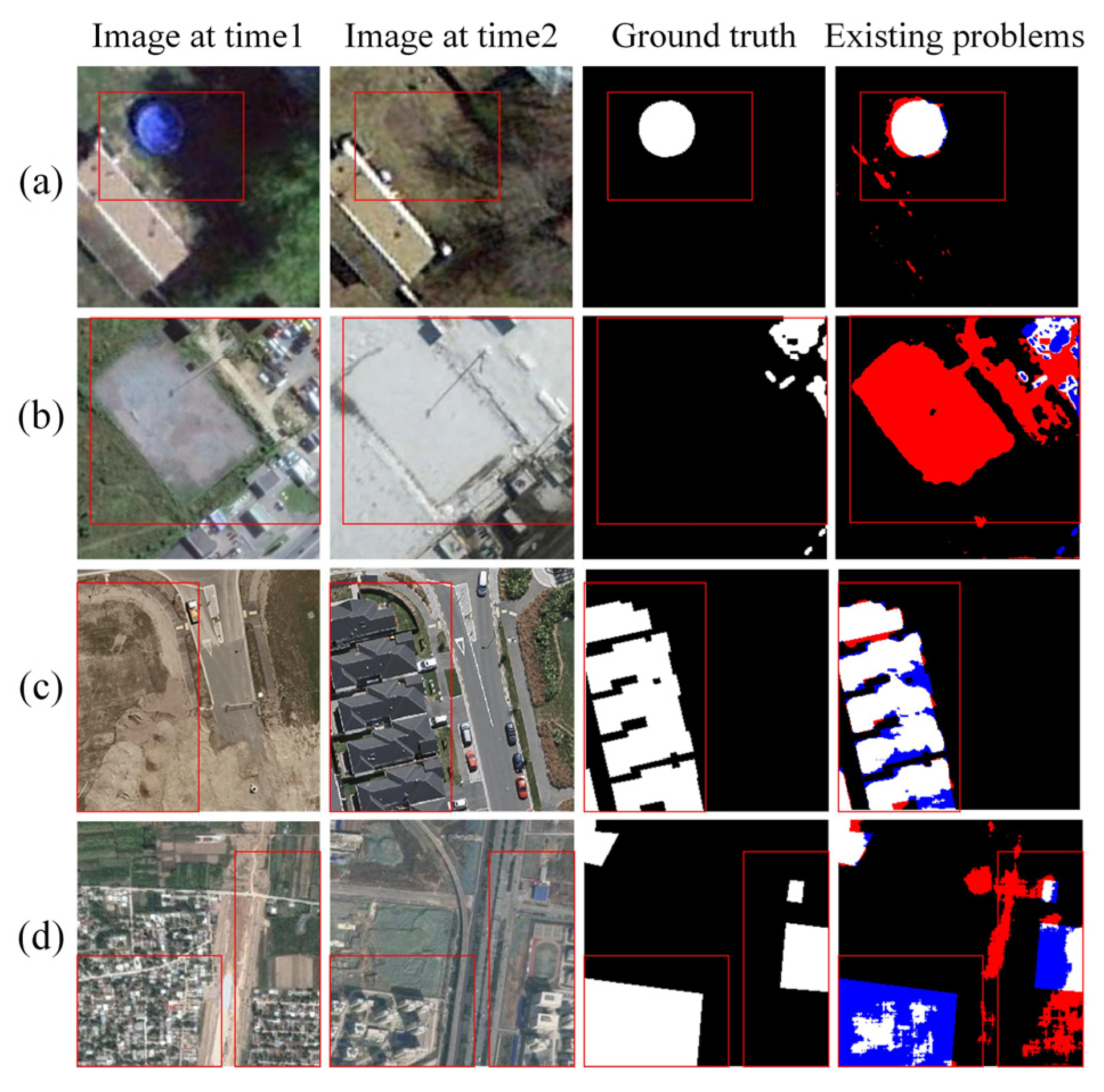
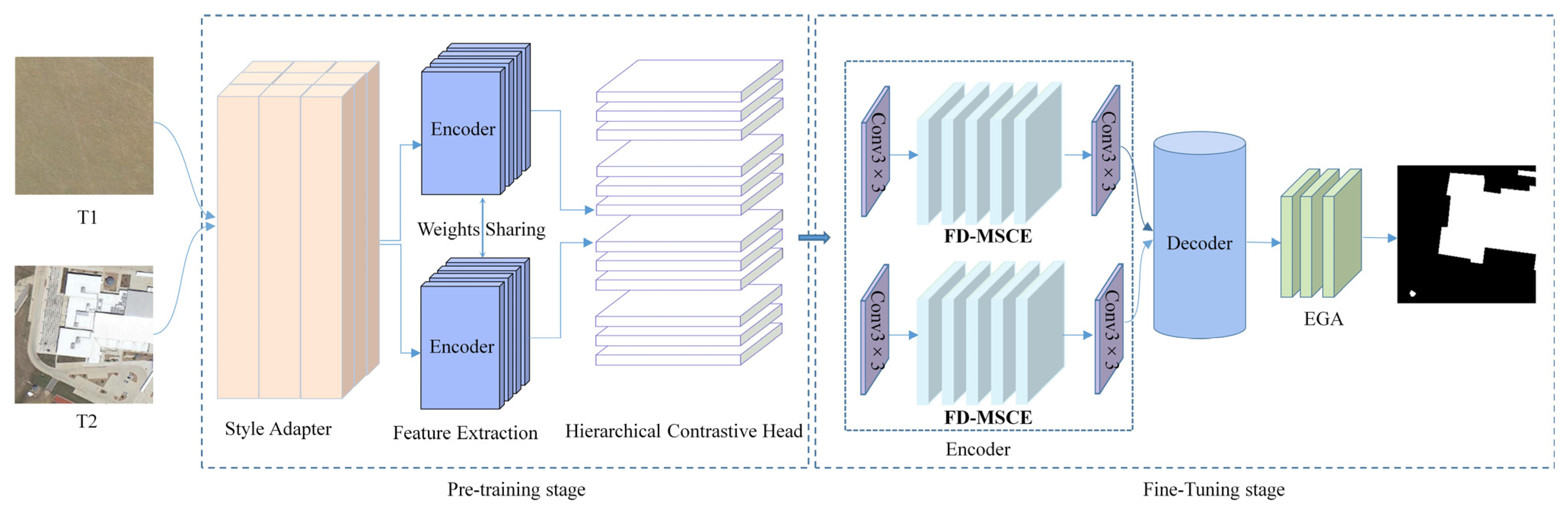
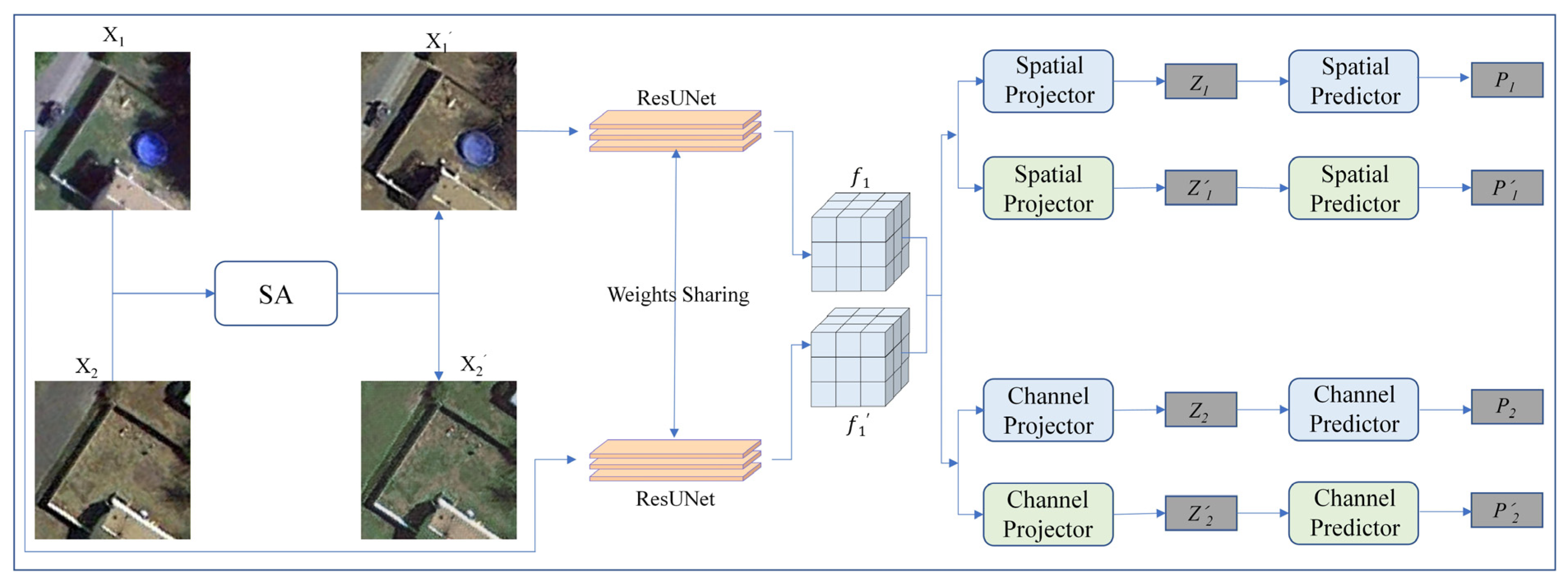
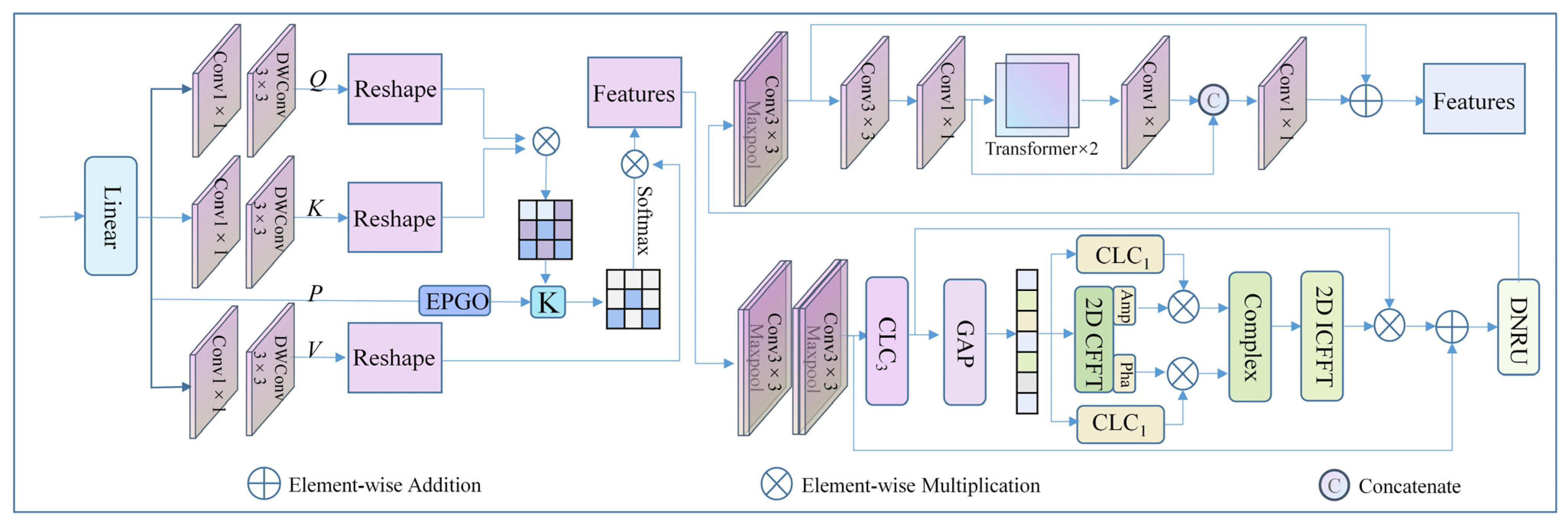
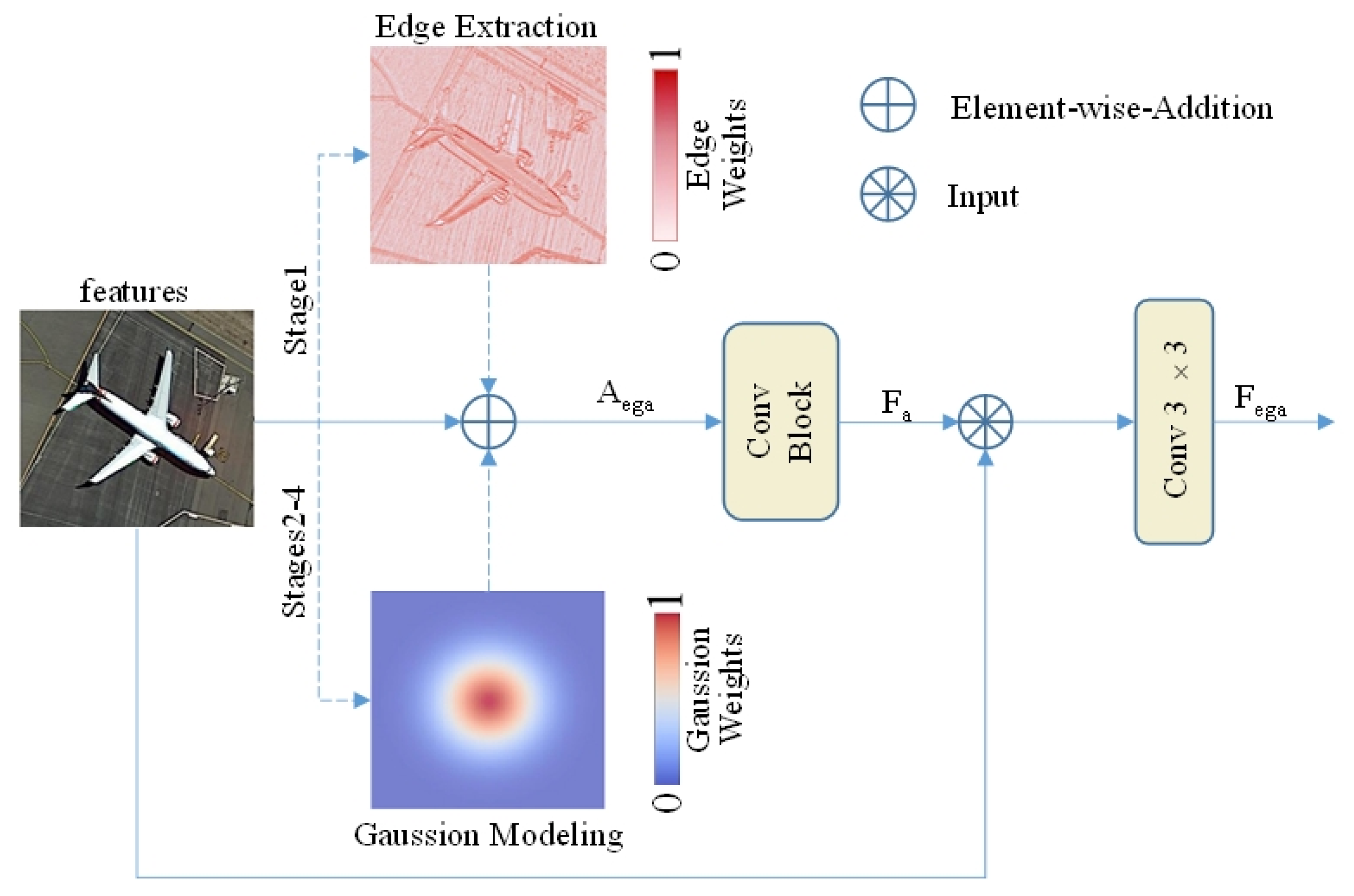
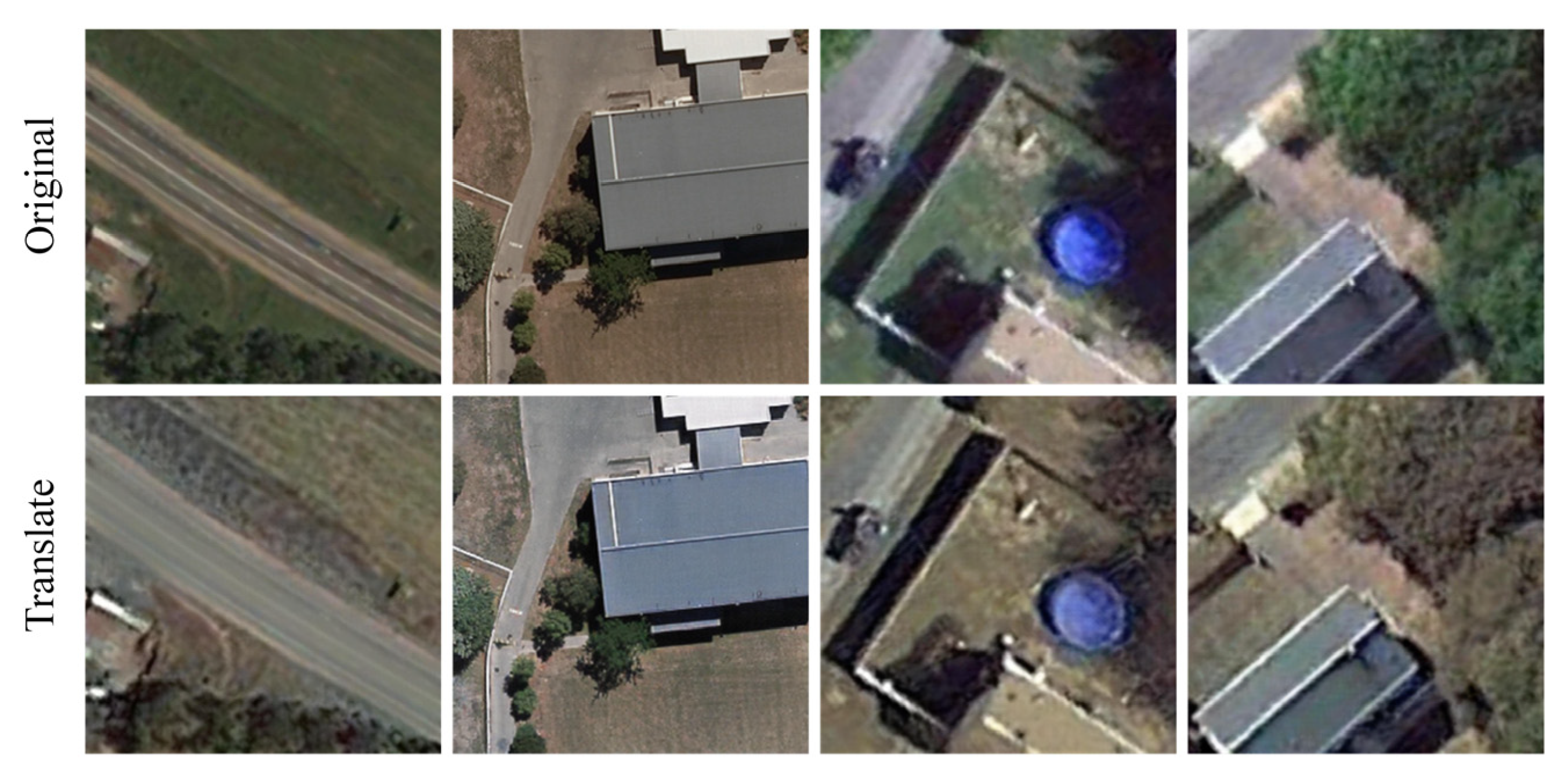
To alleviate the limitations of remote sensing image change detection (RSICD) methods in suppressing cross-style imaging differences, extracting fine-grained change features, and preserving the structural integrity of change boundaries, a self-supervised pre-training style adaptation-guided RSICD network is proposed. Firstly, in the pre-training stage, a cross-style self-supervised pre-training module is constructed, which does not rely on pixel-level labels. Cross-style positive sample pairs are constructed through the style adapter, and self-supervised constraints are utilized to guide the model to learn the feature representation of imaging style differences, alleviating the pseudo changes caused by lighting, seasons, and imaging differences. Subsequently, the model is transferred to the downstream change detection network for optimization using labels. In the downstream fine-tuning stage, the feature domain multi-scale collaborative enhancement module is designed for feature enhancement, achieving focused response and suppression of pseudo-change features in the changed areas, and alleviating the loss of fine-grained feature information during continuous downsampling. Additionally, the edge Gaussian aggregation module is introduced to enhance the model’s ability to represent change boundaries, small targets, and local structures. This method achieved F1 scores of 93.37%, 92.19%, 90.06%, and 90.39% on the CDD, DSIFN, LEVIR, and WHU datasets, respectively, demonstrating the effectiveness and advantages of the proposed method.
Keywords: optical remote sensing images; feature enhancement; change detection; deep learning; self-supervised learning optical remote sensing images; feature enhancement; change detection; deep learning; self-supervised learning