


Highlights
What are the main findings?
- E-SBAS-InSAR provides high-density, reliable, and long-term surface deformation monitoring results, demonstrating strong applicability for deformation monitoring of tailings storage facilities.
- Seasonal deformation of tailings storage facilities exhibits lagged responses to temperature variations and intense rainfall events, with intense rainfall exerting a more pronounced influence.
What are the implications of the main findings?
- E-SBAS-InSAR offers a reliable technical framework for surface deformation monitoring and risk identification in complex tailings storage facility environments.
- This study reveals the lagged response of seasonal deformation in tailings storage facilities to temperature variations and intense rainfall events, highlighting the importance of short-term deformation monitoring after heavy rainfall. These findings provide a scientific basis for rainy-season risk identification and safety early warning in tailings storage facilities.
Abstract
Tailings storage facility (TSF) failures have caused severe casualties and economic losses. This study used Enhanced Small Baseline Subset InSAR (E-SBAS-InSAR) and 88 Sentinel-1A images to retrieve the 2022–2024 surface deformation time series of the Shiguilong TSF, located in the Fe–Cu polymetallic metallogenic belt of the middle–lower Yangtze River. The reliability of the results was assessed through consistency comparisons with Small Baseline Subset InSAR (SBAS-InSAR) and Persistent Scatterer InSAR (PS-InSAR). A time-series decomposition model was applied to extract seasonal deformation components and analyze their lagged responses to temperature and intense rainfall events. The results show that: (1) E-SBAS-InSAR achieved a monitoring-point density nearly 7 times higher than SBAS-InSAR, enabling dense and long-term deformation characterization; (2) subsidence at Shiguilong continued to increase, with cumulative subsidence reaching −76.8 mm and a maximum annual mean subsidence rate of −22.78 mm/yr; (3) deformation was mainly controlled by long-term consolidation of loose tailings and creep of dam–tailings materials, while seasonal factors induced stage-dependent fluctuations; (4) seasonal deformation showed lagged responses of 6 days to temperature variations and 2 days to intense rainfall events, with rainfall exerting a more pronounced influence. This work is significant for TSFs monitoring under complex surface conditions.
1. Introduction
Tailings storage facilities are critical engineering structures used to store mining residues generated during ore beneficiation [1]. Typically located near mining areas, they represent key targets for geo-environmental risk prevention and constitute major potential hazards to surrounding communities and ecosystems [2,3]. Under the combined influence of continuous tailings deposition, staged dam raising [4], fluctuations in reservoir water level, and rainfall infiltration [5], tailings dams commonly exhibit persistent and cumulative surface deformation. Once abnormal deformation develops in the dam body or adjacent slopes, it may evolve into dam instability, seepage failure, or even catastrophic collapse, posing severe threats to downstream settlements, roads, farmland, and the ecological environment [6,7]. According to incomplete statistics from WISE (https://www.wise-uranium.org, accessed on 16 March 2026), CSP2 [8], and the Global Tailings Portal (https://tailing.grida.no, accessed on 16 March 2026), at least 379 tailings storage facility failures occurred worldwide between 1915 and 2025, causing substantial casualties, ecological degradation, and economic losses. Therefore, monitoring the stability and surface deformation of tailings storage facilities is essential for long-term mine operation and disaster-risk mitigation [9].
Conventional methods for monitoring surface deformation in tailings storage facilities mainly include visual inspection and in situ instrumentation. Visual inspection is inherently subjective and provides limited capacity for continuous time-series monitoring. Ground-based instruments, such as GNSS receivers and total stations, can deliver high-precision measurements at selected locations, but their deployment and maintenance are costly [10]. Overall, although traditional monitoring approaches can achieve high accuracy at discrete points, they are constrained by high installation costs, limited spatial coverage, and difficulty in sustaining large-scale continuous observations. These limitations make them insufficient for full-coverage, long-term, and high-temporal-resolution deformation monitoring of tailings storage facilities [11].
Interferometric Synthetic Aperture Radar (InSAR) is an advanced monitoring technique characterized by all-day, all-weather capability, wide spatial coverage, high spatial resolution, and high measurement precision [12]. Unlike conventional ground-based methods, InSAR does not require ground control points and can acquire deformation information without field surveys or in situ monitoring instruments [13]. It therefore substantially reduces observation costs while providing accurate, large-scale measurements of surface deformation [14]. At present, InSAR has become a key technology for surface deformation monitoring and has been widely applied to urban subsidence assessment [11,15,16], landslide monitoring [17,18,19], and tailings storage facility stability analysis [7,20].
Among time-series InSAR techniques, Persistent Scatterer InSAR (PS-InSAR) [21] and Small Baseline Subset InSAR (SBAS-InSAR) [22,23] are the two most widely used approaches. PS-InSAR relies primarily on stable, highly coherent point targets and is therefore well suited to densely built urban environments [24]. In contrast, SBAS-InSAR constructs interferometric pairs within short temporal and spatial baseline thresholds for time-series analysis, thereby reducing temporal decorrelation and topographic phase errors [25]. This makes it more applicable to surface subsidence monitoring in non-urban areas [10,26,27]. Grebby et al. [28] showed that deformation precursors prior to the Brumadinho tailings dam failure could be detected using satellite InSAR, highlighting the potential of InSAR for early identification of tailings dam instability. Wu et al. [29] applied PS-InSAR to deformation monitoring of the Brumadinho tailings storage facility in Brazil and found that PS-InSAR yielded relatively sparse monitoring points in non-urban settings. Chen et al. [27] compared PS-InSAR and SBAS-InSAR for landslide monitoring in mountainous terrain, showing that PS-InSAR results were mainly confined to urbanized areas, whereas SBAS-InSAR covered approximately 85% of the investigated region and provided more robust displacement estimates under highly variable and nonlinear deformation conditions. Lu et al. [20] used SBAS-InSAR to monitor deformation at the Majiatan tailings storage facility, successfully retrieving deformation information for the starter dam, dam slope, and dam crest. Wang et al. [30] further extracted time-series deformation characteristics of a graphite tailings dam using SBAS-InSAR and integrated the monitoring results with a convolutional long short-term memory network (CNN-LSTM) to predict deformation trends. These studies demonstrate that SBAS-InSAR has become an important tool for monitoring surface deformation in tailings storage facilities.
However, complex surface conditions can strongly disturb radar backscatter, leading to reduced coherence and sparse measurement points in conventional SBAS-InSAR results, ultimately compromising monitoring performance. Previous studies have demonstrated that enhanced time-series InSAR approaches have considerable potential for deformation monitoring in mining areas, tailings storage facilities, and other complex terrain environments, as they can more effectively identify localized anomalous deformation and improve the reliability of monitoring results [10]. Meanwhile, Wu et al. [31] monitored deformation in tailings storage facilities prone to coherence loss by integrating distributed scatterers (DS) and persistent scatterers (PS), and obtained satisfactory monitoring results. The E-SBAS-InSAR technique adopted in this study refers to the Enhanced Small Baseline Subset processing workflow implemented in SARscape. Its enhancement concept is closely related to the full-resolution small-baseline deformation analysis proposed by Lanari et al. (2004) [32]. According to the official SARscape documentation, E-SBAS-InSAR is categorized as an enhanced time-series InSAR technique within the Interferometric Stacking module. Its basic principle is to incorporate the PS-InSAR approach into the conventional SBAS-InSAR framework, enabling the joint processing of DS and PS, thereby producing more complete and internally consistent deformation results. To date, most deformation monitoring studies of tailings storage facilities have relied primarily on SBAS-InSAR, whereas applications of E-SBAS-InSAR workflow to complex engineering scenarios involving tailings storage facilities remain relatively limited. Moreover, the Shiguilong tailings storage facility, situated within the Baiyunshan copper deposit of the middle–lower Yangtze River Fe–Cu polymetallic metallogenic belt, has not yet been systematically investigated for surface deformation. Consequently, surface deformation monitoring and related analyses for this facility remain insufficient, and its long-term operational state and potential deformation risks require further investigation.
Therefore, this study uses 88 Sentinel-1A images acquired from 2022 to 2024 and applies the E-SBAS-InSAR technique to retrieve high-density, long-term time-series deformation information for the Shiguilong tailings storage facility. These deformation measurements are further used to assess the facility’s stability. The core objective of this study is to compare the E-SBAS-InSAR monitoring results with those derived from SBAS-InSAR and PS-InSAR, thereby evaluating its applicability and monitoring advantages in the complex surface environment of tailings storage facilities. In addition, daily precipitation and temperature data were incorporated to further investigate the relationship and response characteristics between deformation evolution and meteorological variations in tailings storage facilities. The results provide a scientific basis for the long-term stable operation, refined safety monitoring, and risk early warning of the Shiguilong tailings storage facility.
2. Study Area and Data
2.1. Study Area
The Shiguilong tailings storage facility is located in Baiyunshan, Yangxin County, Huangshi City, Hubei Province, China, within 115°05′02″E–115°07′15″E, 29°54′03″N–29°54′50″N (Figure 1). It is affiliated with the Yangxin Baiyunshan Copper Mine. The mining area lies along the margin of the Yangxin pluton in the southern part of the southeastern Hubei ore-concentration district and forms an important component of the middle–lower Yangtze River Fe–Cu polymetallic metallogenic belt [33]. The ore bodies mainly occur within altered granodiorite porphyry and near the contact zone between the footwall and carbonate strata [34]. The deposit is a medium-sized concealed porphyry copper deposit, accompanied by gold and silver mineralization [35]. As the primary tailings storage facility of the mine, the stability of the Shiguilong tailings storage facility is directly linked to downstream environmental security and the safety of nearby communities.
Figure 1.
Overview of the study area: (a) Location of the Shiguilong tailings storage facility in Hubei Province; (b) topographic setting; (c) spatial coverage of the E-SBAS-InSAR processing area; (d) detailed layout of the tailings storage facility and its surrounding environment, including Storage1, Storage2, the dam area, nearby mining areas, and residential settlements.
The Shiguilong tailings storage facility is a valley-type, Class IV tailings facility constructed using the upstream damming method. Although this method is widely adopted because of its simple construction process and low cost, it is associated with a relatively high risk of dam failure [36,37]. The facility consists of a closed tailings impoundment, referred to as Storage1 in Figure 1, and a new tailings impoundment, Storage2, which was converted from the abandoned Shiguilong Reservoir. The tailings dam of Storage2 comprises two components: a starter dam formed by downstream raising of the original reservoir retaining dam using compacted rockfill, and an embankment dam constructed by upstream tailings deposition. After raising, the starter dam has a crest elevation of 80 m, a dam height of 15.0 m, a crest width of 3.0 m, and upstream and downstream slope ratios of 1:2. Steeper slope ratios are generally associated with a higher susceptibility to slope instability [4]. The final tailings deposition elevation is 118.0 m, corresponding to a tailings embankment height of 38 m. The average tailings slope ratio is 1:4 below the 105 m elevation and 1:5 above 105 m, giving the Shiguilong facility an overall dam height of 53 m. The total storage capacity is 9.4699 × 10⁶ m3, and the effective storage capacity is 8.0494 × 10⁶ m3 [36]. Detailed dam parameters are summarized in Table 1.
Table 1.
Tailings Dam Information.
The southwest side of the Shiguilong tailings storage facility is occupied by mining production and office areas, while Shigui Village lies to the northwest. Several residential settlements are distributed downstream of the facility. The nearest village is only 1.2 km away and is home to thousands of residents, with several schools also located nearby. The Ditian River flows downstream of the facility and passes through the surrounding villages. Overall, the downstream area is densely populated; therefore, any delay in detecting potential dam-failure risks could pose a severe threat to human life and property.
The mining area has a warm and humid climate, with mild winters and a short frost period. The mean annual temperature is 16.8 °C, with recorded maximum and minimum temperatures of 40.9 °C and −8.3 °C, respectively. Annual precipitation is high, reaching 1432.7 mm, and is unevenly distributed throughout the year. During the rainy season from March to July, the mean annual maximum 24 h rainfall reaches 400.8 mm, frequently causing flooding. Such intense rainfall may induce a rapid rise in the phreatic line within the tailings dam, thereby exerting a substantial influence on dam safety [38].
2.2. Data Source
The SAR imagery used in this study was acquired from the Sentinel-1A satellite of the European Space Agency’s Copernicus Programme [39] (https://search.asf.alaska.edu, accessed on 16 March 2026). Launched on 3 April 2014, Sentinel-1A operates in a near-polar, sun-synchronous orbit at an altitude of approximately 693 km. Equipped with a C-band radar sensor and a 12-day revisit cycle, it provides continuous, all-weather Earth observation capability. The satellite supports multiple acquisition modes, including Stripmap (SM), Interferometric Wide Swath (IW), Extra-Wide Swath (EW), and Wave (WAVE) modes, each offering different spatial coverage and resolution characteristics. In this study, 88 Sentinel-1A single-look complex (SLC) images covering the study area were collected between 11 January 2022 and 26 December 2024. All images were acquired in Interferometric Wide Swath mode with VV + VH polarization. Because of the limited Sentinel-1 constellation availability during the study period, only ascending-orbit data were available for the study area.
Atmospheric correction data from the Generic Atmospheric Correction Online Service for InSAR (GACOS) (http://www.gacos.net/, accessed on 16 March 2026) were incorporated in this study. These data were used to correct atmospheric artefacts in the InSAR observations by integrating tropospheric delay measurements from Global Navigation Satellite System (GNSS) stations with global atmospheric reanalysis products, including data from the European Centre for Medium-Range Weather Forecasts. Based on the Iterative Tropospheric Decomposition (ITD) model, GACOS separates vertically stratified and turbulent components from the total tropospheric delay and generates atmospheric delay models, from which zenith total delay maps are derived [40]. With a typical spatial resolution of approximately 90 m, GACOS products can effectively estimate and remove phase delays caused by spatiotemporal variations in atmospheric water vapour at the time of SAR acquisition, thereby improving the accuracy of deformation monitoring.
Precise Orbit Determination (POD) (https://browser.dataspace.copernicus.eu/, accessed on 16 March 2026) products provided by the European Space Agency were used to refine the orbital information of the SAR images and minimize the influence of orbital errors on the interferometric phase. To remove the topographic phase component from the interferometric signal, accurately retrieve surface deformation, and support interferogram geocoding, a high-resolution external digital elevation model was introduced. Specifically, this study employed the ALOS World 3D–30 m (AW3D30) digital elevation model (DEM) (https://www.eorc.jaxa.jp/ALOS/en/aw3d30/data/index.htm, accessed on 16 March 2026) released by the Japan Aerospace Exploration Agency (JAXA).
The temperature and precipitation data used in this study were obtained from the ERA5 reanalysis dataset released by the European Centre for Medium-Range Weather Forecasts (ECMWF) (https://cds.climate.copernicus.eu/, accessed on 21 May 2026). ERA5 is the fifth-generation global atmospheric reanalysis dataset, providing hourly climate variables related to the atmosphere, land surface, and oceans. The dataset is available from the official Copernicus Climate Data Store (CDS). In this study, daily temperature and precipitation data within the monitoring area from 2022 to 2024 were downloaded and processed. The detailed parameters of the dataset are summarized in Table 2.
Table 2.
Parameters of Sentinel-1A SAR, DEM, POD Precise Orbit Data and GACOS.
3. Methodology and Data Processing
3.1. E-SBAS-InSAR
3.1.1. Theoretical Basis of E-SBAS-InSAR
This study employed the Enhanced Small Baseline Subset InSAR (E-SBAS-InSAR) method to monitor surface deformation at the Shiguilong tailings storage facility. By integrating the conceptual strengths of SBAS-InSAR and PSI, this approach preserves the capability of SBAS-InSAR to characterize DS while further incorporating PS information. It thereby enables the joint inversion of high-coherence point targets and distributed targets, improving the spatial continuity and reliability of deformation monitoring across the tailings dam and its surrounding areas. The core principle of E-SBAS-InSAR is to first use the SBAS-InSAR workflow to estimate low-spatial-resolution deformation components, residual topographic terms, and residual atmospheric delays. High-spatial-resolution deformation information from PS is then extracted on this basis, followed by the integrated inversion of low-frequency and high-frequency deformation components. Compared with approaches that independently implement SBAS-InSAR and PSI and subsequently merge their outputs, E-SBAS-InSAR characterizes the time-series deformation of both PS and DS within a unified reference framework. This capability effectively mitigates decorrelation caused by dense vegetation and makes the method well suited for long-term surface deformation monitoring in complex environments.
The theoretical foundation of E-SBAS-InSAR is derived from the conventional SBAS-InSAR framework. Its core principle can be described as follows:
Suppose that SAR images covering the study area and acquired along the same orbit are arranged in chronological order. One image is selected as the reference image, and the remaining images are paired for interferometric processing according to predefined temporal and spatial baseline thresholds. This procedure ultimately generates interferometric pairs, where satisfies:
Assume that the -th differential interferogram is generated by interferometric processing between the secondary image acquired at time and the master image acquired at time , where . The interferometric phase value of a pixel located at azimuth and range coordinates in the -th differential interferogram can be expressed as Equation (2). The definitions of the parameters in Equation (2) are summarized in Table 3.
Table 3.
Definitions of Relevant Parameters.
If the residual topographic phase , atmospheric phase delay , and decorrelation noise are neglected, the above equation can be simplified as:
The phase value at a given time can be expressed as the product of time and the mean phase velocity, as follows:
Accordingly, Equation (3) can be rewritten as follows:
The phase value of the -th interferogram is equivalent to the integral of over the time interval , and its matrix form can be expressed as:
For a system containing equations and unknowns, if , namely, if all interferometric pairs belong to the same small-baseline subset, the deformation velocity can be directly solved by the least-squares method, yielding a unique solution. Otherwise, singular value decomposition is commonly used to estimate the phase deformation velocity for each time interval, from which the corresponding deformation values are subsequently derived.
3.1.2. Implementation Workflow of E-SBAS-InSAR
- (1)
- SBAS-InSAR processing
In this study, SBAS-InSAR processing was first performed on 88 ascending Sentinel-1A SLC images covering the study area. Considering the small spatial extent of the tailings storage facility and the concentration of the main monitoring targets in the dam body and tailings deposition area, the images were spatially subset. An interferometric network was then constructed following the small temporal and spatial baseline principle. A shorter temporal baseline helps reduce the influence of temporal decorrelation. The maximum temporal baseline was set to 60 d, taking into account the 12 days revisit cycle of Sentinel-1A. This threshold can maintain interferometric coherence while retaining a sufficient number of interferometric pairs, thereby ensuring the stability of the time-series inversion network. The maximum spatial baseline was set to 50% of the critical baseline, which reduces the effect of spatial decorrelation while maintaining the connectivity of the interferometric network. The image acquired on 17 July 2023 was automatically selected as the super-master image. During interferometric processing, all images were co-registered to the super-master image. The topographic phase was removed using the AW3D30 DEM. Multilooking was performed with factors of 10 in the range direction and 2 in the azimuth direction to generate differential interferograms. This setting helps balance the effective pixel size after multilooking, while reducing interferometric phase noise and improving the stability of coherence estimation. After the generation of differential interferograms, Goldstein filtering was applied to suppress phase noise, and phase unwrapping was performed using the Delaunay minimum-cost-flow method [41]. The coherence threshold for phase unwrapping was set to 0.25. This threshold was used to control the quality of pixels involved in phase unwrapping and to prevent low-coherence pixels from introducing unwrapping errors. In the time-series inversion stage, a linear displacement model and singular value decomposition were used to estimate the mean deformation rate and residual topographic component. A second inversion was then conducted to extract the low-frequency deformation series. Atmospheric low-pass and high-pass filtering windows were set to 1000 m and 120 days, respectively. The spatial filtering window was determined by considering the extent of the study area and the local deformation scale of the dam body and storage area. This setting can suppress kilometre-scale continuous atmospheric disturbances while preserving local deformation information as much as possible. The temporal filtering window was selected by considering short-term atmospheric disturbances as well as the long-term subsidence and seasonal deformation processes of the tailings storage facility. This helps reduce the influence of short-term random atmospheric noise on the time-series deformation results, while avoiding excessive attenuation of real long-term deformation trends and periodic seasonal signals. Finally, the deformation results were geocoded from SAR coordinates to geographic coordinates. The geocoded output resolution was set to 15 m × 15 m, and the temporal coherence threshold of the product was set to 0.1. This threshold was mainly used to retain valid pixels with basic time-series consistency, providing the fundamental deformation field and auxiliary information for subsequent E-SBAS-InSAR processing.
- (2)
- Connection graph generation
After completing the SBAS-InSAR processing of the SLC data, E-SBAS-InSAR inversion was further performed. Specifically, the auxiliary files generated during the final geocoding step of the SBAS-InSAR workflow were used as the initial input for E-SBAS-InSAR processing. Based on these inputs, a new connection graph was reconstructed. This graph defines the pairing relationships and network structure among SAR acquisitions, enabling the generation of multiple differential interferometric pairs. During this process, all possible image-pair relationships were first established, and each master–slave pair was then evaluated against the predefined temporal and spatial baseline thresholds to determine whether it satisfied the interferometric conditions. Subsequently, all images were accurately co-registered to a common master image.
- (3)
- Interferometric processing
After the E-SBAS-InSAR connection graph was generated, interferometric processing was performed for each selected image pair. The main procedures included differential interferogram generation, flat-earth phase removal, filtering, coherence estimation, and phase unwrapping. To ensure consistency in the parameter environment across different processing stages, the AW3D30 DEM was also used in E-SBAS-InSAR processing to remove the topographic phase. In addition, GACOS atmospheric delay products corresponding to each SAR acquisition were introduced for atmospheric correction. During interferogram generation, E-SBAS-InSAR adopted the same multilooking parameters as SBAS-InSAR, with multilook factors of 10 in the range direction and 2 in the azimuth direction. Goldstein filtering was also used for phase filtering, while phase unwrapping was conducted using the Delaunay minimum-cost-flow method, with the unwrapping coherence threshold set to 0.25. These parameter settings were kept consistent with those used in the basic SBAS-InSAR processing.
- (4)
- E-SBAS inversion
During the E-SBAS inversion stage, the low-frequency topographic residuals, low-frequency deformation components, and residual atmospheric phase estimated from the SBAS processing were first removed from the differential interferograms. High-frequency deformation information was then extracted from highly coherent point targets. Finally, the high-frequency deformation components of PS were fused with the low-frequency deformation components of DS, yielding time-series deformation results within a unified reference framework. The atmospheric filtering parameters used in this study were kept consistent with those in the SBAS-InSAR processing. The atmospheric low-pass filtering window was set to 1000 m, and the atmospheric high-pass filtering window was set to 120 d.
- (5)
- Geocoding
The deformation results derived from the E-SBAS inversion in SAR geometry were geocoded into geographic coordinate system. The product coherence threshold was set to a higher value of 0.6 to ensure good temporal coherence and reliability of the output deformation sequences. The output resolutions in both the X and Y directions were kept consistent with those used in the SBAS-InSAR workflow, namely 15 m, to ensure consistency in the spatial representation scale of the results obtained from different processing stages.
3.1.3. PS-InSAR Processing
To verify the reliability of the E-SBAS-InSAR results, this study also conducted PS-InSAR surface deformation monitoring using the same SAR image sequence, precise orbit data, and DEM data. Considering that the surface of the tailings storage facility is affected by tailings accumulation, vegetation cover, and variations in surface scattering conditions, PS points are generally sparsely distributed within the storage area. Therefore, PS-InSAR was not used as the primary deformation extraction method in this study, but rather as an auxiliary validation approach for the E-SBAS-InSAR results. By comparing the deformation results obtained from the two methods at common monitoring points, the reliability of the E-SBAS-InSAR results can be further evaluated.
It should be noted that, considering that subsidence in the tailings storage facility is mainly manifested as vertical deformation, vertical deformation results were output during all geocoding stages using the vertical deformation conversion option in SARscape. In the following sections, negative values indicate subsidence, whereas positive values indicate uplift. All processing procedures in this study were mainly implemented using ENVI SARscape 6.1 developed by sarmap, Caslano, Switzerland.
3.2. Technical Route
This study employed the E-SBAS-InSAR method combined with Sentinel-1A SAR imagery to monitor and analyse surface deformation at the Shiguilong tailings storage facility. The research workflow is summarized as follows:
- (1)
- Data acquisition. A total of 88 Sentinel-1A SAR images acquired between 2022 and 2024 were collected as the primary remote sensing dataset. In addition, ALOS World 3D 30 m DEM data, GACOS atmospheric correction products, and precise orbit data were obtained to support InSAR processing. Remote sensing basemaps, daily precipitation data, and daily mean temperature data were also integrated to assist in characterizing deformation features and analyzing the response of deformation to meteorological factors.
- (2)
- Surface deformation monitoring of the tailings storage facility. The E-SBAS-InSAR technique was applied to retrieve surface deformation, following the detailed workflow described in Section 3.1. Long-term deformation-rate and cumulative-deformation results for the Shiguilong tailings storage facility were subsequently generated.
- (3)
- Analysis of monitoring results. The E-SBAS-InSAR results were cross-validated against the SBAS-InSAR and PS-InSAR results to evaluate its advantages in terms of monitoring point density, identification of local deformation details, and monitoring reliability. In addition, based on the E-SBAS-InSAR inversion results, representative monitoring points and typical profile lines were selected to systematically analyze the spatial distribution characteristics and temporal evolution of surface deformation. Finally, daily accumulated precipitation and daily mean temperature data were introduced to further investigate the influence of precipitation and temperature variations on the deformation evolution within the tailings storage facility.
Based on the above framework, the detailed technical workflow of this study is presented in Figure 2.
Figure 2.
Technical workflow for deformation monitoring and analysis of the Shiguilong tailings storage.
4. Results
4.1. E-SBAS-InSAR Processing Results
The E-SBAS-InSAR processing over the entire processing area produced the following results. During interferometric network construction, 410 high-quality valid interferometric pairs were generated and retained based on the predefined temporal and spatial baseline thresholds. In the constructed network, each acquisition was connected to more than five images on average, and the perpendicular baselines ranged from 1.6 to 324.7 m. For deformation monitoring-point extraction, conventional SBAS-InSAR produced 26,090 valid monitoring points after geocoding. The multi-temporal mean coherence ranged from 0.10 to 0.86, and the retrieved vertical deformation rates ranged from −20.35 to 8.17 mm/yr. PS-InSAR processing yielded a total of 100,595 valid monitoring points, which were mainly distributed in highly coherent areas, such as urban areas and roads. After subsequent E-SBAS-InSAR time-series inversion and fusion, the monitoring-point density increased markedly, and the multi-temporal mean coherence range expanded to [0.010, 0.99]. By effectively separating and integrating targets with different scattering characteristics, E-SBAS-InSAR extracted 76,860 permanent scatterer points and 128,602 distributed scatterer points, yielding a total of 205,462 valid monitoring points after fusion.
4.2. Deformation Monitoring Results of the Tailings Storage Facility
Using E-SBAS-InSAR, this study characterized the overall spatial distribution and temporal evolution of ground subsidence across the study area (Figure 3). The results indicate that the tailings storage facility was dominated by subsidence deformation during the monitoring period. The cumulative deformation ranged from −76.8 to 34.5 mm, while the annual mean deformation velocity varied between [−22.78, 7.8] mm/yr. Subsidence was mainly concentrated in Storage1 and along the tailings dam. A distinct subsidence zone was also observed on the downstream slope approximately 300 m southeast of the impoundment. Other subsiding areas were scattered around the facility, whereas the surrounding forested areas and residential zones remained generally stable or exhibited slight uplift.
Figure 3.
Spatial distribution of the annual mean deformation velocity of the Shiguilong tailings storage facility. Three representative points were selected: P1 is located in the main subsidence center of Storage1, while P2 and P3 are located on the dam crest.
Storage1 exhibited a distinct annular subsidence pattern, with subsidence magnitude decreasing gradually from the centre of the impoundment toward the margins and becoming relatively stable near the boundary with adjacent residential land. P1 represents the most pronounced subsidence zone in Storage1, with an annual mean subsidence rate of −22.78 mm/yr and cumulative subsidence of −76.8 mm. A broad area of strong subsidence, shown in red and orange-red tones, was distributed around this point. In contrast, deformation in Storage2 was much weaker than that in Storage1. Because specular reflection from water surfaces reduces backscatter coherence, relatively few monitoring points were obtained in Storage2. The available monitoring results indicate that Storage2 was dominated by slight subsidence, with an average annual subsidence rate of −5.2 mm/yr and average cumulative subsidence of −16 mm.
The deformation pattern of the tailings dam showed a clear difference. The southern section experienced pronounced subsidence, whereas the northern section showed weak subsidence or near-stable conditions. P2, located in the southern part of the dam, represents the strongest subsidence area on the tailings dam, with an annual mean subsidence rate of −14.89 mm/yr and cumulative subsidence of −44.1 mm. This indicates that the southern dam section is another important subsidence concentration zone besides Storage1. In contrast, most monitoring points in the northern dam section, such as P3, showed limited deformation, with an average subsidence rate of approximately −2.3 mm/yr and three-year cumulative subsidence of less than 10 mm, indicating weak subsidence or near-stable behaviour overall.
To further characterize the statistical distribution of deformation rates within the tailings storage facility, the annual mean deformation rates of all monitoring points in Storage1 and Storage2 were extracted and plotted as a frequency histogram (Figure 4). The results show that deformation rates were mainly concentrated in the negative range. Approximately 97% of the monitoring points exhibited subsidence, whereas less than 3% showed slight uplift, indicating that the facility was dominated by negative deformation. In terms of deformation-rate classes, about 60% of the monitoring points had rates lower than −6 mm/yr, and approximately 35% had rates lower than −12 mm/yr. This indicates that subsidence was not only widespread across the impoundment area, but also relatively rapid in local zones. Combined with the spatial distribution map of annual mean deformation rates, the points with higher subsidence rates were mainly distributed in the tailings deposition area and areas adjacent to the dam body.
Figure 4.
Frequency distribution histogram of deformation rates in the tailings storage facility.
These results indicate that Storage1 and the southern section of the tailings dam experienced the most pronounced surface deformation during the monitoring period, and should therefore be regarded as key areas for subsequent time-series evolution analysis.
5. Discussion
5.1. Multi-Method Comparison and Reliability Assessment of E-SBAS-InSAR Results
To evaluate the monitoring performance of E-SBAS-InSAR under the complex surface conditions of a tailings storage facility, this study applied SBAS-InSAR, PS-InSAR and E-SBAS-InSAR to conduct time-series surface deformation monitoring across the study area [13,42]. The cumulative subsidence results are shown in Figure 5. Both SBAS-InSAR and E-SBAS-InSAR identified the main subsidence areas in the study area to a certain extent, with subsidence anomalies mainly concentrated in Storage1 and the southern part of the Storage2 tailings dam. This indicates that different InSAR time-series methods show good consistency in identifying the dominant deformation pattern of the study area. Among them, the E-SBAS-InSAR results exhibit better spatial continuity across both the entire processing area and the interior of the tailings storage facility, enabling a more complete characterization of local subsidence within Storage1 and the tailings dam area. The SBAS-InSAR results also identified the main subsidence areas; however, the distribution of monitoring points was relatively sparse, with obvious monitoring gaps in the central part of Storage1 and in some local areas of the tailings dam. In contrast, PS-InSAR monitoring points were mainly distributed in surrounding towns, mining-related buildings, roads, and other highly coherent artificial surfaces. Their coverage within the tailings storage facility was relatively limited, resulting in clear monitoring voids inside the facility. Therefore, PS-InSAR alone cannot fully meet the requirements for continuous deformation monitoring within tailings storage facilities.
Figure 5.
Comparison of cumulative vertical deformation results derived from different InSAR methods: (a) E-SBAS-InSAR results for the entire processing area; (b) enlarged view of the tailings storage facility from the E-SBAS-InSAR results; (c) SBAS-InSAR results for the entire processing area; (d) enlarged view of the tailings storage facility from the SBAS-InSAR results; (e) PS-InSAR results for the entire processing area; (f) enlarged view of the tailings storage facility from the PS-InSAR results.
In terms of the number of monitoring points, SBAS-InSAR and PS-InSAR obtained 26,090 and 100,595 valid monitoring points within the processing area, respectively, among which only 210 and 358 points were located inside the entire tailings storage facility. In addition, the PS-InSAR points inside the facility were mainly concentrated on buildings and other artificial structures, indicating limited coverage over the tailings accumulation area and dam body. In contrast, after integrating information from both PS and DS targets, E-SBAS-InSAR obtained 205,462 valid monitoring points across the processing area, including 1384 points within the facility. This represents a nearly 7 times increase over SBAS-InSAR across the full processing area, reaching 687.51%. More importantly, the number of monitoring points within the tailings storage facility increased by approximately 6.6 times. These results demonstrate the clear advantage of E-SBAS-InSAR for deformation monitoring in tailings storage environments. By overcoming the spatial sparsity of conventional SBAS-InSAR and PS-InSAR, E-SBAS-InSAR substantially improves spatial coverage and continuity, thereby providing more complete data support for the refined identification of internal subsidence within tailings storage facilities.
Specifically, Figure 6 further illustrates the differences in monitoring point distribution among the three InSAR methods within Storage1 and the local tailings dam area. As shown in Figure 6a, SBAS-InSAR obtained a certain number of monitoring points in Storage1 and identified subsidence in this area; however, an obvious monitoring gap remained in the central part of Storage1. The monitoring points derived from PS-InSAR were even sparser, being mainly concentrated along the margin of the storage area and near surrounding roads and buildings, indicating limited coverage within Storage1. In contrast, E-SBAS-InSAR produced more continuous and denser monitoring results inside Storage1 and clearly revealed significant subsidence in the central area. Notably, the areas with sparse or missing monitoring points in the SBAS-InSAR and PS-InSAR results corresponded to the main subsidence center identified by E-SBAS-InSAR. This indicates that E-SBAS-InSAR can effectively compensate for the monitoring limitations of conventional time-series InSAR methods in low-coherence tailings accumulation areas. As shown in Figure 6b, SBAS-InSAR obtained only sparse monitoring points on the tailings dam body, while PS-InSAR monitoring points were mainly distributed along the dam margin, roads, and local engineering structures. This greatly limits their ability to contribute to the early identification and warning of potential dam instability [43]. These findings further confirm that the improved spatial completeness of E-SBAS-InSAR enables effective monitoring coverage of key high-risk areas within the tailings storage facility.
Figure 6.
Detailed comparison of monitoring results derived from different InSAR methods in Storage1 and the tailings dam area: (a) Storage1 area and (b) tailings dam area. In each group of subfigures, the panels from left to right show the remote sensing image, SBAS-InSAR results, PS-InSAR results, and E-SBAS-InSAR results, respectively.
To further evaluate the reliability of the E-SBAS-InSAR results, correlation and difference analyses were conducted using the annual mean deformation rates at common monitoring points extracted from E-SBAS-InSAR and SBAS-InSAR, as well as from E-SBAS-InSAR and PS-InSAR. The results are shown in Figure 7. The results indicate that, within the main deformation areas of the study region, E-SBAS-InSAR and SBAS-InSAR exhibited generally consistent spatial deformation patterns. The deformation rates at common monitoring points showed a strong linear correlation, with a correlation coefficient of 0.930 and a fitted regression equation of . Most scatter points were concentrated near the regression line. This result indicates that E-SBAS-InSAR and SBAS-InSAR show generally consistent deformation-rate trends at common monitoring points. However, in areas with larger deformation magnitudes, the deformation values derived from E-SBAS-InSAR are slightly lower than those obtained from SBAS-InSAR. This difference may be related to differences between the two methods in scatterer selection, coherence screening, and time-series inversion strategies. Statistical analysis of the deformation-rate differences showed that the differences between the two methods were mainly concentrated around −0.0087 mm/yr and approximately followed a normal distribution. The mean absolute error (MAE) was 0.60 mm/yr. In comparison, the correlation between E-SBAS-InSAR and PS-InSAR was relatively weaker, but still showed a clear positive relationship, with a correlation coefficient of 0.749 and a mean absolute error of 1.32 mm/yr. Although the correlation and error level were lower than those obtained from the comparison between E-SBAS-InSAR and SBAS-InSAR, the results still indicate that PS-InSAR and E-SBAS-InSAR can reflect similar deformation trends at common monitoring points. It should also be noted that PS-InSAR mainly relies on long-term stable point scatterers. Therefore, its monitoring points are mostly distributed in highly coherent areas, such as roads, buildings, and dam margins, whereas its coverage within the tailings storage facility and vegetated areas is relatively limited. As a result, PS-InSAR cannot fully characterize the continuously distributed subsidence field inside the tailings storage facility. Nevertheless, as an independent time-series InSAR processing result, it can provide a supplementary consistency check for the deformation trends derived from E-SBAS-InSAR in highly coherent areas.
Figure 7.
(a) Scatterer plots of the E-SBAS-InSAR and SBAS-InSAR; (b) distribution of deformation rate difference between E-SBAS-InSAR and SBAS-InSAR; (c) scatterer plots of the E-SBAS-InSAR and PS-InSAR; (d) distribution of deformation rate difference between E-SBAS-InSAR and PS-InSAR. Red lines represent the fitting lines.
Overall, E-SBAS-InSAR showed high correlations and small differences with SBAS-InSAR and PS-InSAR at common monitoring points, indicating that the E-SBAS-InSAR inversion results are stable in capturing the overall deformation trend of the study area. In summary, compared with SBAS-InSAR and PS-InSAR, E-SBAS-InSAR can provide richer and more reliable deformation details, making it a powerful tool for long-term safety monitoring of tailings storage facilities.
5.2. Spatiotemporal Evolution Patterns and Response Characteristics of Surface Subsidence
To further investigate the stability of the tailings storage facility and characterize deformation patterns within the study area, this study integrated the time-series cumulative deformation results to analyze the overall deformation trend and the temporal evolution curves of selected characteristic points [29].
Given the long monitoring period and the richness of the image dataset, the overall deformation rate of the study area had already been obtained. To more intuitively illustrate the deformation evolution throughout the monitoring period, this study selected 12 representative cumulative deformation maps corresponding to key seasonal stages each year (January, April, July, and October) (Figure 8). All deformation results were referenced to 11 January 2022 as the spatiotemporal baseline.
Figure 8.
Time-series cumulative vertical deformation maps of the Shiguilong tailings storage facility. All subplots use the same color scale.
The cumulative subsidence evolution reveals pronounced persistence and spatial heterogeneity across the study area. The subsidence anomaly in Storage1 began to emerge in the second half of 2022, expanded centripetally and intensified during 2023–2024, and had developed into a stable high-magnitude subsidence zone by October 2024. In contrast, the subsidence centre on the tailings dam appeared later and exhibited a smaller overall deformation magnitude, indicating that different parts of the facility followed distinct temporal deformation trajectories [42]. Over time, Storage1 and the tailings dam gradually formed two spatially continuous and progressively intensifying subsidence anomaly zones, ultimately becoming the most prominent deformation centres in the study area. This pattern is broadly consistent with the annual mean deformation-rate map, confirming that the main subsidence zones remained spatially stable across different observation periods. These results further identify Storage1 and the tailings dam as the principal deformation concentration areas and demonstrate that E-SBAS-InSAR can effectively capture the spatiotemporal evolution of surface deformation in tailings storage facilities.
Notably, no pronounced subsidence was observed in the study area from January to July 2022. Similarly, subsidence in Storage1 showed limited change from April to July 2023 and even exhibited clear attenuation from April to July 2024. These periods correspond well with the high temperatures and rainfall-intensive season in the study area, suggesting that surface deformation of the tailings storage facility may not be controlled solely by long-term consolidation settlement, but may also be regulated by meteorological factors. Therefore, it is necessary to further incorporate meteorological data to examine the influence of climatic factors on the evolution of tailings facility subsidence.
To further reveal local deformation differences among different parts of the tailings storage facility, four representative profiles were selected for deformation-rate profile analysis based on the spatial distribution of annual mean deformation rates (Figure 9). Because the valid monitoring points obtained by E-SBAS-InSAR were mainly distributed in Storage1 and the dam body of Storage2, the profiles were designed to cover these major deformation zones. Profile A1–A2 was drawn along the dam crest, whereas profile A3–A4 was drawn along the dam slope; the two profiles intersect at P2, where the maximum deformation rate on the dam crest was observed. Based on the central axis of Storage1, two additional profiles, B1–B2 and B3–B4, were established. Profile B1–B2 is parallel to the dam-crest direction, namely A1–A2, while profile B3–B4 is parallel to the dam-slope direction, namely A3–A4. These two profiles intersect at P1, the point with the maximum deformation rate in Storage1. For each profile, deformation rates were extracted from monitoring points along the line, and fitted deformation-rate curves were plotted against the distance from the corresponding starting point, A1, A3, B1, or B3. In addition, P1 and P2 were selected as representative points, and their cumulative surface deformation time-series curves were extracted separately.
Figure 9.
Deformation-velocity profiles of the Shiguilong tailings storage facility.
The profile curves show clear differences in subsidence intensity and spatial variation among different parts of the facility. Along the dam-crest profile A1–A2, the deformation rate increased from approximately −12 mm/yr at A1 to about −15 mm/yr near P2, and then decreased rapidly toward A2. This difference between the southern and northern sides of the tailings dam may be related to variations in local tailings loading, drainage conditions, and other site-specific factors. Along the dam-slope profile A3–A4, the deformation rate varied only slightly and was mainly concentrated between −12 and −14 mm/yr, without a clear subsidence-funnel pattern, indicating relatively gentle deformation along this direction. In contrast, the profiles across Storage1 showed more pronounced deformation differences. Along B1–B2, the deformation rate reached a relatively high subsidence value at approximately 70 m from B1 and then gradually decreased toward B2, showing a subsidence-funnel pattern converging from both sides toward a local centre. The subsidence-funnel pattern was most evident along B3–B4. The deformation rate increased from about −7 mm/yr at B3 to approximately −22 mm/yr near the middle of the profile, forming a strong subsidence zone, and then gradually weakened toward B4. These results indicate stronger local uneven subsidence within Storage1, with the area around P1 representing the main subsidence concentration zone. The subsidence pattern in Storage1 can be further interpreted from the empirical settlement relationship of mine-waste dumps. According to EBMEG (2006) [44], the time-dependent settlement magnitude of a waste dump can be approximately expressed as:
where is the time-series settlement, is the coefficient and can be generally considered as constant, is the thickness of mine waste dump, is the entire estimation time (including the primary and secondary consolidation), and is the main consolidation completion time. This relationship indicates that the settlement magnitude is closely related to the thickness of accumulated materials and the time-dependent consolidation process. Therefore, under similar material and drainage conditions, areas with greater tailings accumulation thickness are more likely to experience larger long-term settlement. Based on the above relationship, the spatial pattern observed in Storage1, characterized by stronger subsidence in the central area and weaker subsidence along the margins, may be related to the greater tailings accumulation thickness and longer drainage paths in the central area, as well as the smaller accumulation thickness and relatively better drainage conditions along the margins. Overall, except for profile A3–A4, the other profiles displayed subsidence-funnel characteristics to varying degrees, indicating that subsidence in the study area was not uniformly distributed.
As shown in Figure 10, cumulative subsidence at both points P1 and P2 continued to increase during the monitoring period. P2 exhibited a relatively stable subsidence rate, with cumulative subsidence reaching approximately −41 mm by the end of the observation period. According to soil mechanics principles [45] and previous InSAR-based studies of tailings storage facilities, the long-term deformation of earth–rock dams and tailings deposits after dam construction or closure is mainly governed by two mechanisms. The first is primary consolidation, during which pore-water pressure in tailings materials and deep soft soils gradually dissipates under self-weight stress. The second is secondary compression or slow creep, which reflects the viscous deformation of the soil skeleton under sustained effective stress [46]. Because dam bodies are commonly constructed through layered compaction, their porosity is relatively low, and most primary consolidation is often completed during the early stage of dam construction [14,28,47]. Therefore, the long-term and stable subsidence captured by InSAR at P2 may reflect deep soil creep and secondary consolidation under nearly constant loading. This near-linear subsidence pattern suggests that the dam body currently remains in a relatively stable mechanical equilibrium state, with no obvious precursory signs of instability such as shear sliding.
Figure 10.
Cumulative vertical deformation time series of representative P1 and P2 in the Shiguilong tailings storage facility.
In contrast, P1, located within Storage1, showed a substantially larger subsidence magnitude, with cumulative subsidence approaching −75 mm by the end of the monitoring period. Its deformation process also exhibited pronounced stage-dependent fluctuations. The time-series curve shows that P1 experienced marked accelerated subsidence at several stages, particularly in the second half of 2022 and the middle to late period of 2024. This suggests that the internal deformation within Storage1 may not only be controlled by the consolidation of previously deposited loose material but also influenced by seasonal factors.
5.3. Correlation Analysis Between Seasonal Settlement and Meteorological Factors
To further reveal the influence of meteorological factors on the surface deformation process of the Shiguilong tailings storage facility, Storage1 was selected as a representative analysis object. To reduce the influence of local anomalous fluctuations at individual monitoring points, the time-series cumulative deformation of all valid monitoring points within Storage1 was extracted, and the average deformation sequence was calculated to characterize the overall subsidence process of Storage1. Subsequently, daily precipitation and daily temperature data were incorporated to analyze the relationship between the subsidence process of the tailings storage facility and meteorological variations. Because Storage1 covers a relatively small area, whereas the spatial resolution of the meteorological data is comparatively coarse, the extracted daily meteorological data were regarded as regionally representative meteorological conditions acting on Storage1. Therefore, a one-to-one matching between individual InSAR monitoring points and individual meteorological grids was not performed.
Figure 11 and Figure 12 preliminarily show the temporal relationships between the cumulative subsidence of Storage1 and monthly precipitation and monthly mean temperature, respectively [48]. Overall, the subsidence process of Storage1 did not develop in a simple linear manner, but instead exhibited clear stage-dependent fluctuations. In particular, during April–August each year, when temperature increased and rainfall was concentrated, the cumulative subsidence curve showed a reduced slope, short-term plateauing, and even local rebound. When precipitation decreased and temperature dropped, the subsidence trend gradually intensified again. This indicates that deformation of the tailings storage facility is not only controlled by long-term compaction-induced subsidence, but is also modulated to some extent by seasonal meteorological factors.
Figure 11.
Time-series relationship between surface subsidence and precipitation. The blue dashed vertical lines mark the concentrated rainfall period in each year.
Figure 12.
Time-series relationship between surface subsidence and temperature. The red dashed vertical lines mark the periods with relatively rapid temperature increase in each year.
To further separate the long-term subsidence trend from seasonal fluctuation characteristics, a time-series decomposition model was adopted in this study [49,50]. The average cumulative deformation process of Storage1 was decomposed into a linear trend term and a periodic fluctuation term. The linear trend term was mainly used to characterize the background subsidence process induced by long-term self-weight compaction and consolidation of the tailings deposit, whereas the periodic fluctuation term was used to describe short-term deformation disturbances that may be caused by temperature, precipitation, and their seasonal variations. The model can be expressed as:
where is the cumulative deformation at time , denotes the long-term linear deformation rate, represents the amplitude of seasonal deformation, is the period length, is the initial phase, and is a constant term. In this study, considering the influence of leap years, the mean annual period was set to 365.25 days. The fitting results indicate that the average cumulative subsidence sequence of Storage1 can be expressed as:
The coefficient of determination of the model was 0.942, and the RMSE was 2.920 mm, indicating that the model can effectively describe the superimposed process of long-term subsidence and seasonal fluctuations in the tailings storage facility. The fitted time series and the decomposed deformation components are shown in Figure 13.
Figure 13.
Time-series fitting and decomposition.
After extracting the seasonal deformation component, this study further conducted a preliminary comparison between the seasonal deformation and temperature variations, which also exhibit a pronounced annual periodicity [51]. The results show that seasonal deformation and temperature variation share broadly consistent annual fluctuation patterns, although their peak values are not fully synchronized. After the peak in temperature, the peak in seasonal deformation occurred with a lag of approximately 7 days, indicating a delayed response of the tailings storage facility to temperature variations. The lagged response relationship between temperature variation and seasonal deformation is shown in Figure 14.
Figure 14.
Lagged response relationship between temperature variation and seasonal deformation. The blue shaded areas highlight the periods used to compare the seasonal response, and the magenta intervals indicate the relative time lag between temperature variation and the corresponding seasonal deformation response.
To further quantitatively analyze the lagged influence of meteorological factors on the seasonal deformation of the tailings storage facility, this study used the InSAR observation dates as the temporal reference for the deformation time series and analyzed the time-lag relationships among daily temperature, daily precipitation, and the seasonal deformation component. Specifically, the -th InSAR observation date is denoted as , and the corresponding seasonal deformation component at this time is denoted as . For a given lag time , the meteorological variable on day , denoted as , was extracted, and its Pearson correlation coefficient with was calculated. In this study, lag times of 2, 4, 6, 8, 10, 12, and 14 d were selected as candidate lag intervals to compare the correlation strength between meteorological factors and seasonal deformation under different lag conditions. The seasonal deformation component was obtained by removing the long-term linear subsidence trend from the average cumulative deformation sequence of Storage1, thereby representing short-term positive or negative deviations relative to the background compaction-induced subsidence process. It should be noted that Sentinel-1A InSAR observations are characterized by discrete temporal sampling. Therefore, the lag times obtained in this study do not represent strict continuous physical response times. Instead, they indicate the statistical matching times at which the daily meteorological factors show the strongest correlation with the seasonal deformation component under the given InSAR observation epochs.
For the temperature factor, because its variation is relatively continuous and exhibits a smooth annual periodic pattern, the complete daily temperature series was used for lagged correlation analysis. For the precipitation factor, however, rainfall is highly intermittent and episodic. If the complete daily precipitation series were directly used, the large number of no-rainfall or weak-rainfall samples could weaken the influence of intense rainfall events on short-term deformation responses. Therefore, this study selected intense rainfall events with daily precipitation greater than 25 mm as rainfall-driven samples, focusing on the lagged influence of intense rainfall infiltration on the seasonal deformation component.
The results in Figure 15 show that, within the 2–14 days lag window considered in this study, the correlation between temperature and the seasonal deformation component reached its maximum at a lag of 6 days, with a Pearson correlation coefficient of 0.346. However, the correlation coefficients varied only slightly across different lag windows, indicating that temperature variation exerted only a weak delayed modulation effect on the seasonal deformation of the tailings storage facility. In contrast, the correlation between intense rainfall events and the seasonal deformation component reached its maximum at a lag of 2 days, with a Pearson correlation coefficient of 0.686, which was substantially higher than that corresponding to temperature. This result suggests that, within the study area and monitoring period, intense rainfall events had a more direct influence on short-term seasonal deformation variations in the tailings storage facility.
Figure 15.
Correlations between seasonal deformation and meteorological factors under different lag times: (a) correlation between seasonal subsidence and temperature; (b) correlation between seasonal subsidence and intense rainfall events.
As shown in Figure 16, linear fitting relationships between meteorological factors and seasonal deformation were further established at the optimal lag times. The fitted equation between temperature and seasonal deformation is expressed as:
with a correlation coefficient of 0.346. The fitted equation between precipitation and seasonal deformation is expressed as:
with a correlation coefficient of 0.686. Here, represents the temperature with a lag of 6 days and the daily precipitation with a lag of 2 days, respectively, while represents the corresponding seasonal deformation. Both fitting results show positive correlations, indicating that seasonal deformation values generally shift in the positive direction as temperature increases or lagged precipitation increases. Since positive seasonal deformation in this study represents uplift or a reduction in subsidence relative to the long-term subsidence trend, this result suggests that periods of high temperature and concentrated rainfall are often associated with reduced short-term subsidence rates in the tailings storage facility, and may even lead to stage-dependent rebound.
Figure 16.
Fitting relationships between meteorological factors and seasonal deformation at the optimal lag times: (a) correlation between temperature with a lag of 6 days and seasonal deformation; (b) correlation between daily precipitation with a lag of 2 days and seasonal deformation.
From the perspective of deformation mechanisms, the positive seasonal deformation induced by increasing temperature may be mainly related to thermal expansion and contraction of the shallow tailings materials. As temperature increases, tailings particles and pore media may undergo slight thermal expansion, thereby partially offsetting the long-term compaction-induced subsidence trend. In contrast, when temperature decreases, contraction of the medium may be enhanced, potentially intensifying the subsidence process [52,53,54]. The positive seasonal deformation associated with rainfall is mainly related to water absorption-induced swelling and changes in pore water pressure after rainfall infiltration [55]. Following intense rainfall, the water content of the tailings increases, the water-film effect between particles is strengthened, and pore water pressure rises, temporarily reducing the effective stress. This weakens the short-term compaction-induced subsidence process and manifests as reduced subsidence or local short-term uplift. As water subsequently migrates downward and drains out, later-stage subsidence may be promoted due to increased self-weight and drainage consolidation.
Overall, the surface deformation of the Shiguilong tailings storage facility is primarily dominated by long-term compaction-induced subsidence, while also being jointly disturbed by seasonal temperature variations and precipitation processes. Compared with temperature, intense rainfall exerts a stronger influence on seasonal deformation and shows a shorter response time, indicating that rainfall infiltration may have a more direct effect on short-term deformation fluctuations in the tailings storage facility. Therefore, in stability monitoring and disaster early warning for tailings storage facilities, attention should be paid not only to long-term subsidence rates and cumulative deformation, but also to deformation fluctuations within several days after intense rainfall events, so as to improve the capability for early risk identification [56].
6. Conclusions
Based on 88 Sentinel-1A SAR images acquired from 2022 to 2024, this study applied E-SBAS-InSAR to monitor surface deformation of the Shiguilong tailings storage facility in Baiyunshan, Yangxin County, and to evaluate the reliability of the derived deformation results. Meteorological data were further incorporated to analyze the relationship between deformation evolution and environmental factors. The main conclusions are as follows:
- (1)
- The E-SBAS-InSAR technique provides high-density, reliable and long-term surface deformation information, showing significant advantages for monitoring tailings storage facilities under complex surface conditions. A total of 205,462 valid monitoring points were extracted using E-SBAS-InSAR, approximately 7 times the number obtained by conventional SBAS-InSAR. Within the tailings dam and storage area, the monitoring point density increased by approximately 6.6 times. Comparisons with SBAS-InSAR and PS-InSAR results indicate that E-SBAS-InSAR can identify local subsidence features within the tailings storage facility more completely while maintaining reliable deformation results.
- (2)
- The ground deformation of the Shiguilong tailings storage facility exhibits non-uniform spatial distribution. During the monitoring period, cumulative deformation ranged between [−76.8, 34.5] mm, while the annual deformation rate varied between [−22.78, 7.8] mm/yr. Subsidence was widespread across the facility, with higher subsidence rates mainly concentrated in the tailings deposition area and zones adjacent to the dam. These areas therefore warrant sustained attention in future stability monitoring and risk assessment.
- (3)
- The deformation of the Shiguilong tailings storage facility is mainly controlled by long-term consolidation of loose tailings deposits and creep deformation of the dam body and tailings materials, while also showing stage-dependent fluctuations modulated by seasonal factors. Subsidence in the tailings dam area developed relatively slowly and exhibited smoother temporal variations, mainly reflecting long-term secondary consolidation and slow creep processes. In contrast, Storage1 showed greater subsidence, indicating that its deformation was closely related to the continuous compaction of loose tailings. Moreover, the stage-dependent deformation characteristics of Storage1 showed a clear relationship with seasonal variations.
- (4)
- The time-series decomposition model successfully separated the long-term subsidence trend from seasonal deformation fluctuations and revealed lagged responses of seasonal deformation to temperature variations and intense rainfall events. The seasonal deformation of the tailings storage facility showed lagged responses to temperature and intense rainfall events, with optimal lag times of 6 days and 2 days, respectively. Among them, intense rainfall exerted a more pronounced influence. Therefore, the high-temperature and concentrated-rainfall periods in spring and summer, as well as the subsequent several days after intense rainfall events, should be regarded as key periods for safety monitoring and local stability risk prevention in tailings storage facilities.
This study still has some limitations. First, due to the lack of in situ monitoring data such as leveling or GNSS observations, the reliability of the InSAR-derived deformation results was mainly evaluated through cross-comparison among different InSAR methods. Second, the vertical deformation conversion was based on the assumption that deformation was dominated by vertical displacement, which may introduce uncertainty if horizontal deformation exists locally. Third, the 12 days revisit cycle of Sentinel-1A limits the temporal resolution of the deformation time series, meaning that the lagged response analysis mainly reflects statistical correlations under discrete InSAR observation epochs rather than strict continuous deformation responses. Future studies should incorporate field measurements, higher-temporal-resolution SAR data, hydrological observations, and geotechnical information to improve deformation mechanism interpretation and risk assessment.
Author Contributions
Conceptualization, H.C., C.S., Y.M., D.H. and Z.M.; methodology, H.C., C.S., Y.M., D.H. and Z.M.; software, H.C. and C.S.; validation, H.C. and C.S.; formal analysis, H.C.; data curation, H.C. and Q.D.; writing—original draft preparation, H.C.; writing—review and editing, H.C., C.S., Y.M., Z.M. and D.H.; visualization, H.C.; supervision, D.H. and Q.D.; project administration, D.H. and Z.M.; funding acquisition, D.H., Z.M. and Q.D. All authors have read and agreed to the published version of the manuscript.
Funding
This research was funded by the National Natural Science Foundation of China (grant Nos. 42501577 and 42071309).
Data Availability Statement
Sentinel-1A SAR image data were downloaded from the European Space Agency (ESA) (https://search.asf.alaska.edu, accessed on 16 March 2026). The GACOS atmospheric correction products are publicly available from the Generic Atmospheric Correction Online Service for InSAR (http://www.gacos.net/, accessed on 16 March 2026). The POD precise orbit ephemerides data were downloaded from the European Space Agency (ESA) (https://browser.dataspace.copernicus.eu/, accessed on 16 March 2026). The ALOS World 3D DEM was downloaded from Japan Aerospace Exploration Agency (JAXA) (https://www.eorc.jaxa.jp/ALOS/en/aw3d30/data/index.htm, accessed on 16 March 2026).
Acknowledgments
The authors acknowledge the use of the SARscape software (v6.1) for the processing of Synthetic Aperture Radar Interferometry (InSAR) data during this study. The authors have reviewed and edited the output and take full responsibility for the content of this publication.
Conflicts of Interest
The authors declare no conflicts of interest.
References
- Numerical Analysis of Seismic Stability of a High Centerline Tailings Dam—ScienceDirect. Available online: https://www.sciencedirect.com/science/article/pii/S0267726117305730 (accessed on 30 April 2026).
- Kossoff, D.; Dubbin, W.E.; Alfredsson, M.; Edwards, S.J.; Macklin, M.G.; Hudson-Edwards, K.A. Mine Tailings Dams: Characteristics, Failure, Environmental Impacts, and Remediation. Appl. Geochem. 2014, 51, 229–245. [Google Scholar] [CrossRef] [Scilit]
- Komljenovic, D.; Stojanovic, L.; Malbasic, V.; Lukic, A. A Resilience-Based Approach in Managing the Closure and Abandonment of Large Mine Tailing Ponds. Int. J. Min. Sci. Technol. 2020, 30, 737–746. [Google Scholar] [CrossRef] [Scilit]
- Wang, T.; Hou, K. The safety management and environmental protection of tailings pond. China Mine Eng. 2008, 37, 38–43. [Google Scholar]
- Hamze-Guilart, M.; Ayres Da Silva, L.A.; Ayres Da Silva, A.L.M.; Boscov, M.E.G. Analyzing the Effect of Drainage on the Stability of Tailings Dams Using the Interpretation of Cross-Correlations. Sensors 2025, 25, 1833. [Google Scholar] [CrossRef] [Scilit]
- Stark, T.D.; Moya, L.; Lin, J. Rates and Causes of Tailings Dam Failures. Adv. Civ. Eng. 2022, 2022, 7895880. [Google Scholar] [CrossRef] [Scilit]
- Das, S.; Priyadarshana, A.; Grebby, S. Monitoring the Risk of a Tailings Dam Collapse through Spectral Analysis of Satellite InSAR Time-Series Data. Stoch. Environ. Res. Risk Assess. 2024, 38, 2911–2926. [Google Scholar] [CrossRef] [Scilit]
- Bowker, L.N.; Chambers, D.M. The Risk, Public Liability, & Economics of Tailings Storage Facility Failures. 2015. Available online: https://earthworks.org/assets/uploads/2018/12/44-Bowker-Chambers.-2015.-Risk-Public-Liability-Economics-of-Tailings-Storage-Facility-Failures.pdf (accessed on 16 March 2026).
- Wu, M.; Ye, Y.; Hu, N.; Wang, Q.; Tan, W. Scientometric Analysis on the Review Research Evolution of Tailings Dam Failure Disasters. Environ. Sci. Pollut. Res. 2022, 30, 13945–13959. [Google Scholar] [CrossRef] [Scilit]
- Sánchez, V.; Cabrera-Torres, F.; Arciniegas, S.; Okada, N.; Ohtomo, Y.; Suorineni, F.; Kawamura, Y. Monitoring Tailings Storage Facilities with Multi-Temporal DInSAR: A Systematic Review. Sci. Total Environ. 2026, 1011, 181161. [Google Scholar] [CrossRef] [Scilit]
- Wang, H.; Li, K.; Zhang, J.; Hong, L.; Chi, H. Monitoring and Analysis of Ground Surface Settlement in Mining Clusters by SBAS-InSAR Technology. Sensors 2022, 22, 3711. [Google Scholar] [CrossRef] [Scilit]
- Zhang, Z.; Lin, H.; Wang, M.; Liu, X.; Chen, Q.; Wang, C.; Zhang, H. A Review of Satellite Synthetic Aperture Radar Interferometry Applications in Permafrost Regions: Current Status, Challenges, and Trends. IEEE Geosci. Remote Sens. Mag. 2022, 10, 93–114. [Google Scholar] [CrossRef] [Scilit]
- Xie, W.; Wu, J.; Gao, H.; Chen, J.; He, Y. SBAS-InSAR Based Deformation Monitoring of Tailings Dam: The Case Study of the Dexing Copper Mine No.4 Tailings Dam. Sensors 2023, 23, 9707. [Google Scholar] [CrossRef] [Scilit] [PubMed]
- Hu, X.; Oommen, T.; Lu, Z.; Wang, T.; Kim, J.-W. Consolidation Settlement of Salt Lake County Tailings Impoundment Revealed by Time-Series InSAR Observations from Multiple Radar Satellites. Remote Sens. Environ. 2017, 202, 199–209. [Google Scholar] [CrossRef] [Scilit]
- Liu, Y.; Yang, Y.; Li, K.; Liang, D.; Shu, C.; Meng, Z.; Ding, Q. Time-Series Monitoring and Mechanism Analysis of Surface Subsidence in Changchun City Using E-PS-InSAR. Remote Sens. 2026, 18, 530. [Google Scholar] [CrossRef] [Scilit]
- Wang, R.; Feng, Y.; Tong, X.; Li, P.; Wang, J.; Tang, P.; Tang, X.; Xi, M.; Zhou, Y. Large-Scale Surface Deformation Monitoring Using SBAS-InSAR and Intelligent Prediction in Typical Cities of Yangtze River Delta. Remote Sens. 2023, 15, 4942. [Google Scholar] [CrossRef] [Scilit]
- Sui, B.; Fang, Y.; Li, D.; Zhang, Z.; Chen, L.; Du, D.; Wang, T. Quantitative Stability Assessment of Landslides Following the 2024 Zixing Rainstorm Using Time-Series InSAR. Remote Sens. 2026, 18, 929. [Google Scholar] [CrossRef] [Scilit]
- Rana, D.; Dadkhah, H.; Ghaderpour, E.; Bozzano, F.; Mazzanti, P. Monitoring Slow-Moving Landslides through PS-InSAR and Antecedent Precipitation Index: A Case Study of Petacciato, Italy. Int. J. Remote Sens. 2026, 47, 2605–2634. [Google Scholar] [CrossRef] [Scilit]
- Zheng, W.; Zhao, M.; Huang, B.; Guo, A.; Hu, J. Daily 4D Landslide Movements Monitoring via InSAR: A Fusion Framework Integrating Physics-Based and Data-Driven Models. Remote Sens. Environ. 2026, 335, 115263. [Google Scholar] [CrossRef] [Scilit]
- Lu, Y.; Li, M.; Yin, X.; Lu, Y.; Li, M.; Yin, X. Application of SBAS-InSAR Technology in Deformation Monitoring of Tailings Pond in Majiatian. Remote Sens. Inf. 2025, 40, 158–166. [Google Scholar] [CrossRef]
- Ferretti, A.; Prati, C.; Rocca, F. Permanent Scatterers in SAR Interferometry. IEEE Trans. Geosci. Remote Sens. 2001, 39, 8–20. [Google Scholar] [CrossRef] [Scilit]
- Berardino, P.; Fornaro, G.; Lanari, R.; Sansosti, E. A New Algorithm for Surface Deformation Monitoring Based on Small Baseline Differential SAR Interferograms. IEEE Trans. Geosci. Remote Sens. 2002, 40, 2375–2383. [Google Scholar] [CrossRef] [Scilit]
- Pepe, A.; Calò, F. A Review of Interferometric Synthetic Aperture RADAR (InSAR) Multi-Track Approaches for the Retrieval of Earth’s Surface Displacements. Appl. Sci. 2017, 7, 1264. [Google Scholar]
- Guo, H.; Martínez-Graña, A.M.; González-Delgado, J.A. Monitoring the Subsidence in Wan’an Town of Deyang Based on PS-InSAR Technology (Sichuan, China). Sustainability 2024, 16, 10010. [Google Scholar] [CrossRef] [Scilit]
- Li, Z.; Zhu, W.; Yu, C.; Zhang, Q.; Zhang, C.; Liu, Z.; Zhang, X.; Chen, B.; Du, J.; Song, C.; et al. Interferometric synthetic aperture radar for deformation mapping: Opportunities, challenges and the outlook. Acta Geod. Cartogr. Sin. 2022, 51, 1485–1519. [Google Scholar]
- Sheng, F.; Chai, L.; Zhang, X.; Wu, J.; Ma, L.; Geng, K.; Han, Q.; Xie, X.; Zeng, X. Ground Subsidence Monitoring and Analysis of Lairong Railway during Its Entire Construction Cycle Based on SBAS-InSAR. Sci. Rep. 2025, 15, 36838. [Google Scholar] [CrossRef] [Scilit]
- Chen, X.; Tessari, G.; Fabris, M.; Achilli, V.; Floris, M. Comparison Between PS and SBAS InSAR Techniques in Monitoring Shallow Landslides. In Understanding and Reducing Landslide Disaster Risk; Casagli, N., Tofani, V., Sassa, K., Bobrowsky, P.T., Takara, K., Eds.; ICL Contribution to Landslide Disaster Risk Reduction; Springer International Publishing: Cham, Switzerland, 2021; pp. 155–161. [Google Scholar]
- Grebby, S.; Sowter, A.; Gluyas, J.; Toll, D.; Gee, D.; Athab, A.; Girindran, R. Advanced Analysis of Satellite Data Reveals Ground Deformation Precursors to the Brumadinho Tailings Dam Collapse. Commun. Earth Environ. 2021, 2, 2. [Google Scholar] [CrossRef] [Scilit]
- Wu, H.; Fan, H.; Zheng, C.; Liu, J. Deformation Monitoring and Analysis of Tailings Dam Based on DS-InSAR: A Case Study of Brumadinho Mine in Brazil. Met. Mine 2023, 3, 169–176. [Google Scholar]
- Wang, Y.; Li, R.; Bi, S. Spatio-temporaldeformationcouplinganalysisanddynamicearlywarningmodelforgraphitetailingsdamsintegratingSBAS-InSARandCNN-LSTM. China Earthq. Eng. J. 2026, 48, 285–296. [Google Scholar] [CrossRef]
- Wu, H.; Zheng, X.; Fan, H.; Tian, Z. Deformation Monitoring of Tailings Reservoir Based on Polarimetric Time Series InSAR: Example of Kafang Tailings Reservoir, China. Remote Sens. 2022, 14, 3655. [Google Scholar] [CrossRef] [Scilit]
- Lanari, R.; Zeni, G.; Manunta, M.; Guarino, S.; Berardino, P.; Sansosti, E. An Integrated SAR/GIS Approach for Investigating Urban Deformation Phenomena: A Case Study of the City of Naples, Italy. Int. J. Remote Sens. 2004, 25, 2855–2867. [Google Scholar] [CrossRef] [Scilit]
- Yan, D. Geological Characteristics and Genesis of the Ruanjiawan Cu-Mo-W and Yinshan Pb-Zn-Ag Deposits. Ph.D. Thesis, China University of Geosciences, Wuhan, China, 2014. [Google Scholar]
- Li, Z. Ore-Controlling Structures and Uplift-Denudation of the Southeastern Hubei Ore Concentrated District China: Constraints from Zircon and Apatite Fission Track Thermochronology. Ph.D. Thesis, China University of Geosciences, Wuhan, China, 2018. [Google Scholar]
- Xu, J.; Zeng, M.; Fu, J. The Measurement of Ground Gas and Metal Active Status and Its Application. Hubei Geol. Miner. Resour. 2003, 17, 19–23. [Google Scholar] [CrossRef]
- Xincheng Mining Company. Public Notice of the First Environmental Impact Assessment for the Expansion Project of the Tailings Storage Facility in the Shiguilong Reservoir Area; Yangxin County People’s Government: Yangxin, China, 2015. Available online: http://www.yx.gov.cn (accessed on 17 April 2026).
- Garcia, F.F.; Camilo Cotrim, C.F.; Caramori, S.S.; Bailão, E.F.L.C.; Nabout, J.C.; de Farias Neves Gitirana Junior, G.; Almeida, L.M. Mine Tailings Dams’ Failures: Serious Environmental Impacts, Remote Solutions. Environ. Dev. Sustain. 2025, 27, 18179–18201. [Google Scholar] [CrossRef] [Scilit]
- Gao, L. Study on Seepage and Stability of Tailings Dam Under Extreme Rainfall. Master’s Thesis, Central South University, Changsha, China, 2025. [Google Scholar]
- Sherwin, C.W.; Ruina, J.P.; Rawcliffe, R.D. Some Early Developments in Synthetic Aperture Radar Systems. IRE Trans. Mil. Electron. 1962, MIL–6, 111–115. [Google Scholar] [CrossRef] [Scilit]
- Tan, L. Temporal and Spatial Analysis and Prediction of Reservoir Bank Landslide Deformation Based on InSAR and Deep Learning: Take Fengjie County as an Example. Master’s Thesis, Chongqing Jiaotong University, Chongqing, China, 2025. [Google Scholar]
- Costantini, M.; Malvarosa, F.; Minati, F. A General Formulation for Redundant Integration of Finite Differences and Phase Unwrapping on a Sparse Multidimensional Domain. IEEE Trans. Geosci. Remote Sens. 2012, 50, 758–768. [Google Scholar] [CrossRef] [Scilit]
- Radutu, A.; Vlad-Sandru, M.-I. Review on the Use of Satellite-Based Radar Interferometry for Monitoring Mining Subsidence in Urban Areas and Demographic Indicators Assessment. Min. Rev. 2023, 29, 42–62. [Google Scholar] [CrossRef] [Scilit]
- Rana, N.M.; Delaney, K.B.; Evans, S.G.; Deane, E.; Small, A.; Adria, D.A.M.; McDougall, S.; Ghahramani, N.; Take, W.A. Application of Sentinel-1 InSAR to Monitor Tailings Dams and Predict Geotechnical Instability: Practical Considerations Based on Case Study Insights. Bull. Eng. Geol. Environ. 2024, 83, 204. [Google Scholar] [CrossRef] [Scilit]
- EBMEG. Manual of Engineering Geology, 4th ed.; Building Industry Press: Beijing, China, 2006. [Google Scholar]
- Terzaghi, K. Theoretical Soil Mechanics. In ResearchGate; John Wiley & Sons: New York, NY, USA, 1943. [Google Scholar]
- Hanrahan, E.T.; Barden, L. Primary and Secondary Consolidation of Clay and Peat. Géotechnique 1968, 18, 387–388. [Google Scholar] [CrossRef] [Scilit]
- Tabish, R.; Yang, Z.; Wu, L.; Xu, Z.; Cao, Z.; Zheng, K.; Zhang, Y. Predicting the Settlement of Mine Waste Dump Using Multi-Source Remote Sensing and a Secondary Consolidation Model. Front. Environ. Sci. 2022, 10, 885346. [Google Scholar] [CrossRef] [Scilit]
- Duan, H.; Li, Y.; Jiang, H.; Li, Q.; Jiang, W.; Tian, Y.; Zhang, J. Retrospective Monitoring of Slope Failure Event of Tailings Dam Using InSAR Time-Series Observations. Nat. Hazards 2023, 117, 2375–2391. [Google Scholar] [CrossRef] [Scilit]
- Yu, T.; Li, X.; Wang, J.; Xu, W. Monitoring and Analysis of 2D Surface Deformation of a Tailings Dam Based on SBAS-InSAR. Hydrogeol. Eng. Geol. 2026, 53, 1–13. [Google Scholar] [CrossRef]
- Hu, J.; Li, Z.; Ding, X.; Zhu, J.; Sun, Q. Spatial–Temporal Surface Deformation of Los Angeles over 2003–2007 from Weighted Least Squares DInSAR. Int. J. Appl. Earth Obs. Geoinf. 2013, 21, 484–492. [Google Scholar] [CrossRef] [Scilit]
- Li, Z.; Zhao, R.; Hu, J.; Wen, L.; Feng, G.; Zhang, Z.; Wang, Q. InSAR Analysis of Surface Deformation over Permafrost to Estimate Active Layer Thickness Based on One-Dimensional Heat Transfer Model of Soils. Sci. Rep. 2015, 5, 15542. [Google Scholar] [CrossRef] [Scilit]
- Pirotti, F.; Toffah, F.E.; Guarnieri, A. Correlation Analysis of Vertical Ground Movement and Climate Using Sentinel-1 InSAR. Remote Sens. 2024, 16, 4123. [Google Scholar]
- Bai, Z.; Wang, Y.; Fang, S.; Liu, X.; Gao, M.; Zhang, Z. Detecting Seasonal and Trend Components in PS-InSAR Displacement Time Series. Geocarto Int. 2022, 37, 16212–16231. [Google Scholar] [CrossRef] [Scilit]
- Tretyak, K.; Kukhtar, D. Time Series Analysis of GNSS, InSAR, and Robotic Total Station Measurements for Monitoring Vertical Displacements of the Dniester HPP Dam (Ukraine). Geomatics 2025, 5, 73. [Google Scholar] [CrossRef] [Scilit]
- Theron, C. Rainfall Induced Transient Pressure Wave Mechanisms and Pore Water Pressure Dynamics in Tailings. Ph.D. Thesis, University of the Western Cape, Cape Town, South Africa, 2023. [Google Scholar]
- Wang, G.; Zhao, B.; Lan, R.; Liu, D.; Wu, B.; Li, Y.; Li, Q.; Zhou, H.; Liu, M.; Liu, W. Experimental Study on Failure Model of Tailing Dam Overtopping under Heavy Rainfall. Lithosphere 2022, 2022, 5922501. [Google Scholar] [CrossRef] [Scilit]
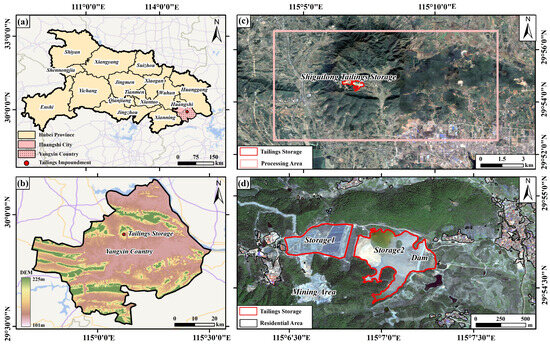
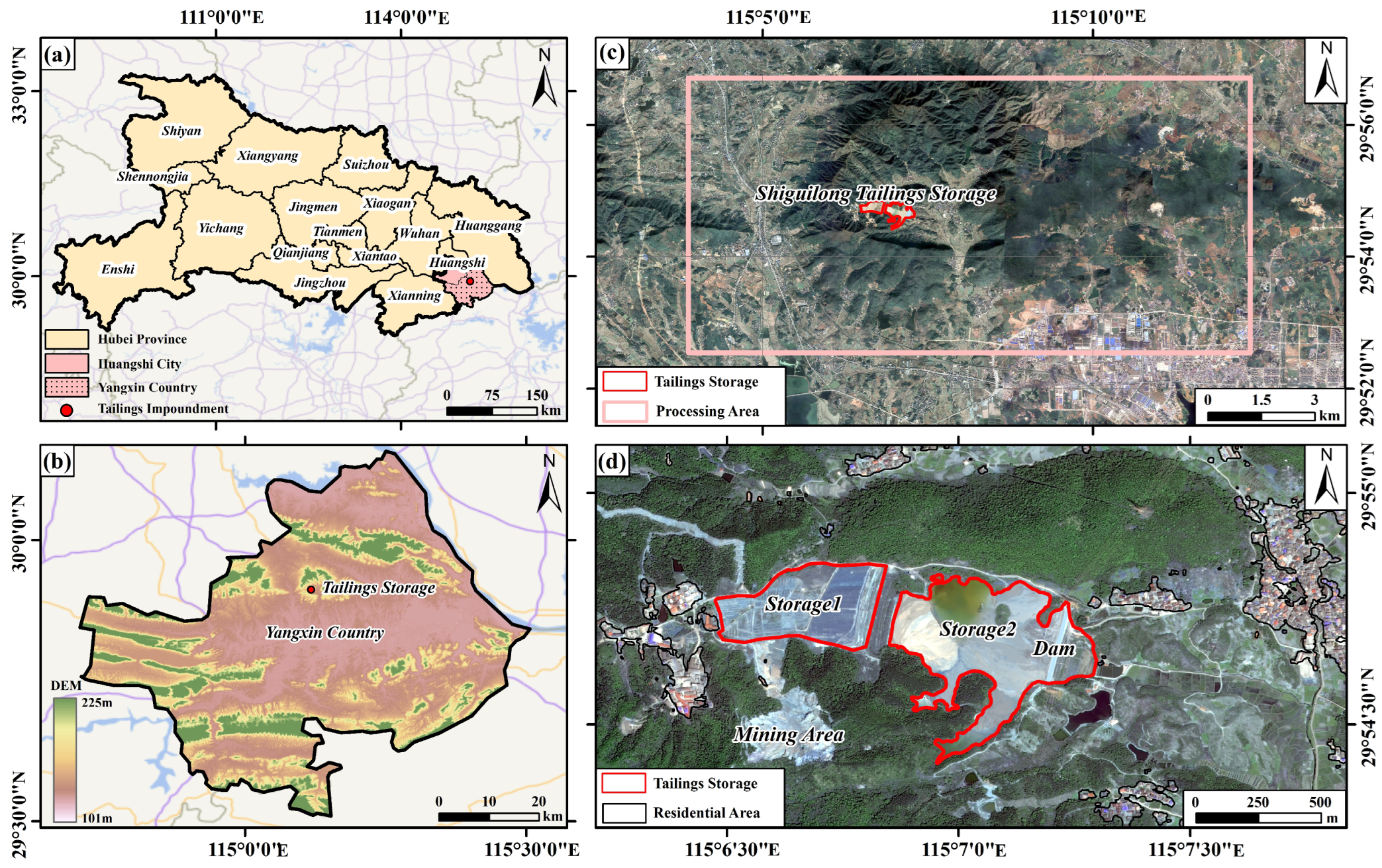
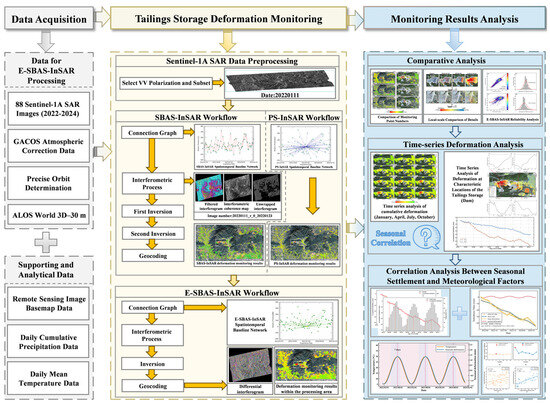
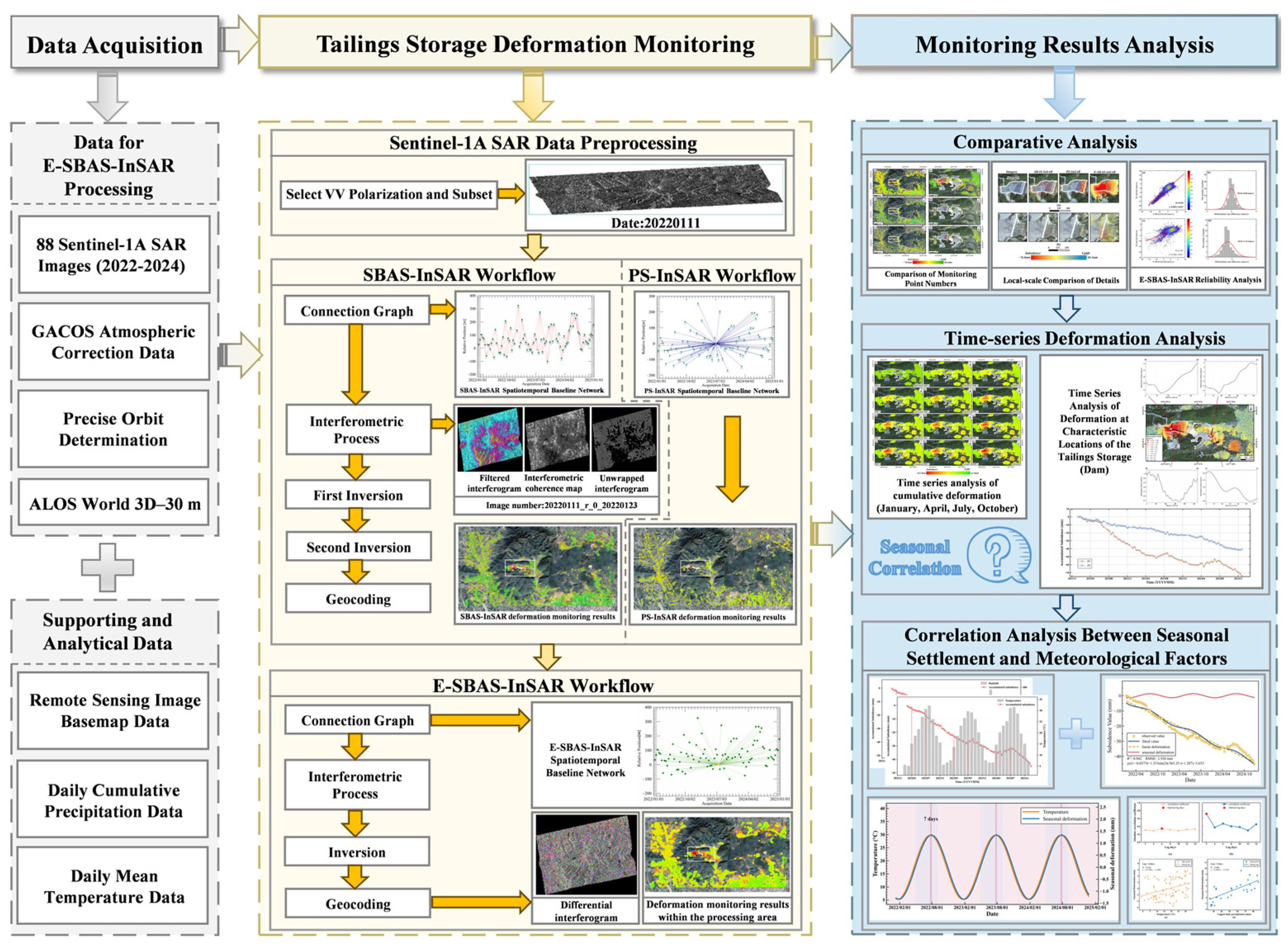
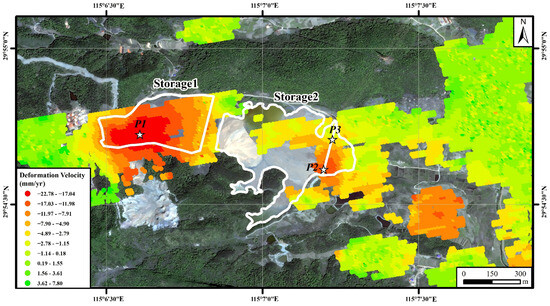
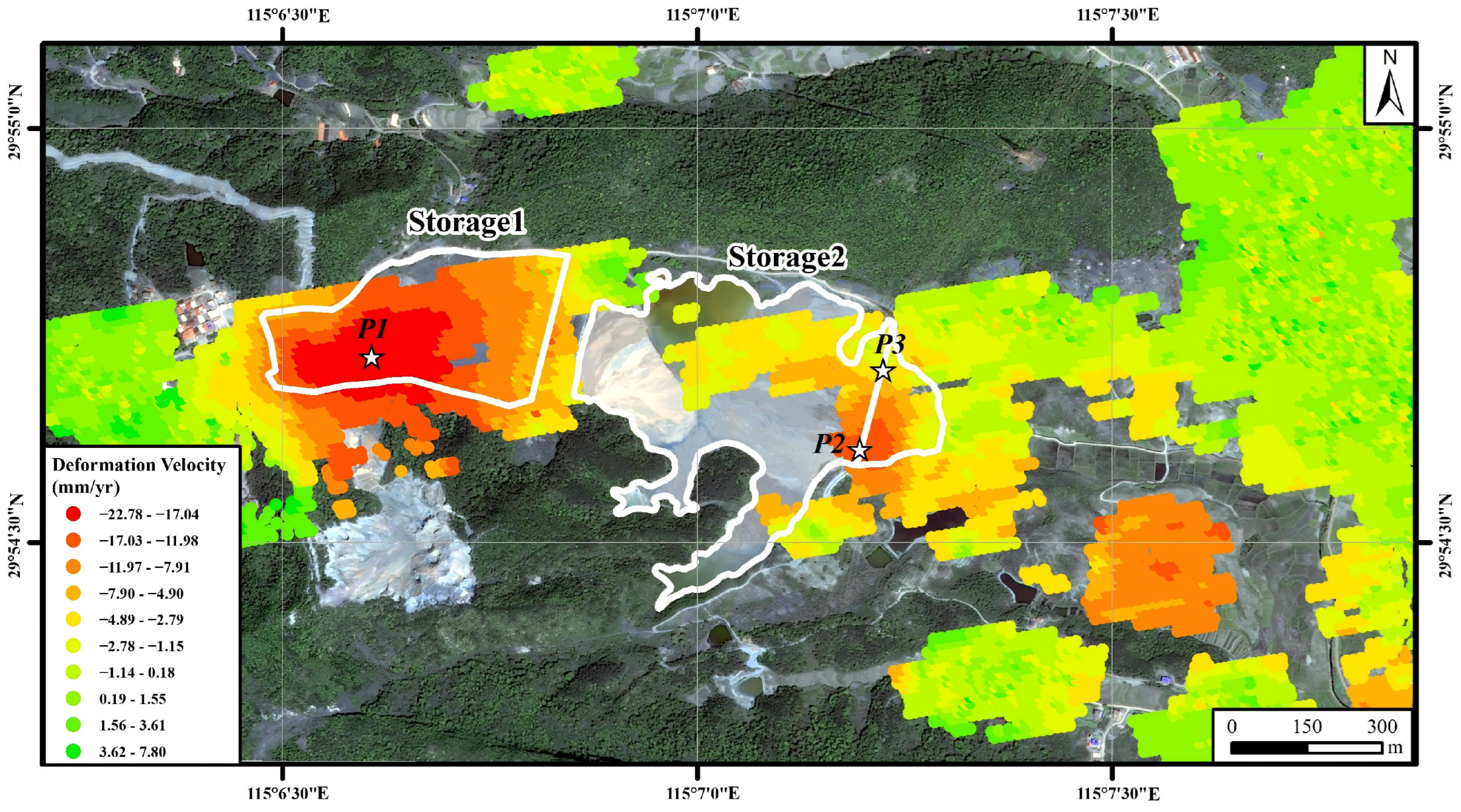
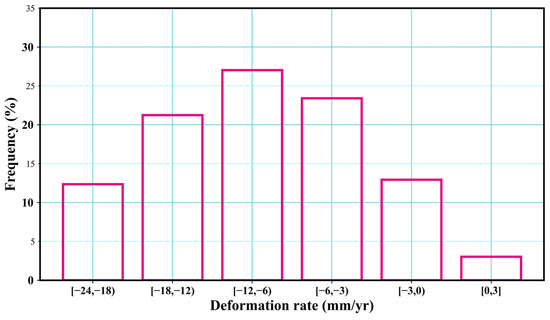
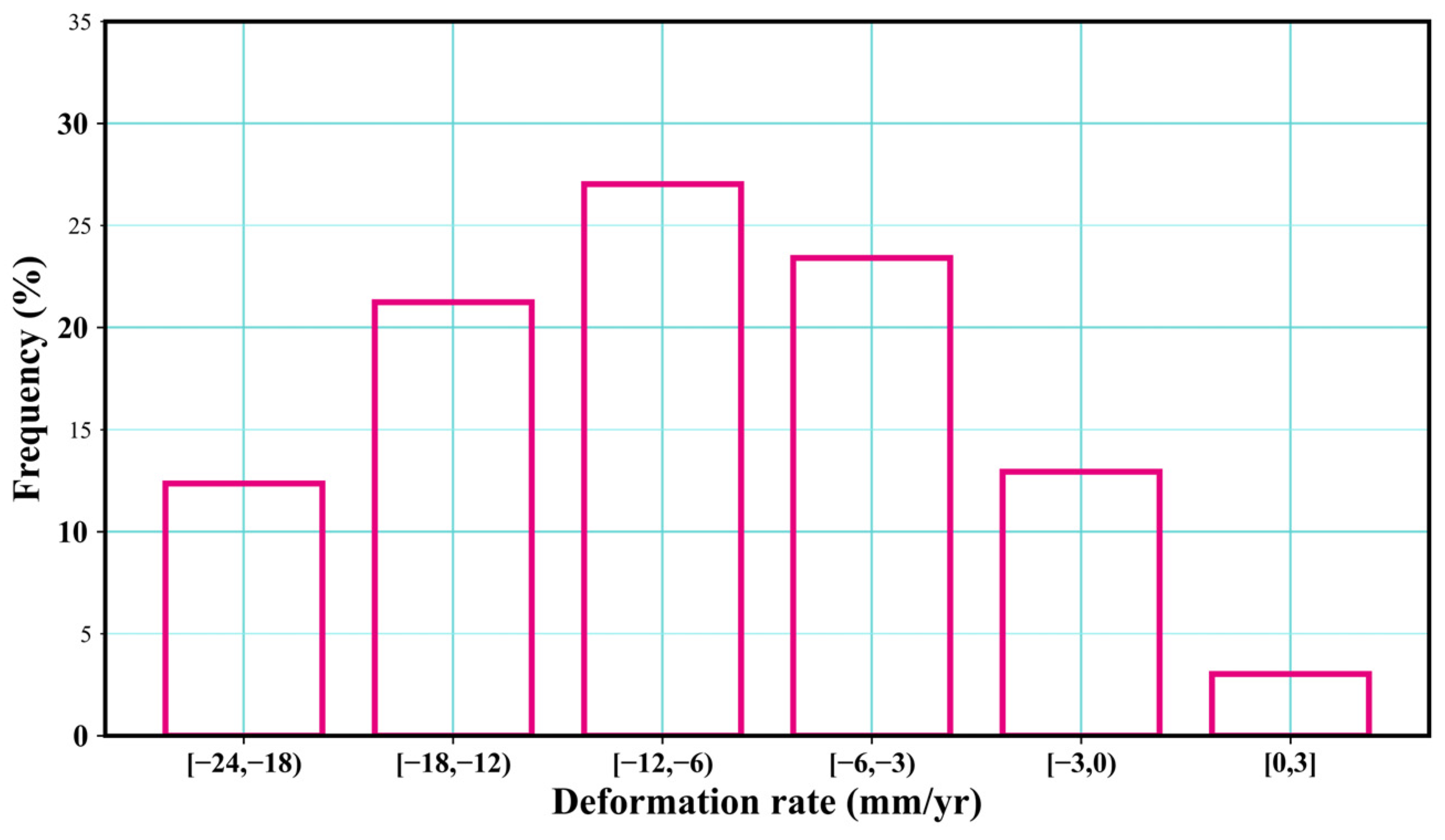
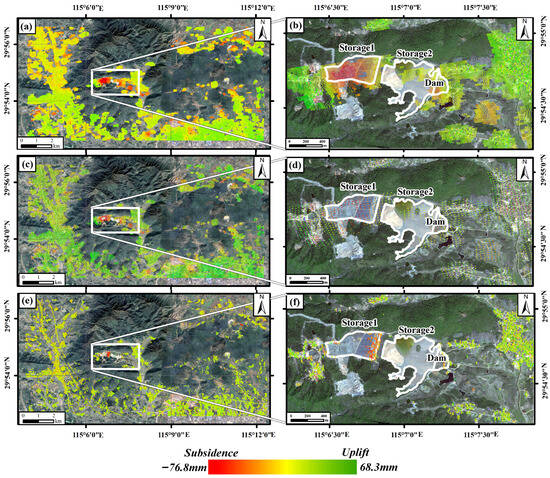
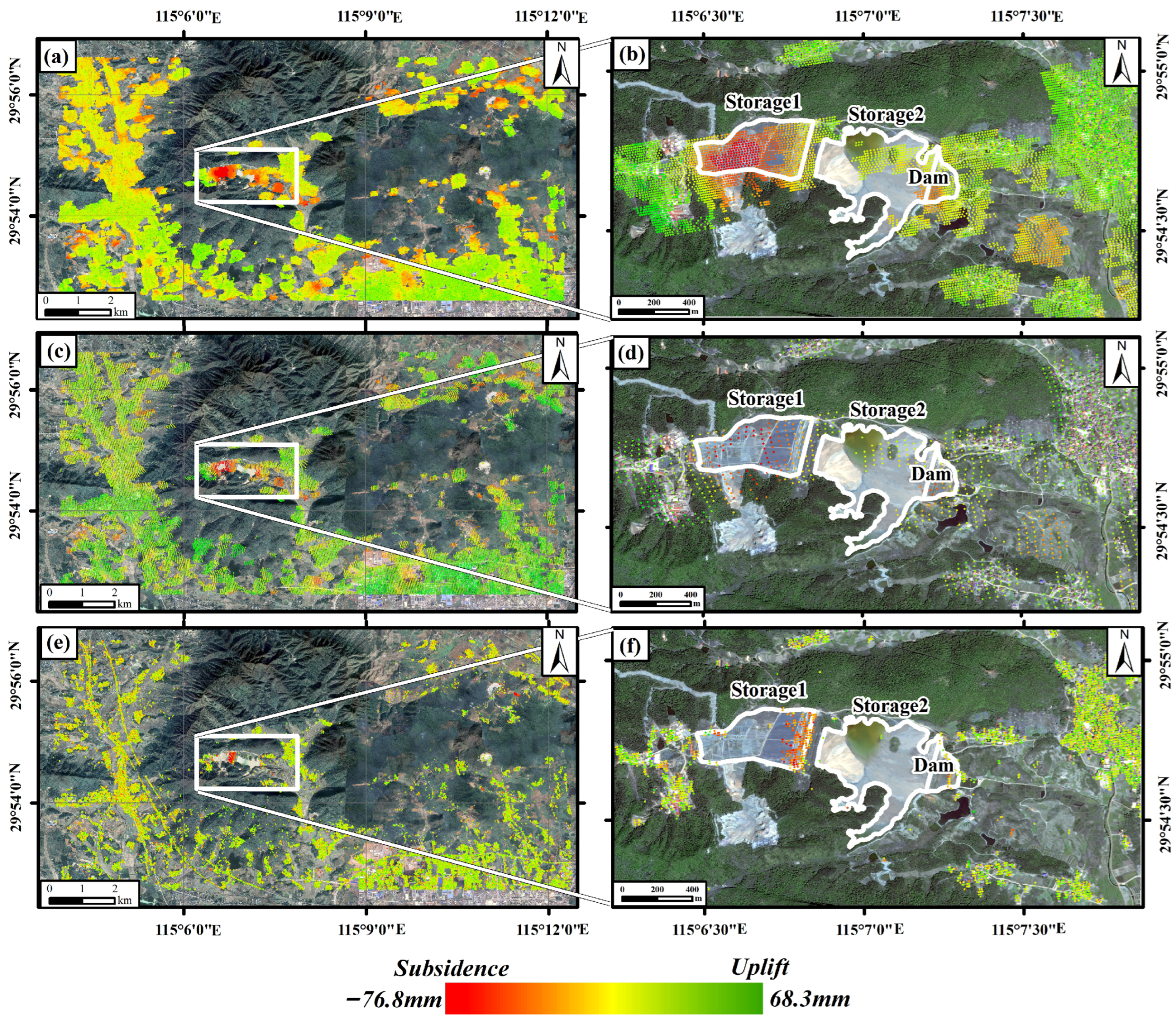
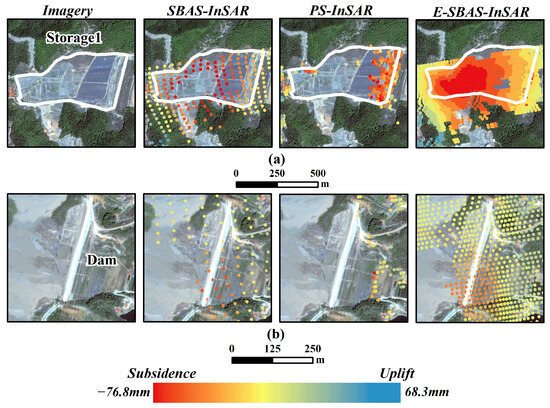
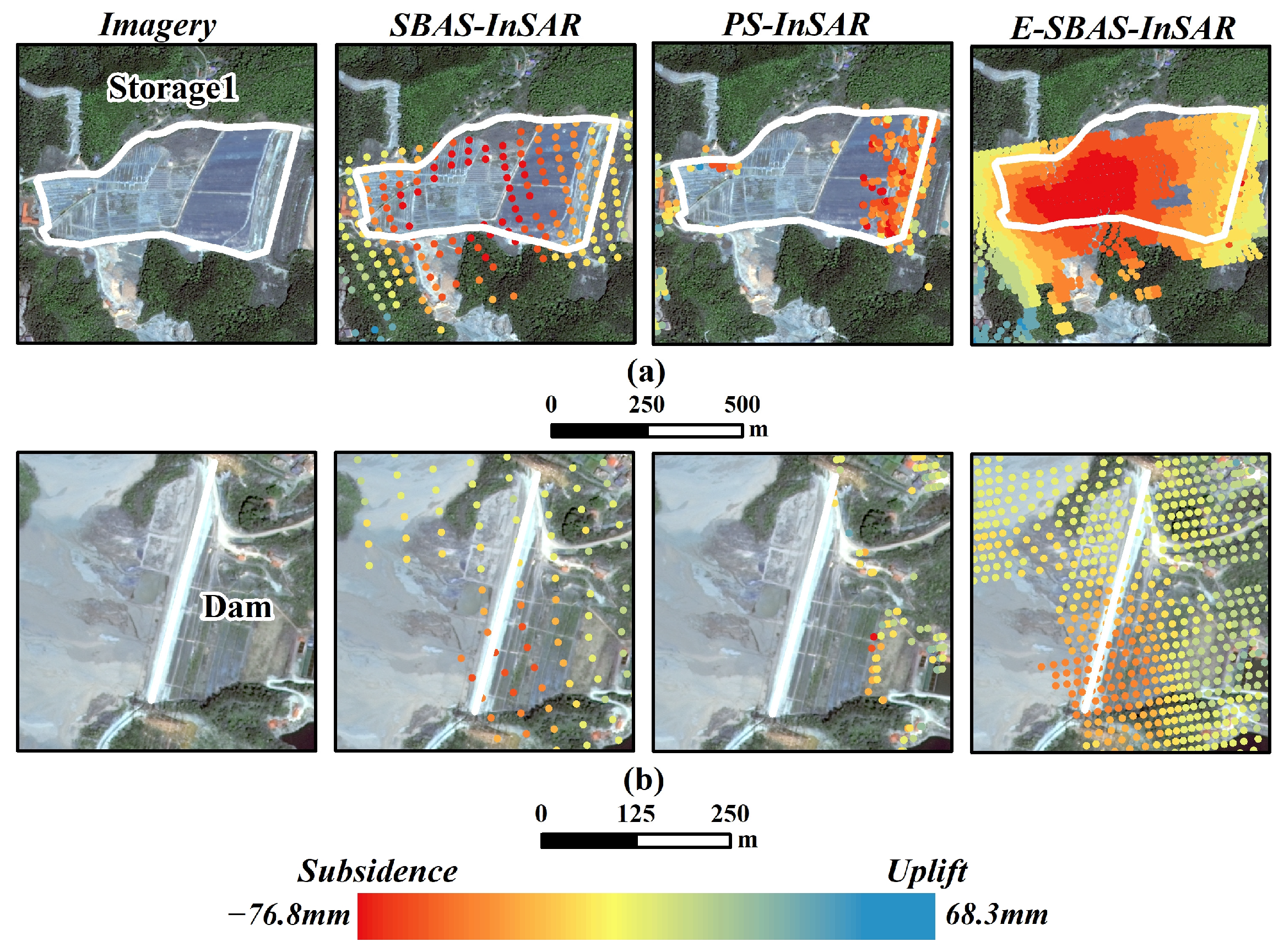
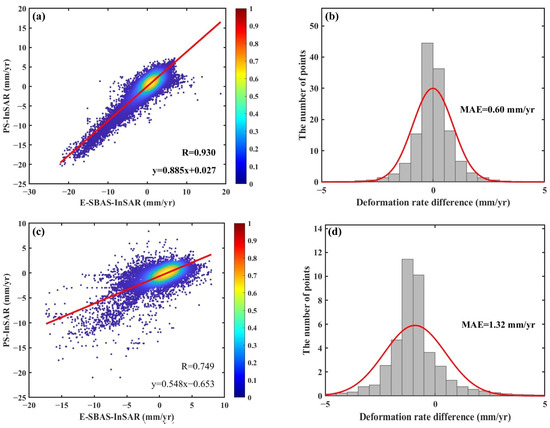
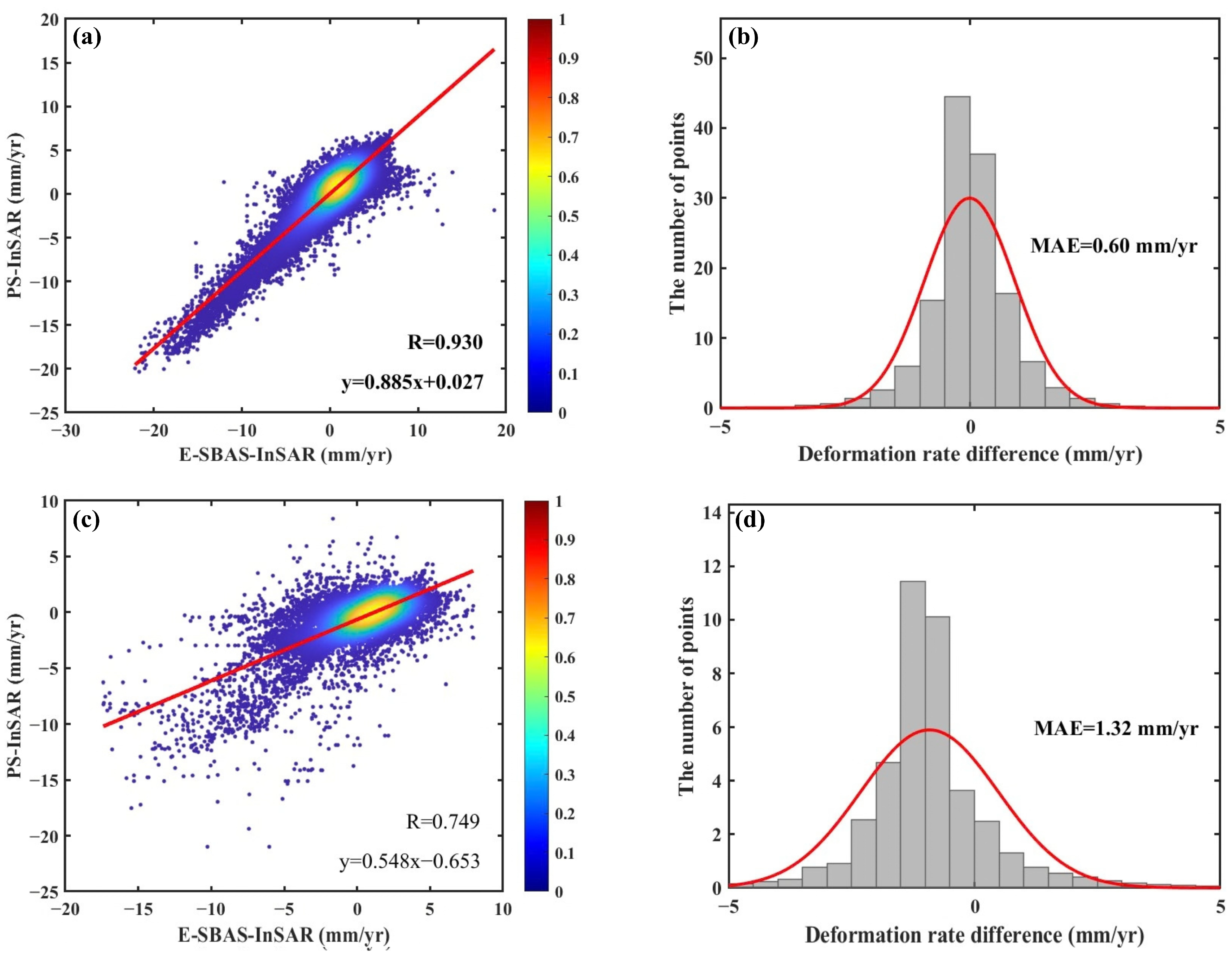
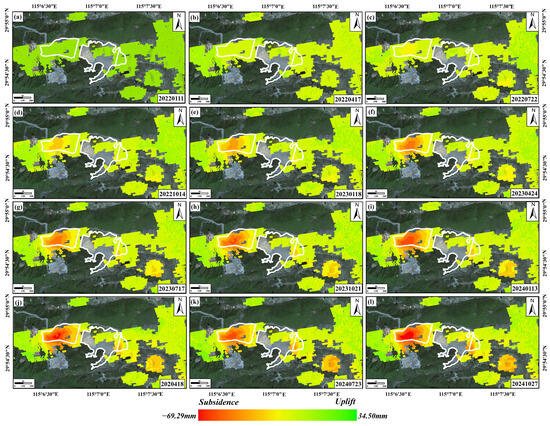
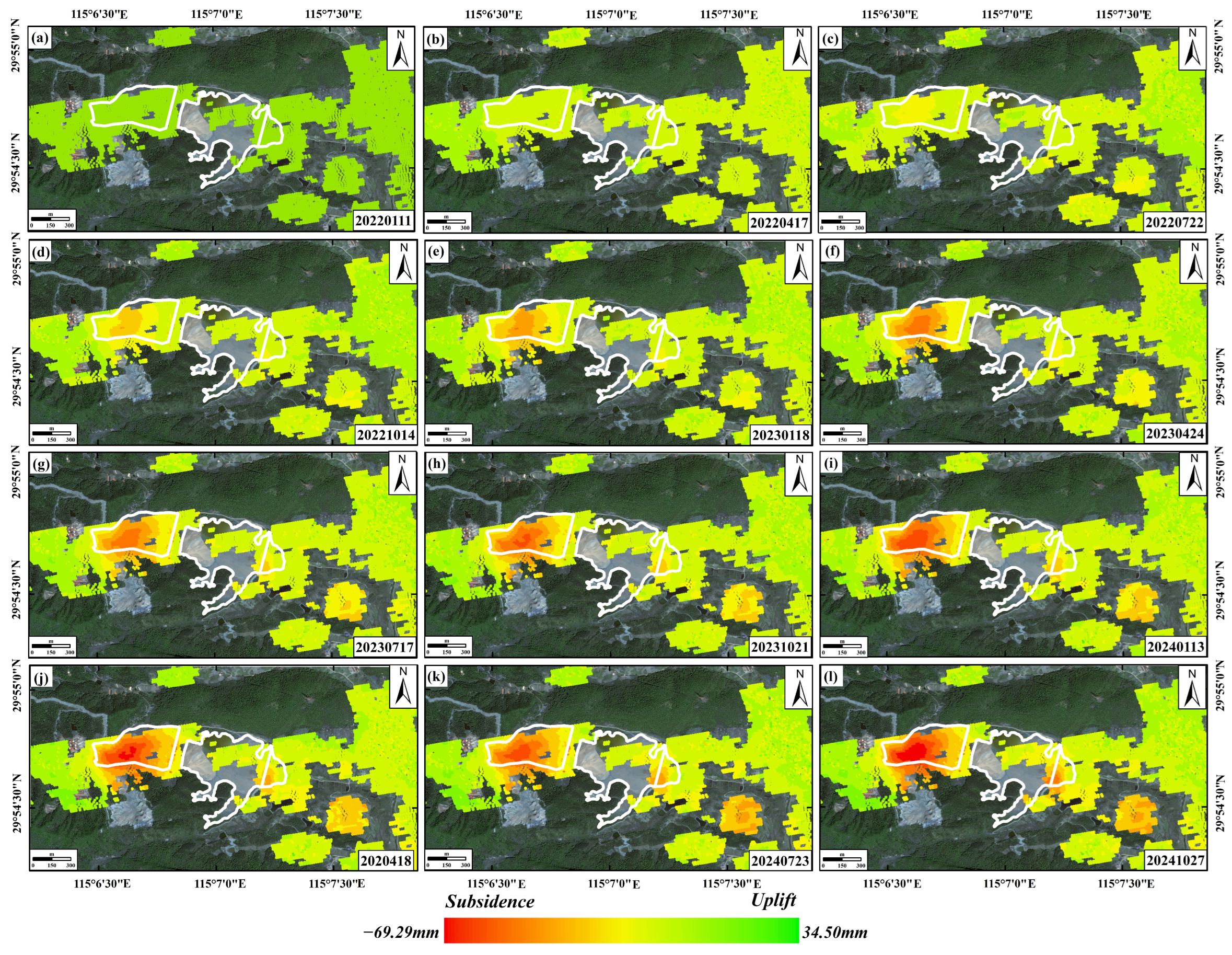
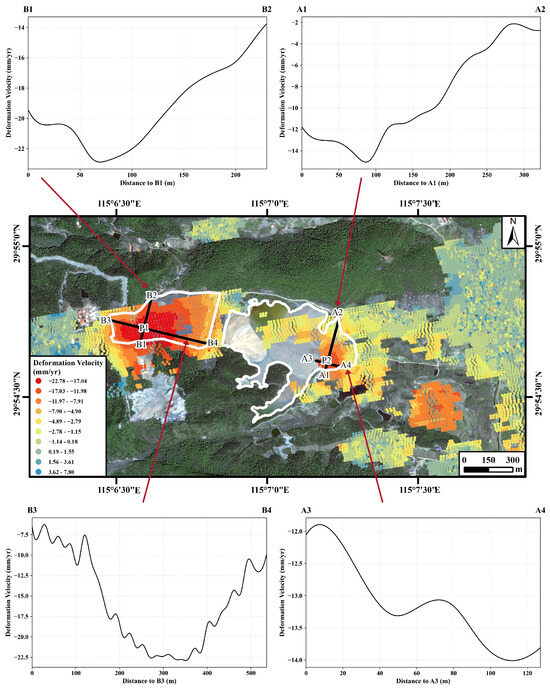
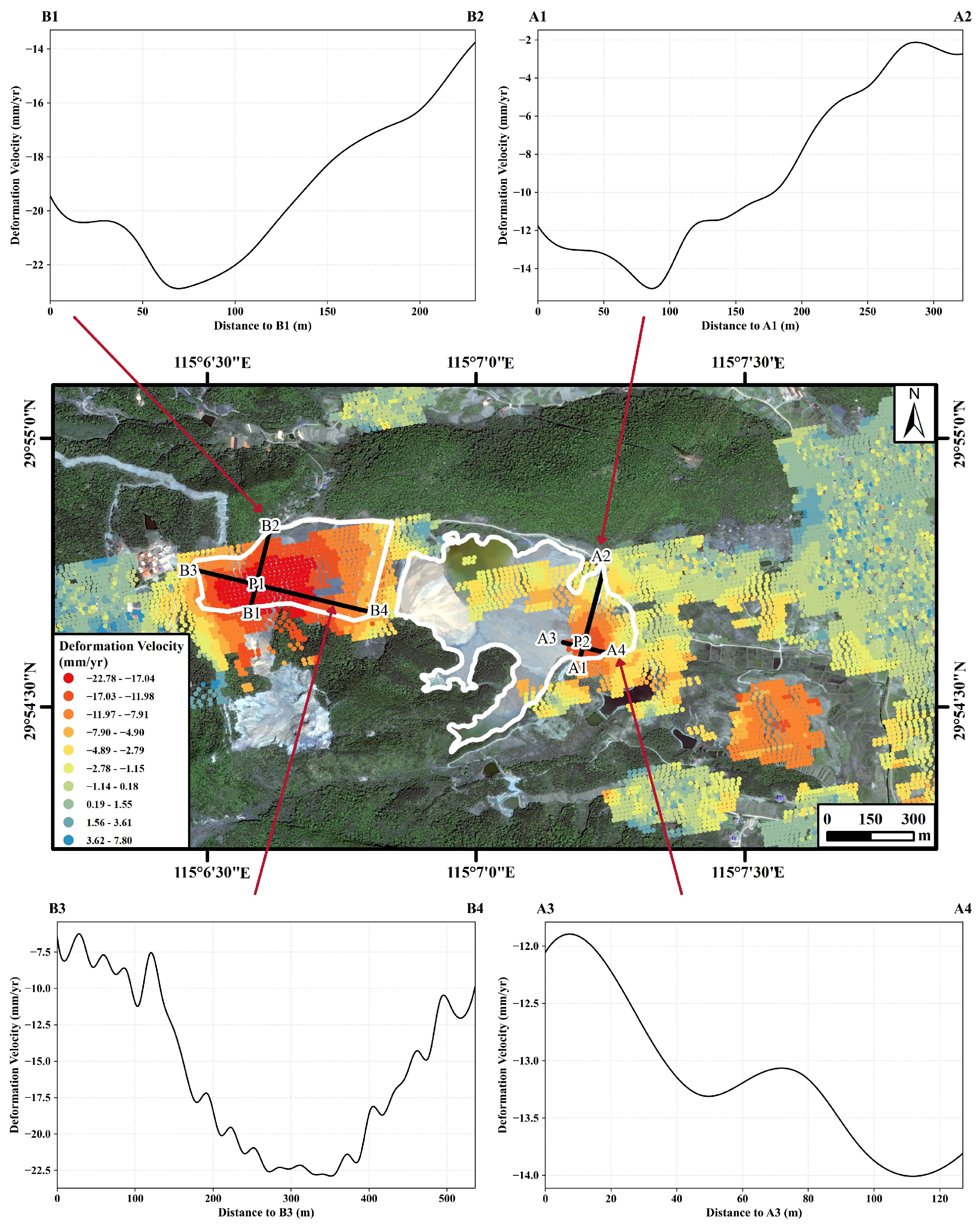
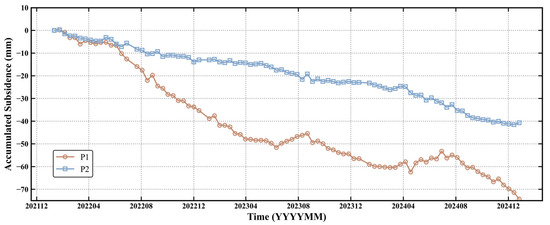
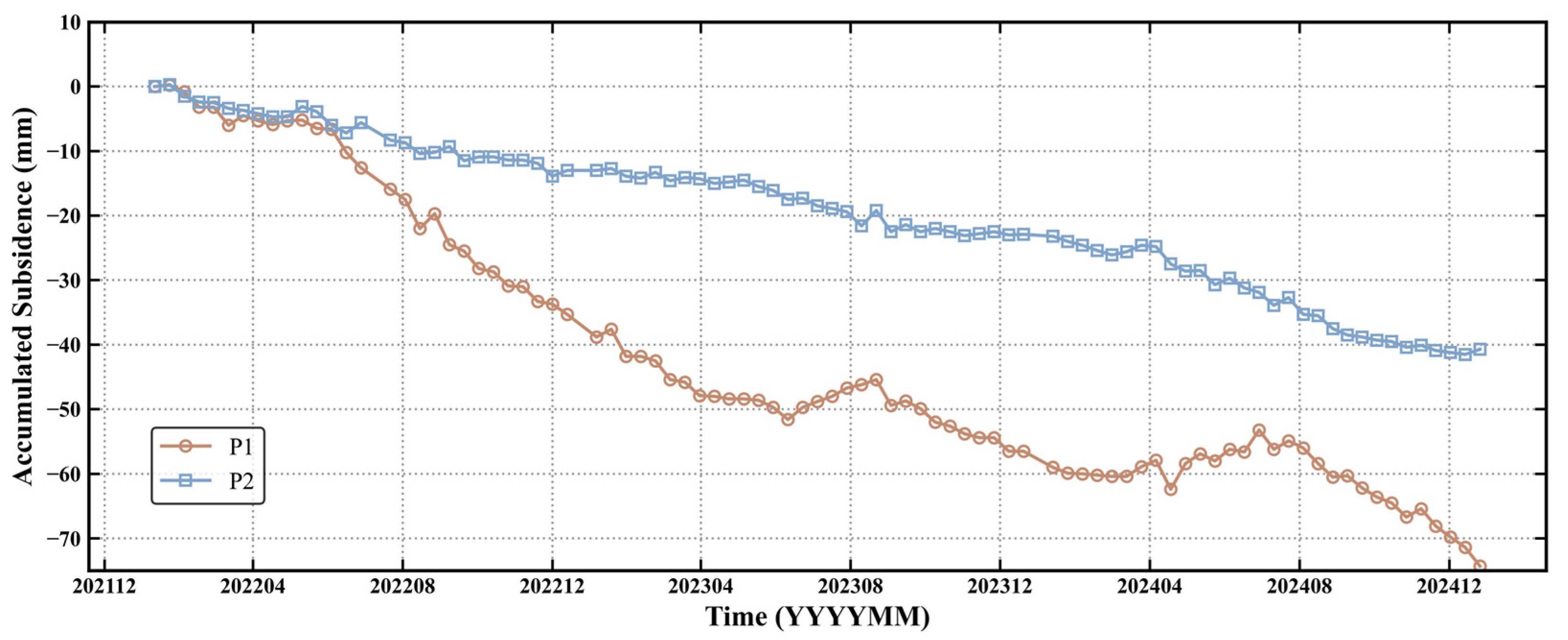
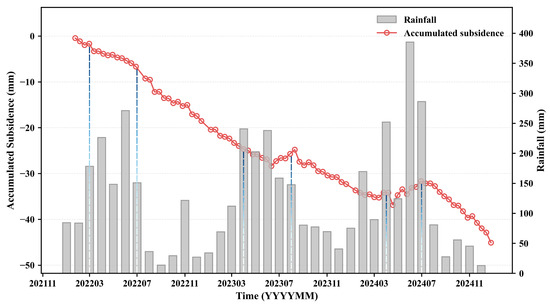
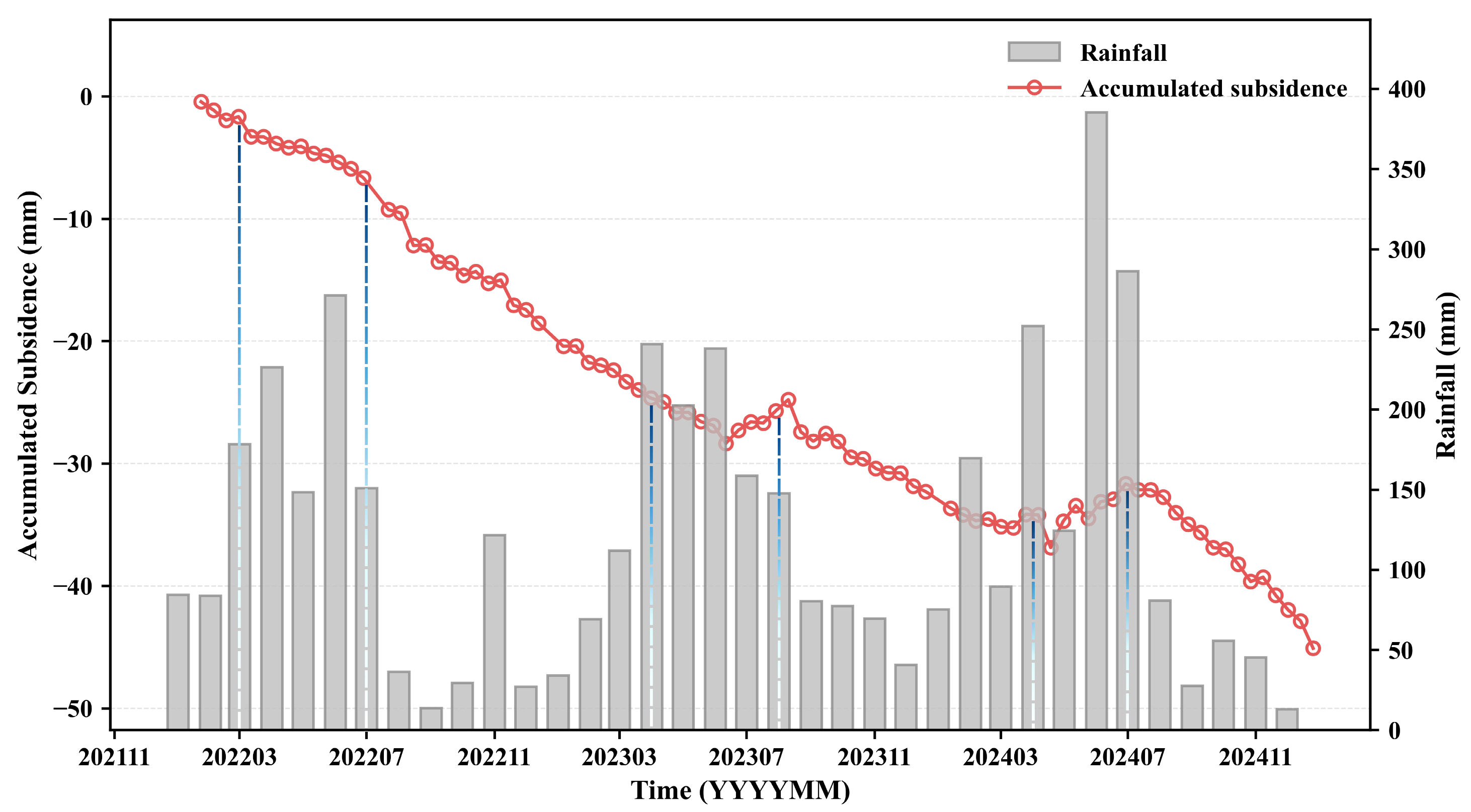
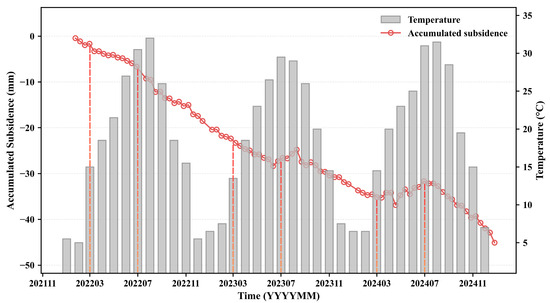
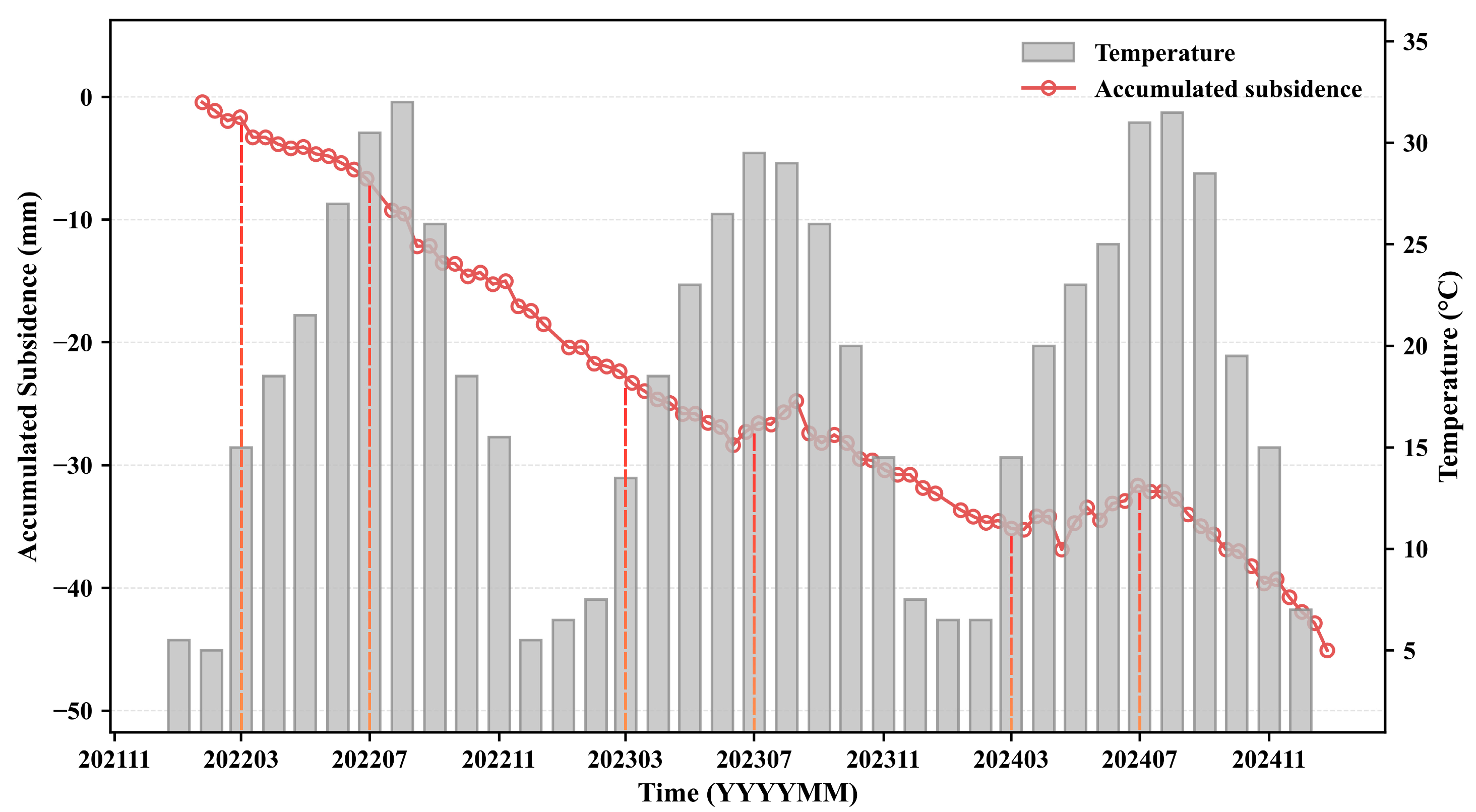
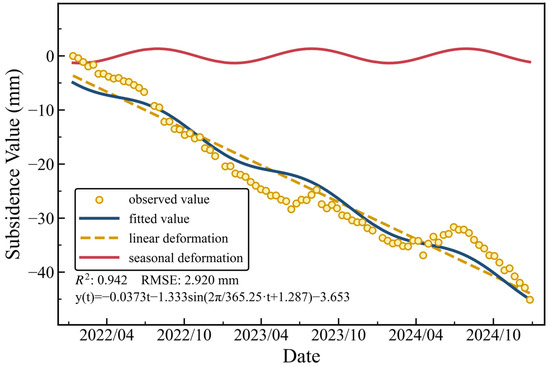
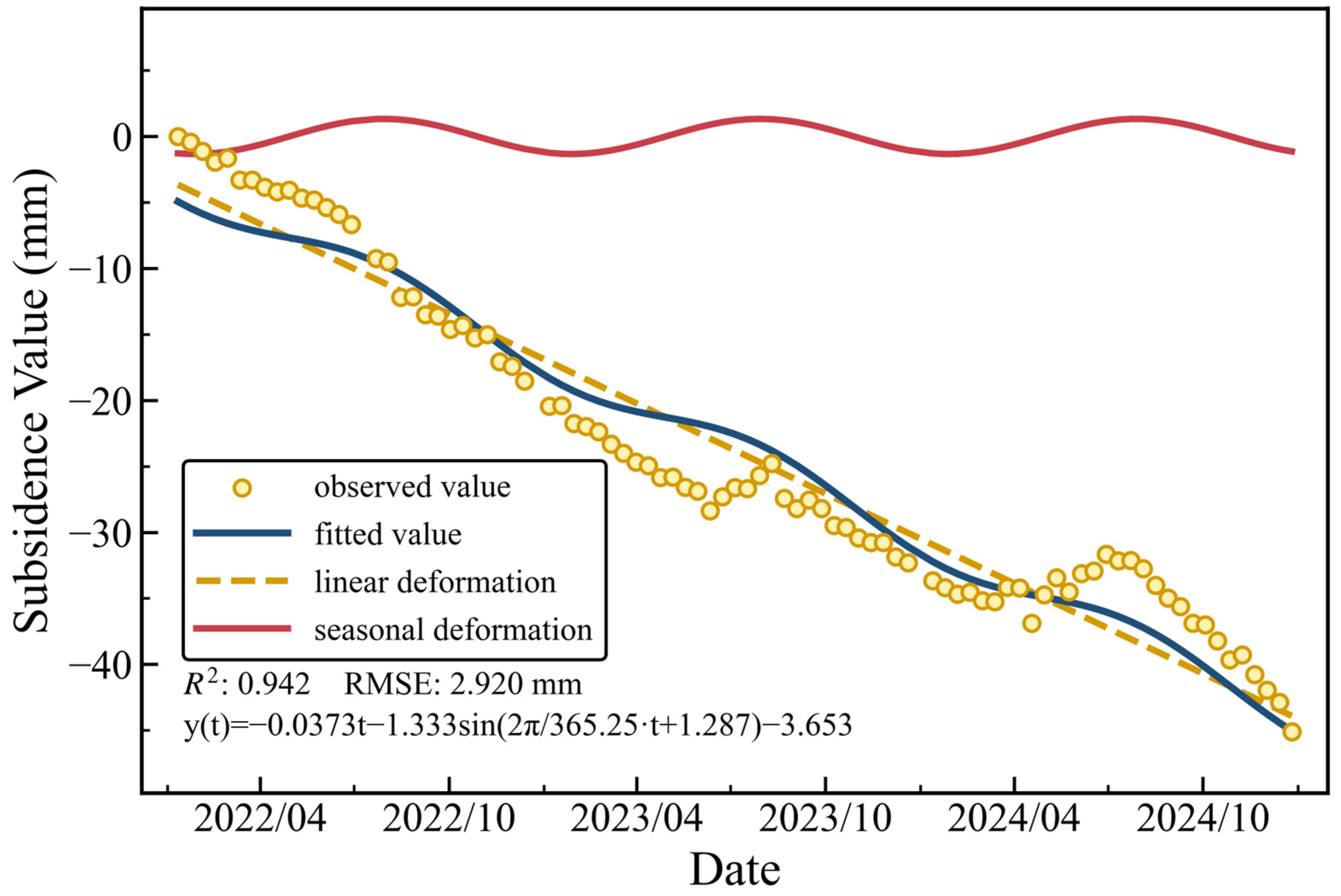
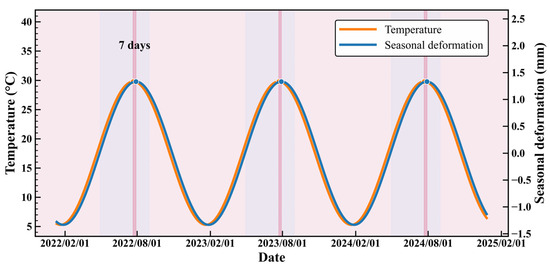
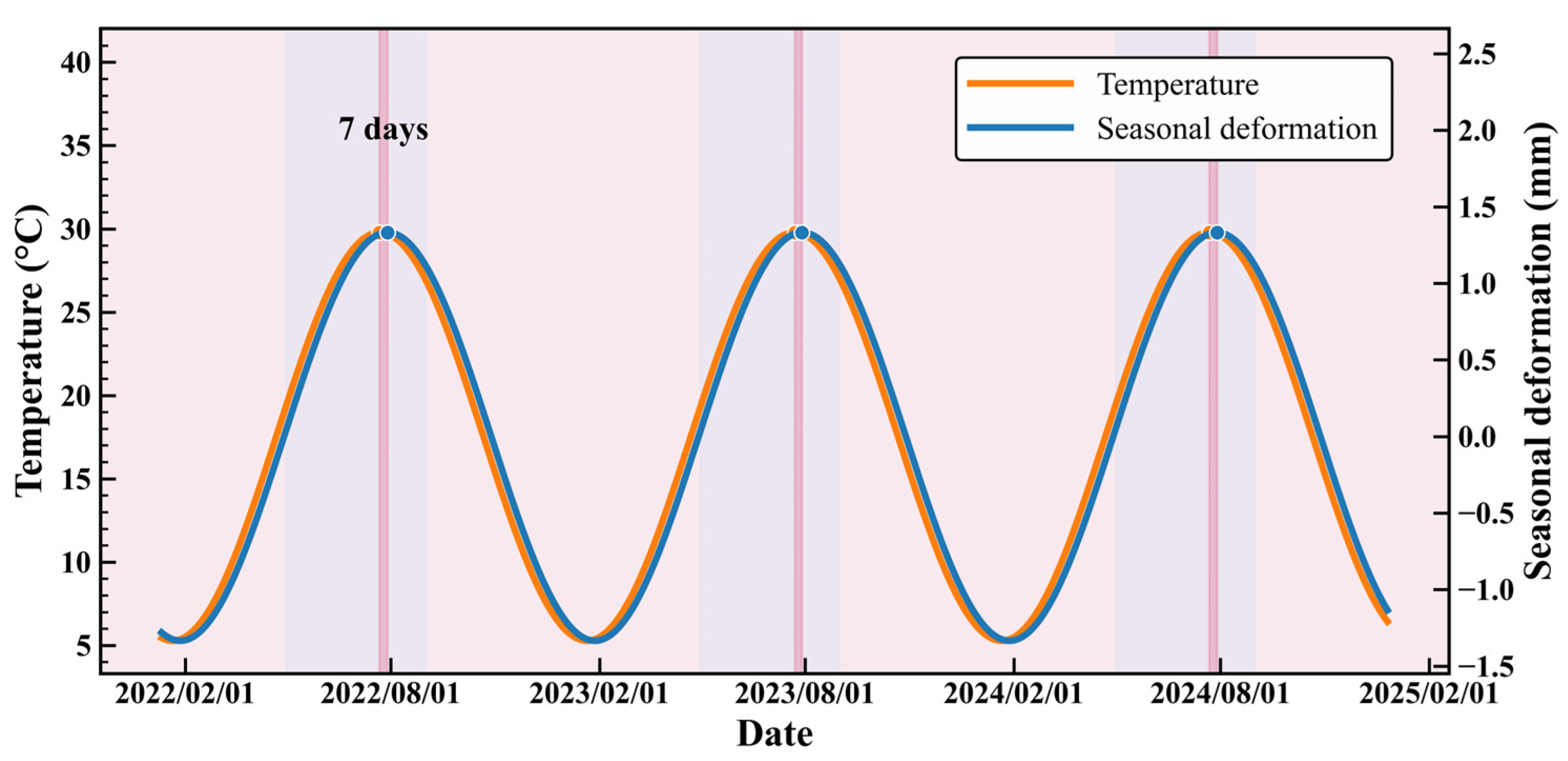
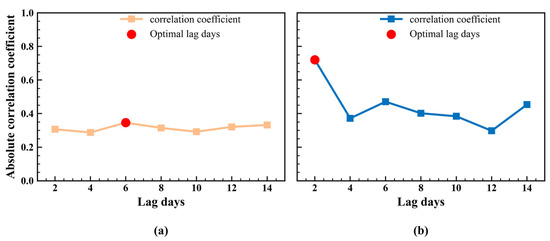
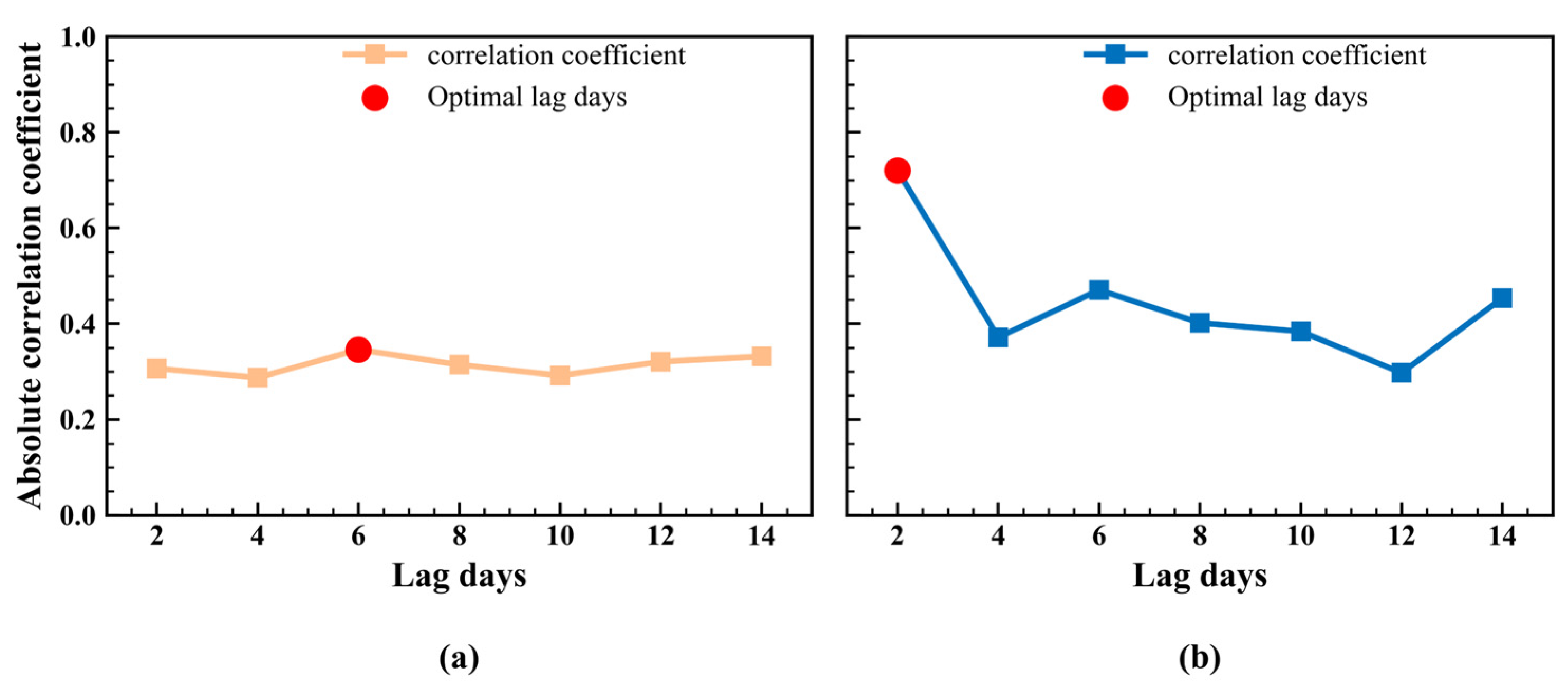
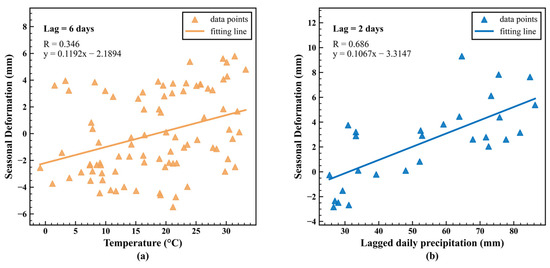
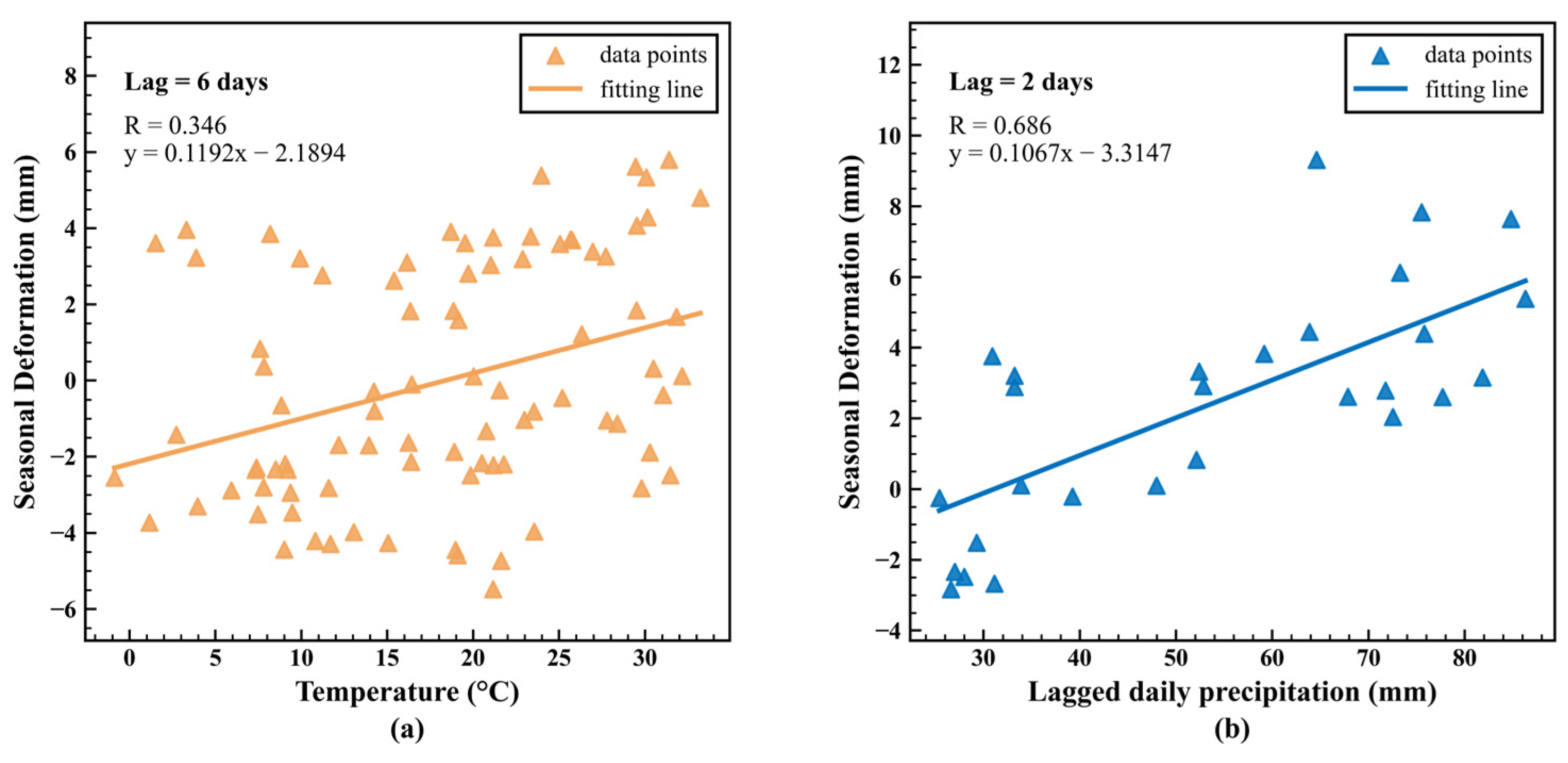

Disclaimer/Publisher’s Note: The statements, opinions and data contained in all publications are solely those of the individual author(s) and contributor(s) and not of MDPI and/or the editor(s). MDPI and/or the editor(s) disclaim responsibility for any injury to people or property resulting from any ideas, methods, instructions or products referred to in the content. |
© 2026 by the authors. Licensee MDPI, Basel, Switzerland. This article is an open access article distributed under the terms and conditions of the Creative Commons Attribution (CC BY) license.