Article

Regional Variability in the Structure and Microphysical Characteristics of Hail Clouds over China Based on GPM Observations and ERA5 Reanalysis


1
College of Meteorology and Oceanography, National University of Defense Technology, Changsha 410073, China
2
Hunan Meteorological Observatory, Changsha 410118, China
3
Basic Education College, National University of Defense Technology, Changsha 410073, China
*
Author to whom correspondence should be addressed.
These authors contributed equally to this work.
Remote Sens. 2026, 18(11), 1853; https://doi.org/10.3390/rs18111853 (registering DOI)
Submission received: 17 April 2026 / Revised: 31 May 2026 / Accepted: 1 June 2026 / Published: 4 June 2026
(This article belongs to the Special Issue Remote Sensing in Clouds and Precipitation Physics)

Highlights

What are the main findings?
  • Hail cloud systems in South and Southwest China exhibit the strongest ice-phase particle growth (steepest Δ Z e / Δ h and Δ D m / Δ h gradients) under high-CAPE environments, while systems in North and Northeast China develop into more horizontally extensive, organized structures under stronger vertical wind shear.
  • The Tibetan Plateau displays a distinct hail cloud regime characterized by strong echoes and large particle sizes aloft but weak low-level intensification and limited hydrometeor content, reflecting thermodynamically constrained conditions at high altitude.
What are the implications of the main findings?
  • Three regionally distinct hail cloud modes—deep moist convective, organization-enhanced, and plateau-constrained—provide a physically consistent framework for satellite-based hail monitoring and region-specific early warning across China.
  • The coupled GPM active/passive microwave and ERA5 environmental analysis demonstrates that regional hail cloud contrasts are jointly regulated by thermodynamic instability, vertical wind shear, and topographic forcing.

Abstract

Hail is one of the most destructive warm-season severe convective hazards in China, yet the structure and microphysical evolution of hail-bearing clouds vary markedly among regions. Using GPM DPR/GMI observations together with ERA5 reanalysis during the warm seasons of 2020–2025, we identified 817 hail cloud systems across five representative hail-prone regions of China, namely Northeast China (NE), North China (NC), South China (SC), Southwest China (SW), and the Tibetan Plateau (TP), on the basis of the flagHail indicator. We then compared their macroscopic structure, vertical microphysical characteristics, organization scale, and environmental setting within a unified framework. The results reveal pronounced regional heterogeneity. Hail cloud systems in SC and SW exhibit higher echo-top heights and larger ice water paths, together with the strongest downward enhancement of reflectivity and particle size within the key ice-growth layer between 0 °C and −20 °C, indicating a deep moist-convective regime. By contrast, hail cloud systems in NC and NE more often develop into organized and horizontally extensive systems under stronger vertical wind shear, consistent with an organization-enhanced regime. Hail cloud systems over TP are characterized by high cloud tops, low hydrometeor content, and weak low-level growth, which together define a plateau-constrained regime. Environmental analyses indicate that these regional contrasts are jointly regulated by thermodynamic instability, vertical wind shear, and topographic forcing. These findings provide a physically consistent basis for satellite-based hail monitoring and region-specific hail warning over China.

1. Introduction

Hail, a form of solid precipitation generated by deep convective clouds, is widely recognized as one of the most damaging severe weather hazards worldwide [1]. In China, the combined effects of complex topography, the East Asian monsoon, and strong regional climatic contrasts favor frequent hail disasters with pronounced spatial variability, thereby posing major risks to agriculture and socioeconomic activity [2]. In 2020 alone, convective weather events involving wind and hail affected 2.8 million hm2 of cropland, caused 87 fatalities, and produced direct economic losses of 28.2 billion RMB [3]. As one of the five leading natural hazards responsible for grain loss in China [4], hail is characterized by abrupt onset and strong destructive potential. A better understanding of the structure of hail clouds and its regional variability is therefore essential for improving hail monitoring, warning, and disaster mitigation.
Traditional studies of hail have relied mainly on surface meteorological stations and ground-based weather radars. Although station records provide valuable long-term climatological information [5], their uneven spatial distribution and limited representativeness make them poorly suited to capturing the localized and short-lived nature of hail, especially over mountainous and plateau regions. Ground-based radars provide three-dimensional views of storm structure [6,7], but over complex terrain, such as the Tibetan Plateau, their performance remains limited by beam blockage, restricted range, and sparse network coverage. These limitations hinder a consistent inter-regional comparison of hail cloud structure across China. A unified observational perspective is therefore still lacking.
The development of spaceborne active and passive remote sensing has opened a new avenue for the study of hail cloud systems [8]. The precipitation radar aboard TRMM provided the first satellite-based observations of convective vertical structure [9,10] and enabled regional comparisons of intense convective systems [11,12,13]. Using TRMM observations, for example, Ni et al. [14] showed that hailstorms over China generally exhibit higher cloud tops and stronger radar echoes than similar storms over the United States. However, TRMM PR operated only at Ku band and was limited to 35°N–35°S, leaving the major hail-prone regions of North and Northeast China outside its observational coverage.
Launched in 2014 as the successor to TRMM, the Global Precipitation Measurement (GPM) mission represents a major observational advance. Its dual-frequency precipitation radar (DPR) and microwave imager (GMI) substantially improve the detection of precipitation-system structure and ice-phase processes [15]. GPM extends coverage to 65°N–65°S and therefore includes all major hail-prone regions of China. In addition, the combined Ku/Ka observations better constrain particle phase, size distribution, and hydrometeor content [16,17], while the high-frequency GMI channels are highly sensitive to scattering by deep ice-phase particles [18,19,20]. These capabilities make GPM particularly suitable for a unified assessment of hail cloud macroscopic structure, vertical microphysics, and ice-scattering cores.
Recent studies have used GPM observations to investigate convective structure and precipitation microphysics over the Tibetan Plateau, the Sichuan Basin, and adjacent regions [21,22,23,24,25]. Other studies have documented the climatological characteristics and regional distribution of hail over China and have highlighted substantial spatial contrasts [26,27,28]. Nevertheless, most previous work has focused on local domains, individual classes of convective systems, or general precipitation processes. A national-scale comparison of hail cloud systems across the major hail-prone regions of China, based on a unified identification strategy, a common set of metrics, and a consistent analytical framework, is still lacking. In particular, it remains unclear whether hail cloud systems in different regions exhibit systematic contrasts in vertical structure, ice-growth pathways, organization scale, and environmental forcing, and whether these contrasts can be generalized into representative regional modes.
To address these questions, we use GPM DPR/GMI observations and the fifth-generation ECMWF reanalysis (ERA5) data during the warm seasons of 2020–2025 to compare hail cloud systems across five representative hail-prone regions of China: Northeast China, North China, South China, Southwest China, and the Tibetan Plateau. The specific objectives are to quantify regional differences in macroscopic structure, vertical microphysical characteristics, and organization scale; identify the dominant regional modes of warm-season hail cloud systems over China; and link these modes to their thermodynamic and dynamical environments in order to establish a physically consistent picture of coupled structure–microphysics–environment variability. Through this analysis, the study aims to advance understanding of regional differences in hail cloud systems over China and to support satellite-based hail monitoring and region-specific early warning.

2. Materials and Methods

2.1. Study Regions and Study Period

Five representative hail-prone regions of China were selected: Northeast China (NE: 43°–54°N, 115°–135°E), North China (NC: 35°–43°N, 108°–121°E), South China (SC: 20°–35°N, 110°–123°E), Southwest China (SW: 23°–33°N, 100°–110°E), and the Tibetan Plateau (TP: 28°–37°N, 80°–100°E). This regional classification is based on previous studies of the spatial pattern of hail disasters in China [27], long-term hail climatologies [28], and commonly used regional partitions in studies of precipitation microphysics over China [29]. Together, these five regions cover the major warm-season hail hotspots in China and represent distinct topographic settings, thermodynamic conditions, and moisture environments.
The study period spans the warm seasons (May–September) of 2020–2025, when severe convection and hail are most active over China [30,31]. This period also ensures strong temporal and spatial consistency between GPM DPR Version 7 products and ERA5 reanalysis data. Figure 1 shows the study regions and the corresponding terrain elevations.

2.2. Data Sources and Identification of Hail Cloud Systems

This study combines GPM active and passive microwave observations with ERA5 reanalysis to examine the structure, microphysical characteristics, and environmental context of hail cloud systems in different regions. The active measurements are taken from the GPM DPR Level-2A (2ADPR) Version 7 product, which provides attenuation-corrected Ku-band radar reflectivity ( Z e ), mass-weighted mean diameter ( D m ), and normalized intercept parameter ( N w ), together with macroscopic structural parameters including storm-top height (STH), maximum 20 dBZ echo-top height (MHT20), and maximum 40 dBZ echo-top height (MHT40). MHT20 is defined as the maximum height at which Ku-band radar reflectivity exceeds 20 dBZ, following the convention established by Liu and Zipser [32] and widely adopted in DPR-based convective system studies [33,34]. The 20 dBZ threshold traces the upper boundary of the precipitating region, providing a complementary metric to STH that characterizes the vertical development of precipitation-sized hydrometeors. MHT40 is defined analogously as the maximum height of the 40 dBZ echo; the higher threshold isolates the intense convective core region where large hydrometeors produce strong backscattering, serving as an indicator of convective intensity and hail potential [33,34].
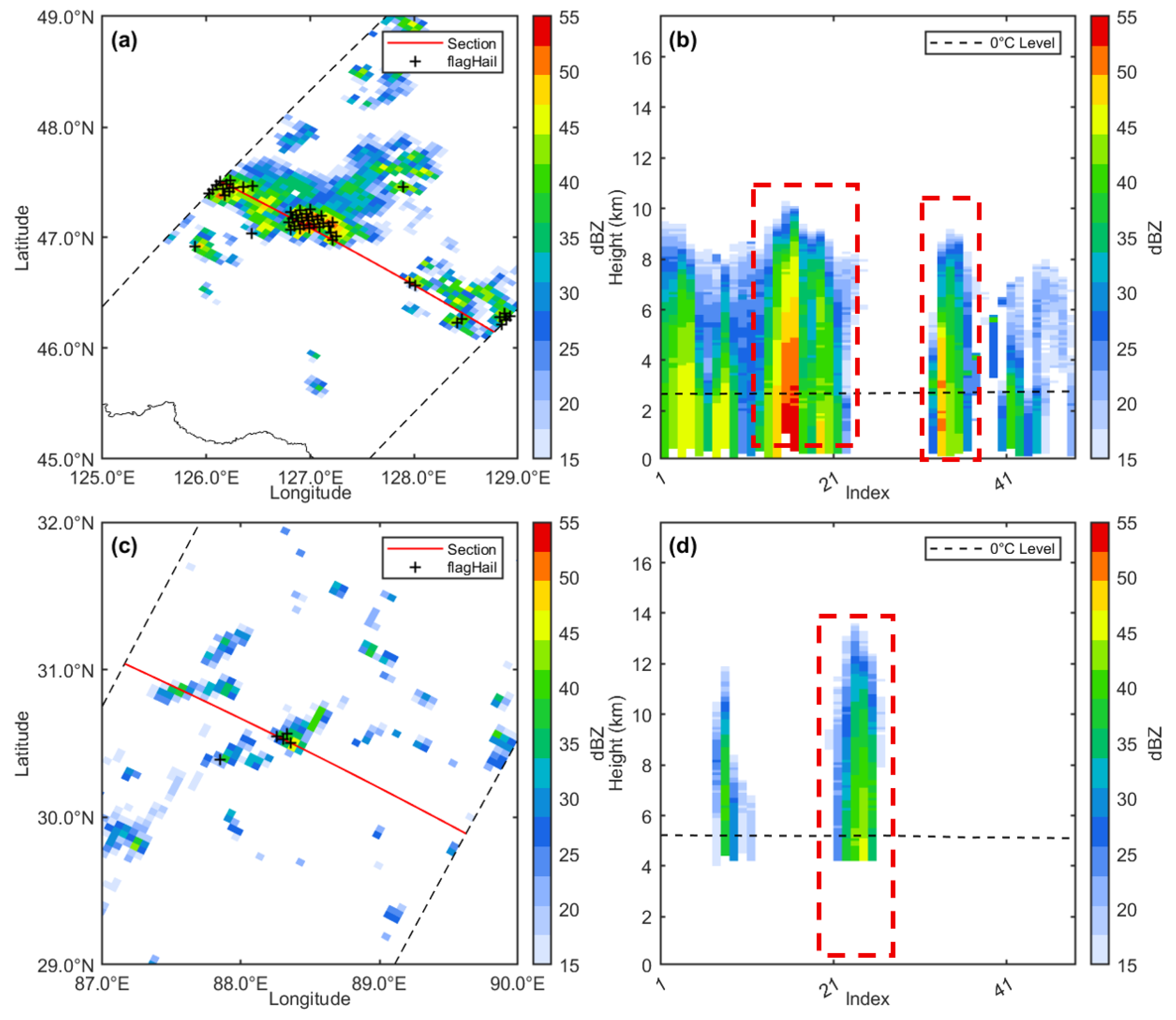
To enable physically consistent regional comparisons across the contrasting terrain of the Tibetan Plateau (surface elevation approximately 3–5 km mean sea level (MSL)) and the surrounding lowlands, all heights reported in this study are expressed as height above ground level (AGL). The GPM DPR elevation variable provides the ground surface elevation (m MSL) at each radar pixel, and all heights (STH, MHT20, MHT40, and CFAD vertical coordinates) are computed as MSL height minus the local elevation. This AGL convention eliminates terrain artifacts from regional contrasts and ensures that differences in echo-top height and vertical microphysical structure reflect genuine convective-depth variations rather than topography. Passive microwave information is obtained from the GMI Level-1C (1CGMI) product, primarily through the 89 GHz polarization-corrected brightness temperature and the 183 ± 7 GHz brightness temperature, which are used to characterize the deep ice-scattering core and the mid-to-upper-level ice-scattering signal. ERA5 is used to derive the environmental fields, including convective available potential energy (CAPE) and wind profiles. Figure 2 illustrates two representative hail cloud systems observed by GPM DPR, highlighting the spatial structure and vertical cross-sections that are characteristic of the cases analyzed in this study.
The flagHail variable in the 2ADPR product is used as the basis for identifying hail-related signals. This variable is generated by the hail/graupel identification algorithm developed by Le and Chandrasekar [35,36], which employs a Bayesian classifier integrating dual-frequency ratio (DFR), maximum reflectivity, storm-top height, and melting-layer features to identify radar profiles with hail-specific microphysical signatures. This multi-parameter approach distinguishes hail-bearing profiles from ordinary deep convection more effectively than single-threshold methods [1]. The targets identified in this study are hail cloud systems, that is, convective systems exhibiting hail potential in satellite observations rather than surface-verified hailfall events. It should be noted that D m and N w are DPR retrieval products. The 2ADPR Version 7 product applies a path-integrated attenuation (PIA) correction using a hybrid approach [17,37]. Nevertheless, residual attenuation errors and retrieval biases may persist in the most intense convective cores [38,39]. D m and N w are used here primarily for relative inter-regional comparison of vertical gradients rather than as absolute microphysical estimates. We interpret the regional contrasts in vertical gradients with appropriate caution and discuss the estimated bias range in more detail in Section 4.5. To isolate hail-related cloud systems with a minimum degree of organization, all pixels with flagHail  = 1 are grouped using an eight-neighbor connectivity criterion. A connected region containing at least four contiguous flagHail pixels is defined as an independent system. This threshold follows previous work in which contiguous precipitation pixels were used to identify organized precipitation systems [40]. Its purpose is to reduce isolated noisy pixels while ensuring that the identified target retains basic horizontal continuity and organization. It should be emphasized that the requirement of four contiguous pixels is a morphological constraint used to identify hail-related convective systems from a satellite perspective, rather than a definition of the minimum scale of surface hail occurrence. Using this criterion, 817 hail-related cloud systems were identified across the five study regions. The sample sizes are listed in Table 1. Both representative cases in Figure 2 were accompanied by independent hail warning information: the NE case (28 June 2020) coincided with severe convective weather warnings issued by the National Emergency Management Administration of China and subsequent news reports of hailfall in Heilongjiang and Jilin; the TP case (11 July 2024) corresponded to an orange hail warning from the Tibet Autonomous Region Meteorological Bureau, with social media records confirming surface hail.
To validate the reliability of the flagHail-based identification, we collected two independent ground-based datasets: (1) 19 satellite–ground matched cases from 2020 to 2021, confirmed by meteorological station reports, hailpad measurements, or media records; and (2) 58 warning–DPR matched records from 2023 to 2025, corresponding to severe convective weather warnings issued by the China Meteorological Administration and provincial emergency management departments. For the former, a KD-Tree-based spatial indexing algorithm was employed for efficient nearest-neighbor search; the GPM DPR overpass time was required to fall within the hail event duration window (maximum offset 2 h), with the hail report location within the DPR scan swath (±220 km from nadir), yielding a median spatial distance of 12.5 km (94% < 50 km). For the latter, the GPM DPR overpass time was required to be within ±6 h of the warning issuance time, with at least one flagHail  = 1 pixel within 0.2° of the warning location, yielding a median temporal offset of 1.2 h. The 77 matched cases cover all five study regions (NE: 4, NC: 14, SC: 26, SW: 24, TP: 9) and span the years 2020 (10), 2021 (8), 2023 (4), 2024 (35), and 2025 (20). All cases exhibit physically consistent hail cloud signatures, including storm-top heights exceeding 12 km AGL, mid-level radar reflectivity above 35 dBZ, and well-developed ice-phase layers, supporting the reliability of the flagHail-based identification framework.

2.3. Statistical Methods

2.3.1. Statistics of Vertical Structure

To characterize the vertical distributions of Z e , D m , and N w within hail cloud systems, we use contoured frequency by altitude diagrams (CFADs) following Yuter and Houze [41]. CFADs describe the frequency distribution of a variable at each altitude level and effectively suppress case-to-case variability, thereby highlighting robust climatological structure. In constructing the CFADs, altitude and microphysical variables are discretized into standardized bins. The vertical coordinate extends from the near surface to 20 km with a layer spacing of 0.3 km. For the microphysical variables, Z e is binned from 15 to 60 dBZ at intervals of 1 dBZ, and D m is binned from 0 to 3.5 mm. To ensure a physically meaningful correspondence between microphysical evolution and thermal stratification, all profiles are interpreted relative to the environmental temperature structure. The isotherms overlaid in the plots are derived from the temperature profiles of the Japanese Meteorological Agency global analysis embedded in the 2ADPR product.

2.3.2. Passive Microwave Convective Indicators

To characterize the horizontal organization scale and ice-scattering properties of hail-related convective systems, passive microwave indicators are derived from the GMI Level-1C brightness temperatures at 89 and 183 GHz. For each hail-related system identified from DPR, the corresponding GMI orbit file is matched by orbit number, and the 89 GHz vertically and horizontally polarized brightness temperatures together with the 183 ± 3 GHz and 183 ± 7 GHz channels are extracted. Following Cecil and Chronis [42], the 89 GHz polarization-corrected temperature is calculated as
P C T 89 = 1.7 T B 89 V 0.7 T B 89 H .
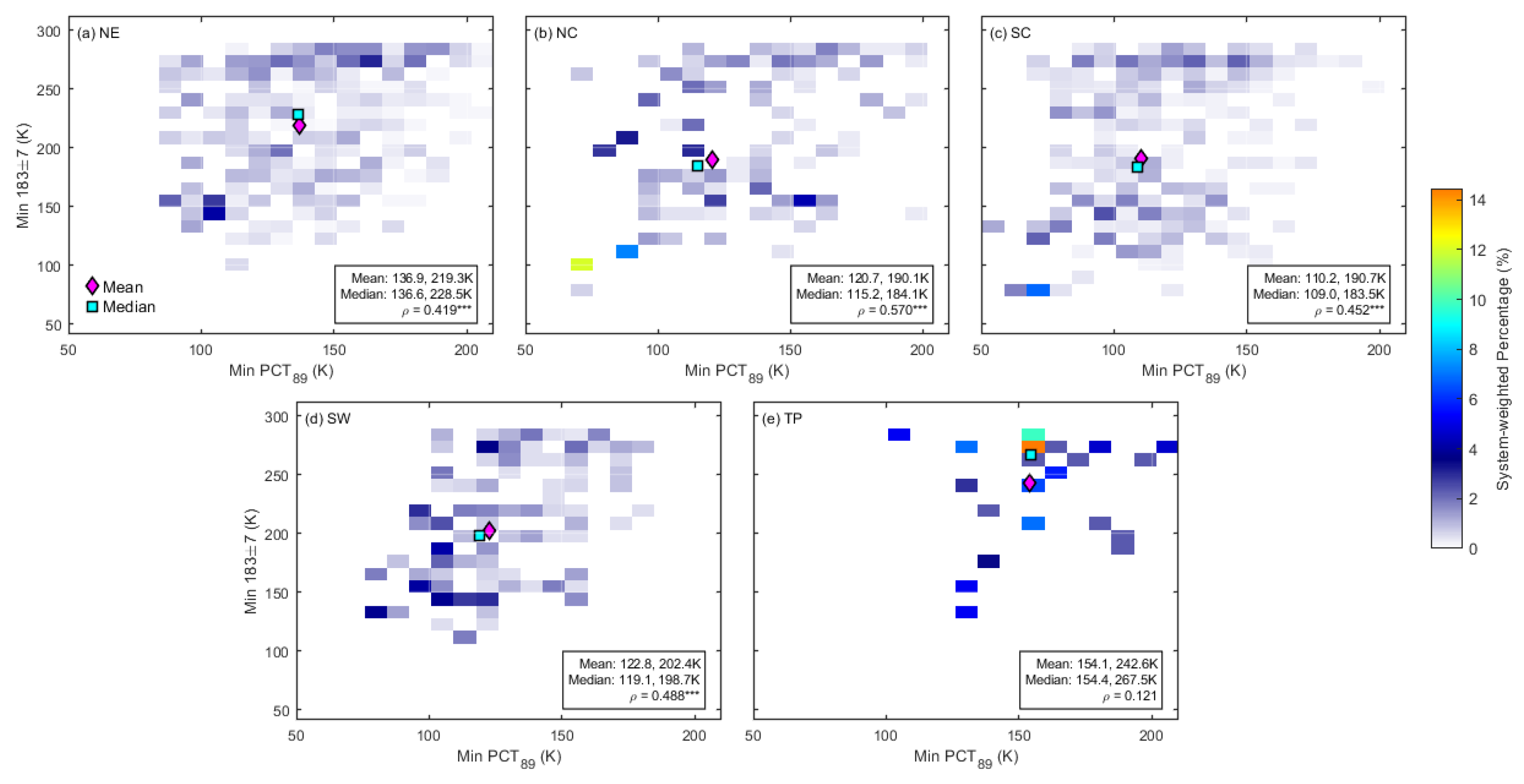
For each system, a GMI search domain is defined as the DPR pixel envelope expanded outward by 0.2° in all directions, and all brightness-temperature samples within this domain are collected. Pixels with P C T 89 < 225 K are defined as strong ice-scattering cloud areas [43]. The total area of all pixels satisfying this threshold is denoted as Cloud Area, and the minimum P C T 89 within the system is used to represent the intensity of the deep ice-scattering core. Meanwhile, the 183 ± 7 GHz channel is highly sensitive to variations in cloud ice content [44]. A joint analysis of minimum P C T 89 and the 183 ± 7 GHz brightness temperature therefore provides a basis for comparing the relationship between the deep ice-scattering core and the development of mid-to-upper-level ice-phase particles among regions.

2.3.3. Calculation of Environmental Thermodynamic Parameters

ERA5 reanalysis data are used to construct a set of environmental thermodynamic and dynamical parameters, including CAPE and 0–6 km vertical wind shear (VWS) [45,46,47]. CAPE is taken directly from the ERA5 single-level product.
For VWS, the 0–6 km vertical wind shear is defined as the vector wind difference between the 10 m surface wind and the wind at 6 km AGL. The 6 km AGL wind is obtained through the following procedure. First, the surface geometric height h geo (m MSL) is derived from the ERA5 single-level surface geopotential (z) following the European Centre for Medium-Range Weather Forecasts (ECMWF) convention:
h geo = R e · ( z / g ) R e ( z / g ) ,
where g = 9.80665 m s−2 and R e = 6,371,000 m. Second, the target height for the upper-level wind is defined as H target = h geo + 6000 m, yielding a physically uniform 0–6 km AGL layer across regions of contrasting terrain (e.g., ∼6200 m MSL over NE plains, ∼6100 m MSL over NC plains, and ∼10,000 m MSL over TP). Third, the wind at H target is obtained by linear interpolation in geometric height between the two ERA5 pressure levels bracketing H target . Finally, VWS is computed as
VWS = ( u 6 km u 10 m ) 2 + ( v 6 km v 10 m ) 2 .
Quality control excludes VWS values exceeding 100 m s−1 and wind components outside ±120 m s−1. This VWS definition and calculation approach is consistent with previous severe weather climatologies [48,49,50]. The median VWS values of 15–22 m s−1 in northern China are comparable to those reported for supercell environments in the Great Plains (15–25 m s−1; [46]) and significant-hail environments over the North China Plain [31]. The upper-tail values (e.g., 40–50 m s−1) represent rare extreme cases associated with strong synoptic-scale jet disturbances and complex terrain forcing; they are retained in the distribution to avoid biasing the results.
For environmental matching, the locations of all flagHail pixels within each hail-related system are used as the spatial reference. Each pixel is matched to the nearest ERA5 grid point, and the hourly analysis closest to the GPM overpass time is extracted. The ERA5 parameters corresponding to all flagHail pixels within the same system are then averaged to represent the environmental background of that system.

3. Results

3.1. Macroscopic Structure and Hydrometeor Path of Hail Cloud Systems

To compare the overall development characteristics of hail cloud systems among regions, we examine STH, MHT20, MHT40, ice water path (IWP), liquid water path (LWP), and Cloud Area derived from GPM DPR and GMI. Clear regional contrasts emerge. These contrasts are expressed mainly as deeper moist-convective characteristics in southern China, stronger convective organization in northern China, and a distinctive high-cloud-top but low-hydrometeor structure over the Tibetan Plateau.

3.1.1. Spatial Distribution of Echo-Top Parameters

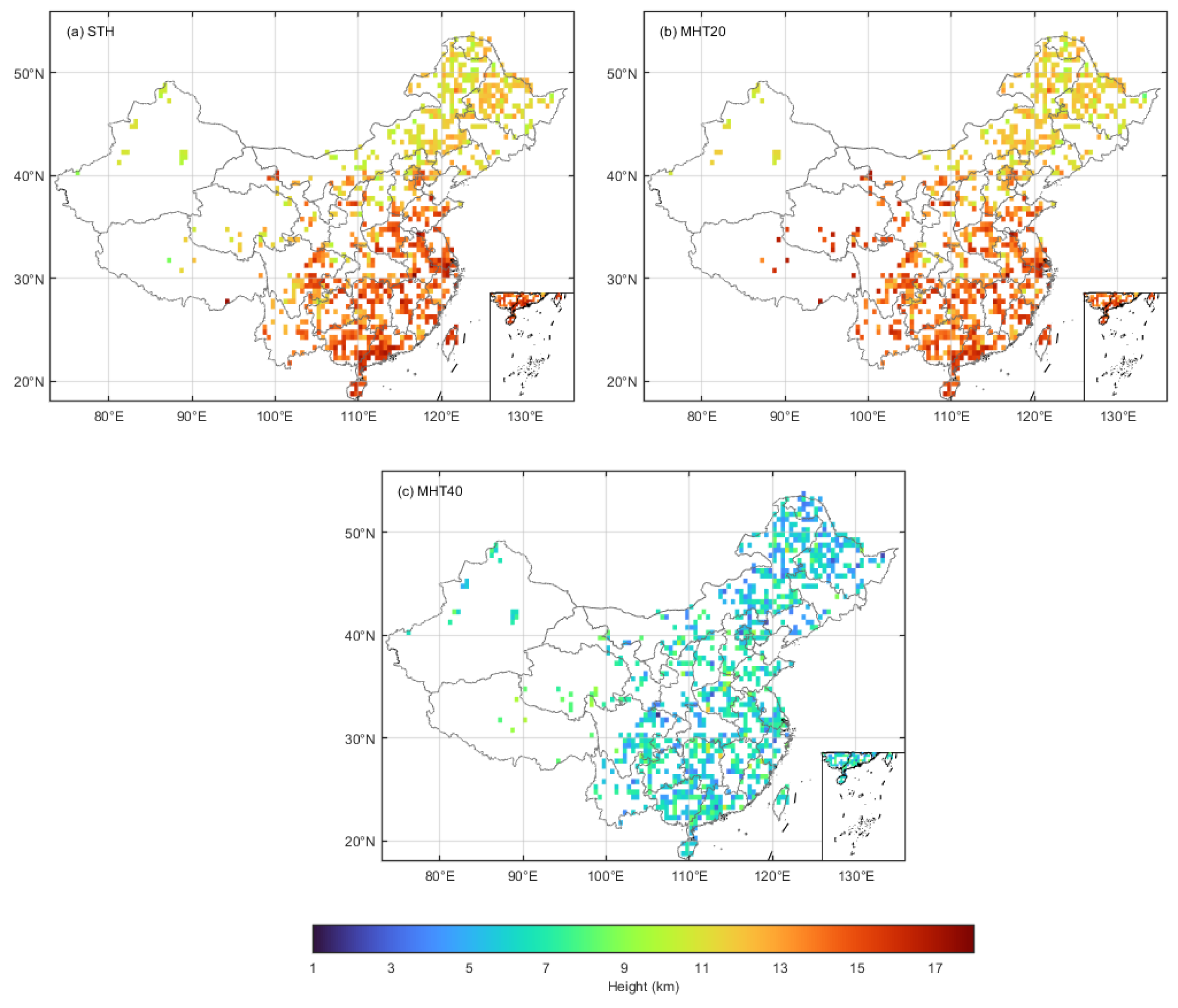
Figure 3 shows that STH and MHT20 have broadly similar spatial patterns, with the highest values among the non-plateau regions concentrated in SC and SW, followed by NC, whereas NE exhibits relatively lower values. This pattern indicates that hail cloud systems in southern China generally develop to greater vertical depth. By contrast, the regional difference in MHT40 is more pronounced. SC exhibits the highest values, followed by NC and SW, whereas TP and NE are lower. Focusing on the non-plateau regions, SC and NC show the strongest 40 dBZ echo development, implying that hail cloud systems in these regions are more likely to develop deep and intense convective cores.
SC exhibits the highest STH and MHT20 among the five regions, followed by SW, which reflects the deeper convective development in southern China. TP ranks fourth in both STH and MHT20, reflecting its elevated underlying terrain where both the storm top and the 20 dBZ echo extend to relatively high altitudes above ground. As shown in the subsequent analyses, TP is characterized by relatively limited hydrometeor storage and weak sustained low-level growth, which collectively define a distinct plateau-specific structure.

3.1.2. Regional Statistics of Macroscopic Structural Parameters

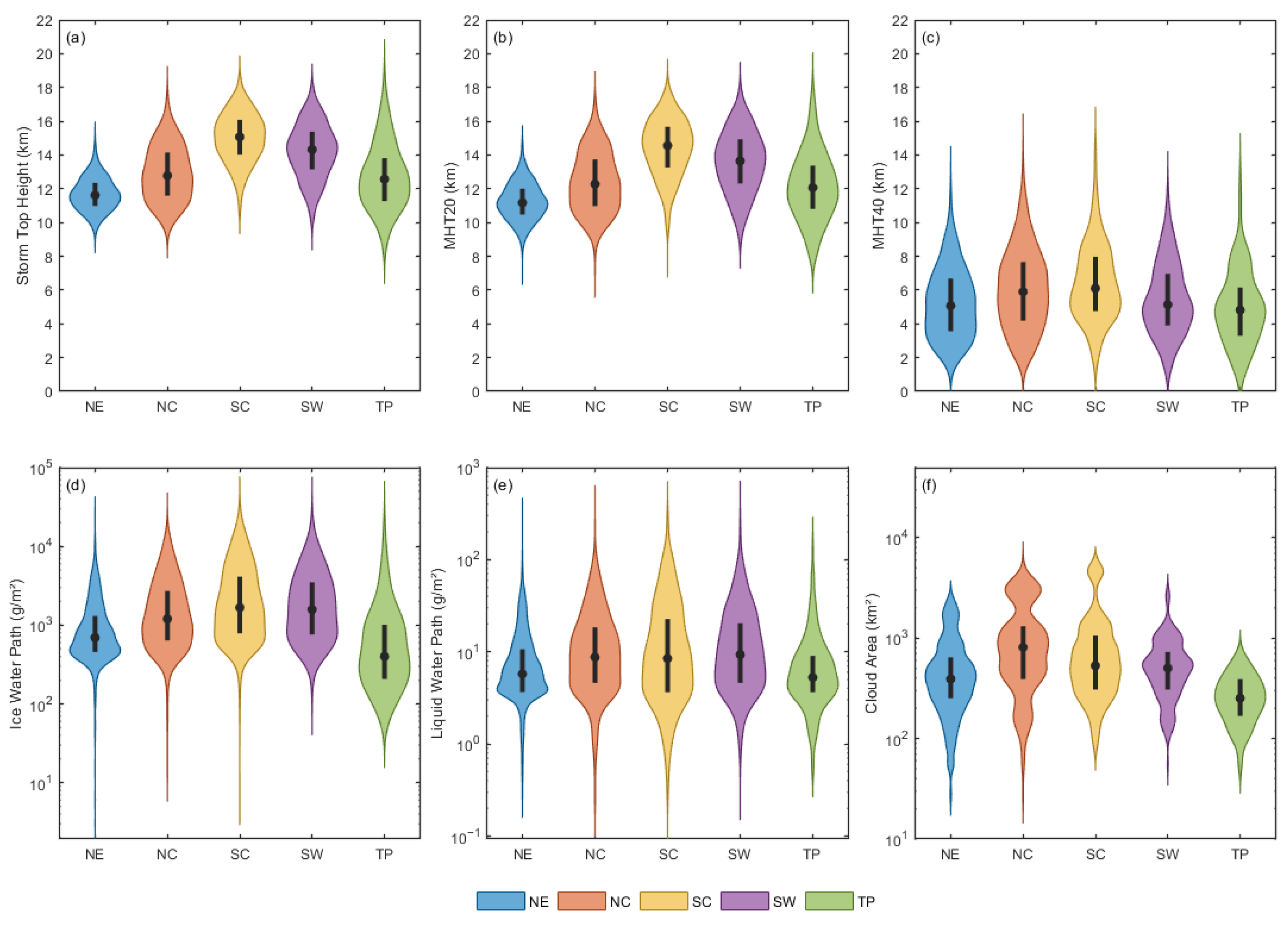
Figure 4 further presents the regional distributions of these parameters. Kruskal–Wallis tests indicate that STH, MHT20, MHT40, IWP, LWP, and Cloud Area all differ significantly among the five regions, confirming that the regional contrasts in hail cloud systems are statistically robust.
For STH, SC exhibits the highest values, followed by SW, then NC, with TP and NE the lowest. For MHT20, SC shows the highest values, followed by SW and NC; for MHT40, SC is also the highest, followed by NC and SW, reflecting stronger 40 dBZ echo development in southern and central China. SC and SW have high echo tops together with strong MHT40, indicating a greater tendency to develop deep and intense convective cores.
The regional contrast is clearer for IWP than for LWP. IWP is highest in SC, followed by SW and NC, whereas NE and especially TP exhibit lower values. This pattern implies that hail cloud systems in SC and SW contain larger reservoirs of ice-phase hydrometeors, whereas TP exhibits a characteristic low-hydrometeor structure despite its relatively high echo tops. Although LWP also varies among regions, the separation is weaker than that of IWP, suggesting that the ice-phase hydrometeor path is more diagnostic of regional differences in hail cloud development.
Cloud Area represents the horizontal extent of strong ice-scattering clouds. NC has the largest Cloud Area, followed by SC and NE, whereas SW is somewhat smaller and TP is the smallest. These regional contrasts in macroscopic structure are summarized in Table 2 and further discussed in Section 4.

3.2. Regional Differences in Vertical Microphysical Structure

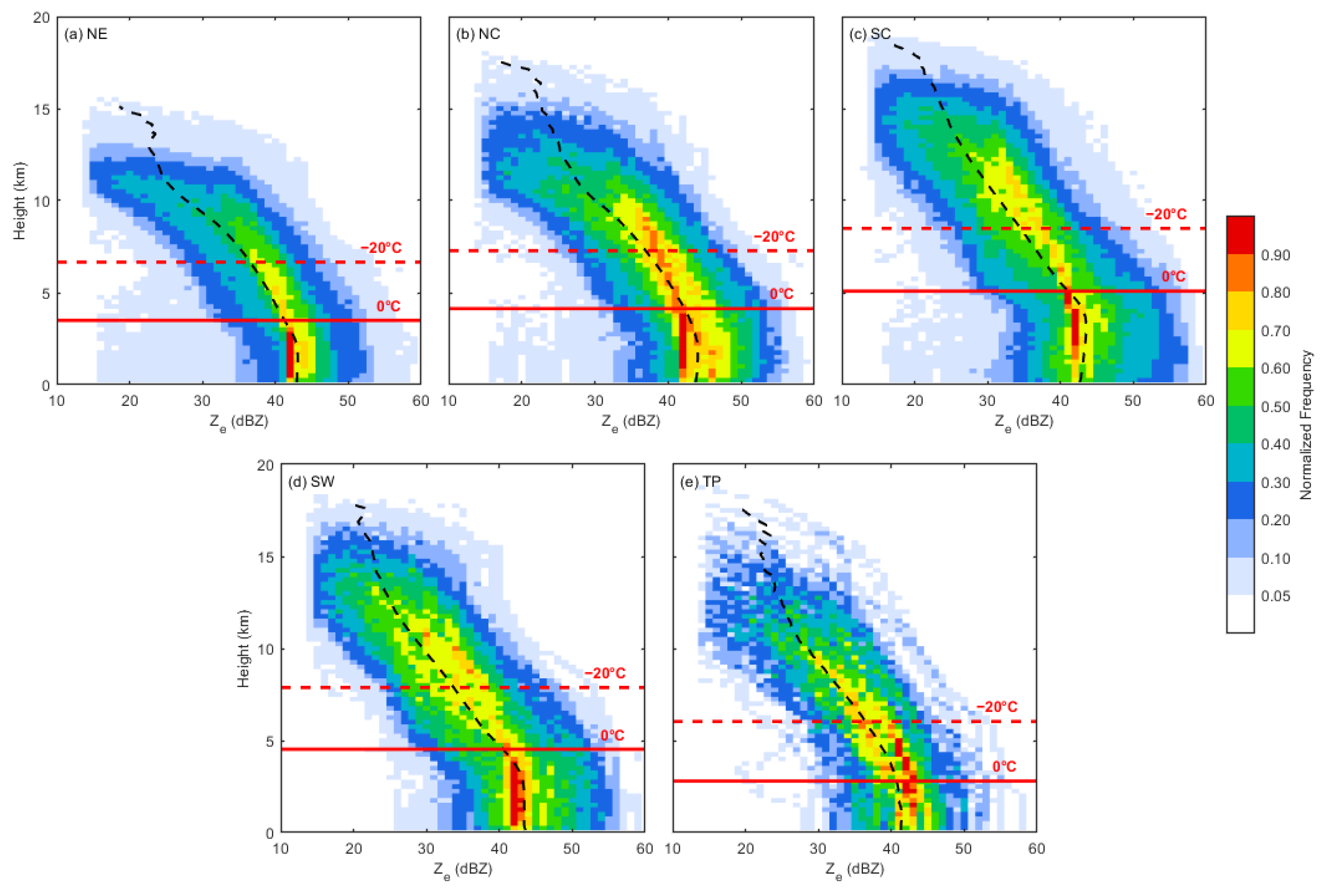
Given the pronounced regional contrasts in macroscopic structure, analysis of the vertical cloud profile provides further insight into differences in particle-growth behavior. The normalized CFADs of Z e , D m , and log 10 N w show that hail cloud systems in different regions follow distinct vertical evolutionary pathways within the ice-growth layer. Overall, SC and SW exhibit the strongest downward intensification, NC and NE are intermediate, and TP is characterized by relatively strong signals already established aloft but limited subsequent growth toward lower levels.

3.2.1. Vertical Distribution of Radar Reflectivity

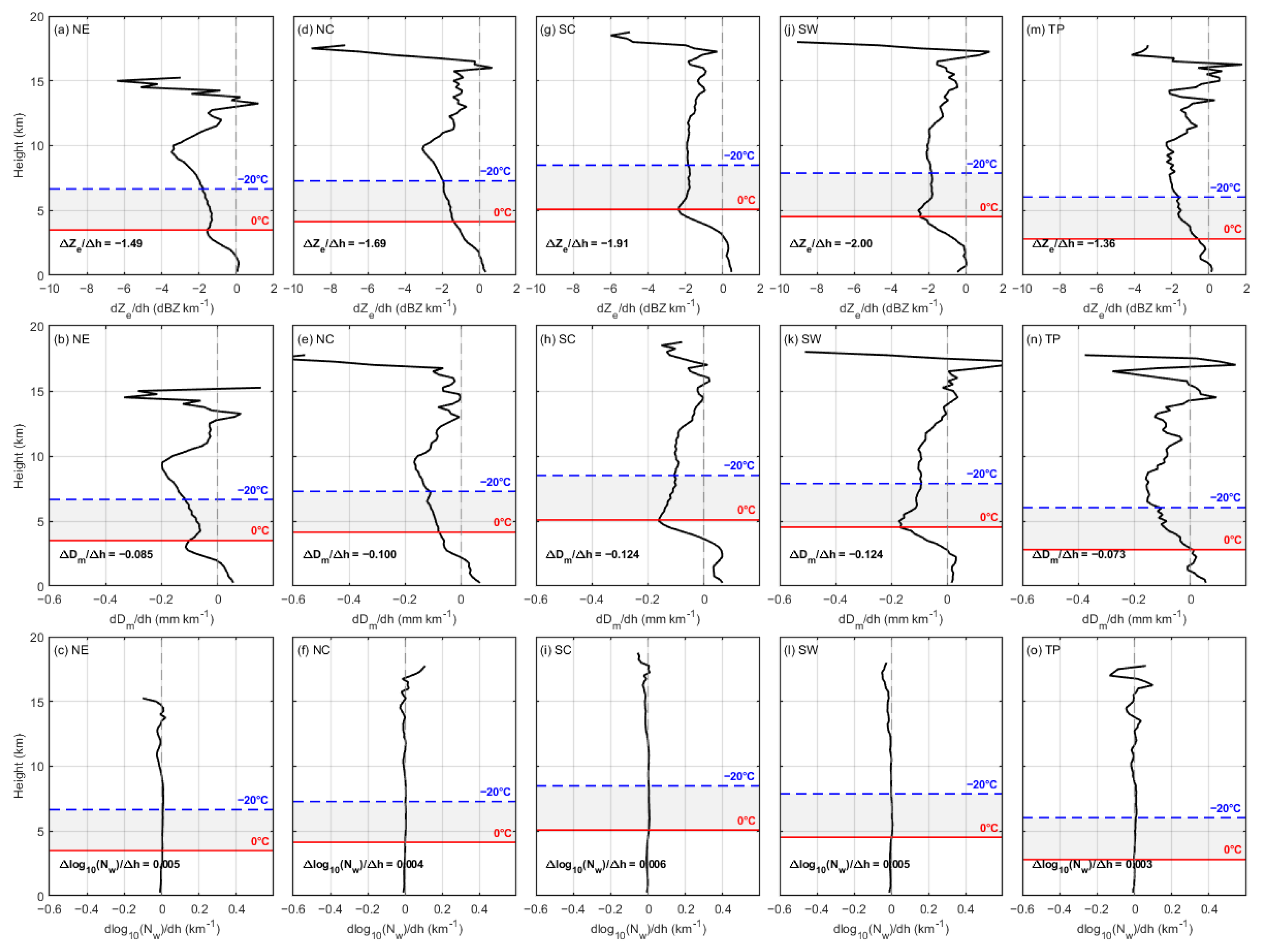
Figure 5 presents the normalized CFADs of Ku-band radar reflectivity for each region. In all regions, reflectivity generally increases downward, indicating that particle-related radar echoes strengthen as particles descend, but the magnitude of this strengthening differs substantially. Quantified by the slope of the frequency-weighted mean profile between the 0 °C and −20 °C levels, SC and SW exhibit the steepest downward enhancement, with Δ Z e / Δ h of −1.91 and −2.00 dBZ km−1, respectively. NC follows with −1.69 dBZ km−1, NE with −1.49 dBZ km−1, and TP is the weakest at only −1.36 dBZ km−1. Thus, hail cloud systems in SC and SW experience the most pronounced downward enhancement of reflectivity within the ice-phase growth layer, whereas low-level amplification is much weaker over TP.
Statistics at characteristic altitudes further support this contrast. At 10.0 km, SC has the highest reflectivity, reaching 31.9 dBZ and exceeding NC (30.5 dBZ), SW (29.8 dBZ), TP (28.8 dBZ), and NE (28.2 dBZ), which indicates that relatively strong echoes are already established in the mid-to-upper troposphere over SC. However, because the downward amplification is weak in TP, the increase toward lower levels is smaller than in the other regions. By contrast, SC is not dominant at 10.0 km, but its reflectivity increases to 41.5 dBZ by approximately 5.0 km, showing stronger amplification from mid levels to low levels. NC has the highest reflectivity near the 0 °C level (42.2 dBZ), followed by NE (41.4 dBZ).
Overall, hail cloud systems in SC and SW show the strongest echo enhancement within the ice-phase growth layer, NC and NE are intermediate, and TP is characterized by relatively strong echoes aloft but weak additional enhancement below.

3.2.2. Vertical Evolution of Particle Size and Number Concentration

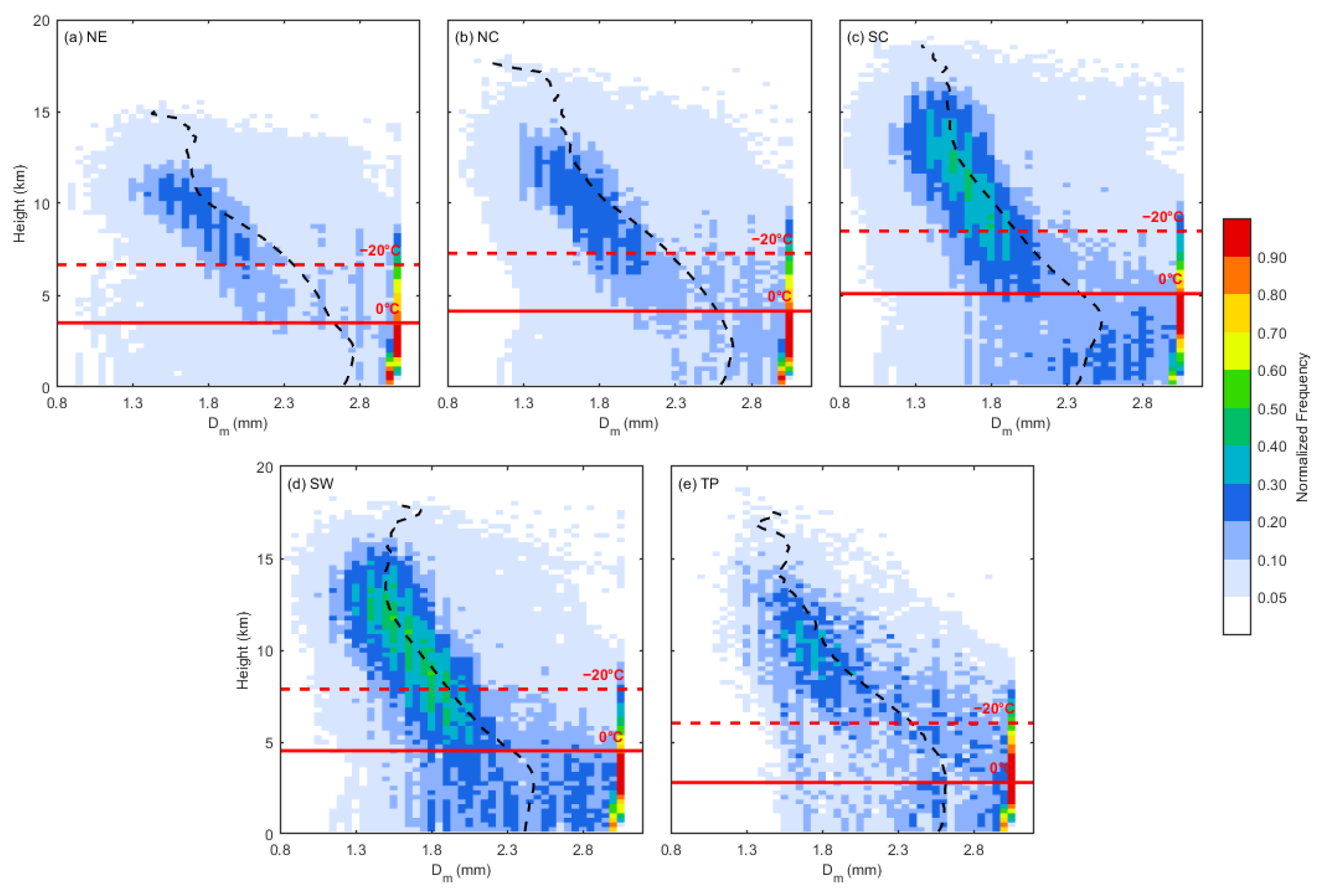
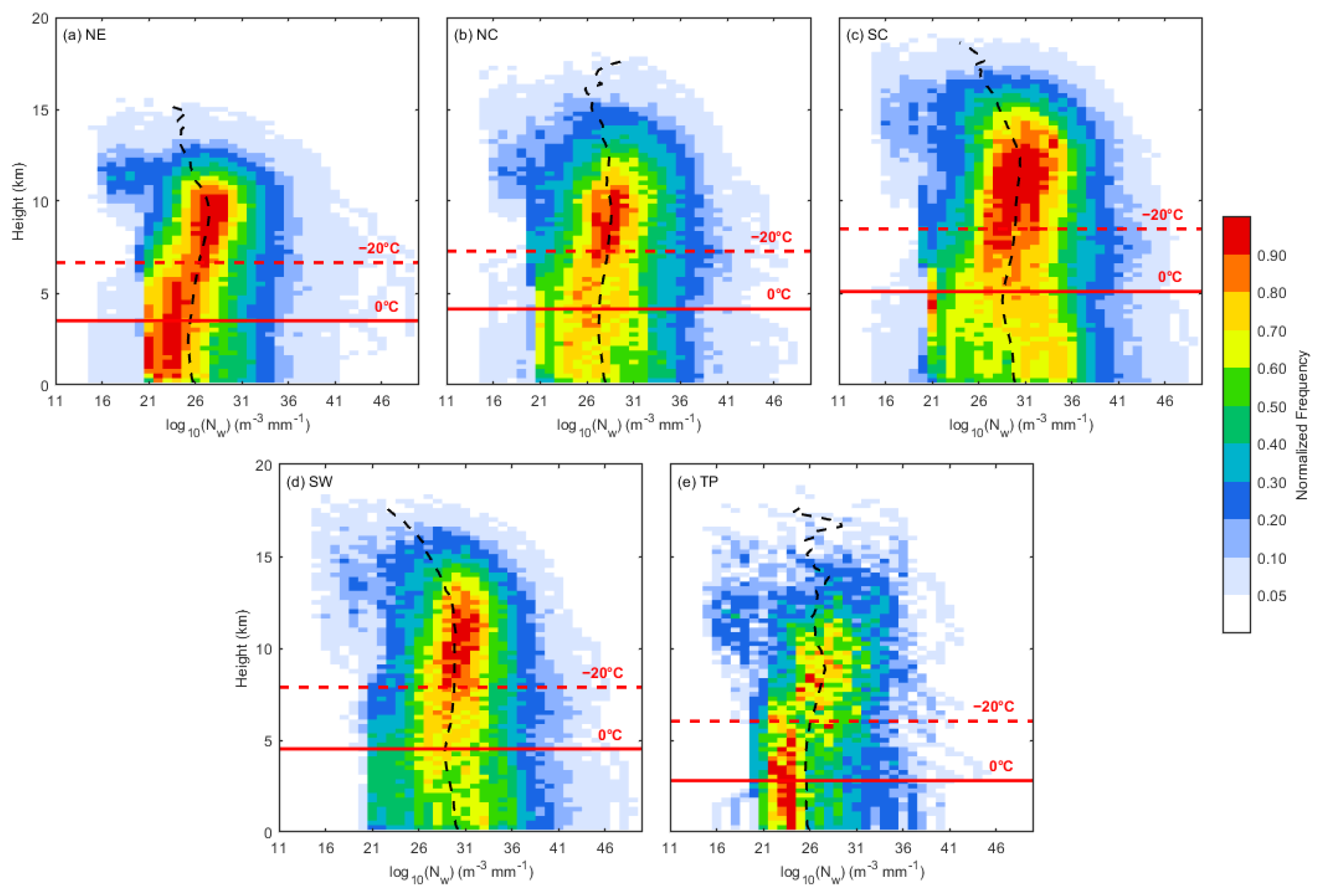
Figure 6 and Figure 7 show the normalized CFADs of D m and log 10 N w , respectively. In general, D m increases downward, indicating stronger particle-size signatures at lower levels, but the rate of increase differs substantially among regions.
Within the layer between 0 °C and −20 °C, SC and SW have the largest mean vertical gradients of D m , at −0.124 and −0.124 mm km−1, respectively. NC and NE have intermediate values of −0.100 and −0.085 mm km−1, respectively, whereas TP is much weaker at only −0.073 mm km−1. This indicates that hail cloud systems in SC and SW experience much stronger growth in retrieved particle size within the ice-phase growth layer, whereas the downward increase is weak over TP.
Statistics at characteristic altitudes show that NE has the largest D m at 10.0 km, reaching 1.8 mm, followed by NC (1.9 mm), SC (1.8 mm), TP (1.9 mm), and SW (1.7 mm). This means that particle-size signatures are relatively similar across regions at mid-to-upper levels. The additional increase toward lower levels differs substantially: NE reaches 2.6 mm and NC reaches 2.6 mm near the 0 °C level, whereas SC and SW reach 2.4 and 2.3 mm, respectively. TP, despite having 2.6 mm near the 0 °C level, shows the weakest vertical growth relative to its upper-level values. The relatively larger D m in NE and NC near the 0 °C level compared with SC and SW is consistent with the lower 0 °C isotherm altitude in northern China (approximately 3.5–4.1 km versus approximately 4.5–5.1 km in the south), which prolongs the growth distance even though the per-unit-height growth rate is lower. The vertical gradient therefore better reflects regional differences in ice-phase growth intensity than the absolute D m at the 0 °C level.
Compared with D m , the vertical variation in log 10 N w is weaker, but regional differences remain evident. SC and SW exhibit generally larger values and broader distributions, NC is intermediate, and NE and TP are lower, suggesting regional differences in the retrieved spectral parameter. The vertical gradient statistics are summarized in Table 2 and the physical interpretation is discussed in Section 4.

3.3. Environmental Fields Associated with Hail Cloud Systems

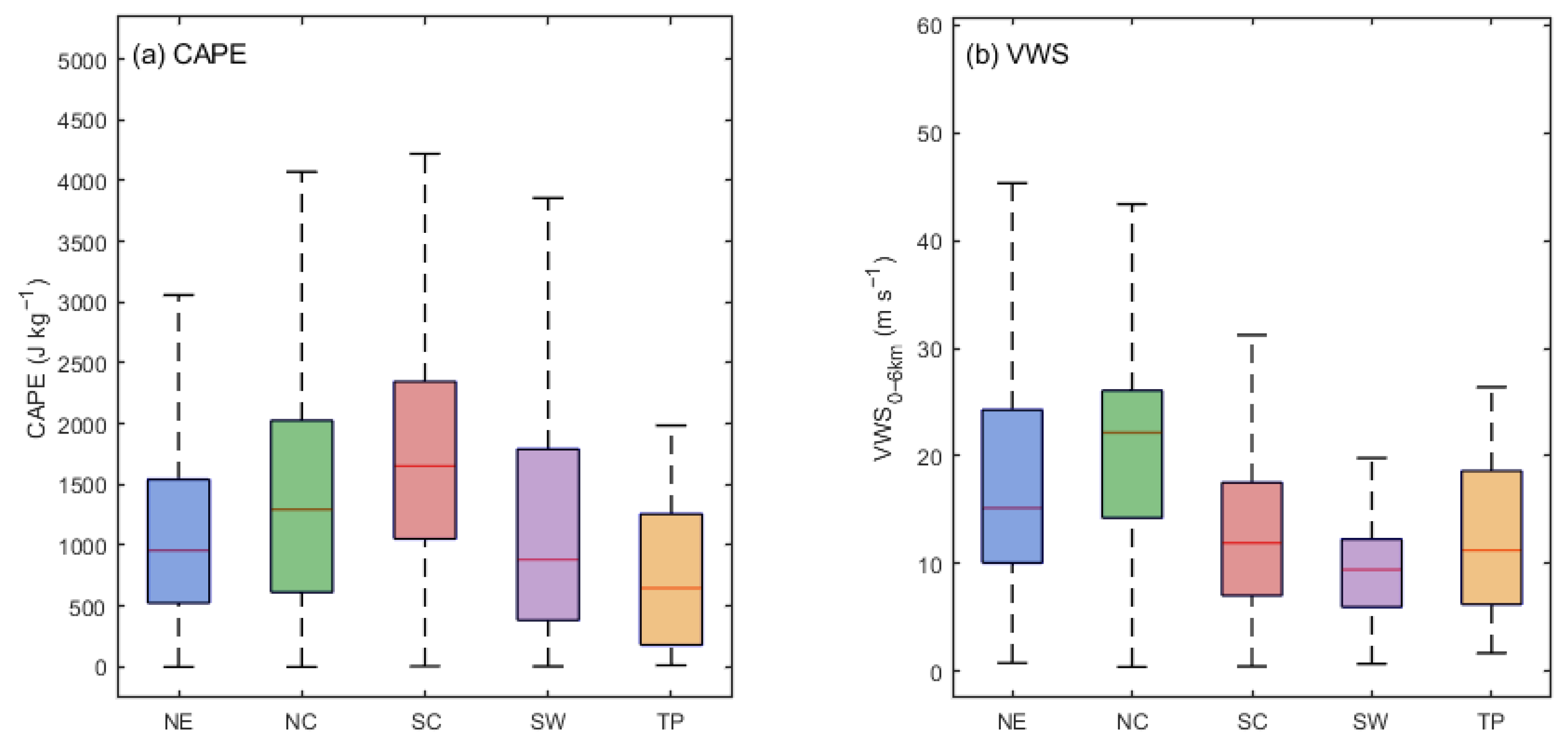
Figure 8 presents the distributions of CAPE and VWS associated with hail cloud systems in each region, with detailed statistics summarized in Table 3. Kruskal–Wallis tests confirm significant regional differences for both CAPE ( H = 152.3 , p < 0.001 ) and VWS ( H = 89.7 , p < 0.001 ). The regional distributions of CAPE and VWS and the physical interpretation of these environmental contrasts are discussed in Section 4.
To further characterize the microphysical growth pathways underlying the regional contrasts described above, the vertical gradient profiles and joint passive microwave distributions (Figure 9 and Figure 10) are presented in the following section.

4. Discussion

4.1. Regional Differences in Hail Cloud Structure and Microphysical Characteristics

By combining the vertical structural gradients derived from GPM DPR with the multi-frequency passive microwave scattering signatures observed by GMI, this study reveals clear regional contrasts in the microphysical growth pathways of hail cloud systems over China. The radar-reflectivity gradient ( Δ Z e / Δ h ) and the mass-weighted mean diameter gradient ( Δ D m / Δ h ) describe the evolution of hydrometeors during descent through the cloud column, whereas GMI-derived P C T 89 and 183 ± 7 GHz brightness temperatures provide independent constraints on the intensity of the deep ice-scattering core and the distribution of upper-level ice-phase particles.
The vertical gradient profiles in Figure 9 quantify the layer-mean Δ Z e / Δ h and Δ D m / Δ h within the key ice-phase growth layer (0 °C to −20 °C). SW and SC exhibit the steepest negative gradients, with Δ Z e / Δ h of −2.00 and −1.91 dBZ km−1 and Δ D m / Δ h of −0.124 and −0.124 mm km−1, respectively. These values indicate more vigorous riming and aggregation during descent through the ice-phase growth layer under deep moist-convective conditions, especially below 10 km. The strong downward amplification is most pronounced between 8 km and the 0 °C level, consistent with efficient moisture transport into the ice-growth layer by strong updrafts. GMI observations further support this interpretation: SC exhibits the lowest minimum P C T 89 and relatively low 183 ± 7 GHz brightness temperatures, implying both a stronger deep ice-scattering core and a more pronounced ice-scattering signal aloft. In Figure 10, this appears as a concentration of samples toward lower P C T 89 and lower 183 ± 7 GHz brightness temperatures.
By contrast, the northern regions (NC and NE) exhibit a more gradual and continuously organized growth mode. Their Δ Z e / Δ h profiles vary more smoothly with height and do not show the pronounced downward amplification below 10 km that characterizes the southern systems. The layer-mean gradients are intermediate, ranging from −1.49 to −1.69 dBZ km−1 for Z e and −0.085 to −0.100 mm km−1 for D m . This suggests that the development of hail cloud systems in northern China is influenced more strongly by dynamical organization than by purely thermodynamic forcing. The combined active–passive results support this interpretation. NC shows the highest correlation between minimum P C T 89 and 183 ± 7 GHz brightness temperature ( ρ = 0.6 ), indicating a tighter coupling between upper-level ice supply and the deep scattering core. In Figure 10, this is reflected by the relatively compact and well-aligned sample distribution in NC. Such coherence implies a more continuous and stable vertical structure in the organization-enhanced hail cloud systems of northern China.
Hail cloud systems over TP display a clearly different behavior, characterized by strong development aloft but limited growth at lower levels. Although both Z e and D m are relatively large at 10 km (28.8 dBZ and 1.9 mm, respectively), the downward growth is much weaker, with Δ Z e / Δ h of only −1.36 dBZ km−1 and Δ D m / Δ h of only −0.073 mm km−1. In Figure 9, TP stands out by maintaining comparatively strong upper-level signals while showing the weakest low-level enhancement. GMI observations show that TP has the highest P C T 89 and 183 ± 7 GHz brightness temperatures and only a weak relationship between the two ( ρ = 0.1 ). In Figure 10, this appears as a weaker and more diffuse joint distribution, indicating that upper-level ice development is not efficiently translated into a strong deep scattering core.

4.2. Environmental Control of Regional Differences

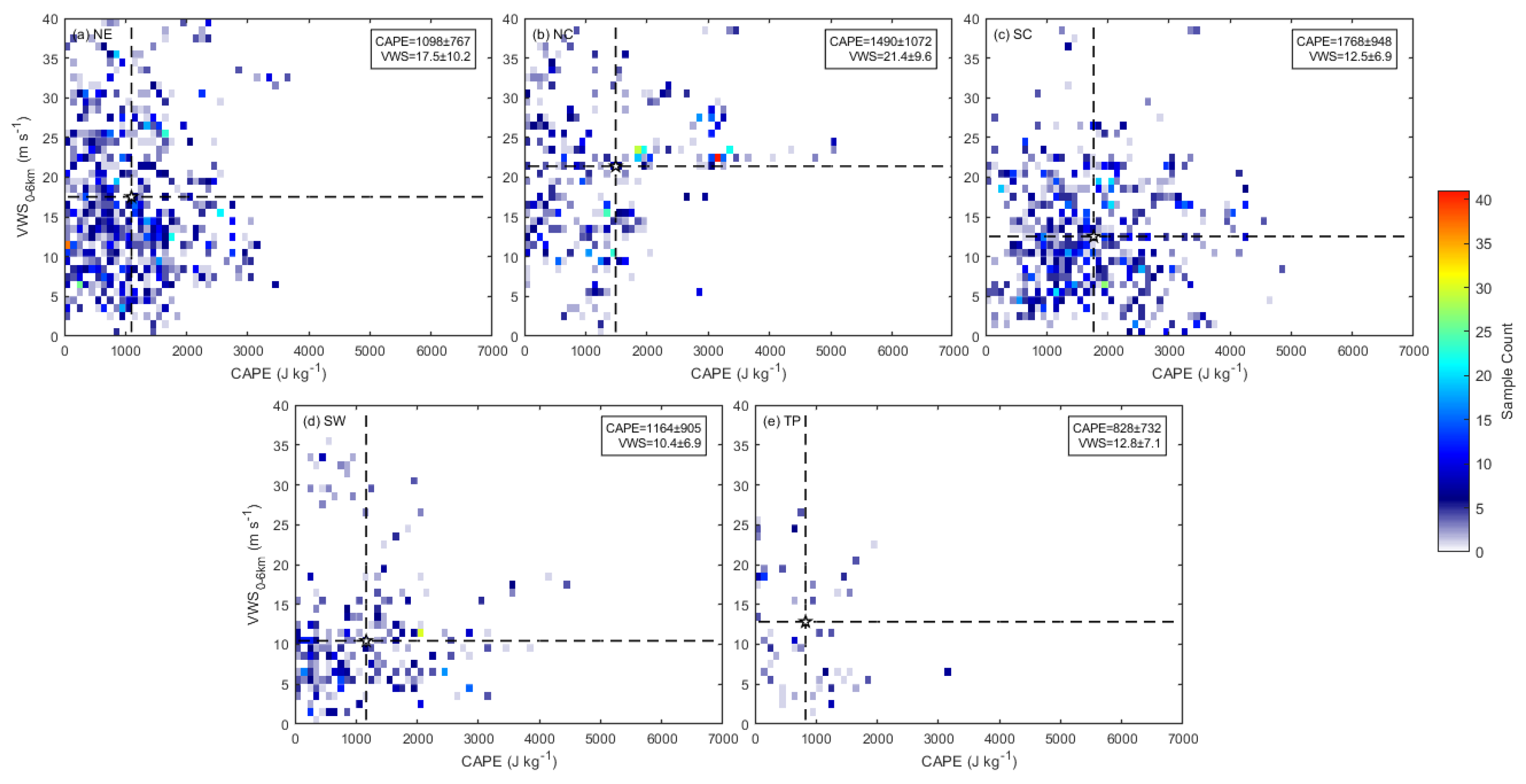
The regional contrasts in macroscopic structure and microphysical evolution ultimately reflect different combinations of thermodynamic and dynamical forcing. The joint distributions of CAPE and VWS in Figure 11 reveal three distinct environmental configurations that correspond to the structural modes identified in Section 4.
Figure 11 shows that the CAPE-VWS joint distributions differ substantially among regions. SC and SW cluster toward the high-CAPE, moderate-VWS quadrant (median CAPE > 1500 J kg−1, median VWS < 12 m s−1), reflecting a thermodynamically dominated environment. NC and NE occupy the high-VWS quadrant (median VWS > 15 m s−1), with NC spanning both high-CAPE and moderate-CAPE conditions. TP is characterized by the lowest CAPE values but a wide VWS distribution, indicating thermodynamic constraint under moderate dynamical forcing.
Hail cloud systems in SC and SW are primarily associated with thermodynamically dominated environments. SC has the highest CAPE, with a median of 1651.8 J kg−1 (IQR 1053.5–2346.5 J kg−1), together with moderate VWS (median 11.9 m s−1). This combination is favorable for maintaining strong updrafts that efficiently transport moisture and liquid water into the ice-growth layer. The high CAPE supports deep convective penetration above the −20 °C level, as reflected in the high STH and MHT20 values in Table 2. The vigorous updrafts sustain the steep Δ Z e / Δ h and Δ D m / Δ h gradients observed in Figure 9, consistent with efficient riming and aggregation during particle descent [51]. VWS is weaker in SW (median 9.4 m s−1), but the relatively favorable thermodynamic conditions (median CAPE 883.5 J kg−1), together with complex topographic lifting from the Yunnan–Guizhou Plateau and the Sichuan Basin, still support active ice-phase growth. This suggests that microphysical evolution in SW is jointly controlled by thermodynamic instability and terrain forcing [52].
NC and NE, by contrast, show a more pronounced signature of dynamical organization. VWS is strong in both regions, with median values of 22.0 m s−1 for NC and 15.2 m s−1 for NE. Strong deep-layer shear promotes the development of organized convective structures, including multicellular clusters and quasi-linear systems, which in turn produce larger Cloud Area (Table 2) and more horizontally extensive radar echo patterns. NC also has relatively high CAPE (median 1294.9 J kg−1), exceeding NE in both thermodynamic instability and organization intensity. This combination supports more continuous vertical development (intermediate Δ Z e / Δ h gradients of −1.69 dBZ km−1) and a tighter coupling between upper-level ice supply and the deep scattering core, as reflected in the high ρ = 0.6 correlation in Figure 10.
Notably, both NC and NE include mountainous terrain where VWS may reach ∼45 m s−1 due to orographic forcing and channel effects, consistent with the significant-hail wind shear range reported for the North China mountain region [31].
TP represents a thermodynamically constrained environment. CAPE is lowest there, with a median of only 648.1 J kg−1, and although VWS is moderate (median 11.2 m s−1), the limited instability and moisture supply restrict the depth of effective convection and low-level hydrometeor accumulation. The elevated surface elevation (3–5 km MSL) effectively reduces the depth of the sub-cloud layer available for particle growth and warming, limiting the additional mass gain during descent toward the 0 °C level. This explains the characteristic pattern of strong upper-level signals but weak low-level enhancement observed in both Figure 9 and the CFADs (Figure 5, Figure 6 and Figure 7).
Taken together, the regional differentiation of hail cloud systems over China is jointly modulated by thermodynamic instability, dynamical organization, moisture conditions, and topographic forcing. High CAPE favors deep ice-phase growth and strong updrafts; strong VWS promotes convective organization and horizontal expansion; and plateau terrain reduces the effective growth depth and constrains low-level intensification. These environmental contrasts collectively shape the three regional modes: the thermodynamically dominated deep moist-convective mode of SC–SW, the dynamically organized mode of NC–NE, and the plateau-constrained mode over TP.

4.3. Implications of Seasonal and Diurnal Variations

The warm season in China (May–September) encompasses two distinct intraseasonal periods that may modulate the vertical microphysical structure of hail cloud systems: the pre-monsoon and peak-monsoon phases [53,54]. During the pre-monsoon phase (May–June), South China experiences transitional thermodynamic conditions with strong vertical wind shear and rapidly rising CAPE following the South China Sea monsoon onset. By contrast, the peak-monsoon phase (July–August) is characterized by peak MUCAPE and precipitable water over most of China, with convection over North China frequently triggered by cold-vortex-related fronts and terrain-forced convergence [31,55]. These distinct synoptic regimes may imprint different signatures on the vertical microphysical structure: stronger lapse rates and wind shear in the pre-monsoon phase may promote more efficient ice-phase growth in the upper troposphere, while the deeper moist boundary layer during the peak-monsoon phase may favor stronger low-level reflectivity enhancement through increased particle riming and aggregation [56,57].
Nevertheless, the dominant regional contrasts identified in this study—particularly the steeper Δ Z e / Δ h and Δ D m / Δ h gradients in SC and SW relative to NC and NE—are likely to reflect fundamental regional characteristics to some extent. SC and SW consistently exhibit the highest CAPE and deepest moist layers throughout the warm season, and the plateau-constrained mode over TP, characterized by weak low-level growth despite high echo tops, is inherently tied to the elevated terrain and reduced sub-cloud layer depth, which remain relatively stable across seasons. Additionally, the strong VWS over NC and NE, which promotes organized systems with larger horizontal extent, is a persistent feature of the northern China environment [55,58]. Diurnal variations in convective activity may also contribute to the observed signatures: deep convection over inland regions tends to peak in the afternoon, while South China warm-sector convection is associated with nocturnal boundary-layer jets [58,59]. Given that the fundamental regional contrasts arise from persistent environmental factors—including orographic forcing, latitude-dependent thermodynamic gradients, and large-scale moisture distribution—the primary spatial heterogeneity in hail cloud structure is expected to remain robust under seasonal and diurnal averaging. Future work with longer GPM records or geostationary satellite retrievals could further investigate sub-seasonal variations in hail cloud microphysics [53].

4.4. Distinction Between Satellite-Detected Hail Aloft and Surface Hailfall

It is important to clarify the fundamental distinction between hail signatures detected aloft by spaceborne radar and confirmed hailfall at the surface—a distinction that applies to all satellite-based hail studies, not only the present work. The GPM DPR detects hydrometeor backscattering at altitudes above approximately 2 km (the surface clutter-free range), whereas hail confirmation requires physical impact at the ground [60]. Hailstones identified by the flagHail algorithm in the upper and colder portions of the cloud may partially or completely melt during descent through the melting layer and the warm sub-cloud layer before reaching the surface [19,61]. Consequently, the satellite-identified “hail cloud systems” in this study represent clouds that contain hail-sized ice particles aloft and exhibit hail potential, but they do not necessarily correspond to confirmed hailfall events at every surface location within the system footprint.
This distinction has important implications for interpreting the regional differences reported herein. The depth of the warm layer (from the melting level to the surface) varies systematically among the five study regions: it is substantially deeper over the southern regions (SC and SW) owing to higher 0 °C isotherm heights in the subtropical environment, shallower over the northern regions (NC and NE), and thinnest over the elevated TP where surface altitude approaches the 0 °C level. Deeper warm layers promote more complete melting of falling hailstones [61]. Therefore, if the flagHail-based identification was merely capturing ordinary deep convection rather than hail-bearing clouds, one would expect the strongest satellite hail signals to appear preferentially over northern regions and TP, where hailstones are more likely to survive to the surface. In fact, the opposite is observed: SC and SW exhibit the most intense hail-related microphysical signatures (strongest Z e and D m gradients, lowest P C T 89 , most active ice-scattering cores), despite their deeper warm layers that would tend to reduce surface hailfall probability. This demonstrates that the regional differences reported here reflect genuine contrasts in hail cloud microphysical development, not simply differences in the likelihood of surface hail confirmation. By the same reasoning, the distinct plateau-constrained mode over TP—characterized by weak low-level growth despite relatively strong upper-level echoes—is a real microphysical signature of the limited thermodynamic environment, not an artifact of more favorable surface detection conditions.
We therefore maintain that the comparative framework employed in this study, in which all regions are subject to the same flagHail identification criterion and the same analysis workflow, yields meaningful and conservative regional contrasts. The terminology “hail cloud systems” is used deliberately throughout to distinguish satellite-identified hail potential from ground-confirmed hailfall [19,60].

4.5. Uncertainty in DPR Microphysical Retrievals and Its Implications for Regional Contrasts

The GPM DPR dual-frequency algorithm applies a hybrid PIA correction combining SRT, HB, and DFR methods through minimum-variance weighting [17,37]. Despite these improvements, residual attenuation errors persist in intense convective cores [38,39,62]. In large-IWP conditions, the DSD retrieval tends to overestimate D m by ∼0.5–0.6 mm and underestimate N w by one order of magnitude, owing to multiple scattering, NUBF, and imperfect Ka-band attenuation correction [38,62,63]. Critically, NUBF causes systematic underestimation of PIA, leading to underestimation of Z e in deep convective cores [37]. Validation studies suggest that DPR Version 7 Ku-band attenuation correction may be under-corrected by 1–2 dB in deep convection [38,39], with the Version 7 algorithm reducing the DPR–ground radar bias from 2.4 dB (Version 6) to ∼1.0 dB on average [17]. These biases are expected to be largest in the deepest convective cores, such as those frequently observed in SC and SW.
A critical concern is that radar attenuation is highly nonlinear and strongly depends on hydrometeor concentration, particularly IWP [64,65]. Since SC and SW exhibit substantially larger IWP (medians of 1668.4 and 1578.6 g m−2) compared with NC (1203.4 g m−2), NE (694.2 g m−2), and TP (401.7 g m−2), the residual attenuation biases are unlikely to be uniform across regions. Specifically, the deep and intense convective cores in SC and SW are expected to suffer more severe attenuation than the relatively weaker systems in TP and NE. However, given the top-down viewing geometry of the spaceborne GPM DPR, this region-dependent attenuation bias actually strengthens rather than weakens our core conclusions. Path-integrated attenuation accumulates downward through the cloud column, meaning that the suppression of the retrieved reflectivity ( Z e ) is most pronounced at the lowest altitudes of the ice layer (e.g., near the 0 °C level). Because the systems in SC and SW contain the largest IWP, their low-level reflectivity is subject to the most severe artificial suppression. Consequently, the true low-level Z e in SC and SW must be even higher than the retrieved values, which implies that the true downward vertical gradients ( Δ Z e / Δ h ) in these regions are even steeper (more negative) than the observed −1.91 and −2.00 dBZ km−1. In contrast, systems over TP and NE experience weaker attenuation due to their lower IWP, meaning their retrieved profiles are closer to reality. Therefore, the disproportionately severe attenuation in SC and SW acts to narrow the observed gap between the regions.
A simple sensitivity test helps bound the potential impact. DPR’s clutter-free range is approximately 2 km MSL, placing the lowest retrieval altitude within a ∼2 km layer above this height. Assuming the residual Ku-band under-correction (1–2 dB in deep convection) is distributed across this ∼2 km layer, the impact on the Δ Z e / Δ h gradient is approximately 0.5–1.0 dBZ km−1. This magnitude is smaller than the observed regional differences between SC/SW (−1.91 and −2.00 dBZ km−1) and NC/NE (−1.69 and −1.65 dBZ km−1), and much smaller than the gap between SC/SW and TP (−1.09 dBZ km−1). Therefore, even if the full 1–2 dB under-correction was corrected, the relative ordering among regions would not change. Moreover, TP has much smaller IWP (∼400 g m−2 vs. >1500 g m−2 for SC/SW), so its attenuation bias is negligible, providing a robust comparison between these regions. The nonlinear attenuation bias does not create false regional contrasts; rather, the observed differences serve as a conservative lower bound for the actual microphysical heterogeneity.

5. Conclusions

Using GPM DPR/GMI observations and ERA5 reanalysis data during the warm seasons of 2020–2025, this study identified 817 hail cloud systems across five representative hail-prone regions of China on the basis of the flagHail indicator. A systematic comparison of their macroscopic structure, vertical microphysical characteristics, passive microwave signatures, and environmental settings reveals pronounced regional heterogeneity in warm-season hail cloud systems over China.
The analysis reveals three robust regional modes of hail cloud systems over China. SC and SW represent a deep moist-convective mode, characterized by the deepest vertical development (STH > 14 km), largest ice water paths (IWP > 1500 g m−2), and steepest ice-phase growth gradients ( Δ Z e / Δ h < 1.91 dBZ km−1), associated with high-CAPE, moderate-VWS environments. NC and NE represent an organization-enhanced mode, characterized by intermediate vertical development, the largest horizontal extent (Cloud Area > 300 km2), and continuous vertical growth, associated with high-VWS, shear-organized environments. TP represents a plateau-constrained mode, characterized by relatively high absolute echo tops, the smallest hydrometeor paths (IWP < 500 g m−2), and weakest low-level growth, associated with low-CAPE environments and elevated terrain.
These results provide a unified satellite-based perspective on regional differences in hail cloud systems over China and offer a useful basis for hail monitoring and region-specific early warning. The distinct structural fingerprints of each mode can be used to identify regime transitions and potential hail occurrence from spaceborne observations.
Several limitations should nevertheless be acknowledged. The flagHail algorithm identifies hail-specific microphysical signatures aloft [35,36] rather than confirmed surface hailfall. The gap between satellite-detected hail aloft and surface-confirmed hailfall is inherent to all spaceborne radar-based hail studies [60,61]. Nevertheless, as discussed in Section 4.5, the stronger hail signatures observed over SC and SW represent a conservative estimate of the true regional contrast, as the deeper warm layers over these regions would tend to reduce surface hailfall probability. Uncertainties in DPR microphysical retrievals remain in regions of intense scattering [66,67], but the relative ordering among the five regions is likely robust. Future work will incorporate ground-based observations, including dual-polarization radar and disdrometer measurements, to further validate these satellite-derived regional patterns.

Author Contributions

J.Z. and W.A. contributed equally to this work. Conceptualization, J.Z. and X.H.; methodology, J.Z. and W.A.; formal analysis, J.Z.; investigation, J.Z., W.A., X.Z. and J.C.; data curation, J.Z.; writing—original draft preparation, J.Z.; writing—review and editing, W.A., X.Z., J.C. and X.H.; visualization, J.Z.; supervision, X.Z. All authors have read and agreed to the published version of the manuscript.

Funding

This research was funded by the National Natural Science Foundation of China, grant number 42305150.

Data Availability Statement

Publicly available datasets were analyzed in this study. GPM DPR/GMI data are available from the NASA Precipitation Processing System (PPS) at https://pps.gsfc.nasa.gov/ (accessed on 1 October 2025), and ERA5 reanalysis data are available from the Copernicus Climate Data Store at https://cds.climate.copernicus.eu/ (accessed on 1 October 2025).The derived data that support the findings of this study are available from the corresponding author upon reasonable request.

Acknowledgments

The authors thank the providers of the GPM DPR/GMI and ERA5 datasets for making these data publicly available.

Conflicts of Interest

The authors declare no conflicts of interest.

Abbreviations

The following abbreviations are used in this manuscript:
CAPEConvective available potential energy
CFADContoured frequency by altitude diagram
DPRDual-frequency precipitation radar
ERA5Fifth-generation ECMWF atmospheric reanalysis
GMIGPM microwave imager
GPMGlobal precipitation measurement
IWPIce water path
LWPLiquid water path
MHT20Maximum 20 dBZ echo-top height
MHT40Maximum 40 dBZ echo-top height
PCTPolarization-corrected temperature
STHStorm-top height
VWSVertical wind shear

References

  1. Battaglia, A.; Mroz, K.; Cecil, D. Satellite hail detection. In Precipitation Science; Elsevier: Amsterdam, The Netherlands, 2022; pp. 257–286. [Google Scholar] [CrossRef]
  2. Tang, X.; Huang, Z.; Zhang, R.; Li, X.; Zhang, Q.; Zou, T.; Zhang, Q.; Ni, X.; Zhang, F.; Zhang, F.; et al. Temporal and spatial distribution characteristics of hail disaster events in China from 2010 to 2020. Torrential Rain Disasters 2023, 42, 223–231. [Google Scholar] [CrossRef]
  3. Dai, T.; Wang, Q.; Wang, G.; Chen, Y.; Zhao, S.; Zhai, J.; Zou, X.; Jiang, Y.; Shi, S.; Zhou, B.; et al. Climatic characteristics and major meteorological events over china in 2020. Meteorol. Mon. 2021, 47, 478–487. [Google Scholar] [CrossRef]
  4. Guo, J.; Mao, K.; Zhao, Y.; Lu, Z.; Lu, X. Impact of climate on food security in mainland china: A new perspective based on characteristics of major agricultural natural disasters and grain loss. Sustainability 2019, 11, 869. [Google Scholar] [CrossRef]
  5. Zhang, Q.; Ni, X.; Zhang, F. Decreasing trend in severe weather occurrence over china during the past 50 years. Sci. Rep. 2017, 7, 42310. [Google Scholar] [CrossRef]
  6. Chen, X.; Zhao, K.; Xue, M. Spatial and temporal characteristics of warm season convection over pearl river delta region, China, based on 3 years of operational radar data. J. Geophys. Res. Atmos. 2014, 119, 12447–12464. [Google Scholar] [CrossRef]
  7. Homeyer, C.R.; Kumjian, M.R. Microphysical characteristics of overshooting convection from polarimetric radar observations. J. Atmos. Sci. 2015, 72, 870–891. [Google Scholar] [CrossRef]
  8. Skofronick-Jackson, G.; Petersen, W.A.; Berg, W.; Kidd, C.; Stocker, E.F.; Kirschbaum, D.B.; Kakar, R.; Braun, S.A.; Huffman, G.J.; Iguchi, T.; et al. The global precipitation measurement (GPM) mission for science and society. Bull. Am. Meteorol. Soc. 2017, 98, 1679–1695. [Google Scholar] [CrossRef]
  9. Kummerow, C.; Barnes, W.; Kozu, T.; Shiue, J.; Simpson, J. The tropical rainfall measuring mission (TRMM) sensor package. J. Atmos. Ocean. Technol. 1998, 15, 809–817. [Google Scholar] [CrossRef]
  10. Iguchi, T.; Kozu, T.; Meneghini, R.; Awaka, J.; Okamoto, K. Rain-profiling algorithm for the TRMM precipitation radar. J. Appl. Meteorol. 2000, 39, 2038–2052. [Google Scholar] [CrossRef]
  11. Qie, X.; Wu, X.; Yuan, T.; Bian, J.; Lu, D. Comprehensive pattern of deep convective systems over the Tibetan Plateau–south Asian monsoon region based on TRMM data. J. Clim. 2014, 27, 6612–6626. [Google Scholar] [CrossRef]
  12. Xu, W.; Zipser, E.J. Properties of deep convection in tropical continental, monsoon, and oceanic rainfall regimes. Geophys. Res. Lett. 2012, 39, 2012GL051242. [Google Scholar] [CrossRef]
  13. Nesbitt, S.W.; Zipser, E.J.; Cecil, D.J. A census of precipitation features in the tropics using TRMM: Radar, ice scattering, and lightning observations. J. Clim. 2000, 13, 4087–4106. [Google Scholar] [CrossRef]
  14. Ni, X.; Liu, C.; Zhang, Q.; Cecil, D. Properties of hail storms over china and the United States from the tropical rainfall measuring mission. J. Geophys. Res. Atmos. 2016, 121, 12031–12044. [Google Scholar] [CrossRef] [PubMed]
  15. Hou, A.Y.; Kakar, R.K.; Neeck, S.; Azarbarzin, A.A.; Kummerow, C.D.; Kojima, M.; Oki, R.; Nakamura, K.; Iguchi, T. The global precipitation measurement mission. Bull. Am. Meteorol. Soc. 2014, 95, 701–722. [Google Scholar] [CrossRef]
  16. Gao, J.; Tang, G.; Hong, Y. Similarities and improvements of GPM dual-frequency precipitation radar (DPR) upon TRMM precipitation radar (PR) in global precipitation rate estimation, type classification and vertical profiling. Remote Sens. 2017, 9, 1142. [Google Scholar] [CrossRef]
  17. Liao, L.; Meneghini, R. GPM DPR retrievals: Algorithm, evaluation, and validation. Remote Sens. 2022, 14, 843. [Google Scholar] [CrossRef]
  18. Hong, G.; Heygster, G.; Miao, J.; Kunzi, K. Detection of tropical deep convective clouds from AMSU-B water vapor channels measurements. J. Geophys. Res. Atmos. 2005, 110, 2004JD004949. [Google Scholar] [CrossRef]
  19. Cecil, D.; Blankenship, C. Toward a global climatology of severe hailstorms as estimated by satellite passive microwave imagers. J. Clim. 2012, 25, 687–703. [Google Scholar] [CrossRef]
  20. Burns, B.; Wu, X.; Diak, G. Effects of precipitation and cloud ice on brightness temperatures in AMSU moisture channels. IEEE Trans. Geosci. Remote Sens. 1997, 35, 1429–1437. [Google Scholar] [CrossRef]
  21. Yan, X.; Chen, Q.; Li, Y.; Liao, Y. Comparative analysis of summer deep convection systems over the Tibetan Plateau and sichuan basin. Atmosphere 2025, 16, 1134. [Google Scholar] [CrossRef]
  22. Jing, Y.; Chen, Y.; Ma, X.; Ma, J.; Li, X.; Ma, N.; Bi, K. Characteristics of Summer Hailstorms Observed by Radar and Himawari-8 in Beijing, China. Remote Sens. 2022, 14, 5843. [Google Scholar] [CrossRef]
  23. Zhang, A.; Fu, Y. Life cycle effects on the vertical structure of precipitation in east China measured by himawari-8 and GPM DPR. Mon. Weather Rev. 2018, 146, 2183–2199. [Google Scholar] [CrossRef]
  24. Shen, C.; Li, G.; Dong, Y. Vertical structures associated with orographic precipitation during warm season in the sichuan basin and its surrounding areas at different altitudes from 8-year GPM DPR observations. Remote Sens. 2022, 14, 4222. [Google Scholar] [CrossRef]
  25. Zhang, W.; Ye, G.; Leung, J.C.H.; Zhang, B. Microphysical characteristics of summer precipitation over the taklamakan desert based on GPM-DPR data from 2014 to 2023. Atmosphere 2025, 16, 354. [Google Scholar] [CrossRef]
  26. Yu, X.; Zheng, Y. Advances in severe convection research and operation in China. J. Meteorol. Res. 2020, 34, 189–217. [Google Scholar] [CrossRef]
  27. China Meteorological Administration. Spatial and Temporal Distribution Characteristics of Hail Disasters in China. Available online: https://www.cma.gov.cn/2011xzt/kpbd/hail/2018050902/202111/t20211103_4142932.html (accessed on 1 October 2025).
  28. Li, X.; Zhang, Q.; Zou, T.; Lin, J.; Kong, H.; Ren, Z. Climatology of hail frequency and size in China, 1980–2015. J. Appl. Meteorol. Climatol. 2018, 57, 875–887. [Google Scholar] [CrossRef]
  29. Chen, F.; Zeng, M.; Yu, L.; Zhuge, X.; Huang, H. Regional variability in microphysical characteristics of precipitation features with lightning across china: Observations from GPM. Remote Sens. 2022, 14, 6072. [Google Scholar] [CrossRef]
  30. Ma, R.; Sun, J.; Yang, X. A seven-year climatology of the initiation, decay and morphology of severe convective storms during the warm season over north China. Mon. Weather Rev. 2021, 149, 2599–2612. [Google Scholar] [CrossRef]
  31. Ma, R.; Feng, S.; Jin, S.; Sun, J.; Fu, S.; Sun, S.; Han, H. Statistical characteristics and environmental conditions of the warm-season severe convective events over north China. Atmosphere 2020, 12, 52. [Google Scholar] [CrossRef]
  32. Liu, C.; Zipser, E.J. The global distribution of largest, deepest, and most intense precipitation systems. Geophys. Res. Lett. 2015, 42, 3591–3595. [Google Scholar] [CrossRef]
  33. Ni, X.; Liu, C.; Zipser, E. Ice microphysical properties near the tops of deep convective cores implied by the GPM dual-frequency radar observations. J. Atmos. Sci. 2019, 76, 2899–2917. [Google Scholar] [CrossRef]
  34. Gao, G.; Chen, Q.; Cai, H.; Li, Y.; Wang, Z. Comprehensive characteristics of summer deep convection over Tibetan Plateau and its south slope from the Global Precipitation Measurement core observatory. Atmosphere 2019, 10, 9. [Google Scholar] [CrossRef]
  35. Le, M.; Chandrasekar, V. Graupel and hail identification algorithm for the dual-frequency precipitation radar (DPR) on the GPM core satellite. J. Meteorol. Soc. Jpn. Ser. II 2021, 99, 49–66. [Google Scholar] [CrossRef]
  36. Le, M.; Chandrasekar, V. Hail identification algorithm for DPR onboard the GPM satellite. IEEE Trans. Geosci. Remote Sens. 2023, 61, 4106114. [Google Scholar] [CrossRef]
  37. Meneghini, R.; Kim, H.; Liao, L.; Kwiatkowski, J.; Iguchi, T. Path Attenuation Estimates for the GPM Dual-frequency Precipitation Radar (DPR). J. Meteorol. Soc. Jpn. 2021, 99, 181–200. [Google Scholar] [CrossRef]
  38. Battaglia, A.; Tanelli, S.; Mroz, K.; Tridon, F.; Tian, L.; Heymsfield, G.M. Multiple scattering in observations of the GPM dual-frequency precipitation radar: Evidence and impact on retrievals. J. Geophys. Res. Atmos. 2015, 120, 4090–4101. [Google Scholar] [CrossRef]
  39. Chase, R.J.; Dolan, B.; Rasmussen, K.L.; Schulte, R.M.; Stephens, G.; Turk, F.J.; van den Heever, S.C. A multifrequency spaceborne radar perspective of deep convection. J. Appl. Meteorol. Climatol. 2025, 64, 133–145. [Google Scholar] [CrossRef]
  40. Fu, Y.; Chen, Y.; Zhang, X.; Wang, Y.; Li, R.; Liu, Q.; Zhong, L.; Zhang, Q.; Zhang, A. Fundamental characteristics of tropical rain cell structures as measured by TRMM PR. J. Meteorol. Res. 2020, 34, 1129–1150. [Google Scholar] [CrossRef]
  41. Yuter, S.E.; Houze, R.A. Three-dimensional kinematic and microphysical evolution of florida cumulonimbus. Part II: Frequency distributions of vertical velocity, reflectivity, and differential reflectivity. Mon. Weather Rev. 1995, 123, 1941–1963. [Google Scholar] [CrossRef]
  42. Cecil, D.; Chronis, T. Polarization-corrected temperatures for 10-, 19-, 37-, and 89-GHz passive microwave frequencies. J. Appl. Meteorol. Climatol. 2018, 57, 2249–2265. [Google Scholar] [CrossRef]
  43. Mohr, K.I.; Zipser, E.J. Defining mesoscale convective systems by their 85-GHz ice-scattering signatures. Bull. Am. Meteorol. Soc. 1996, 77, 1179–1189. [Google Scholar] [CrossRef]
  44. Hong, G.; Heygster, G.; Miao, J.; Kunzi, K. Sensitivity of microwave brightness temperatures to hydrometeors in a tropical deep convective cloud system at 89–190 GHz. Radio Sci. 2005, 40, 2004RS003129. [Google Scholar] [CrossRef]
  45. Brooks, H. Severe thunderstorms and climate change. Atmos. Res. 2013, 123, 129–138. [Google Scholar] [CrossRef]
  46. Markowski, P.; Richardson, Y. Mesoscale Meteorology in Midlatitudes; John Wiley & Sons: Hoboken, NJ, USA, 2011. [Google Scholar] [CrossRef]
  47. Hersbach, H.; Bell, B.; Berrisford, P.; Hirahara, S.; Horányi, A.; MuñozSabater, J.; Nicolas, J.; Peubey, C.; Radu, R.; Schepers, D.; et al. The ERA5 global reanalysis. Q. J. R. Meteorol. Soc. 2020, 146, 1999–2049. [Google Scholar] [CrossRef]
  48. Taszarek, M.; Allen, J.T.; Púčik, T.; Groenemeijer, P.; Czernecki, B.; Kolendowicz, L.; Lagouvardos, K.; Kotroni, V.; Schulz, W. Severe Convective Storms across Europe and the United States. Part II: ERA5 Environments Associated with Lightning, Large Hail, Severe Wind, and Tornadoes. J. Clim. 2020, 33, 10239–10261. [Google Scholar] [CrossRef]
  49. Taszarek, M.; Pilguj, N.; Allen, J.T.; Gensini, V.A.; Brooks, H.E.; Szuster, P. Comparison of convective parameters derived from ERA5 and MERRA-2 with rawinsonde data over Europe and North America. J. Clim. 2021, 34, 5699–5723. [Google Scholar] [CrossRef]
  50. Varga, Á.J.; Breuer, H. Evaluation of convective parameters derived from pressure level and native ERA5 data and different resolution WRF climate simulations over Central Europe. Clim. Dyn. 2022, 58, 1569–1585. [Google Scholar] [CrossRef]
  51. Wan, Y.; Wang, D.; Wang, D. Comparison of preconvective environments between warm-sector and frontal heavy rainfall events in south China. Front. Earth Sci. 2025, 13, 1598866. [Google Scholar] [CrossRef]
  52. Yuan, M.; Lv, A. Analysis of heavy precipitation structure at different elevations in sichuan region based on GPM satellite data. In Proceedings of the Proceedings of SPIE—The International Society for Optical Engineering, Xi’an, China, 12–14 October 2025; Volume 13642. [Google Scholar]
  53. Volonté, A.; Turner, A.; Schiemann, R.; Vidale, P.; Klingaman, N. Characterising the interaction of tropical and extratropical air masses controlling East Asian summer monsoon progression using a novel frontal detection approach. Weather Clim. Dyn. 2022, 3, 575–599. [Google Scholar] [CrossRef]
  54. Chiang, J.; Kong, W.; Wu, C.; Battisti, D. Origins of East Asian Summer Monsoon Seasonality. J. Clim. 2019, 33, 7945–7965. [Google Scholar] [CrossRef]
  55. Li, Y.; Wang, Y.; Chen, X. The Influence of a Cold Front and Topography on the Initiation and Maintenance of a Precipitation Convective System in North China: A Case Study. Int. J. Environ. Res. Public Health 2022, 19, 9484. [Google Scholar] [CrossRef] [PubMed]
  56. Luo, Y.; Xia, R.; Chan, J. Characteristics, Physical Mechanisms, and Prediction of Pre-summer Rainfall over South China: Research Progress during 2008–2019. J. Meteorol. Soc. Jpn. Ser. II 2020, 98, 19–42. [Google Scholar] [CrossRef]
  57. Yang, M.; Shi, X.; Yuan, C.; Lu, X.; Liu, J. Summer Extreme Precipitation in Southern China from the Perspective of Moisture Static Energy. J. Clim. 2023, 36, 4967–4986. [Google Scholar] [CrossRef]
  58. Du, Y.; Chen, G. Climatology of Low-Level Jets and Their Impact on Rainfall over Southern China during the Early-Summer Rainy Season. J. Clim. 2019, 32, 8813–8833. [Google Scholar] [CrossRef]
  59. Li, Y.; Liu, Y.; Chen, Y.; Chen, B.; Zhang, X.; Wang, W.; Shu, Z.; Huo, Z. Characteristics of Deep Convective Systems and Initiation during Warm Seasons over China and Its Vicinity. Remote Sens. 2021, 13, 4289. [Google Scholar] [CrossRef]
  60. Mroz, K.; Battaglia, A.; Lang, T.J.; Cecil, D.J.; Tanelli, S.; Tridon, F. Hail-Detection Algorithm for the GPM Core Observatory Satellites. J. Appl. Meteorol. Climatol. 2017, 56, 1939–1957. [Google Scholar] [CrossRef]
  61. Allen, J.T.; Giammanco, I.M.; Kumjian, M.R.; Punge, H.J.; Zhang, Q.; Groenemeijer, P.; Kunz, M.; Ortega, K. Understanding Hail in the Earth System. Rev. Geophys. 2020, 58, e2019RG000665. [Google Scholar] [CrossRef]
  62. Gatlin, P.N.; Petersen, W.A. The GPM Validation Network and Evaluation of Satellite-Based Retrievals of the Rain Drop Size Distribution. Atmosphere 2020, 11, 1010. [Google Scholar] [CrossRef]
  63. Battaglia, A.; Kollias, P.; Dhillon, R.; Roy, R.; Tanelli, S.; Lamer, K.; Lebsock, M.; Grecu, M.; Watters, D.; Mroz, K.; et al. Spaceborne Cloud and Precipitation Radars: Status, Challenges, and Ways Forward. Rev. Geophys. 2020, 58, e2019RG000686. [Google Scholar] [CrossRef]
  64. Tang, Y.; Leng, G.; Peng, J.; Huang, Q.; Chang, L. Evaluation and Applicability Analysis of GPM Satellite Precipitation Products over Mainland China. Remote Sens. 2023, 15, 2866. [Google Scholar] [CrossRef]
  65. Yu, X.; Zhang, Q.; Chen, Y.; Liu, C.; Zhang, H. Beyond Algorithm Updates: A Systematic Validation of GPM DPR-V07 over China’s Multiscale Topography. Remote Sens. 2025, 17, 2410. [Google Scholar] [CrossRef]
  66. Radhakrishna, B.; Satheesh, S.K.; Narayana Rao, T.; Saikranthi, K.; Sunilkumar, K. Assessment of DSDs of GPM-DPR with ground-based disdrometer at seasonal scale over gadanki, india. J. Geophys. Res. Atmos. 2016, 121, 11792–11802. [Google Scholar] [CrossRef]
  67. Huang, H.; Zhao, K.; Fu, P.; Chen, H.; Chen, G.; Zhang, Y. Validation of precipitation measurements from the dual-frequency precipitation radar onboard the GPM core observatory using a polarimetric radar in south China. IEEE Trans. Geosci. Remote Sens. 2021, 60, 4104216. [Google Scholar] [CrossRef]
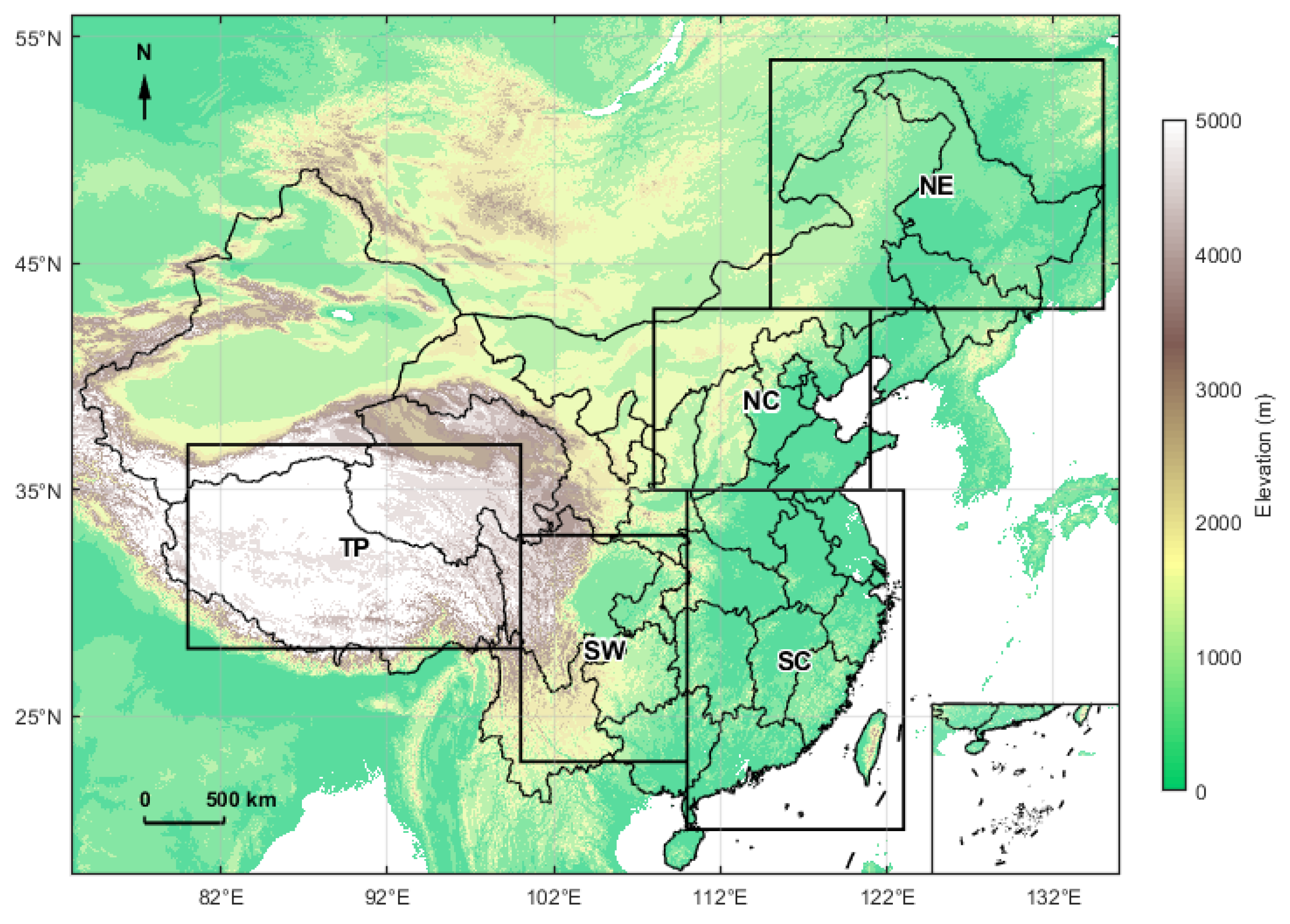
Figure 1. Study regions and topographic elevation. The boxes indicate the five representative hail-prone regions considered in this study: NE, NC, SC, SW, and TP. The color bar denotes terrain elevation (m).
Remotesensing 18 01853 g001
Figure 2. Two representative hail cloud cases observed by GPM DPR. Panels (a,b) show the NE case on 28 June 2020 (orbit 035976), and panels (c,d) show the TP case on 11 July 2024 (orbit 058883). Panels (a,c) present near-surface Z e distributions, where the red solid line marks the cross-section location and black plus signs denote flagHail pixels. Panels (b,d) show the corresponding vertical cross-sections, where the red dashed box indicates the vertical profile extent of the case study, and the black dashed horizontal line marks the 0 °C level.
Remotesensing 18 01853 g002
Figure 3. Spatial distribution of hail cloud echo-top parameters (km): (a) STH, (b) MHT20, and (c) MHT40. The statistics are averaged on a 0.5° × 0.5° grid.
Remotesensing 18 01853 g003
Figure 4. Violin plots of macroscopic structural parameters of hail cloud systems in the five study regions: (a) STH, (b) MHT20, (c) MHT40 (km), (d) IWP, (e) LWP, and (f) Cloud Area. Black dots denote medians and thick black bars denote interquartile ranges. Panels (df) use logarithmic y-axes.
Remotesensing 18 01853 g004
Figure 5. Normalized CFADs of Z e for hail cloud systems in (a) NE, (b) NC, (c) SC, (d) SW, and (e) TP. The x-axis is radar reflectivity (dBZ), the y-axis is height (km), the black dashed line denotes the mean profile, and the red solid line denotes the regional mean 0 °C level.
Remotesensing 18 01853 g005
Figure 6. Normalized CFADs of D m for hail cloud systems in (a) NE, (b) NC, (c) SC, (d) SW, and (e) TP. The x-axis is D m (mm), the y-axis is height (km), the color shading indicates normalized frequency, the black dashed line denotes the mean profile, the red solid line denotes the regional mean 0 °C level, and the dashed line denotes the regional mean −20 °C level.
Remotesensing 18 01853 g006
Figure 7. Normalized CFADs of log 10 N w for hail cloud systems in (a) NE, (b) NC, (c) SC, (d) SW, and (e) TP. The x-axis is log 10 N w (m−3 mm−1), the y-axis is height (km), the black dashed line denotes the mean profile, the red solid line denotes the regional mean 0 °C level, and the dashed line denotes the regional mean −20 °C level.
Remotesensing 18 01853 g007
Figure 8. Boxplots of CAPE and VWS in the five regions: (a) CAPE (J kg−1) and (b) VWS (m s−1). Boxes denote the interquartile range, central lines denote medians, and whiskers denote the data range.
Remotesensing 18 01853 g008
Figure 9. Vertical gradient profiles of hail cloud systems in different regions. Panels (ae) show Δ Z e / Δ h , panels (fj) show Δ D m / Δ h , and panels (ko) show the gradient of log 10 N w . Red solid and dashed lines mark the 0 °C and −20 °C isotherms, respectively, and the gray shading indicates the key ice-phase growth layer between them. The annotated values are layer-mean gradients.
Remotesensing 18 01853 g009
Figure 10. Two-dimensional joint distributions of minimum P C T 89 and 183 ± 7 GHz brightness temperature for hail cloud systems in (a) NE, (b) NC, (c) SC, (d) SW, and (e) TP. The x-axis is minimum P C T 89 (K), the y-axis is 183 ± 7 GHz brightness temperature (K), the background shading indicates sample density, and the upper-right corner reports the Pearson correlation coefficient and its significance. Magenta diamonds denote regional means; cyan squares denote regional medians; and *** ( p < 0.001 ) indicates that the correlation is extremely significant (probability of coincidence < 0.1 % ).
Remotesensing 18 01853 g010
Figure 11. Two-dimensional histograms of CAPE and VWS for hail cloud systems in (a) NE, (b) NC, (c) SC, (d) SW, and (e) TP. The x-axis is CAPE (J kg−1), the y-axis is VWS (m s−1), and the color scale indicates sample counts. The black dashed cross and star symbol mark the regional median values. The inset in the upper-right corner reports the mean and standard deviation of CAPE and VWS for each region.
Remotesensing 18 01853 g011
Table 1. Number of hail cloud systems identified in each study region.
NENCSCSWTPTotal
Number of systems30211425711727817
Table 2. Regional statistics of characteristic altitude parameters and ice-phase layer vertical gradients of hail cloud systems across the five hail-prone regions of China.
ParameterNENCSCSWTP
A. Echo-top heights (km AGL) [median (IQR)]
   STH11.6 (11.0–12.3)12.8 (11.6–14.1)15.1 (14.0–16.1)14.3 (13.2–15.4)12.6 (11.3–13.8)
   MHT2011.2 (10.5–12.0)12.3 (11.0–13.7)14.6 (13.3–15.7)13.7 (12.3–14.9)12.1 (10.8–13.4)
   MHT405.1 (3.6–6.7)5.9 (4.2–7.7)6.1 (4.8–8.0)5.1 (3.9–7.0)4.8 (3.3–6.2)
B. Hydrometeor paths (g m−2) [median (IQR)]
   IWP694.2 (455.4–1308.3)1203.4 (637.9–2712.5)1668.4 (782.7–4117.4)1578.6 (760.4–3482.8)401.7 (208.5–1014.7)
   LWP5.8 (3.7–10.7)8.8 (4.6–18.4)8.5 (3.6–22.7)9.3 (4.6–20.5)5.3 (3.6–9.1)
C. Z e and D m at characteristic heights from CFAD mean profiles
   0 °C level (km AGL)3.54.15.14.52.8
    Z e at 0 °C (dBZ)41.442.240.940.340.7
    Z e at 5 km (dBZ)39.341.141.539.638.3
    Z e at 10 km (dBZ)28.230.531.929.828.8
    D m at 0 °C (mm)2.62.62.42.32.6
    D m at 5 km (mm)2.52.52.42.32.5
    D m at 10 km (mm)1.81.91.81.71.9
D. Ice-phase layer vertical gradients (0 °C to −20 °C)
    Δ Z e / Δ h (dBZ km−1)−1.49−1.69−1.91−2.00−1.36
    Δ D m / Δ h (mm km−1)−0.085−0.100−0.124−0.124−0.073
Table 3. Environmental parameters associated with hail cloud systems in the five study regions.
ParameterNENCSCSWTP
CAPE (J kg−1)
   Median958.51294.91651.8883.5648.1
   25th percentile (Q1)526.0614.51053.5384.0180.9
   75th percentile (Q3)1541.82026.02346.51790.21256.6
   IQR (Q3 − Q1)1015.81411.51293.01406.21075.7
VWS (m s−1)
   Median15.222.011.99.411.2
   25th percentile (Q1)10.014.07.06.06.2
   75th percentile (Q3)24.225.417.512.318.6
   IQR (Q3 − Q1)14.211.410.56.312.4
Disclaimer/Publisher’s Note: The statements, opinions and data contained in all publications are solely those of the individual author(s) and contributor(s) and not of MDPI and/or the editor(s). MDPI and/or the editor(s) disclaim responsibility for any injury to people or property resulting from any ideas, methods, instructions or products referred to in the content.