
Effect of Desert Dust Intrusion on the Detection of Marine Heatwaves


Highlights
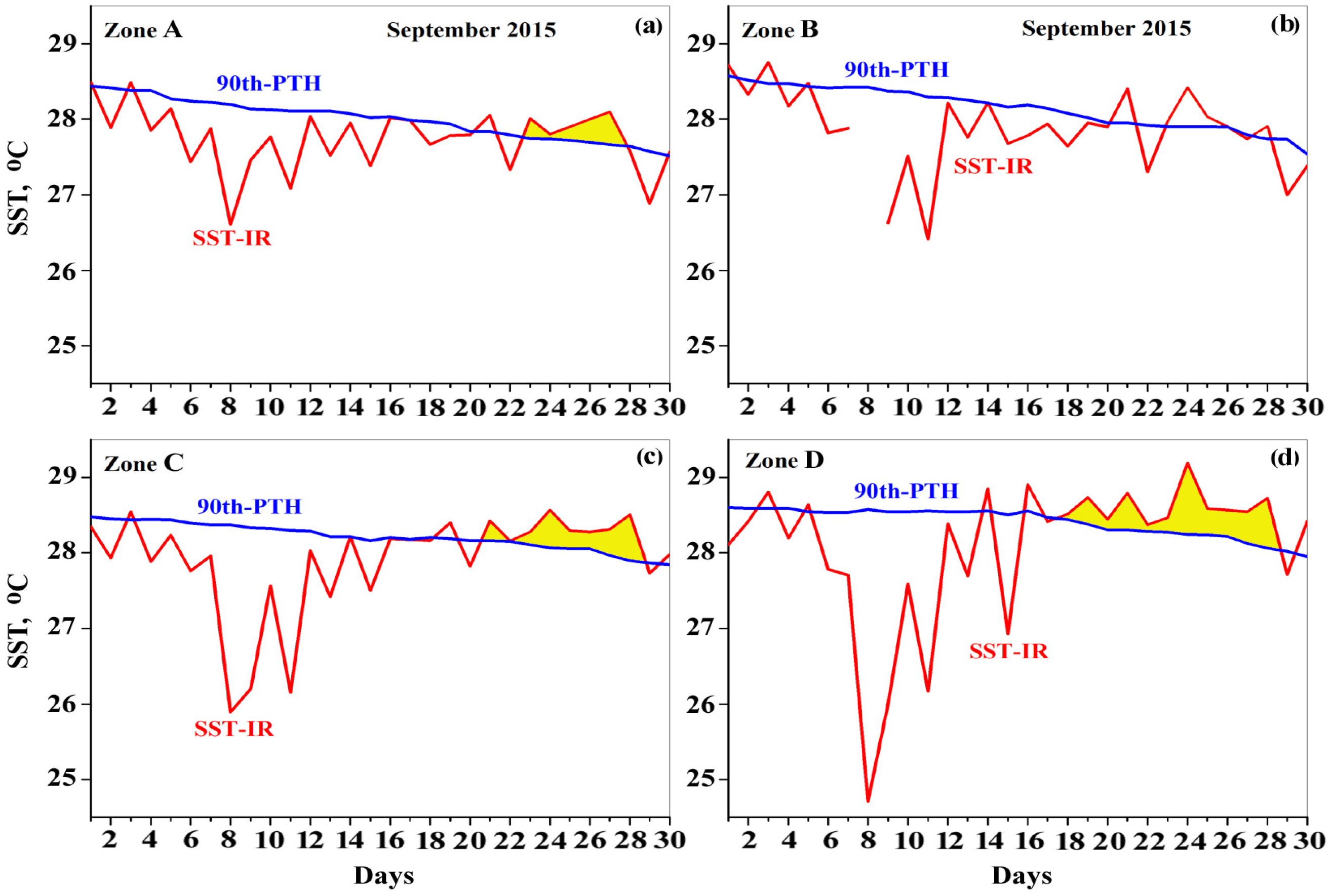
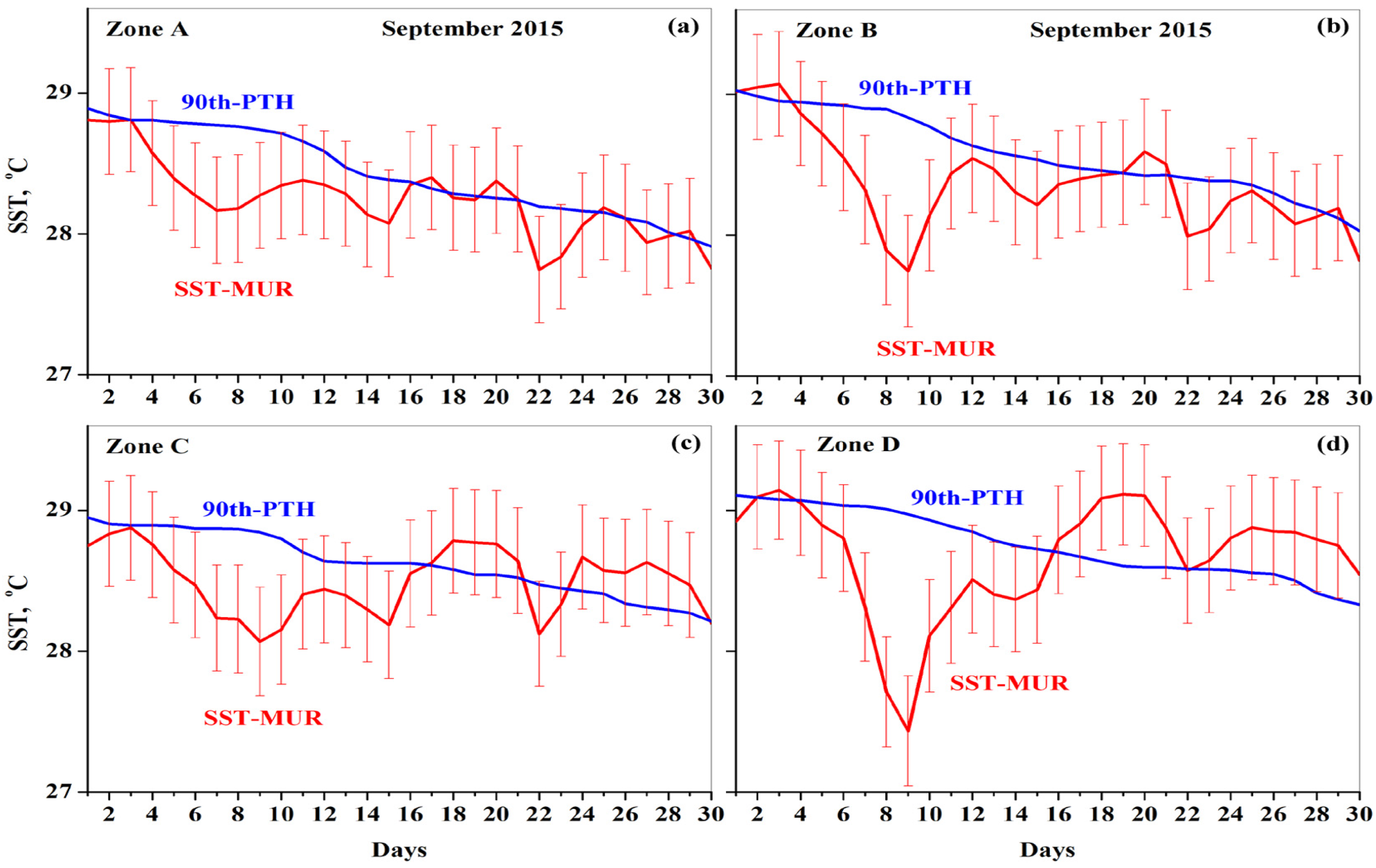
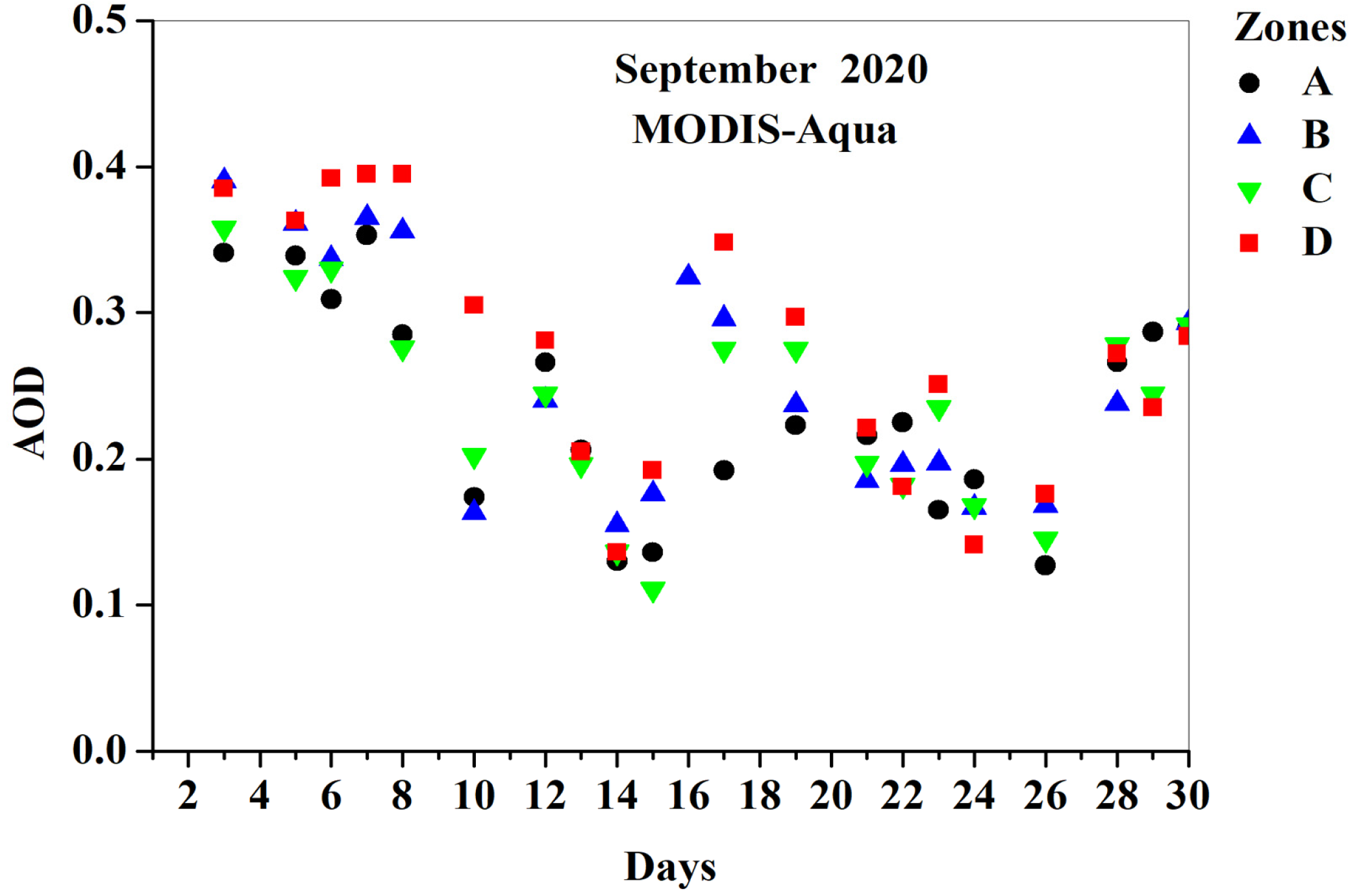
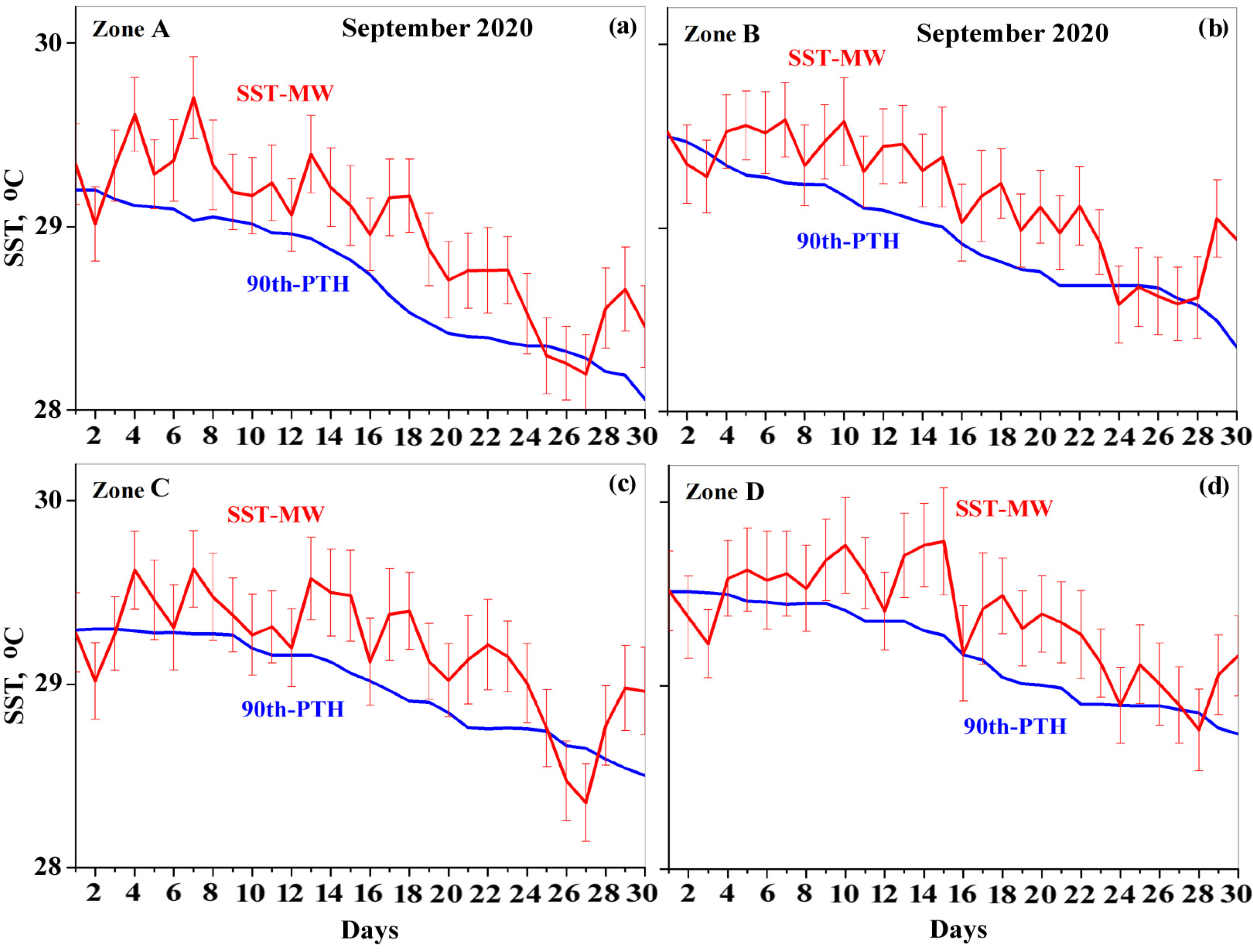
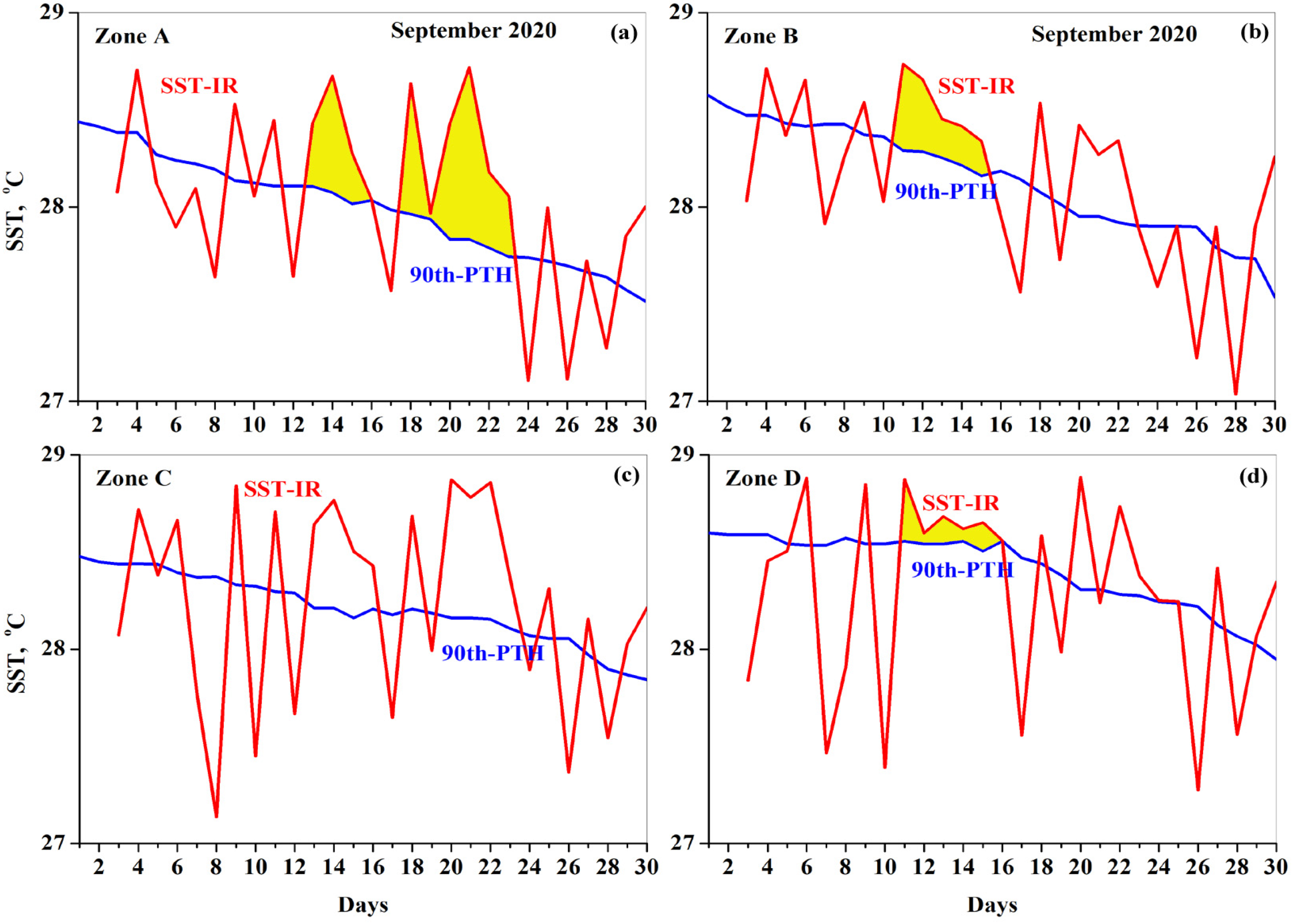
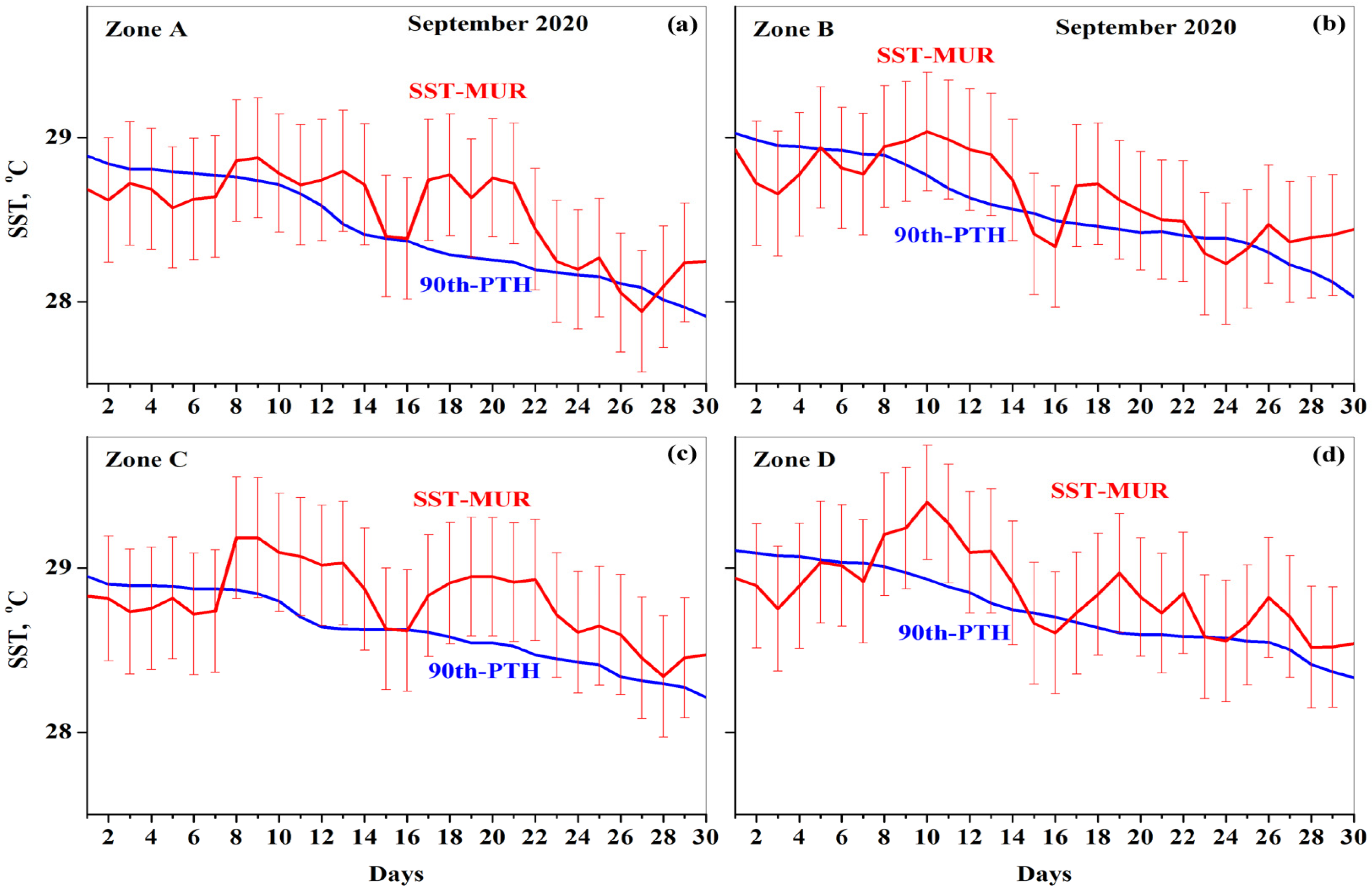
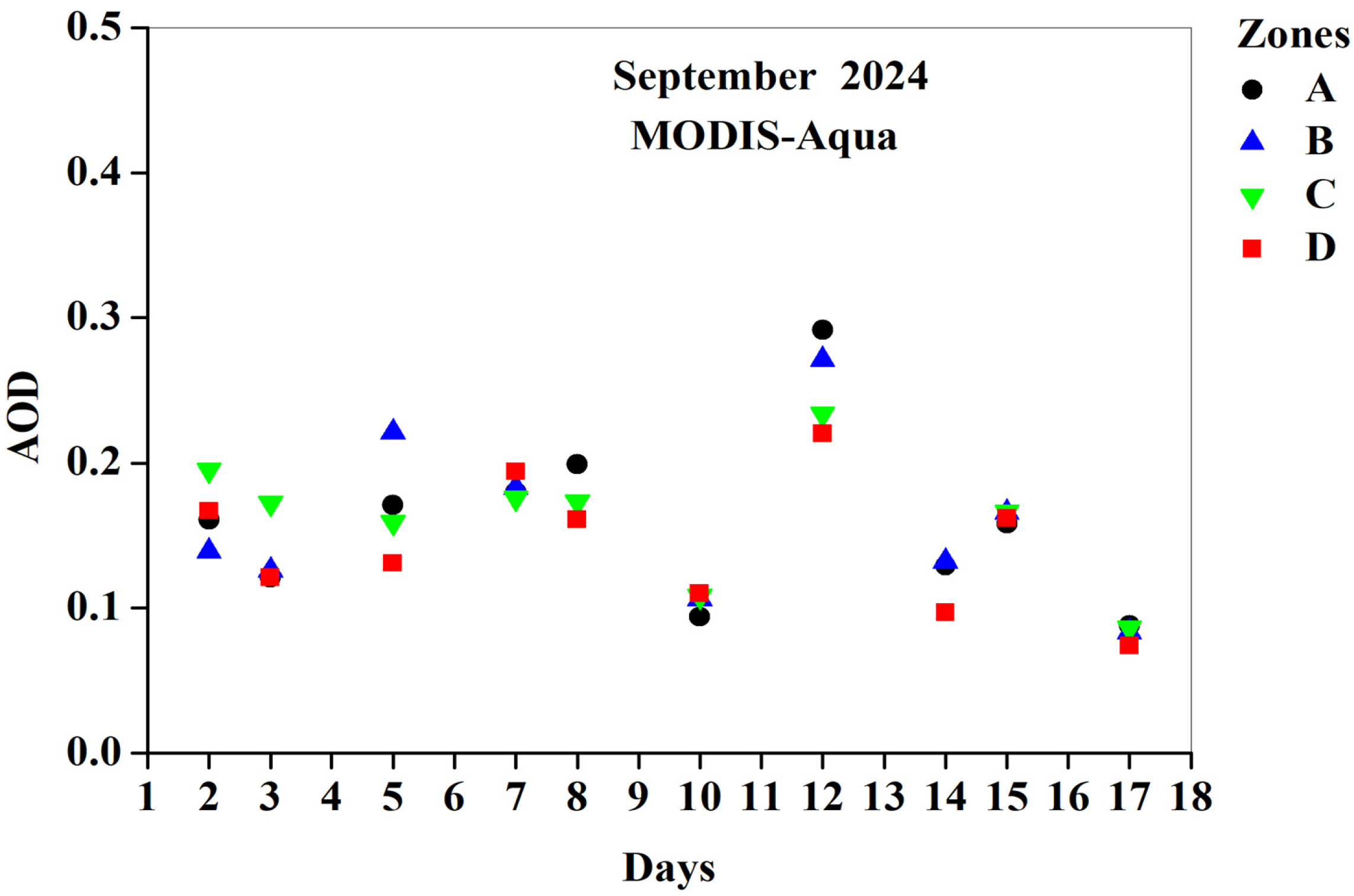
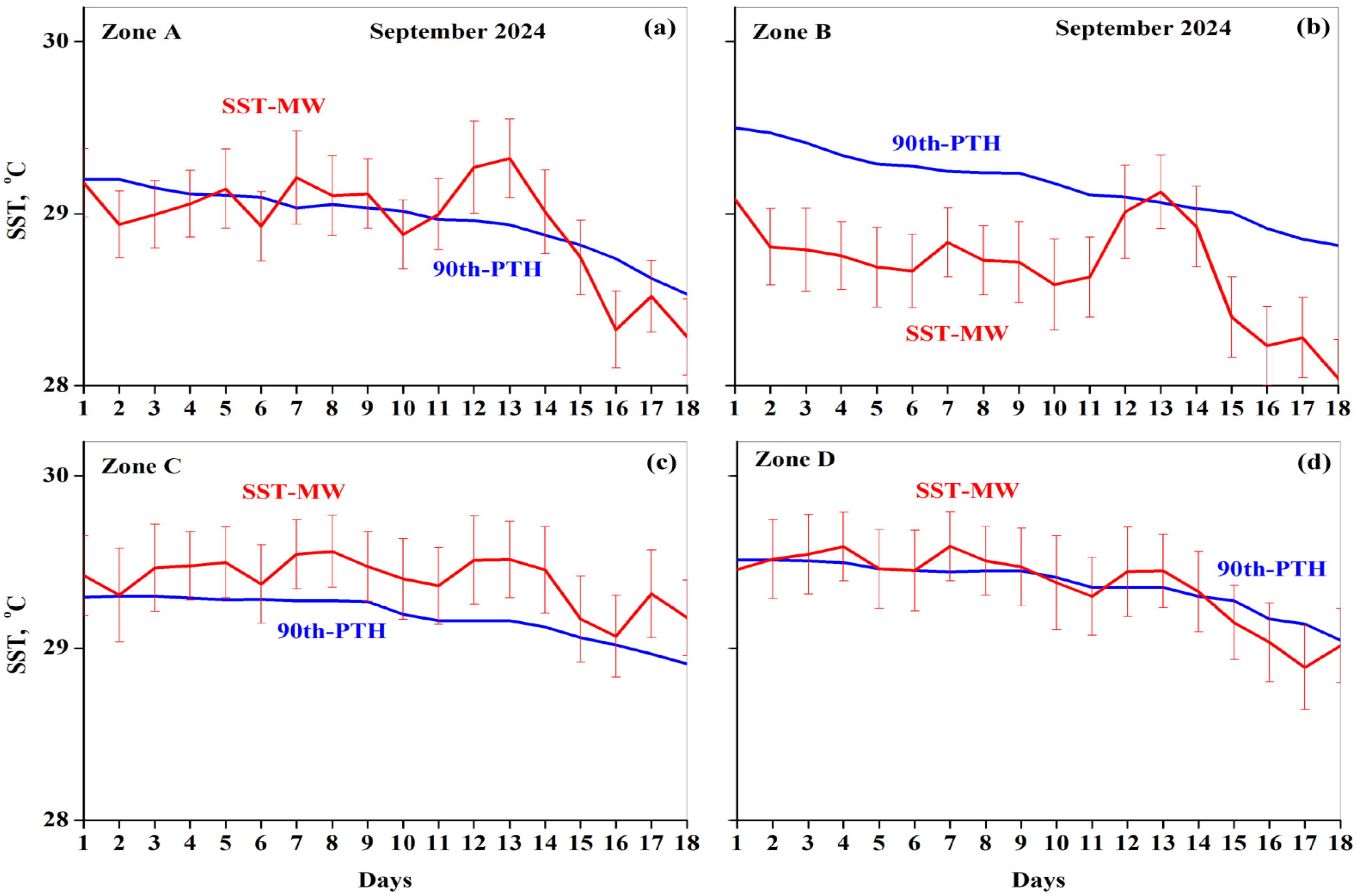
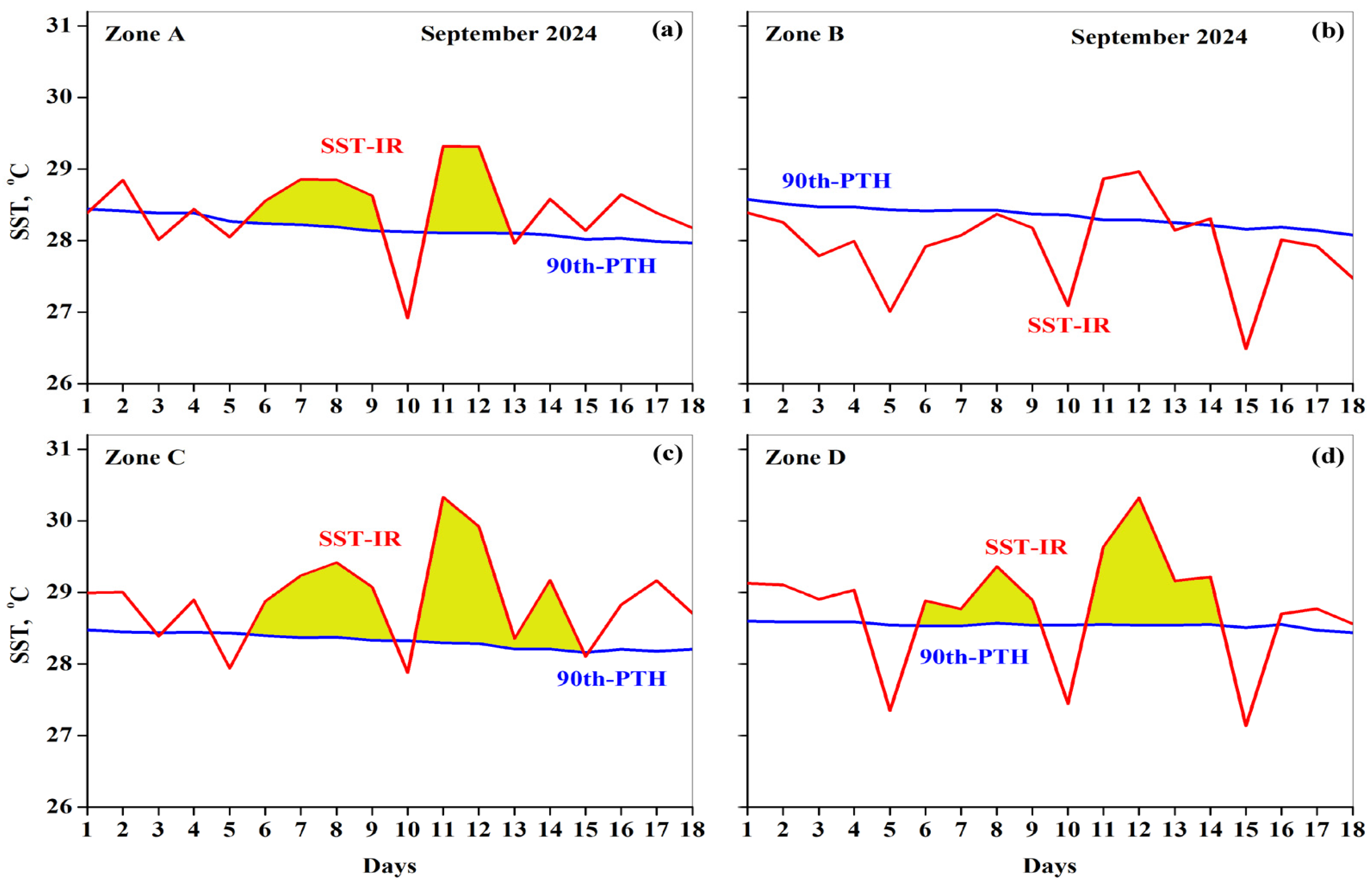
- Both strong and weak desert dust intrusions (when aerosol optical depth ranges within an extremely wide interval of 0.3 to 5) reduce the capability of satellite infrared radiometry to detect marine heat waves (MHWs). This was in contrast to microwave radiometry.
- The incapability of satellite infrared radiometry to detect MHWs in the presence of desert dust intrusion substantially reduces the capability of detecting MHWs by the datasets which integrate microwave and infrared radiometry of sea surface temperature. This leads to an underestimation of the presence of MHWs as an essential indicator of regional warming in the Eastern Mediterranean.
Abstract
1. Introduction
2. Materials and Methods
2.1. Study Area
2.2. Method
2.3. Data Used
3. Results
3.1. Eastern Mediterranean SST in Warming Climate
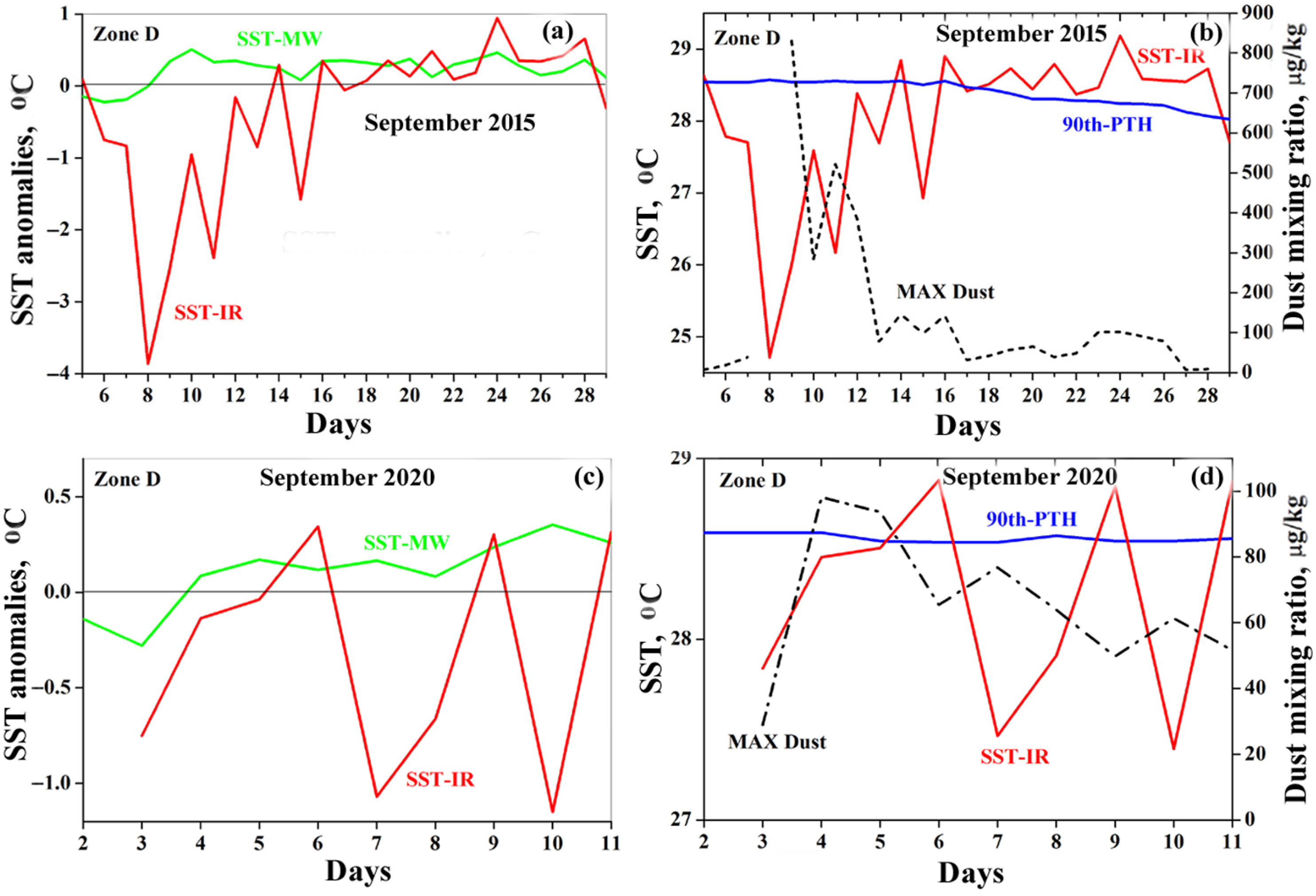
3.2. MHW Activity in September 2015
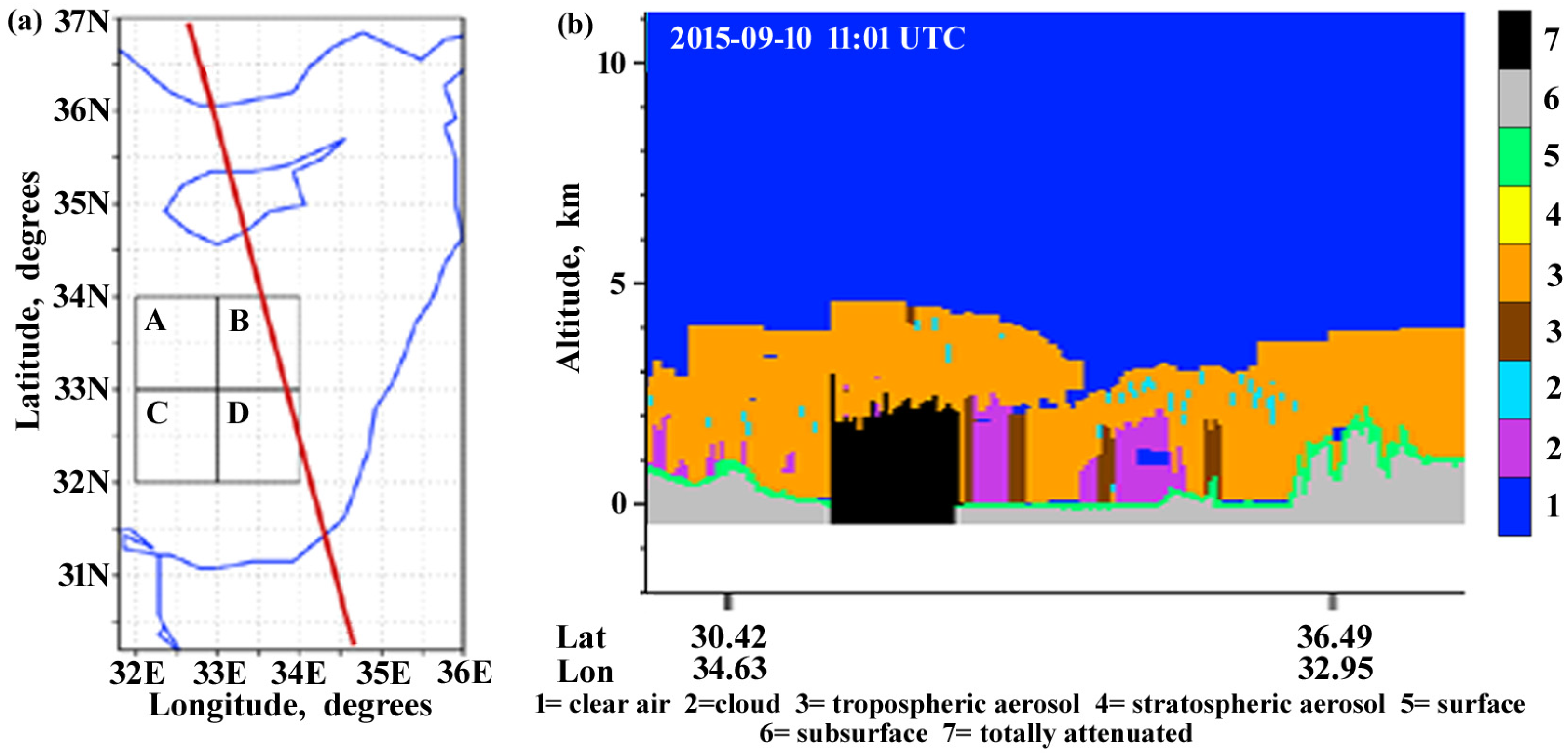
3.2.1. Characteristic Features of Dust Intrusions in September 2015
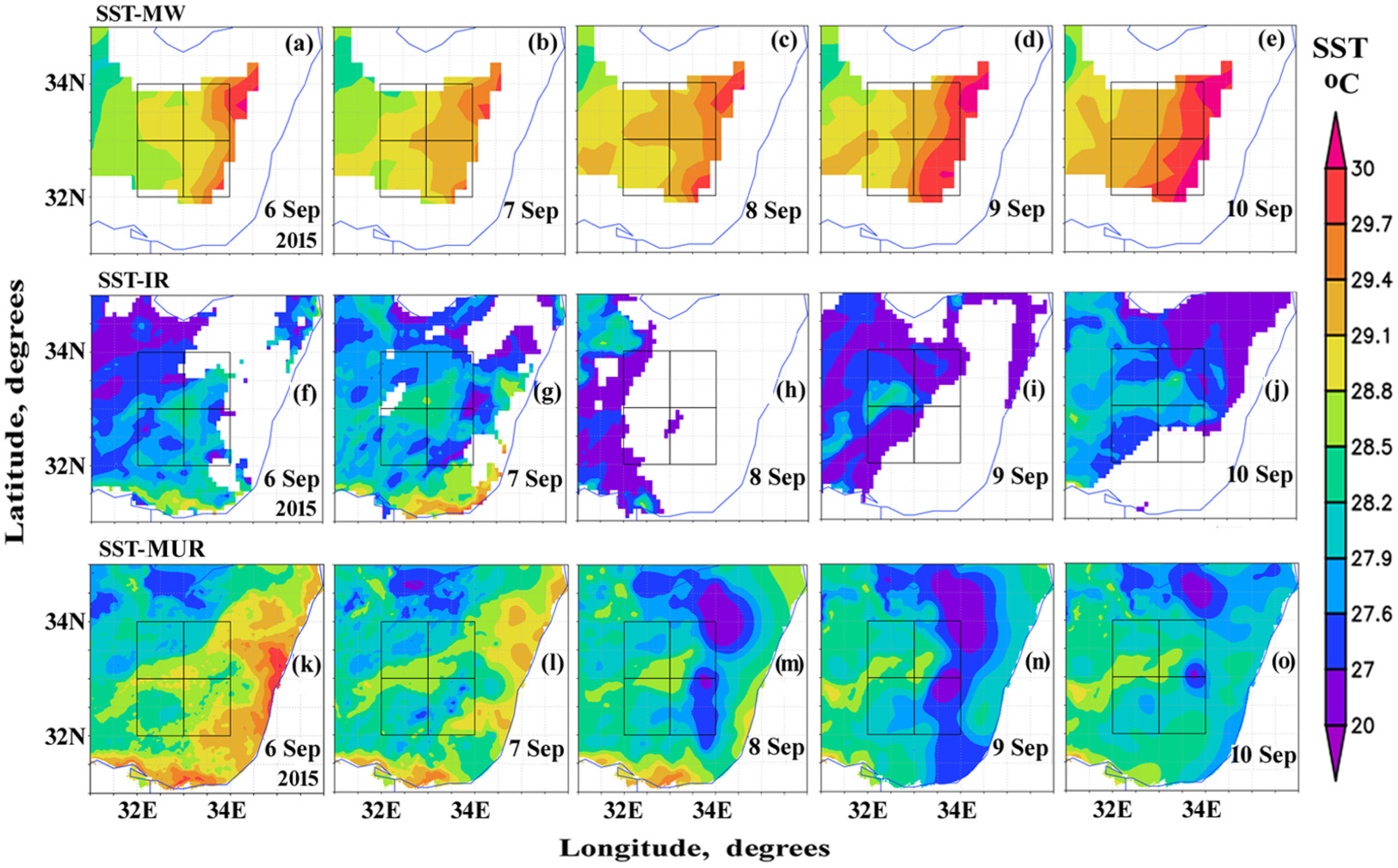
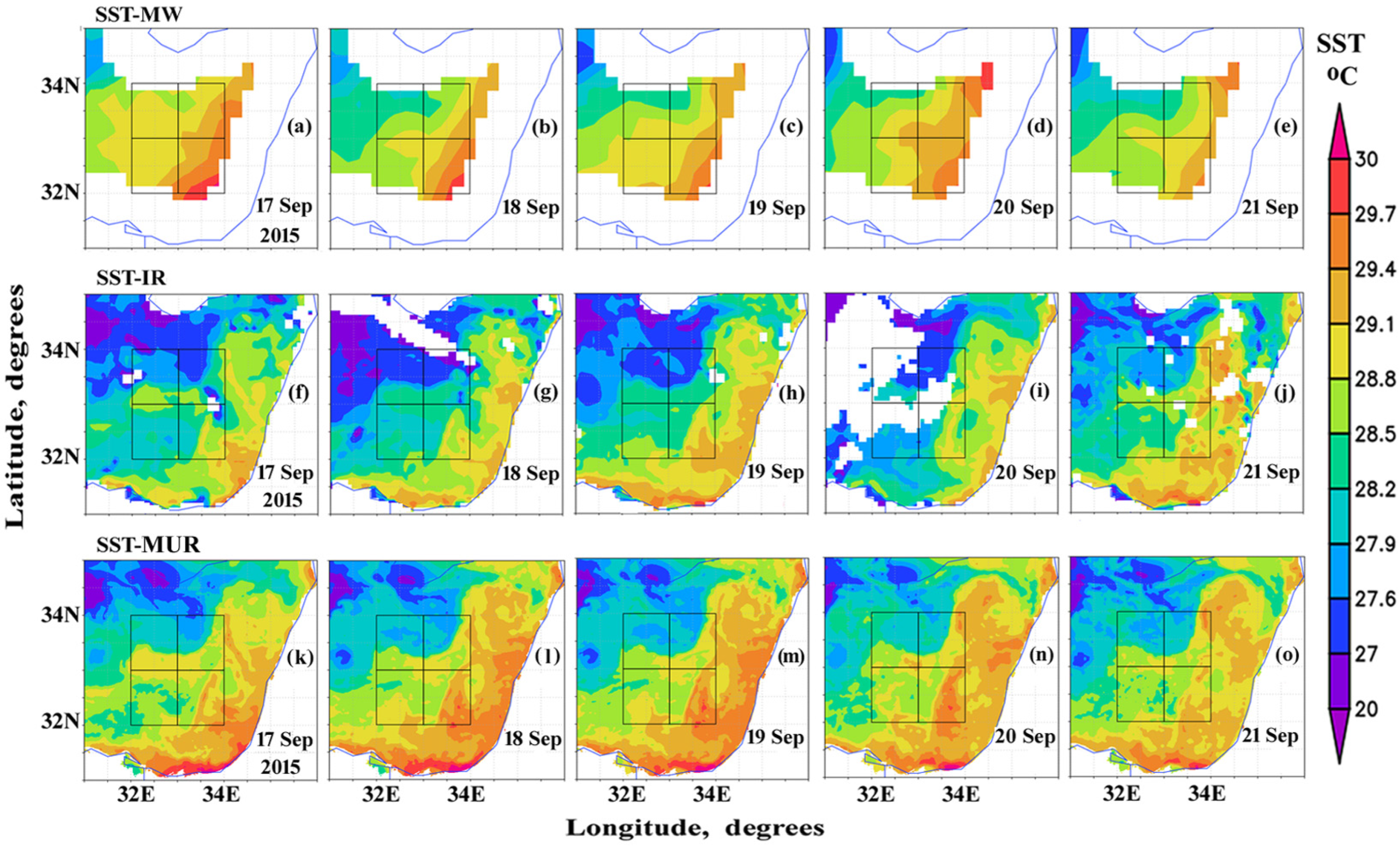
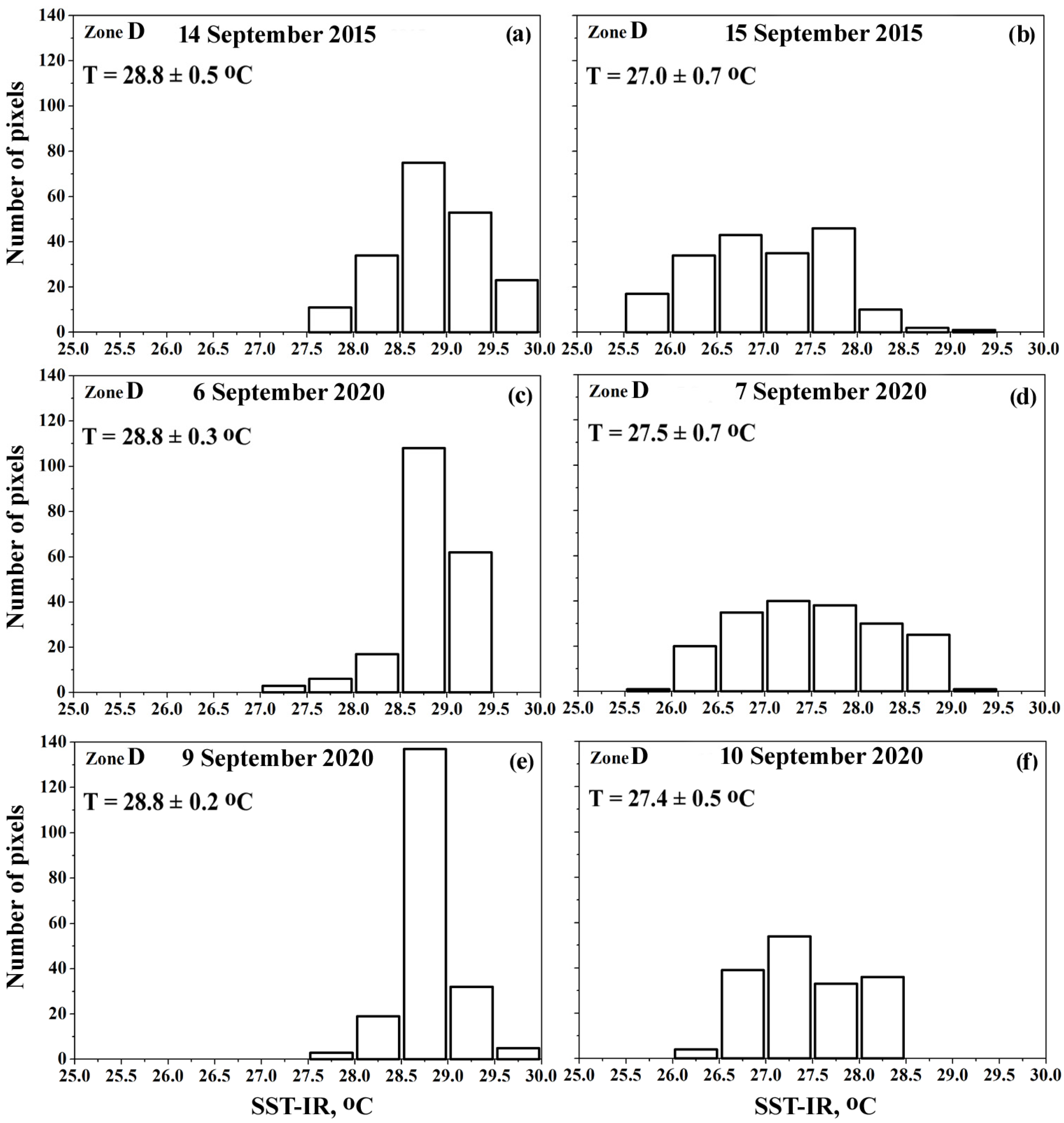
3.2.2. SST Spatial Distribution Changes in the Presence of Desert Dust Intrusion
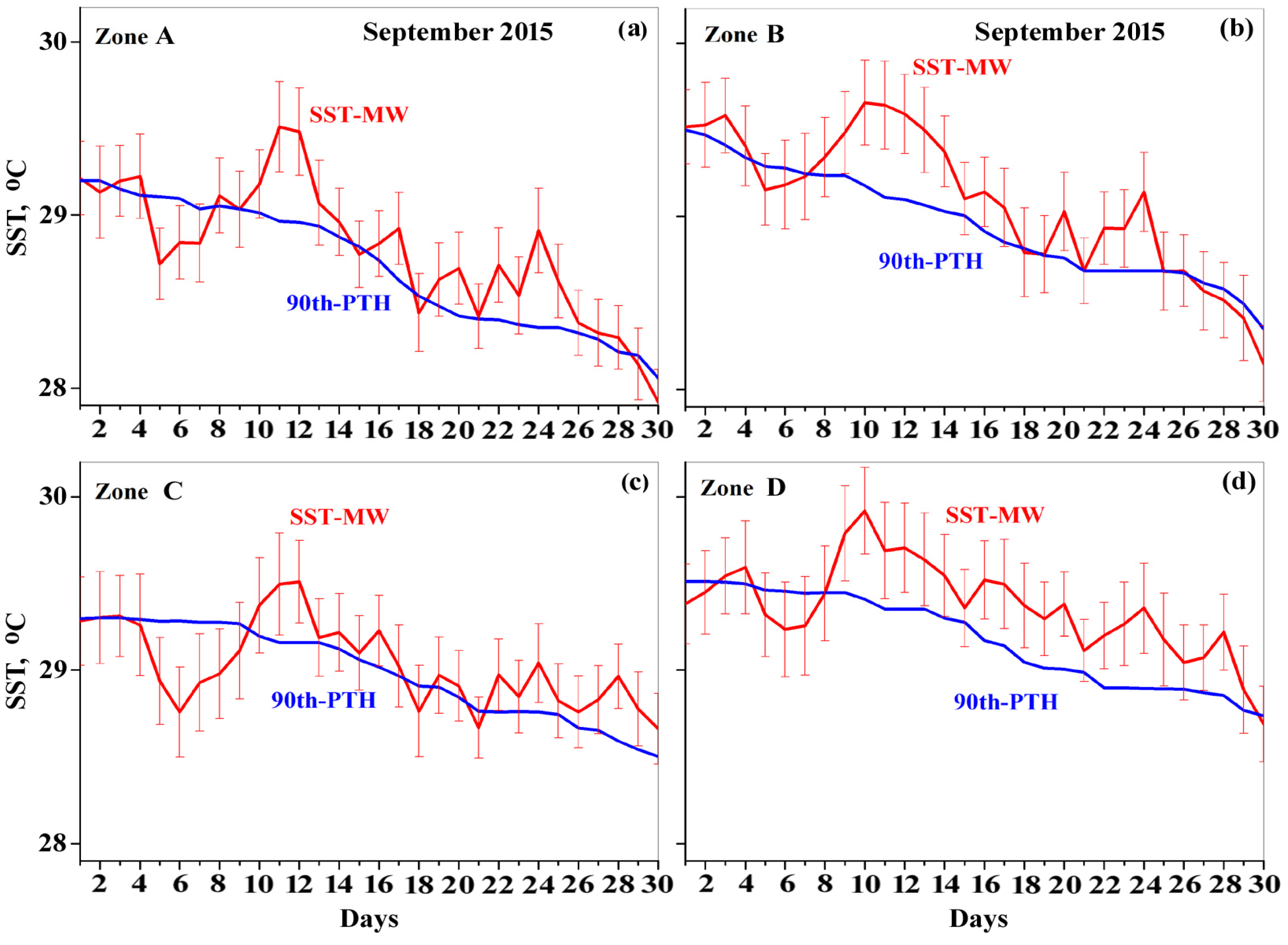
3.2.3. MHWs in September 2015
3.3. MHW Activity in September 2020
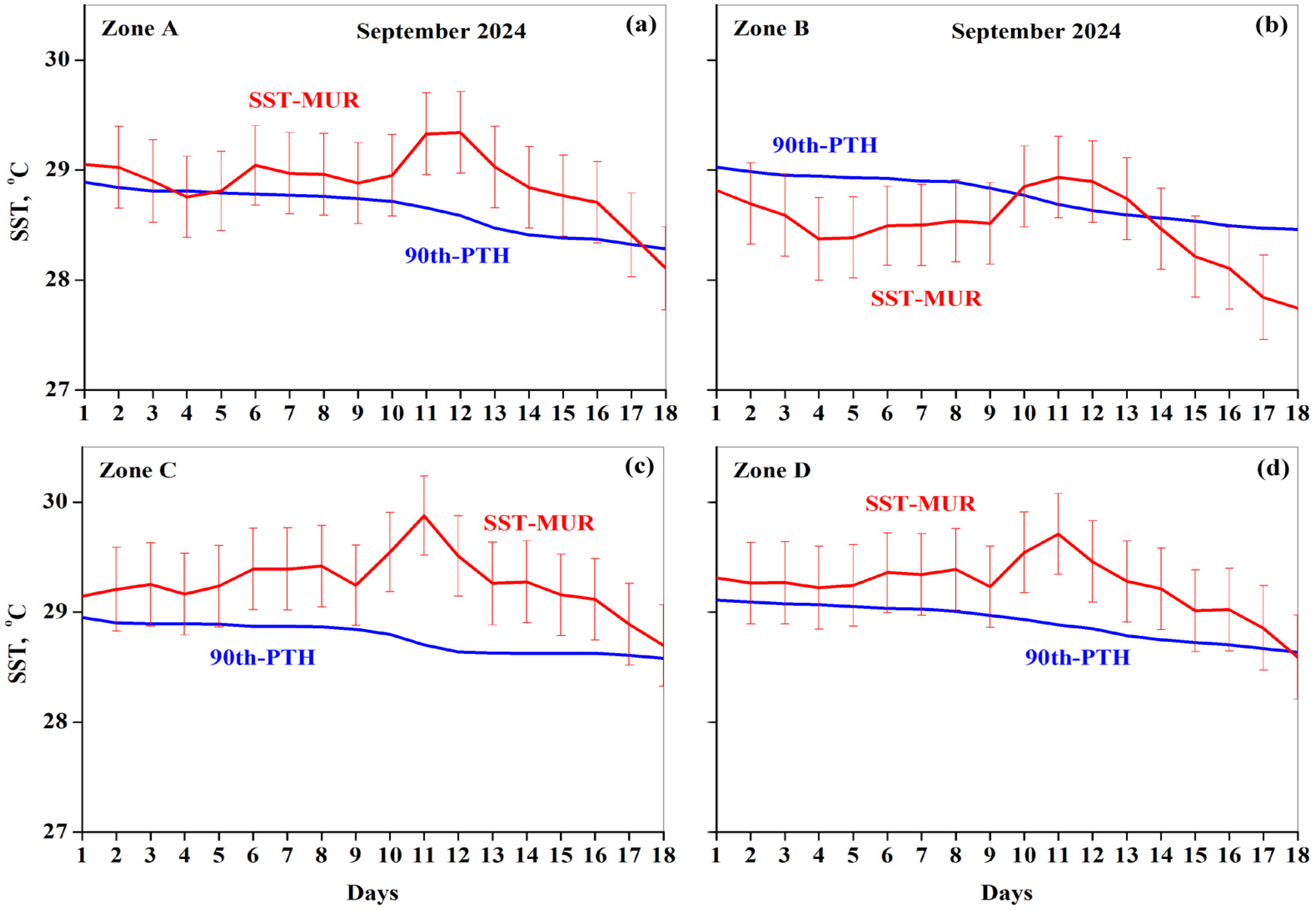
3.4. MHW Activity in September 2024
3.5. Incorrect SST-IR Retrievals in the Presence of Desert Dust Intrusion
4. Discussion
5. Conclusions
Author Contributions
Funding
Data Availability Statement
Conflicts of Interest
Abbreviations
| AOD | aerosol optical depth |
| EM | Eastern Mediterranean |
| MHW | marine heatwave |
| LT | local time |
| IR | infrared radiation |
| MW | microwave radiation |
| MUR | multiscale ultrahigh resolution |
| SST | sea surface temperature |
| SST-MW | SST based on MW radiometry |
| SST-IR | SST based on IR radiometry |
| SST-MUR | MUR SST analysis |
| SISR | METEOSAT-based surface incoming solar radiation |
| 90th PTH | ninetieth percentile threshold |
| MI | maximal intensity of MHWs |
| CI | cumulative intensity of MHWs |
Appendix A

References
- Pisano, A.; Marullo, S.; Artale, V.; Falcini, F.; Yang, C.; Leonelli, F.E.; Santoleri, R.; Buongiorno Nardelli, B. New Evidence of Mediterranean Climate Change and Variability from Sea Surface Temperature Observations. Remote Sens. 2020, 12, 132. [Google Scholar] [CrossRef]
- Zittis, G.; Almazroui, M.; Alpert, P.; Ciais, P.; Cramer, W.; Dahdal, Y.; Fnais, M.; Francis, D.; Hadjinicolaou, P.; Howari, F.; et al. Climate change and weather extremes in the Eastern Mediterranean and Middle East. Rev. Geophys. 2022, 60, e2021RG000762. [Google Scholar] [CrossRef]
- Hochman, A.; Marra, F.; Messori, G.; Pinto, J.G.; Raveh-Rubin, S.; Yosef, Y.; Zittis, G. Extreme weather and societal impacts in the eastern Mediterranean. Earth Syst. Dyn. 2022, 13, 749–777. [Google Scholar] [CrossRef]
- Tsikerdekis, A.; Zanis, P.; Georgoulias, A.K.; Alexandri, G.; Katragkou, E.; Karacostas, T.; Solmon, F. Direct and semi-direct radiative effect of North African dust in present and future regional climate simulations. Clim. Dyn. 2019, 53, 4311–4336. [Google Scholar] [CrossRef]
- Shaheen, A.; Wu, R.; Lelieveld, J.; Yousefi, R.; Aldabash, M. Winter AOD trend changes over the Eastern Mediterranean and Middle East region. Int. J. Climatol. 2021, 41, 5516–5535. [Google Scholar] [CrossRef]
- De Meij, A.; Lelieveld, J. Evaluating aerosol optical properties observed by ground-based and satellite remote sensing over the Mediterranean and the Middle East in 2006. Atmos. Res. 2011, 99, 415–433. [Google Scholar] [CrossRef]
- Yu, Y.; Kalashnikova, O.V.; Garay, M.J.; Lee, H.; Notaro, M. Identification and characterization of dust source regions across North Africa and the Middle East using MISR satellite observations. Geophys. Res. Lett. 2018, 45, 6690–6701. [Google Scholar] [CrossRef]
- Kishcha, P.; Volpov, E.; Starobinets, B.; Alpert, P.; Nickovic, S. Dust dry deposition over Israel. Atmosphere 2020, 11, 197. [Google Scholar] [CrossRef]
- Darmaraki, S.; Somot, S.; Sevault, F.; Nabat, P. Past variability of Mediterranean Sea marine heatwaves. Geophys. Res. Lett. 2019, 46, 9813–9823. [Google Scholar] [CrossRef]
- Darmaraki, S.; Somot, S.; Sevault, F.; Nabat, P.; Cabos Narvaez, W.D.; Cavicchia, L.; Djurdjevic, V.; Li, L.; Sannino, G.; Sein, D.V. Future evolution of marine heatwaves in the Mediterranean Sea. Clim. Dyn. 2019, 53, 1371–1392. [Google Scholar] [CrossRef]
- Dayan, H.; McAdam, R.; Juza, M.; Masina, S.; Speich, S. Marine heat waves in the Mediterranean Sea: An assessment from the surface to the subsurface to meet national needs. Front. Mar. Sci. 2023, 10, 1045138. [Google Scholar] [CrossRef]
- Marullo, S.; Serva, F.; Iacono, R.; Napolitano, E.; di Sarra, A.; Meloni, D.; Monteleone, F.; Sferlazzo, D.; De Silvestri, L.; de Toma, V.; et al. Record-breaking persistence of the 2022/23 marine heatwave in the Mediterranean Sea. Environ. Res. Lett. 2023, 18, 114041. [Google Scholar] [CrossRef]
- Simon, A.; Pires, C.; Thomas, L.; Frolicher, T.L.; Russo, A. Long-term warming and interannual variability contributions to marine heatwaves in the Mediterranean. Weather. Clim. Extrem. 2023, 42, 100619. [Google Scholar] [CrossRef]
- Simon, A.; Plecha, S.M.; Russo, A.; Teles-Machado, A.; Donat, M.G.; Auger, P.-A.; Trigo, R.M. Hot and cold marine extreme events in the Mediterranean over the period 1982-2021. Front. Mar. Sci. 2022, 9, 892201. [Google Scholar] [CrossRef]
- Aboelkhair, H.; Mohamed, B.; Morsy, M.; Nagy, H. Co-Occurrence of Atmospheric and Oceanic Heatwaves in the Eastern Mediterranean over the Last Four Decades. Remote Sens. 2023, 15, 1841. [Google Scholar] [CrossRef]
- Bonino, G.; McAdam, R.; Athanasiadis, P.; Cavicchia, L.; Rodrigues, R.R.; Scoccimarro, E.; Tibaldi, S.; Masina, S. Mediterranean summer marine heatwaves triggered by weaker winds under subtropical ridges. Nat. Geosci. 2025, 18, 848–853. [Google Scholar] [CrossRef]
- Hobday, A.J.; Alexander, L.V.; Perkins, S.E.; Smale, D.A.; Straub, S.C.; Oliver, E.C.J.; Benthuysen, J.A.; Burrows, M.T.; Donat, M.G.; Peng, M.; et al. A hierarchical approach to defining marine heatwaves. Prog. Oceanogr. 2016, 141, 227–238. [Google Scholar] [CrossRef]
- Garrabou, J.; Coma, R.; Bensoussan, N.; Bally, M.; Chevaldonné, P.; Cigliano, M.; Diaz, D.; Harmelin, J.G.; Gambi, M.C.; Kersting, D.K.; et al. Mass mortality in northwestern Mediterranean rocky benthic communities: Effects of the 2003 heat wave. Global Change Biol. 2009, 15, 1090–1103. [Google Scholar] [CrossRef]
- Garrabou, J.; Gómez-Gras, D.; Ledoux, J.-B.; Linares, C.; Bensoussan, N.; López-Sendino, P.; Bazairi, H.; Espinosa, F.; Ramdani, M.; Grimes, S.; et al. Collaborative database to track mass mortality events in the Mediterranean Sea. Front. Mar. Sci. 2019, 6, 707. [Google Scholar] [CrossRef]
- Barriopedro, D.; García-Herrera, R.; Ordóñez, C.; Miralles, D.G.; Salcedo-Sanz, S. Heat waves: Physical understanding and scientific challenges. Rev. Geophys. 2023, 61, e2022RG000780. [Google Scholar] [CrossRef]
- Alpert, P.; Kishcha, P.; Shtivelman, A.; Krichak, S.O.; Joseph, J.H. Vertical distribution of Saharan dust based on 2.5-year model Predictions. Atmos. Res. 2004, 70, 109–130. [Google Scholar] [CrossRef]
- Kishcha, P.; Barnaba, F.; Gobbi, P.; Alpert, P.; Shtivelman, A.; Krichak, S.O.; Joseph, J.H. Vertical distribution of Saharan dust over Rome: Comparison between 3-year model predictions and lidar soundings. J. Geophys. Res. 2005, 110, D06208. [Google Scholar] [CrossRef]
- Kishcha, P.; Alpert, P.; Shtivelman, A.; Krichak, S.; Joseph, J.; Kallos, G.; Spyrou, C.; Gobbi, G.P.; Barnaba, F.; Nickovic, S.; et al. Forecast errors in dust vertical distributions over Rome (Italy): Multiple particle size representation and cloud contributions. J. Geophys. Res. 2007, 112, D15205. [Google Scholar] [CrossRef]
- Haywood, J.M.; Francis, P.; Osborne, S.; Glew, M.; Loeb, N.; Highwood, E.; Tanré, D.; Myhre, G.; Formenti, P.; Hirst, E. Radiative properties and direct radiative effect of Saharan dust measured by the C-130 aircraft during SHADE: 1. Solar spectrum. J. Geophys. Res. 2003, 108, 8577. [Google Scholar] [CrossRef]
- Haywood, J.M.; Allan, R.P.; Culverwell, I.; Slingo, T.; Milton, S.; Edwards, J.; Clerbaux, N. Can desert dust explain the outgoing longwave radiation anomaly over the Sahara during July 2003? J. Geophys. Res. 2005, 110, D05105. [Google Scholar] [CrossRef]
- Brindley, H.E.; Russell, J.E. An assessment of Saharan dust loading and the corresponding cloud-free longwave direct radiative effect from geostationary satellite observations. J. Geophys. Res. 2009, 114, D23201. [Google Scholar] [CrossRef]
- Kishcha, P.; Lechinsky, Y.; Starobinets, B. Impact of a severe dust event on diurnal behavior of surface water temperature in subtropical Lake Kinneret. Remote Sens. 2023, 15, 5297. [Google Scholar] [CrossRef]
- Kishcha, P.; Lechinsky, Y.; Starobinets, B. Lake and atmospheric heatwaves caused by extreme dust intrusion in freshwater Lake Kinneret in the Eastern Mediterranean. Remote Sens. 2024, 16, 2314. [Google Scholar] [CrossRef]
- Kishcha, P.; Gertman, I.; Starobinets, B. Surface and subsurface heatwaves in the hypersaline Dead Sea caused by severe dust intrusion. Hydrology 2025, 12, 114. [Google Scholar] [CrossRef]
- Díaz, J.P.; Arbelo, M.; Exposito, F.J.; Podesta, G.; Prospero, J.M.; Evans, R. Relationship between errors in AVHRR-derived sea surface temperature and the TOMS Aerosol Index. Geophys. Res. Lett. 2001, 28, 1989–1992. [Google Scholar] [CrossRef]
- Vazquez-Cuervo, J.; Armstrong, E.; Harris, A. The effect of aerosols and clouds on the retrieval of infrared sea surface temperatures. J. Clim. 2004, 17, 3921–3933. [Google Scholar] [CrossRef]
- Luo, B.; Minnett, P.J.; Szczodrak, M.; Kilpatrick, K.; Izaguirre, M. Validation of Sentinel-3A SLSTR derived Sea-Surface Skin Temperatures with those of the shipborne M-AERI. Remote Sens. Environ. 2020, 244, 111826. [Google Scholar] [CrossRef]
- Luo, B.; Minnett, P.J.; Nalli, N.R. Infrared satellite-derived sea surface skin temperature sensitivity to aerosol vertical distribution – Field data analysis and model simulations. Remote Sens. Environ. 2021, 252, 112151. [Google Scholar] [CrossRef]
- Bogdanoff, A.S.; Westphal, D.L.; Campbell, J.R.; Cummings, J.A.; Hyer, E.J.; Reid, J.S.; Clayson, C.A. Sensitivity of infrared sea surface temperature retrievals to the vertical distribution of airborne dust aerosol. Remote Sens. Environ. 2015, 159, 1–13. [Google Scholar] [CrossRef]
- Donlon, C.J.; Nykjaer, L.; Gentemann, C. Using sea surface temperature measurements from microwave and infrared satellite measurements. Int. J. Remote Sens. 2004, 25, 1331–1336. [Google Scholar] [CrossRef]
- Prigent, C.; Aires, F.; Bernardo, F.; Orlhac, J.C.; Goutoule, J.M.; Roquet, H.; Donlon, C. Analysis of the potential and limitations of microwave radiometry for the retrieval of sea surface temperature: Definition of MICROWAT, a new mission concept. J. Geophys. Res. Oceans 2013, 118, 3074–3086. [Google Scholar] [CrossRef]
- Ruescas, A.B.; Arbelo, M.; Sobrino, J.A.; Mattar, C. Examining the Effects of Dust Aerosols on Satellite Sea Surface Temperatures in the Mediterranean Sea Using the Medspiration Matchup Database. J. Atmos. Ocean. Technol. 2010, 28, 684–697. [Google Scholar] [CrossRef]
- Xie, M.; Ji, Q.; Zheng, Q.; Meng, Z.; Wang, Y.; Gao, M. Spatial and Temporal Characteristics and Mechanisms of Marine Heatwaves in the Changjiang River Estuary and Its Surrounding Coastal Regions. J. Mar. Sci. Eng. 2024, 12, 653. [Google Scholar] [CrossRef]
- Remote Sensing Systems. MW Optimum Interpolated SST Data Set. Ver. 5.1. PO.DAAC, CA, USA; Remote Sensing Systems: Santa Rosa, CA, USA, 2022. [Google Scholar] [CrossRef]
- Hosoda, K.; Sakaida, F. Global Daily High-Resolution Satellite-Based Foundation Sea Surface Temperature Dataset: Development and Validation against Two Definitions of Foundation SST. Remote Sens. 2016, 8, 962. [Google Scholar] [CrossRef]
- Hosoda, K. Empirical method of diurnal correction for estimating sea surface temperature at dawn and noon. J. Oceanogr. 2013, 69, 631–646. [Google Scholar] [CrossRef]
- Nighttime Spatially Gridded (L3) Global NASA Sea Surface Temperature (SST) Products from the Moderate-Resolution Imaging Spectroradiometer (MODIS) Onboard the Aqua Satellite. Available online: https://podaac.jpl.nasa.gov/dataset/MODIS_AQUA_L3_SST_THERMAL_DAILY_9KM_Nighttime_V2019.0 (accessed on 17 December 2025). [CrossRef]
- Luo, B.; Minnett, P.J.; Gentemann, C.; Szczodrak, G. Improving satellite retrieved night-time infrared sea surface temperatures in aerosol contaminated regions. Remote Sens. Environ. 2019, 223, 8–20. [Google Scholar] [CrossRef]
- JPL MUR MEaSUREs Project, JPL NASA. GHRSST Level 4 MUR Global Foundation Sea Surface Temperature Analysis (v4.1); JPL MUR MEaSUREs Project: Pasadena, CA, USA, 2015. [CrossRef]
- Global Modeling and Assimilation Office (GMAO). inst3_3d_asm_Cp: MERRA-2 3D IAU State, Meteorology Instantaneous 3-hourly (p-coord, 0.625x0.5L42), Version 5.12.4; Goddard Space Flight Center Distributed Active Archive Center (GSFC DAAC): Greenbelt, MD, USA, 2015. [CrossRef]
- Gelaro, R.; McCarty, W.; Su’arez, M.J.; Todling, R.; Molod, A.; Takacs, L.; Randles, C.A.; Darmenov, A.; Bosilovich, M.G.; Reichle, R.; et al. The modern-era retrospective analysis for research and applications, version 2 (MERRA- 2). J. Clim. 2017, 30, 5419–5454. [Google Scholar] [CrossRef] [PubMed]
- Randles, C.A.; Da Silva, A.M.; Buchard, V.; Colarco, P.R.; Darmenov, A.; Govindaraju, R.; Smirnov, A.; Holben, B.; Ferrare, R.; Hair, J.; et al. The MERRA-2 aerosol reanalysis, 1980—Onward, part I: System description and data assimilation evaluation. J. Clim. 2017, 30, 6823–6850. [Google Scholar] [CrossRef]
- Buchard, V.; Randles, A.; da Silva, A.M.; Darmenov, A.; Colarco, P.R.; Ggovindaraju, R.; Ferrare, R.; Hair, J.; Beyersdorf, A.J.; Ziemba, L.D.; et al. The MERRA-2 aerosol reanalysis, 1980 onward. Part II: Evaluation and case studies. J. Clim. 2017, 30, 6851–6872. [Google Scholar] [CrossRef]
- Pfeifroth, U.; Kothe, S.; Drücke, J.; Trentmann, J.; Schröder, M.; Selbach, N.; Hollmann, R. Surface Radiation Data Set—Heliosat (SARAH)—Edition 3, Satellite Application Facility on Climate Monitoring; Satellite Application Facility on Climate Monitoring (CM SAF): Offenbach, Germany, 2023. [Google Scholar] [CrossRef]
- Gasch, P.; Rieger, D.; Walter, C.; Khain, P.; Levi, Y.; Knippertz, P.; Vogel, B. Revealing the meteorological drivers of the September 2015 severe dust event in the Eastern Mediterranean. Atmos. Chem. Phys. 2017, 17, 13573–13604. [Google Scholar] [CrossRef]
- Mamouri, R.-E.; Ansmann, A.; Nisantzi, A.; Solomos, S.; Kallos, G.; Hadjimitsis, D. Extreme dust storm over the eastern Mediterranean in September 2015: Satellite, lidar, and surface observations in the Cyprus region. Atmos. Chem. Phys. 2016, 16, 13711–13724. [Google Scholar] [CrossRef]
- The Grid Analysis and Display System (GrADS), Version 2.2.1.oga.1. Available online: http://opengrads.org/ (accessed on 17 December 2025).
- Pisano, A.; Buongiorno Nardelli, B.; Tronconi, C.; Santoleri, R. The new Mediterranean optimally interpolated pathfinder AVHRR SST Dataset (1982–2012). Remote Sens. Environ. 2016, 176, 107–116. [Google Scholar] [CrossRef]
- Reynolds, R.W.; Smith, T.M.; Liu, C.; Chelton, D.B.; Casey, K.S.; Schlax, M.G. Daily High-Resolution-Blended Analyses for Sea Surface Temperature. J. Clim. 2007, 20, 5473–5496. [Google Scholar] [CrossRef]
- Schlegel, R.W.; Oliver, E.; Hobday, A.J.; Smit, A.J. Detecting Marine Heatwaves With Sub-Optimal Data. Front. Mar. Sci. 2019, 6, 737. [Google Scholar] [CrossRef]



| Zone | Start Date | End Date | Duration, Days | , °C | , °C·Day |
|---|---|---|---|---|---|
| SST-MW anomalies | |||||
| A | 8 September | 28 September | 21 | 0.56 | 3.70 |
| B | 8 September | 26 September | 19 | 0.53 | 4.37 |
| C | 10 September | 17 September | 8 | 0.35 | 1.49 |
| C | 22 September | 30 September | 9 | 0.37 | 1.70 |
| D | 8 September | 29 September | 22 | 0.51 | 6.22 |
| SST-IR anomalies | |||||
| A | 23 September | 27 September | 5 | 0.42 | 1.23 |
| B | - | - | - | - | - |
| C | 21 September | 28 September | 8 | 0.60 | 2.33 |
| D | 18 September | 28 September | 11 | 0.94 | 4.04 |
| SST-MUR | |||||
| A | - | - | - | - | - |
| B | - | - | - | - | - |
| C | 17 September | 21 September | 5 | 0.22 | 0.78 |
| C | 24 September | 29 September | 6 | 0.31 | 1.39 |
| D | 16 September | 30 September | 15 | 0.50 | 4.29 |
| Zone | Start Date | End Date | Duration, Days | , °C | , °C·Day |
|---|---|---|---|---|---|
| SST-MW anomalies | |||||
| A | 3 September | 24 September | 22 | 0.66 | 7.23 |
| B | 4 September | 23 September | 20 | 0.43 | 5.76 |
| C | 4 September | 25 September | 22 | 0.49 | 5.58 |
| D | 4 September | 27 September | 24 | 0.51 | 5.61 |
| SST-IR anomalies | |||||
| A | 13 September | 23 September | 11 | 0.88 | 3.63 |
| B | 11 September | 15 September | 5 | 0.44 | 1.38 |
| C | - | - | - | - | - |
| D | 11 September | 16 September | 6 | 0.31 | 0.72 |
| SST-MUR | |||||
| A | 8 September | 25 September | 18 | 0.50 | 3.89 |
| B | 8 September | 14 September | 7 | 0.30 | 1.53 |
| B | 17 September | 22 September | 6 | 0.26 | 0.96 |
| C | 8 September | 30 September | 23 | 0.45 | 6.11 |
| D | 8 September | 14 September | 7 | 0.46 | 2.04 |
| D | 17 September | 30 September | 14 | 0.36 | 2.26 |
| Zone | Start Date | End Date | Duration, Days | , °C | , °C·Day |
|---|---|---|---|---|---|
| SST-MW anomalies | |||||
| A | 7 September | 14 September | 8 | 0.38 | 1.00 |
| B | - | - | - | - | - |
| C | 2 September | 18 September | 17 | 0.35 | 3.64 |
| D | 2 September | 9 September | 8 | 0.14 | 0.36 |
| SST-IR anomalies | |||||
| A | 6 September | 12 September | 7 | 1.20 | 3.30 |
| B | - | - | - | - | - |
| C | 6 September | 15 September | 10 | 2.00 | 7.40 |
| D | 6 September | 14 September | 9 | 1.80 | 4.75 |
| SST-MUR | |||||
| A | 5 September | 17 September | 13 | 0.75 | 4.28 |
| B | - | - | - | - | - |
| C | 1 September | 18 September | 18 | 1.17 | 8.94 |
| D | 1 September | 17 September | 17 | 0.82 | 5.97 |
Disclaimer/Publisher’s Note: The statements, opinions and data contained in all publications are solely those of the individual author(s) and contributor(s) and not of MDPI and/or the editor(s). MDPI and/or the editor(s) disclaim responsibility for any injury to people or property resulting from any ideas, methods, instructions or products referred to in the content. |
© 2025 by the authors. Licensee MDPI, Basel, Switzerland. This article is an open access article distributed under the terms and conditions of the Creative Commons Attribution (CC BY) license.
Share and Cite
Kishcha, P.; Starobinets, B. Effect of Desert Dust Intrusion on the Detection of Marine Heatwaves. Remote Sens. 2026, 18, 48. https://doi.org/10.3390/rs18010048
Kishcha P, Starobinets B. Effect of Desert Dust Intrusion on the Detection of Marine Heatwaves. Remote Sensing. 2026; 18(1):48. https://doi.org/10.3390/rs18010048
Chicago/Turabian StyleKishcha, Pavel, and Boris Starobinets. 2026. "Effect of Desert Dust Intrusion on the Detection of Marine Heatwaves" Remote Sensing 18, no. 1: 48. https://doi.org/10.3390/rs18010048
APA StyleKishcha, P., & Starobinets, B. (2026). Effect of Desert Dust Intrusion on the Detection of Marine Heatwaves. Remote Sensing, 18(1), 48. https://doi.org/10.3390/rs18010048