1. Introduction
Water is the top limiting factor in crop production in arid and semi-arid areas [
1,
2]. Accurate and timely information on plant water stress across crop growth stages is crucial for precision water management, particularly for irrigation scheduling [
3,
4,
5]. However, traditional methods for determining crop water stress, such as pressure chambers, are time-consuming, destructive, and unavailable over large areas [
6,
7]. Remote sensing technology efficiently quantifies or estimates various crop characteristics in a non-destructive and cost-effective manner [
8,
9], enabling the assessment of crop water stress and contributing to the optimization of agricultural water use.
Crop water stress can be detected or assessed using various remote sensing methods, including plant canopy temperature, spectral reflectance, and vegetation indices such as the crop water stress index (CWSI) and the normalized difference vegetation index (NDVI). CWSI quantitatively evaluates plant water status based on the differential between canopy and air temperatures (Tc-Ta) as a function of air vapor pressure deficit (VPD) [
10,
11]. It quantifies water stress by establishing two baselines that link canopy temperature under maximum and non-water stress conditions to VPD. Therefore, determining CWSI requires measuring three environmental variables: canopy temperature (Tc) from thermal imagery, air temperature (Ta), and VPD.
Despite its performance and widespread use, a major challenge in applying CWSI is extracting pure canopy temperature within partial vegetation cover using coarse-resolution remote sensing imagery, especially during the early growth stages [
12]. To address this limitation, Moran et al. (1994) developed the Water Deficit Index (WDI) using a vegetation index/temperature (VIT) model [
13]. The WDI combines spectral vegetation indices (VIs) and the difference between surface and air temperature (Ts-Ta). The VIT trapezoid represents a relationship between remotely sensed surface temperature measurements and a VI derived from surface reflectance factors in the red and near-infrared (NIR) spectral regions [
13]. Therefore, WDI integrates soil and canopy temperatures to estimate crop water deficit during the growing season [
12]. The WDI and CWSI were selected for this study due to their complementary strengths in capturing plant water dynamics. The joint evaluation offers a comparative perspective on the sensitivity of thermal-only and multispectral–thermal approaches to cotton water stress under varying irrigation treatments [
10,
13]. Cotton exhibits varying performance under water stress at different growth stages. Assessing water stress at each stage is crucial for optimizing irrigation timing and amount, ultimately improving cotton growth and yield. Further evaluation of cotton water stress across growth stages is essential for enhancing irrigation management strategies.
Unmanned aerial systems (UASs), a typical example of an airborne instrument, have the advantage of flying at low altitudes, providing better spatial and temporal resolution. Previous studies have documented the use of UASs with various remote sensors at different spatial resolutions to evaluate plant stress [
14,
15,
16,
17,
18]. For example, Gonzalez-Dugo et al. (2012) used a UAS with a 49 cm spatial resolution to assess water status in an almond orchard [
19]. The findings showed that the spatial resolution used detected variability among and within irrigation levels and identified areas of water stress. Additionally, Gu et al. (2024) evaluated water stress in cotton cultivars using high-resolution UAS imagery to identify varieties resistant to water stress [
20]. Their study utilized vegetation indices derived from UAS images with resolutions of ~4 cm (thermal) and 3 cm (multispectral) at a flight height of 40 m. The high spatial resolution proved essential for detecting cultivar performance. It showed strong correlations between the VIs and cotton yield, with coefficients of determination ranging from 0.90 to 0.95, highlighting the importance of high-resolution imagery for precise water-stress monitoring and yield prediction. These studies, which use UAS images at varying spatial resolutions, have proven effective for monitoring water stress and predicting yield. However, the wrong choice of spatial resolutions can lead to a misleading interpretation, loss of critical information, or distortion of features in the data [
21].
As sensors with different resolutions become available, selecting and evaluating flight heights and their corresponding spatial resolutions in water stress assessment and yield prediction become increasingly crucial. A significant challenge in UAS remote sensing is the trade-off between flight height and area coverage. Lower flight heights provide high spatial resolutions but limit the ability to cover large areas within a short flight time and increase battery consumption [
22]. Conversely, higher flight heights enable larger area coverage but reduce image resolution, potentially affecting assessment accuracy [
23]. Therefore, optimizing the spatial resolution and ensuring accurate plant water stress assessment and yield prediction are essential. To date, few studies have developed an integrated approach to evaluate the effect of spatial resolution on plant water stress assessment and yield prediction [
24,
25]. Therefore, we hypothesize that the spatial resolution of UAS-derived imagery significantly affects the accuracy of water stress assessment and yield prediction in cotton. The objectives of this study were to (1) evaluate the application of WDI and CWSI derived from UAS images in detecting crop water stress at different cotton growth stages, and (2) examine the effect of spatial resolution of UAS-derived WDI and CWSI on assessing cotton water stress and predicting yield.
2. Materials and Methods
2.1. Experimental Site
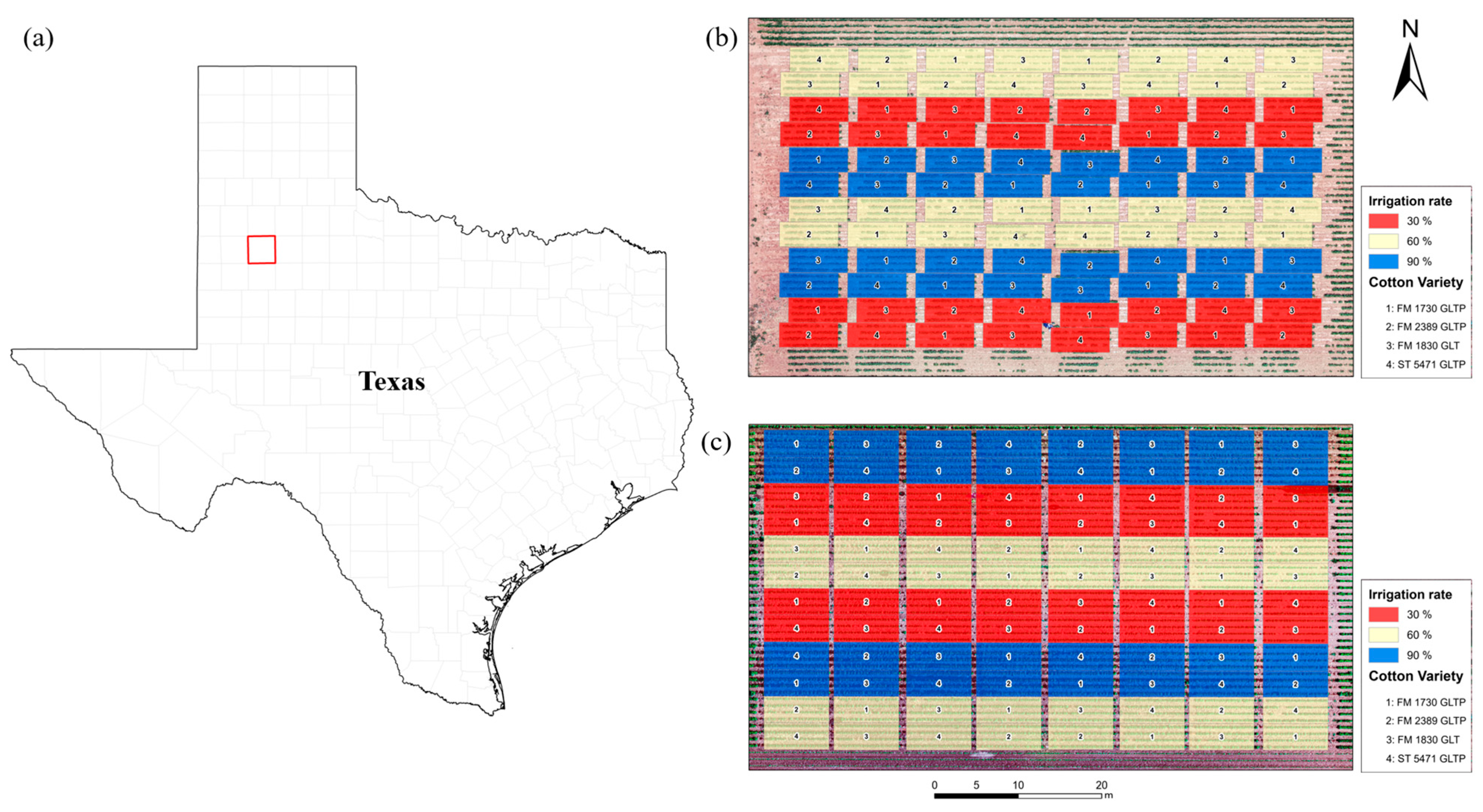
This study was conducted in a research field (33°41′36.4″N, 101°54′18.6″W) in Lubbock County, Texas, in 2021 and 2022 (
Figure 1). The region is semi-arid with annual precipitation of approximately 500 mm mainly between May and September. It has an average maximum temperature of 23.5 °C and a minimum temperature of 8.3 °C. The average wind speed is about 5.5 m s
−1, with high wind occurrences during winter and spring. The dominant soil type of the field is Pullman clay loam (Fine, mixed, superactive, thermic Torrertic Paleustolls), characterized by good drainage and moderately high saturated hydraulic conductivity [
26].
2.2. Experimental Design
The experiment was implemented as a split-plot design (
Figure 1), with irrigation as the main factor and cultivar as the split-plot factor. Irrigation was applied using a sub-surface drip irrigation system. Irrigation treatments included three rates, 30%, 60%, and 90% ET replacements, with two replications for each treatment, representing high, medium, and low water stress levels, respectively. Four cotton varieties with four replications, including FM 1730GLTP, FM 2398GLTP, FM 1830GLT, and ST 5471GLTP (BASF, Ludwigshafen, Germany), were planted on 8 June 2021 and 12 May 2022. The experiment consisted of 96 plots, each with four rows of cotton at ~4 m wide and ~8 m long. An alley of ~1.5 m was allocated between ranges.
Irrigation scheduling in this experiment was determined based on crop evapotranspiration (ETc) calculations that account for reference evapotranspiration (ET0) and crop-specific factors, such as canopy height and ground cover. ET0 was calculated using the FAO-56 Penman-Monteith equation and adjusted with a crop coefficient (Kc) to estimate ETc. Weekly ground cover was calculated from UAV imagery by extracting canopy cover, while canopy height was measured manually using a ruler.
2.3. UAS Image Acquisition
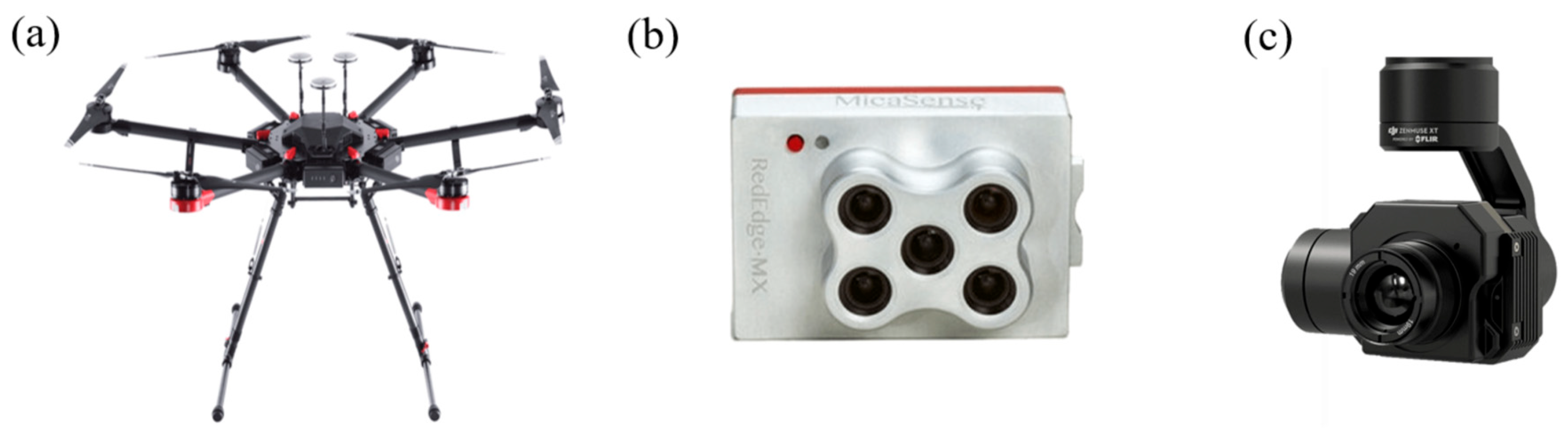
A Matrice 600 Pro multi-rotor UAS platform (DJI, Shenzhen, China) equipped with a Zenmuse XT Radiometric thermal sensor (DJI, Shenzhen, China) and a multispectral camera RedEdge-MX (MicaSense, Seattle, WA, USA) was used to acquire thermal and multispectral images, respectively (
Figure 2). The thermal sensor captures the wavelength range of 7.5 µm to 13.5 µm with a 30 Hz frame rate. For the high-gain setting, it is sensitive to a temperature range of −25 °C to 135 °C, while for the low-gain setting, it captures a temperature range of −40 °C to 550 °C and has a focal length of 19 mm (FLIR System, Shenzhen, China). For this study, the high-gain setting was chosen as it provides greater sensitivity and higher resolution for detecting small temperature variations, which is critical for accurately assessing crop water stress and subtle temperature differences in vegetation. The RedEdge sensor had central wavelengths of 475, 560, 668, 717, and 840 nm for the blue, green, red, red edge, and near-infrared bands, respectively. These two sensors have proven suitable for UAS remote sensing research in agriculture [
5,
18].
Each UAS flight mission was conducted at an altitude of 40 m with a 75% forward and 80% side overlap. This provided a spatial resolution of 0.03 m for multispectral imagery and 0.05 m for thermal imagery. All image acquisitions were conducted around local solar noon on clear days with light to moderate wind conditions and were completed in approximately 45 min. For the 2021 season, UAS images were acquired on 6 August, 22 August, and 16 September, corresponding to 60, 76, and 101 days after planting (DAP). In 2022, images were obtained on 8 July, 28 July, and 7 September, corresponding to 58, 78, and 119 DAP, respectively.
2.4. Image Processing
The acquired multispectral images for each date were stitched using the Pix4DMapper software (v4.8, Pix4D SA, Prilly, Switzerland). In contrast, the thermal images were processed using the Agisoft PhotoScan Professional software (v2.0, Agisoft LLC, St. Petersburg, Russia). The thermal images in digital number (DN) were converted to surface temperature (°C) using Equation (1) for the high-gain setting (FLIR System, Shenzhen, China, 2016).
Before image acquisition, radiometric parameters were set to reflect field conditions for each flight: emissivity ε = 0.98 for cotton canopy and ε = 0.95 for exposed soil; atmospheric transmittance τ = 0.99. The atmospheric temperature represented the ambient air temperature measured near the field at flight time, corresponding to typical midday conditions during the cotton growing season; window transmission 1.00; and window reflection 0.00. These values correspond to the clear-sky midday conditions at low flight altitude (<100 m AGL) during different cotton growth stages. Once these parameters were defined, the camera software automatically performed emissivity and atmospheric corrections, producing surface temperature maps in °C. The calculated surface temperature was further validated with reference temperature measured with an Apogee MI-220 (Apogee Instruments, Logan, UT, USA) for nine calibration panels, 32 soil points, and 32 canopy points. The UAS-derived temperatures showed strong agreement with ground-based measurements (R2 = 0.93, RMSE = 2.09 °C).
The thermal and multispectral images were resampled to resolutions of 0.1 m, 0.2 m, 0.3 m, 0.4 m, 0.5 m, 1 m, 2 m, 3 m, and 4 m. The resampling operation was performed in ArcGIS Pro (v3.0, Esri, Redlands, CA, USA) using the nearest-neighbor approach, which maintains image integrity across multiple levels of aggregation [
27]. The consistency of the resampled NDVI and thermal images was evaluated by comparing them with actual UAS-derived datasets acquired at 80 m flight height. The comparison for NDVI showed a strong relationship (r
2 = 0.95, RMSE = 0.045, MAE = 0.036, Bias = 0.004), while the thermal data yielded r
2 = 0.92, RMSE = 1.14 °C, MAE = 0.90 °C, and Bias = −0.58 °C.
The Zonal Statistics tool in ArcGIS Pro Spatial Analyst was applied to summarize image data for each plot using a 4 m by 4 m polygon. To minimize the effect of edge mixing and treatment overlapping at coarser spatial resolutions, image data were extracted from the core regions of each treatment plot, excluding boundary pixels where possible.
2.5. Ground Data Collection
Meteorological data, including air temperature, relative humidity, wind speed, rainfall amount, and solar radiation, were collected from a weather station located at the study site. At the end of the season, cotton lint yield data were collected for each plot.
2.6. Water Stress Indices
To evaluate cotton water stress, two indices, the Water Deficit Index (WDI) and the Crop Water Stress Index (CWSI), were selected for their proven effectiveness and complementary sensitivity to plant water dynamics [
11,
13]. The WDI integrates multispectral and thermal information, capturing both vegetation vigor and surface temperature variations. At the same time, the CWSI provides a temperature-based assessment that directly reflects plant transpiration and stress intensity.
2.6.1. VIT Trapezoid and Water Deficit Index
The water deficit index model was developed by Moran et al. (1994) [
13] based on the vegetation index/temperature (VIT) trapezoid model, which links vegetation cover (from bare soil to full canopy) and the temperature difference between the surface and air (T
s − T
a).
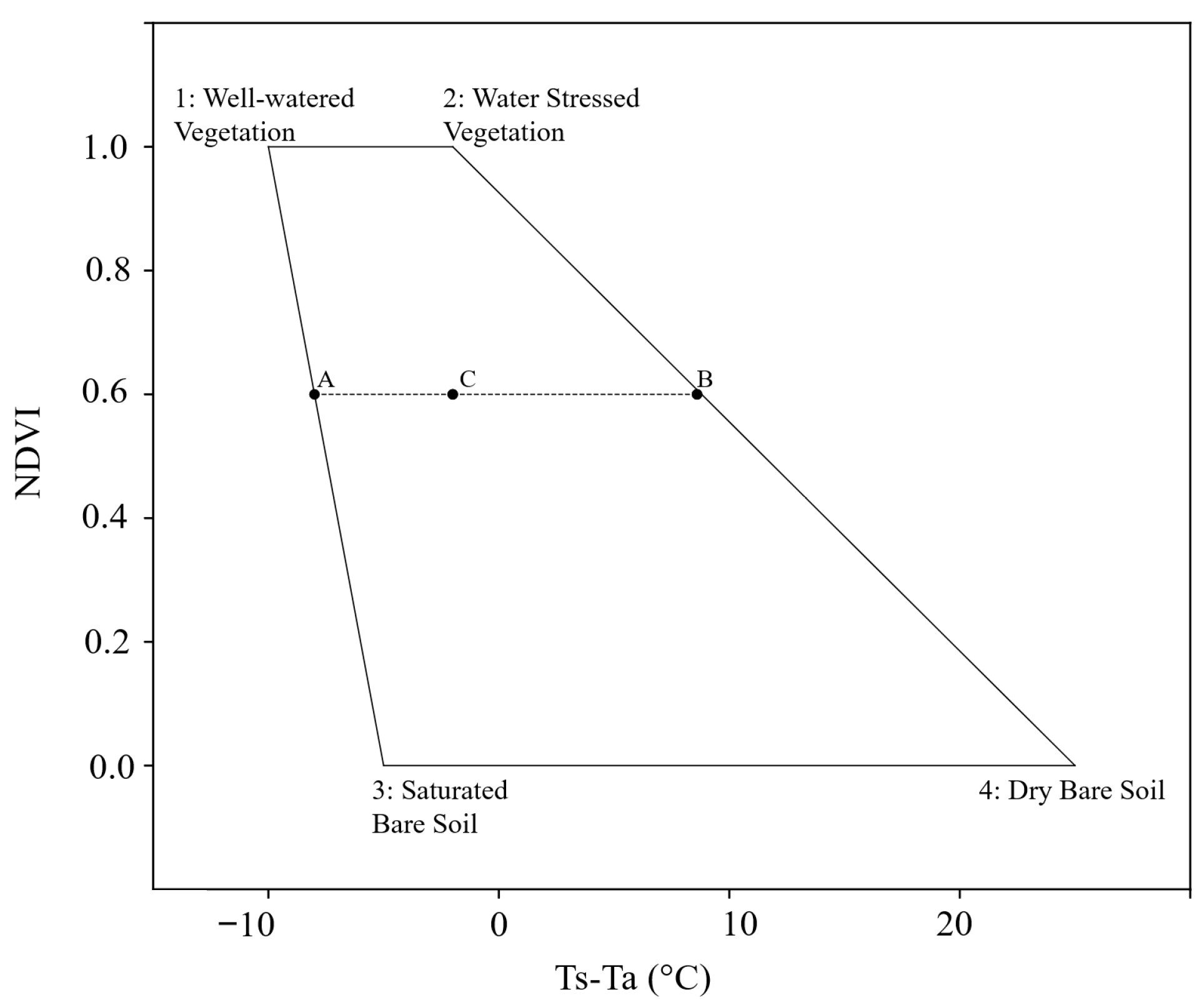
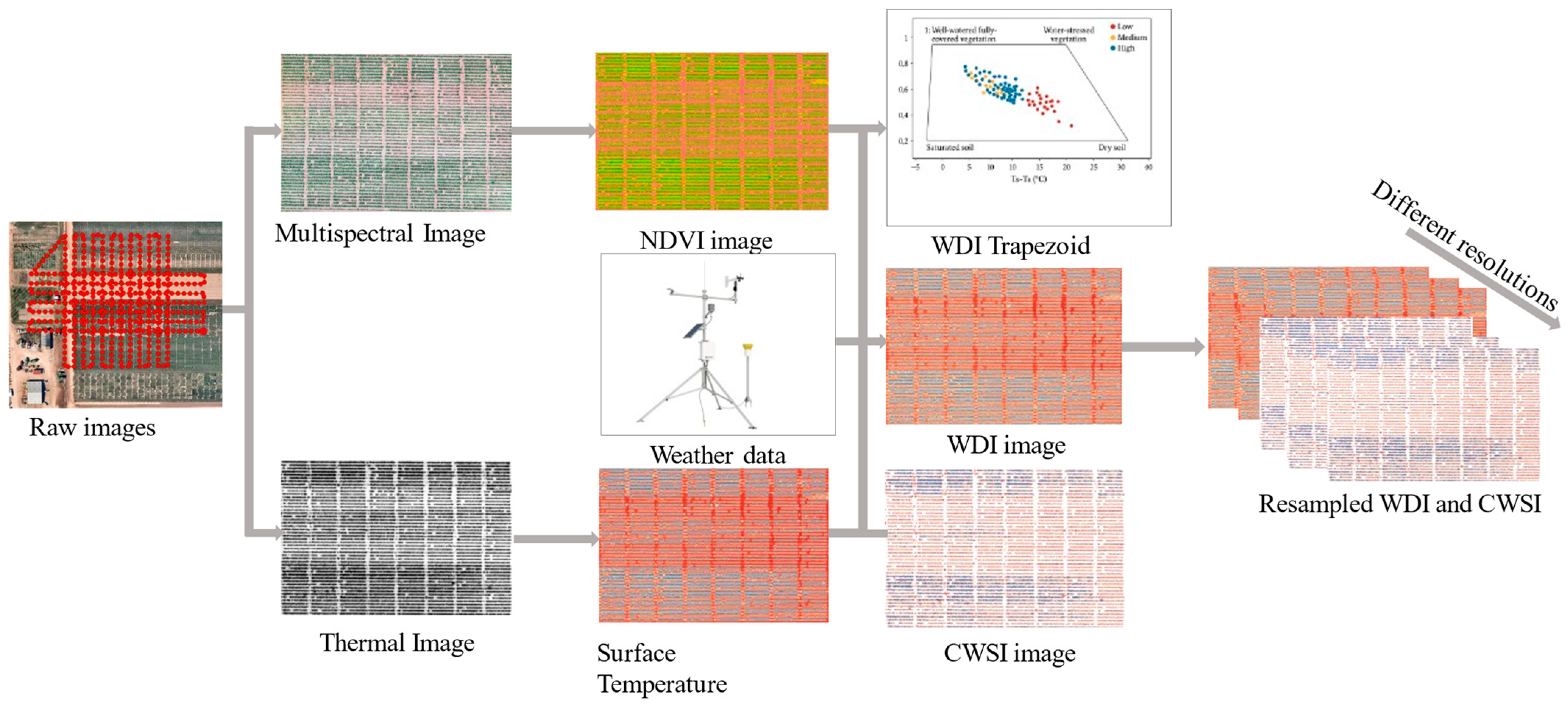
Figure 3 shows the VIT trapezoid approach and its four vertices. The NDVI (Equation (2)) was calculated from multispectral images and was used as a proxy for vegetation cover. It is a commonly used spectral index that depends on the spectral reflectance of red and near-infrared regions [
28]. In computing WDI, surface temperature (T
s) is a composite of plant canopy temperature (Tc) and soil surface temperature (To) measured by the UAS thermal sensor. As shown in
Figure 4, the WDI is computed as the ratio of AC/AB, corresponding to Equation (3). The trapezoid vertices are defined as (1) well-watered vegetation, (2) water-stressed vegetation, (3) saturated bare soil, and (4) dry bare soil [
13,
29]. Equations related to the four extreme T
s − T
a of VIT trapezoids are given as Equations (4)–(6).
where NIR and Red are the reflectance values of the near-infrared and red wavelengths of the spectrum, respectively.
where (T
s − T
a)
min and (T
s − T
a)
max are the minimum and maximum temperature differences between the surface and air, respectively.
For well-watered vegetation:
For water-stressed vegetation:
For water-saturated bare soil, where canopy resistance r
c = 0:
and for dry bare soil, where r
c = ∞:
where r
a is the aerodynamic resistance (s m
–1), Rn is the net radiation (W m
–2), G is soil heat flux density (W m
–2), Cv is the volumetric heat capacity of air (J °C
–1 m
–3), γ is the psychrometric constant (kPa °C
–1), Cp is the specific heat of the air (1.01 J kg
−1 C
−1 ), and r
cp and r
cx represent the maximum associated with nearly complete stomatal closure and minimum canopy resistances (s m
–1), respectively. VPD is the air vapor pressure deficit (kPa), and Δ is the slope of the saturated vapor pressure–temperature relationship (kPa °C
–1). The parameters γ and Δ are computed from the FAO 56 Procedure equations [
30]. The computation of r
a was performed based on [
30] as follows:
where Z
m is the height of wind measurement at 1.5 m, Z
h represents the height of humidity measurements at 1.5 m, d is the zero-plane displacement height (m), Z
om is the roughness length governing momentum transfer (m), Z
oh is the roughness length governing the transfer of heat and vapor (m), K represents von Karman’s constant, 0.41, and u
z is the windspeed at height z (m s
−1).
2.6.2. Crop Water Stress Index
This study adopted an alternative CWSI defined by refs. [
31,
32,
33] as:
where T
c is canopy temperature derived from the thermal image, T
wet is the fully transpiring canopy temperature, and T
dry represents the water-stressed canopy temperature. To calculate T
c, the UAS images were segmented into two classes, cotton canopy and soil, using the maximum likelihood algorithm of the supervised classification method in ArcGIS Pro. Regions of intersection between the cotton plant and soil were excluded to mitigate edge effects and ensure accurate representation of the canopy. The canopy temperature was extracted to obtain temperature values for crop pixels in each sampling plot. The T
wet was derived from energy balance [
34] as follows:
where T
a is the air temperature, r
HR is the resistance to heat and radiative transfer using a characteristic leaf dimension of 0.1 m, r
aW is the boundary layer resistance for water vapor [
20,
33], γ is the psychrometric constant, R
ni is the net radiation, ρ
a is the air density, c
p is the specific heat of dry air at constant pressure, s is the slope of the saturation vapor–pressure curve, and VPD (kPa) is the vapor pressure deficit [
35,
36]. T
dry was calculated by adding 6 °C to the measured dry-bulb temperature (which equals air temperature), as suggested by Gu et al. (2024) [
20]. This empirical offset is consistent with previous thermal analyses showing canopy–air temperature differences of approximately 5–7 °C under severe water stress [
37] and with fixed-offset methods applied in cotton studies [
27]. CWSI values range from 0 to 1, with 0 indicating no water stress and 1 indicating the most severe stress. The workflow for processing the UAS images to calculate the WDI and CWSI is shown in
Figure 4.
2.6.3. WDI and CWSI Parameterization
All biophysical parameters required for the computation of WDI and CWSI, including net radiation (Rₙ), soil heat flux (G), aerodynamic resistance (rₐ), canopy resistances (r
cp and r
cx), vapor pressure deficit (VPD), and air temperature (Tₐ), were computed directly within the Python (v3.10) analysis workflow. Constants and equations were derived from established formulas in Allen et al. [
30], Moran et al. [
13], and Boulet et al. [
37]. The parameters and constants used are summarized in
Table 1.
2.7. Statistical Analyses
All analyses were conducted in Python (Google Colab) using the statsmodels package. Given the split-plot design, WDI and CWSI data were analyzed using a linear mixed-effects model (LMM) with irrigation and cultivar as fixed effects and year, block nested within year, and irrigation nested within block and year as random effects. To assess stage-specific responses, analyses were performed separately for each growth stage. Subsequently, a Tukey post hoc test was conducted using the pairwise_tukeyhsd function from the statsmodels library to explore specific pairwise differences among treatment means, providing a more in-depth examination of the variations identified by the ANOVA. Additionally, the effect of irrigation on cotton lint yield was examined using the same procedure. The relationships between cotton yield and temporal WDI and CWSI were evaluated using regression models in Python’s scikit-learn package. Linear regression models were also applied to predict yield using WDI and CWSI at different image resolutions. Both indices were generated at key crop growth stages, aggregated at the plot level, and resampled to multiple spatial resolutions to assess their ability to predict yield. In total, 70% of the plots were used to train the yield prediction model, while the remaining 30% were withheld for validation to evaluate model performance. Model performance was evaluated using the coefficient of determination (R2) and Root Mean Square Error (RMSE) to compare yield prediction accuracy across resolutions.
3. Results
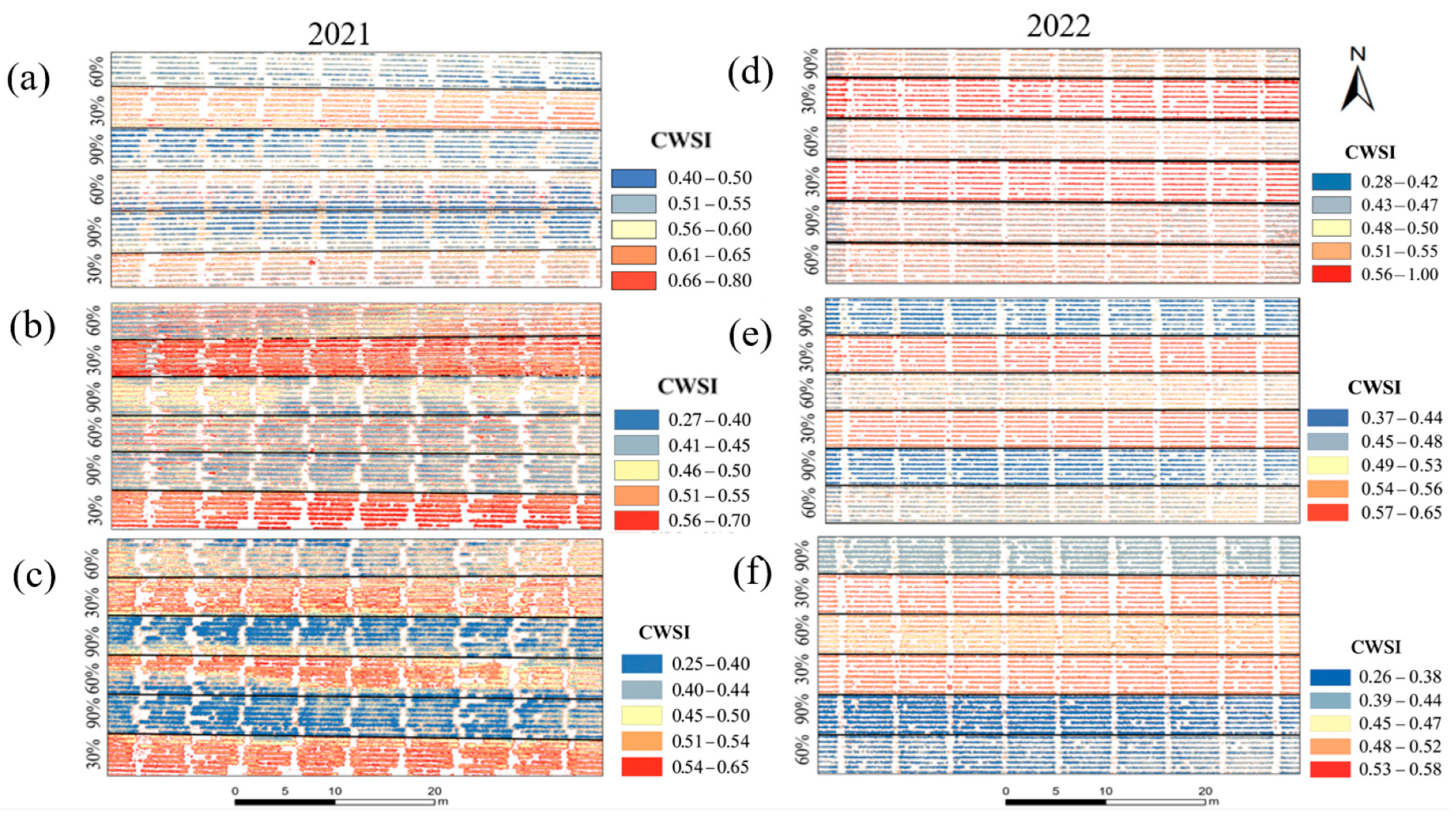
Figure 5 illustrates the CWSI distribution under three irrigation treatments (30% ET, 60% ET, and 90% ET) across three stages of the 2021 and 2022 growing seasons. The water stress variability over the Cotton field was visually presented in the CWSI map. The CWSI ranged from 0 to 1, with higher values indicating greater water stress. The differences in CWSI values across various irrigation treatments and growth stages highlighted its potential sensitivity and reliability as an indicator of water stress. Furthermore, CWSI derived from UAS-based thermal imagery provided real-time, canopy-scale assessments of crop water status, making it a valuable tool for precision agriculture [
20].
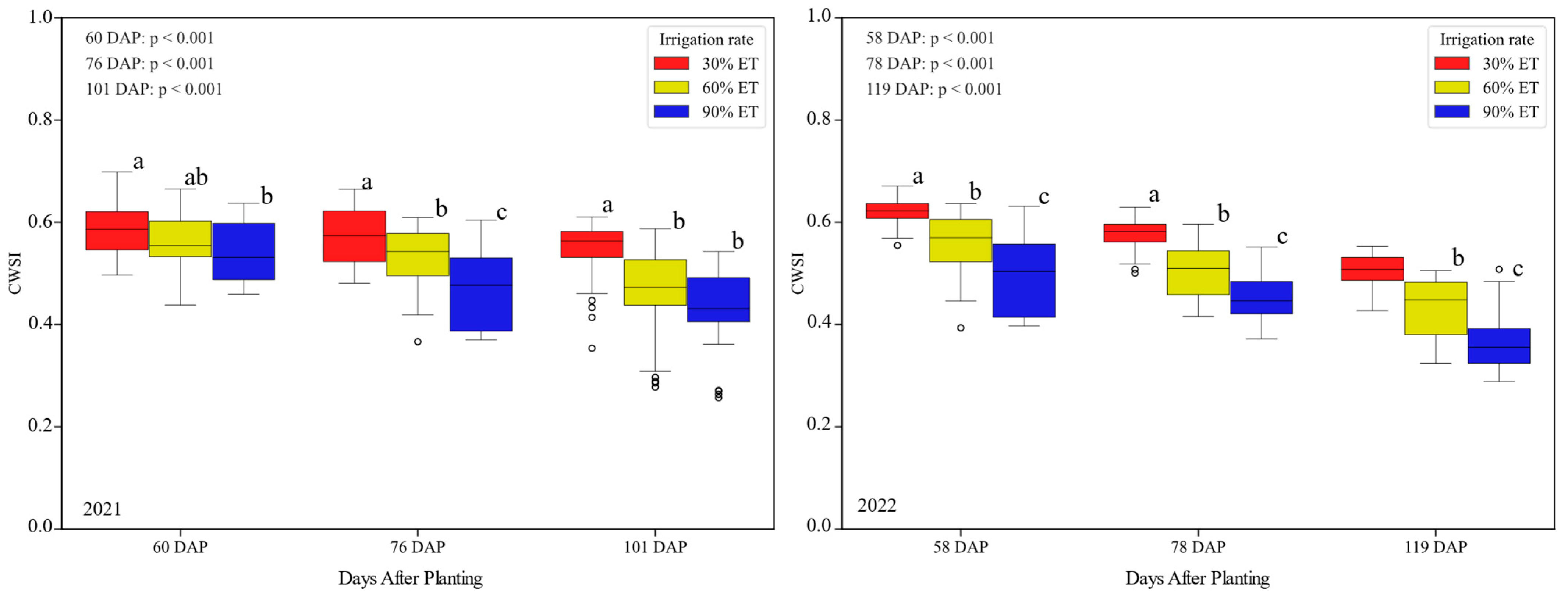
A significant difference existed in CWSI values across the three irrigation treatments (30% ET, 60% ET, and 90% ET) for each cotton growth stage (early, mid, and late season) in 2021 and 2022 (
Figure 6). In both years, the low irrigation treatment (30% ET) consistently exhibited the highest CWSI values, indicating the highest water stress levels. In contrast, the high irrigation treatment (90% ET) had the lowest CWSI values, reflecting the lowest water stress levels. For example, in 2021, at the early growth stage (60 days after planting, DAP), significant differences in CWSI were observed among the irrigation treatments (
p < 0.005), with higher CWSI values indicating greater water stress at low irrigation rates (30% of evapotranspiration, ET). At mid-season (76 DAP), the differences between treatments became more evident (
p < 0.001), particularly between the 30% ET and 90% ET treatments. The highest CWSI values were recorded under the 30% ET treatment, indicating the highest cotton water stress. By 101 DAP, a continuing trend was observed where the CWSI values decreased with increasing irrigation (
p < 0.001). The 90% ET treatment consistently showed the lowest CWSI values, indicating lower water stress. A similar trend was observed for 2022, with a significant difference in CWSI values across different irrigation treatments for each cotton growth stage (
p < 0.001).
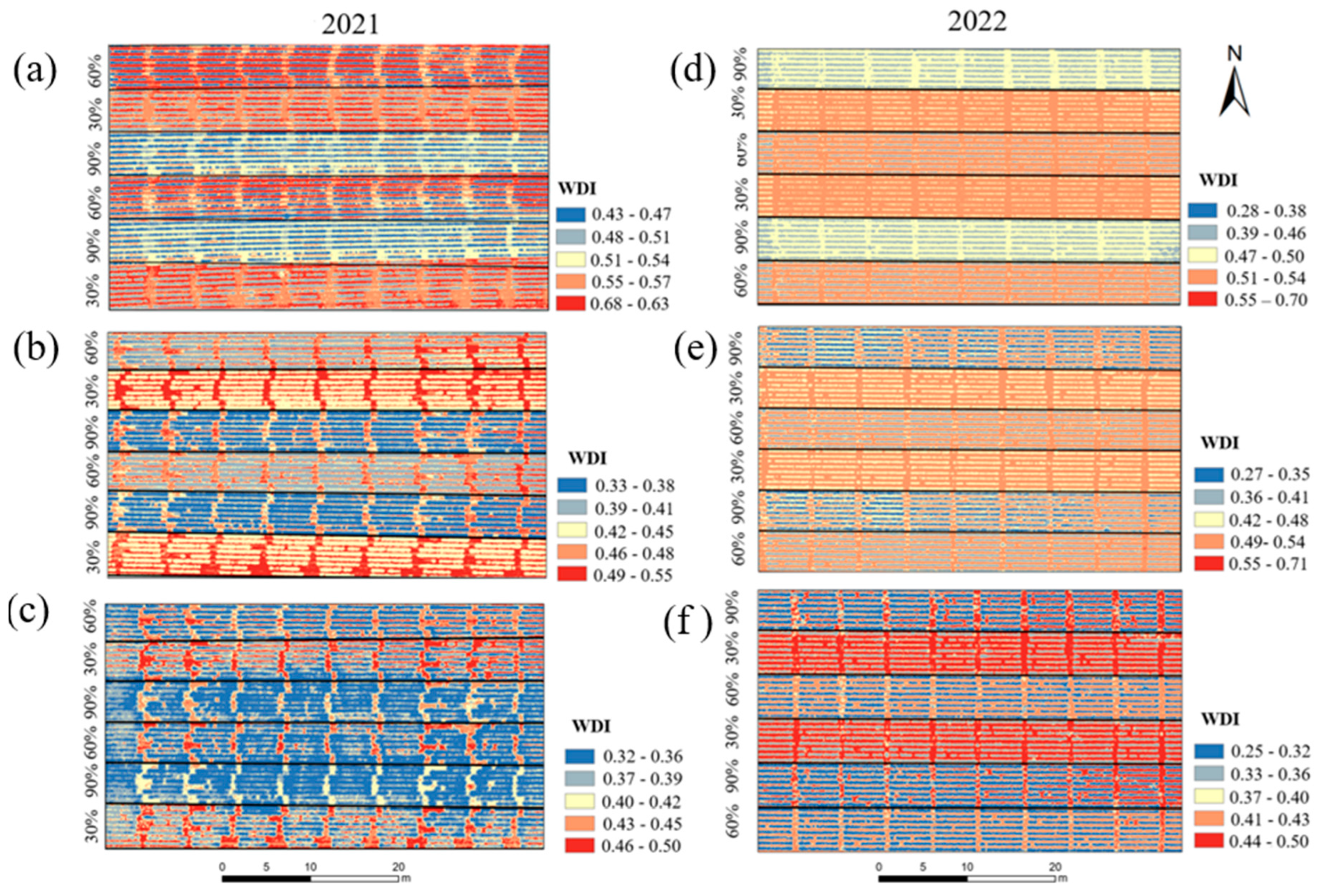
Figure 7 presents WDI distributions across three irrigation treatments (30% ET, 60% ET, and 90% ET) on three days in 2021 and 2022. These spatial patterns demonstrated that WDI could be used to visualize and identify water stress at precise locations within the field across various growth stages and irrigation levels, providing a more comprehensive and detailed representation of water stress differences.
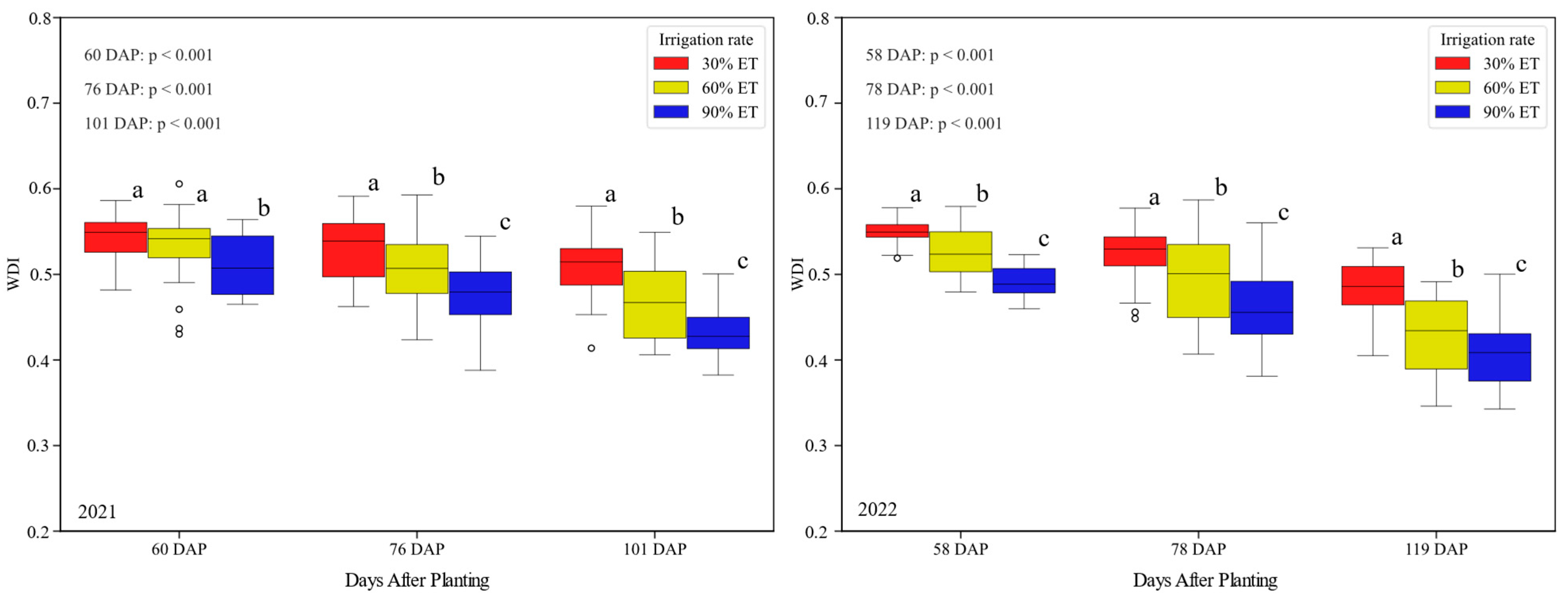
The WDI at each DAP across the growing seasons of 2021 and 2022 showed a trend of reduced water stress with increasing irrigation rates (
Figure 8). For instance, in the early season (60 DAP), the mean WDI for the 30% ET treatment was approximately 0.55, higher than that for the 60% ET treatment at around 0.50 and the 90% ET treatment at about 0.45. This trend continued at mid-season (76 DAP), with the mean WDI for the 30% ET treatment around 0.52, while the means for the 60% ET and 90% ET treatments were about 0.47 and 0.40, respectively. By late season (101 DAP), the pattern remained consistent, with the 30% ET treatment having a mean WDI of approximately 0.50, followed by the 60% ET at 0.43 and the 90% ET at 0.38. Similarly, in 2022, WDI values at early, mid, and late seasons (58 DAP, 78 DAP, and 119 DAP) followed the same trend as in 2021, with higher irrigation rates resulting in lower WDI values. Tukey’s HSD test confirmed significant differences (
p < 0.001) among the irrigation treatments at each DAP in both years. As the season progressed, increasing canopy cover reduced direct sunlight on leaves and soil, leading to lower leaf temperatures and decreased transpiration rates. This increase in canopy cover may have contributed to the overall decline in both CWSI and WDI values across the season, even though irrigation levels remained constant.
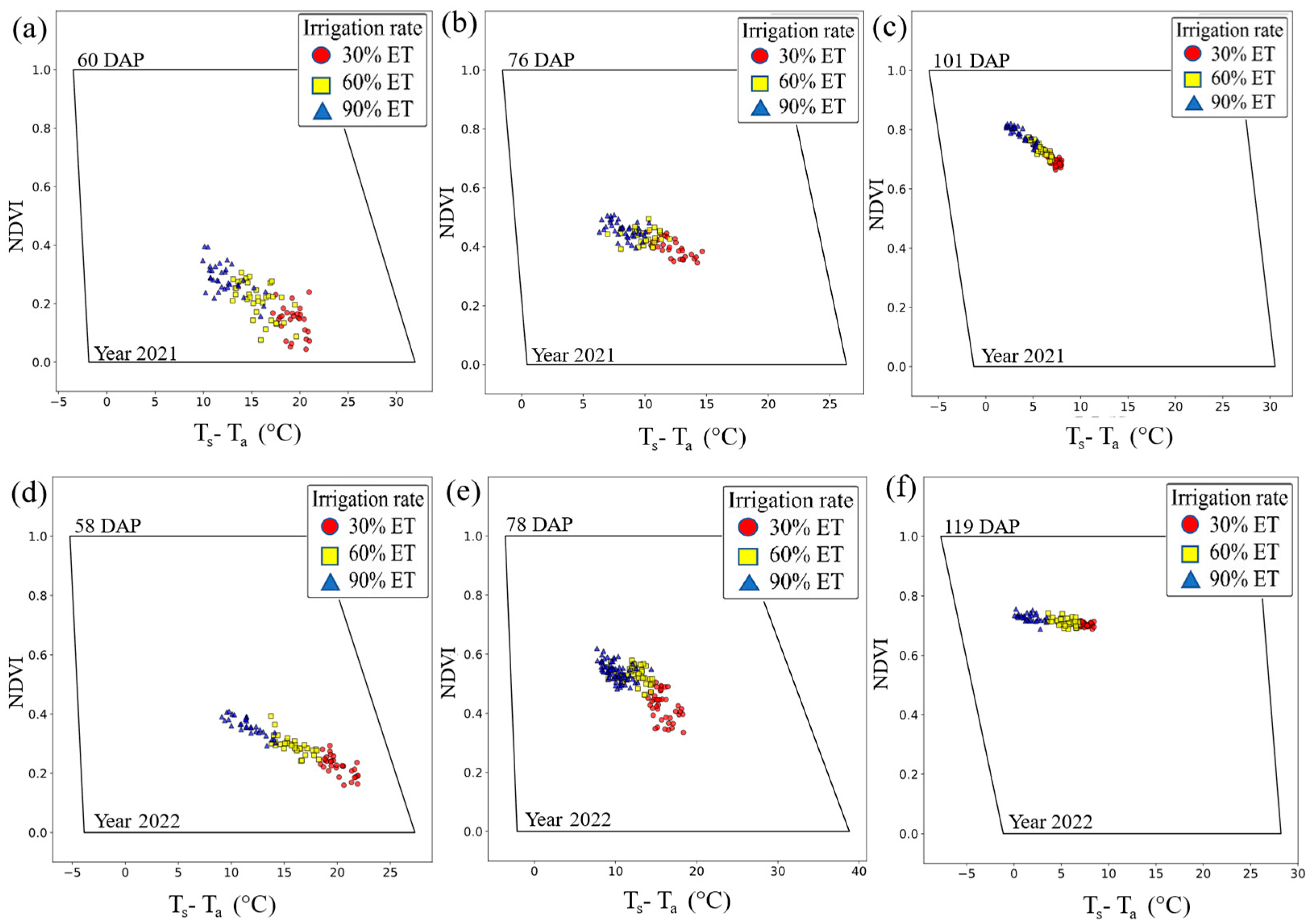
Figure 9 illustrates WDI values within each trapezoid with NDVI and (T
s − T
a) values across three irrigation treatments in 2021 and 2022. A noticeable water-stress gradient was observed across growth stages, with plants under low irrigation (30% ET) showing greater temperature differences (T
s − T
a) and lower NDVI values, indicating significant water stress. Plants under high irrigation (90% ET) consistently exhibited lower water stress and higher NDVI values. The intermediate treatment (60% ET) displayed values between these extremes. Additionally, the temperature differences (T
s − T
a) tended to decrease as the growing season progressed. For example, earlier stages (such as 60 DAP and 58 DAP) showed higher temperature differences across treatments in both years. In comparison, later stages (101 DAP and 119 DAP) demonstrated reduced temperature differences.
The WDI differentiated irrigation treatments (30% ET, 60% ET, and 90% ET) throughout the growing season. In contrast, CWSI showed less distinction between treatments, especially at earlier stages.
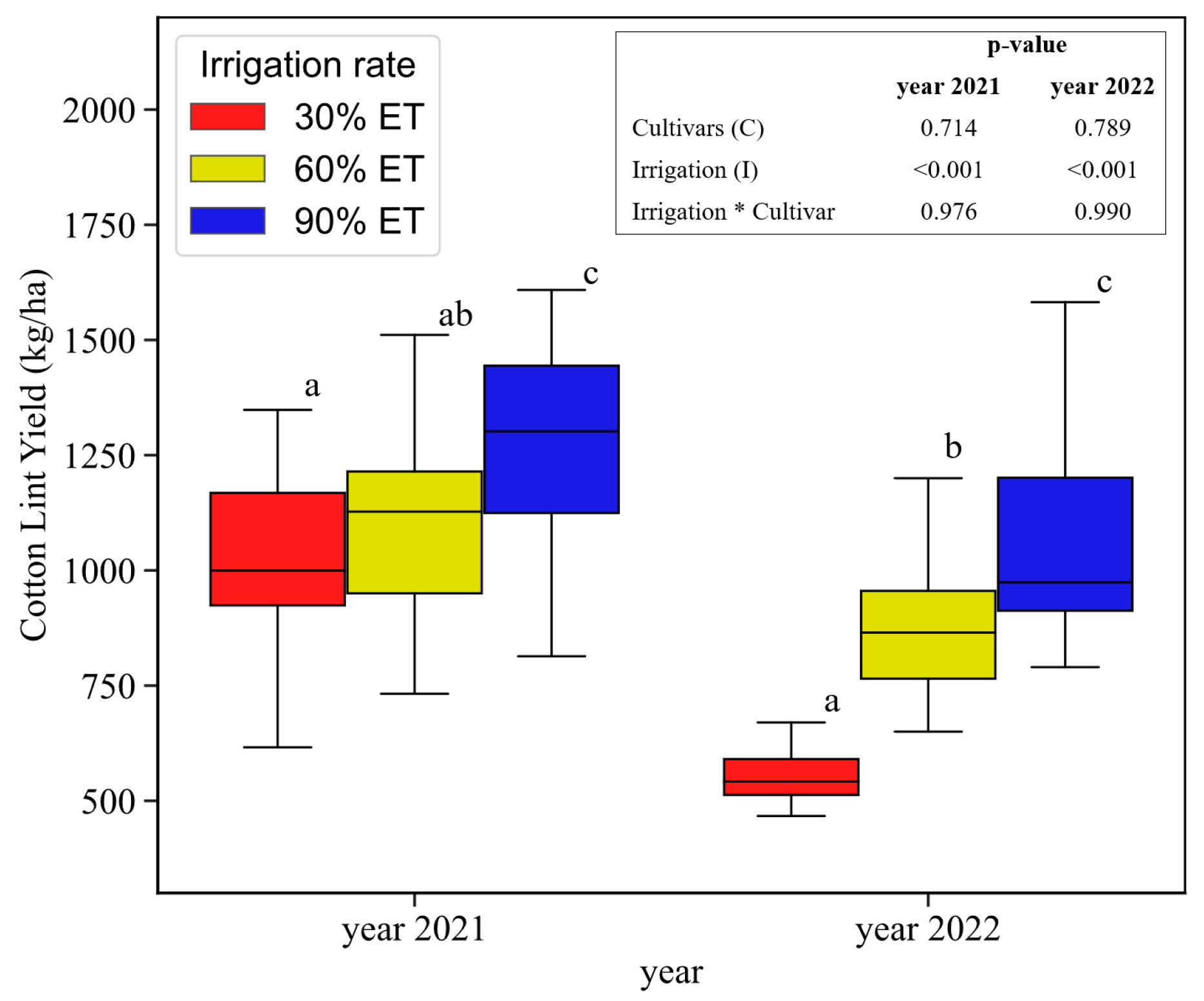
Figure 10 illustrates the cotton lint yield under three irrigation rates (30% ET, 60% ET, and 90% ET) across two growing seasons (2021 and 2022). Irrigation rates significantly affected cotton lint yield in both years (
p < 0.001). Tukey’s HSD test confirmed significant differences (
p < 0.001) among irrigation treatments at each DAP in 2022, whereas there was no significant difference between 30% ET and 60% ET in 2021. Higher irrigation rates (90% ET) consistently produced substantially higher yields than lower rates (30% and 60% ET) in 2021 and 2022. In 2021, the median yield under 90% ET irrigation was around 1350 kg ha
−1, significantly higher than approximately 1000 kg ha-1 and 1100 kg ha
−1 for 30% ET and 60% ET, respectively. In 2022, there was a significant difference in lint yield across all three irrigation rates, with a 90% ET irrigation rate resulting in a median yield of approximately 1250 kg ha
−1, followed by 60% ET (~850 kg ha
−1) and 30% ET (~500 kg ha
−1). The yield differences between the two years were mainly attributed to differences in rainfall and planting dates. In 2021, a wetter year with 554 mm of rainfall, yields were higher than in 2022, a drier year with only 335 mm of rainfall. These variations in water availability substantially influenced cotton lint yield across the two growing seasons.
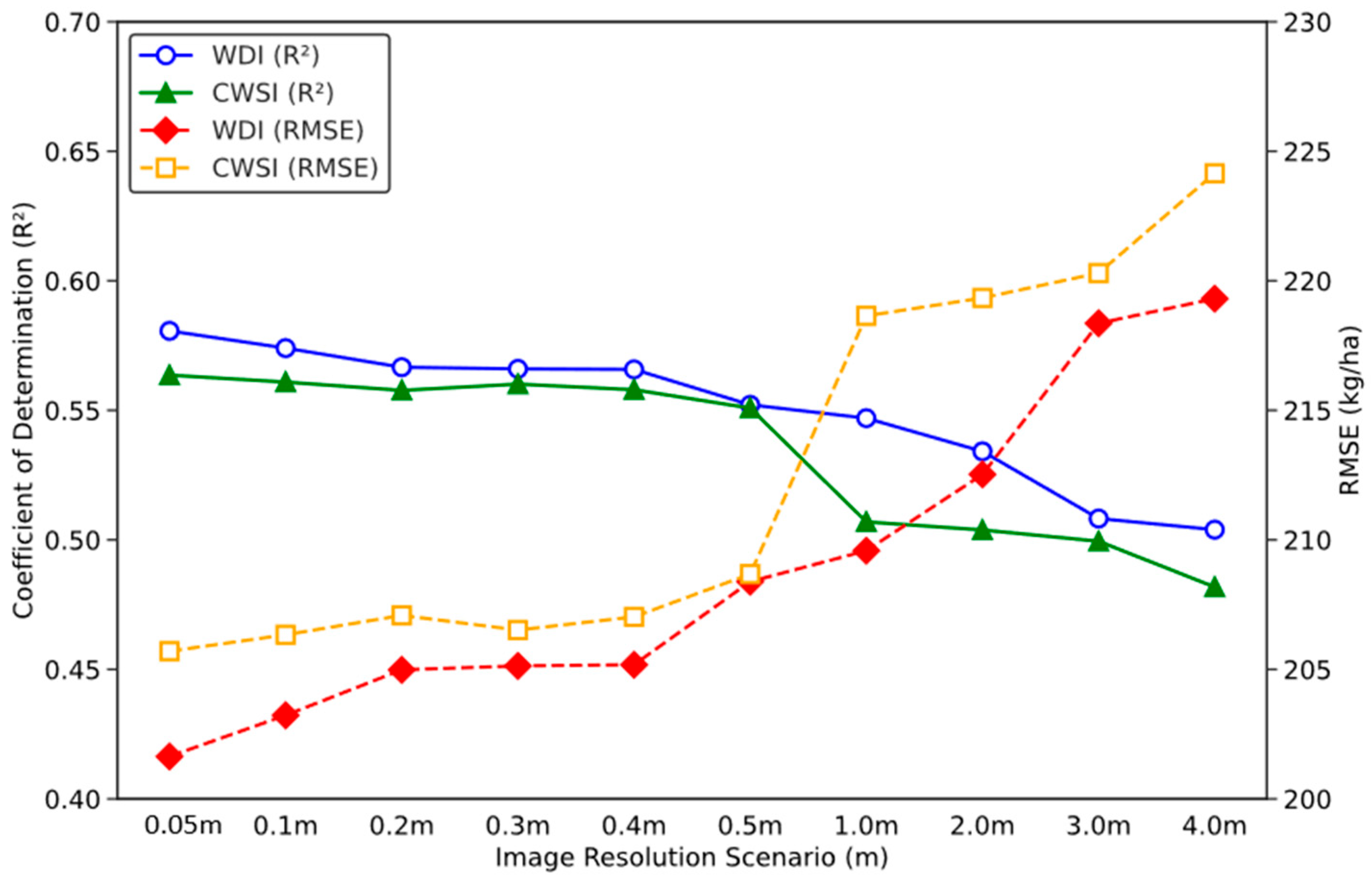
Figure 11 shows the R
2 and RMSE values of cotton yield prediction using the WDI and CWSI as a function of spatial resolution in 2021. At finer image resolutions, WDI demonstrated a stronger relationship with yield, with an RMSE of approximately 145 kg/ha and an R
2 of 0.55. As image resolution became coarser, such as at 4 m, the predictions became less accurate, with an RMSE of 160 kg/ha and an R
2 of 0.49. A similar trend was observed for CWSI, where yield predictions were more reliable at finer resolutions but decreased significantly, particularly between 0.5 m and 4.0 m. WDI consistently shows higher R
2 values and lower errors across all image resolutions, indicating a stronger relationship with yield prediction than CWSI. This suggests that WDI is a more reliable indicator of water stress for predicting cotton yield.
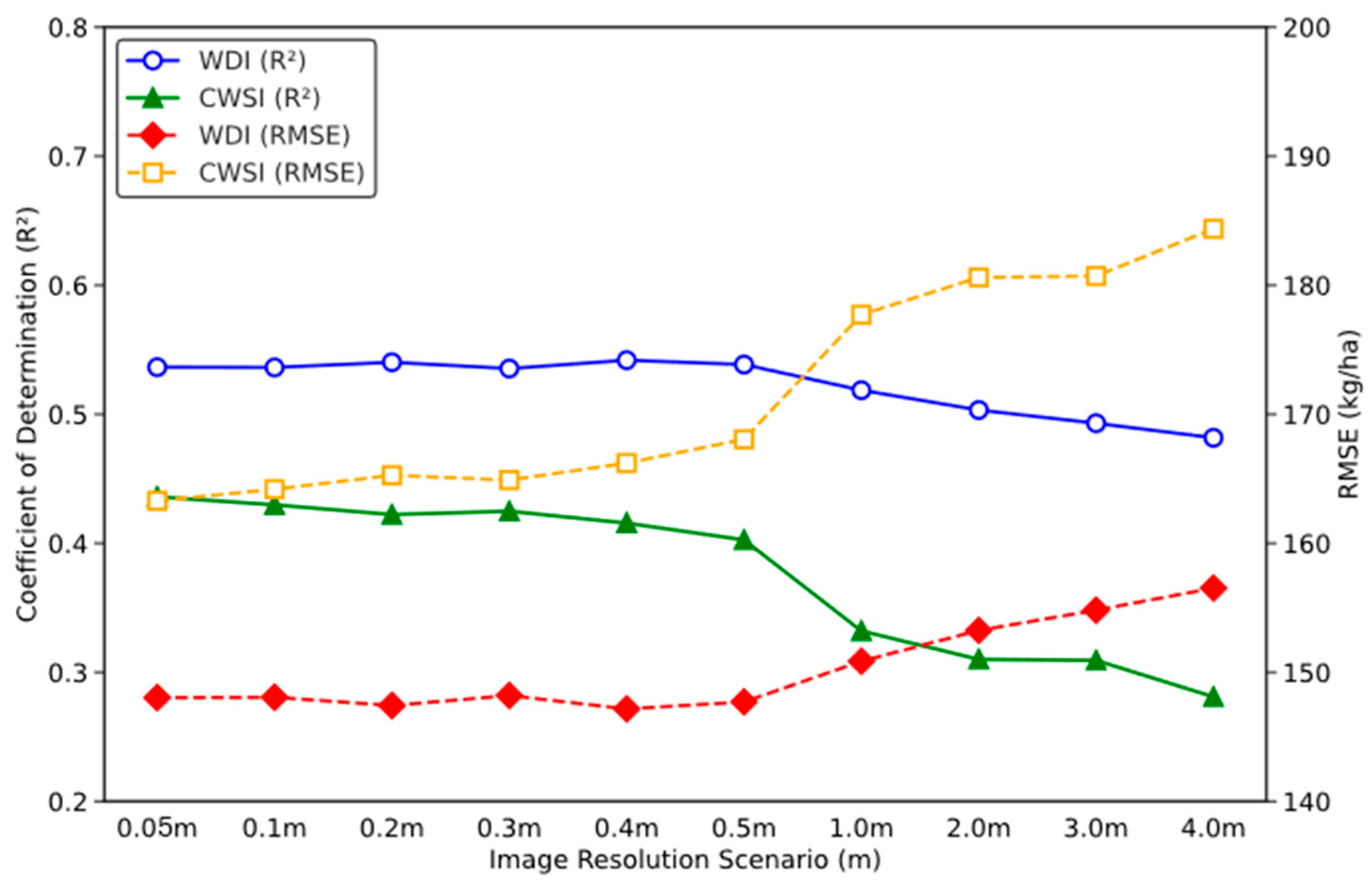
Regression analysis revealed the relationship between WDI and CWSI for yield prediction across various image resolution scenarios in 2022 (
Figure 12). For WDI, the R
2 values decreased from 0.58 at 0.05 m resolution to 0.50 at 4.0 m, while the RMSE increased from 203 kg/ha to 220 kg/ha, indicating reduced predictive accuracy as resolution decreased. Similarly, CWSI showed a decline in R
2 from 0.56 to 0.47 and an increase in RMSE from 207 kg/ha to 225 kg/ha as the resolution decreased. There was a noticeable decline in R
2 and an increase in RMSE at resolutions between 0.5 m and 1.0 m, further confirming that lower image resolutions negatively affect model performance.
In 2022, the differences in R2 and RMSE values between WDI and CWSI for yield prediction followed a similar trend to those observed in 2021, but with some notable differences. The R2 values for both indices were generally higher in 2022, but WDI continued to outperform CWSI across all spatial resolutions. The smaller R2 gap between the two indices in 2022 suggested a slight improvement in CWSI performance relative to WDI.
The linear mixed-effects model revealed that irrigation had a consistently significant effect (
p < 0.05) on WDI across all spatial resolutions and growth stages in both 2021 and 2022 (
Table 2).
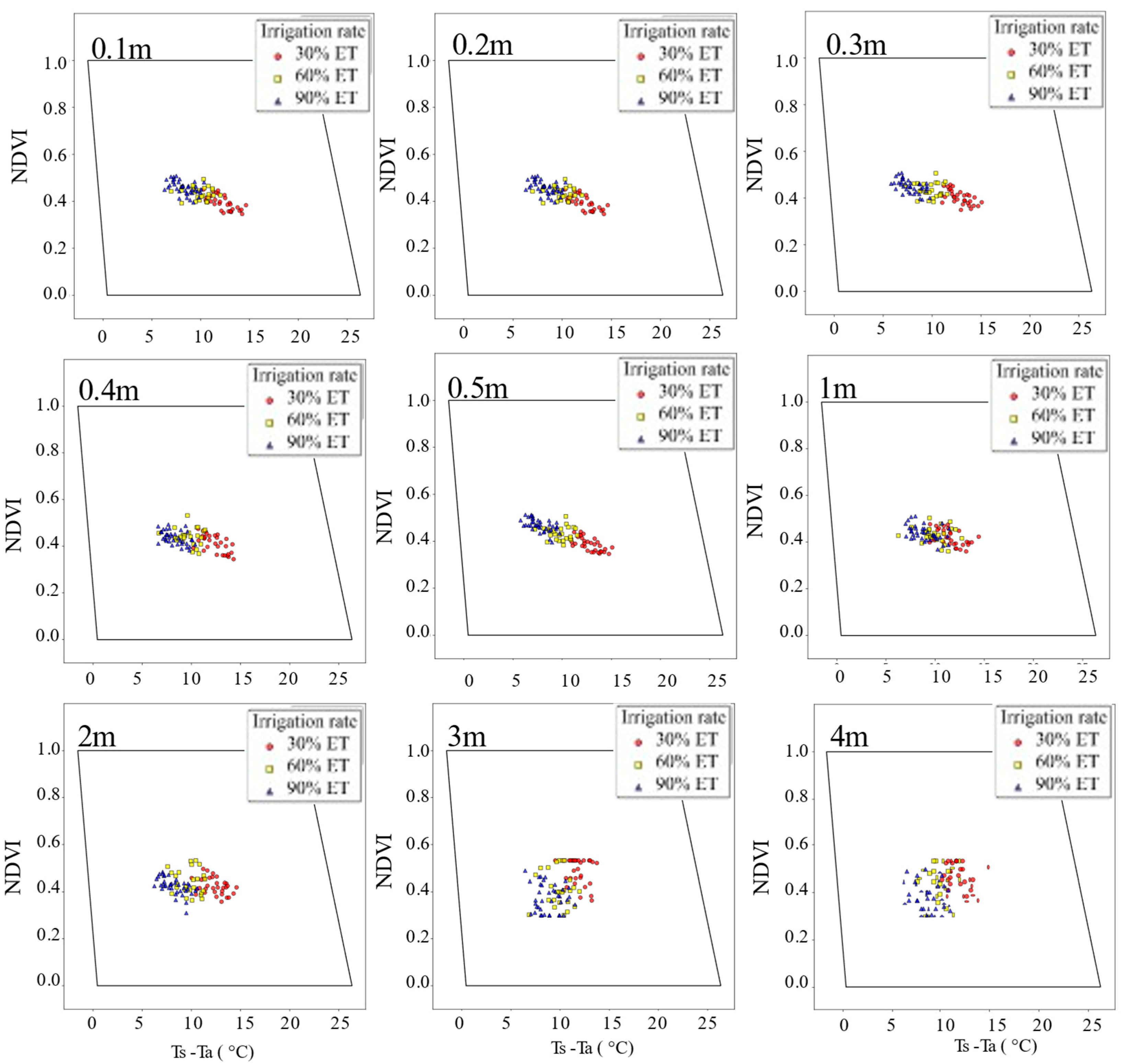
Figure 13 shows that image resolution significantly affected the accuracy of water stress levels in the WDI trapezoid. Spatial resolutions between 0.1 m and 0.5 m effectively captured and distinguished irrigation treatments, clearly reflecting varying water stress levels. However, at coarser resolutions—particularly between 1.0 m and 4.0 m—this capability diminished, as evidenced by increased deviation and a wider spread of points, indicating reduced accuracy in differentiating irrigation treatments and assessing water stress.
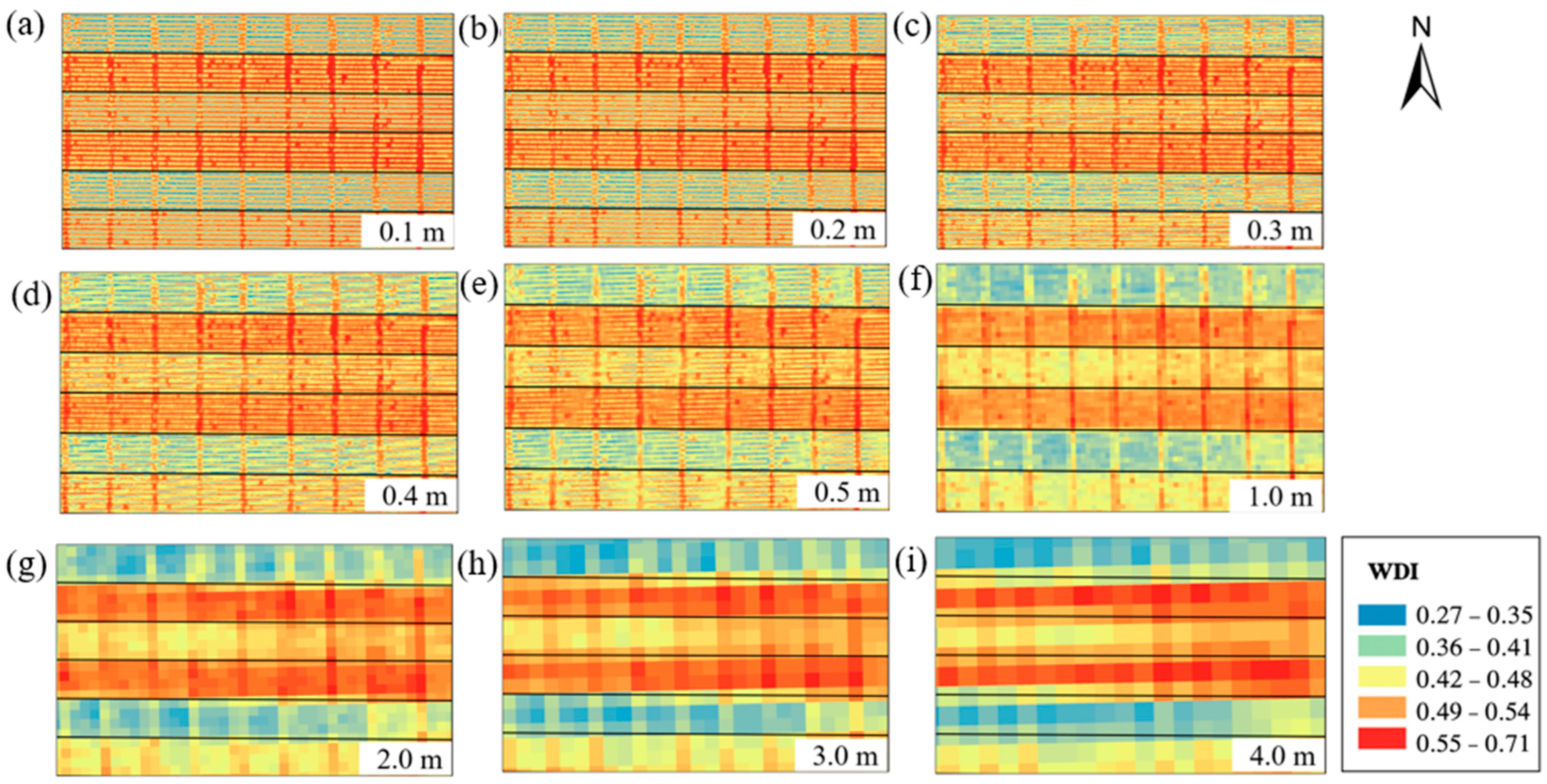
Figure 14 displays WDI distributions at spatial resolutions ranging from 0.1 to 4.0 m on 28 July 2022 (78 DAP). At finer resolutions (0.1 m to 0.5 m), the WDI captured variations in water deficit, effectively delineating stress patterns within individual pixels. As the resolution coarsens (1.0 m to 4.0 m), these finer details are increasingly aggregated, resulting in broader, less distinct areas of water stress that may obscure localized variations critical for precise agricultural management.
4. Discussion
The study demonstrated that spatial resolution impacts the accuracy of both WDI and CWSI in assessing water stress and predicting yield, with higher spatial resolutions enabling more precise differentiation between stress levels. High-resolution imagery (0.1 to 0.5 m) emerged as the most effective for accurate stress detection and yield prediction. 0.5 m resolution is an optimal balance between capturing sufficient within-plot variability for cotton and maintaining practical processing efficiency. Although finer resolutions, such as 0.1 m, offer more detail, they considerably increase data volume, flight duration, and processing time, making them less practical for routine field assessments. The study also demonstrated that spatial resolutions beyond 0.5 m caused notable deviations in stress detection and yield prediction due to the blending of pixel information from neighboring plots and non-crop areas, thus reducing the precision of water stress assessments. These findings suggest that the recommended resolution (0.5 m) is optimal for crops with wider row spacing, such as cotton. Crops with narrower row spacing may require different resolution thresholds for accurate assessment of water stress. The choice of resolution may be crop-specific due to differences in canopy structure, plant density, and row spacing [
37,
38,
39]. For example, Bellvert et al. (2014) noted that the minimum pixel size for detecting water stress at the field scale has been suggested to be less than 0.30 m for grapevine [
37], while Bellvert et al.’s (2016) findings showed 0.80 m for a peach tree with a crown area between 3 to 5 m
2 [
39].
The findings of this study aligned with previous research on the effects of spatial resolution on water stress and vegetation classification [
40,
41]. In their study on the effect of spatial resolution and statistical scale on water stress estimation using the Mean Value of Gaussian Distribution of Excess Green Index (MDGEXG), they found that water stress estimation accuracy decreased when images were resampled from a higher resolution of 2.4 mm to a lower resolution of 76.8 mm, a decline they attributed to errors introduced during the mosaicking process [
40]. Similarly, Liu et al. (2020) examined the impact of spatial resolution on vegetation classification using UAS hyperspectral imagery [
41]. They discovered that classification accuracy declined when the resolution was reduced from 0.5 m, attributed to the increased presence of mixed pixels in transition zones between vegetation types. This led to more significant uncertainty in classification results as spatial resolution decreased. Similarly, Jamshidi et al. (2021) highlights that UAV data outperformed high-resolution WorldView-3 satellite imagery in yield prediction accuracy, attributing this advantage to differences in pixel size and the information captured [
42]. These findings highlight the critical role of spatial resolution in accurately estimating water stress and yield prediction.
Lower-resolution imagery, such as Landsat and Sentinel-2 data, has been widely used to estimate plant stress [
42,
43]. However, these resolutions often face limitations in accurately capturing water stress. For instance, Jamshidi et al. (2021) used 30 m Landsat and 10 m Sentinel-2 data to assess water stress in citrus using the Crop Water Stress Index (CWSI) [
42]. Their findings revealed that these satellite images could not accurately detect water stress at the field scale due to the inability to separate soil and canopy temperatures. The authors proposed using higher-resolution imagery to better capture within-field variability in water stress.
Various factors, including study objectives, crop type, plant row spacing, and plot size, influence the selection of optimal image resolution. Higher-resolution imagery can enhance water-stress assessment and improve yield-prediction accuracy by capturing fine-scale crop variability; however, its effectiveness depends on the specific characteristics of the agricultural study, necessitating a balance among resolution, coverage, and computational efficiency [
42].
Furthermore, this study highlighted that the crop growth stage also influences the effectiveness of WDI and CWSI. WDI outperformed CWSI because it combines spectral and thermal data, making it more robust under partial canopy cover. In contrast, CWSI relies solely on thermal information and is more sensitive to errors in canopy temperature extraction, especially when soil background or mixed pixels are present. In the early stages, when canopy cover is incomplete, higher-resolution imagery is critical for accurate water stress assessment. This finding highlights the importance of assessing crops at various growth stages, which is vital for making informed crop management decisions. The impact of spatial resolution on accurately capturing cotton water stress is significant, with resolutions between 0.1 m and 0.5 m particularly effective. While lower-resolution imagery can be helpful in some contexts, it often needs more detail for precise stress detection.
5. Conclusions
The study highlights the effectiveness of UAS-based images for assessing water stress in cotton crops using CWSI and WDI under different irrigation rates (30% ET, 60% ET, and 90% ET) across multiple growth stages in the 2021 and 2022 growing seasons. WDI performed better than CWSI, particularly during early growth stages, by more effectively capturing different levels of water stress. These results showed the potential of WDI as a more reliable metric for precision irrigation management at the field scale.
Spatial resolution significantly affected the performance of both indices. High-resolution imagery (0.1 to 0.5 m) provided the most accurate stress detection and yield prediction, with 0.5 m resolution emerging as the optimal choice for this study in a cotton field. This is because 0.5 m resolution is an optimal balance between capturing sufficient within-plot variability and maintaining practical processing efficiency. Finer resolutions, such as 0.1 m, significantly increase flight duration, data volume, and processing time while providing greater detail, making them less practical for routine field assessments. In contrast, lower-resolution images (1 to 4 m) reduced detection accuracy, likely due to the inclusion of neighboring plots and the smoothing effect on the variation in vegetation indices within plots.
These findings provide valuable insights into the application of UAS imagery with high spatial and temporal resolutions for assessing cotton water stress. When extending this approach to other crops, such as maize, wheat, or soybean, the generalizability of the recommended 0.5 m resolution may depend on crop-specific traits, including canopy architecture, row spacing, and leaf orientation. Crops with dense or tall canopies (e.g., maize) may require slightly coarser resolutions to minimize shading and occlusion effects. In contrast, crops with shorter or more uniform canopies (e.g., wheat or soybean) may maintain high accuracy at similar or finer resolutions. Future research should also explore the optimal timing of thermal imaging throughout the day to further refine water-stress detection. Integrating additional phenotypic attributes, such as canopy structure, surface soil moisture, and ground cover, and correlating these with crop yield, will be crucial for advancing water stress monitoring frameworks and enhancing the predictive accuracy of both WDI and CWSI.