


Highlights
What are the main findings?
- Vegetation coverage in Three-River Headwaters rose, with high coverage areas up 10.3%.
- Bare land down-shifted to grassland and shrubs, forests, and grassland significantly upshifted.
What are the implications of the main findings?
- This study offers a scientific foundation for monitoring and ecological conservation.
- We reveal the dynamic changes of vegetation and environmental driving mechanisms.
Abstract
Changes in vegetation coverage reflect the status and dynamic processes of ecosystems and serve as a crucial foundation for regional ecological protection. Using Landsat-5 and Sentinel-2 data, this study calculated the vegetation coverage in the Three-River Headwaters (TRH) region from 1990 to 2022 with the pixel dichotomy model, identified land cover changes over the past three decades via a deep neural network, and analyzed the primary influencing factors behind vegetation coverage dynamics. The results indicate that vegetation coverage in TRH has generally increased, as very high vegetation coverage expanded by 10.3%, while very low and low vegetation coverage decreased by 4.2%. Extensive bare land in the western region decreased and transformed into grassland, while the areas of shrubland and forest in the central and eastern TRH areas increased. The areas of grassland, shrubland, and forest increased by 3.7 × 10⁴ km2, 2.1 × 10⁴ km2, and 4.7 × 10³ km2, respectively. Precipitation, elevation, and temperature are the main factors influencing the spatial variation in vegetation coverage. We found that the contributions of the permafrost active layer thickness and precipitation to changes in vegetation coverage are high. Finally, we provide a detailed and timely analysis of recent vegetation distribution and type changes on the Tibetan Plateau, offering a strengthened scientific foundation for monitoring, assessment, and ecological conservation efforts aimed at supporting ecosystem restoration in the region.
1. Introduction
Vegetation is an essential component of ecosystems. Fractional Vegetation coverage refers to the percentage of vertical projection area of the vegetation canopy on the ground compared to the statistical area [1]. As a very important ecological climate parameter, fractional vegetation coverage is a comprehensive quantitative indicator for the surface condition of phytocoenosium, which is the basic data for studying regional or global issues in hydrology, meteorology, and ecology [2]. At the same time, vegetation coverage plays a vital role in terrestrial ecosystems, which are linked to climate change, carbon storage, soil erosion, and biodiversity [3]. High vegetation coverage helps conserve water and soil, maintain water resources, prevent wind erosion and sand movement, and reduce the impacts of natural disasters, while low vegetation coverage may lead to ecological problems such as soil erosion and land desertification. Moreover, changes in vegetation coverage can reflect the dynamic processes of ecosystem changes, providing a scientific basis for ecological conservation and restoration. The Three-River Headwaters (TRH) region is located in the hinterland of the Tibetan Plateau in China, and it is the origin of major rivers in China, including the Yangtze River, Yellow River, and Lancang River (known as the Mekong River outside China), as well as being the largest water conservation reserve in China [4]. This region is characterized by a high altitude and fragile ecosystem, featuring alpine meadows, alpine grassland, and sporadic shrublands and forests. Analyzing the spatiotemporal evolution of vegetation coverage in the TRH region holds theoretical and practical importance for scientifically evaluating the effectiveness of the ecological and environmental protection projects and for promoting regional sustainable development. Land use/cover change (LUCC), with the coupled human–natural system as its core, has become an important factor for studies of the global climate and environmental changes [5]. We analyze the composition and structure of land cover types in the TRH region. By integrating fractional vegetation coverage with land cover data, we aim to provide a more comprehensive revelation of the complete picture of ecological evolution in the area.
The application of remote sensing technology in vegetation monitoring has substantially mitigated the limitations inherent in traditional field-based measurement approaches, which are often characterized by high operational costs and low efficiency in the utilization of human and material resources. Remote sensing monitoring methods for vegetation coverage include the regression model method, vegetation index method [6], and pixel decomposition model method [7,8,9], machine learning [10], etc. Among them, the pixel binary model in the pixel decomposition model is widely used because of its simple and reliable characteristics, universal and easy-to-obtain data parameters, and high accuracy. At present, the majority of studies investigating vegetation coverage predominantly utilize MODIS-NDVI data [11,12] and existing vegetation coverage products, such as the Global Land Surface Satellite (GLASS) dataset [13], to perform comprehensive analyses. A major limitation of these data sources is their relatively coarse spatial resolution, ranging from 250 to 500 m, which restricts their applicability for fine-scale vegetation monitoring within the study area. In contrast, Landsat and Sentinel data offer higher spatial resolution, which enables more precise delineation of land cover boundaries in heterogeneous regions and thereby mitigates the mixed-pixel problem.
Deep learning is a machine learning algorithm based on neural networks, which has a deeper network structure and stronger feature extraction capabilities than traditional artificial neural networks [14]. Deep neural networks exhibit a superior capacity for automatically learning complex features and hierarchical representations from data through multiple nonlinear transformations, thereby demonstrating enhanced modeling capabilities and higher classification accuracy in addressing high-dimensional nonlinear problems. Google Earth Engine is a prominent cloud-based remote sensing platform that offers extensive data resources and tools for ecological monitoring [15]. The substantial computational prowess of Google Earth Engine has facilitated the proliferation of research utilizing the platform. For example, Fatemeh et al. [16] conducted a systematic analysis of the spatiotemporal patterns of environmental factors and their relationship with vegetation phenology in Ilam Province, Iran, over the 2014–2021 period, utilizing remote sensing data and the Google Earth Engine platform. Sheikh et al. [17] enhanced the estimation accuracy of water quality parameters using Google Earth Engine and machine learning techniques. Yue et al. [18] developed a fully automated water mapping framework integrating a supervised random forest classifier on the Google Earth Engine platform.
Previous studies have predominantly focused on environmental factors such as precipitation and air temperature, with comparatively less consideration given to cryospheric elements like snow depth and active layer thickness of permafrost. Liu et al. [19] investigated the influence of precipitation, air temperature, and potential evapotranspiration on vegetation coverage in the TRH region. Fei et al. [20] assessed the effects of precipitation, air temperature, and human activities on vegetation coverage in the TRH region. Zhang et al. [21] investigated the impacts of precipitation, air temperature, land use, elevation, and slope on vegetation changes in the TRH region. Based on previous research, this study will investigate the effects of air temperature, precipitation, elevation, snow depth, and active layer thickness of permafrost on the spatial differentiation and changes in vegetation cover. The aim is to reveal the dynamic changes that have occurred to vegetation over the past three decades and analyze the environmental driving mechanisms behind its evolution.
In summary, by leveraging medium-resolution Landsat-5 and high-resolution Sentinel-2 data and the Google Earth Engine platform, we systematically analyzed the spatiotemporal patterns of vegetation coverage and land cover, as well as the drivers of vegetation change, in the TRH region from 1990 to 2022.
2. Materials and Methods
2.1. Study Area
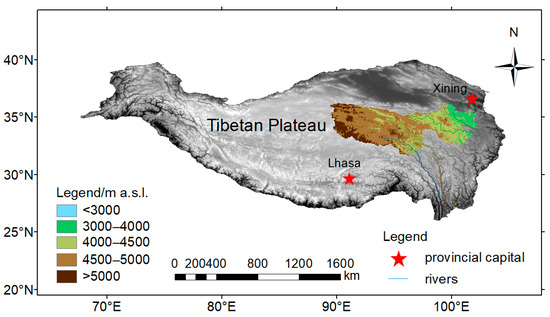
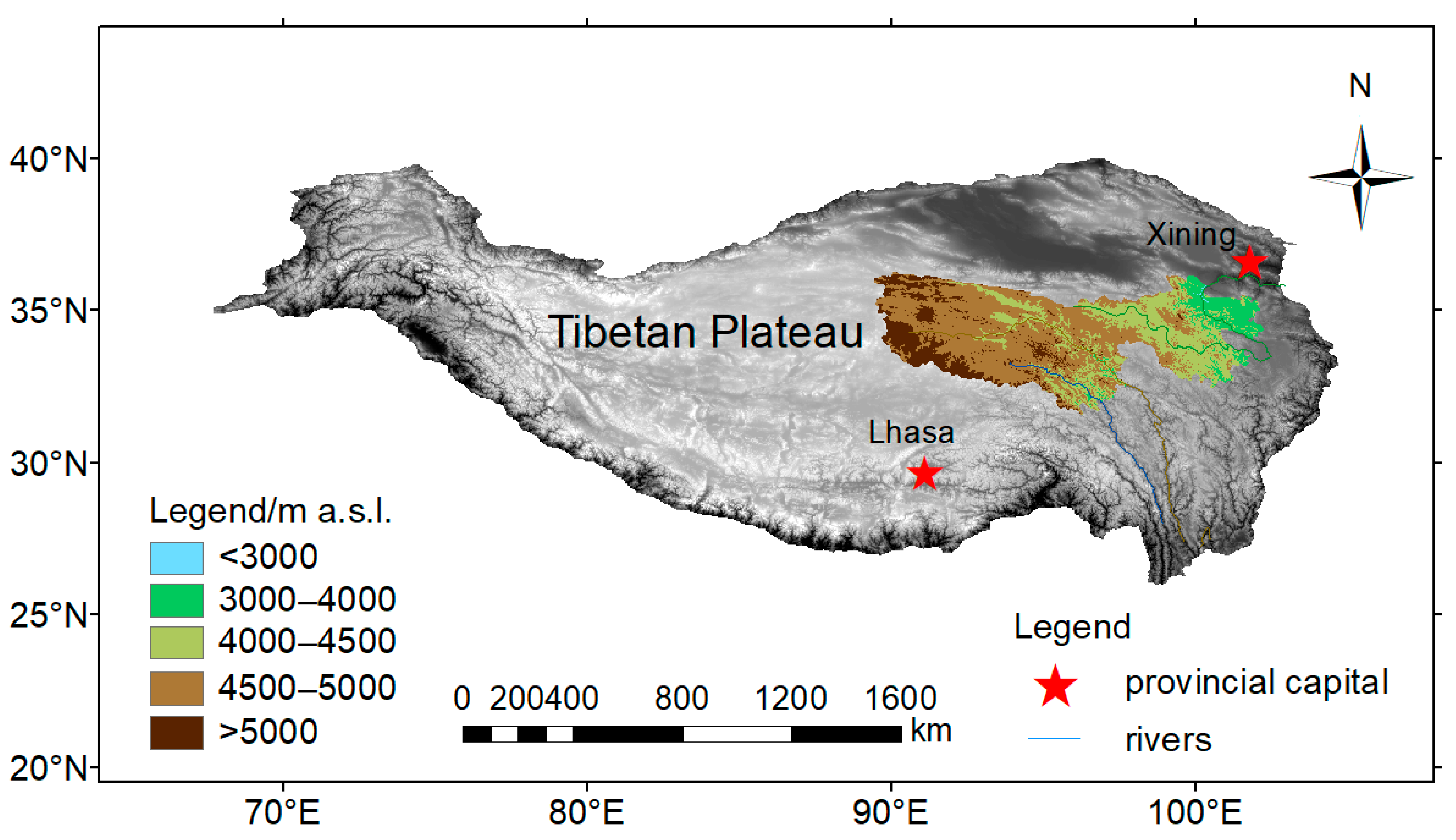
The TRH region is located in the eastern Tibetan Plateau, an area referred to as the Earth’s “Third Pole” [22]. Including the source of the Yellow River, the source of the Yangtze River, and the source of the Lancang River, it is located between 31°39′~36°12′N latitude and 89°45′~102°23′E longitude. Altitude of the region shows a trend of rising gradually from southeast to northwest as a whole, with a varying range of 1960–6700 m a.s.l. and an average altitude of about 4400 m a.s.l. [23]. The TRH region covers an area of approximately 3.89 × 10⁵ km2 [24]. The climate is characterized by the alternation of cold season and warm season. The cold season has the typical plateau continental climate characteristics, and the warm season is rich in water vapor and precipitation. The TRH region is also abundant in biodiversity and is one of the most water-abundant regions in the world, and is known as the “Water Tower of Asia”. The location of the TRH region is shown in Figure 1.
Figure 1.
Schematic diagram of the location of the TRH region.
2.2. Research Data and Methods
The dataset employed in this study comprises Landsat-5, Level-2 and Sentinel-2 Level-2A satellite imagery. The images provided by Google Earth Engine have already undergone orthorectification and atmospheric correction to ensure geometric and radiometric accuracy. After applying filters for acquisition time, cloud cover, and the study area extent, the satellite image counts covering the TRH region for the investigated years are as follows: 509 images for 1990, 570 for 2000, 585 for 2010, 1783 for 2020, and 3678 for 2022. Subsequently, remote sensing imageries were subjected to a series of preprocessing steps, including cloud masking and image cropping, followed by median compositing to generate an annual composite image. Landsat-5 imagery was used to analyze and identify vegetation coverage and land cover types in the TRH region for the years 1990, 2000, and 2010. Sentinel-2 imagery was utilized to analyze and identify vegetation coverage and land cover types in the same region for the years 2020 and 2022. Additionally, the Sentinel-2 imagery was resampled to a spatial resolution of 30 m.
We utilized datasets including lake boundary maps, 1 km monthly precipitation dataset, 1 km monthly mean temperature dataset, and daily snow depth dataset, all sourced from the National Tibetan Plateau Data Center (http://data.tpdc.ac.cn). Based on the aforementioned data, we calculated the annual mean air temperature, annual mean precipitation, and annual mean snow depth. This study utilized the MERIT DEM dataset from the Google Earth Engine cloud platform. MERIT DEM is a high-precision global digital elevation model. MERIT DEM separates absolute bias, stripe noise, speckle noise and tree height bias using multiple satellite datasets and filtering techniques. The DEM was preprocessed with subsequent clipping and projection operations.
We employ the pixel dichotomy model to calculate vegetation coverage, using the following formula:
Equation (1) is as follows: represents the annual maximum NDVI value of the pixel; refers to the NDVI value of a pure vegetation pixel, which is taken as the 95th percentile of the cumulative NDVI distribution; refers to the NDVI value of a pure bare soil pixel, which is taken as the 5th percentile of the cumulative NDVI distribution. Based on study of Li et al. [25], the vegetation coverage was classified into five categories: very low vegetation coverage (0–20%), low vegetation coverage (20–40%), moderate vegetation coverage (40–60%), high vegetation coverage (60–80%), and very high vegetation coverage (80–100%).
We conducted land cover classification in the TRH region. Sample points were manually delineated within the region through visual interpretation of satellite imagery, with the quantity and composition ratio of samples illustrated in Figure S1. The samples were divided into training and validation sets at a ratio of 7:3. Initially, 17 features, including spectral indices, vegetation indices, texture [26], and color features [27,28,29], were selected for land cover classification. These features (BLUE, GREEN, RED, NIR, SWIR, NDVI, EVI, NDWI, mNDWI, SAVI, ExR, ExG, ExB, ASM, IDM, CORR, CON) are described in Table S1. Subsequently, Recursive Feature Elimination with Cross-Validation (RFECV) was employed for feature optimization to reduce redundancy, with 10-fold cross-validation performed. The optimized feature set included seven features: BLUE, SWIR, NDVI, EVI, NDWI, ExG, and ExR. The parameters of the deep neural network are configured as follows: it consists of four hidden layers with 250, 300, 200, and 200 neurons, respectively, employs the ReLU activation function, and uses a learning rate of 0.001.
Geodetector is a suite of statistical methods designed to detect spatial heterogeneity and identify its underlying driving factors. Geodetector is not based on linear assumptions but compares the spatial consistency of independent variable distribution versus the geographical strata in which potential factors exist [30]. Geodetector comprises factor detection, risk zone detection, interaction detection, and ecological detection. Factor detection and interaction detection were selected to analyze the spatial differentiation of vegetation coverage in the TRH region. Factor detection assesses to what extent a certain factor X explains the spatial differentiation of the attribute vegetation coverage, measured by the q-value. The expression for the q-value is as follows:
In the formula: = 1,…, represents the stratification (i.e., classification or zoning) of the variable vegetation coverage or factor X; and are the number of units in stratum h and the entire study area, respectively; and are the variances of the vegetation coverage values in stratum h and the entire study area, respectively. Interaction detection is used to identify interactions among different risk factors, assess the extent to which their combined effect increases or decreases the explanatory power for the dependent variable vegetation coverage, or whether the factors independently influence vegetation coverage [31].
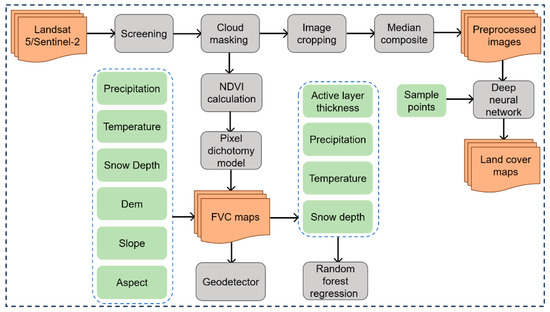
Based on this, we analyzed the impacts of permafrost active layer thickness (derived from a frozen ground change dataset, http://data.tpdc.ac.cn), snow depth, temperature, precipitation, and their variations on vegetation, and quantified the contribution of these factors to changes in vegetation cover using a Random Forest regression model. The frozen ground change dataset is constructed using remote sensing-derived land surface temperature data and in situ meteorological station observations, with the Stefan equation applied to simulate the maximum freezing depth of seasonal frozen soil and the thickness of the active layer [32]. We extracted the data for the study area from the original datasets. A detailed flowchart illustrating the methodology is presented in Figure 2.
Figure 2.
A detailed flowchart of the data processing pipeline.
3. Results
3.1. Vegetation Coverage and Its Recent Changes in the TRH Region
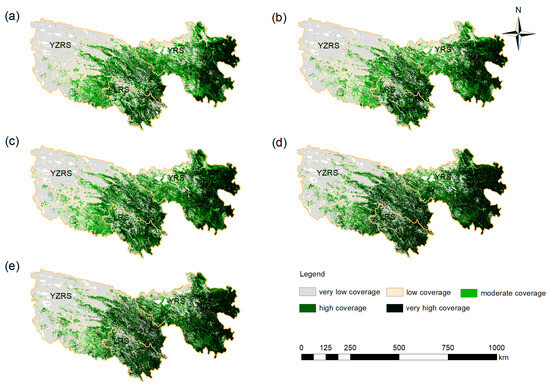
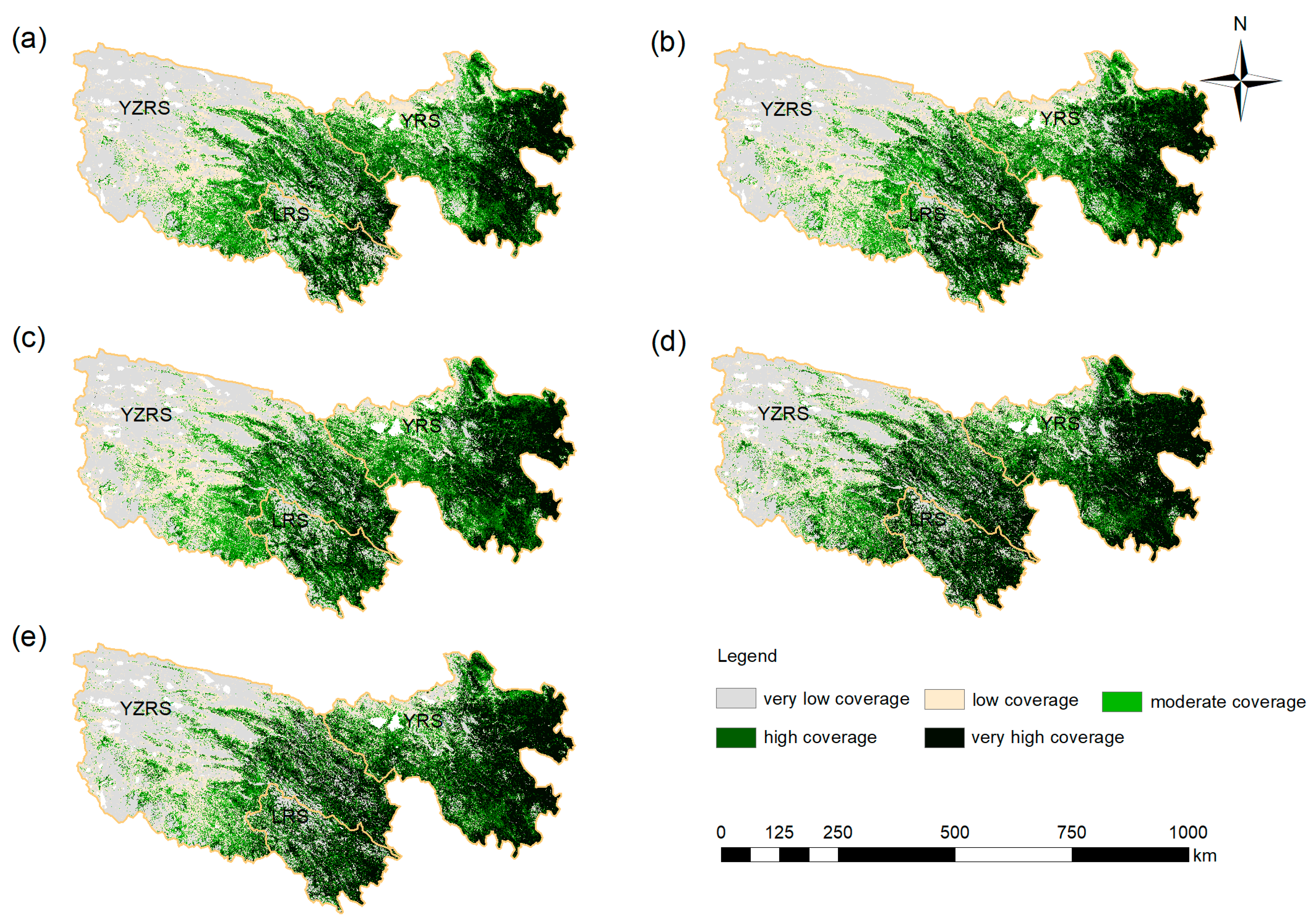
We conducted an analysis of vegetation coverage in the TRH region for the years 1990, 2000, 2010, 2020, and 2022, respectively, as shown in Figure 3. Over the past three decades, the spatial distribution of vegetation coverage in the TRH region mainly exhibited a pattern of “higher in the east and lower in the west”. Overall, the distribution of vegetation coverage in the TRH region shows that the high-altitude areas in the western part of the Yangtze River source have very low and low vegetation coverage, while the vegetation coverage in the Lancang River and Yellow River source areas is generally higher, especially in the eastern part of the Yellow River source, where large areas exhibit very high vegetation coverage. Meanwhile, in the western part of the TRH region, vegetation coverage has shifted from very low and low coverage to moderate and high coverage; in the central and eastern parts, vegetation coverage has transitioned from moderate and high coverage to very high coverage.
Figure 3.
Vegetation coverage situation in the TRH region from 1990 to 2022. (a) 1990; (b) 2000; (c) 2010; (d) 2020; (e) 2022. YZRS: Yangtze River Source; YRS: Yellow River Source; LRS: Lancang River Source.
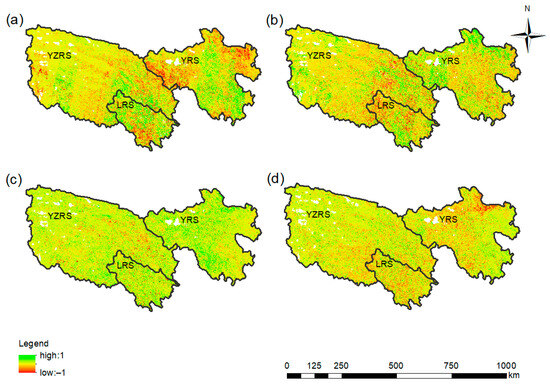
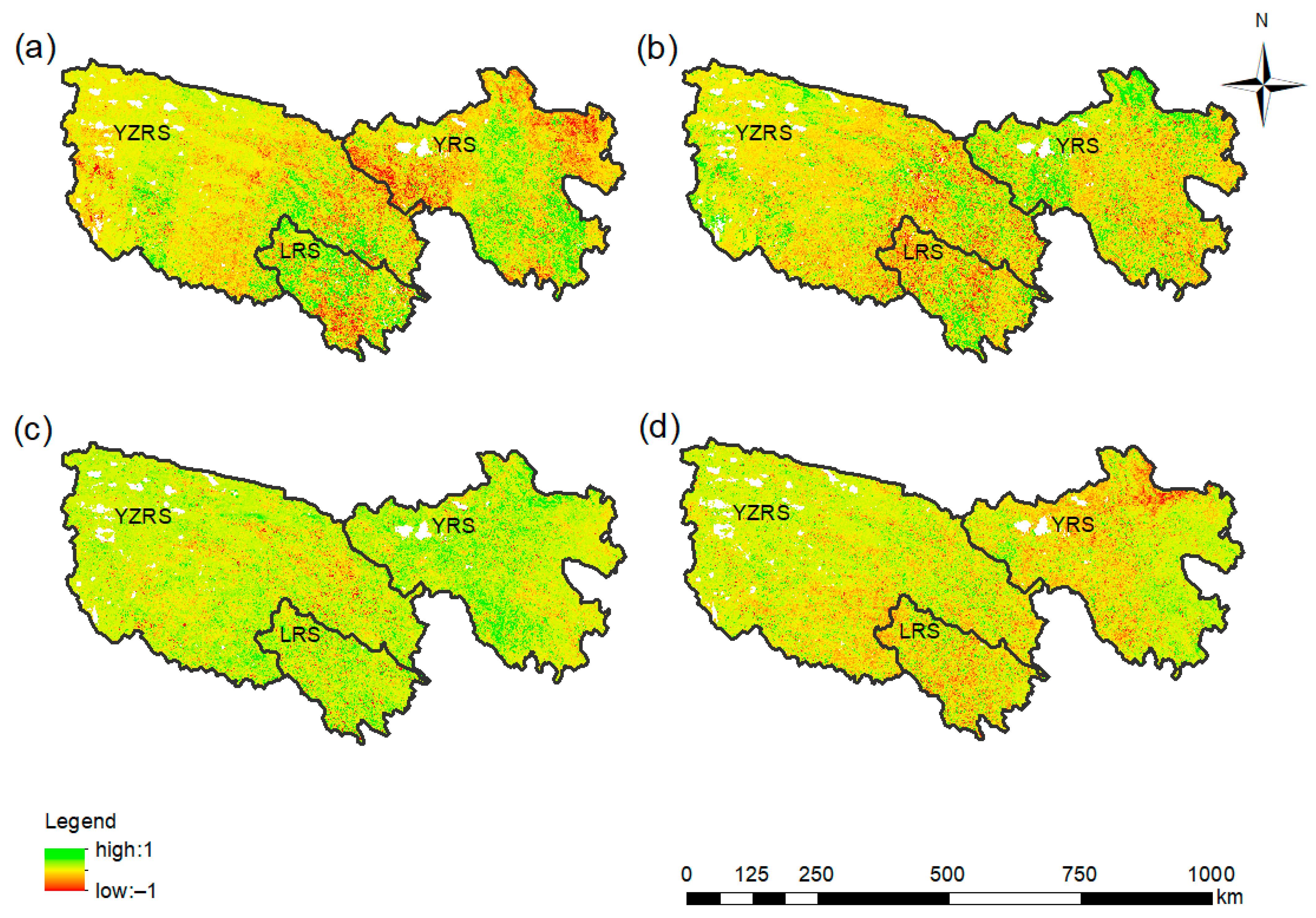
Figure 4 illustrates the difference in vegetation coverage changes in the TRH region from 1990 to 2022. As shown in Figure 4, during the period of 1990–2000, vegetation coverage increased substantially throughout most of the Lancang and Yellow River source areas. Conversely, vegetation coverage decreased in the northeastern and western parts of the Yellow River source area and the southern part of the Lancang River source area. In the subsequent period of 2000–2010, there was a noticeable decrease in vegetation coverage in the central part of the TRH region, while areas with increased vegetation coverage were scattered. From 2010 to 2020, the overall trend in the TRH region showed an increase in vegetation coverage, with fewer areas experiencing a decrease. Between 2020 and 2022, there was an apparent decrease in vegetation coverage in the northeastern part of the TRH region, while other areas experienced a balance of increases and decreases in vegetation coverage.
Figure 4.
Vegetation coverage variability of the TRH region from 1990 to 2022. (a) 2000–1990; (b) 2010–2000; (c) 2020–2010; (d) 2022–2020. Green areas in the map depict an increase in vegetation coverage, while red areas indicate a decrease. YZRS: Yangtze River Source, YRS: Yellow River Source, LRS: Lancang River Source.
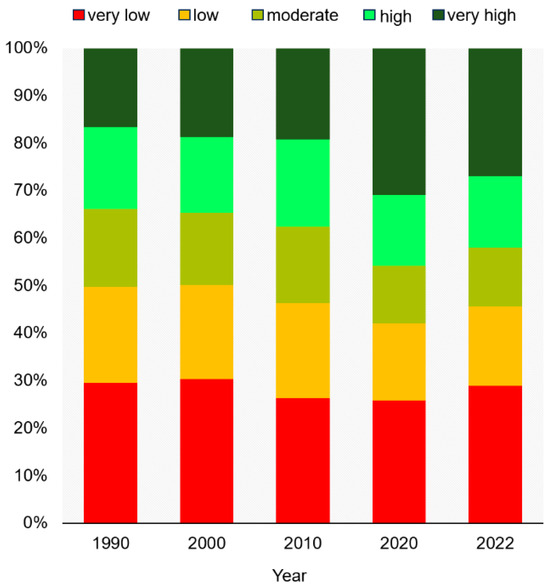
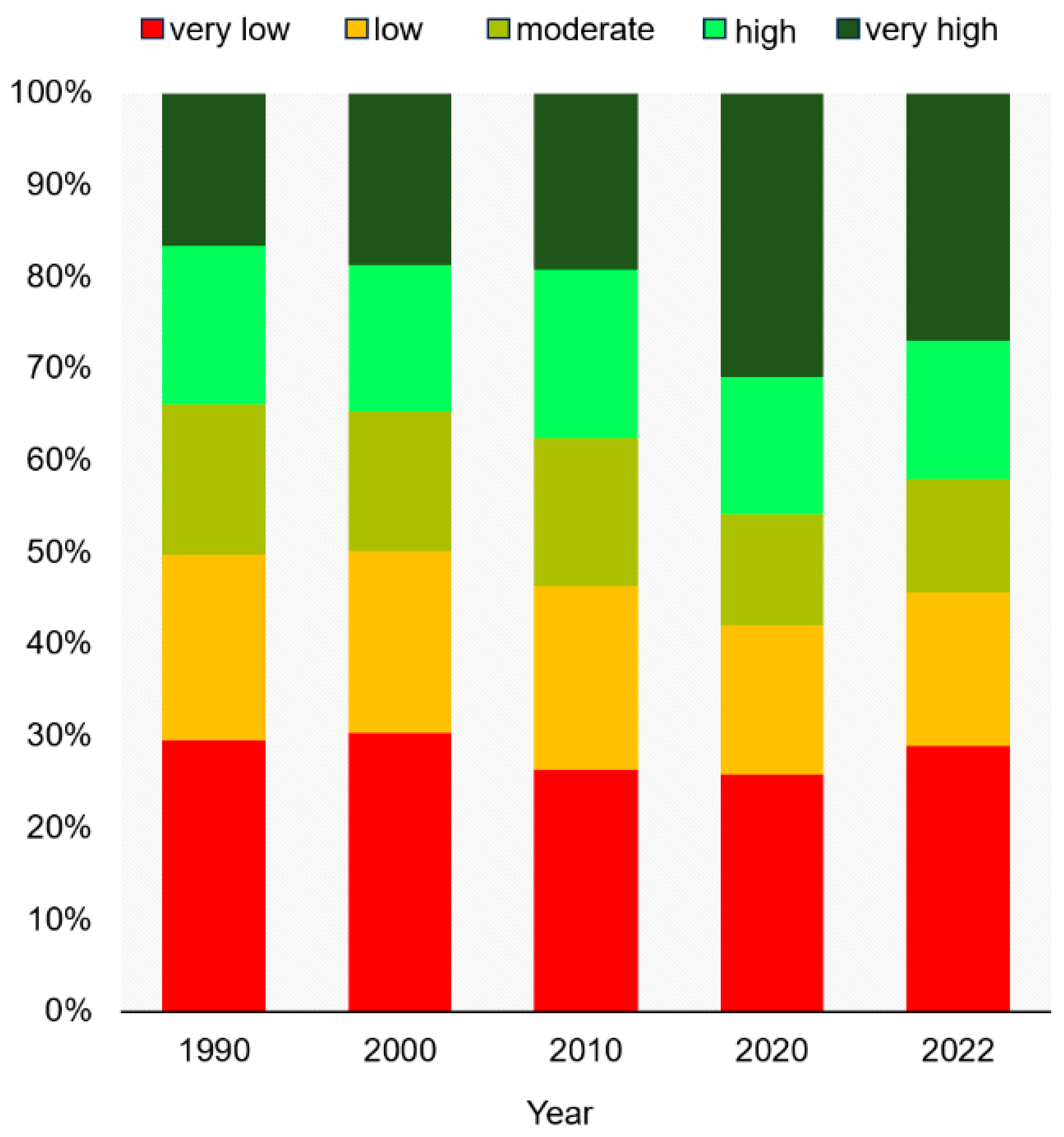
As shown in Figure 5, the overall vegetation coverage in the TRH region has shown an increasing trend. From 1990 to 2022, the area of very low vegetation coverage decreased from 29.6% in 1990 to 28.9% in 2022, a reduction of 0.7%. The area of low vegetation coverage decreased from 20.2% in 1990 to 16.7% in 2022, a reduction of 3.5%. The area of moderate vegetation coverage decreased from 16.3% in 1990 to 12.4% in 2022, a reduction of 3.9%. The area of high vegetation coverage decreased from 17.2% in 1990 to 15.0% in 2022, a reduction of 2.2%. Meanwhile, the area of very high vegetation coverage increased from 16.7% in 1990 to 27.0% in 2022, an increase of 10.3%. From 1990 to 2022, the combined areas of very low and low vegetation coverage decreased by 4.2%. Particularly noteworthy changes in vegetation coverage occurred between 2010 and 2022 in the TRH region; the area of very high coverage reached 30.9% in 2020 but then dropped back to 27.0% by 2022.
Figure 5.
Changes in vegetation coverage area in the TRH region.
3.2. Land Cover Changes in the TRH Region
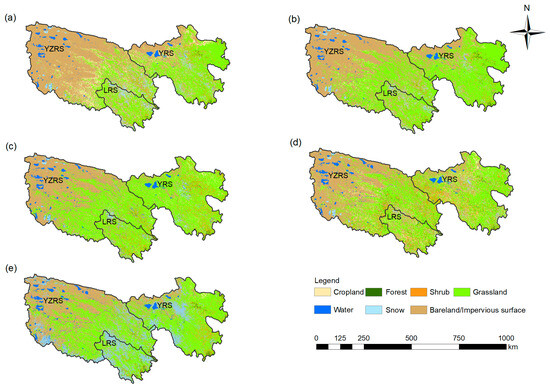
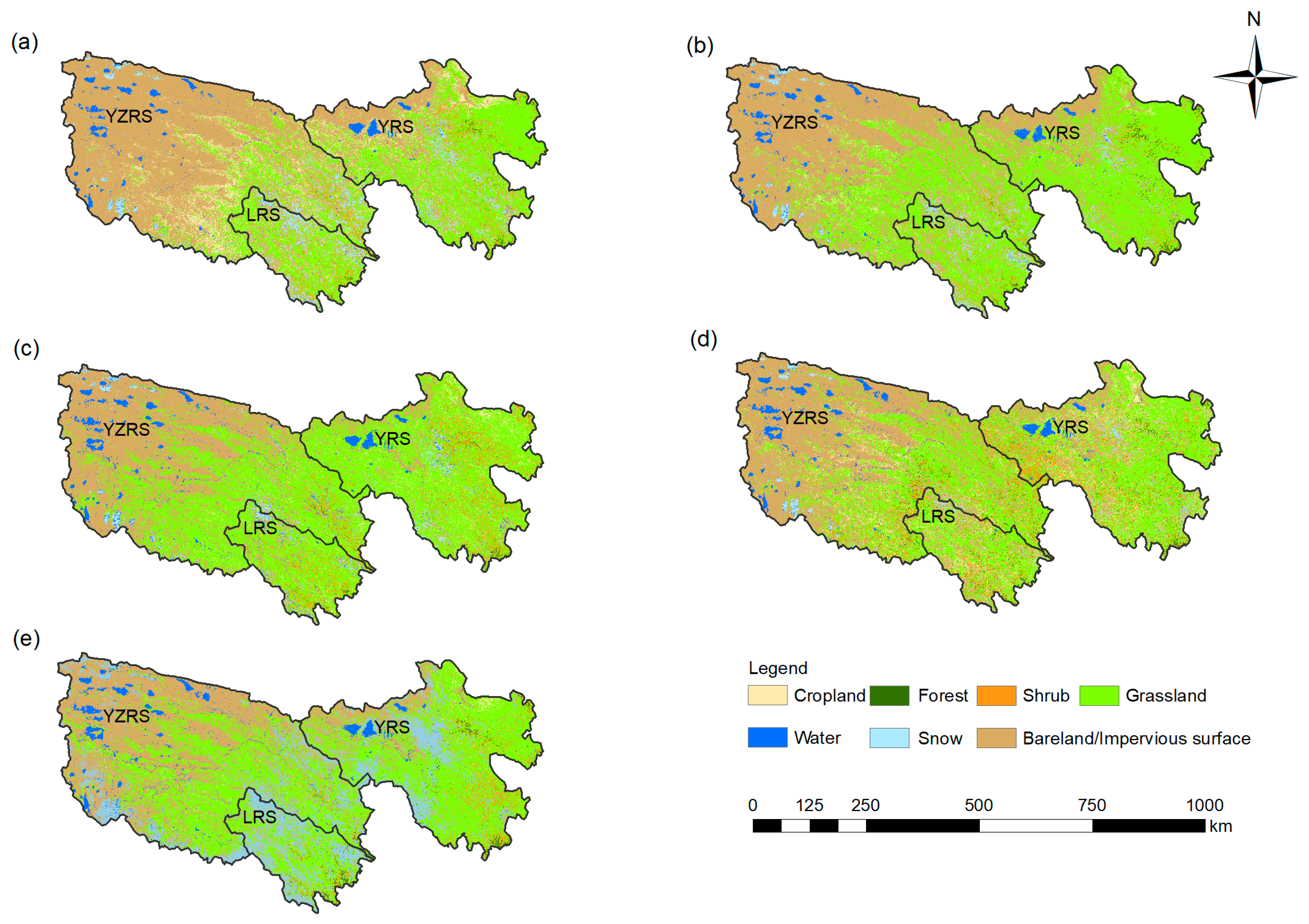
Referring to Table 1, the overall accuracy of land cover classification in the TRH region is above 86%. The highest overall accuracy achieved is 91.09%, indicating that the classification accuracy using deep neural networks is generally excellent. By combining Landsat-5, Level-2 and Sentinel-2 Level-2A data and utilizing deep neural networks with feature optimization, the land cover classification results for the years 1990, 2000, 2010, 2020, and 2022 are shown in Figure 6. These results reveal several key changes. In the western part of the TRH region, particularly in the Yangtze River source area, there has been an apparent reduction in bare land, which has largely transitioned into grassland. Snow areas have shown a decreasing trend from 1990 to 2020. Shrub coverage in the central and eastern parts of the TRH region has pronouncedly increased. Forest areas in the southeastern region have experienced a slight increase.
Table 1.
Accuracy evaluation of land cover classification in the TRH region in this study.
Figure 6.
Land cover map of the TRH region from 1990 to 2022. (a) 1990, (b) 2000, (c) 2010, (d) 2020, (e) 2022. YZRS: Yangtze River Source, YRS: Yellow River Source, LRS: Lancang River Source.
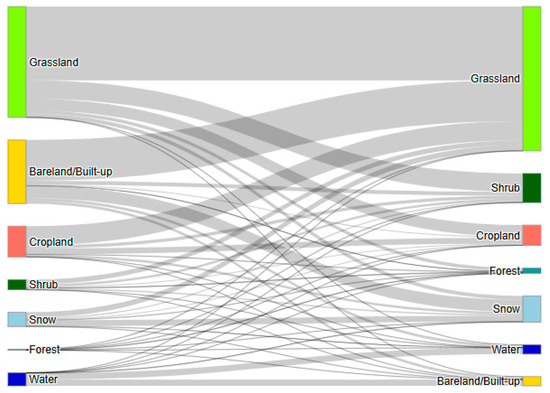
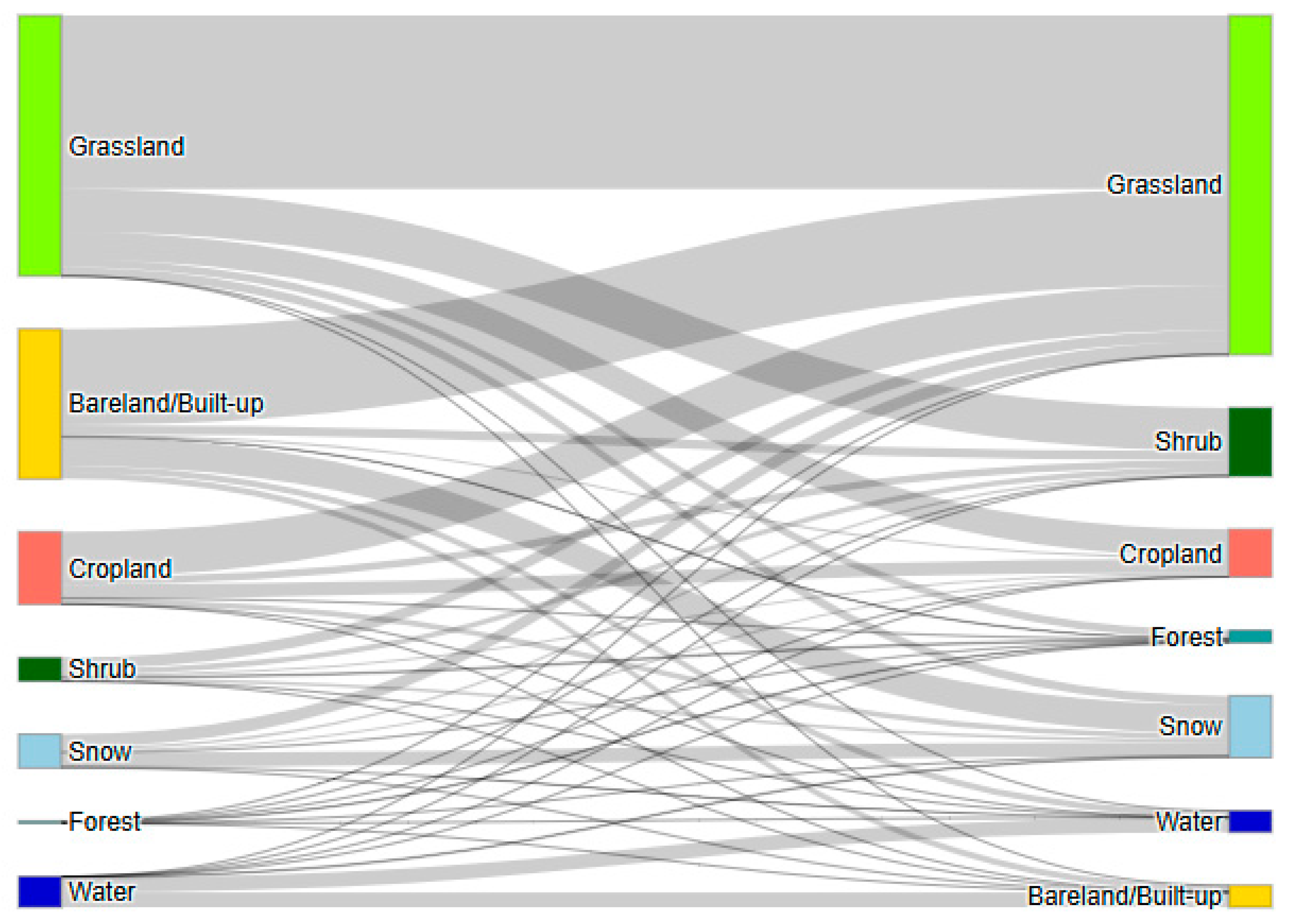
In this study, focusing on the changes in land cover within the TRH region from 1990 to 2020, a land cover type area transition diagram, as shown in Figure 7, was created. The results illustrated in Figure 7 indicate substantial changes in land cover types over the 30-year period: The area of bare land and impervious surface underwent the most substantial change, decreasing by 5.9 × 10⁴ km2. Grassland areas in the TRH region increased by 3.7 × 10⁴ km2. Bare land was predominantly converted to grassland, which is consistent with the aforementioned findings. Shrub areas saw an increase of 2.1 × 10⁴ km2. Forest area increased by 4.7 × 10³ km2, indicating a relatively limited magnitude of change.
Figure 7.
Sankey diagram of land cover transitions in the TRH region from 1990 to 2020. The left side of the figure corresponds to 1990, and the right side corresponds to 2020.
3.3. The Driving Forces Behind Vegetation Coverage
We selected six environmental factors: precipitation, temperature, snow depth, elevation, slope, and aspect, to analyze their impacts on vegetation coverage. Table 2 presents the results of factor detection, indicating that precipitation has the highest explanatory power for vegetation coverage in the TRH region and exerts a strong influence on its spatial distribution. From 1990 to 2022, the degree of influence was 29.84%, 37.52%, 38.06%, 37.54%, and 32.31%, respectively, showing an overall increasing trend in influence over time. In addition to precipitation, elevation was the second most influential factor in explaining vegetation coverage. From 1990 to 2022, its influence was 26.81%, 27.86%, 28.79%, 24.58%, and 24.17%, respectively. The explanatory power of temperature ranged between 16% and 25%, indicating a relatively strong influence. Snow depth had an explanatory power of approximately 4% to 12%. In comparison, slope and aspect had relatively minor effects on vegetation coverage. Notably, the aspect had the smallest impact, contributing less than 1%. Therefore, the spatial distribution of vegetation coverage in the TRH region is largely influenced by precipitation, elevation, and temperature, while the effects of slope and aspect are comparatively minimal.
Table 2.
Explanatory capacity of potential driving factors on vegetation coverage during 1990–2022.
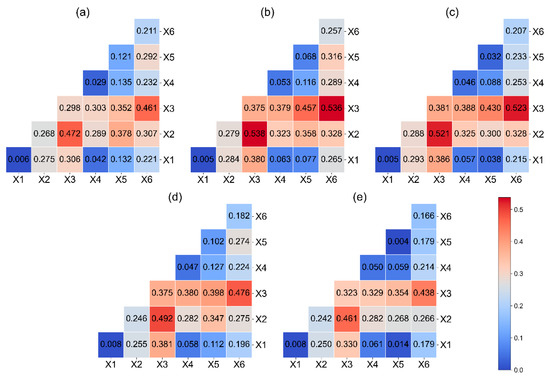
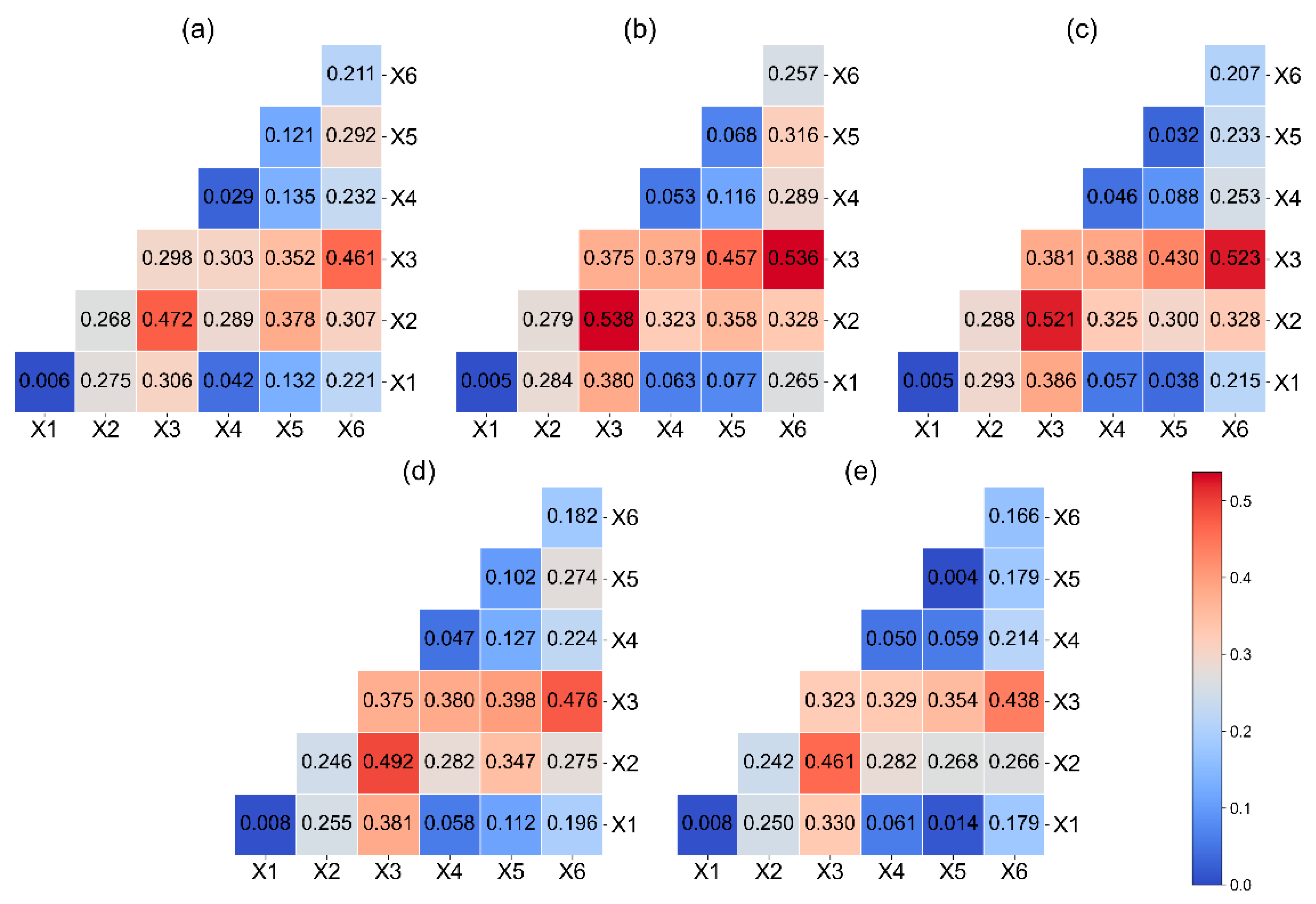
The interaction detection results shown in Figure 8 indicate that the interaction between precipitation and elevation has the strongest influence on vegetation coverage. This is followed by the interaction between precipitation and temperature, with only a small difference between the effects of the interaction between precipitation and elevation and that between precipitation and temperature. From 1990 to 2022, the degree of influence of the interaction between precipitation and elevation on vegetation coverage was 0.472, 0.538, 0.521, 0.492, and 0.461, respectively. The influence of the interaction between precipitation and temperature was 0.461, 0.536, 0.523, 0.476, and 0.438 during the same periods. The interaction between precipitation and snow depth also showed a relatively strong effect, with influence values of 0.352, 0.457, 0.430, 0.398, and 0.354 across the study period. The two-factor interactions were better at explaining the spatial distribution of vegetation coverage than the individual factors [33], demonstrating that the spatial heterogeneity of vegetation coverage is attributable to the interaction of multiple factors. Combining the results from both factor detection and interaction detection, it can be concluded that vegetation coverage in the TRH region is mainly influenced by precipitation, elevation, and temperature.
Figure 8.
Interaction effects among influencing factors during the periods of 1990, 2000, 2010, 2020, and 2022. X1: aspect; X2: elevation; X3: precipitation; X4: slope; X5: snow depth; X6: temperature. (a) 1990; (b) 2000; (c) 2010; (d) 2020; (e) 2022.
3.4. The Contribution of Environmental Factors to Vegetation Cover Change
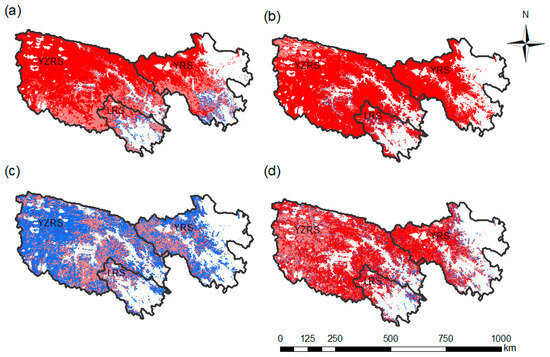
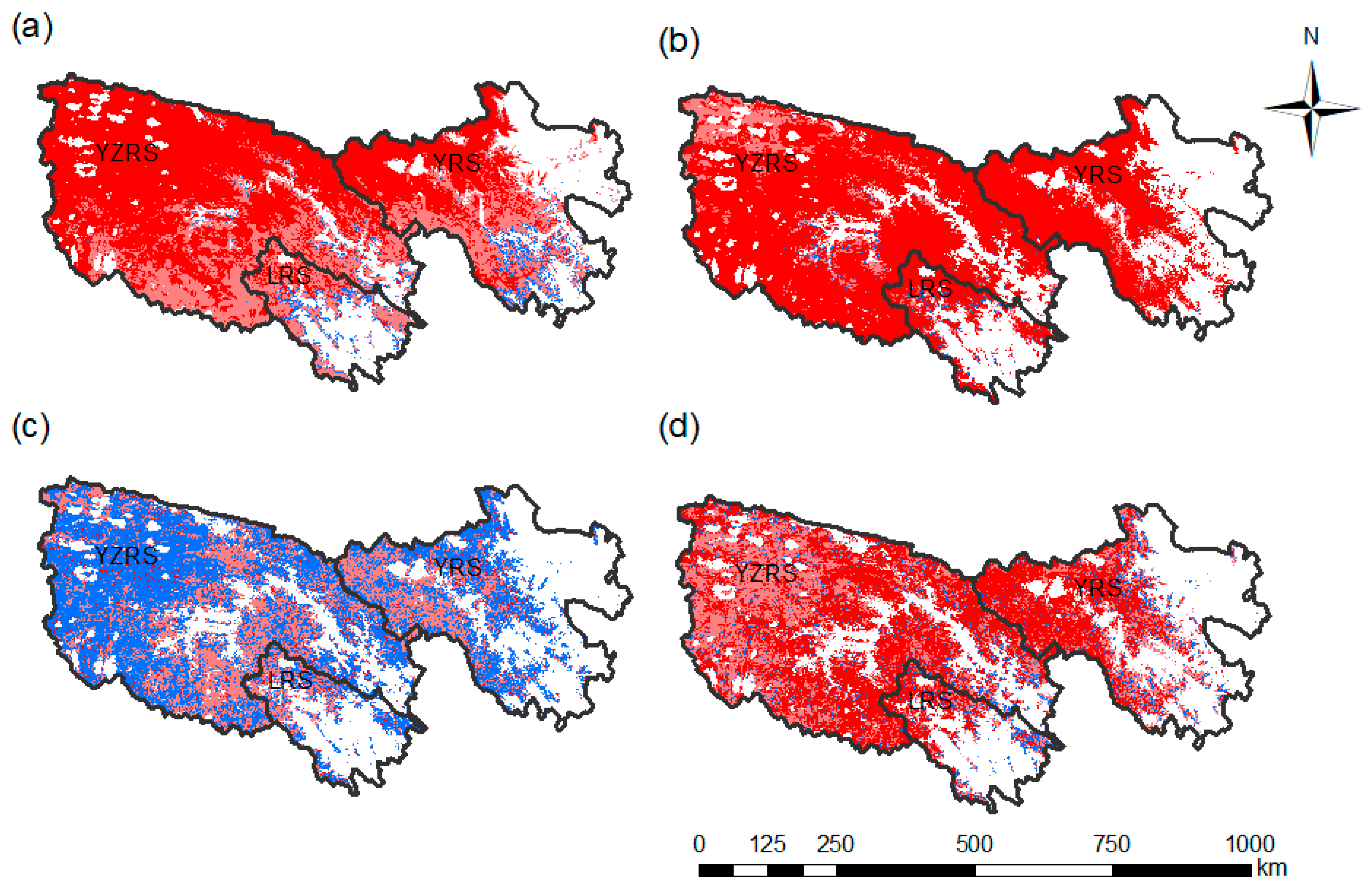
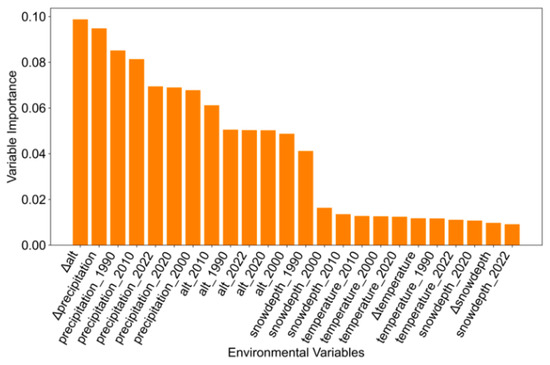
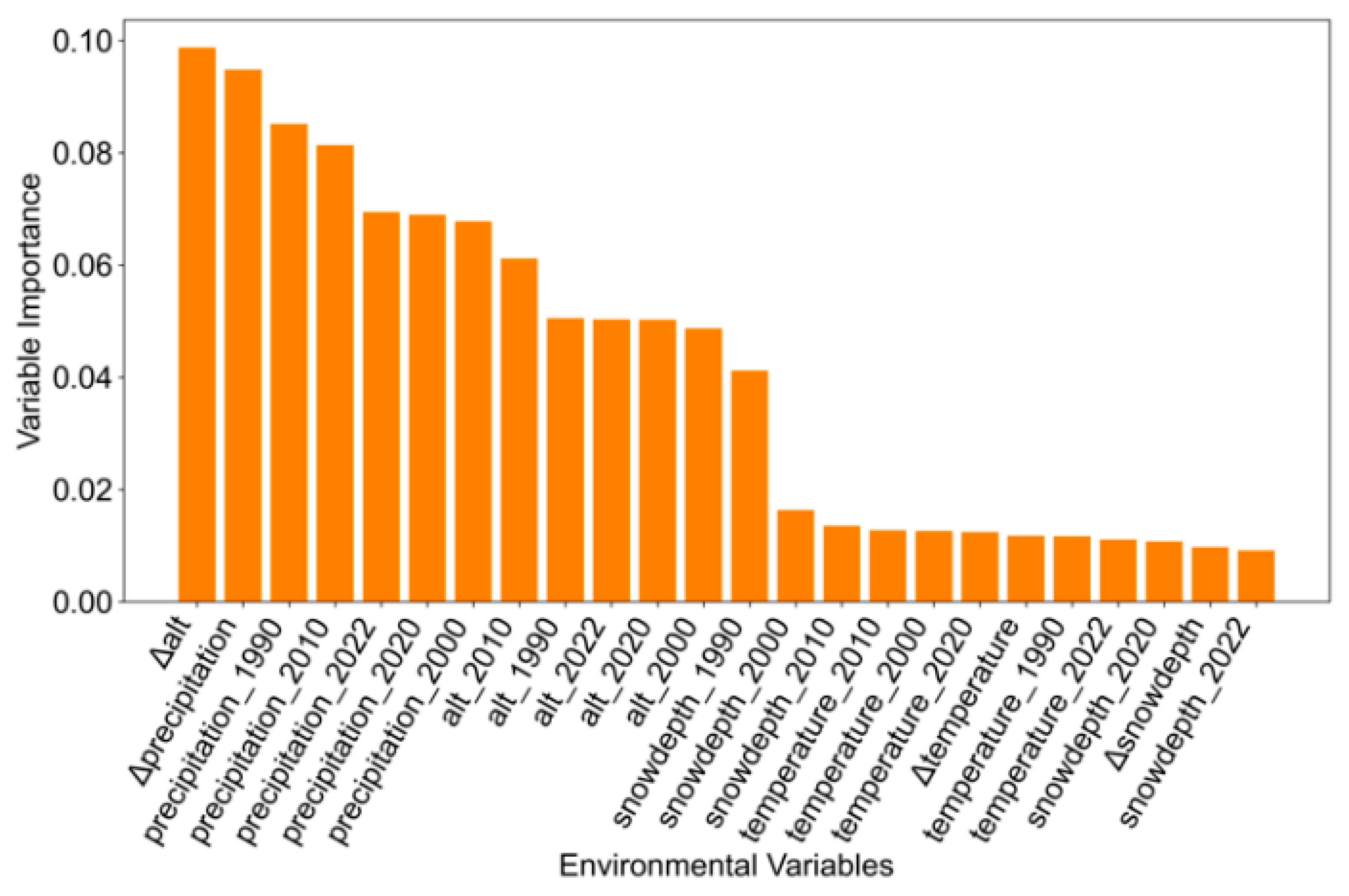
As shown in Figure 9, the active layer thickness of permafrost in the TRH region exhibited an increasing trend during the periods 1990–2000 and 2000–2010, followed by a slight decrease from 2010 to 2020. Over the past three decades, the active layer thickness showed an overall increasing trend. We selected the thickness of the active layer of permafrost, precipitation, temperature, and snow depth to explore the contributions of these factors and their changes to the change in vegetation coverage. From Figure 10, it can be seen that changes in the thickness of the permafrost active layer have the greatest contribution to changes in vegetation coverage, followed by changes in precipitation. The contributions of the permafrost active layer thickness and precipitation to changes in vegetation coverage are high. Snow depth contributes the least to changes in vegetation coverage.
Figure 9.
Variations in active layer thickness of permafrost in the TRH region. (a) 1990–2000; (b) 2000–2010; (c) 2010–2020; (d) 1990–2020. Red indicates the permafrost active layer is thickening, while blue indicates the permafrost active layer is becoming shallower. YZRS: Yangtze River Source, YRS: Yellow River Source, LRS: Lancang River Source.
Figure 10.
The contribution of environmental factors to changes in vegetation coverage. Alt represents the thickness of the active layer of permafrost. Δ represents the changes from 1990 to 2022.
4. Discussion
Research conducted by Zeng et al. [34] during the period 1990–2000 demonstrated that overexploitation of land resources, primarily through overgrazing, along with the resultant rampant rodent infestations, led to extensive grassland degradation in the Yellow River Source region, a degradation phenomenon consistent with the findings of this study. Since 2005, the implementation of the Ecological Conservation and Construction Project in the TRH region has initially contained the continued degradation of grassland [35]. Zhang et al. [36] demonstrated that the continuous decrease in livestock numbers at the end of the year reflected the positive contribution of the Ecological Conservation Project in the eastern TRH region, especially from 2011 to 2018. The results of this study demonstrate that vegetation coverage in the TRH region exhibits an increasing trend, accompanied by a substantial transformation of bare land into grassland in the western areas. This serves as a valid confirmation of the effectiveness of the ecological conservation and construction projects. Meanwhile, since 2000, except for the aridity in the western part of the TRH region, most of the other regions have a warm and humid trend [37]. As the climate has transitioned from warm and dry to warm and humid, and the implementation of ecological projects such as ecological restoration and protection, there is reasonable assurance that sustainable vegetation restoration in the TRH region will continue in the future [38].
The Geodetector results indicate that both the individual effects and interactions among precipitation, elevation, and temperature have strong influences on the spatial distribution of vegetation coverage. Precipitation has the highest explanatory power for vegetation coverage in the TRH region. When precipitation interacted with elevation and with temperature, their q-statistic values reached the highest levels of 0.538 and 0.536, respectively. Glaciers are a keystone ecological resource for the TRH region. Chen et al. [39] and Zhang et al. [40] indicate that glaciers in the TRH region are undergoing continuous retreat. For example, the Dongkemadi Glacier in the Yangtze River source region has continuously retreated in area from 1990 to 2020 [41]. Evidence suggests that precipitation contributes substantially to the annual runoff, whereas the contribution of glacier melt to the annual runoff is less than 5% [42]. The increase in runoff has (as shown in Figure S3), to some extent, enhanced vegetation growth and development.
The results of Figure S2 show that the temperature in the TRH region increased from 1990 to 2022, and the overall increase was about 1 °C. The thickening of the active layer, a key manifestation of permafrost degradation, is further confirmed in the TRH region by Li et al. [43]. Meanwhile, studies [44,45] have demonstrated that the onset of freezing for seasonal permafrost in the TRH region has been significantly delayed, while the date of complete thawing has advanced considerably, resulting in a markedly shortened freeze–thaw period. This trend is attributed to the pronounced warming during the cold season in the region, as rising temperatures delay the initiation of freezing and accelerate the completion of thawing, thereby reducing the overall duration of the freeze–thaw cycle. Under the backdrop of climate warming, the thickening of the active layer and the lengthening of the non-freezing period may create more favorable conditions for vegetation growth.
5. Conclusions
We investigated the spatiotemporal characteristics of vegetation cover in the TRH region from 1990 to 2022, complemented by land cover data to further clarify the patterns of vegetation change, and analyzed the underlying drivers of vegetation cover dynamics. The findings are summarized as follows:
- (1)
- Overall, the computational performance of Google Earth Engine was satisfactory, clearly revealing the vegetation coverage levels in the TRH region, exhibiting a spatial distribution pattern of “higher in the east and lower in the west”. Vegetation coverage in the TRH region also showed an overall increasing trend. Bare land in the western part of the region has markedly decreased, transforming into grassland, while the areas of forest and shrubland have shown an increasing trend. A 30 m spatial resolution was adopted in the mapping process, enabling more accurate characterization of the spatial distribution and fine-scale dynamics of vegetation, particularly in the topographically complex and vegetation-heterogeneous TRH region.
- (2)
- Based on geographical detector analysis, we reveal that precipitation, elevation, and temperature have considerable influence on the spatial differentiation of vegetation coverage in the TRH region. The thickening of the active layer of the permafrost and precipitation contribute substantially to the increase in vegetation coverage.
- (3)
- Utilizing a deep neural network to identify land cover conditions, this research clarifies the types and area changes in land cover in the TRH region over the past thirty years and evaluates the applicability of deep neural networks for land cover classification in this area. However, deep neural networks suffer from several limitations, including a heavy reliance on large volumes of labeled training data and poor interpretability. Future studies could employ more advanced algorithms to address these challenges. In addition, relevant Earth system models can be further used to simulate the ecological processes of the TRH region, providing a more scientific basis for ecological protection and restoration in the area.
Supplementary Materials
The following supporting information can be downloaded at: https://www.mdpi.com/article/10.3390/rs17243947/s1, Figure S1: The proportion of various types of samples and the total sample size in 1990, 2000, 2010, 2020, and 2022; Figure S2: Three-River Headwaters region annual average temperature change chart from 1990 to 2022. YZRS: Yangtze River Source, YRS: Yellow River Source, LRS: Lancang River Source; Table S1: Feature set description for land cover classification; Figure S3: Annual runoff of each watershed in the river source areas of the TRH region (Data derived from Long et al. [46]).
Author Contributions
C.W.: Writing—original draft, Methodology, Investigation, Formal analysis, Data curation. J.W.: Writing—review and editing, Resources, Methodology, Data curation. Z.D.: Writing—review and editing, Resources, Supervision, Investigation, Funding acquisition, Data curation. S.W.: Resources, Investigation, Data curation. X.J.: Methodology, Formal analysis, Conceptualization. All authors have read and agreed to the published version of the manuscript.
Funding
This work was supported by the National Key Research and Development Program of China (2024YFF1308105), the National Natural Science Foundation of China (42371139), the Fundamental Research Funds for the Central Universities, China University of Geosciences (Wuhan) (No. CUG240629), and by the Gansu Province Natural Science Foundation Key Project (23JRRA858).
Data Availability Statement
Landsat 5, Level-2, and Sentinel-2 Level-2A surface reflectance datasets, and the MERIT DEM were acquired from the Google Earth Engine cloud computing platform (https://developers.google.com/earth-engine/datasets/ (accessed on 1 November 2025)). The 1 km resolution monthly precipitation dataset for China, the 1 km resolution monthly mean temperature dataset for China, the frozen ground change dataset in the Tibetan Plateau, and daily snow depth dataset were obtained from the National Tibetan Plateau/Third Pole Environment Data Center (https://data.tpdc.ac.cn/zh-hans/data/faae7605-a0f2-4d18-b28f-5cee413766a2, https://data.tpdc.ac.cn/zh-hans/data/71ab4677-b66c-4fd1-a004-b2a541c4d5bf, https://data.tpdc.ac.cn/zh-hans/data/e03ae441-0af2-4f57-b5b0-0a4f368f4015, https://data.tpdc.ac.cn/zh-hans/data/df40346a-0202-4ed2-bb07-b65dfcda9368 (accessed on 6 November 2025)).
Acknowledgments
We thank all collaborators and the research team for their constructive feedback and support.
Conflicts of Interest
The authors declare that they have no known competing financial interests or personal relationships that could have appeared to influence the work reported in this paper.
References
- Zhang, X.; Pei, Q.S.; Chen, Y.; Guo, Y.; Hou, Y.; Sun, R. Temporal and Spatial Changes Monitoring of Vegetation Coverage in Qilian County Based on GF-1 Image. Procedia Comput. Sci. 2019, 162, 662–672. [Google Scholar] [CrossRef] [Scilit]
- Cui, L.; Zhao, Y.; Liu, J.; Wang, H.; Han, L.; Li, J.; Sun, Z. Vegetation Coverage Prediction for the Qinling Mountains Using the CA-Markov Model. ISPRS Int. J. Geo-Inf. 2021, 10, 679. [Google Scholar] [CrossRef] [Scilit]
- Feng, D.; Fu, M.; Sun, Y.; Bao, W.; Zhang, M.; Zhang, Y.; Wu, J. How Large-Scale Anthropogenic Activities Influence Vegetation Cover Change in China? A Review. Forests 2021, 12, 320. [Google Scholar] [CrossRef] [Scilit]
- Li, M.; Di, Z.; Yao, Y.; Ma, Q. Variations in water conservation function and attributions in the Three-River Source Region of the Qinghai-Tibet Plateau based on the SWAT model. Agric. For. Meteorol. 2024, 349, 109956. [Google Scholar] [CrossRef] [Scilit]
- Song, Y.; Xue, D.; Dai, L.; Wang, P.; Huang, X.; Xia, S. Land cover change and eco-environmental quality response of different geomorphic units on the Chinese Loess Plateau. J. Arid. Land. 2020, 12, 29–43. [Google Scholar] [CrossRef] [Scilit]
- Lu, D. Fractional vegetation cover extraction based on visible light images of U.A.V. Stand. Surv. Mapp. 2024, 40, 35–43. [Google Scholar]
- Wang, J.Q.; Wang, G.J.; Liang, S.H.; Du, H.; Peng, H. Extraction and spatio-temporal analysis of vegetation coverage from 1996 to 2015 in the source region of the Yellow River. J. Glaciol. Geocryol. 2021, 43, 662–674. [Google Scholar]
- Yue, Y.; Chen, G.; Wang, L.; Li, X.; Li, T. Analyses of Vegetation Coverage Changes in Zhouqu County from 1998 to 2019 Based on GEE Platform. Acta Agrestia Sin. 2022, 30, 1534–1542. [Google Scholar]
- Li, W.; Yan, D.; Weng, B.; Lai, Y.; Bi, W.; Zhu, L.; Dong, Z.; Zhang, Y.; Zhang, J.; Wang, H. Thickened active layer contribute less to vegetation growth over the Tibetan Plateau. J. Hydrol. 2025, 663, 134221. [Google Scholar] [CrossRef] [Scilit]
- Zhang, Y.; Liu, T.; Tong, X.; Duan, L.; Jia, T.; Ji, Y. Inversion of vegetation coverage based on multi-source remote sensing data and machine learning method in the Horqin Sandy Land, China. J. Desert Res. 2022, 42, 187–195. [Google Scholar]
- Xie, Q.; Yang, X.; Hao, L. Spatio-temporal variation of vegetation cover and its driving factors in Three-River headwaters region during 2001-2020. Bull. Soil Water Conserv. 2022, 42, 202–212. [Google Scholar]
- Sun, Q.; Li, B.; Xu, L.; Zhang, T.; Ge, J.; Li, F. Analysis of NDVI change trend and its impact factors in the Three-River Headwater Region from 2000 to 2013. J. Geo-Inf. Sci. 2016, 18, 1707–1716. [Google Scholar]
- Peng, K.; Jiang, W.; Hou, P.; Sun, C.; Zhao, X.; Xiao, R. Spatiotemporal variation of vegetation coverage and its affecting factors in the Three river-source National Park. Chin. J. Ecol. 2020, 39, 3388–3396. [Google Scholar]
- Wang, J.; Zhao, H.; Luo, Y.; Yuan, Z. A Review of Deep Learning in Hyperspectral Remote Sensing of Vegetation. Remote Sens. Inf. 2024, 39, 11–22. [Google Scholar]
- Tamiminia, H.; Salehi, B.; Mahdianpari, M.; Quackenbush, L.; Adeli, S.; Brisco, B. Google Earth Engine for geo-big data applications: A meta-analysis and systematic review. ISPRS J. Photogramm. Remote Sens. 2020, 164, 152–170. [Google Scholar] [CrossRef] [Scilit]
- Dezfooli, F.P.; Zoej, M.J.V.; Mansourian, A.; Youssefi, F.; Pirasteh, S. GEE-based environmental monitoring and phenology correlation investigation using Support Vector Regression. Remote Sens. Appl. Soc. Environ. 2025, 37, 101445. [Google Scholar] [CrossRef] [Scilit]
- Sowrav, S.F.F.; Debsarma, S.K.; Das, M.K.; Ibtehal, K.M.; Rahman, M.; Hridita, N.T.; Broty, A.A.; Hoque, M.S.A. Developing a semi-automated technique of surface water quality analysis using GEE and machine learning: A case study for Sundarbans. Heliyon 2025, 11, e42404. [Google Scholar] [CrossRef] [Scilit]
- Yue, L.; Li, B.; Zhu, S.; Yuan, Q.; Shen, H. A fully automatic and high-accuracy surface water mapping framework on Google Earth Engine using Landsat time-series. Int. J. Digit. Earth 2023, 16, 210–233. [Google Scholar] [CrossRef] [Scilit]
- Liu, X.; Zhang, J.; Zhu, X.; Pan, Y.; Liu, Y.; Zhang, D.; Lin, Z. Spatiotemporal changes in vegetation coverage and its driving factors in the Three-River Headwaters Region during 2000–2011. J. Geogr. Sci. 2014, 24, 288–302. [Google Scholar] [CrossRef] [Scilit]
- Qiu, F.; Yao, Y.; Li, Y.; Yu, R.; Fan, J.; Zhang, X.; Kan, Y.; Liu, L.; Xie, Z.; Ning, J.; et al. Satellite-Derived Spatiotemporal Dynamics of Vegetation Cover and Its Driving Factors in the Three-River Headwaters Region from 2001 to 2022. Remote Sens. 2025, 17, 1187. [Google Scholar] [CrossRef] [Scilit]
- Zhang, X.; Jia, N. Patterns, Trends, and Causes of Vegetation Change in the Three Rivers Headwaters Region. Land 2023, 12, 1127. [Google Scholar] [CrossRef] [Scilit]
- Dong, Z.; Brahney, J.; Kang, S.; Elser, J.; Wei, T.; Jiao, X.; Shao, Y. Aeolian dust transport, cycle and influences in high-elevation cryosphere of the Tibetan Plateau region: New evidences from alpine snow and ice. Earth-Sci. Rev. 2020, 211, 103408. [Google Scholar] [CrossRef] [Scilit]
- Dai, X.; Fan, W.; Shan, Y.; Gao, Y.; Liu, C.; Nie, R.; Zhang, D.; Li, W.; Zhang, L.; Sun, X.; et al. LAI-based phenological changes and climate sensitivity analysis in the Three-River Headwaters Region. Remote Sens. 2022, 14, 3748. [Google Scholar] [CrossRef] [Scilit]
- Lu, M.; Yu, D.; Dong, W.; Huang, T.; Li, X. Shift regime of multiphase water in the Three-River-Source Region. J. Hydrol. 2025, 661, 133582. [Google Scholar] [CrossRef] [Scilit]
- Li, S.; Wang, J.; Zhang, M.; Tang, Q. Characterizing and attributing the vegetation coverage changes in North Shanxi coal base of China from 1987 to 2020. Resour. Policy 2021, 74, 102331. [Google Scholar] [CrossRef] [Scilit]
- Ulaby, F.T.; Kouyate, F.; Brisco, B.; Williams, T.H.L. Textural Information in SAR Images. IEEE Trans. Geosci. Remote Sens. 1986, 24, 235–245. [Google Scholar] [CrossRef] [Scilit]
- Woebbecke, D.M.; Meyer, G.E.; Von Bargen, K.; Mortensen, D.A. Color indices for weed identification under various soil, residue, and lighting conditions. Trans. ASAE 1995, 38, 259–269. [Google Scholar] [CrossRef] [Scilit]
- Meyer, G.E.; Hindman, T.W.; Laksmi, K. Machine vision detection parameters for plant species identification. Precis. Agric. Biol. Qual. 1999, 3543, 327–335. [Google Scholar]
- Guijarro, M.; Pajares, G.; Riomoros, I.; Herrera, P.J.; Burgos-Artizzu, X.P.; Ribeiro, A. Automatic segmentation of relevant textures in agricultural images. Comput. Electron. Agric. 2011, 75, 75–83. [Google Scholar] [CrossRef] [Scilit]
- Zhu, L.J.; Meng, J.J.; Zhu, L.K. Applying Geodetector to disentangle the contributions of natural and anthropogenic factors to NDVI variations in the middle reaches of the Heihe River Basin. Ecol. Indic. 2020, 117, 12. [Google Scholar] [CrossRef] [Scilit]
- Wang, J.; Xu, C. Geodetector: Principle and prospective. Acta Geogr. Sin. 2017, 72, 116–134. [Google Scholar]
- Yan, D.; Zheng, X.; Feng, M.; Liang, S.; Hu, Z.; Kuang, X.; Feng, Y. Frozen Ground Change Data Set in the Tibetan Plateau (1961–2020). National Tibetan Plateau/Third Pole Environment Data Center. 2023. Available online: https://data.tpdc.ac.cn/zh-hans/data/e03ae441-0af2-4f57-b5b0-0a4f368f4015 (accessed on 1 December 2025).
- Wang, B.; Si, J.; Jia, B.; He, X.; Zhou, D.; Zhu, X.; Liu, Z.; Ndayambaza, B.; Bai, X. Monitoring Spatial-Temporal Variability of Vegetation Coverage and Its Influencing Factors in the Yellow River Source Region from 2000 to 2020. Remote Sens. 2024, 16, 4772. [Google Scholar] [CrossRef] [Scilit]
- Zeng, Y.; Feng, Z. Analysis of cause mechanism of desertification in headwater area of Yellow River. J. Nat. Disasters 2009, 18, 45–52. [Google Scholar]
- Shao, Q.; Cao, W.; Fan, J.; Lin, H.; Xu, X. Effects of an ecological conservation and restoration project in the Three-River Source Region, China. J. Geogr. Sci. 2017, 27, 183–204. [Google Scholar] [CrossRef] [Scilit]
- Zhang, Y.; Yao, X.; Zhou, S.; Zhang, D. A glacier vector dataset in the Three-River Headwaters region during 2000–2019. Sci. Data Bank 2021, 6, 183–194. [Google Scholar] [CrossRef] [Scilit]
- Zhai, X.; Liang, X.; Yan, C.; Xing, X.; Jia, H.; Wei, X.; Feng, K. Vegetation dynamic changes and their response to ecological engineering in the Sanjiangyuan Region of China. Remote Sens. 2020, 12, 4035. [Google Scholar] [CrossRef] [Scilit]
- Sun, L.; Zhao, D.; Zhang, G.; Wu, X.; Yi, Y.; Wang, Z. Using SPOT VEGETATION for analyzing dynamic changes and influencing factors on vegetation restoration in the Three-River Headwaters Region in the last 20 years (2000–2019), China. Ecol. Eng. 2022, 183, 106742. [Google Scholar] [CrossRef] [Scilit]
- Chen, L.; Zhang, W.; Yi, Y.; Zhang, Z.; Chao, S. Long Time-Series Glacier Outlines in the Three-Rivers Headwater Region From 1986 to 2021 Based on Deep Learning. IEEE J. Sel. Top. Appl. Earth Obs. Remote Sens. 2022, 15, 5734–5752. [Google Scholar] [CrossRef] [Scilit]
- Zhang, X.; Jin, X. Vegetation dynamics and responses to climate change and anthropogenic activities in the Three-River Headwaters Region, China. Ecol. Indic. 2021, 131, 108223. [Google Scholar] [CrossRef] [Scilit]
- Zhang, C.L.; Cao, X.Q.; Ji, Q. Glacier monitoring studies of Dongkemadi basin from 1990-2020. Bull. Surv. Mapp. 2024, 4, 61–68. [Google Scholar]
- Nan, Y.; Tian, F.; McDonnell, J.; Ni, G.; Tian, L.; Li, Z.; Yan, D.; Xia, X.; Wang, T.; Han, S.; et al. Glacier meltwater has limited contributions to the total runoff in the major rivers draining the Tibetan Plateau. npj Clim. Atmos. Sci. 2025, 8, 155. [Google Scholar] [CrossRef] [Scilit]
- Li, J.; He, S.; Yi, H.; Zheng, Z. Study on the spatial and temporal changes of the vegetation cover and the driving factors in Panzhihua City from 1990 to 2020. J. Soil Water Conserv. 2025, 39, 368–376. [Google Scholar]
- Liang, B.; Li, X.; Zhang, D.; Shen, Y. Study on spatiotemporal changes of the freeze-thaw status of seasonally frozen ground and influencing factors in the Three Rivers Source Region from 1961 to 2019. J. Glaciol. Geocryol. 2023, 45, 382–394. [Google Scholar]
- Xu, M.; Pang, W.; Zhang, Z.; Liu, C.; Zhang, L. Spatio-temporal variation of freezing-thawing state of near surface soil in the Three-Rivers HeadWater region of Tibetan Plateau, China. Mt. Res. 2024, 42, 347–358. [Google Scholar]
- Long, D.; Li, X.; Wu, Y.; Cui, Y.; Tian, F.; Duan, X.; Xu, X. Spatial disparity in runoff variability between Southwestern China’s River Basin headwaters during 1981–2020. Chin. Sci. Bull. 2024, 69, 3821–3830. [Google Scholar]

Disclaimer/Publisher’s Note: The statements, opinions and data contained in all publications are solely those of the individual author(s) and contributor(s) and not of MDPI and/or the editor(s). MDPI and/or the editor(s) disclaim responsibility for any injury to people or property resulting from any ideas, methods, instructions or products referred to in the content. |
© 2025 by the authors. Licensee MDPI, Basel, Switzerland. This article is an open access article distributed under the terms and conditions of the Creative Commons Attribution (CC BY) license (https://creativecommons.org/licenses/by/4.0/).