Article

Accuracy Assessment of Shoreline Extraction Using MLS Data from a USV and UAV Orthophoto on a Complex Inland Lake


Department of Transport, Gdynia Maritime University, Morska 81-87, 81-225 Gdynia, Poland
*
Author to whom correspondence should be addressed.
Remote Sens. 2025, 17(24), 3940; https://doi.org/10.3390/rs17243940
Submission received: 5 November 2025 / Revised: 30 November 2025 / Accepted: 2 December 2025 / Published: 5 December 2025

Highlights

What are the main findings?
  • Both UAV photogrammetry and MLS from USV met the IHO Special Order accuracy requirement for shoreline extraction.
  • UAV data provided sub-decimetre shoreline position accuracy (0.05–0.06 m), while MLS achieved 1.16 m, confirming the complementary nature of both methods.
What are the implications of the main findings?
  • UAV is suitable for accurate shoreline mapping and identification of hydrotechnical structures, whereas MLS is useful for surveying of vegetated and hard-to-access areas.
  • Integration of UAV and MLS data enables a more comprehensive and reliable representation of complex shorelines, supporting hydrographic surveys, environmental monitoring, and water management.

Abstract

Accurate shoreline determination is essential for the study of coastal and inland water processes, hydrography, and the monitoring of aquatic and terrestrial environments. This study compares two modern remote sensing technologies: MLS conducted with a USV and photogrammetry using a UAV. The research was carried out on Lake Kłodno, characterised by a complex shoreline with vegetation and hydrotechnical structures. Both approaches satisfied the accuracy requirements of the IHO Special Order for shoreline extraction (≤5 m at the 95% confidence level). For the UAV-derived orthophoto, the error within which 95% of shoreline points were located (corresponding to 2.45·σ) was 0.05 m for the natural shoreline and 0.06 m for the variant including piers, both well below the IHO threshold. MLS achieved a 95% error of 1.16 m, which also complies with the Special Order criteria. UAV data enable clear interpretation of the land–water boundary, whereas MLS provides complete three-dimensional spatial information, independent of lighting conditions, and allows surveys of vegetated or inaccessible areas. The results demonstrate the complementarity of the two approaches: UAV is well suited to highly accurate shoreline mapping and the identification of hydrotechnical structures, while MLS is valuable for analysing the nearshore zone and for surveying vegetated or inaccessible areas. The findings confirm the value of integrating these approaches and highlight the need to extend research to other types of waterbodies, to consider seasonal variability, and to develop methods for the automatic extraction of shorelines.

1. Introduction

1.1. Importance of Accurate Shoreline Extraction

Shoreline data play a key role in the study and management of inland waterbodies. The shape and position of the shoreline reflect changes in hydromorphological conditions and offer valuable insight into the processes shaping the shoreline zone [1,2]. The location of the shoreline depends, among other factors, on water-level variability, sediment transport, and seasonal biological changes, which may lead to noticeable shoreline position changes even over short time periods [3,4]. Accurate shoreline determination enables the analysis of processes occurring in the littoral zone and the identification of both long-term and short-term factors that influence shoreline stability [5,6].
Accurate shoreline determination is important not only for analysing changes in its position but also for monitoring aquatic and terrestrial environments. The location of the shoreline, as a dynamic boundary between these two zones, depends on water-level variability, sedimentation processes, erosion, and the effects of human activity [1,3,4]. Consequently, a precisely defined shoreline enables a better understanding of shoreline dynamics and the identification of mechanisms responsible for transformations occurring within the transitional zone between land and water [1,5,6], which is crucial for integrated monitoring of this area.
The geometry of the shoreline, together with physical processes, serves as an important indicator of ecosystem functioning. The littoral zone, forming a transitional interface between aquatic and terrestrial environments, is among the most biologically productive components of inland waters [7,8]. Accurate shoreline mapping enables the determination of habitat extent, the monitoring of vegetation dynamics, and the evaluation of environmental impacts associated with eutrophication, invasive species, and intensive recreational use [9,10].
Ecological and hydrodynamic models rely on precisely determined shoreline geometry, which constitutes a key input parameter for predicting habitat changes, sediment dynamics, and nutrient transport [5,6]. Human activity further increases the importance of precise shoreline determination. Lakes located in urbanised areas or intensively used for recreation undergo continuous transformations resulting from, among other factors, the construction of marinas, floating piers, shoreline reinforcement, and other hydrotechnical structures [11,12]. Accurate representation of these changes is crucial for both environmental analyses and planning efforts aimed at protecting the nearshore zone.
Climate change poses an additional challenge. Research conducted on both marine and inland shorelines indicates an intensification of extreme weather events, long-term hydrological changes, and accelerated erosion processes linked to climate change [4,13,14]. These factors lead to persistent shoreline shifts, increasing the need for regularly updated high-resolution spatial datasets. Global analyses further show that many shoreline segments worldwide are undergoing rapid transformation, highlighting the necessity of comprehensive and robust monitoring systems capable of capturing these changes [3,14,15,16].
The precise geometry of the shoreline is also of key importance in engineering applications and water management, such as hydraulic modelling, flood risk assessment, reservoir capacity estimation, and sediment budget analysis [17]. Errors in shoreline determination propagate into the results of these models, reducing their reliability. For this reason, high-quality shoreline data directly influence the effectiveness of hazard assessment, spatial planning, and the sustainable management of water resources.

1.2. Measurement Challenges in the Nearshore Zone

Despite the key role of the coastal zone, its precise mapping remains challenging due to the complex characteristics of this environment. Short-term water level fluctuations introduce temporal uncertainty in shoreline mapping and hinder the comparison of datasets acquired at different times [18].
Vegetation is another major factor complicating shoreline determination. Emergent plants, shrubs, and overhanging tree canopies often substantially obscure the true shoreline in both optical imagery and LiDAR point clouds [19]. ALS and MLS measurements may be affected by shading and occlusions, while UAV imagery frequently contains extensive shadowed areas that hinder the identification of the land–water boundary [6].
The complex geometry of the shoreline, including narrow embayments, steep slopes, and abrupt terrain changes, poses an additional challenge for automatic land–water boundary extraction. Such morphological features create shadowing effects in LiDAR data [20] and reduce the effectiveness of threshold-based methods as well as techniques that rely on machine learning.
Anthropogenic structures further complicate shoreline detection. Floating piers, quays, bank reinforcements, and recreational platforms create classification challenges in optical imagery and often generate false returns and multiple reflections in MLS point clouds [21]. Correctly separating natural and artificial elements frequently requires careful manual verification or the integration of data acquired from multiple sensors [22].
Lighting conditions, including specular reflections, shadows, and surface glare, degrade the quality of UAV imagery and hinder automatic edge detection [23]. The intensity of these effects depends on flight altitude, time of day, and current atmospheric conditions.
The interaction of LiDAR pulses with the water surface generates significant disturbances in MLS data. Water absorbs and scatters laser pulses, resulting in weak or missing returns, while the dynamically changing water surface causes irregular point density and variability in the intensity of surface reflections [24]. Scanning close to the water surface using a USV increases the susceptibility of the data to these artefacts and therefore requires advanced processing procedures to separate noise from the true shoreline geometry [22,24].

1.3. State of the Art and Research Gaps

Although the remote sensing literature is extensive, it remains dispersed across various remote sensing technologies, including satellite imagery [25,26,27], ALS data [28,29], UAV photogrammetry [30,31], SAR-based classification approaches [32], and deep learning methods [33,34,35].
Deep learning models have substantially improved the accuracy of shoreline detection, particularly in areas with strong wave action and in regions characterised by complex morphology [33,34,35,36,37]. Large-scale satellite analyses have also contributed to a better understanding of long-term, global shoreline changes [3,14,27,38,39].
Although the remote sensing literature is extensive, studies that rely on mobile laser scanning using USVs remain scarce. MLS provides high-resolution, low-altitude scanning directly adjacent to the shoreline, but it is also susceptible to disturbances caused by water surface reflections, variable point cloud density, and occlusions generated by vegetation and anthropogenic structures [21,22,40,41]. While several review papers discuss MLS technology and the challenges related to estimating the scanner trajectory and orientation [19,22,41,42,43], methods specifically tailored to shoreline extraction from MLS data are still lacking.
The main research gaps include:
  • The lack of comprehensive comparisons between MLS and UAV in inland lakes with complex shoreline morphology;
  • Insufficient evaluation of MLS performance under challenging environmental conditions, such as dense vegetation and anthropogenic obstacles;
  • Limited adaptation of shoreline extraction algorithms developed for ALS, including the method of Xu et al. [44], to MLS data;
  • The absence of studies verifying whether MLS and UAV meet the accuracy requirements of the IHO Special Order;
  • Limited evaluation of the relative advantages of MLS and UAV for high-precision shoreline determination.
Addressing these gaps is essential for establishing MLS as a reliable measurement method in hydrographic applications.

1.4. Rationale and Novelty of the Study

This study makes a significant contribution to the development of shoreline determination methods by conducting a comprehensive comparison of MLS and UAV photogrammetry on an inland waterbody characterised by complex shoreline geometry, dense vegetation, and the presence of anthropogenic structures. It is one of the first studies to provide a detailed assessment of the effectiveness of MLS and UAV under conditions of numerous terrain occlusions and a highly complex and difficult-to-interpret shoreline, which poses a major challenge for the extraction process [28,29,30,31,36].
The study introduces several key innovative elements:
  • The use of a modified Xu et al. algorithm [44], originally developed for ALS, specifically adapted to MLS data acquired at low-altitude above the water surface using a USV;
  • An assessment of whether MLS and UAV methods meet the accuracy requirements of the IHO Special Order, which is essential for high-precision hydrographic surveying;
  • An analysis of the complementary advantages of both sensors, demonstrating that MLS outperforms UAV photogrammetry in shaded or vegetated areas, while UAV imagery provides higher geometric accuracy and improved interpretation of hydrotechnical structures.
The results support the development of integrated multi-sensor approaches that combine different measurement techniques to enhance the efficiency and reliability of shoreline determination in inland waters.

1.5. Research Objectives and Article Structure

The specific objectives of this study are as follows:
  • To assess the geometric accuracy of shorelines derived from MLS and UAV data;
  • To evaluate the performance of the modified shoreline extraction algorithm applied to MLS data;
  • To compare the derived shorelines with GNSS RTK reference measurements;
  • To determine whether the MLS- and UAV-derived results meet the accuracy requirements of the IHO Special Order;
  • To identify environmental and data-related factors affecting the precision of shoreline determination;
  • To formulate recommendations for the use of MLS and UAV photogrammetry in the shoreline extraction process.
The structure of the paper is as follows. Section 2 presents the study area, the measurement platforms, and the data acquisition and processing workflow. Section 3 provides the results of the shoreline extraction and accuracy analysis. Section 4 discusses the comparison of the two methods, their limitations, and the complementary advantages of MLS and UAV. Section 5 presents the conclusions and highlights potential future research directions, including the integration of multi-sensor data and the automation of shoreline extraction processes.

2. Materials and Methods

2.1. Study Area

Lake Kłodno is a ribbon lake located in Kartuzy County in northern Poland, within the boundaries of the Kashubian Landscape Park, one of the largest protected areas in the Pomeranian Voivodeship. It covers an area of 134.9 ha, is approximately 2 km long, and reaches a maximum depth of 38.5 m, placing it among the deeper lakes of the Kashubian Lake District. Its shoreline is highly indented, with numerous bays and narrow passages that contribute to varied littoral conditions and create a complex environment for shoreline extraction (Figure 1).
The lake is surrounded by areas with diverse land use, including dense residential development, recreational infrastructure, forested areas, and agricultural land. The northern and eastern shores are more urbanised and feature small marinas, piers, floating platforms, and bathing areas, whereas the western side is characterised by natural vegetation and extensive reed belts. This heterogeneous land use, together with the presence of aquatic vegetation, results in variable visibility of the land–water boundary, particularly in shallow zones.
According to monitoring data from GIOŚ for the years 2017–2018, the lake exhibits a moderate ecological status influenced by water-level fluctuations, the seasonal inflow of nutrient pollution, and intensive recreational use. The study area encompassed the shallow-water zone and the adjacent shoreline, where varying levels of aquatic and dense littoral vegetation, together with the irregular shoreline morphology, create challenging conditions for remote detection of the land–water boundary. These characteristics make Lake Kłodno a representative test site for evaluating shoreline extraction methods based on MLS and UAV data in areas with complex land–water boundary geometry.

2.2. Measurement Equipment

To carry out the research aimed at determining the course of the lake shoreline, two unmanned measurement platforms were used:
  • USV HydroDron-1—a catamaran measuring 4 × 2 × 0.5 m and weighing approximately 300 kg. It was designed under the supervision of Prof. Andrzej Stateczny as a versatile platform for hydrographic and geodetic tasks. It is equipped with a mast carrying automatically folding navigation sensors, a hydrographic head mounted on a movable actuator, and an SVP deployed via an anchor winch. Additional onboard sensors include rotating and fixed video cameras as well as a meteorological station [45].
  • In this study, two devices were essential: the Velodyne VLP-16 Puck laser scanner, mounted on the USV mast and used for mobile laser scanning, and the SBG Ekinox2-U GNSS/INS system, which ensured precise determination of the LiDAR’s position and orientation. The Velodyne VLP-16 provides 16 laser channels, a maximum range of 100 m, a ranging accuracy of ±3 cm, a 360° horizontal field of view, and a scanning frequency adjustable between 5 and 20 Hz. The SBG Ekinox2-U GNSS/INS system offers centimetre-level positioning accuracy and full 3D orientation determination. The HydroDron-1 USV performing MLS measurements is shown in Figure 2a [46].
  • UAV Aurelia X8 Standard LE—an octocopter equipped with a prototype optoelectronic module. The module was developed as part of the INNOBAT project [47] and was intended for the acquisition of geospatial data in coastal zones. The module consisted of a Sony A6500 digital camera with a Sony E 35 mm f/1.8 OSS lens, integrated with a Gremsy T3V3 gimbal and controlled by an AIR Commander Entire controller. In addition, the system included a Velodyne Puck LITE laser scanner integrated with an SBG Ellipse-D GNSS/INS system, an AAEON PICO-WHU-4 onboard computer, an Alcatel LTE modem, and communication and power-supply modules.
  • The digital camera was essential in this study, as it enabled the acquisition of a series of aerial images of the nearshore zone. The Sony A6500 features a 24.2 MP APS-C sensor (6000 × 4000 px) and a 35 mm focal-length lens, providing high-resolution nadir imagery suitable for photogrammetric processing. The prototype optoelectronic module mounted on the UAV is shown in Figure 2b.

2.3. Measurement Campaign

Photogrammetric and MLS measurements were conducted on 13 August 2024 in the nearshore zone of Lake Kłodno. At the beginning of the measurement campaign, environmental conditions were evaluated through direct field observations of shoreline vegetation, shading conditions, and the absence of surface waves. General meteorological conditions, including cloud cover, wind speed, and air temperature, were verified based on data from the nearest IMGW-PIB meteorological station, as no onboard meteorological sensors were available. The conditions were favourable, with low cloud cover, weak wind, and no precipitation, thereby minimising radiometric disturbances and reducing terrain shadows. These factors were important for ensuring the acquisition of high-quality data.
Before the UAV flight, a photogrammetric control network was designed and established to ensure accurate georeferencing of the images in the adopted coordinate system. Nineteen GCPs were distributed across the land area (Figure 3), and their geometric coordinates were determined with high accuracy, within a few centimetres, using a GNSS RTK receiver.
The first major stage of the measurements was the UAV flight with the Aurelia X8 Standard LE equipped with a photogrammetric camera. Flights were conducted at an altitude of 120 m, with the gimbal set to the vertical position (90°) and with both longitudinal and transverse overlaps of 80%. Such a high level of image overlap was used to ensure robust tie-point generation and to minimise potential gaps in the 3D reconstruction of the shoreline area. As a result, 489 aerial images were acquired with a GSD of 1.3 cm/px. Mission planning, registration parameter control, and data recording were carried out using QGroundControl software.
The second stage of the study involved MLS data acquisition using the USV HydroDron-1. Mobile laser scanning was carried out along a survey profile running parallel to the shoreline, resulting in a point cloud of 8,407,446 points. The data were referenced to the PL-UTM (zone 34N) and PL-EVRF2007-NH coordinate systems, and their acquisition and preliminary automated processing were carried out in HYPACK, including trajectory calculation, georeferencing, initial filtering, and basic quality control procedures. No manual inspection of individual points was performed.
For verification, geodetic measurements of the lake shoreline were also conducted. A total of 343 points (Figure 3) were recorded in the PL-UTM (zone 34N) and PL-EVRF2007-NH coordinate systems, with positioning accuracies of 0.07 m in the horizontal plane and 0.09 m in the vertical plane (at the 95% confidence level). These points served as a reference line to assess the accuracy of the shoreline derived from UAV and MLS data.

2.4. Data Processing

The aerial images acquired with the UAV were processed in Pix4Dmapper software following a three-stage photogrammetric workflow. The first stage (Initial Processing) included image analysis, identification of tie points, camera calibration, and the generation of a sparse point cloud along with a quality report. The second stage (Point Cloud and Mesh) involved creating a dense point cloud and, optionally, a 3D surface model, allowing a more detailed representation of terrain features. The third stage (DSM, Orthomosaic and Index) comprised the construction of a DSM, orthorectification of the images, and their merging into an orthophoto. GCPs, visible in the images and determined with an accuracy of approximately 3 cm using a GNSS RTK receiver, were essential for ensuring the accuracy of the orthophoto. As a result, a GeoTIFF orthophoto was generated in the national reference systems PL-2000/PL-EVRF2007, ready for further GIS analysis.
Although numerous methods exist for the automated extraction of the shoreline from UAV imagery, their effectiveness is limited in environments with dense shoreline vegetation, overhanging tree canopies, and extensive shaded areas [2,48]. Such conditions were present along the analysed section of the shoreline and, as demonstrated in previous studies, often lead to discontinuous or erroneous land–water boundary determination when automated methods are applied [2,49]. For this reason, manual extraction was employed in the present study as it provided the most reliable shoreline determination under the observed conditions. Based on this approach, two shoreline representations were derived: the natural shoreline and the shoreline including piers.
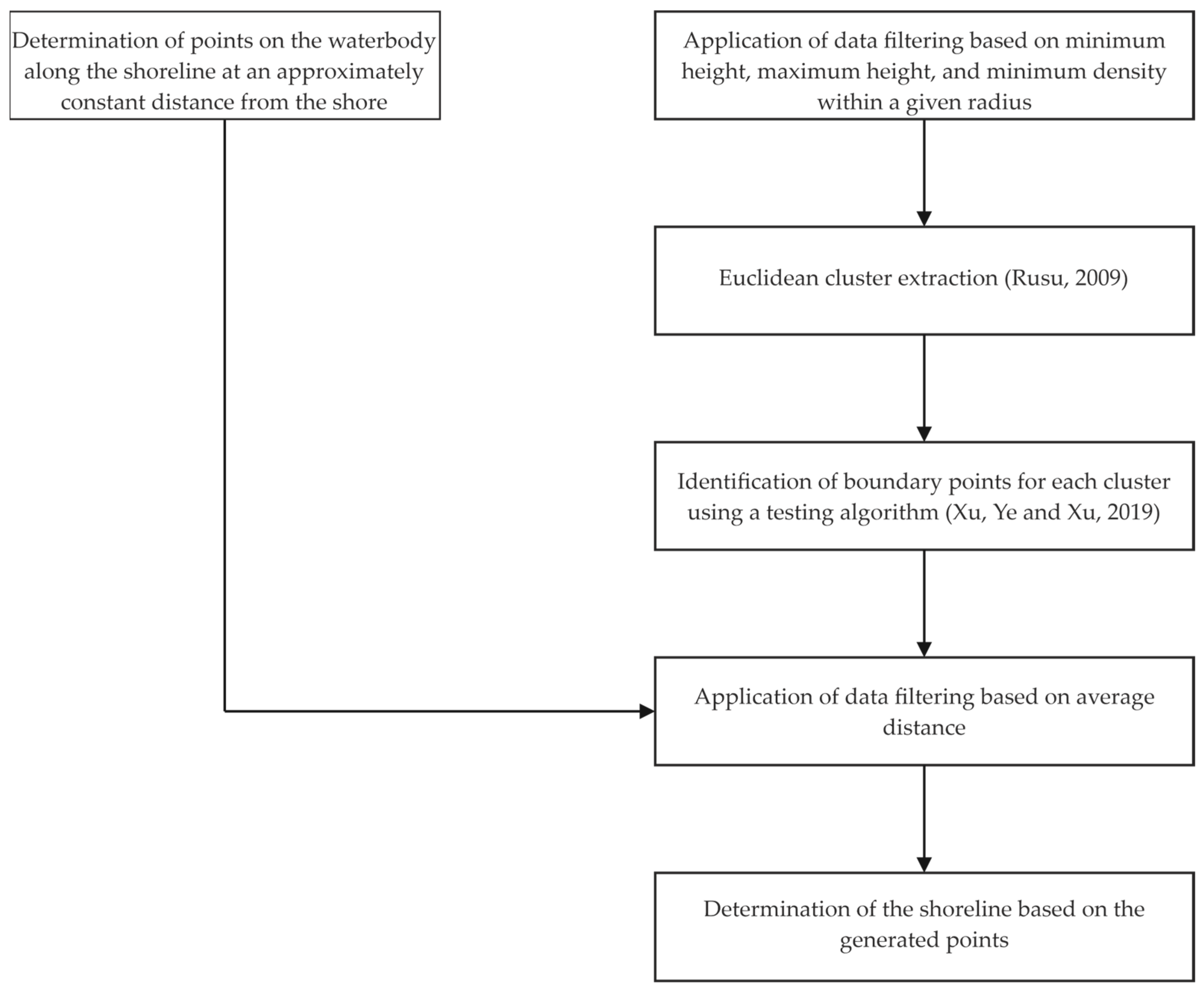
The second stage of data processing involved MLS data acquired with the USV HydroDron-1. The point cloud was initially prepared in HYPACK software. Automatic noise removal was applied first, followed by manual elimination of incorrectly registered points. The cleaned point cloud was then processed using a modified approach proposed by Xu et al. [44], adapted to the specifics of MLS data (Figure 4). In the first step, point filtering was carried out based on minimum and maximum height criteria and the required density within a given radius, which enabled the removal of outliers that degraded the data. Next, cluster extraction was performed using the Euclidean method [50], grouping points into homogeneous sets corresponding to sections of the point cloud. The following stage involved identifying boundary points with the convex hull algorithm, which detected points located on the outer edges of the clusters and potentially representing the shoreline. An additional filtering step based on the mean distance from the shore was then applied to remove points located too far from the shoreline. Finally, a continuous shoreline representing the outline of the waterbody was generated from the boundary points.
To enable a direct comparison between the MLS and UAV datasets, both were appropriately harmonised during data processing. Despite substantial differences in structure and scale (8.4 million MLS points and 489 UAV images, respectively), the datasets were transformed into the same PL-2000/PL-EVRF2007 coordinate reference system and restricted to a common buffer zone along the shoreline.
For shoreline extraction, the MLS point cloud data were filtered to retain only points located close to the water surface, while the UAV orthophoto was resampled to a uniform pixel size. These procedures ensured that both datasets exhibited a comparable spatial extent and similar geometric conditions, allowing for reliable accuracy assessment against the GNSS RTK reference measurements.
The accuracy of the shorelines derived from UAV and MLS data was evaluated against a reference line obtained from GNSS RTK measurements. The comparison involved calculating the shortest distances between points on the UAV or MLS shoreline and the nearest points on the reference line. From these distances, three statistical metrics were calculated: mean error, standard deviation, and the error value within which 95% of shoreline points lie (corresponding to 2.45·σ). The statistical analysis enabled the identification of systematic error, i.e., the mean displacement of the shoreline relative to the geodetic measurements, as well as the spread of local errors, which describes the variability of accuracy at individual points. The resulting 2.45·σ value, interpreted as the error encompassing 95% of shoreline points, was compared with the accuracy requirements for shoreline determination specified in the IHO S-44 standard for different orders of hydrographic surveys [51]. Due to their high accuracy, the GNSS RTK measurements were adopted as the reference shoreline (the true value) for assessing the accuracy of its determination.

3. Results

Section 3 presents the findings of the shoreline position accuracy assessment based on MLS and UAV data. It details the extraction of the shoreline from the MLS point cloud and the UAV-derived orthophoto, followed by a comparison with the reference line obtained from GNSS RTK measurements. Mean errors, standard deviations, and accuracy values at the 95% confidence level (2.45·σ) were calculated, demonstrating that both methods comply with the IHO Special Order requirements, with the UAV achieving sub-decimetre accuracy and the MLS delivering metre-level accuracy.

3.1. Shoreline Extraction from MLS Data

The point cloud obtained from MLS provided high-quality geometric data but was characterised by considerable variability in spatial density. After filtering out noise and secondary reflections, it was possible to reliably represent hydrotechnical infrastructure elements, including piers, as well as the natural boundary between land and water. Visual analysis of the cleaned point cloud (Figure 5) showed that MLS represents coastal zone topography in great detail. It may be assumed that, in this respect, MLS outperforms ALS data, which are acquired from greater altitudes and reproduce local topographic details with lower precision.
To evaluate the quality and uniformity of the MLS point cloud distribution, a statistical analysis of point density was conducted. A regular square grid of 1 × 1 m cells was used in the calculations. The average density was 155 pts/m2, with a standard deviation of 625 pts/m2. Point densities within the grid ranged from 0 to 11,061, with 61.51% of the cells containing no data. This significant irregularity in point density reflects the specific characteristics of MLS in coastal zones, where both terrain obstacles and laser signal reflections from the water surface affect the quality of data acquisition.
The application of the modified Xu et al. method [44] enabled the extraction of points associated with the land–water boundary. Through data selection, points originating from the water surface and noise were removed, yielding a set of points located along the actual shoreline. After reducing redundant data and merging the selected clusters, a continuous shoreline was generated using the modified parametric method. Comparison with a reference line derived from GCPs demonstrated strong agreement with the natural land–water boundary. Minor deviations of the shoreline were observed only near piers and trees along the shore, which acted as terrain obstacles hindering its determination (Figure 6).
The accuracy of the shoreline extracted from MLS data was evaluated through a distance analysis relative to the reference line generated from GCPs. The mean position error was 0.75 m, with a standard deviation of 0.47 m. The error threshold within which 95% of the shoreline points fall (2.45·σ) was 1.16 m. Based on this measure, the accuracy significantly exceeds the requirements of the Special Order defined in the IHO S-44 standard (shoreline position error not exceeding 5 m at the 95% confidence level).

3.2. Shoreline Extraction from the UAV Orthophoto

The orthophoto generated from aerial images acquired using a UAV constituted the second source of data analysed in this study. Owing to its very high spatial resolution, it was possible to manually determine the shoreline in two variants: the natural shoreline and one including piers. This division was introduced because the high quality of the imagery allows for clear identification of both the land–water boundary and hydrotechnical infrastructure elements (e.g., piers). For the MLS data, piers were not analysed as a separate variant, since the point cloud does not provide full and continuous representation of the slender structural elements of such objects above the water. Therefore, the analysis focused exclusively on the natural shoreline, which enabled direct comparison of results and minimised the risk of interpretative errors.
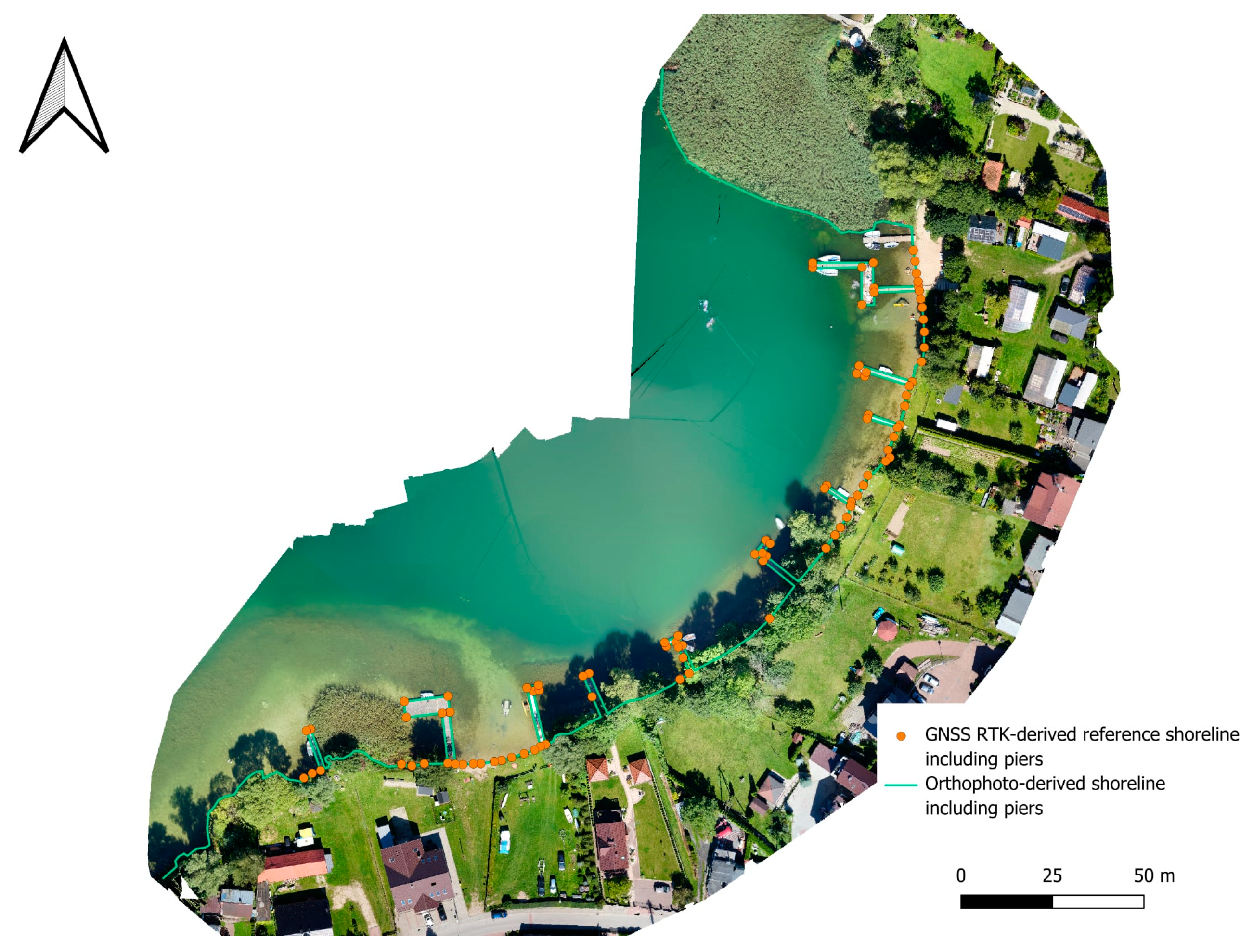
To assess the accuracy of shoreline determination, a distance analysis was performed by comparing the lines obtained from the UAV orthophoto with the reference line derived from GCPs. The results showed very high agreement. For the natural shoreline, the mean distance from the reference line was 0.03 m, with a standard deviation of 0.02 m, and the error range within which 95% of the points fall was 0.05 m (Figure 7). For the variant including piers, the values were nearly identical: a mean difference of 0.03 m, a standard deviation of 0.02 m, and a 95% error of 0.06 m (Figure 8). These results confirm that UAV data provide sub-decimetre accuracy in shoreline determination, fully meeting and even significantly exceeding the requirements of the Special Order defined in the IHO S-44 standard.
The advantages of the UAV orthophoto lie not only in its high geometric accuracy but also in its ability to support clear visual interpretation of the shoreline. This enables precise determination of the land–water boundary, including hydrotechnical infrastructure elements such as piers. A limitation of this method, however, may be occlusions caused by vegetation and reflections of sunlight on the water surface, which can hinder visual interpretation. In the analysed waterbody, these factors had no significant impact on the final result, confirming the usefulness of UAV data for shoreline extraction.

4. Discussion

The analysis shows that both MLS data and the UAV orthophoto enable effective shoreline extraction, although they differ significantly in accuracy, data characteristics, and application scope. MLS provides high-quality three-dimensional spatial information but is affected by considerable variability in point density and limited accuracy in determining the land–water boundary. UAVs, on the other hand, generate imagery with very high spatial resolution, allowing for near-sub-decimetre identification of surface features and clear visual interpretation. A comparison of the two data sources makes it possible not only to assess the accuracy of shoreline extraction but also to highlight the advantages and limitations of each method in the context of their application to hydrographic surveys and coastal zone monitoring.
The accuracy of shoreline determination, evaluated using distance analysis relative to the reference line, clearly demonstrates the advantage of the UAV orthophoto. For the natural shoreline, the 95% error was 0.05 m, while for the variant including piers it was 0.06 m. For MLS data, the 95% error was significantly higher, reaching 1.16 m. This indicates that UAV provides sub-decimetre accuracy, whereas MLS is characterised by metre-level accuracy. Despite this difference, the results of both methods satisfy the requirements of the IHO Special Order (≤5 m at the 95% confidence level), confirming their suitability for hydrographic applications.
Beyond the quantitative aspect, the methods also differ in their object identification capabilities and technical limitations. UAV orthophotos, owing to their very high spatial resolution, enable accurate determination of the land–water boundary as well as hydrotechnical infrastructure elements such as piers. MLS data, on the other hand, despite lower spatial accuracy, are independent of lighting conditions and allow the capture of areas covered with vegetation, which enables shoreline determination in hard-to-access regions.
In practice, the two methods should be regarded as complementary: UAV provides very high accuracy and clear identification of the shoreline, while MLS delivers three-dimensional data on the geometry of the coastal zone, enabling data acquisition even under challenging terrain conditions. The integration of both approaches yields a more complete and reliable representation of the shoreline, which is particularly important for the inventory and monitoring of hydrotechnical structures as well as for coastal zone management. A summary of the key differences and similarities between the methods is provided in Table 1.
To place the accuracy of the MLS and UAV results obtained in this study within a broader research context, these results were compared with those reported in contemporary shoreline mapping literature.
Studies based on medium- and high-resolution satellite imagery, such as Sentinel-2 and Landsat, typically report shoreline position errors ranging from 2 to 10 m, with the magnitude of these errors depending on spatial resolution, tidal variability, and radiometric contrast [10,11,26]. These values are considerably higher than those obtained in the present study.
Previous studies employing UAV photogrammetry typically achieve sub-meter accuracy, with reported errors ranging from 0.05 to 0.40 m, depending on GCP configuration, vegetation cover, and shoreline morphology [23,30,31]. The UAV accuracy achieved in the present study (0.05–0.06 m) falls at the lower end of this range, confirming both the reliability of the applied processing workflow and the favourable conditions during data acquisition.
LiDAR-based methods, including ALS and MLS, generally achieve accuracy in shoreline determination on the order of metres due to occlusions, variable point density, and reflections from the water surface [21,22]. Published MLS studies report typical shoreline position errors ranging from 0.5 to 2.0 m, depending on the platform used and local environmental conditions. The MLS accuracy obtained in the present study (1.16 m) falls well within this range and indicates that MLS can meet the requirements of the IHO Special Order even in coastal zones characterised by complex morphology.
Overall, the comparison confirms that UAV photogrammetry offers significantly higher accuracy than satellite-based and LiDAR-based methods, while MLS remains competitive among mobile laser scanning systems and provides important advantages complementary to UAV, such as improved vegetation penetration, robustness to varying lighting conditions, and greater vertical accuracy. These results confirm that both methods are suitable for detailed shoreline mapping in complex inland waterbodies.

5. Conclusions

The research conducted on Lake Kłodno demonstrated that modern remote sensing technologies based on unmanned platforms (drones) are effective and complementary methods for acquiring spatial data to determine complex shorelines. A comparative analysis of the measurement results confirmed that both the MLS system installed on the USV and UAV photogrammetry meet the accuracy requirements specified for the IHO Special Order. These methods differ in the type of data they provide: MLS generates a dense 3D point cloud with high spatial accuracy, whereas UAV photogrammetry produces orthophotos and surface models containing both geometric and radiometric information. Their differing sensitivity to environmental factors makes their combined application a more reliable method for determining the land–water boundary.
The results indicate that the UAV orthophoto provides the highest accuracy and enables clear interpretation of the shoreline, whereas MLS delivers additional 3D spatial information that is independent of lighting conditions and allows the surveying of areas covered by vegetation. Thus, the two methods serve different purposes: UAV photogrammetry is particularly useful for tasks requiring accurate determination of the land–water boundary and hydrotechnical structures, while MLS is well suited to analysing the topography of the nearshore zone.
The practical significance of the study lies in demonstrating the need for complementary integration of the two methods. Their combined application provides a more comprehensive representation of the land–water environment, which is particularly important for the inventory of hydrotechnical structures, the monitoring of hydromorphological changes, and the planning of water management activities. The integration of the two methods can be achieved by combining the high spatial accuracy of UAV orthophoto with the three-dimensional geometric information provided by MLS data, enabling more reliable land–water boundary determination under complex shoreline conditions. Future research should extend the study to other types of waterbodies and take seasonal variability into account, which would allow the assessment of the stability and universality of the applied methods. Another important direction is the development of methods for the automatic extraction of shorelines, which when combined with MLS and UAV photogrammetry data could significantly enhance the monitoring and analysis of hydromorphological changes.
An additional promising direction for future research is the integration of deep learning methods with MLS and UAV data. Previous studies indicate that convolutional neural networks and encoder–decoder architectures can substantially increase automation and enhance the reliability of shoreline extraction in complex environmental conditions. Applying such models to the high-resolution UAV orthophoto used in the present study would enable fully automated and more precise land–water boundary detection, including improved identification of hydrotechnical structures. Similarly, deep learning models tailored to point cloud processing may enhance the accuracy of shoreline detection in MLS data, particularly in areas where detection is hindered by vegetation shading or variable point density. Combining these methods with MLS and UAV datasets, which provide complementary information on terrain morphology and land cover, may support the development of more accurate and universally applicable shoreline monitoring techniques for inland waterbodies.

Author Contributions

Conceptualization, M.S.; methodology, M.S.; validation, M.S. and O.S.; formal analysis, M.S.; investigation, M.S. and O.S.; data curation, M.S. and O.S.; writing—original draft preparation, M.S.; writing—review and editing, O.S.; visualization, M.S. and O.S.; supervision, M.S. All authors have read and agreed to the published version of the manuscript.

Funding

This research was funded from the statutory activities of Gdynia Maritime University, grant number WN/2025/PZ/05.

Data Availability Statement

The original contributions presented in the study are included in the article; further inquiries can be directed to the corresponding author.

Conflicts of Interest

The authors declare no conflicts of interest.

Abbreviations

The following abbreviations are used in this manuscript:
ALSairborne laser scanning
DSMdigital surface model
GCPground control point
GIOŚChief Inspectorate of Environmental Protection (Poland)
GISgeographic information system
GNSSglobal navigation satellite system
GSDground sample distance
IHOInternational Hydrographic Organization
IMGW-PIBInstitute of Meteorology and Water Management—National Research Institute
INNOBATInnovative Autonomous Unmanned System for Bathymetric Monitoring of Shallow Waterbodies
INSinertial navigation system
LiDARlight detection and ranging
MLSmobile laser scanning
RTKreal time kinematic
SVPsound velocity profiler
UAVunmanned aerial vehicle
USVunmanned surface vehicle
σstandard deviation

References

  1. Boak, E.H.; Turner, I.L. Shoreline Definition and Detection: A Review. J. Coast. Res. 2005, 21, 688–703. [Google Scholar] [CrossRef]
  2. Toure, S.; Diop, O.; Kpalma, K.; Maiga, A.S. Shoreline Detection Using Optical Remote Sensing: A Review. ISPRS Int. J. Geo-Inf. 2019, 8, 75. [Google Scholar] [CrossRef]
  3. Luijendijk, A.; Hagenaars, G.; Ranasinghe, R.; Baart, F.; Donchyts, G.; Aarninkhof, S. The State of the World’s Beaches. Sci. Rep. 2018, 8, 6641. [Google Scholar] [CrossRef] [PubMed]
  4. Nicholls, R.J.; Cazenave, A. Sea-Level Rise and Its Impact on Coastal Zones. Science 2010, 328, 1517–1520. [Google Scholar] [CrossRef]
  5. Stockdon, H.F.; Sallenger, A.H., Jr.; List, J.H.; Holman, R.A. Estimation of Shoreline Position and Change Using Airborne Topographic Lidar Data. J. Coast. Res. 2002, 18, 502–513. [Google Scholar]
  6. Wang, J.; Wang, L.; Feng, S.; Peng, B.; Huang, L.; Fatholahi, S.N.; Tang, L.; Li, J. An Overview of Shoreline Mapping by Using Airborne LiDAR. Remote Sens. 2023, 15, 253. [Google Scholar] [CrossRef]
  7. Smith, K.E.L.; Terrano, J.F.; Pitchford, J.L.; Archer, M.J. Coastal Wetland Shoreline Change Monitoring: A Comparison of Shorelines from High-Resolution WorldView Satellite Imagery, Aerial Imagery, and Field Surveys. Remote Sens. 2021, 13, 3030. [Google Scholar] [CrossRef]
  8. Wantzen, K.M.; Rothhaupt, K.-O.; Mörtl, M.; Cantonati, M.; Tóth, L.G.; Fischer, P. Ecological Effects of Water-Level Fluctuations in Lakes: An Urgent Issue. Hydrobiologia 2008, 613, 1–4. [Google Scholar] [CrossRef]
  9. Adagbasa, E.G.; Samuel, K.J.; Durowoju, O.S.; Obidiya, M.O. Drowning in the Sea: A Digital Shoreline Analysis of Coastline Changes in Ilaje, Nigeria. Pap. Appl. Geogr. 2024, 10, 301–318. [Google Scholar] [CrossRef]
  10. Kuleli, T.; Guneroglu, A.; Karsli, F.; Dihkan, M. Automatic Detection of Shoreline Change on Coastal Ramsar Wetlands of Turkey. Ocean Eng. 2011, 38, 1141–1149. [Google Scholar] [CrossRef]
  11. Specht, M.; Specht, C.; Lewicka, O.; Makar, A.; Burdziakowski, P.; Dąbrowski, P. Study on the Coastline Evolution in Sopot (2008–2018) Based on Landsat Satellite Imagery. J. Mar. Sci. Eng. 2020, 8, 464. [Google Scholar] [CrossRef]
  12. Yermolaev, O.; Usmanov, B.; Gafurov, A.; Poesen, J.; Vedeneeva, E.; Lisetskii, F.; Nicu, I.C. Assessment of Shoreline Transformation Rates and Landslide Monitoring on the Bank of Kuibyshev Reservoir (Russia) Using Multi-Source Data. Remote Sens. 2021, 13, 4214. [Google Scholar] [CrossRef]
  13. Taveneau, A.; Almar, R.; Bergsma, E.W.J.; Sy, B.A.; Ndour, A.; Sadio, M.; Garlan, T. Observing and Predicting Coastal Erosion at the Langue de Barbarie Sand Spit around Saint Louis (Senegal, West Africa) through Satellite-Derived Digital Elevation Model and Shoreline. Remote Sens. 2021, 13, 2454. [Google Scholar] [CrossRef]
  14. Warrick, J.A.; Buscombe, D.; Vos, K.; Bryan, K.R.; Castelle, B.; Cooper, J.A.G.; Harley, M.D.; Jackson, D.W.T.; Ludka, B.C.; Masselink, G.; et al. Coastal Shoreline Change Assessments at Global Scales. Nat. Commun. 2024, 15, 2316. [Google Scholar] [CrossRef]
  15. Christofi, D.; Mettas, C.; Evagorou, E.; Stylianou, N.; Eliades, M.; Theocharidis, C.; Chatzipavlis, A.; Hasiotis, T.; Hadjimitsis, D. A Review of Open Remote Sensing Data with GIS, AI, and UAV Support for Shoreline Detection and Coastal Erosion Monitoring. Appl. Sci. 2025, 15, 4771. [Google Scholar] [CrossRef]
  16. Tiede, J.; Jordan, C.; Moghimi, A.; Schlurmann, T. Long-Term Shoreline Changes at Large Spatial Scales at the Baltic Sea: Remote-Sensing Based Assessment and Potential Drivers. Front. Mar. Sci. 2023, 10, 1207524. [Google Scholar] [CrossRef]
  17. Horritt, M.S.; Bates, P.D. Evaluation of 1D and 2D Numerical Models for Predicting River Flood Inundation. J. Hydrol. 2002, 268, 87–99. [Google Scholar] [CrossRef]
  18. Idris, N.H.; Deng, X.; Md Din, A.H.; Idris, N.H. CAWRES: A Waveform Retracking Fuzzy Expert System for Optimizing Coastal Sea Levels from Jason-1 and Jason-2 Satellite Altimetry Data. Remote Sens. 2017, 9, 603. [Google Scholar] [CrossRef]
  19. Stateczny, A.; Halicki, A.; Specht, M.; Specht, C.; Lewicka, O. Review of Shoreline Extraction Methods from Aerial Laser Scanning. Sensors 2023, 23, 5331. [Google Scholar] [CrossRef]
  20. Hodgson, M.E.; Bresnahan, P. Accuracy of Airborne Lidar-Derived Elevation: Empirical Assessment and Error Budget. Photogramm. Eng. Remote Sens. 2004, 70, 331–339. [Google Scholar] [CrossRef]
  21. Schneider, D.; Blaskow, R. Boat-Based Mobile Laser Scanning for Shoreline Monitoring of Large Lakes. Int. Arch. Photogramm. Remote Sens. Spatial Inf. Sci. 2021, 43, 759–762. [Google Scholar] [CrossRef]
  22. Di Stefano, F.; Chiappini, S.; Gorreja, A.; Balestra, M.; Pierdicca, R. Mobile 3D Scan LiDAR: A Literature Review. Geomatics Nat. Hazards Risk 2021, 12, 2387–2429. [Google Scholar] [CrossRef]
  23. Del Pizzo, S.; Angrisano, A.; Gaglione, S.; Troisi, S. Assessment of Shoreline Detection Using UAV Photogrammetry. In Proceedings of the 2020 IMEKO TC-19 International Workshop on Metrology for the Sea (IMEKO 2020), Naples, Italy, 5–7 October 2020. [Google Scholar]
  24. Vaaja, M.; Kukko, A.; Kaartinen, H.; Kurkela, M.; Kasvi, E.; Flener, C.; Hyyppä, H.; Hyyppä, J.; Järvelä, J.; Alho, P. Data Processing and Quality Evaluation of a Boat-Based Mobile Laser Scanning System. Sensors 2013, 13, 12497–12515. [Google Scholar] [CrossRef]
  25. Markiewicz, Ł.; Mazurek, P.; Chybicki, A. Coastline Change-Detection Method Using Remote Sensing Satellite Observation Data. Hydroacoustics 2016, 19, 277–284. [Google Scholar]
  26. Pardo-Pascual, J.E.; Almonacid-Caballer, J.; Cabezas-Rabadán, C.; Fernández-Sarría, A.; Armaroli, C.; Ciavola, P.; Montes, J.; Souto-Ceccon, P.E.; Palomar-Vázquez, J. Assessment of Satellite-Derived Shorelines Automatically Extracted from Sentinel-2 Imagery Using SAET. Coast. Eng. 2024, 188, 104426. [Google Scholar] [CrossRef]
  27. Vos, K.; Splinter, K.D.; Palomar-Vázquez, J.; Pardo-Pascual, J.E.; Almonacid-Caballer, J.; Cabezas-Rabadán, C.; Kras, E.C.; Luijendijk, A.P.; Calkoen, F.; Almeida, L.P.; et al. Benchmarking Satellite-Derived Shoreline Mapping Algorithms. Commun. Earth Environ. 2023, 4, 345. [Google Scholar] [CrossRef]
  28. Specht, O. Spatial Analysis of Bathymetric Data from UAV Photogrammetry and ALS LiDAR: Shallow-Water Depth Estimation and Shoreline Extraction. Remote Sens. 2025, 17, 3115. [Google Scholar] [CrossRef]
  29. Śledziowski, J.; Giza, A.; Terefenko, P. S-LiNE: An Open-Source LiDAR Toolbox for Dune Coasts Shoreline Mapping. SoftwareX 2025, 31, 102261. [Google Scholar] [CrossRef]
  30. Vicens-Miquel, M.; Medrano, F.A.; Tissot, P.E.; Kamangir, H.; Starek, M.J.; Colburn, K. A Deep Learning Based Method to Delineate the Wet/Dry Shoreline and Compute Its Elevation Using High-Resolution UAS Imagery. Remote Sens. 2022, 14, 5990. [Google Scholar] [CrossRef]
  31. Zanutta, A.; Lambertini, A.; Vittuari, L. UAV Photogrammetry and Ground Surveys as a Mapping Tool for Quickly Monitoring Shoreline and Beach Changes. J. Mar. Sci. Eng. 2020, 8, 52. [Google Scholar] [CrossRef]
  32. Mason, D.C.; Davenport, I.J. Accurate and Efficient Determination of the Shoreline in ERS-1 SAR Images. IEEE Trans. Geosci. Remote Sens. 1996, 34, 1243–1253. [Google Scholar] [CrossRef]
  33. Gómez-de la Peña, E.; Coco, G.; Whittaker, C.; Montaño, J. On the Use of Convolutional Deep Learning to Predict Shoreline Change. Earth Surf. Dynam. 2023, 11, 1145–1160. [Google Scholar] [CrossRef]
  34. Khurram, S.; Pour, A.B.; Bagheri, M.; Helmy Ariffin, E.; Akhir, M.F.; Bahri Hamzah, S. Developments in Deep Learning Algorithms for Coastline Extraction from Remote Sensing Imagery: A Systematic Review. Earth Sci. Inform. 2025, 18, 292. [Google Scholar] [CrossRef]
  35. Mahmoud, A.S.; Mohamed, S.A.; Helmy, A.K.; Nasr, A.H. BDCN_UNet: Advanced Shoreline Extraction Techniques Integrating Deep Learning. Earth Sci. Inform. 2025, 18, 187. [Google Scholar] [CrossRef]
  36. Lv, Z.; Nunez, K.; Brewer, E.; Runfola, D. pyShore: A Deep Learning Toolkit for Shoreline Structure Mapping with High-Resolution Orthographic Imagery and Convolutional Neural Networks. Comput. Geosci. 2023, 171, 105296. [Google Scholar] [CrossRef]
  37. Seale, C.; Redfern, T.; Chatfield, P.; Luo, C.; Dempsey, K. Coastline Detection in Satellite Imagery: A Deep Learning Approach on New Benchmark Data. Remote Sens. Environ. 2022, 278, 113044. [Google Scholar] [CrossRef]
  38. Donchyts, G.; Baart, F.; Winsemius, H.; Gorelick, N.; Kwadijk, J.; Van de Giesen, N. Earth’s Surface Water Change over the Past 30 Years. Nat. Clim. Chang. 2016, 6, 810–813. [Google Scholar] [CrossRef]
  39. Konstantinou, A.; Scott, T.; Masselink, G.; Stokes, K.; Conley, D.; Castelle, B. Satellite-Based Shoreline Detection along High-Energy Macrotidal Coasts and Influence of Beach State. Mar. Geol. 2023, 462, 107082. [Google Scholar] [CrossRef]
  40. Halicki, A.; Specht, M.; Stateczny, A.; Specht, C.; Specht, O. Shoreline Extraction Based on LiDAR Data Obtained Using an USV. TransNav Int. J. Mar. Navig. Saf. Sea Transp. 2023, 17, 445–453. [Google Scholar] [CrossRef]
  41. Sardemann, H.; Blaskow, R.; Maas, H.-G. Camera-Aided Orientation of Mobile Lidar Point Clouds Acquired from an Uncrewed Water Vehicle. Sensors 2023, 23, 6009. [Google Scholar] [CrossRef] [PubMed]
  42. Glennie, C. Rigorous 3D Error Analysis of Kinematic Scanning LIDAR Systems. J. Appl. Geod. 2008, 1, 147–157. [Google Scholar] [CrossRef]
  43. Kukko, A.; Kaartinen, H.; Hyyppä, J.; Chen, Y. Multiplatform Mobile Laser Scanning: Usability and Performance. Sensors 2012, 12, 11712–11733. [Google Scholar] [CrossRef]
  44. Xu, S.; Ye, N.; Xu, S. A New Method for Shoreline Extraction from Airborne LiDAR Point Clouds. Remote Sens. Lett. 2019, 10, 496–505. [Google Scholar] [CrossRef]
  45. Stateczny, A.; Burdziakowski, P. Universal Autonomous Control and Management System for Multipurpose Unmanned Surface Vessel. Pol. Marit. Res. 2019, 26, 30–39. [Google Scholar] [CrossRef]
  46. Jaszcz, A.; Włodarczyk-Sielicka, M.; Stateczny, A.; Połap, D.; Garczyńska, I. Automated Shoreline Segmentation in Satellite Imagery Using USV Measurements. Remote Sens. 2024, 16, 4457. [Google Scholar] [CrossRef]
  47. Specht, M.; Stateczny, A.; Specht, C.; Widźgowski, S.; Lewicka, O.; Wiśniewska, M. Concept of an Innovative Autonomous Unmanned System for Bathymetric Monitoring of Shallow Waterbodies (INNOBAT System). Energies 2021, 14, 5370. [Google Scholar] [CrossRef]
  48. Alesheikh, A.A.; Ghorbanali, A.; Nouri, N. Coastline Change Detection Using Remote Sensing. Int. J. Environ. Sci. Technol. 2007, 4, 61–66. [Google Scholar] [CrossRef]
  49. Zhou, X.; Wang, J.; Zheng, F.; Wang, H.; Yang, H. An Overview of Coastline Extraction from Remote Sensing Data. Remote Sens. 2023, 15, 4865. [Google Scholar]
  50. Rusu, R.B. Semantic 3D Object Maps for Everyday Manipulation in Human Living Environments. Ph.D. Thesis, Technische Universität München, München, Germany, 2009. [Google Scholar]
  51. S-44 Edition 6.1.0; IHO Standards for Hydrographic Surveys. International Hydrographic Organization: Monaco, Monaco, 2022.
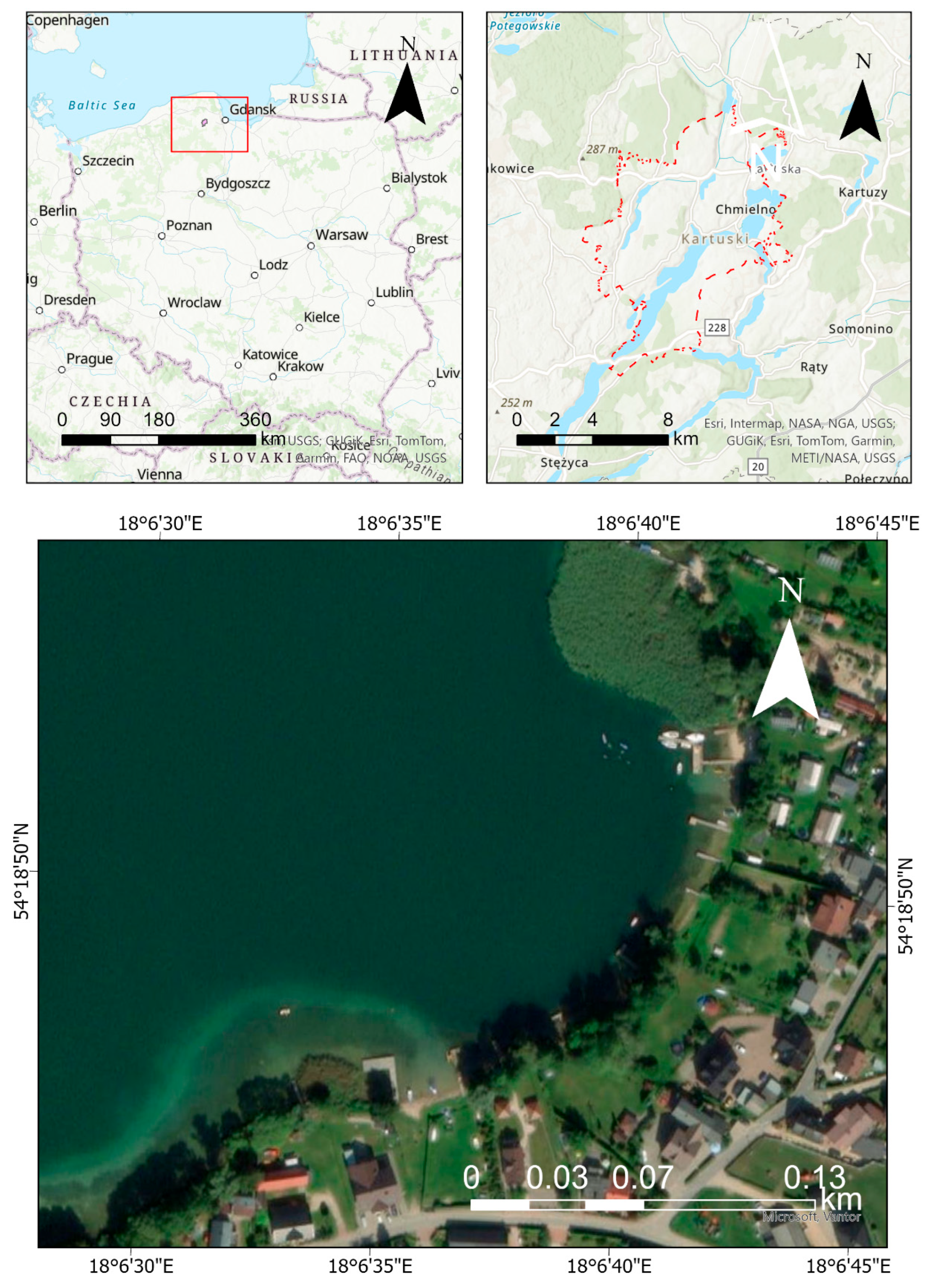
Figure 1. Location of the study area on Lake Kłodno.
Remotesensing 17 03940 g001
Figure 2. USV HydroDron-1 during MLS measurements (a) [46], and the prototype optoelectronic module mounted on the UAV Aurelia X8 Standard LE (b).
Remotesensing 17 03940 g002
Figure 3. Location of the study area at Lake Kłodno, showing the distribution of GCPs and GNSS RTK points used for shoreline validation.
Remotesensing 17 03940 g003
Figure 4. Block diagram of the modified shoreline extraction method by Xu et al. [44] and Rusu [50], adapted to MLS data.
Remotesensing 17 03940 g004
Figure 5. Cleaned MLS point cloud for Lake Kłodno.
Remotesensing 17 03940 g005
Figure 6. Shoreline derived from MLS data compared with the reference line determined using GCPs for Lake Kłodno.
Remotesensing 17 03940 g006
Figure 7. Natural shoreline determined from the UAV orthophoto compared with the reference line derived from GCPs for Lake Kłodno.
Remotesensing 17 03940 g007
Figure 8. Shoreline including piers determined from the UAV orthophoto compared with the reference line derived from GCPs for Lake Kłodno.
Remotesensing 17 03940 g008
Table 1. Comparison of MLS data and the UAV orthophoto for shoreline determination.
CriterionMLSUAV Orthophoto
Shoreline accuracy (95%)1.16 m0.05 m (natural shoreline);
0.06 m (including piers)
Data characteristics3D point cloud with variable densityRaster image with very high spatial resolution
Object identificationDetailed representation of the coastal zone; limited representation of slender structural
elements (e.g., piers)
Clear identification of the land–water boundary and hydrotechnical infrastructure
LimitationsIrregular point density, water reflections, lower spatial accuracyAffected by shadows and reflections on the
water surface
AdvantagesIndependence from lighting conditions;
ability to capture data in vegetated areas;
full 3D information on the coastal zone
Very high accuracy (sub-decimetre);
clear visual interpretation
ApplicationsShoreline determination in hard-to-access
areas; supplementing imagery
Accurate shoreline determination and
identification of hydrotechnical structures
Disclaimer/Publisher’s Note: The statements, opinions and data contained in all publications are solely those of the individual author(s) and contributor(s) and not of MDPI and/or the editor(s). MDPI and/or the editor(s) disclaim responsibility for any injury to people or property resulting from any ideas, methods, instructions or products referred to in the content.