
Spatial Diffusion Characteristics of Pine Wilt Disease at the Forest Stand Scale and Prediction of Individual Tree Mortality Risk

 , , ,
, , ,
Highlights
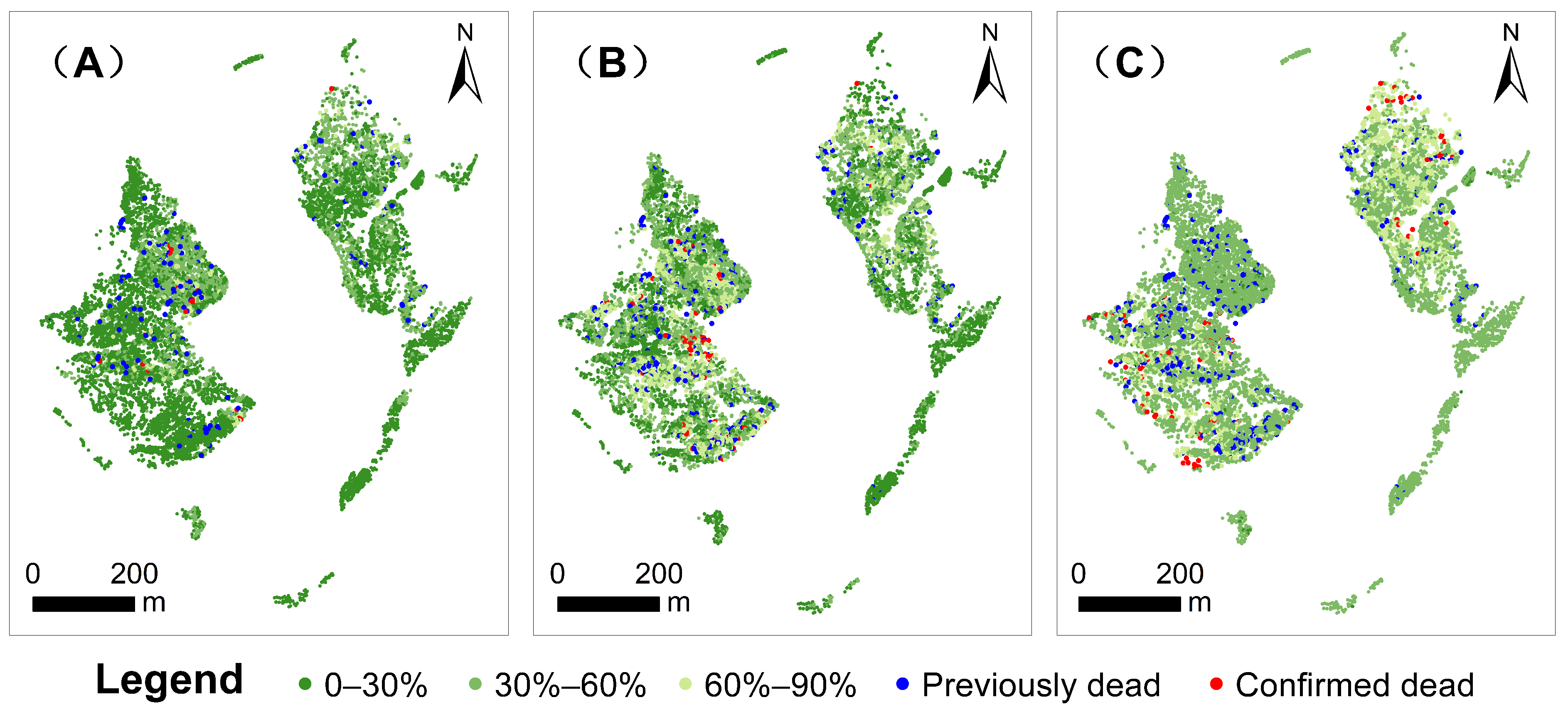
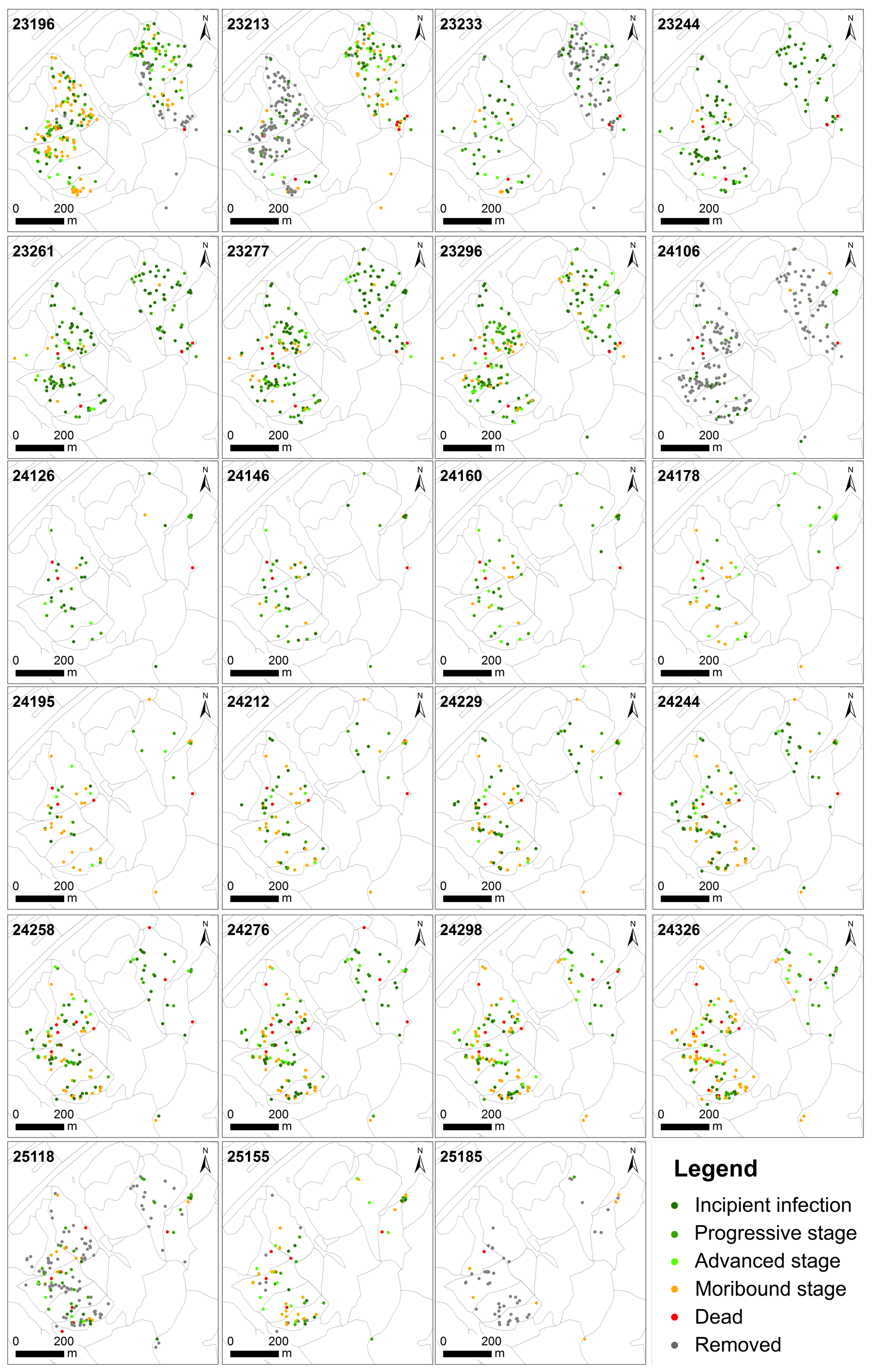
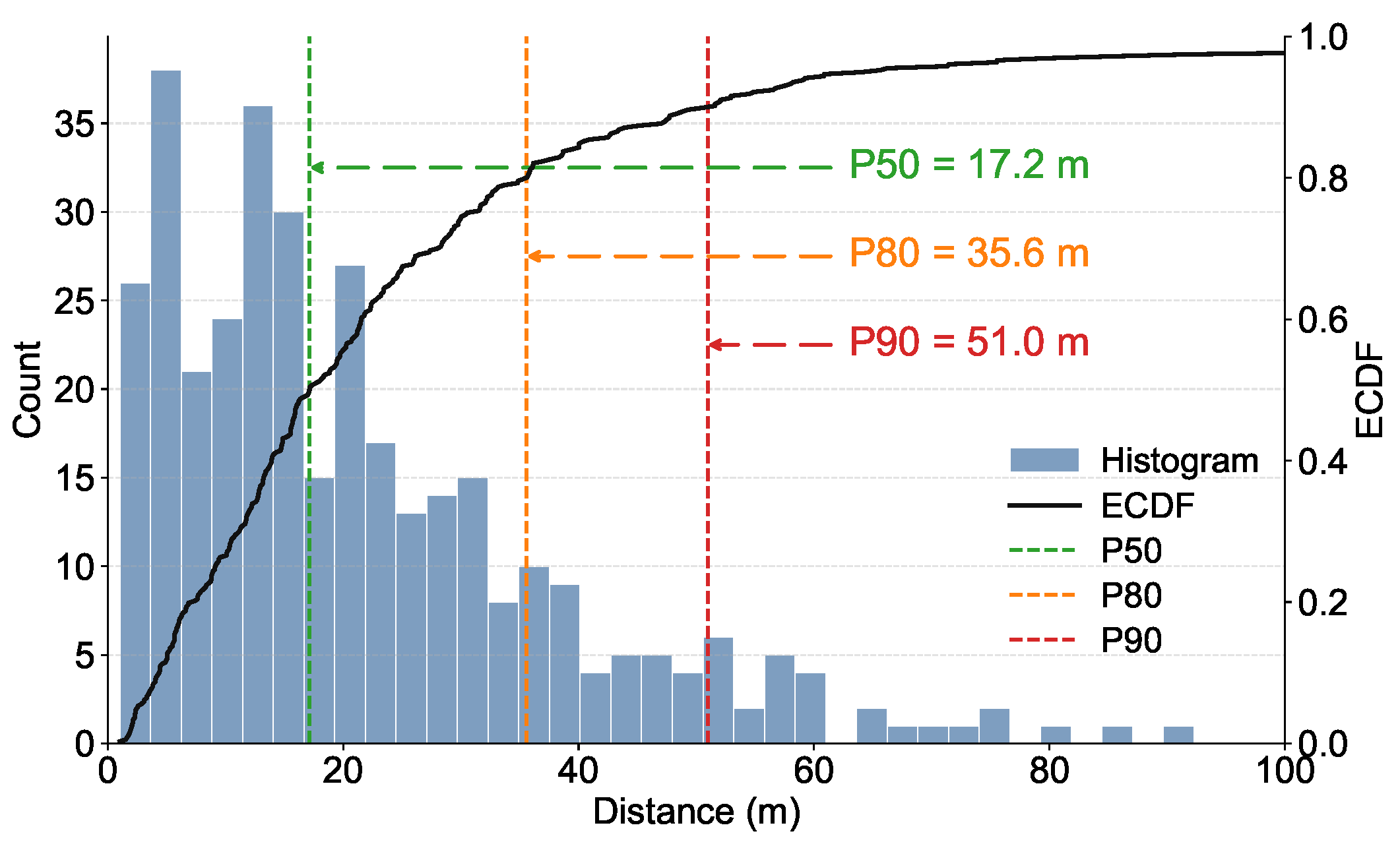
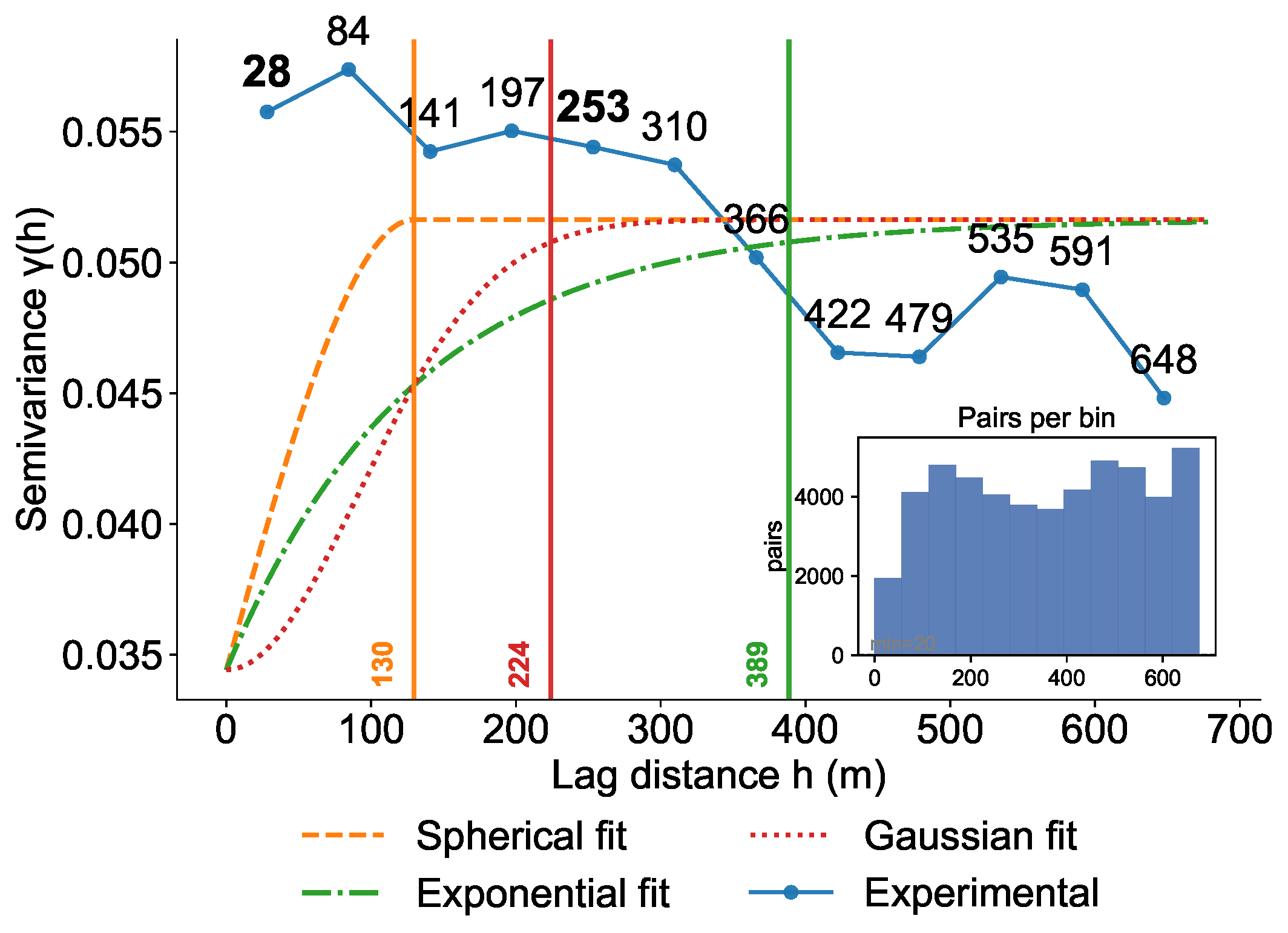
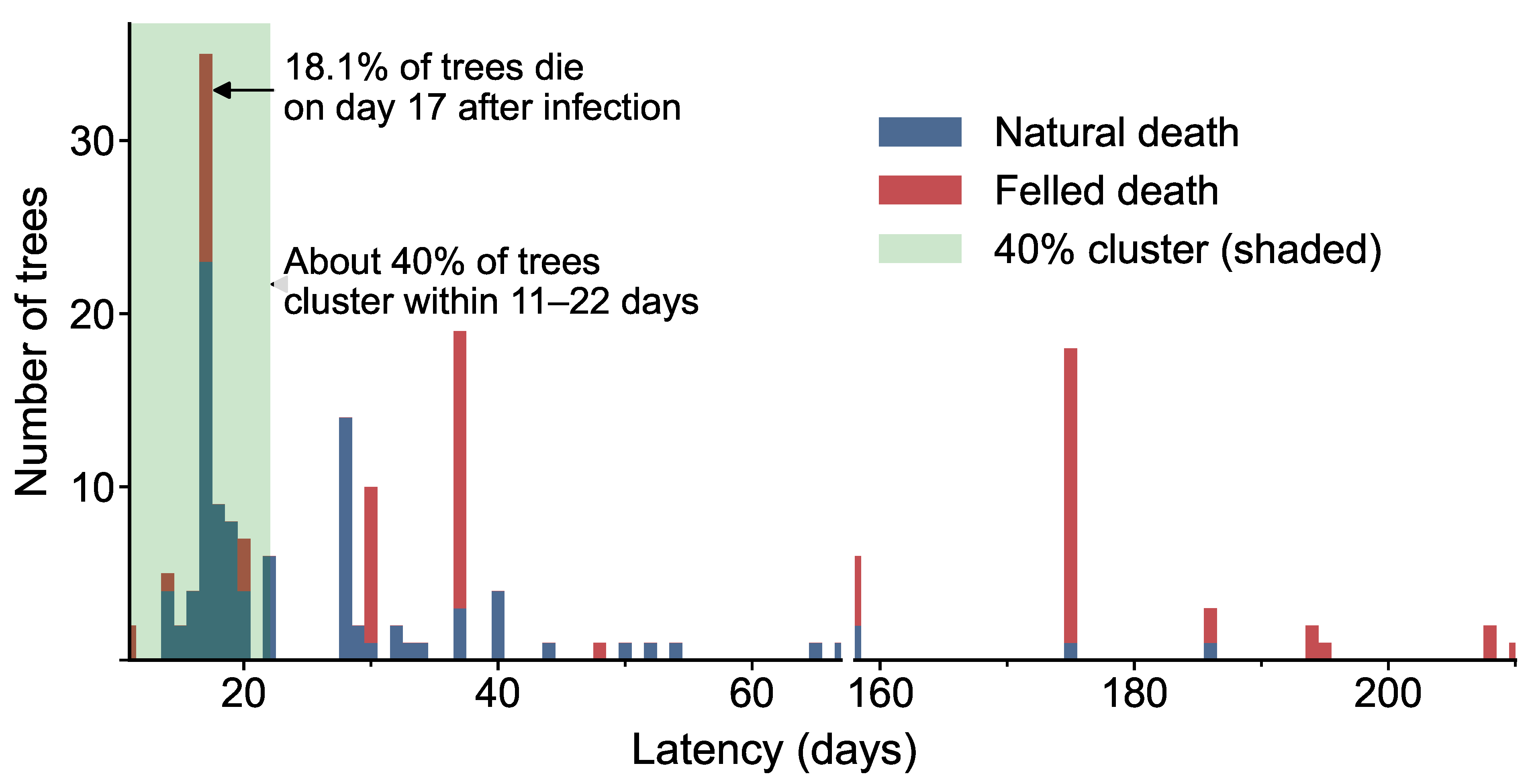
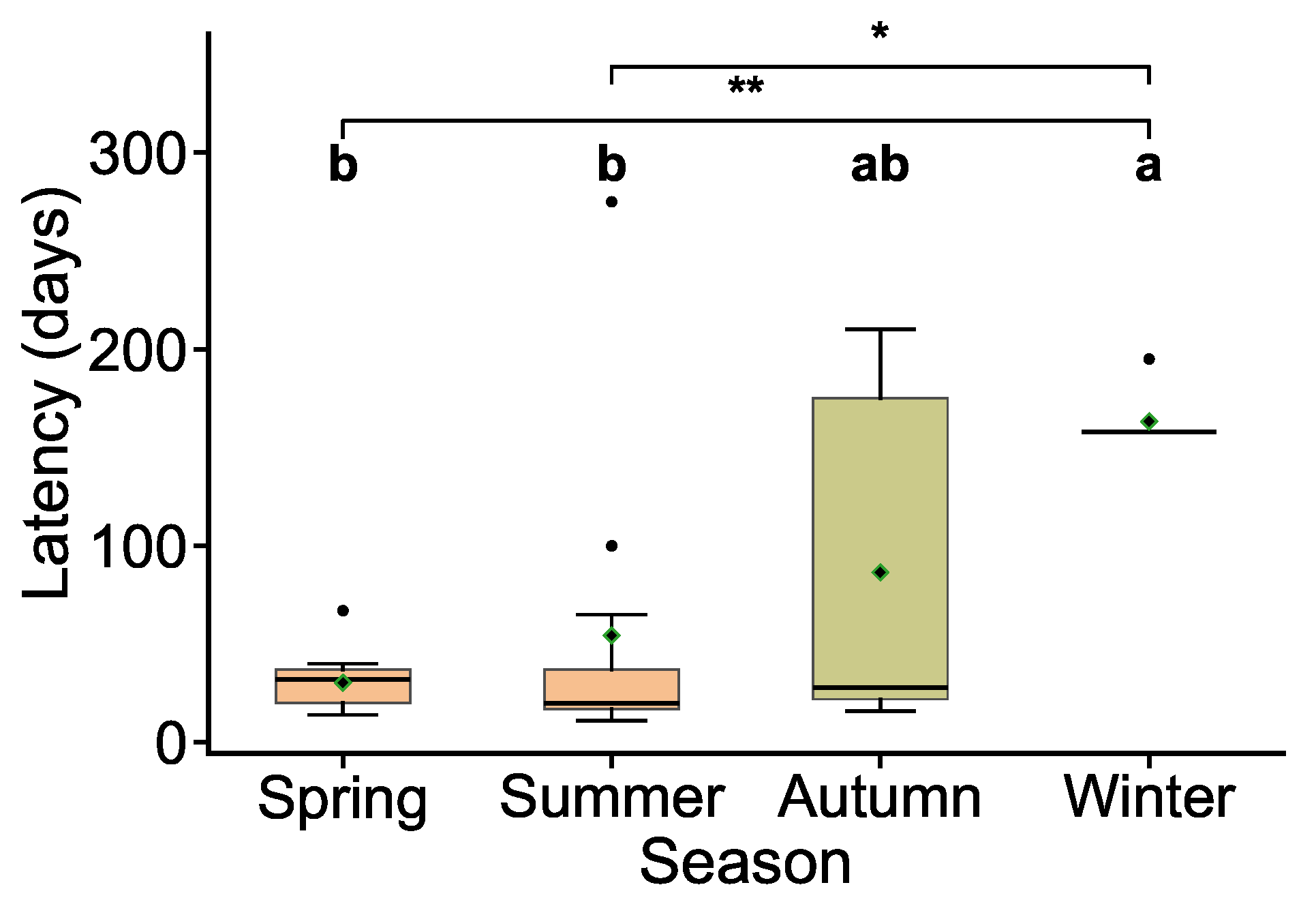
- Based on a three-year time-series UAV monitoring dataset, the study reconstructed the stand-scale diffusion process of pine wilt disease (PWD). The results revealed a dominant short-range spread (50% of events within 17.2 m) and a clear seasonal variation in mortality latency, which was shortest in spring and summer.
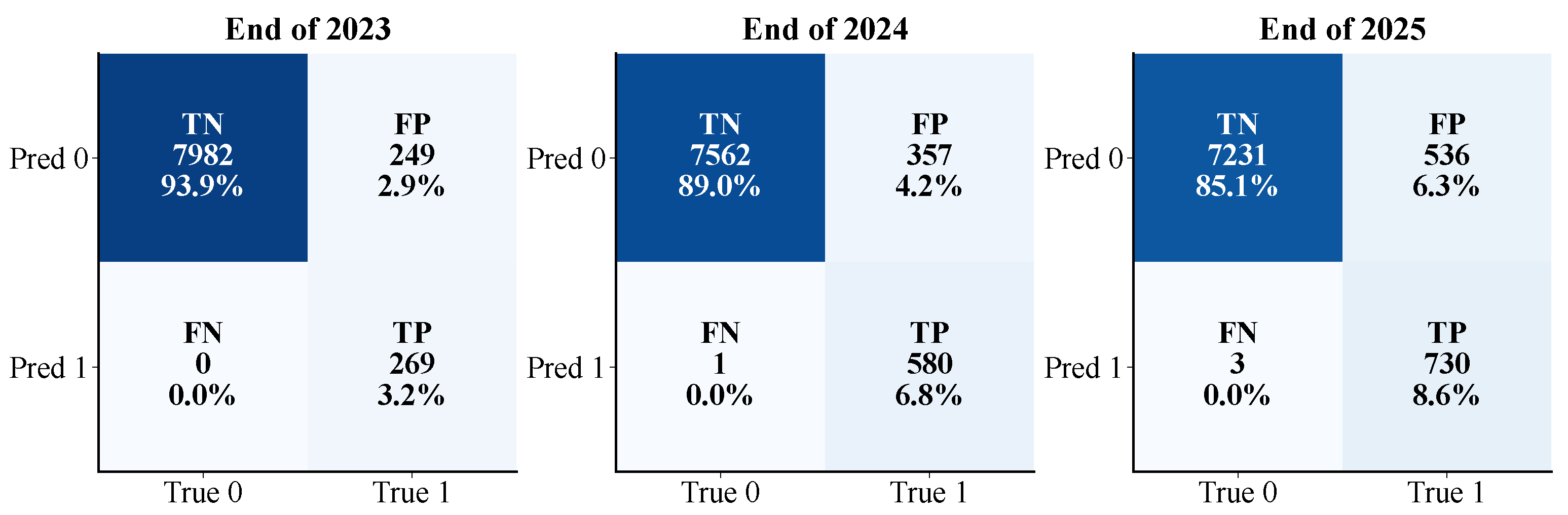
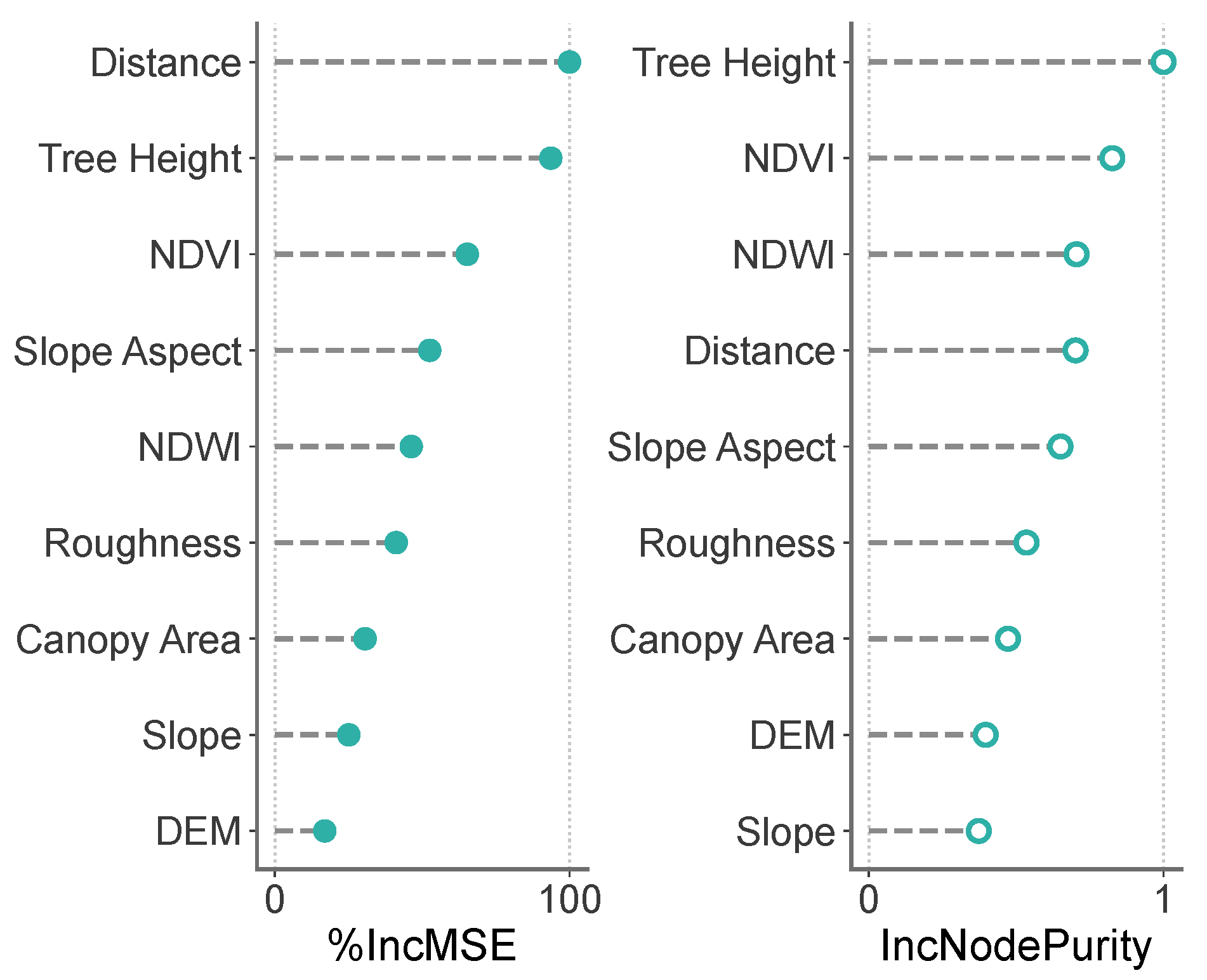
- A tree-level mortality risk prediction framework was developed using multi-source remote sensing features, with the random forest model achieving the best performance (AUC = 0.96) and accurately identifying 98.6% of high-risk trees.
- The results highlight that localized diffusion dominates PWD transmission, suggesting a 28 m sanitation radius and enhanced surveillance within 141 m for effective control.
- The proposed risk prediction framework provides a practical basis for dynamic early warning and precision management of pine wilt disease at the individual-tree scale.
Abstract
1. Introduction
2. Data and Study Area
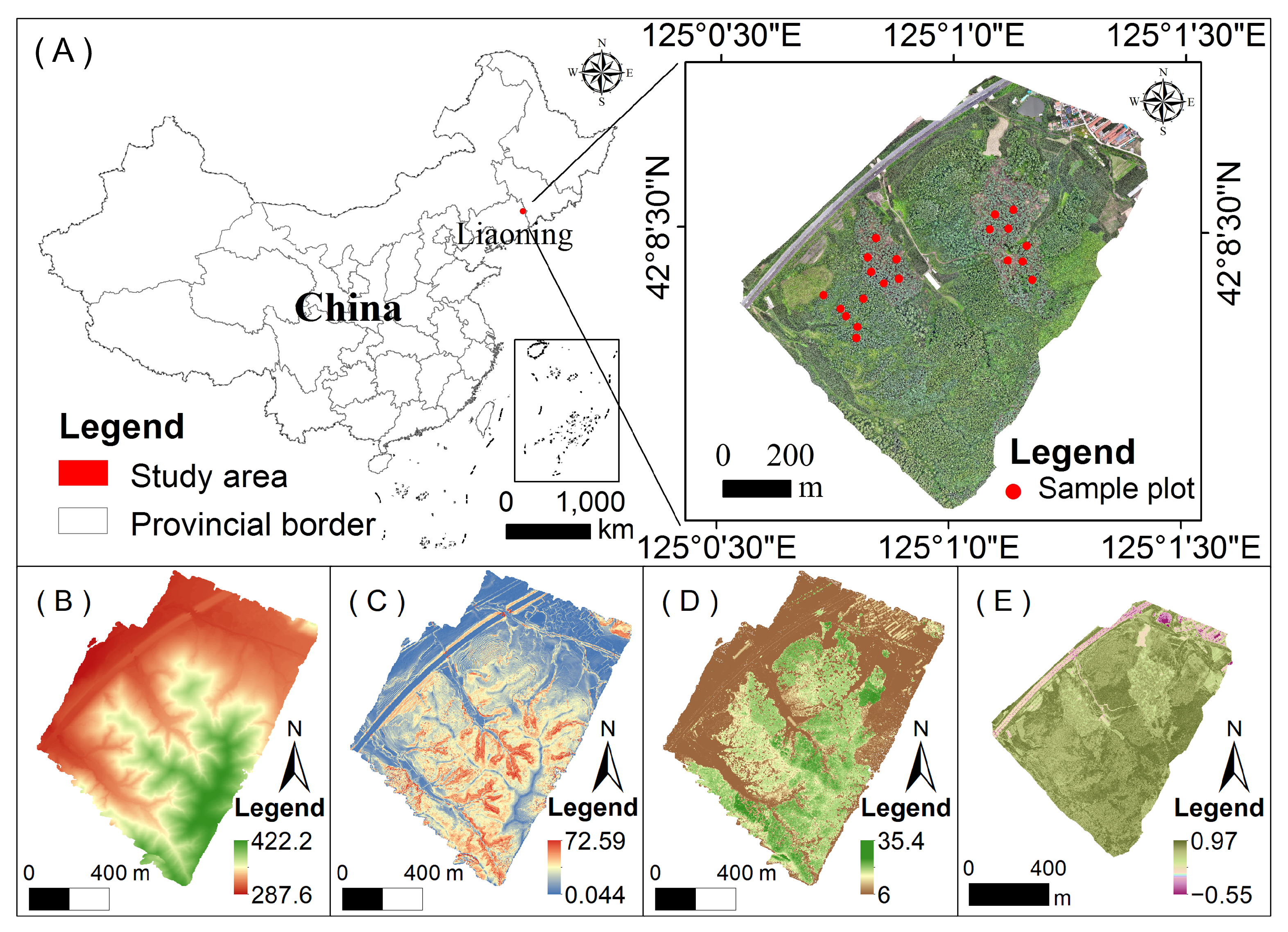
2.1. Overview of the Study Area
2.2. Data Acquisition and Sources
2.2.1. Field Survey
2.2.2. Remote Sensing Data Acquisition
2.2.3. Remote Sensing Data Preprocessing
2.2.4. Index Calculation and Tree Crown Extraction
2.3. Methods
2.3.1. Visual Interpretation of Tree Crowns and Classification of Disease Stages Based on High-Resolution Imagery
2.3.2. Kernel Density Estimation (KDE)
2.3.3. Lethal Distance Analysis Based on Semivariance Analysis
2.3.4. Construction and Evaluation of Spatial Prediction Models
3. Results and Analysis
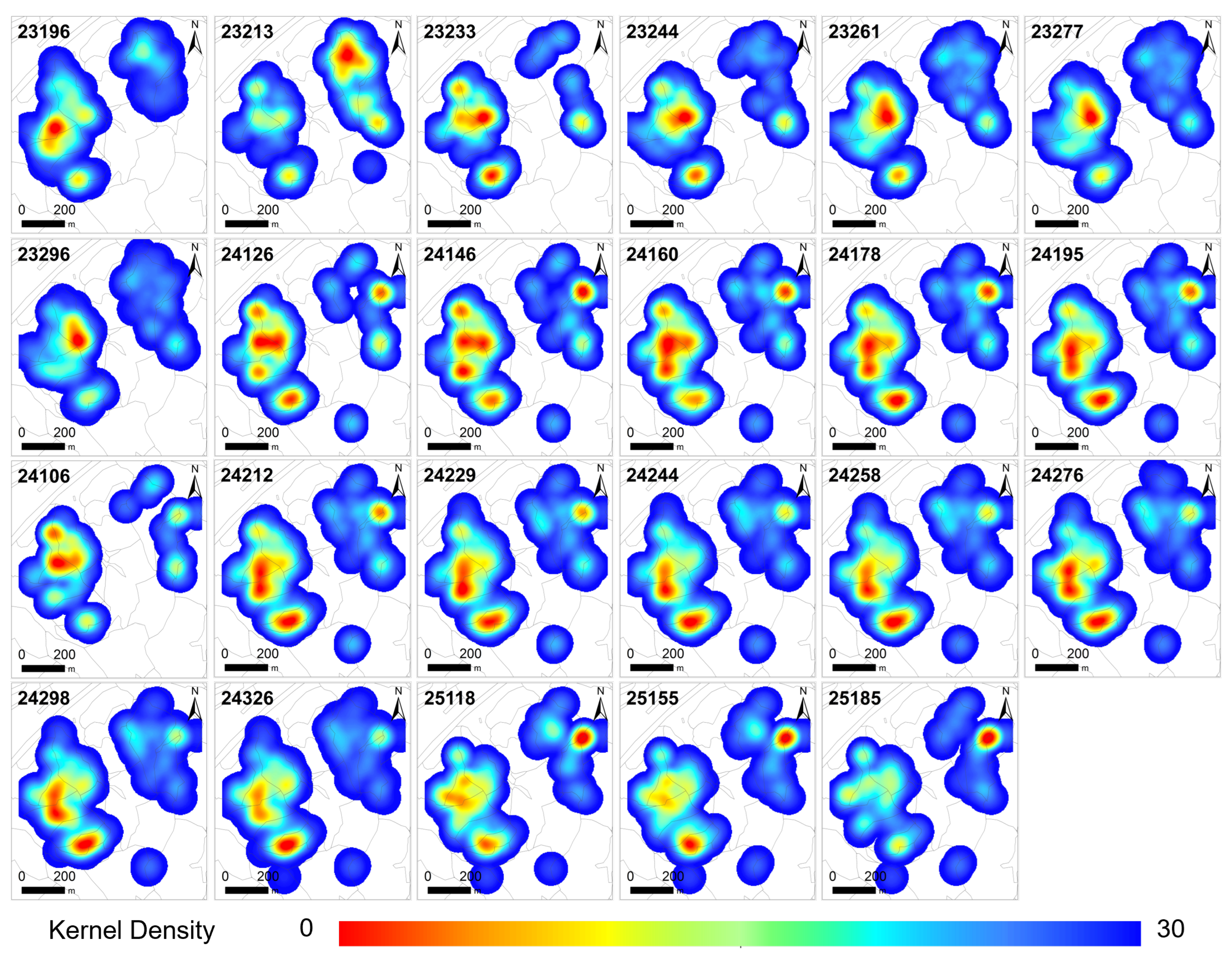
3.1. Spatiotemporal Dynamics of Pine Wilt Disease–Induced Tree Mortality
3.2. Spatial Spread and Mortality Analysis of Pine Wilt Disease
3.2.1. Transmission Distance
3.2.2. Latency Period
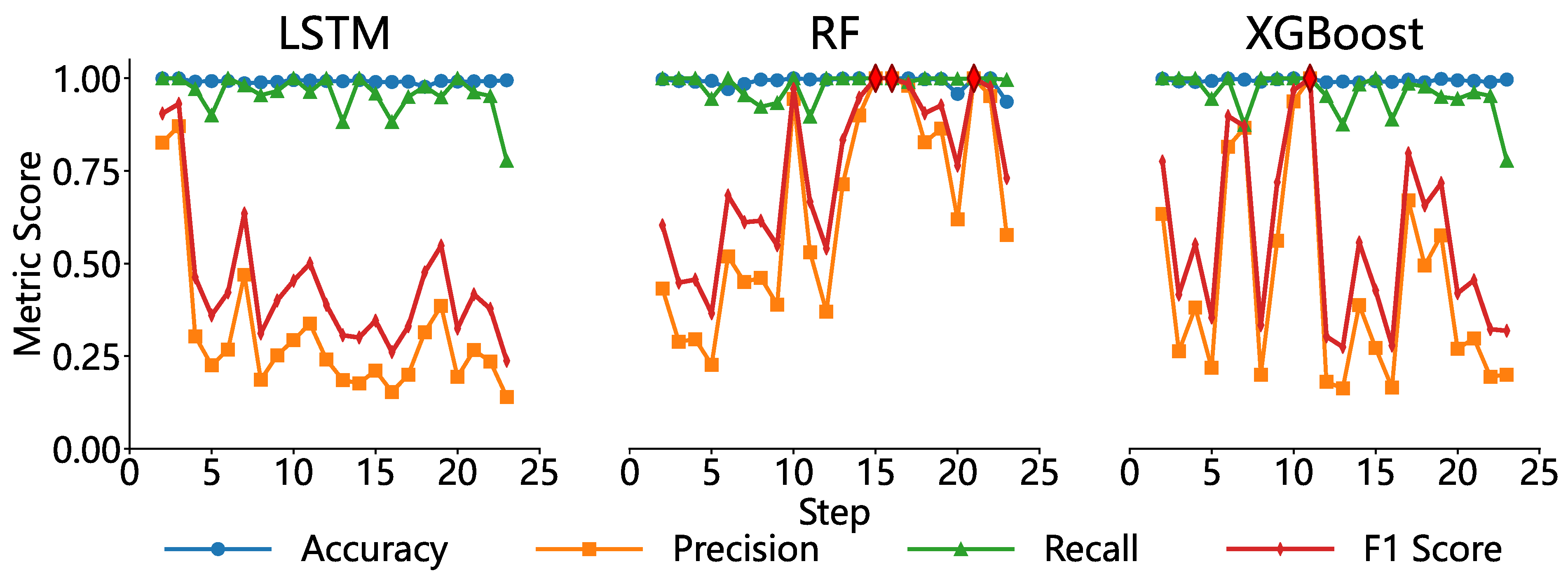
3.3. Spatial Prediction Model for the Spread of Pine Wood Nematode Disease
4. Discussion
4.1. Stand-Scale Characteristics of Individual-Tree Transmission Dynamics and Lethality Analysis
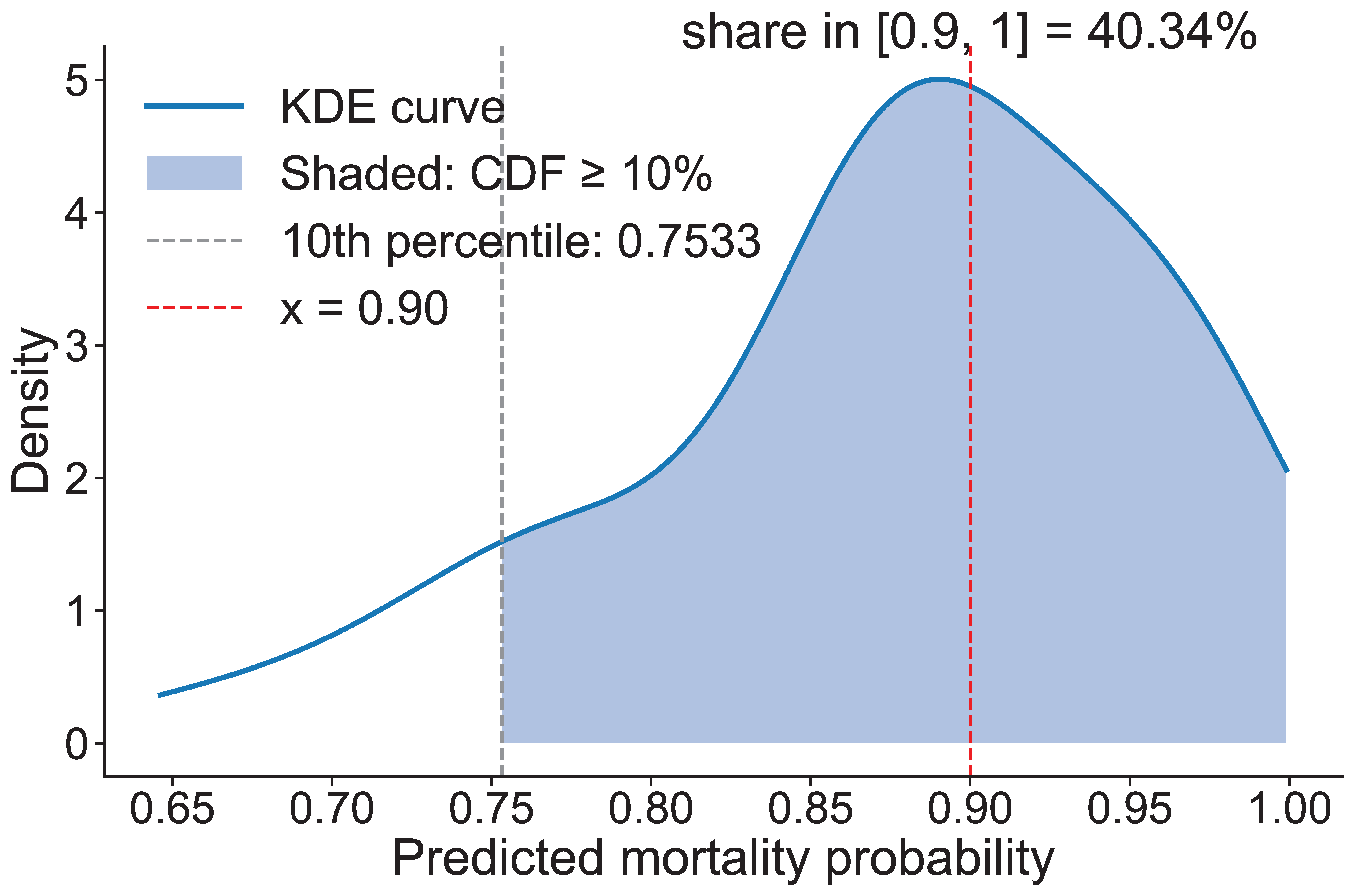
4.2. Predictive Performance of the Random Forest Model and Application of Risk Thresholds
4.3. Key Influencing Factors and Driving Mechanisms of Transmission
5. Conclusions
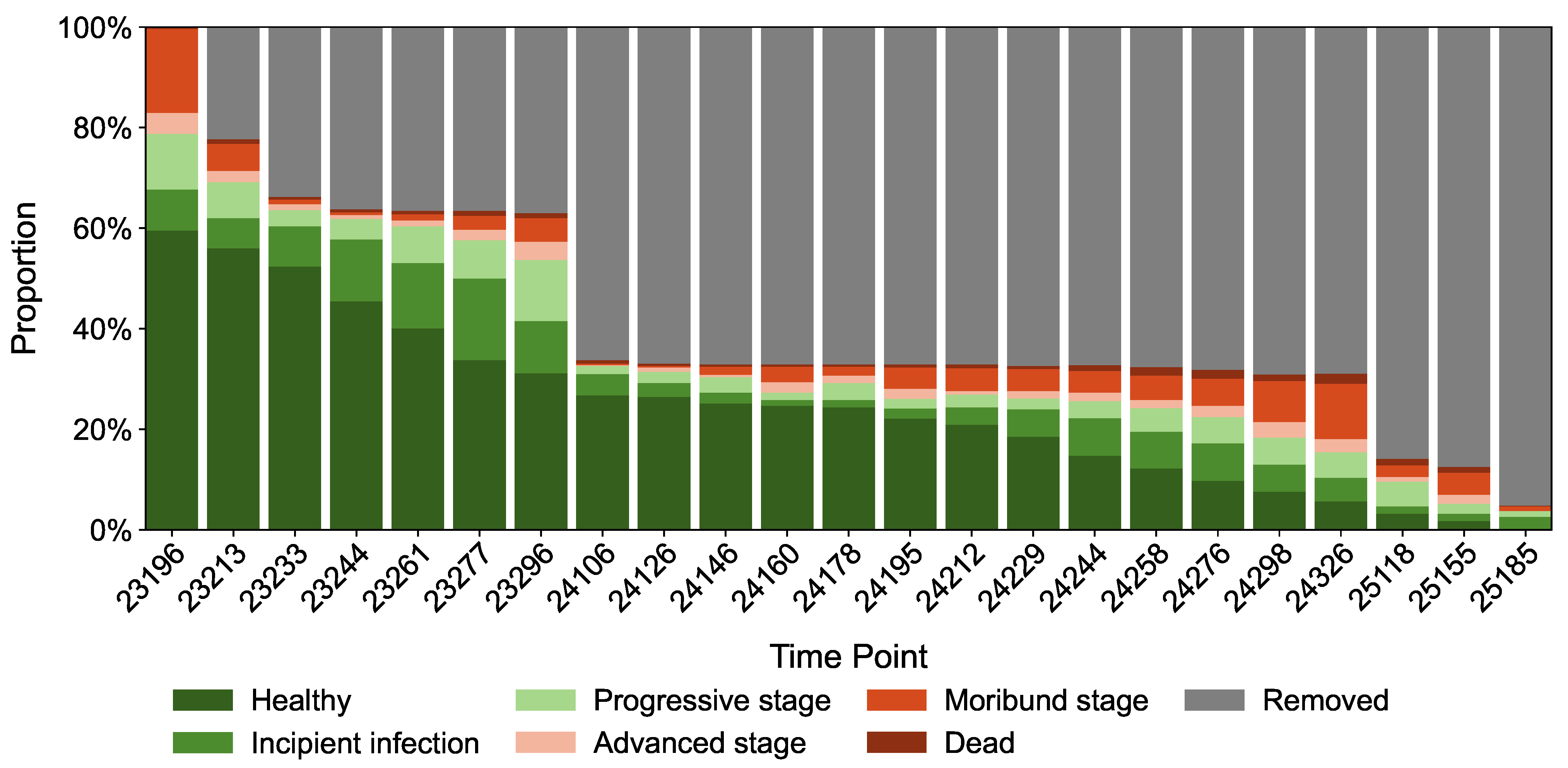
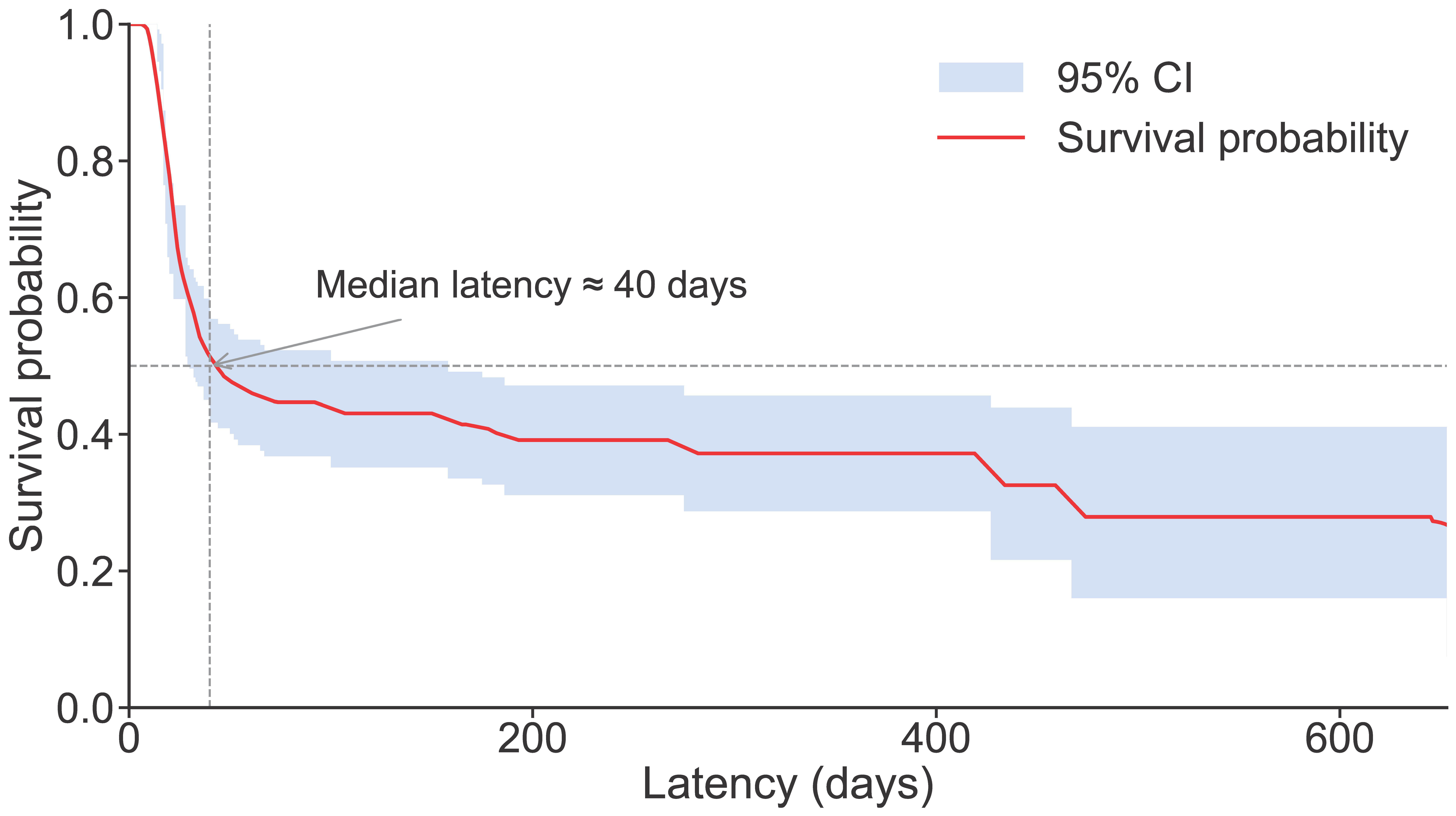
- At the stand scale, PWD exhibited a pronounced short-distance diffusion pattern (approximately 17 m), with exceptionally strong spatial autocorrelation within a 28 m radius. Regarding infection latency and mortality dynamics, approximately half of the infected trees died within 40 days after initial infection, while the latent period was markedly prolonged during winter.
- Among all evaluated algorithms, including XGBoost and LSTM, the random forest model demonstrated the highest predictive performance for tree-level mortality risk (AUC = 0.96). By applying a 60% risk threshold, the model achieved highly accurate identification of high-probability mortality cases, with a prediction accuracy of up to 98%.
6. Limitations and Prospects
Author Contributions
Funding
Data Availability Statement
Conflicts of Interest
Appendix A


References
- Diagne, C.; Leroy, B.; Vaissiere, A.C.; Gozlan, R.E.; Roiz, D.; Jaric, I.; Salles, J.M.; Bradshaw, C.J.A.; Courchamp, F. High and rising economic costs of biological invasions worldwide. Nature 2021, 592, 571–576. [Google Scholar] [CrossRef]
- Mamiya, Y. History of pine wilt disease in japan. J. Nematol. 1988, 20, 219–226. [Google Scholar]
- Aierken, N.; Wang, G.; Chen, M.; Chai, G.; Han, X.; Qian, Z.; Zhang, X. Assessing global pine wilt disease risk based on ensemble species distribution models. Ecol. Indic. 2024, 167, 112691. [Google Scholar] [CrossRef]
- Xu, S.; Huang, W.; Wang, D.; Zhang, B.; Sun, H.; Yan, J.; Ding, J.; Ma, X. Risk Assessment of Carbon Stock Loss in Chinese Forests Due to Pine Wood Nematode Invasion. Forests 2025, 16, 315. [Google Scholar] [CrossRef]
- Liu, F.; Su, H.; Ding, T.; Huang, J.; Liu, T.; Ding, N.; Fang, G. Refined Assessment of Economic Loss from Pine Wilt Disease at the Subcompartment Scale. Forests 2023, 14, 139. [Google Scholar] [CrossRef]
- Zhang, X.; Gao, Y.; Fu, L.; Zhang, Y.; Li, Z.; Shu, Q. Early feature study of Yunnan pine pinewood nematode disease based on hyperspectral remote sensing of ground objects. Sci. Rep. 2025, 15, 26490. [Google Scholar] [CrossRef]
- Xu, Q.; Zhang, X.; Li, J.; Ren, J.; Ren, L.; Luo, Y. Pine Wilt Disease in Northeast and Northwest China: A Comprehensive Risk Review. Forests 2023, 14, 174. [Google Scholar] [CrossRef]
- Tahir, S.; Hassan, S.S.; Yang, L.; Ma, M.; Li, C. Detection Methods for Pine Wilt Disease: A Comprehensive Review. Plants 2024, 13, 2876. [Google Scholar] [CrossRef]
- de Beurs, K.; Townsend, P. Estimating the effect of gypsy moth defoliation using MODIS. Remote Sens. Environ. 2008, 112, 3983–3990. [Google Scholar] [CrossRef]
- Pasquarella, V.J.; Bradley, B.A.; Woodcock, C.E. Near-Real-Time Monitoring of Insect Defoliation Using Landsat Time Series. Forests 2017, 8, 275. [Google Scholar] [CrossRef]
- Kuang, J.; Yu, L.; Zhou, Q.; Wu, D.; Ren, L.; Luo, Y. Identification of Pine Wilt Disease-Infested Stands Based on Single- and Multi-Temporal Medium-Resolution Satellite Data. Forests 2024, 15, 596. [Google Scholar] [CrossRef]
- Zhou, H.; Yuan, X.; Zhou, H.; Shen, H.; Ma, L.; Sun, L.; Fang, G.; Sun, H. Surveillance of pine wilt disease by high resolution satellite. J. For. Res. 2022, 33, 1401–1408. [Google Scholar] [CrossRef]
- Lv, W.; Zhao, J.; Huang, J. Monitoring Pine Wilt Disease Using High-Resolution Satellite Remote Sensing at the Single-Tree Scale with Integrated Self-Attention. Remote Sens. 2025, 17, 2197. [Google Scholar] [CrossRef]
- Yu, R.; Luo, Y.; Zhou, Q.; Zhang, X.; Wu, D.; Ren, L. A machine learning algorithm to detect pine wilt disease using UAV-based hyperspectral imagery and LiDAR data at the tree level. Int. J. Appl. Earth Obs. Geoinf. 2021, 101, 102363. [Google Scholar] [CrossRef]
- Shi, H.; Wang, Y.; Feng, X.; Xie, Y.; Zhu, Z.; Guo, H.; Jin, G. YOLOv8-MFD: An Enhanced Detection Model for Pine Wilt Diseased Trees Using UAV Imagery. Sensors 2025, 25, 3315. [Google Scholar] [CrossRef]
- Li, H.; Chen, L.; Yao, Z.; Li, N.; Long, L.; Zhang, X. Intelligent Identification of Pine Wilt Disease Infected Individual Trees Using UAV-Based Hyperspectral Imagery. Remote Sens. 2023, 15, 3295. [Google Scholar] [CrossRef]
- Liu, W.; Xie, Z.; Du, J.; Li, Y.; Long, Y.; Lan, Y.; Liu, T.; Sun, S.; Zhao, J. Early detection of pine wilt disease based on UAV reconstructed hyperspectral image. Front. Plant Sci. 2024, 15, 1453761. [Google Scholar] [CrossRef]
- National Forestry and Grassland Administration. Technical Scheme for the Control of Pine Wood Nematode Disease (2024 Edition) SSS; National Forestry and Grassland Administration: Beijing, China, 2024. [Google Scholar]
- Zhang, S.; Huang, H.; Huang, Y.; Cheng, D.; Huang, J. A GA and SVM Classification Model for Pine Wilt Disease Detection Using UAV-Based Hyperspectral Imagery. Appl. Sci. 2022, 12, 6676. [Google Scholar] [CrossRef]
- Yu, R.; Luo, Y.; Zhou, Q.; Zhang, X.; Wu, D.; Ren, L. Early detection of pine wilt disease using deep learning algorithms and UAV-based multispectral imagery. For. Ecol. Manag. 2021, 497, 119493. [Google Scholar] [CrossRef]
- Hou, R.; Zhang, B.; Fang, G.; Yang, S.; Guo, L.; Huang, W.; Yao, J.; Jiao, Q.; Sun, H.; Yan, J. Early Detection of Pine Wilt Disease by Combining Pigment and Moisture Content Indices Using UAV-Based Hyperspectral Imagery. Remote Sens. 2025, 17, 1833. [Google Scholar] [CrossRef]
- Pan, J.; Lin, J.; Xie, T. Exploring the Potential of UAV-Based Hyperspectral Imagery on Pine Wilt Disease Detection: Influence of Spatio-Temporal Scales. Remote Sens. 2023, 15, 2281. [Google Scholar] [CrossRef]
- Lee, M.G.; Cho, H.B.; Youm, S.K.; Kim, S.W. Detection of Pine Wilt Disease Using Time Series UAV Imagery and Deep Learning Semantic Segmentation. Forests 2023, 14, 1576. [Google Scholar] [CrossRef]
- Linit, M. Nematode vector relationships in the pine wilt disease system. J. Nematol. 1988, 20, 227–235. [Google Scholar]
- Liu, D.; Zhang, X. Occurrence Prediction of Pine Wilt Disease Based on CA–Markov Model. Forests 2022, 13, 1736. [Google Scholar] [CrossRef]
- Ouyang, X.; Chen, A.; Li, Y.; Han, X.; Lin, H. Predicting the Potential Distribution of Pine Wilt Disease in China under Climate Change. Insects 2022, 13, 1147. [Google Scholar] [CrossRef]
- Mo, X.; Zhao, X.; Zhao, J.; Huang, J.; Fang, G. Risk prediction of pine wilt disease based on graphical convolutional network in China. Pest Manag. Sci. 2025, 81, 6550–6559. [Google Scholar] [CrossRef]
- Wang, J.; Deng, J.; Yan, W.; Zheng, Y. Habitat Suitability of Pine Wilt Disease in Northeast China under Climate Change Scenario. Forests 2023, 14, 1687. [Google Scholar] [CrossRef]
- Wang, M.; Du, G.; Fang, J.; Wang, L.; Guo, Q.; Zhang, T.; Li, R. UGT440A1 Is Associated With Motility, Reproduction, and Pathogenicity of the Plant-Parasitic Nematode Bursaphelenchus xylophilus. Front. Plant Sci. 2022, 13, 862594. [Google Scholar] [CrossRef]
- Han, X.; Li, Y.; Huang, W.; Wang, R.; Hu, X.; Liang, G.; Huang, S.; Lian, C.; Zhang, F.; Wu, S. Landscapes drive the dispersal of Monochamus alternatus, vector of the pinewood nematode, revealed by whole-genome resequencing. For. Ecol. Manag. 2023, 529, 120682. [Google Scholar] [CrossRef]
- Estorninho, M.; Chozas, S.; Mendes, A.; Colwell, F.; Abrantes, I.; Fonseca, L.; Fernandes, P.; Costa, C.; Máguas, C.; Correia, O.; et al. Differential Impact of the Pinewood Nematode on Pinus Species Under Drought Conditions. Front. Plant Sci. 2022, 13, 841707. [Google Scholar] [CrossRef]
- Mamiya, Y. Pathology of the pine wilt disease caused by Bursaphelenchus-xylophilus. Annu. Rev. Phytopathol. 1983, 21, 201–220. [Google Scholar] [CrossRef] [PubMed]
- Xia, C.; Chon, T.S.; Takasu, F.; Choi, W.I.; Park, Y.S. Simulating Pine Wilt Disease Dispersal With an Individual-Based Model Incorporating Individual Movement Patterns of Vector Beetles. Front. Plant Sci. 2022, 13, 886867. [Google Scholar] [CrossRef]
- Tan, C.; Lin, Q.; Du, H.; Chen, C.; Hu, M.; Chen, J.; Huang, Z.; Xu, Y. Detection of the Infection Stage of Pine Wilt Disease and Spread Distance Using Monthly UAV-Based Imagery and a Deep Learning Approach. Remote Sens. 2024, 16, 364. [Google Scholar] [CrossRef]
- Li, M.; Li, H.; Sheng, R.C.; Sun, H.; Sun, S.H.; Chen, F.M. The First Record of Monochamus saltuarius (Coleoptera; Cerambycidae) as Vector of Bursaphelenchus xylophilus and Its New Potential Hosts in China. Insects 2020, 11, 636. [Google Scholar] [CrossRef]
- Zhao, H.; Xian, X.; Yang, N.; Guo, J.; Zhao, L.; Shi, J.; Liu, W. Risk assessment framework for pine wilt disease: Estimating the introduction pathways and multispecies interactions among the pine wood nematode, its insect vectors, and hosts in China. Sci. Total Environ. 2023, 905, 167075. [Google Scholar] [CrossRef] [PubMed]
- Shi, F.; Xing, Y.; Niu, Y.; Cheng, L.; Xu, Y.; Li, X.; Ren, L.; Zong, S.; Tao, J. Unveiling winter survival strategies: Physiological and metabolic responses to cold stress of Monochamus saltuarius larvae during overwintering. Pest Manag. Sci. 2024, 80, 5656–5671. [Google Scholar] [CrossRef]
- da Silva, T.v.d.W.; Gomes Pereira, L.; Oliveira, B.R.F. Assessing Geometric and Radiometric Accuracy of DJI P4 MS Imagery Processed with Agisoft Metashape for Shrubland Mapping. Remote Sens. 2024, 16, 4633. [Google Scholar] [CrossRef]
- Swaminathan, V.; Thomasson, J.A.; Hardin, R.G.; Rajan, N.; Raman, R. Radiometric calibration of UAV multispectral images under changing illumination conditions with a downwelling light sensor. Plant Phenome J. 2024, 7, e70005. [Google Scholar] [CrossRef]
- Wang, Y.; Yang, Z.; Kootstra, G.; Khan, H.A. The impact of variable illumination on vegetation indices and evaluation of illumination correction methods on chlorophyll content estimation using UAV imagery. Plant Methods 2023, 19, 62. [Google Scholar] [CrossRef]
- Zhai, C.; Ding, M.; Ren, Z.; Bao, G.; Liu, T.; Zhang, Z.; Jiang, X.; Ma, H.; Lin, H. A LiDAR-Driven Effective Leaf Area Index Inversion Method of Urban Forests in Northeast China. Forests 2023, 14, 84. [Google Scholar] [CrossRef]
- Zheng, J.; Xiang, M.; Zhang, T.; Zhou, J. An Improved Adaptive Grid-Based Progressive Triangulated Irregular Network Densification Algorithm for Filtering Airborne LiDAR Data. Remote Sens. 2024, 16, 3846. [Google Scholar] [CrossRef]
- Dalponte, M.; Coomes, D.A. Tree-centric mapping of forest carbon density from airborne laser scanning and hyperspectral data. Methods Ecol. Evol. 2016, 7, 1236–1245. [Google Scholar] [CrossRef]
- Yang, Y.; Wu, T.; Wang, S.; Li, J.; Muhanmmad, F. The NDVI-CV Method for Mapping Evergreen Trees in Complex Urban Areas Using Reconstructed Landsat 8 Time-Series Data. Forests 2019, 10, 139. [Google Scholar] [CrossRef]
- Choi, W.I.; Song, H.J.; Kim, D.S.; Lee, D.S.; Lee, C.Y.; Nam, Y.; Kim, J.B.; Park, Y.S. Dispersal Patterns of Pine Wilt Disease in the Early Stage of Its Invasion in South Korea. Forests 2017, 8, 411. [Google Scholar] [CrossRef]
- Melakeberhan, H.; Webster, J. Relationship of Bursaphelenchus-xylophilus population-density to mortality of pinus-sylvestris. J. Nematol. 1990, 22, 297–302. [Google Scholar]
- Jones, J.T.; Moens, M.; Mota, M.; Li, H.; Kikuchi, T. Bursaphelenchus xylophilus: Opportunities in comparative genomics and molecular host–parasite interactions. Mol. Plant Pathol. 2008, 9, 357–368. [Google Scholar] [CrossRef] [PubMed]
- Saito, T.; Rehmsmeier, M. The Precision-Recall Plot Is More Informative than the ROC Plot When Evaluating Binary Classifiers on Imbalanced Datasets. PLoS ONE 2015, 10, e0118432. [Google Scholar] [CrossRef] [PubMed]
- Chen, X.; Gupta, L. Training LSTMS with circular-shift epochs for accurate event forecasting in imbalanced time series. Expert Syst. Appl. 2024, 238, 121701. [Google Scholar] [CrossRef]
- Ali, Y.; Hussain, F.; Haque, M.M. Advances, challenges, and future research needs in machine learning-based crash prediction models: A systematic review. Accid. Anal. Prev. 2024, 194, 107378. [Google Scholar] [CrossRef]
- Chen, C.; Breiman, L. Using Random Forest to Learn Imbalanced Data; University of California: Berkeley, CA, USA, 2004. [Google Scholar]
- Yu, R.; Huo, L.; Huang, H.; Yuan, Y.; Gao, B.; Liu, Y.; Yu, L.; Li, H.; Yang, L.; Ren, L.; et al. Early detection of pine wilt disease tree candidates using time-series of spectral signatures. Front. Plant Sci. 2022, 13, 1000093. [Google Scholar] [CrossRef]
- Hao, Z.; Huang, W.; Zhang, B.; Chen, Y.; Fang, G.; Guo, J.; Zhang, Y. Long-Term Spatiotemporal Pattern and Temporal Dynamic Simulation of Pine Wilt Disease. Remote Sens. 2025, 17, 348. [Google Scholar] [CrossRef]
- Yu, L.; Zhan, Z.; Ren, L.; Li, H.; Huang, H.; Luo, Y. Impact of stand- and landscape-level variables on pine wilt disease-caused tree mortality in pine forests. Pest Manag. Sci. 2023, 79, 1791–1799. [Google Scholar] [CrossRef] [PubMed]
- Park, Y.S.; Chung, Y.J.; Moon, Y.S. Hazard ratings of pine forests to a pine wilt disease at two spatial scales (individual trees and stands) using self-organizing map and random forest. Ecol. Inform. 2013, 13, 40–46. [Google Scholar] [CrossRef]
- Wang, J.; Zhang, S.; Zheng, Y. Feeding Preferences and Responses of Monochamus saltuarius to Volatile Components of Host Pine Trees. Insects 2022, 13, 888. [Google Scholar] [CrossRef]
- Pimentel, C.S.; Ayres, M.P.; Vallery, E.; Young, C.; Streett, D.A. Geographical variation in seasonality and life history of pine sawyer beetles Monochamus spp: Its relationship with phoresy by the pinewood nematode Bursaphelenchus xylophilus. Agric. For. Entomol. 2014, 16, 196–206. [Google Scholar] [CrossRef]





| Data Type | Equipment Model | Sensor Parameters | Flight Parameters | Acquisition Time |
|---|---|---|---|---|
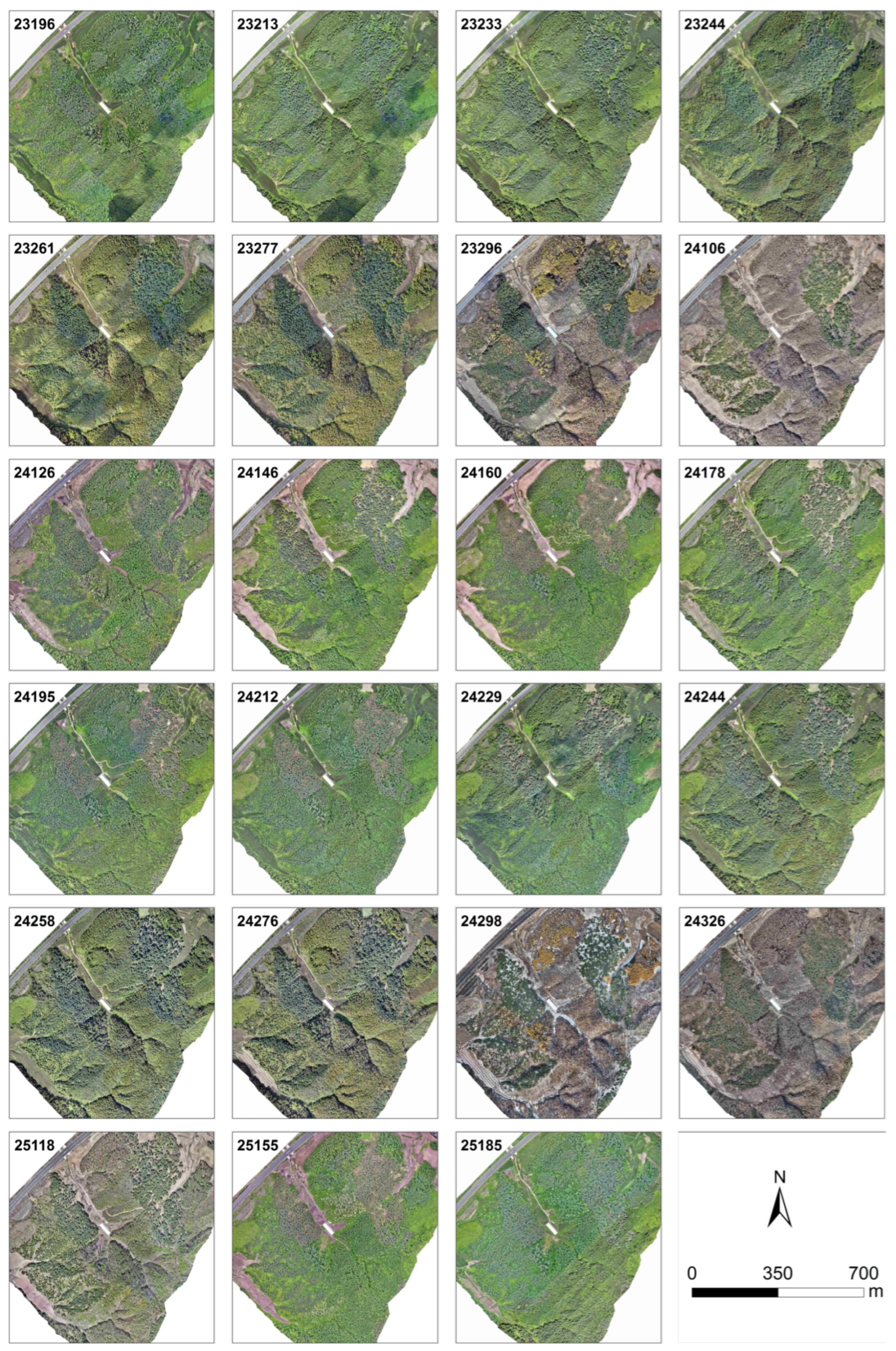
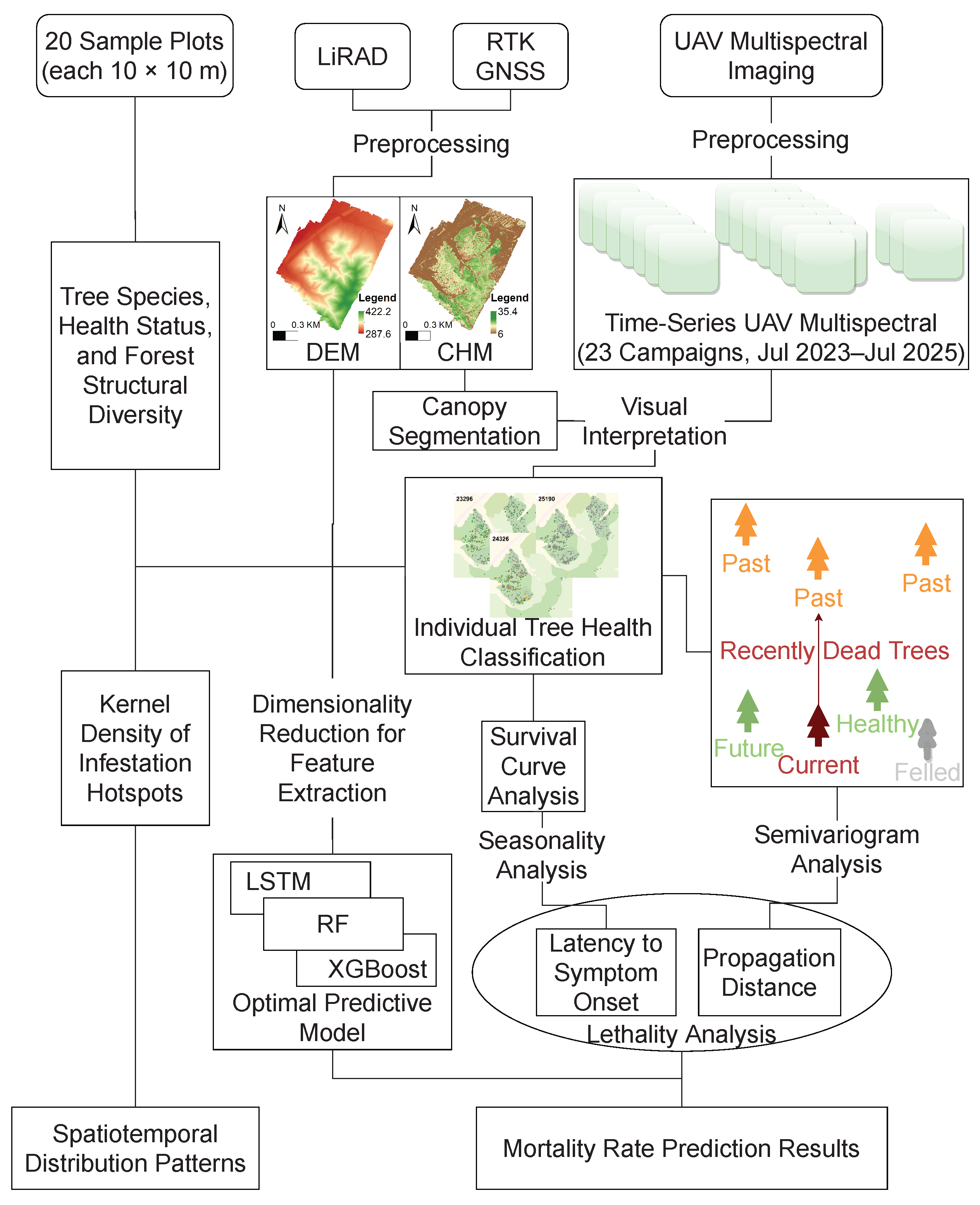
| Multispectral | DJI Phantom 4 Ms | 5 bands (B, G, R, RE, NIR); 5 cm GSD | 120 m altitude; 3 m/s; 88%/85% overlap | 23 campaigns (July 2023–July 2025) |
| Airborne LiDAR | Pegasus D2000 + D-LiDAR2000 | 113 pts/m2; ≤2 cm accuracy; 450 m range; 240 kHz; triple return | 100 m; 8 m/s; 70% overlap; RTK/PPK | September 2024 |
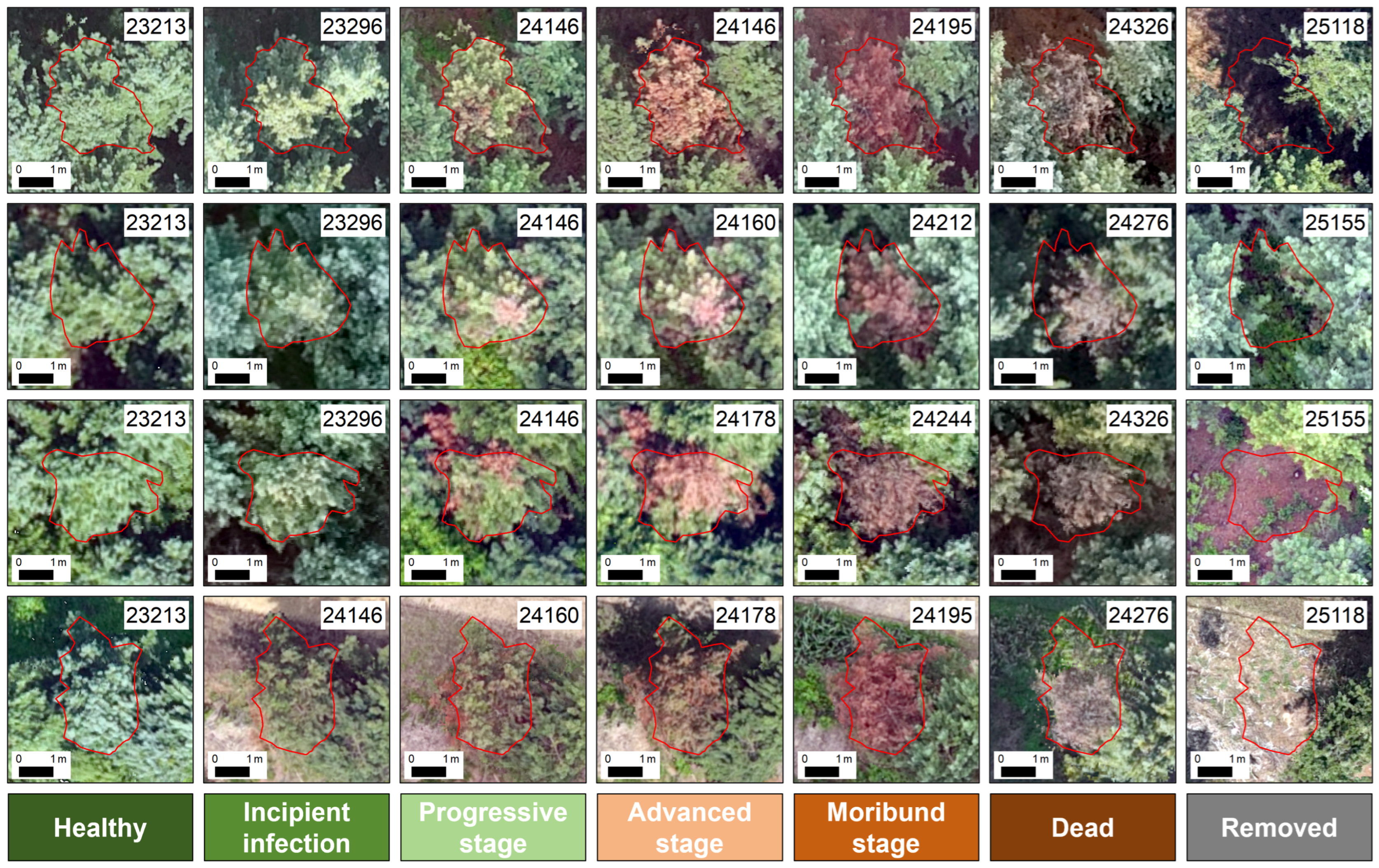
| Code | Stage | Canopy Color | Texture and Structural Characteristics | Visible Damage |
|---|---|---|---|---|
| 0 | Healthy | Uniform dark green | Fine, intact crown texture | No discoloration |
| 1 | Incipient | Mostly green, slight yellowing in patches | Texture coherent | Minor chlorosis on few needles |
| 2 | Progressive | Mix of green and reddish hues (<50%) | Partial gaps, uneven texture | Noticeable discoloration and early defoliation |
| 3 | Advanced | Reddish tones dominate (>50%), little green | Coarse texture, fragmented crown | Extensive discoloration and crown degradation |
| 4 | Moribund | Mostly reddish-brown/dark red, little green | Coarse texture, lost foliage detail | Severe discoloration, near-total dieback |
| 5 | Dead | Grayish-white or pale, only branches remain | Sparse, net-like structure | Complete leaf loss, no vitality |
| 9 | Removed | No canopy color, only stump or bare soil | Smooth or mechanically cleared | Tree removed/felled |
Disclaimer/Publisher’s Note: The statements, opinions and data contained in all publications are solely those of the individual author(s) and contributor(s) and not of MDPI and/or the editor(s). MDPI and/or the editor(s) disclaim responsibility for any injury to people or property resulting from any ideas, methods, instructions or products referred to in the content. |
© 2025 by the authors. Licensee MDPI, Basel, Switzerland. This article is an open access article distributed under the terms and conditions of the Creative Commons Attribution (CC BY) license (https://creativecommons.org/licenses/by/4.0/).
Share and Cite
Jiang, X.; Liu, T.; Bao, G.; Zhai, C.; Ren, Z.; Ding, M.; Xu, X.; Xu, S. Spatial Diffusion Characteristics of Pine Wilt Disease at the Forest Stand Scale and Prediction of Individual Tree Mortality Risk. Remote Sens. 2025, 17, 3930. https://doi.org/10.3390/rs17243930
Jiang X, Liu T, Bao G, Zhai C, Ren Z, Ding M, Xu X, Xu S. Spatial Diffusion Characteristics of Pine Wilt Disease at the Forest Stand Scale and Prediction of Individual Tree Mortality Risk. Remote Sensing. 2025; 17(24):3930. https://doi.org/10.3390/rs17243930
Chicago/Turabian StyleJiang, Xuefei, Ting Liu, Guangdao Bao, Chang Zhai, Zhibin Ren, Mingming Ding, Xingshuai Xu, and Sa Xu. 2025. "Spatial Diffusion Characteristics of Pine Wilt Disease at the Forest Stand Scale and Prediction of Individual Tree Mortality Risk" Remote Sensing 17, no. 24: 3930. https://doi.org/10.3390/rs17243930
APA StyleJiang, X., Liu, T., Bao, G., Zhai, C., Ren, Z., Ding, M., Xu, X., & Xu, S. (2025). Spatial Diffusion Characteristics of Pine Wilt Disease at the Forest Stand Scale and Prediction of Individual Tree Mortality Risk. Remote Sensing, 17(24), 3930. https://doi.org/10.3390/rs17243930