Photovoltaic Power Station Identification Based on High-Resolution Network and Google Earth Engine: A Case Study of Qinghai Province, Northwest China


Highlights
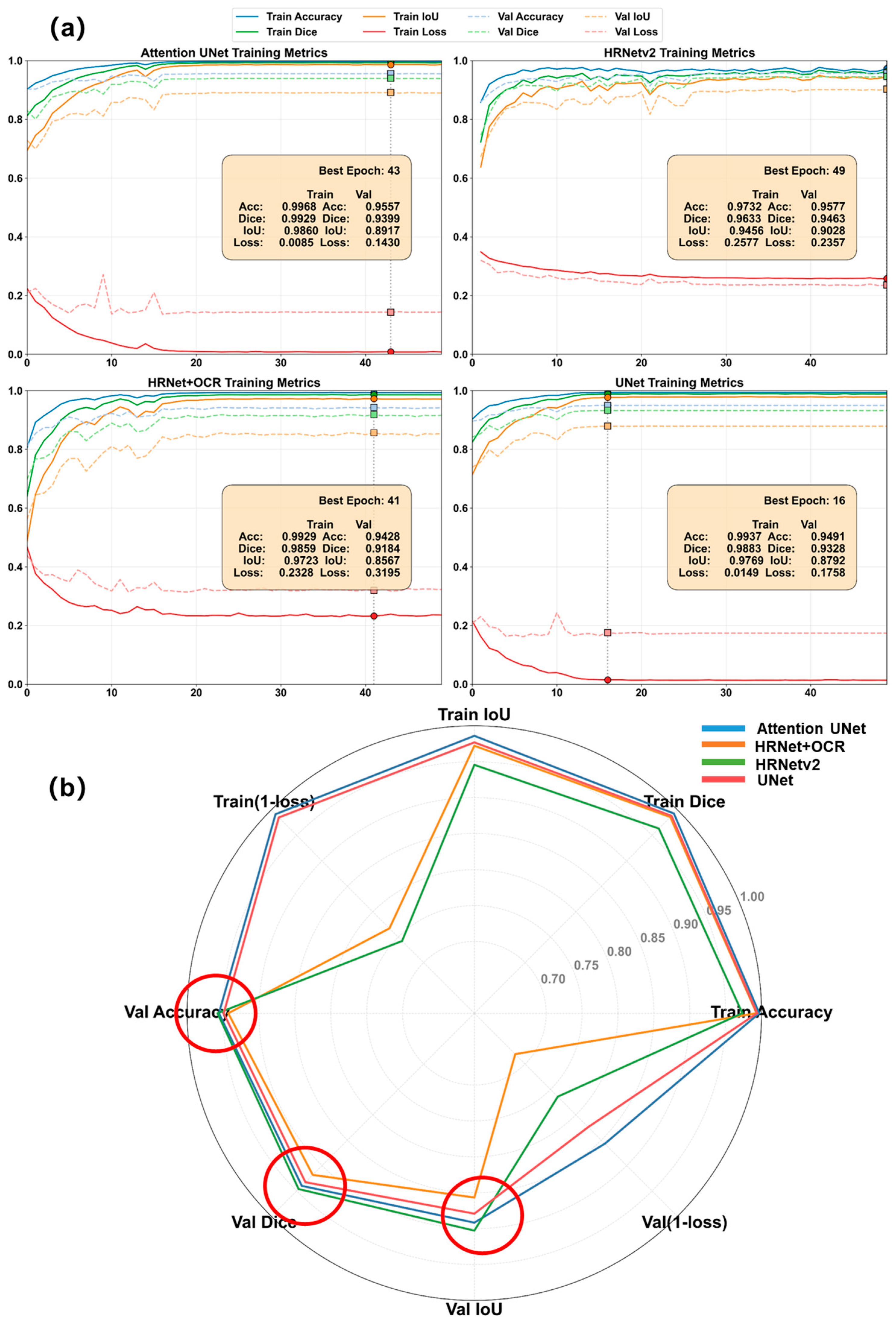
- HRNetv2 (validation Dice = 0.9463) outperformed other models in small-sample PV segmentation via the optimized remote sensing method (integrating PCA, GEE, deep learning).
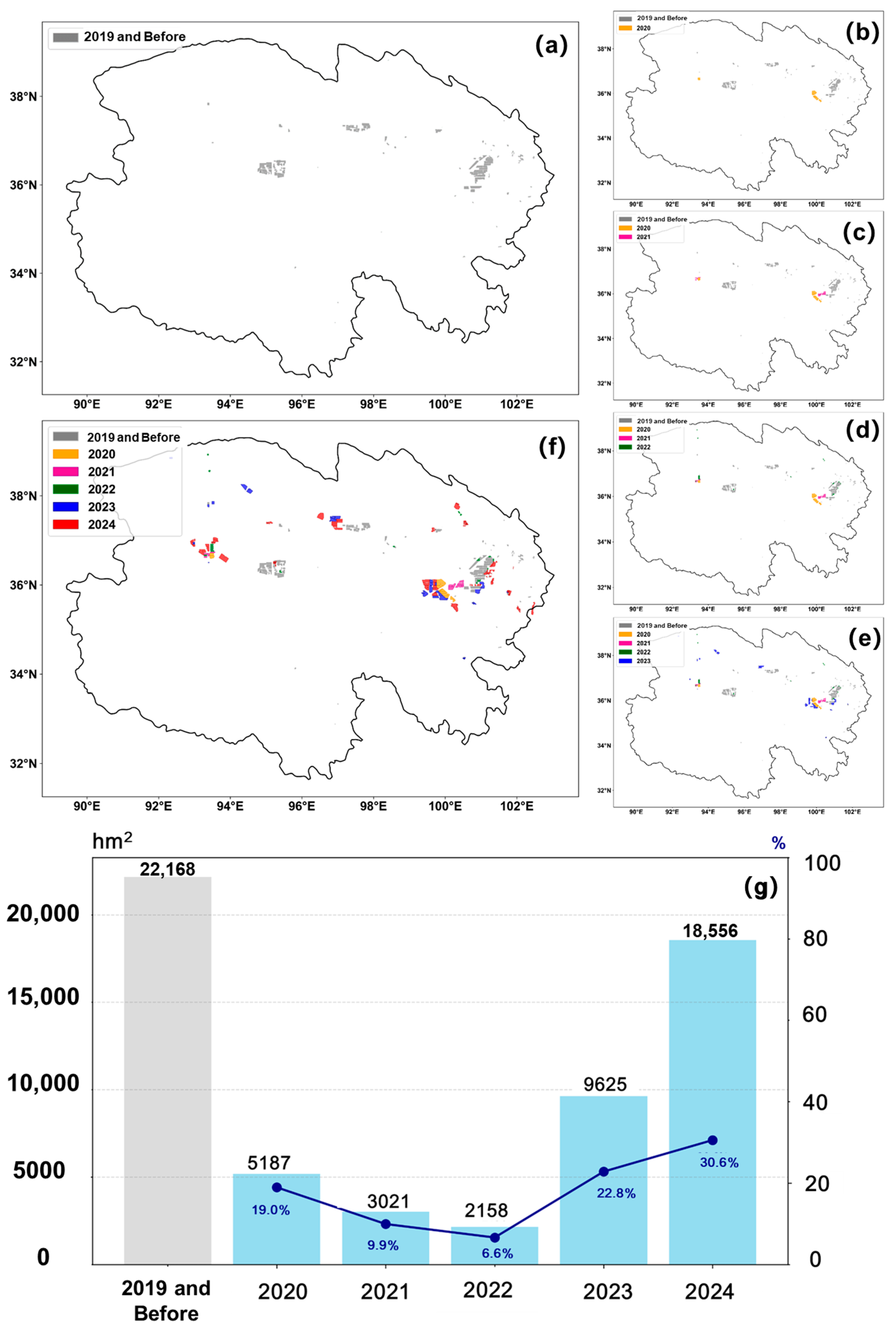
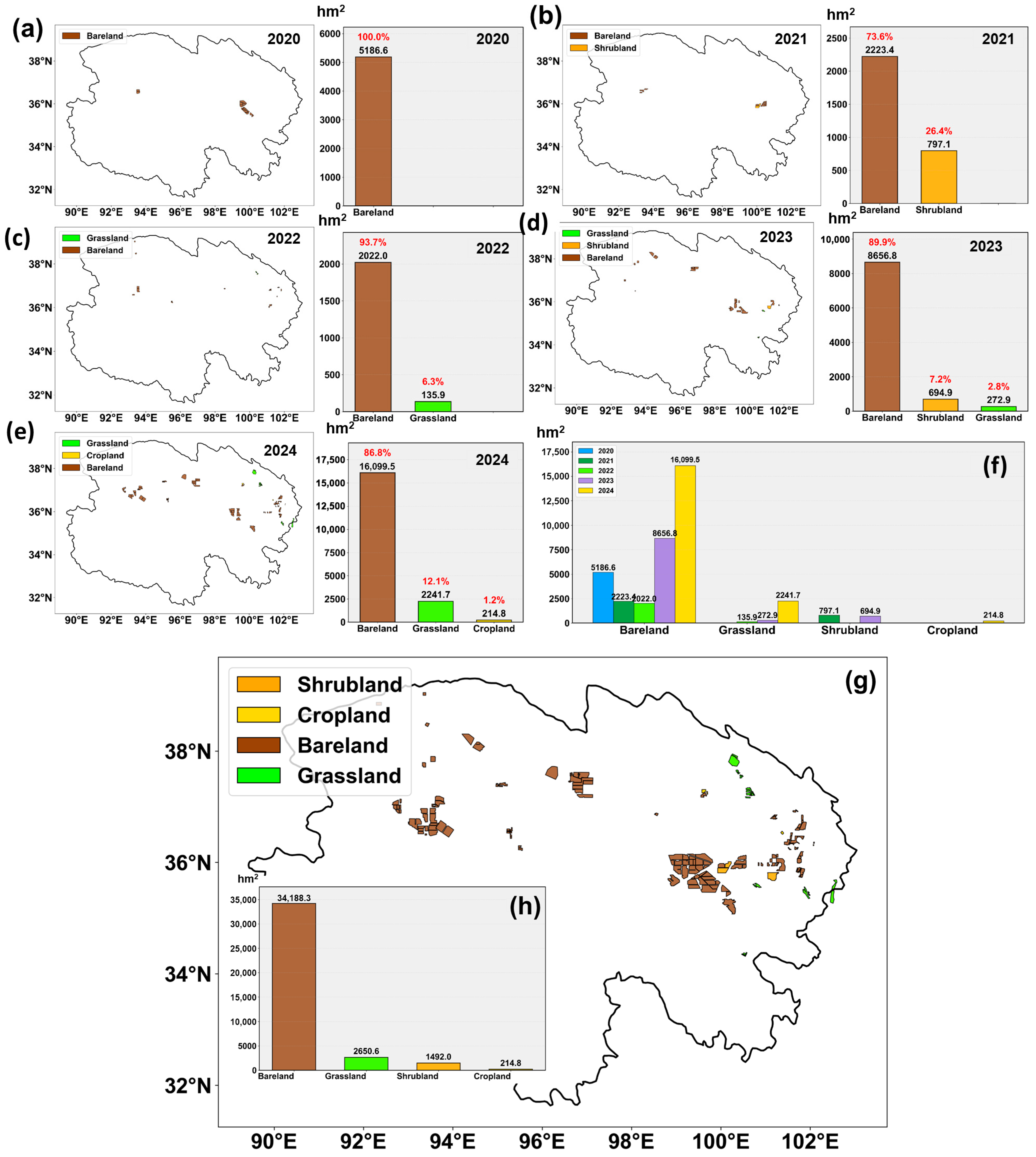
- The 2020–2024 Qinghai PV area exceeded the pre-2019 area; it mainly occupied bare land (88.7%) and promoted desert greening.
- The optimized method effectively supports PV spatial identification in arid/semi-arid regions with bare ground interference.
- PV distribution and land use guide arid-region PV-ecology synergy, and indicates future algorithm refinement for better generalizability.
Abstract
1. Introduction
2. Materials and Methods
2.1. Study Area
2.2. Sample Preparation
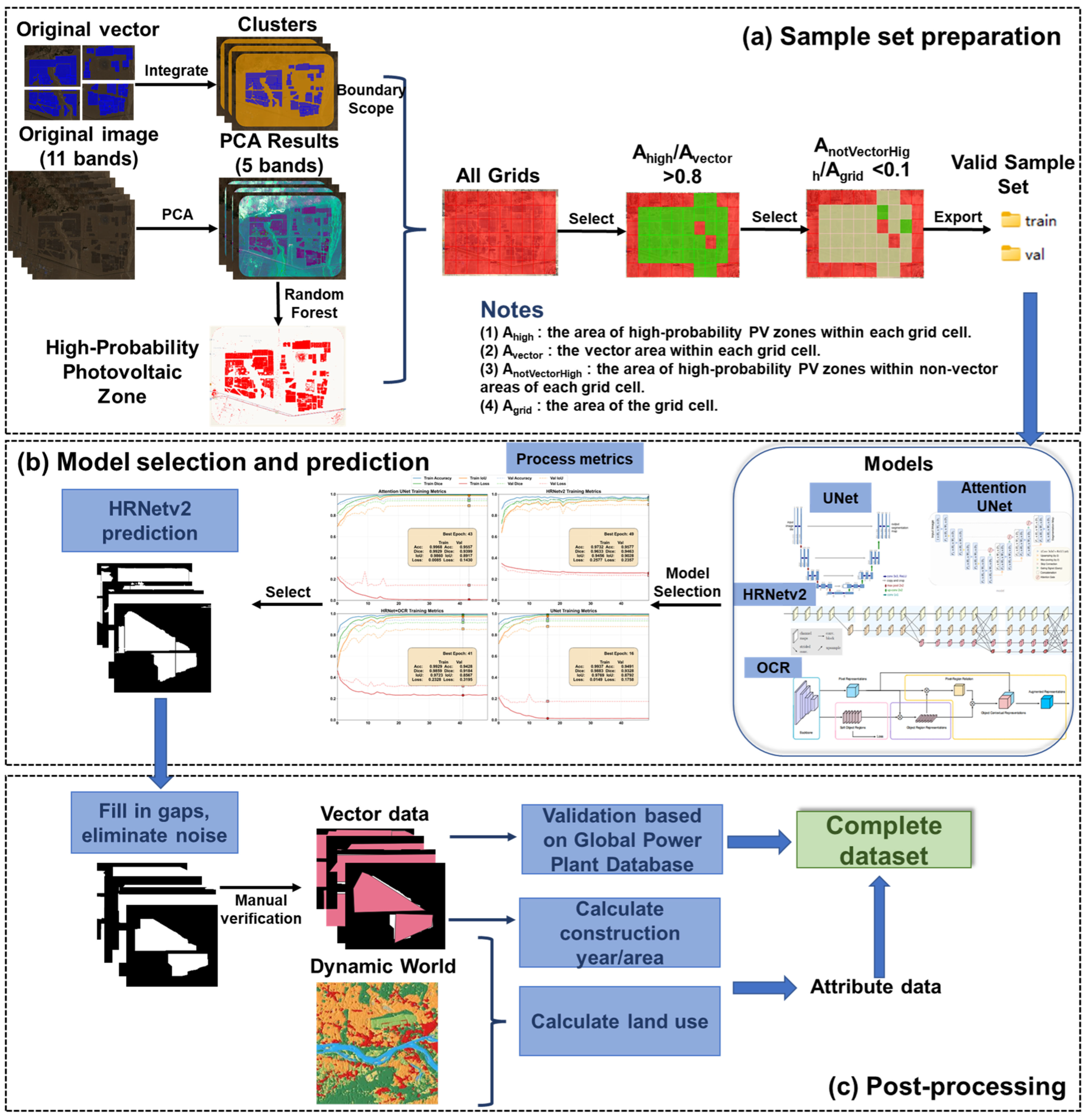
- Consolidation of PV vector polygons. Dispersed vector polygons were aggregated by applying a distance threshold of 12,000 m, which was determined through repeated experiments to achieve the optimal visual effect, and all polygons within this distance range were classified into the same cluster. In the present study, a total of 374 vector polygons were initially grouped into 29 clusters. Experimental findings revealed that excessively small cluster areas led to an insufficient number of pixels in PV regions, which made the spectral characteristics of these regions statistically insignificant. Consequently, clusters with an area smaller than 1.8 hectares (ha) were excluded, and the final consolidated data consisted of 19 clusters. To support subsequent processing that specifically targets vector polygon areas (rather than the entire Qinghai Province), a 2 km buffer zone was established around the centroid of each consolidated cluster.
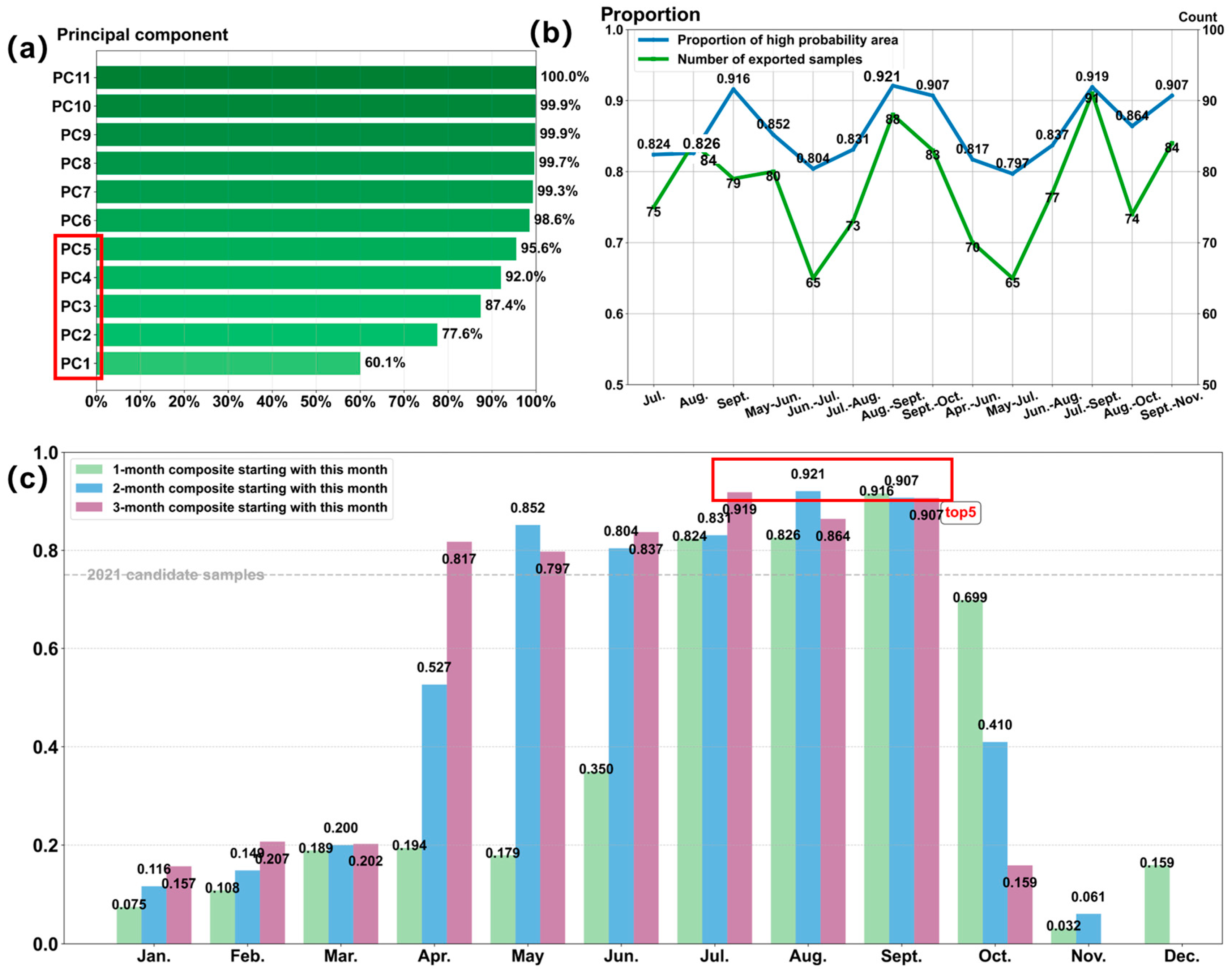
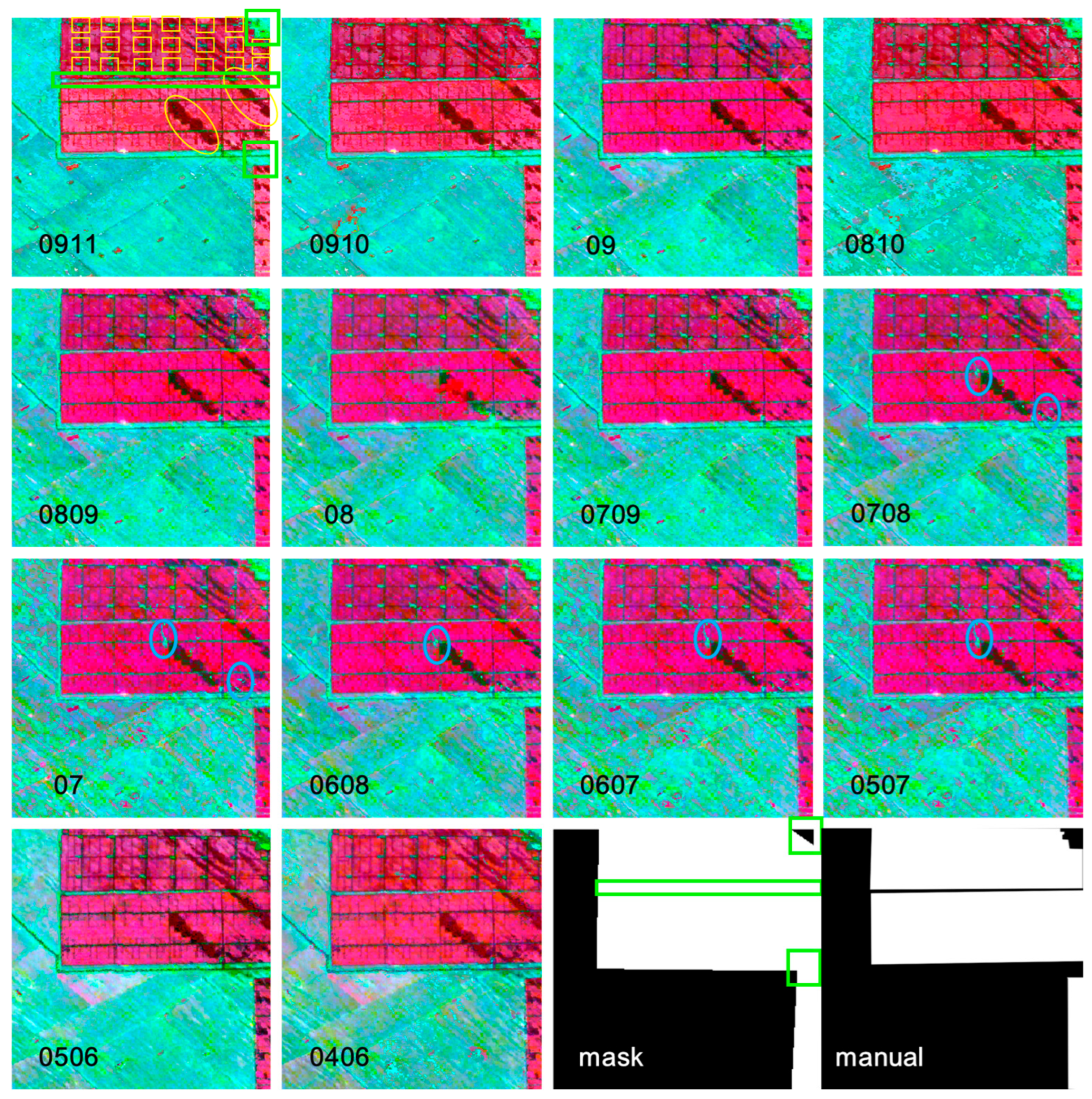
- Satellite imagery data synthesis. Sentinel-2 satellite imagery (10 m resolution) acquired in 2021 was retrieved and synthesized through the GEE platform. An excessively long temporal span might result in capturing PV facilities at different construction stages, thereby causing ambiguity between completed and unfinished areas; on the contrary, an overly short temporal span could lead to an insufficient quantity of high-quality images with minimal cloud coverage. To balance these constraints, the imagery was synthesized at monthly, bimonthly, and quarterly intervals, respectively. The Best Clear-Sky Composition Method was adopted for image compositing, which involves selecting pixels with the lowest cloud cover at each location across all available image scenes. Initially, eleven bands [52] were selected for analysis, including NDBI, NDPI, Band 8, Band 2, slope, Band 12, elevation, SAVI, NDVI, Band 4, and Band 3 (the last of which was included for visualization purposes). To reduce computational burden and improve training efficiency in subsequent modeling processes, PCA was applied to these eleven bands. Finally, the top five principal components were retained, which preserved 95.6% of the original information of the bands.
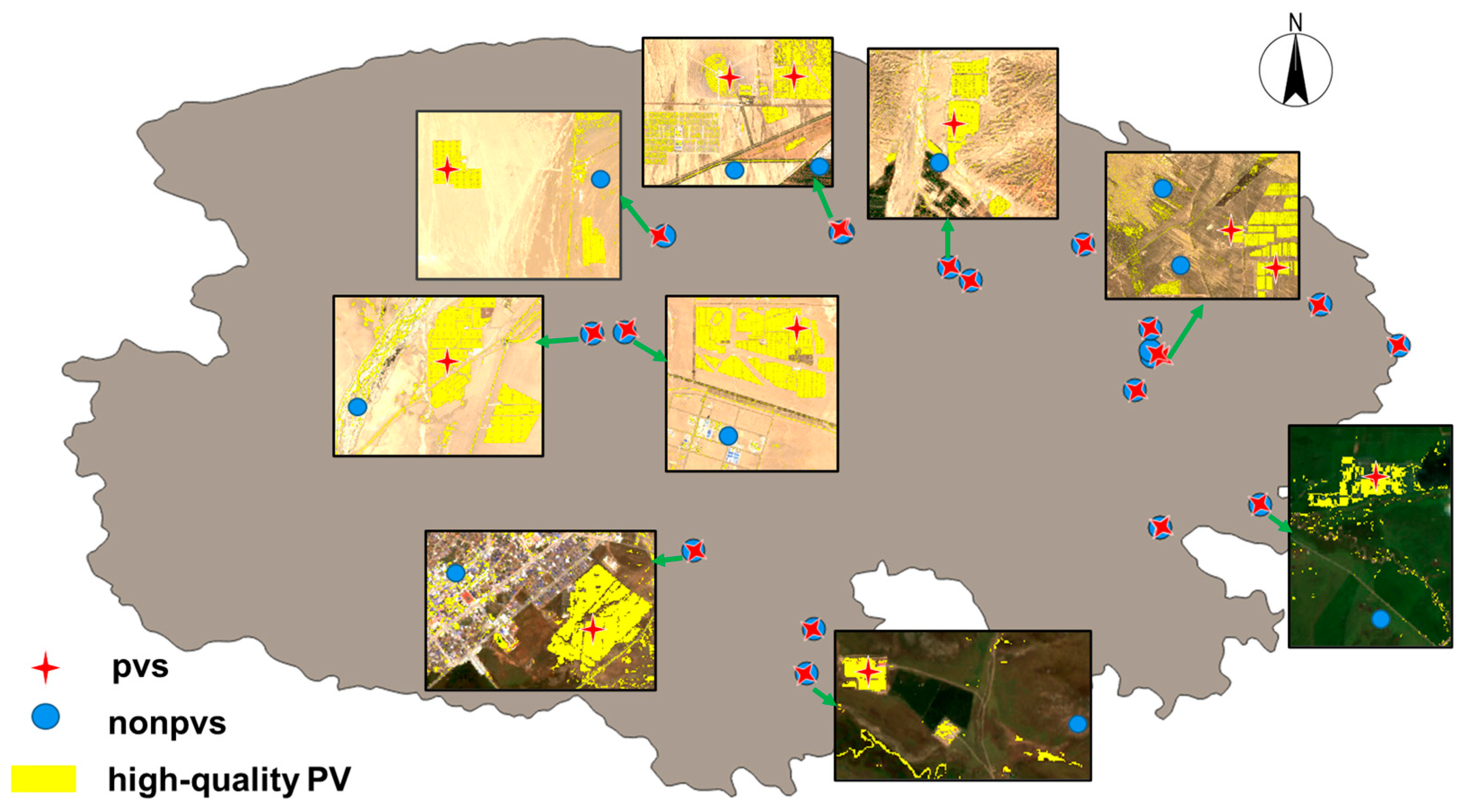
- Calculation of indicators for evaluating image quality. To evaluate the quality of images, this study further synthesized a PV high-probability distribution map based on the PCA-processed images. The generation of this map entailed manually selecting 20 PV samples and 20 non-PV samples within the GEE platform (Figure 3), followed by the application of the platform’s built-in Random Forest algorithm. For each generated map, the proportion of the total vector area occupied by high-probability PV zones was calculated. Considering that PV zones generally maintain stability over a one-year period, a significant decrease in this proportion usually indicates that the imagery failed to accurately identify the PV areas; therefore, this proportion was employed as a proxy indicator for assessing image quality.
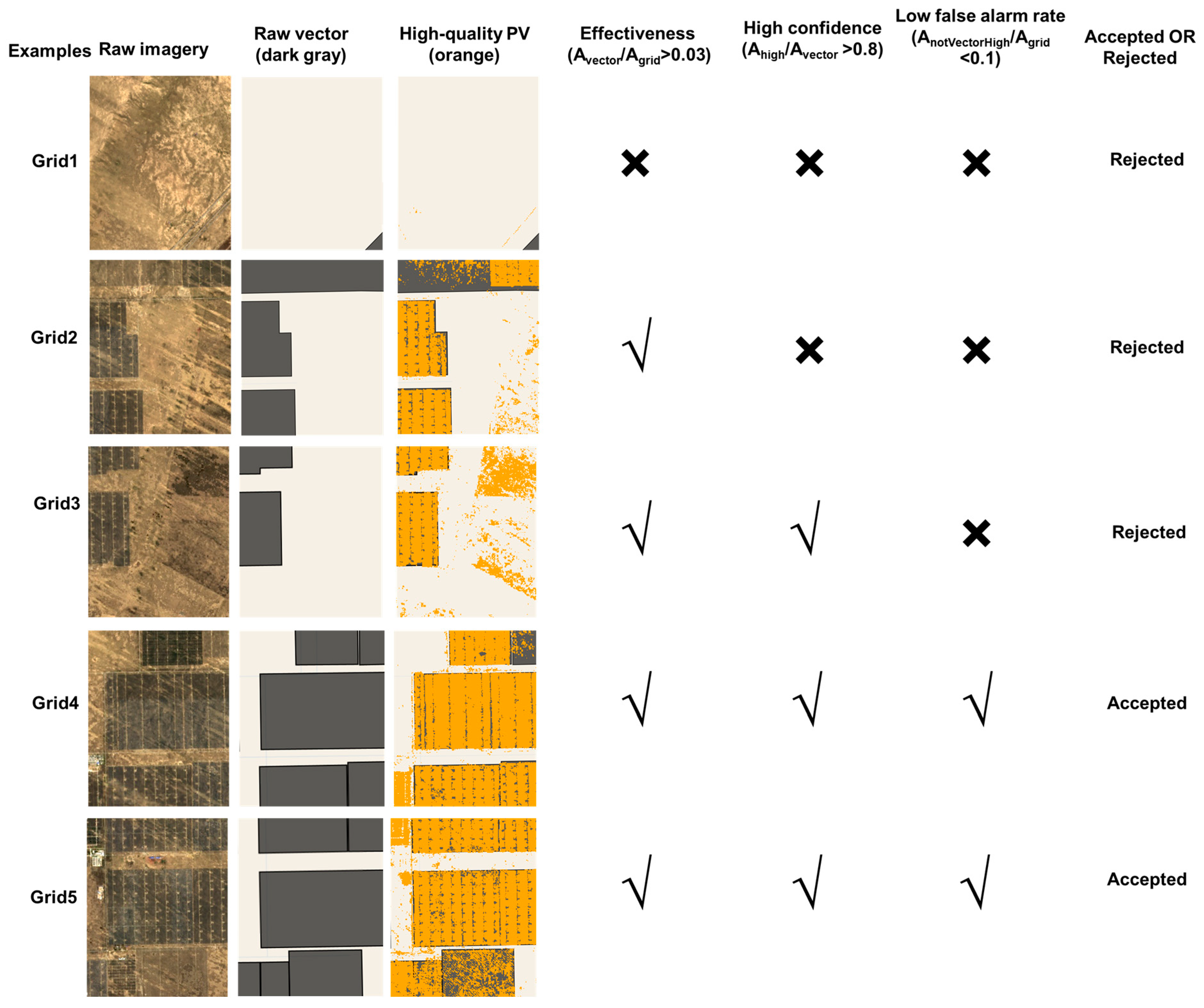
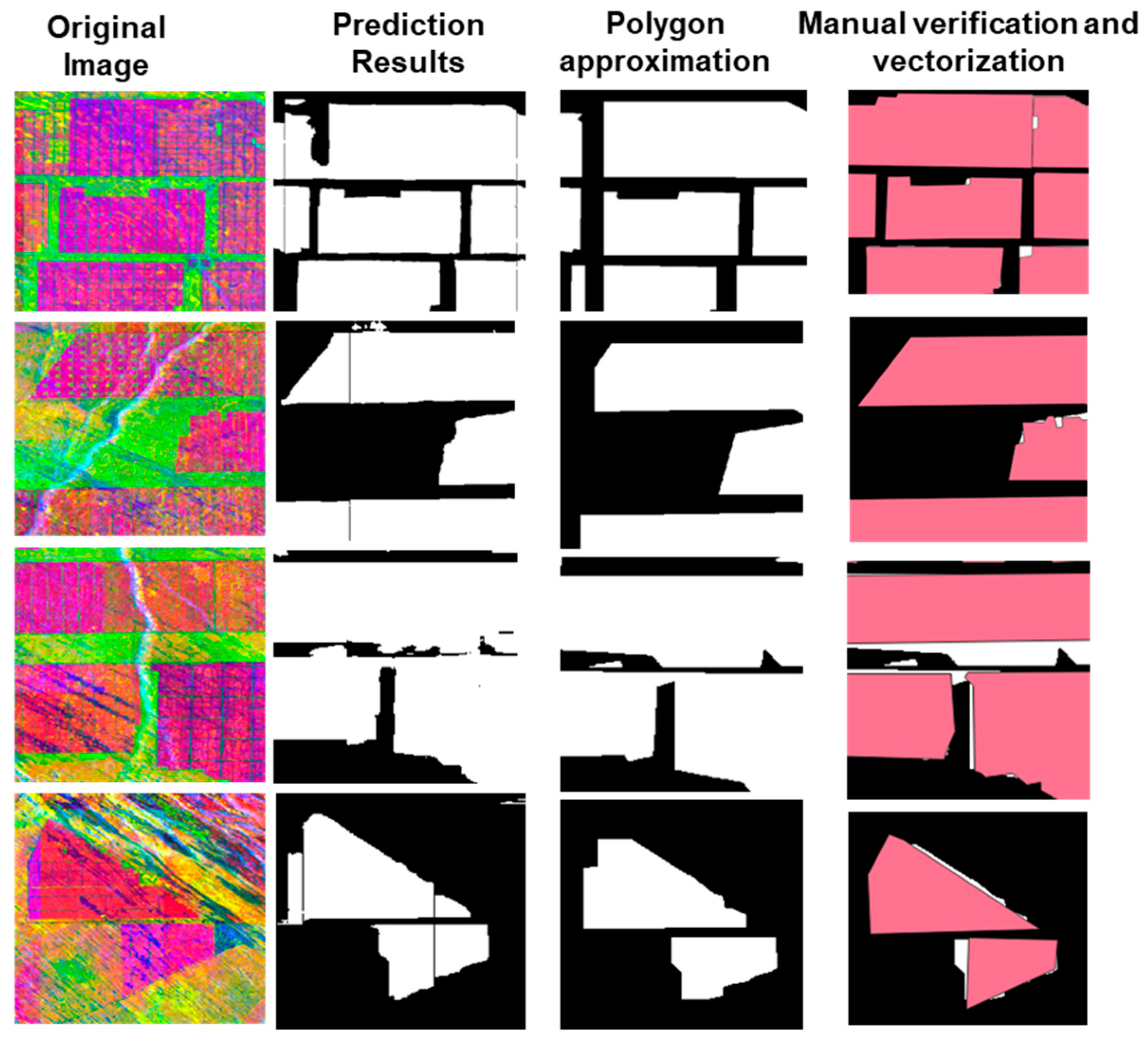
- Acquisition of the sample set via dual screening (Figure 4). High-quality imagery was first selected, and within the GEE platform, a 256 × 256 grid cell was generated using the buffer zones (from step 1) as spatial boundaries. For each grid cell that contains PV vector surface area, two screening criteria were applied: the first criterion is whether the proportion of high-probability PV area within the grid cell relative to the vector surface area exceeds 0.8; the second criterion is whether the area classified as high-probability PV outside the vector regions accounts for less than 10% of the entire grid cell. These threshold parameters were determined empirically through multiple experimental trials, aiming to balance sample quality and sample quantity. Only the grid cells that meet both criteria had their corresponding imagery and binary label masks exported, which constitute the final sample set. The size of the exported sample set shows a positive correlation with sample quality.
- Sample set expansion. Owing to the limited number of samples obtained from the 2021 dataset, this study adopted five synthesis methods (selected from 2021), specifically including September (single-month synthesis), August-September and September-October (bimonthly synthesis), as well as July-August-September and September-October-November (trimonthly synthesis), in line with the identical methodology outlined in step (4), sample sets were generated for each of the other four years (2019, 2020, 2022, and 2023). This process ultimately resulted in a total of 1871 training samples and 569 validation samples, corresponding to an approximate training-to-validation ratio of 80:20.


2.3. Deep Learning Algorithm
2.3.1. Model Selection
2.3.2. Training and Prediction
2.3.3. Data Post-Processing and Validation
2.3.4. Attributes Calculation and Analysis
3. Results
3.1. Methodological Evaluation and Results Validation
3.2. Spatial and Temporal Distribution of PV Plants


3.3. Land Use for PV Plants
4. Discussion
5. Conclusions
Supplementary Materials
Author Contributions
Funding
Data Availability Statement
Conflicts of Interest
References
- Assembly. Global Indicator Framework for the Sustainable Development Goals and Targets of the 2030 Agenda for Sustainable Development; United Nations Statistics Division: New York, NY, USA, 2017. [Google Scholar]
- Dincer, I. Renewable energy and sustainable development: A crucial review. Renew. Sustain. Energy Rev. 2000, 4, 157–175. [Google Scholar] [CrossRef]
- Panwar, N.L.; Kaushik, S.C.; Kothari, S. Role of renewable energy sources in environmental protection: A review. Renew. Sustain. Energy Rev. 2011, 15, 1513–1524. [Google Scholar] [CrossRef]
- IEA. Renewables 2023-Analysis; International Energy Agency: Paris, France, 2024. [Google Scholar]
- Barthelmie, R.J.; Pryor, S.C. Potential contribution of wind energy to climate change mitigation. Nat. Clim. Change 2014, 4, 684–688. [Google Scholar] [CrossRef]
- Miller, L.M.; Gans, F.; Kleidon, A. Estimating maximum global land surface wind power extractability and associated climatic consequences. Earth Syst. Dyn. 2011, 2, 1–12. [Google Scholar] [CrossRef]
- MacDonald, A.E.; Clack, C.T.M.; Alexander, A.; Dunbar, A.; Wilczak, J.; Xie, Y.F. Future cost-competitive electricity systems and their impact on US CO2 emissions. Nat. Clim. Change 2016, 6, 526–531. [Google Scholar] [CrossRef]
- Tsoutsos, T.; Frantzeskaki, N.; Gekas, V. Environmental impacts from the solar energy technologies. Energy Policy 2005, 33, 289–296. [Google Scholar] [CrossRef]
- Ahmed, F.; Amin, A.Q.A.; Hasanuzzaman, M.; Saidur, R. Alternative energy resources in Bangladesh and future prospect. Renew. Sustain. Energy Rev. 2013, 25, 698–707. [Google Scholar] [CrossRef]
- Solangi, K.H.; Islam, M.R.; Saidur, R.; Rahim, N.A.; Fayaz, H. A review on global solar energy policy. Renew. Sustain. Energy Rev. 2011, 15, 2149–2163. [Google Scholar] [CrossRef]
- Yan, L.G.; Xia, X.C.; Zhou, F.Q.; Zhao, Z.X.; Liu, D.S.; Kuang, T.Y.; Zhang, X.S.; Zhou, X.X.; Li, C.; Zhu, R.Z.; et al. A development study for Chinese large scale renewable energy source base and technology. Adv. Technol. Electr. Eng. Energy 2007, 26, 13. [Google Scholar]
- Zhang, H.N.; Zhang, X.P.; Yuan, J.H. Transition of China’s power sector consistent with Paris agreement into 2050: Pathways and challenges. Renew. Sustain. Energy Rev. 2020, 132, 110102. [Google Scholar] [CrossRef]
- National Energy Administration. 2024 Renewable Energy Grid Connection and Operation Status; National Energy Administration: Beijing, China, 2025.
- National Energy Administration. 2019 Renewable Energy Grid Connection and Operation Status; National Energy Administration: Beijing, China, 2020.
- Al Garni, H.Z.; Awasthi, A. Solar PV Power Plants Site Selection: A Review. In Advances in Renewable Energies and Power Technologies; Elsevier: Amsterdam, The Netherlands, 2018; pp. 57–75. [Google Scholar]
- Agyekum, E.B.; Amjad, F.; Shah, L.; Velkin, V.I. Optimizing Photovoltaic Power Plant Site Selection Using Analytical Hierarchy Process and Density-Based Clustering—Policy Implications for Transmission Network Expansion, Ghana. Sustain. Energy Technol. Assess. 2021, 47, 101521. [Google Scholar] [CrossRef]
- Al Garni, H.Z.; Awasthi, A. A Fuzzy AHP and GIS-Based Approach to Prioritize Utility-Scale Solar PV Sites in Saudi Arabia. In Proceedings of the 2017 IEEE International Conference on Systems, Man, and Cybernetics (SMC), Banff, AB, Canada, 5–8 October 2017; pp. 1244–1249. [Google Scholar]
- Abualkishik, A.Z.; Almagiel, R. Photovoltaic Charging Station Site Selection Using a Multi-Criteria Decision Making (MCDM) Framework with a Novel Criterion Identification. Int. J. Wirel. Ad Hoc Commun. 2022, 4, 72–78. [Google Scholar] [CrossRef]
- Heo, J.; Jung, J.; Kim, B.; Han, S. Digital Elevation Model-Based Convolutional Neural Network Modeling for Searching of High Solar Energy Regions. Appl. Energy 2020, 262, 114588. [Google Scholar] [CrossRef]
- Abdel-Aziz, N.M.; Eldranady, K.A.; Abdel-Fattah, L.; Abdel-Basset, M. Enhanced Multiobjective Optimizer for GIS-Based Siting of Solar PV Plants in Red Sea Governorate, Egypt. Egypt. J. Remote Sens. Space Sci. 2023, 26, 161–172. [Google Scholar] [CrossRef]
- Spyridonidou, S.; Vagiona, D.G. A Systematic Review of Site-Selection Procedures of PV and CSP Technologies. Energy Rep. 2023, 9, 2947–2979. [Google Scholar] [CrossRef]
- Zandi, I.; Lotfata, A. Evaluating Solar Power Plant Sites Using Integrated GIS and MCDM Methods: A Case Study in Kermanshah Province. Sci. Rep. 2025, 15, 3288. [Google Scholar] [CrossRef]
- Chai, S.; Kong, F.; Liu, Y.; Liang, M.; Liu, Q. Photovoltaic Solar Farms Site Selection through “Policy Constraints–Construction Suitability”: A Case Study of Qilian County, Qinghai. Land 2024, 13, 1420. [Google Scholar] [CrossRef]
- Aghbashlo, M.; Tabatabaei, M.; Rahimian, E.; Rosen, M.A. A New Systematic Decision Support Framework Based on Solar Extended Energy Accounting Performance to Prioritize Photovoltaic Sites. J. Clean. Prod. 2020, 256, 120356. [Google Scholar] [CrossRef]
- Deveci, M.; Çalı, U.; Pamučar, D. Evaluation of Criteria for Site Selection of Solar Photovoltaic (PV) Projects Using Fuzzy Logarithmic Additive Estimation of Weight Coefficients. Energy Rep. 2021, 7, 8805–8824. [Google Scholar] [CrossRef]
- Asrami, A.R.; Sohani, A.; Sayyaadi, H.; Moradi, M. Geographical Information System as an Approach for PV Power Plants Allocation with 3E Criteria. Sol. Energy 2023, 264, 111966. [Google Scholar] [CrossRef]
- Al Garni, H.Z.; Awasthi, A. Solar PV Power Plant Site Selection Using a GIS-AHP Based Approach with Application in Saudi Arabia. Appl. Energy 2017, 206, 1225–1240. [Google Scholar] [CrossRef]
- Demir, A.; Dinçer, A.E.; Yılmaz, K. A Novel Procedure for the AHP Method for the Site Selection of Solar PV Farms. Int. J. Energy Res. 2024, 2024, 5535398. [Google Scholar] [CrossRef]
- Janke, J.R. Multicriteria GIS modeling of wind and solar farms in Colorado. Renew. Energy 2010, 35, 2228–2234. [Google Scholar] [CrossRef]
- Sánchez-Lozano, J.M.; Teruel-Solano, J.; Soto-Elvira, P.L.; Garcia-Cascales, M.S. Geographical information systems (GIS) and multi-criteria decision making (MCDM) methods for the evaluation of solar farms locations: Case study in south-eastern Spain. Renew. Sustain. Energy Rev. 2013, 24, 544–556. [Google Scholar] [CrossRef]
- Jahangiri, M.; Ghaderi, R.; Haghani, A.; Nematollahi, O. Finding the best locations for establishment of solar-wind power stations in Middle-East using GIS: A review. Renew. Sustain. Energy Rev. 2016, 66, 38–52. [Google Scholar] [CrossRef]
- Wu, Z.Y.; Hou, A.P.; Chang, C.; Huang, X.; Shi, D.Q.; Wang, Z.F. Environmental impacts of large-scale CSP plants in Northwestern China. Environ. Sci. Process. Impacts 2014, 16, 2432–2441. [Google Scholar] [CrossRef]
- People’s Daily Overseas Edition. Three Ministries Jointly Issue Document to Encourage the Construction of Large-Scale Photovoltaic Power Plants in Desert. Available online: https://www.gov.cn/zhengce/2023-04/06/content_5750194htm (accessed on 6 April 2023).
- Qinghai Daily. Photovoltaics: Combating Desertification and Alleviating Poverty in Tandem—Part Two of a Series Reviewing Qinghai’s Efforts to Build a National Clean Energy Industry Hub; Qinghai Daily: Xining, China, 2021. [Google Scholar]
- Liu, Y.; Zhang, R.Q.; Huang, Z.; Cheng, Z.; Manuel, L.V.; Ma, X.R.; Wu, G.L. Solar photovoltaic panels significantly promote vegetation recovery by modifying the soil surface microhabitats in an arid sandy ecosystem. Land Degrad. Dev. 2019, 30, 2177–2186. [Google Scholar] [CrossRef]
- Marrou, H.; Dufour, L.; Wery, J. How does a shelter of solar panels influence water flows in a soil-crop system? Eur. J. Agron. 2013, 50, 38–51. [Google Scholar] [CrossRef]
- Chang, Z.F.; Liu, S.Z.; Zhu, S.J.; Han, F.G.; Zhong, S.N.; Duan, X.F. Ecological functions of PV power plants in the desert and gobi. J. Resour. Ecol. 2016, 7, 130–136. [Google Scholar] [CrossRef]
- Marco, A.D.; Petrosillo, I.; Semeraro, T.; Pasimeni, M.R.; Aretano, R.; Zurlini, G. The contribution of Utility-Scale Solar Energy to the global climate regulation and its effects on local ecosystem services. Glob. Ecol. Conserv. 2014, 2, 324–337. [Google Scholar] [CrossRef]
- Merheb, C.; Macknick, J.; Davatzes, N.; Ravi, S. Synergies and trade-offs of multi-use solar landscapes. Nat. Sustain. 2025, 8, 857–870. [Google Scholar] [CrossRef]
- Qinghai Province. Notice on Several Measures to Support the Construction of the National Sustainable Development Agenda Innovation Demonstration Zone in Hainan Tibetan Autonomous Prefecture; Qinghai Province: Xining, China, 2023. [Google Scholar]
- Wang, X.L.; Huang, Y.L. Evaluation of eco-environmental quality in Qinghai Province based on GEE and drought-improved remote sensing ecological index. Acta Ecol. Sin. 2025, 45, 20. [Google Scholar]
- Grodsky, S.M.; Hernandez, R.R. Reduced ecosystem services of desert plants from ground-mounted solar energy development. Nat. Sustain. 2020, 3, 1036–1043. [Google Scholar] [CrossRef]
- Scarrow, R. Solar plants versus desert plants. Nat. Plants 2020, 6, 908. [Google Scholar] [CrossRef]
- Dunnett, S.; Sorichetta, A.; Taylor, G.; Eigenbrod, F. Harmonised global datasets of wind and solar farm locations and power. Sci. Data 2020, 7, 130. [Google Scholar] [CrossRef]
- Jie, Y.S.; Ji, X.H.; Yue, A.Z.; Chen, J.B.; Deng, Y.P.; Chen, J.; Zhang, Y. Combined multi-layer feature fusion and edge detection method for distributed photovoltaic power station identification. Energies 2020, 13, 6742. [Google Scholar] [CrossRef]
- Fei, J.N. Research on Extraction Method of Solar Photovoltaic Panels Based on Improved U-Net. Master’s Thesis, Liaoning Technical University, Fuxin, China, 2023. [Google Scholar]
- Li, S.H.; Yu, D.Y.; Li, X.Y. Exploring the impacts of ecosystem services on human well-being in Qinghai Province under the framework of the sustainable development goals. J. Environ. Manag. 2023, 345, 118880. [Google Scholar] [CrossRef]
- Luo, G.L.; Zhang, X.H. Universalization of access to modern energy services in Tibetan rural households-Renewable energy’s exploitation, utilization, and policy analysis. Renew. Sustain. Energy Rev. 2012, 16, 2373–2380. [Google Scholar] [CrossRef]
- Geall, S.; Shen, W.; Gong, B.Z.R. Solar energy for poverty alleviation in China: State ambitions, bureaucratic interests, and local realities. Energy Res. Soc. Sci. 2018, 41, 238–248. [Google Scholar] [CrossRef]
- Zeng, M.; Ouyang, S.J.; Shi, H.; Ge, Y.J. Is the “Sun” still hot in China? The study of the present situation, problems and trends of the photovoltaic industry in China. Renew. Sustain. Energy Rev. 2015, 43, 1224–1237. [Google Scholar] [CrossRef]
- The People’s Government of Qinghai Province. Qinghai’s Practice in Building a National Hub for Clean Energy Industries, Qinghai Leads Nation in Achieving Dual Leadership in New Energy Installed Capacity and Power Generation Share; China Electric Power News: Beijing, China, 2025.
- Feng, Q.L.; Niu, B.W.; Ren, Y.; Su, S.; Wang, J.D.; Shi, H.D.; Yang, J.Y.; Han, M.Y. A 10-m national-scale map of ground-mounted photovoltaic power stations in China of 2020. Sci. Data 2024, 11, 198. [Google Scholar] [CrossRef] [PubMed]
- Ronneberger, O.; Fischer, P.; Brox, T. U-Net: Convolutional Networks for Biomedical Image Segmentation. In Medical Image Computing and Computer-Assisted Intervention; Springer: Cham, Switzerland, 2015; pp. 234–241. [Google Scholar]
- Oktay, O.; Schlemper, J.; Folgoc, L.L.; Lee, M.; Heinrich, M.; Misawa, K.; Mori, K.; McDonagh, S.; Hammerla, N.Y.; Kainz, B.; et al. Attention U-Net: Learning where to look for the Pancreas. arXiv 2018. [Google Scholar] [CrossRef]
- Sun, K.; Zhao, Y.; Jiang, B.R.; Cheng, T.H.; Xiao, B.; Liu, D.; Mu, Y.D.; Wang, X.G.; Liu, W.Y.; Wang, J.D. High-resolution representations for labeling pixels and regions. arXiv 2019. [Google Scholar] [CrossRef]
- Yuan, Y.H.; Chen, X.L.; Wang, J.D. Object-Contextual representations for semantic segmentation. In Computer Vision-ECCV; Springer: Cham, Switzerland, 2020; pp. 173–190. [Google Scholar]
- Xia, Z.L.; Li, Y.J.; Chen, R.S.; Sengupta, D.; Guo, X.N.; Xiong, B.; Niu, Y.L. Mapping the rapid development of photovoltaic power stations in northwestern China using remote sensing. Energy Rep. 2022, 8, 4117–4127. [Google Scholar] [CrossRef]
- Chang, X.H.; Li, C.B.; Wu, J.; Li, Y.; Li, Q.H. Automatic land use classification of high-resolution remote sensing imagery based on optimized HRNetv2. China Land Sci. 2022, 36, 96–105. [Google Scholar]
- The State Council of the People’s Republic of China (P.R.C.). Kubuqi Sets Good Example of China’s Desertification Control; The State Council of the People’s Republic of China: Beijing, China, 2019.
- China Daily Global. Photovoltaic Park Helps Turn Semi-Desert Green; China Daily Global: Beijing, China, 2019. [Google Scholar]
- Qiao, D. Oasis Emerging from the Plateau Gobi; People’s Daily Online: Beijing, China, 2025. [Google Scholar]
- Yang, S.Q.; Hu, Y.A.; Zhang, L.X.; He, T.; Hao, Y. Research progress on the cascading impacts of Utility-scale Photovoltaics on ecosystem services in arid regions. Environ. Sci. 2025. [Google Scholar] [CrossRef]
- Wu, C.D.; Hu, L.; Wei, L.M. Diverse vegetation responses to solar farm installation are also driven by climate change. Commun. Earth Environ. 2025, 6, 118. [Google Scholar] [CrossRef]
- European Union, ESA, Copernicus. Harmonized Sentinel-2 MultiSpectral Instrument. Available online: https://developers.google.com/earth-engine/datasets/catalog/COPERNICUS_S2_SR_HARMONIZED?hl=zh-cn (accessed on 20 March 2025).
- World Resources Institute Google. Dynamic World V1. Available online: https://developers.google.com/earth-engine/datasets/catalog/GOOGLE_DYNAMICWORLD_V1 (accessed on 25 August 2025).
- Oweidata. GDP. Available online: https://www.oweidata.com/county (accessed on 12 September 2025).
- Resource and Environmental Science Data Platform. Urban Center Data. Available online: https://www.resdc.cn/DOI/DOI.aspx?DOIID=123 (accessed on 17 September 2025).
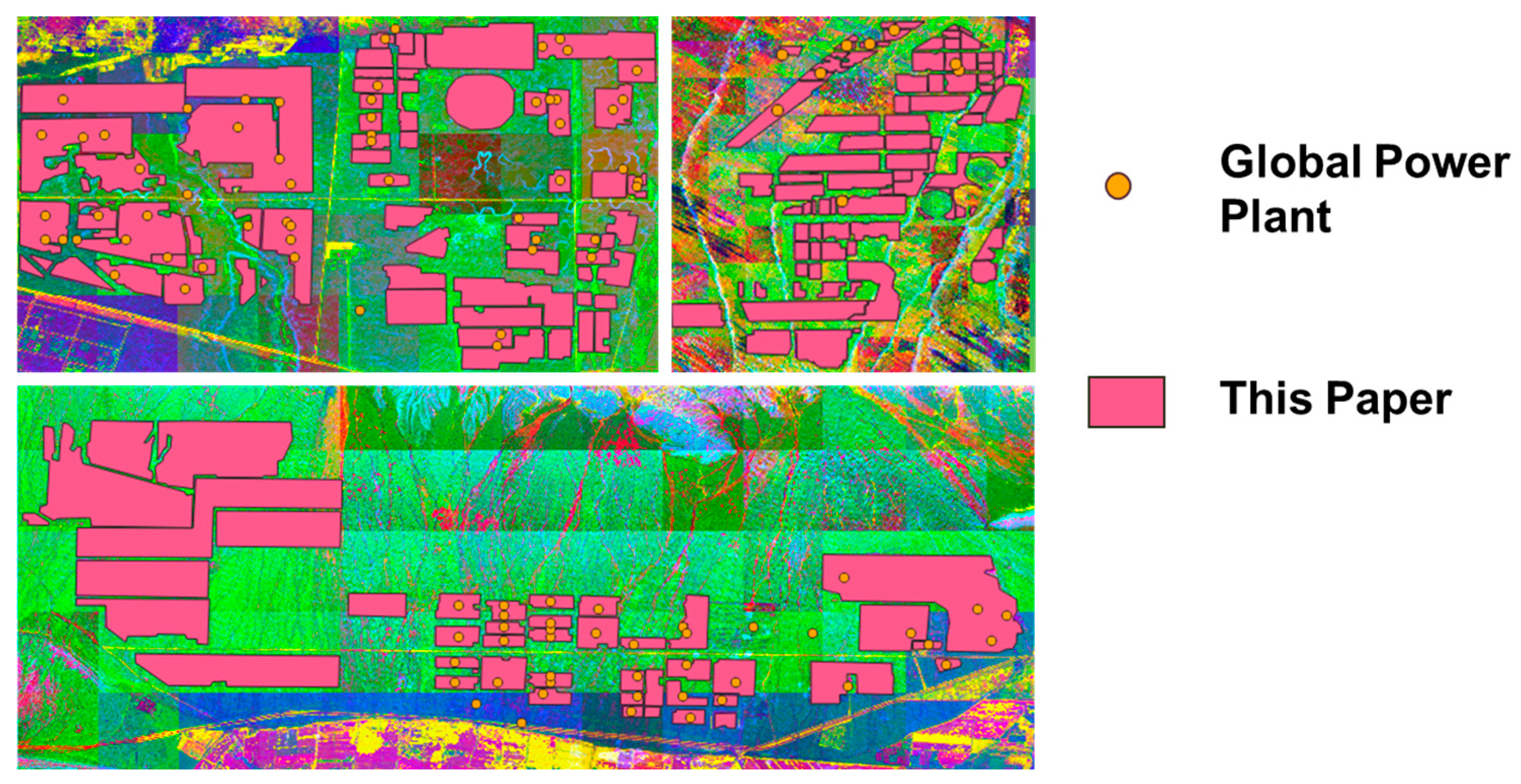
- World Resources Institute. Global Power Plant Database. Available online: https://datasets.wri.org/datasets/global-power-plant-database (accessed on 9 October 2025).



| Semantic Segmentation Models | Advantages | References |
|---|---|---|
| UNet | Simple structure, easy to implement, and fast inference speed. | [53] |
| Attention UNet | Precision targeting of designated areas, adapting to dynamic target conditions. | [54] |
| HRNetv2 | Maintain high-resolution features throughout the process, precisely preserve spatial details, aggregate multi-resolution features, and fully extract global-local information. | [55] |
| HRNet + OCR | Accurately capture object-level context, overcoming the limitations of local features. | [56] |
| Parameters | Deployment |
|---|---|
| epoch | 50 |
| process metrics | Dice coefficient, IoU coefficient, accuracy, loss |
| loss type | binary cross-entropy loss |
| learning rate strategy | adaptive |
| best model indicator | validation set Dice coefficient |
Disclaimer/Publisher’s Note: The statements, opinions and data contained in all publications are solely those of the individual author(s) and contributor(s) and not of MDPI and/or the editor(s). MDPI and/or the editor(s) disclaim responsibility for any injury to people or property resulting from any ideas, methods, instructions or products referred to in the content. |
© 2025 by the authors. Licensee MDPI, Basel, Switzerland. This article is an open access article distributed under the terms and conditions of the Creative Commons Attribution (CC BY) license (https://creativecommons.org/licenses/by/4.0/).
Share and Cite
Chen, H.; Zhang, L.; Yu, Y.; Wu, C.; Hua, T.; Gao, C. Photovoltaic Power Station Identification Based on High-Resolution Network and Google Earth Engine: A Case Study of Qinghai Province, Northwest China. Remote Sens. 2025, 17, 3896. https://doi.org/10.3390/rs17233896
Chen H, Zhang L, Yu Y, Wu C, Hua T, Gao C. Photovoltaic Power Station Identification Based on High-Resolution Network and Google Earth Engine: A Case Study of Qinghai Province, Northwest China. Remote Sensing. 2025; 17(23):3896. https://doi.org/10.3390/rs17233896
Chicago/Turabian StyleChen, Hongling, Li Zhang, Yang Yu, Chuandong Wu, Ting Hua, and Chunlian Gao. 2025. "Photovoltaic Power Station Identification Based on High-Resolution Network and Google Earth Engine: A Case Study of Qinghai Province, Northwest China" Remote Sensing 17, no. 23: 3896. https://doi.org/10.3390/rs17233896
APA StyleChen, H., Zhang, L., Yu, Y., Wu, C., Hua, T., & Gao, C. (2025). Photovoltaic Power Station Identification Based on High-Resolution Network and Google Earth Engine: A Case Study of Qinghai Province, Northwest China. Remote Sensing, 17(23), 3896. https://doi.org/10.3390/rs17233896