Abstract
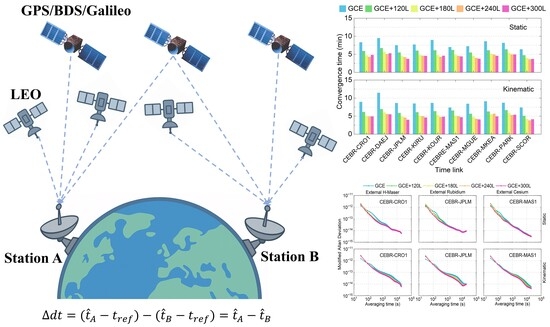
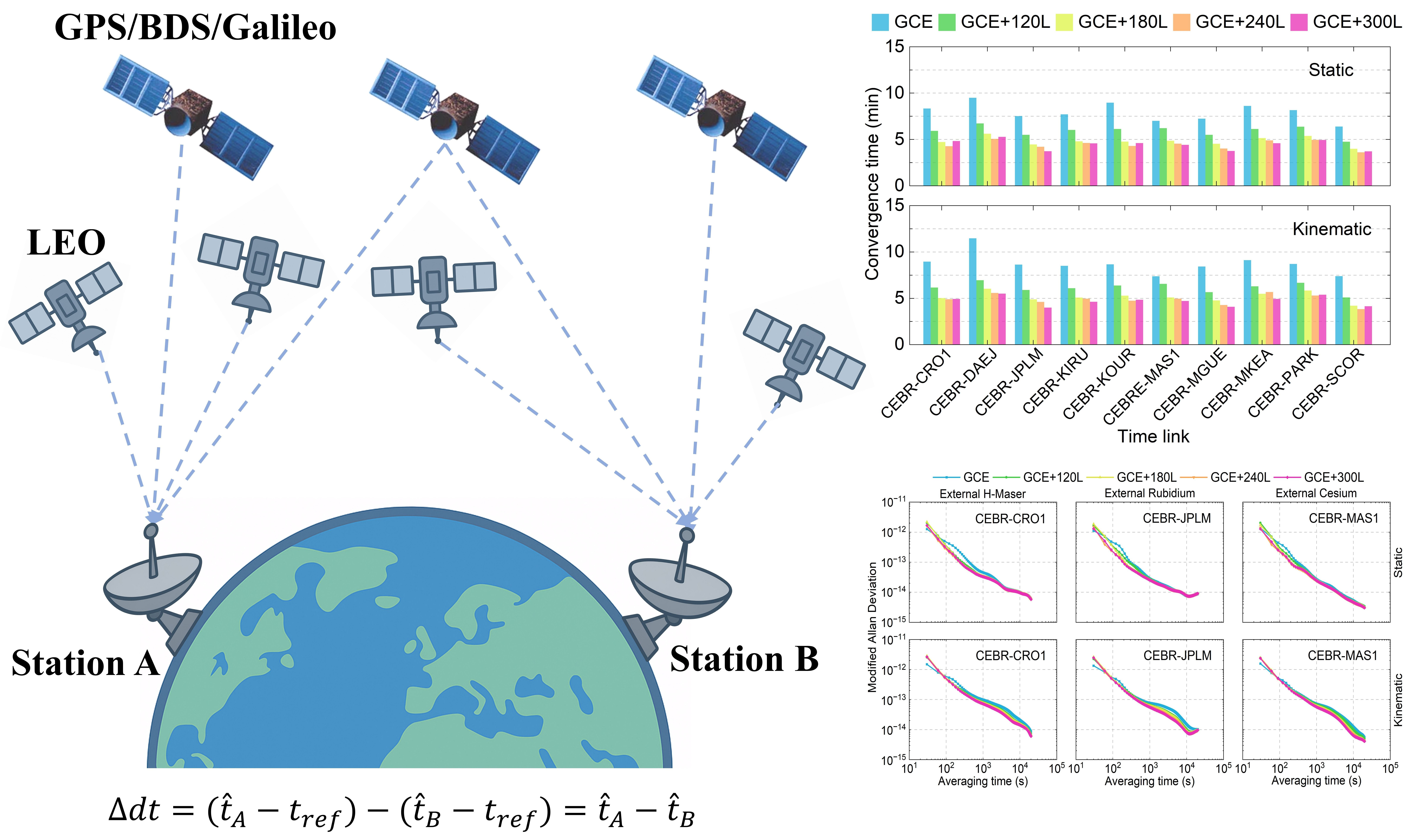
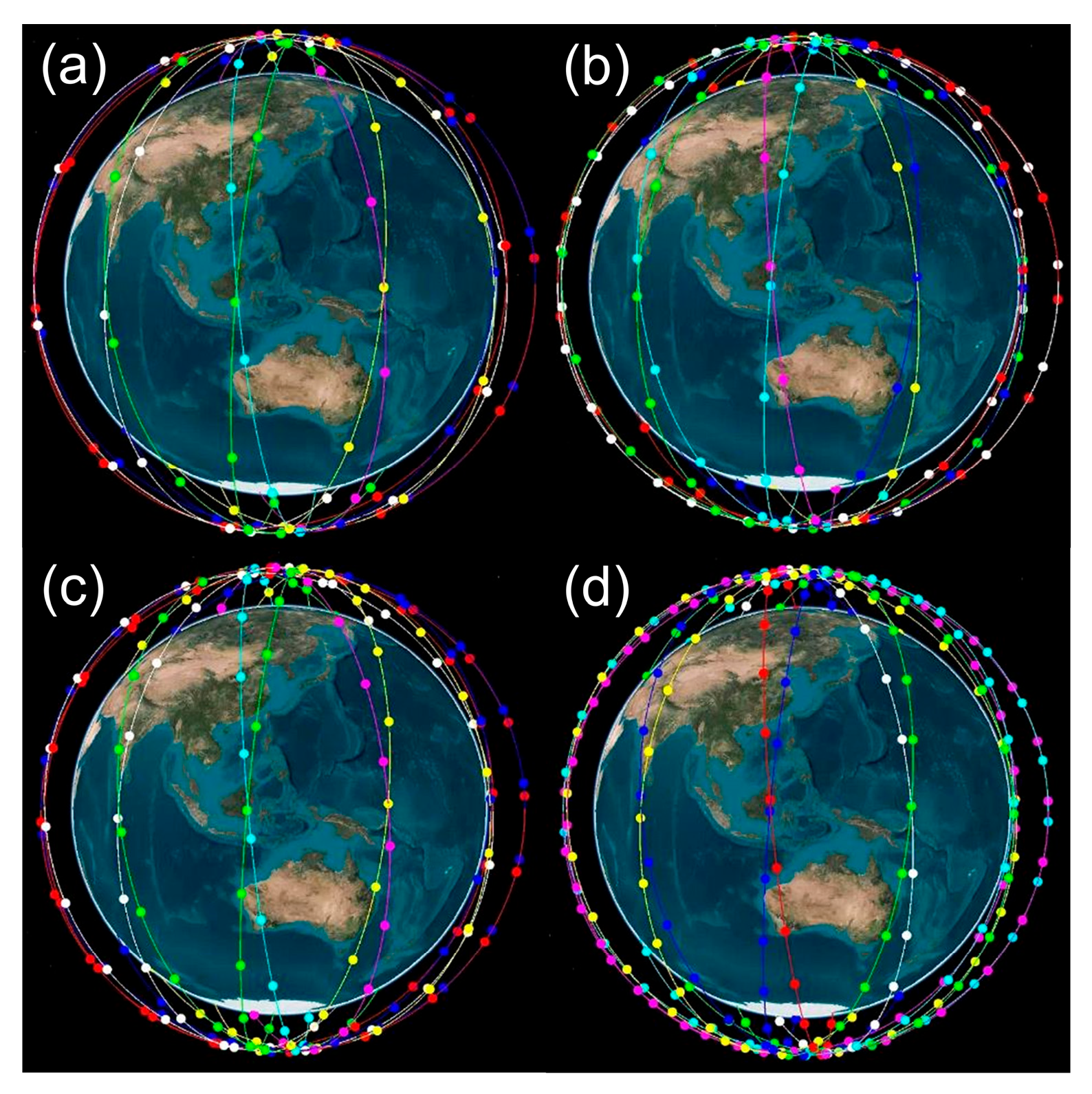
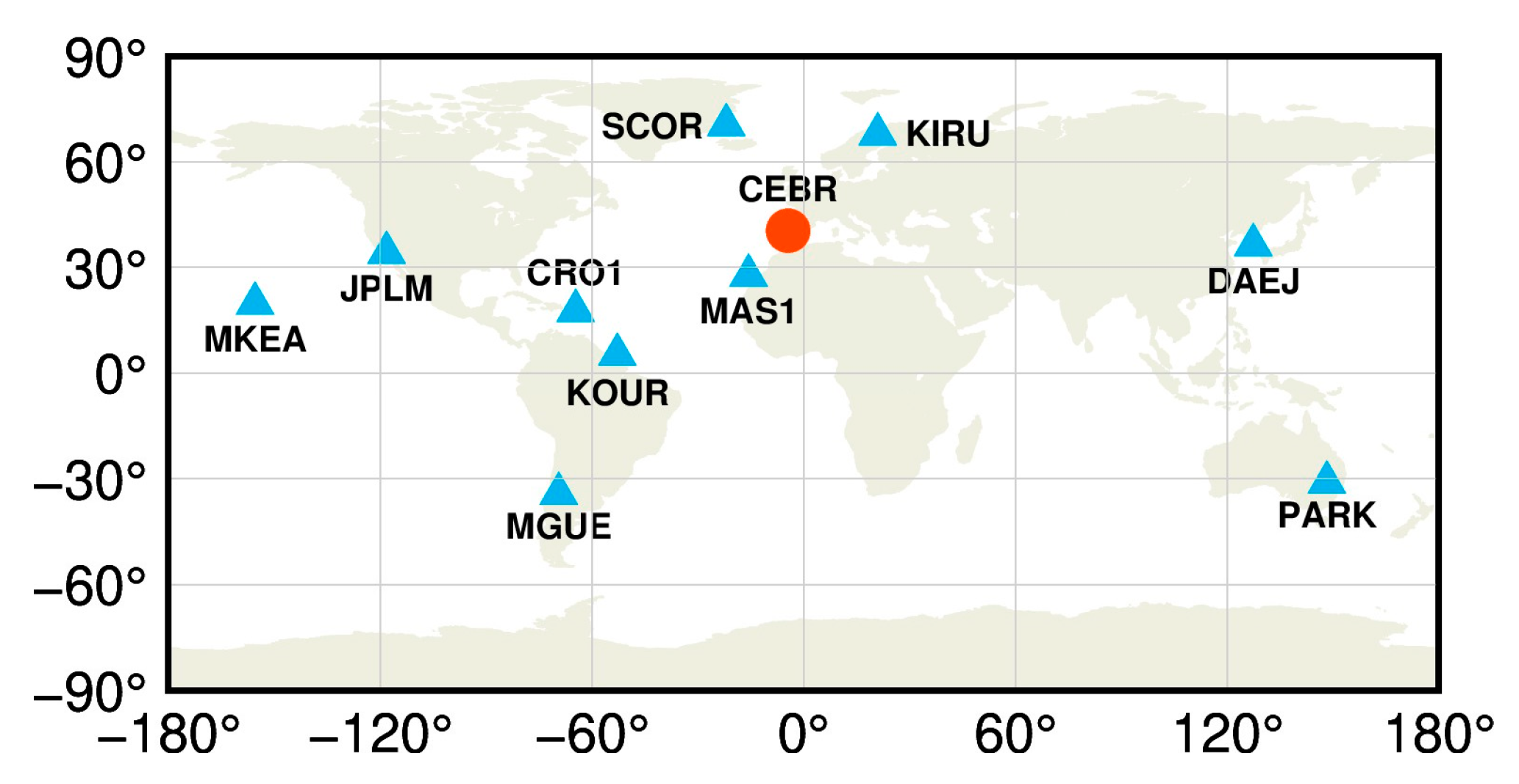
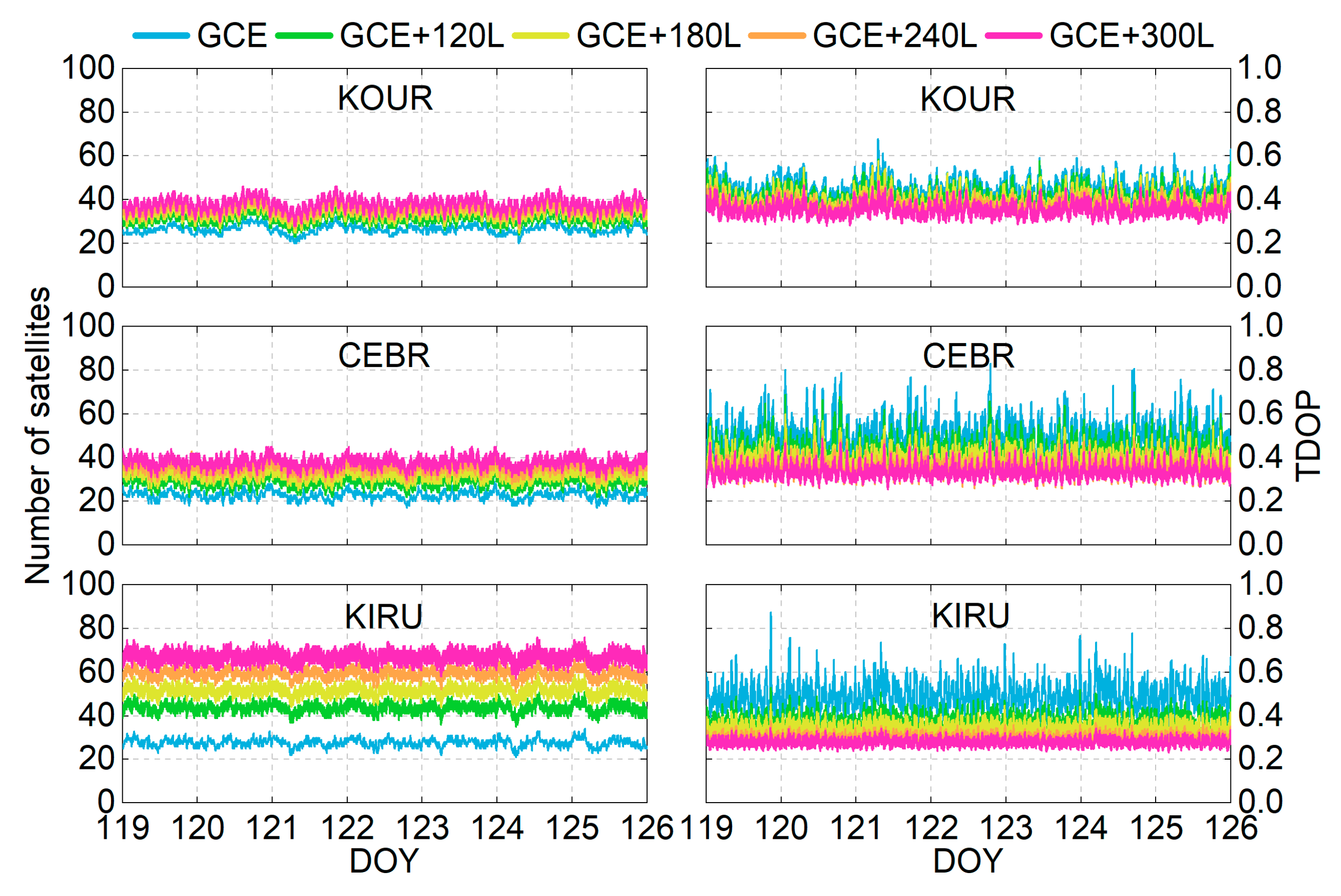
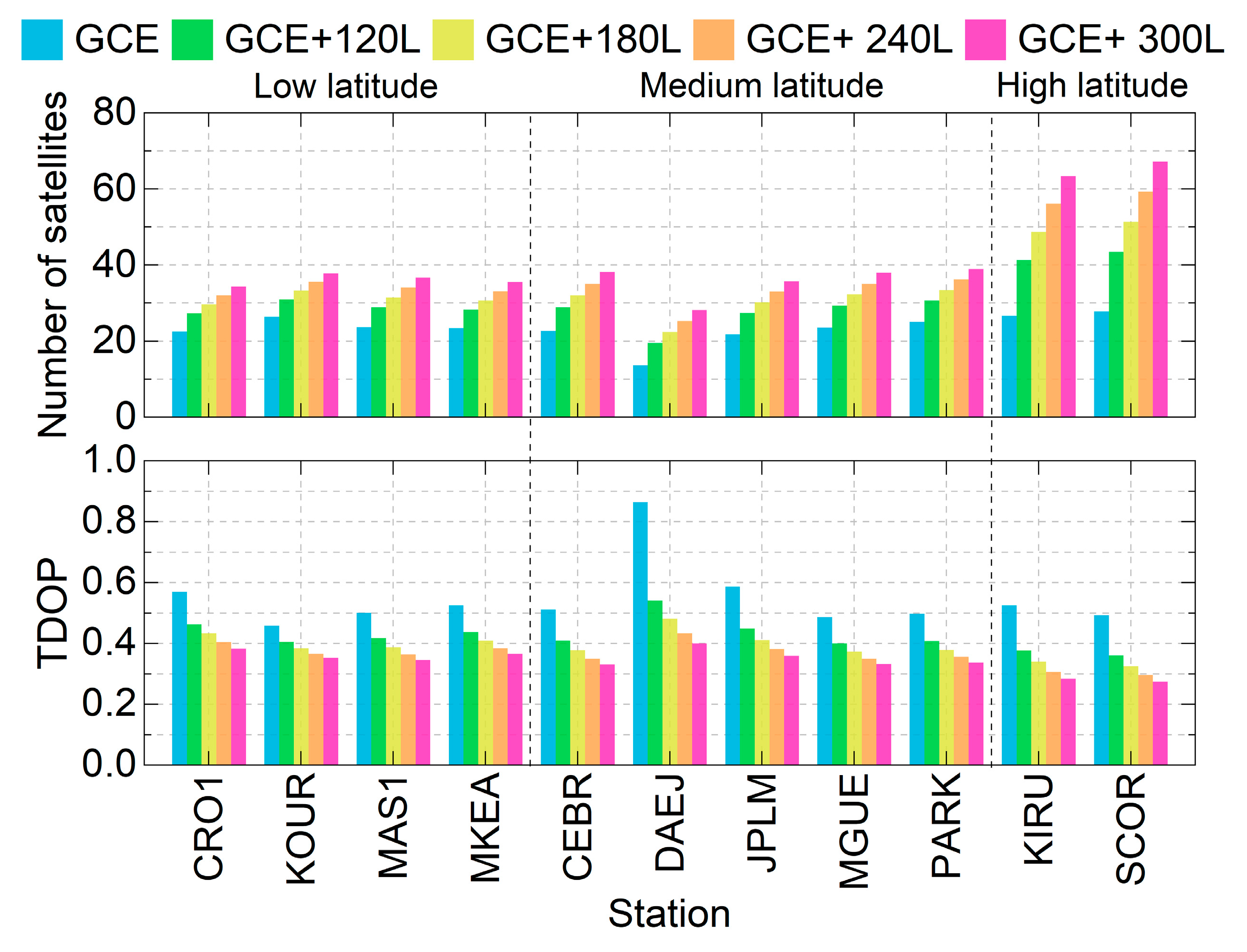
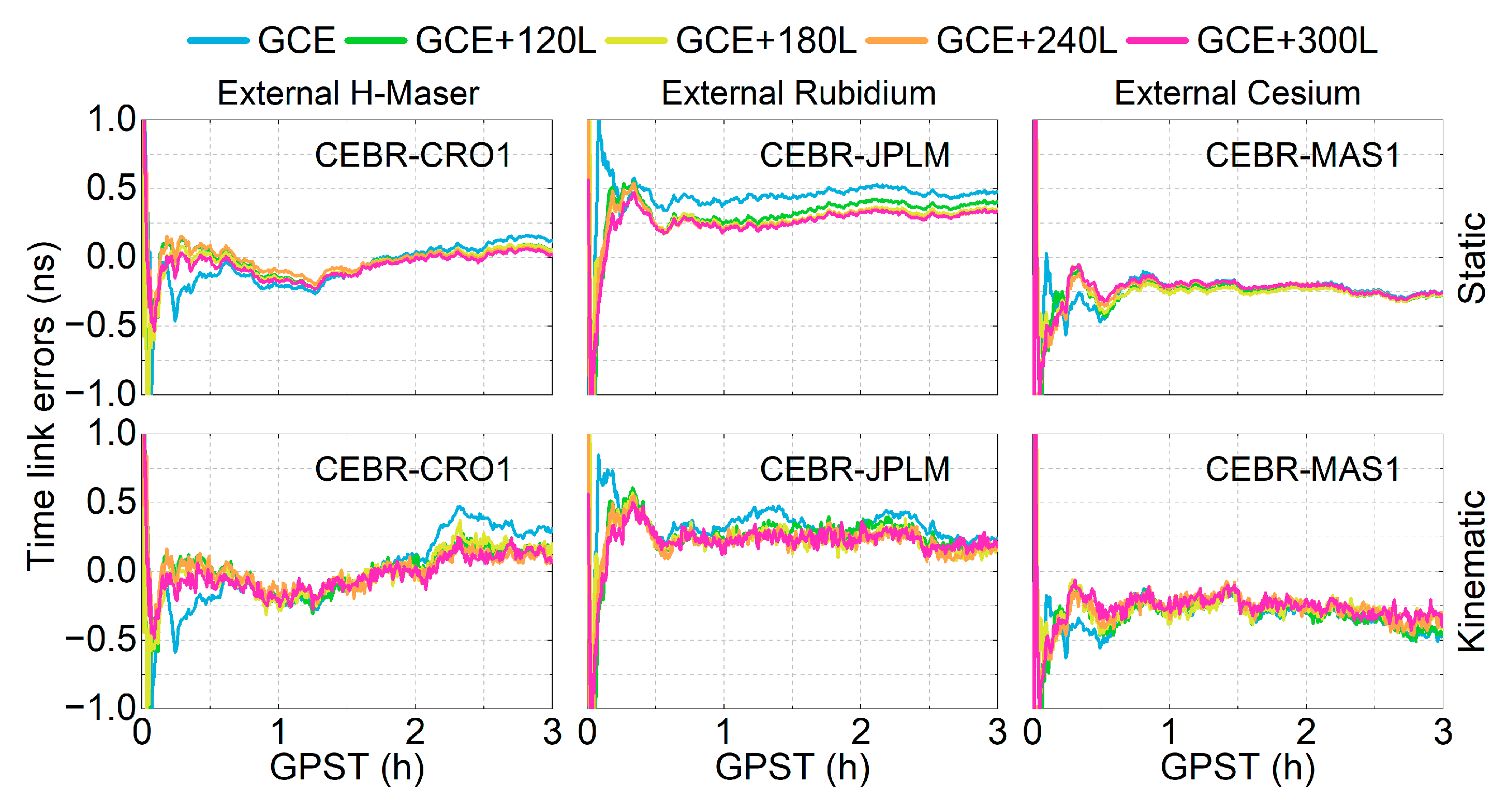
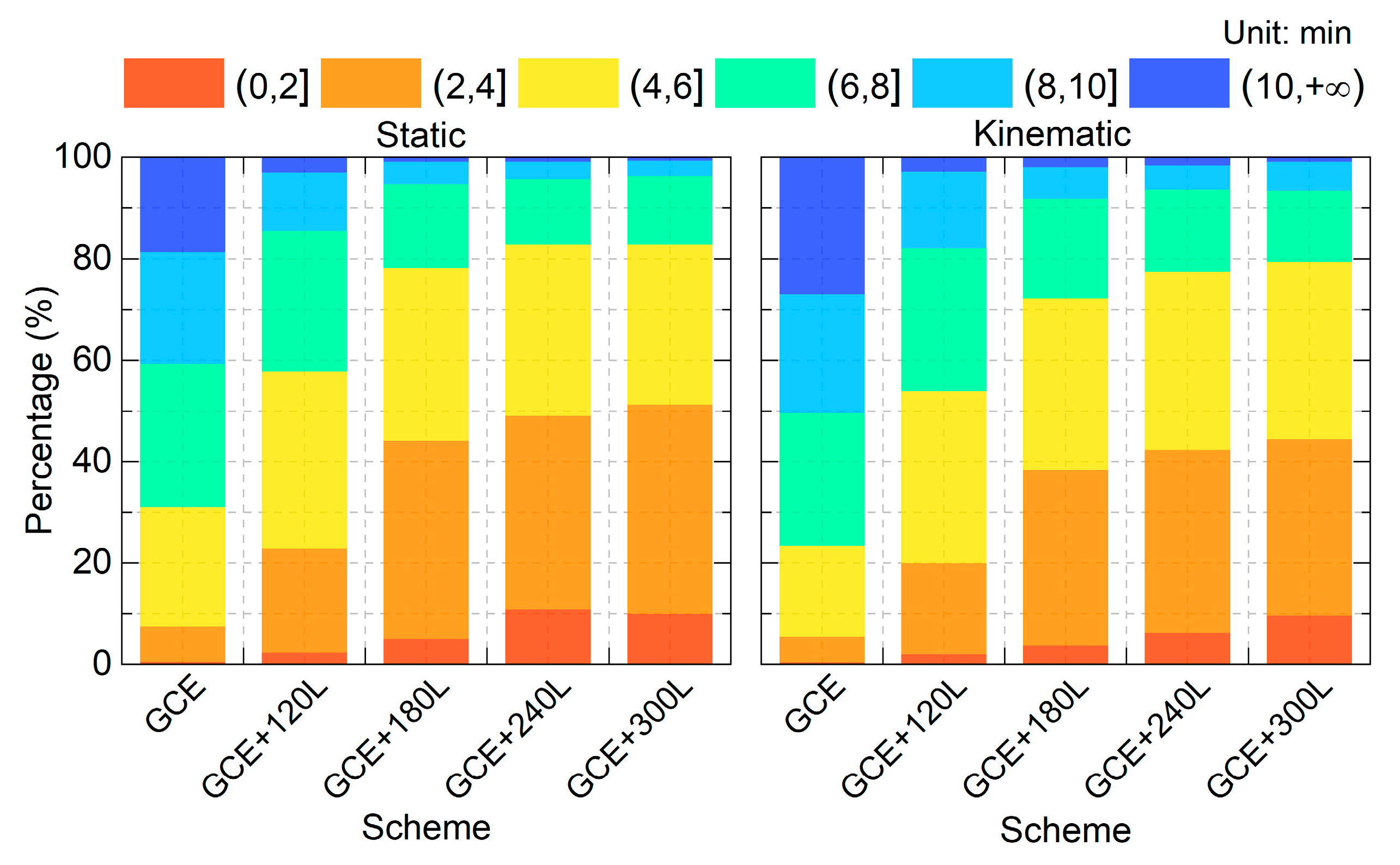
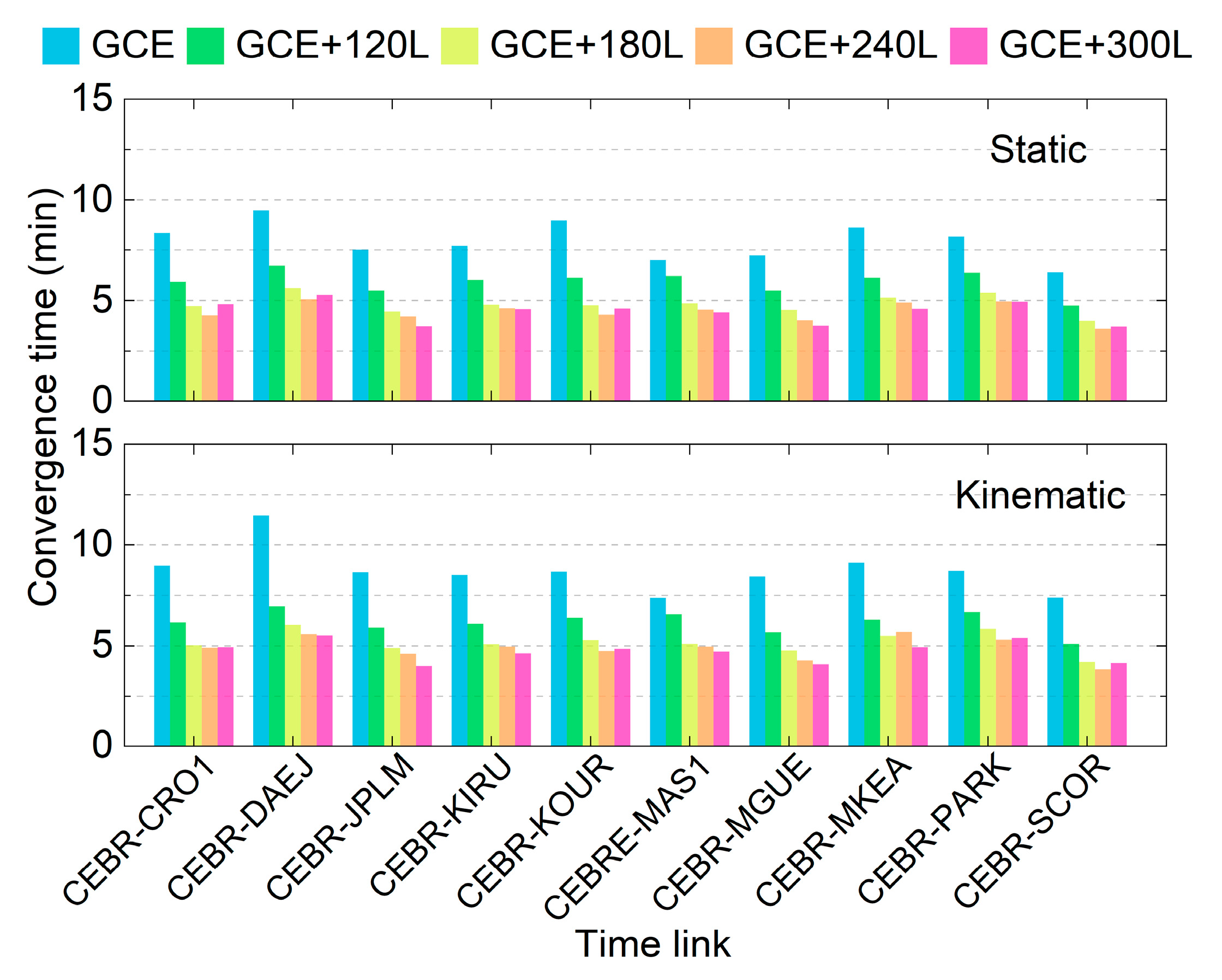
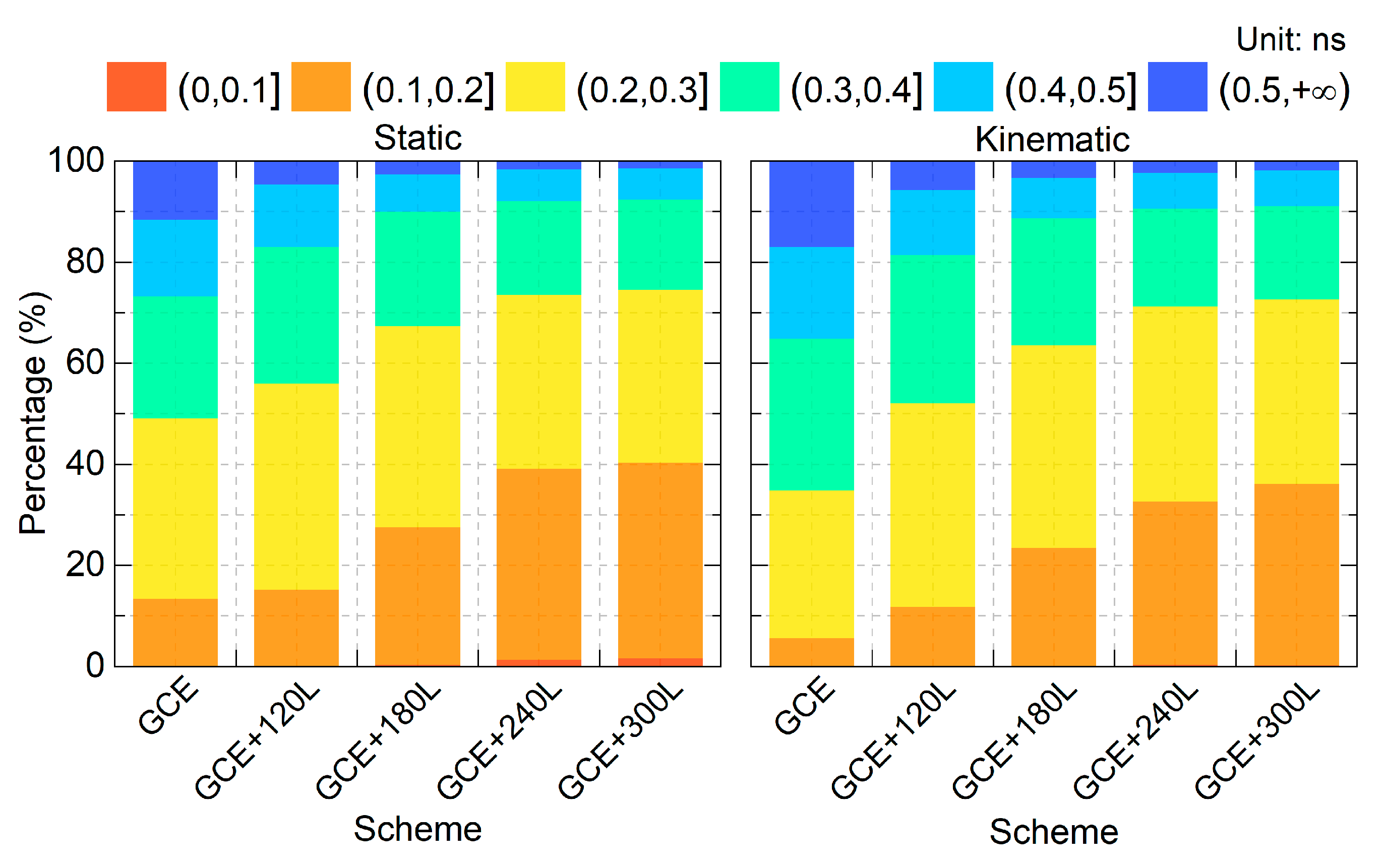
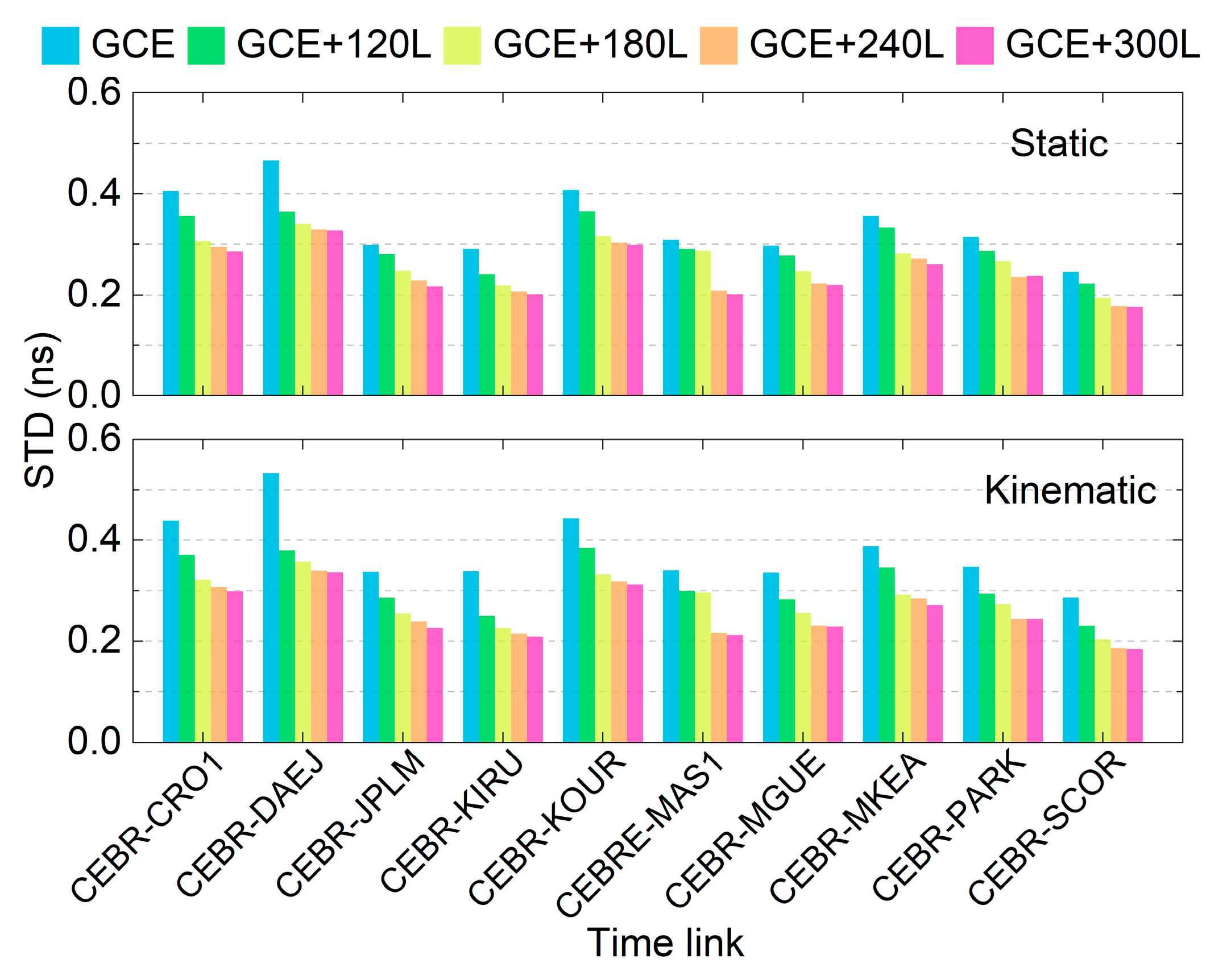
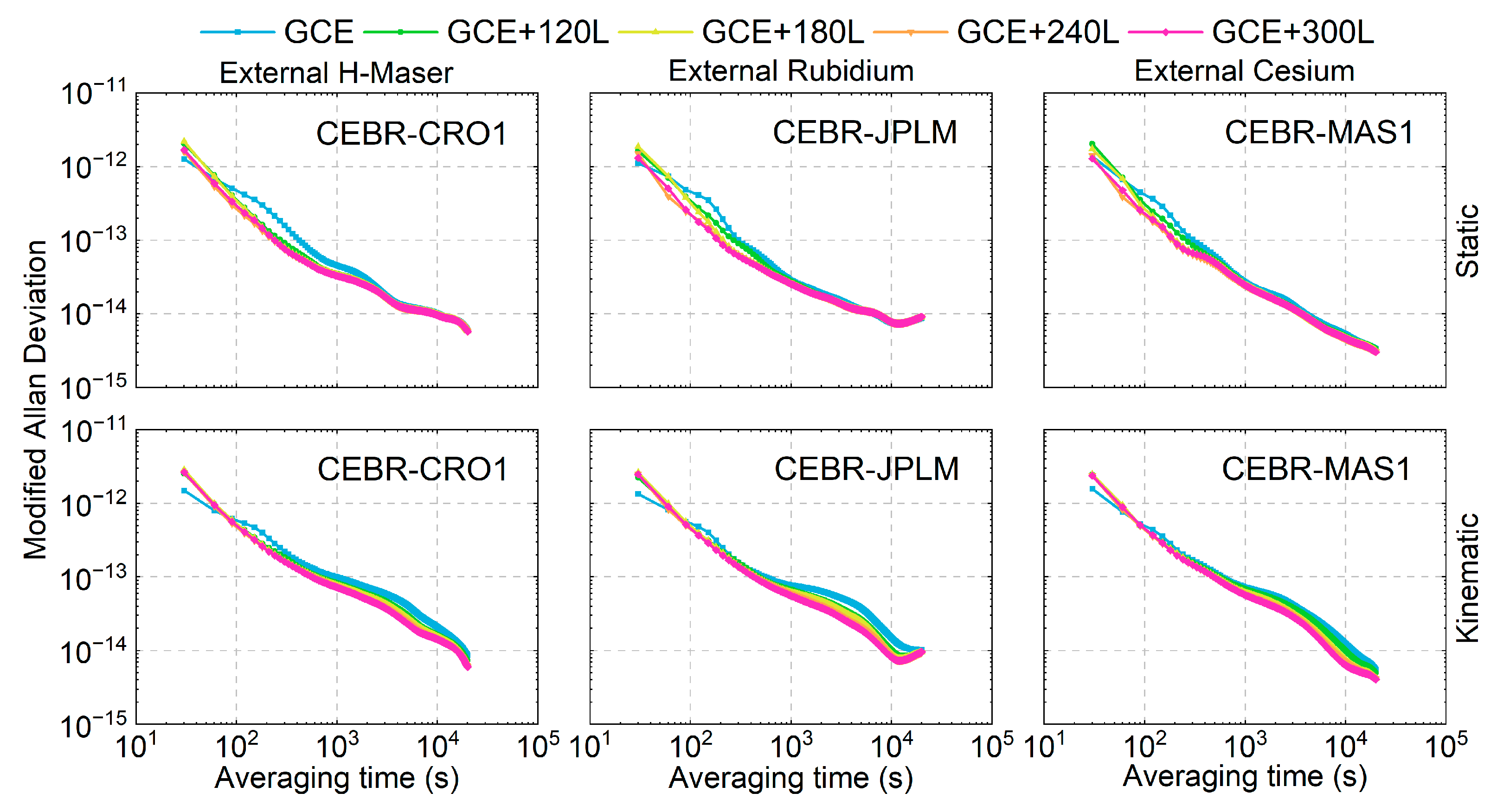
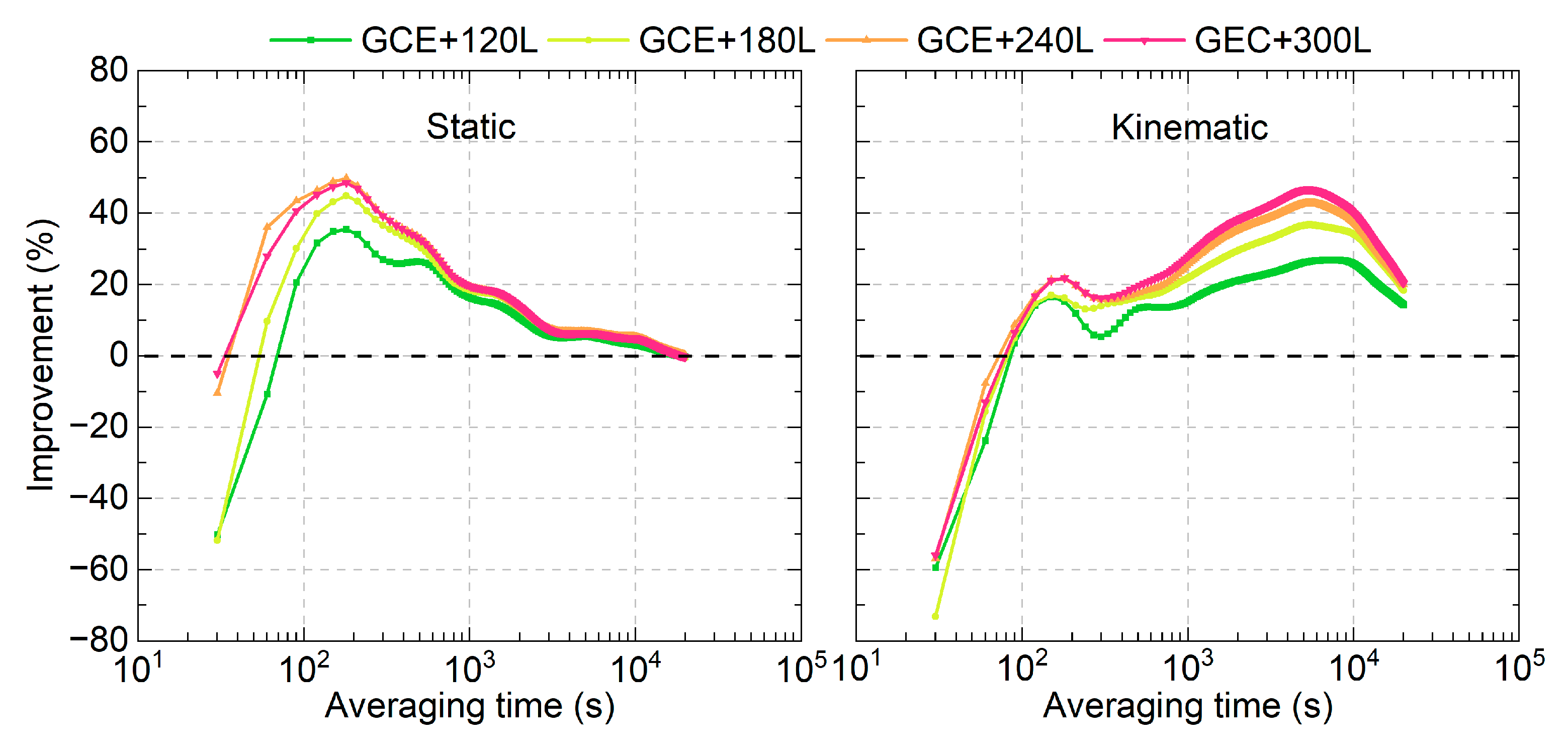
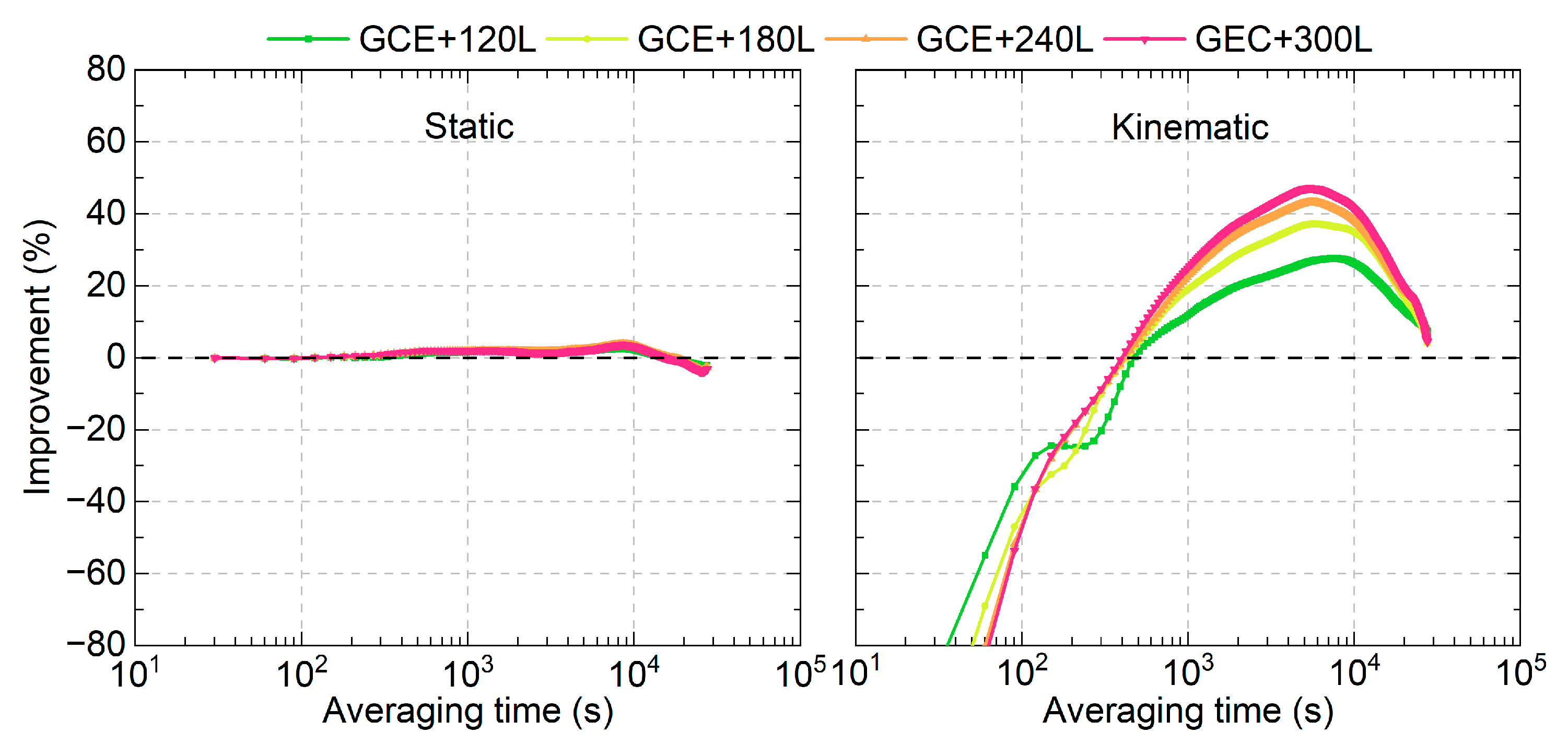
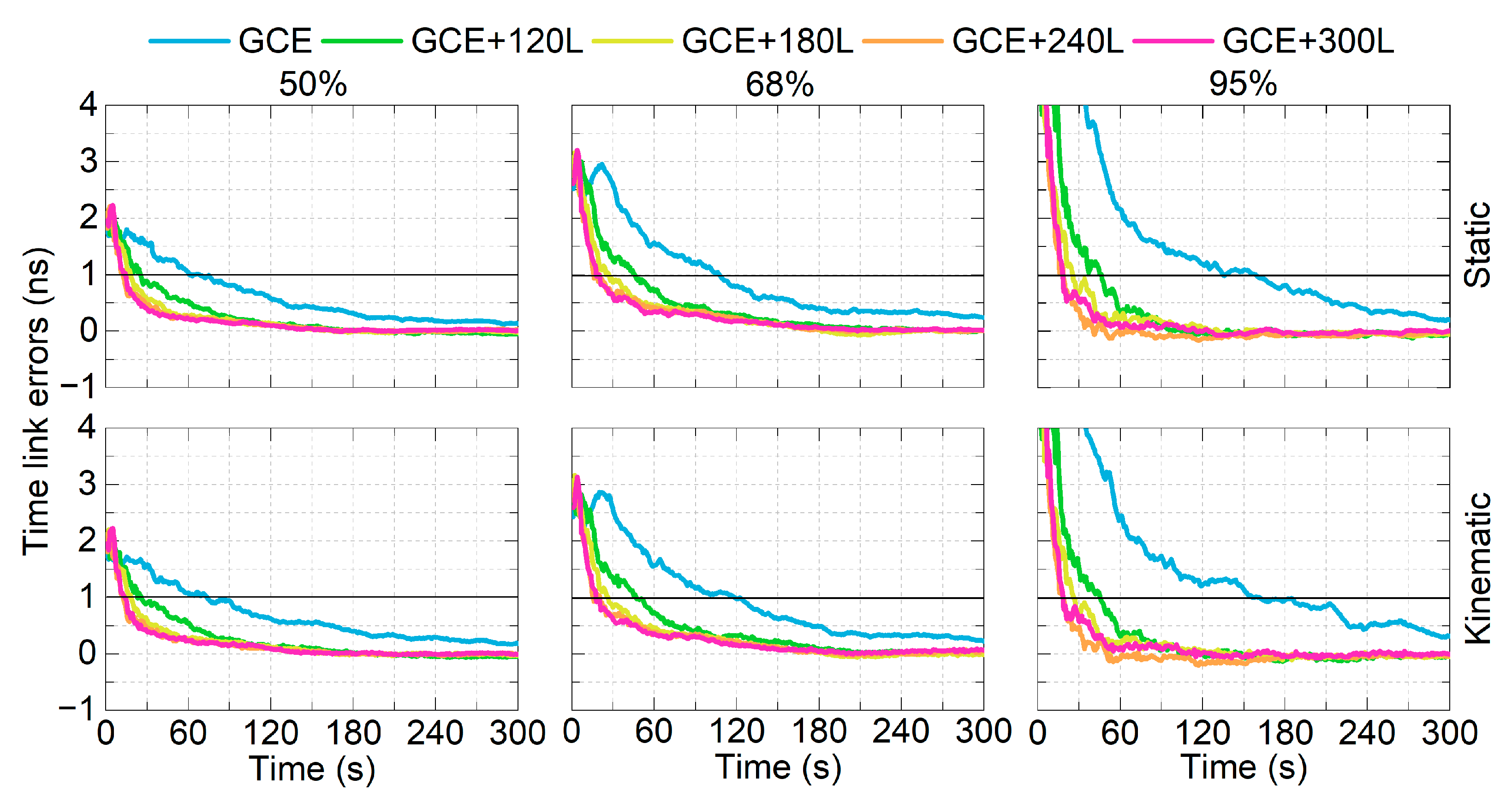
GNSS Precise Point Positioning (PPP) technology has been applied to the time transfer for a long time, enabling time synchronization between two arbitrary stations on a global scale. Over the past decade, Low Earth Orbit (LEO) satellite constellations have been developed to enhance GNSS, offering rapid geometry configuration variations that can accelerate PPP convergence and enhance the time link performance. In this contribution, LEO observations are integrated into GNSS to enhance the real-time PPP time transfer. Simulated LEO constellations with varying numbers of satellites are used to assess their impact on real-time PPP time transfer performance. One week of observation data from 11 globally distributed stations is used to generate 10 time links, and five experimental schemes are designed: (1) GPS/BDS-3/Galileo solution (GCE), (2) GCE with 120 LEO satellites (GCE+120L), (3) GCE with 180 LEO satellites (GCE+180L), (4) GCE with 240 LEO satellites (GCE+240L), and (5) GCE with 300 LEO satellites (GCE+300L). Results showed that compared to the GCE solution, integrating 120, 180, 240, and 300 LEO satellites increases the average number of observed satellites from 23.4 to 30.6, 34.1, 37.7, and 41.3, respectively, while reducing Time Dilution of Precision (TDOP) values from 0.547 to 0.424, 0.391, 0.363, and 0.342, respectively. Using 30 s observations, the average convergence time to STD of time link errors better than 0.1 ns is reduced from 7.95 to 5.94, 4.83, 4.46, and 4.45 min in static mode, with improvements of 25.3%, 39.2%, 43.9%, and 44.0%, respectively, and from 8.75 to 6.18, 5.17, 4.89, and 4.72 min in kinematic mode, with improvements of 29.3%, 40.8%, 44.1%, and 46.0%, respectively. Using 1 s observations, Scenarios GCE+120L, GCE+180L, GCE+240L, and GCE+300L can achieve 1 ns convergence within 1 min. The time link precision was also found to be significantly improved, i.e., from 0.337 to 0.243 ns in static mode with improvements of 27.9%, and from 0.377 to 0.253 ns in kinematic mode with improvements of 32.9%. The time link stability is significantly enhanced for averaging times between 60 and 20,000 s in both static and kinematic modes, with a maximum improvement of nearly 50%. These results have demonstrated that integrating LEO satellites can significantly enhance real-time PPP time transfer performance.