Article

Mechanisms and Predictability of Beaufort Sea Ice Retreat Revealed by Coupled Modeling and Remote Sensing Data


1
Tianjin Key Laboratory for Marine Environmental Research and Service, School of Marine Science and Technology, Tianjin University, Tianjin 300072, China
2
Polar and Marine Research Institute, College of Harbor and Coastal Engineering, Jimei University, Xiamen 361021, China
*
Author to whom correspondence should be addressed.
These authors contributed equally to this work.
Remote Sens. 2025, 17(19), 3286; https://doi.org/10.3390/rs17193286
Submission received: 28 July 2025 / Revised: 16 September 2025 / Accepted: 24 September 2025 / Published: 25 September 2025
(This article belongs to the Section Ocean Remote Sensing)

Abstract

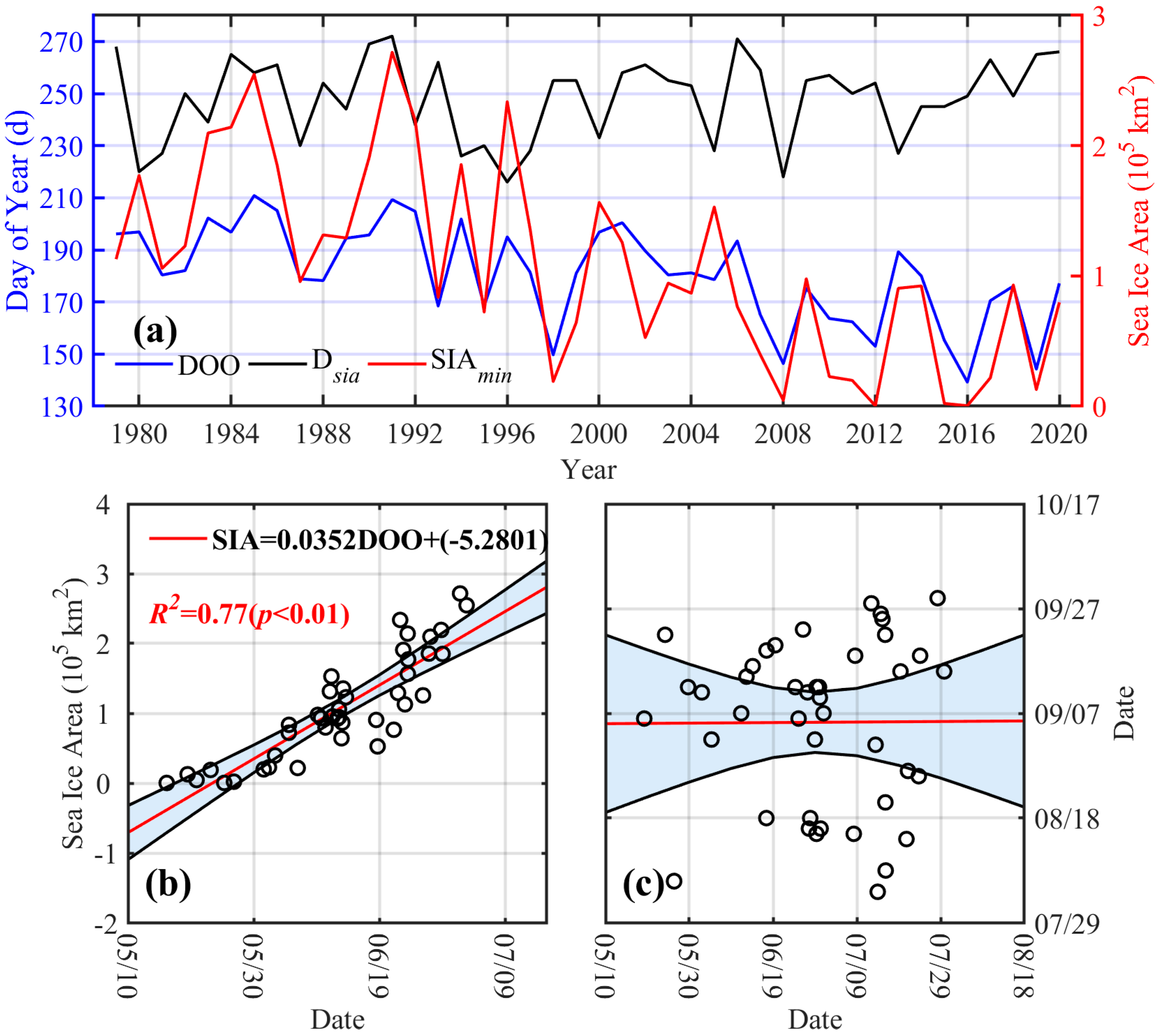
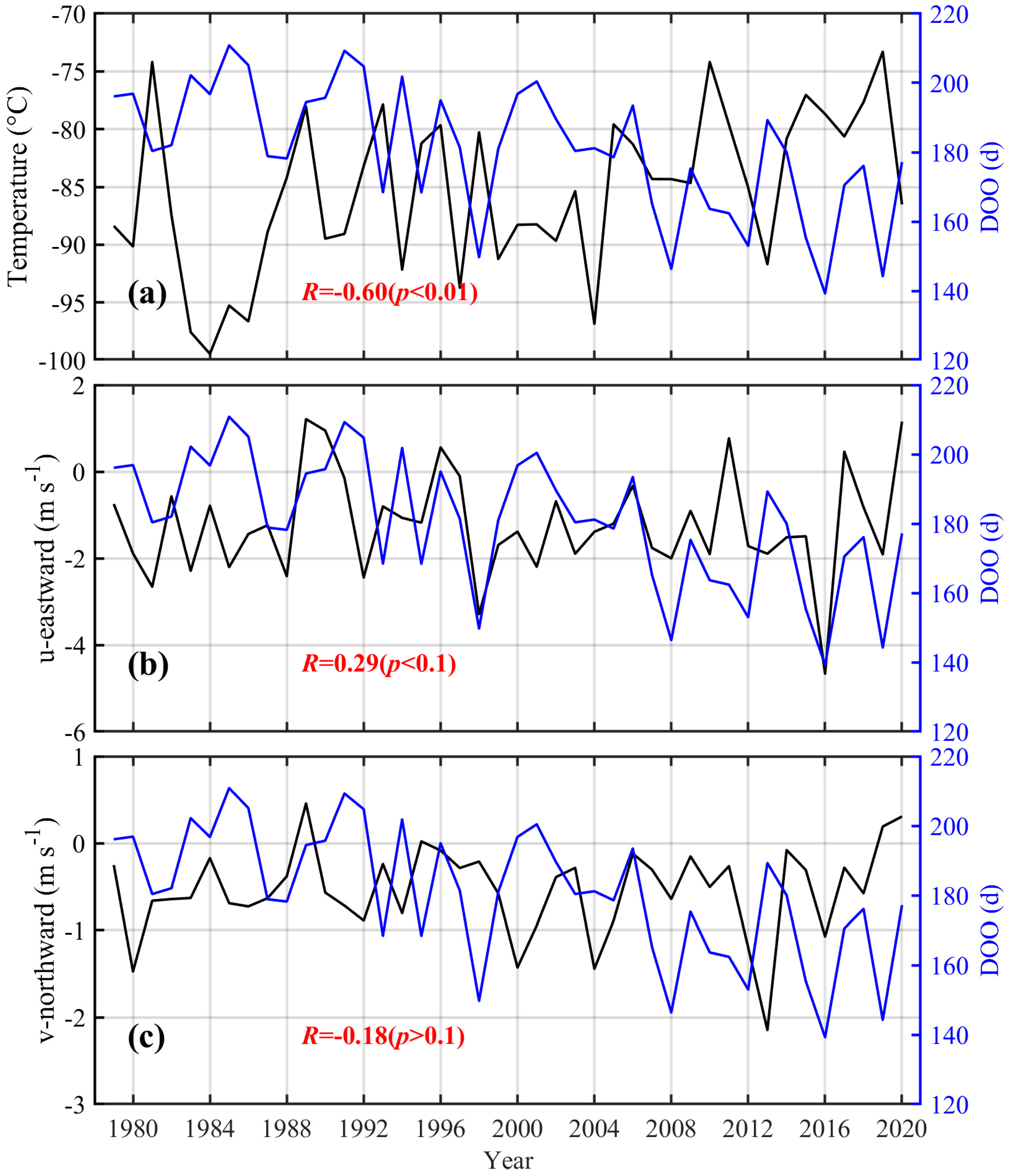
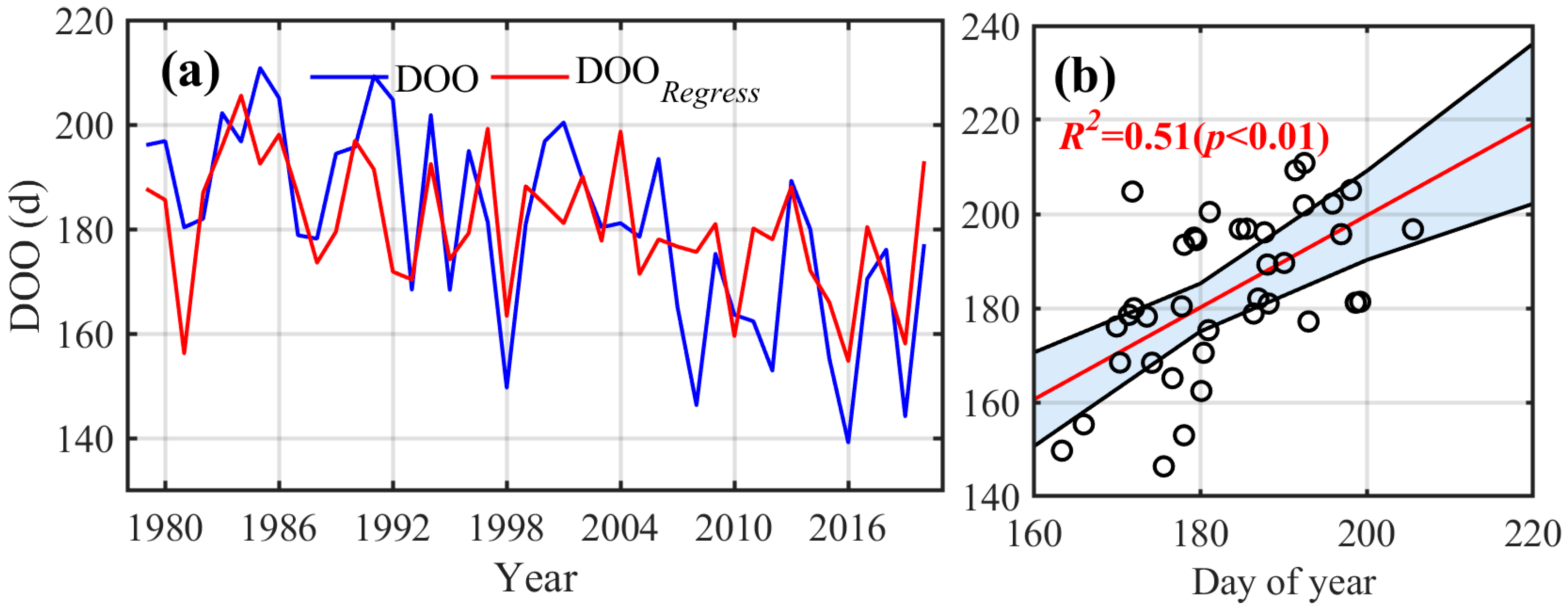
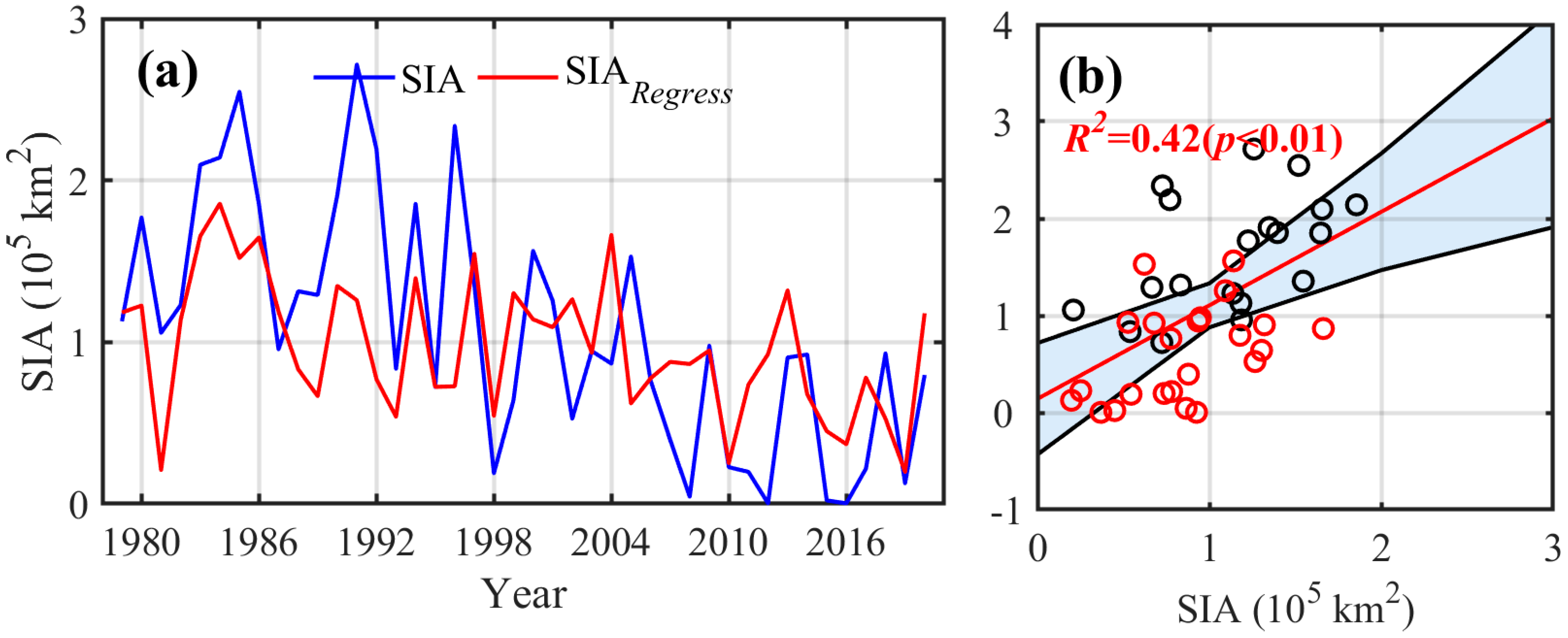
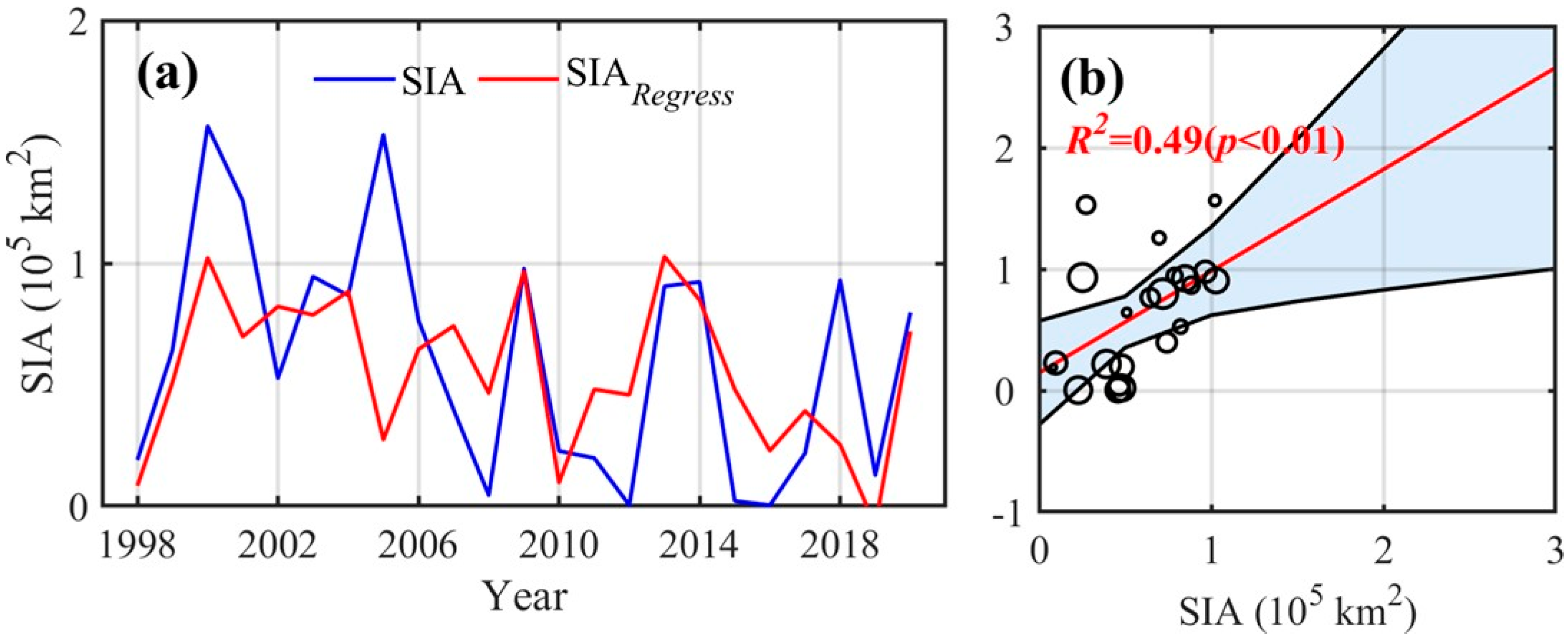
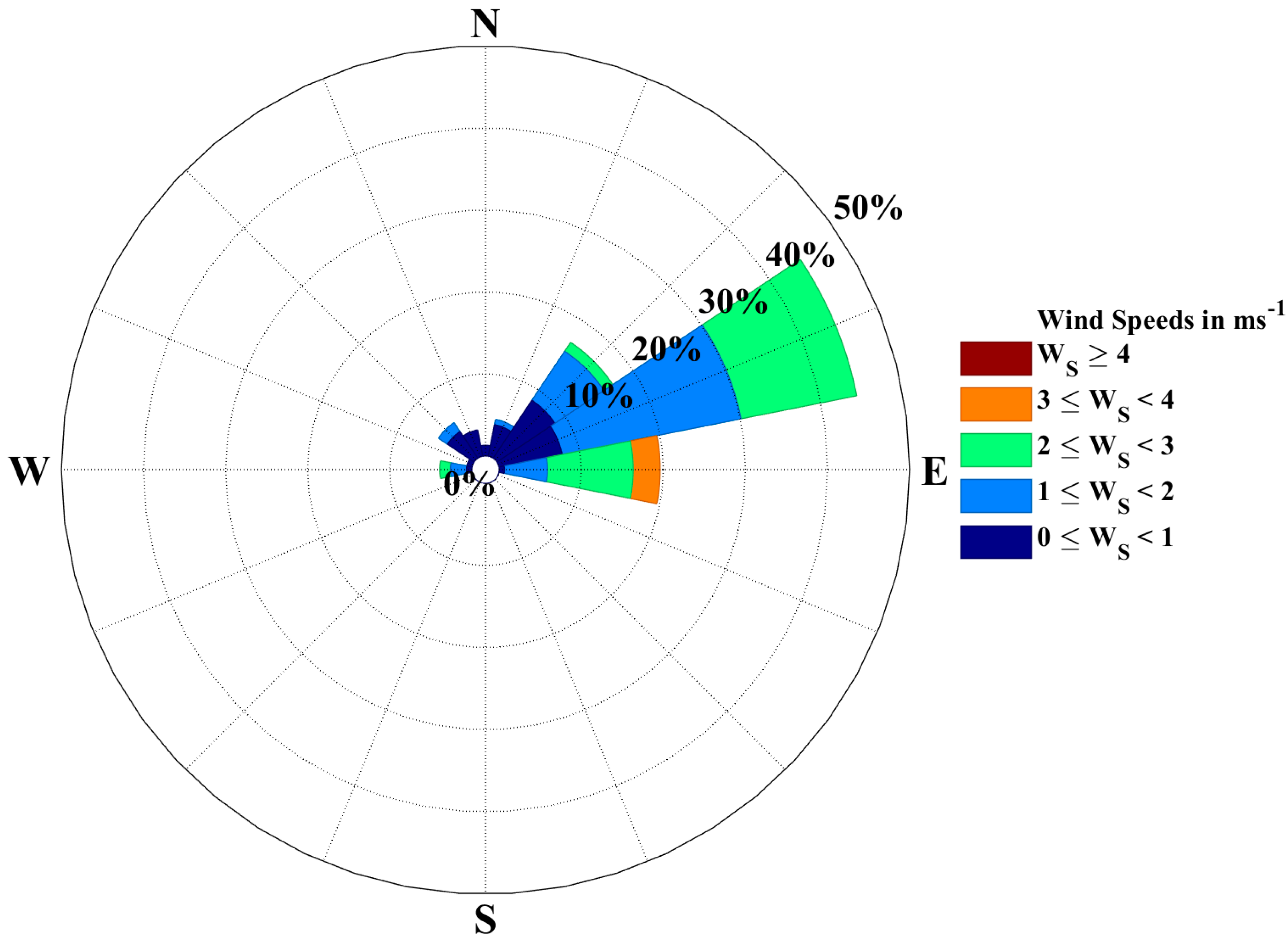
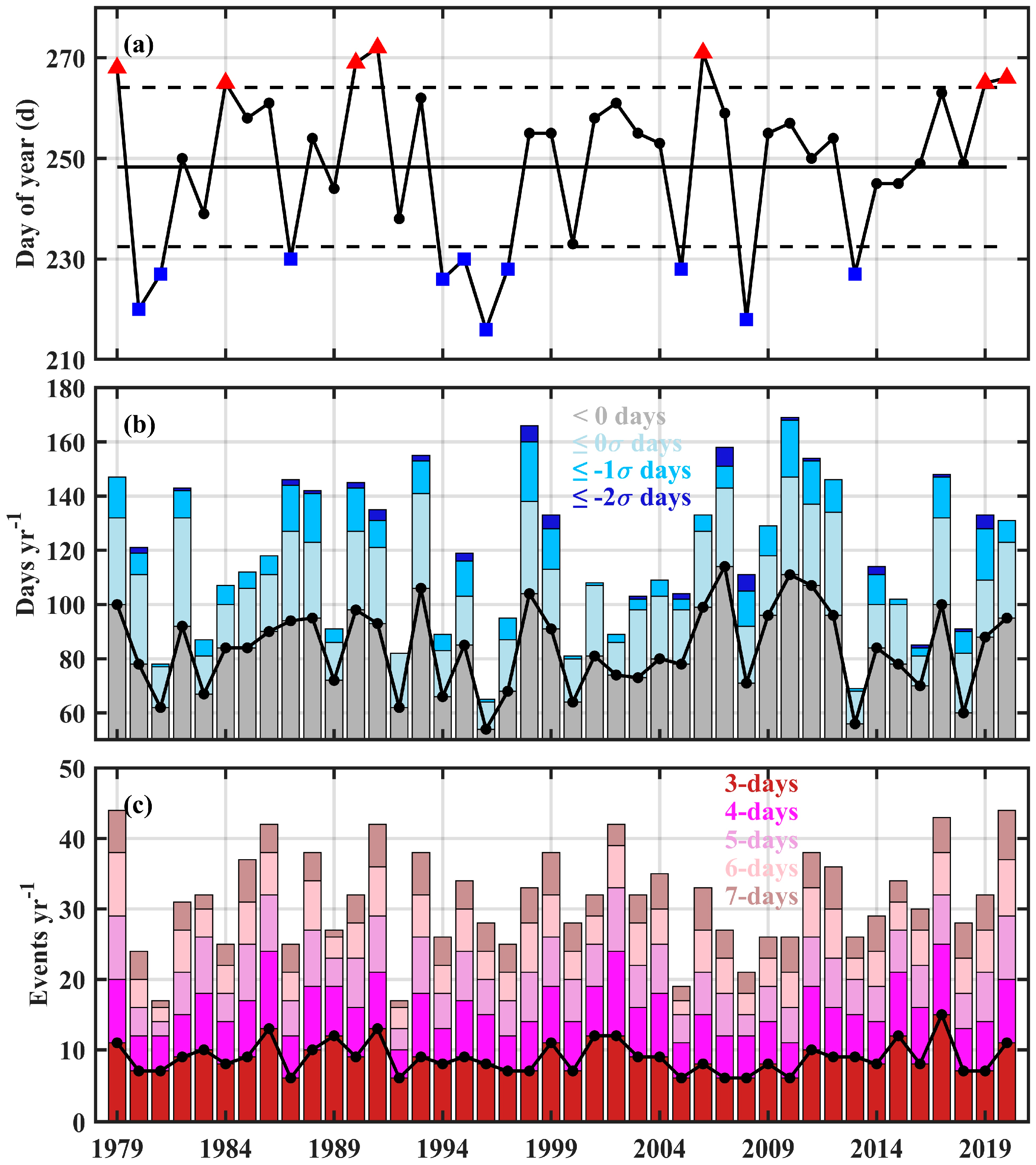
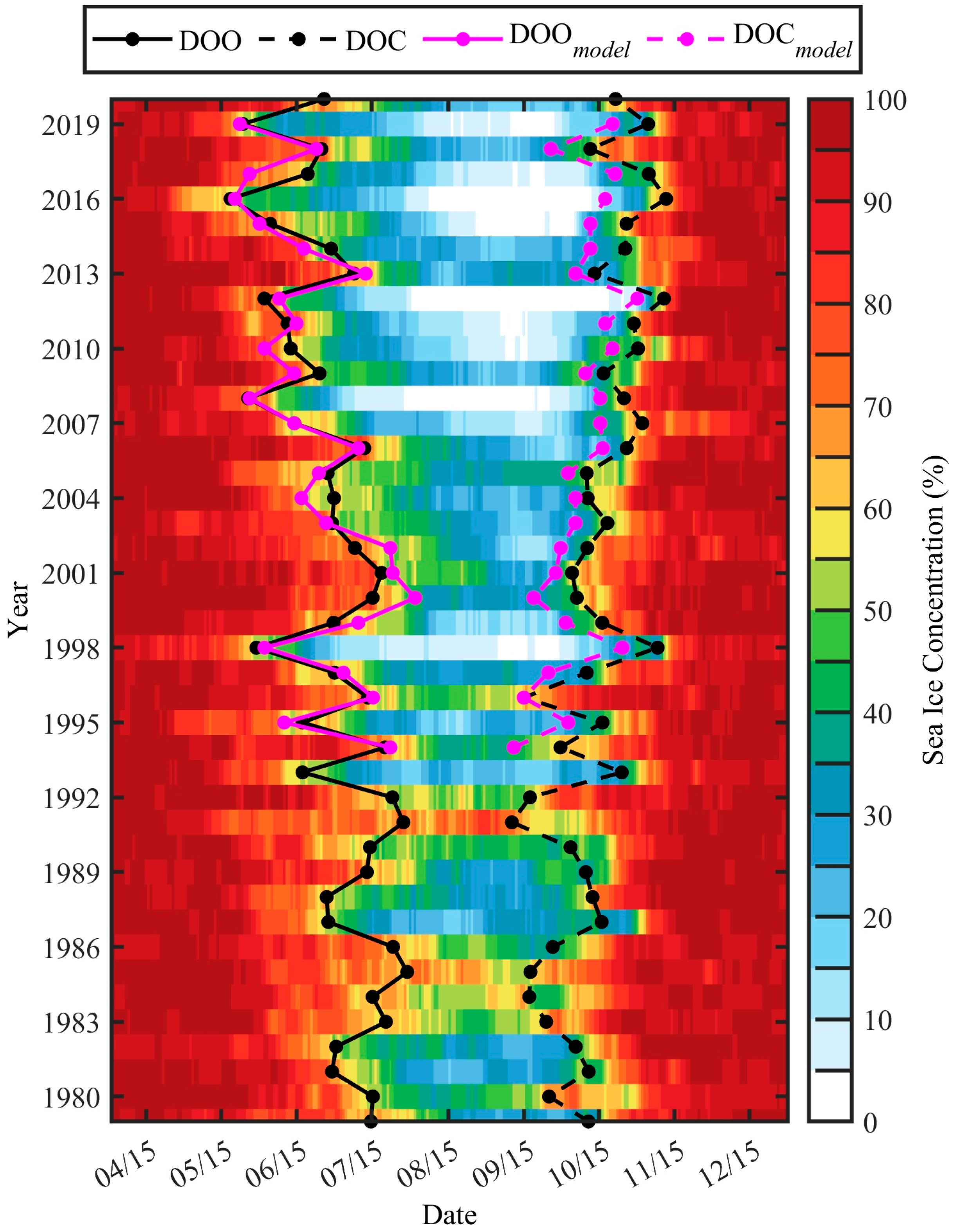
The Beaufort Sea has experienced significant sea ice retreat in recent decades, driven by both thermodynamic and dynamic processes. This study investigates the drivers and predictability of summer sea ice retreat in the Beaufort Sea by integrating an ocean–sea ice model with satellite-derived sea ice concentration data and atmospheric reanalysis products. Model diagnostics from 1994 to 2019 reveal that thermodynamic processes dominate annual sea ice loss (approximately 90%), with vertical heat flux accounting for roughly 85% of total oceanic heat input. The summer sea ice minimum area and the day of opening, derived from either model results and satellite observations, have a strong correlation with R2 = 0.60 and R2 = 0.77, respectively, enabling regression equations based solely on remote sensing data. Further multiple linear regression incorporating preceding winter (January to April) accumulated temperature and easterly wind yields moderately robust forecasts of minimum sea ice area (R2 = 0.49) during 1998–2020. Additionally, analysis of reanalysis wind data shows that the timing of minimum sea ice area is significantly influenced by the frequency and intensity of sub-seasonal easterly wind events during melt season. These results demonstrate the critical importance of remote sensing in monitoring Arctic sea ice variability and enhancing seasonal prediction capability under a rapidly changing climate.
Keywords: sea ice area; prediction; accumulated temperature; easterly wind; Beaufort Sea sea ice area; prediction; accumulated temperature; easterly wind; Beaufort Sea