Technical Note

Atmospheric Optical Characteristics in the Area of 30–400 km

by
Boris M. Shevtsov
*,
Andrey N. Perezhogin
and
Ilya N. Seredkin
Institute of Cosmophysical Research and Radio Wave Propagation, FEB RAS, 7, Mirnaya St., Paratunka, 684034 Kamchatka, Russia
*
Author to whom correspondence should be addressed.
Remote Sens. 2022, 14(23), 6108; https://doi.org/10.3390/rs14236108
Submission received: 25 August 2022 / Revised: 24 November 2022 / Accepted: 29 November 2022 / Published: 2 December 2022
(This article belongs to the Section Atmospheric Remote Sensing)

Abstract

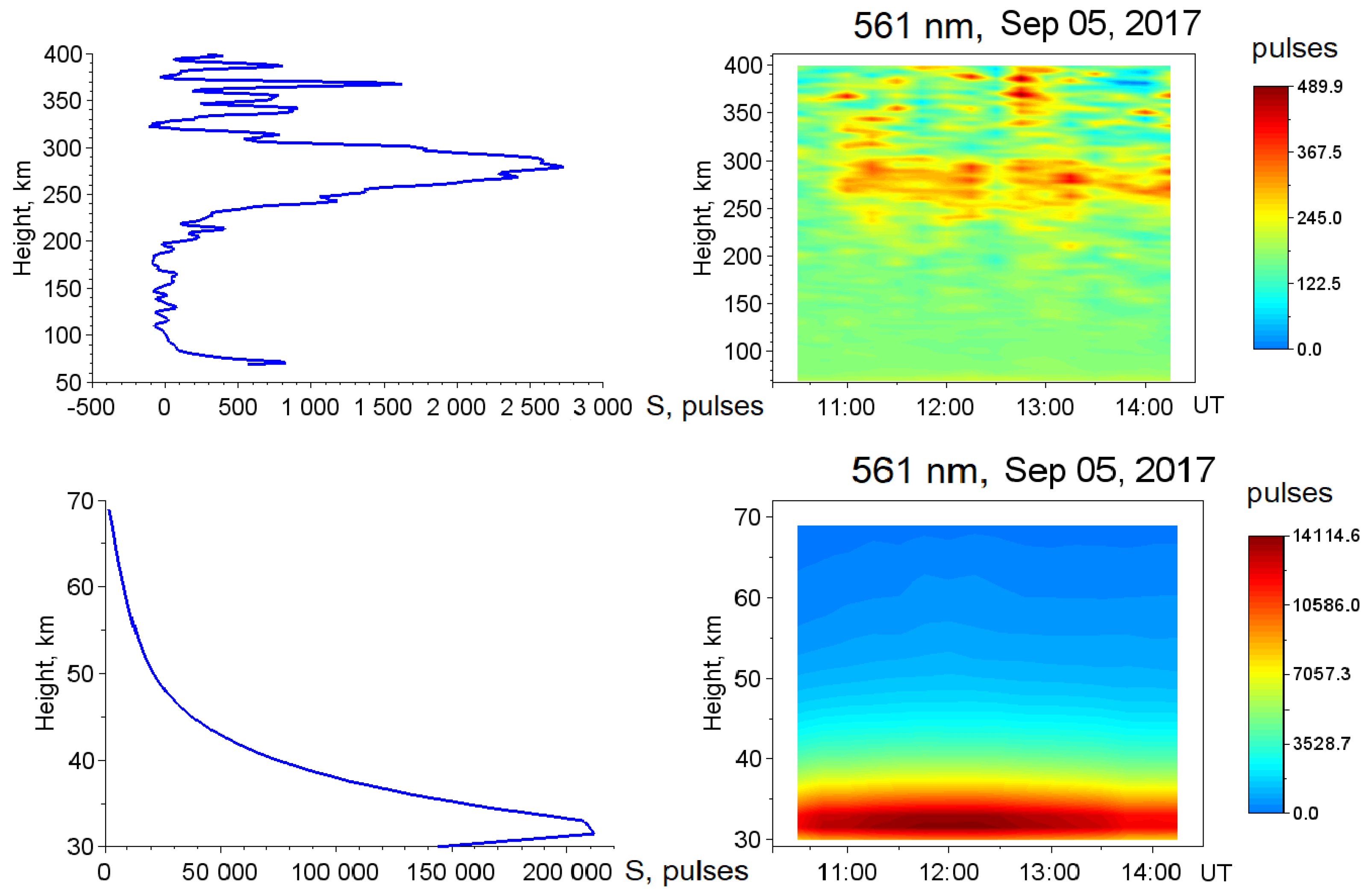
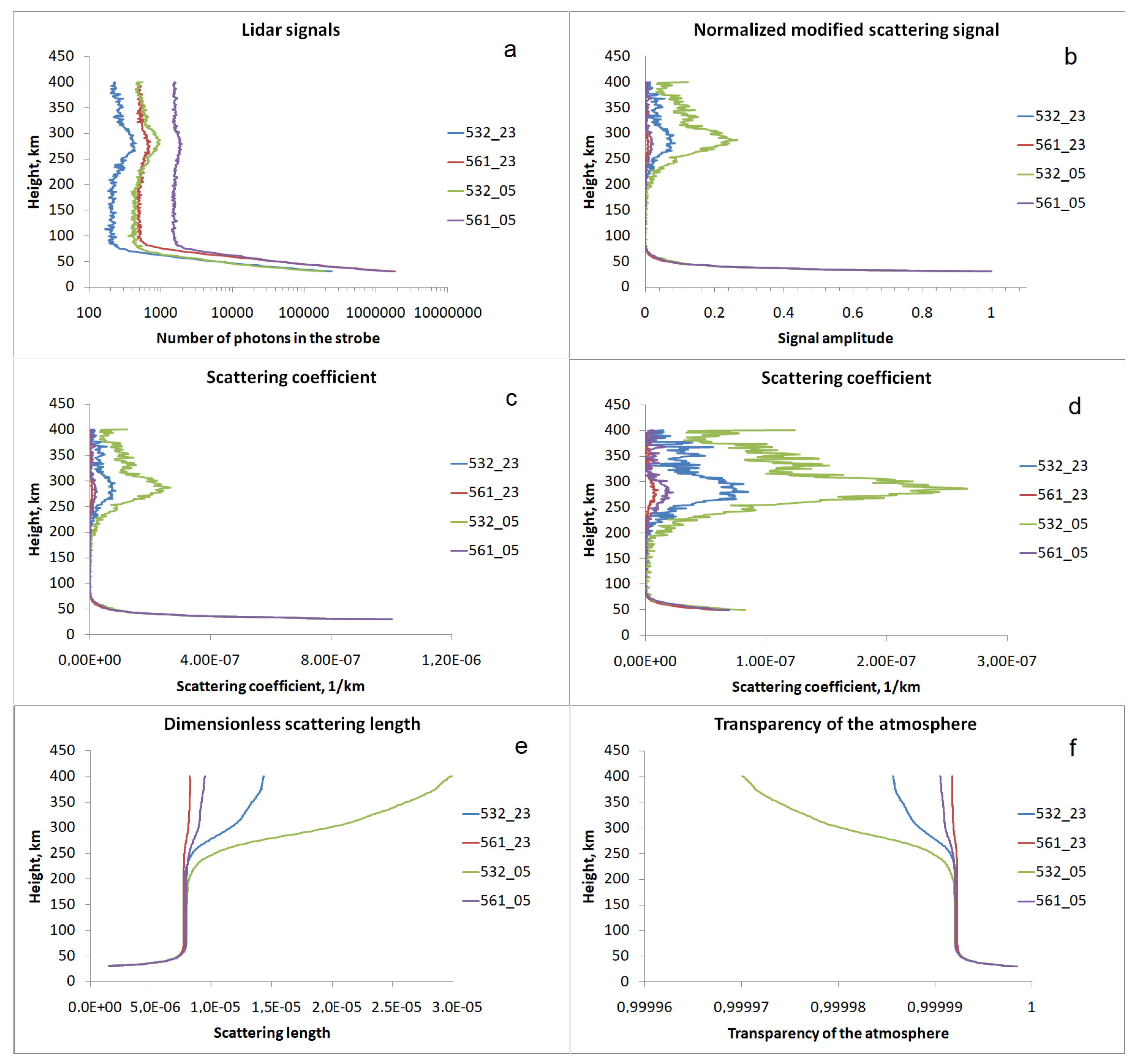
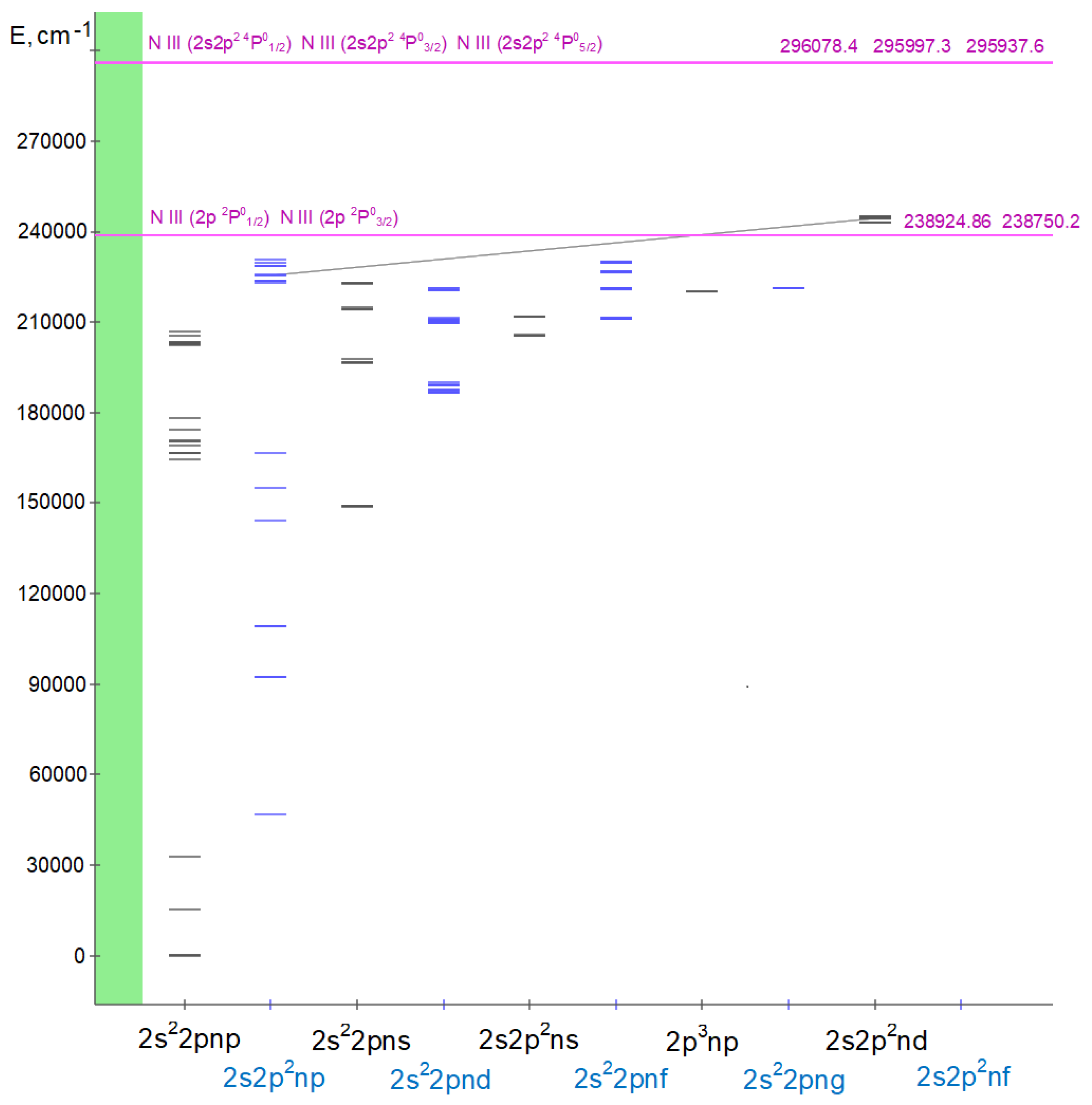
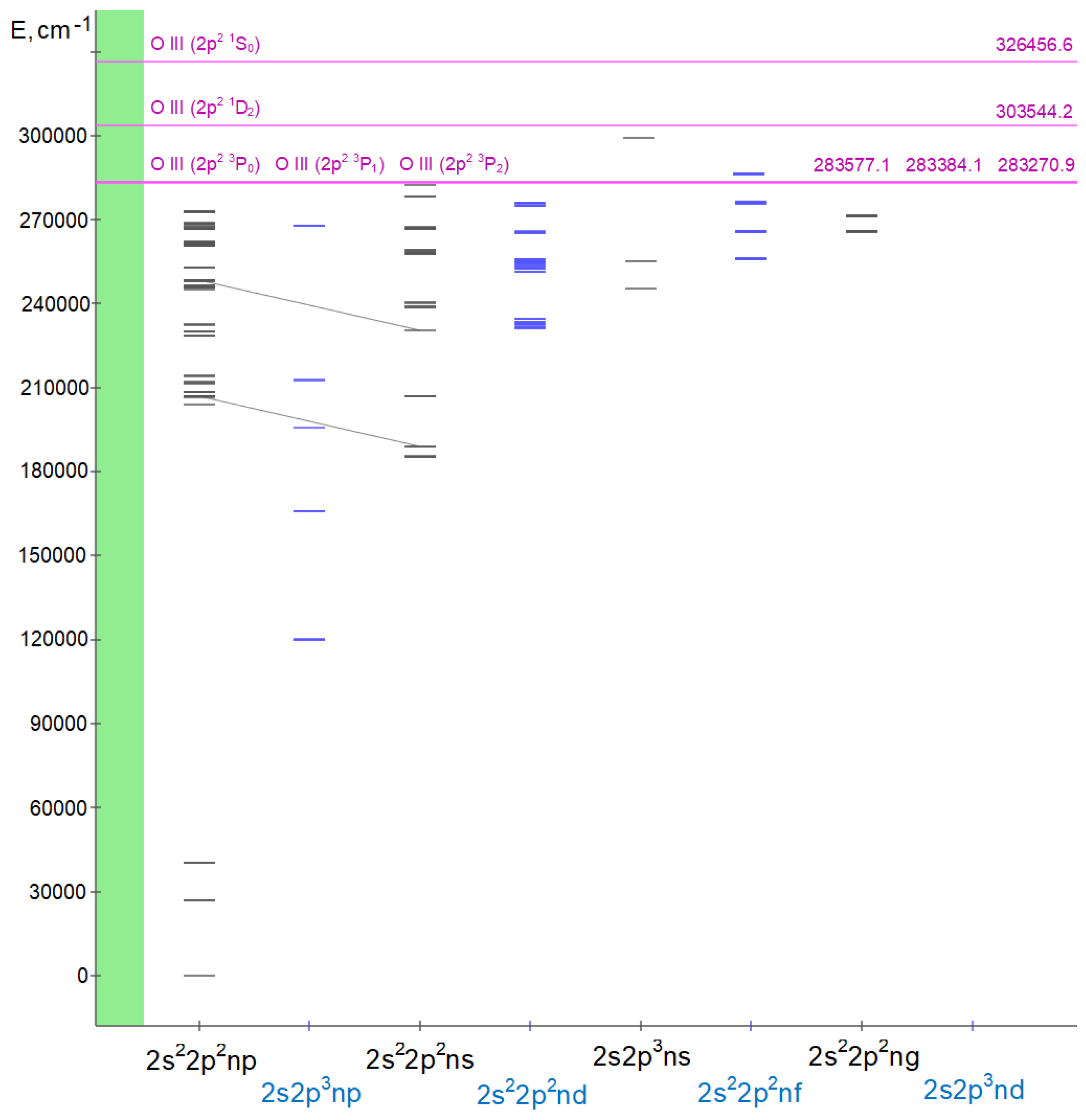
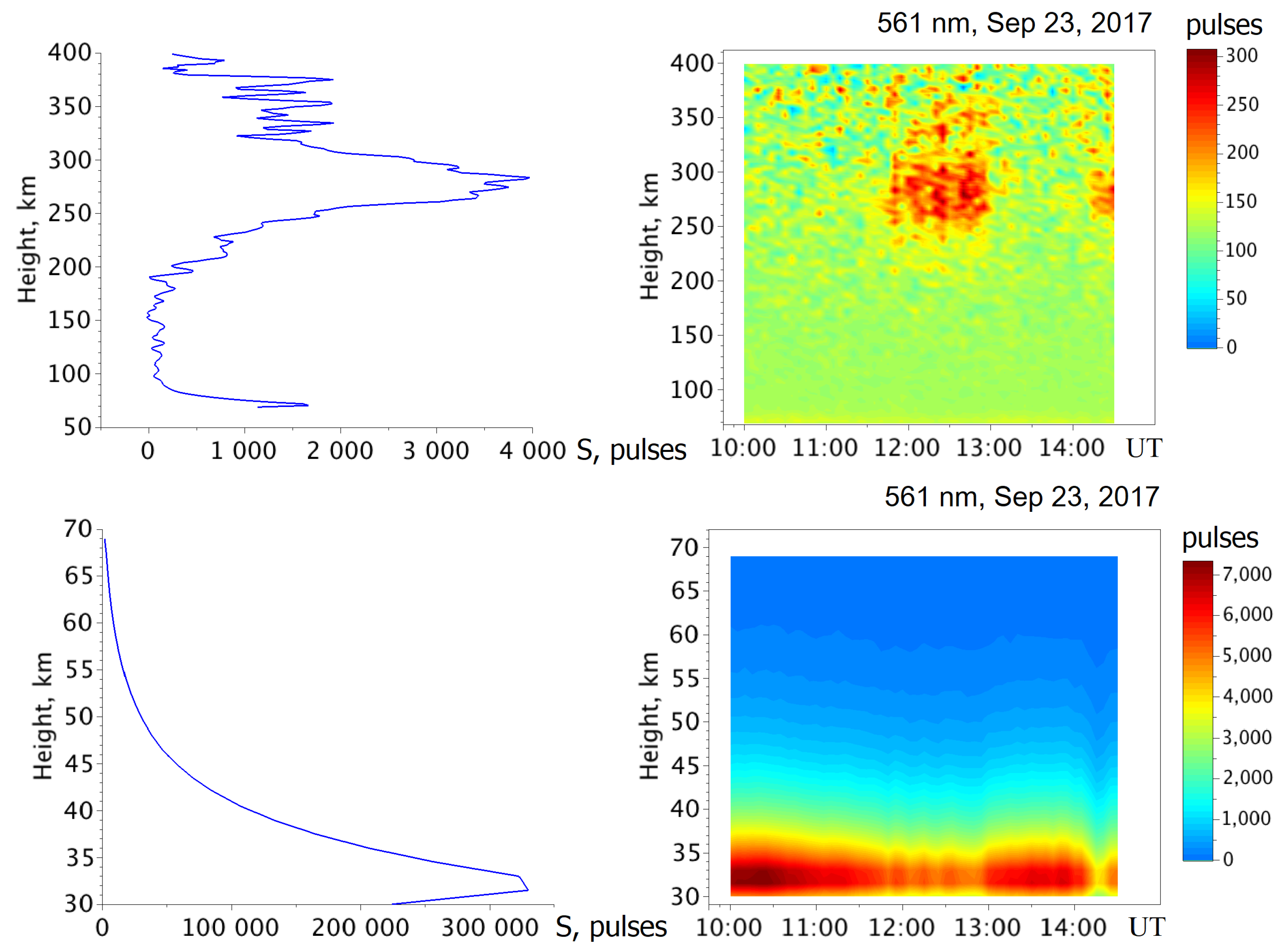
Extremely weak lidar reflections in the thermosphere, which correlate with ionosonde data, were detected in 2008 and 2017 over Kamchatka during seasons of low aerosol filling of the atmosphere at solar activity minima. Here, these reflections are considered in comparison with mesospheric and stratospheric lidar signals that makes it possible to determine favorable conditions for thermospheric lidar observations. In 2014, it was shown that lines of transitions between the excited states of atomic nitrogen ions fall within the 532 nm lidar signal emission band, and in 2017, lidar reflections in the thermosphere were simultaneously obtained at 561 and 532 nm excited transitions of atomic oxygen and nitrogen ions, thereby the resonant nature of thermospheric lidar reflections was established and confirmed. Here, using lidar signals at wavelengths of 561 and 532 nm in the altitude range of 30–400 km, by solving the inverse problem, we restore the light scattering coefficients corresponding to these wavelengths that makes it possible to compare the optical characteristics of the thermosphere, mesosphere, and upper stratosphere and to determine the relationship between resonant, Rayleigh, and aerosol light scattering at different heights of the atmosphere. In conclusion, using the scattering coefficients in the thermosphere, we find the cross-sections of light scattering at the 561 and 532 nm transitions of atomic oxygen and nitrogen ions and explain why the scattering coefficients for O+, 561 nm are less than for N+, 532 nm, while the concentration of O+ is two orders of magnitude higher than N+. The results obtained here are of interest for understanding the ionization effect of solar activity on the optical characteristics of the atmosphere that determine weather and climate changes.
Keywords: optics of the atmosphere; resonant lidar; laser ionozond; lidar reflections in the thermosphere; coefficient and cross-section of light scattering; ionization; aerosol; solar activity; ion aeronomy optics of the atmosphere; resonant lidar; laser ionozond; lidar reflections in the thermosphere; coefficient and cross-section of light scattering; ionization; aerosol; solar activity; ion aeronomy