Article

Comparison of Mean Dynamic Topography Modeling from Multivariate Objective Analysis and Rigorous Least Squares Method


1
School of Earth Sciences and Engineering, Hohai University, Nanjing 211100, China
2
School of Geodesy and Geomatics, Wuhan University, Wuhan 430079, China
3
Key Laboratory of Geological Survey and Evaluation of Ministry of Education, China University of Geosciences, Wuhan 430079, China
*
Author to whom correspondence should be addressed.
Remote Sens. 2022, 14(21), 5330; https://doi.org/10.3390/rs14215330
Submission received: 18 July 2022 / Revised: 25 August 2022 / Accepted: 19 October 2022 / Published: 25 October 2022
(This article belongs to the Special Issue Remote Sensing in Space Geodesy and Cartography Methods)

Abstract

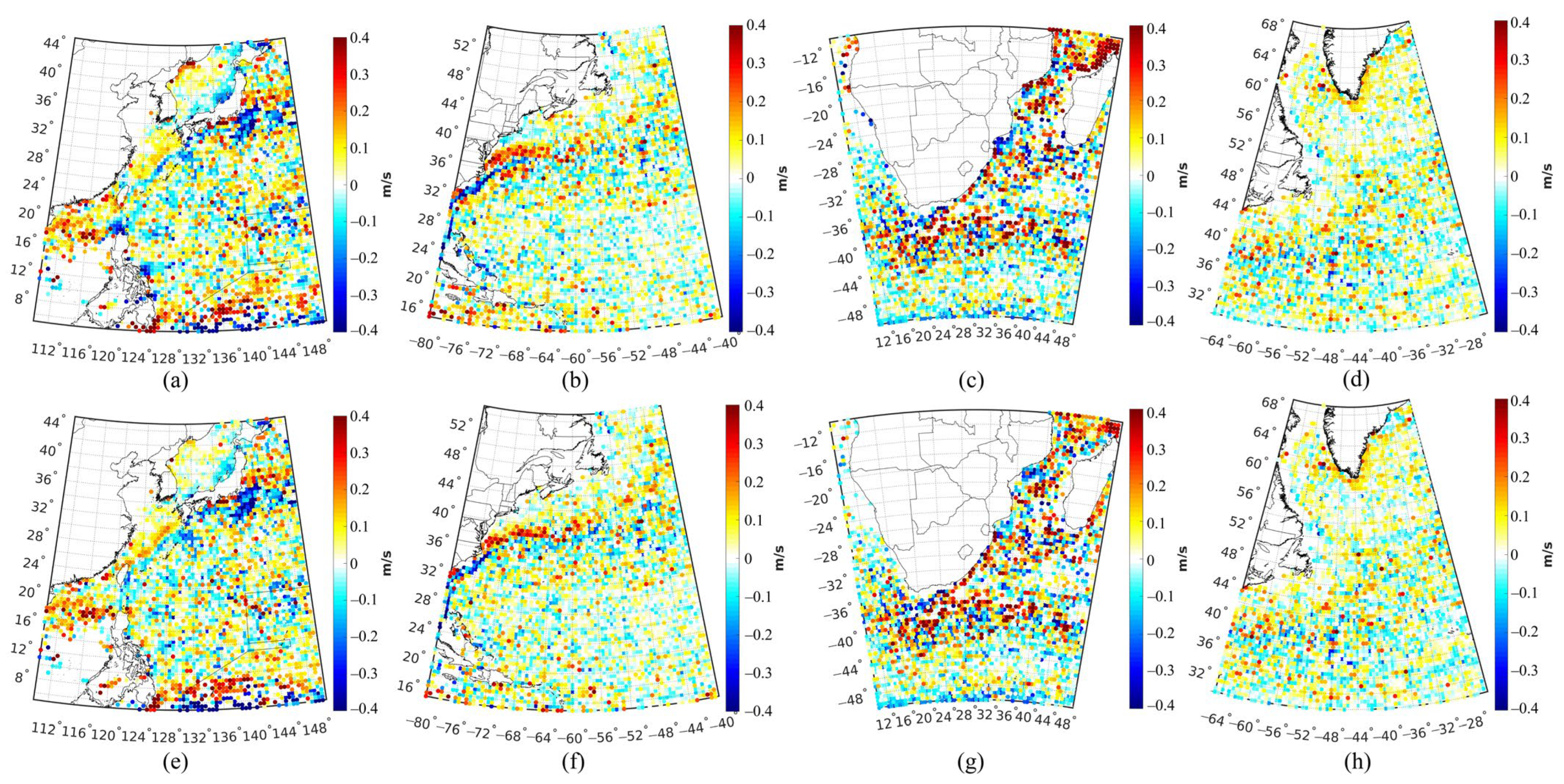
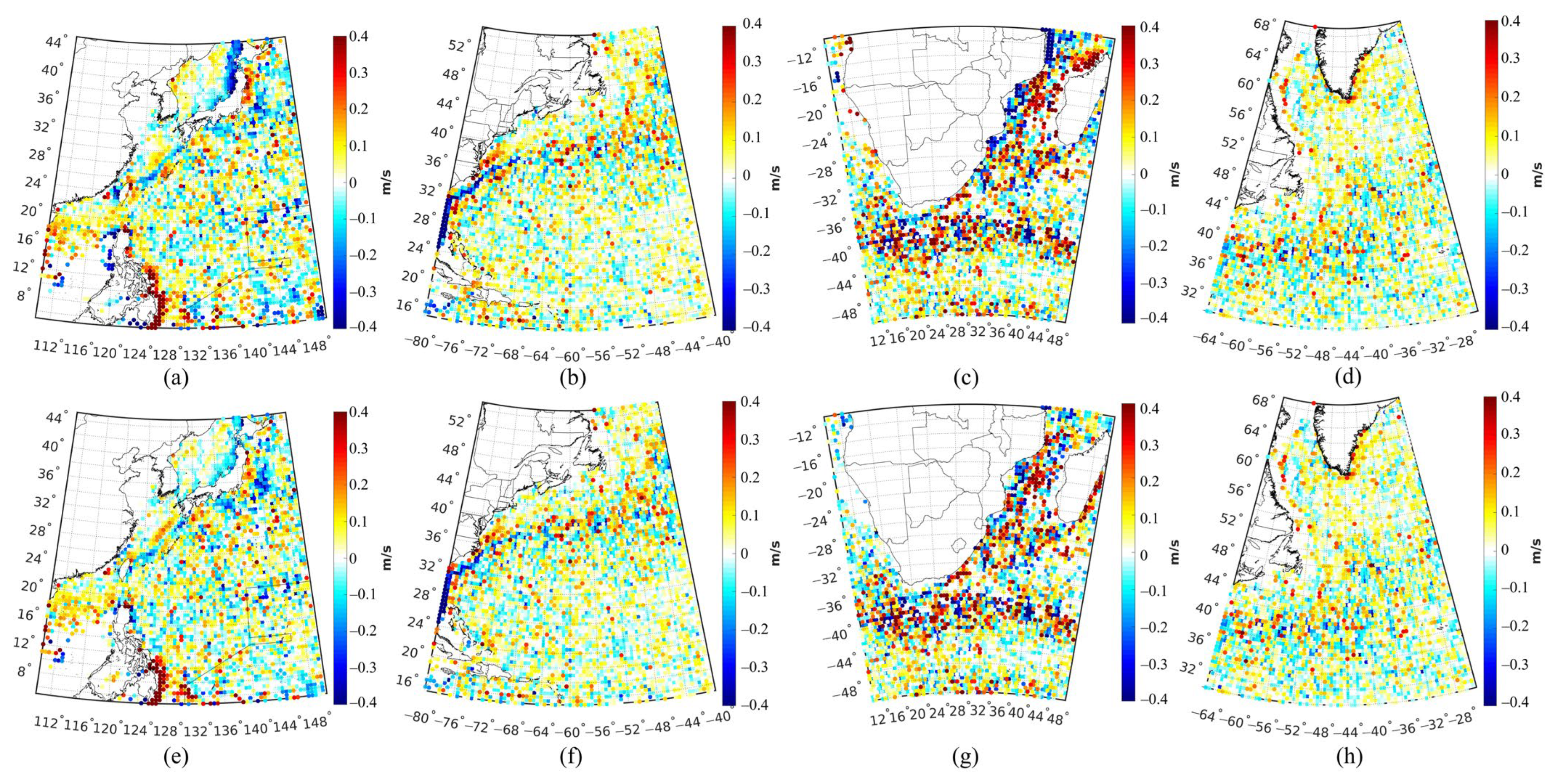
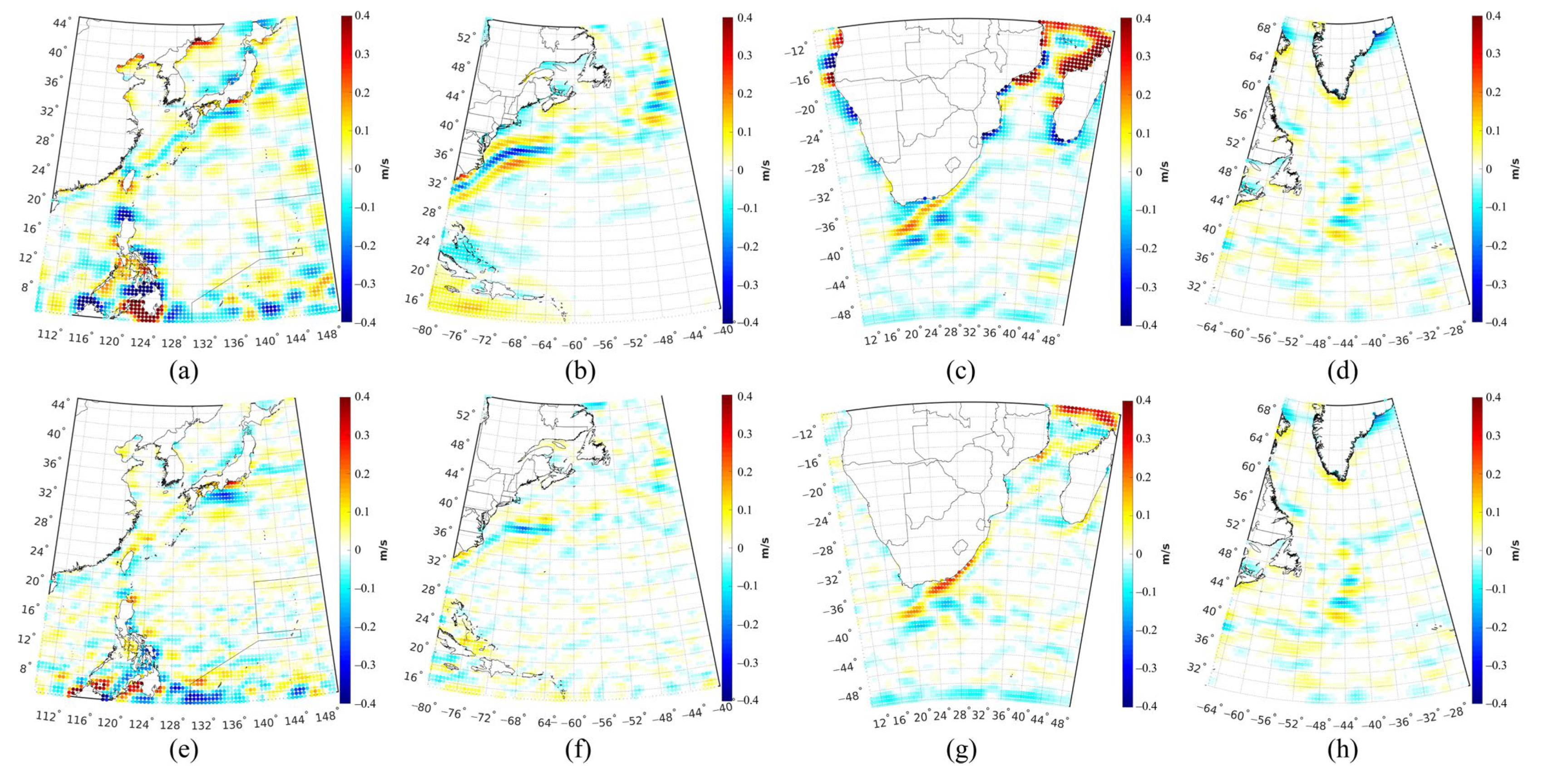
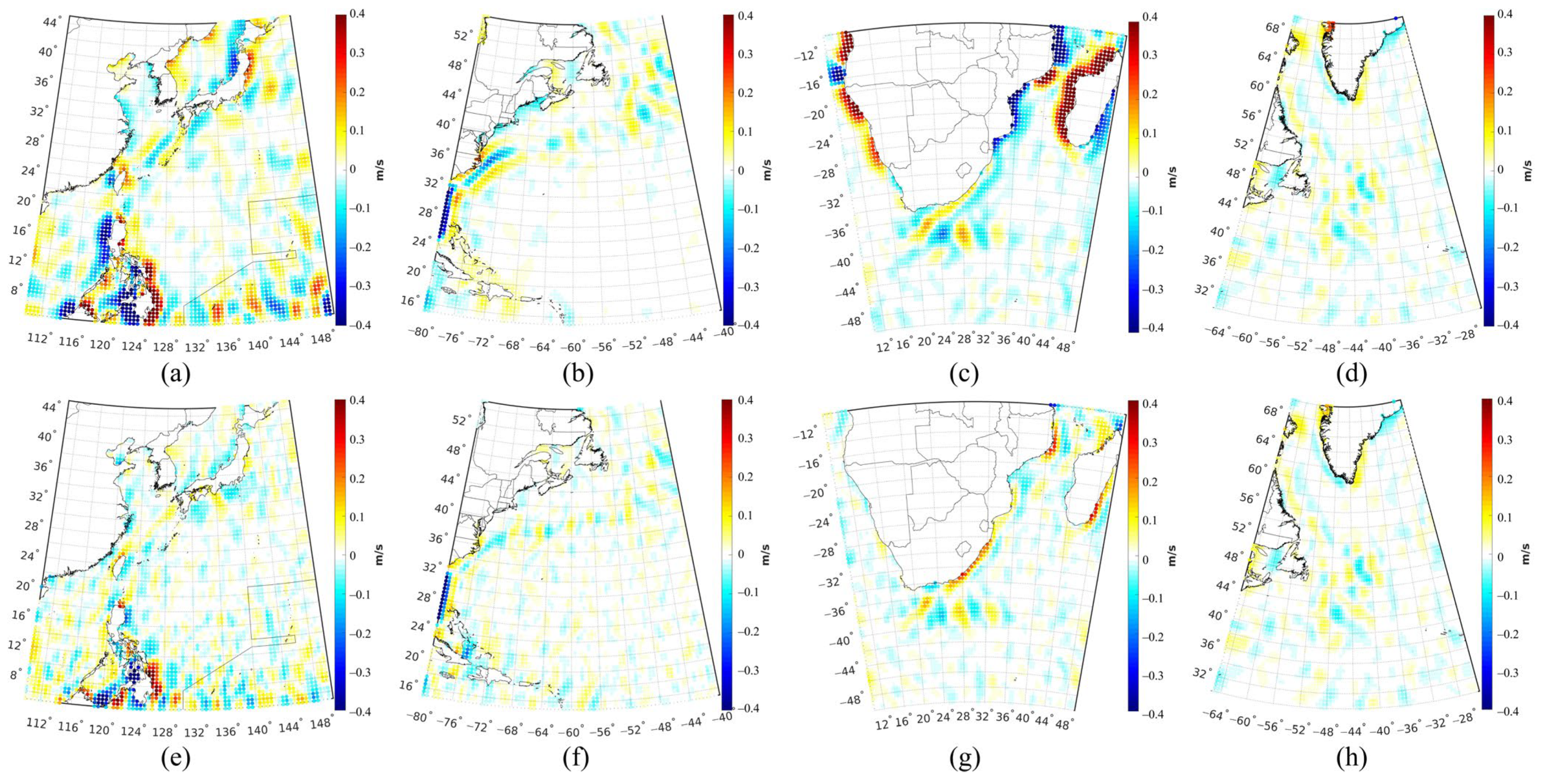
Filtering methods are usually used to combine the mean sea surface (MSS) and geoid (computable by global geopotential model (GGM)) into a common subspace, to model mean dynamic topography (MDT), which may lead to signal leakage and distortion problems. The use of the rigorous least squares (LS) method and multivariate objective analysis (MOA) alleviates these problems, and the derived MDTs from these two methods show better performance than MDTs derived from filtering methods. However, the advantages and disadvantages of these two methods have not been evaluated, and no direct comparison has yet been conducted between these two approaches regarding the performances in MDT recovery. In this study, we compare the performances of the MOA method with the LS method, providing information with respect to the usability of different methods in MDT modeling over regions with heterogeneous ocean states and hydrological conditions. We combined a recently published mean sea surface called DTU21MSS, and a satellite-only GGM named GO_CONS_GCF_2_DIR_R6, for MDT computation over four typical study areas. The results showed that the MDTs derived from the LS method outperformed the MOA method, especially over coastal regions and ocean current areas. The root mean square (RMS) of the discrepancies between the LS-derived MDT and the ocean reanalysis data was lower than the RMS of the discrepancies computed from the MOA method, by a magnitude of 1–2 cm. The formal error of the MDT estimated by the LS method was more reasonable than that derived from the MOA method. Moreover, the geostrophic velocities calculated by the LS-derived MDT were more consistent with buoy data than those calculated by the MOA-derived solution, by a magnitude of approximately 1 cm/s. The reason can be attributed to the fact that the LS method forms the design matrix segmentally, based on the error characteristics of the GGM, and suppresses high-frequency noise by applying constraints in different frequency bands, which improves the quality of the computed MDT. Our studies highlight the superiority of the LS-derived method versus the MOA method in MDT modeling.
Keywords: mean dynamic topography; rigorous least squares-based approach; multivariate objective analysis; geostrophic velocities mean dynamic topography; rigorous least squares-based approach; multivariate objective analysis; geostrophic velocities