Article

Attention-Guided Siamese Fusion Network for Change Detection of Remote Sensing Images


1
The Key Laboratory of Intelligent Perception and Image Understanding of Ministry of Education, School of Artificial Intelligence, Xidian University, Xi’an 710071, China
2
General Design Department No. 5, Xi’an Electronic Engineering Research Institute, Xi’an 710071, China
3
National Key Laboratory of Science and Technology on Remote Sensing Information and Image Analysis, National Nuclear Corp Beijing Research Institute of Uranium Geology, Beijing 100029, China
*
Author to whom correspondence should be addressed.
Remote Sens. 2021, 13(22), 4597; https://doi.org/10.3390/rs13224597
Submission received: 6 October 2021 / Revised: 3 November 2021 / Accepted: 9 November 2021 / Published: 16 November 2021

Abstract

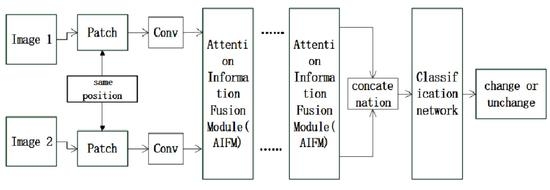
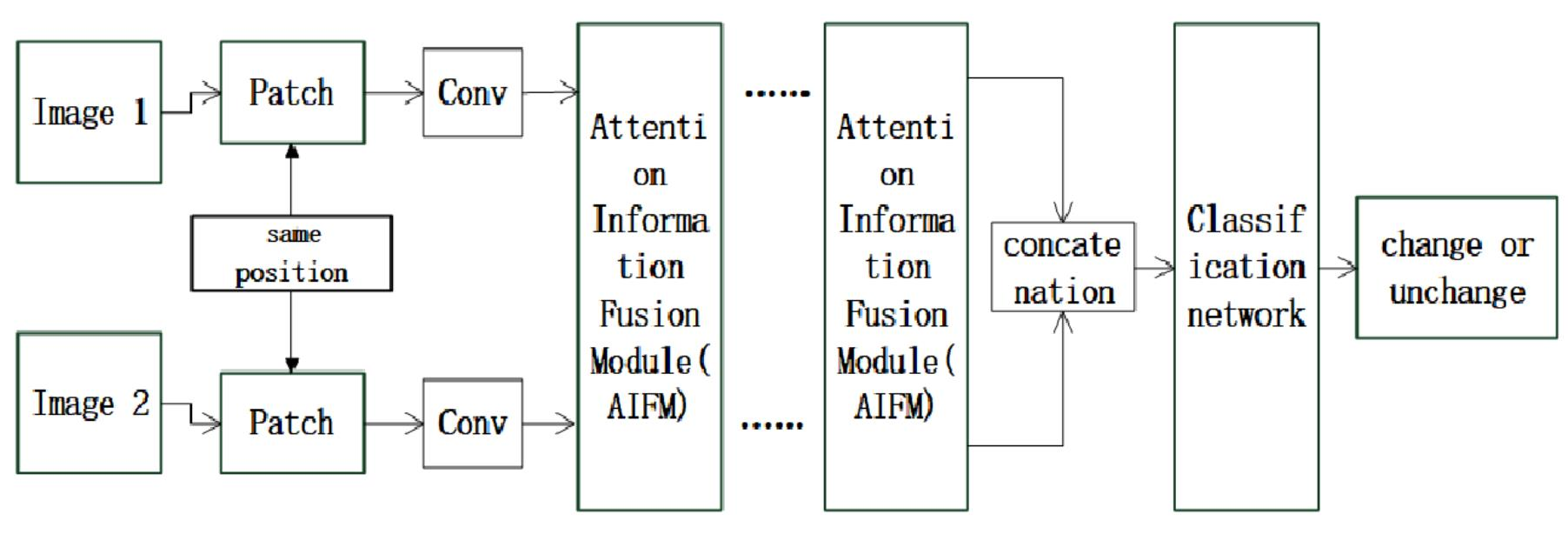
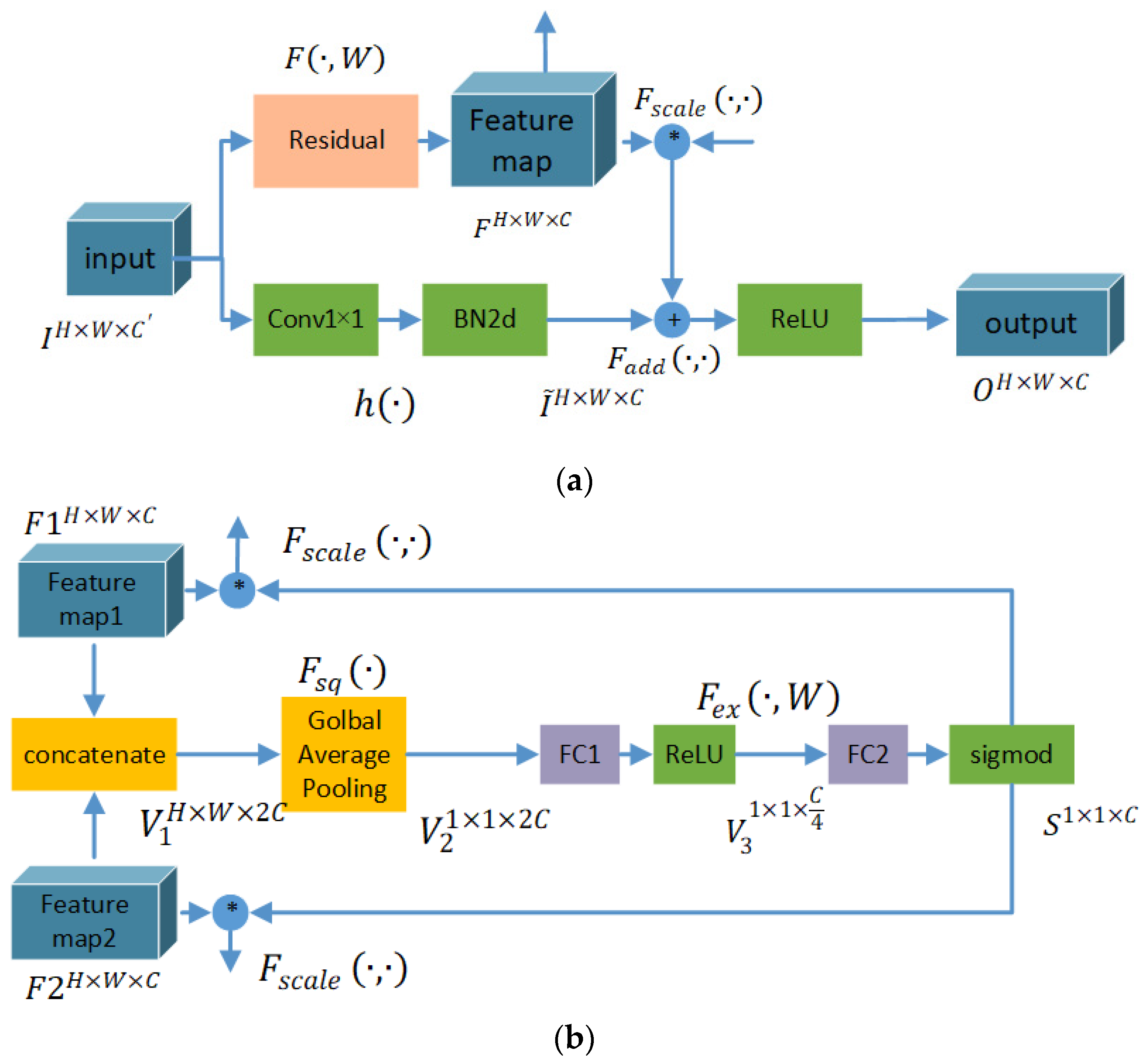
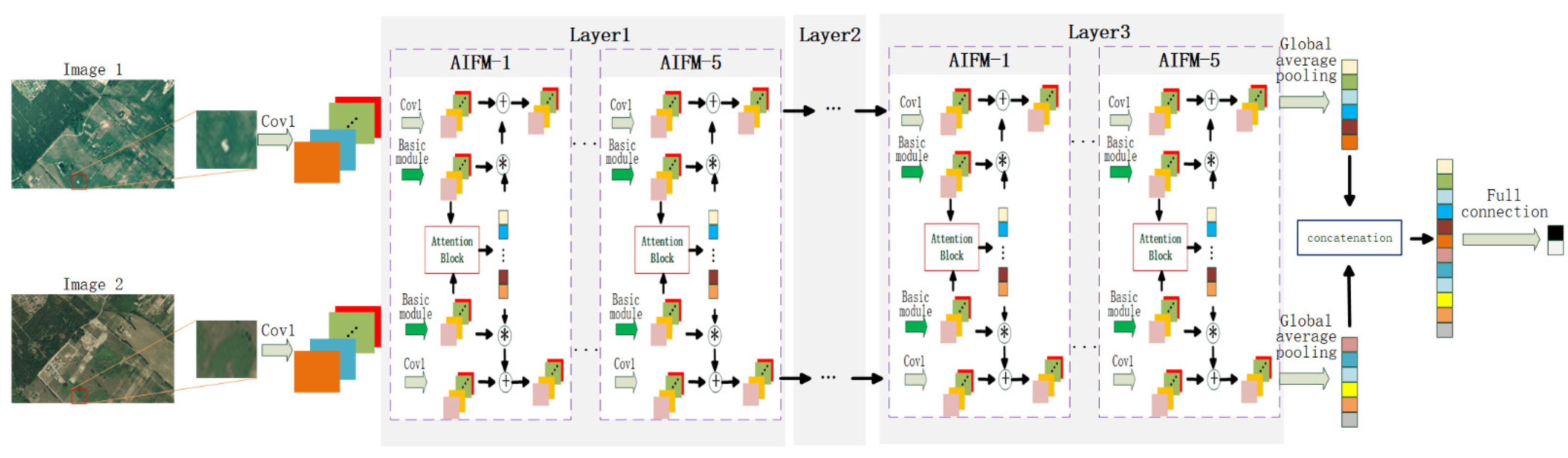
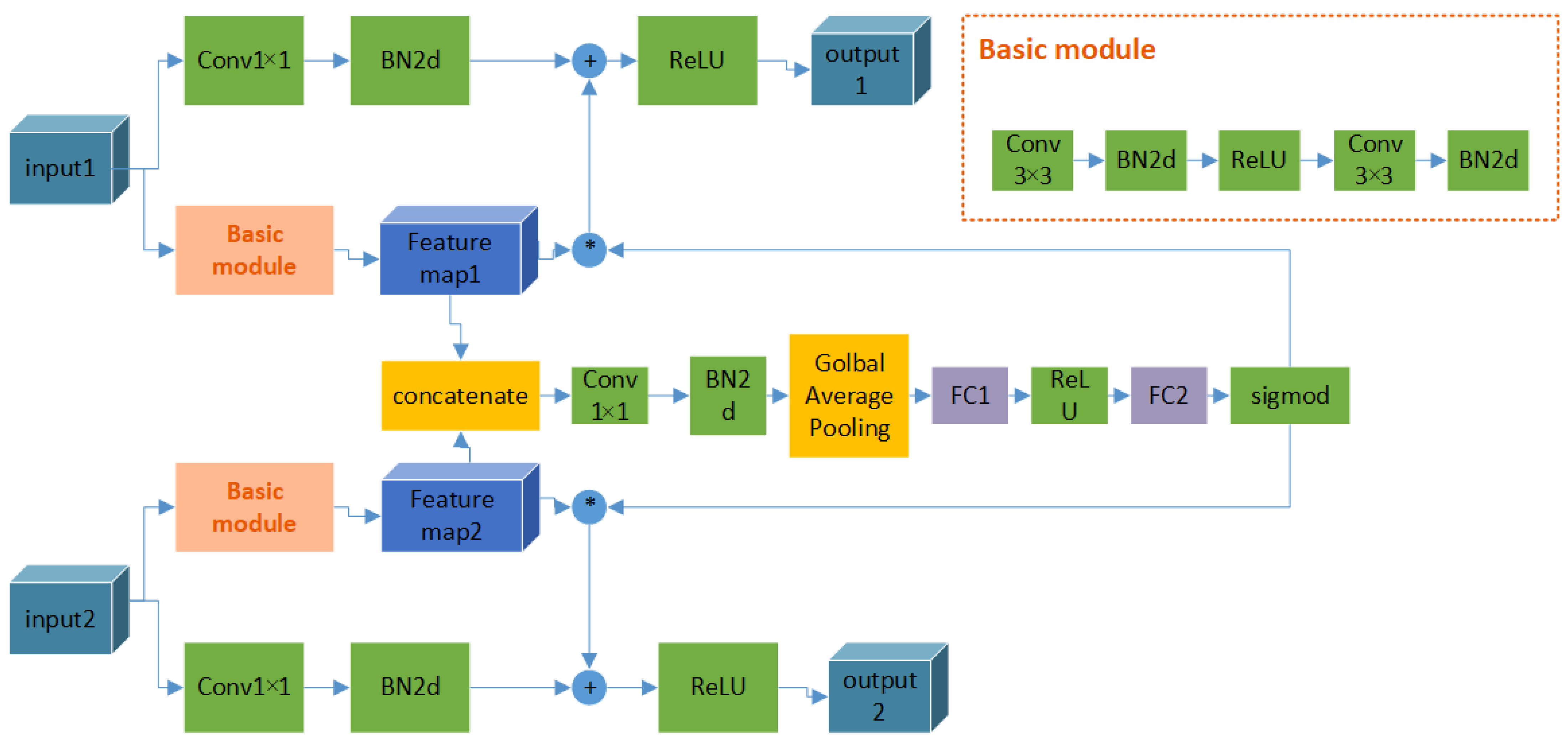
Change detection for remote sensing images is an indispensable procedure for many remote sensing applications, such as geological disaster assessment, environmental monitoring, and urban development monitoring. Through this technique, the difference in certain areas after some emergencies can be determined to estimate their influence. Additionally, by analyzing the sequential difference maps, the change tendency can be found to help to predict future changes, such as urban development and environmental pollution. The complex variety of changes and interferential changes caused by imaging processing, such as season, weather and sensors, are critical factors that affect the effectiveness of change detection methods. Recently, there have been many research achievements surrounding this topic, but a perfect solution to all the problems in change detection has not yet been achieved. In this paper, we mainly focus on reducing the influence of imaging processing through the deep neural network technique with limited labeled samples. The attention-guided Siamese fusion network is constructed based on one basic Siamese network for change detection. In contrast to common processing, besides high-level feature fusion, feature fusion is operated during the whole feature extraction process by using an attention information fusion module. This module can not only realize the information fusion of two feature extraction network branches, but also guide the feature learning network to focus on feature channels with high importance. Finally, extensive experiments were performed on three public datasets, which could verify the significance of information fusion and the guidance of the attention mechanism during feature learning in comparison with related methods.
Keywords: change detection; Siamese network; remote sensing image; attention mechanism change detection; Siamese network; remote sensing image; attention mechanism
Graphical Abstract