

Correction: Koga, Y., et al. A Method for Vehicle Detection in High-Resolution Satellite Images That Uses a Region-Based Object Detector and Unsupervised Domain Adaptation. Remote Sensing 2020, 12, 575



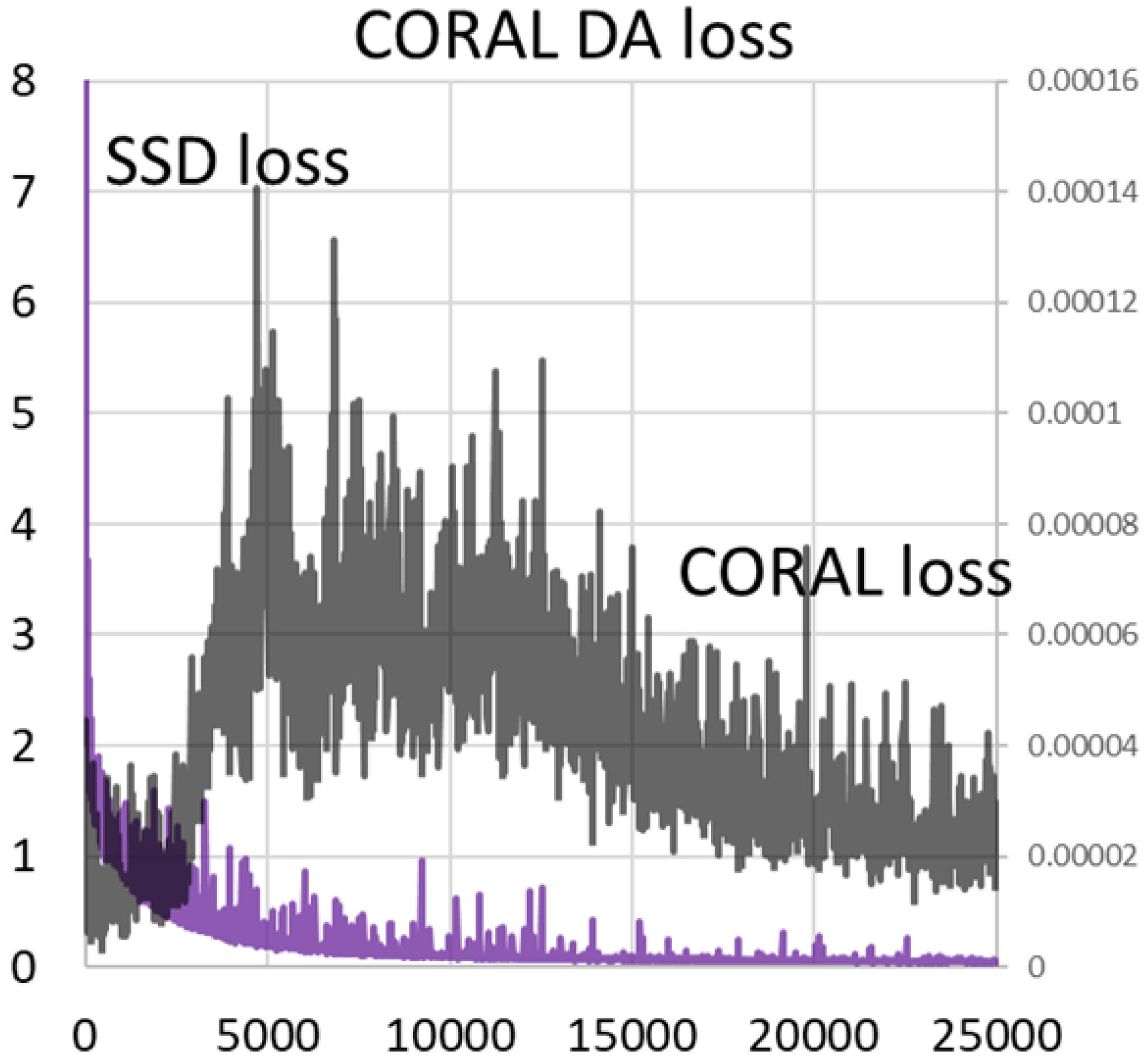
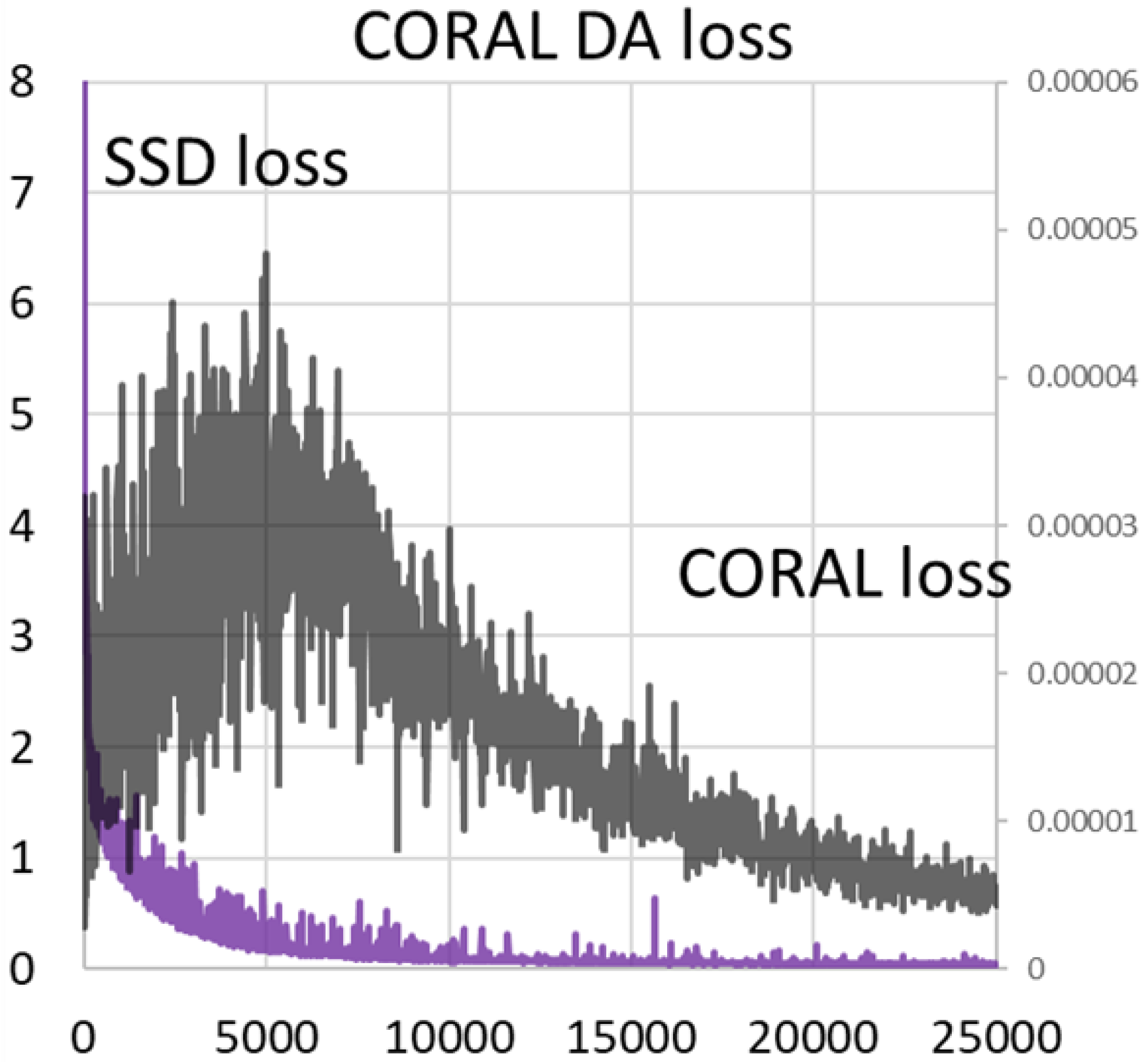
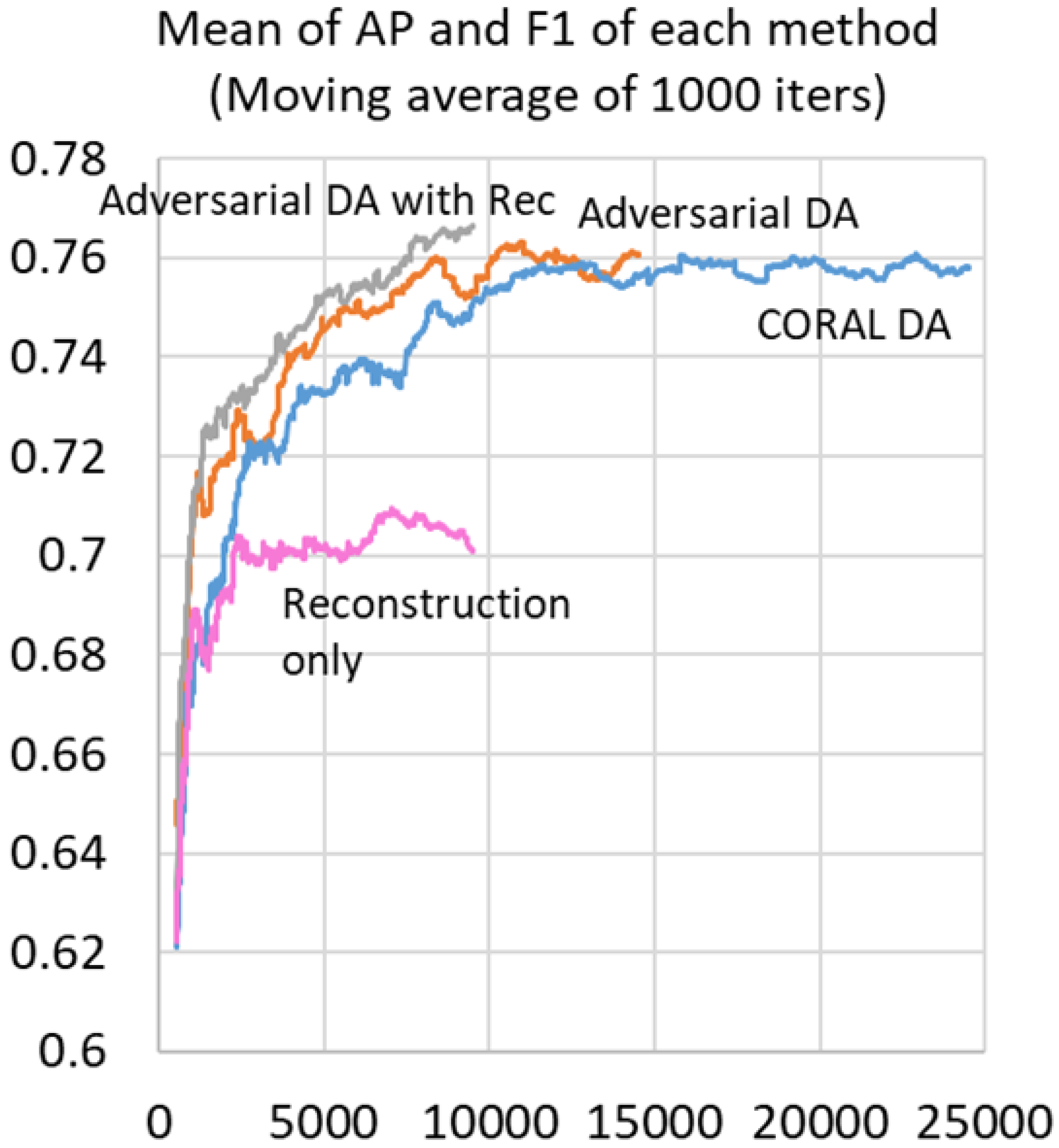


| Method | PR | RR | FAR | AP | F1 | Mean of AP and F1 |
|---|---|---|---|---|---|---|
| Reference | 83.9% | 78.5% | 15.1% | 75.3% | 81.1% | 78.2% |
| Without DA | 82.6% | 65.1% | 13.7% | 61.7% | 72.8% | 67.2% |
| M2Det w/o DA | 82.4% | 73.7% | 15.7% | 69.7% | 77.8% | 73.7% |
| Reconstruction | 81.8% | 75.5% | 16.8% | 72.7% | 78.5% | 75.6% |
| CORAL | 86.3% | 77.1% | 12.2% | 73.3% | 81.5% | 77.4% |
| Adversarial | 85.4% | 76.5% | 13.0% | 74.0% | 80.7% | 77.4% |
| Adv + Rec | 88.0% | 77.9% | 10.7% | 75.2% | 82.6% | 78.9% |
| Method | PR | RR | FAR | AP | F1 | Mean of AP and F1 |
|---|---|---|---|---|---|---|
| Reference | 83.9% | 78.5% | 15.1% | 75.3% | 81.1% | 78.2% |
| Without DA | 82.6% | 65.1% | 13.7% | 61.7% | 72.8% | 67.2% |
| M2Det w/o DA | 82.4% | 73.7% | 15.7% | 69.7% | 77.8% | 73.7% |
| Reconstruction | 81.8% | 75.5% | 16.8% | 72.7% | 78.5% | 75.6% |
| CORAL | 74.8% | 78.4% | 26.3% | 74.3% | 76.6% | 75.5% |
| Adversarial | 85.4% | 76.5% | 13.0% | 74.0% | 80.7% | 77.4% |
| Adv + Rec | 88.0% | 77.9% | 10.7% | 75.2% | 82.6% | 78.9% |
Reference
- Koga, Y.; Miyazaki, H.; Shibasaki, R. A Method for Vehicle Detection in High-Resolution Satellite Images that Uses a Region-Based Object Detector and Unsupervised Domain Adaptation. Remote Sens. 2020, 12, 575. [Google Scholar] [CrossRef]
© 2020 by the authors. Licensee MDPI, Basel, Switzerland. This article is an open access article distributed under the terms and conditions of the Creative Commons Attribution (CC BY) license (http://creativecommons.org/licenses/by/4.0/).
Share and Cite
Koga, Y.; Miyazaki, H.; Shibasaki, R. Correction: Koga, Y., et al. A Method for Vehicle Detection in High-Resolution Satellite Images That Uses a Region-Based Object Detector and Unsupervised Domain Adaptation. Remote Sensing 2020, 12, 575. Remote Sens. 2020, 12, 1068. https://doi.org/10.3390/rs12071068
Koga Y, Miyazaki H, Shibasaki R. Correction: Koga, Y., et al. A Method for Vehicle Detection in High-Resolution Satellite Images That Uses a Region-Based Object Detector and Unsupervised Domain Adaptation. Remote Sensing 2020, 12, 575. Remote Sensing. 2020; 12(7):1068. https://doi.org/10.3390/rs12071068
Chicago/Turabian StyleKoga, Yohei, Hiroyuki Miyazaki, and Ryosuke Shibasaki. 2020. "Correction: Koga, Y., et al. A Method for Vehicle Detection in High-Resolution Satellite Images That Uses a Region-Based Object Detector and Unsupervised Domain Adaptation. Remote Sensing 2020, 12, 575" Remote Sensing 12, no. 7: 1068. https://doi.org/10.3390/rs12071068
APA StyleKoga, Y., Miyazaki, H., & Shibasaki, R. (2020). Correction: Koga, Y., et al. A Method for Vehicle Detection in High-Resolution Satellite Images That Uses a Region-Based Object Detector and Unsupervised Domain Adaptation. Remote Sensing 2020, 12, 575. Remote Sensing, 12(7), 1068. https://doi.org/10.3390/rs12071068
