Article

X-Net-Based Radar Data Assimilation Study over the Seoul Metropolitan Area

Dept. of Astronomy and Atmospheric Sciences, Kyungpook National University, Daegu 41566, Korea
*
Author to whom correspondence should be addressed.
Remote Sens. 2020, 12(5), 893; https://doi.org/10.3390/rs12050893
Submission received: 5 February 2020 / Revised: 6 March 2020 / Accepted: 8 March 2020 / Published: 10 March 2020
(This article belongs to the Special Issue Precipitation and Water Cycle Measurements Using Remote Sensing)

Abstract

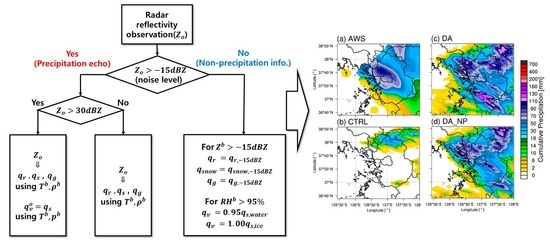
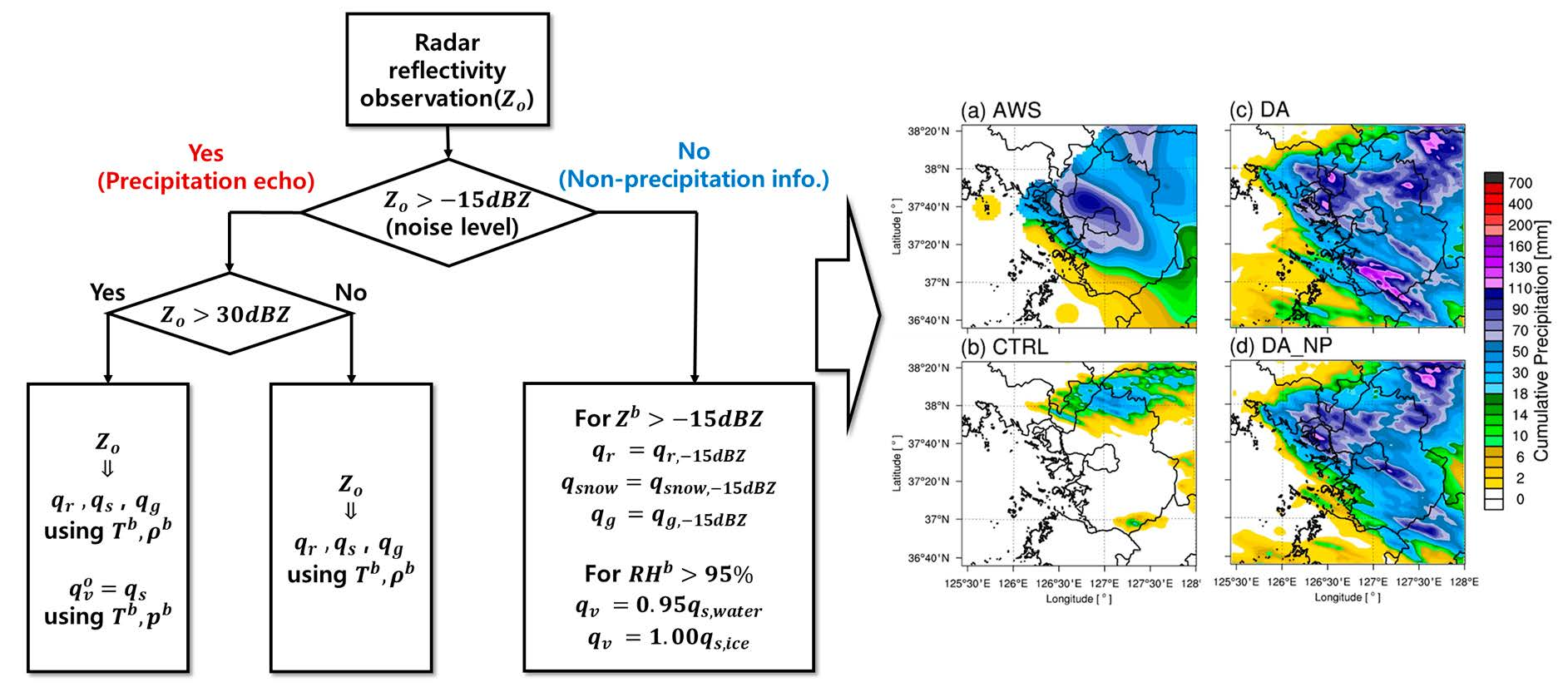
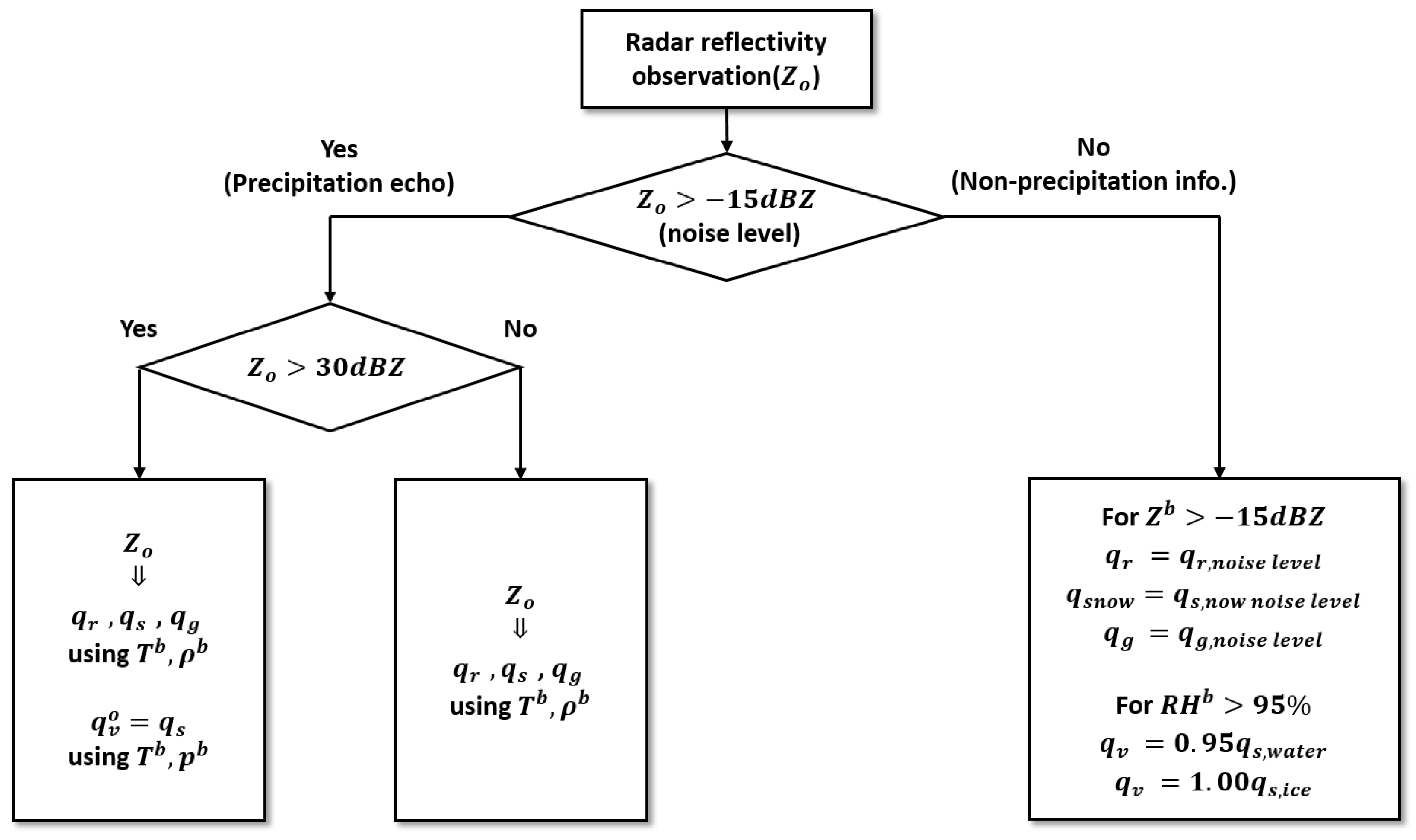
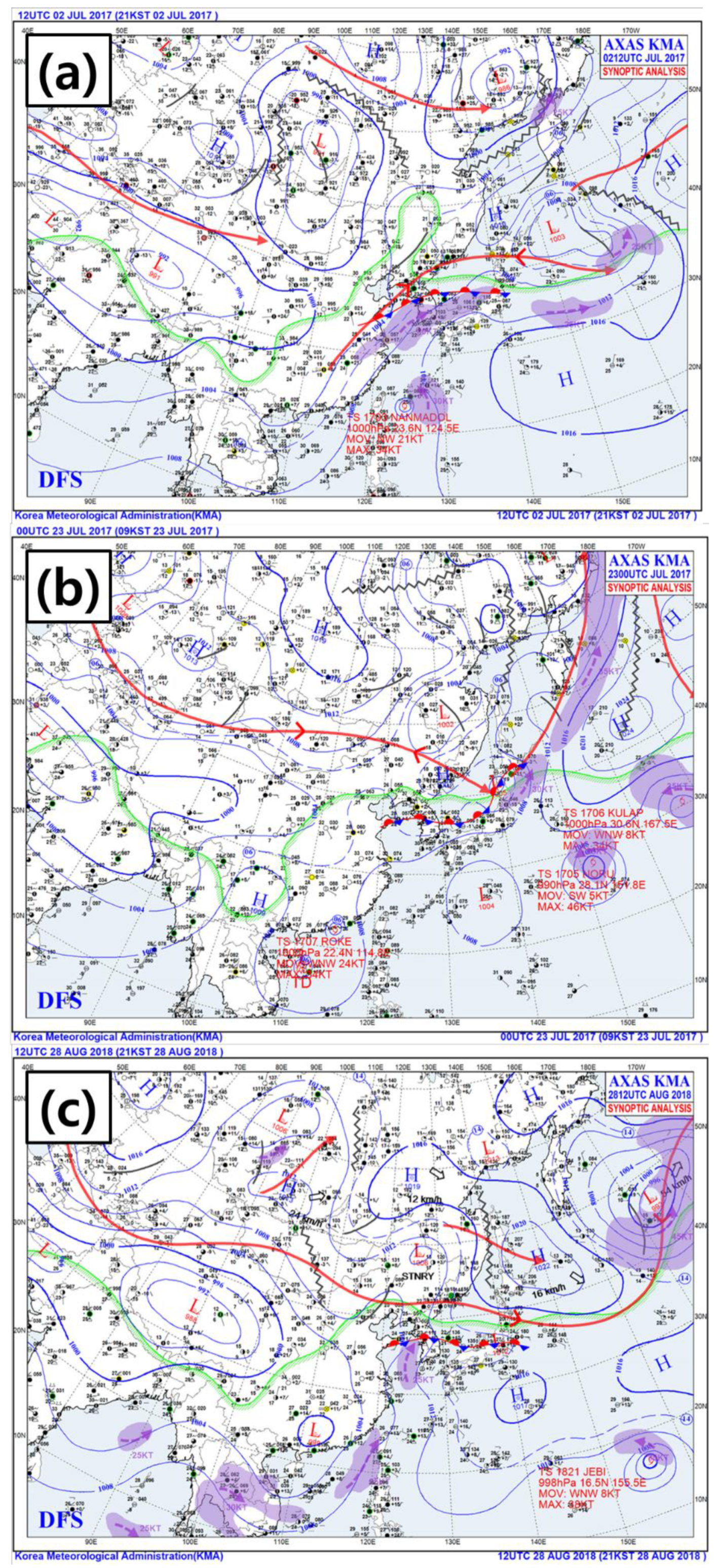
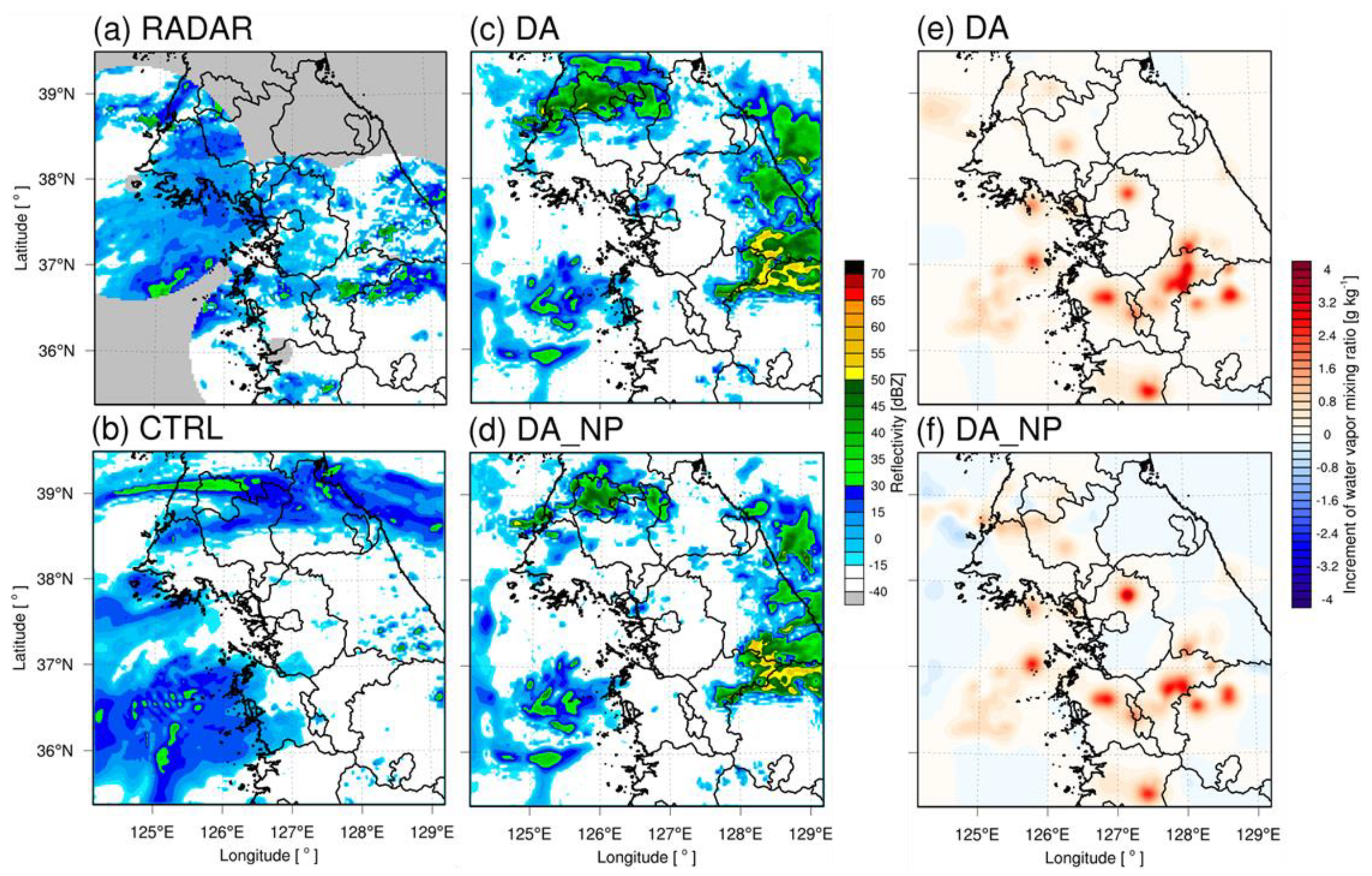
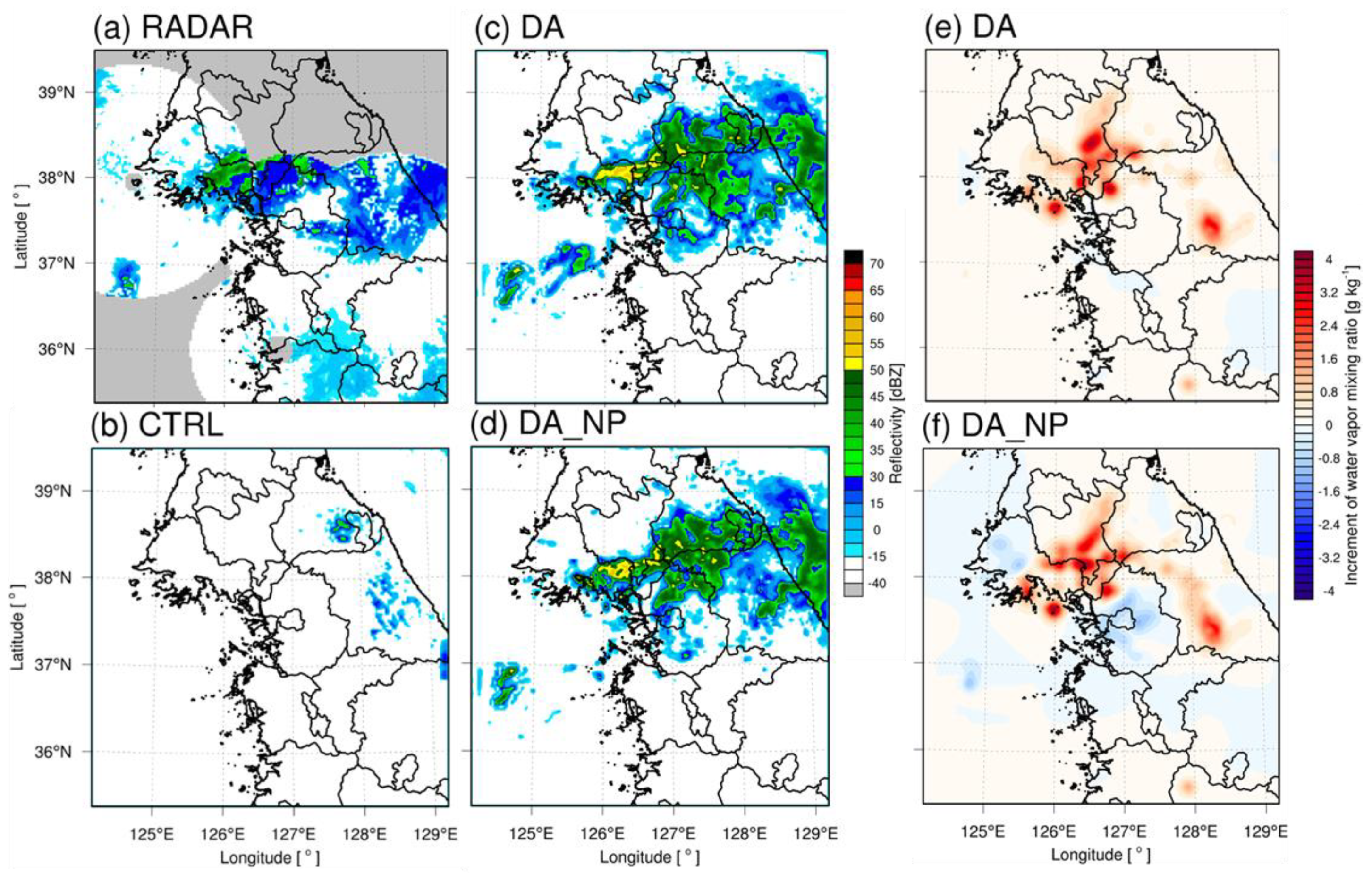
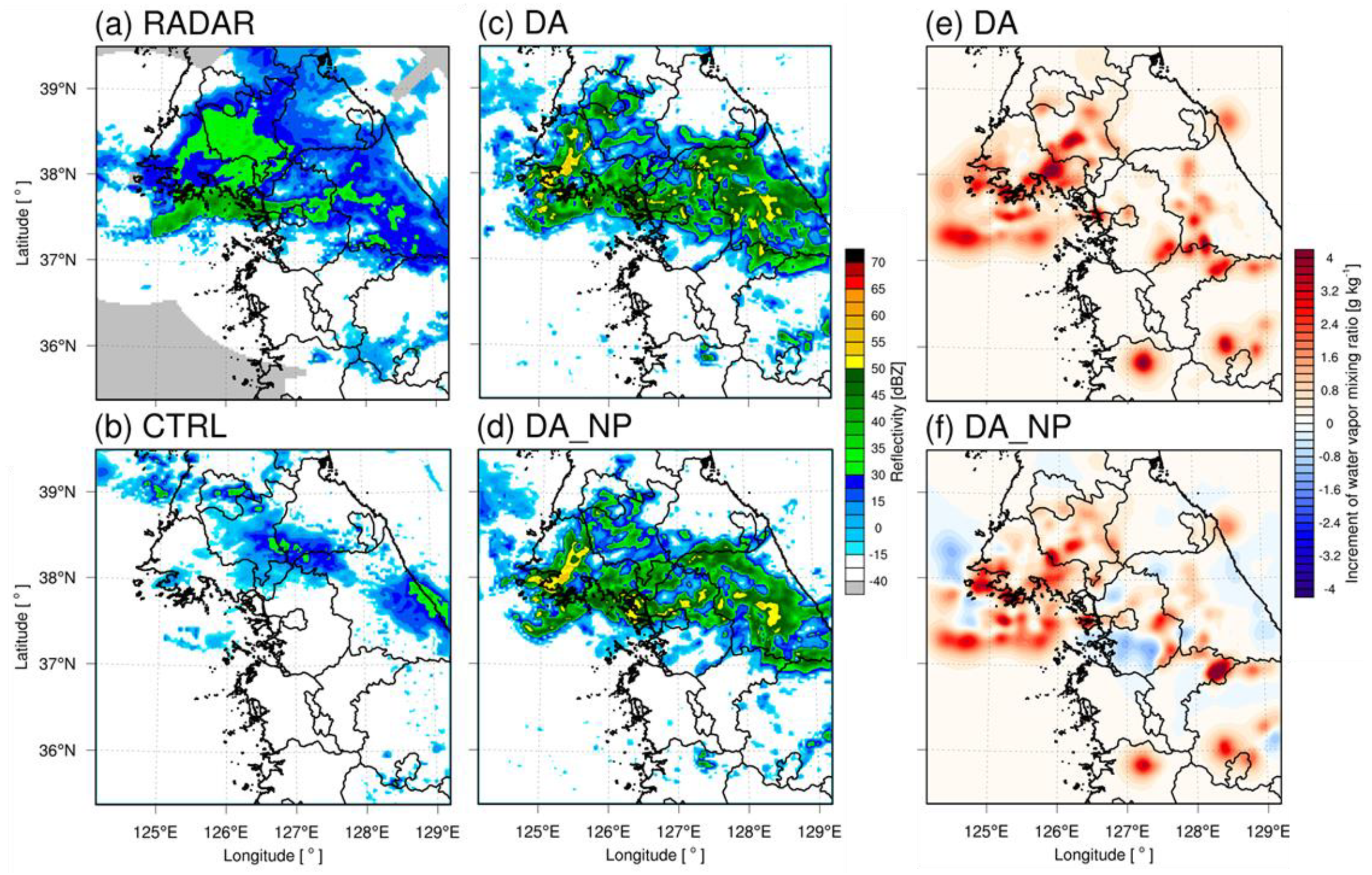
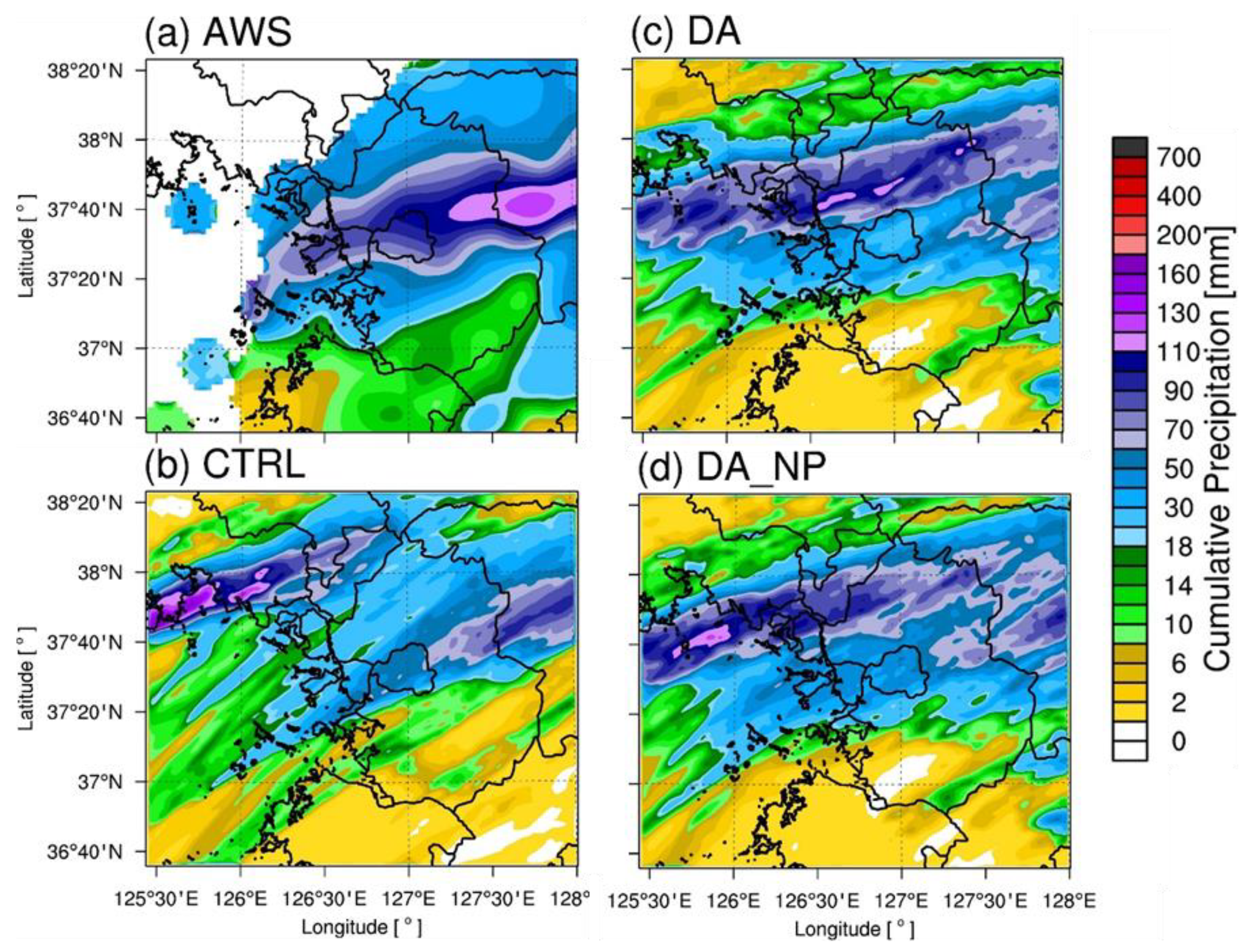
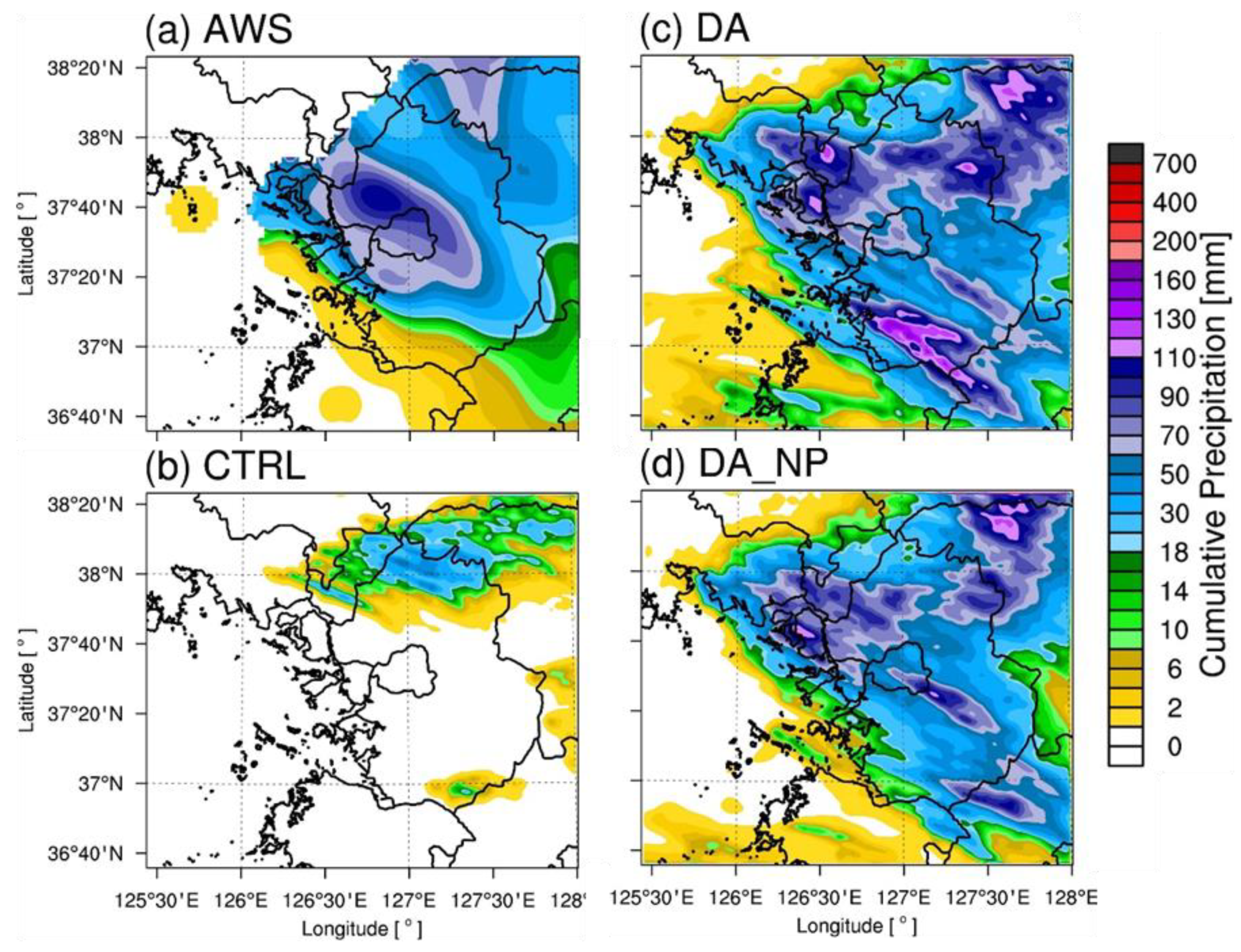
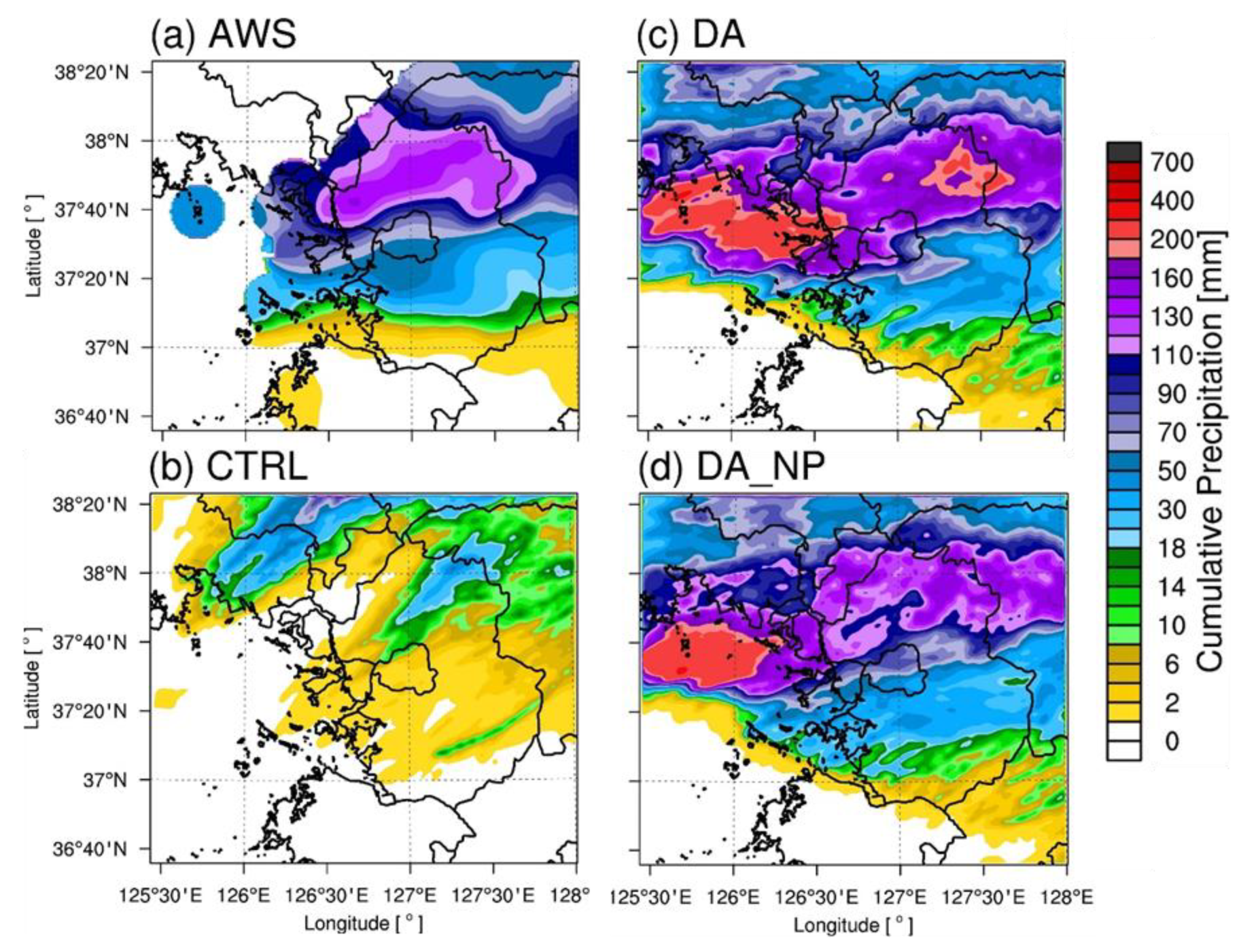
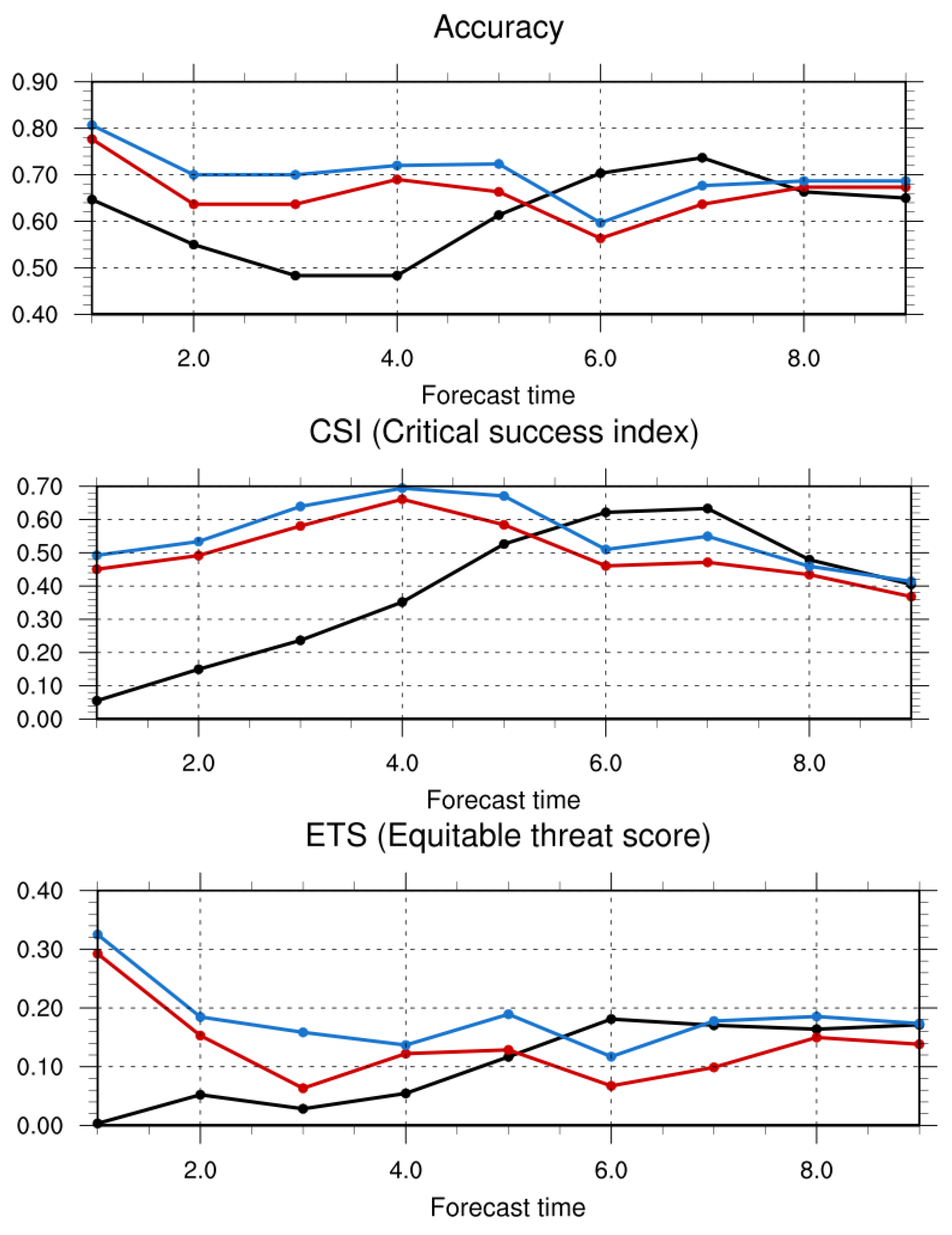
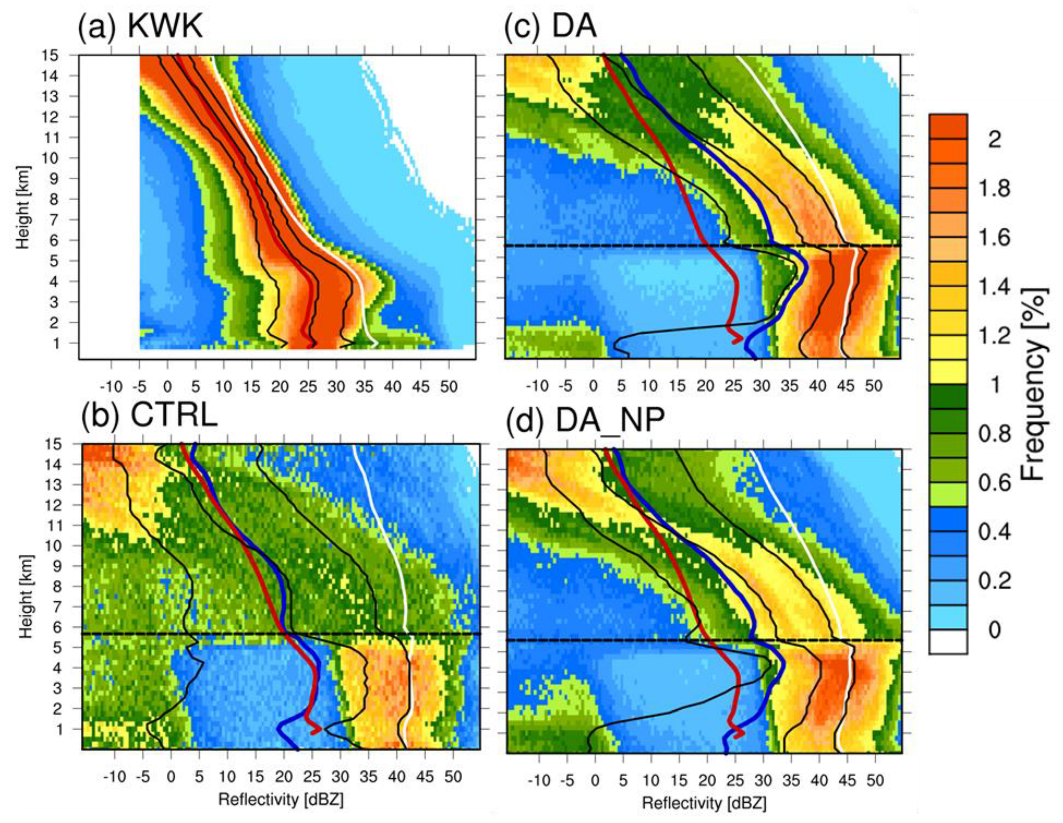
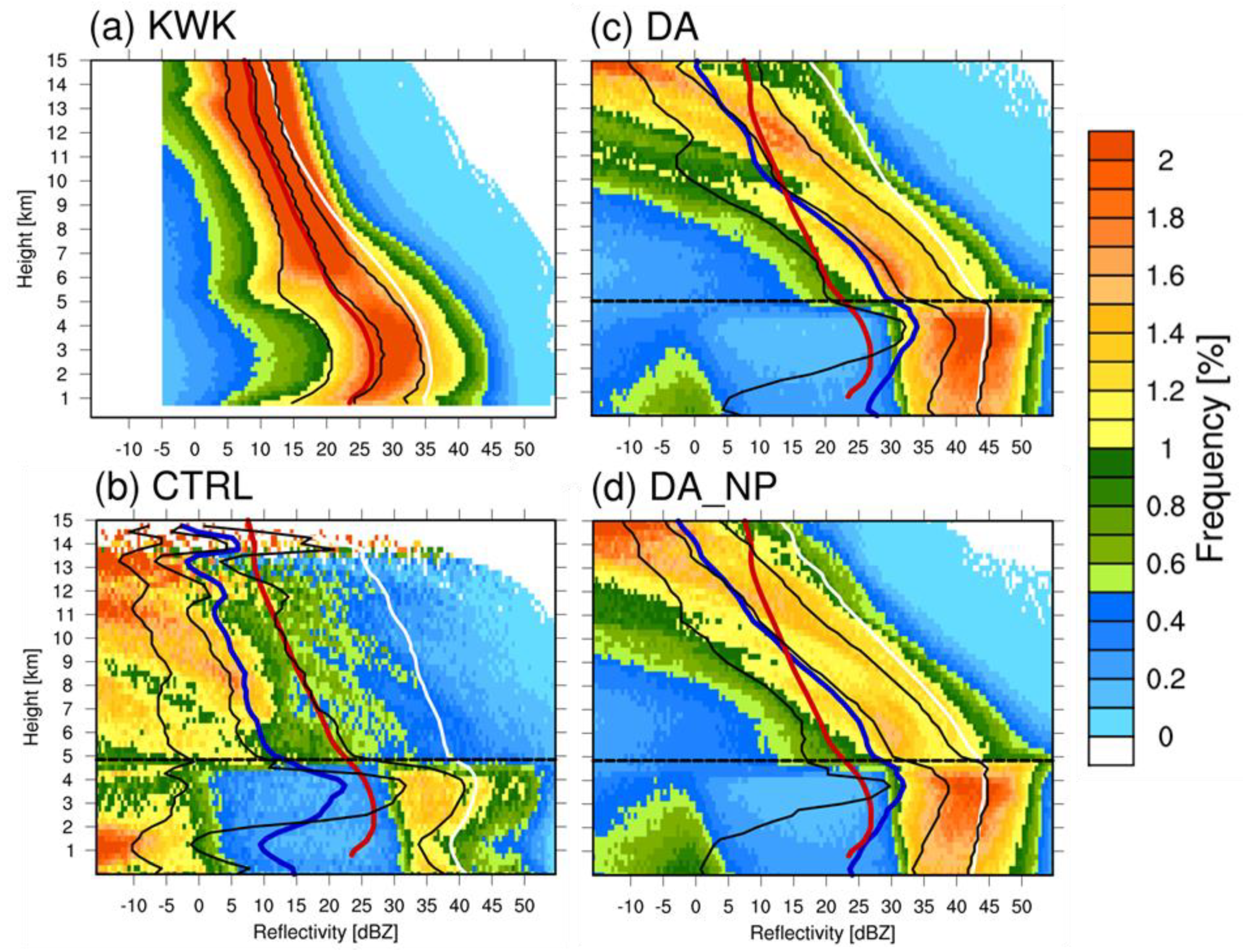
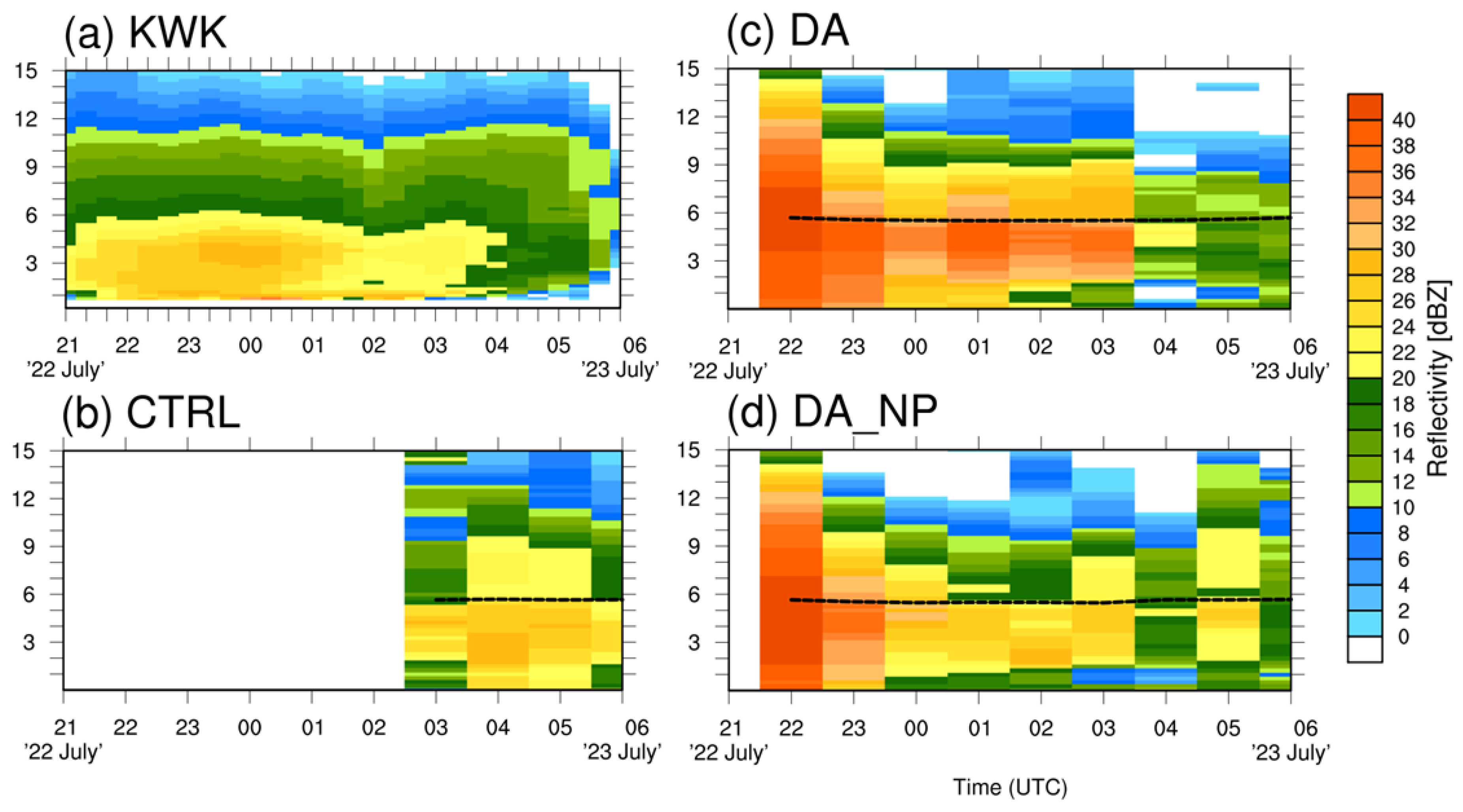
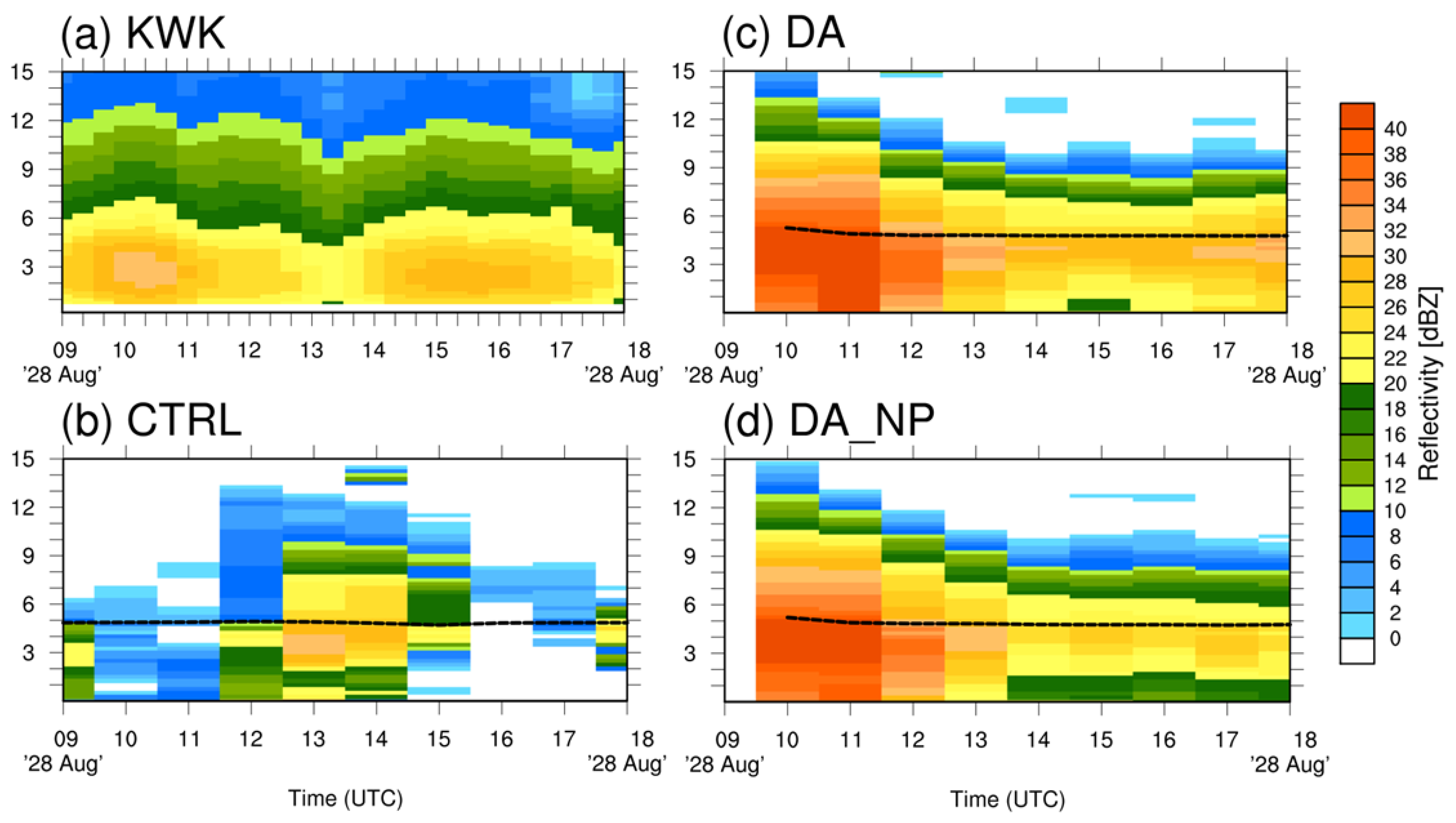
This study investigates the ability of the high-resolution Weather Research and Forecasting (WRF) model to simulate summer precipitation with assimilation of X-band radar network data (X-Net) over the Seoul metropolitan area. Numerical data assimilation (DA) experiments with X-Net (S- and X-band Doppler radar) radial velocity and reflectivity data for three events of convective systems along the Changma front are conducted. In addition to the conventional assimilation of radar data, which focuses on assimilating the radial velocity and reflectivity of precipitation echoes, this study assimilates null-echoes and analyzes the effect of null-echo data assimilation on short-term quantitative precipitation forecasting (QPF). A null-echo is defined as a region with non-precipitation echoes within the radar observation range. The model removes excessive humidity and four types of hydrometeors (wet and dry snow, graupel, and rain) based on the radar reflectivity by using a three-dimensional variational (3D-Var) data assimilation technique within the WRFDA system. Some procedures for preprocessing radar reflectivity data and using null-echoes in this assimilation are discussed. Numerical experiments with conventional radar DA over-predicted the precipitation. However, experiments with additional null-echo information removed excessive water vapor and hydrometeors and suppressed erroneous model precipitation. The results of statistical model verification showed improvements in the analysis and objective forecast scores, reducing the amount of over-predicted precipitation. An analysis of a contoured frequency by altitude diagram (CFAD) and time–height cross-sections showed that increased hydrometeors throughout the data assimilation period enhanced precipitation formation, and reflectivity under the melting layer was simulated similarly to the observations during the peak precipitation times. In addition, overestimated hydrometeors were reduced through null-echo data assimilation.
Keywords: radar data assimilation; null-echo data assimilation; high-resolution modeling; quantitative precipitation forecast (QPF) radar data assimilation; null-echo data assimilation; high-resolution modeling; quantitative precipitation forecast (QPF)
Graphical Abstract