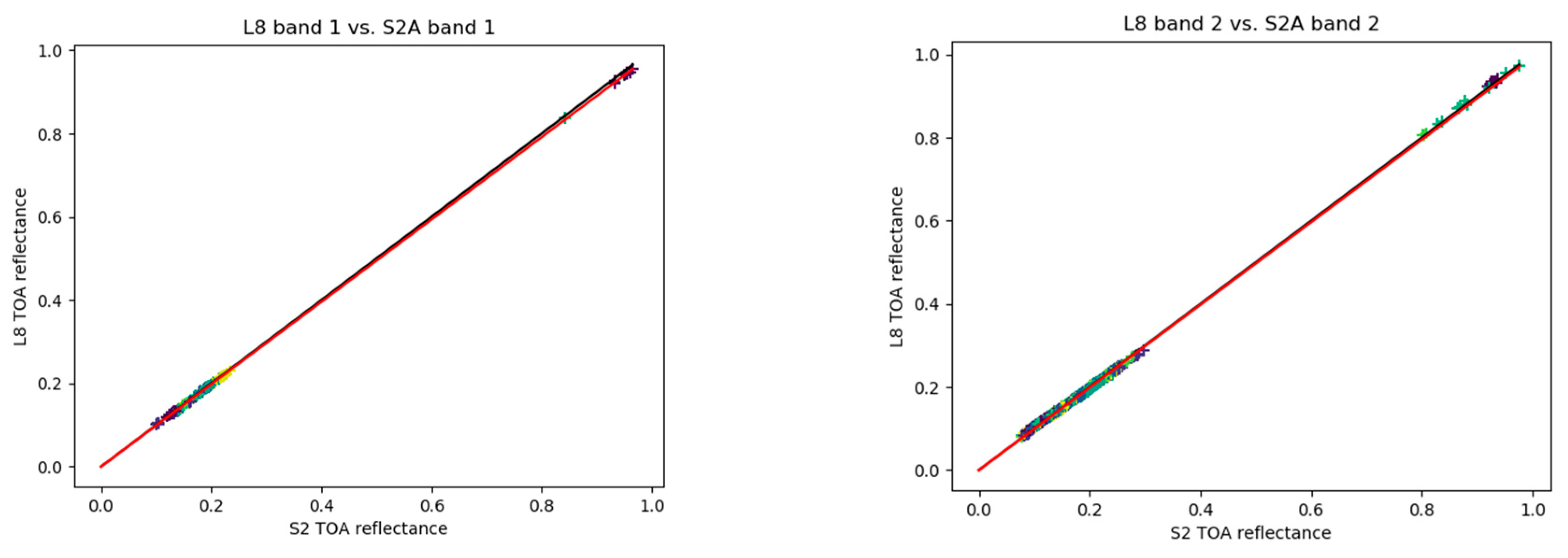
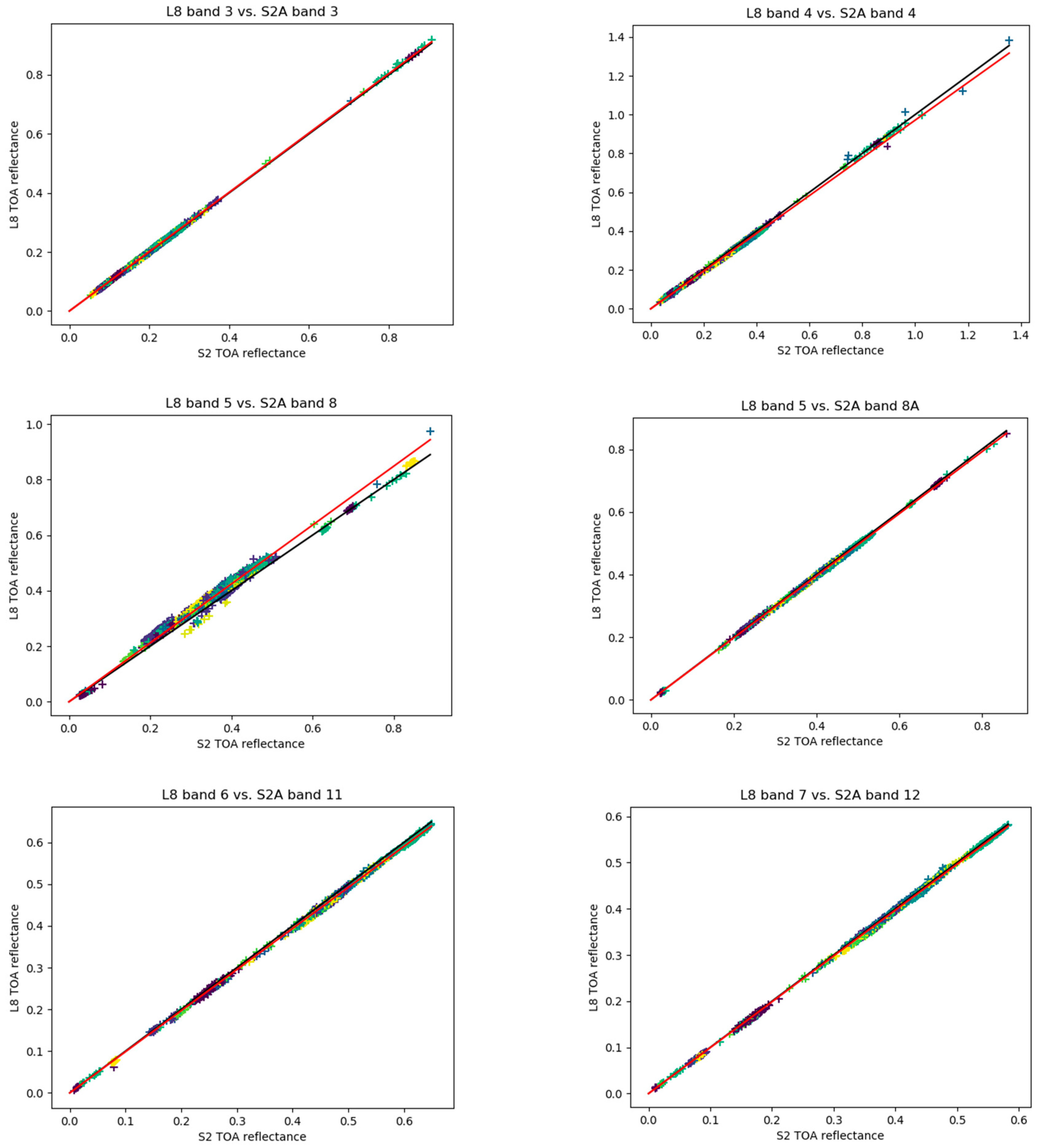
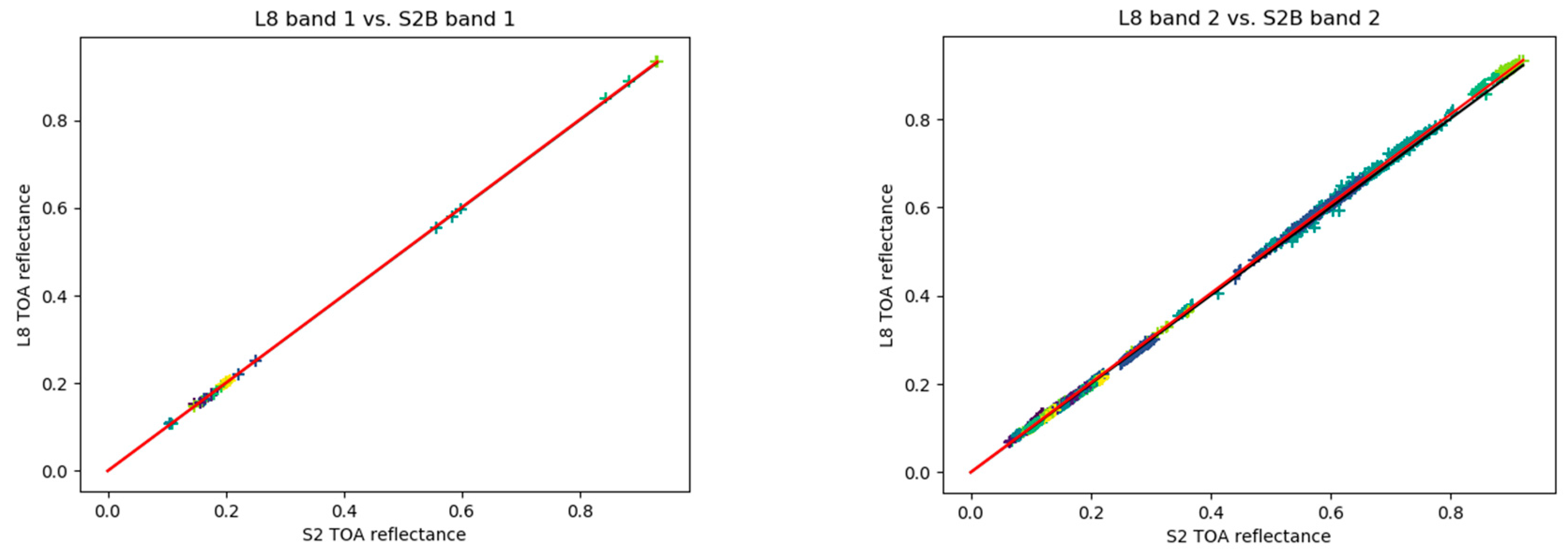
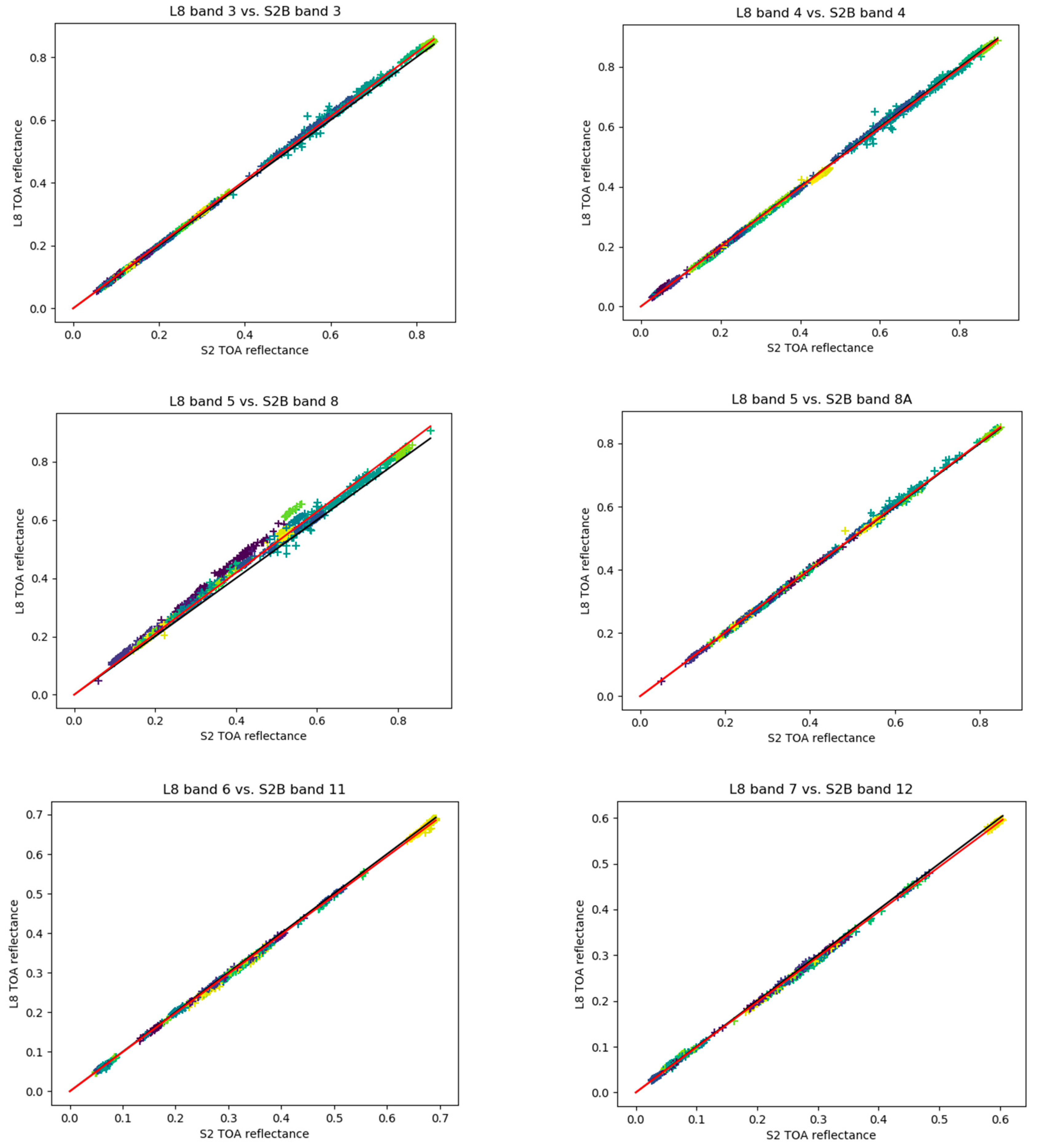
An Empirical Radiometric Intercomparison Methodology Based on Global Simultaneous Nadir Overpasses Applied to Landsat 8 and Sentinel-2

 , , , and
 Abstract
Share and Cite
Gil, J.; Rodrigo, J.F.; Salvador, P.; Gómez, D.; Sanz, J.; Casanova, J.L. An Empirical Radiometric Intercomparison Methodology Based on Global Simultaneous Nadir Overpasses Applied to Landsat 8 and Sentinel-2. Remote Sens. 2020, 12, 2736. https://doi.org/10.3390/rs12172736
Gil J, Rodrigo JF, Salvador P, Gómez D, Sanz J, Casanova JL. An Empirical Radiometric Intercomparison Methodology Based on Global Simultaneous Nadir Overpasses Applied to Landsat 8 and Sentinel-2. Remote Sensing. 2020; 12(17):2736. https://doi.org/10.3390/rs12172736
Chicago/Turabian StyleGil, Jorge, Juan Fernando Rodrigo, Pablo Salvador, Diego Gómez, Julia Sanz, and Jose Luis Casanova. 2020. "An Empirical Radiometric Intercomparison Methodology Based on Global Simultaneous Nadir Overpasses Applied to Landsat 8 and Sentinel-2" Remote Sensing 12, no. 17: 2736. https://doi.org/10.3390/rs12172736
APA StyleGil, J., Rodrigo, J. F., Salvador, P., Gómez, D., Sanz, J., & Casanova, J. L. (2020). An Empirical Radiometric Intercomparison Methodology Based on Global Simultaneous Nadir Overpasses Applied to Landsat 8 and Sentinel-2. Remote Sensing, 12(17), 2736. https://doi.org/10.3390/rs12172736