Article

Carbon Dynamics of Reclaimed Coal Mine Soil under Agricultural Use: A Chronosequence Study in the Dongtan Mining Area, Shandong Province, China

1
School of Environment Science and Spatial Informatics, China University of Mining and Technology, Xuzhou 221116, China
2
Low Carbon Energy Institute, China University of Mining and Technology, Xuzhou 221008, China
*
Author to whom correspondence should be addressed.
These authors contributed equally to this work.
Sustainability 2017, 9(4), 629; https://doi.org/10.3390/su9040629
Submission received: 21 January 2017 / Revised: 29 March 2017 / Accepted: 13 April 2017 / Published: 17 April 2017

Abstract

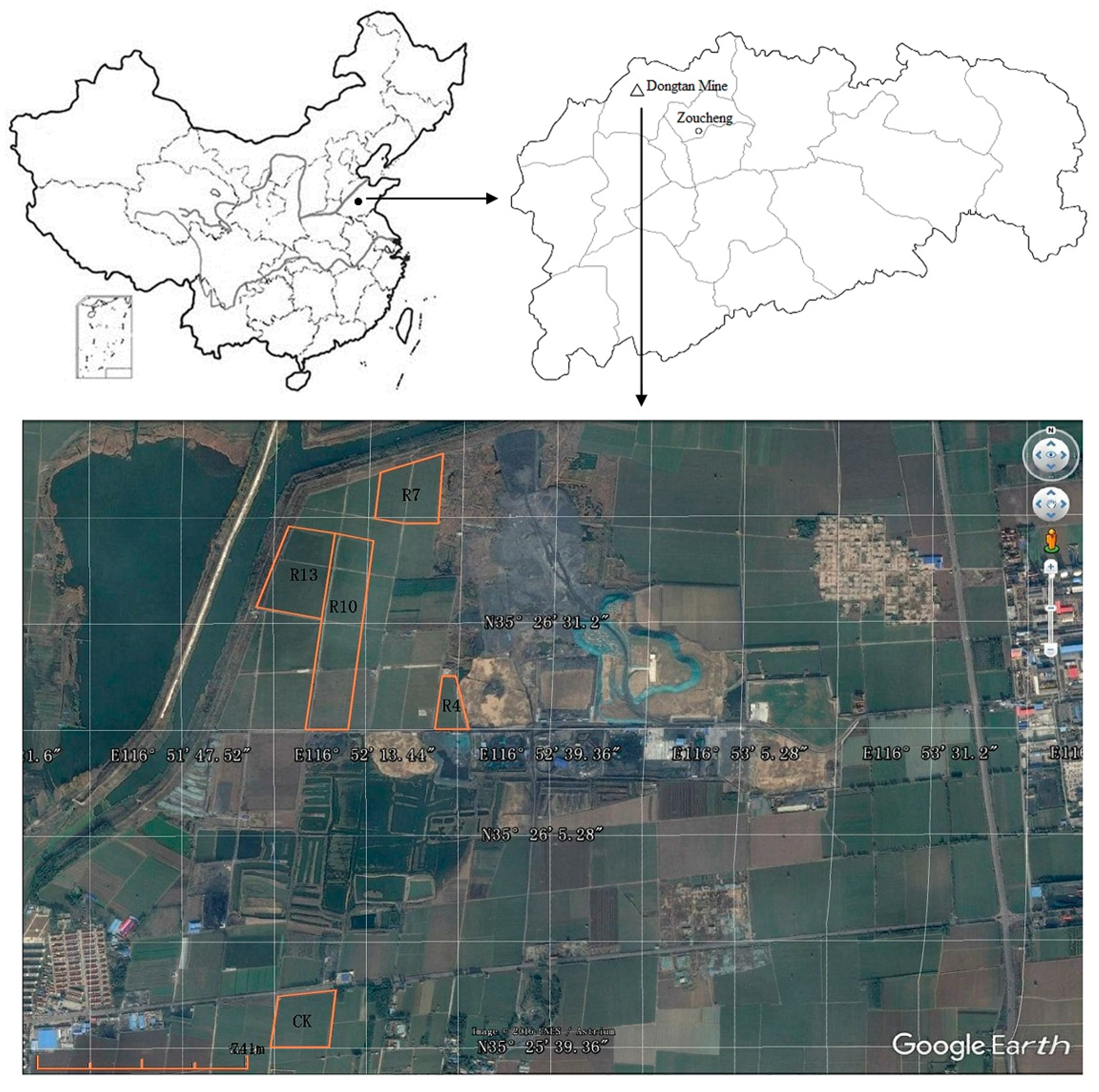
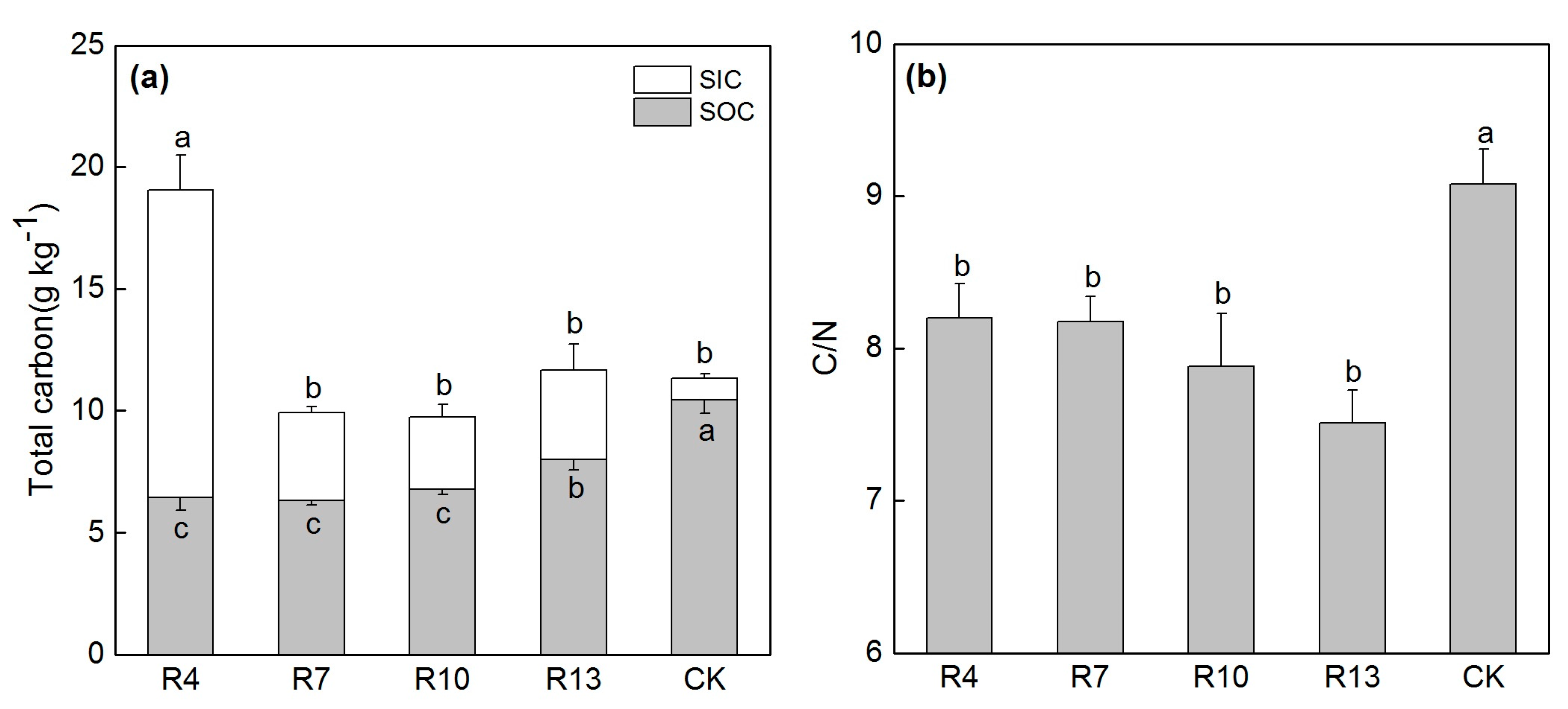
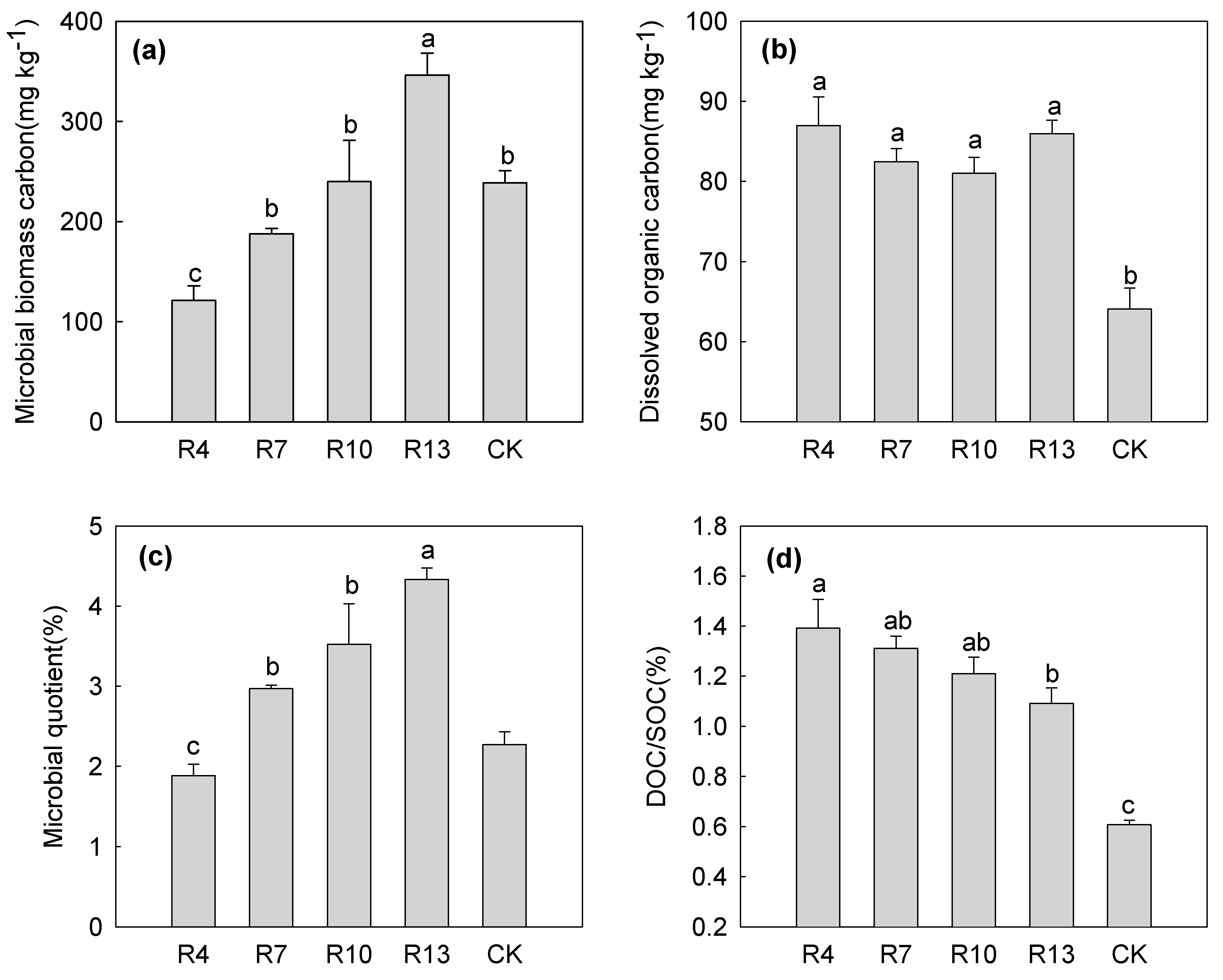
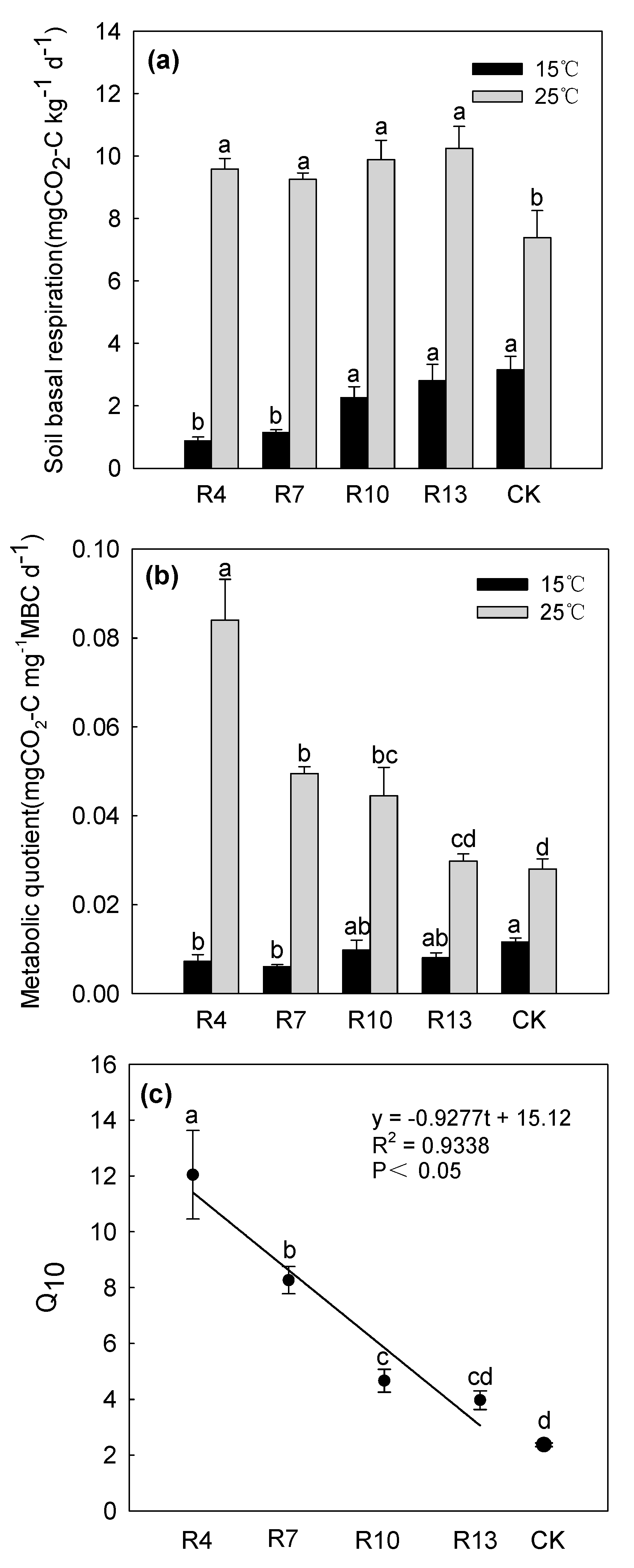
Soil organic carbon (SOC) plays an essential role in the early stages of pedogenisis and ecological restoration in reclaimed mine soils. Dynamic changes in the SOC content are essential for assessing the quality of reclaimed mine soils and the effect of ecological restoration. To objectively assess the carbon dynamics of reclaimed soils, we selected the surface (0–20 cm) soil of farmland under agricultural use (soybean–wheat rotation) from a reclamation chronosequence (R4: 4 years of reclamation, R7: 7 years of reclamation, R10: 10 years of reclamation and R13: 13 years of reclamation) in the Dongtan Mining Area, Shandong Province, China. The adjacent normal, unaffected farmland was used as a control (CK). The results showed that the SOC content gradually increased with the reclamation age until it reached 7.98 g·kg−1 for R13, which accounted for 76% of that of the CK. However, the total carbon contents of the reclaimed soils did not significantly differ from and even appeared higher than that of the CK. This is mainly because the inorganic carbon contents of the reclaimed soils ranged from 2.98 to 12.61 g·kg−1, all of which were significantly higher than the 0.87 g·kg−1 obtained for the CK. The microbial biomass carbon (MBC) content and the microbial quotient significantly increased with the reclamation age of the soil, and both parameters were markedly higher for R13 than for the CK. The dissolved organic carbon (DOC) content and its ratio to the SOC were significantly higher for R4–R13 than for the CK and DOC/SOC gradually decreased with the reclamation age. Both the reclamation age and the temperature had positive effects on the soil basal respiration (SBR). The SBR rate constantly increased with the reclamation age and was markedly higher at 25 °C than at 15 °C. The temperature sensitivity (Q10) of the SBR showed a clearly decreasing trend for the reclamation chronosequence, but its value remained higher for R13 than for the CK (2.37). The metabolic quotient constantly decreased with the reclamation age, which suggests that the survival pressure imposed on soil microbes by the soil environment gradually decreased. These results indicate that it takes a long time for organic carbon to accumulate in reclaimed mine soil and that rational agricultural use contributes to sustained improvement of the quality of reclaimed soil.
Keywords: reclaimed mine soils; chronosequence; agricultural use; soil organic carbon; basal respiration reclaimed mine soils; chronosequence; agricultural use; soil organic carbon; basal respiration