Article

Trade-Offs between Economic and Environmental Optimization of the Forest Biomass Generation Supply Chain in Inner Mongolia, China


1
School of Economics and Management, Beijing Forestry University, 35 Qinghua East Rd, Haidian District, Beijing 100083, China
2
Department of Forest Resources Management, University of British Columbia, Vancouver, BC V6T 1Z4, Canada
3
Department of Wood Science, University of British Columbia, Vancouver, BC V6T 1Z4, Canada
*
Author to whom correspondence should be addressed.
Sustainability 2017, 9(11), 2030; https://doi.org/10.3390/su9112030
Submission received: 14 September 2017 / Revised: 25 October 2017 / Accepted: 27 October 2017 / Published: 6 November 2017
(This article belongs to the Special Issue Sustainable Energy Development under Climate Change)

Abstract

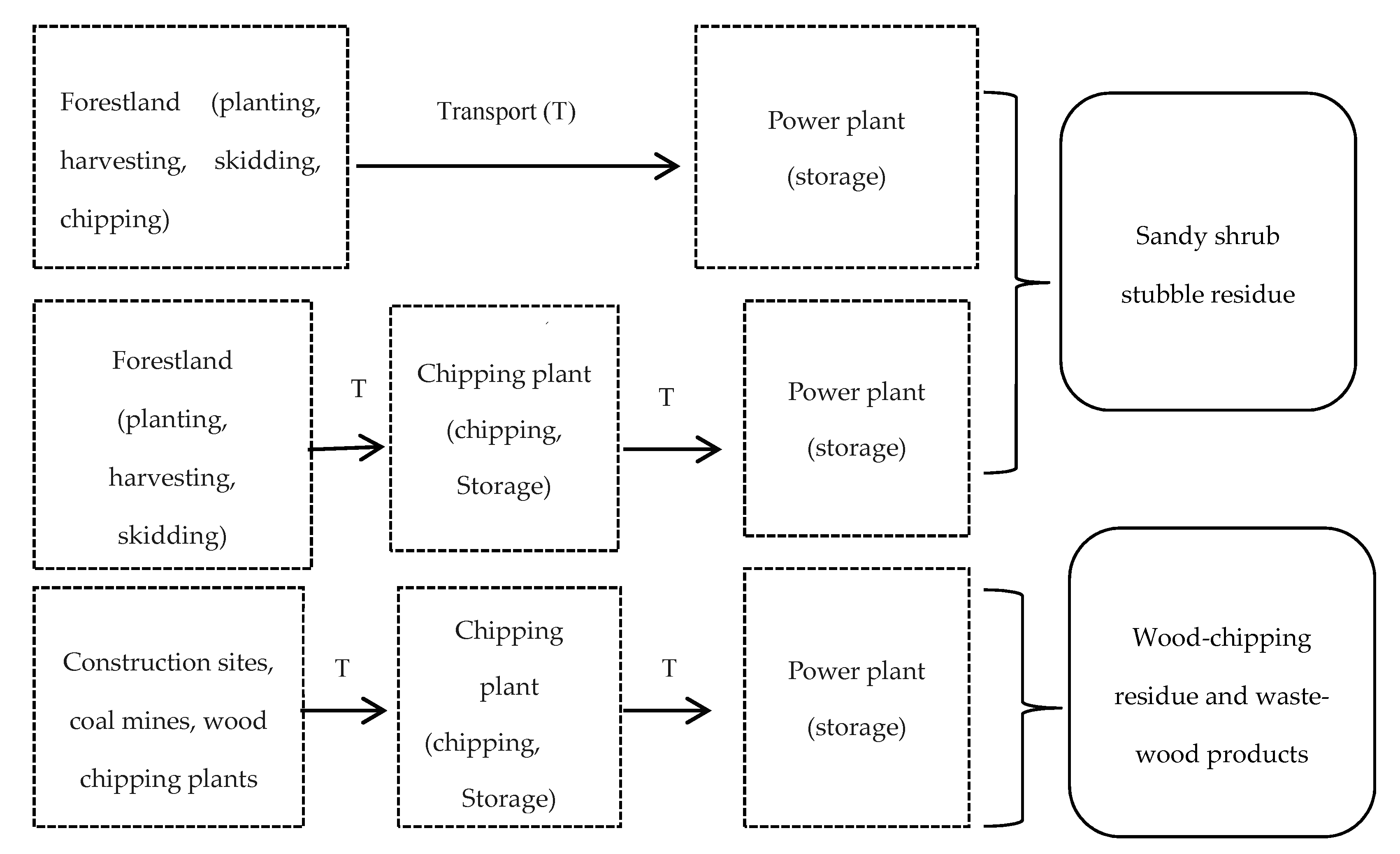
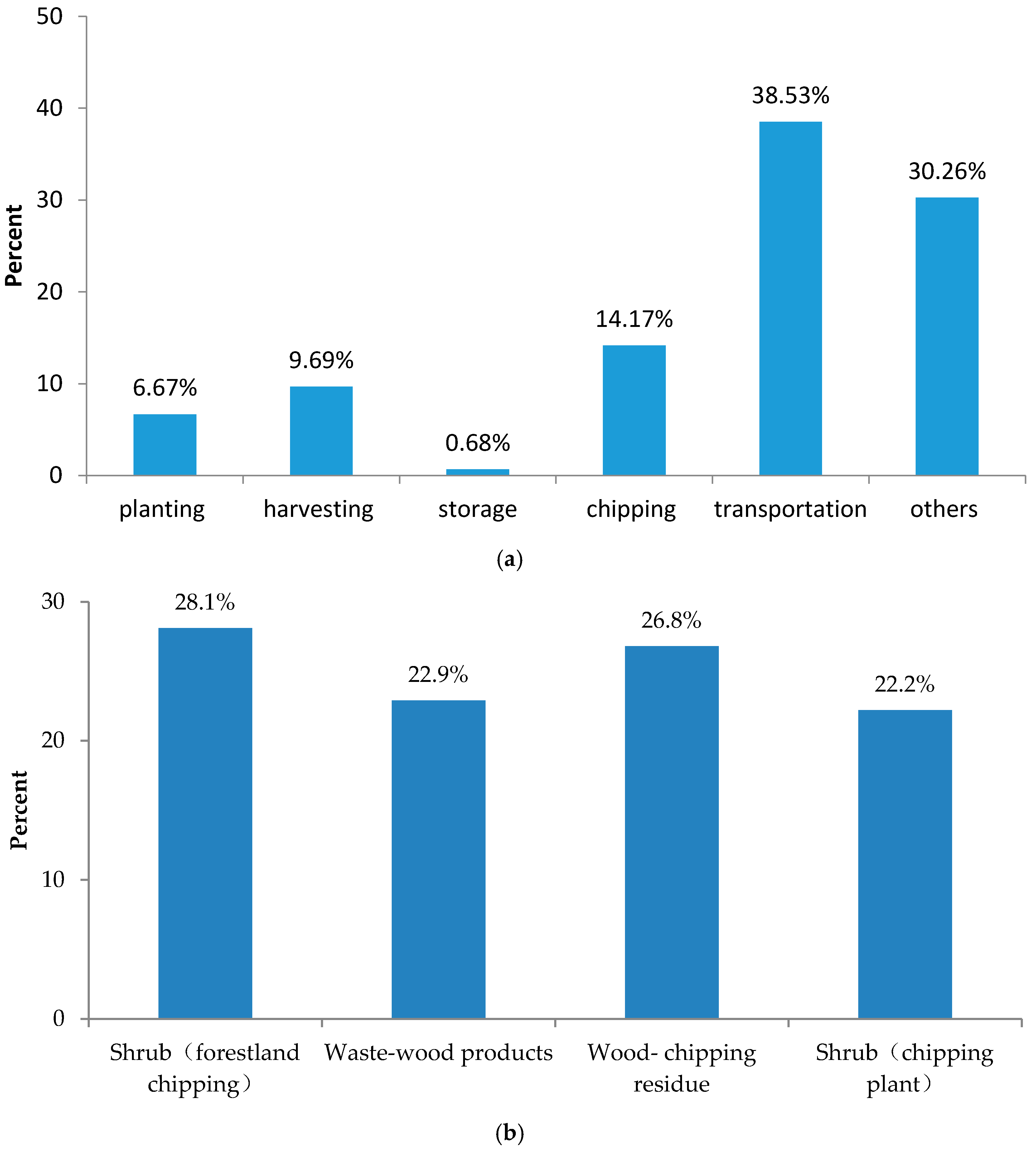
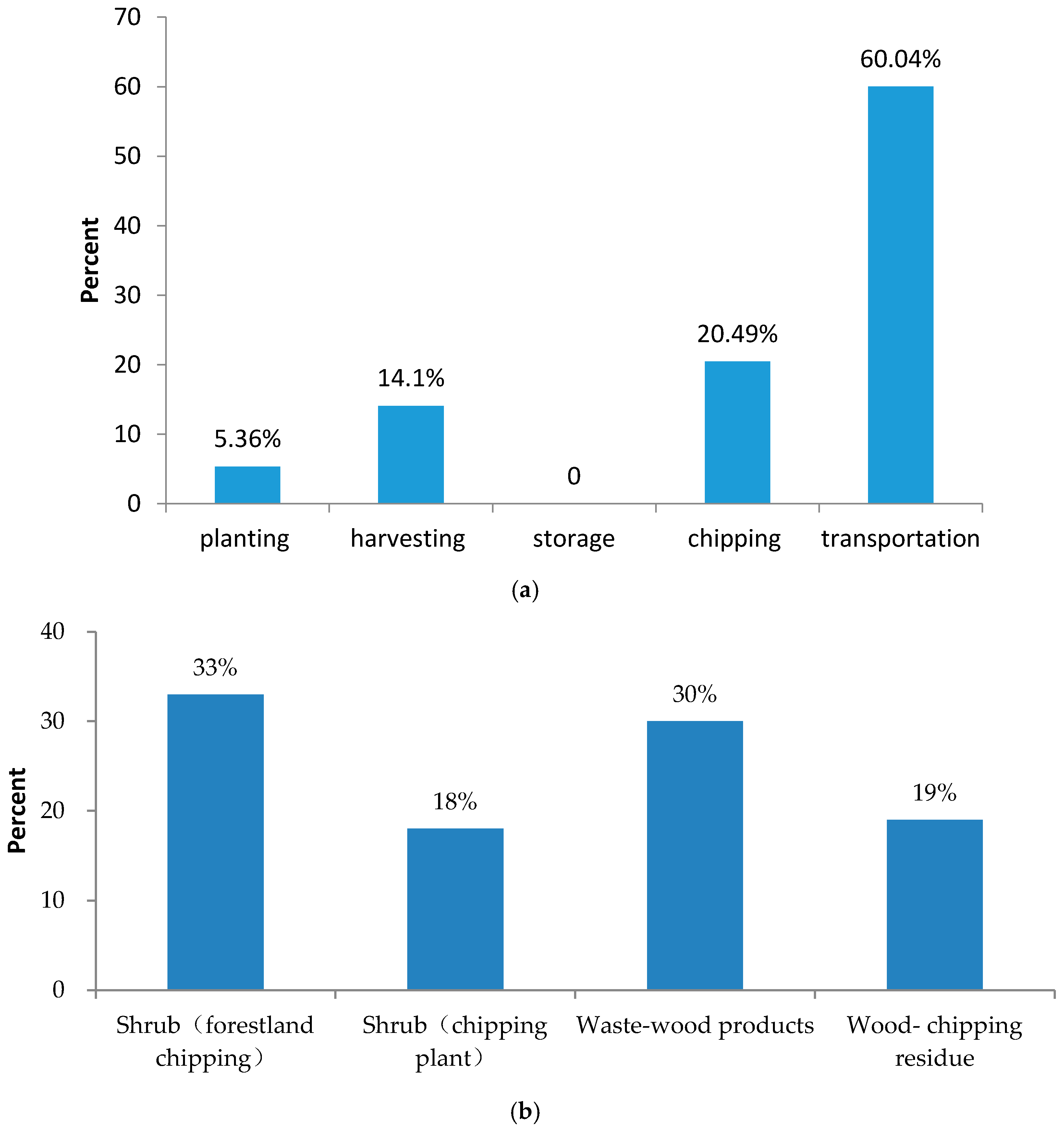
The utilization of forest residue to produce forest biomass energy can mitigate CO2 emissions and generate additional revenue for related eco-enterprises and farmers. In China, however, the benefit of this utilization is still in question because of high costs and CO2 emissions in the entire supply chain. In this paper, a multi-objective linear programming model (MLP) is employed to analyze the trade-offs between the economic and environmental benefits of all nodes within the forest biomass power generation supply chain. The MLP model is tested in the Mao Wu Su biomass Thermoelectric Company. The optimization results show that (1) the total cost and CO2 emissions are decreased by US$98.4 thousand and 60.6 thousand kg, respectively; 3750 thousand kg of waste-wood products is reduced and 3750 thousand kg of sandy shrub stubble residue is increased; (2) 64% of chipped sandy shrub residue is transported directly from the forestland to the power plant, 36% of non-chipped sandy shrub residue is transported from the forestland to the power plant via the chipping plant; (3) transportation and chipping play a significant role in the supply chain; and (4) the results of a sensitivity analysis show that the farmer’s average transportation distance should be 84.13 km and unit chipping cost should be $0.01022 thousand for the optimization supply cost and CO2 emissions. Finally, we suggest the following: (1) develop long-term cooperation with farmers; (2) buy chain-saws for regularly used farmers; (3) build several chipping plants in areas that are rich in sandy shrub.
Keywords: CO2 emissions; supply cost; sandy shrub stubble residue; wood-chipping residue; waste-wood products; residue-recycling; transportation path CO2 emissions; supply cost; sandy shrub stubble residue; wood-chipping residue; waste-wood products; residue-recycling; transportation path