


Abstract
There have been much interest and many efforts to control global warming and reduce greenhouse gas (GHG) emissions throughout the world. Recently, the Republic of Korea has also increased its GHG reduction goal and searched for an implementation plan. In buildings, for example, there have been technology developments and deployment policies to reduce GHG emissions from a life cycle perspective, covering construction materials, building construction, use of buildings and waste disposal. In particular, Korea’s Green Standard for Energy and Environmental Design is a certification of environmentally-friendly buildings for their energy saving and reduction of environmental pollution throughout their lives. In fact, the demand and adoption of the certification are rising every year. In construction materials and buildings, as a result, an environmentally-friendly aspect has become crucial. The importance of construction material and building development technologies that can reduce environmental load by diminishing GHG emissions in buildings has emerged. Moreover, there has been a rising necessity to verify the GHG reduction effects of buildings. To assess the reduction of carbon emissions in the buildings built with low-carbon construction technologies and materials, therefore, this study estimated life cycle carbon emissions in reference buildings in which general construction materials are used and in low-carbon buildings. For this, the carbon emissions and their reduction from construction materials (especially concrete) between conventional products and low-carbon materials were estimated, using Life Cycle Assessment (LCA). After estimating carbon emissions from a building life cycle perspective, their reduction in low-carbon buildings compared to the reference buildings was reviewed. The results found that compared to conventional buildings, low-carbon buildings revealed a 25% decrease in carbon emissions in terms of the reduction of Life Cycle CO2 (LCCO2) per unit area. If diverse production technologies and sales routes are further developed for low-carbon construction materials, carbon emission reduction effects would considerably increase.
1. Introduction
At the recent 2015 United Nations Climate Change Conference (COP 21), which was held in Paris, France, the ‘Paris Agreement’, a new framework convention on climate change, was adopted. It is the first consensus that is more binding than the Kyoto Protocol, keeping the efforts of advanced and developing countries. Therefore, there has been a rising interest in it for a proper response to a post-2020 climate framework around the world.
The Republic of Korea also announced a voluntary action plan to reduce greenhouse gas emissions by 37% from the business-as-usual (BAU) level of 851 million by 2030 [1]. For this, there have been many efforts to reduce GHG emissions throughout the industries. Businesses have operated a “GHG and energy target management system” and cap-and-trade to control GHG emissions. From a product standpoint, the product carbon footprint labeling has been run to encourage the use of low-carbon products. In buildings, the Green Standard for Energy and Environmental Design (G-SEED) has been applied to find ways for reducing GHG emissions considering the life cycle of the green buildings that have reduced GHG emissions with the use of environmental load-reduced materials.
In particular, Korea’s construction industry accounts for 48% of the total material consumption and 40% of the national energy consumption. In terms of CO2 emissions during the production of construction materials, in addition, the construction sector accounts for about 25% [2]. Therefore, there have been many efforts to develop and commercialize low-carbon construction materials that can satisfy the demand for environmentally-friendly buildings. As a result, there has been a rising necessity for the assessment of environmental loads by the life cycle of construction materials and environmental assessment and continuous management throughout the life of buildings.
Therefore, this study analyzed carbon emissions and reduction against the buildings built with low-carbon construction materials after reflecting the government’s movement to reduce GHG emissions. For this, an assessment technique that can quantitatively assess carbon emissions in construction materials and buildings was chosen. Depending on the building life cycle, data by GHG the emission factor were collected. Then, Life Cycle CO2 (LCCO2) emissions were assessed according to the useful life of a building. As a result, GHG emission reduction key technologies were derived from construction materials and buildings. It appears that the study results would be useful data in developing a roadmap and implementation plan for the reduction of GHG emissions from a long-term perspective for low-carbon buildings.
2. Literature Review
2.1. Previous Studies Regarding Environmental Impact Assessment on Buildings Using LCA
According to previous studies, the environmental impact of buildings has been assessed in a more objective and quantitative manner, using LCA, which unveils environmental impact substances throughout the product and service processes and assesses environmental impact [3].
According to studies on energy consumption and carbon emissions throughout a building life cycle, in foreign countries, the environmental impact of energy consumption and greenhouse gas emissions was assessed. In particular, there have been studies targeted to analyze energy consumption patterns by building type in the operation phase [4], to design an energy-saving building and to develop an energy-saving solution through the analysis of diverse cases in foreign countries [5]. In terms of the characteristics of a building’s operation phase, it accounted for up to 85% of total carbon emissions by building type due to the use of heating and cooling energy and electrical facilities [6,7].
In the study abroad, Wang et al. had found suggestions on improving the green building rating tools to encourage the GHG emission reduction performance of green buildings [8]. Additionally, Liu et al. reviewed the existing research and implementation examples to understand the development of carbon labeling [9]. Furthermore, Rogers et al. took an integrated analysis approach to explore the options available for a U.K. homeowner to reduce their domestic emissions [10]. Mahapatra analyzed the energy use of the buildings fulfilling the requirements of the Swedish building code and compared the primary energy use and CO2 emissions from the operation of the building [11].
In other research work, some studies on green building certification, building materials and building life cycle greenhouse gas emissions were released [12,13]. Additionally, the renewable energy research, such as solar and biomass energy, were conducted [14,15,16,17].
Zhang et al. conducted the life cycle assessment of the air emissions by using a particular case to examine emissions during the construction stage [18]. Additionally, Baek et al. performed a study to identify the requisites for an LCCO2 assessment program that can be used in the schematic design phase [19].
Furthermore, Bribián et al. presented the state-of-the-art regarding the application of life cycle assessment in the building sector [20]. Additionally, Verbeeck et al. outlined the goal and scope of the LCI and introduced several calculation methods for LCI of building. Then, they presented the results of a contribution analysis of the life cycle inventory of four typical Belgian residential buildings [21,22].
Furthermore, the paper did research about the status of low-carbon technologies in the building area and discussed the necessity and importance of reducing carbon emissions in the full life cycle of buildings [23].
In the Republic of Korea, there have been many environmental impact assessments on buildings using LCA. These studies can be divided into two categories: those [24,25,26,27] that suggested a method to assess the environmental impact using LCA and case studies on the building environment [28,29,30]. In addition, BIM template development studies [31] for the implementation of LCA on environmentally-friendly buildings and Life Cycle Inventory (LCI) DB development studies on construction materials have been very active [32].
Even though there have been many LCAs and studies on buildings, those that reflect the environmental impact of the latest low-carbon construction materials have not been enough.
Therefore, this study has derived the results that would be useful in estimating and analyzing the carbon emissions and reduction of low-carbon construction materials by carrying out environmental impact assessment on buildings using LCA.
2.2. The Status of the Development of Low-Carbon Construction Materials
The product carbon footprint labeling in the Republic of Korea issues measured carbon levels and low-carbon certification on all products and services. In particular, there has been a rising demand for certification on carbon emissions and reduction in construction materials and inventories [33]. At the same time, the development of carbon reduction technologies has been active, and diverse low-carbon products have been produced [34].
In terms of key technologies to reduce carbon emissions at a construction material production stage, it would be able to enhance the efficiency of input management and production processes by reducing the amount of input, using industrial byproducts or applying new materials and reducing carbon emissions during production through fuel switching [2]. In particular, regarding concrete, which is the most widely used for structures among construction materials, the products made of these latest carbon reduction technologies were chosen, and carbon emissions and reduction were measured. In terms of the selection of products, those that are same as conventional products in terms of specification, strength, physical property and test items were chosen, and same functions and functional units were applied [2].
Table 1 states the properties of low-carbon concrete products, while Table 2 reveals the reduction of carbon emissions in each product, compared to conventional products.
Table 1.
Properties of low-carbon construction materials (ready-mixed concrete).
Table 2.
CO2 emissions and reduction amounts of low-carbon products as compared to the baseline product (unit: kg CO2 eq./unit).
3. Research Methods
Among the assessment methods mostly used during LCA to assess the LCCO2 emissions of buildings, process analysis [35] was adopted. A building is a composite structure comprised of construction materials. In addition, input and output data, which are produced through its life cycle are very complicated. Therefore, it was believed that the limitation on the scope of data collection considering the characteristics of a building’s life cycle would derive the carbon emissions and reduction of a building in a clear manner.
3.1. Research Scope and Method
3.1.1. System Boundary
In general, a building consumes energy and resources and produces a variety of wastes through its life cycle, which include the design, production of construction materials, construction, building use and maintenance, demolition and recycling and reconstruction.
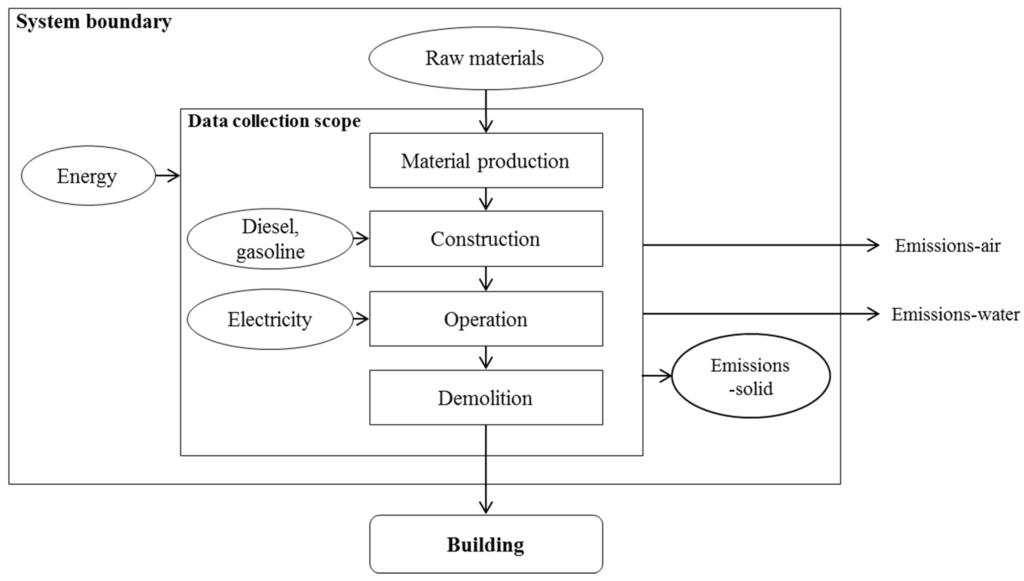
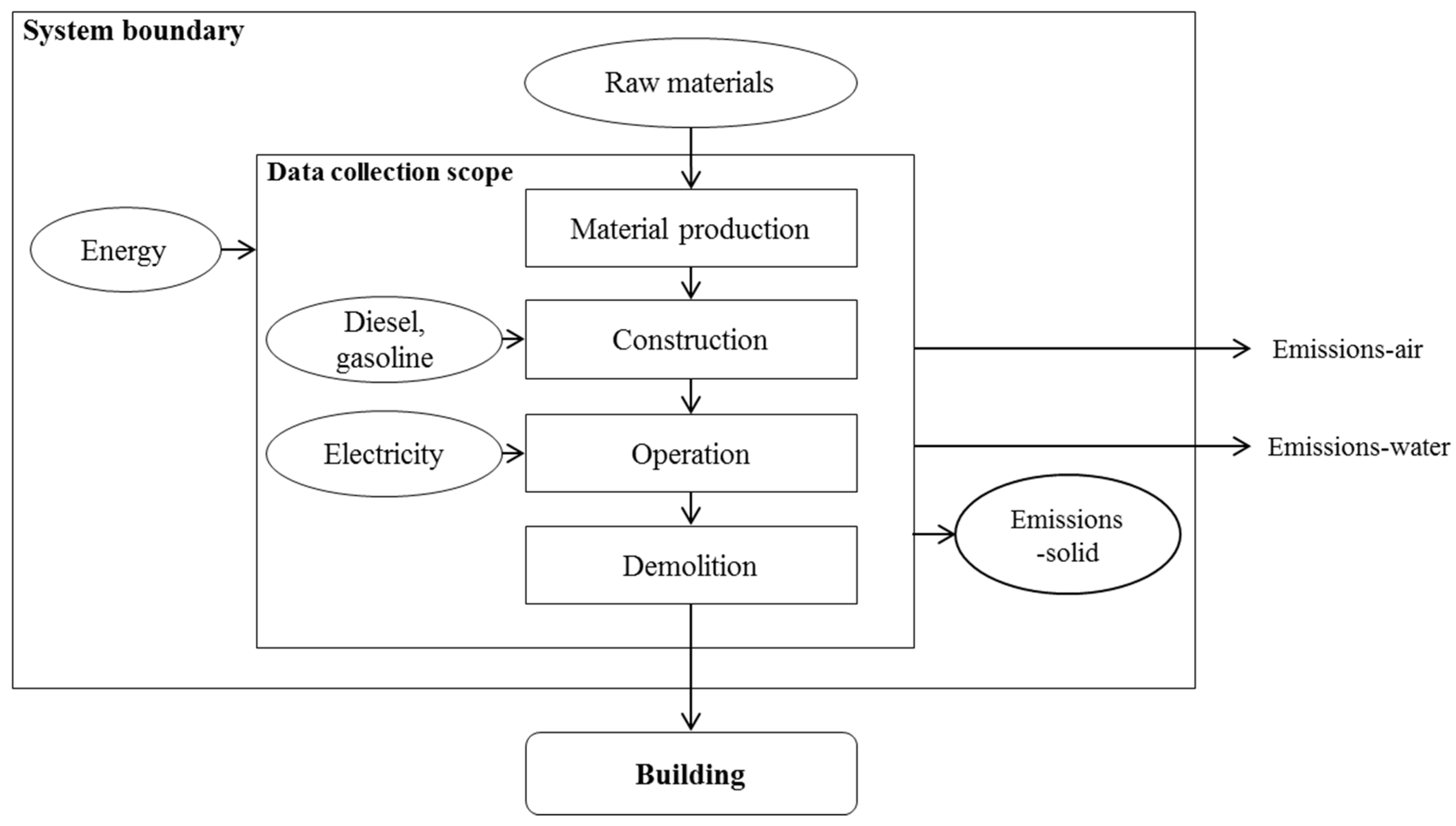
As shown in Figure 1, therefore, this study divided building life cycle stages and set the system boundary to define the scope of data collection in each stage and to perform LCCO2 assessment.
Figure 1.
System boundary for LCCO2 assessment of a building.
3.1.2. Environmental Load Assessment Plan by Life Cycle
Considering a building’s life cycle, the scope of data collection was divided into four stages: construction material production (manufacture) phase, construction phase, operation and maintenance phase and demolition phase.
Table 3 states the matters that should be considered at LCA depending on a building’s life cycle phase.
Table 3.
Description of the unit process for the building LCCO2 assessment.
3.2. Utilization of the LCI Database of the Construction Materials
The environmental information of the construction materials that can be used to perform LCA on the environmental impact of buildings was collected. For this, the results of national LCI DB and conventional LCI DB development-related studies were referenced. In case of construction materials in which KLCI DB [36,37] is not found, a foreign LCI DB [38] was used or LCI results were calculated in person in accordance with international standards (See Table 4.).
Table 4.
List of LCI DB for construction materials.
3.3. Assumptions and Restrictions
To analyze subjects with many variables, it is needed to restrict the subjects and scope of data collection to permit LCA based on process analysis. Therefore, the factors having considerable environmental impact by the life cycle of buildings were extracted and used in preparing a data collection scenario and setting assumptions.
At the operation and maintenance and demolition phases, it is able to estimate environmental load by assuming the factors with significant environmental impact and setting a scenario depending on certain conditions.
4. LCCO2 Assessment of a Low-Carbon Building
4.1. Overview of LCA-Targeted Building
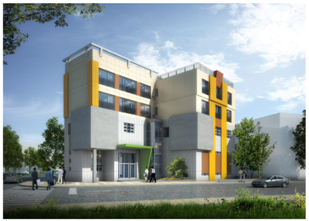
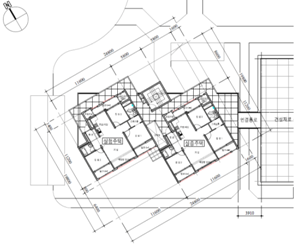
The target building is a building aimed to verify the effects through the development of carbon-reduction construction materials. It features a PR (publicrelations) hall on the first floor, a monitoring space on the second floor and empirical and reference spaces on the third and fourth floors. As a result, the area apart from the empirical and reference spaces was set as a “common space” and divided into common space, empirical house and reference house for building analysis.
As indicated in Table 5, among the gross floor area (1078 m2), the common space accounted for 738 m2, while empirical and reference houses were 170 m2 each (85 m2/floor).
Table 5.
Overview of the building.
As shown in Table 6, for the evaluation of building LCCO2, a building was divided into office and residential spaces by reflecting the target building’s spatial characteristics, and functional units were selected. In terms of service life setting for a building, 30 years were set for a reinforced concrete structure in accordance with the Corporate Tax Act (No. 40 of the References).
Table 6.
Overview of the LCCO2 assessment.
4.2. Material Production Phase
This phase includes the processes from the collection of raw materials needed to manufacture construction materials to their production.
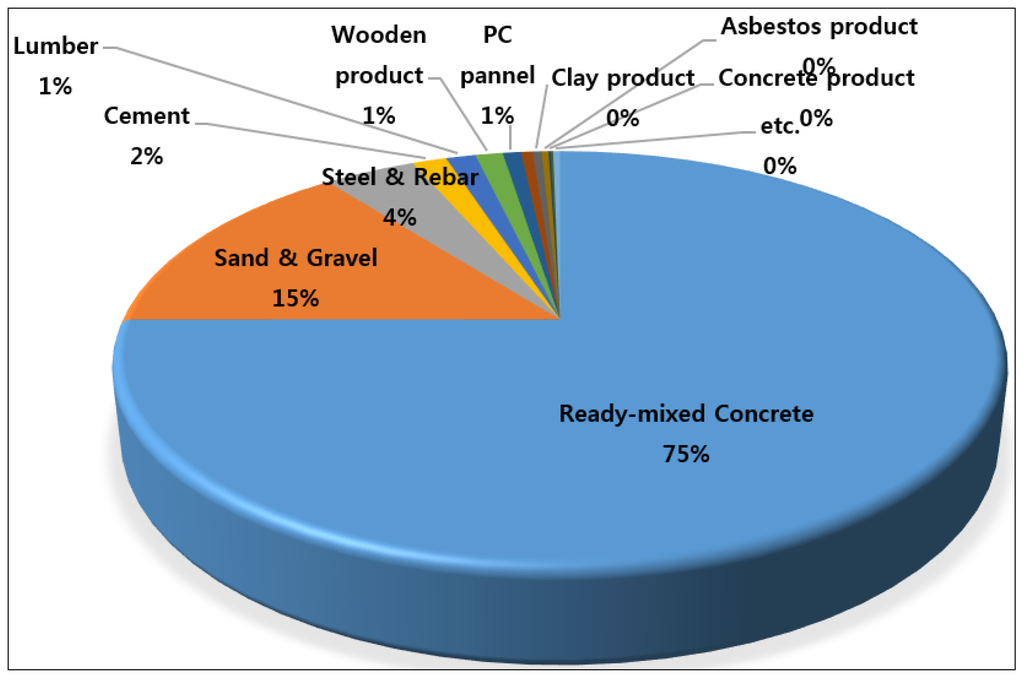
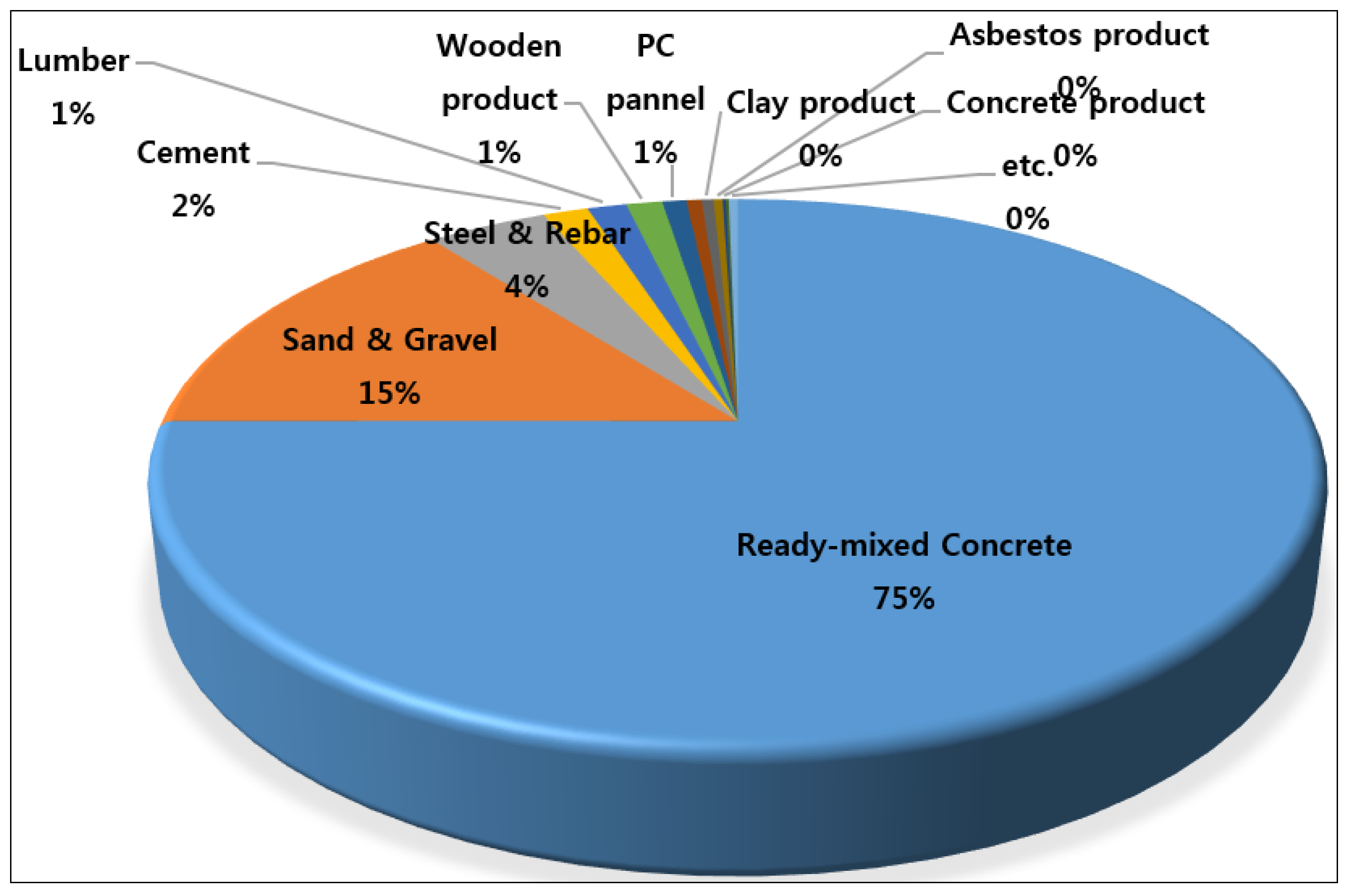
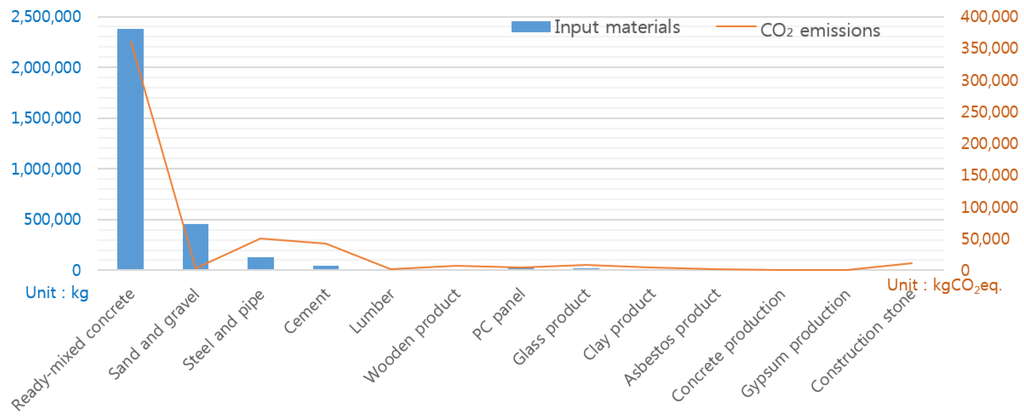
The total mass of inventories used for the construction of the target building was 3172 tons (2.9 tons/unit area). Considering the characteristics of a reinforced concrete structure, ready-mixed concrete, sand and gravel, cement and precast concrete accounted for about 95% of the total input.
In this study, 99.7% of the cumulative contribution was applied for the “cut-off” based on the total construction material input, including the common area of the building and empirical and reference houses (See Table 7 and Figure 2.).
Table 7.
The cumulative mass contribution analysis.
Figure 2.
The cumulative mass contribution of input materials.
4.3. Construction Phase
The construction phase refers to the stage in which a building is being built with various equipment and facilities, since the transportation stage is where construction materials are brought to the construction site.
In this phase, CO2 is mostly emitted by construction machines and equipment and transportation vehicles. Therefore, the data on these transportation vehicles and transportation distance are collected. Furthermore, this is calculated based on fuel and power consumption at the construction site. In the building, the construction equipment was mostly used for earthwork, reinforced concrete work and plaster work.
4.4. Operation and Maintenance Phase
This phase is to use and repair and manage the building until it is demolished. Among energy consumption and building maintenance, in this study, the former was only considered for carbon emissions. Based on previous studies on building energy consumption [31], annual power consumption (41.7 kwh/m2) and annual city gas consumption (16.1 Nm3/m2) were considered. In terms of the useful life of the building, 30 years [39,40] were set according to a standard repair cycle.
4.5. Demolition Phase
This phase is to deconstruct a building and dispose of or recycle the materials when it becomes useless after the expiry of its social and physical lives.
This study did not consider CO2 emissions, which occur during the demolition of the low-carbon building or transportation of the wastes, because assessment was conducted, focusing on CO2 emissions among total construction material input. In addition, CO2 emissions were considered according to the waste estimation and disposal methods. Depending on the treatment method by the type of construction wastes, therefore, 97.5% of recycling rates, 1.8% of landfill and 0.7% of incineration were applied, using statistical values [37].
5. Results of Carbon Emissions by the Life Cycle Phase of Low-Carbon Buildings
5.1. Material Production Phase
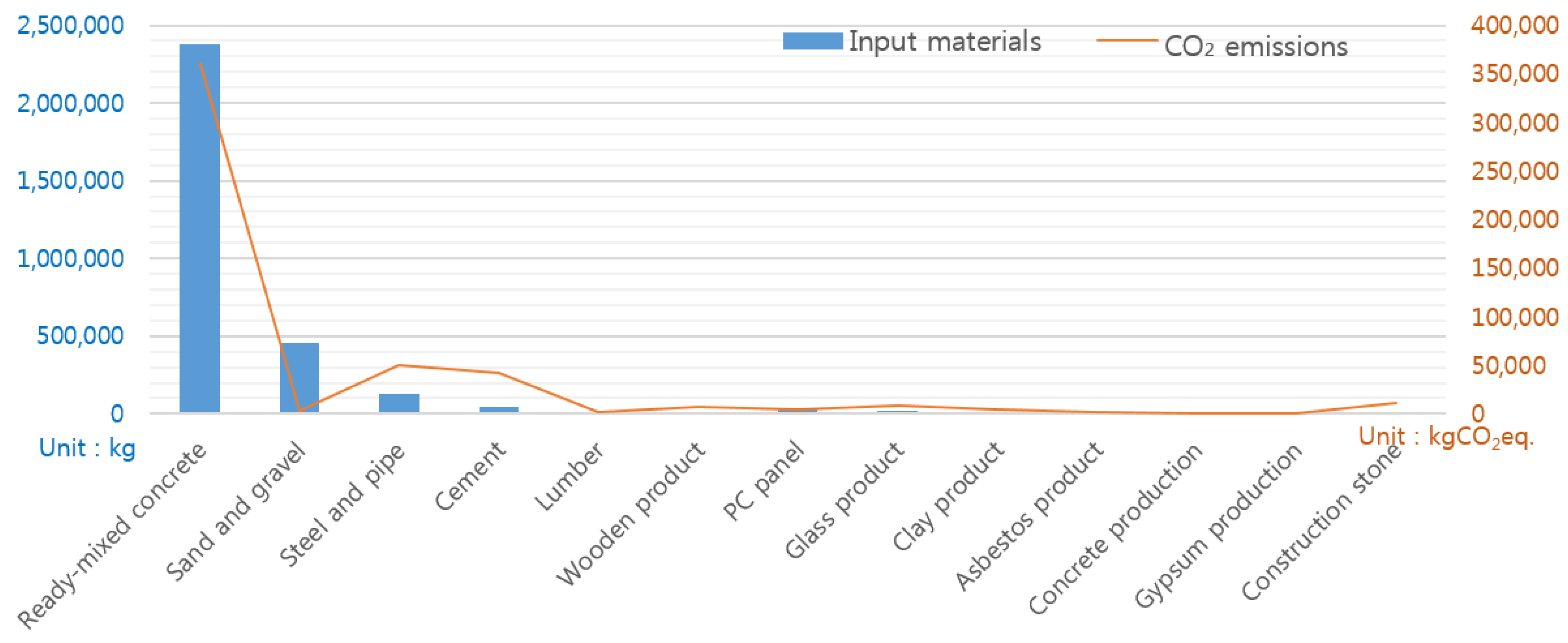
As shown in Table 8 and Figure 3, the CO2 emissions of input materials were 495,802 kg CO2 eq. Regarding environmental impact by the construction material, ready-mixed concrete was the highest with 72.7%, followed by reinforcing bar and steel bar (10.1%) and cement (8.6%) in terms of CO2 emissions.
Table 8.
CO2 emissions by input material during the material production phase.
Figure 3.
CO2 emission distribution of the whole building during the material production phase
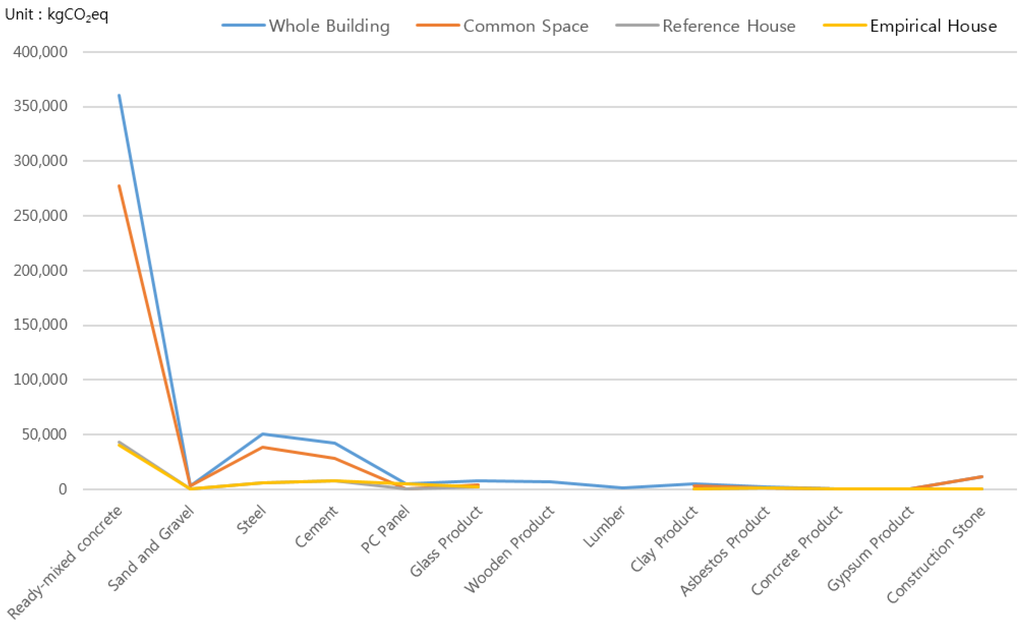
The CO2 emissions by common area, residential house and empirical house are estimated as shown in Table 9 and Figure 4.
Table 9.
Material inputs and CO2 emissions by building sector.
Figure 4.
CO2 emissions by construction material input in the building sectors.
Among total input for the building, the largest amount of construction materials was used during the foundation and frame works for the common space. Therefore, CO2 emissions were the greatest in the common space. In addition, even though reference and empirical houses were the same in terms of area, there was a difference in the amount of input to the empirical house because of the use of low-carbon ready-mixed concrete, PC panel and insulated products.
5.2. Construction Phase
In this phase, CO2 emissions were assessed by classifying emission effects by the transportation of construction materials and construction. In terms of CO2 emissions generated in transporting construction materials to a construction site, ready-mixed concrete was 67.3%, while other materials were 32.7% (See Table 10.).
Table 10.
CO2 emissions by material transport.
As indicated in Table 11, in terms of CO2 emissions generated by the use of construction equipment, the use of diesel oil during earthwork and concrete pouring was 68.1%, while power consumption for other works, such as plaster work, was 31.4%.
Table 11.
CO2 emissions by construction activity.
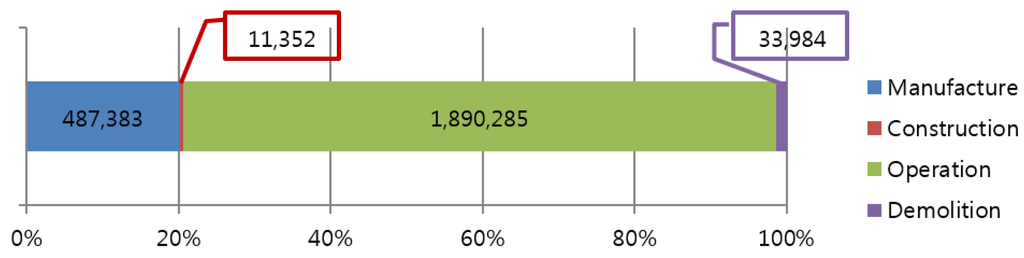
The CO2 emissions generated during the construction phase were 11,353.1 kg CO2 eq. Among them, 92.7% was created during transportation, while 7.3% was generated by construction. In terms of CO2 emissions during transportation, ready-mixed concrete was the highest with 62.4%, while other materials were 30.3%.
5.3. Operation and Maintenance Phase
In this phase, assessment is conducted based on the energy consumption [31] of apartment houses. For the consumption of heating energy by empirical houses (third floor and fourth floor: one apartment unit each), the simulation data from the manufacturer of input materials were used.
For the two apartment units, 170 m2 (85 m2/unit) was applied. For reference and common spaces, in contrast, 908 m2 was adopted. Then, LCA was performed with the assumption that the building’s useful life was 30 years.
As shown in Table 12, the total CO2 emissions for 30 years are 1,890,282 kg CO2 eq. In the case of the empirical houses (third floor and fourth floor: one apartment unit each), which were built with low-carbon ready-mixed concrete and concrete products, it was able to reduce heating energy consumption by 37%.
Table 12.
CO2 emissions during the operation and maintenance phase.
5.4. Demolition Phase
In this phase, CO2 emissions were analyzed from waste concrete, waste metal, waste wood and waste glass. The disposal method was classified into recycling, burying and incineration steps. Assessment was performed after applying the three methods as follows: recycling (97.5%), landfill (1.8%) and incineration (0.7%) [35].
The CO2 emissions generated during the demolition phase are 33,412 kg CO2 eq. In particular, waste concrete accounts for 96.7% with 32,311 kg CO2 eq (See Table 13.).
Table 13.
CO2 emissions by demolishing the building.
5.5. The Results of the LCCO2 Assessment of the Low-Carbon Building
According to estimation on the LCCO2 emissions of the building, a total of 595 tons CO2 eq./m2 is produced annually. As shown in Table 14 and Figure 5, in terms of CO2 emissions by life cycle, the material production (manufacture) phase (81.8%) was the highest, followed by the construction phase (1.9%), the operation and maintenance phase (10.6%) and the demolition phase (5.7%).
Table 14.
The results of LCCO2 assessment (unit: kg CO2 eq./m2).
Figure 5.
LCCO2 emissions throughout the life cycle phases for 30 years (unit: kg CO2 eq./m2).
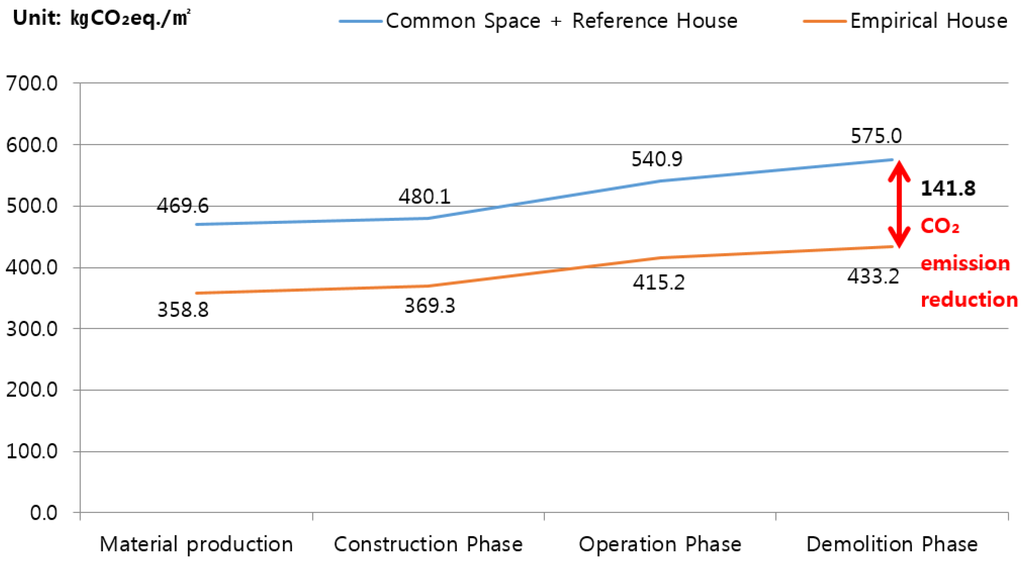
In particular, as shown in Figure 6, empirical houses revealed a decrease in CO2 emissions by 141.8 kg CO2 eq./m2 annually, compared to the common and reference spaces. Furthermore, the sources of CO2 emissions in each stage were as follows: ready-mixed concrete (manufacture phase), transportation of ready-mixed concrete (construction phase), consumption of heating energy (LNG) (operation and maintenance phase) and concrete disposal (demolition phase).
Figure 6.
LCCO2 emission reduction of low-carbon building.
6. Discussion and Limitation
This study aimed to comparatively analyze the effects of the construction materials (concrete, cement, etc.) manufactured with carbon emission reduction technology on the carbon emissions of a reinforced concrete structure throughout its life cycle.
For this, car emissions and the reduction amount by construction material were estimated, and the results were applied to the target building. Then, its life cycle carbon emissions were estimated.
There are two types of products: a product that reduced carbon emissions during the production of construction materials; and an insulated product that reduces energy consumption during the operation of a building. Therefore, the reduction of energy consumption in the operation phase was expected.
However, no effective values on energy simulation in the target building were applied. In addition, there were limitations in individually analyzing the LCCO2 emissions of the various concrete products that were applied to each building area.
Hence, it is needed to improve the carbon emission estimation results by energy resumption after monitoring energy consumption at the operation phase. Furthermore, there should be studies to analyze the effects of CO2 reduction in each construction material on a building through diverse influential factors, for example, input of construction materials, life cycle, energy source, etc.
7. Conclusions
This study estimated LCCO2 emissions against the buildings built with low-carbon concrete and energy-saving materials, using Korea’s LCI DB for construction materials. The LCCO2 assessment and analysis on low-carbon construction materials and buildings found the following:
- (1)
- The carbon-reduction technologies for construction materials include: the reduction of resource consumption by using recycled materials or industrial byproducts (manufacture phase); the decrease in CO2 emissions by shortening the production processes or changing fuels; the decrease in resource consumption throughout the life of buildings by reducing the consumption of materials for repair with construction materials that reduce energy consumption and have a long lifespan (operation and maintenance phase).
- (2)
- A low-carbon building refers to one built with low-carbon construction materials and conventional ones. A total of 3115 tons of construction materials were added. Among them, those for a building frame (ex: ready-mixed concrete, sand and gravel, reinforcing bar, pipe, etc.) accounted for over 80%.
- (3)
- According to the analysis on CO2 emissions by input material, ready-mixed concrete, wood, reinforcing bar and cement were the major sources of CO2 emissions. They accounted for 92.8% of total annual CO2 emissions.
- (4)
- Total CO2 emissions generated throughout the life (30 years) of low-carbon buildings are 2,423,004 kg CO2 eq. In terms of CO2 emissions by stage, the operation and maintenance phase (78.0%) was the highest, followed by the manufacture phase (20.1%), the demolition phase (1.4%) and the construction phase (0.5%). When compared to the studies (domestic papers) under simulation conditions [41], the results were similar to this study in terms of emission ratio in the order of operation stage (81.39%–86.45%), production stage (11.66%–15.85%), construction stage (1.49%–2.15%) and disposal stage (0.4%–0.61%). In overseas studies, as well [42], the operation stage (77%–85%) was the highest, followed by the production and construction stages (14%–21%) in terms of emission ratio. These results reveal that energy-saving and carbon emission reduction effects would increase during building maintenance.
- (5)
- Regarding LCCO2 emissions, carbon emissions were the highest in the manufacture of ready-mixed concrete for which heating energy, electricity and input materials were mostly used. This kind of result stems from the input of the materials for low-carbon concrete and energy-saving ones.
- (6)
- Compared to common and reference areas, empirical houses reduced CO2 emissions by about 25% (141.8 kg CO2 eq./m2 per year).
- (7)
- To reduce CO2 emissions throughout the life of buildings, it is needed to consider the embodied energy of construction materials and embodied CO2 emissions at the construction material manufacture phase, as well as at the operation and maintenance phase. There should be an in-depth study on carbon-reduction of construction materials in empirical houses.
Acknowledgments
This research was supported by a grant (Code 11-Technology Innovation-F04) from the Construction Technology Research Program (CTIP) funded by the Ministry of Land, Infrastructure and Transport.
Author Contributions
All authors contributed substantially to all aspects of this article.
Conflicts of Interest
The authors declare no conflict of interest.
References and Notes
- World Energy Outlook. International Energy Agency : Paris, France, 2015. Available online: http://www.worldenergyoutlook.org (accessed on 27 April 2016).
- Cho, S.H.; Chae, C.U. The Comparative Study on the Environmental Impact Assessment of Construction Material through the Application of Carbon Reducing Element-Focused on Global Warming Potential of Concrete Products-. Korea Inst. Ecol. Archit. Environ. 2015, 33, 149–156. [Google Scholar] [CrossRef]
- International Standard. ISO 14044: Life Cycle Assessment (Requirements and Guidelines); International Organization for Standardization: Geneva, Switzerland, 2006; Available online: http://www.iso.org/iso/home/store/catalogue_tc/catalogue_detail.htm?csnumber=38498 (accessed on 19 April 2016).
- Sartori, I.; Hestnes, A.G. Energy use in the life cycle of conventional and low-energy buildings: A review article. Energy Build. 2007, 39, 249–257. [Google Scholar] [CrossRef]
- Verbeeck, G.; Hens, H. Life cycle inventory of buildings: A contribution analysis. Build. Environ. 2010, 45, 964–967. [Google Scholar] [CrossRef]
- Wu, H.J.; Yuan, Z.W.; Zhang, L.; Bi, J. Life cycle energy consumption and CO2 emission of an office building in China. Int. J. Life Cycle Assess. 2012, 17, 105–118. [Google Scholar] [CrossRef]
- Asdrubali, F.; Baldassarri, C.; Fthenakis, V. Life Cycle Analysis in the construction sector: Guiding the optimization of conventional Italian buildings. Energy Build. 2013, 64, 73–89. [Google Scholar] [CrossRef]
- Wang, T.; Seo, S.W.; Liao, P.C.; Fang, D.P. GHG emission reduction performance of state-of-the-art green buildings: Review of two case studies. Renew. Sustain. Energy Rev. 2016, 56, 484–493. [Google Scholar] [CrossRef]
- Liu, T.; Wang, Q.; Su, B. A review of carbon labeling: Standards, implementation, and impact. Renew. Sustain. Energy Rev. 2016, 53, 68–79. [Google Scholar] [CrossRef]
- Rogers, J.G.; Cooper, S.J.G.; O’Grady, Á.; McManus, M.C.; Howard, H.R.; Hammond, G.P. The 20% house—An integrated assessment of options for reducing net carbon emissions from existing UK houses. Appl. Energy 2015, 138, 108–120. [Google Scholar] [CrossRef]
- Mahapatra, K. Energy use and CO2 emission of new residential buildings built under specific requirements —The case of Växjö municipality, Sweden. Appl. Energy 2015, 152, 31–38. [Google Scholar] [CrossRef]
- Wu, P.; Xia, B.; Zhao, X. The importance of use and end-of-life phases to the life cycle greenhouse gas (GHG) emissions of concrete—A review. Renew. Sustain. Energy Rev. 2014, 37, 360–369. [Google Scholar] [CrossRef]
- Charoenkit, S.; Kumar, S. Environmental sustainability assessment tools for low carbon and climate resilient low income housing settlements. Renew. Sustain. Energy Rev. 2014, 38, 509–525. [Google Scholar] [CrossRef]
- Ng, P.K.; Mithraratne, N. Lifetime performance of semi-transparent building-integrated photovoltaic (BIPV) glazing systems in the tropics. Renew. Sustain. Energy Rev. 2014, 31, 736–745. [Google Scholar] [CrossRef]
- Thakur, A.; Canter, C.E.; Kumar, A. Life-cycle energy and emission analysis of power generation from forest biomass. Appl. Energy 2014, 128, 246–253. [Google Scholar] [CrossRef]
- Schakel, W.; Meerman, H.; Talaei, A.; Ramírez, A.; Faaij, A. Comparative life cycle assessment of biomass co-firing plants with carbon capture and storage. Appl. Energy 2014, 131, 441–467. [Google Scholar] [CrossRef]
- Amponsah, N.Y.; Troldborg, M.; Kington, B.; Aalders, I.; Hough, R.L. Greenhouse gas emissions from renewable energy sources—A review of lifecycle considerations. Renew. Sustain. Energy Rev. 2014, 39, 461–475. [Google Scholar] [CrossRef]
- Zhang, X.; Shen, L.; Zhang, L. Life cycle assessment of the air emissions during building construction process A case study in Hong Kong. Renew. Sustain. Energy Rev. 2013, 17, 160–169. [Google Scholar] [CrossRef]
- Baek, C.; Park, S.H.; Suzuki, M.; Lee, S.H. Life cycle carbon dioxide assessment tool for buildings in the schematic design phase. Energy Build. 2013, 61, 275–287. [Google Scholar] [CrossRef]
- Bribián, I.Z.; Usón, A.A.; Scarpellini, S. Life cycle assessment in buildings: State-of-the-art and simplified LCA methodology as a complement for building certification. Build. Environ. 2009, 44, 2510–2520. [Google Scholar] [CrossRef]
- Verbeeck, G.; Hens, H. Life cycle inventory of buildings: A calculation method. Build. Environ. 2010, 45, 1037–1041. [Google Scholar] [CrossRef]
- Verbeeck, G.; Hens, H. Life cycle inventory of buildings: A contribution analysis. Build. Environ. 2010, 45, 964–967. [Google Scholar] [CrossRef]
- Tang, J.; Cai, X.; Li, H. Study on development of low-carbon building based on LCA. Energy Procedia 2011, 5, 708–712. [Google Scholar] [CrossRef]
- Hong, T.; Ji, C. Comparison of the CO2 Emissions of Buildings using Input-Output LCA Model and Hybrid LCA Model. Korea Inst. Constr. Eng. Manag. 2014, 15, 119–127. [Google Scholar] [CrossRef]
- Jang, M.; Hong, T.; Ji, C. Hybrid LCA model for assessing the embodied environmental impacts of buildings in South Korea. Environ. Impact Assess. Rev. 2014, 50, 143–155. [Google Scholar] [CrossRef]
- Moonm, H.; Hyunm, C.; Hong, T. Prediction Model of CO2 Emission for Residential Buildings in South Korea. J. Manag. Eng. 2014, 30, 04014001. [Google Scholar] [CrossRef]
- Ji, C.Y.; Hong, T.H.; Jeong, J.W. Environmental Impacts Assessment of Elementary School Buildings and Establishment of the Reference Target using Life Cycle Assessment Model. Korea Inst. Constr. Eng. Manag. 2015, 16, 49–58. [Google Scholar] [CrossRef]
- Lee, K. A Study on the Application of Life Cycle Assessment for the remodeled Multifamily Housing—Focused on the Inventory Analysis of LCA-. Korea Inst. Constr. Eng. Manag. 2002, 18, 16–23. [Google Scholar]
- Park, J.Y.; Kim, S.H.; Chae, C.U. A Comparative Analysis on Life Cycle CO2 Emission between a Modular Housing and a R.C. Apartment Housing. Archit. Inst. Korea 2014, 30, 35–43. [Google Scholar]
- Gong, Y.R.; Tae, S.H.; Song, S.W.; Roh, S.J. A Study on the Environmental Impact Assessment for Passive Apartment based on Life Cycle Assessment. Korea Inst. Build. Constr. 2014, 14, 537–543. [Google Scholar] [CrossRef]
- Lee, S.W.; Tae, S.H.; Kim, T.H.; Roh, S.J. Development of Green Template for Building Life Cycle Assessment Using BIM. J. Korea Spatial Inf. Soc. 2015, 23, 1–8. [Google Scholar] [CrossRef]
- The Korea Construction Daily article. Development of Technology for Integrated Management of CO2 Generated by Construction Materials, 2014. Available online: http://www.conslove.co.kr/news/articleView.html?idxno=33497 (accessed on 20 April 2016).
- Korea Institute of Civil Engineering and Building Technology. Development of carbon reducing concrete structural materials and energy-saving building materials, 2011–2016. Available online: https://www.cmcr.re.kr (accessed on 19 April 2016).
- Korea Environmental Industry & Technology Institute. Environmental Labeling Certification. Available online: www.edp.or.kr/edp (accessed on 22 April 2016).
- Korea Institute of Civil Engineering and Building Technology. The Environmental Performance Assessment and Revitalization Strategy for Han-Ok, 2010. Available online: http://www.prism.go.kr/homepage/researchCommon/retrieveResearchDetailPopup.do?research_id=1611000-200900048 (accessed on 18 April 2016).
- Korea Ministry of Land, Infrastructure and Transport, Korea Agency for Infrastructure Technology Advancement. Building materials Environmental Information DB Final Report, 2008. Available online: http://contents.archives.go.kr/next/search/showDetailPopup.do?rc_code=1310377&rc_rfile_no=201103732500&rc_ritem_no= (accessed on 18 April 2016).
- Korea Environmental Industry & Technology Institute. Korea LCI DB Information. Available online: www.edp.or.kr/edp (accessed on 19 April 2016).
- Ecoinvent Centre. Ecoinvent Database. 2005. Available online: http://www.ecoinvent.org/ (accessed on 19 April 2016).
- Korea Ministry of Land, Infrastructure and Transport. Korea Housing Act. Available online: http://elaw.klri.re.kr/kor_service/lawView.do?hseq=25579&lang=ENG (accessed on 27 April 2016).
- Korea Ministry of Strategy and Finance. Korea Corporate Tax Act. Available online: http://elaw.klri.re.kr/kor_service/lawView.do?hseq=28577&lang=ENG (accessed on 27 April 2016).
- Statistics Korea. Wastes Generation and Disposal in Korea, 2013. Available online: http://www.index.go.kr/potal/main/EachDtlPageDetail.do?idx_cd=1477 (accessed on 27 April 2016).
- Weon, Y.H. A Study of Life-Cycle Energy Consumption and Basic Unit of CO2 Emission of Prototype Office Building. The Graduate School of Kwangwoon University, 2013; pp. 87–91. [Google Scholar]

© 2016 by the authors; licensee MDPI, Basel, Switzerland. This article is an open access article distributed under the terms and conditions of the Creative Commons Attribution (CC-BY) license (http://creativecommons.org/licenses/by/4.0/).