Structural Deficiencies, Governance Challenges, and Strategies for Sustainable Seismic Resilience in Hazard-Prone Regions

 ,
,  ,
, 
Abstract
1. Introduction
2. Seismotectonic Setting of Afghanistan
3. Methodology and Data Acquisition
3.1. Data Collection Techniques
3.2. Data Processing and Analytical Methods
3.3. Standardized Comparative Framework for Cross-Case Evaluation
4. Results and Discussions
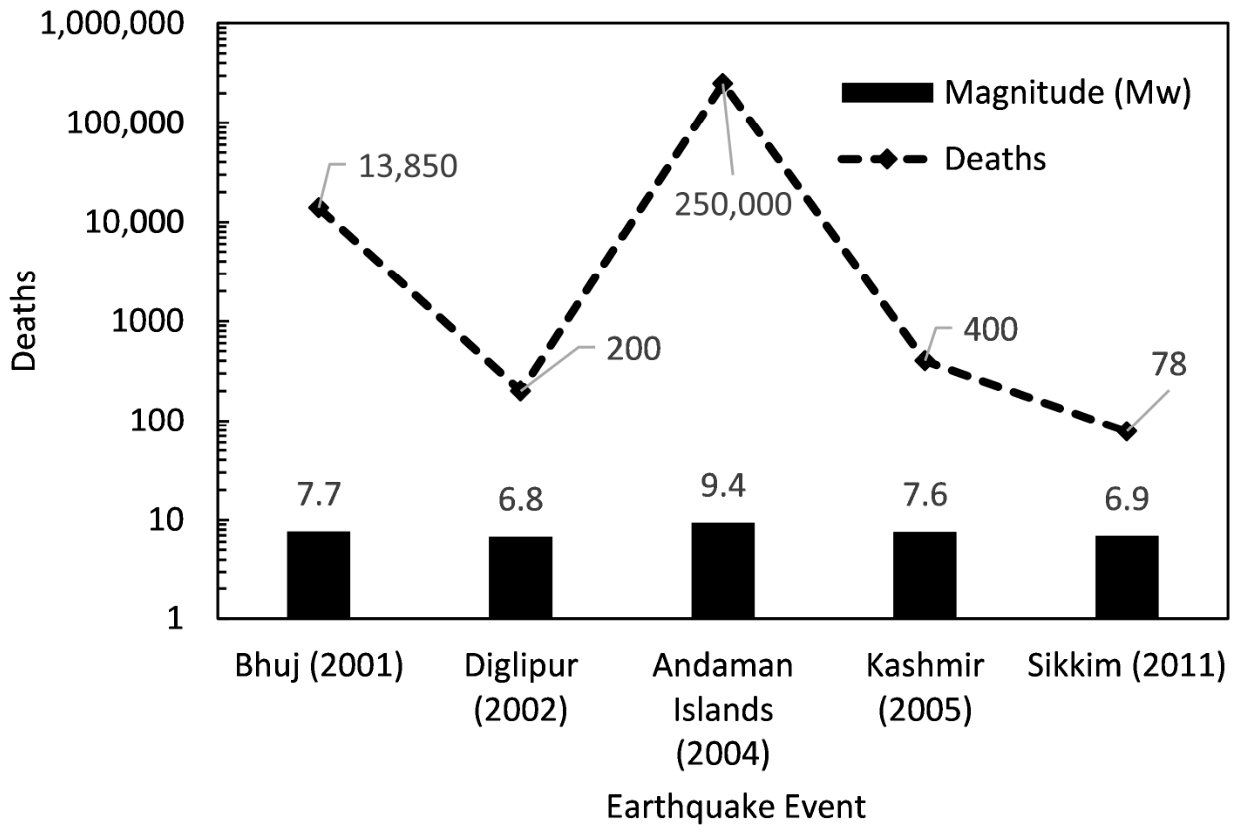
4.1. Case Study: India
4.1.1. Earthquake-Resistant Structural Practices in India
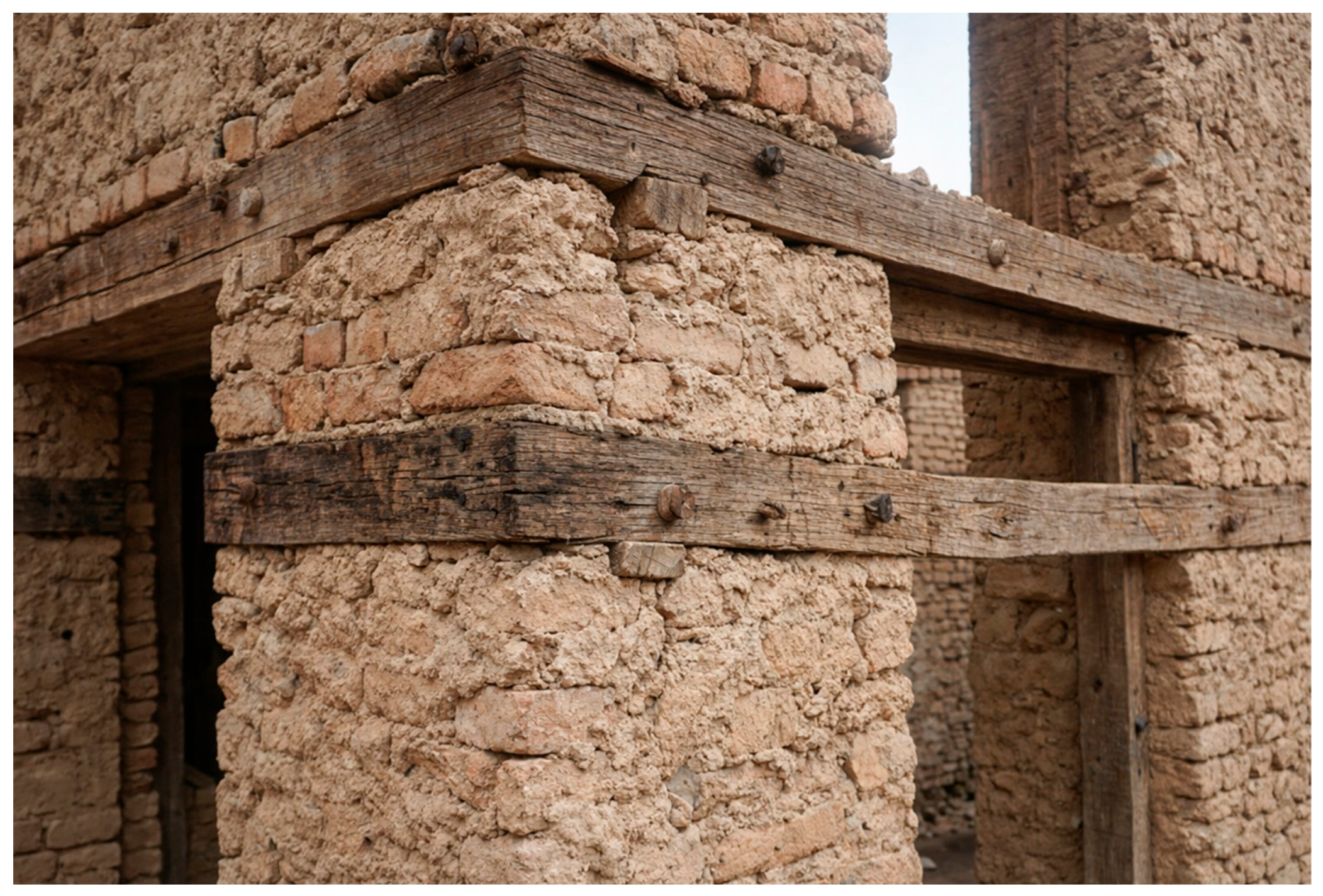
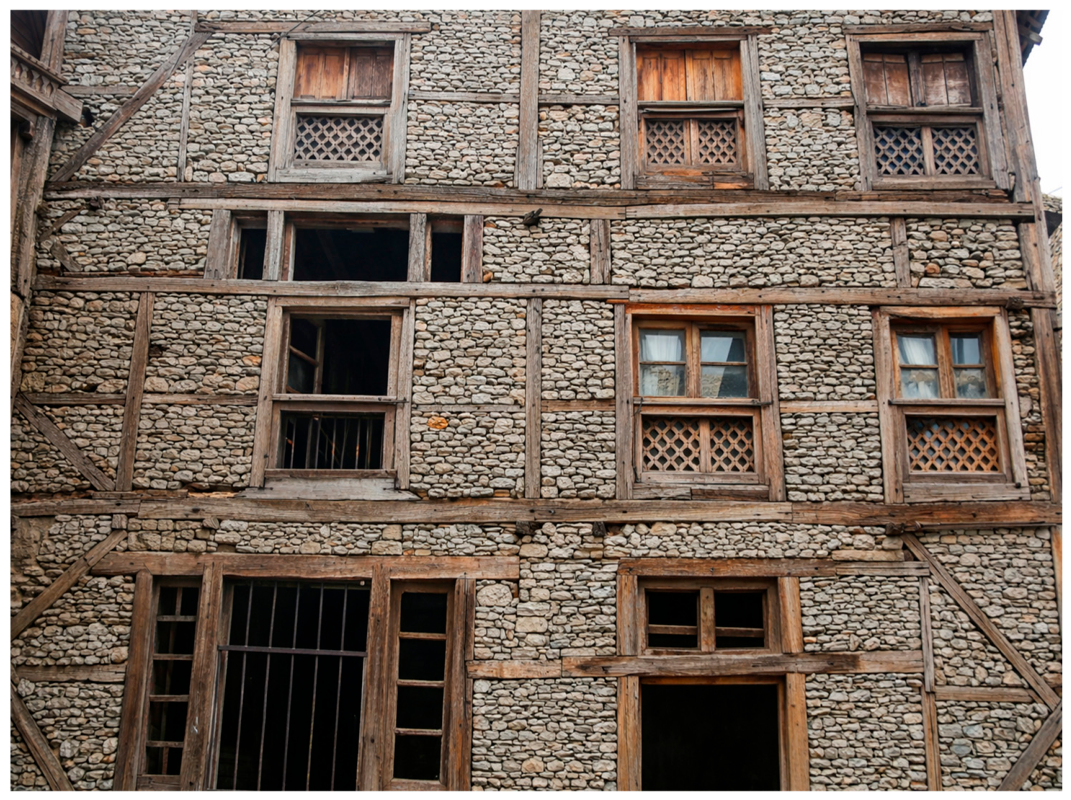
Dhajji Dewari and Taq Construction Systems
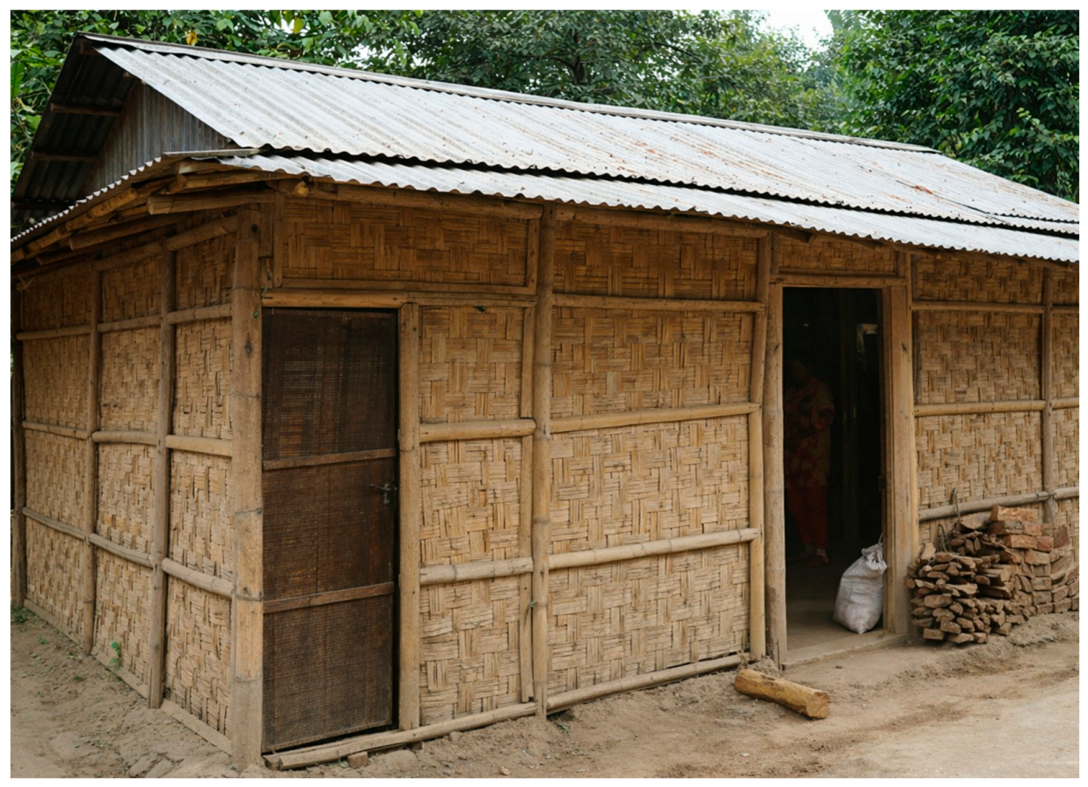
Assam-Type Housing
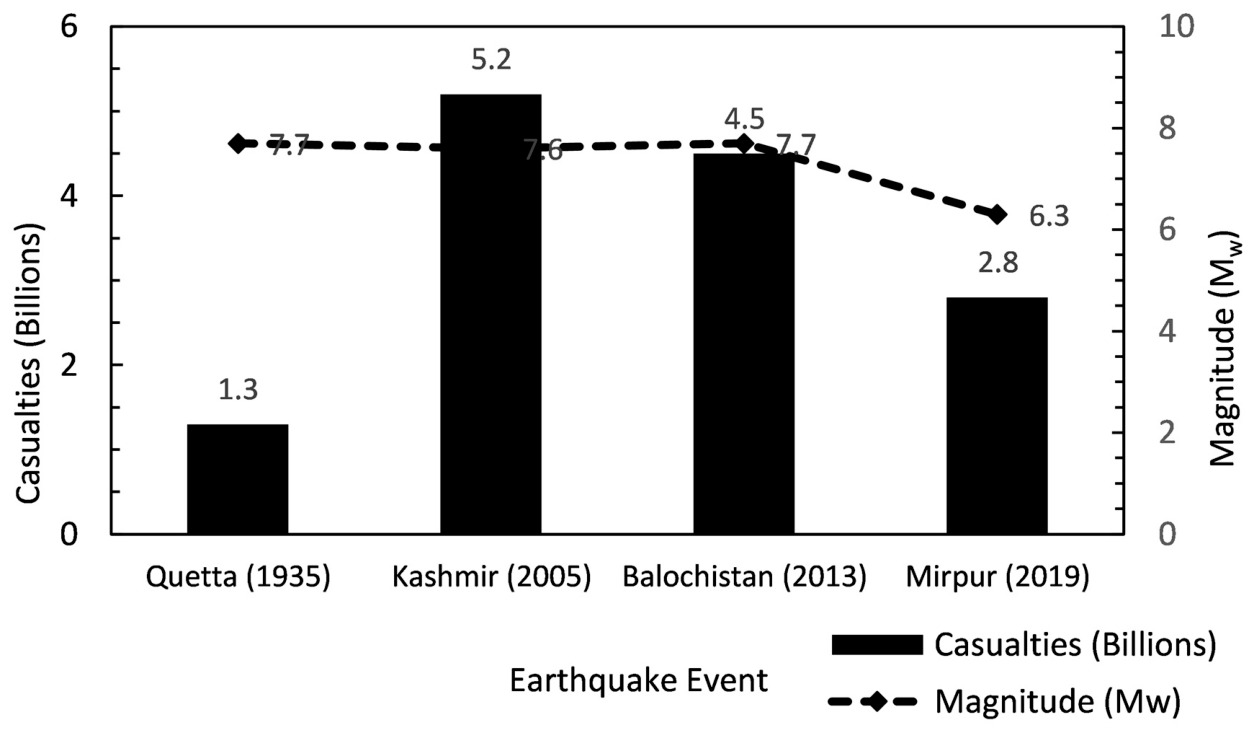
4.2. Case Study: Pakistan
4.2.1. Institutional Framework for Earthquake Risk Management
4.2.2. Policy and Regulatory Mechanisms
4.3. Case Study: Iran
Earthquake Risk Governance and Institutional Capacity in Iran
4.4. Case Study: Afghanistan
4.4.1. Residential Settlement Patterns in Herat (Zinda Jan)
4.4.2. Construction Practices in the Herat Seismic Zone
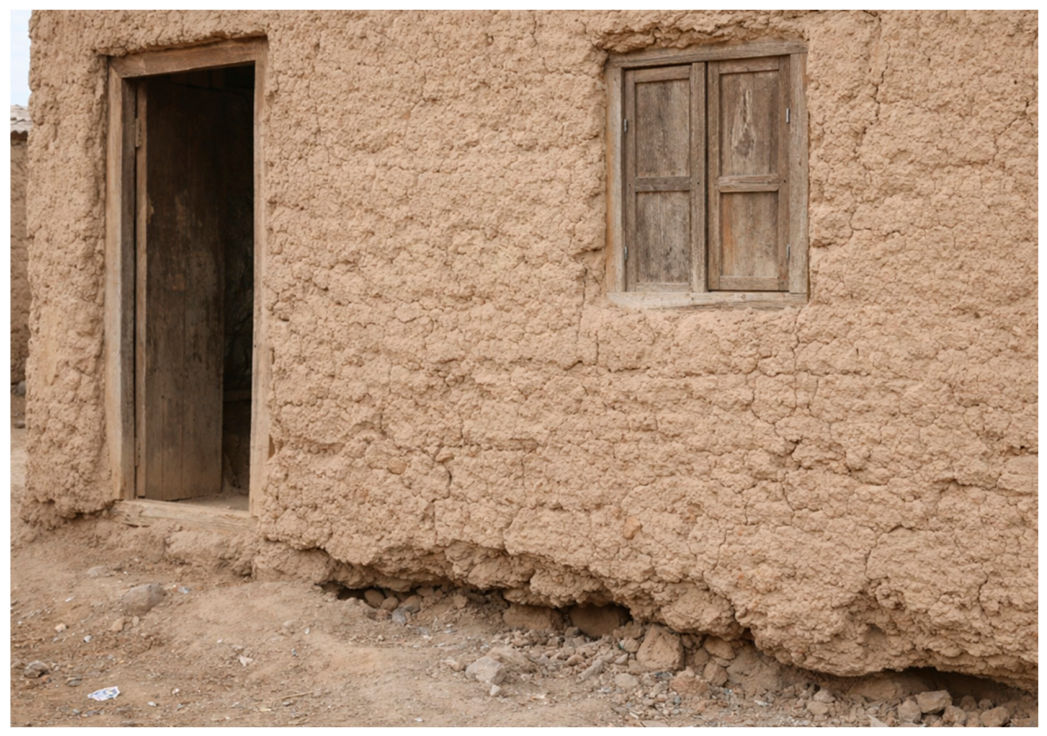
Foundation System
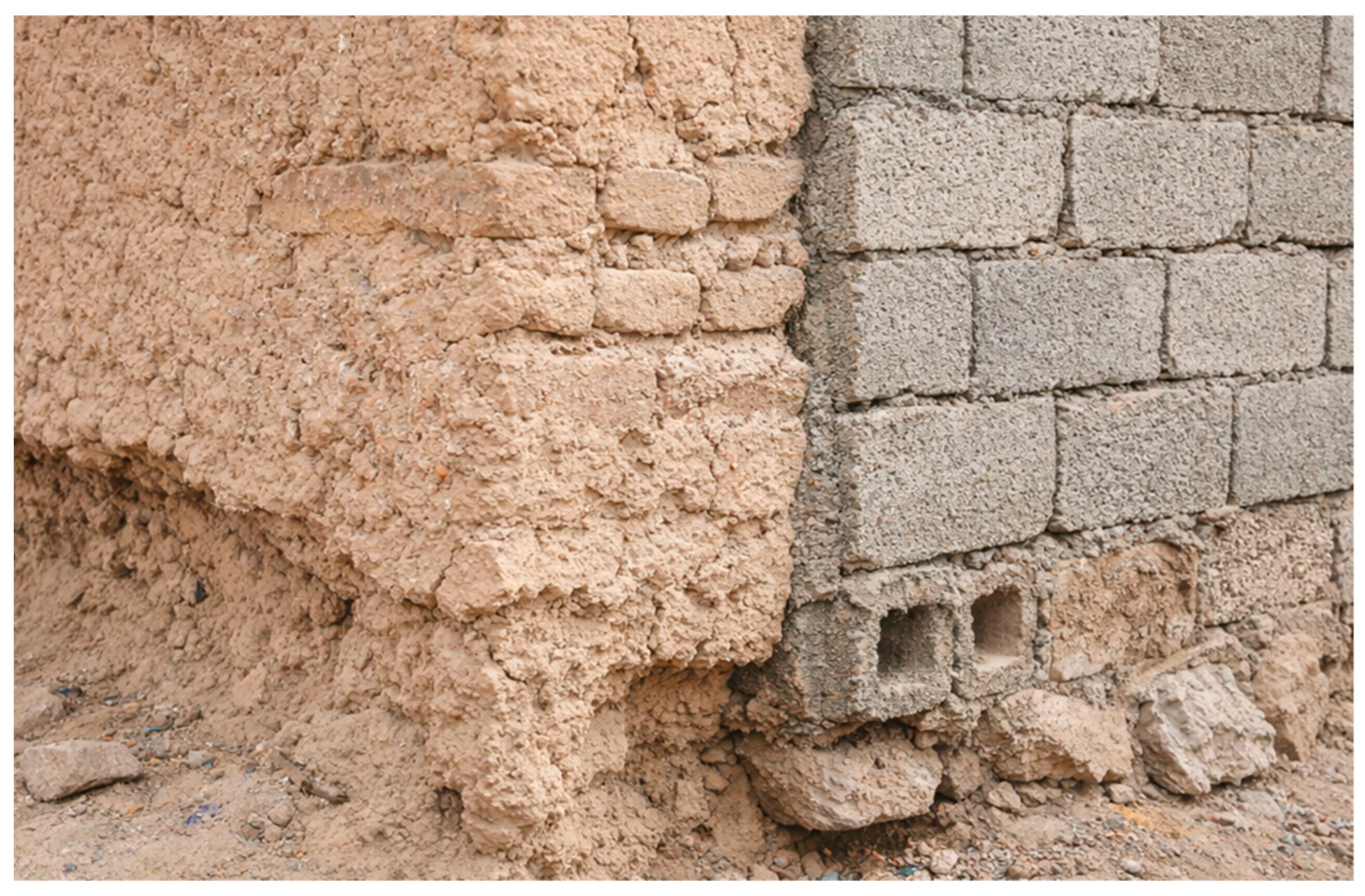
Wall Configuration and Structural Layout
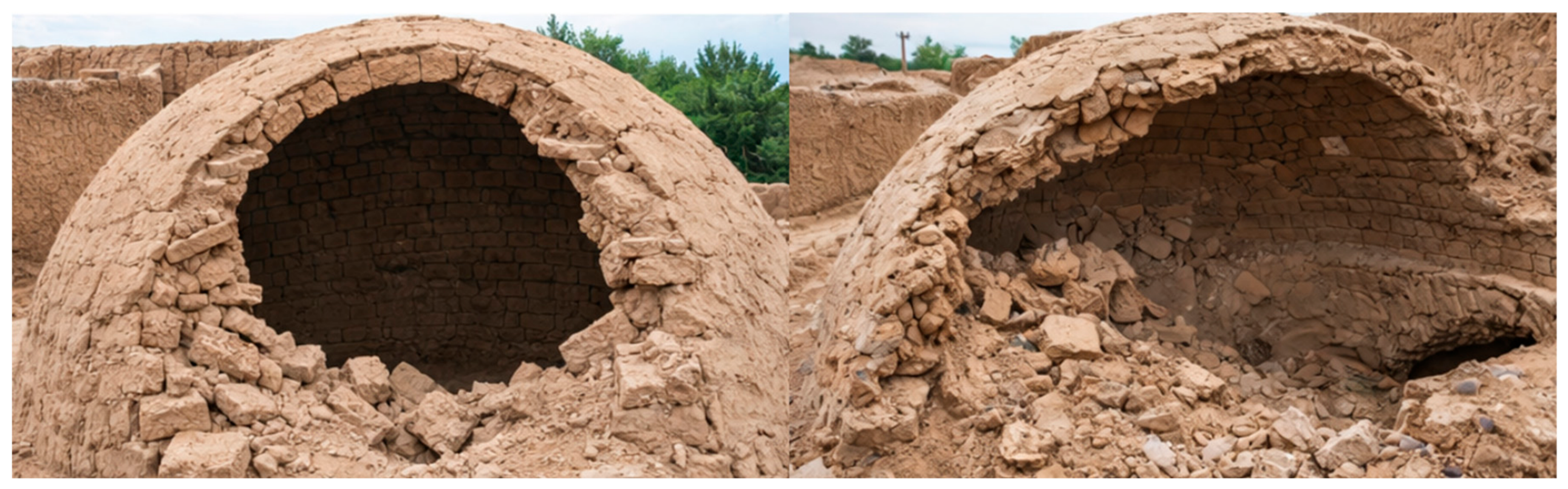
Roof Systems and Structural Performance
Failure Mechanisms and Potential Low-Cost Retrofit Measures
4.4.3. Community-Level Earthquake Preparedness in Herat
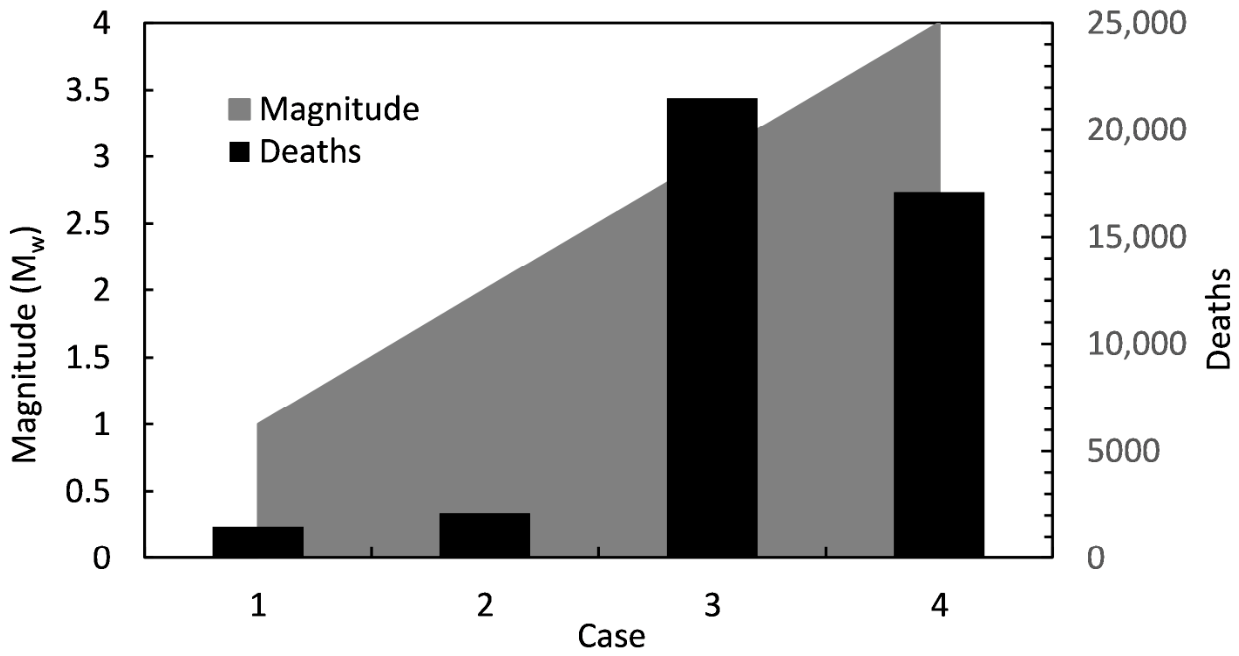
4.4.4. Comparative Assessment of Economic Losses and Fatalities
5. Regionally Comparable Seismic Contexts for Benchmarking Earthquake Impacts in Herat
6. Conclusions and Future Directions
Author Contributions
Funding
Institutional Review Board Statement
Informed Consent Statement
Data Availability Statement
Acknowledgments
Conflicts of Interest
References
- Gautam, D.; Chaulagain, H. Structural performance and associated lessons to be learned from world earthquakes in Nepal after 25 April 2015 (MW 7.8) Gorkha earthquake. Eng. Fail. Anal. 2016, 68, 222–243. [Google Scholar] [CrossRef]
- Jain, S.K. Earthquake safety in India: Achievements, challenges and opportunities. Bull. Earthq. Eng. 2016, 14, 1337–1436. [Google Scholar] [CrossRef]
- Spence, R. Saving lives in earthquakes: Successes and failures in seismic protection since 1960. Bull. Earthq. Eng. 2007, 5, 139–251. [Google Scholar] [CrossRef]
- Ashrafy, M.; Aghayari, R. Progressive collapse of reinforced concrete building structures during earthquakes: A state-of-the-art in bridging seismic design and extreme loading scenarios. Bull. Earthq. Eng. 2025, 24, 1433–1466. [Google Scholar] [CrossRef]
- Essar, M.Y.; Wahdati, S.; O’Sullivan, B.; Nemat, A.; Blanchet, K. Cycles of disasters in Afghanistan: The urgent call for global solidarity. PLoS Glob. Public Health 2024, 4, e0002751. [Google Scholar] [CrossRef]
- Liu, Z.; Li, Z.; Yu, C.; Song, C.; Wang, J.; Zhang, X.; Hu, X.; Peng, J. Coseismic rupture and early afterslip of the 2023 Herat (Afghanistan) earthquake sequence: Insights from Sentinel-1 radar observations. J. Geophys. Res. Solid Earth 2025, 130, e2024JB029495. [Google Scholar] [CrossRef]
- Xu, H.; Li, K.; Shan, P.; Wu, X.; Zhang, S.; Wang, Z.; Liu, C.; Yan, Z.; Wu, L.; Wang, H. Automatic picking method for the first arrival time of microseismic signals based on fractal theory and feature fusion. Fractal Fract. 2025, 9, 679. [Google Scholar] [CrossRef]
- United Nations Assistance Mission in Afghanistan (UNAMA). Provincial Profile: Herat Province; United Nations Department of Safety and Security (UNDSS): Kabul, Afghanistan, 2007. [Google Scholar]
- Mohammadi, A.; Mansouri, R.; Shokri-Kaveh, M.; Shnizai, Z. Seismotectonic Framework of Afghanistan: An Integrated Review of Geology, Active Tectonics, and Crustal Structure Using Gravity Data: A. Mohammadi et al. Pure Appl. Geophys. 2026, 183, 1009–1040. [Google Scholar] [CrossRef]
- Annusha, R.; Venkatanathan, N.; Rekapalli, R.; Catherine, K.J. Precursory seismic patterns preceding major earthquakes—A case study from northern Himalayas. Nat. Hazards 2026, 122, 219. [Google Scholar] [CrossRef]
- He, P.; Wen, Y.; Wang, X.; Cai, J. The NS direction strike-slip activities in the Pamir hinterland under oblique convergence: The 2015 and 2023 earthquakes. Geophys. J. Int. 2024, 238, 1150–1163. [Google Scholar] [CrossRef]
- Ansari, A.; Zaray, A.H.; Rao, K.S.; Jain, A.K.; Hashmat, P.A.; Ikram, M.K.; Wahidi, A.W. Reconnaissance surveys after June 2022 Khost earthquake in Afghanistan: Implication towards seismic vulnerability assessment for future design. Innov. Infrastruct. Solut. 2023, 8, 108. [Google Scholar] [CrossRef]
- Zhao, L.; Nissen, E.; Xu, W.; Jamalreyhani, M.; Bergman, E.A.; Zhao, D.; Xie, L. Variable fault geometry controls the cascading 2023 Herat, Afghanistan multiplet sequence. Commun. Earth Environ. 2025, 6, 135. [Google Scholar] [CrossRef]
- Shnizai, Z.; Walker, R.; Tsutsumi, H. The Chaman and Paghman active faults, west of Kabul, Afghanistan: Active tectonics, geomorphology, and evidence for rupture in the destructive 1505 earthquake. J. Asian Earth Sci. 2024, 259, 105925. [Google Scholar] [CrossRef]
- United States Geological Survey (USGS). M 6.3–34 km NW of Herat, Afghanistan, 7 October 2023 Earthquake. U.S. Geological Survey Earthquake Hazards Program. 2023. Available online: https://earthquake.usgs.gov (accessed on 21 December 2025).
- Zhong, Y.; Gao, H.; Lin, H.; Feng, G. Mechanism and Co-seismic effects of the 2023 herat earthquake sequence in Afghanistan based on InSAR. Tectonophysics 2025, 920, 231038. [Google Scholar] [CrossRef]
- Fu, J.; Chen, Y.; Nie, Q.; Lv, Z.; Li, J. Source modeling of the 2023 Herat earthquake sequence determined from InSAR observations. Geod. Geodyn. 2025, 16, 624–634. [Google Scholar] [CrossRef]
- International Federation of Red Cross and Red Crescent Societies (IFRC). AFG: Earthquake—2023-10—Herat Earthquake 2023. IFRC Emergency Operations. 2023. Available online: https://go.ifrc.org (accessed on 21 December 2025).
- United Nations Office for the Coordination of Humanitarian Affairs (OCHA). Afghanistan: Herat Earthquake Response—Situation Report No. 1. October 27, 2023; United Nations Office for the Coordination of Humanitarian Affairs (OCHA): New York, NY, USA, 2023. [Google Scholar]
- World Bank Group. Global Rapid Post-Disaster Damage Estimation (GRADE) Report: Mw 6.3 Herat Earthquake Sequence in Afghanistan, October 2023; World Bank: Washington, DC, USA, 2023. [Google Scholar]
- United Nations Institute for Training and Research (UNITAR)—UNOSAT. 7 October 2023 M6.3 Western Afghanistan Herat: Preliminary Satellite-Based Comprehensive Damage Assessment Report. Herat Province, Afghanistan. November 27, 2023; United Nations Institute for Training and Research (UNITAR)—UNOSAT: Geneva, Switzerland, 2023. [Google Scholar]
- Ansari, A.; Zaray, A.H.; Wahidi, A.W.; Mamond, N.; Özden, G.; Mandhaniya, P.; Alluqmani, A.E. Post-event investigation of multiscale failure patterns associated with the Mw 6.0 2025 Nurgal-Kunar earthquake, Afghanistan. Nat. Hazards 2026, 122, 189. [Google Scholar] [CrossRef]
- Xu, Y.; Diao, F.; Xiong, X. Co-and early post-seismic InSAR observations reveal complex rupture of the 2023 Herat earthquake sequence, NW Afghanistan. Geophys. J. Int. 2026, 244, ggaf442. [Google Scholar] [CrossRef]
- Creswell, J.W. Qualitative, Quantitative and Mixed Methods Approaches; Sage: Thousand Oaks, CA, USA, 2014. [Google Scholar]
- IS 1893 (Part 1); Criteria for Earthquake Resistant Design of Structures. Bureau of Indian Standards: New Delhi, India, 2016.
- IS 4326; Earthquake Resistant Design and Construction of Buildings—Code of Practice. Bureau of Indian Standards: New Delhi, India, 2013.
- Kumar, S.S. Improving earthquake resistant design and construction in India. ASPS Conf. Proc. 2022, 1, 953–959. [Google Scholar] [CrossRef]
- Dhandapany, D.; Menon, A. Seismic Behavior of Timber-Laced Masonry Structures in the Himalayan Belt. Structural Analysis of Historical Constructions: An Interdisciplinary Approach; Springer: Dordrecht, The Netherlands, 2019; pp. 605–613. [Google Scholar]
- Ahmad, N.; Crowley, H.; Pinho, R.; Ali, Q. Displacement-based earthquake loss assessment of masonry buildings in Mansehra city, Pakistan. J. Earthq. Eng. 2010, 14, 1–37. [Google Scholar] [CrossRef]
- Khan, A.N.; Jan, M.A. National Strategy, Law and Institutional Framework for Disaster Risk Reduction in Pakistan. In Disaster Risk Reduction Approaches in Pakistan; Springer: Tokyo, Japan, 2014; pp. 241–257. [Google Scholar]
- Rahman, M.U.; Rahman, H.U.; Rahman, A.U.; Shaw, R. Disaster Management Law in Pakistan. In Disaster Law: Implications to Governance and Implementation; Springer Nature: Singapore, 2025; pp. 293–306. [Google Scholar]
- Ramazi, H.; Jigheh, H.S. The Bam (Iran) Earthquake of December 26, 2003: From an engineering and seismological point of view. J. Asian Earth Sci. 2006, 27, 576–584. [Google Scholar] [CrossRef]
- Building and Housing Research Center (BHRC). Iranian Code of Practice for Seismic Resistant Design of Buildings, Standard No. 2800, 3rd ed.; BHRC Publication No. S-465; Ministry of Housing and Urban Development: Tehran, Iran, 2007.
- Kamranzad, F.; Memarian, H.; Zare, M. Earthquake risk assessment for Tehran, Iran. ISPRS Int. J. Geo-Inf. 2020, 9, 430. [Google Scholar] [CrossRef]




| Parameter | Description | Value/Observation | Data Source |
|---|---|---|---|
| Date of mainshock | Occurrence date of the primary earthquake event | 7 October 2023 | [15] |
| Moment magnitude (Mw) | Magnitude of the main seismic event | Mw 6.3 | [15] |
| Focal depth | Depth of earthquake hypocenter | ~10 km (shallow crustal earthquake) | [15] |
| Focal mechanism | Dominant faulting mechanism | Reverse / thrust faulting related to regional compression | [16] |
| Maximum intensity | Observed shaking intensity near epicentral area | MMI VII–VIII | [15] |
| Estimated PGA | Peak ground acceleration range near epicentral region | ~0.25–0.40 g (estimated range) | [17] |
| Affected districts | Areas with highest reported structural damage | Zinda Jan, Injil, and surrounding rural villages | [16] |
| Dominant damage pattern | Primary structural damage observed | Collapse of adobe and mud-brick buildings | [18,19,20,21] |
| Dimension | Definition | Typical Indicators | Cross-Case Analysis |
|---|---|---|---|
| Hazard | Seismological severity and physical characteristics of the earthquake event | Mw, focal depth, shaking intensity, fault mechanism, spatial extent of damage | To compare the physical earthquake severity across cases |
| Exposure | Population, settlements, and built assets located in the affected region | Population density, rural or urban concentration, building occupancy, settlement distribution | To evaluate the scale of elements at risk |
| Vulnerability | Susceptibility of structures and communities to seismic damage | Structural typology, non-engineered construction, material quality, code compliance, building age | To assess why similar hazards, produce different damage levels |
| Governance | Institutional and regulatory capacity for risk reduction | Seismic code availability, enforcement, technical oversight, disaster-risk governance, planning systems | To compare risk reduction capability before the event |
| Response | Preparedness and emergency management capacity during and after the event | Early warning, public awareness, drills, emergency response coordination, rescue and recovery measures | To assess capacity to reduce immediate losses and support recovery |
| Parameter | Description | Source/Institution |
|---|---|---|
| Tectonic setting | Alpine–Himalayan seismic belt | Iranian Seismological Center |
| National seismic network | Iranian National Seismic Network (INSN) | IIEES/Iranian Seismological Center |
| Number of seismic stations | >150 digital seismic monitoring stations | IIEES |
| Hazard assessment system | Karmania Hazard seismic risk assessment framework | Iranian hazard research programs |
| Hazard mapping coverage | National probabilistic seismic hazard maps | IIEES |
| Monitoring capability | Real-time earthquake detection and early reporting | Iranian Seismological Center |
| Engineering application | Supports seismic design provisions in Iranian building code (Standard No. 2800, Building and Housing Research Center, 2007) [33] | Government of Iran |
| Disaster risk management | Integrated into national earthquake risk reduction and urban planning programs | National Disaster Management Organization |
| Structural Component | Typical Construction Practice | Observed Failure Mode | Recommended Low-Cost Retrofit Measure |
|---|---|---|---|
| Foundation | Shallow or absent stone foundation; earthen wall directly on soil | Differential settlement and wall cracking | Provide stone plinth band or reinforced foundation strip |
| Walls | Thick adobe or pakhsa walls with weak mud mortar | Shear cracking and wall disintegration | Apply wire mesh or fiber reinforcement with improved plaster |
| Wall corners | Poor bonding between intersecting walls | Separation of walls at corners | Install vertical timber or bamboo corner reinforcement |
| Wall–roof connection | Weak or absent anchorage between walls and roof | Out-of-plane wall collapse | Introduce horizontal seismic bands or ring beams |
| Roof system | Heavy adobe domes or thick earthen roofs | Roof collapse due to excessive mass | Replace with lightweight roofing materials |
| Openings | Irregular placement and large openings | Stress concentration and wall cracking | Provide lintel bands and reduce opening sizes |
| No. | Assessment Indicator | Survey Observation | Response (%) | Interpretation | Identified Gap | Recommended Action |
|---|---|---|---|---|---|---|
| 1 | Population with direct earthquake experience | Respondents who experienced past earthquakes in Herat | 90 | High exposure to seismic events | Experience not translated into preparedness | Public training programs |
| 2 | Awareness of historical earthquakes | Knowledge of past earthquake events in Herat districts | 20 | Limited awareness of hazard history | Poor dissemination of hazard information | Awareness campaigns |
| 3 | Self-assessed preparedness level | Fully prepared (6%), moderately prepared (6%), low preparedness (34%), not prepared (54%) | 29 | Overall preparedness remains critically low | Lack of preparedness education | Community drills and awareness programs |
| 4 | Adoption of earthquake-resistant measures | Use of basic seismic safety practices in homes | 30 | Limited adoption of safer construction practices | Knowledge and cost barriers | Technical guidance and training |
| 5 | Knowledge of actions during earthquakes | Awareness of correct safety actions during shaking | 10 | Extremely low behavioral preparedness | Lack of emergency education | School-based disaster education |
| 6 | Availability of emergency tools | Households possessing tools or resources for emergency response | 6 | Minimal emergency response capacity | Lack of preparedness planning | Emergency kits and response training |
| 7 | Immediate response behavior | Running outside (58%), safe sheltering (16%), other actions (26%) | 38 | Unsafe response behaviors dominate | Misconceptions about safety measures | Public safety instruction |
| 8 | Access to formal disaster education | Participation in disaster awareness programs | 0 | Lack of formal disaster education infrastructure | Limited outreach programs | Establish disaster learning centers |
| 9 | Earthquake alert sources | Primary information sources for earthquake alerts | 32 | Reliance on informal communication channels | Absence of official early warning system | Development of early warning systems |
| 10 | Local preparedness initiatives | Awareness of local community mitigation initiatives | 0 | Limited organized preparedness activities | Weak community coordination | Local preparedness planning |
| 11 | Seismic design awareness | Knowledge of earthquake-resistant building design codes | 0 | No technical awareness of seismic design | Absence of building code knowledge | Seismic code dissemination |
| 12 | Government readiness perception | Public perception of institutional preparedness | 25 | Institutional readiness perceived as inadequate | Weak governance structure | Policy development |
| 13 | Participation in drills | Participation in earthquake drills or simulations | 4 | Very limited drill participation | Lack of organized training exercises | Regular emergency simulations |
| 14 | Trust in official response | Public confidence in government response capacity | 22 | Low confidence levels | Poor risk communication | Institutional transparency |
| 15 | Willingness to learn | Interest in earthquake safety education | 86 | Strong interest in learning preparedness strategies | Lack of training opportunities | Capacity-building programs |
| Region | Country | Tectonic Setting | Dominant Construction Type | Economic Context | Governance and Code Enforcement | Key Vulnerability Factors | Relevance to Herat |
|---|---|---|---|---|---|---|---|
| Herat (Present Study) | Afghanistan | Thrust-dominated, shallow crustal | Adobe, earthen masonry | Low-income | Weak enforcement | Non-engineered buildings, poor materials | Reference case |
| Khorasan Province | Iran | Thrust faulting, similar to Herat | Masonry, adobe, RC mix | Moderate | Moderate enforcement | Mixed construction quality | Closest structural analogue |
| Kerman Province | Iran | Active fault systems, shallow earthquakes | Masonry and RC | Moderate | Moderate | Inconsistent code implementation | Comparable hazard and construction |
| Zagros Belt | Iran | Fold-and-thrust system | Masonry and traditional structures | Moderate | Moderate | Rural vulnerability, weak detailing | Tectonic similarity |
| Sulaiman Ranges | Pakistan | Fold-and-thrust belt | Adobe, stone masonry | Low–moderate | Moderate | Poor construction quality | Strong structural similarity |
| Quetta-Chaman Corridor | Pakistan | Active fault zone | Masonry and RC | Moderate | Moderate | Urban vulnerability, high exposure | Urban analogue |
Disclaimer/Publisher’s Note: The statements, opinions and data contained in all publications are solely those of the individual author(s) and contributor(s) and not of MDPI and/or the editor(s). MDPI and/or the editor(s) disclaim responsibility for any injury to people or property resulting from any ideas, methods, instructions or products referred to in the content. |
© 2026 by the authors. Licensee MDPI, Basel, Switzerland. This article is an open access article distributed under the terms and conditions of the Creative Commons Attribution (CC BY) license.
Share and Cite
Alluqmani, A.E.; Zaray, A.H.; Wahidi, A.W.; El-Hussain, I.; Ansari, A.; J.S., S.; Maralapalle, V. Structural Deficiencies, Governance Challenges, and Strategies for Sustainable Seismic Resilience in Hazard-Prone Regions. Sustainability 2026, 18, 4565. https://doi.org/10.3390/su18094565
Alluqmani AE, Zaray AH, Wahidi AW, El-Hussain I, Ansari A, J.S. S, Maralapalle V. Structural Deficiencies, Governance Challenges, and Strategies for Sustainable Seismic Resilience in Hazard-Prone Regions. Sustainability. 2026; 18(9):4565. https://doi.org/10.3390/su18094565
Chicago/Turabian StyleAlluqmani, Ayed E., Abdul Habib Zaray, Abdul Wahid Wahidi, Issa El-Hussain, Abdullah Ansari, Sruthi J.S., and Vedprakash Maralapalle. 2026. "Structural Deficiencies, Governance Challenges, and Strategies for Sustainable Seismic Resilience in Hazard-Prone Regions" Sustainability 18, no. 9: 4565. https://doi.org/10.3390/su18094565
APA StyleAlluqmani, A. E., Zaray, A. H., Wahidi, A. W., El-Hussain, I., Ansari, A., J.S., S., & Maralapalle, V. (2026). Structural Deficiencies, Governance Challenges, and Strategies for Sustainable Seismic Resilience in Hazard-Prone Regions. Sustainability, 18(9), 4565. https://doi.org/10.3390/su18094565