Article

Teaching Sustainable Chemistry & Circular Economy in Lower Secondary Schools: A Comparative Study of Traditional and STEM Methods
by
Anca Sandu-Bălan (Tăbăcariu)
1,2,
Ioana-Adriana Ștefănescu
3,*,
Oana-Irina Patriciu
3,
Liliana Mâță
4,
Irina-Loredana Ifrim
3,* and
Adriana-Luminița Fînaru
3
1
Doctoral Studies School, “Vasile Alecsandri” University of Bacau, 156 Calea Marasesti, 600115 Bacau, Romania
2
“Ștefan Luchian” Secondary School, 8 Zorilor Street, 605400 Moinesti, Romania
3
Faculty of Engineering, “Vasile Alecsandri” University of Bacau, 156 Calea Marasesti, 600115 Bacau, Romania
4
Department of Teacher Training, “Vasile Alecsandri” University of Bacau, 156 Calea Marasesti, 600115 Bacau, Romania
*
Authors to whom correspondence should be addressed.
Sustainability 2026, 18(9), 4539; https://doi.org/10.3390/su18094539
Submission received: 5 March 2026 / Revised: 22 April 2026 / Accepted: 2 May 2026 / Published: 5 May 2026

Abstract

The concepts of “circular economy” and “sustainable chemistry” cover a range of related topics, including resource efficiency, the transition to renewable resources, as well as the choice of recycling, reusing, or recovering materials. At the middle school level, the “green message” of chemistry and the circular economy can be conveyed during regular classes or optional subjects. This paper presents an experimental study conducted with middle school students, aiming to develop ecological competencies by comparing traditional educational methods of teaching–learning–assessment with modern methods. The study was conducted on a sample of 58 lower secondary students (N = 30 in class 8A—traditional methods; N = 28 in class 8B—modern/STEM-based methods), using a quasi-experimental pre-test/post-test design using a questionnaire. The results indicated a significant improvement in students’ performance, with correct response rates increasing from 17–33% in the pre-test to over 80–100% in the post-test across most items. While both traditional and modern teaching methods improved students’ theoretical understanding of green chemistry and circular economy concepts, the modern STEM-based approach facilitated higher performance in application-oriented items, critical thinking, and real-life problem-solving tasks. The study emphasizes the importance of fostering an environmentally friendly attitude among students, encouraging a commitment to sustainability, as well as their active involvement in pollution prevention. Thus, the effectiveness of the applied educational strategies in increasing ecological awareness is underlined.

1. Introduction

At present, the sustainable development of society from economic, social, and environmental perspectives constitutes a fundamental objective of humanity, receiving priority both locally and globally. This topic is being addressed with increasing frequency in the context of climate change, which is intensifying at an accelerated pace and causing a variety of negative effects on ecosystems [1].
The 20th century brought numerous social and economic benefits, but also many environmental challenges, both locally and globally. In the past decade, sustainable development has been embraced by governments, societies, and industries as a necessary and realistic goal for achieving social, economic, and environmental objectives [2]. Within this context, a key role in maintaining and improving our quality of life and preserving the environment is played by the circular economy and sustainable chemistry [3,4].
Sustainable chemistry, also known as “green chemistry”, is a term established by chemists Paul Anastas and John Warner in 1990. The concept of “sustainable chemistry” or “green chemistry” was defined by Anastas et al. as: “The invention, design, and application of chemical products and processes to reduce or eliminate the use and generation of hazardous substances” [5]. Scientists have become aware of the need to pay special attention to challenges related to human health and environmental protection during chemical processes, due to the characteristics of chemical compounds (reactants, solvents) as well as the waste generated from these processes. They strive to protect the environment by promoting new, more environmentally friendly methods that minimize energy consumption, reduce the use of natural resources, and decrease waste generation [6]. “Green chemistry” applies chemical knowledge and technology in a safe, non-polluting, and sustainable way [7]. The primary goal of green chemistry is to limit and avoid environmental pollution, emphasizing protection through the study and use of renewable energy sources, employing new technologies with high energy efficiency, and through the selective collection and recycling of waste [8]. Anastas et al. formulated 12 basic principles of green chemistry [9]. A challenge for scientists is the simultaneous application of all these principles. Green chemistry offers processes and tools that will change not only the sustainability of chemical material production but also their relationship with the environment. Applying the principles of green chemistry can contribute significantly to a more circular economy [10,11].
The concepts of “circular economy” and “sustainable chemistry” are widely used and cover a range of related topics, including resource efficiency, the transition to renewable resources—both material and energy-related—the choice of recycling, reuse, or recovery methods, etc. [12,13]. The circular economy aims to decouple economic activity from the consumption of natural resources, while simultaneously eliminating negative system effects such as waste and pollution [12,14]. Sustainable chemistry, also known as “green chemistry” or “ecological chemistry”, is a non-regulatory, science-based approach that offers opportunities for innovation and circular economic development compatible with sustainable development [15].
In the past decade, Romania has made efforts to advance in all aspects of the transition toward a circular economy—from achieving greater resource efficiency and increasing the use of secondary materials in production to waste prevention and the adoption of sustainable waste management practices [12]. Romania should strengthen its policy framework to accelerate the transition to a circular economy across all economic sectors, particularly through the implementation of the National Strategy on Circular Economy, published in the Official Gazette of Romania, Part I, No. 943/27. IX. 2022 [16].
In alignment with several relevant national strategies aimed at building a more sustainable, greener, and fairer Romania, the National Strategy on Circular Economy establishes the following general objectives:
  • Prioritizing local production over imported products and materials;
  • Strengthening economic competitiveness and the labor force;
  • Ensuring responsible and sustainable supply of raw materials;
  • Promoting innovation and research in the field of circular economy;
  • Preserving, conserving, and sustainably using natural resources;
  • Preventing waste generation and promoting sustainable waste management;
  • Encouraging responsible consumption and education on environmental protection;
  • Protecting ecosystems and citizens’ health [17].
At the same time, the European Commission encourages Romania to continue adopting policies and strategic directions while maintaining an integrated approach that supports sustainable development, circular economy, eco-design, and eco-innovation. It also recommends support measures for SMEs aimed at improving resource efficiency, particularly through additional investments in education and vocational training, as well as initiatives to increase the circular use rate of materials [12]. The Action Plan for the National Strategy on Circular Economy proposes a range of measures including actions in education and vocational training, research, development and innovation, green public procurement, and digitalization—each essential for facilitating the circular transformation of Romania’s economy. Educational, training, and awareness-raising activities related to circular economy principles can help develop the necessary skills for the transition to circularity, while also contributing to changes in consumer and production behavior [12].
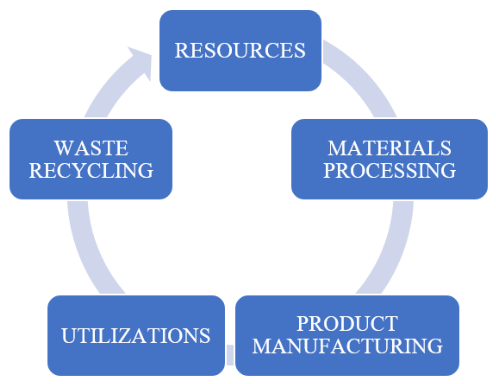
The core element of the circular economy is the product life cycle. The life cycle of a product is an internationally standardized method (ISO 14040; ISO 14044) for assessing a product’s sustainability—from the extraction of raw materials, production, and use by consumers, to its recycling or disposal as waste [18,19]. This method can also support improved efficiency in goods production, reduced use of raw materials and energy consumption, lower production costs, and even solutions to environmental issues [17]. Therefore, in order to better mitigate any negative impact and to make environmentally responsible decisions, it is essential to adopt the life cycle assessment (LCA) methodology. Figure 1 illustrates the graphical representation of the product life cycle.
The integration of the concepts of sustainable chemistry and circular economy into pre-university curricular materials allows not only for the formation of a comprehensive vision of the environment but also for a deeper understanding of the importance of protecting environmental components. The development of ecological competencies among students throughout lower secondary education is an essential component in shaping future adult citizens with high responsibility and a caring attitude toward their surroundings [1,13].
In this broader context, aligning sustainability education with global development strategies is essential. In the context of the United Nations 2030 Agenda for Sustainable Development, this study contributes to several Sustainable Development Goals (SDGs), particularly SDG 4 (Quality Education), SDG 12 (Responsible Consumption and Production), and SDG 13 (Climate Action). By integrating sustainable chemistry and circular economy principles into pre-university education, this research supports the development of key sustainability competencies, fostering responsible attitudes toward resource use and environmental protection.
STEM (Science, Technology, Engineering and Mathematics) education represents an essential pedagogical framework for optimizing the learning process of new concepts, by integrating the fundamental cognitive mechanisms involved in the acquisition and consolidation of knowledge. A central argument in favor of this type of education is supported by the concept of neuroplasticity, which highlights the fact that the structure and functioning of the brain changes following learning experiences [20], especially since the method is aimed at 8th grade students, i.e., at a young age. Specific STEM activities, characterized by problem solving, experimentation and interdisciplinary integration, stimulate the formation and strengthening of neural connections, thus facilitating deeper and longer-lasting learning. In addition, the effectiveness of STEM education can be explained by the principles of active learning, according to which the direct involvement of the student, especially adolescents (13–14 years old), in the learning process leads to superior information retention compared to passive methods [21,22]. Through activities such as designing experiments, modeling or programming, students not only assimilate abstract concepts, but also apply them in concrete contexts, which contributes to a solid conceptual understanding. From a cognitive psychology perspective, another major advantage of STEM education is the development of knowledge transfer capacity. The interdisciplinary nature of this study allows students to make connections between Sustainable Chemistry and the Circular Economy and apply concepts to new situations, thus increasing cognitive flexibility and adaptability. In conclusion, STEM education not only facilitates the accumulation of information, but also promotes deep, sustainable and transferable learning, based on scientifically validated cognitive mechanisms. This proves to be an indispensable educational tool in the formation of necessary skills in a society based on knowledge and innovation.
The educational activities proposed in this study, such as the valorization of walnut and elderberry by-products, promote resource efficiency, waste reduction, and circular thinking, directly aligning with the targets of SDG 12. Simultaneously, the use of modern, interdisciplinary teaching methods contributes to improving the quality of education and developing critical and systemic thinking skills among students, in accordance with SDG 4. Furthermore, by encouraging awareness of environmental impact and sustainable practices, the study indirectly supports climate action objectives (SDG 13). This work falls within the scope of sustainability-oriented research by addressing the role of education as a key driver in the transition toward a circular and sustainable society [4,23].
This paper presents methods for integrating the concepts of sustainable chemistry and circular economy into school curricula at the pre-university level, specifically through the study of related topics in both curricular and extracurricular activities in 8th-grade lower secondary education. The efforts made in the teaching–learning–assessment process in pre-university education, within the context of studying sustainable chemistry concepts, are aimed at fostering ecological competencies [24]. The paper is a comparative experimental study conducted with 8th-grade students, focusing on the development of ecological competencies using traditional teaching methods versus modern teaching methods.
In recent years, there has been major interest in developing sustainable walnut production in Romania, and there is also an abundant presence of elderberry in the spontaneous flora, especially in the northeastern region of the country, and these represent valuable and cheap sources of bioactive constituents [25]. In this context, the present study proposed the valorization of different parts of walnut (leaves, shell, septum and kernel) and elderberry (flowers and leaves), some of which are considered waste during harvesting and processing, in the context of the circular economy.
The study includes content and examples of learning activities conducted with students under the theme “Valorizing the walnut tree and elderberry”, which are part of the course support for the elective subject “Green Chemistry”.
The success of the green transition critically depends on the cultivation of solid ecological competencies among young people. However, for this process to be both measurable and effective, a precise operationalization of these competencies is essential. Based on existing literature and reference frameworks for sustainability education [26,27,28], ecological competence in this study was structured into four fundamental dimensions, guiding both the instructional intervention and the assessment tools employed:
  • Cognitive Dimension (Knowledge): targets the student’s scientific literacy, specifically the capacity to identify, define, and explain the fundamental concepts of green chemistry and the circular economy.
  • Functional Dimension (Skills): reflects the analytical component, namely the student’s ability to analyze processes, exercise critical thinking by identifying exceptions to sustainable flows, and propose technical solutions for resource valorization.
  • Affective Dimension (Attitudes): addresses the axiological component, referring to the level of awareness regarding the importance of environmental protection and the assumption of individual ethical responsibility toward ecosystems.
  • Behavioral Dimension (Behaviors/Actions): represents the pragmatic outcome of learning, evaluating the student’s readiness to act sustainably through concrete practices such as recycling, reuse, and the valorization of natural by-products (e.g., mulching, composting).
In the current context of the transition to a circular economy and the promotion of sustainable chemistry (green chemistry) in pre-university education in Romania, the integration of STEM concepts becomes essential for the formation of students’ ecological skills. Through practical interdisciplinary activities, such as the valorization of walnut and elderberry waste in optional chemistry classes, eighth grade students can apply scientific principles (chemical analysis, extraction of bioactive compounds), technology (efficient processing methods), engineering (design of processes with minimal environmental impact) and product life cycle assessment (LCA), thus developing systemic thinking oriented towards sustainability. This modern approach, compared to traditional methods, not only strengthens the understanding of the principles of the circular economy and environmental protection, but also contributes to the preparation of future responsible citizens, capable of innovating towards a green and competitive society, aligning with national objectives regarding STEM education and sustainable development.
The activities carried out included the following:
  • The application of various methods that allowed for intra- and interdisciplinary approaches to the concepts of sustainable chemistry and circular economy;
  • The formation of a vision regarding the environment and its quality;
  • Highlighting the importance of active involvement in protecting ecosystems and preventing environmental pollution;
  • Fostering a friendly attitude toward the environment from an ecological education perspective;
  • The creation of ecologically themed items that contribute to the development of ecological competencies.

2. Materials and Methods

2.1. Theoretical Considerations Regarding the Proposed Experimental Material

With an annual production of approximately 60,000 tons of dried fruits, walnut cultivation in Romania is primarily aimed at obtaining walnut kernels, which are widely used in the food industry [29,30].
The processing of walnuts generates a large volume of waste, the management of which poses environmental challenges. The resources required for each stage of the walnut kernel life cycle are presented in Table 1.
The environmental aspects identified during the stages of the walnut kernel production process and their impact on the environment are presented in Table 2.
In recent years, increasing emphasis has been placed on the valorization of agricultural waste derived from various parts of the walnut, such as the green hull and dry shell, which are considered waste during the harvesting and processing of the fruit. Studies have highlighted the benefits of these secondary products, which show potential in the medical, agricultural, and industrial sectors. The dry shell is hard, non-toxic, and primarily composed of lignin (52.3%), cellulose (25.5%), and hemicellulose (22.2%) [31]. Ground walnut shell can be used to produce construction materials by filling and mixing, and as a filler in the manufacture of composite materials [32], or in the production of bricks mixed with fired clay—lightweight, eco-efficient bricks with high thermal insulation properties [33]. Recycling green walnut hulls has become a significant challenge in waste management. The green shell contains juglone, a compound with various properties, and can be used as a natural dye in the textile industry, as an herbicide or insecticide in agriculture, or in medicine for treating different skin diseases, due to its anticancer, antibacterial, and antiviral effects [33,34].
With a wide distribution in both wild and cultivated flora across Europe, including Romania, Sambucus nigra L. (black elder) represents a species of major interest due to the use of its flowers in the food, pharmaceutical, and cosmetic industries. The flowers are mainly used to obtain hydroalcoholic extracts, infusions, syrups, and phytotherapeutic products, owing to their high content of bioactive compounds, especially flavonoids, phenolic acids, and volatile oils [35,36,37]. The processing of Sambucus nigra flowers involves stages that require material and energy resources and may generate plant-based by-products. The efficient management of these resources is essential for reducing environmental impact and for integrating the principles of the circular economy. The resources required for each stage of the elderflower life cycle are presented in Table 3.
The environmental aspects identified across the stages of the elderflower valorization process and their corresponding environmental impacts are detailed in Table 4.
Elderflowers contain flavonoids such as rutin, quercetin, and isorhamnetin, as well as phenolic acids (chlorogenic acid, caffeic acid), compounds responsible for antioxidant, anti-inflammatory, antimicrobial, and antiviral activities [36,38]. Pharmacological studies have highlighted the potential of Sambucus nigra flower extracts in supporting the immune system and in the symptomatic treatment of respiratory conditions [37,39].
Furthermore, the plant residues remaining after extraction can be valorized through composting or by obtaining secondary extracts rich in polyphenols, thereby contributing to waste reduction and enhancing the sustainability of the technological process [40]. The industrial processing of Sambucus nigra generates significant amounts of press cake residues, which represent a valuable yet underexploited source of bioactive compounds such as polyphenols and anthocyanins. These residues retain considerable phytochemical content after juice or extract removal, making them promising raw materials for further valorization. Recent advances in green extraction technologies—including ultrasound-assisted extraction, supercritical fluid extraction, and enzyme-assisted methods—allow efficient recovery of these compounds using environmentally friendly solvents and reduced energy inputs. The development of functional extracts and ingredients from Sambucus nigra “press cake” not only enhances the economic value of industrial by-products but also contributes to sustainable waste management by minimizing environmental impact. Such integrated valorization approaches align with circular economy principles and hold significant potential for applications in the food, nutraceutical, and cosmetic industries [41]. The integration of complete biomass valorization strategies for Sambucus nigra can significantly contribute to reducing ecological impact and increasing the economic value of this plant species [42].

2.2. Teaching-Learning-Assessment Methods

The specific content elements of sustainable chemistry that can be studied within school and extracurricular activities stem from the definition of the science itself and its objectives, which include: developing recommendations to reduce the level of chemical pollution in the environment, especially from the most harmful substances; improving technological processes for the valorization of raw materials and the use of waste; and developing new technologies and alternative processes aimed at minimizing energy consumption and maximizing the utilization of raw materials [43]. Addressing these aspects in educational activities will enable the development of competencies that guide students toward responsible and caring behavior toward themselves, others, and the environment. Throughout these activities, various methods were implemented that allowed an intra- and interdisciplinary approach to the concepts of sustainable chemistry and circular economy, fostering awareness of the environment and its quality, emphasizing the importance of active involvement in protecting ecosystems and preventing pollution of environmental components, cultivating an environmentally friendly attitude from the perspective of environmental education, and creating ecological items that contribute to the development of ecological competencies [43].
These educational approaches are consistent with SDG 4 (Quality Education), as they promote inclusive, student-centered, and competency-based learning. At the same time, by integrating sustainability-related topics such as circular economy and green chemistry, they contribute to the development of key competencies necessary for achieving the broader objectives of sustainable development [4,23].
A comparative study was conducted at the lower secondary level, involving two 8th-grade classes, to explore the valorization of the walnut tree and the elderberry through the use of different teaching methods and various learning activities. The comparative study involved the application of traditional teaching methods in one class and modern, active-participatory teaching methods in the other. The teaching methods used to develop ecological competencies throughout the teaching–learning–assessment process are highly diverse. These include methods for transmitting and acquiring knowledge, exploring and discovering the environment, as well as taking action to prevent and combat environmental pollution. Various teaching, learning, and assessment methods were employed, as presented in Table 5.
Explanation is a form of exposition where rational argumentation and descriptive elements predominate. Through explanation, the goal is for students to fully understand the ideas being communicated, so it primarily targets their thinking. This approach is used when teaching students about the causes of a phenomenon or about a process for solving problems. As the teacher explains, they may ask students questions to ensure they have correctly and consciously grasped the part of the topic explained so far and to maintain their attention. Students are encouraged to participate in explanations, to generalize, to formulate rules, and to interpret facts from their previous experience in light of the knowledge acquired [44]. Questions posed to students might include: What are walnuts and elderflowers used for? What else is the walnut tree used for? What can be prepared from elderberries?
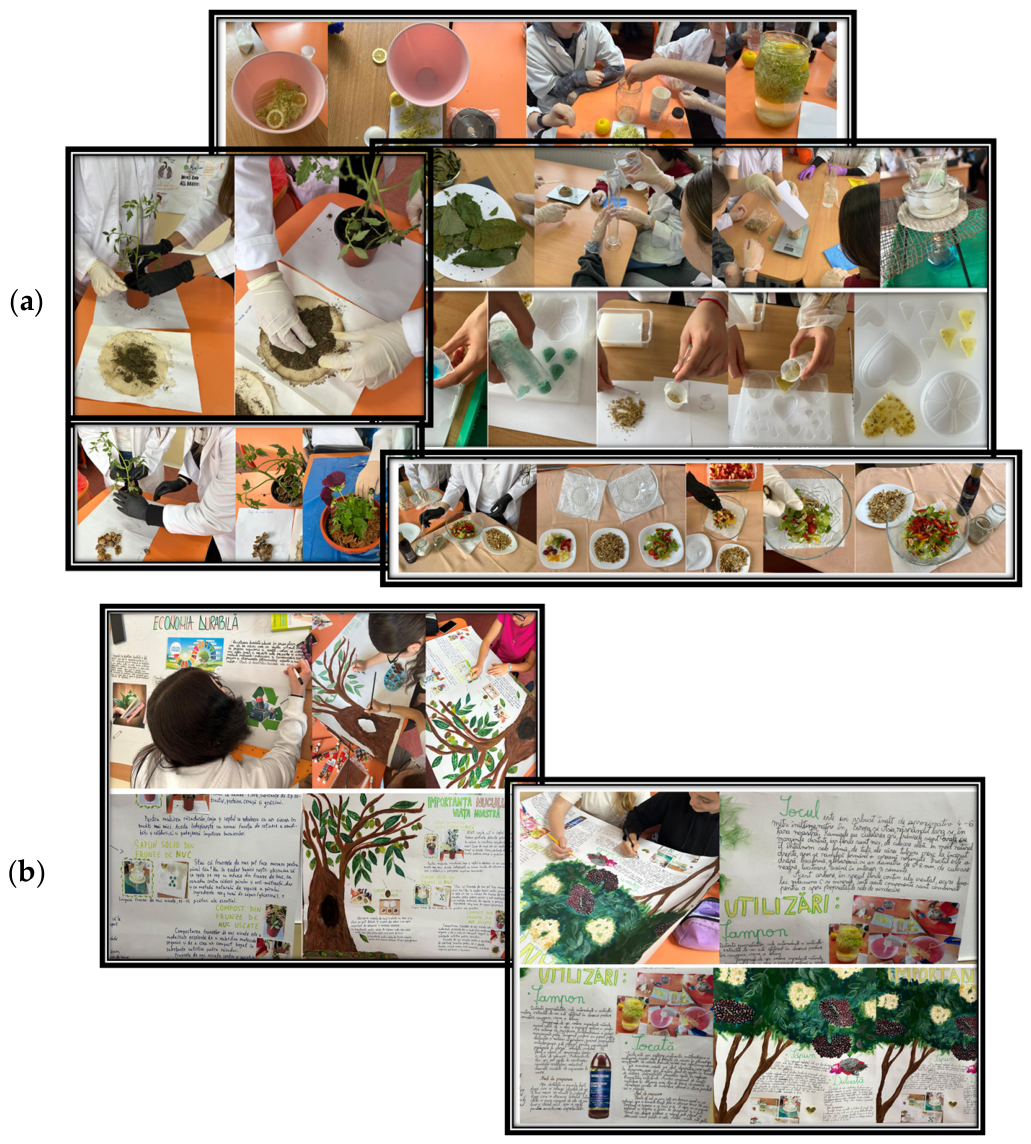
Laboratory experiments allow students to explore and discover the properties of substances, observe transformations, understand key concepts, and develop practical skills—bridging the gap between theory and practice. They encourage curiosity and critical thinking. In the case of investigative experiments, students must formulate hypotheses, plan experiments, and draw conclusions based on observations and experimental data. Experiments also offer opportunities to develop collaboration and communication skills. Students work in teams, share ideas, divide responsibilities, and collaborate to achieve desired results. This teamwork improves their social skills and teaches them to work in a team environment. This process helps develop research and analytical skills, essential for understanding chemistry and applying it in everyday life [44]. Students weighed walnut leaves and elderflowers, measured liquid volumes, made soaps in the lab, prepared salads, and carried out practical activities such as planting and mulching.
Heuristic conversation, also known as Socratic questioning, is sometimes referred to by contemporary authors as a form of guided discovery learning. It consists of a series of linked questions and answers that lead to a conclusion or new understanding for the student. Its effectiveness depends on the student’s prior knowledge, which enables them to respond to the questions posed. Students must have absorbed the material from previous lessons to reach generalized conclusions or discover new correlations [44,45].
The cluster method is one of the techniques used to develop critical thinking. It involves the following steps:
  • Writing down a central word or topic to be explored;
  • Noting all the ideas or knowledge that come to mind related to that topic, with all ideas being connected.
This technique is flexible and can be done individually or as a group activity. Using this method, students visually organize received information—for example, by creating posters on the uses of the walnut and elderflower or the concept of the circular economy [2,45].
Both traditional and modern methods have their advantages and disadvantages, which are presented in Table 6.
Regarding assessment, combining written evaluation tools with oral assessment methods, along with complementary evaluation techniques (such as posters and gallery walks), will ensure a comprehensive picture of students’ abilities in developing competencies [27,28].
The gallery walk is a collaborative learning and assessment method through which students are encouraged to express their opinions about solutions to a problem. It involves interactive and formative evaluation as well as self-assessment of group-created products. After presenting their work (e.g., posters), each student group carefully examines the work of the others, rotating from one product to another, discussing and optionally noting comments, uncertainties, and questions to be addressed to the other groups. In this way, feedback from peers promotes learning and reinforces understanding, while also valuing the group’s final product [46].
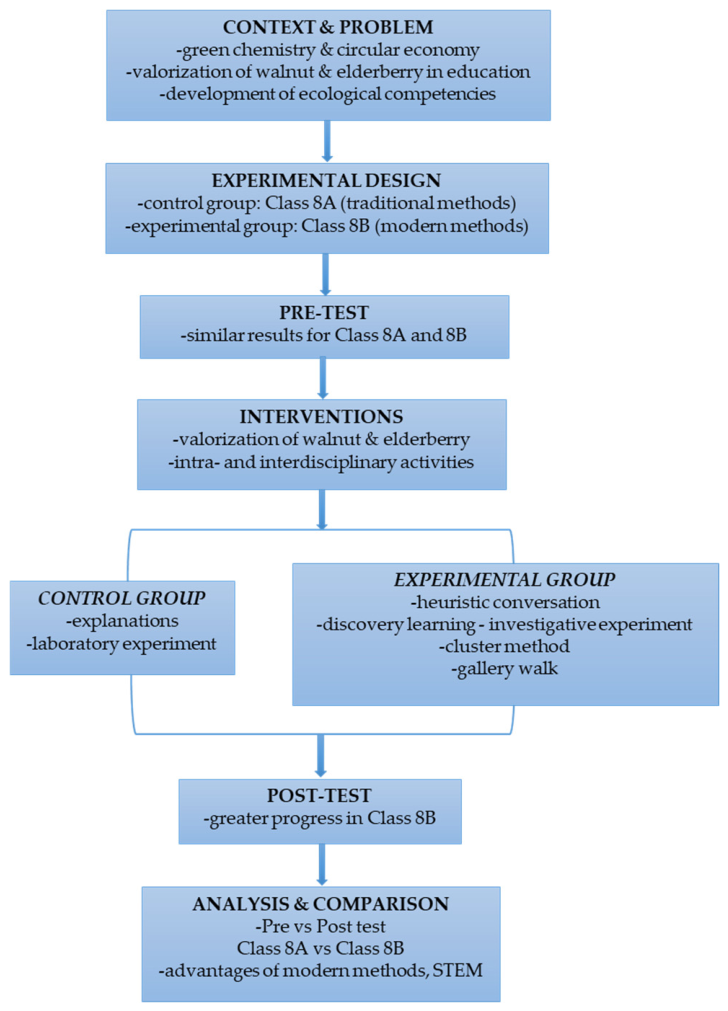
The main stages of the instructional and research approach carried out in order to develop students’ ecological competencies, through the integration of green chemistry and circular economy concepts, are presented in the block diagram in Figure 2.
The study is based on an experimental design, in which two groups of students are compared: one benefiting from traditional teaching methods and another in which modern, interactive methods integrated within the STEM approach are applied.
The structure highlights the logical sequence of stages, from defining the context and the problem, to administering the pre-tests and implementing the instructional intervention focused on the valorization of natural resources (such as walnut and elderberry), followed by the final assessment and the comparative analysis of the results. Through this organization, the diagram emphasizes the impact of modern teaching strategies on students’ progress and on the development of competencies relevant to sustainable development.

2.3. Participants

A target group consisting of 30 students from the 8th-grade A class and 28 students from the 8th-grade B class participated in the instructional activities. The participant group was composed of 54% girls and 46% boys. The distribution between urban and rural areas was 88% urban and 12% rural population. This distribution falls within the average distribution of students in secondary schools in Romania [47]. Participants were selected via convenience sampling, utilizing two intact eighth-grade classes. Due to administrative and ethical constraints inherent to the school’s organizational structure, random assignment of individual students was not feasible. Class 8A was designated as the control group (traditional methods), whereas Class 8B served as the experimental group (modern/STEM-based methods). The consent of the subjects was not necessary because the module was carried out during class hours, with the agreement of the school administration, the students being informed about the implementation of these learning activities.
The students organized themselves both individually and in teams. They were assigned various tasks (Figure 3): one group studied the principles of sustainable chemistry, including the benefits and uses of walnut and elderberry, and produced presentations and posters; other students conducted laboratory experiments on different topics (such as valorizing walnut leaves or dried elderberry flowers through soap production, and preparing desserts using walnut kernels); another group planted various plants and used dried walnut leaves and dried elderberry flowers as fertilizers; and other students prepared a mixture from dried walnut shells and septum, which they applied as mulch for the plants. Another activity that all participants enjoyed was preparing juice from fresh elderberry flowers.
Following the study on the uses of walnut leaves and dried elderberry flowers, the students learned that walnut possesses beneficial properties for preventing hair loss and promoting scalp health, whereas dried elderberry flowers are valued for their antibacterial, anti-inflammatory, and anti-acne effects. Additionally, the students understood that waste reduction and support for the “circular economy” can be achieved by utilizing various components of the walnut and elderberry plants. For example, dried walnut shells and septum can be transformed into mulch for plants, dried walnut and elderberry leaves into compost for plant growth, and elderberry flowers into juice or natural fertilizer.

2.4. Methods and Instruments

The quasi-experiment is based on the comparison of two non-equivalent groups of participants [46]. One of them undergoes the experimental intervention (the experimental group), while the other does not (the control group). Both groups participate in the two measurements, one before the application of modern methods (pre-test), the other after the experimental intervention (post-test). The main advantage of the quasi-experiment lies in the fact that it represents the most rigorous approach for evaluating outcomes and impacts and inferring causality between interventions and outcomes and impacts. However, it is difficult to implement successfully, due to selection effects, instrument use, as well as dropout and implementation time.
To ensure the methodological rigor of the study and to evaluate the multidimensional nature of ecological literacy, the pre-test and post-test items were mapped onto four competency domains: cognitive, functional, behavioral, and affective. Table 7 illustrates the operational definition of these dimensions and their correspondence with the specific items used in both the pre-test and post-test stages.

2.5. Research Procedure

The research implementation followed a rigorous structure spanning seven weeks (October–November 2025), totaling 10 h of instruction, covering the fundamental learning units of green chemistry and circular economy. To ensure the internal validity of the quasi-experimental design, a standardized protocol was followed, allowing for the differentiated application of teaching methods while maintaining the consistency of the scientific content and the biological resources used (walnut and elderberry). The details regarding the sequence of activities, operational objectives, and the methodological contrast between the control group (8A) and the experimental group (8B) are summarized in Table 8.

2.5.1. Pre-Testing Stage

To explore the integration of modern and traditional teaching–learning methods aimed at acquiring knowledge about the “circular economy” and “sustainable chemistry”, an experimental study was conducted involving a target group of 30 students from 8th grade, class A, and 28 students from 8th grade, class B, of the school.
Pre-test items are grouped into three composite scales: (1) Circular Economy Basics, (2) Green Chemistry Principles, and (3) Sustainability Practices (Table 9).

2.5.2. Post-Testing Stage

At the end of the learning unit, the 8th-grade students from both classes received an evaluation test in the form of a questionnaire. The knowledge test, in this case the questionnaire, is a complex tool used to assess the level of knowledge acquisition by comparing students’ answers to a reference scale. It is a standardized test that ensures a higher degree of objectivity in the evaluation process. The questionnaire given to the students contained 10 questions with objective-type items related to the concepts of “Green Chemistry” and “Circular Economy”. The multiple-choice items require students to select the correct answer from several provided options. These items can assess a variety of skills and objectives, from the simple recognition of information to the evaluation of familiar or new contexts. An important condition in formulating them is that all answer options must be plausible.
Post-test items on the transition from theoretical knowledge to applied STEM contexts (waste valorization) are presented in Table 10.

2.6. Data Analysis

Statistical processing to establish group equivalence was performed with the t-test and Chi-square tests.
The statistical precision of the success rates was addressed by calculating 95% confidence intervals (CIs) using the Wilson score method. This method was preferred to the standard Wald interval due to its increased reliability for modest sample sizes (N < 30) and its precision when proportions approach extreme values (0 or 1). Microsoft Office Excel 2016 (Microsoft, Redmond, WA, USA) was used to this purpose. Given the small sample size (N = 58; n = 30 in the control group and n = 28 in the experimental group) and the binary nature of the data, the following inferential tests were applied: McNemar’s test (with continuity correction) was used to assess within-group changes from pre-test to post-test and the Chi-square test (with Yates’ continuity correction) and z-test for two independent proportions were used to compare the two groups at post-test. Effect sizes were calculated as Cohen’s h for proportions and Cohen’s d for the composite score. All tests were two-tailed, and due to the modest sample size, results were interpreted with caution. Statistical significance was set at p < 0.05.
Given the sample size and the nature of the tests administered to the students, the re-liability of the instrument was evaluated using the Kuder-Richardson 20 (KR-20) coefficient, which is appropriate for dichotomous data.

3. Results

3.1. Participant Baseline Analysis

To ensure the internal validity of the quasi-experimental design and to mitigate the potential influence of confounding variables, a comprehensive baseline analysis of the two groups was conducted prior to the intervention. This analysis aimed to verify the initial comparability of Class 8A (Control) and Class 8B (Experimental) regarding their demographic profiles and prior academic achievement. As synthesized in Table 11, statistical evaluations (including t-test and Chi-square tests for categorical data), were employed to establish group equivalence.
Baseline statistical analysis (Table 11) confirmed that the two groups were equivalent in terms of gender distribution, residence, and baseline knowledge levels (pre-test scores). The p-values > 0.05 for all analyzed variables indicate the absence of statistically significant differences between groups 8A and 8B prior to the intervention, thereby allowing subsequent progress to be attributed to the specific teaching methods employed. To account for prior academic achievement, the average chemistry grades from the previous semester were compared. No statistically significant difference was found between Class 8A and Class 8B (p > 0.05), ensuring that both groups possessed a comparable baseline of chemical knowledge before the intervention.

3.2. Pre-Test Results

The results obtained from the pre-testing of students in grade 8A and grade 8B are presented in Table 12.
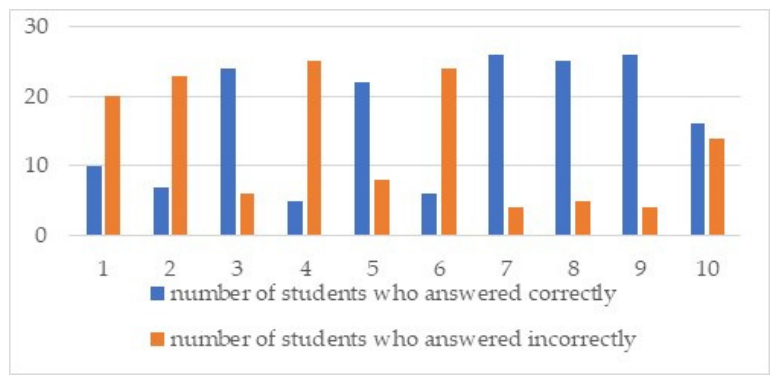
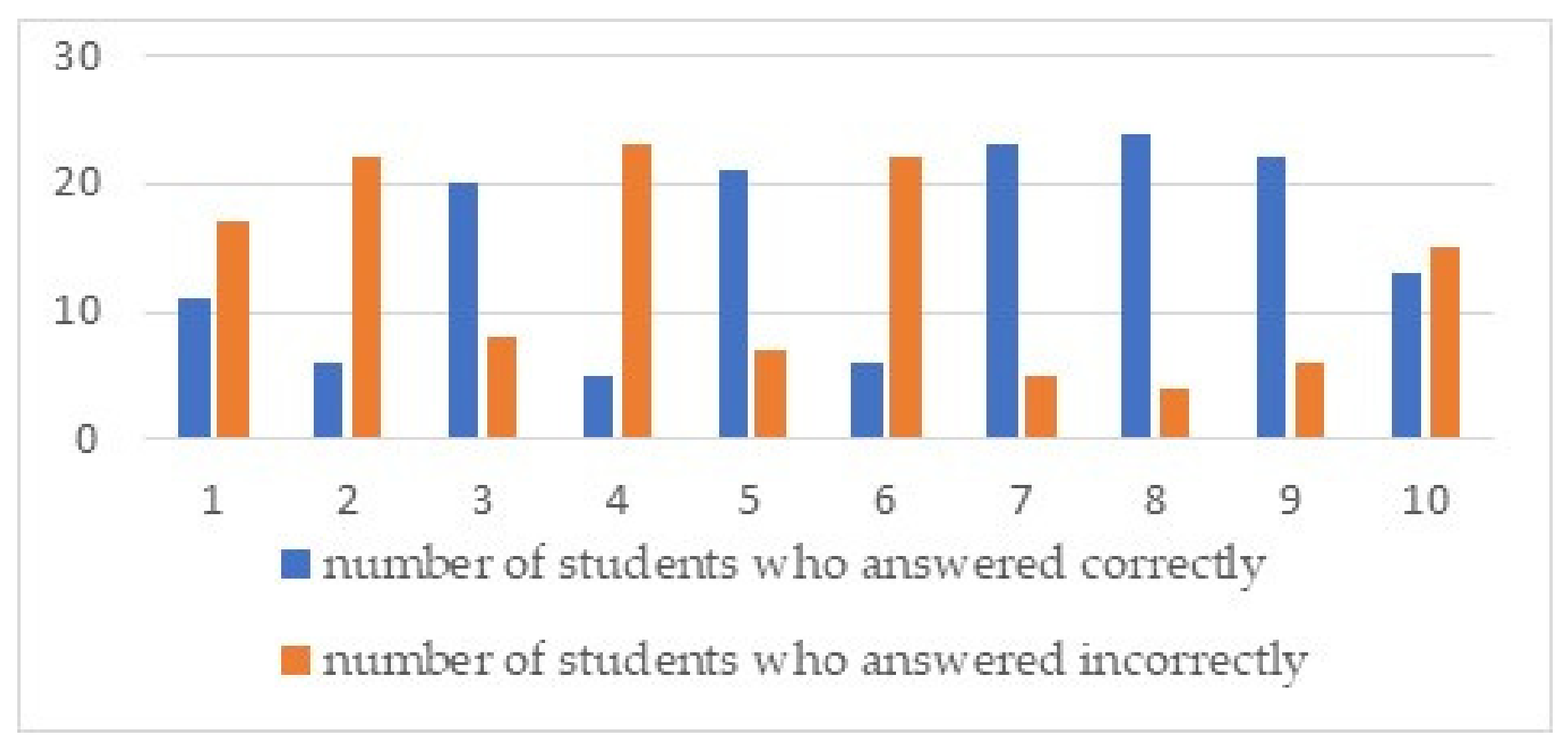
The distribution of correct and incorrect answers for each question in 8th-grade class A is graphically represented in Figure 4.
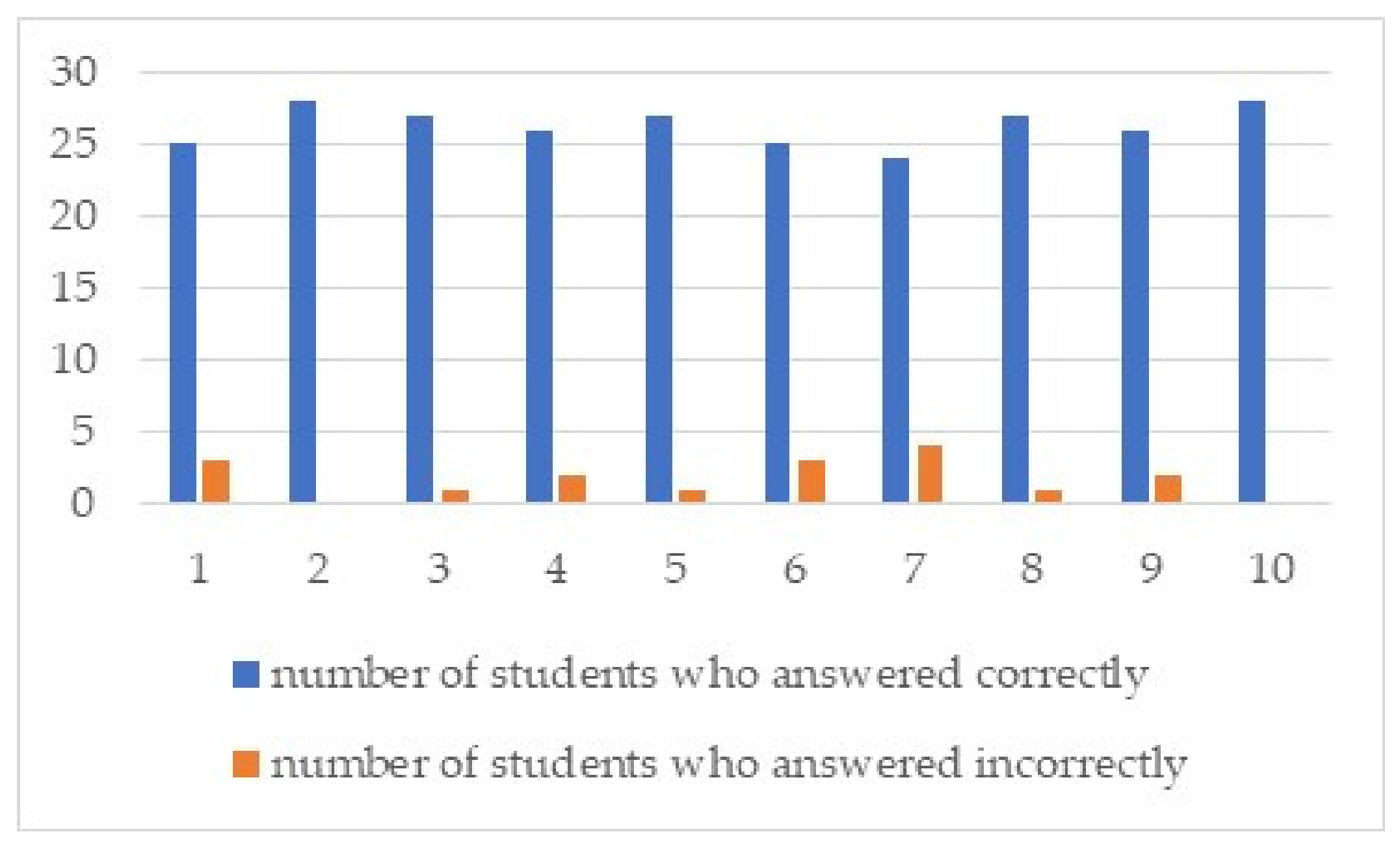
The distribution of correct and incorrect answers for each question in 8th-grade class B is graphically represented in Figure 5.
To the question “What do you think ‘circular economy’ means?”, 10 students from grade 8A and 11 students from grade 8B gave the correct answer. To the question “What do you think ‘green chemistry’ or ‘sustainable chemistry’ means?”, 7 students from grade 8A and 6 students from grade 8B answered correctly.
For the question “Which of the following actions helps protect the environment?”, 24 students from grade 8A and 20 students from grade 8B answered correctly. For the question “What can be done with a product that no longer works (e.g., an old phone)?”, 5 students from grade 8A and 5 students from grade 8B gave the correct answer. To the question “In your opinion, what does ‘recycling’ mean?”, 22 students from grade 8A and 21 students from grade 8B answered correctly. For the item “Which of the following examples belongs to the circular economy?”, 6 students from grade 8A and 6 students from grade 8B gave the correct answer. To the item “Why is it important to save natural resources?”, 26 students from grade 8A and 23 students from grade 8B answered correctly. For the item “What type of energy is considered sustainable?”, 25 students from grade 8A and 24 students from grade 8B gave the correct answer. For the item “What does the principle ‘reduce, reuse, recycle’ represent?”, 26 students from grade 8A and 22 students from grade 8B answered correctly. Finally, to the question “How does sustainable chemistry contribute to environmental protection, 16 students from grade 8A and 13 students from grade 8B gave the correct answer.

3.3. Post-Test Results

Thus, following the study comparing traditional teaching methods applied to students in grade 8A with modern active-participatory methods applied to the experimental group students in grade 8B, the following results were obtained, as presented in Table 13.
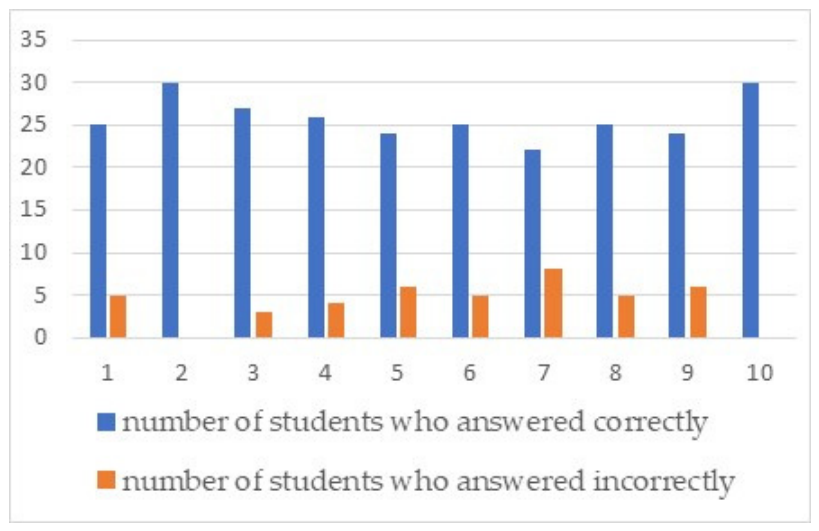
For the question “What is ‘green chemistry’?” all students in both classes answered correctly. For the question “What is a ‘circular economy’?” 25 students from class 8A and 25 students from class 8B answered correctly. For the question “What are the main ideas underlying ‘green chemistry’?” 27 students from class 8A and 27 students from class 8B answered correctly. For the question “Which of the following statements does not represent the benefits of a ‘circular economy’?” 26 students from class 8A and 26 students from class 8B answered correctly. For the question “Which of the following statements does not represent the objective of a ‘circular economy’?” 24 students from class 8A and 27 students from class 8B answered correctly.
For the item “A ‘circular economy’ can be supported by”, 25 students from class 8A and 25 students from class 8B answered correctly. For the item “Choose the option that does not correspond to the ‘circular economy’ model”, 22 students from class 8A and 24 students from class 8B answered correctly. For the item “Choose the example of walnut leaf valorization”, 25 students from class 8A and 27 students from class 8B answered correctly. For the item “Choose the example of elderflower valorization”, 24 students from class 8A and 26 students from class 8B answered correctly. Finally, for the question “Is it important to transition to a ‘circular economy’?” all students answered yes.
The distribution of correct and incorrect answers for each question in 8th-grade class A is graphically represented in Figure 6.
The distribution of correct and incorrect answers for each question in 8th-grade class B is graphically represented in Figure 7.
The comparative conclusions are summarized in Table 14.
To complement the item-level analysis and provide an overall view of student progress, a composite performance score was calculated, with its values for the pre-test and post-test stages presented in Table 15.
To ensure the validity of the comparison, it is important to note that while no statistically significant differences were observed at baseline between the two groups (p = 0.87), the post-intervention analysis revealed a marked divergence in performance. The composite score analysis (the sum of correct responses across the 10 items) highlights significant progress in both groups, with a clear advantage for the experimental group. Although Class 8B started with a slightly lower pre-test mean (5.39 vs. 5.57), the absolute gain following the intervention was 4.00 points, compared to 3.03 points in the control group. This differential gain of nearly one full point on a 0–10 scale suggests that the instructional approach, rather than prior knowledge, was the primary driver of the improved ecological competencies, demonstrating that modern STEM methods accelerated the acquisition of knowledge to a greater extent than traditional teaching.
To provide a comprehensive overview of students’ progress and to ensure the precision of the estimates, the success rates for each item were analyzed across both groups. Table 16 summarizes these results, including the 95% confidence intervals (95% CI) calculated using the Wilson Score method, which is particularly appropriate given the modest sample size.
Values in brackets represent the 95% Confidence Intervals (CIs) based on the Wilson Score method. N = 30 for Class 8A; N = 28 for Class 8B.
The data presented in Table 16 indicate a substantial increase in success rates across all evaluated items for both groups. However, a marked divergence in performance is observable following the intervention. While both cohorts showed improvement, the experimental group (Class 8B) demonstrated a more pronounced advancement, reaching near-ceiling performance on several items (e.g., Q′2 and Q′10 reached 100% success).
The composite score analysis further confirms this trend. Although Class 8B started from a slightly lower baseline (5.39 vs. 5.57, p = 0.87), it achieved an absolute gain of 4.00 points, compared to 3.03 points in the control group. The fact that the 95% CIs for the experimental group at post-test are consistently higher and narrower for key pedagogical items suggests that the STEM-based approach provided a more robust and uniform acquisition of ecological competencies compared to traditional instruction.
To evaluate the statistical significance of the observed improvements, appropriate inferential tests were applied (Table 17), considering the binary nature of the data and the quasi-experimental design.
For the pre-test vs. post-test comparison within the same group (analyzing Class 8A and Class 8B separately), the most appropriate statistical method is McNemar’s test, as it is specifically designed for paired data where the same student is evaluated at two different points in time. Conversely, to compare the results between the two groups at the post-test stage (8A vs. 8B), the Chi-square test (with Yates’s correction for rigor) or the z-test for two independent proportions is used, both being effective in identifying significant differences between distinct samples.
The analyses were conducted on binary data (correct/incorrect response). Due to the relatively small sample size (N = 58), the results were interpreted with caution. Cohen’s h was calculated to evaluate the practical effect size.
McNemar’s test indicated a significant increase in the proportion of correct responses from pre-test to post-test in both the control group (p < 0.001, Cohen’s h = 0.69) and the experimental group (p < 0.001, Cohen’s h = 1.15). At the post-test stage, the comparison between the two groups revealed a statistically significant difference in favor of Class 8B (p = 0.012, Cohen’s h = 0.42), with the difference being more pronounced for items assessing practical application and critical thinking (z = 2.85, p = 0.004, Cohen’s h = 0.53). These results suggest that the modern approach based on active methods and STEM led to superior performance, although the modest sample size warrants caution in interpretation.
The internal consistency of the 10-item instrument was tested using the Kuder-Richardson 20 (KR-20) formula. The analysis demonstrated excellent reliability at both stages of the study, with an overall coefficient of α = 0.912 for the pre-test and α = 0.942 for the post-test (N = 58). These high indices presented in Table 18 confirm that the questionnaire is a highly stable tool for assessing ecological competencies in the context of sustainable chemistry.

4. Discussion

4.1. Pre-Test Analysis

Following the processing and interpretation of the answers to the initial test, it was observed that students seem to understand the practical concepts (related to concrete actions and resources), generating correct answers in a proportion of over 75%, better than the theoretical ones (definitions of new concepts such as “circular economy” or “green chemistry”). Students demonstrate a good understanding of practical actions that contribute to environmental protection and of the basic principles of recycling and resource conservation. However, they encounter difficulties in understanding theoretical notions and applying them in real-life contexts. However, respondents are familiar with specific objectives as separate entities, such as “recycling”, “landfill”, “transformation of secondary or by-products”, or “compost”, without integrating them into a concise concept such as the “circular economy”, which accumulated the lowest score. The low score obtained on question 4, regarding the concept of “circular economy”, indicates the need for more examples and practical activities to illustrate this principle. The major differences in understanding between the practical concepts of “recycling” and the theoretical concepts of “circular economy” and “sustainable chemistry” represent a significant challenge in terms of their integration into classrooms, given that they require a flexible curriculum, institutional support, and resources. The results obtained from the two classes are comparably similar, with no major differences, suggesting that both groups were exposed to a similar level of learning and have a comparable level of understanding.
Students demonstrate a good awareness and positive attitude towards practical ecological behaviors, displaying basic competencies in areas such as recycling, resource conservation and environmental protection. They show genuine interest in environmental issues and adopt favorable attitudes towards concrete sustainability actions. However, the theoretical understanding of higher integrative concepts, in particular the circular economy and green/sustainable chemistry, remains partial and fragmented. Although students recognize and apply individual actions (such as recycling or avoiding uncontrolled landfilling), they are not yet able to integrate them into a coherent systemic framework, which would include preventing waste generation through intelligent design, prioritizing reuse and recycling, maintaining the value of materials for as long as possible and regenerating nature. This partial theoretical limitation highlights the need to clarify and deepen these notions. To overcome this gap between already acquired practical skills and insufficiently developed theoretical understanding, it is recommended to consolidate knowledge through: concrete examples, relevant case studies (local or global) and practical activities that illustrate the principles of the circular economy and sustainable chemistry in real contexts, and interdisciplinary hands-on projects, such as product redesign for sustainability, simulations of circular material chains or experiments in upcycling and creative recycling. A particularly promising direction is the integration of the STEM (science, technology, engineering and mathematics) approach in applied educational activities. This interdisciplinary method stimulates critical thinking, creativity, real-world problem solving and collaboration, while simultaneously contributing to the development of ecological skills and preparing students for the challenges of future sustainability [48,49]. By consistently applying such varied and student-centered teaching methods, the results obtained can be significantly improved, transforming isolated practical knowledge into a deep, systemic and long-term applicable understanding of the principles of the circular economy and sustainable chemistry.

4.2. Post-Test Analysis

The analysis of the post-test responses regarding circular economy and green chemistry highlights clear differences between the two classes. For question 1, concerning the definition of the circular economy, grade 8 class B achieved 89% correct answers, compared to 83% in class A, indicating a clearer understanding, although the difference was not very large. The use of modern methods enabled the experimental group to better grasp the concepts taught by the teacher. Active engagement and collaborative discussions facilitated the consolidation of the definition. For question 2, regarding green chemistry, both classes performed at the maximum level, demonstrating that the theoretical concept was well understood by all students. This suggests that both traditional and modern methods are effective for teaching basic theoretical concepts.
For question 3, on the principles of green chemistry, class B was more precise (96% correct) than class A (90% correct), indicating minor gaps in the complete enumeration of principles in class A. Modern methods that fostered critical and investigative thinking helped the experimental group in class B to understand and retain the full list of principles, whereas class A showed slight omissions. Questions 4 and 5, involving the identification of benefits and objectives of the circular economy, revealed larger differences: class B achieved 93% and 96% correct, while class A scored 87% and 80%, suggesting that the experimental group better understood the applied concepts. Through collaborative learning and investigative experiments, class B students were better able to identify exceptions, in contrast to class A, which relied on passive memorization. The differences in responses indicate that modern methods, such as heuristic explanation and discovery learning, support the development of critical thinking and the application of concepts, whereas traditional methods limit students to recalling theory without practical application. For question 6, regarding ways to support the circular economy, the experimental class had a slight advantage (89% vs. 83%), as students, through investigative experiments and collaborative discussions, gained a clearer understanding of practical applications. Question 7, the most challenging for both classes, was correctly answered by 86% of students in class B and only 73% in class A, highlighting the difficulty of identifying exceptions in circular economy concepts. Answering this question required critical analysis and comparison of options. Modern methods and STEM activities provided class B with better tools to identify exceptions, while class A was more prone to confusion. Practical questions 8 and 9, regarding the valorization of walnut leaves and elderflowers, showed significant differences in favor of the experimental group (96% and 93% correct) compared to class A (83% and 80%), indicating better application of concepts in practice. Learning based on investigative experiments, discovery, and collaboration allowed class B to more easily recognize practical examples of resource valorization. Class A students struggled to provide correct answers, likely due to the lack of practical experience. The use of modern methods and STEM activities improved the practical application of knowledge, whereas traditional methods did not sufficiently stimulate applied thinking.
For question 10, both classes answered correctly at 100%, confirming that students recognize the importance of the transition to a circular economy. The overall motivational and conceptual understanding was well grasped by both classes, suggesting that theoretical and awareness messages can also be effectively conveyed through traditional methods. Overall, the experimental group in class B, which employed modern, collaborative, and experimental methods, demonstrated better understanding and application of the concepts, whereas class A, using traditional methods, performed well in theoretical knowledge but faced difficulties with applied items and critical thinking tasks.
Following the analysis of the final test results, it becomes evident that students have acquired clear and coherent knowledge of the concepts of “circular economy” and “sustainable chemistry”, developing both ecological competencies and applied critical thinking, as well as civic skills. Although students in the experimental group demonstrate a solid understanding of the main concepts, some students in class A have greater difficulty identifying exceptions.
Regarding ecological competencies, students in class A, who were taught using traditional methods, possess foundational theoretical knowledge of “green chemistry” and the “circular economy”; however, their understanding remains largely theoretical, and practical application—such as identifying ways to valorize natural resources like walnut leaves or elderflowers—is limited. In contrast, the experimental group from class B, which engaged with modern methods, investigative experiments, collaborative learning, discovery-based activities, and critical discussions, suggests both strong theoretical understanding and the ability to apply concepts in real contexts, thus developing authentic ecological competencies. As a result, students in class B are far more capable of transforming knowledge into concrete actions and ecological solutions, whereas students in class A rely more on passive memorization. Most students in the experimental group also exhibit the ability to transfer theoretical knowledge into practical examples, reflecting the development of ecological competence and applied scientific thinking.
Applied scientific thinking fosters various abilities in students, helping them become aware and responsible citizens capable of addressing real-world problems and positively transforming their environment [50]. Successfully integrating scientific thinking in the classroom requires innovative strategies and highlights the need for inter-disciplinary connections among natural sciences, humanities, and STEM-based technology. The STEM approach has a positive impact on the development of students’ critical thinking when applied in science education. Rahmawati et al. reports that students are able to identify a problem, demonstrate conceptual understanding, connect ideas, formulate assumptions, and find solutions for problem solving [49]. This approach enriches the learning process by using pedagogical strategies that promote active learning, real-world problem solving, and the effective use of technology [50]. Facilitating the development of applied thinking skills in students leads to critical reasoning, encouraging productive discussions, which in turn foster constructive criticism and the open exchange of ideas among learners [51]. To support the development of these competencies, it is essential to create teaching and learning environments that account for students’ cognitive differences, provide rich stimuli, and offer opportunities for learning through direct experience [52]. To the question “Is it important to transition to a circular economy?”, all students responded affirmatively, indicating a high level of awareness and a positive attitude toward environmental protection, essential components of ecological and civic competencies. This attitude not only contributes to building a responsible society but also supports resource savings through the conservation of natural landscapes and water resources. Such initiatives can increase society-wide awareness, and as social awareness grows, more people become conscious of the value of an environmentally friendly lifestyle [53]. Students in the experimental class B benefit from modern teaching methods that stimulate critical thinking and social responsibility. They collaborate, analyze real-world problems, and propose solutions, which fosters the development of civic competencies and a sense of responsibility toward the community. Consequently, the experimental class B is significantly more effective in developing students’ ability to act responsibly in society and to contribute meaningfully to the well-being of the community. For the application of the concepts of “sustainable chemistry” and “circular economy”, the experimental group of students from class B participated in investigative STEM-based practical activities, while the students from class A engaged in traditional practical tasks commonly found in standard textbooks. This discrepancy in instructional approaches facilitated differences in students’ mindsets, which were reflected in the significant gap between the post-test scores of the two classes. This finding aligns with previous studies highlighting the role of mindset in shaping environmental attitudes and behaviors [54]. Similarly, the experimental group demonstrated a higher level of ecological awareness compared to the students in class A. A significant increase in scores related to environmental concern was observed following the implementation of the studied concepts. This increase underscores the impact of applying green chemistry principles, encouraging students to critically evaluate their environmental footprint and develop a stronger sense of ecological responsibility [55].
Clear differences also emerged in students’ environmental behavior. In class A, students can memorize theories about environmental protection, recycling, and green chemistry, but practical application and the development of ecological habits remain limited. For instance, they may not distinguish between resource valorization and basic theoretical recycling. In contrast, students in the experimental class B were engaged in practical and collaborative activities, which fostered responsible environmental behavior. They understood the direct connection between their actions and environmental impact, making them more likely to adopt ecological habits. Thus, environmentally responsible behavior was much more pronounced among students in class B, as a result of active learning and hands-on investigative experiences. Most students can transfer theoretical knowledge into practical examples, reflecting the development of ecological competencies and applied thinking skills.

4.3. Comparative Analysis Between the Pre-Test and Post-Test of Students

The findings of this study clearly demonstrate that the transition from initial group equivalence to significant post-intervention divergence was driven by the specific pedagogical approach employed. The superior gains observed in the experimental group (Class 8B) suggest that the integrated STEM activities provided a more effective framework for conceptual mastery compared to traditional instructional methods. Specifically, while traditional teaching focused on isolated chemical reactions, the STEM-based model facilitated a holistic understanding of ecological processes, as evidenced by the near-ceiling performance at post-test.
At the end of the learning activities, the students in the experimental group from class B demonstrated:
  • Solid knowledge of the concepts “green chemistry” and “circular economy”;
  • Development of applied ecological competencies, including the identification of concrete examples of resource valorization (walnut, elderflower);
  • Understanding of the principles of “circular economy” and its benefits;
  • A positive and responsible attitude toward the environment, as reflected in unanimous responses to questions of civic and ecological relevance.
Overall, the results indicate significant progress compared to the pre-test, demonstrating that the applied teaching-learning methods, along with interdisciplinary activities, were effective in consolidating students’ ecological knowledge and competencies. Notably, students in class B performed better in identifying exceptions, suggesting that modern teaching methods and STEM-based activities foster critical thinking and differentiated analysis of information. Furthermore, class B excelled in practical applications, indicating that STEM and interdisciplinary approaches effectively facilitated the transfer of theoretical knowledge to real-world situations. A similar result was reported by Erdawati et al. [56], who showed that the use of an investigative experimental learning model in green chemistry can enhance students’ scientific process skills. Likewise, Zhou et al. examined the impact of inquiry-based experiments in chemistry teaching on the development of critical thinking among pre-service teachers [57]. Their findings revealed significant differences in the categories of “analysis” and “evaluation”, particularly in terms of decoding meaning and clarifying understanding, following the implementation of investigative experiments. The effectiveness of inquiry-based experiments, compared to traditional teaching methods, contributes to improved student learning and attitudes [55]. Qualitative investigations enhance students’ competencies in understanding the effects of “circular economy” and “sustainable chemistry” on the environment and on the quality of life.
These conclusions support findings from studies such as that of Karpudewan et al., which indicate the positive influence of inquiry-based experiments on students’ attitudes and motivation toward environmentally friendly actions [58]. Furthermore, the integration of green chemistry principles into school curricula was recommended in order to enhance environmental awareness and to cultivate a population that is responsible toward the environment [59]. The incorporation of circular economy and sustainable chemistry concepts into environmental education is essential for several reasons: students become more aware of their surrounding environment, gain a deeper understanding of real-world issues directly related to life sciences, and place greater importance on conserving natural resources and reducing waste [60]. Through interdisciplinary learning and a holistic understanding of environmental challenges, students adopt recycling habits, develop innovative solutions to problems within the context of ecology and sustainability, and explore various career opportunities in fields such as environmental science, conservation biology, and sustainable agriculture [61]. Therefore, integrating circular economy and sustainable chemistry concepts into science education not only aligns with environmental and sustainability objectives but also equips students with new knowledge and skills relevant to their future roles as responsible citizens [62].
The results of the present study highlight a clear trend of progress in understanding the concepts of circular economy and sustainable chemistry, indicating a significant in-crease in the level of comprehension. The data suggest that modern educational strategies exert a positive impact on students, contributing to increased clarity and depth in approaching these concepts through the integration of practical, investigative-active, and interdisciplinary applications within the educational process [63].
Although the results indicate a clear improvement in students’ understanding and application of sustainable chemistry and circular economy concepts, these findings should be interpreted with caution due to the quasi-experimental nature of the study. The absence of random assignment and the relatively small sample size may introduce potential biases related to unobserved variables. Therefore, the observed differences between the groups cannot be attributed exclusively to the teaching methods, although they suggest a consistent positive trend associated with the use of modern, interdisciplinary, and STEM-based approaches.
Despite the overall positive trend, certain items exhibited more modest gains, requiring further scrutiny (Table 16). For instance, Q′7 [mention the topic, e.g., theoretical chemical formulas] showed a smaller progression compared to practical items. This suggests that while STEM methods excel in practical application, highly abstract theoretical concepts may still require additional pedagogical scaffolding or more extended practice sessions. For future iterations, integrating more explicit direct instruction alongside the discovery-based STEM activities could help bridge this gap for students who struggle with purely abstract reasoning.
The analysis of the results was limited to descriptive statistics, without the application of inferential statistical tests to determine the statistical significance of the differences between groups. Consequently, the findings should be interpreted as indicative trends rather than definitive evidence of causal relationships.
From a sustainability perspective, the results of this study highlight the contribution of modern educational strategies to achieving several Sustainable Development Goals [4,23]. By improving students’ understanding of green chemistry and circular economy concepts, the study supports SDG 12 (Responsible Consumption and Production) and SDG 13 (Climate Action), as students become more aware of resource efficiency and environmental protection. Additionally, the focus on plant-based resource valorization contributes to SDG 15 (Life on Land). The integration of STEM-based activities further reinforces SDG 4 (Quality Education), by enhancing critical thinking, problem-solving, and applied scientific skills in the context of sustainability.
Regarding external validity, the pedagogical framework of this study is likely generalizable to other secondary education settings with similar chemistry and biology curricula. However, its implementation in diverse contexts may require specific adaptations. In regions with significant resource constraints, high-fidelity lab equipment could be substituted with low-cost, recycled, or locally sourced materials (e.g., using natural pH indicators like red cabbage instead of synthetic reagents) without compromising the STEM principles. Furthermore, for different age groups, the complexity of the chemical reactions involved should be tiered to match the cognitive development stage. While the observed gains are promising, future studies should investigate the model’s efficacy across various socio-economic backgrounds and international curricular systems to confirm its broader applicability.
The results of this quasi-experimental study demonstrate that both traditional and modern teaching methods contributed to a significant improvement in students’ ecological competencies regarding sustainable chemistry and the circular economy. However, the modern active-participatory approach integrated with STEM activities proved to be more effective, leading to statistically superior outcomes at post-test (p = 0.012, Cohen’s h = 0.42) and particularly on application-oriented items and critical thinking tasks (p = 0.004, Cohen’s h = 0.53). While traditional methods were sufficient for acquiring basic theoretical knowledge, the STEM-based intervention fostered deeper conceptual understanding, better transfer of knowledge to real-life contexts, and stronger development of practical ecological competencies. These findings highlight the added value of interdisciplinary, hands-on learning experiences in pre-university education. Nevertheless, given the relatively small sample size (N = 58) and the quasi-experimental design, the results are interpreted with caution. Future research with larger samples and randomized assignments is recommended to further validate the effectiveness of STEM-integrated approaches in developing ecological competencies among middle school students.

4.4. Limitations

The quasi-experimental design without random assignment may limit the generalizability of the findings and allows the possibility of unobserved confounding variables. Therefore, the results should be interpreted as indicative rather than definitive evidence of causal relationships. Another limitation of the study concerns the assessment instrument, which consisted of a 10-item multiple-choice questionnaire developed by the authors. Although the items were aligned with the curricular content and learning objectives, no formal psychometric validation was conducted. Specifically, indicators such as internal consistency (e.g., Cronbach’s alpha), construct validity, content validity, or item discrimination indices were not calculated. However, an internal consistency analysis was performed using the Kuder-Richardson formula and the results indicated very good reliability. Therefore, the instrument should be considered exploratory, and the results interpreted with caution. Future studies should aim to develop and validate more robust instruments for assessing ecological literacy.
A limitation of this study is the absence of individual-level data on socio-economic status (SES) and parental educational background. Although the groups were equivalent in terms of prior academic performance and geographical residence, unmeasured variables such as home learning resources or SES could have influenced the results. Future research should include these covariates to provide a more nuanced understanding of how STEM interventions interact with students’ socio-economic backgrounds.
A key limitation of this study is its quasi-experimental design, as participants were not randomly assigned to groups, but belonged to pre-existing classes. Consequently, causal inference should be interpreted with caution. Although the groups showed baseline equivalence, alternative explanations for the observed gains cannot be entirely ruled out, such as selection bias (pre-existing differences in group dynamics) or teacher effects (the influence of the instructor’s delivery style). Future research employing a randomized controlled design would be necessary to confirm the specific causal impact of the STEM intervention.
Potential teacher implementation variability, such as delivery style and enthusiasm, remains a factor that may have influenced student engagement and outcomes differently across the experimental and control cohorts.

5. Conclusions

At the school level, the “green message” of chemistry can be conveyed not only during regular or elective classes but also through complementary activities such as school projects, communication sessions, exhibitions, crossword-style games, school magazines, and educational visits. The efforts made in the teaching–learning–assessment process in pre-university education, in the context of studying sustainable chemistry concepts, are directed toward developing ecological competencies. These competencies will enable future adults to make reasonable and informed decisions aimed at ensuring the right to a clean and safe environment for all.
Integrating the concepts of “sustainable/green chemistry” and “circular economy” into extracurricular activities allows for the development of key competency units that, as a whole, guide students toward responsible and caring behavior—toward themselves, others, and the environment. Fostering ecological competencies in pre-university education contributes to raising awareness among students—as future adults—of the immense responsibility humanity bears regarding the quality of life and environmental sustainability. The need to maintain the balance between humans and nature is undeniable, as it is a determining factor in the sustainable development of local communities and society as a whole.
In conclusion, students from Class 8B, benefiting from modern methods and STEM, demonstrate better practical application and critical thinking, highlighting the advantage of an active and interdisciplinary approach in developing ecological competencies. The results show that modern methods and STEM activities not only transmit knowledge but also facilitate its transfer to real-life situations and the development of applied skills. Students’ attitudes toward environmental protection are positive in both classes, indicating the development of solid ecological and civic competencies. Overall, the results confirm the effectiveness of combining traditional teaching with modern and interdisciplinary methods for consolidating ecological knowledge and competencies.
The application of modern methods and the STEM approach in this study brought several significant innovations:
  • Strengthening ecological competencies
Students from Class 8B were more capable of transferring theoretical knowledge into concrete examples, such as the utilization of walnut leaves or elderflowers. This suggests that modern methods stimulate practical thinking and real-world problem solving, rather than mere memorization of theory.
  • Development of critical thinking and exception analysis
For questions involving the identification of exceptions or nuances within circular economy concepts, students who worked with STEM methods performed slightly better. Modern methods encourage differentiated analysis and critical evaluation skills, competencies that are more difficult to develop through traditional teaching.
  • Interdisciplinary integration
STEM-based activities allowed for the connection of green chemistry, circular economy, and the valorization of natural resources (walnut, elder) in an applied and visual manner. Students gained a better understanding of the links between concepts and real-life applications, providing added value compared to traditional methods.
Motivation and student engagement
The results of this study suggest that modern activities and STEM projects may contribute to an increase in student interest and motivation for learning, as reflected in the positive outcomes and active involvement observed during practical problem-solving.
Furthermore, the use of participatory methods, such as collaborative work and project-based approaches, may foster social values, including cooperation and social responsibility, within real-life contexts. These methods seem to encourage students to move beyond passive reception of information, supporting their transition toward becoming more active participants capable of integrating ecological values into their daily lives.
To further validate these preliminary findings, several next steps are recommended:
  • Larger-scale trials: To confirm these trends across broader and more diverse student populations.
  • Multi-site replication: To test the framework’s efficacy in different geographic and curricular contexts.
  • Longitudinal studies: To assess the long-term retention of the ecological and social values observed.
Modern activities and STEM projects increase interest and motivation for learning, which is reflected in the excellent final results and active involvement in solving practical problems.
The novelty introduced by the application of modern methods lies in the shift from a purely theoretical understanding to an applied, critical, and interdisciplinary understanding. This contributes to the real development of students’ ecological competencies and to the formation of a responsible attitude toward the environment.
Modern learning methods—such as collaborative work, heuristic conversation, and project-based approaches—foster the development of social values, including cooperation, respect for the environment, social responsibility, and solidarity. In this way, social values and prosocial behaviors are promoted in real-life contexts. Active and participatory modern methods transform students from passive recipients of information into active and responsible participants, capable of integrating ecological and civic values into their daily lives.
Overall, this study demonstrates that integrating green chemistry and circular economy concepts into education represents a practical pathway for supporting the achievement of Sustainable Development Goals, particularly through the development of ecological competencies and responsible environmental behavior among students.
In conclusion, while our findings suggest that the integrated STEM approach has a positive impact on ecological literacy, the modest sample size and quasi-experimental nature of this study mean that these results should be viewed as preliminary evidence rather than definitive proof. To validate these trends, larger-scale trials and multi-site replications across diverse educational settings are required. Future research should also focus on long-term retention of these competencies to ensure that STEM-based gains are sustained over time.

Supplementary Materials

The following supporting information can be downloaded at https://www.mdpi.com/article/10.3390/su18094539/s1: Table S1: Evaluation test applied in the pretest stage; Table S2: Evaluation test applied in the posttest stage.

Author Contributions

Conceptualization, A.S.-B., I.-A.Ș. and I.-L.I.; methodology, A.S.-B., I.-A.Ș., O.-I.P., L.M., I.-L.I. and A.-L.F.; software, A.S.-B.; formal analysis, A.S.-B.; investigation, A.S.-B. and L.M.; writing—original draft preparation, A.S.-B., I.-A.Ș. and L.M.; writing—review and editing, O.-I.P., I.-L.I. and A.-L.F.; supervision, L.M. and A.-L.F. All authors have read and agreed to the published version of the manuscript.

Funding

This research received no external funding.

Institutional Review Board Statement

The study was conducted in accordance with the Declaration of Helsinki, and approved by the Ethic Committees at the “Vasile Alecsandri” University of Bacău (protocol code 875/2/28.01.2026).

Informed Consent Statement

Informed consent was obtained from all subjects involved in the study (protocol code 4303/15.10.2025).

Data Availability Statement

The original contributions presented in this study are included in the article and Supplementary Materials. Further inquiries can be directed to the corresponding authors.

Conflicts of Interest

The authors declare no conflicts of interest.

References

  1. Ause, R. Green chemistry in secondary school. Phys. Sci. Rev. 2019, 4, 253–267. [Google Scholar] [CrossRef]
  2. Vuorio, E.; Pernaa, J.; Aksela, M. Lessons for sustainable science education: A study on chemists’ use of systems thinking across ecological, economic, and social domains. Educ. Sci. 2024, 14, 741. [Google Scholar] [CrossRef]
  3. Wardani, D.K.; Wahyono, B.; Indira, F.R.; Rahmawati, D.R.; Andriyati, R. Circular economy in education: Determinants of school recycling intentions and behaviors for inorganic waste. Clean. Waste Syst. 2025, 12, 100420. [Google Scholar] [CrossRef]
  4. Zuin, V.G.; Eilks, I.; Elschami, M.; Kümmerer, K. Education in green chemistry and in sustainable chemistry: Perspectives towards sustainability. Green Chem. 2021, 23, 1594–1608. [Google Scholar] [CrossRef]
  5. Anastas, P.T.; Warner, J.C. Green Chemistry: Theory and Practice; Oxford University Press: Oxford, UK, 1998; p. 30. [Google Scholar]
  6. Poliakoff, M.; Fitzpatrick, J.M.; Farren, T.R.; Anastas, P.T. Green chemistry: Science and politics of change. Science 2002, 297, 807–810. [Google Scholar] [CrossRef]
  7. Mutlu, H.; Barner, L. Getting the terms right: Green, sustainable, or circular chemistry? Macromol. Chem. Phys. 2022, 223, 2200111. [Google Scholar] [CrossRef]
  8. Celestino, T. High school sustainable and green chemistry: Historical–epistemological and pedagogical considerations. Sustain. Chem. 2023, 4, 304–320. [Google Scholar] [CrossRef]
  9. Anastas, P.; Eghbali, N. Green chemistry: Principles and practice. Chem. Soc. Rev. 2010, 39, 301–312. [Google Scholar] [CrossRef]
  10. Vaz, C.R.S.; Morais, C.; Pastre, J.C.; Girotto Júnior, G. Teaching Green Chemistry in higher education: Contributions of a Problem-Based Learning proposal for understanding the principles of Green Chemistry. Sustainability 2025, 17, 2004. [Google Scholar] [CrossRef]
  11. Tiippana-Usvasalo, M.; Pajunen, N.; Holuszko, M. The role of education in promoting circular economy. Int. J. Sustain. Eng. 2023, 16, 92–103. [Google Scholar] [CrossRef]
  12. Marcon, M.L.; Sehnem, S. Education in circular economy: A proposal for transforming the linear into the circular. Circ. Econ. Sustain. 2026, 6, 2730597X. [Google Scholar] [CrossRef]
  13. López-Fernández, M.M.; Cano-Iglesias, M.J.; Franco-Mariscal, A.J. Chemistry inquiry conducted by secondary school students into material degradation in the context of sustainability. RSC Sustain. 2025, 3, 3997–4019. [Google Scholar] [CrossRef]
  14. Kosta, A.D.; Keramitsoglou, K.M.; Tsagarakis, K.P. Circular economy and sustainable development in primary education. Front. Sustain. 2025, 6, 1414055. [Google Scholar] [CrossRef]
  15. Akinsipo (Oyelaja), O.B.; Anselm, O.H. Challenges and opportunities for implementing green chemistry in Nigerian universities: Educational and policy perspectives. Sus. Circ. NOW 2025, 2, a25341903. [Google Scholar] [CrossRef]
  16. Guvernul Romaniei. Hotărârea nr. 1172/2022 Privind Aprobarea Strategiei Naționale Privind Economia Circular. Available online: https://dezvoltaredurabila.gov.ro/uploads/documents/monitorul_oficial_partea_i_nr._943b_full.pdf (accessed on 17 March 2025).
  17. European Commission, Joint Research Centre, Institute for Environment and Sustainability. International Reference Life Cycle Data System (ILCD) Handbook—General Guide for Life Cycle Assessment: Detailed Guidance, 1st ed.; Publications Office of the European Union: Luxembourg, 2010; Available online: https://data.europa.eu/doi/10.2788/38479 (accessed on 17 March 2025).
  18. EN ISO 14040:2006; Environmental Management Life Cycle Assessment Principles and Framework. ISO: Geneva, Switzerland, 2006.
  19. EN ISO 14044:2006/A2:2020; Environmental Management, Life Cycle Assessment, Requirements and Guidelines, Amendment 2 (ISO 14044:2006/Amd 2:2020). ISO: Geneva, Switzerland, 2020.
  20. Bassett, D.S.; Wymbs, N.F.; Porter, M.A.; Mucha, P.J.; Carlson, J.M.; Grafton, S.T. Dynamic reconfiguration of human brain networks during learning. Proc. Natl. Acad. Sci. USA 2011, 108, 7641–7646. [Google Scholar] [CrossRef] [PubMed]
  21. Lavi, R.; Bertel, L.B. Active learning pedagogies in high school and undergraduate STEM education. Educ. Sci. 2024, 14, 1011. [Google Scholar] [CrossRef]
  22. Ješková, Z.; Lukáč, S.; Šnajder, L.; Guniš, J.; Klein, D.; Kireš, M. Active learning in STEM education with regard to the development of inquiry skills. Educ. Sci. 2022, 12, 686. [Google Scholar] [CrossRef]
  23. Chen, T.-L.; Kim, H.; Pan, S.-Y.; Tseng, P.-C.; Lin, Y.-P.; Chiang, P.-C. Implementation of green chemistry principles in circular economy system towards sustainable development goals: Challenges and perspectives. Sci. Total Environ. 2020, 716, 136998. [Google Scholar] [CrossRef]
  24. Vuorio, E.; Pernaa, J.; Aksela, M. A pedagogical model for teaching systems thinking in a sustainable chemistry course: A design-based research approach. J. Chem. Educ. 2025, 102, 3878–3892. [Google Scholar] [CrossRef]
  25. Sandu-Bălan, A.; Ifrim, I.-L.; Patriciu, O.-I.; Ștefănescu, I.-A.; Fînaru, A.-L. Walnut by-products and elderberry extracts—Sustainable alternatives for human and plant health. Molecules 2024, 29, 498. [Google Scholar] [CrossRef]
  26. Rapa, M.; Ciano, S. A review on life cycle assessment of the olive oil production. Sustainability 2022, 14, 654. [Google Scholar] [CrossRef]
  27. Liu, S.; Cheng, S.; Jia, J.; Cui, J. Resource efficiency and environmental impact of juglone in Pericarpium Juglandis: A review. Front. Environ. Sci. 2022, 10, 999059. [Google Scholar] [CrossRef]
  28. Jahanban-Esfahlan, A.; Ostadrahimi, A.; Tabibiazar, M.; Amarowicz, R. A comprehensive review on the chemical constituents and functional uses of walnut (Juglans spp.) husk. Int. J. Mol. Sci. 2019, 20, 3920. [Google Scholar] [CrossRef] [PubMed]
  29. Salasinska, K.; Barczewski, M.; Górny, R.; Kloziński, A. Evaluation of highly filled epoxy composites modified with walnut shell waste filler. Polym. Bull. 2018, 75, 2511–2528. [Google Scholar] [CrossRef]
  30. Fordos, S.; Abid, N.; Gulzar, M.; Pasha, I.; Oz, F.; Shahid, A.; Khan, M.K.I.; Mousavi Khaneghah, A.; Aadil, R.M. Recent development in the application of walnut processing by-products (walnut shell and walnut husk). Biomass Convers. Biorefin. 2023, 13, 14389–14411. [Google Scholar] [CrossRef]
  31. Kerrou, M.; Bouslamti, N.; Raada, A.; Elanssari, A.; Mrani, D. A comparative study of the kinetics and isotherm of adsorption of a cationic dye by different natural wastes. E3S Web Conf. 2021, 234, 00059. [Google Scholar] [CrossRef]
  32. Ferreira-Santos, P.; Badim, H.; Salvador, Â.C.; Silvestre, A.J.D.; Santos, S.A.O.; Rocha, S.M.; Sousa, A.M.; Pereira, M.O.; Pereira Wilson, C.; Rocha, C.M.R.; et al. Chemical characterization of Sambucus nigra L. flowers aqueous extract and its biological implications. Biomolecules 2021, 11, 1222. [Google Scholar] [CrossRef]
  33. Mikulic-Petkovsek, M.; Samoticha, J.; Eler, K.; Stampar, F.; Veberic, R. Traditional elderflower beverages: A rich source of phenolic compounds with high antioxidant activity. J. Agric. Food Chem. 2015, 63, 1477–1487. [Google Scholar] [CrossRef]
  34. Koval, M.; Dresler, S.; Kowalik, S.; Schwarz, B.; Wawruszak, A.; Filipek, A.; Komar, M.; Jakschitz, T.; Beteinakis, S.; Bonn, G.; et al. From elderflower to bioactive extracts: Phytochemical characterization and anti-inflammatory activity. Molecules 2026, 31, 561. [Google Scholar] [CrossRef]
  35. Nawirska-Olszańska, A.; Kolniak-Ostek, J.; Zubaidi, M.A.; Maksimowski, D.; Brandova, P.; Oziembłowski, M. Elderflowers (Sambuci flos L.): A potential source of health-promoting components. Foods 2024, 13, 2560. [Google Scholar] [CrossRef]
  36. Khalil, A.M.; Kamal, R.M.; El-Shiekh, R.A.; Elbanna, A.H.; Hamdy, S.A. Elderberry (Sambucus nigra L.): An ethnopharmacological, phytochemical and biological review for a prospective nutraceutical plant. Inflammopharmacology 2026, 34, 1539–1586. [Google Scholar] [CrossRef]
  37. Saorin Puton, B.M.; Demaman Oro, C.E.; Lisboa Bernardi, J.; Exenberger Finkler, D.; Venquiaruto, L.D.; Dallago, R.M.; Tres, M.V. Sustainable valorization of plant residues through enzymatic hydrolysis for the extraction of bioactive compounds: Applications as functional ingredients in cosmetics. Processes 2025, 13, 1314. [Google Scholar] [CrossRef]
  38. Mutavski, Z.; Nastić, N.; Živković, J.; Šavikin, K.; Veberič, R.; Medič, A.; Pastor, K.; Jokić, S.; Vidović, S. Black elderberry press cake as a source of bioactive ingredients using green-based extraction approaches. Biology 2022, 11, 1465. [Google Scholar] [CrossRef]
  39. Costa, C.P.; Patinha, S.; Rudnitskaya, A.; Santos, S.A.O.; Silvestre, A.J.D.; Rocha, S.M. Sustainable valorization of Sambucus nigra L. berries: From crop biodiversity to nutritional value of juice and pomace. Foods 2022, 11, 104. [Google Scholar] [CrossRef]
  40. Botea, M. Methodological aspects of ecological education integration in the Romanian education system. In Education Facing Contemporary World Issues, 2nd ed.; Soare, E., Langa, C., Eds.; Future Academy: Pitesti, Romania, 2019; Volume 67, pp. 1708–1713. [Google Scholar] [CrossRef]
  41. Sun, J.; Qian, J.; Chen, T.; Tang, S.; Li, X.X. Discussion on Combination of Heuristic Teaching and Expository Teaching in College Classroom. In Proceedings of the 4th ICMIBI International Conference on Training, Education, and Management (ICMIBI-TEM 2017), Dubai, United Arab Emirates, 20–21 September 2017. [Google Scholar]
  42. Koulougliotis, D.; Paschalidou, K.; Salta, K. Secondary school students’ engagement with environmental issues via teaching approaches inspired by green chemistry. Sustainability 2024, 16, 7052. [Google Scholar] [CrossRef]
  43. Švajlenka, J.; Kozlovská, M.; Spišáková, M. The benefits of modern method of construction based on wood in the context of sustainability. Int. J. Environ. Sci. Technol. 2017, 14, 1591–1602. [Google Scholar] [CrossRef]
  44. Ionescu, M.; Radu, I. (Coordinator); Didactica Modernă, 2nd ed.; Editura Dacia: Cluj-Napoca, Romania, 2001; p. 224. [Google Scholar]
  45. Marcu, V.; Filimon, L. (Coordinator); Psihopedagogie Pentru Formarea Profesorilor; Editura Universității din Oradea: Oradea, Romania, 2003; p. 178. [Google Scholar]
  46. Gopalan, M.; Rosinger, K.; Ahn, J.B. Use of quasi-experimental research designs in education research: Growth, promise, and challenges. Rev. Res. Educ. 2020, 44, 218–243. [Google Scholar] [CrossRef]
  47. Report on the State of Pre-University Education in Romania, 2023–2024. Available online: https://www.edu.ro/sites/default/files/_fi%C8%99iere/Minister/2024/div/Rapoarte_sistem/Raport_Stare_invatamant_preuniv-2023-2024.pdf (accessed on 27 May 2025).
  48. Nguyen, T.P.L. Integrating circular economy into STEM education: A promising pathway toward circular citizenship development. Front. Educ. 2023, 8, 1063755. [Google Scholar] [CrossRef]
  49. Rahmawati, Y.; Hadinugrahaningsih, T.; Ridwan, A.; Palimbunga, U.S.; Mardiah, A. Developing the critical thinking skills of vocational school students in electrochemistry through STEM—Project-Based Learning (STEM-PjBL). AIP Conf. Proc. 2021, 2331, 040002. [Google Scholar] [CrossRef]
  50. De los Santos, O.; Hernández-Padilla, E.; Vázquez-Alonso, Á.; López-Aymes, G.; Aguilar-Tamayo, M.F.; Arce, E. Scientific thinking promotes the development of critical thinking in primary education. Educ. Sci. 2025, 15, 1174. [Google Scholar] [CrossRef]
  51. Witarsa; Muhammad, S. Critical thinking as a necessity for social science students capacity development: How it can be strengthened through project based learning at university. Front. Educ. 2023, 7, 983292. [Google Scholar] [CrossRef]
  52. Kaynar, H.; Kurnaz, A. The effect of interdisciplinary teaching approach on the creative and critical thinking skills of gifted pupils. Think. Ski. Creat. 2024, 54, 101637. [Google Scholar] [CrossRef]
  53. Sehar, A.; Akbar, M.; Poulova, P.; Vasudevan, A.; Huang, T. Understanding the drivers of a pro-environmental attitude in higher education institutions: The interplay between knowledge, consciousness, and social influence. Front. Environ. Sci. 2025, 12, 1458698. [Google Scholar] [CrossRef]
  54. Taha, H.; Suppiah, V.; Khoo, Y.Y.; Yahaya, A.; Lee, T.T.; Damanhuri, M.I.M. Impact of student-initiated green chemistry experiments on their knowledge, awareness and practices of environmental sustainability. J. Phys. Conf. Ser. 2019, 1156, 012022. [Google Scholar] [CrossRef]
  55. Anggraeni, D.A.R.; Moersilah, M. The influence of green chemistry activities on students’ environmental care attitudes. J. Educ. Sustain. Dev. Stud. 2024, 1, 41–50. [Google Scholar] [CrossRef]
  56. Erdawati; Darwis, D.; Rachmat, I.F.; Karim, A. The effectiveness of green chemistry practicum training based on experimental inquiry to improve teachers’ science process skills. Ilkogr. Online-Elem. Educ. Online 2021, 20, 540–549. [Google Scholar]
  57. Zhou, Q.; Yan, C.; Zhao, S.; Liu, L.; Xing, L. A preliminary investigation into critical thinking of in-service and pre-service middle school chemistry teachers in Shaanxi province of China. Asia-Pac. Forum Sci. Learn. Teach. 2012, 13, 12. [Google Scholar]
  58. Karpudewan, M.; Roth, W.M.; Ismail, Z. The effects of “green chemistry” on secondary school students’ understanding and motivation. Asia-Pac. Educ. Res. 2015, 24, 35–43. [Google Scholar] [CrossRef]
  59. Koulougliotis, D.; Antonoglou, L.; Salta, K. Probing Greek secondary school students’ awareness of green chemistry principles infused in context-based projects related to socio-scientific issues. Int. J. Sci. Educ. 2021, 43, 298–313. [Google Scholar] [CrossRef]
  60. Debrah, J.K.; Vidal, D.G.; Dinis, M.A.P. Raising awareness on solid waste management through formal education for sustainability: A developing countries evidence review. Recycling 2021, 6, 6. [Google Scholar] [CrossRef]
  61. Walshe, N. An interdisciplinary approach to environmental and sustainability education: Developing geography students’ understandings of sustainable development using poetry. Environ. Educ. Res. 2017, 23, 1130–1149. [Google Scholar] [CrossRef]
  62. Korsunova, A.; Horn, S.; Vainio, A. Understanding circular economy in everyday life: Perceptions of young adults in the Finnish context. Sustain. Prod. Consum. 2021, 26, 759–769. [Google Scholar] [CrossRef]
  63. Laius, A.; Saarna, R.; Kont, M. Secondary school students’ understanding of circular economy and recycling at a small rural school. Interdiscip. J. Environ. Sci. Educ. 2024, 20, e2409. [Google Scholar] [CrossRef]
Figure 1. Graphical representation of the Product Life Cycle.
Sustainability 18 04539 g001
Figure 2. Structure of the instructional and research approach in block form.
Sustainability 18 04539 g002
Figure 3. Illustration on the application of modern teaching-learning-assessment methods: (a) the investigative experiment; (b) posters.
Sustainability 18 04539 g003
Figure 4. Item-by-item distribution of student performance for the assessment items (N = 30). Vertical axis represents the number of students; horizontal axis lists assessment items (Q1–Q10). Clustered bars indicate the frequency of correct responses (blue) and incorrect responses (orange) for each pedagogical item.
Sustainability 18 04539 g004
Figure 5. Item-by-item distribution of student performance for the assessment items (N = 28). Vertical axis represents the number of students; horizontal axis lists assessment items (Q1–Q10). Clustered bars indicate the frequency of correct responses (blue) and incorrect responses (orange) for each pedagogical item.
Sustainability 18 04539 g005
Figure 6. Item-by-item distribution of student performance for the assessment items (N = 30). Vertical axis represents the number of students; horizontal axis lists assessment items (Q′1–Q′10). Clustered bars indicate the frequency of correct responses (blue) and incorrect responses (orange) for each pedagogical item.
Sustainability 18 04539 g006
Figure 7. Item-by-item distribution of student performance for the assessment items (N = 28). Vertical axis represents the number of students; horizontal axis lists assessment items (Q′1–Q′10). Clustered bars indicate the frequency of correct responses (blue) and incorrect responses (orange) for each pedagogical item.
Sustainability 18 04539 g007
Table 1. Resources required for each stage of the life cycle in the process of obtaining walnut kernels.
StageResources
Walnut harvestingManually collected from trees or the ground using human labor
Walnut transportationFuel consumption
Cleaning (separation of green hull)Cleaning devices that consume electricity
Water for cleaning and hull removal
Cracking (separation of the dry shell and septum)Nut-cracking devices that consume electricity
Human labor for removing dry shells and the septum
Extraction from the green hullElectricity
Water (as solvent, for cleaning glassware, etc.)
Consumables (chemical substances)
Production of construction materials from dry shell and septumElectricity
Water
Fuel consumption
Table 2. Environmental aspects and their impact in the stages of walnut kernel production.
StageEnvironmental AspectsEnvironmental Impact
Walnut harvestingDustAir quality
Walnut transportationFuel combustion
Dust
Air and soil
Green hull separationEnergy consumption
Water consumption
Dust
Air and water
Dry shell and septum separationEnergy consumption
Dust
Air quality
Extraction from green hullWater consumption
Energy consumption
Use of extraction solvents for Plant residues
Water and soil
Production of construction materials from the dry shell and septumDust
Energy consumption
Water consumption
Fuel consumption
Air and water
Table 3. Resources required for each stage of the life cycle in the process of obtaining Sambucus nigra flowers and extracts.
StageResources
Flower harvestingHand-picked from shrubs using human labor
Transport of raw materialFuel consumption
Sorting and cleaningElectric-powered cleaning equipment; water for washing
Water for cleaning and hull removal
DryingDrying equipment consuming electricity or fuel
Extraction (infusion, syrup)Electricity
Water (as solvent, for cleaning glassware, etc.)
Consumables (chemical substances, filters, containers)
Packaging and storagePackaging materials; electricity; controlled storage facilities
Table 4. Environmental aspects and their impact in the stages of Sambucus nigra flower processing.
StageEnvironmental AspectsEnvironmental Impact
Flower harvestingVegetation disturbance if uncontrolledBiodiversity
Transport of raw materialFuel combustion
CO2 emissions
Air and soil
Sorting and cleaningEnergy consumption
Water consumption
Wastewater generations
Air and water
DryingEnergy consumption
Indirect emissions
Air quality
ExtractionWater consumption
Energy consumption
Use of extraction solvents for Generation of plant residues
Water and soil
PackagingPackaging waste
Resource consumption
Soil
Table 5. Traditional vs. modern teaching–learning–assessment methods.
Traditional MethodsModern Methods
ExplanationHeuristic conversation
Laboratory experiment—
proposed and conducted by the teacher
Discovery learning—
investigative experiment
The cluster method
Poster, Gallery walk
Table 6. The main advantages and disadvantages of traditional teaching methods [26].
AdvantagesDisadvantages
Stimulate competition
Stimulate extrinsic motivation for learning
Focus on content acquisition
Allow students to develop the ability to express opinions and assessments about the studied phenomena,
Students are not just receivers of information but active participants in their own learning
Focused on the student’s learning activity, which becomes the subject of the educational process
Centered on action, on learning through discovery
Stimulate intrinsic motivation
The teacher-student relationship is democratic, based on respect and collaboration
Have a formal character
Generate passivity among students
Are teacher-centered, viewing the student as a passive recipient of instruction
Communication is unidirectional
There is a risk that some students may avoid the given tasks
The active work may cause discomfort due to the energy, agitation, and noise involved
Table 7. Operationalization of ecological competencies and mapping of questionnaire items (pre-test and post-test).
Competence
Dimension
Operational Definition (Indicators)Pre-Test Items (Q) * Post-Test Items (Q′) **
Cognitive (Knowledge)The ability to recognize, identify, and accurately define the core concepts of green chemistry and the circular economy, including their underlying principles.Q 1, 2, 5, 8, 9Q′ 1, 2, 3
Functional
(Skills)
The capacity to analyze environmental processes, distinguish specific benefits and objectives, and apply critical thinking (e.g., identifying exceptions or non-sustainable models).Q 6, 10Q′ 4, 5, 7
Behavioral
(Actions)
The ability to propose and implement practical solutions for resource valorization and sustainable waste management in real-life contexts (e.g., mulching, composting, recycling).Q 3, 4Q′ 6, 8, 9
Affective
(Attitudes)
The level of awareness regarding individual environmental impact, the importance of resource conservation, and personal commitment to the green transition.Q 7Q′ 10
* Pre-test items (Q) are found in Supplementary Materials (Table S1). ** Post-test items (Q′) are found in Supplementary Materials (Table S2).
Table 8. Timeline and instructional design of the educational intervention.
PeriodTopicLearning ObjectivesTeaching Methods
1 October–3 October 2025Administration of pre-test

Introduction to Circular economy and sustainable chemistry (theoretical notions, definitions, concepts)
Evaluation test

- Define the concepts of circular economy and sustainable chemistry;
- Define terms: environment, pollutant, environmental pollution, waste, biomass, biofuels, sustainability, recycling, reuse, green energy;
- Associate concepts with concrete examples (e.g., paper recycling, aluminum recycling, PET recycling, waste reuse, etc.), types of alternative energy
Modern methods:
heuristic conversation,
discovery learning
Traditional methods:
explanation
6 October–13 October 2025Pollution. Polluting factors. Causes of pollution. Air, water, and soil pollution. Methods to combat environmental pollution- Identify polluting factors;
- Identify causes of air, water, and soil pollution;
- Create conceptual diagrams linking terms: • pollutant → environmental pollution → waste; • pollution → sustainable chemistrycircular economy; • green energy → biomass → biofuels;
- Identify methods to preserve air, water, and soil quality;
- Establish methods to combat/reduce environmental pollution;
- Create diagrams, collages showing ways to combat pollution
Modern methods:
heuristic conversation, discovery learning,
“cluster” method
Traditional methods:
conversation,
explanation
17 October 2025Formative assessment- Create collages and posters;
- Produce brochures using various
e-learning platforms
Modern methods:
gallery walk,
brochure presentations
Traditional methods:
exhibition of collages and posters
20 October–24 October 2025Circular economy and sustainable chemistry- Create conceptual diagrams using circular economy principles (reduce–reuse–recycle–reapply–redesign);
- Identify applications of sustainable chemistry in daily life (renewable energy, material recycling);
- Establish connections between circular economy and sustainable chemistry
Modern methods:
discovery learning,
“cluster” method
Traditional methods:
conversation, explanation
3 November–10 November 2025Selective waste collection. Waste recovery. Recycling and reuse of waste.- Identify environmental problems and present concrete solutions (selective waste collection, waste recovery, reuse)Modern methods:
discovery learning,
investigative experiments
Traditional methods:
conversation,
explanation,
laboratory experiments
17 November–21 November 2025Green energy. Sources of green energy.- Formulate personal opinions on solving environmental problems using green energy;
- Create conceptual diagrams: green energy sources → biofuels
Modern methods:
discovery learning,
“cluster” method
Traditional methods:
conversation,
explanation
24 November–28 November 2025Final assessment
Administration of post-test
- Project work;
- Evaluation test
Modern methods: project presentations
Table 9. Pre-test Assessment: Fundamental Concepts.
Item CodePedagogical CategoryShort Item Description (Topic)Competency DimensionCorrect Answer *
Q1Circular economyDefinition of circular economy
(waste as a resource)
Cognitive (Knowledge)a
Q2Green chemistryDefinition of green/sustainable
chemistry
Cognitive (Knowledge)b
Q3SustainabilityEnvironmental protection actions
(reusing)
Cognitive (Knowledge)a
Q4Waste managementProduct end-of-life options
(repair/recycle)
Functional (Skills)b
Q5SustainabilityDefinition of recycling
(waste to materials)
Functional (Skills)a
Q6Circular economyExamples of circularity
(packaging collection)
Behavioral (Actions)b
Q7SustainabilityImportance of resource conservation (depletion)Affective
(Attitudes)
a
Q8Green energyIdentification of sustainable energy
(solar)
Behavioral (Actions)a
Q9SustainabilityThe “Reduce, Reuse, Recycle”
principle
Behavioral (Actions)b
Q10Green chemistryGreen chemistry contributions to pollution reductionAffective
(Attitudes)
b
* The letters represent the correct answer options found in Supplementary Materials (Table S1).
Table 10. Post-test assessment: applied & practical knowledge.
Item CodePedagogical CategoryShort Item Description (Topic)Competency
Dimension
Correct Answer *
Q′1Circular economyAdvanced CE model
(refurbishing/recycling)
Cognitive (Knowledge)a
Q′2Green chemistryGC process redesign
(hazard elimination)
Cognitive (Knowledge)a
Q′3Green chemistryCore principles of GC
(emissions/recycling)
Cognitive (Knowledge)c
Q′4Circular economyBenefits of CE (GHG reduction/energy efficiency)Cognitive (Knowledge)c
Q′5Circular economyStrategic objectives/targets
(recycling rates)
Functional
(Skills)
b
Q′6Waste valorizationPractical application: walnut shells as mulchBehavioral (Actions)a
Q′7Waste valorizationIdentification of non-circular
practices
Functional (Skills)c
Q′8Waste valorizationValorizing walnut leaves
(natural fertilizer)
Behavioral
(Actions)
b
Q′9Waste valorizationValorizing elderflowers
(juice/compost cycle)
Behavioral
(Actions)
a
Q′10StrategyStrategic importance of the CE transitionAffective
(Attitudes)
a
* The letters represent the correct answer options found in Supplementary Materials (Table S2).
Table 11. Baseline comparability of 8th-grade Class A and Class B.
VariableClass 8A
(Traditional)
(n = 30)
Class 8B
(Modern/STEM)
(n = 28)
Testp-Value
Language of instructionRomanian (100%)Romanian (100%)--
Prior chemistry grade (Mean)7.207.15t (56) = 0.160.87
χ2 = 0.2760.599
Gender
Girls, n (%)14 (46.7%)15 (53.6%)
Boys, n (%)16 (53.3%)13 (46.4%)
Area of residence χ2 = 0.0940.759
Urban, n (%)26 (86.7%)25 (89.3%)
Rural, n (%)4 (13.3%)3 (10.7%)
Table 12. The students’ results obtained following the administration of the pre-test.
Item8th Grade, Class A8th Grade, Class B
Correct Answers (%)Incorrect Answers (%)Correct Answers (%)Incorrect Answers
(%)
133673961
223772179
380207129
417831882
573277525
620802179
787138218
883178614
987137921
1053474654
Table 13. The students’ results obtained following the administration of the post-test.
Item8th Grade, Class A8th Grade, Class B
Correct Answers
(%)
Incorrect Answers (%)Correct Answers (%)Incorrect Answers (%)
183178911
210001000
39010964
48713937
58020964
683178911
773278614
88317964
98020937
1010001000
Table 14. Comparative analysis between the pre-test and post-test.
AspectClass 8A (Traditional Methods)Class 8B (Modern Methods)Observations
Basic knowledge (green chemistry, circular economy)Very goodVery goodBoth traditional and modern methods yield almost identical results
Key principles and ideasVery goodVery goodBoth traditional and modern methods yield almost identical results
Identification of exceptions and nuancesGood (slightly lower)Very goodModern methods and STEM activities support critical thinking and detailed analysis
Practical application (walnut, elderflower)GoodVery goodInterdisciplinary activities enhance the transfer of knowledge into practice
Attitude and ecological awarenessVery goodVery goodBoth methods develop civic and ecological competencies
Table 15. Aggregate composite performance and overall change metric.
GroupPre-Test Mean
(Max 10)
Post-Test Mean
(Max 10)
Absolute Gain
(Change Metric)
Control (8A)5.578.60+3.03
Experimental (8B)5.399.39+4.00
Table 16. Percentage of correct responses in pre-test and post-test with 95% confidence intervals.
ItemClass 8A
(Traditional)
Pre-Test %
(95% CI)
Class 8B
(Modern + STEM)
Pre-Test %
(95% CI)
ItemClass 8A
(Traditional)
Post-Test %
(95% CI)
Class 8B
(Modern + STEM)
Post-Test %
(95% CI)
Q133.3 (19.2–51.2)39.3 (23.6–57.6)Q′183.3 (66.4–92.7)89.3 (72.8–96.3)
Q223.3 (11.8–40.9)21.4 (10.2–39.5)Q′2100.0 (88.6–100.0)100.0 (87.9–100.0)
Q380.0 (62.7–90.5)71.4 (52.9–84.7)Q′390.0 (74.4–96.5)96.4 (82.3–99.4)
Q416.7 (7.3–33.6)17.9 (7.9–35.6)Q′486.7 (70.3–94.7)92.9 (77.4–98.0)
Q573.3 (55.6–85.8)75.0 (56.6–87.3)Q′580.0 (62.7–90.5)96.4 (82.3–99.4)
Q620.0 (9.5–37.3)21.4 (10.2–39.5)Q′683.3 (66.4–92.7)89.3 (72.8–96.3)
Q786.7 (70.3–94.7)82.1 (64.4–92.1)Q′773.3 (55.6–85.8)85.7 (68.5–94.3)
Q883.3 (66.4–92.7)85.7 (68.5–94.3)Q′883.3 (66.4–92.7)96.4 (82.3–99.4)
Q986.7 (70.3–94.7)78.6 (60.5–89.8)Q′980.0 (62.7–90.5)92.9 (77.4–98.0)
Q1053.3 (36.1–69.8)46.4 (29.5–64.2)Q′10100.0 (88.6–100.0)100.0 (87.9–100.0)
Table 17. Inferential statistical analysis of student performance.
ComparisonTest Statisticp-ValueEffect Size (Cohen’s h)Interpretation
Pre-test vs. Post-test–
Class 8A (control)
McNemar’s test<0.0010.69Significant increase (large effect)
Pre-test vs. Post-test–
Class 8B (experimental)
McNemar’s test<0.0011.15Very large increase
Post-test: Class 8A vs. Class 8B (overall proportions)Chi-square test (Yates’ correction)0.0120.42Medium effect in favor of the modern method
Application-oriented items (average of items 4, 6, 8, 9)z-test for two proportions0.0040.53Medium to large effect
Table 18. Reliability analysis of the ecological competency questionnaire.
GroupNPre-Test
KR-20
Post-Test
KR-20
Control (8A)300.9070.951
Experimental (8B)280.9170.918
Total sample (N)580.9120.942
Disclaimer/Publisher’s Note: The statements, opinions and data contained in all publications are solely those of the individual author(s) and contributor(s) and not of MDPI and/or the editor(s). MDPI and/or the editor(s) disclaim responsibility for any injury to people or property resulting from any ideas, methods, instructions or products referred to in the content.