Secondary Students’ Reasons for Sustainable Consumption in STEM Education


Abstract
1. Introduction
2. Theoretical Background
2.1. Sustainability and ESD
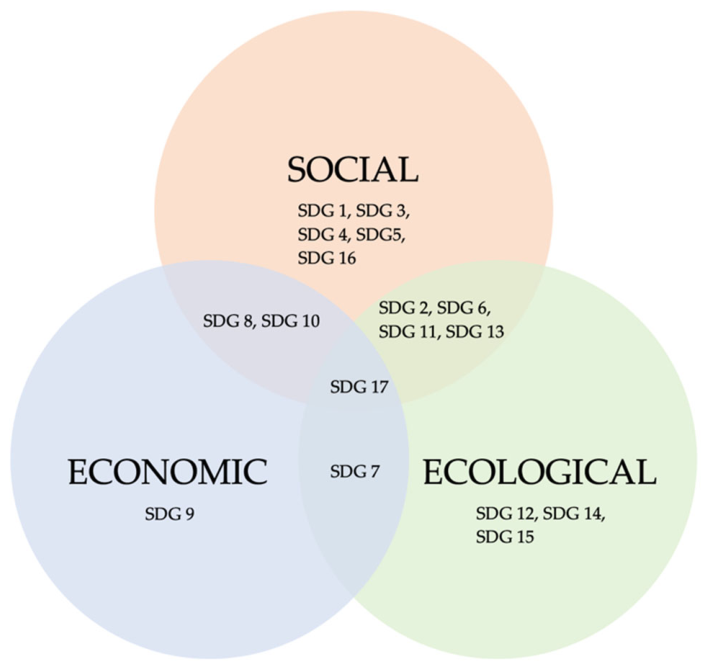
- The social dimension (people) encompasses aspects such as justice, human rights, participation, health, education, and fair working conditions. It aims to ensure a high quality of life for all. This includes poverty reduction, equal opportunities, social security systems, and the strengthening of communities and social cohesion.
- The ecological dimension (planet) focuses on protecting and reconstructing ecosystems, conserving natural resources, and limiting environmental pollution such as emissions, waste, and pollutants. The aim is to ensure a longer viability of the natural environment through climate protection, biodiversity conservation, sustainable land use, the expansion of renewable energies, and many more.
- The economic dimension (prosperity) describes a sustainable economic model that creates prosperity, employment, and innovation without overexploiting natural resources. Key elements include resource-efficient production, long-term investment, market stability, and the integration of environmental and social costs into economic decisions.
- SDG 12—Responsible Consumption and Production: This goal highlights the environmental, social, and ethical dimensions of consumption and production systems. Students are supported in developing critical thinking and foresight competencies to assess resource use, ecological footprints, and social implications of consumer behavior.
- An examination of this issue, however, also entails addressing, for example, the following SDGs:
- SDG 8—Decent Work and Economic Growth: Learning activities addressing SDG 8 encourage exploration of fair working conditions, ethical labor standards, and sustainable economic models. Students engage in evaluating the balance between economic efficiency, social well-being, and ecological boundaries, thereby strengthening decision-making and evaluative competencies.
- SDG 13—Climate Action: Educational initiatives aligned with SDG 13 focus on understanding the causes and effects of climate change as well as mitigation and adaptation strategies. By analyzing carbon footprints and evaluating climate policies, students can develop anticipatory competence and action-oriented awareness.
2.2. ESD and Interdisciplinary STEM Education
2.3. Example of a Learning Environment Addressing Sustainable Consumption
- Lessons 1–2: Introduction and global apple cultivation regions (geography: spatial classification, climate zones, import rationale).
- Lessons 3–4: Modeling greenhouse gas (GHG) emissions for South Africa–Hamburg transport (mathematics: volume/weight calculations, emission modeling).
- Lessons 5–6: Optimal transport routes using the Dijkstra algorithm (computer science: route optimization; geography: route geography).
- Lessons 7–8: Local ‘The Old Land’ cultivation and CA storage emissions (geography: regional production; mathematics: energy calculations).
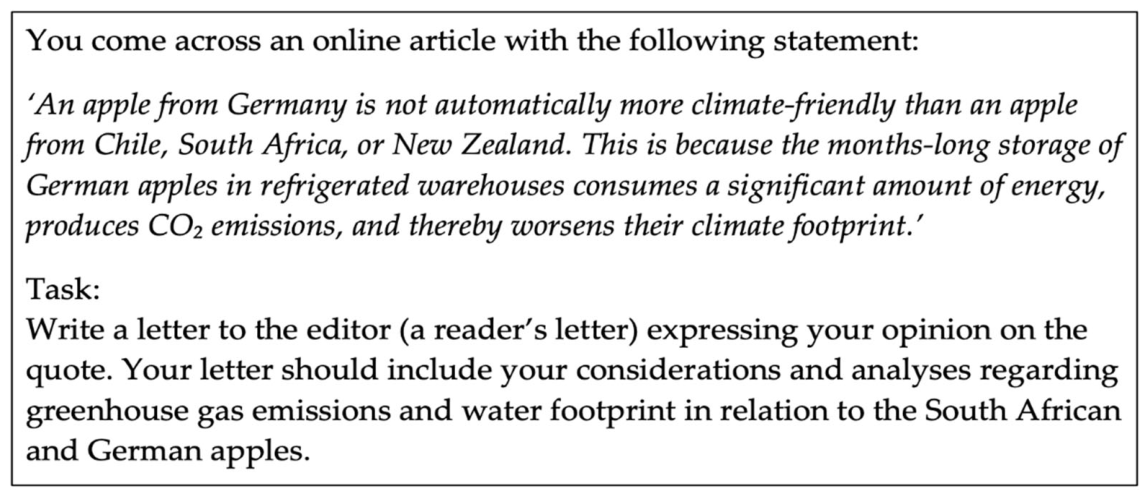
- Lessons 9–10: Comparative analysis of GHG emissions and water footprints (all subjects: integrated modeling/comparison).
- Lesson 11: Reflection on findings and personal consumer behavior.
2.4. Research Questions
3. Methods
3.1. Sample and Data Collection
3.2. Data Analysis
4. Results
4.1. Students’ Arguments According to the Three Pillars of Sustainability (RQ1a)
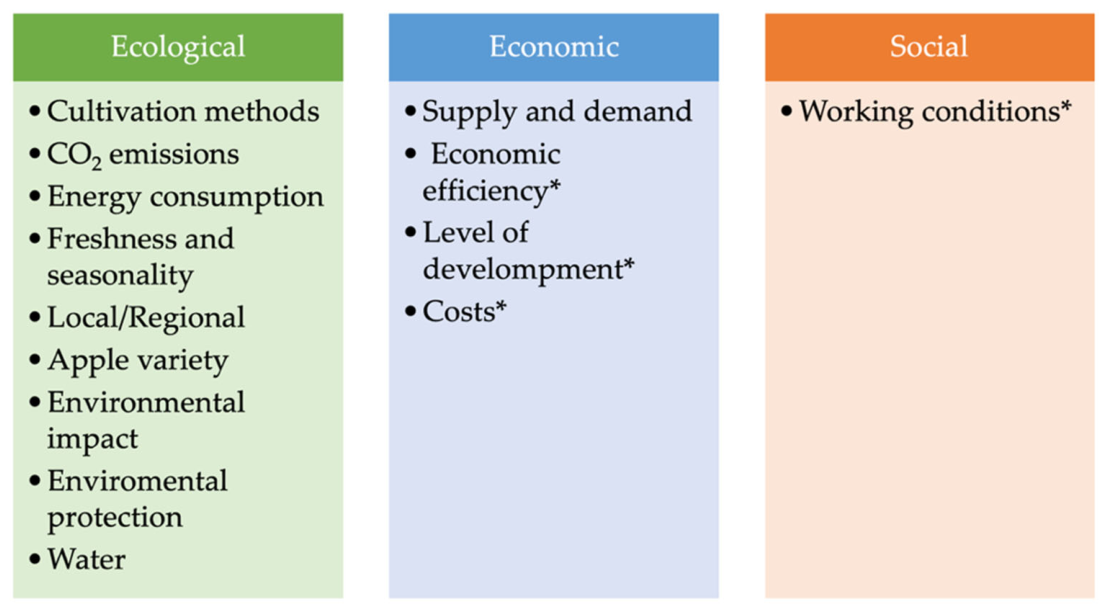
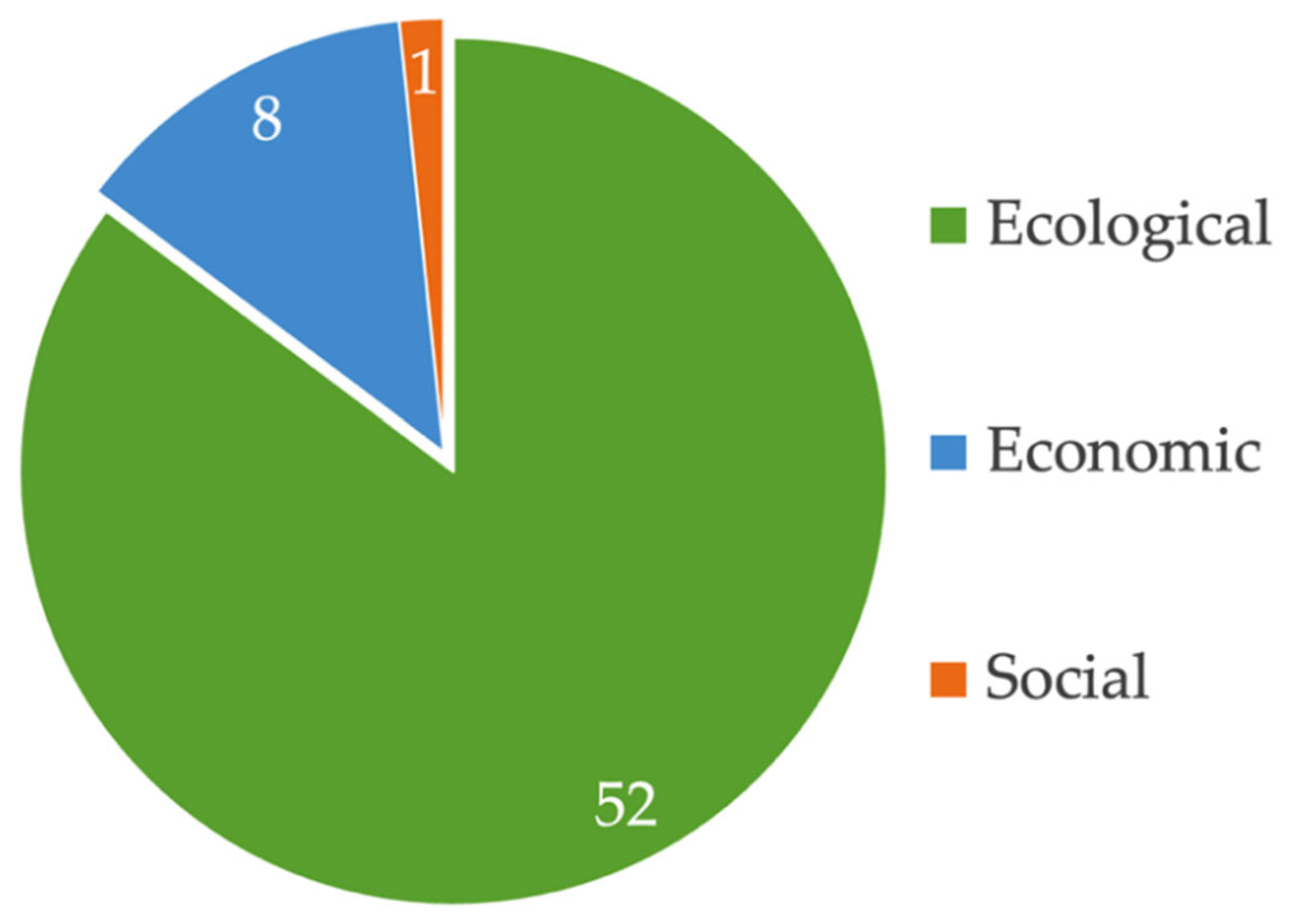
4.1.1. Ecological Dimension
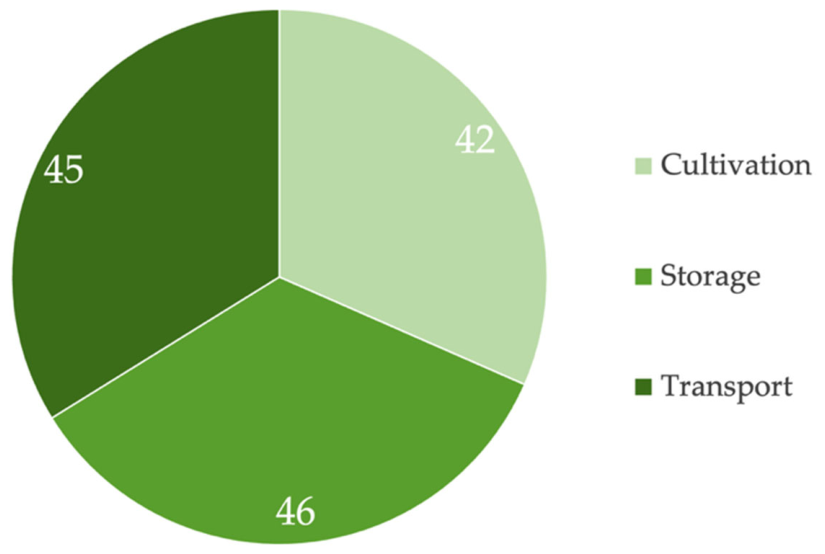
“…that even during cultivation, the carbon footprint of apples from Grabow (330 tones of CO2 per kg of apples) is more than 3 times higher than that of apples from the ‘The Old Land’ region (89 tones of CO2 per kg of apples).” (S4, pos. 4)“These figures show that from sowing to transporting their apples, South Africa releases far more greenhouse gases into the atmosphere than Germany, even though it (SA)does not store its apples.” (S66, pos. 3)
4.1.2. Economic Dimension
4.1.3. Social Dimension
4.2. Student Arguments: Connections to the Learning Environment and Independent Contributions (RQ1b)
4.3. Students’ ESD Competencies (RQ2)
5. Discussion
5.1. Structure of Students’ Arguments and Their Relation to the Learning Environment (RQ1)
5.2. Promoting Students’ ESD Competencies (RQ2)
6. Conclusions, Limitations, and Outlook
Author Contributions
Funding
Institutional Review Board Statement
Informed Consent Statement
Data Availability Statement
Conflicts of Interest
References
- Fensham, P.J. Preparing Citizens for a Complex World: The Grand Challenge of Teaching Socio-Scientific Issues in Science Education. In Science|Environment|Health; Zeyer, A., Kyburz-Graber, R., Eds.; Springer: Dordrecht, The Netherlands, 2012; pp. 7–29. [Google Scholar] [CrossRef] [Scilit]
- UNESCO. Education for Sustainable Development: A Roadmap; UNESCO: Paris, France, 2020. [Google Scholar] [CrossRef] [Scilit]
- Wiek, A.; Withycombe, L.; Redman, C.L. Key Competencies in Sustainability: A Reference Framework for Academic Program Development. Sustain. Sci. 2011, 6, 203–218. [Google Scholar] [CrossRef] [Scilit]
- Bybee, R.W. The Case for STEM Education: Challenges and Opportunities; NSTA: Arlington, TX, USA, 2013. [Google Scholar]
- English, L.D. STEM Education K-12: Perspectives on Integration. Int. J. STEM Educ. 2016, 3, 3. [Google Scholar] [CrossRef] [Scilit]
- Fischer, D.; Barth, M. Key Competencies for and beyond Sustainable Consumption An Educational Contribution to the Debate. GAIA-Ecol. Perspect. Sci. Soc. 2014, 23, 193–200. [Google Scholar] [CrossRef] [Scilit]
- Blanke, M.; Burdick, B. Food (Miles) for Thought-Energy Balance for Locally-Grown versus Imported Apple Fruit (3 Pp). Environ. Sci. Pollut. Res.-Int. 2005, 12, 125–127. [Google Scholar] [CrossRef] [Scilit] [PubMed]
- United Nations. Our Common Future; United Nations: New York, NY, USA, 1987. [Google Scholar]
- Hanisch, S.; Eirdosh, D. Behavioral Science and Education for Sustainable Development: Towards Metacognitive Competency. Sustainability 2023, 15, 7413. [Google Scholar] [CrossRef] [Scilit]
- Felix, S.M.; Lønnum, M.; Lykknes, A.; Staberg, R.L. Teachers’ Understanding of and Practices in Critical Thinking in the Context of Education for Sustainable Development: A Systematic Review. Educ. Sci. 2025, 15, 824. [Google Scholar] [CrossRef] [Scilit]
- Reffhaug, M.B.A.; Lysgaard, J.A. Conceptualisations of ‘Critical Thinking’ in Environmental and Sustainability Education. Environ. Educ. Res. 2024, 30, 1519–1534. [Google Scholar] [CrossRef] [Scilit]
- Jansen, K. Implicit Sociology, Interdisciplinarity and Systems Theories in Agricultural Science. Sociol. Rural. 2009, 49, 172–188. [Google Scholar] [CrossRef] [Scilit]
- Stevenson, R.B.; Whitehouse, H.; Field, E. Teaching Climate Justice Education Holistically in Schools. In Oxford Research Encyclopedia of Education; Oxford University Press: Oxford, UK, 2024. [Google Scholar] [CrossRef] [Scilit]
- Waas, T.; Hugé, J.; Verbruggen, A.; Wright, T. Sustainable Development: A Bird’s Eye View. Sustainability 2011, 3, 1637–1661. [Google Scholar] [CrossRef] [Scilit]
- Meadows, D.H.; Meadows, D.L.; Randers, J.; Benders, W.W., III. The Limits to Growth: A Report for the Club of Rome’s Project on the Predicament of Mankind; Meadows, D.L., Ed.; Universe Books: New York, NY, USA, 1972. [Google Scholar]
- Elkington, J. Cannibals with Forks: The Triple Bottom Line of 21. Century Business; Capstone: Oxford, UK, 1998. [Google Scholar]
- Barbier, E.B. The Concept of Sustainable Economic Development. Environ. Conserv. 1987, 14, 101–110. [Google Scholar] [CrossRef] [Scilit]
- United Nations. Division for Sustainable Development AGENDA 21; United Nations: New York, NY, USA, 1992. [Google Scholar]
- United Nations. General Assembly Transforming Our World: The 2030 Agenda for Sustainable Development; United Nations: New York, NY, USA, 2015. [Google Scholar]
- Krauss, J.E.; Jiménez Cisneros, A.; Requena-i-Mora, M. Mapping Sustainable Development Goals 8, 9, 12, 13 and 15 through a Decolonial Lens: Falling Short of ‘Transforming Our World’. Sustain. Sci. 2022, 17, 1855–1872. [Google Scholar] [CrossRef] [Scilit]
- Tremblay, D.; Fortier, F.; Boucher, J.; Riffon, O.; Villeneuve, C. Sustainable Development Goal Interactions: An Analysis Based on the Five Pillars of the 2030 Agenda. Sustain. Dev. 2020, 28, 1584–1596. [Google Scholar] [CrossRef] [Scilit]
- UNESCO; MGIEP. Textbooks for Sustainable Development, 1st ed.; UNESCO MGIEP: New Delhi, India, 2017. [Google Scholar]
- Zeidler, D.L.; Newton, M.H. Using a Socioscientific Issues Framework for Climate Change Education. In Teaching and Learning About Climate Change; Shepardson, D.P., Roychoudhury, A., Hirsch, A.S., Eds.; Routledge: New York, NY, USA, 2017; pp. 56–65. [Google Scholar] [CrossRef] [Scilit]
- Kellinghusen, A.; Orschulik, A.; Vorhölter, K.; Sprenger, S. Integrated Teaching in Geography and Mathematics Education: A Systematic Review. Sustainability 2025, 17, 7276. [Google Scholar] [CrossRef] [Scilit]
- European Commission. GreenComp, the European Sustainability Competence Framework; Publications Office: Luxembourg, 2022. [Google Scholar]
- Kultusministerkonferenz (KMK); Bundesministeriums für Wirtschaftliche Zusammenarbeit und Entwicklung (BMZ). Orientierungsrahmen Globale Entwicklung—Einer Bildung für Nachhaltige Entwicklung in der Gymnasialen Oberstufe (OR GOS); Engagement Global: Bonn, Germany, 2025. [Google Scholar]
- Rieckmann, M. Learning to Transform the World: Key Competencies in ESD. In Issues and Trends in Education for Sustainable Development; UNESCO, Ed.; Education on the move; United Nations Educational, Scientific and Cultural Organization: Paris, France, 2018; pp. 39–59. [Google Scholar]
- Dare, E.; Ellis, J.; Rouleau, M.; Roehrig, G.; Ring-Whalen, E. Current Practices in K-12 Integrated STEM Education: A Comparison Across Science Content Areas and Grade-Levels (Fundamental). In Proceedings of the 2022 ASEE Annual Conference & Exposition Proceedings; ASEE Conferences: Minneapolis, MN, USA, 2022. [Google Scholar]
- Singer-Brodowski, M. The Potential of Transformative Learning for Sustainability Transitions: Moving beyond Formal Learning Environments. Environ. Dev. Sustain. 2023, 27, 20621–20639. [Google Scholar] [CrossRef] [Scilit]
- Bybee, R.W. The Teaching of Science: 21st Century Perspectives, 1st ed.; National Science Teachers Association: Arlington, VA, USA, 2010. [Google Scholar]
- Siller, H.-S.; Günster, S.M.; Geiger, V. Mathematics as a Central Focus in STEM–Theoretical and Practical Insights from a Special Study Program Within Pre-Service (Prospective) Teacher Education. In Disciplinary and Interdisciplinary Education in STEM; Li, Y., Zeng, Z., Song, N., Eds.; Advances in STEM Education; Springer Nature: Cham, Switzerland, 2024; pp. 317–343. [Google Scholar] [CrossRef] [Scilit]
- Weintrop, D.; Beheshti, E.; Horn, M.; Orton, K.; Jona, K.; Trouille, L.; Wilensky, U. Defining Computational Thinking for Mathematics and Science Classrooms. J. Sci. Educ. Technol. 2016, 25, 127–147. [Google Scholar] [CrossRef] [Scilit]
- Vorhölter, K.; Siller, H.-S.; Just, J.; Orschulik, A.B.; Zieriacks, C. Education for Sustainable Development in Mathematics Classrooms. Environ. Educ. Res. 2025, 1–30. [Google Scholar] [CrossRef] [Scilit]
- Fan, S.-C.; Yu, K.-C.; Lin, K.-Y. A Framework for Implementing an Engineering-Focused STEM Curriculum. Int. J. Sci. Math. Educ. 2021, 19, 1523–1541. [Google Scholar] [CrossRef] [Scilit]
- Laurie, R.; Nonoyama-Tarumi, Y.; Mckeown, R.; Hopkins, C. Contributions of Education for Sustainable Development (ESD) to Quality Education: A Synthesis of Research. J. Educ. Sustain. Dev. 2016, 10, 226–242. [Google Scholar] [CrossRef] [Scilit]
- Eggert, S.; Nitsch, A.; Boone, W.J.; Nückles, M.; Bögeholz, S. Supporting Students’ Learning and Socioscientific Reasoning About Climate Change—The Effect of Computer-Based Concept Mapping Scaffolds. Res. Sci. Educ. 2017, 47, 137–159. [Google Scholar] [CrossRef] [Scilit]
- Straser, O.; Bašić, M.; Doorman, M.; Weinberg, L.; Kapelari, S.; Maaß, K. Fostering Critical Thinking in STEM Education. Educ. Sci. 2026, 16, 461. [Google Scholar] [CrossRef] [Scilit]
- Staats, S. The Interdisciplinary Future of Mathematics Curriculum. In For the Learning of Mathematics; University of Alberta: Edmonton, AB, Canada, 2014; pp. 7–9. [Google Scholar]
- Just, J.; Siller, H.-S. The Role of Mathematics in STEM Secondary Classrooms: A Systematic Literature Review. Educ. Sci. 2022, 12, 629. [Google Scholar] [CrossRef] [Scilit]
- Kristensen, M.A.; Larsen, D.M.; Seidelin, L.; Svabo, C. The Role of Mathematics in STEM Activities: Syntheses and a Framework from a Literature Review. Int. J. Educ. Math. Sci. Technol. 2023, 12, 418–431. [Google Scholar] [CrossRef] [Scilit]
- Tytler, R.; Anderson, J.; Williams, G. Exploring a Framework for Integrated STEM: Challenges and Benefits for Promoting Engagement in Learning Mathematics. ZDM–Math. Educ. 2023, 55, 1299–1313. [Google Scholar] [CrossRef] [Scilit]
- Dorn, R.I.; Douglass, J.; Ekiss, G.O.; Trapido-lurie, B.; Comeaux, M.; Mings, R.; Eden, R.; Davis, C.; Hinde, E.; Ramakrishna, B. Learning Geography Promotes Learning Math: Results and Implications of Arizona’s GeoMath Grade K-8 Program. J. Geogr. 2005, 104, 151–159. [Google Scholar] [CrossRef] [Scilit]
- Murphy, A.B. Geography’s Crosscutting Themes: Golden Anniversary Reflections on “The Four Traditions of Geography”. J. Geogr. 2014, 113, 181–188. [Google Scholar] [CrossRef] [Scilit]
- Meadows, M.E. Geography Education for Sustainable Development. Geogr. Sustain. 2020, 1, 88–92. [Google Scholar] [CrossRef] [Scilit]
- Biddulph, M.; Lambert, D.; Balderstone, D. Learning to Teach Geography in the Secondary School: A Companion to School Experience, 4th ed.; Routledge: Abingdon, UK; Oxford, UK; New York, NY, USA, 2020. [Google Scholar] [CrossRef] [Scilit]
- Schulz, S.; Pinkwart, N. Physical Computing in STEM Education. In Proceedings of the Workshop in Primary and Secondary Computing Education; ACM: London, UK, 2015; pp. 134–135. [Google Scholar]
- Maratova, T.; Bostanov, B.; Kultan, J.; Nauryzbayev, D.; Sarsenkul, T. The Need for Modern Teachers to Integrate Informatics with STEM Education. World Trans. Eng. Technol. Educ. 2024, 22, 38–43. [Google Scholar]
- Kelley, T.R.; Knowles, J.G. A Conceptual Framework for Integrated STEM Education. Int. J. STEM Educ. 2016, 3, 11. [Google Scholar] [CrossRef] [Scilit]
- Stevenson, R.B. Developing Habits of Environmental Thoughtfulness Through the In-Depth Study of Select Environmental Issues. Can. J. Environ. Educ. 1997, 2, 183–201. [Google Scholar]
- Kellinghusen, A.; Sprenger, S.; Zieriacks, C.; Orschulik, A.; Vorhölter, K.; Schulz, S. Secondary School Students’ Perceptions of Subjects in Integrated STEM Teaching. Educ. Sci. 2025, 15, 821. [Google Scholar] [CrossRef] [Scilit]
- Vorhölter, K.; Appel, C.; Höttecke, D.; Kellinghusen, A.; Lohwasser, D.; Monir, N.; Orschulik, A.; Oswald, L.; Schuck, P.; Schütte, M.; et al. Eine Fächerintegrierende Unterrichtsreihe für den MINT-Unterricht aus dem Projekt “Nachhaltig Handeln-MINT4all”; Zenodo: Geneva, Switzerland, 2025. [Google Scholar] [CrossRef]
- Kellinghusen, A.; Orschulik, A.; Zieriacks, C.; Sprenger, S.; Vorhölter, K.; Schulz, S. Schüler*Innentexte aus Einer Fächerintegrierenden Unterrichtseinheit zum Nachhaltigen Konsum im Kontext des Klimawandels; Zenodo: Geneva, Switzerland, 2026. [Google Scholar] [CrossRef]
- Kuckartz, U.; Rädiker, S. Qualitative Content Analysis: Methods, Practice and Software, 2nd ed.; SAGE: Los Angeles, CA, USA; London, UK; New Delhi, India; Singapore; Washington, DC, USA; Melbourne, Australia, 2023. [Google Scholar]
- Brennan, R.L.; Prediger, D.J. Coefficient Kappa: Some Uses, Misuses, and Alternatives. Educ. Psychol. Meas. 1981, 41, 687–699. [Google Scholar] [CrossRef] [Scilit]
- Vare, P.; Scott, W. Learning for a Change: Exploring the Relationship Between Education and Sustainable Development. J. Educ. Sustain. Dev. 2007, 1, 191–198. [Google Scholar] [CrossRef] [Scilit]




| Class | 1 | 2 | 3 | 4 |
|---|---|---|---|---|
| Number of students | 8 | 6 | 19 | 19 |
Disclaimer/Publisher’s Note: The statements, opinions and data contained in all publications are solely those of the individual author(s) and contributor(s) and not of MDPI and/or the editor(s). MDPI and/or the editor(s) disclaim responsibility for any injury to people or property resulting from any ideas, methods, instructions or products referred to in the content. |
© 2026 by the authors. Licensee MDPI, Basel, Switzerland. This article is an open access article distributed under the terms and conditions of the Creative Commons Attribution (CC BY) license.
Share and Cite
Peter, I.; Kellinghusen, A.; Schulz, S.; Sprenger, S.; Vorhölter, K. Secondary Students’ Reasons for Sustainable Consumption in STEM Education. Sustainability 2026, 18, 4520. https://doi.org/10.3390/su18094520
Peter I, Kellinghusen A, Schulz S, Sprenger S, Vorhölter K. Secondary Students’ Reasons for Sustainable Consumption in STEM Education. Sustainability. 2026; 18(9):4520. https://doi.org/10.3390/su18094520
Chicago/Turabian StylePeter, Iris, Anna Kellinghusen, Sandra Schulz, Sandra Sprenger, and Katrin Vorhölter. 2026. "Secondary Students’ Reasons for Sustainable Consumption in STEM Education" Sustainability 18, no. 9: 4520. https://doi.org/10.3390/su18094520
APA StylePeter, I., Kellinghusen, A., Schulz, S., Sprenger, S., & Vorhölter, K. (2026). Secondary Students’ Reasons for Sustainable Consumption in STEM Education. Sustainability, 18(9), 4520. https://doi.org/10.3390/su18094520