Assessing Ecological Vulnerability in the Northern Guangdong Mountains Using Deep Learning

 , , ,
, , ,
Abstract
1. Introduction
- (1)
- Integrate geological factors into a deep learning-based vulnerability assessment framework;
- (2)
- Apply and compare DNN and CNN models for ecological vulnerability modeling;
- (3)
- Quantify the relative importance of selected vulnerability factors;
- (4)
- Delineate ecological–geological zones to support regional management.
2. Materials and Methods
2.1. Study Area
2.2. Methodology
- Conduct field investigations in the study area and, in combination with literature data and remote sensing imagery, identify the inventory of ecologically vulnerable areas.
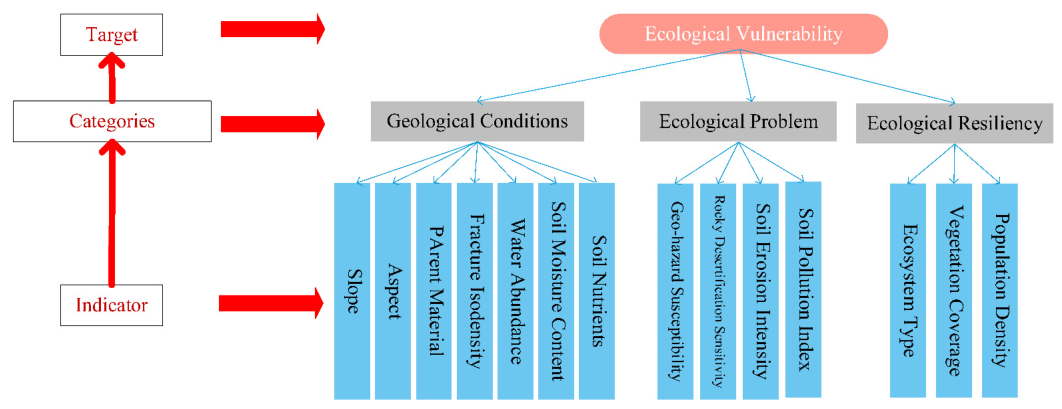
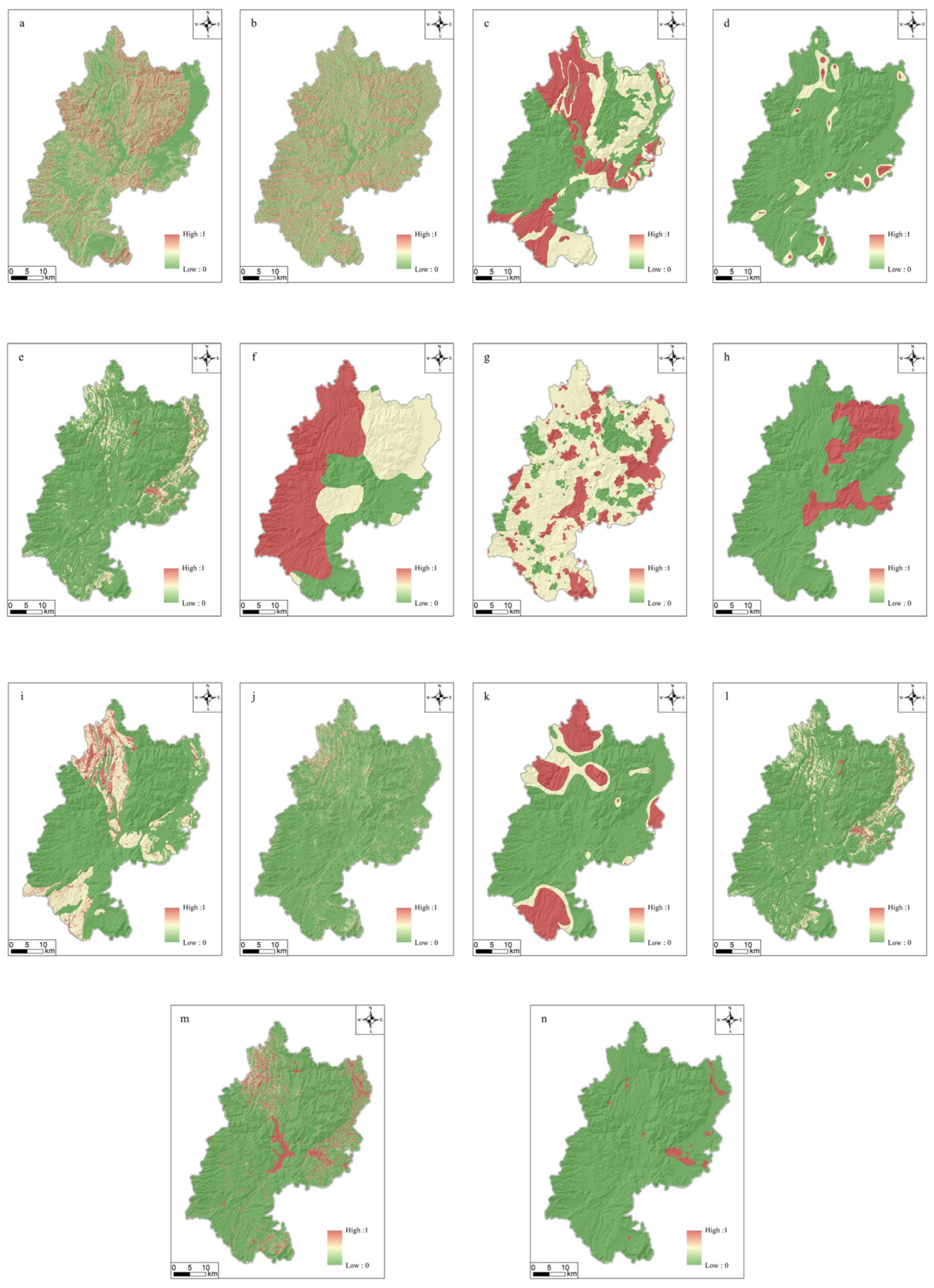
- Collect geological, ecological, climatic, and socio-economic data extensively. Based on data analysis and field investigation results, fourteen ecological vulnerability indicators were selected from three aspects: geological conditions, ecological problems, and ecosystem resilience.
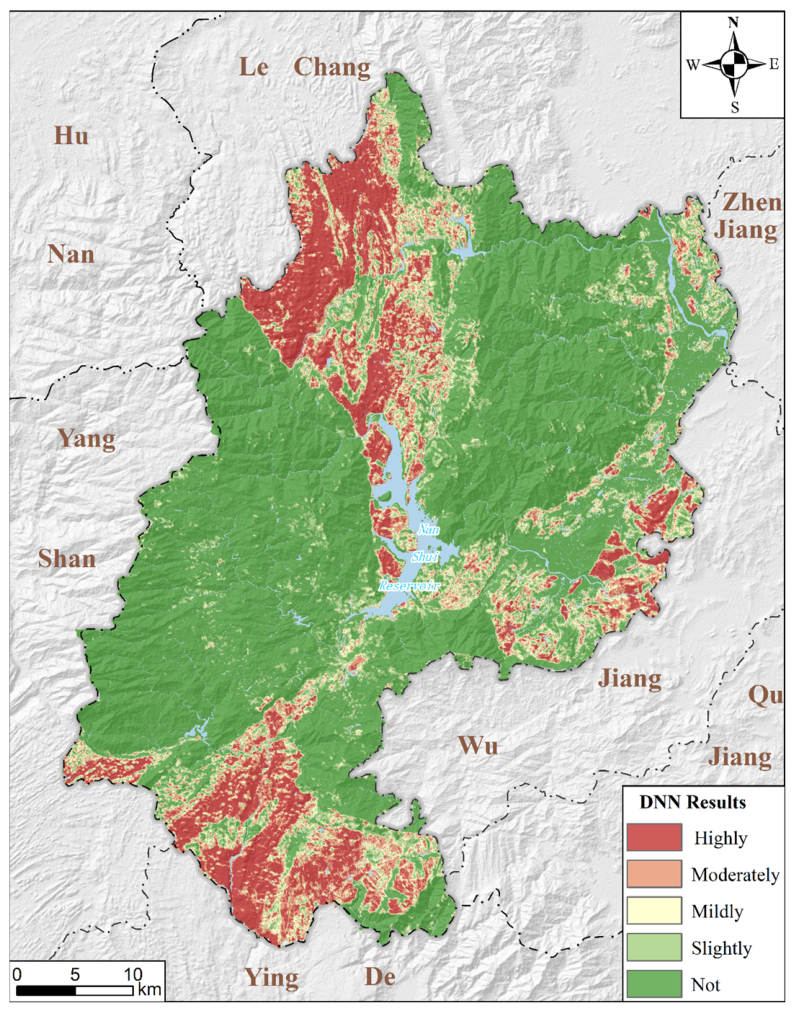
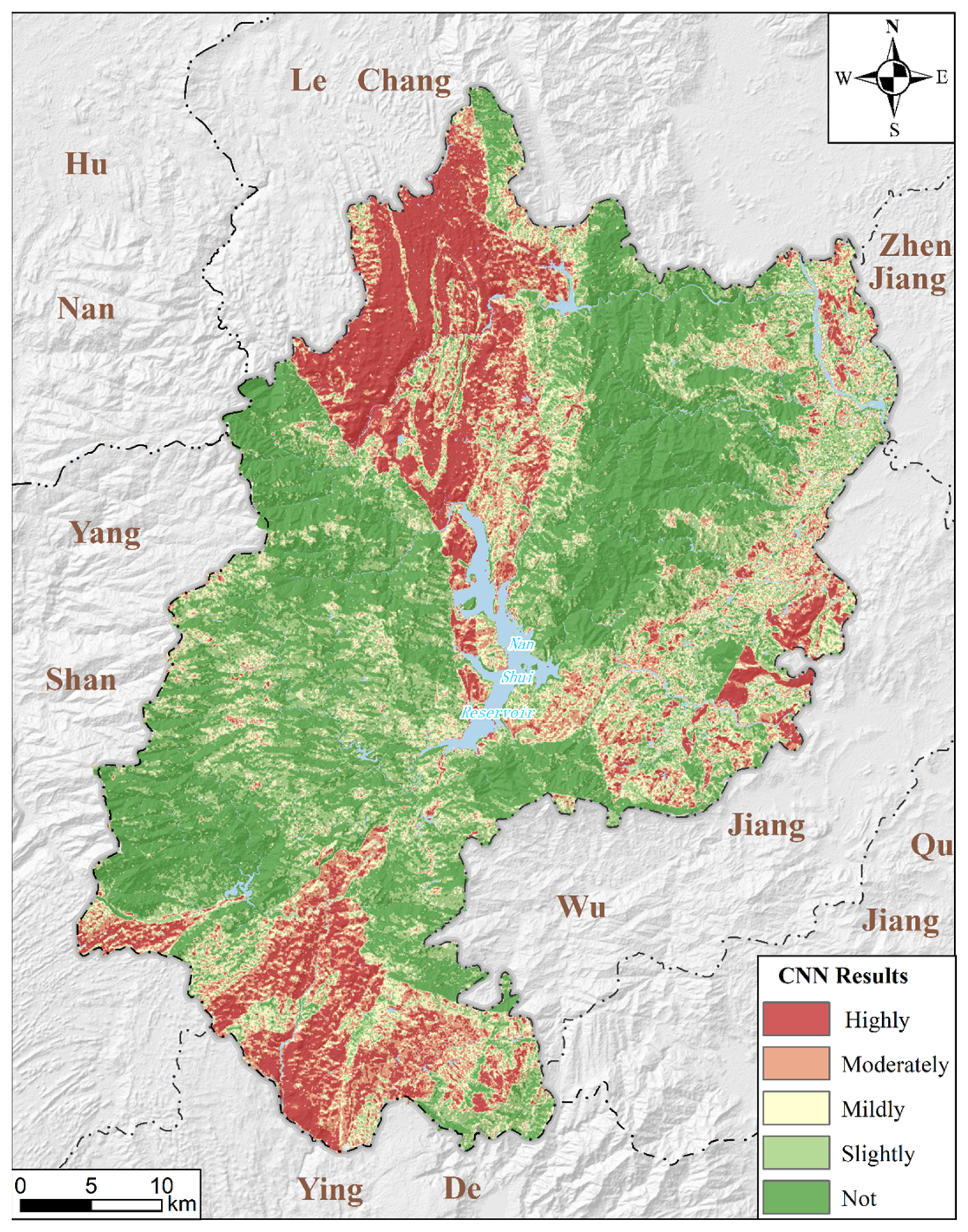
- Apply two deep learning approaches, namely deep neural networks (DNN) and convolutional neural networks (CNN), and optimize their configurations using hyperparameter tuning to obtain ecological vulnerability assessment results.
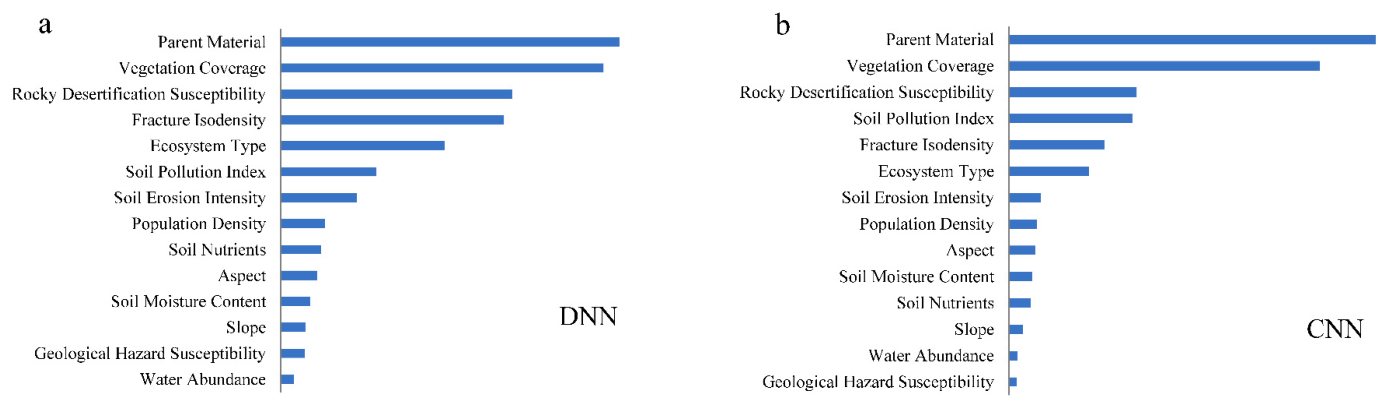
- Use the random forest (RF) method to analyze the weight contribution of each factor within the models.
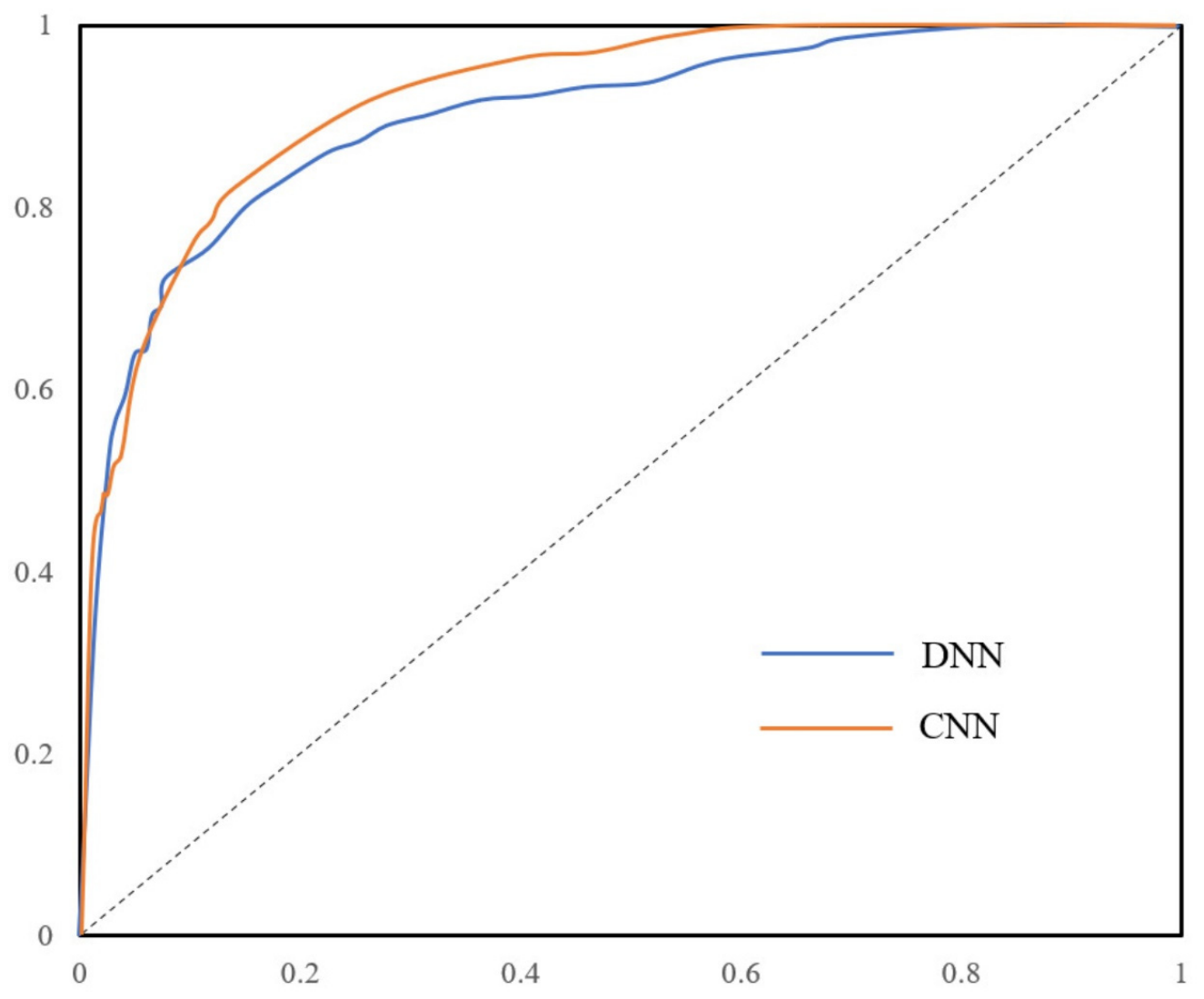
- Evaluate model performance using the receiver operating characteristic (ROC) curve, area under the curve (AUC), mean absolute error (MAE), and root mean square error (RMSE).
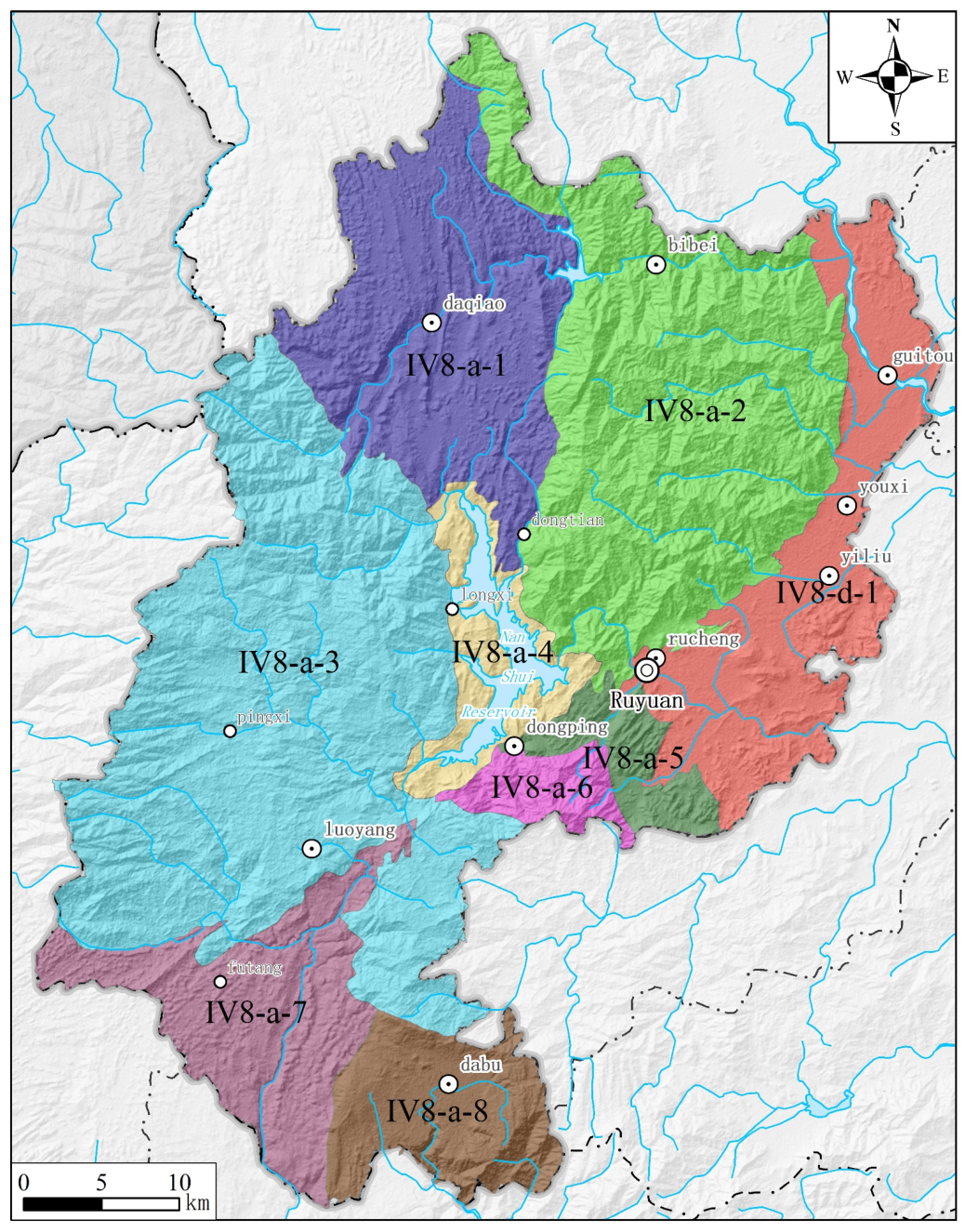
- Based on the results of the optimal model, divide the study area into nine ecological vulnerability zones and propose targeted restoration and conservation recommendations.
2.3. Dataset Preparation
2.3.1. Field Data Collection
2.3.2. Basis for the Selection of Vulnerability Influencing Factors
2.3.3. Preparation of Vulnerability Influencing Factors
2.3.4. Data Preprocessing
2.4. Deep Learning Models and Methods Used in This Study
2.4.1. Deep Neural Network (DNN)
2.4.2. Convolutional Neural Network (CNN)
2.4.3. Hyperparameter Optimization
2.4.4. Random Forest Weight Evaluation
2.5. From Binary Training to Continuous Multi-Level Vulnerability Mapping
3. Results
3.1. Key Model Training Parameters
3.2. Ecological Vulnerability Assessment Map
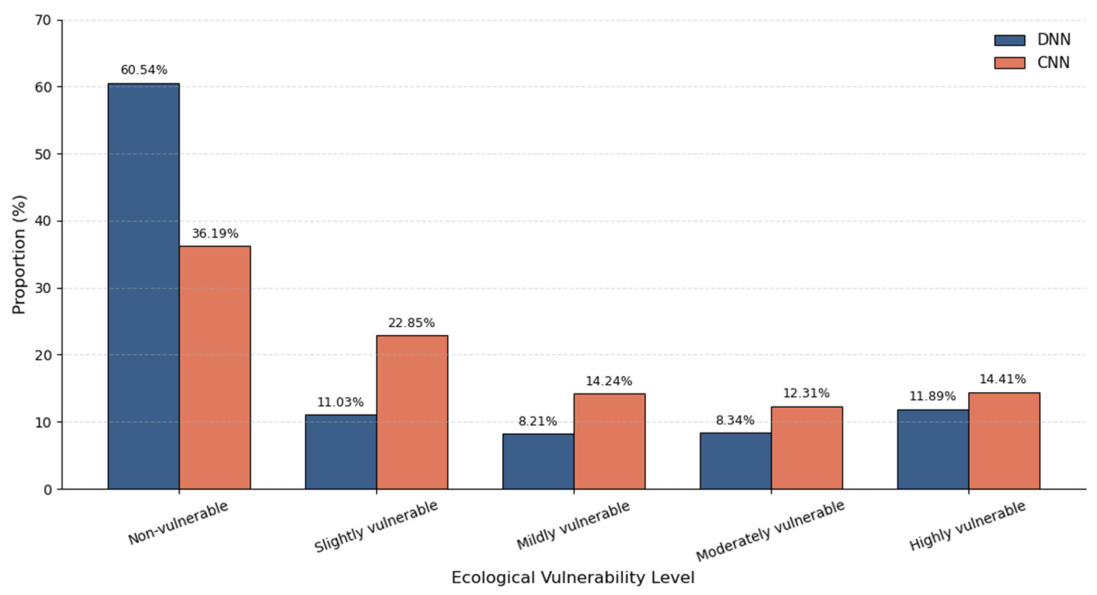
3.3. Statistical Characteristics of the Predicted Probability Distributions
3.4. Model Validation
3.5. Factor Importance Analysis Based on the Random Forest Algorithm
4. Discussion
4.1. Analysis of Model Differences
4.2. Ecological–Geological Zoning Map
4.3. Ecological–Geological Zoning Protection Recommendations
5. Conclusions
Supplementary Materials
Author Contributions
Funding
Institutional Review Board Statement
Informed Consent Statement
Data Availability Statement
Acknowledgments
Conflicts of Interest
References
- Delgado-Baquerizo, M.; Reich, P.B.; Trivedi, C.; Eldridge, D.J.; Abades, S.; Alfaro, F.D.; Bastida, F.; Berhe, A.A.; Cutler, N.A.; Gallardo, A. Multiple elements of soil biodiversity drive ecosystem functions across biomes. Nat. Ecol. Evol. 2020, 4, 210–220. [Google Scholar] [CrossRef] [PubMed]
- Shi, T.; Yang, S.; Zhang, W.; Zhou, Q. Coupling coordination degree measurement and spatiotemporal heterogeneity between economic development and ecological environment—Empirical evidence from tropical and subtropical regions of China. J. Clean. Prod. 2020, 244, 118739. [Google Scholar] [CrossRef]
- Zhao, Y.B.; Ni, Z.Y.; Ouyang, Y.; Chen, X.Y.; Wang, D.; Liu, J.J.; Liu, H. Research progress of eco-geological environment carrying capacity. Sediment. Geol. Tethyan Geol. 2022, 42, 529–541. [Google Scholar]
- Amundson, R.; Berhe, A.A.; Hopmans, J.W.; Olson, C.; Sztein, A.E.; Sparks, D.L. Soil and human security in the 21st century. Science 2015, 348, 1261071. [Google Scholar] [CrossRef]
- Liu, H.; Yu, H.; Song, W.J.; Li, T.; Wu, J.Y.; Chen, H.; Zhang, J.H.; Xiao, Q.L. Chemical Weathering Intensity, Element Migration, and Soil Formation Environment of the Maoniushan Granite-Soil Profile, Xichang, SW China. Minerals 2026, 16, 293. [Google Scholar] [CrossRef]
- Yi, Z.W.; Liu, H.; Tian, Z.W.; Liu, H.; Zhang, J.Z.; Wu, Z.K.; Su, Y.; Luo, H.; Chen, H. Assessment of Eco-Geological Vulnerability Using Multiple Machine Learning Models: A Case Study of the Three Gorges Reservoir Area, China. Sustainability 2026, 18, 1758. [Google Scholar] [CrossRef]
- Zou, Y.; Li, Z. Regional ecological effect of intensive development zones in Jiangxi Province. J. East China Univ. Technol. Nat. Sci. 2019, 42, 412–417. [Google Scholar]
- Turner, B.L.; Kasperson, R.E.; Matson, P.A.; McCarthy, J.J.; Corell, R.W.; Christensen, L.; Eckley, N.; Kasperson, J.X.; Luers, A.; Martello, M.L. A framework for vulnerability analysis in sustainability science. Proc. Natl. Acad. Sci. USA 2003, 100, 8074–8079. [Google Scholar] [CrossRef]
- Zhang, X.; Zheng, Y.; Yang, Y.; Ren, H.; Liu, J. Spatiotemporal evolution of ecological vulnerability on the Loess Plateau. Ecol. Indic. 2025, 170, 113060. [Google Scholar] [CrossRef]
- Li, W.Y.; Chen, X.Y.; Yi, J.; Zhong, B.; Li, T. Ecological quality assessment in Ganjiang new district based on remote sensing ecological index. J. East China Univ. Technol. Nat. Sci. 2020, 43, 83–89. [Google Scholar]
- Liu, H.; Huang, H.X.; Yuan, O.; Li, W.; Zhang, J.; Zhang, T. Soil’s geologic investigation in Daliangshan, Xichang, Sichuan. Sediment. Geol. Tethyan Geol. 2020, 40, 91–105. [Google Scholar]
- Sun, J.; Che, M.; Yang, F.; Zhang, C.; Yin, S.; Wei, C. Temporal and spatial variability of landscape ecological risk in the Yangtze River Midstream Urban Agglomeration in the context of climate change. Hum. Ecol. Risk Assess. Int. J. 2025, 31, 165–194. [Google Scholar] [CrossRef]
- Fang, Z.; Zhang, Y.F.; Ding, M.H. Ecological changes analysis based on RSEI in the national ecological civilization experimental area (Jiangxi): A case study of Fuzhou city. J. East China Inst. Technol. Nat. Sci. Ed. 2020, 43, 271–279. [Google Scholar]
- Ouyang, Y.; Liu, H.; Zhang, J.H.; Tang, F.W.; Zhang, T.J.; Huang, Y.; Huang, H.X.; Li, F.; Chen, M.H.; Song, W.J. Exploration Techniques and Methods of the Eco–Geological Survey in Mountainous Region, Southwest China. Northwestern Geol. 2023, 56, 218–242. [Google Scholar] [CrossRef]
- Ran, Y.; Zhao, X.; Ye, X.; Wang, X.; Pu, J.; Huang, P.; Zhou, Y.; Tao, J.; Wu, B.; Dong, W. A framework for territorial spatial ecological restoration zoning integrating “Carbon neutrality” and “Human–geology–ecology”: Theory and application. Sustain. Cities Soc. 2024, 115, 105824. [Google Scholar] [CrossRef]
- Zhang, T.J.; Liu, H.; Ouyang, Y.; Huang, H.X.; Zhang, J.H.; Li, F.; Xiao, Q.L.; Zeng, J.; Hou, Q.; Wen, D.K.; et al. A preliminary discussion on the physical and chemical characteristics and main controlling factors of soil and parent material in the middle and high mountain area—Take Xichang as an example. Sediment. Geol. Tethyan Geol. 2020, 40, 106–114. [Google Scholar]
- Zhang, D.; Chen, X.; Pang, X.; Guo, J.G.; Ren, G.G.; Luo, J.; Hua, G.H. Ecogeochemical characteristics and source analysis of heavy metal elements in Southern Yudu, Jiangxi Province. J. East China Univ. Technol. Nat. Sci. 2024, 47, 45–54. [Google Scholar]
- Zhang, Z.; Tyc, J.; Hensel, M. An Ecogeomorphological Approach to Land–Use Planning and Natural Hazard Risk Mitigation: A Literature Review. Land 2025, 14, 1911. [Google Scholar] [CrossRef]
- Huang, Z.X.; Li, M.G.; Feng, Z.B.; Chen, N.N.; Liu, Y. Ecological environment change in Dongxiang District based on remote sensing ecological index. J. East China Univ. Technol. Nat. Sci. 2022, 45, 60–66. [Google Scholar]
- Wu, J.; Liu, H.; Li, T.; Ou-Yang, Y.; Zhang, J.-H.; Zhang, T.-J.; Huang, Y.; Gao, W.-L.; Shao, L. Evaluating the Ecological Vulnerability of Chongqing Using Deep Learning. Environ. Sci. Pollut. Res. 2023, 30, 86365–86379. [Google Scholar] [CrossRef]
- Zhang, X.Y.; Li, L.; Pei, N.C.; Gao, B.T.; Hao, Z.Z.; Zou, J.Y.; Cui, K.; Wang, L. Construction of Evaluation Index System for Damage of Forest Ecological Services and Functions in Guangdong Province Using the Analytic Hierarchy Process (AHP). For. Grassl. Resour. Res. 2025, 4, 112. [Google Scholar] [CrossRef]
- IPCC. Climate Change 2022: Impacts, Adaptation and Vulnerability; Cambridge University Press: Cambridge, UK; New York, NY, USA, 2022; Available online: https://www.ipcc.ch/report/ar6/wg2/ (accessed on 1 March 2026).
- Xu, D.; Wang, Y.; Wang, J. A review of social–ecological system vulnerability in desertified regions: Assessment, simulation, and sustainable management. Sci. Total Environ. 2024, 931, 172604. [Google Scholar] [CrossRef]
- Abdenour, A.; Sinan, M.; Lekhlif, B. Toward Sustainable Wetland Management: A Literature Review of Global Wetland Vulnerability Assessment Techniques in the Context of Rising Pressures. Sustainability 2025, 17, 7962. [Google Scholar] [CrossRef]
- Wang, S.; Wu, Y.; Li, M.; Li, W. Ecological vulnerability assessment and control factor analysis based on vegetation productivity in Yinshanbeilu of Inner Mongolia. Geomat. Nat. Hazards Risk 2026, 17, 2605509. [Google Scholar] [CrossRef]
- Janzen, S.; Narvaez, L.; Ortiz-Vargas, A.; O’Connor, J.; Walz, Y.; Sebesvari, Z. Ecosystem and disaster risk: A review of ecological indicators in the context of disaster risk assessments and discussion of their usefulness to inform ecosystem health. Nat.-Based Solut. 2025, 8, 100260. [Google Scholar] [CrossRef]
- Gao, J.; Jiao, K.; Wu, S. Quantitative assessment of ecosystem vulnerability to climate change: Methodology and application in China. Environ. Res. Lett. 2018, 13, 094016. [Google Scholar] [CrossRef]
- Zhang, X.; Wang, S.; Liu, K.; Huang, X.; Shi, J.; Li, X. Projecting response of ecological vulnerability to future climate change and human policies in the Yellow River Basin, China. Remote Sens. 2024, 16, 3410. [Google Scholar] [CrossRef]
- Nkinahamira, F.; Feng, A.; Zhang, L.; Rong, H.; Ndagijimana, P.; Guo, D.; Cui, B.; Zhang, H. Machine learning approaches for monitoring environmental metal pollutants: Recent advances in source apportionment, detection, quantification, and risk assessment. TrAC Trends Anal. Chem. 2024, 180, 117980. [Google Scholar] [CrossRef]
- Espíndola, R.P.; Picanço, M.M.; de Andrade, L.P.; Ebecken, N.F.F. Applications of Machine Learning Methods in Sustainable Forest Management. Climate 2025, 13, 159. [Google Scholar] [CrossRef]
- Abdullah, S.; Barua, D. Combining Geographical Information System (GIS) and machine learning to monitor and predict vegetation vulnerability: An Empirical Study on Nijhum Dwip, Bangladesh. Ecol. Eng. 2022, 178, 106577. [Google Scholar] [CrossRef]
- Yu, R.; Liang, L.; Su, X.; Cheng, J. A driver based framework for vulnerability assessment of the poverty stricken areas of Funiu Mountain, China. Ecol. Indic. 2020, 113, 106209. [Google Scholar] [CrossRef]
- Chen, W. A multi-scale assessment of ecosystem health based on the Pressure–State–Response framework: A case in the Middle Reaches of the Yangtze River Urban Agglomerations, China. Environ. Sci. Pollut. Res. 2022, 29, 29202–29219. [Google Scholar] [CrossRef]
- Raufirad, V.; Heidari, Q.; Hunter, R.; Ghorbani, J. Relationship between socioeconomic vulnerability and ecological sustainability: The case of Aran–V–Bidgol’s rangelands, Iran. Ecol. Indic. 2018, 85, 613–623. [Google Scholar] [CrossRef]
- Zhou, T.; Zhou, R.Q.; Zhao, W.S.; Guo, J.Q.; Chen, Z.X.; Chen, F.; Peng, S.L. Ecosystem Biodiversity and Spatial Location of Mountain Danxiashan in Shaoguan, Guangdong. J. Sun Yat-Sen. Univ. 2024, 63, 104–113. [Google Scholar] [CrossRef]
- Zhang, Y.Y.; Lu, R.W.; Tang, B.; Lin, L. Study on the Vulnerability of Ecological–Economic System and Obstacles in the Poor Areas of Northern Guangdong: Taking 8 Counties of Shaoguan City as an Example. Ecol. Econ. 2021, 37, 213–220. [Google Scholar]
- Liu, Y.; Wang, L.; Lu, Y.; Zou, Q.; Yang, L.; He, Y.; Gao, W.; Li, Q. Identification and optimization methods for delineating ecological red lines in Sichuan Province of southwest China. Ecol. Indic. 2023, 146, 109786. [Google Scholar] [CrossRef]
- Song, S.; Wang, S.; Gong, Y.; Yu, Y. The past and future dynamics of ecological resilience and its spatial response analysis to natural and anthropogenic factors in Southwest China with typical Karst. Sci. Rep. 2024, 14, 19166. [Google Scholar] [CrossRef] [PubMed]
- Arrogante-Funes, F.; Mouillot, F.; Moreira, B.; Aguado, I.; Chuvieco, E. Mapping and assessment of ecological vulnerability to wildfires in Europe. Fire Ecol. 2024, 20, 98. [Google Scholar] [CrossRef]
- Li, Y.; Xie, W.; Sui, K.; Zhang, D.; Wan, Q. Revealing various change characteristics and drivers of ecological vulnerability in the Luan river basin based on the SRP model. Sci. Rep. 2025, 15, 33021. [Google Scholar] [CrossRef]
- Wang, Y.; Xue, Z.-C.; Yang, Y.; Ren, W.; Ju, A.-Q. The impact of ecological vulnerability on ecosystem service value and threshold identification: A case study of the Zhangjiakou–Chengde area, China. Front. Environ. Sci. 2025, 13, 1583841. [Google Scholar] [CrossRef]
- Lv, H.; Wu, S.; Hou, Z. Evaluation, Spatial Analysis and Prediction of Ecological Vulnerability in Chongqing Municipality Based on GIS and Principal Component Analysis (PCA). Pol. J. Environ. Stud. 2025, 34, 8143–8156. [Google Scholar] [CrossRef]
- SL 190–2007; Soil Erosion Classification and Grading Standard. Ministry of Water Resources of the People’s Republic of China: Beijing, China, 2008.
- Fan, J.; Ma, C.; Zhong, Y. A selective overview of deep learning. Stat. Sci. A Rev. J. Inst. Math. Stat. 2020, 36, 264. [Google Scholar] [CrossRef]
- Liu, R.; Li, Y.; Tao, L.; Liang, D.; Zheng, H.-T. Are we ready for a new paradigm shift? a survey on visual deep mlp. Patterns 2022, 3, 100520. [Google Scholar] [CrossRef] [PubMed]
- Oh, J.; Kim, S.; Lee, C.; Cha, J.-H.; Yang, S.Y.; Im, S.G.; Park, C.; Jang, B.C.; Choi, S.-Y. Preventing Vanishing Gradient Problem of Hardware Neuromorphic System by Implementing Imidazole-Based Memristive ReLU Activation Neuron. Adv. Mater. 2023, 35, 2300023. [Google Scholar] [CrossRef]
- Fu, Q. Dynamic Research on Youth Thought, Behavior, and Growth Law Based on Deep Learning Algorithm. Int. J. Data Warehous. Min. (IJDWM) 2023, 19, 1–19. [Google Scholar] [CrossRef]
- Li, X.; Zhai, M.; Zheng, L.; Zhou, L.; Xie, X.; Zhao, W.; Zhang, W. Efficient residual network using hyperspectral images for corn variety identification. Front. Plant Sci. 2024, 15, 1376915. [Google Scholar] [CrossRef]
- Raj, R.; Kos, A. An extensive study of convolutional neural networks: Applications in computer vision for improved robotics perceptions. Sensors 2025, 25, 1033. [Google Scholar] [CrossRef]
- Ding, A.; Zhang, Q.; Zhou, X.; Dai, B. Automatic recognition of landslide based on CNN and texture change detection. In Proceedings of the 2016 31st Youth Academic Annual Conference of Chinese Association of Automation (YAC), Wuhan, China, 11–13 November 2016; IEEE: Piscataway, NJ, USA, 2016; pp. 444–448. [Google Scholar] [CrossRef]
- Li, Z.; Liu, F.; Yang, W.; Peng, S.; Zhou, J. A survey of convolutional neural networks: Analysis, applications, and prospects. IEEE Trans. Neural Netw. Learn. Syst. 2022, 33, 6999–7019. [Google Scholar] [CrossRef]
- Gu, J.; Wang, Z.; Kuen, J.; Ma, L.; Shahroudy, A.; Shuai, B.; Liu, T.; Wang, X.; Wang, G.; Cai, J.; et al. Recent advances in convolutional neural networks. Pattern Recognit. 2018, 77, 354–377. [Google Scholar] [CrossRef]
- Khan, A.; Sohail, A.; Zahoora, U.; Qureshi, A.S. A survey of the recent architectures of deep convolutional neural networks. Artif. Intell. Rev. 2020, 53, 5455–5516. [Google Scholar] [CrossRef]
- Heenaye-Mamode Khan, M.; Reesaul, P.; Auzine, M.M.; Taylor, A. Detection of Alzheimer’s disease using pre–trained deep learning models through transfer learning: A review. Artif. Intell. Rev. 2024, 57, 275. [Google Scholar] [CrossRef]
- Zhong, J.; Meng, Y.; Liu, Z. Multichannel sandstone thin sections identification based on improved deeplab v3 plus neural network. ACS Omega 2024, 9, 28611–28625. [Google Scholar] [CrossRef] [PubMed]
- Younesi, A.; Ansari, M.; Fazli, M.; Ejlali, A.; Shafique, M.; Henkel, J. A comprehensive survey of convolutions in deep learning: Applications, challenges, and future trends. IEEE Access 2024, 12, 41180–41218. [Google Scholar] [CrossRef]
- Shetty, S.; Kallianpur, S.; Fernandes, R.; Rodrigues, A.P.; Padmanabha, V. ECO–HYBRID: Sustainable Waste Classification Using Transfer Learning with Hybrid and Enhanced CNN Models. Sustainability 2025, 17, 8761. [Google Scholar] [CrossRef]
- Kundroo, M.; Kim, T. Demystifying impact of key hyper–parameters in federated learning: A case study on CIFAR–10 and FashionMNIST. IEEE Access 2024, 12, 120570–120583. [Google Scholar] [CrossRef]
- Lenau, A.; Dimiduk, D.; Niezgoda, S.R. Importance of hyper–parameter optimization during training of physics–informed deep learning networks. Integr. Mater. Manuf. Innov. 2025, 14, 115–135. [Google Scholar] [CrossRef]
- Aftab, M.; Ahmad, T.; Adeel, S.; Bhatti, S.H.; Irfan, M. Hyper–parameter tuning through innovative designing to avoid over–fitting in machine learning modelling: A case study of small data sets. J. Stat. Comput. Simul. 2025, 95, 1595–1609. [Google Scholar] [CrossRef]
- Franceschi, L.; Donini, M.; Perrone, V.; Klein, A.; Archambeau, C.; Seeger, M.; Pontil, M.; Frasconi, P. Hyperparameter optimization in machine learning. Found. Trends Mach. Learn. 2025, 18, 975–1109. [Google Scholar] [CrossRef]
- Breiman, L. Random forests. Mach. Learn. 2001, 45, 5–32. [Google Scholar] [CrossRef]
- Cheng, Y.; Chen, Q.; Yu, Y.; Xia, Y. Landslide Hazard Assessment in Minjiang River Basin Based on GIS and Random Forest Algorithm. In Proceedings of the International Conference on Algorithms, Software Engineering, and Network Security, Nanchang, China, 29–31 March 2024; Association for Computing Machinery: New York, NY, USA, 2024; pp. 249–253. [Google Scholar] [CrossRef]
- Liu, P.; Zhang, H.; Eom, K.B. Active deep learning for classification of hyperspectral images. IEEE J. Sel. Top. Appl. Earth Obs. Remote Sens. 2017, 10, 712–724. [Google Scholar] [CrossRef]
- Chen, W.; Xie, X.; Wang, J.; Pradhan, B.; Hong, H.; Bui, D.T.; Duan, Z.; Ma, J. A comparative study of logistic model tree, random forest, and classification and regression tree models for spatial prediction of landslide susceptibility. Catena 2017, 151, 147–160. [Google Scholar] [CrossRef]
- Ke, C.; He, S.; Qin, Y. Comparison of natural breaks method and frequency ratio dividing attribute intervals for landslide susceptibility mapping. Bull. Eng. Geol. Environ. 2023, 82, 384. [Google Scholar] [CrossRef]
- Fariza, A.; Abhimata, N.P.; Hasim, J.A.N. Earthquake disaster risk map in east Java, Indonesia, using analytical hierarchy process—Natural break classification. In Proceedings of the 2016 International Conference on Knowledge Creation and Intelligent Computing (KCIC), Manado, Indonesia, 15–17 November 2016; IEEE: Piscataway, NJ, USA, 2016; pp. 141–147. [Google Scholar] [CrossRef]
- Ghods, A.; Cook, D.J. A survey of deep network techniques all classifiers can adopt. Data Min. Knowl. Discov. 2021, 35, 46–87. [Google Scholar] [CrossRef] [PubMed]
- Teng, Q.; Tang, Y.; Hu, G. Large receptive field attention: An innovation in decomposing large–kernel convolution for sensor–based activity recognition. IEEE Sens. J. 2024, 24, 13488–13499. [Google Scholar] [CrossRef]
- Arun, M. Investigation of a deep learning–based waste recovery framework for sustainability and a clean environment using IoT. Sustain. Food Technol. 2025, 3, 599–611. [Google Scholar] [CrossRef]
- Afaq, Y.; Akram, S.V. Integration of deep learning with edge computing on progression of societal innovation in smart city infrastructure: A sustainability perspective. Sustain. Futures 2025, 9, 100761. [Google Scholar] [CrossRef]
- Liu, S.; Xiang, Y.; Zhou, H. A deep learning–based approach for high–dimensional industrial steam consumption prediction to enhance sustainability management. Sustainability 2024, 16, 9631. [Google Scholar] [CrossRef]
- Jones, D.; Faheem, M. Geology ecology and landscapes. Geol. Ecol. Landsc. 2022, 6, 148–149. [Google Scholar] [CrossRef]
- Xu, M.; Cao, C.; Zhong, S.; Yang, X.; Bashir, B.; Wang, K.; Guo, H.; Gao, X.; Li, J.; Yang, Y. Ecological vulnerability assessment and spatial–temporal variations analysis in typical ecologically vulnerable areas of China. Front. Ecol. Evol. 2024, 12, 1406444. [Google Scholar] [CrossRef]



| Data Name | Data Source |
|---|---|
| Administrative boundary map of Ruyuan Area | Natural Resources Bureau of Ruyuan Area |
| Land use status map of Ruyuan Area | Natural Resources Bureau of Ruyuan Area |
| DEM data of Ruyuan Area | Geospatial Data Cloud (http://www.gscloud.cn), GDEM V2, 30 m resolution |
| Geological map of Ruyuan Area | China Geological Survey, 1:250,000 geological map (public edition) |
| Hydrogeological map of Ruyuan Area | China Geological Survey, 1:200,000 hydrogeological map (public edition) |
| Geological disaster susceptibility zoning map of Ruyuan Area | Survey data from the Third Geological Team of Guangdong Geological Bureau (2016) |
| Soil type map of Ruyuan Area | National Soil Survey Office of China (1995) |
| Soil moisture content data of Ruyuan Area | National Tibetan Plateau Data Center, remote sensing-based global surface soil moisture ten-day dataset (RSSSM, 2003–2020) |
| Soil fertility data of Ruyuan Area | Guangdong Geological Survey Institute (2021) |
| Soil pollution index data of Ruyuan Area | Guangdong Geological Survey Institute (2021) |
| Rocky desertification susceptibility assessment map of Ruyuan Area | China Geological Survey (2021) |
| Soil erosion intensity data of Ruyuan Area | Extracted according to the soil erosion classification and grading standard SL 190–2007 [43] |
| Ecosystem type data of Ruyuan Area | China Geological Survey (2021) |
| Vegetation coverage data of Ruyuan Area | China Geological Survey (2021) |
| Population density data of Ruyuan Area | WorldPop (https://www.worldpop.org) |
| Evaluation Indicator | Class 1 | Class 2 | Class 3 | Class 4 | Class 5 |
|---|---|---|---|---|---|
| Slope | <8° | 8–15° | 15–25° | 25–35° | >35° |
| Aspect | Flat | South-facing | Southeast- and southwest-facing | East-, west-, northeast-, and northwest-facing | North-facing |
| Parent Material | Quaternary alluvial–proluvial deposits | Sinian felsic metamorphic colluvial deposits, Cambrian felsic metamorphic colluvial deposits, Jurassic acidic rock colluvial deposits, Cretaceous acidic rock colluvial deposits | Early Jurassic terrigenous clastic rock colluvial deposits, Late Triassic terrigenous clastic rock colluvial deposits, Early–Middle Devonian terrigenous clastic rock colluvial deposits, Early Carboniferous carbonaceous mudstone colluvial deposits, Middle Devonian–Early Carboniferous argillaceous rock colluvial deposits | Late Permian argillaceous rock colluvial deposits, Middle–Late Devonian carbonate rock colluvial deposits | Early Carboniferous–Middle Permian carbonate rock colluvial deposits, Early Carboniferous carbonate rock colluvial deposits |
| Fracture Density | <20 | 20–40 | 40–60 | 60–80 | >80 |
| Aquifer Water Abundance | Extremely abundant | Abundant | Moderate | Poor | Extremely poor |
| Soil Moisture Content | 13.16–14.56 | 12.23–13.16 | 11.29–12.23 | 10.57–11.29 | 10.17–10.57 |
| Soil Nutrients (Integrated Geochemical Grade) | Abundant (≥4.5) | Relatively abundant (3.5–4.5) | Moderate (2.5–3.5) | Relatively deficient (1.5–2.5) | Deficient (≤1.5) |
| Geological Hazard Susceptibility | Very low | Low | Moderate | High | Very high |
| Rocky Desertification Sensitivity | Insensitive | Slightly sensitive | Moderately sensitive | Highly sensitive | Extremely sensitive |
| Soil Erosion Intensity | Slight | Slight–moderate | Moderate | Strong | Extremely strong |
| Soil Pollution Index | Clean (Pi ≤ 1) | Relatively clean (1 < Pi ≤ 2) | Slight pollution (2 < Pi ≤ 3) | Moderate pollution (3 < Pi ≤ 5) | Severe pollution (Pi > 5) |
| Ecosystem Type | Forest ecosystem | Water and wetland ecosystem | Grassland and cropland ecosystems | Settlement ecosystem | Desert ecosystem and other ecosystems |
| Vegetation Coverage (%) | High (>60%) | Moderate (45–60%) | Moderately low (30–45%) | Low (10–30%) | Bare land (<10%) |
| Population Density (persons/km2) | Uninhabited (<1) | Extremely sparse (1–100) | Sparse (100–500) | Moderate (500–1000) | Dense (>1000) |
| Class Value (C) | 1 | 3 | 5 | 7 | 9 |
| Classification Standard (S) | 1.0–2.0 | 2.0–4.0 | 4.0–6.0 | 6.0–8.0 | >8.0 |
| Training Model | Accuracy (ACC) | Precision (PPV) | Average MAE | Average RMSE |
|---|---|---|---|---|
| DNN Model | 0.904 | 0.894 | 0.0958 | 0.2096 |
| CNN Model | 0.927 | 0.917 | 0.0833 | 0.1887 |
Disclaimer/Publisher’s Note: The statements, opinions and data contained in all publications are solely those of the individual author(s) and contributor(s) and not of MDPI and/or the editor(s). MDPI and/or the editor(s) disclaim responsibility for any injury to people or property resulting from any ideas, methods, instructions or products referred to in the content. |
© 2026 by the authors. Licensee MDPI, Basel, Switzerland. This article is an open access article distributed under the terms and conditions of the Creative Commons Attribution (CC BY) license.
Share and Cite
Tong, W.; Yi, Z.; Chen, H.; Liu, H.; Zhang, J.; Gao, W.; Liu, Z.; Guo, Y. Assessing Ecological Vulnerability in the Northern Guangdong Mountains Using Deep Learning. Sustainability 2026, 18, 4472. https://doi.org/10.3390/su18094472
Tong W, Yi Z, Chen H, Liu H, Zhang J, Gao W, Liu Z, Guo Y. Assessing Ecological Vulnerability in the Northern Guangdong Mountains Using Deep Learning. Sustainability. 2026; 18(9):4472. https://doi.org/10.3390/su18094472
Chicago/Turabian StyleTong, Wenwen, Zongwang Yi, Hao Chen, Hong Liu, Jinghua Zhang, Wenlong Gao, Zining Liu, and Yu Guo. 2026. "Assessing Ecological Vulnerability in the Northern Guangdong Mountains Using Deep Learning" Sustainability 18, no. 9: 4472. https://doi.org/10.3390/su18094472
APA StyleTong, W., Yi, Z., Chen, H., Liu, H., Zhang, J., Gao, W., Liu, Z., & Guo, Y. (2026). Assessing Ecological Vulnerability in the Northern Guangdong Mountains Using Deep Learning. Sustainability, 18(9), 4472. https://doi.org/10.3390/su18094472