1. Introduction
Climate change refers to long-term alterations in temperature, precipitation, and other atmospheric patterns. While such changes have occurred naturally throughout Earth’s history, contemporary discourse predominantly centers on anthropogenic drivers, greenhouse gas (GHG) emissions and land-use modifications resulting from human activity [
1]. The Intergovernmental Panel on Climate Change (IPCC) defines climate change as: “a change in the state of the climate that can be identified (for example, by using statistical tests) by shifts in the mean and/or the variability of its properties and that persists for an extended period, typically decades or longer”. Its key distinctions are natural climate variability such as volcanic eruptions, solar radiation changes, and ocean cycles as well as anthropogenic climate change resulting from industrialization, deforestation, and fossil fuel combustion, leading to increased GHG concentrations [
2,
3].
The distinction between natural and anthropogenic drivers is essential. Natural climate variability is influenced by mechanisms such as solar irradiance fluctuations, volcanic activity, and ocean–atmosphere interactions (for instance, ENSO). In contrast, anthropogenic climate change is largely attributable to fossil fuel combustion, deforestation, industrial agriculture, and other land-use changes that elevate atmospheric concentrations of CO
2, CH
4, N
2O, and fluorinated gases [
4]. Anthropogenic emissions arise from diverse sectors: energy production, transportation, cement manufacturing, livestock digestion, landfill methane emissions, fertilizer use, refrigerant leakage, among others. Due to these emissions, the global surface temperatures have already increased by approximately 1.1 °C relative to the pre-industrial baseline (1850–1900), with the decade spanning 2011–2020 ranking as the warmest on record [
5]. Some recent reports and temperature records have even suggested that the 1.5 °C threshold has been temporarily exceeded, particularly during El Niño years; however, these are short-term fluctuations. The Paris Agreement target is based on long-term trends, and decadal averages show that the 1.5 °C threshold has not yet been crossed [
6,
7]. The Arctic region has experienced amplified warming at two to three times the global average, a phenomenon known as Arctic amplification. Polar ice sheets in Greenland and Antarctica are losing mass at accelerating rates, contributing to a global sea-level rise of approximately 20 cm since 1900. Simultaneously, the Arctic summer sea ice extent has declined by nearly 40% since 1979, with accompanying disruptions in global weather systems. These biogeophysical transformations are no longer abstract phenomena, they manifest as frequent and intense extreme weather events, ecological degradation, food insecurity, and infrastructural damage. Importantly, they are also yielding profound psychological consequences, particularly among youth populations who feel emotionally overwhelmed and psychologically unfit to deal with the escalating complexity of the climate crisis [
8].
1.1. Climate Change as a Psychosocial Crisis
The public understanding of climate change is shaped not only by scientific evidence but also by media narratives, social discourse, and individual exposure to information sources, all of which can influence emotional responses such as climate anxiety. Increasingly, climate change is being recognized not only as an environmental and economic emergency but also as a psychosocial crisis with unintended mental health consequences. The growing prevalence of climate change anxiety, also referred to as eco-anxiety, reflects an emotional state characterized by chronic worry, existential dread, and perceived helplessness about the future in the face of planetary decline [
8]. Although some level of concern can motivate adaptive behavior, chronic or unresolved climate anxiety may impair daily functioning, trigger reactive coping strategies, and suppress proactive engagement. This is especially acute among adolescents and young adults (aged 13–25), who often experience an emotional burden that far exceeds their perceived ability to influence outcomes [
9,
10]. For these populations, climate change is not compartmentalized into isolated “buckets” such as environmental or health policy, it permeates identity, purpose, future orientation and every aspect of life. As such, if mitigation pathways are not urgently pursued, adaptive capacities may be insufficient to prevent long-term psychological distress and societal destabilization. To avoid adverse unintended consequences, such as eco-paralysis or climate disengagement, psychological resilience must be bolstered alongside structural and behavioral interventions. This requires knowledge systems that support healthy climate change consciousness, as well as inclusive engagement, logistical support, and integrative policy frameworks. Only through such multi-level approaches can we translate awareness into empowered, proactive engagement, rather than reactive withdrawal.
While climate anxiety is not formally classified as a psychiatric disorder, its symptoms, ranging from persistent worry and sadness to functional impairment, are increasingly documented. Large-scale surveys among youths aged 13 to 25 reveal that between 56% and 89% report negative emotional responses to climate change, with over 45% experiencing daily life disruption [
10]. Qualitative reports describe feelings of betrayal by political leaders, anger over environmental injustice, and deep grief over anticipated loss of biodiversity and future security. These emotions are often heightened by direct experiences with climate-related disasters, such as wildfires and floods, and by constant exposure to alarming media narratives [
11]. Demographic and social factors further influence vulnerability to climate anxiety. Younger adolescents, females, and individuals from socioeconomically disadvantaged or urban backgrounds tend to experience more severe emotional impacts [
12]. However, how these influencing factors play out varies significantly across national and cultural contexts. For instance, political trust, perceived government action, and media framing differ widely across regions and influence how youth interpret and respond to climate risks. Cultural norms also shape the emotional vocabulary, social expression, and coping strategies associated with ecological stress. A global or cross-national lens is therefore essential to understanding climate anxiety not as a monolithic experience, but as one shaped by intersecting local, political, and cultural dynamics. While some regions may normalize youth activism and climate consciousness, others may silence or downplay environmental distress, affecting both the prevalence and severity of reported anxiety [
9]. Moreover, while the physical mechanisms of climate change are well-established, the psychological pathways through which individuals interpret and respond to environmental threats remain comparatively underexamined. Existing work highlights gaps in how climate-related emotions are socially validated, how they affect daily functioning, and how they shape behavioral domains such as food choices, resource use, and community participation. Research also remains limited regarding the factors that buffer or exacerbate distress, including family support, peer dialogue, and perceptions of personal or collective agency. Addressing these psychosocial dimensions is essential for understanding how individuals engage with, cope with, or withdraw from climate action.
1.2. Addressing Research Gaps
Despite growing scholarly interest, significant gaps remain in our understanding of climate anxiety among youth. Most existing studies are often limited by cross-sectional designs, which restrict insights into developmental trajectories and coping mechanisms. Moreover, intersectional factors such as gender identity and socioeconomic status are frequently underexplored, and few empirically tested interventions exist to address climate distress [
13]. It is worth emphasizing that although previous surveys have explored this topic, no single survey is sufficient, as there is no one single truth regarding public perceptions of the unintended consequences of climate change. These perceptions are inherently dynamic and context-dependent, highlighting the need for ongoing and iterative assessments to inform the design of effective mitigation and adaptation strategies.
1.3. The Present Study and Objectives
Although global research on climate anxiety has focused heavily on adolescents and young adults, this study examined these emotional and behavioral dynamics within a diverse adult sample aged eighteen and older. Youth-centered frameworks still inform the conceptual foundation of this work because many psychological mechanisms described in earlier studies, such as feelings of overwhelm, mistrust in institutions, and concerns about future security, are also found in adults and shape the broader public experiences of climate distress. The current study applies these insights to an adult population drawn from multiple countries. It does not include country-level comparisons because the distribution of participants was uneven across regions. By combining emotional, psychosocial, and food-system behavioral measures, the study provides exploratory insight into how adults in varied contexts perceive climate risks, cope with climate-related concerns, and engage in climate-relevant actions.
This study had three primary objectives. First, we aimed to describe the prevalence and intensity of climate change anxiety within a diverse multi-country convenience sample. Second, we assessed demographic and psychosocial predictors of climate-related distress, including social support, awareness, and perceived functional impacts. Third, we explored how climate emotions relate to reported food-system attitudes and behaviors, including dietary adjustments and preferred policy interventions. These objectives guided the descriptive and exploratory design of the study, which focused on pooled patterns rather than country-level comparisons.
2. Materials and Methods
2.1. Study Design and Recruitment
We conducted a cross-sectional online survey to investigate the drivers, impacts, and mitigation strategies related to climate change anxiety among adults residing in 18 countries. The top ten countries based on the number of respondents were Australia, Canada, China, Hungary, Germany, Malaysia, Nigeria, South Korea, the UK, and the USA. Data collection spanned from 15 January to 30 May 2025, using Google Forms as the survey platform. Participants were recruited through non-probability sampling methods, including social media advertisements, academic mailing lists, and peer referrals. To ensure accurate reporting of the participants’ country of residence, we recruited a survey coordinator for each country. The survey was voluntary and anonymous, and all participants provided informed consent before proceeding with the questionnaire.
Ethical approval for the study was obtained from the Ethical Committee of the University of Benin Teaching Hospital (UBTH), Approval Code: UNIBEN/2025/149 with approval of the Institutional Review Board, in accordance with the ethical principles outlined in the Declaration of Helsinki.
2.2. Participants
A total of 673 respondents completed the survey. After applying data quality checks (e.g., eliminating duplicate entries and responses with excessive missing data), 637 valid responses were included in the final analysis. Participants ranged in age from 18 to 65 years (M = 29.3, SD = 8.5). The sample consisted of 47.1% female, 51.4% male, and 1.5% non-binary/other respondents. Most participants held at least an undergraduate degree (68.4%) and resided in urban or peri-urban areas.
2.3. Measures
2.3.1. Climate Change Anxiety
Climate anxiety was assessed using the
Climate Change Anxiety Scale (CCAS) developed by Clayton & Karazsia [
14], consisting of 13 items rated on a five-point Likert scale ranging from 1 =
Never to 5 =
Almost always. A 5-point Likert scale was adopted to enhance response clarity and reduce respondent burden. This approach is widely used in cross-cultural psychological research, as it minimizes ambiguity and improves comparability across diverse populations. The CCAS captures both cognitive-emotional impairment and functional impairment. Internal consistency in the present sample was high (Cronbach’s α = 0.91). The CCAS was administered in English for all respondents because the study targeted individuals who were able to complete an English-language survey. No translation or adaptation procedures were required.
2.3.2. Climate-Related Worry and Emotional Response
We developed additional items to assess the frequency and intensity of emotional responses to climate change. Participants rated how often they experienced emotions such as fear, helplessness, sadness, or anger in relation to climate events (α = 0.88). Worry about climate change was measured using a single item adapted from [
15]:
“How worried are you personally about climate change?” rated on a five-point scale from 1 =
Not at all worried to 5 =
Extremely worried.
2.3.3. Exposure to Climate Change Information
Participants indicated their frequency of exposure to climate-related content across seven channels (TV, social media, online news, printed newspapers, streaming platforms, conversations with peers, and community events). Responses ranged from 0 = Never to 3 = Often, with a summed composite exposure score (α = 0.81).
2.3.4. Climate Change Coping Strategies
We incorporated a 10-item scale based on the Lazarus & Folkman [
16] coping model to capture both problem-focused (e.g., advocacy, environmental behavior) and emotion-focused strategies (e.g., prayer, avoidance). Items were rated on a five-point scale (1 =
Never to 5 =
Always), with a reliability coefficient of α = 0.84.
2.3.5. Mental Health and Functional Impact
Participants reported the extent to which climate-related thoughts and feelings interfered with their daily life, social relationships, and overall mental well-being. A functional impairment index was derived by averaging responses to four questions (e.g., “Climate change thoughts make it difficult for me to concentrate at work or school”, α = 0.86).
2.3.6. Demographics
The survey included questions on age, gender, educational attainment, employment status, residential area type (urban/rural), household income, and self-reported experience with climate-related events (e.g., floods, wildfires, extreme heat).
2.4. Data Quality Control and Statistical Analysis
All data were screened for inconsistencies, rapid completion (under 2 min), and patterned responses. Ineligible entries were removed before analysis. The survey was piloted with 15 respondents prior to full rollout to assess clarity and comprehensiveness.
Data were exported from Google Forms into Microsoft Excel and subsequently imported into Python (v3.11) for preprocessing and analysis using Pandas, NumPy, and SciPy libraries. Visualization and exploratory data analysis were performed using Matplotlib (v3.8.0), Seaborn (v0.13.0), and Plotly (v5.18.0). All programming was conducted using Visual Studio Code (VS Code) (v1.87; Visual Studio Code; Microsoft, Redmond, WA, USA).
Descriptive statistics, including mean, standard deviation, frequency, and percentage, were used to summarize the sample characteristics and the distribution of the main variables. Bivariate relationships among climate anxiety, climate-related worry, media exposure, and coping mechanisms were examined using Pearson correlation coefficients. Multiple linear regression models were implemented using statsmodels (v0.14.1) and scikit-learn (v1.4.1) to identify predictors of climate anxiety while adjusting for confounding sociodemographic variables.
Internal consistency and reliability of multi-item scales were assessed using Cronbach’s alpha implemented in pingouin (v0.5.4), and all scales met or exceeded the recommended threshold of 0.70 [
17].
An exploratory factor analysis (EFA) was conducted on nine climate-impact appraisal items using principal-axis factoring with oblimin rotation [
18]. Sampling adequacy was assessed using the Kaiser–Meyer–Olkin (KMO) statistic and Bartlett’s test of sphericity. Factor retention decisions were based on eigenvalues ≥ 1 and scree plot inspection.
In this study, climate change anxiety refers specifically to scores on the Climate Change Anxiety Scale, while the term distress is used descriptively to denote broader emotional responses. All statistical tests were two-tailed, with an alpha level of p < 0.05 considered significant. Visualizations (e.g., histograms, correlation heatmaps, bar plots) were used to illustrate distributional properties and model outcomes. Since the study included several correlations and regression models, the analyses were treated as exploratory. Interpretation therefore emphasized effect sizes and confidence intervals rather than the statistical significance of individual p values. Given the descriptive nature of the study and the use of a non-probability sample, no formal adjustments for multiple comparisons were applied.
3. Results
3.1. Demographics and Respondent Background
The final analytic sample (N = 637) included participants from 18 countries: Australia, Belgium, Botswana, Canada, China, Hungary, Germany, Iran, Malaysia, Nigeria, Pakistan, the Philippines, South Africa, South Korea, the United Kingdom, the United States, and Zambia (see
Supplementary Tables S1 and S2). Country representation was uneven, with higher participation from Nigeria and South Korea; analyses therefore focused on pooled data rather than country-level comparisons.
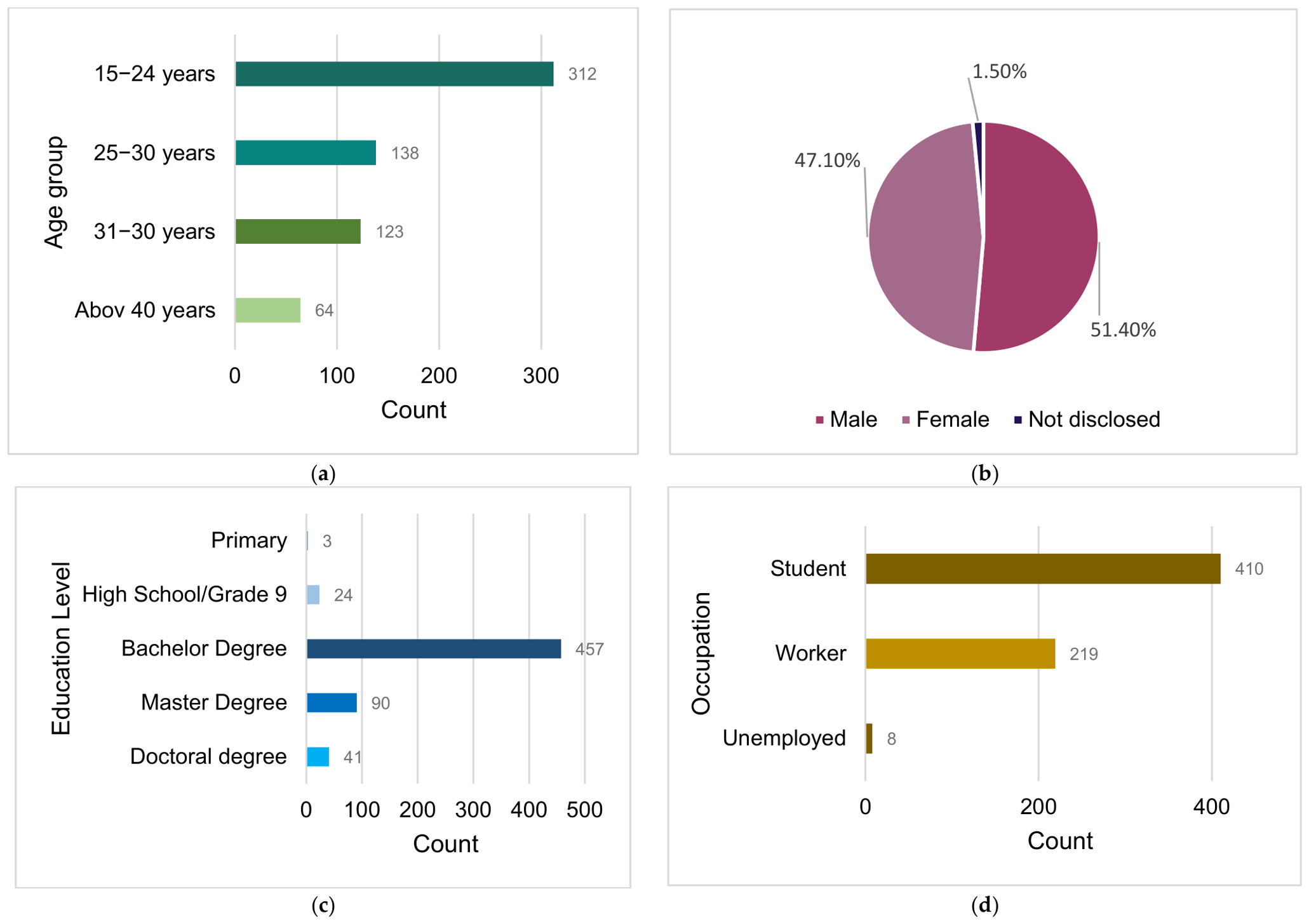
As shown in
Figure 1, respondents were predominantly young, with 49.0% aged 15–24 years, followed by 25–30 years (21.7%), 31–40 years (19.3%), and over 40 years (10.0%). Gender distribution was balanced (51.4% male, 47.1% female, 1.5% other or undisclosed). Most participants held a bachelor’s degree (71.8%), with smaller proportions reporting master’s (14.2%) and doctoral (6.4%) qualifications. Students comprised the largest occupational group (64.4%), followed by employed respondents (34.4%) and a small proportion were unemployed (1.2%).
Additional characteristics are provided in
Supplementary Figures S1 and S2. Most participants resided in urban areas (81.7%), with fewer in suburban (11.1%) and rural settings (7.2%). The majority reported a middle-income background (80.5%), with 14.7% low-income and 4.8% high-income. These characteristics provide context for interpreting climate perceptions and associated psychological responses.
3.2. Climate Change Awareness and Anxiety Levels
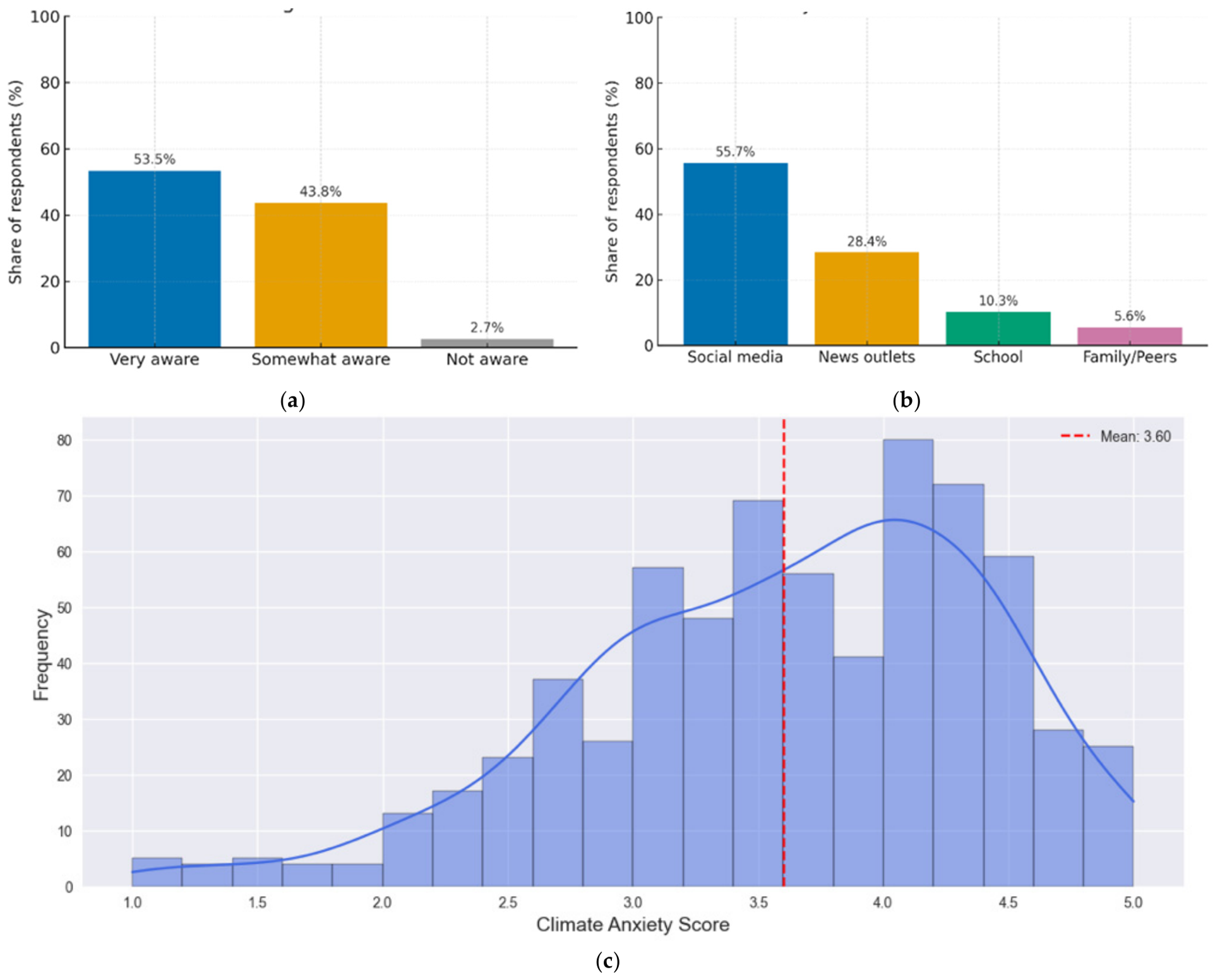
Most respondents reported high levels of climate change awareness. As shown in
Figure 2a, 53.5% identified as very aware and 43.8% as somewhat aware, while only 2.7% reported being unaware.
Social media was the most reported information source (55.7%), followed by news outlets (28.4%) and school-based learning (10.3%) (
Figure 2b). Other sources, including scientific literature, personal networks, and direct observation, were reported less frequently.
Climate anxiety scores, measured using the Climate Change Anxiety Scale (CCAS), are presented in
Figure 2c. Scores ranged from 1.0 to 5.0 (M = 3.60, SD = 0.84) and were approximately normally distributed, with a slight positive skew and clustering between 3.5 and 4.5. Overall, the distribution indicates moderate to high levels of climate anxiety within the sample.
3.3. Sociodemographic Correlates of Climate Anxiety
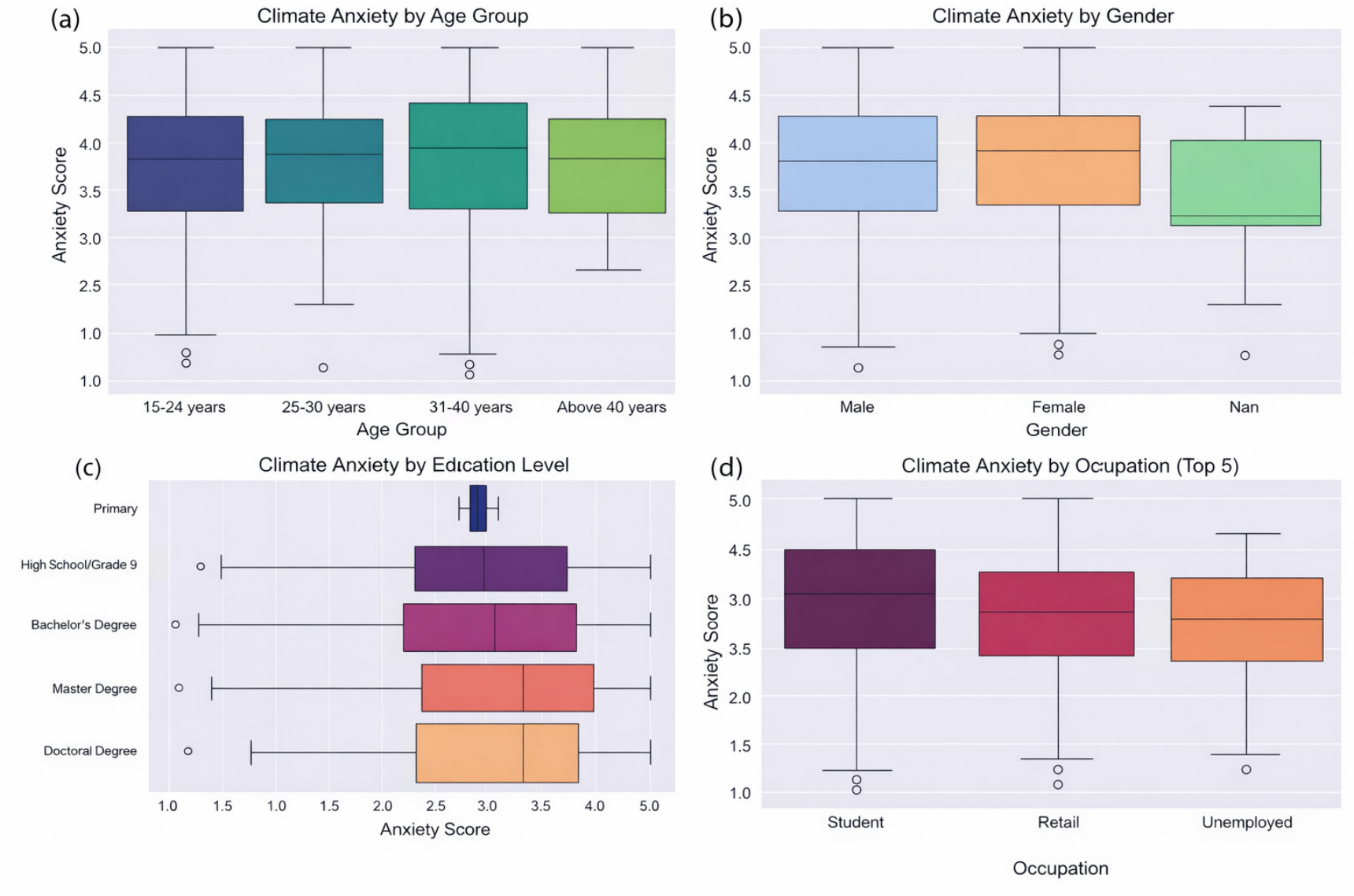
Climate anxiety scores were compared across demographic groups (
Figure 3). Differences in median values were modest, with substantial overlap in interquartile ranges.
Respondents aged 15–24 years exhibited the highest median scores, while lower values were observed among those aged 40 years and above (
Figure 3a). Female respondents showed slightly higher median scores than males, although the distributions overlapped (
Figure 3b). Scores were broadly consistent across education levels, with only minor variation in spread (
Figure 3c). Students exhibited the highest median scores compared with the employed and unemployed groups (
Figure 3d).
Supplementary Figure S3 provides additional context on climate-related experiences and engagement. Exposure to climate-related events was common, whereas participation in community-level actions was limited, and confidence in government responses remained low.
3.4. Top Concerns About the Effects of Climate Change
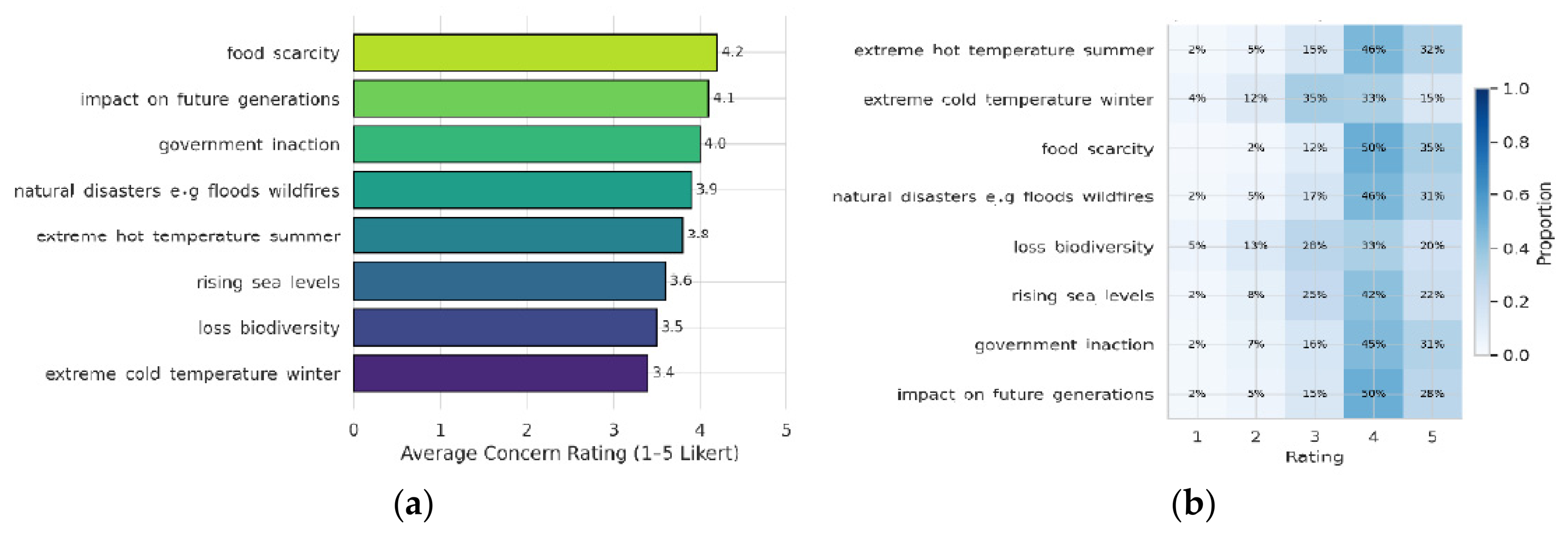
To better understand the emotional drivers underlying climate anxiety, participants rated their level of concern for specific climate change impacts on a 5-point Likert scale (1 = not at all concerned, 5 = extremely concerned). Mean scores are shown in
Figure 4a, with response distributions presented in
Figure 4b.
Higher mean concern scores were observed for impacts on future generations and food scarcity, followed by natural disasters and extreme temperatures. Concerns related to biodiversity loss and sea-level rise showed greater variability in responses. Government inaction was also associated with high average concern and a relatively wide distribution of responses.
3.5. Coping Mechanisms and Mitigation Strategies
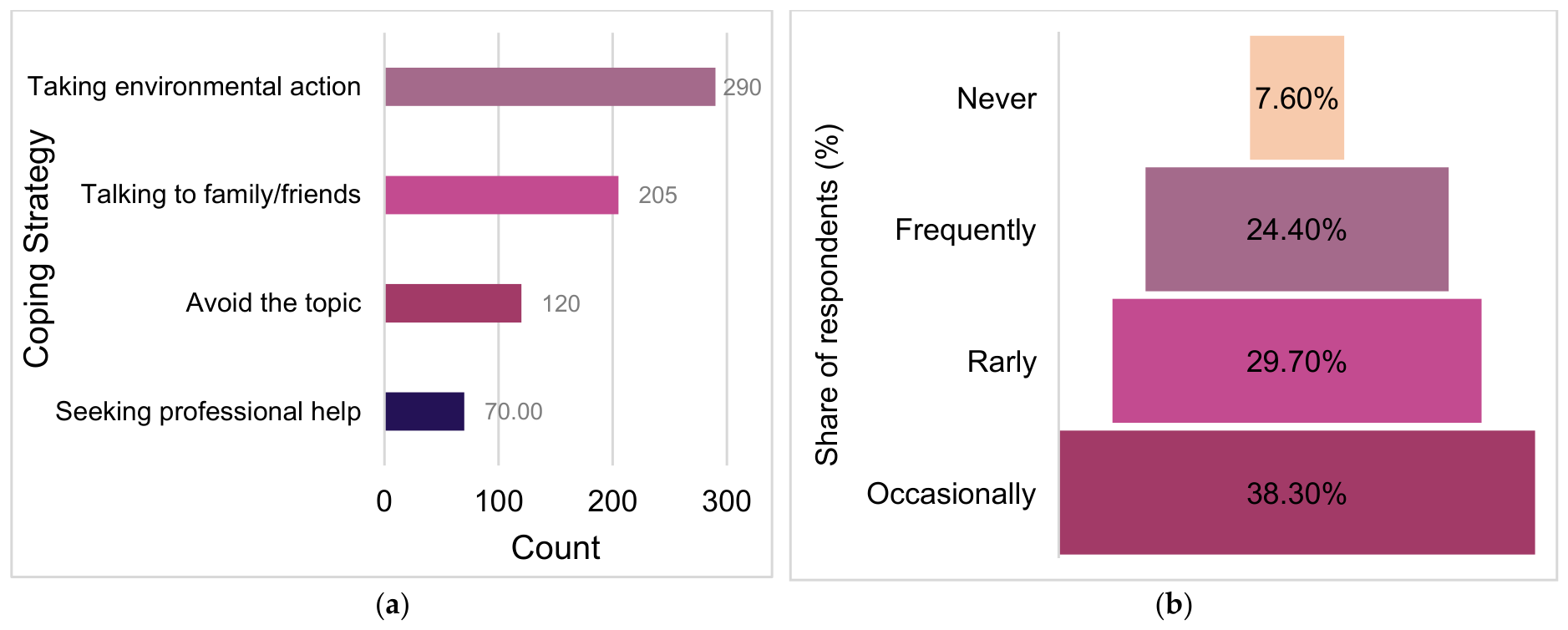
To explore how individuals manage emotional responses to climate anxiety, participants were asked to report their most commonly used coping strategies. Participants reported a range of coping strategies (
Figure 5a). The most frequently reported approach was taking environmental action (e.g., reducing waste, conserving energy), followed by discussing concerns with family or friends. Avoidance of the topic was also reported. A smaller proportion indicated seeking professional psychological support and interpersonal coping strategies.
Perceived social support was limited (
Figure 5b). Only 24.4% of participants reported receiving frequent support when discussing climate change, while a larger proportion indicated occasional or rare support.
3.6. Microsystem: Family and Peer Relationships
The microsystem was assessed using three items capturing interpersonal engagement: frequency of climate-related discussions with family or peers, perceived support when expressing climate concerns, and relationship tension related to climate issues. These items showed acceptable internal consistency (Cronbach’s α = 0.78).
As shown in
Supplementary Figures S4–S6, only 11.9% of respondents reported frequent discussions about climate change with family or peers, while 43.4% reported occasional discussions and 37.4% reported such discussions as rare. Similarly, only 24.4% reported frequent support when expressing climate-related concerns, whereas about 30% reported support as rare or absent.
A smaller proportion (17.5%) reported that climate change caused tension in relationships at least occasionally. Educational and community engagement was limited. Only 17.7% of participants reported frequent exposure to climate education through school or community settings, and 41.2% reported never participating in local climate-related actions.
Direct exposure to climate-related events was also limited, with 8.8% reporting frequent experience and approximately one-third reporting occasional or rare exposure. In addition, 18.7% of participants reported that climate change strongly affected places of cultural or spiritual significance, while 40.7% reported a moderate effect.
Perceptions of institutional engagement were low. Fewer than 15% believed that government responses were strong, and over 52% reported feeling excluded from climate-related decision-making processes.
3.7. Food-Related Climate Interventions
Given that food supply chains are a major contributor to global greenhouse gas emissions [
15], we investigated the participants’ attitudes toward food-related climate actions, including personal dietary changes, intervention preferences, and perceived barriers to adopting climate-friendly food choices. Several items in this section allowed multiple selections, so percentages reflect the share of respondents choosing each option.
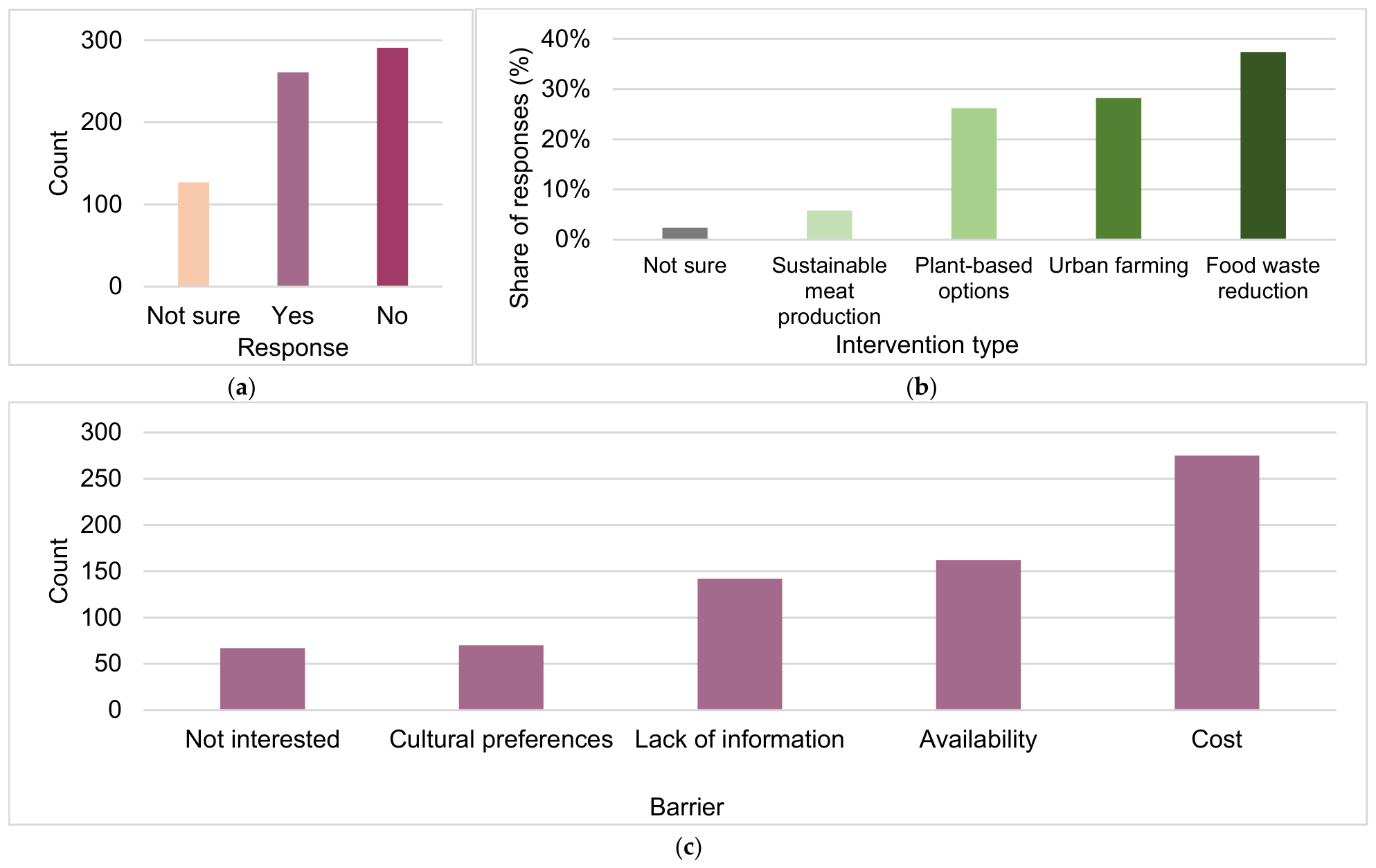
Participants reported mixed engagement in environmentally motivated dietary change (
Figure 6a). Approximately 39.1% indicated that they had made dietary changes, while 43.2% reported no change and 17.7% were unsure.
Preferred food-related interventions are shown in
Figure 6b. Food waste reduction was the most frequently selected option, followed by urban farming and promotion of plant-based foods. Fewer respondents selected sustainable meat production or expressed uncertainty. Barriers to adopting climate-friendly diets are presented in
Figure 6c. Cost was the most frequently cited barrier, followed by limited availability, lack of information, and cultural preferences. A smaller proportion (approximately 12%) reported no interest in modifying their diet.
3.8. Exploratory Factor Analysis
An exploratory factor analysis (EFA) was conducted to examine the dimensional structure of climate-related appraisal items. The analysis included nine climate-impact variables and a single-item measure of climate anxiety. Sampling adequacy was high (KMO = 0.896), and Bartlett’s test of sphericity was significant, χ2(36) = 2311.35, p < 0.001, confirming factorability of the correlation matrix.
Principal-axis factoring with oblimin rotation was applied, given the expected correlation between latent constructs. Eigenvalues and the scree plot supported a two-factor solution, accounting for 57.8% of total variance. Factor 1 (eigenvalue = 3.88; 43.1% variance) reflected cognitive, future-oriented concern, with strong loadings on food scarcity (0.80), natural disasters (0.80), biodiversity loss (0.82), rising sea levels (0.72), government inaction (0.79), and impacts on future generations (0.76). Factor 2 (eigenvalue = 1.33; 14.8% variance) represented affective distress, with loadings on the anxiety intensity item (0.76), extreme cold (0.82), and extreme heat (0.45).
Communalities ranged from 0.26 to 0.67, indicating adequate shared variance. The modest correlation between factors suggests related but distinct cognitive and affective dimensions of climate anxiety.
3.9. Regression Analyses: Predicting Climate Anxiety
We examined multivariable regression models to assess the extent to which climate change awareness, frequency of climate-related thoughts, perceived community empowerment, family socioeconomic status, and age group were associated with variation in climate change anxiety. Climate anxiety served as the outcome variable, and all predictors were entered simultaneously into an ordinary least squares regression model.
Table 1 presents the results of the Ordinary Least Squares (OLS) regression analysis predicting climate change anxiety.
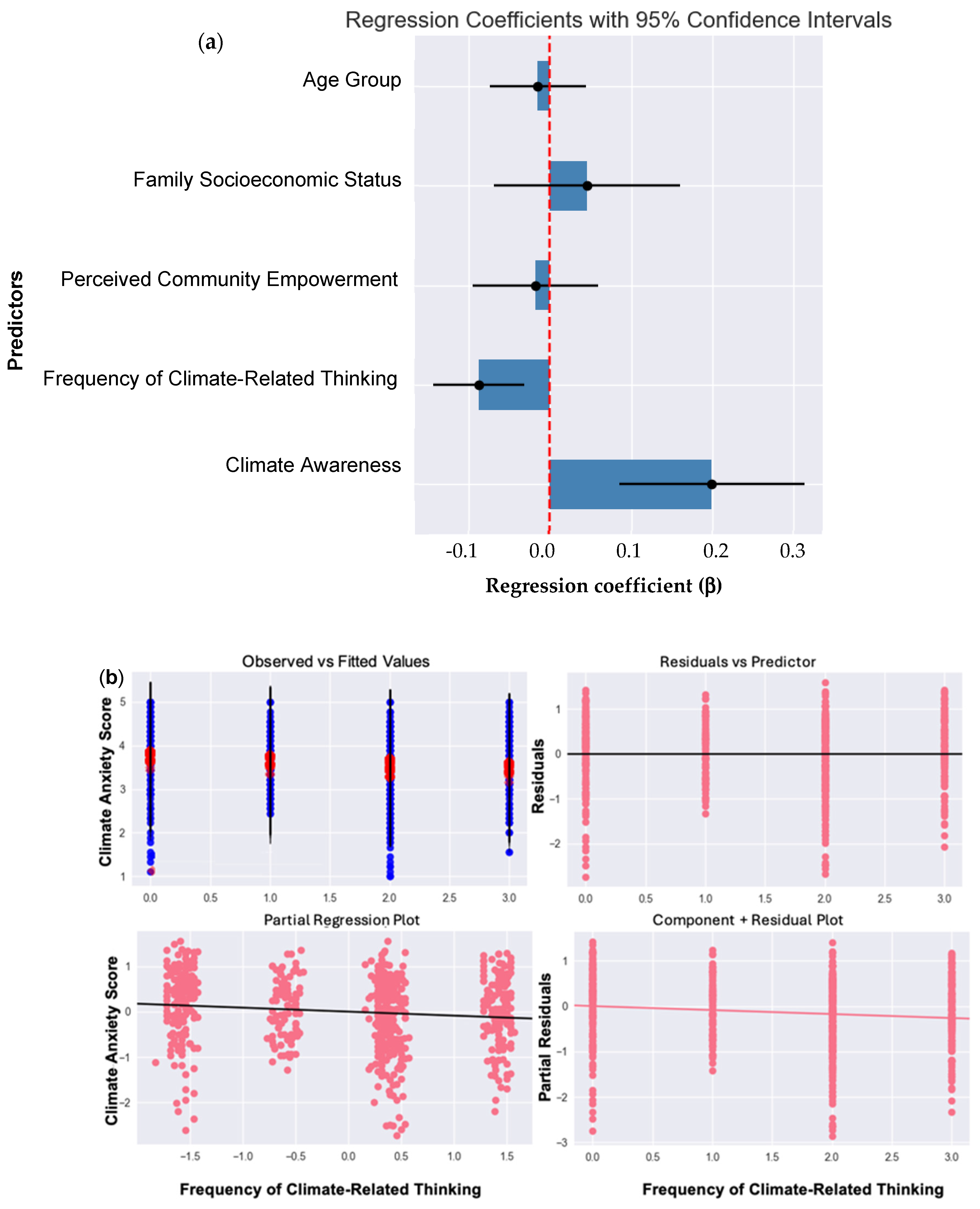
Higher climate change awareness (β = 0.138, p = 0.020) and more frequent climate-related thinking (β = 0.105, p < 0.001) were associated with higher climate anxiety. In standardized terms, thought frequency showed the largest association (Std β = 0.158), followed by awareness (Std β = 0.094).
Perceived community empowerment (β = 0.071, p = 0.056) and family socioeconomic status (β = −0.136, p = 0.055) showed small, marginal associations with climate anxiety. Age group was not associated with climate anxiety after adjustment (β = −0.021, p = 0.488).
In essence, the model fit was modest (R2 = 0.055, adjusted R2 = 0.048), indicating that the included predictors explain a limited proportion of variance in climate anxiety in the pooled sample.
Figure 7a represents the regression coefficients and confidence intervals reported in
Table 1. Frequency of climate-related thinking showed the largest standardized association with climate anxiety (Std β = 0.158,
p < 0.001), followed by climate change awareness (Std β = 0.094,
p = 0.020). The corresponding confidence intervals for both predictors lay entirely above zero, indicating statistically significant positive associations.
In contrast, perceived community empowerment (Std β = 0.073, p = 0.056) and family socioeconomic status (Std β = −0.073, p = 0.055) showed smaller effect sizes, with confidence intervals overlapping zero, consistent with marginal statistical significance. Age group was not associated with climate anxiety (Std β = −0.027, p = 0.488), with its confidence interval centered around zero.
Figure 7b presents diagnostic plots for the association between thought frequency and climate anxiety. The partial regression plot showed a positive linear relationship consistent with the estimated coefficient (β = 0.105). These diagnostics support the appropriateness of the linear specification for this predictor and suggest that the estimated association is not driven by a small number of extreme observations. In addition, multicollinearity was assessed using variance inflation factors (VIFs). All predictors showed very low VIF values (range = 1.01−1.14), indicating no evidence of multicollinearity (
Supplementary Table S5).
3.10. Cross Country Comparison
Exploratory cross-country differences in key variables were assessed using Kruskal–Wallis tests across eight countries with sufficient sample sizes, as presented in
Table 2. No statistically significant differences were observed for Climate Anxiety Score, Frequency of Climate-Related Thinking, Food System Knowledge, or Perceived Social Support (
p > 0.05), indicating broadly consistent patterns across countries. A significant difference was observed for climate change awareness (H = 25.04,
p < 0.001), suggesting that awareness levels may vary more substantially than for anxiety itself across national contexts. Comprehensive cross-country analysis can be found in
Table S3.
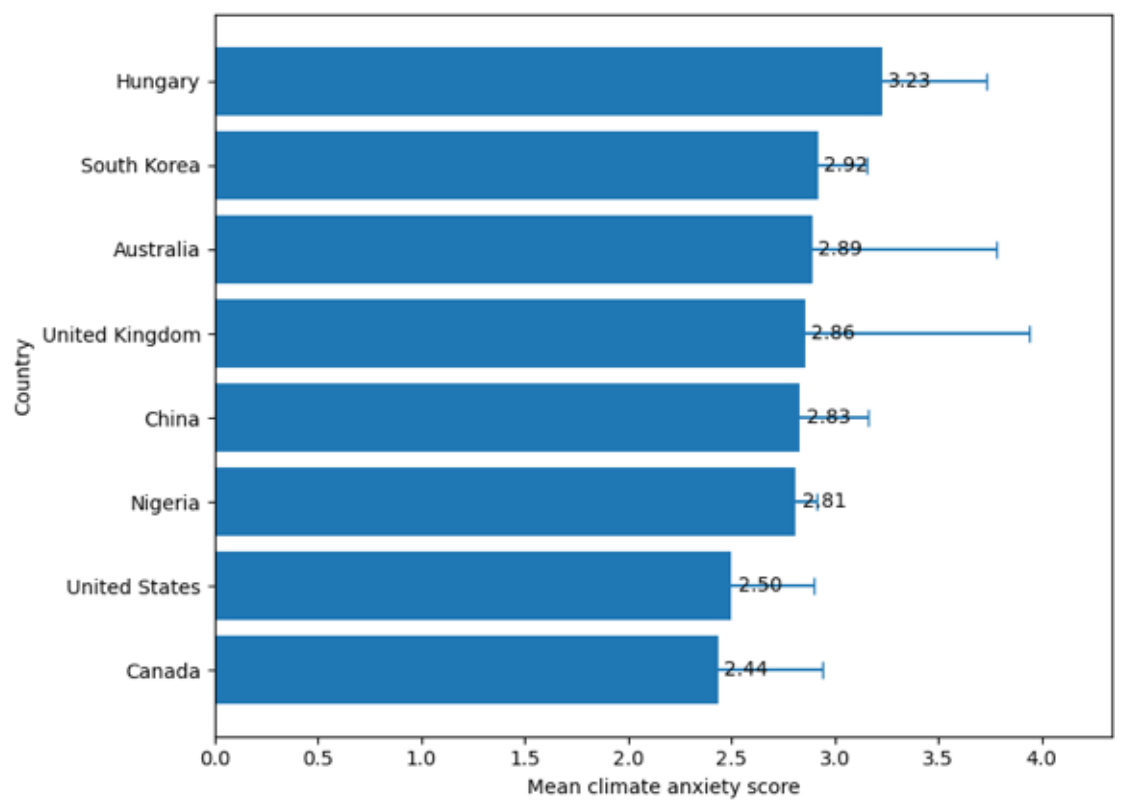
Mean climate anxiety scores were calculated by country, with 95% confidence intervals estimated from the standard error. Cross-country differences were examined using a Kruskal–Wallis test to account for ordinal data and unequal sample sizes. As shown in
Figure 8, the mean climate anxiety scores varied modestly across countries, ranging from 2.44 in Canada to 3.23 in Hungary. Intermediate values were observed for South Korea (2.92), Australia (2.89), the United Kingdom (2.86), China (2.83), and Nigeria (2.81), while the United States showed a comparatively lower mean (2.50). Despite these differences in point estimates, the 95% confidence intervals for most countries overlapped substantially, particularly among countries with smaller sample sizes such as the United Kingdom and Australia, suggesting limited evidence of clear differences across countries, particularly given the wider uncertainty in smaller samples. In contrast, Nigeria and South Korea exhibited narrower confidence intervals due to larger sample sizes, suggesting more stable estimates. Overall, the observed variation in mean climate anxiety across countries appears limited and should be interpreted cautiously.
4. Discussion
This study provides a multi-country assessment of climate anxiety, integrating psychological, behavioral, and structural dimensions. The findings indicate that climate anxiety is widespread and expressed across the cognitive, emotional, and behavioral domains. Higher levels of concern were observed among younger participants, students, and those reporting greater awareness; however, the extent to which concern translated into action varied and appeared to depend on social support, economic constraints, and perceived agency.
Regression analyses identified climate change awareness and frequency of climate-related thinking as predictors of anxiety, consistent with prior research [
9,
14]. However, these effects were small, and the model explained only a limited proportion of variance (R
2 = 0.055). This suggests that commonly measured demographic and psychosocial variables account for only a modest share of the variation in climate anxiety, and that other contextual and structural factors play an important role in shaping individual responses.
The exploratory factor analysis provides further insight into the structure of climate anxiety. Two related dimensions were identified: a cognitive component reflecting concern about future climate impacts (including food scarcity, natural disasters, and government inaction), and an affective component capturing emotional distress. This distinction suggests that awareness and emotional burden do not operate as a single construct, and that heightened concern does not necessarily translate into action in the absence of enabling conditions.
The cross-country analysis reinforces this understanding. Although the mean climate anxiety scores varied from 2.44 in Canada to 3.23 in Hungary, the overall range was modest (Δ = 0.79 on a 5-point scale), and most countries clustered within a narrow band between 2.5 and 3.2. Kruskal–Wallis tests confirmed that these differences were not statistically significant (H = 6.71,
p = 0.46), indicating broadly similar levels of climate anxiety across countries. In contrast, climate change awareness differed significantly across countries (H = 25.04,
p < 0.001), suggesting that while information exposure and knowledge vary by national context, the emotional experience of climate-related distress is more consistent. This pattern supports the view that climate anxiety reflects a shared psychological response to global environmental risk, even where awareness and informational contexts differ [
19,
20].
Despite the interpersonal nature of anxiety in other domains, climate-related distress appeared to be experienced largely in isolation. Few participants reported frequent discussion of climate issues with family or peers, and only a minority reported consistent support. More than half had not engaged in community-level climate activities, and many expressed low confidence in institutional responses. These findings suggest that climate anxiety is often weakly embedded in social structures, limiting opportunities for collective engagement.
A consistent finding across the study is the gap between concern and actions (such as food waste reduction, urban farming, green dietary options, among others). Although many participants reported high levels of awareness and emotional engagement, this did not consistently translate into behavioral change. In the food domain, only 39.1% reported making environmentally motivated dietary changes, while cost, limited availability, and lack of information were identified as primary barriers. In addition, only 24.4% reported receiving frequent support when discussing climate change. These results indicate that structural and social constraints play a central role in limiting climate-related behavior, even among individuals who are concerned and informed.
The findings also point to broader social and cultural dimensions of climate anxiety [
19]. A substantial proportion of participants reported that climate change had affected places of cultural or spiritual significance, suggesting that climate-related distress extends beyond material concerns to include issues of identity and meaning. At the same time, many respondents reported feeling excluded from decision-making processes, reinforcing perceptions of limited agency.
Altogether, the results allude to the fact that climate anxiety is not only an individual psychological response, but a condition shaped by the interaction of cognitive appraisal, emotional response, and structural context. Awareness alone does not appear sufficient to drive behavioral change. Where concern is not supported by enabling conditions such as affordability, access, and social validation, it may instead contribute to frustration or disengagement.
Several limitations are noteworthy. The cross-sectional design limits causal inference, and the use of self-reported measures introduces potential bias. Although the sample was geographically diverse, it was not demographically balanced and over-represented younger, educated, and urban respondents. As such, the findings reflect patterns within an engaged population rather than population-level estimates.
The modest explanatory power of the regression model further indicates that climate anxiety is shaped by complex and potentially non-linear mechanisms. Future research should examine interaction effects, longitudinal dynamics, and context-specific drivers using more representative samples. In particular, studies that examine how structural barriers, social support, and information environments jointly influence climate anxiety and behavior would provide a more complete understanding of its determinants.
5. Conclusions
This study contributes to the understanding of climate anxiety by integrating cognitive, affective, behavioral, and structural dimensions within a multi-country context. The findings demonstrate that climate anxiety is not a unitary construct, but comprises distinct cognitive and affective components, reflecting future-oriented concern alongside emotional distress.
Regression analyses identified climate change awareness and frequency of climate-related thinking as statistically significant predictors of anxiety; however, effect sizes were small and overall model fit was limited (R2 = 0.055). This indicates that commonly measured demographic and psychosocial variables account for only a modest share of variation in climate anxiety. Instead, the results point to the importance of broader contextual conditions, including affordability constraints, access to climate-relevant information, and the availability of social support. A consistent finding is the gap between concern and action. Despite high levels of awareness and emotional engagement, behavioral responses remained limited. Only 39.1% of participants reported making environmentally motivated dietary changes, while cost, availability, and lack of information were identified as primary barriers. In addition, only 24.4% reported frequent interpersonal support when discussing climate change. These findings indicate that climate anxiety is not solely an individual psychological response, but a condition shaped by the interaction between personal concern and structural and social constraints.
The implications are clear. Efforts to address climate anxiety should move beyond awareness-raising alone and instead focus on enabling conditions that support action. Interventions that reduce economic barriers, improve access to sustainable options, and strengthen social and community support structures are likely to be more effective in translating concern into sustained behavioral engagement. These findings should be interpreted in light of several limitations. The use of a non-probability, cross-sectional sample limits generalizability and precludes causal inference. The results therefore reflect patterns within an engaged and relatively educated population rather than population-level estimates. Future research should employ longitudinal and more representative designs to better understand how climate anxiety evolves and how it interacts with behavioral and structural factors over time.




 ,
,