Article

Design and Performance Evaluation of Cold-Recycled Asphalt Mixtures with Reclaimed Cement-Stabilized Bases

1
The Key Laboratory of Road and Traffic Engineering, Ministry of Education, Tongji University, Shanghai 201804, China
2
China Merchants Chongqing Communications Technology Research & Design Institute Co., Ltd., Chongqing 400060, China
3
State Key Laboratory of Safety and Resilience of Civil Engineering in Mountain Area, School of Civil Engineering, Chongqing University, Chongqing 400044, China
*
Author to whom correspondence should be addressed.
Sustainability 2026, 18(9), 4391; https://doi.org/10.3390/su18094391
Submission received: 24 March 2026 / Revised: 16 April 2026 / Accepted: 22 April 2026 / Published: 30 April 2026
(This article belongs to the Special Issue Asphalt Binder and Sustainable Pavement Design)

Abstract

The sustainable utilization of multiple reclaimed pavement materials is a critical pathway toward green highway construction. This study investigates the performance and synergistic mechanisms of cold-recycled mixtures incorporating both Reclaimed Asphalt Pavement (RAP) and Reclaimed Cement-Stabilized Base (RCSB), using emulsified asphalt as the primary binder. A comprehensive experimental program was conducted to evaluate the effects of reclaimed material proportions, mixing sequences, and curing ages on the mechanical strength, moisture susceptibility, and high-temperature stability of the mixtures. Microscopic characterization via Scanning Electron Microscope (SEM) and Energy Dispersive Spectroscopy (EDS) were employed to elucidate the Interfacial Transition Zone (ITZ) evolution. Results indicate that an optimal RCSB incorporation range of 20–40% establishes a robust “stone-to-stone” rigid skeleton, significantly enhancing the splitting strength (up to 0.87 MPa) and durability (Splitting Strength Ratio, TSR > 91%). SEM observations confirm the formation of a dense interpenetrating network structure within this range, where cement hydration products and asphalt films achieve optimal chemo-physical bonding. Exceeding 40% RCSB leads to a moisture-starved state and a sharp decline in dynamic stability due to insufficient binder coating. Micro-morphological characterization reveals that the transition from macro-interfacial debonding to a robust cohesive failure mode is the fundamental driver for the performance peak at 20–40% RCSB. SEM observations confirm the formation of a dense interpenetrating network structure, where cement hydration products successfully anchor into the asphalt film. This optimized ITZ effectively eliminates the stress concentration and aggregate crushing seen in high-RAP mixtures, thereby ensuring superior mechanical integrity. Furthermore, a pre-wetting mixing sequence ensures a high-energy mineral surface that promotes the heterogeneous nucleation of cement. SEM results show that this prevents the competitive adsorption between cement and asphalt, transforming the ITZ from a friable, loose state into a densified crystalline adhesive matrix.

1. Introduction

As global highway infrastructure enters a period of intensive large-scale maintenance, the annual generation of reclaimed asphalt pavement (RAP) has surged to hundreds of millions of tons. Achieving the high-value, large-scale valorization of RAP remains a critical challenge in pavement engineering to align with “dual carbon” targets and sustainable development imperatives [1,2]. While traditional hot-mix recycling is widely implemented, its high-temperature requirements inevitably trigger secondary aging of the residual bitumen, alongside substantial energy consumption and carbon emissions [3]. Conversely, cold recycling technology has offered distinct advantages such as ambient-temperature processing, high-RAP incorporation rates, and a significantly reduced environmental footprint [4]. Specifically, the cold recycling of emulsified asphalt has become a mainstream solution due to its superior workability and robust environmental adaptability [5,6]. Life cycle assessment (LCA) indicates that cold recycling can yield a 42.5% reduction in total energy consumption and a 12.7% decrease in carbon emissions compared to conventional methods, underscoring its profound environmental and economic benefits [6].
In China, the structural framework of highways and arterial road networks is predominantly characterized by a “semi-rigid base + asphalt surfacing” configuration. Consequently, road rehabilitation and maintenance operations generate vast quantities of both RAP from surfacing layers and reclaimed cement-stabilized base (RCSB) from the underlying base [7]. These two reclaimed materials exhibit fundamentally divergent physicochemical properties. The residual cement mortar on RCSB surfaces can trigger secondary hydration when in contact with fresh cement [7,8]. In contrast, the aged asphalt film encapsulating RAP particles acts as a physical barrier that impedes hydration kinetics, highlighting a stark contrast in chemical reactivity between RAP and RCSB [7,9]. To date, while extensive research and engineering efforts have been devoted to the cold recycling of RAP, the mechanisms for the high-efficiency valorization of RCSB within recycled structural layers remain significantly under-explored.
Field monitoring spanning 36 months indicates that while cold-recycled base layers maintain commendable fatigue resistance under heavy traffic, their moisture susceptibility and rutting resistance remain significant challenges [10]. Microstructural investigations into recycled mixtures reveal that salt solution erosion exacerbates interfacial degradation, potentially reducing asphalt–aggregate adhesion by nearly 50% [11]. The performance of cold-recycled mixtures is intrinsically linked to their complex material heterogeneity. Specifically, variations in RAP sources encompassing gradation, aging degree, and binder content, drive significant performance fluctuations [6,12,13,14,15,16,17,18]. While increasing recycled content promotes sustainability, it often necessitates performance trade-offs. In unbound granular bases, incorporating 75% RAP can bolster the resilient modulus by up to 127%, yet it simultaneously triggers a 10- to 16-fold increase in accumulated residual strain [19]. Similarly, in hot in-place recycling, 100% RAP significantly enhances high-temperature stability (a 257% increase in dynamic stability) at the expense of crack resistance, with fracture energy plunging by 66–73% [20]. In cold-mix asphalt (CMA), a moderate RAP content (50%) appears to be the optimum threshold [21]; beyond this, mechanical properties such as Marshall stability and indirect tensile strength (ITS) begin to deteriorate unless compensated by filler optimization [16]. Furthermore, fatigue life typically follows an “initially rapid, then gradual” decline as RAP content increases, with stress levels exerting a more dominant influence than material composition [22].
Cementitious additives are pivotal for enhancing early-age strength, while excessive dosages inevitably increase brittleness and the risk of desiccation shrinkage cracking. Fly ash incorporation has been shown to increase Marshall stability by approximately 19% and the resilient modulus by 56% [15], while specialized chemical stabilizers exhibit superior efficacy in enhancing moisture stability [16]. In CMA with a high RAP content (50%), the addition of 1% cement can boost Marshall stability by as much as 79% [17]. Furthermore, composite hydraulic binders comprising cement, hydrated lime, and cement bypass dust (CBPD) exhibit significant synergistic interactions among the three constituents, which collectively govern the mechanical strength, water stability, fatigue resistance, and rheological behavior of the cold-recycled mixture [19].
Beyond material composition, curing conditions and laboratory characterization significantly dictate the perceived performance of cold-recycled mixtures. Research indicates that high-temperature curing (40 °C) can accelerate the performance development of emulsified asphalt mixtures, achieving in 2–4 h the strength that typically requires 48 h at ambient temperature [23]. Moreover, the choice of compaction (gyratory or vibratory) and testing methods (e.g., flexural vs. indirect tensile strength) can result in a 1.7- to 3.3-fold variance in structural thickness design, highlighting the critical need for standardized laboratory protocols [24,25,26]. More critically, microscopic analysis of the Interfacial Transition Zone (ITZ) elucidates the interaction mechanisms within different binder systems. Emulsified asphalt mixtures typically form a dense ITZ with a porosity as low as 0.61–1.04% and a binder film thickness reaching 22 μm, ensuring uniform stress distribution. In contrast, cement-only systems exhibit porosities as high as 9.45–13.66%, where the prevalence of micro-voids facilitates crack initiation [14].
Despite the extensive research on cold recycling, several critical knowledge gaps persist: (1) the synergistic mechanism between RCSB and RAP remains insufficiently understood; (2) the micro-to-macro decoupling persists, where the relationship between ITZ characteristics and bulk pavement performance has not been fully established [27,28]; and (3) a systematic understanding of the multi-phase interplay between cement hydration and asphalt demulsification is currently lacking [22].
To address these deficiencies, this study systematically investigates a novel “Dual-Recycling” of a cold-recycled mixture utilizing a tailored RCSB/RAP composite system. The primary objectives are (1) elucidating the synergistic reinforcement mechanisms between the rigid RCSB skeleton and the flexible RAP matrix through multi-scale mechanical testing; (2) deciphering the microscopic interfacial evolution using SEM-EDS to bridge the gap between ITZ morphology and macroscopic durability; and (3) optimizing the mixing protocol and design framework to achieve a balanced performance between bearing capacity and moisture resistance.

2. Materials and Methods

2.1. Raw Materials

2.1.1. Reclaimed Materials: RAP and RCAB

Gradation analyses for the RAP and RCSB materials are summarized in Table 1 and Table 2. Properties of the aged asphalt extracted from RAP (Table 3) reveal significant oxidation, evidenced by low penetration, a high softening point, and brittle fracture at 5 °C. The physical properties of the recycled coarse and fine aggregates are detailed in Table 4 and Table 5.

2.1.2. New Materials and Additives

To compensate for the deficiency of coarse fractions in the reclaimed materials, limestone (9.5–26.5 mm) was used as a supplemental aggregate (Table 6 and Table 7). Other constituents include mineral powder as filler with a hydrophilic coefficient of 0.73 (Table 8), P.O 42.5 Ordinary Portland Cement (Table 9) for early-age strength development, and Cationic slow-setting emulsified asphalt with a 68.3% solid content (Table 10).

2.2. Experimental Methods

2.2.1. Mix Proportion and Gradation

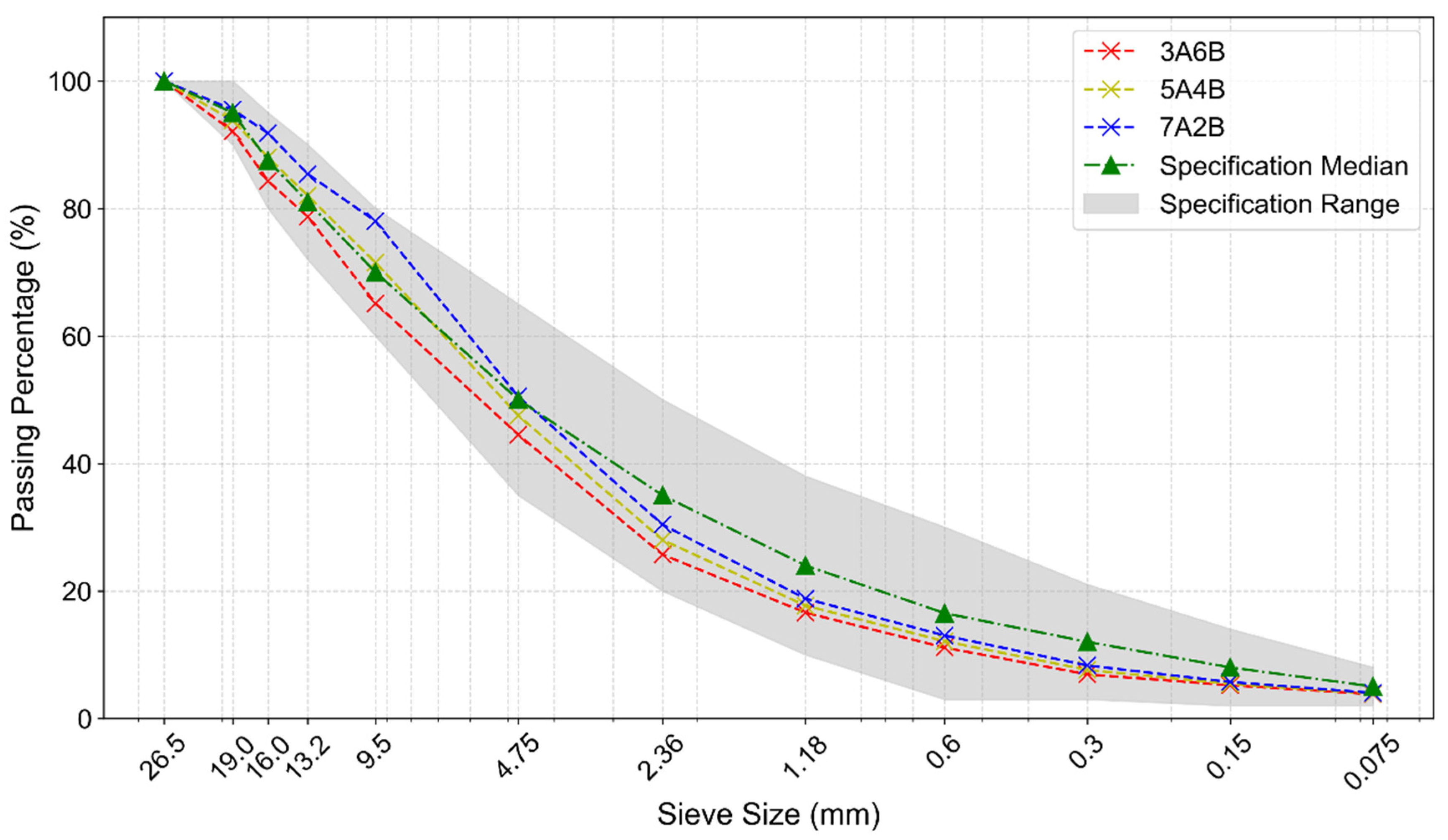
A medium-graded gradation was selected as the reference gradation. Our experimental groups were established by varying the RAP:RCSB:New Aggregate mass ratios: 70:20:10 (Group 7A2B), 50:40:10 (Group 5A4B), and 30:60:10 (Group 3A6B). A mixture of 90% RAP and 10% new aggregates (9A) serves as the control group, with the gradation controlled to match that of Group 7A2B. The combined gradations of all mixtures are drawn in Figure 1.

2.2.2. Mixing Sequences

To investigate the effect of the mixing sequence on the performance of the mixture, four different mixing sequences were designed. The four mixing sequences (A–D) were designed to systematically vary the order of introducing cement and emulsified asphalt relative to the pre-wetting water, thereby capturing its influence on the dispersion of cement particles, the kinetics of cement hydration, and the breaking behavior of the asphalt emulsion. Specifically:
Sequence A pre-blends cement with the emulsified asphalt to form a cement-asphalt paste before contacting the pre-wetted aggregate. This simulates a scenario where cement and asphalt are intimately premixed, promoting a homogeneous cement-asphalt composite binder before it coats the aggregate surface.
Sequence B follows a standard staged addition: water first, then cement, then asphalt emulsion. This represents typical cold recycling practice where cement is dry-added to the moist aggregate before the emulsion is introduced.
Sequence C reverses the order of cement and emulsion compared to Sequence B: water first, then emulsion, then cement. This allows the emulsion to coat the aggregate surface first, potentially reducing the direct contact between cement particles and the aggregate while enabling the cement to interact with the already-dispersed asphalt.
Sequence D uses a single-step addition of all components (including water) without any staged or pre-mixing operation. This serves as the simplest, least-controlled baseline representing a “one-shot” mixing practice.
These four sequences span the plausible range of mixing orders encountered in field cold recycling operations, from the most controlled (pre-blending cement with emulsion) to the simplest (one-step mixing). The selection was based on preliminary trials indicating that the order of cement and emulsion addition significantly affects workability, coating efficiency, and early-age strength development.

2.2.3. Specimen Preparation

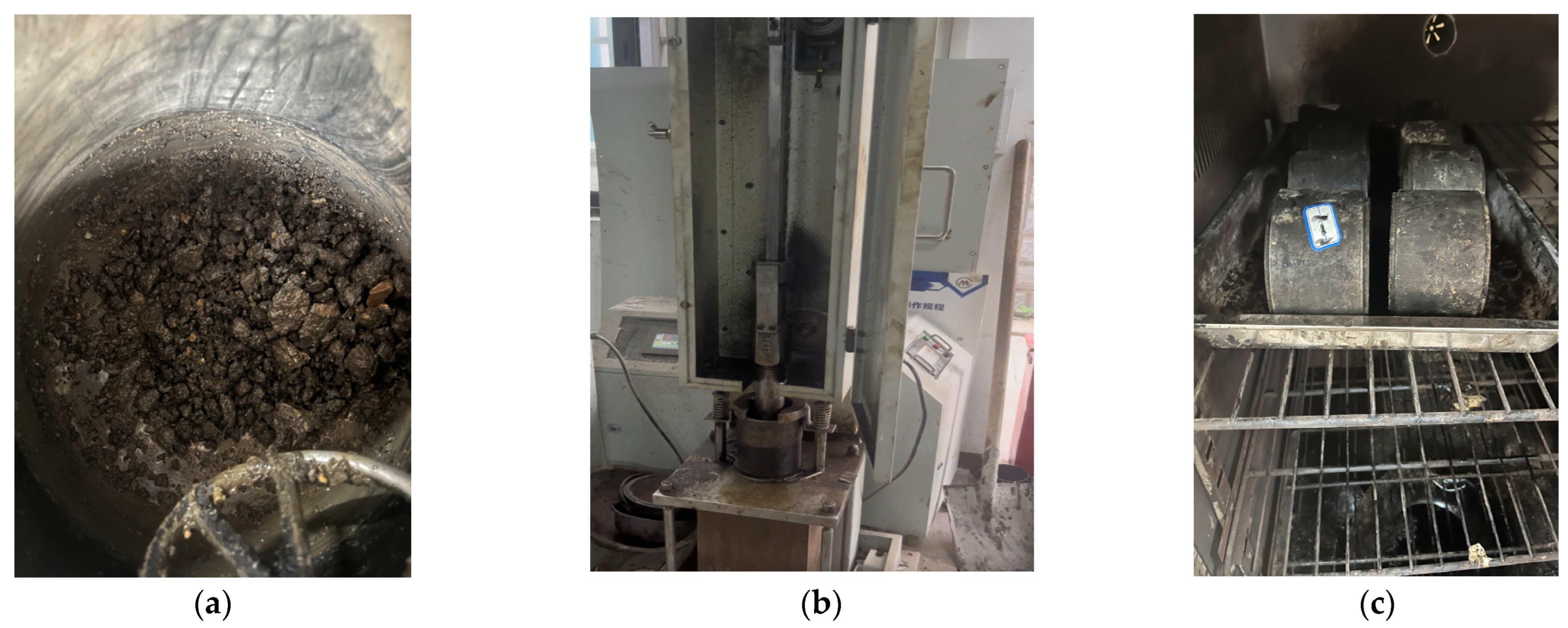
Under the optimum moisture content condition, different proportions of emulsified asphalt were added to each gradation, and Marshall specimens and rutting plate specimens were prepared respectively. Based on the preliminary evaluation of mechanical properties and moisture stability (discussed in Section 3.4), Mixing Sequence B was identified as the optimal procedure and was therefore adopted for the preparation of all specimens in the subsequent performance tests, the related molded processes are shown in Figure 2.
(1)
Raw material pretreatment
Place the RCSB and RAP materials in an oven at 60 °C ± 5 °C for 24 h until reaching a constant mass (the difference between two consecutive weight change <0.1% between two consecutive measurements). After cooling to ambient temperature, the reclaimed aggregates, mineral filler, and new aggregates were proportioned according to the target gradations. The total liquid content was strictly controlled, accounting for both the added water and the water phase within the emulsified asphalt to ensure the mixture reached the Optimum Moisture Content (OMC).
(2)
Marshall specimen fabrication (double-stage compaction)
To simulate the field curing and strength development of cold-recycled mixtures, a double-stage compaction method was adopted.
Step 1—Initial Compaction: The fresh mixture was loaded into a standard Marshall mold and subjected to 50 blows per side using a Marshall electric compactor (Shandong Luda Testing Instrument Co., Ltd., Tai’an, China).
Step 2—Accelerated Curing: The specimens, still contained within their molds, were placed in a constant-temperature oven at 60 °C for 48 h. This stage facilitates the demulsification of the asphalt and the initial hydration of the cement.
Step 3—Secondary Compaction: Following the curing period, the specimens were subjected to an additional 25 blows per side to simulate the secondary densification under traffic loading.
Step 4—Conditioning: The final specimens were cooled at room temperature for 12 h before demolding and subsequent mechanical testing.
(3)
Rutting plate specimen preparation
Slab specimens (300 × 300 × 50 mm) for rutting tests were prepared using a sector-wheeled roller compactor in accordance with JTG 3410-2025 [29]. After initial compaction, the slabs were conditioned at room temperature for 24 h, followed by accelerated curing at 60 °C for 48 h. The specimens were then demolded and prepared for high-temperature stability evaluation.

2.2.4. Volumetric Properties

After the completion of the curing period, the physical properties of the specimens were evaluated. The bulk specific gravity of the compacted mixtures was determined using the surface dry method, in accordance with JTG 3410-2025 [29]. Subsequently, the air void content was calculated based on the theoretical maximum specific gravity obtained via the vacuum method. The use of the surface dry method ensures an accurate measurement of the volume of specimens with relatively low water absorption.

2.2.5. Mechanical and Durability Testing

(1)
Splitting Strength and Moisture Sensitivity
The Indirect Tensile Strength (ITS) at 15 °C was determined to evaluate the mechanical integrity. Two moisture conditioning states were compared. (1) Dry state: Specimens were immersed in a constant-temperature water bath at 15 °C for 1 h prior to testing. (2) Soaked state: Specimens underwent 22 h of immersion at 25 °C, followed by 2 h at 15 °C.
The wet-dry splitting strength ratio is the ratio of the 24 h water immersion splitting strength to the 15 °C splitting strength, calculated using following Formula (1).
R W / D = P W P D × 100
where Pw denotes splitting strength of the specimen after 24 h water immersion (MPa), PD denotes 15 °C splitting strength of the specimen (MPa), and RW/D represents wet-dry splitting strength ratio (%).
(2)
Freeze–Thaw Splitting Test
To evaluate long-term durability under extreme conditions, the Freeze–Thaw Splitting Strength Ratio (TSR) was determined. One subset of specimens served as the control, while the other was subjected to vacuum saturation (98 kPa), followed by a freeze cycle (−18 ± 2 °C for 16 h) and a subsequent thaw–soak cycle (60 °C water bath for 24 h).
(3)
High-Temperature Stability (Rutting Test)
The Dynamic Stability (DS) was measured using a wheel-tracking device at 60 °C under a contact pressure of 0.7 ± 0.05 MPa. The wheel pass rate was set at 42 cycles/min. DS was calculated based on the deformation rate between 45 and 60 min.

2.2.6. SEM + EDS Microscopic Observation

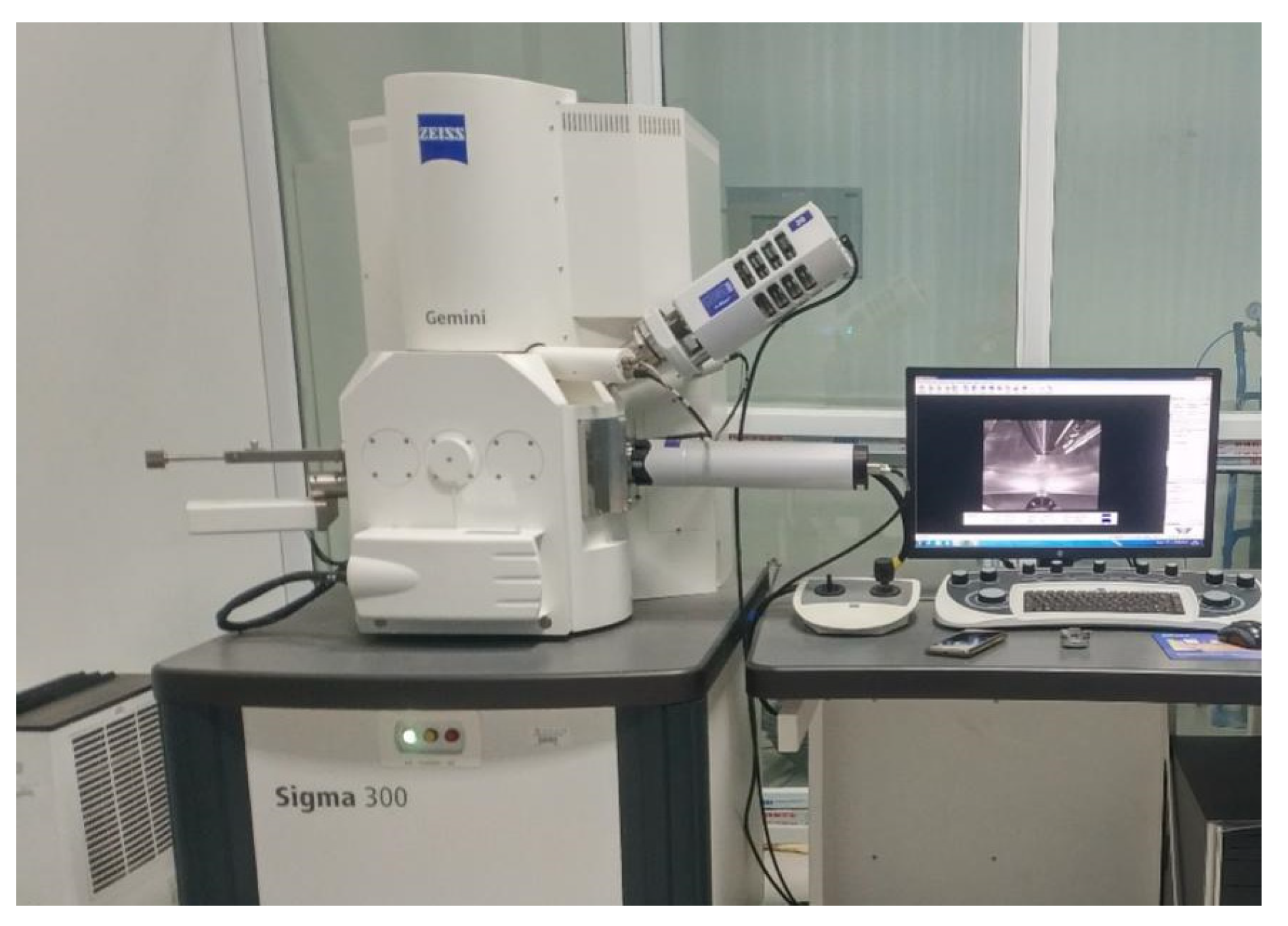
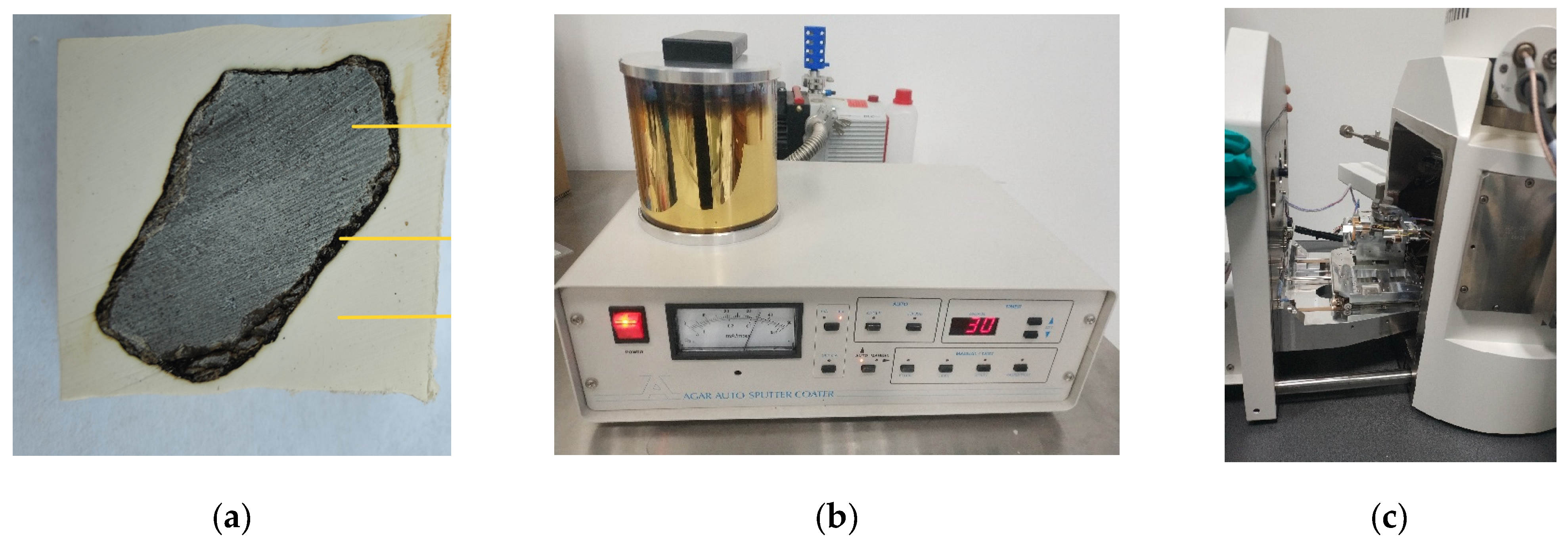
The morphology and elemental distribution of the ITZ were characterized using a Zeiss Sigma 300 SEM equipped with Energy Dispersive Spectroscopy (EDS) (Zeiss Technology (Suzhou) Co., Ltd., Suzhou, China), as shown in Figure 3 and Figure 4. After the curing period, the specimens were cut to select typical cross-sections containing RCSB, RAP, and new aggregates.
Standard Marshall specimens were sectioned to include the aggregate–binder interface and placed into 60 × 50 × 50 mm molds. The specimens were then embedded in epoxy resin to enhance mechanical strength for precision cutting, to stabilize the binder structure, preventing deformation during processing, and to minimize electron scattering from exposed binder surfaces to improve image quality. To satisfy EDS requirements for signal stability and clarity, surfaces were polished to a metallographic finish: first, excess resin was removed to expose the mixture matrix; then surfaces were sequentially refined using 200, 400, 800, and 1000 grit sandpaper; lastly, a specialized polishing agent was used to achieve a flat, low-roughness surface, maximizing testing accuracy and resolution.

3. Results and Discussion

3.1. Mixture Proportion Design Results

3.1.1. Optimum Moisture Content and Maximum Dry Density

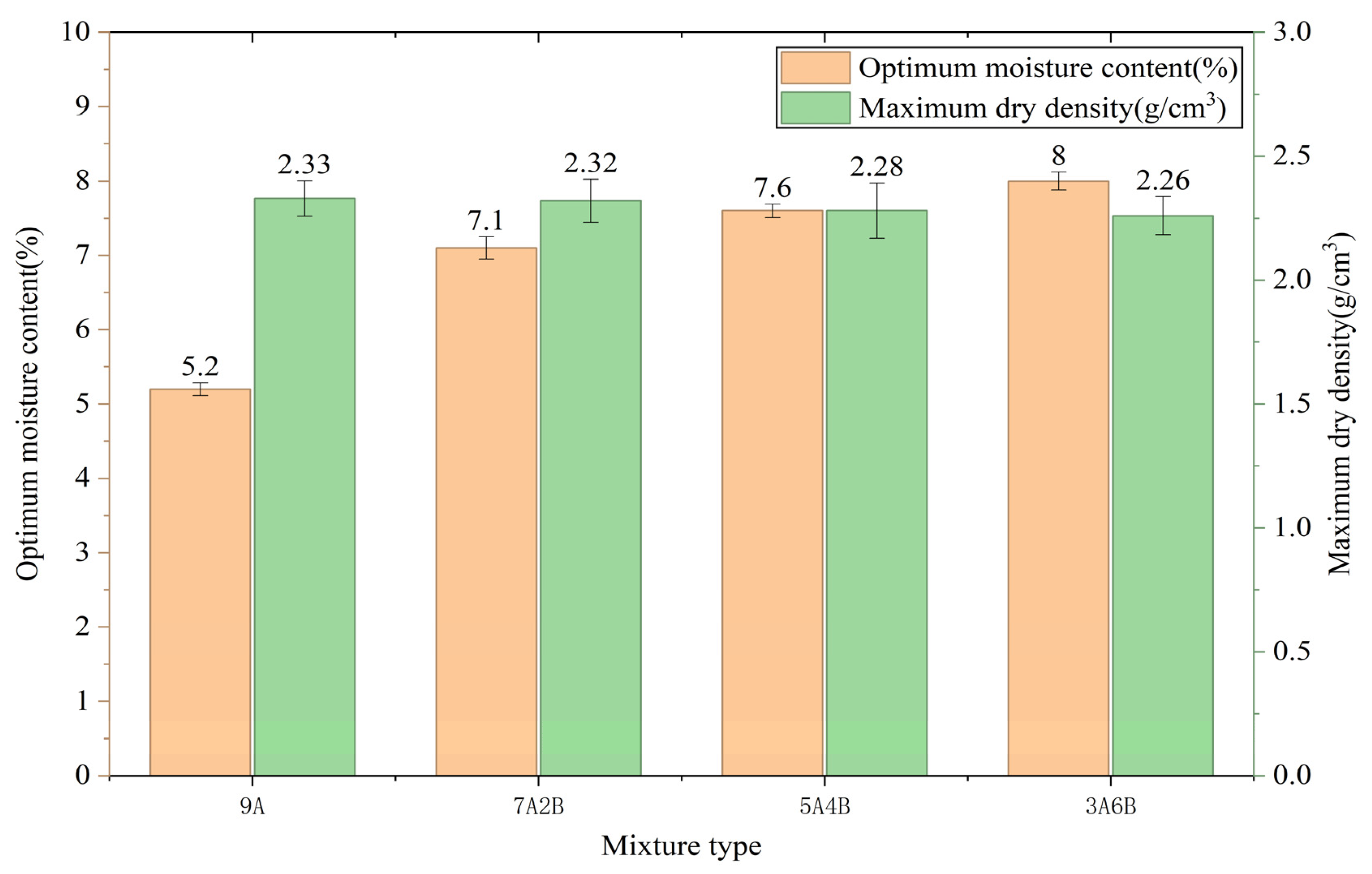
Compaction tests were conducted on the four combined gradations to determine the optimum moisture content (OMC) and maximum dry density (MDD) at a cement content of 1.5%. The results are shown in Figure 5.
Figure 5 shows the OMC exhibited a significant upward trend as the RCSB content increased. As a reclaimed cementitious material, RCSB is characterized by a substantial fraction of fines (comprising residual cement paste and silt) with a high specific surface area and an inherently porous microstructure. These features impart a significantly higher water absorption capacity to RCSB compared to the bitumen-encapsulated RAP aggregates. Consequently, a higher volume of water is required to effectively lubricate the aggregate surfaces and satisfy the absorption demands of the porous mortar to reach the optimal compaction state.
Conversely, the MDD followed a declining trend with the incremental addition of RCSB. While the density variance between Groups 9A and 7A2B was marginal due to their identical gradation, a more pronounced reduction was observed in Groups 5A4B and 3A6B. This phenomenon can be attributed to several factors: (1) The higher proportion of coarse fractions in Groups 5A4B and 3A6B may alter the packing efficiency; (2) The high angularity and internal friction of RCSB particles hinder the efficient rearrangement of the mineral skeleton during compaction; (3) At high moisture contents required for RCSB-rich mixtures, the entrapment of pore water can induce a transient elastic buffer (spring effect) during impact, preventing the attainment of peak densification; (4)The lower apparent density of RCSB particles relative to bitumen-coated RAP further contributes to the overall reduction in mixture density.

3.1.2. Optimum Emulsified Asphalt Content (OEAC)

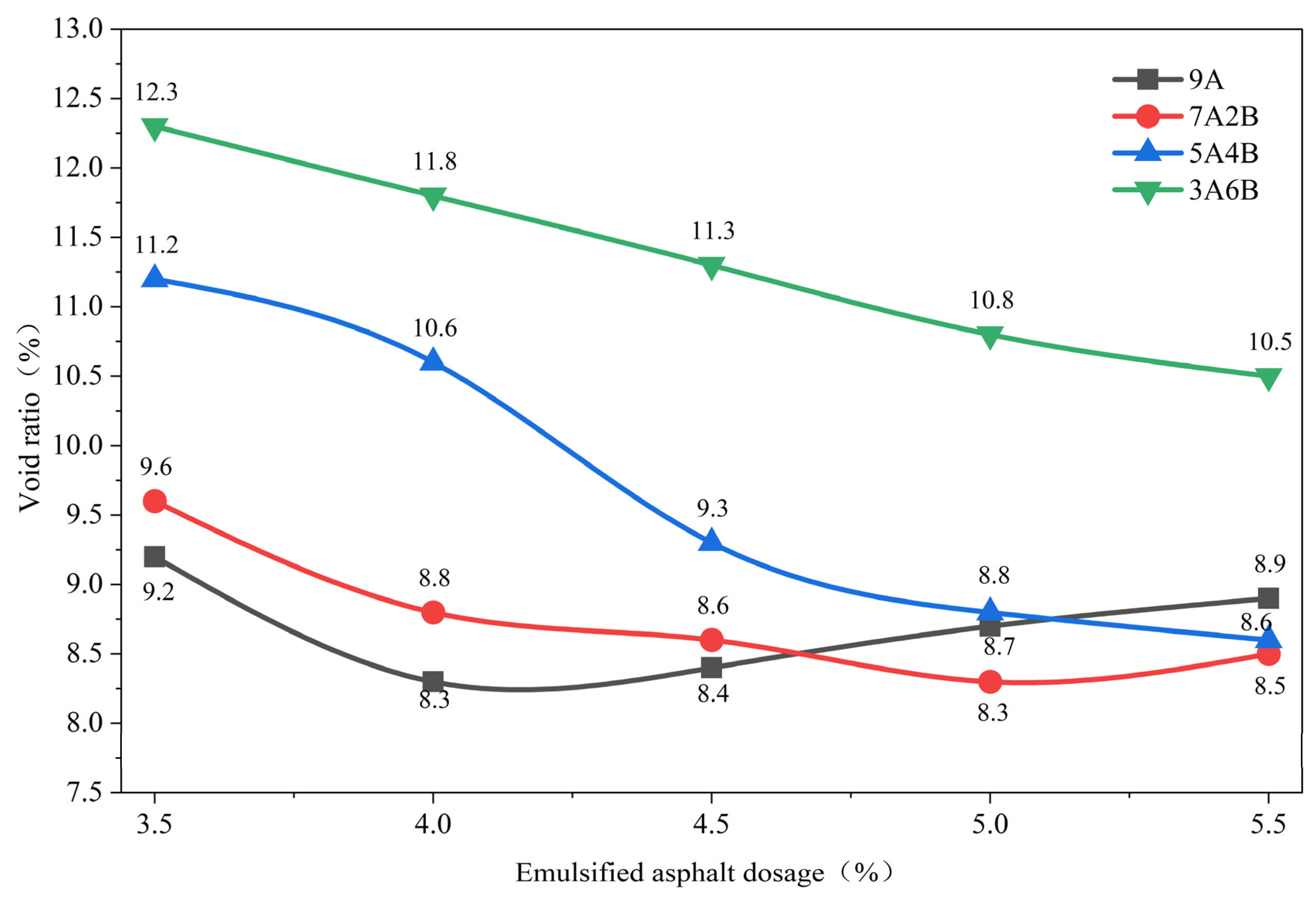
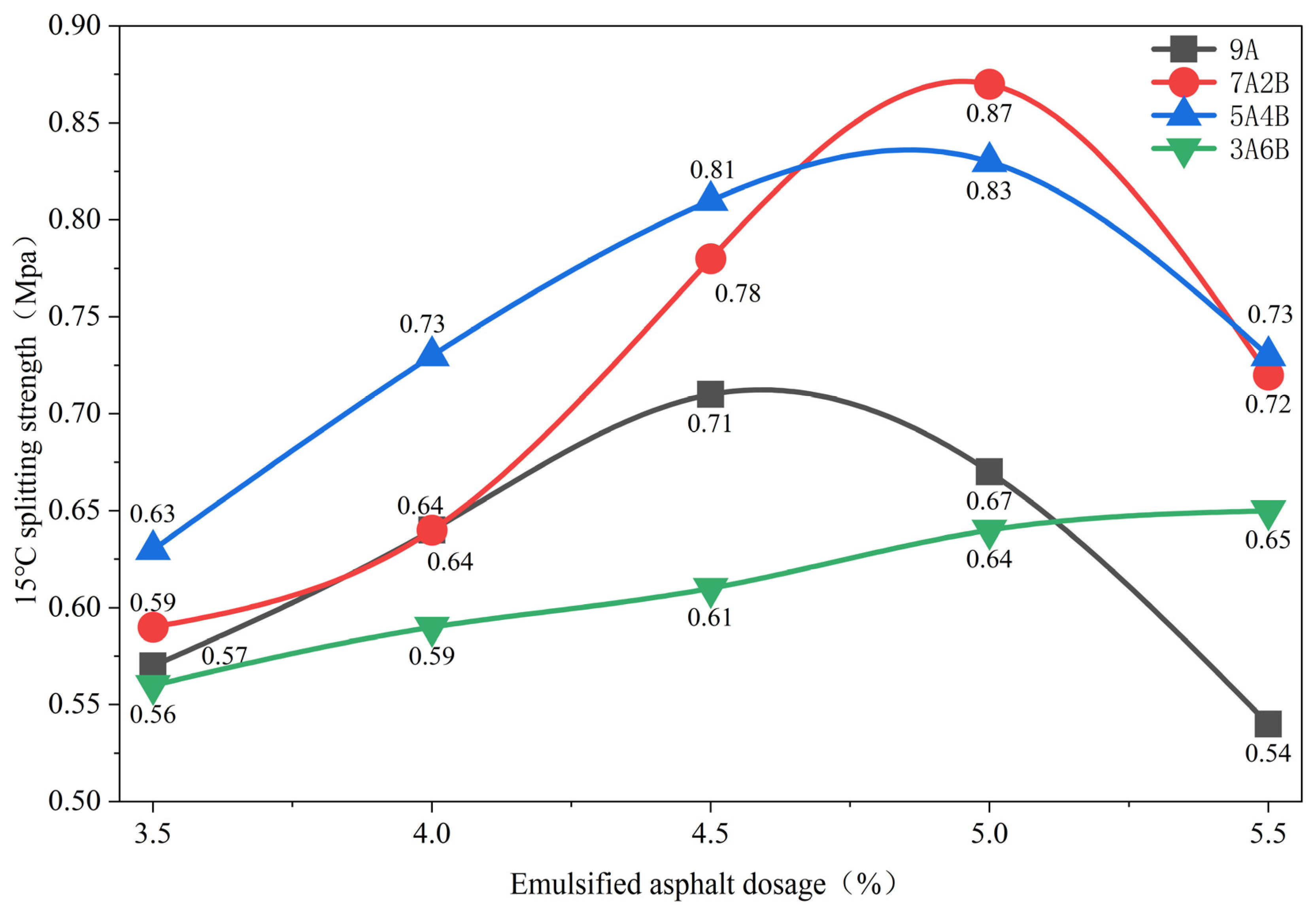
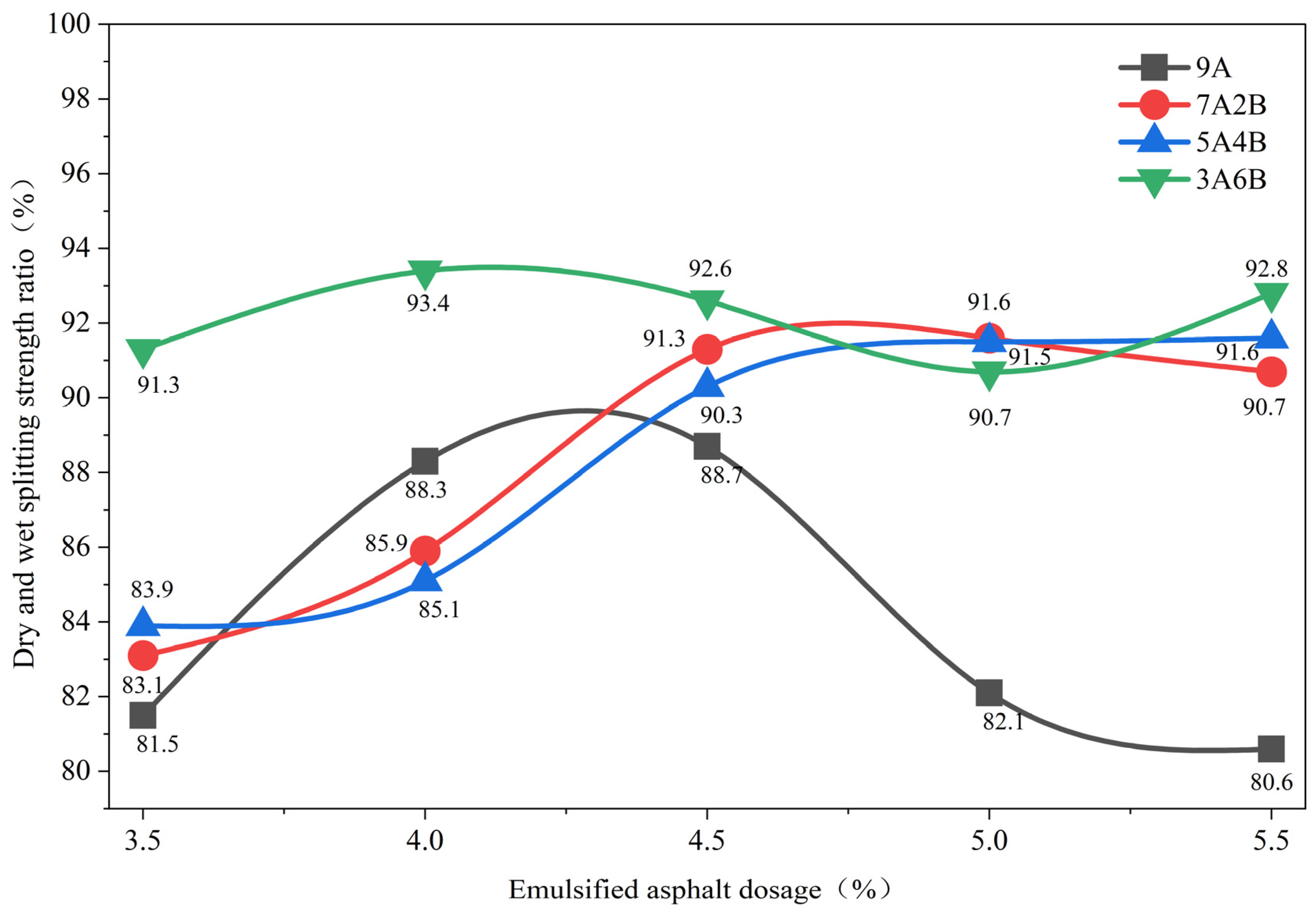
The OEAC was determined by balancing the volumetric properties (air void content controlled within 8–13%) and mechanical performance (15 °C splitting strength and TSR). The evaluation of air voids, 15 °C indirect tensile strength (ITS), and TSR at varying emulsified asphalt contents is presented in Figure 6, Figure 7 and Figure 8.
Volumetric Evolution (Figure 6): At a constant asphalt dosage, the air void generally increased with RCSB content. For Groups 9A and 7A2B, air void content followed a typical “U-shaped” curve, where the asphalt initially serves as a lubricant and filler before causing aggregate separation (skeleton expansion) at excessive dosages. In contrast, void content in Groups 5A4B and 3A6B decreased continuously within the tested range. This suggests that the high fines content and aggressive water absorption of RCSB may lead to a “moisture-starved” state at low dosages, necessitating higher liquid volumes to facilitate particle rearrangement and void filling.
Mechanical Integrity (Figure 7): The peak 15°C splitting strength followed the order: Group 7A2B (0.87 MPa) > Group 5A4B (0.83 MPa) > Group 9A (0.71 MPa) > Group 3A6B (0.65 MPa). These results identify an optimal RCSB substitution range (approximately 20–40%) for maximizing mechanical performance. In Groups 7A2B and 5A4B, the moderate inclusion of RCSB provides a rigid reinforcing skeleton, while the synergy between cement hydration products (C-S-H gels) and the asphalt binder forms a robust “rigid–flexible” composite matrix. Beyond this range (e.g., Group 3A6B), the excessive specific surface area of RCSB fines leads to an insufficient effective asphalt film thickness, resulting in poor coating and a higher prevalence of internal defects.
Moisture Resistance (Figure 8): The RW/D values for all groups range between 80.6% and 93.4%, demonstrating that the incorporation of RCSB maintains a high level of resistance to water damage. The RW/D values of all groups generally followed a trend of initially increasing and subsequently decreasing with higher emulsified asphalt dosages. Notably, Group 3A6B (30:60:10) demonstrated the superior and most stable performance, maintaining the highest RW/D values across the entire dosage range, peaking at 93.4%. In contrast, the control group 9A (90:0:10) showed the lowest moisture stability; its RW/D dropped significantly to 80.6% at high asphalt dosages, suggesting that mixtures with high RAP content and no RCSB are more sensitive to water damage. The comparison between groups indicates that increasing the proportion of RCSB significantly enhances moisture stability. Groups 5A4B and 7A2B showed intermediate performance, with their RW/D peaking at approximately 91.6% near a 5.0% dosage. These results suggest that the inclusion of RCSB optimizes the aggregate skeleton and improves the resistance of the mixture to moisture-induced degradation compared to the high-RAP control group.
Based on the multi-objective optimization of stability and durability, the OEAC for Groups 9A, 7A2B, 5A4B, and 3A6B were established as 4.5%, 5.0%, 5.0%, and 5.5%, respectively. The positive correlation between OEAC and RCSB content underscores the necessity of a slightly higher binder dosage to compensate for the absorption and high surface area of reclaimed base materials, transitioning the mixture from an asphalt-dominated phase to a semi-rigid composite phase.

3.2. Pavement Performance Test Results

The results for moisture susceptibility (TSR) and high-temperature stability (Dynamic Stability, DS) are summarized in Table 11.
As shown in Table 11, the inclusion of RCSB significantly improved both the TSR and DS values compared to the control group (9A). The TSR values of all RCSB-containing groups (7A2B, 5A4B, and 3A6B) exceeded 90%, with 7A2B achieving the highest value at 91.6%. The dynamic stability reached its peak in Group 5A4B, which is approximately 28.7% higher than that of the control group. The data indicates that substituting a portion of RAP with RCSB optimizes the overall performance of the mixture.
The addition of RCSB effectively strengthens the aggregate skeleton, which is reflected in the substantial increase in DS, suggesting better resistance to permanent deformation at high temperatures. While all experimental groups outperformed the control, the performance did not increase linearly with RCSB content. Group 5A4B represents an optimal balance, providing the highest rutting resistance (DS) while maintaining excellent moisture stability (TSR). The significantly lower values in Group 9A suggest that a high RAP content without RCSB leads to a relatively weaker internal structure, making the mixture more susceptible to both water damage and high-temperature deformation.

3.3. Performance Evolution at Different Curing Ages

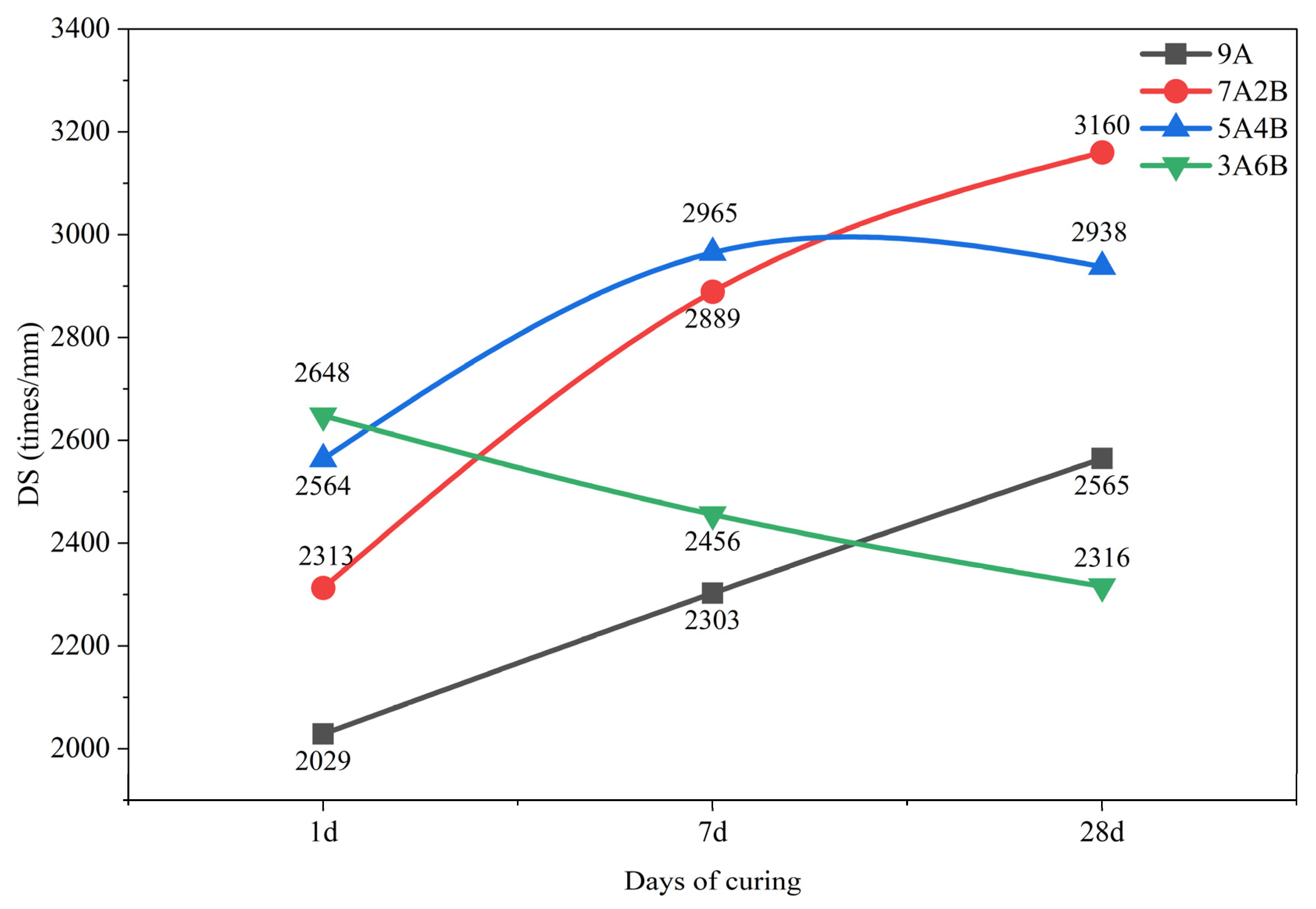
The mechanical property development of cold-recycled mixtures is a time-dependent process, governed by the synchronous kinetics of cement hydration and emulsified asphalt demulsification. The evolution of ITS, TSR, and DS over a 28-day period is depicted in Figure 9, Figure 10 and Figure 11.
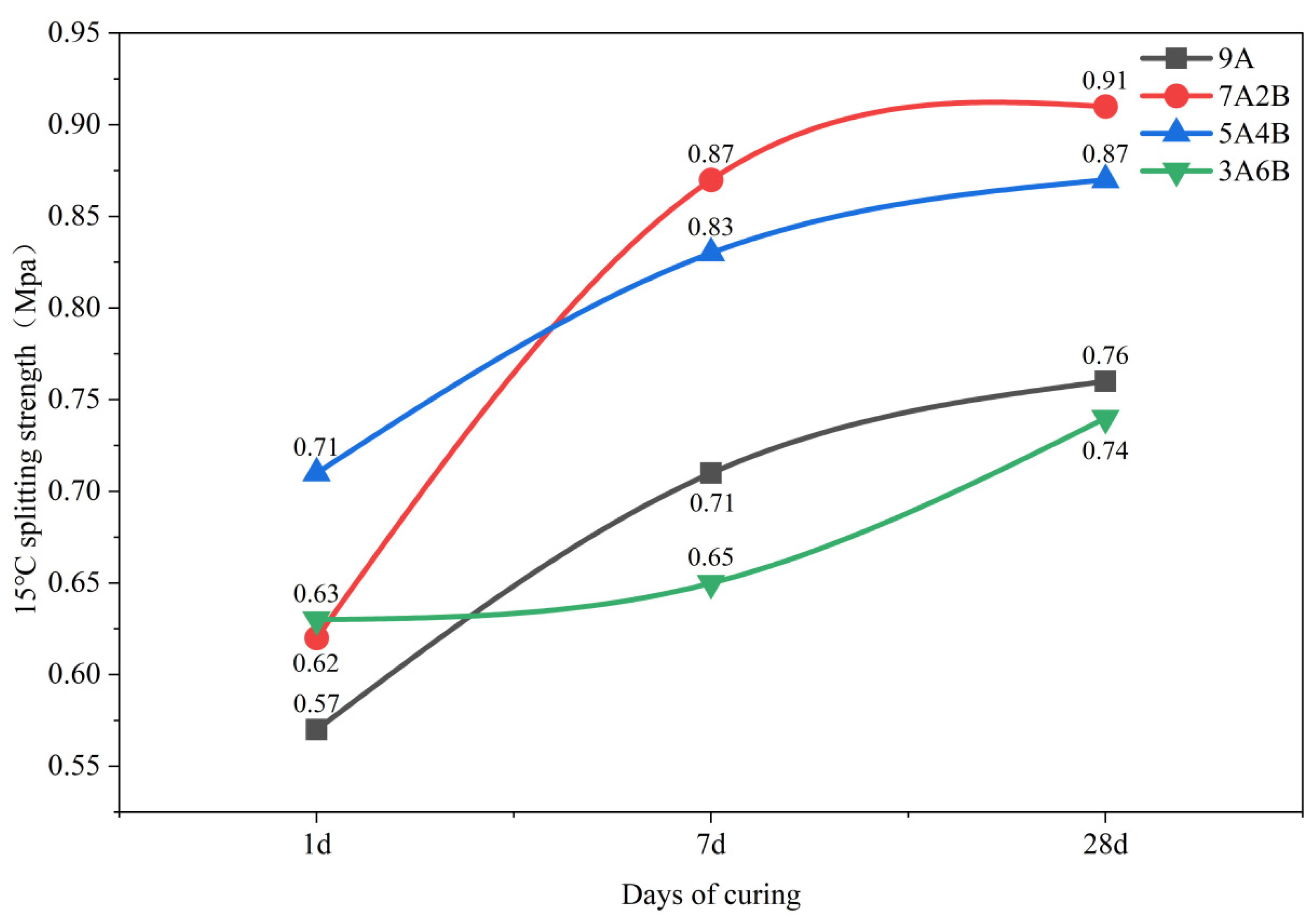
Figure 9 illustrates the 15 °C splitting strength of the four mixture groups (9A, 7A2B, 5A4B, and 3A6B) at curing ages of 1, 7, and 28 days. The results reflect the mechanical strength gain and the hardening kinetics of the cold recycled mixtures.
All mixtures showed a continuous increase in splitting strength as the curing period extended from 1d to 28d. The most rapid growth occurred between 1d and 7d, which can be attributed to the active hydration of cement and the initial breaking of the asphalt emulsion, forming an early-stage cement–asphalt mastic.
The incorporation of RCSB significantly enhanced the splitting strength compared to the high-RAP control group (9A), with the exception of the early-stage performance of group 3A6B. Group 7A2B achieved the highest ultimate strength at 28 days (0.91 MPa), followed by 5A4B (0.87 MPa). This suggests that a specific replacement ratio of RCSB (20% to 40%) provides the optimal aggregate skeleton to work synergistically with the cement-asphalt binder. Although group 9A showed steady growth, its ultimate strength (0.76 MPa) was markedly lower than that of the 7A2B and 5A4B groups, indicating that excessive RAP content without sufficient RCSB reinforcement limits the structural capacity. Interestingly, while group 3A6B had a higher 1d strength than 9A, its growth rate was slower, resulting in a 28d strength of 0.74 MPa. This implies that beyond a certain threshold (e.g., 60%), the increase in RCSB may lead to a higher void ratio or interfere with the binder distribution, slightly reducing the mechanical gain.
The results demonstrate that moderate substitution of RAP with RCSB (Groups 7A2B and 5A4B) is highly effective in improving the mechanical properties of cold recycled mixtures. The superior performance of Group 7A2B underscores the importance of a balanced gradation in fostering a dense internal structure and promoting the efficient development of hydration products (such as C-S-H gel) within the mixture matrix.
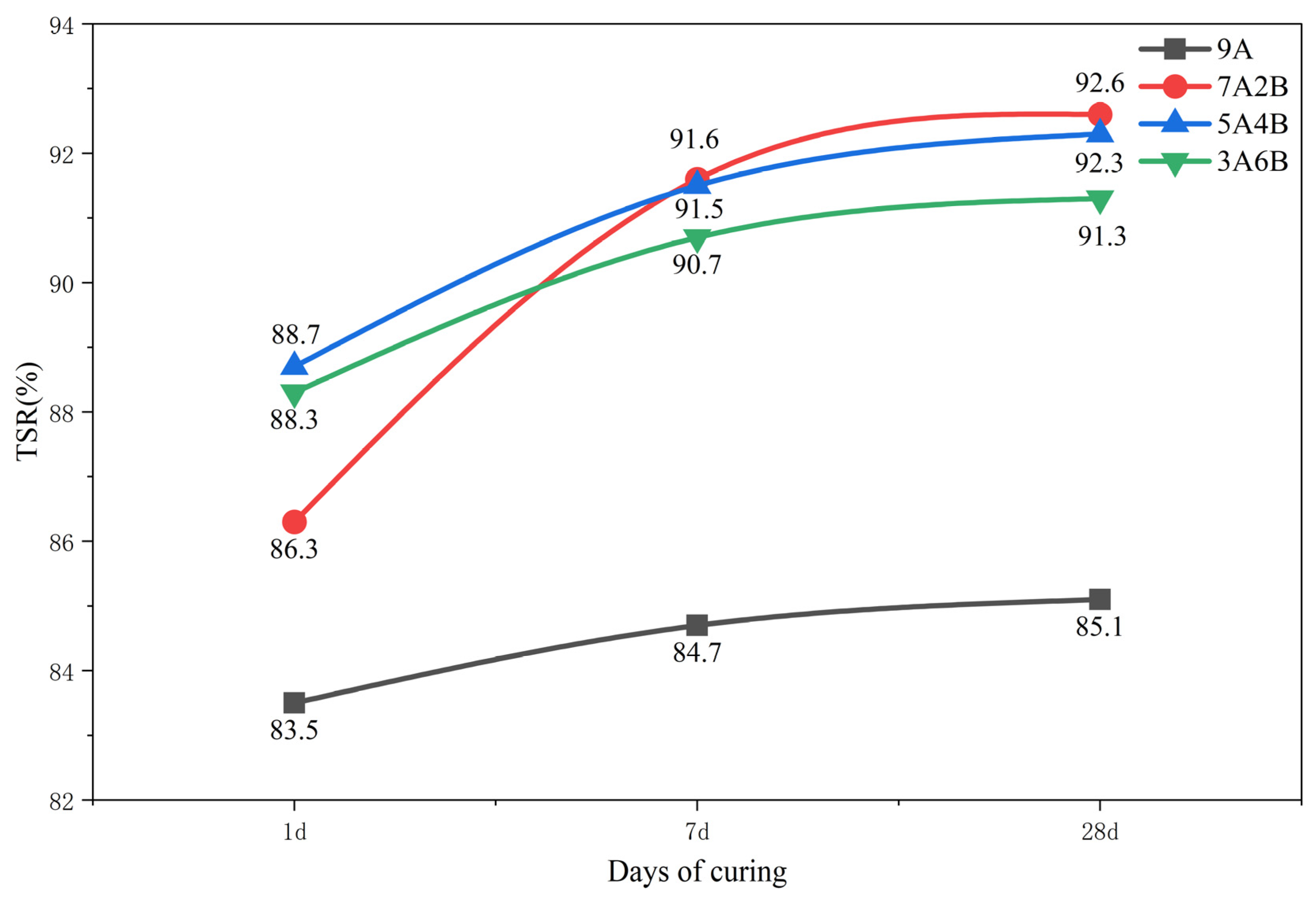
The TSR results (Figure 10) for the four groups of mixtures over different curing periods (1d, 7d, and 28d) are illustrated in the figure. As curing time increased, the TSR of all mixture groups exhibited a significant upward trend, particularly between 1d and 7d. This indicates that the development of internal bonding strength and the completion of hydration processes over time effectively enhance the mixtures’ resistance to freeze–thaw damage. Across all curing stages, Groups 7A2B, 5A4B, and 3A6B (which contain RCSB) consistently outperformed the control group 9A. By 28 days of curing, the TSR values for these groups with RCSB reached 91.3% to 92.6%. Among them, Group 7A2B achieved the highest ultimate TSR of 92.6%, showing superior long-term resistance to freeze–thaw cycles. Control Group (9A) consistently exhibited the lowest TSR values, starting at 83.5% (1d) and only reaching 85.1% (28d). The growth rate was also markedly lower than that of the other groups.
These findings suggest that the incorporation of RCSB significantly improves the freeze–thaw resistance of the mixtures compared to the high-RAP control group. The higher TSR values in the experimental groups imply that the combination of RCSB and new aggregates forms a more robust and durable internal structure that is less susceptible to the damaging effects of water expansion during freezing.
Deformation Resistance (Figure 11): The high-temperature stability of Group 9A relies on the gradual fusion of new and old asphalt, a relatively slow process. In contrast, Groups 7A2B and 5A4B demonstrated high and stable DS throughout the curing cycle. Notably, for Group 3A6B, a decline in DS was observed at 28 d, suggesting that an overly brittle semi-rigid matrix may develop shrinkage micro-cracks over time, compromising the overall structural stability under cyclic loading.
Above all, the curing process represents a competitive synergy between the formation of a rigid crystalline skeleton (cement) and a flexible viscoelastic film (asphalt). Group 7A2B emerges as the optimal design, exhibiting the most stable structural evolution and mechanical reliability.

3.4. Influence of Mixing Sequence on Homogeneity and Performance

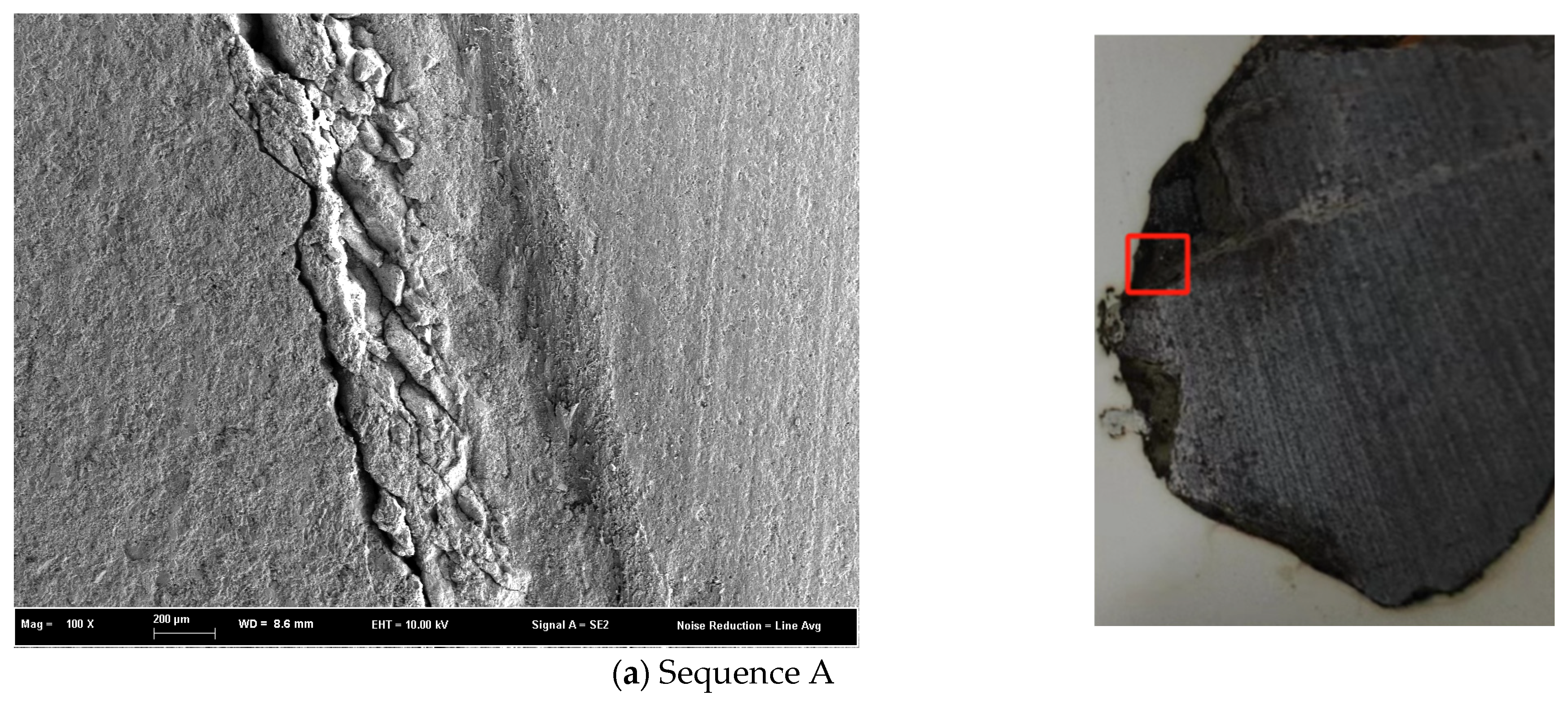
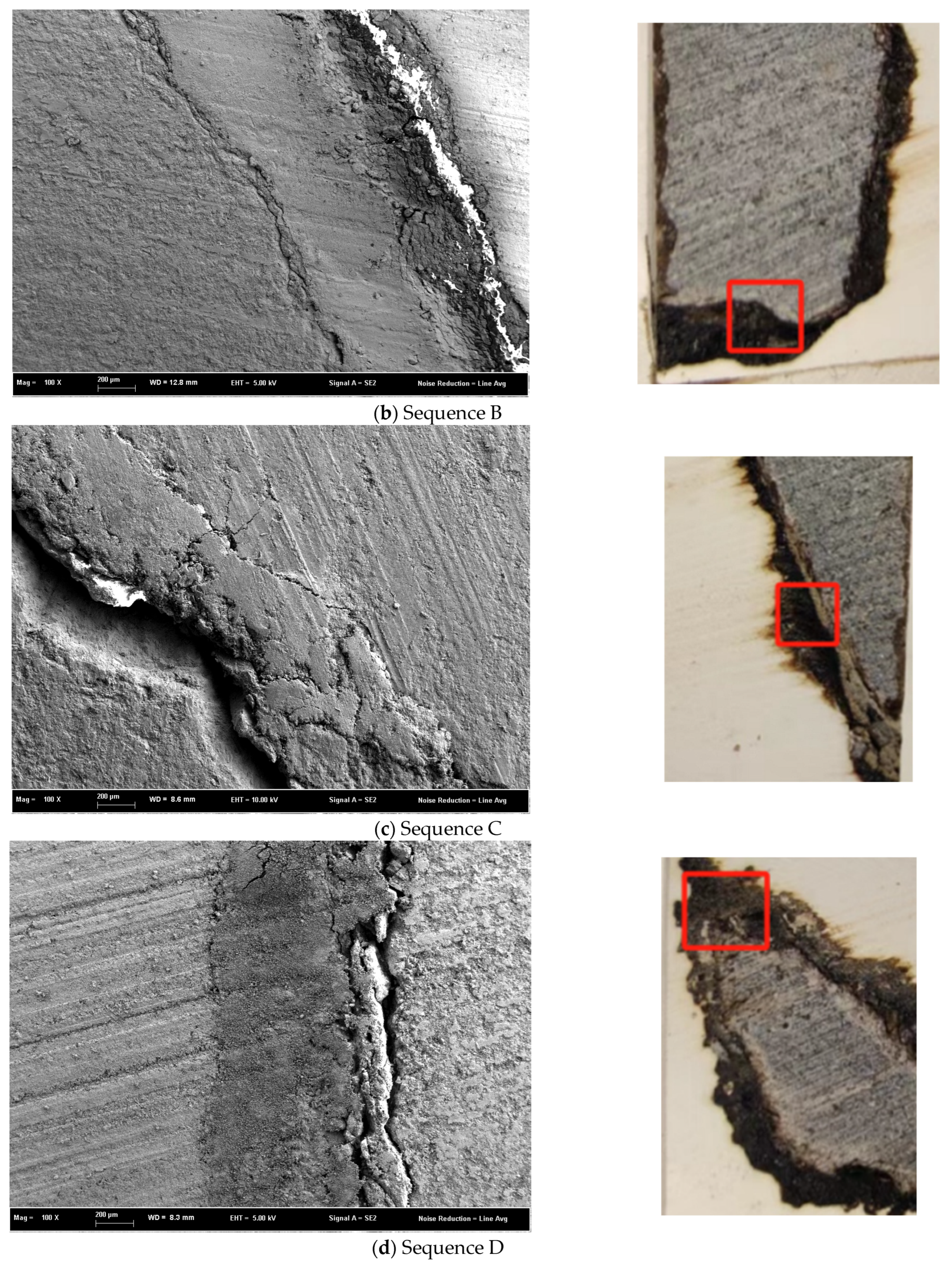
The mixing sequence dictates the spatial distribution of binders and the initiation of chemical reactions, fundamentally altering the mixture’s internal structure. The void content results are in Table 12, and the mechanical properties are drawn in Figure 12 and Figure 13. To elucidate the mechanisms behind the macro-performance variations, the aggregate–mastic interfaces were examined at 100× magnification (8.3 mm Field of View), as shown in Figure 14.
Table 12 reveals that the mixing sequence exerts a profound influence on the volumetric packing of the cold recycled mixtures. Sequence B achieved the lowest air void content of 8.3%. This suggest that the standard addition (Water, Cement, Emulsion) facilitates the most efficient filling of internal voids by the cement–asphalt mastic, leading to a highly dense mineral–binder matrix. Sequence A exhibited the highest porosity (12.8%), followed by Sequence C (11.3%). These values significantly exceed the baseline (Sequence B), indicating that premature blending of cement and asphalt (A) or delayed addition of cement (C) hinders the development of a compact structural skeleton. The “one-shot” mixing sequence (D) yielded a moderate air void content of 9.6%, which may be due to a random chaotic of blending.
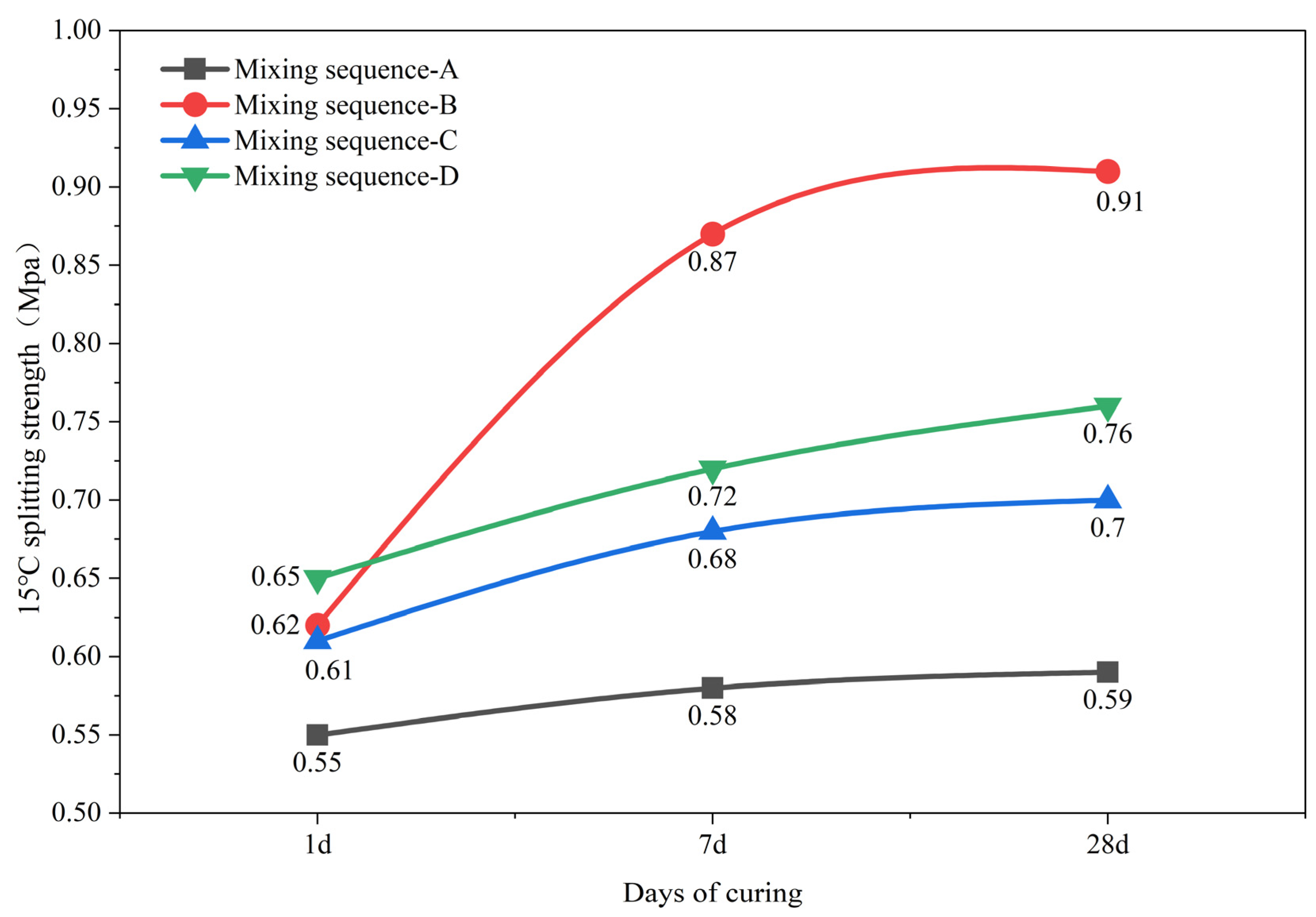
Figure 12 presents the 15 °C splitting strength of the cold-recycled mixtures prepared with four different mixing sequences over a 28-day curing period. The results further validate the critical role of the mixing order in determining the mechanical properties of the mixture.
Mixing sequence A (Cement–Asphalt Paste) produced the lowest splitting strength across all stages, only reaching 0.59 MPa after 28 days. The minimal strength gain from 1d to 28d confirms that pre-mixing cement with emulsion severely inhibits hydration, preventing the development of a structural matrix.
Mixing sequence B (Standard) exhibited the most significant strength growth and the highest ultimate strength, reaching 0.91 MPa at 28d. The rapid increase from 1d (0.62 MPa) to 7d (0.87 MPa) suggests that allowing cement to contact pre-wetted aggregates first facilitates the formation of a strong mineral–cement skeleton, which is then effectively stabilized by the subsequent emulsion addition.
Mixing sequence C (Emulsion then Cement) resulted in a lower strength of 0.70 MPa at 28d. The initial coating of aggregates by the emulsion likely creates an asphalt film that interferes with the cement’s ability to form direct hydration bonds with the aggregate surface, limiting the overall mechanical gain.
Mixing sequence D (One-shot) showed a steady but lower strength development compared to B, peaking at 0.76 MPa. While the simultaneous addition is efficient, it likely results in a less optimized distribution of the binder components compared to the staged addition in Sequence B.
For all groups, the splitting strength increased with curing time, with the most substantial gains occurring within the first 7 days. This period corresponds to the active hydration of cement and the primary breaking and curing of the asphalt emulsion. From 7d to 28d, the strength continued to grow but at a reduced rate, indicating the gradual maturation of the composite binder.
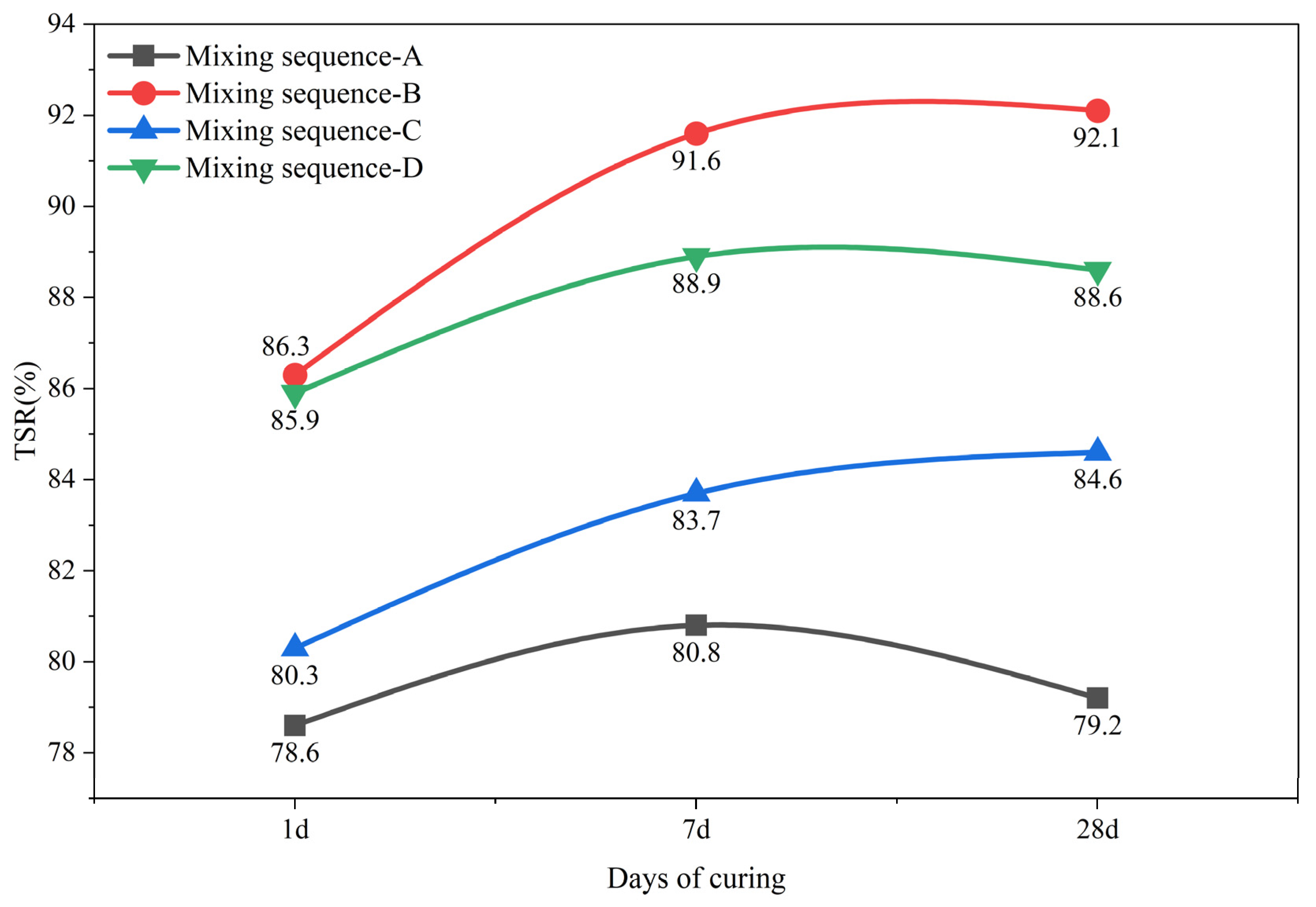
Figure 13 (TSR) illustrates the evolution of TSR for mixtures prepared via four distinct mixing sequences over a 28-day curing period. The results indicate that the mixing order significantly influences the moisture stability and long-term durability of the cold recycled mixture.
Mixing sequence A (Pre-blended Paste) exhibited the lowest freeze–thaw resistance, with TSR values failing to exceed 81% and even showing a slight decline to 79.2% at 28d. Pre-mixing cement and asphalt likely causes “competitive adsorption,” where asphalt particles encapsulate cement grains prematurely, significantly inhibiting cement hydration and preventing the formation of a continuous C-S-H gel network.
Mixing sequence B (Standard) consistently achieved the highest TSR values throughout the curing process, reaching 91.6% at 7d and 92.1% at 28d. By adding cement to the pre-wetted aggregate before the emulsion, this method likely promotes a more uniform distribution of cement particles on the aggregate surface, facilitating a robust hydration-bonded skeleton before the asphalt film forms.
Mixing sequence D (One-shot Addition) showed the second-best performance, with a 28d TSR of 88.6%. Although less controlled than sequence B, the simultaneous addition allows for a relatively balanced interaction between hydration and emulsion breaking, though it lacks the optimized surface-coating benefit of staged addition.
Mixing sequence C (Emulsion before Cement) performed poorly compared to B and D, with a 28d TSR of only 84.6%. Introducing the emulsion before the cement may cause the asphalt to coat the aggregate prematurely, creating a barrier that hinders the cement’s ability to bond directly with the aggregate surface, thus weakening the overall mechanical interlocking.
All sequences showed a notable increase in TSR from 1d to 7d, corresponding to the rapid phase of cement hydration and emulsion breaking. However, after 7 days, the growth rate for Sequences B, C, and D leveled off, while Sequence A showed a slight reduction in stability. This suggests that the internal structure formed during the initial mixing stage dictates the ultimate durability of the mixture.
The results of splitting strength and TSR both demonstrate that Sequence B (Water, Cement, Emulsion) is the optimal mixing practice for enhancing the mechanical performance of the mixture. The superior strength achieved by Sequence B underscores the importance of a “mineral-first” bonding strategy in cold recycled materials containing both cement and emulsified asphalt. It effectively balances the dispersion of cement particles and the breaking behavior of the asphalt emulsion, leading to a superior composite binder structure. Conversely, pre-mixing cement and asphalt (Sequence A) should be avoided as it severely compromises the material’s resistance to moisture and freeze–thaw damage.
The observed failure modes in Figure 14 provide a direct explanation for the porosity and performance trends.
Sequence B emerged as the optimal practice, achieving the lowest air void content (8.3%), the highest 28d splitting strength (0.91 MPa), and superior moisture stability (TSR = 92.1%). The microscope powdery (pulverized) failure observed indicates that Sequence B successfully established a robust “mineral–cement–asphalt” ITZ. By pre-wetting the aggregate, cement hydration products can bond directly to the stone surface before being encapsulated by asphalt. This creates a dense, continuous skeleton that minimizes internal voids and maximizes the effective contact area, resulting in peak mechanical and moisture-resistant properties.
In contrast, Sequence A (Cement–Asphalt Paste) exhibited the worst overall performance (12.8% void ratio, 0.59 MPa 15 °C split strength, 79.2% TSR). The ~0.2 mm interfacial grooves and aggregate crushing provide the visual origin for its poor macro-performance. The premature encapsulation of cement by asphalt inhibits hydration, leading to a brittle and discontinuous binder. These 0.2 mm gaps act as “stress concentrators” and “water channels,” leading to low splitting strength and making the mixture highly susceptible to freeze–thaw damage. The high porosity is not just a packing issue but a structural failure of the binder phase.
Sequence C (Emulsion before Cement) showed intermediate results. The ductile/extensional cracking observed at the interface explains its limited strength development. Because asphalt coats the aggregate first, the cement acts more like a filler within the asphalt mastic rather than a structural bridge. Under 15 °C splitting stress, the flexible asphalt film “stretches” (ductile failure), providing some cohesion but lacking the rigidity required for high strength. This “soft” interface also allows for higher moisture penetration, explaining the moderate TSR.
Sequence D (One-shot) maintained a surprisingly moderate porosity (9.6%), yet its strength (0.76 MPa) and TSR (88.6%) were lower than Sequence B. The structural looseness observed at the 8.3 mm scale reveals that while D-type mixtures are relatively compact in volume, their internal quality is highly inconsistent. The “loose” interfacial regions represent weak links in the skeleton. Unlike Sequence B, where hydration is optimized, Sequence D suffers from “competitive occupancy” on the aggregate surface. This lack of micro-scale homogenization results in a material that is “globally dense but locally weak.”

3.5. SEM + EDS Microscopic Interface Characteristics

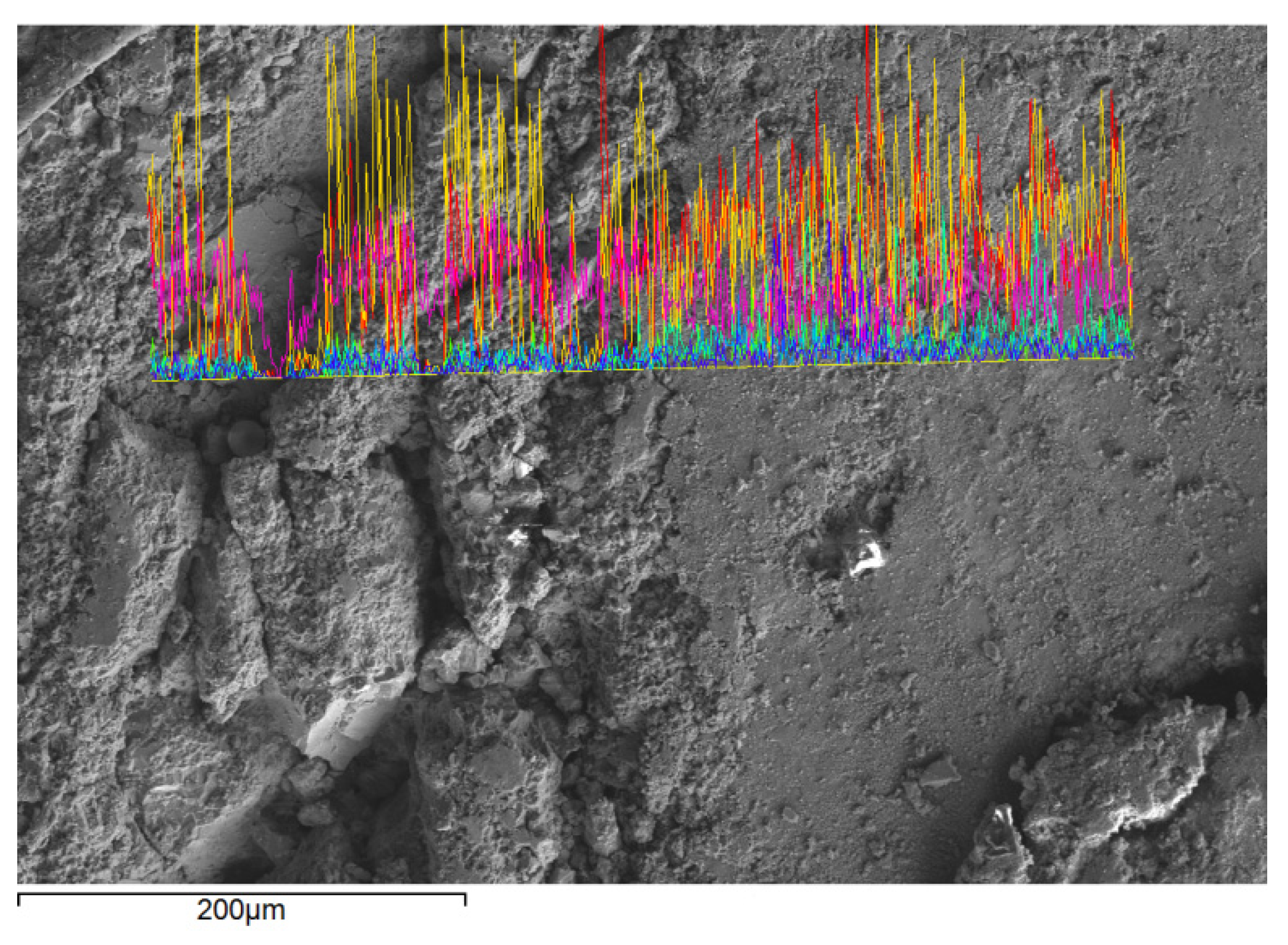
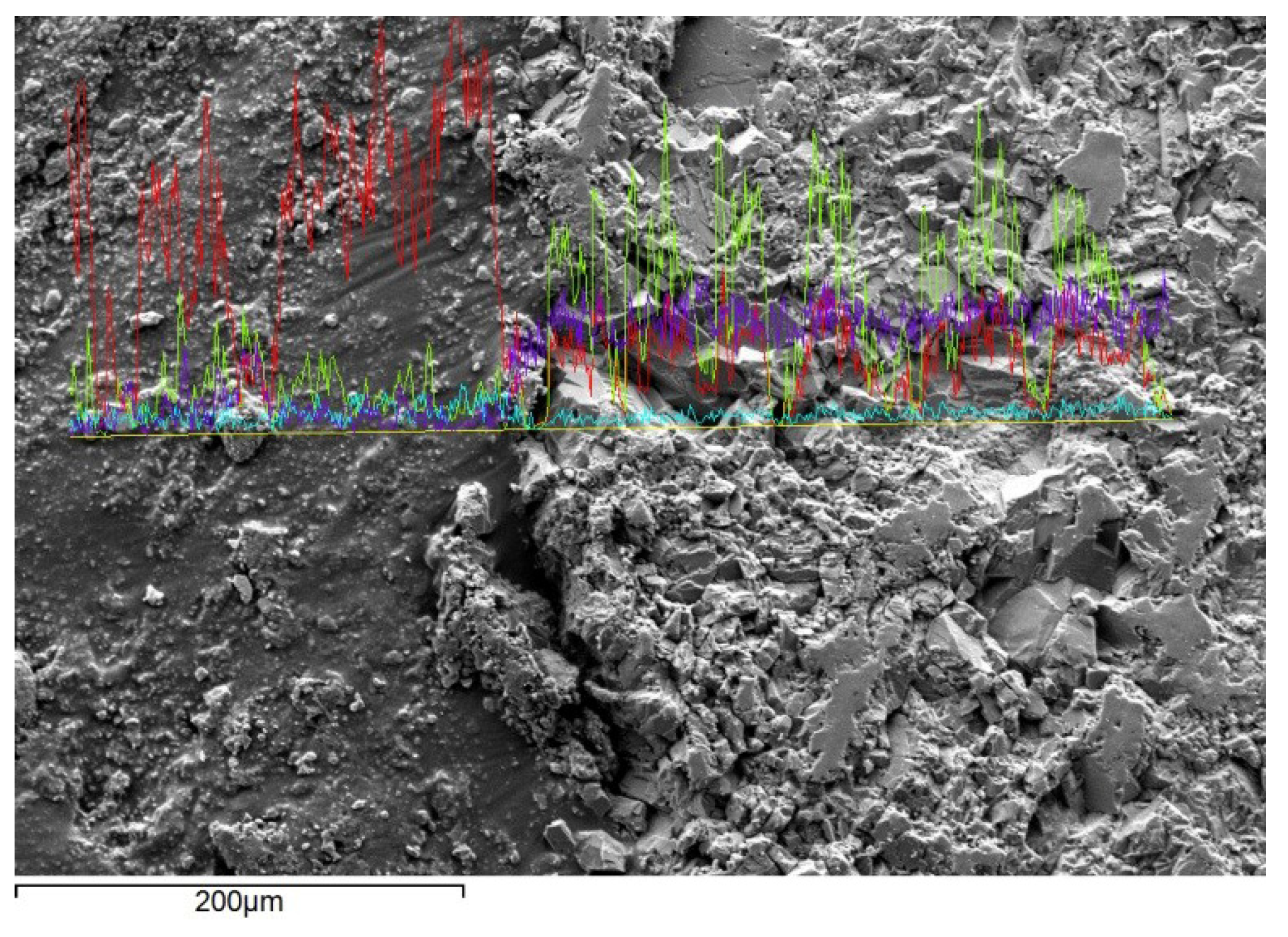
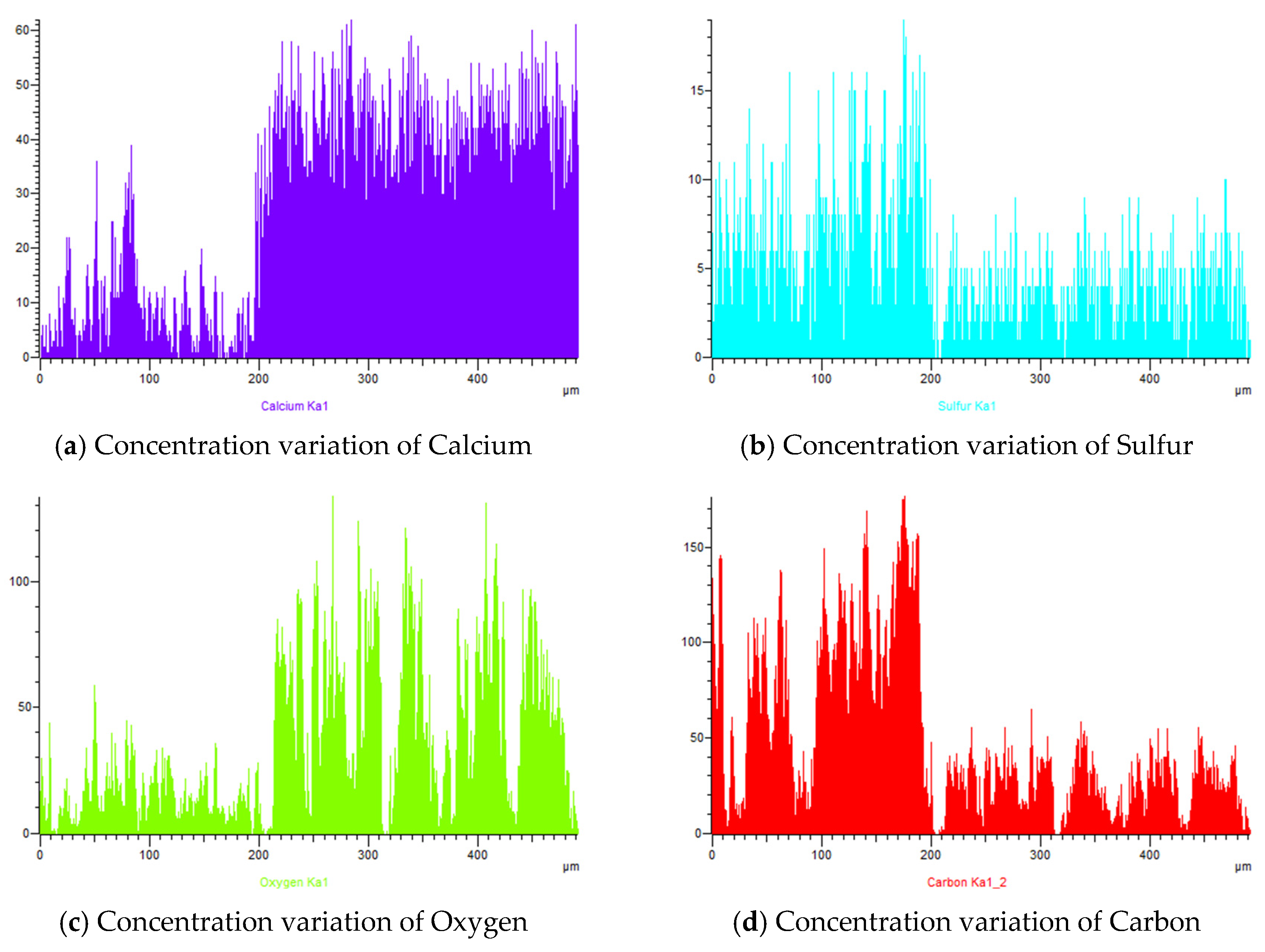
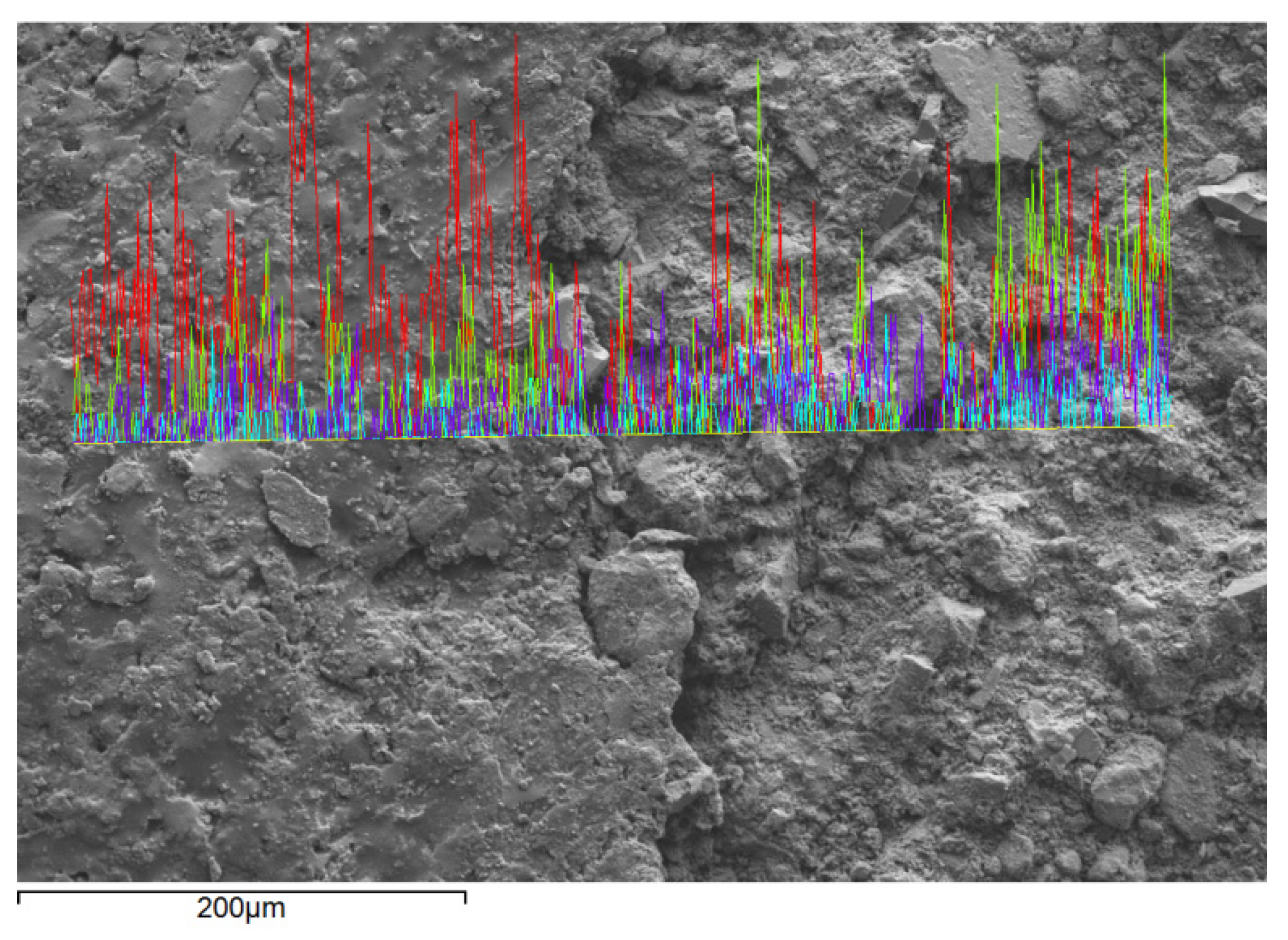
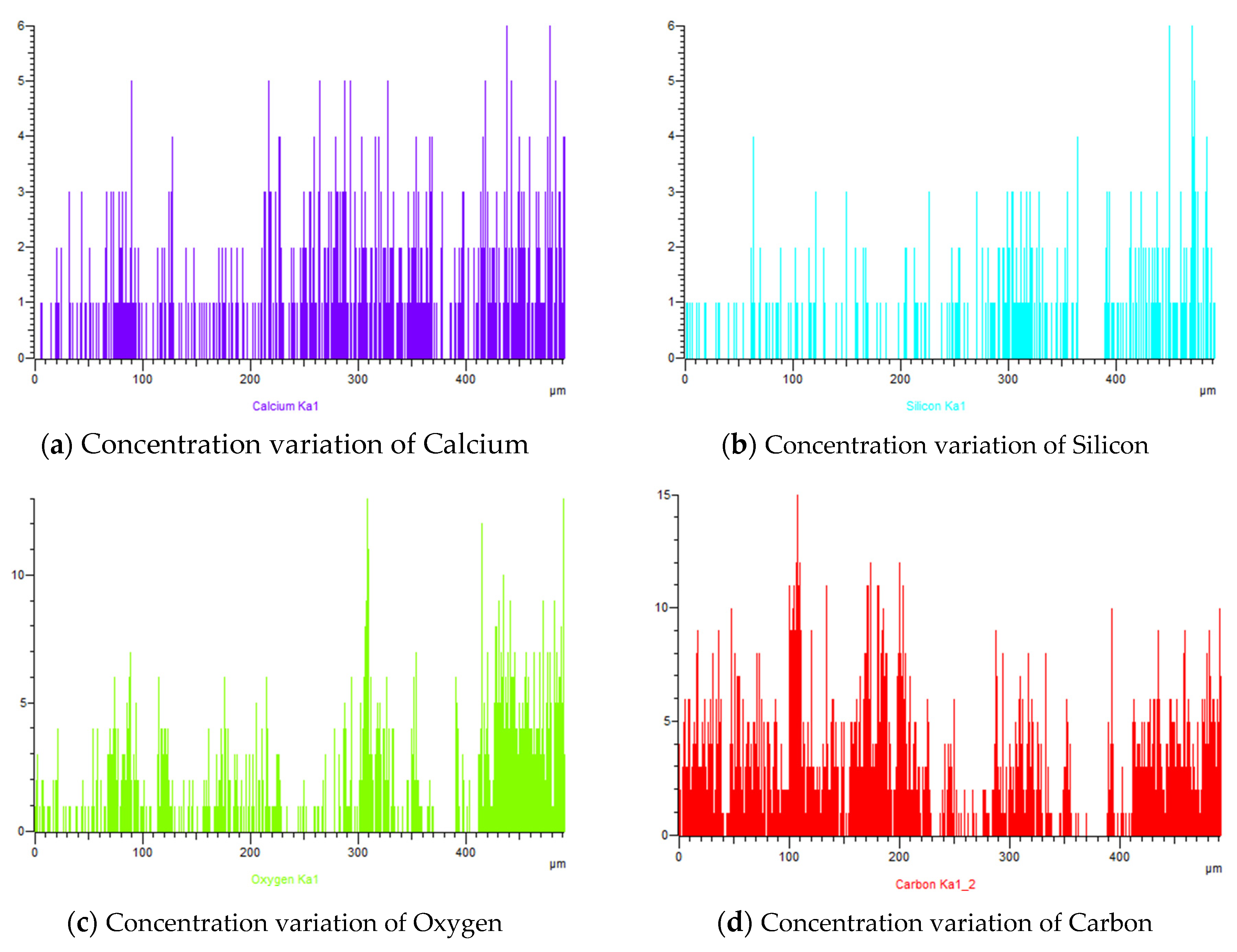
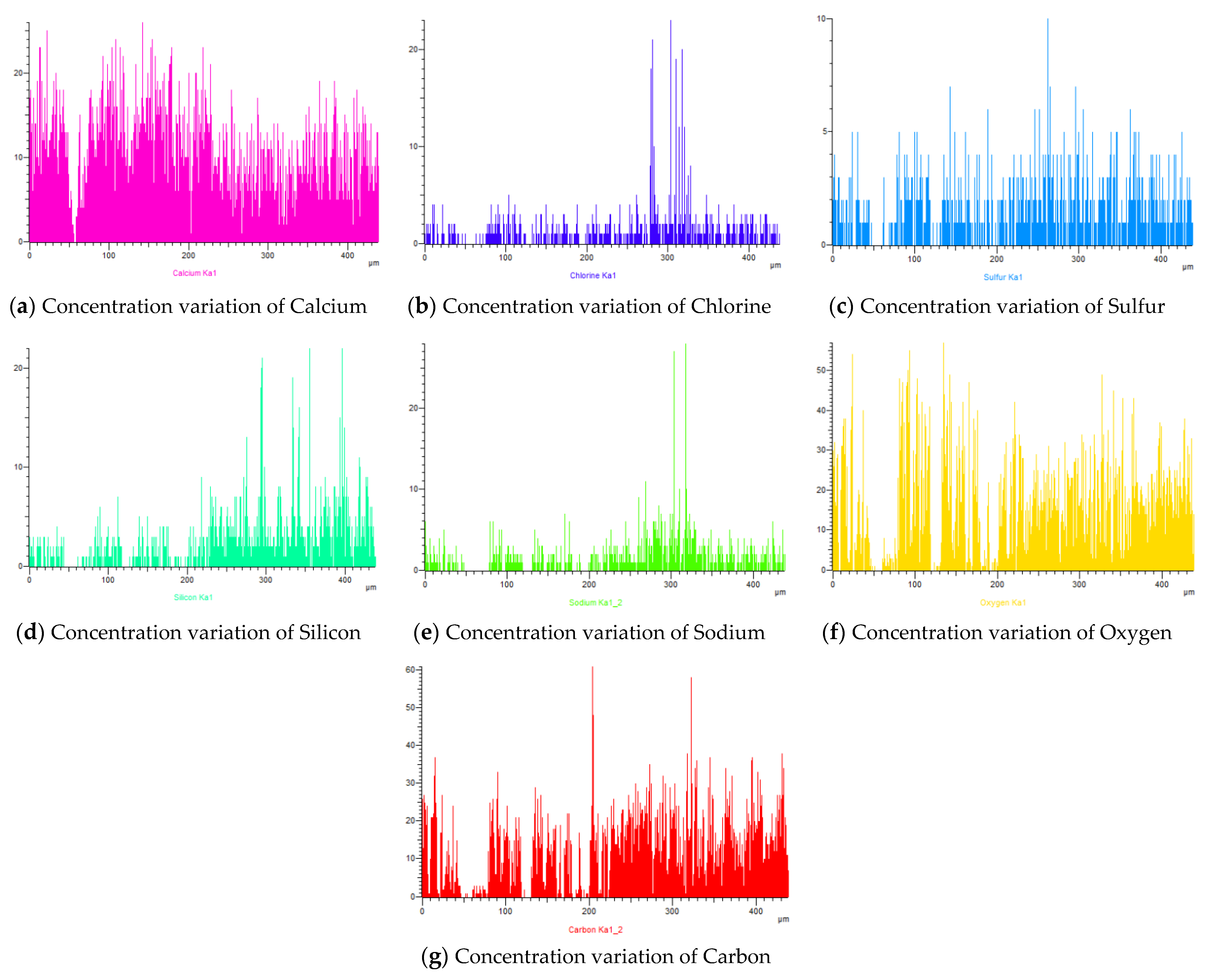
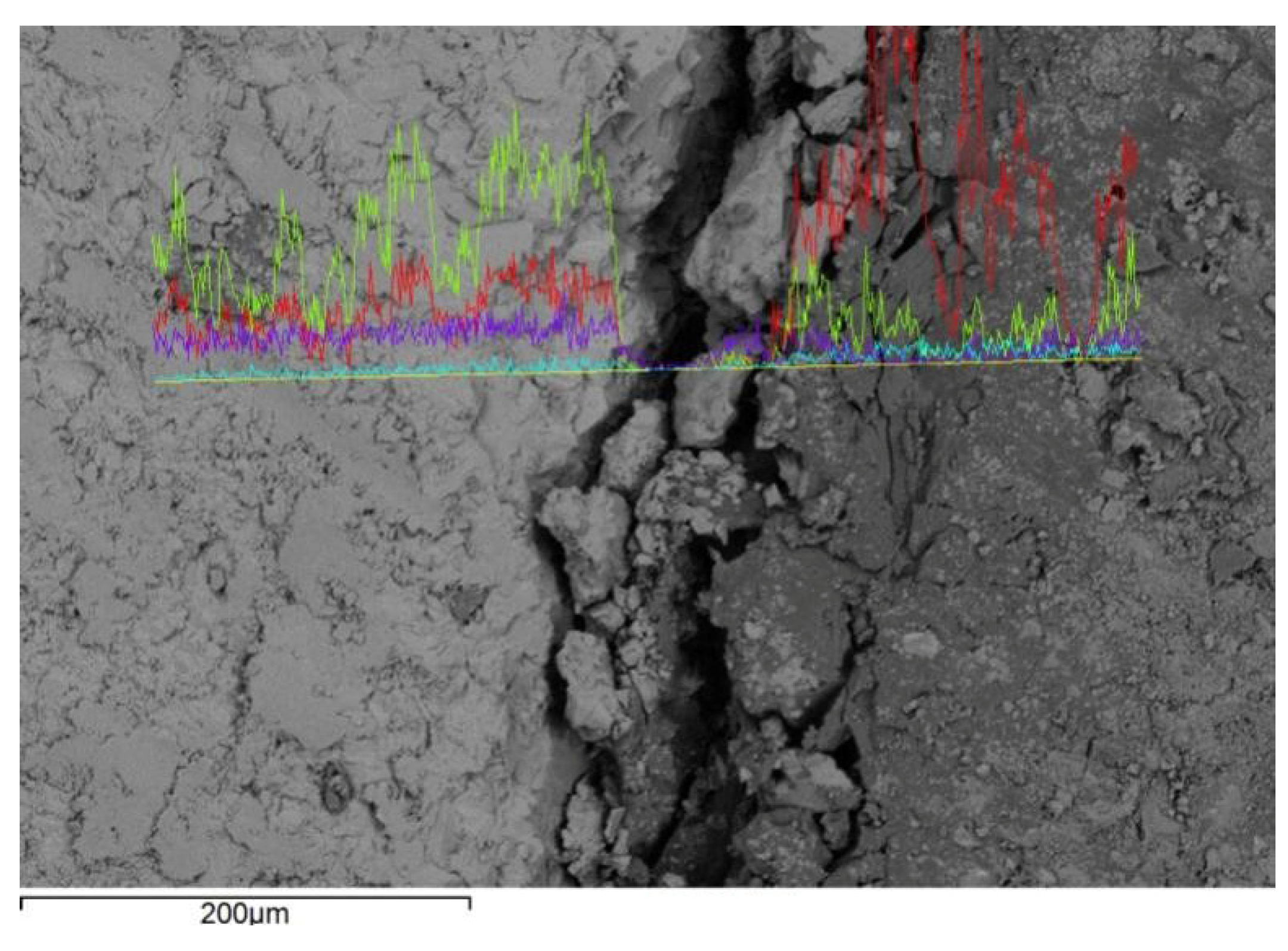
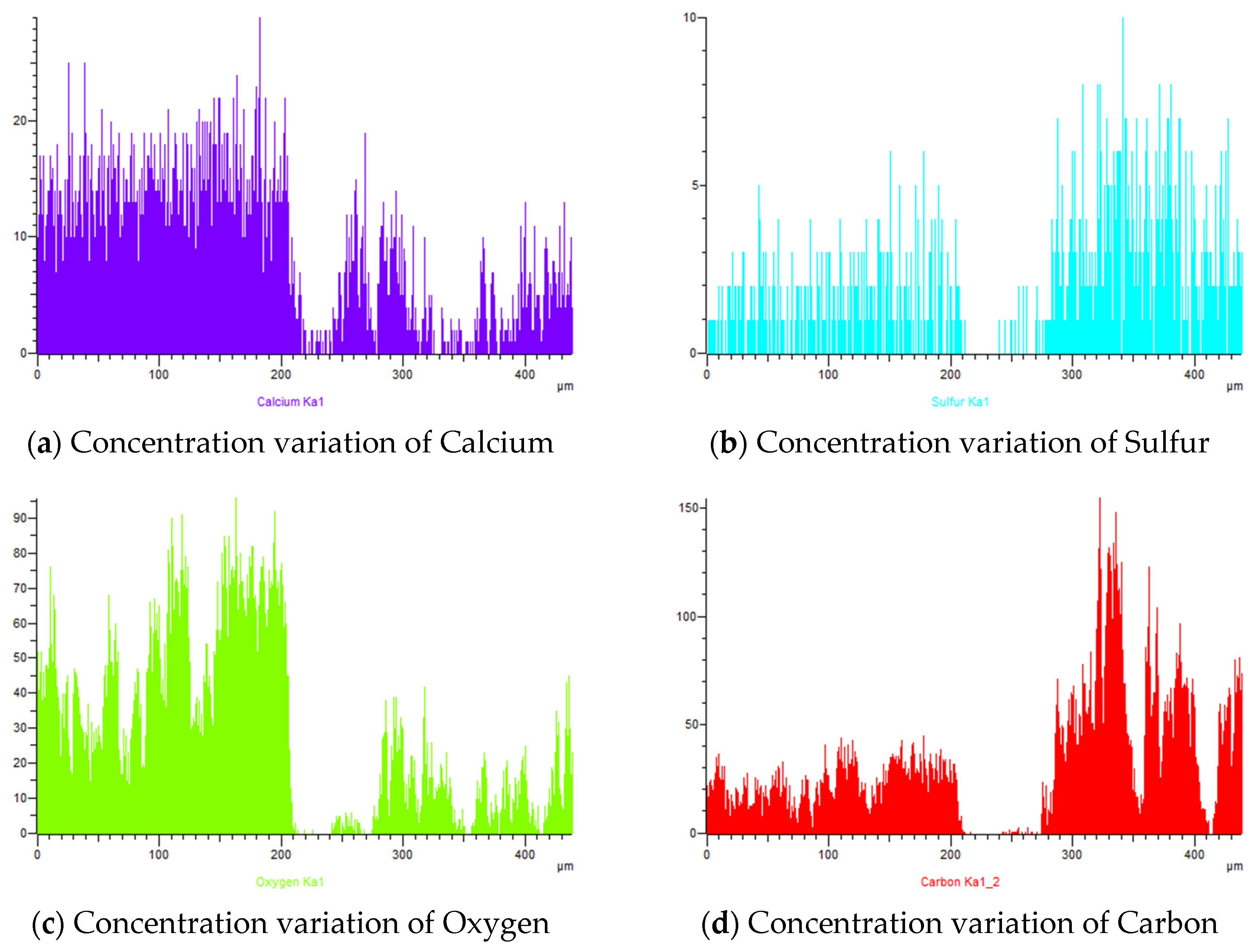
To elucidate the intrinsic mechanisms governing the macroscopic performance of the RCSB/RAP composite system, SEM and EDS analyses were employed to characterize the ITZs, as shown in Figure 15, Figure 16, Figure 17, Figure 18, Figure 19, Figure 20, Figure 21 and Figure 22. In this multi-phase system, the overall mechanical integrity is dictated by four distinct interfaces: (1) the aggregate–asphalt mastic ITZ; (2) the aggregate–cement hydration product ITZ; (3) the binder–binder fusion zone; and (4) the cement hydration product–asphalt mastic interphase.
Group 9A (Physical Adhesion Dominance): As illustrated in Figure 15 and Figure 16, the microstructure of Group 9A (pure RAP) is characterized by the fusion of aged asphalt from the RAP surfaces with the newly demulsified asphalt. In regions of high compatibility, the interface appears integrated and blurred. However, cement hydration products, such as fibrous C-S-H gels, are only sporadically distributed, acting as isolated “micro-fillers” within the asphalt mastic rather than forming a continuous structural network.
The EDS line scan at the aggregate–asphalt interface reveals a sharp, cliff-like elemental transition: the Carbon (C) signal from the binder plunges abruptly at the aggregate boundary, while the Calcium (Ca) signal from the aggregate increases sharply. This signifies that the interface is predominantly governed by physical adhesion with negligible chemical bonding—a microscopic characteristic that explains the relatively high moisture susceptibility observed in pure recycled asphalt mixtures.
Groups 7A2B and 5A4B (The Interpenetrating Network Structure): For mixtures with moderate RCSB content (20–40%), the SEM images (Figure 17 and Figure 19) reveal a fundamental structural shift. Cement hydration products and the asphalt film interweave to form a dense “interpenetrating network structure”. Notably, fibrous C-S-H gels and flaky Ca (OH)2 crystals are not merely dispersed but are deeply embedded within the asphalt matrix or co-encapsulate the aggregates alongside the bitumen film. This results in an ITZ that is notably broader, more diffuse, and significantly denser, with a marked absence of micro-cracks or structural defects.
The EDS line scans (Figure 18 and Figure 20) across these interfaces demonstrate a broad overlap zone where Ca and C signals coexist and vary gradually. This indicates a gradual chemical gradient rather than the abrupt interface seen in Group 9A, providing empirical evidence of a robust chemo-physical composite bond. This microscopic synergy between the rigidity of the hydration products and the flexibility of the asphalt binder is the primary driver for the mixture’s enhanced retained strength and superior water stability.
Group 3A6B (Skeleton-Dominated Phase and Interfacial Defects): In Group 3A6B (Figure 22), the microstructure transitions into a continuous phase dominated by a rigid skeleton of hydration products and RCSB particles. Here, the asphalt phase is sequestered into discontinuous “islands” or thin films filling the interstitial pores of the rigid matrix. SEM observations further reveal localized agglomeration of RCSB fines and micro-cracks potentially induced by desiccation shrinkage or compaction resistance.
Due to the relative binder deficiency in this high-surface-area system, certain RCSB surfaces remain incompletely coated. The EDS element distribution (Figure 22) returns to a sharp, “cliff-like” transition for Ca and C signals at the ITZ, indicating that excessive RCSB content prevents the asphalt from forming a cohesive coating. This microscopic discontinuity correlates directly with the observed decline in the mixture’s mechanical strength and dynamic stability.
In summary, the SEM and EDS analyses provide consistent and reliable comparative evidence for the macro-performance variations observed in the RCSB/RAP composite system. The formation of a high-performance recycled mixture is fundamentally governed by the interfacial synergy between the viscoelastic asphalt film and the rigid cementitious hydration products. Within the optimal RCSB range (20–40%), the most desirable “interpenetrating network” is established. In this state, the flexibility of the asphalt matrix effectively blunts micro-crack propagation, while the rigid crystalline framework of the RCSB and C-S-H gels provides the necessary structural stability. This dual-phase reinforcement explains why Group 7A2B achieved the peak splitting strength and superior moisture resistance. Conversely, both the “asphalt-dominated” phase (Group 9A) and the “skeleton-dominated” phase (Group 3A6B) exhibit interfacial weaknesses—either due to a lack of rigid reinforcement or an insufficient binder coating. These microscopic findings validate that 20–40% RCSB incorporation represents the “Goldilocks zone” for achieving a balanced, robust, and durable pavement material.

3.6. Proposed Mix Design Framework and Engineering Recommendations

Based on the multi-objective evaluation of mechanical strength, durability, and microscopic synergy, a function-oriented design strategy for the “Dual-Recycling” (RAP + RCSB) system is proposed. The core philosophy is to leverage the complementary nature of RAP’s ductility and RCSB’s structural rigidity.
(1)
Layer-specific material selection
To achieve optimal pavement performance, the blending ratio of reclaimed materials should be tailored to the specific functional requirements of the structural layer: (1) For layers requiring high resilient modulus and rutting resistance, a RAP:RCSB ratio of 50:40 to 70:20 is recommended. In this configuration, RCSB acts as the primary rigid skeleton. The inclusion of 1.5–2.0% cement is essential to foster the “rigid–flexible” composite matrix, ensuring the base can withstand heavy traffic loads without significant permanent deformation. (2) For layers where flexibility and fatigue life are paramount, a higher RAP content is preferred (e.g., 70% RAP + 20% RCSB). Here, the RCSB serves primarily as an alkaline anti-stripping agent rather than a structural skeleton. Reducing the cement content to 1.0–1.5% helps maintain the viscoelastic properties of the mixture, preventing brittle reflective cracking.
(2)
Optimization of the mixing protocol
The experimental results from Section 3.4 underscore that the mixing sequence is a critical determinant of the mixture’s “performance ceiling.” The Recommended Sequence (Sequence B): aggregates + water, cement, emulsified asphalt. Pre-wetting the reclaimed aggregates ensures the uniform adsorption of cement particles, which prevents the formation of detrimental cement–asphalt agglomerates. This ordered process allows for a controlled demulsification rate, leading to a higher compaction density and a more homogeneous ITZ.
(3)
Curing and traffic opening guidelines
The time-dependent evolution of performance (Section 3.3) indicates that a 7-day accelerated curing period is a reliable threshold for structural maturation. It is recommended that heavy traffic be restricted until the 7-day splitting strength reaches at least 85% of the design value. For mixtures with high RCSB content (e.g., Group 5A4B), stringent moisture curing in the first 72 h is vital to support cement hydration and prevent desiccation-induced strength loss.


4. Conclusions

This study investigated the synergistic effects of RAP and RCSB materials in cold-recycled mixtures. Based on the systematic evaluation of mix design, mechanical performance, and microscopic mechanisms, the following conclusions are drawn:
(1)
A parabolic relationship exists between RCSB content and the mechanical performance of the mixture. The 20–40% RCSB substitution range represents the golden zone, achieving a peak splitting strength of 0.87 MPa and superior moisture resistance by balancing the structural rigidity of RCSB with the flexibility of RAP.
(2)
The alkaline nature of RCSB fundamentally improves the binder–aggregate adhesion, with the TSR exceeding 90% across all RCSB-containing groups. However, high-temperature stability (DS) is sensitive to excessive fines; dosages beyond 40% RCSB trigger a sharp decline in DS (to 2303 cycles/mm) due to the reduction in effective asphalt film thickness.
(3)
SEM + EDS analysis reveals that the superior performance of the RCSB/RAP system stems from a chemo-physical hybrid bond. Within the optimal dosage range, fibrous C-S-H gels and asphalt mastic interweave into a diffuse, high-density ITZ, effectively bridging the rigid and flexible phases.
(4)
Sequence B (mixing order: aggregates + water, cement, emulsified asphalt) is the optimal protocol, as it prevents the formation of detrimental cement–asphalt agglomerates and facilitates an ordered, uniform demulsification process. SEM results show that this prevents the competitive adsorption between cement and asphalt, transforming the ITZ from a friable, loose state into a densified crystalline adhesive matrix.
(5)
For upper base layers, a RAP:RCSB ratio of 50:40 to 70:20 with 1.5–2.0% cement is recommended to maximize bearing capacity. For lower pavement surface layers, a 70:20 ratio with lower cement content (1.0–1.5%) is preferred to enhance fatigue life and flexibility.

Author Contributions

Conceptualization, Z.X. and H.W.; methodology, Z.X. and H.W.; validation, Z.X. and D.Z.; formal analysis, Z.X., H.W., L.L. and L.S.; investigation, Z.X., H.W. and D.Z.; resources, Z.X. and L.L.; data curation, Z.X.; writing—original draft preparation, Z.X. and H.W.; writing—review and editing, Z.X., H.W., and L.S.; visualization, Z.X.; supervision, L.L. and L.S.; project administration, Z.X. and D.Z. All authors have read and agreed to the published version of the manuscript.

Funding

This research received no external funding.

Institutional Review Board Statement

Not applicable.

Informed Consent Statement

Not applicable.

Data Availability Statement

Data is contained within the article.

Acknowledgments

During the preparation of this manuscript/study, the author(s) used Gemini 3 for the purposes of English editing. The authors have reviewed and edited the output and take full responsibility for the content of this publication.

Conflicts of Interest

Authors Zhoucong Xu and Dongchang Zhang were employed by the China Merchants Chongqing Communications Technology Research & Design Institute Co., Ltd. The remaining authors declare that the research was conducted in the absence of any commercial or financial relationships that could be construed as a potential conflict of interest.

References

  1. Xiao, F.; Yao, S.; Wang, J.; Li, X.; Amirkhanian, S. A literature review on cold recycling technology of asphalt pavement. Constr. Build. Mater. 2018, 180, 579–604. [Google Scholar] [CrossRef]
  2. Ma, F.; Sha, A.; Lin, R.; Huang, Y.; Wang, C. Greenhouse gas emissions from asphalt pavement construction: A case study in China. Int. J. Environ. Res. Public Health 2016, 13, 351. [Google Scholar] [CrossRef]
  3. Sharma, A.; Rongmei Naga, G.R.; Kumar, P.; Rai, P. Mix design, development, production and policies of recycled hot mix asphalt: A review. J. Traffic Transp. Eng. (Engl. Ed.) 2022, 9, 765–794. [Google Scholar] [CrossRef]
  4. Alkam, R.B.; Airey, G.D.; Thom, N.; Tajudin, A.N. Reclaimed asphalt pavement (RAP) in cold recycled bituminous mixtures: A systematic review. Road Mater. Pavement Des. 2025, 26, 1–46. [Google Scholar] [CrossRef]
  5. Xu, X.; Kong, L.; Li, X.; Lei, B.; Sun, B.; Li, X.; Qu, F.; Pang, B.; Dong, W. Energy conservation and carbon emission reduction of cold recycled petroleum asphalt concrete pavement with cement-stabilized phosphogypsum. Constr. Build. Mater. 2024, 421, 135969. [Google Scholar] [CrossRef]
  6. Al-Ihekwaba, E.; Dave, E.V.; Sias, J.E. Properties and structural contributions of engineered emulsion stabilized cold recycled materials based on mixture composition variation. Transp. Res. Rec. 2025, 2679, 1–20. [Google Scholar] [CrossRef]
  7. Ren, J.; Wang, S.; Zang, G. Effects of recycled aggregate composition on the mechanical characteristics and material design of cement stabilized cold recycling mixtures using road milling materials. Constr. Build. Mater. 2020, 244, 118329. [Google Scholar] [CrossRef]
  8. Debbarma, S.; Ransinchung, G.; Singh, S. Improving the Properties of RAP-RCCP Mixes by Incorporating Supplementary Cementitious Materials as Part Addition of Portland Cement. J. Mater. Civ. Eng. 2020, 32, 04020229. [Google Scholar] [CrossRef]
  9. Karthikeyan, K.; Kothandaraman, S.; Sarang, G. Perspectives on the utilization of reclaimed asphalt pavement in concrete pavement construction: A critical review. Case Stud. Constr. Mater. 2023, 19, e02242. [Google Scholar] [CrossRef]
  10. Andrade, L.R.; Bessa, I.S.; Vasconcelos, K.L.; Bernucci, L.L.B.; Suzuki, C.Y. Structural performance using deflection basin parameters of asphalt pavements with different base materials under heavy traffic. Int. J. Pavement Res. Technol. 2024, 17, 1353–1366. [Google Scholar] [CrossRef]
  11. Cui, Y.; Chen, Q.; Li, M.; Zhang, S. Study on low temperature crack resistance of warm-mixed recycled SBS modified asphalt mixtures. Constr. Build. Mater. 2024, 409, 134120. [Google Scholar] [CrossRef]
  12. Fedrigo, W.; Núñez, W.P.; Fernandes, D.P.; Malabarba, L.M.; Ceratti, J.A.P.; Brito, L.A.T. Effects of RAP residual asphalt binder type, content and ageing on the mechanical behaviour of cold recycled cement-treated mixtures. Road Mater. Pavement Des. 2021, 22, 1389–1406. [Google Scholar] [CrossRef]
  13. Luan, Y.; Ma, T.; Wang, S.; Ma, Y.; Xu, G.; Wu, M. Investigating mechanical performance and interface characteristics of cold recycled mixture: Promoting sustainable utilization of reclaimed asphalt pavement. J. Clean. Prod. 2022, 369, 133366. [Google Scholar] [CrossRef]
  14. Fedrigo, W.; Kleinert, T.R.; Núñez, W.P.; Graeff, A.G.; Pinto da Silva Filho, L.C.; Brito, L.A.T. Shrinkage of cold recycled cement-treated mixtures of asphalt pavement materials. J. Test. Eval. 2023, 51, 2230–2244. [Google Scholar] [CrossRef]
  15. Meena, P.; Rongmei Naga, G.R.; Kumar, P.; Monu, K. Effect of binary blended fillers on the durability performance of recycled cold-mix asphalt. Sustainability 2024, 16, 4908. [Google Scholar] [CrossRef]
  16. Meena, P.; Rongmei Naga, G.R.; Kumar, P.; Monu, K. Effect of mechanical properties on performance of cold mix asphalt with recycled aggregates incorporating filler additives. Sustainability 2024, 16, 344. [Google Scholar] [CrossRef]
  17. Rai, P.; Kumar, P.; Saboo, N. Evaluating the role of base binder type and aging severity on restoration capacity of rejuvenating agents for sustainable asphalt recycling. Int. J. Pavement Eng. 2025, 26, 2592685. [Google Scholar] [CrossRef]
  18. Iwański, M.; Mazurek, G.; Buczyński, P.; Iwański, M.M. Effects of hydraulic binder composition on the rheological characteristics of recycled mixtures with foamed bitumen for full depth reclamation. Constr. Build. Mater. 2022, 330, 127247. [Google Scholar] [CrossRef]
  19. Arshad, M.; Ahmed, M.F. Potential use of reclaimed asphalt pavement and recycled concrete aggregate in base/subbase layers of flexible pavements. Constr. Build. Mater. 2017, 151, 83–97. [Google Scholar] [CrossRef]
  20. Zhang, Y.; Sun, C.; Chen, H.; Kang, A.H.; Guan, Y. Research on macro and micro performance degradation of hot in-place recycled asphalt mixtures with high RAP contents. Case Stud. Constr. Mater. 2025, 22, e04825. [Google Scholar] [CrossRef]
  21. Zhao, Z.; Wang, S.; Ren, J.; Wang, Y.; Wang, C. Fatigue characteristics and prediction of cement-stabilized cold recycled mixture with road-milling materials considering recycled aggregate composition. Constr. Build. Mater. 2021, 301, 124122. [Google Scholar] [CrossRef]
  22. Ren, J.; Zhang, L.; Zhao, H.; Zhao, Z.; Wang, S. Determination of the fatigue equation for the cement-stabilized cold recycled mixtures with road construction waste materials based on data-driven. Int. J. Fatigue 2022, 158, 106765. [Google Scholar] [CrossRef]
  23. Hill, R.; Braham, A. Quantifying timing of return to traffic for asphalt cement based full depth reclamation mixtures in the laboratory. J. Test. Eval. 2016, 44, 555–564. [Google Scholar] [CrossRef]
  24. Rai, P.; Kumar, P.; Saboo, N. Simulation of long-term aging of asphalt binders for Indian conditions using draft oven and pressure aging vessel. Int. J. Pavement Res. Technol. 2025. [Google Scholar] [CrossRef]
  25. Allain, D.E. Evaluation of Laboratory and Field Produced Cold Recycled and Full Depth Reclaimed Asphalt Pavement Materials. Master’s Thesis, Auburn University, Auburn, AL, USA, 2021. [Google Scholar]
  26. Bisanti, F.; Carbutti, N.; Dave, E.V.; Sias, J.E.; Romeo, E.; Tebaldi, G. Influence of compaction methods on physical-mechanical properties of cold recycled asphalt mixtures and pavement life. Road Mater. Pavement Des. 2025, 26, S400–S416. [Google Scholar] [CrossRef]
  27. Ullah, S.; Tanyu, B.F.; Dawson, A. Reclaimed Asphalt Pavement (RAP) as an unbound base course material: A mechanistic design approach based on multi-stage repeated load triaxial tests. Transp. Geotech. 2022, 33, 100729. [Google Scholar] [CrossRef]
  28. Fedrigo, W.; Kleinert, T.R.; Schreinert, G.G.; Brito, L.A.T.; Núñez, W.P. Statistical analysis of the tensile strength of cold recycled cement-treated materials and its influence on pavement design. Infrastructures 2025, 10, 284. [Google Scholar] [CrossRef]
  29. JTG 3410-2025; Standard Test Methods of Asphalt and Asphalt Mixture for Highway Engineering. Beijing COC Tech Co., Ltd.: Beijing, China, 2025. (In Chinese)
Figure 1. Combined gradations of all the mixtures.
Sustainability 18 04391 g001
Figure 2. Marshall specimen preparation. (a) mix process, (b) compact process, (c) curing process.
Sustainability 18 04391 g002
Figure 3. Sigma300 SEM.
Sustainability 18 04391 g003
Figure 4. Gold-coated sample and testing. (a) specimen after polished, (b) sputter coating, (c) scan process.
Sustainability 18 04391 g004
Figure 5. Comparison of Optimum moisture content and maximum dry density.
Sustainability 18 04391 g005
Figure 6. Air void content at different emulsified asphalt contents.
Sustainability 18 04391 g006
Figure 7. The 15 °C splitting strength at different emulsified asphalt contents.
Sustainability 18 04391 g007
Figure 8. Wet–dry splitting strength ratio at different emulsified asphalt contents.
Sustainability 18 04391 g008
Figure 9. The 15 °C splitting strength at different curing ages.
Sustainability 18 04391 g009
Figure 10. TSR at different curing ages.
Sustainability 18 04391 g010
Figure 11. DS at different curing ages.
Sustainability 18 04391 g011
Figure 12. The 15 °C splitting strength with different mixing sequences.
Sustainability 18 04391 g012
Figure 13. TSR with different mixing sequences.
Sustainability 18 04391 g013
Figure 14. SEM image (100×) and sample photos of mixture ITZ different mixing sequences (35 curing days). The approximate scope of the scanning test is outlined in red.
Sustainability 18 04391 g014aSustainability 18 04391 g014b
Figure 15. SEM micrographs of Group 9A.
Sustainability 18 04391 g015
Figure 16. EDS line scan element distribution in the scanning direction of Group 9A.
Sustainability 18 04391 g016
Figure 17. SEM micrographs of Group 7A2B.
Sustainability 18 04391 g017
Figure 18. EDS line scan element distribution in the scanning direction of Group 7A2B.
Sustainability 18 04391 g018
Figure 19. SEM micrographs of Group 5A4B.
Sustainability 18 04391 g019
Figure 20. EDS line scan element distribution of in the scanning direction of Group 5A4B.
Sustainability 18 04391 g020
Figure 21. SEM micrographs of Group 3A6B.
Sustainability 18 04391 g021
Figure 22. EDS line scan element distribution in the scanning direction of Group 3A6B.
Sustainability 18 04391 g022
Table 1. Sieve analysis results of RAP material with square mesh sieve.
Sieve Size (mm)1613.29.54.752.361.180.60.30.150.075
Percentage passing rate (%)10093.389.857.334.119.813.37.84.52.7
Table 2. Sieve analysis results of the crushed RCSB.
Sieve Size (mm)26.5191613.29.54.752.361.180.60.30.150.075
Percentage passing rate (%)10091.581.276.557.542.122.414.58.54.23.22.2
Table 3. Test results of the extracted asphalt.
Test ItemUnitResultTest Method
Asphalt content%5T0722
Penetration (100 g, 25 °C, 5 s)0.1 mm26T0604
Ductility (5 °C, 5 cm/min)cm0T0605
Ductility (15 °C, 5 cm/min)cm9T0605
Softening point (TR&B)°C59.8T0606
Table 4. Properties of aggregates recycled from RAP.
SpecificationApparent Density (g/cm3)Absorption Rate (%)Flaky and Elongated Particle Content (%)Crushing Value (%)
0–5 mm2.300.25//
5–20 mm2.580.207.3123.4
Table 5. Properties of aggregates recycled from RCSB.
SpecificationApparent Density (g/cm3)Absorption Rate (%)Flaky and Elongated Particle Content (%)Crushing Value (%)Clay Content (%)
0–5 mm2.440.45//3.83
5–20 mm2.630.384.9528.72.7
Table 6. Sieve analysis results of the new aggregate.
Sieve Size (mm)26.5191613.29.54.75
Percentage passing rate (%)10064.444.634.620.30
Table 7. Technical specifications of the new aggregate.
SpecificationApparent Density (g/cm3)Absorption Rate (%)Flaky and Elongated Particle Content (%)Crushing Value (%)
5–20 mm2.680.795.3319.3
Table 8. Technical specifications of the mineral filler.
ItemUnitTest Result
Apparent densityt/m32.754
Moisture content%0.2
Passing 0.6 mm%100
Passing 0.3 mm%100
Passing 0.15 mm%94.8
Passing 0.075 mm%85.6
AppearanceNo agglomerates
Hydrophilic coefficient0.73
Plasticity index%3.5
Table 9. Technical specifications of the cement mixture.
Test ItemUnitTest Result
SoundnessQualified by Le Chatelier method
Initial setting timemin155
Final setting timemin290
3d Compressive strengthMPa27.96
3d Flexural strengthMPa6.27
28d Compressive strengthMPa45.93
28d Flexural strengthMPa8.56
Table 10. Technical specifications of the emulsified asphalt.
Test ItemUnitTest ResultTest Method
Demulsibility rateSlow-settingT0658
Residue on evaporationSolid content%68.3T0651
Penetration (25 °C)0.1 mm69T0604
Ductility (15 °C)cm66.4T0605
Softening point (TR&B)°C48.4T0606
Adhesion to coarse aggregate, coating area≥2/3T0654
Table 11. Water stability and high-temperature stability of mixtures (7-day curing).
Mixture TypeTSR (%)DS (Cycles/mm)
9A84.72303
7A2B91.62889
5A4B91.52965
3A6B90.72456
Table 12. Air void content of mixtures with different mixing sequences.
Mixing SequenceABCD
Air Void Content (%)12.88.311.39.6
Disclaimer/Publisher’s Note: The statements, opinions and data contained in all publications are solely those of the individual author(s) and contributor(s) and not of MDPI and/or the editor(s). MDPI and/or the editor(s) disclaim responsibility for any injury to people or property resulting from any ideas, methods, instructions or products referred to in the content.