Article

Linking Structural Barriers and Circular Business Model Innovation in SMEs: An Integrated MICMAC–CBMC Framework

by
Jesús G. Morales-Rivas
1,
Lilia Salas-Pérez
1,*,
Sandra López-Chavarría
1,
Artemisa B. A. Flores-de Villa
1,
Eyran R. Díaz-Gurrola
1,
Víctor M. Moreno-Landeros
1,
Emmanuel Contreras-Medina
1,
María de J. Calleros-Rincón
1,
Reyna R. Guillén-Enríquez
2 and
Adlay Reyes-Betanzos
2
1
Department of Research, Faculty of Accounting and Administration, Autonomous University of Coahuila, Torreón Unit, Torreón 27000, Coahuila, Mexico
2
Department of Sciences, Autonomous Agrarian University Antonio Narro, Torreón Unit, Torreón 27000, Coahuila, Mexico
*
Author to whom correspondence should be addressed.
Sustainability 2026, 18(9), 4346; https://doi.org/10.3390/su18094346
Submission received: 19 March 2026 / Revised: 10 April 2026 / Accepted: 20 April 2026 / Published: 28 April 2026

Abstract

The transition toward circular economy (CE) systems is essential for improving resource efficiency and sustainability performance in industrial production. However, small and medium-sized enterprises (SMEs) face structural barriers that limit the adoption of circular practices and business model innovation. This study examines the systemic drivers shaping circular transitions in timber-based SMEs within an industrial cluster in northern Mexico. The research integrates the Matrix of Cross-Impact Multiplications Applied to Classification (MICMAC) structural analysis with the Circular Business Model Canvas (CBMC) to analyze influence–dependence relationships among key barriers and their implications for business model transformation. Empirical data were collected from 32 SMEs using structured surveys and expert consultation. The results suggest that financial constraints, technological limitations, and weak collaboration networks act as dominant systemic drivers. The CBMC assessment indicates an average implementation level of 45%, with high variability across firms (31–99%), reflecting fragmented and early-stage circular transition patterns. By linking structural diagnostics with business model components, the study identifies strategic leverage points and potential intervention pathways. The findings contribute to CE research by providing a systematic and replicable analytical framework, as well as insights for understanding circular bioeconomy transitions in SME-based industrial clusters.

1. Introduction

The transition toward more sustainable production systems has become one of the most pressing challenges facing contemporary industrial economies. Increasing environmental pressures, resource scarcity, and climate change have intensified the need for alternative production models that decouple economic growth from environmental degradation. In this context, the circular economy (CE) has emerged as a strategic paradigm to improve resource efficiency through waste minimization, material recirculation, and product lifecycle extension [1,2,3,4]. By promoting closed-loop systems and regenerative resource flows, the CE offers a transformative alternative to the traditional linear “take–make–dispose” model, contributing to environmental sustainability and long-term economic resilience from a conceptual perspective [2,3,4].
Recent research has emphasized that CE transitions in small and medium-sized enterprises (SMEs) are not driven by isolated factors, but rather by complex interactions among financial, technological, organizational, and institutional constraints [5,6,7,8,9]. Empirical evidence indicates that these barriers function as highly interdependent systems, in which limitations in one dimension, such as access to finance, suggest a relationship with innovation capacity, technological adoption, and participation in collaborative networks [7,8,9]. This systemic perspective suggests that circular transitions should be understood as structural transformation processes rather than isolated operational challenges [6,7].
Furthermore, recent studies highlight that SMEs face significant difficulties in developing the key capabilities required for circular transformation, particularly in digitalization, technological upgrading, and knowledge integration [10,11,12,13]. These constraints are especially pronounced in emerging economies, where institutional weaknesses and underdeveloped innovation ecosystems further limit firms’ ability to adopt circular practices [14,15]. As a result, firms often remain locked into linear production systems due to structural lock-in effects that constrain long-term investment in sustainable innovation [8,9].
Within this context, the circular bioeconomy has gained increasing attention as a strategic approach that integrates CE principles with the sustainable use of renewable biological resources [5]. Sectors such as the timber industry exhibit significant potential for a circular transition due to their capacity for material reuse, resource cascading, and long-term carbon storage [16,17,18]. These characteristics position such sectors as key contributors to climate change mitigation and sustainable industrial development.
SMEs play a central role in enabling these transitions, as they constitute the backbone of industrial clusters and regional production systems. However, despite their potential, SMEs face substantial structural constraints that limit the adoption of circular practices, including financial limitations, technological capability gaps, restricted access to knowledge networks, and insufficient institutional support [7,8,9,10].
Another critical dimension of CE implementation is the circular business model canvas (CBMC). This involves redesigning the mechanisms for value creation, delivery, and capture to retain the value of materials and products within the economic system for as long as possible [11,12,16]. Nevertheless, recent empirical evidence suggests that SMEs tend to adopt CE practices incrementally, prioritizing operational efficiency improvements over more fundamental transformations of their business model structures [9,11].
Despite the growing body of literature on CE and circular business models, important gaps remain. First, existing studies tend to analyze structural barriers in isolation, failing to capture the systemic interactions that shape circular transitions in complex production systems [6,7,8,9]. Second, research has predominantly focused on conceptual frameworks for value creation, with limited empirical evidence on how structural constraints affect their implementation in practice [11,12]. Third, there is a lack of integrative approaches that connect system-level structural diagnostics with firm-level strategic configurations, particularly in SME-based industrial clusters operating in emerging economies [15,19].
Addressing these gaps requires analytical approaches that integrate system-level diagnostics with firm-level strategic analysis. Structural analysis methods, such as MICMAC (Matrix of Cross-Impact Multiplications Applied to Classification), provide valuable tools for identifying influence–dependence relationships among variables within complex socio-economic systems [11,12]. However, their integration with business model innovation frameworks remains limited. In response, this study develops an integrated analytical framework that links structural barrier analysis (MICMAC) with the Circular Business Model Canvas (CBMC), enabling a systematic connection between system-level constraints and firm-level strategic configurations.
This study addresses these gaps by providing a systemic analysis of structural barriers and their relationship with circular business model innovation in SMEs. Therefore, the main objective of this study is to analyze the structural barriers influencing the adoption of circular economy practices in timber-based SMEs and to examine their relationship with circular business model innovation. Specifically, the study aims to: (i) identify key structural barriers using MICMAC analysis, (ii) assess the level of alignment with circular business model components (CBMC), and (iii) integrate both approaches to identify strategic leverage points for circular transition.

2. Literature Review and Theoretical Background

2.1. Circular Economy in SMEs

Recent research on the circular economy (CE) has emphasized that small and medium-sized enterprises (SMEs) play a pivotal role in sustainability transitions, particularly within industrial clusters and regional production systems [1,2,3]. However, their transition pathways differ substantially from those of large firms due to structural constraints related to financial capacity, technological capabilities, and managerial resources [6,7,8,9].
Empirical evidence indicates that SMEs tend to adopt circular practices incrementally, such as waste reduction and process optimization, rather than through radical business model transformation [6,7,8,9]. While these incremental approaches contribute to operational efficiency, they often fail to generate systemic changes in value creation, delivery, and capture mechanisms. Consequently, SMEs are simultaneously recognized as critical enablers of circular transitions and structurally constrained actors embedded within resource-limited environments. This pattern is particularly evident in emerging economies, where institutional gaps and limited access to innovation ecosystems further restrict firms’ ability to scale circular initiatives [7,8,9].

2.2. Structural Barriers and Systemic Dynamics

A growing body of literature suggests that barriers to CE adoption should not be interpreted as isolated obstacles, but rather as interconnected structural conditions embedded within broader socio-economic and institutional systems [6,7,8,9,10]. These barriers exhibit strong interdependencies and feedback mechanisms, shaping firms’ capacity to innovate and adapt.
For instance, financial constraints may limit technological upgrading, while technological gaps can reduce process innovation and efficiency. Similarly, weak knowledge networks and limited access to collaborative platforms constrain firms’ ability to engage in collective learning and industrial symbiosis [10,11,12]. These dynamics generate reinforcing cycles that contribute to structural lock-in, preventing firms from transitioning beyond linear production models [8,12].
This systemic perspective is particularly relevant in SME-based industrial clusters, where inter-firm coordination, regional innovation ecosystems, and institutional support structures play a central role in shaping circular transition pathways. Recent studies also highlight that digitalization and emerging technologies can act as both enablers and barriers, depending on firms’ absorptive capacity and access to technological infrastructure [13,14,15,16].

2.3. MICMAC as a Structural Analysis Tool

To address the complexity of these interdependent barriers, structural analysis methods such as the Matrix of Cross-Impact Multiplications Applied to Classification (MICMAC) have been widely applied in sustainability and innovation research [12]. MICMAC enables the identification of influence–dependence relationships among variables, facilitating their classification into driving, linkage, dependent, and autonomous categories [12].
The analytical strength of MICMAC lies in its ability to reveal systemic hierarchies and identify high-leverage variables that exert disproportionate influence over system behavior. In the context of CE transitions, this approach is particularly useful for understanding how upstream structural constraints, such as financial and technological limitations, shape downstream organizational outcomes and innovation capacity [11,12].
Despite its potential, the application of MICMAC in CE research remains limited, especially in empirical studies focusing on SMEs in emerging economies, where systemic constraints are often more pronounced. This limitation suggests the need for integrative analytical frameworks capable of bridging system-level diagnostics with firm-level strategic decision-making processes.

2.4. Circular Business Model Innovation and CBMC

Circular business model innovation involves the redesign of value creation, delivery, and capture mechanisms to extend product lifecycles, retain material value, and minimize waste generation [11,18]. The Circular Business Model Canvas (CBMC) provides a structured framework for assessing this transformation across key business model components, including value proposition, key activities, partnerships, and revenue streams.
However, while the CBMC enables firm-level diagnosis of circular business model alignment, it does not explicitly account for the structural conditions that constrain implementation. As a result, it may overlook the systemic barriers that limit firms’ ability to operationalize circular strategies. Empirical evidence suggests that SMEs often prioritize incremental efficiency improvements rather than systemic business model innovation due to these constraints [6,9,19].
This limitation highlights the need for integrative approaches that connect system-level structural analysis with business model frameworks. Combining MICMAC with CBMC offers a novel analytical perspective that enables the identification of how structural barriers influence business model configuration and the prioritization of strategic intervention points within circular transition processes [11,19,20].

2.5. Hypotheses Development

The reviewed literature consistently indicates that circular economy (CE) transition processes in SMEs are shaped by structural drivers, interdependent barrier systems, and constraints that influence business model transformation. This systemic perspective suggests that CE adoption is not determined by isolated factors, but by the configuration and interaction of structural conditions within industrial clusters.
Building on this theoretical foundation, the following hypotheses are proposed:
H1. 
Financial and technological barriers are primary drivers influencing the adoption of CE practices in SME-based industrial clusters.  This hypothesis is grounded in prior research identifying financial and technological constraints as dominant drivers of circular economy adoption in SMEs.
H2. 
Structural barriers to CE adoption exhibit strong systemic interdependence rather than functioning as isolated constraints.  This hypothesis builds on systemic perspectives that conceptualize barriers as interdependent structures within socio-economic systems.
H3. 
Structural barriers significantly influence the alignment of SMEs with circular business model components.  This hypothesis is supported by studies linking structural conditions with business model configuration and innovation capacity.
H4. 
The integration of MICMAC and CBMC provides a robust framework for identifying strategic leverage points in CE transitions.  This hypothesis is derived from the need to integrate system-level diagnostics with firm-level strategic frameworks in circular economy research.

3. Materials and Methods

3.1. Research Design

This study adopted a sequential mixed-methods research design to analyze the structural barriers influencing the transition toward circular economy (CE) practices in timber-based small and medium-sized enterprises (SMEs) and their relationship with circular business model innovation. Mixed-methods approaches are particularly appropriate for examining complex socio-economic systems in which qualitative insights and quantitative analytical techniques must be integrated to capture systemic interactions among organizational variables [20].
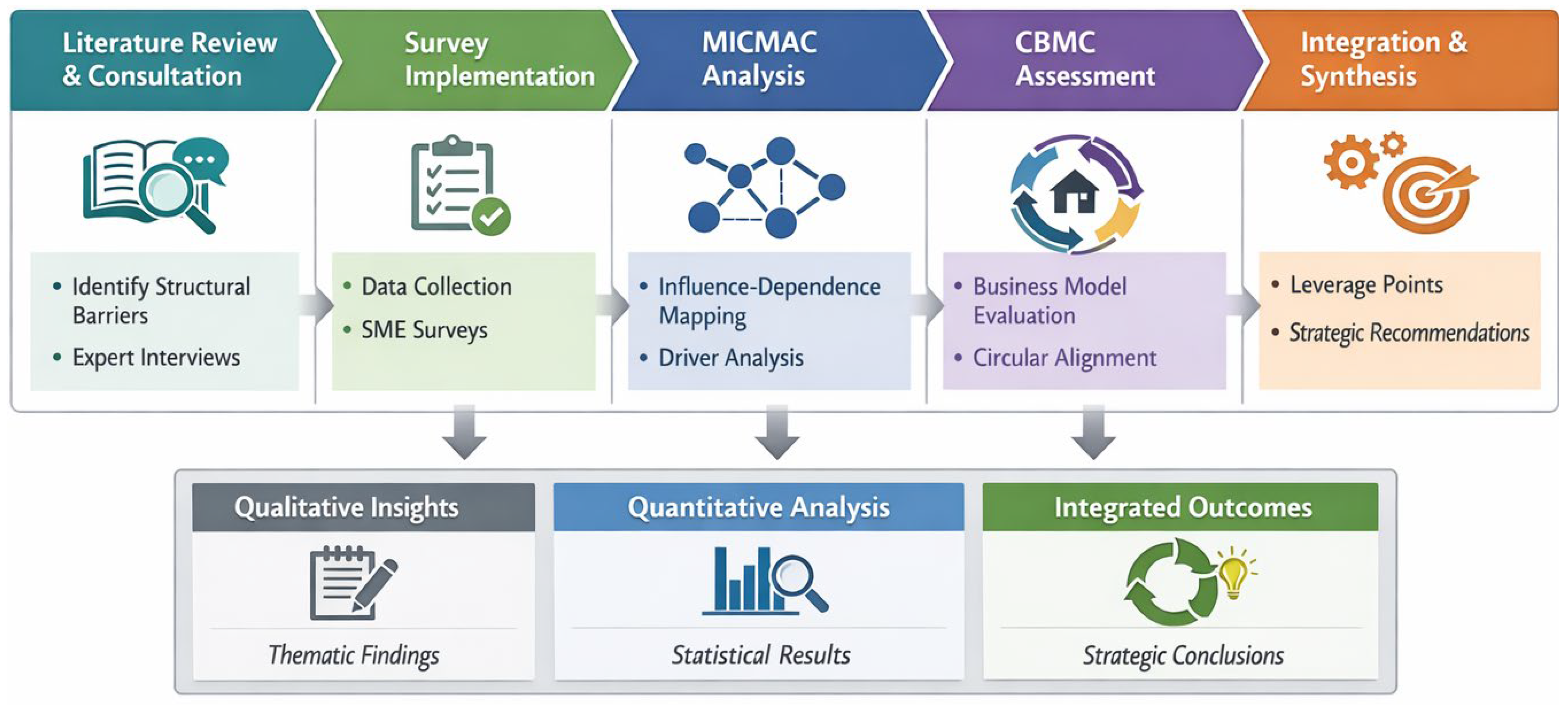
The study followed a five-phase analytical process commonly applied in sustainability transition research. First, structural barriers affecting CE adoption were identified through a structured literature review and expert consultation. Second, a survey instrument was developed to measure the perceived relevance of these barriers among firms within the industrial cluster. Third, quantitative data were analyzed using correlation analysis and Matrix of Cross-Impact Multiplications Applied to Classification (MICMAC) structural analysis to identify systemic influence relationships among the barrier variables. Fourth, the implementation level of circular business model components was evaluated using the circular business model canvas (CBMC) framework [21]. Finally, the outputs of the structural analysis and the business model assessment were integrated to identify strategic leverage points supporting circular bioeconomy transition processes within SME-based industrial clusters. The overall research design and analytical framework of the study are illustrated in Figure 1.
The diagram illustrates the five-phase research process, including barrier identification, data collection via SME surveys, MICMAC structural analysis, CBMC assessment, and the integration of results to identify strategic leverage points for the CE transition. This methodological design enables triangulation among theoretical constructs, empirical data, and structural system modeling, thereby ensuring analytical robustness and replicability of the research process.

3.2. Study Area and Sample

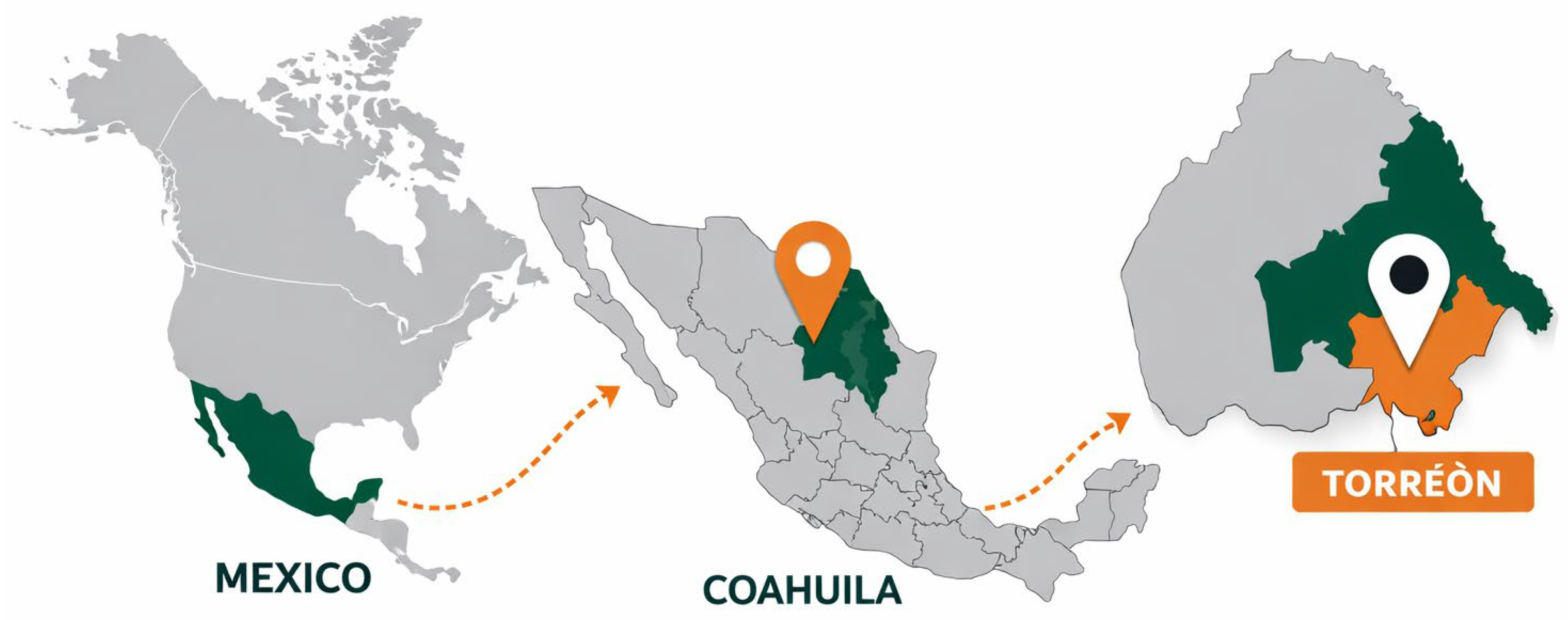
The empirical research was conducted in Torreón, Coahuila, Mexico, located within the industrial region known as La Comarca Lagunera (25°33′46″ N; 103°23′45″ W). The geographical location of the study area within Mexico, specifically the state of Coahuila, is illustrated in Figure 2.
This region represents an important manufacturing hub in northern Mexico with a significant concentration of timber furniture SMEs integrated into regional production networks.
The target population consisted of 32 timber furniture SMEs formally registered within the local industrial cluster. Given the manageable population size, a census approach was adopted in which all firms were invited to participate in the study. Participation was obtained from all 32 firms, resulting in 100% population coverage.
Although the sample size is limited to 32 firms, the use of a census approach ensures full population coverage, which significantly enhances internal validity. From a statistical perspective, the sample size exceeds the minimum threshold commonly recommended for correlation-based exploratory analyses (n > 30), thereby providing sufficient power to detect medium-to-strong relationships in the dataset.
Although the sample includes the full population of SMEs within the cluster, the relatively small number of firms limits the statistical generalizability of the findings. Therefore, the results should be interpreted as context-specific and exploratory, providing analytical insights into the structural dynamics of circular transition processes within this industrial cluster rather than universally generalizable conclusions. This approach is consistent with exploratory research designs in complex socio-economic systems, where the objective is to identify structural patterns and relationships rather than to produce statistically generalizable results.

3.3. Identification of CE Barriers

Structural barriers to CE adoption were identified through a structured literature review conducted using the databases Web of Science, Scopus, and ScienceDirect. A total of 142 peer-reviewed publications, published between 2016 and 2025, addressing barriers to CE adoption in manufacturing and SME contexts were analyzed.
The selection criteria included peer-reviewed journal articles, relevance to CE implementation in manufacturing industries, conceptual clarity in barrier classification, and citation relevance within the sustainability literature. From this review, 65 initial barrier variables were identified and classified into seven analytical dimensions: legislative, economic, market, financial, information and network management, technological, and cultural and organizational. The distribution of the identified barriers across analytical dimensions is presented in Table 1.
To ensure contextual relevance, a focus group comprising nine experts (SME managers, industry specialists, and academic researchers) was convened. Through thematic convergence and saturation analysis, the variables were refined and reduced to 45 operational indicators representing the most relevant barriers affecting circular transition processes in the sector. The complete list of CE barriers and operational indicators used in this study is provided in the Supplementary Materials (Table S1).
Each indicator was measured using a five-point Likert scale ranging from 1 (strongly disagree) to 5 (strongly agree), enabling quantitative evaluation of barrier perceptions among participating firms.

3.4. Instrument Validation

The reliability and internal consistency of the survey instrument were evaluated using Cronbach’s alpha coefficient. The results indicated α = 0.966 for the complete instrument and α = 0.938 for the aggregated barrier dimensions. Both values exceed the commonly recommended threshold of 0.70 for exploratory and confirmatory research, indicating high internal consistency and measurement reliability [22]. In addition, inter-item correlation matrices were examined to verify conceptual coherence among indicators within each barrier dimension.

3.5. Data Collection

Primary data were collected through structured online questionnaires distributed using Google Forms. Participation was voluntary, and respondents were informed of the research objectives before completing the questionnaire.
Several procedures were implemented to reduce potential response bias. First, anonymity and confidentiality of responses were guaranteed. Second, follow-up communications were conducted to clarify ambiguous responses when necessary. Third, all questionnaires were verified for completeness before inclusion in the dataset.
The data collection process lasted three months.

3.6. Statistical Analysis

Prior to correlation analysis, the distribution of the variables was evaluated using the Shapiro–Wilk normality test. Although Likert-scale data are ordinal by nature, several methodological studies indicate that aggregated Likert-scale constructs can be treated as approximately continuous variables when multiple items are combined into composite indicators and the sample size exceeds 30 observations [23]. Under these conditions, the use of parametric techniques, such as Pearson’s correlation coefficient, is considered statistically robust and widely accepted in social science and management research.
Pearson’s correlation coefficient (r) was calculated to assess the strength and direction of relationships among the barrier variables. Statistical significance levels were defined as p < 0.05 (statistically significant) and p < 0.01 (highly significant). Correlation coefficients were interpreted according to the following scale: 0.00–0.39 (weak), 0.40–0.59 (moderate), 0.60–0.79 (strong), and ≥0.80 (very strong) [24]. Only strong and very strong correlations (r ≥ 0.60) were retained for structural analysis. All statistical analyses were conducted using IBM SPSS Statistics (version 26, IBM Corp., Armonk, NY, USA) and Microsoft Excel (Microsoft 365, Microsoft Corp., Redmond, WA, USA). Although MICMAC is traditionally based on expert judgment, this study incorporates correlation analysis as a complementary filtering mechanism to enhance consistency and reduce noise in the selection of relationships among variables. Importantly, this step does not replace expert-based structural interpretation, which remains central to the MICMAC methodology.

3.7. MICMAC Structural Analysis

To identify systemic relationships among the barrier variables, the MICMAC structural analysis method was applied. MICMAC is widely used in sustainability and innovation research to identify key drivers within complex socio-technical systems [25]. The method enables the identification of structural relationships among interdependent variables and facilitates their classification by driving power and dependence.
To ensure methodological rigor, the cross-impact matrix was constructed through a structured expert elicitation process using a standardized influence scale (0 = no influence; 1 = weak; 2 = moderate; 3 = strong). Experts independently evaluated pairwise relationships among variables, and consensus was achieved through iterative validation rounds. This procedure enhances the reliability of the MICMAC classification by minimizing individual bias and ensuring consistency in assessing influence–dependence relationships.
The expert panel for the structural analysis comprised nine specialists with an average of 14 years of professional experience in the timber industry, sustainability management, and CE practices. Experts were selected according to three criteria: (1) direct experience in SME management; (2) knowledge of CE principles; and (3) involvement in industry or academic sustainability initiatives. The MICMAC procedure involved the construction of a cross-impact matrix, followed by the calculation of driving and dependence power, and the classification of variables into four structural categories: autonomous, dependent, driving, and linkage variables. This classification enables the identification of strategic leverage variables that exert significant influence on system behavior. MICMAC calculations were performed using Microsoft Excel 365 following standard structural analysis procedures.
In line with the methodological approach adopted in this study, the structural interpretation of MICMAC results is primarily grounded in expert evaluation, while the correlation-based filtering serves only as a supporting mechanism. Consequently, the identification and classification of variables should be interpreted as indicative of systemic tendencies rather than as definitive structural or causal relationships, reinforcing the exploratory nature of the analysis.
It is important to clarify that the MICMAC analysis identifies structural influence–dependence relationships rather than causal effects; therefore, the results should be interpreted as indicative of systemic associations within the barrier network [25].

3.8. Circular Business Model Assessment

The second analytical phase assessed the degree of alignment of a purposive subsample of 11 firms with the CBMC framework, selected based on data completeness and willingness to provide detailed operational information [21].
An adapted CBMC framework was applied to assess the implementation level of circular business model components among participating firms. Each CBMC component was evaluated using structured indicators measured on a three-level implementation scale: 2 = fully implemented, 1 = partially implemented, and 0 = not implemented.
This scoring approach is consistent with exploratory assessments in SME contexts, where data availability and measurement standardization are often limited. While the use of a simplified ordinal scale (0–2) facilitates comparability across firms and ensures feasibility, it may not fully capture variations in the depth and maturity of circular business model implementation. Additionally, all CBMC components were treated equally, which is a methodological simplification that may not reflect their relative importance in practice. Therefore, the results should be interpreted as indicative patterns of alignment rather than precise measurements.
The alignment level for each firm was calculated using the following equation:
A = ( O S M P S ) 100
where
A = alignment percentage
OS = observed score
MPS = maximum possible score
To facilitate interpretation, results were categorized using a traffic-light visualization system: green (high implementation), yellow (moderate implementation), and red (low implementation) [26].
To enhance the robustness of the CBMC assessment, the scoring criteria were validated through expert consultation and pilot testing with selected firms prior to full-scale implementation. The use of a three-level ordinal scale allows for consistent evaluation across firms while maintaining interpretability and comparability of results in SME contexts, where data granularity is often limited.
To ensure analytical consistency, the CBMC assessment was designed as an exploratory, yet structured evaluation framework tailored to SME contexts. Given the limited availability of standardized quantitative metrics for implementing circular business models in SMEs, a simplified ordinal scale (0–2) was adopted to balance interpretability and comparability across firms.
The subsample of 11 firms was selected based on data completeness and willingness to provide detailed operational information. While this reduces statistical generalizability, it enhances the depth and reliability of the assessment. Therefore, the CBMC results should be interpreted as indicative of structural alignment patterns rather than as statistically representative estimates.
This approach is consistent with prior research emphasizing the need for flexible, context-sensitive measurement tools for circular business model analysis, particularly in SME environments with data constraints.

3.9. Integration of Structural and Business Model Analyses

The integration between MICMAC results and CBMC components was conducted using a structured conceptual mapping approach. High-driving and linkage variables identified through MICMAC analysis were associated with CBMC components based on their functional roles in value creation, delivery, and capture, as well as their systemic relevance within the influence–dependence structure. This approach does not establish causal relationships but provides an exploratory framework for identifying potential leverage points linking structural system dynamics with business model configuration. Accordingly, the relationships identified should be interpreted as exploratory associations rather than empirically validated causal effects.
This mapping followed two analytical criteria: (i) functional influence, referring to the extent to which a structural barrier affects a specific business model component; and (ii) systemic relevance, referring to the position of the variable within the influence–dependence structure.
This procedure enables a consistent linkage between structural system dynamics and business model configuration, reducing interpretive bias and strengthening the analytical robustness of the integration framework.
The final analytical stage integrated the results obtained from the MICMAC structural analysis and the Circular Business Model Canvas assessment. This integration involved linking high-driving and linkage barriers identified through MICMAC with CBMC components exhibiting low implementation levels.
Through this cross-analysis, 23 strategic intervention areas were identified to address systemic barriers and strengthen innovation in circular business models within timber furniture SMEs. The integration followed a systems-based interpretive approach commonly applied in sustainability transition and strategic management research [21,23]. Overall, the relationships identified should be interpreted as conceptual associations derived from a systems-based framework rather than as empirically validated effects, reinforcing the exploratory nature of the analysis.

3.10. Data Availability

The data supporting the findings of this study are available from the corresponding author upon reasonable request. Due to confidentiality agreements with participating firms, individual survey responses cannot be publicly disclosed. However, anonymized aggregated data used for the statistical and structural analyses can be provided for academic research purposes.
No generative artificial intelligence tools were used in the design of the study, data collection, analysis, or interpretation of results. AI-based tools were used only for minor language editing.

4. Results

4.1. Structural Barriers Affecting Circular Economy (CE) Adoption

The analysis identified a set of structural barriers that significantly influence the adoption of CE practices among timber-based small and medium-sized enterprises (SMEs). The results indicate that circular transition processes are primarily constrained by a limited number of systemic barriers with strong structural influence.
Based on the literature review and expert consultation described in Section 2, six key barriers were identified as the most relevant for the sector: financial constraints, technological limitations, limited access to specialized knowledge, regulatory uncertainty, weak collaboration networks, and insufficient market incentives for circular products.
These barriers reflect the structural characteristics of resource-based SMEs, which typically operate with limited financial resources, restricted technological capabilities, and weak integration into collaborative innovation networks. Such limitations restrict the implementation of circular practices, including product life extension, material recovery, eco-design strategies, and resource recirculation mechanisms.
These findings are consistent with H1, suggesting that financial and technological barriers act as primary drivers of CE adoption in SME-based industrial clusters.

4.2. Correlation Structure of Barrier Dimensions

Pearson correlation analysis revealed statistically significant relationships among several barrier dimensions (p < 0.01). The strongest correlations were observed between financial barriers and information-network management barriers (r = 0.867), financial and technological barriers (r = 0.844), and market and financial barriers (r = 0.798).
These results suggest that financial constraints are strongly associated with firms’ technological capacity and their ability to develop collaborative innovation networks. Limited access to financial resources restricts investment in digital infrastructure, circular innovation initiatives, and collaborative platforms necessary for circular value chain development.
Additional moderate-to-strong correlations were identified between economic and market barriers (r = 0.795) and legislative and cultural barriers (r = 0.796). These relationships indicate that barriers to CE adoption operate as an interconnected system rather than as isolated constraints.
Only correlations equal to or greater than 0.60 were retained for the subsequent structural modeling process. Prior to the structural analysis, item-level Pearson correlations were examined within each barrier dimension to assess internal consistency and the strength of relationships among indicators. The results revealed predominantly moderate-to-high correlations among items, supporting the internal coherence of the barrier constructs. The economic barrier exhibited the highest number of strong correlations, followed by technological and market barriers, indicating a high degree of interdependence among their respective indicators. These findings reinforce the validity of aggregating items into composite dimensions for subsequent structural analysis. The complete item-level correlation matrices for each barrier dimension are provided in the Supplementary Materials (Table S2). The complete Pearson correlation matrix is presented in Table 2.
The correlation matrix indicates a high degree of interdependence among barrier dimensions, supporting the systemic nature of constraints on CE adoption.
Overall, these results provide strong empirical support for H2, confirming that structural barriers operate as an interconnected system rather than as isolated constraints.

4.3. Structural Classification of Barriers Using Matrix of Cross-Impact Multiplications Applied to Classification (MICMAC)

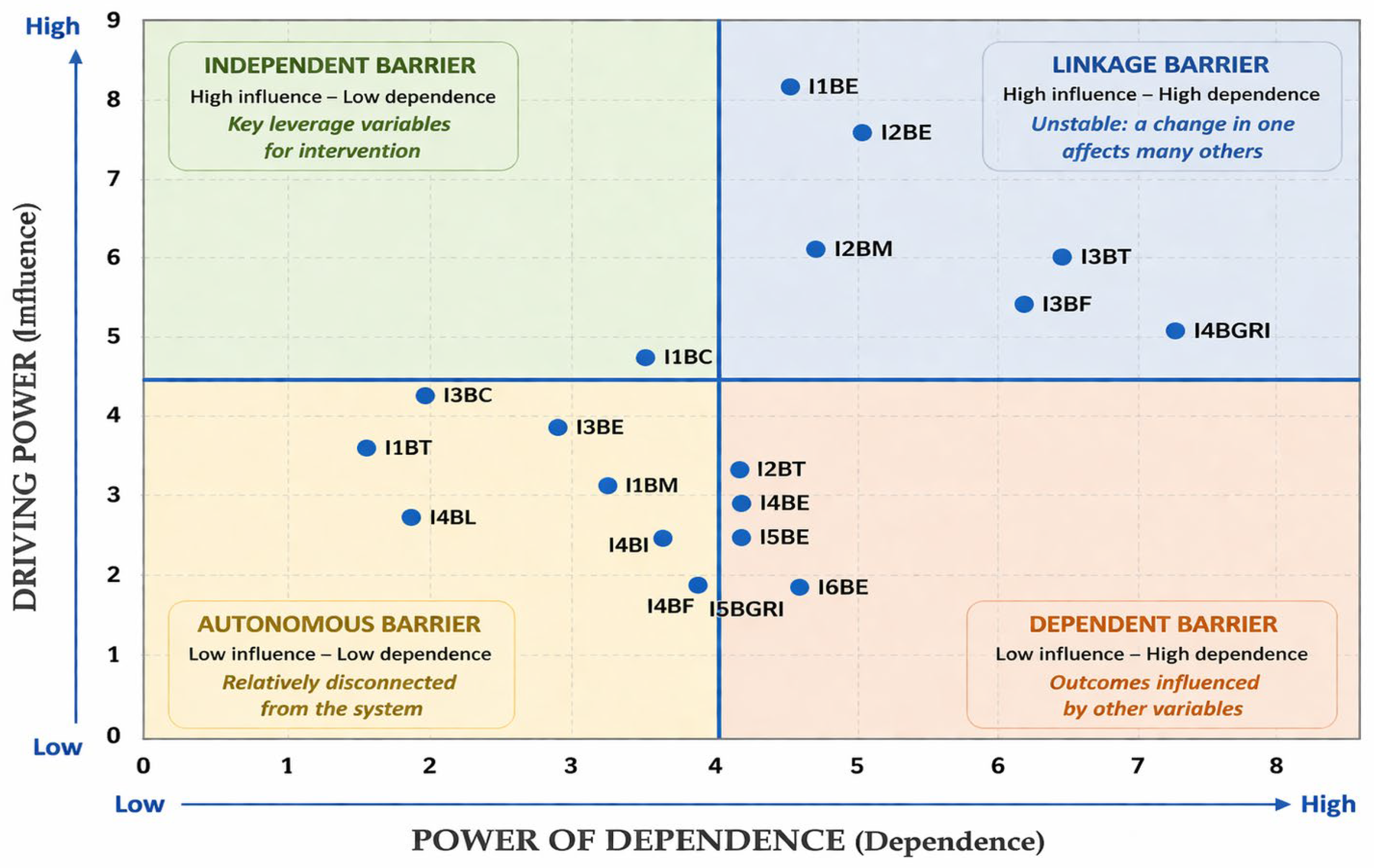
To support the structural classification of variables, a preliminary analysis of driving and dependence power was conducted at the item level based on correlation values. The results allowed the identification of items with high influence and dependence within each barrier dimension, providing an additional layer of validation for the structural modeling process. Items such as I1EB, I2EB, I2MB, I3FB, I4GRIB, and I3TB exhibited high driving and dependence power, indicating their relevance as key linkage variables within the system. The detailed item-level driving dependence results are presented in the Supplementary Materials (Table S3).
The MICMAC structural analysis enabled the classification of barrier variables according to their levels of driving power and dependence within the circular transition system.
The resulting influence–dependence map is presented in Figure 3.
The figure classifies barrier variables according to their driving and dependence power into four categories: driving, linkage, dependent, and autonomous variables, with intersection lines representing the average values of both dimensions. This classification follows MICMAC methodological logic, where driving variables exert systemic influence over the structure, linkage variables combine high influence and high dependence, and dependent variables represent outcomes shaped by upstream structural constraints.
The analysis identifies financial constraints and technological limitations as the primary drivers of the system. These barriers exhibit strong influence and comparatively low dependence, indicating that interventions targeting these dimensions may generate cascading effects across the broader CE transition structure.
Linkage variables, including limited access to specialized knowledge and weak collaborative networks, exhibit both high influence and high dependence. This dual role positions them as mediating elements that connect structural drivers with operational constraints, thereby shaping SMEs’ capacity for circular innovation.
In contrast, dependent variables—such as market demand for circular products and regulatory incentives—are characterized by high dependence and relatively low driving power. These factors are largely influenced by upstream structural conditions and have limited capacity to affect the system independently.
It is important to note that this structural classification is based on a filtered interaction matrix, and therefore reflects the strongest relationships identified in the system. As such, the results should be interpreted as indicative of dominant structural patterns rather than as an exhaustive representation of all possible interactions.

4.4. Mapping Structural Barriers to Circular Business Model Components (CBMC)

Following the conceptual framework presented in Section 2, the structural barriers identified through MICMAC analysis were mapped to the components of the CBMC.
Structural barriers were treated as independent variables influencing SMEs’ capacity to implement circular business model innovations.
The mapping exercise revealed that high-driving barriers, particularly financial and technological limitations, strongly affect value creation activities, resource management practices, and cost structures. Likewise, linkage barriers such as limited knowledge access and weak collaborative networks constrain firms’ ability to build strategic partnerships and participate in collaborative circular value chains. In contrast, dependent barriers are more closely associated with downstream business model components, including customer segments and market development for circular products.
These findings provide empirical support for H3, demonstrating that structural barriers significantly influence SMEs’ alignment with circular business model components.

4.5. Alignment of SMEs with Circular Business Model Components

The evaluation of circular business model implementation using the CBMC framework revealed heterogeneous levels of adoption among firms within the cluster. The detailed traffic light assessment results for each firm and CBMC component are provided in the Supplementary Materials (Table S4).
These results should be interpreted as indicative of relative alignment levels rather than precise measurements of implementation depth, given the simplified scoring structure applied. Overall alignment results indicate that 45% of firms achieved more than 50% alignment with CBMC components, while 55% remained below this threshold. These findings suggest that most firms are currently in early or intermediate stages of circular transition.
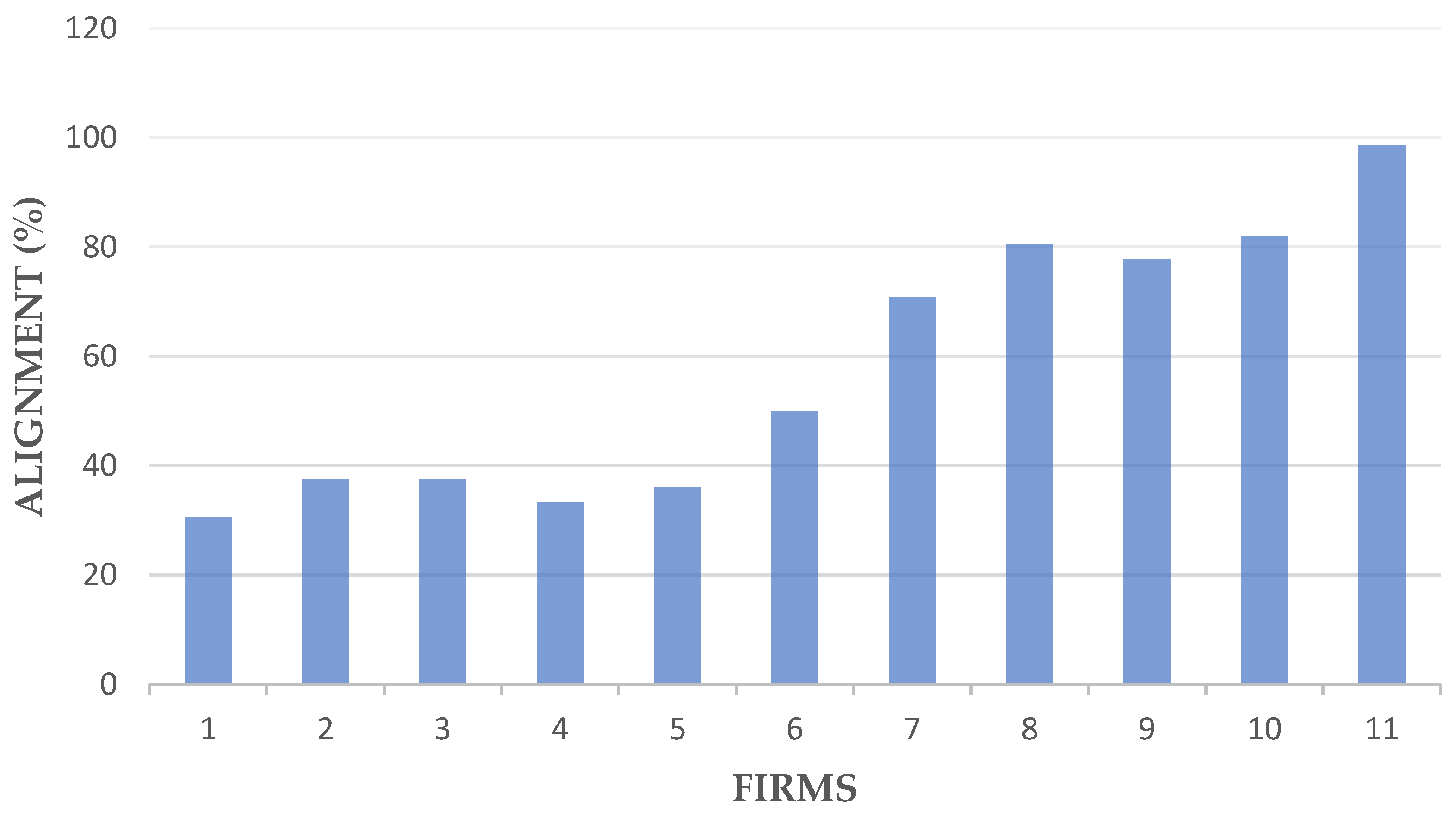
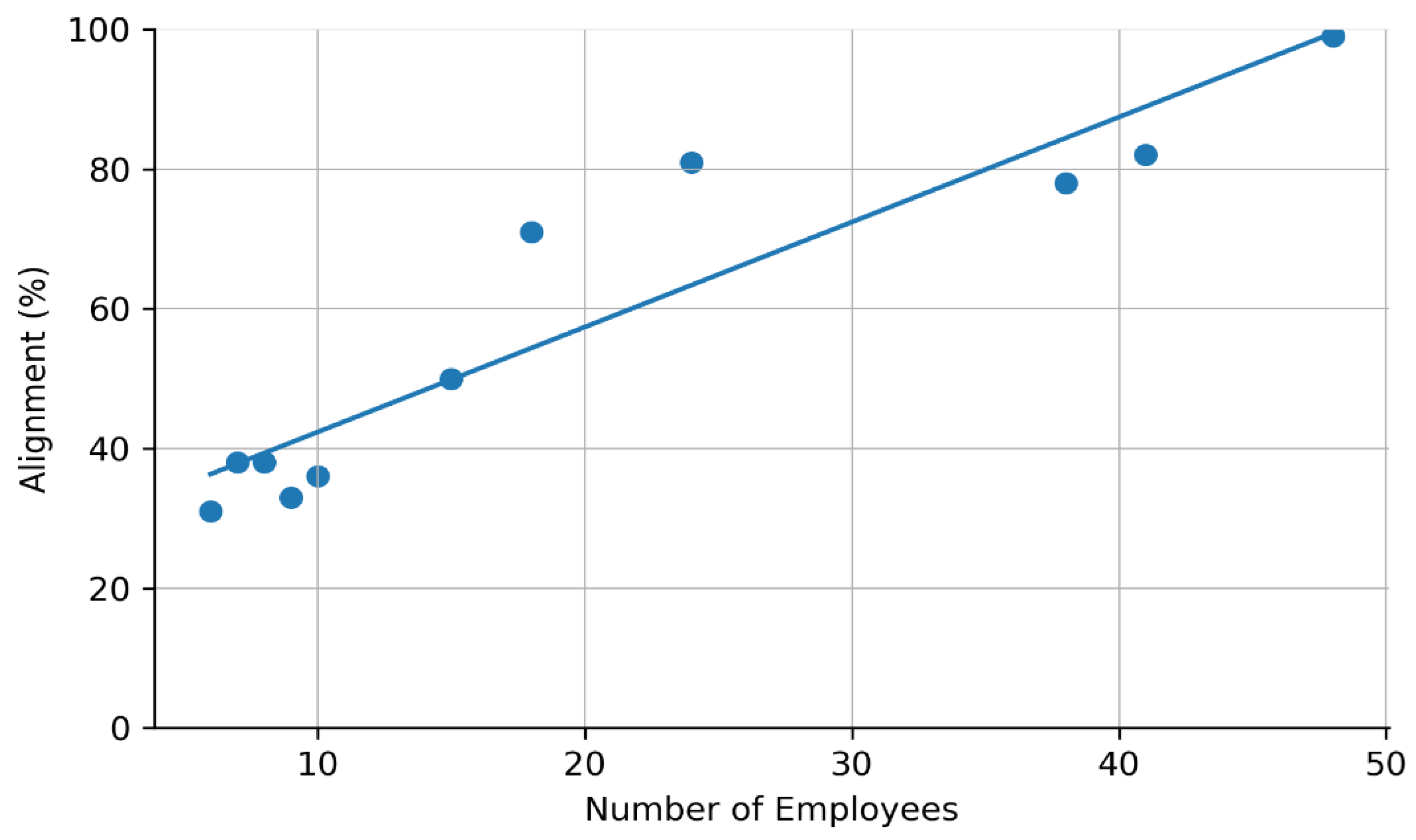
Figure 4 presents the alignment levels of each firm with the CBMC. The results show a wide variation in implementation levels, with alignment values ranging from 31% to 99%. Firms with higher alignment scores indicate more advanced adoption of circular practices, while those with lower scores remain at early stages of transition.
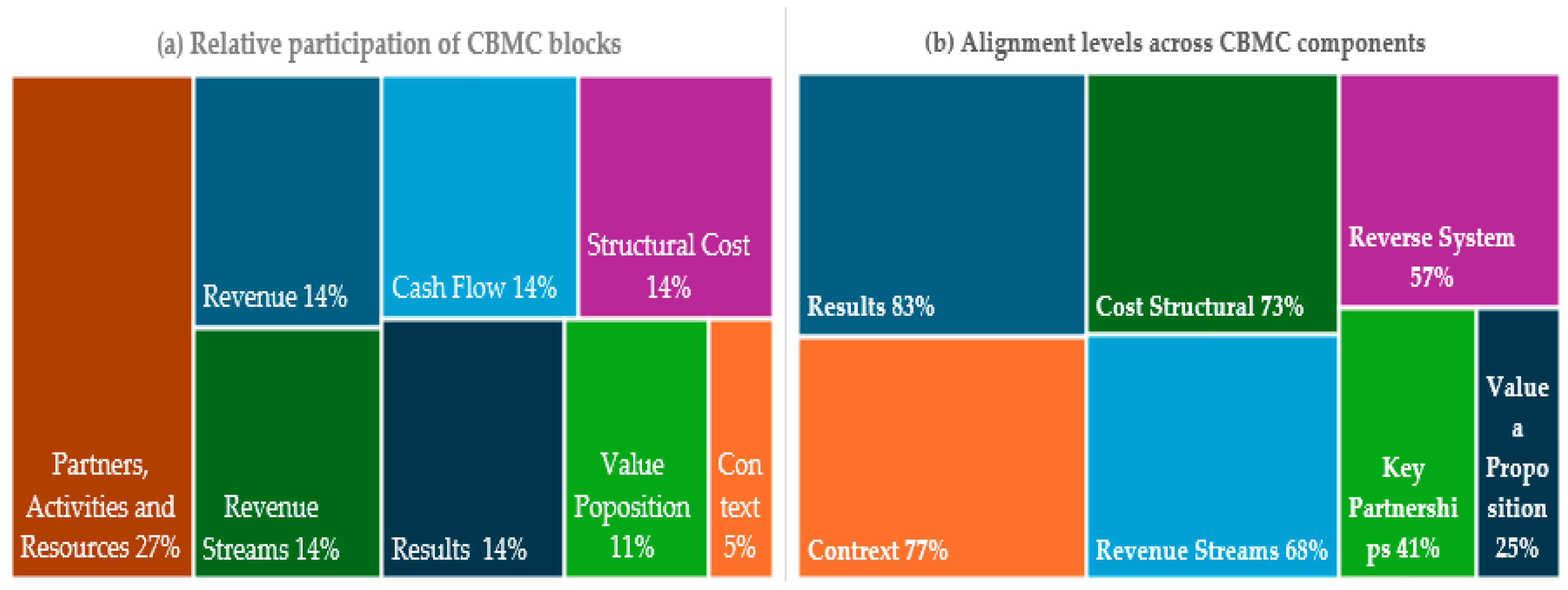
Figure 5 provides a block-level analysis of the CBMC structure and performance. Figure 5a illustrates the relative participation of each block within the CBMC, showing a greater emphasis on collaborative and circular activities such as resource recovery, remanufacturing, and circular product design. In contrast, the cost structure block exhibits a lower relative participation, suggesting that economic considerations may be underrepresented.
Figure 5b presents the alignment levels across CBMC components. Five blocks exhibit performance levels above 50%: Results (83%), Context (77%), Cost Structure (73%), Revenue Streams (68%), and Reverse System (57%). In contrast, the lowest levels of alignment are observed in Key Partnerships (41%) and Value Proposition (25%), indicating critical gaps in implementing circular business models.
Furthermore, Figure 6 illustrates the relationship between firm size and CBMC alignment. The regression analysis indicates a positive association between the number of employees and the level of circular business model implementation, suggesting that larger firms may have greater access to financial resources, technological capabilities, and organizational structures that facilitate circular innovation.
Conversely, smaller firms may face structural constraints that limit their capacity to adopt circular practices, reinforcing the importance of financial, technological, and organizational barriers identified in the structural analysis.
A simple linear regression model was applied to explore the relationship between firm size and CBMC alignment. The model yielded an R2 value of 0.8665, indicating a strong explanatory capacity and suggesting a robust positive relationship between firm size and the level of CBMC alignment.

4.6. Integration of Structural and Business Model Findings

The integration of MICMAC and CBMC results reveals a functional relationship between structural barriers and business model components. Specifically, high-driving variables identified through MICMAC analysis are closely associated with the performance of key CBMC components, indicating a consistent structural association between system-level constraints and firm-level strategic configurations. This reinforces the analytical consistency between structural system dynamics and business model configuration within the proposed framework.
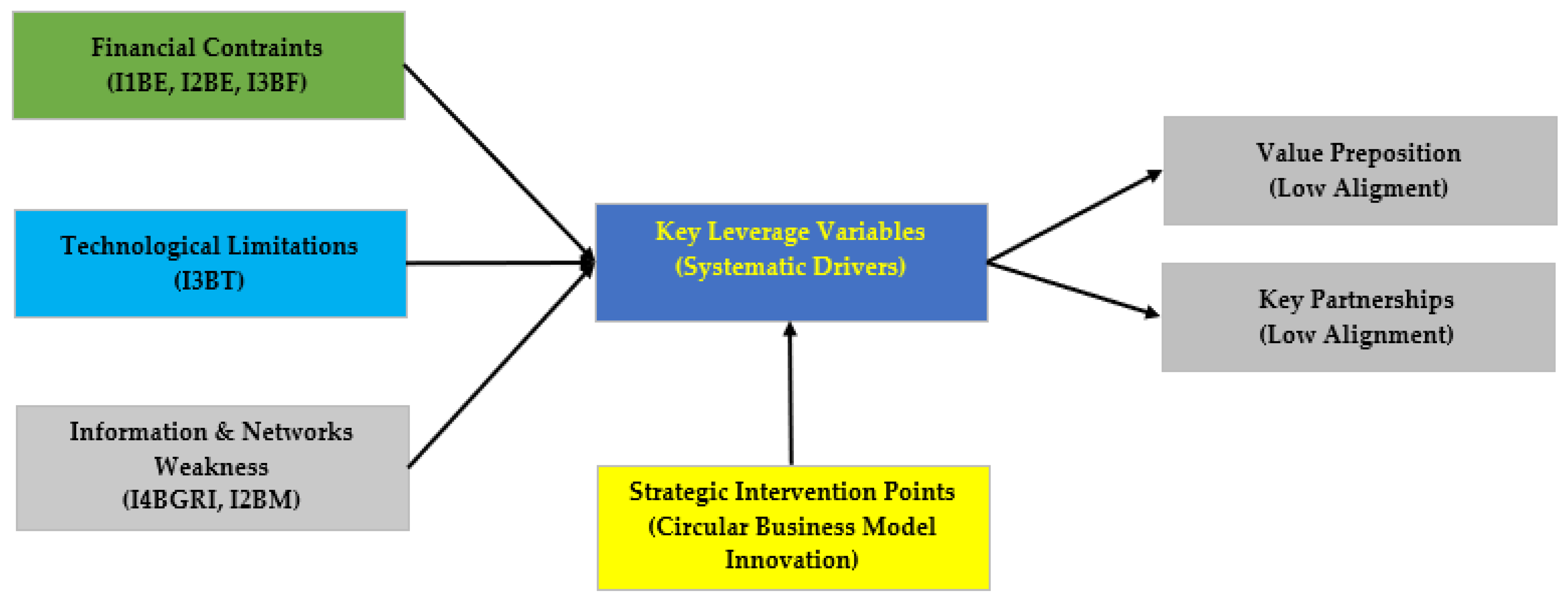
It is important to note that these relationships should be interpreted as structural associations rather than causal effects, consistent with the methodological scope of MICMAC analysis. The results further reveal clear systemic alignment patterns between structural barriers and levels of business model implementation. Figure 7 illustrates the relationship between high-driving structural barriers and the lowest-performing CBMC components.
These relationships should be interpreted as indicative of structural alignment patterns rather than as statistically validated causal effects.
The cross-analysis identified three key relationships. First, driving and linkage barriers, particularly financial, technological, and information-network limitations, are strongly associated with the weakest CBMC components, namely Value Proposition and Key Partnerships. This relationship indicates that the structural position of these barriers within the MICMAC model extends beyond a descriptive role, helping to explain the limited development of specific business model components in the surveyed firms.
Second, financial and technological constraints are closely associated with firms’ reduced capacity to redesign value propositions, including the adoption of product-service systems and modular product architectures. Third, limitations in network management constrain the feasibility of collaborative recovery systems and the implementation of closed-loop material flows.
The integration framework highlights that the items I1BE, I2BE, I2BM, I3BF, I4BGRI, and I3BT represent key leverage variables within the system, as they are associated with the development of critical CBMC components. These variables constitute priority intervention points for enabling circular business model innovation in SME clusters.
Overall, the findings suggest the systemic nature of circular transition challenges and emphasize that effective strategies must focus on high-driving structural barriers to enable coordinated transformation across business model components.
The figure highlights key leverage variables and strategic intervention points for circular business model innovation. Overall, the findings suggest that circular transition challenges exhibit a systemic nature, emphasizing that effective strategies should prioritize high-driving structural barriers to enable coordinated improvements across business model components. In this context, the integration of MICMAC and CBMC provides a consistent analytical framework for identifying strategic leverage points within SME-based industrial systems. Accordingly, these results offer support for H4, indicating that the combined use of structural analysis and business model assessment enables a more comprehensive understanding of circular transition pathways.

4.7. Strategic Implications for Circular Transition

Based on the integrated analysis of MICMAC structural drivers and CBMC components, a set of strategic interventions was identified to address the main systemic barriers and accelerate innovation in circular business models within timber-based SMEs. Table 3 summarizes the key intervention areas by linking CBMC blocks with the most influential structural barriers and corresponding strategic actions. These interventions represent high-leverage points within the system, as they target driving and linkage variables identified in the structural analysis. The complete set of strategies is provided in the Supplementary Materials (Table S5).
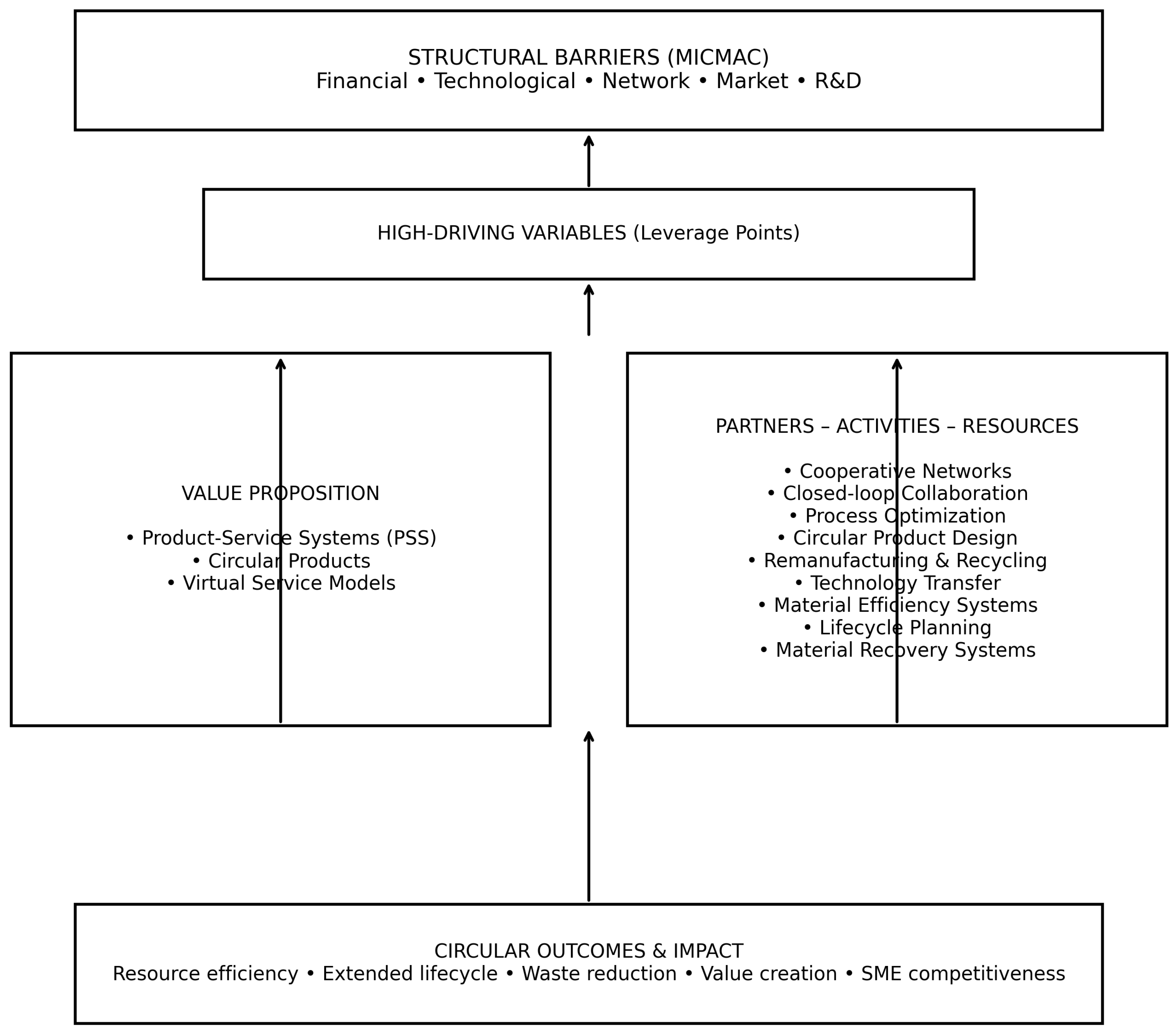
To provide a systemic and integrative perspective, Figure 8 presents a conceptual framework that connects high-driving structural barriers with circular business model components and strategic intervention pathways. The framework illustrates how coordinated actions across CBMC dimensions can generate cascading effects that facilitate the transition toward circular production systems.
The proposed interventions are organized into four main strategic domains: (i) product modularity and lifecycle planning, (ii) development of collaborative recovery systems, (iii) investment in circular innovation capabilities, and (iv) strengthening of sectoral support and knowledge networks. These domains reflect the structural interdependencies identified in the MICMAC analysis and their direct influence on business model configuration.
From a systems perspective, interventions targeting high-driving variables—particularly financial, technological, and network-related barriers—are expected to produce the greatest impact. For instance, enhancing access to financial resources enables investments in eco-design, digitalization, and process innovation, which in turn strengthen firms’ capacity to implement circular value propositions. Similarly, improving technological capabilities facilitates modular design, material recovery, and lifecycle extension strategies.
The development of collaborative networks plays a critical role in enabling circular production systems. As illustrated in Figure 8, linkage variables such as limited access to knowledge and weak inter-firm collaboration constrain the implementation of closed-loop value chains. Addressing these barriers through cooperative platforms, industrial symbiosis, and knowledge-sharing mechanisms can significantly enhance circular innovation capacity at the cluster level.
In addition, market-related barriers, such as the lack of functional markets for recycled materials, highlight the need for institutional and infrastructural support. The establishment of material banks, collection centers, and reverse logistics systems can facilitate resource circulation and improve the economic viability of circular practices.
Overall, the integration of structural and business model analyses suggests that effective circular transition strategies must adopt a systemic approach. Rather than addressing isolated constraints, coordinated interventions across multiple CBMC components are required to unlock transformation pathways and generate cumulative impacts on sustainability performance.
The implementation of eco-design strategies, modular product architectures, and material recovery systems can help decouple production growth from raw material extraction. By extending product lifecycles and increasing resource efficiency, SMEs can reduce environmental pressures on forest resources while maintaining competitiveness within industrial clusters.

5. Discussion

5.1. Systemic Dynamics of CE Transition in Timber SMEs

This study contributes to current circular economy (CE) literature by suggesting a systemic and integrative perspective that moves beyond descriptive barrier identification, indicating that structural constraints shape business model innovation pathways in SMEs. These findings challenge the conventional assumption that circular transitions in small and medium-sized enterprises (SMEs) are predominantly operational, instead reinforcing the view that they are structurally constrained and systemically embedded processes [27,28,29,30,31]. In line with recent advances in CE research, the results help explain that financial, technological, and network-related barriers are interconnected structural drivers shaping firm’s capacity to implement circular business model innovation [32,33,34]. The dominance of financial and technological barriers indicates reinforcing feedback mechanisms within SME systems, consistent with studies that highlight bidirectional dependencies between access to capital and technological upgrading in circular transitions [27,34,35]. From a path-dependency perspective, initial financial constraints restrict technological investments, which in turn limit productivity improvements and future investment capacity, generating cumulative disadvantage effects. This dynamic aligns with the concept of structural lock-in, widely discussed in recent CE literature as a key inhibitor of systemic transformation in resource-constrained contexts [34,36,37,38].
The Matrix of Cross-Impact Multiplications Applied to Classification (MICMAC) results further indicate that CE adoption in timber-based SMEs is governed by systemic interactions among structural constraints rather than isolated operational barriers. This finding corroborates recent empirical and review-based studies indicating that CE transitions in SMEs are shaped by interdependent financial, technological, and institutional factors embedded within broader socio-economic systems [28,39,40]. In particular, the identification of financial and technological constraints as high-driving variables is consistent with cross-sectoral evidence showing that these dimensions exert disproportionate influence over system-wide innovation capacity [27,29,34].
From a theoretical standpoint, the results reinforce the growing consensus that CE transitions should be conceptualized as systemic processes involving multi-level interactions between firm capabilities, institutional frameworks, and innovation ecosystems [34,39]. The observed interdependence among barrier dimensions supports this systems perspective, indicating that constraints such as limited access to finance and weak technological capabilities reinforce one another through feedback loops within complex production systems [39,41,42,43]. These findings are also consistent with prior research emphasizing the role of waste management systems and resource recovery infrastructures as critical enablers of circular economy implementation, particularly in resource-constrained environments [44].
The strong correlation between financial and technological barriers further illustrates these reinforcing dynamics. Similar patterns have been identified in recent studies on SME circular transitions, where limited capital availability constrains digitalization and eco-innovation, thereby reducing firms’ capacity to generate performance improvements that could enable reinvestment [29,32,35,40,45]. This cyclical constraint structure ultimately leads to structural inertia, delaying or preventing transitions toward circular production models.
Moreover, these findings highlight the critical role of regional innovation ecosystems in enabling CE transitions. Recent literature emphasizes that SMEs’ capacity to adopt circular practices depends not only on internal resources but also on access to external knowledge networks, institutional support, and collaborative infrastructures [39,41,42]. Weak integration within such ecosystems significantly constrains firms’ ability to engage in circular innovation processes. Therefore, CE transitions should be understood as multi-level transformations involving both firm-level capabilities and ecosystem-level dynamics. This reinforces the argument that circular transitions in SMEs are not merely firm-level adaptations, but system-level transformations embedded in complex socio-economic structures [46,47].

5.2. Circular Business Model Alignment and Early-Stage Transition Patterns

The analysis of Circular Business Model Components (CBMC) alignment indicates that timber SMEs remain in relatively early stages of the circular transition, with partial and uneven adoption of circular practices. This finding is consistent with recent systematic reviews highlighting that CE implementation in SMEs is still largely exploratory and heterogeneous across firms and sectors [27,28,29,31,46].
With an average alignment level of 45%, most firms continue to operate under predominantly linear value-creation logics. This pattern aligns with empirical evidence suggesting that SMEs tend to prioritize incremental operational improvements, such as waste reduction and efficiency gains, over radical business model transformation [29,37,46,48,49]. While these practices contribute to environmental performance, they do not necessarily entail fundamental changes in the mechanisms for value creation, delivery, or capture [32,50]. However, the interpretation of these results should consider the simplified nature of the measurement scale, which captures general alignment trends but may not fully reflect the complexity and depth of circular business model implementation.
The block-level analysis further indicates that the lowest levels of alignment occur in Value Proposition and Key Partnerships, indicating critical gaps in strategic integration. This finding is supported by recent studies suggesting that SMEs face significant challenges in redesigning value propositions toward circular offerings due to financial and technological constraints [28,32,42,51]. Circular value creation often requires investments in eco-design, modularity, and service-based models, which remain difficult to implement in resource-constrained environments.
Similarly, the low performance in Key Partnerships reflects structural limitations in the development of collaborative ecosystems. Recent research emphasizes that circular value chains depend on strong inter-organizational collaboration, industrial symbiosis, and network coordination [28,39,43]. The absence of such collaborative structures limits SMEs’ ability to engage in reverse logistics, resource recovery, and closed-loop production systems [33,37,52].
Overall, these findings suggest that operational circularity does not automatically translate into business model circularity. Instead, the transition requires deeper strategic reconfiguration, reinforcing the need to address structural barriers that constrain business model innovation [53,54].

5.3. Linking Structural Barriers with Circular Business Model Transformation

A key contribution of this study lies in the empirical demonstration of the relationship between systemic barriers and the configuration of circular business models in SMEs. The findings indicate that high-driving structural barriers are linked to the weakest CBMC components, providing an explanation for limited development.
This relationship is consistent with recent research indicating that financial and technological constraints are primary inhibitors of circular business model innovation [27,46,55]. Without sufficient financial resources, SMEs face significant limitations in adopting eco-design practices, digital monitoring systems, and advanced manufacturing technologies required for circular production [28,29,32,42].
Simultaneously, limitations in knowledge networks and collaborative infrastructures constrain the development of strategic partnerships necessary for reverse logistics systems and resource recovery processes. Prior studies emphasize that circular production systems require coordinated action among multiple stakeholders and that weak collaboration networks represent a major bottleneck in CE implementation [28,39,41,51].
These findings align with ecosystem-based perspectives on circular innovation, which highlight that business model transformation depends on the alignment between firm-level strategies and external enabling conditions [34,39,40,56]. However, this study advances the literature by empirically linking structural system dynamics with business model configuration, helping to explain how systemic barriers translate into misalignment across specific CBMC components.
By identifying high-leverage variables, the study provides a basis for prioritizing strategic interventions that can generate cascading effects across business model dimensions. This integrative approach contributes to CE research by bridging structural analysis and business model innovation frameworks [34,40,57]. These relationships should be interpreted cautiously, as they reflect structured analytical associations rather than statistically validated causal mechanisms.

5.4. Policy and Managerial Implications

The findings provide sector-specific and system-oriented implications for policymakers and practitioners aiming to accelerate CE adoption in SME-based industrial sectors. From a policy perspective, the results underscore the need for integrated frameworks that simultaneously address financial, technological, and institutional barriers, consistent with recent CE policy research [27,31,55].
Improving access to finance is a critical priority, as financial constraints remain one of the most influential barriers to CE adoption. Instruments such as green financing, innovation subsidies, and risk-sharing mechanisms have been identified as key enablers of circular innovation in SMEs [51,53,55]. In addition, recent evidence suggests that SMEs’ adaptation to low-carbon and circular transitions is strongly conditioned by structural and institutional barriers, reinforcing the need for integrated policy frameworks that address both financial and organizational constraints [58]. In the timber sector, these interventions are particularly relevant due to the material-specific characteristics of wood processing, which require capabilities in modular product design, lifecycle extension, resource cascading, and efficient material recovery systems. For timber-based SMEs, targeted interventions may include modular furniture design training, cooperative recovery systems for wood residues, shared digital platforms for material traceability, and cluster-based technical assistance programs aimed at strengthening circular capabilities [51,59].
Technological capability development represents another strategic priority. Recent studies highlight the role of digitalization, Industry 4.0 technologies, and knowledge transfer in facilitating circular transitions [29,32,35,60]. Strengthening linkages among SMEs, universities, and research centers can accelerate the diffusion of innovation and reduce technological gaps.
Furthermore, the importance of collaborative networks is reinforced by recent research on circular ecosystems, which emphasizes the role of industrial symbiosis and inter-firm cooperation in enabling circular production systems [28,34,59]. Consequently, cluster-based policies and collaborative platforms should be promoted to enhance network integration.
From a managerial perspective, the findings highlight that circular transition strategies must adopt a systemic approach. Given the interdependence of structural barriers, isolated interventions are unlikely to be effective. Instead, coordinated strategies that simultaneously address financial, technological, and relational dimensions are required, as suggested by recent CE transition frameworks [34,38,40].
These implications highlight the need for coordinated, multi-level interventions that align financial, technological, and network-related dimensions to effectively enable circular transitions in SME-based industrial clusters.

5.5. Limitations and Future Research

Despite its contributions, this study presents several limitations. First, although the study includes the full population of SMEs within the cluster, the relatively small sample size limits the statistical generalizability of the findings. The results should therefore be interpreted as exploratory and context-specific, reflecting the structural dynamics of the analyzed industrial cluster rather than broader sectoral patterns [27,29,61].
Second, the use of cross-sectional data restricts the ability to capture dynamic transition processes. Longitudinal studies are needed to better understand how structural barriers evolve and how circular business model transformation unfolds over time [34,38,62].
Third, the reliance on perception-based data may introduce subjective bias, as commonly acknowledged in CE research [29,32,35,43]. Future studies should incorporate objective performance indicators and longitudinal datasets to strengthen empirical robustness.
Additionally, the use of correlation-based filtering prior to MICMAC analysis represents a methodological simplification that may exclude weak but structurally relevant relationships. While this approach enhances analytical robustness by focusing on strong associations, it may introduce bias in the structural classification of variables. Therefore, future research should incorporate sensitivity analyses comparing filtered and unfiltered matrices to validate the stability of the results.
Furthermore, the integration between MICMAC structural analysis and CBMC components is based on conceptual mapping rather than statistical validation. Although this approach enables the identification of potential leverage points within the system, it does not empirically test causal relationships between structural barriers and business model performance. Future research should incorporate quantitative modeling techniques, such as regression analysis or structural equation modeling (SEM), to validate these relationships and strengthen causal inference.
Finally, the use of a simplified ordinal scale for CBMC assessment represents a methodological limitation. While it enables comparability across firms, it does not fully capture the heterogeneity in the depth and sophistication of circular business model implementation. Future research should develop more granular and weighted measurement frameworks to improve analytical precision.

6. Conclusions

The main conclusions of this study can be summarized as follows:
1. Circular economy (CE) transitions in small and medium-sized enterprises (SMEs) are structurally constrained, as they are governed by highly interconnected barriers rather than isolated operational limitations. This finding highlights the systemic nature of transition processes in industrial clusters.
2. Structural barriers generate cascading effects across organizational processes, limiting SMEs’ capacity to redesign production systems, develop circular value propositions, and implement advanced circular strategies.
3. The empirical results indicate a relatively low level of circular alignment, with firms remaining at an early stage of transition (approximately 45% alignment). Critical gaps were identified in the Value Proposition and Key Partnerships components.
4. This study contributes to circular economy research by integrating MICMAC structural analysis with the Circular Business Model Canvas (CBMC), offering a replicable analytical framework that links system-level diagnostics with business model innovation.
5. From a practical and policy perspective, the findings suggest that accelerating CE transitions requires prioritizing high-driving structural variables, particularly improving access to finance, strengthening technological capabilities, and fostering collaborative networks within SME clusters.
6. The proposed framework demonstrates potential applicability beyond the empirical context, as it can be adapted to other resource-based sectors and emerging economy settings to analyze sustainability transitions and identify strategic leverage points.
7. Future research should focus on longitudinal applications of the framework, the incorporation of objective performance indicators, and cross-sectoral and international comparative analyses to further assess its robustness and applicability.
Overall, these findings should be interpreted within the exploratory scope of the study, as they are derived from a specific industrial cluster and a context-sensitive analytical framework. While not statistically generalizable, the results provide valuable insights into the structural dynamics and transition pathways of circular economy adoption in SMEs.


Supplementary Materials

The following supporting information can be downloaded at: https://www.mdpi.com/article/10.3390/su18094346/s1. Table S1. List of circular economy barriers and operational indicators used in the study; Table S2. Item-level Pearson correlation matrices by barrier dimension; Table S3. Item-level driving and dependence power values derived from correlation analysis; Table S4. Traffic light assessment of CBMC implementation across SMEs; Table S5. Detailed strategic interventions mapped to CBMC components for circular transition in timber SMEs.

Author Contributions

Conceptualization, J.G.M.-R. and L.S.-P.; methodology, J.G.M.-R., L.S.-P. and A.B.A.F.-d.V.; formal analysis, J.G.M.-R., E.R.D.-G. and V.M.M.-L.; investigation, J.G.M.-R., E.C.-M., M.d.J.C.-R. and R.R.G.-E.; data curation, E.C.-M., E.R.D.-G. and A.R.-B.; validation, L.S.-P., S.L.-C. and V.M.M.-L.; visualization, J.G.M.-R., A.R.-B. and A.B.A.F.-d.V.; writing—original draft preparation, J.G.M.-R. and L.S.-P.; writing—review and editing, L.S.-P., S.L.-C., A.B.A.F.-d.V. and V.M.M.-L. All authors have read and agreed to the published version of the manuscript.

Funding

This research was funded by the Consejo Nacional de Ciencia y Tecnología (CONACYT), Mexico, under the researcher identification number CVU 499696.

Institutional Review Board Statement

This study was conducted in accordance with the Declaration of Helsinki. According to institutional guidelines and national regulations, ethical review and approval were waived for this study due to its minimal risk nature and because it did not involve the collection of personal or sensitive data. An official institutional statement certifying ethical compliance has been provided.

Informed Consent Statement

Informed consent was obtained from all subjects involved in the study.

Data Availability Statement

The data presented in this study are available on request from the corresponding author. The data are not publicly available due to confidentiality agreements with participating firms.

Conflicts of Interest

The authors declare no conflicts of interest.

References

  1. Kirchherr, J.; van Santen, R. Research on the circular economy: A critique. Resour. Conserv. Recycl. 2023, 188, 106700. [Google Scholar] [CrossRef]
  2. Geels, F.W.; Kern, F.; Clark, W.C. Sustainability transitions in consumption-production systems. Proc. Natl. Acad. Sci. USA 2023, 120, e2310070120. [Google Scholar] [CrossRef]
  3. Hegab, H.; Shaban, I.; Jamil, M.; Khanna, N. Toward sustainable future: Strategies, indicators, and challenges for implementing sustainable production systems. Sustain. Mater. Technol. 2023, 36, e00617. [Google Scholar] [CrossRef]
  4. Rashid, S.; Malik, S.H. Transition from a linear to a circular economy. In Renewable Energy in Circular Economy; Springer: Cham, Switzerland, 2023; pp. 1–20. [Google Scholar] [CrossRef]
  5. Morone, P.; D’Amato, D.; Befort, N.; Yilan, G. The Circular Bioeconomy: Theories and Tools for Economists and Sustainability Scientists; Cambridge University Press: Cambridge, UK, 2023. [Google Scholar] [CrossRef]
  6. Piscitelli, G.; Ferazzoli, A.; Petrillo, A.; Cioffi, R.; Parmentola, A.; Travaglioni, M. Circular economy models in the Industry 4.0 era: A review of the last decade. Procedia Manuf. 2020, 42, 227–234. [Google Scholar] [CrossRef]
  7. Hina, M.; Chauhan, C.; Kaur, P. Drivers and barriers of circular economy business models. J. Clean. Prod. 2022, 333, 130049. [Google Scholar] [CrossRef]
  8. Brändström, J.; Jazairy, A. Barriers to circular business models. Bus. Strategy Environ. 2024, 33, 4331–4350. [Google Scholar] [CrossRef]
  9. Frishammar, J. On the right path to circularity or running around in circles? A fresh perspective on circular business model barriers. Bus. Strategy Environ. 2025, 34, 4958–4979. [Google Scholar] [CrossRef]
  10. Kondala, M.; Nudurupati, S.S.; Pappu, R.P. The challenges in adoption of circular economy in SMEs: A research agenda and way forward. Benchmarking 2024, 31, 1667–1699. [Google Scholar] [CrossRef]
  11. Fontoura, D.G.; Silva, G.M.; Caten, C.S.; de Campos, E.A.R. Barriers and opportunities of the circular economy in SMEs. Rev. Adm. UFSM 2024, 17, e5. [Google Scholar] [CrossRef]
  12. Mishra, R.; Singh, R.K.; Govindan, K. Barriers to the adoption of circular economy practices in micro, small and medium enterprises: Instrument development, measurement and validation. J. Clean. Prod. 2022, 351, 131389. [Google Scholar] [CrossRef]
  13. Mishra, S.; Sahoo, D.; Mohapatra, S. Barriers to circular economy adoption in MSMEs: A WINGS analysis of challenges in developing economies. Circ. Econ. Sustain. 2025, 5, 4919–4944. [Google Scholar] [CrossRef]
  14. Govindan, K.; Hasanagic, M. A systematic review on drivers, barriers, and practices towards circular economy: A supply chain perspective. Int. J. Prod. Res. 2018, 56, 278–311. [Google Scholar] [CrossRef]
  15. Konietzko, J.; Baldassarre, B.; Brown, P.; Bocken, N.; Hultink, E.J. Circular business model experimentation: Demystifying assumptions. J. Clean. Prod. 2020, 277, 122596. [Google Scholar] [CrossRef]
  16. Konietzko, J.; Bocken, N.M.P.; Hultink, E.J. Circular ecosystem innovation: An initial set of principles. J. Clean. Prod. 2020, 253, 119942. [Google Scholar] [CrossRef]
  17. Centobelli, P.; Cerchione, R.; Chiaroni, D.; Del Vecchio, P.; Urbinati, A. Designing business models in the circular economy: A systematic literature review and research agenda. Bus. Strategy Environ. 2020, 29, 1734–1749. [Google Scholar] [CrossRef]
  18. Muzondo, P.J.; Mupambireyi, S.; Chigumira, G. Catalysing the circular economy in SMEs: A systematic review of digital tools, barriers, and enablers. J. Circ. Econ. 2026, 4, 4185. [Google Scholar] [CrossRef]
  19. Arroyabe, M.F.; Arranz, C.F.; de Arroyabe, J.C.F. The integration of circular economy and digital transformation as a catalyst for small and medium enterprise innovation. Bus. Strategy Environ. 2024, 33, 7162–7181. [Google Scholar] [CrossRef]
  20. Lewandowski, M. Designing the business models for circular economy—Towards the conceptual framework. Sustainability 2016, 8, 43. [Google Scholar] [CrossRef]
  21. Shmueli, G.; Hair, J.F.; Ting, H.; Ringle, C.M. Predictive model assessment in PLS-SEM: Guidelines for using PLSpredict. Eur. J. Mark. 2019, 53, 2322–2347. [Google Scholar] [CrossRef]
  22. Hair, J.F.; Black, W.C.; Babin, B.J.; Anderson, R.E. Multivariate Data Analysis, 8th ed.; Cengage: Andover, UK, 2019. [Google Scholar]
  23. Wang, R.; Gou, Y.; Li, Q. A study on insurance rate decision making in disaster frequent areas based on Pearson correlation analysis and random forest algorithm. Highlights Sci. Eng. Technol. 2024, 101, 383–389. [Google Scholar] [CrossRef]
  24. Geissdoerfer, M.; Pieroni, M.P.P.; Pigosso, D.C.A.; Soufani, K. Circular business models: A review. J. Clean. Prod. 2020, 277, 123741. [Google Scholar] [CrossRef]
  25. Jabbour, C.J.C.; Seuring, S.; de Sousa Jabbour, A.B.L.; Jugend, D.; Fiorini, P.D.C.; Latan, H.; Izeppi, W.C. Stakeholders, innovative business models for the circular economy and sustainable performance of firms in an emerging economy facing institutional voids. J. Environ. Manag. 2020, 264, 110416. [Google Scholar] [CrossRef]
  26. Jiang, P.; Zhang, L.; You, S.; Fan, Y.V.; Tan, R.R.; Klemeš, J.J.; You, F. Blockchain technology applications in waste management: Overview, challenges and opportunities. J. Clean. Prod. 2023, 421, 138466. [Google Scholar] [CrossRef]
  27. Velenturf, A.; Purnell, P. Resource recovery and system lock-in. Sustainability 2023, 15, 3456. [Google Scholar] [CrossRef]
  28. Ghezzi, A. How entrepreneurs make sense of lean startup approaches: Business models as cognitive lenses to generate fast and frugal heuristics. Technol. Forecast. Soc. Change 2020, 161, 120324. [Google Scholar] [CrossRef]
  29. Palombi, G.; Borsellino, V.; Migliore, G.; Schifani, G. Identifying barriers and good practices for implementing circular economy principles in small and medium enterprises. Bus. Strategy Environ. 2024, 33, 6773–6794. [Google Scholar] [CrossRef]
  30. Çetin, S.; Kirchherr, J. The build-back circular framework. Circ. Econ. Sustain. 2025, 5, 1689–1726. [Google Scholar] [CrossRef]
  31. Gavrilyeva, T.; Sugimoto, A.; Bochkarev, N.; Stepanova, N.; Nogovitcyn, A.; Semenova, L. Economy-related greenhouse gas emissions and validation of the environmental Kuznets curve for Sakha Republic (Yakutia). Polar Sci. 2020, 23, 100507. [Google Scholar] [CrossRef]
  32. Chen, K.; Zhao, S.; Jiang, G.; He, Y.; Li, H. The green innovation effect of the digital economy. Int. Rev. Econ. Financ. 2025, 99, 103970. [Google Scholar] [CrossRef]
  33. Shah, M.; Wever, M.; Espig, M. A framework for assessing the potential of artificial intelligence in the circular bioeconomy. Sustainability 2025, 17, 8355. [Google Scholar] [CrossRef]
  34. Sganzerla, W.G.; Ampese, L.C.; Mussatto, S.I.; Forster-Carneiro, T. A bibliometric analysis on potential uses of brewer’s spent grains in a biorefinery for the circular economy transition of the beer industry. Biofuels Bioprod. Biorefin. 2021, 15, 1965–1988. [Google Scholar] [CrossRef]
  35. Santos, E. Sustainable scaling in forest-based circular models. Sustainability 2025, 17, 5967. [Google Scholar] [CrossRef]
  36. Ellingsen, O.; Vildåsen, S.S. Developing circular business models: LCA and strategic choice. Procedia CIRP 2022, 109, 437–442. [Google Scholar] [CrossRef]
  37. Kerstens, A.; Gilsing, R.A.; Bidmon, C.M.; Ciulli, F.; Berkers, F.T. Laying the foundation: Value capture in collaborative, digitally-enabled business models for sustainability. Technol. Forecast. Soc. Change 2025, 217, 124165. [Google Scholar] [CrossRef]
  38. Nuñez-Cacho, P.; Górecki, J.; Molina-Moreno, V.; Corpas-Iglesias, F.A. What gets measured, gets done: Development of a circular economy measurement scale for the building industry. Sustainability 2018, 10, 2340. [Google Scholar] [CrossRef]
  39. Saharan, A.; Samadhiya, A.; Kumar, A.; Pandey, K.K.; Luthra, S.; Garza-Reyes, J.A. Achieving circularity is a distant dream: Entrepreneurial barriers to circular business models in SMEs of emerging economies. Manag. Decis. 2023, 62, 2690–2713. [Google Scholar] [CrossRef]
  40. Bhavsar, V.; Sridharan, S.R.; Sudarsan, J.S. Barriers to circular economy practices during construction and demolition waste management in an emerging economy. Resour. Conserv. Recycl. Adv. 2023, 20, 200198. [Google Scholar] [CrossRef]
  41. Huang, Y.; Azevedo, S.; Lin, T.; Cheng, C.; Lin, C. Exploring the decisive barriers to achieve circular economy: Strategies for textile innovation in Taiwan. Sustain. Prod. Consum. 2021, 27, 1406–1423. [Google Scholar] [CrossRef]
  42. Rexhepi Mahmutaj, L.; Jusufi, N.; Krasniqi, B.; Mazrekaj, L.; Krasniqi, T. Barriers to transitioning to circular economy within firms in Western Balkans countries. Front. Sustain. 2025, 6, 1546110. [Google Scholar] [CrossRef]
  43. Diekmann, L.; Germelmann, C.C. Leftover consumption as a means of food waste reduction in public space? Qualitative insights from online discussions. Sustainability 2021, 13, 13564. [Google Scholar] [CrossRef]
  44. Alzara, M.; Abd Elnasser, A.; Abdelshakor, M.; Ehab, A. Circular economy transition barriers in the construction and demolition sector. PLoS ONE 2025, 20, e0338631. [Google Scholar] [CrossRef] [PubMed]
  45. Guarnieri, P.; de Sousa Jabbour, A.B.L.; Jabbour, C.J.C.; Jugend, D.; Fiorini, P.D.C.; Latan, H.; Izeppi, W.C. How can we measure the prioritization of strategies for transitioning to a circular economy at macro level? A new approach. Sustainability 2023, 15, 680. [Google Scholar] [CrossRef]
  46. Chakraborty, A. Circular economy in SMEs: A systematic review. Systems 2025, 13, 200. [Google Scholar] [CrossRef]
  47. Munteanu, I.; Ionescu-Feleag, L. Financial strategies for sustainability: Examining the circular economy perspective. Sustainability 2024, 16, 8942. [Google Scholar] [CrossRef]
  48. Kedah, M.; Rahman, M.N.A.; Aziz, N.A.; Hasan, M.N. Circular economy in practice: Barriers, challenges, and strategic implications. Int. J. Res. Innov. Soc. Sci. 2025, 9, 950–958. [Google Scholar] [CrossRef]
  49. Reim, W.; Parida, V.; Sjödin, D.; Wincent, J. Circular business model implementation: The role of ecosystem strategies in SMEs. Organ. Environ. 2025, 18, 257–283. [Google Scholar] [CrossRef]
  50. Zighan, S.; Alkalha, Z.; Jum’a, L. Barriers to circular economy transitions in emerging markets: Insights from the GCC and implications for sustainable development. Sustain. Dev. 2026, 34, 210–225. [Google Scholar] [CrossRef]
  51. Werning, J.P.; Spinler, S. Transition to circular economy on firm level: Barrier identification and prioritization along the value chain. J. Clean. Prod. 2020, 245, 118609. [Google Scholar] [CrossRef]
  52. Takacs, F.; Braun, M.; Wehinger, M.; Frankenberger, K. Breaking barriers: Accelerating the transition to a circular economy. Unternehmung 2025, 79, 205–220. [Google Scholar] [CrossRef]
  53. Zhaksybayeva, N.; Serikkyzy, A.; Baktymbet, A.; Yousafzai, S. Circular shifts: Insights into Kazakhstan’s circular business ecosystem. Cogent Bus. Manag. 2024, 11, 2431652. [Google Scholar] [CrossRef]
  54. Spreafico, C. An analysis of design strategies for circular economy through life cycle assessment. Environ. Monit. Assess. 2022, 194, 180. [Google Scholar] [CrossRef]
  55. Salmenperä, H.; Pitkänen, K.; Kautto, P.; Saikku, L. Critical factors for enhancing the circular economy in waste management. J. Clean. Prod. 2021, 280, 124339. [Google Scholar] [CrossRef]
  56. Rybarova, D.; Remenova, K.; Kmety Bartekova, M.; Majduchova, H. Analysis of the attitudes of Central European small- and medium-sized enterprises towards adaptation to the low-carbon economy and its implementation barriers. Energies 2023, 16, 7663. [Google Scholar] [CrossRef]
  57. Velásquez, M.; Zabala, N.; Neira-Rodado, D.; Baldovino, T.O.; Mercado-Caruso, N. Design of lean-based strategies to improve the flow of materials in the value chain of a furniture company in Colombia. Procedia Comput. Sci. 2022, 203, 502–507. [Google Scholar] [CrossRef]
  58. Karuppiah, K.; Sankaranarayanan, B.; Ali, S.M.; Jabbour, C.J.C.; Bhalaji, R.K.A. Inhibitors to circular economy practices in the leather industry using an integrated approach: Implications for sustainable development goals in emerging economies. Sustain. Prod. Consum. 2021, 27, 1554–1568. [Google Scholar] [CrossRef]
  59. Fu, B.; Zailani, S. Factors influencing circular carbon economy readiness among heavy industries in China. Sustainability 2025, 17, 3099. [Google Scholar] [CrossRef]
  60. García-Sánchez, I.M.; Somohano-Rodríguez, F.M.; Amor-Esteban, V.; Frías-Aceituno, J.V. Which region and which sector leads the circular economy? CEBIX, a multivariant index based on business actions. J. Environ. Manag. 2021, 297, 113299. [Google Scholar] [CrossRef]
  61. Van den Heuvel, C.; Kao, P.; Matyas, M. Factors driving and hindering business model innovations for mobility sector start-ups. Res. Transp. Bus. Manag. 2020, 37, 100568. [Google Scholar] [CrossRef]
  62. Ratner, S.; Lazanyuk, I.; Revinova, S.; Gomonov, K. Barriers of consumer behavior for the development of the circular economy: Empirical evidence from Russia. Appl. Sci. 2021, 11, 46. [Google Scholar] [CrossRef]
Figure 1. Research design and analytical framework of the sequential mixed-methods approach.
Sustainability 18 04346 g001
Figure 2. Geographic location of the study area: México, Coahuila, and Torreón.
Sustainability 18 04346 g002
Figure 3. MICMAC influence–dependence map of CE barrier variables.
Sustainability 18 04346 g003
Figure 4. Alignment of SMEs with CBMC components, showing variation in implementation levels across firms within the cluster.
Sustainability 18 04346 g004
Figure 5. (a) Relative participation of CBMC blocks based on the proportion of items assigned to each component; (b) Alignment levels of firms across CBMC components.
Sustainability 18 04346 g005
Figure 6. Relationship between firm size and CBMC alignment. Dots represent individual firms, and the solid line represents the linear regression fit.
Sustainability 18 04346 g006
Figure 7. Conceptual integration framework linking high-driving structural barriers identified through MICMAC analysis with low-performing CBMC components.
Sustainability 18 04346 g007
Figure 8. Integrated framework linking high-driving structural barriers (MICMAC) with circular business model innovation (CBMC) and strategic intervention pathways in timber-based SMEs.
Sustainability 18 04346 g008
Table 1. Classification of CE barriers by analytical dimension.
DimensionNumber of Variables
Legislative6
Economic7
Market7
Financial5
Information and Network Management6
Technological6
Cultural and Organizational8
Table 2. Pearson correlation matrix of structural barrier dimensions.
DimensionLBEBMBFBGRIBTBCB
LB (Legislative)1.0000.6910.705 **0.652 **0.603 **0.469 **0.796 **
EB (Economic) 1.0000.795 **0.743 **0.682 **0.623 **0.664 **
MB (Market) 1.0000.798 **0.711 **0.667 **0.646 **
FB (Financial) 1.0000.867 **0.844 **0.694 **
GRIB (Information and Network Management) 1.0000.807 **0.626 **
TB (Technological) 1.0000.461 **
CB (Cultural and Organizational) 1.000
Note: LB = Legislative barriers; EB = Economic barriers; MB = Market barriers; FB = Financial barriers; GRIB = Information and network management barriers; TB = Technological barriers; CB = Cultural and organizational barriers. Correlation is significant at the 0.01 level (two-tailed). ** indicates correlation significant at the 0.01 level (two-tailed).
Table 3. Strategic interventions for circular transition in timber SME clusters.
CBMC BlockBarrier AddressedStrategic Action
Value PropositionTechnological (I3TB)Modular product design and lifecycle planning
Economic (I2EB)Product-service systems and customer retention strategies
Key PartnershipsFinancial (I3FB)Government-supported financing programs
Technological (I3TB)Closed-loop collaboration networks
Key ActivitiesEconomic (I1EB)Process optimization and innovation training
Information (I4GRIB)Development of circular performance indicators
Resource ManagementMarket (I2MB)Material recovery and reuse systems
Disclaimer/Publisher’s Note: The statements, opinions and data contained in all publications are solely those of the individual author(s) and contributor(s) and not of MDPI and/or the editor(s). MDPI and/or the editor(s) disclaim responsibility for any injury to people or property resulting from any ideas, methods, instructions or products referred to in the content.