Environmental and Microbiological Performance of a CAM-Compliant Green Cleaning Protocol: An Integrated Life Cycle and Surface Contamination Assessment in a Civil Facility

 ,
,  , ,
, ,  and
and 
Abstract
1. Introduction
- (i)
- quantifying environmental performance through a cradle-to-grave LCA approach;
- (ii)
- experimentally validating microbiological efficacy under real operating conditions;
- (iii)
- assessing whether environmental optimization can be achieved without compromising hygiene, in alignment with CAM requirements.
2. Materials and Methods
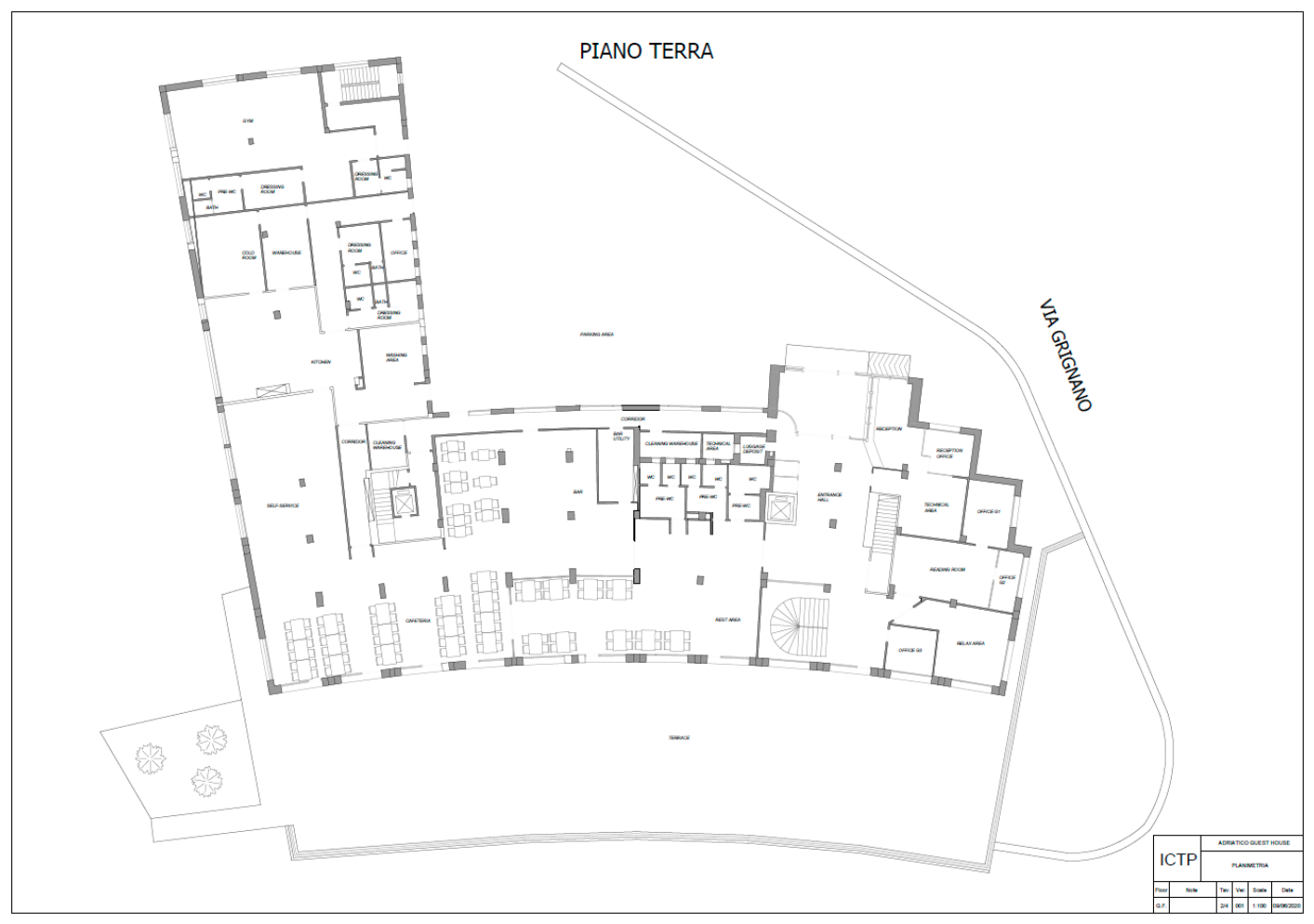
2.1. Case Study Description
2.2. Description of Compared Protocols
- Traditional Protocol: conventional detergents and disinfectants, standard textile materials, laundering at 60 °C, and conventional machinery settings.
- EVA SmartClean Protocol (Green): CAM-compliant detergents with lower impact formulations, higher-concentration packaging, optimized dosage systems, eco-mode floor scrubbers, laundering at 40 °C, and higher-durability microfiber textiles.
2.3. Life Cycle Assessment
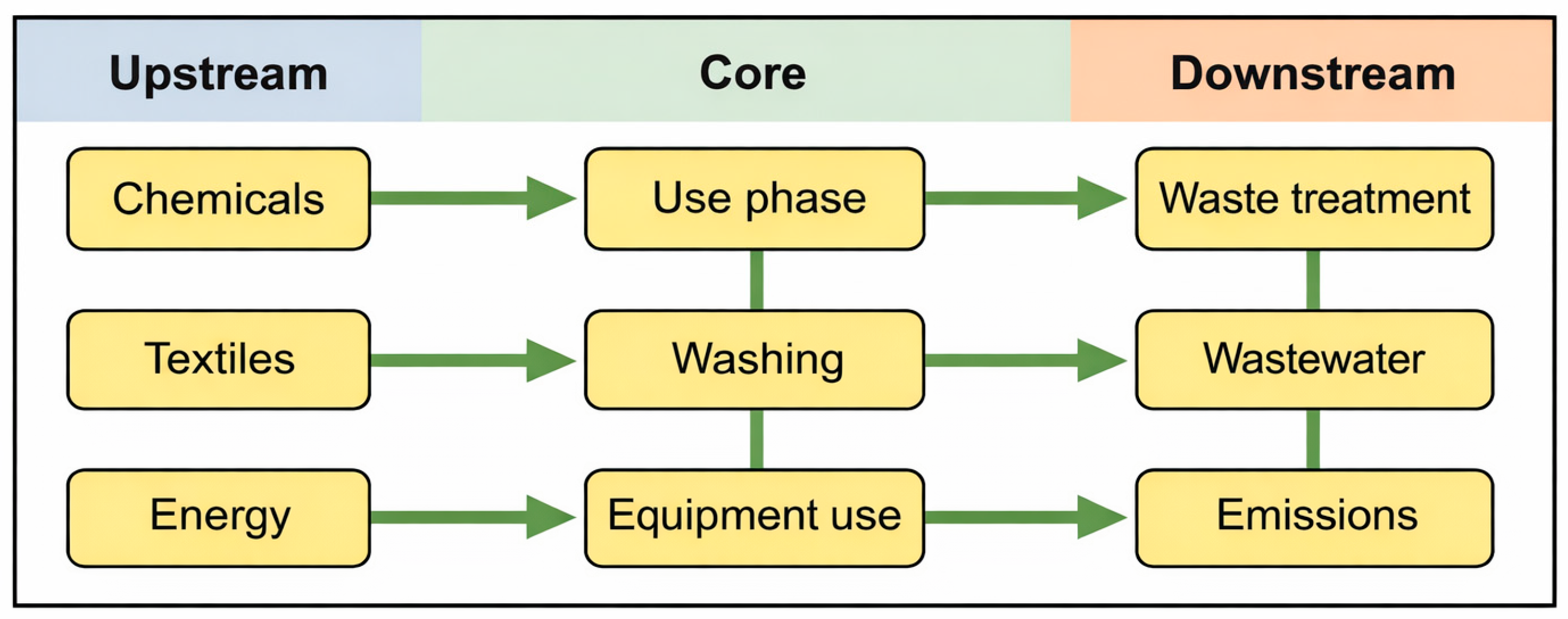
2.3.1. Goal and Scope
2.3.2. Impact Category
2.3.3. Data Collection
- Traditional protocol: April 2025 (18 days)
- Green protocol: May–June 2025 (29 days).
- Chemical consumption (kg)
- Water consumption (m3)
- Electricity use (kWh)
- Textile use and replacement (nr)
- Waste generation (kg)
- Equipment characteristics
2.4. Microbiological Sampling and Analysis
2.5. Statistical Analysis
3. Results
3.1. Life Cycle Impact Assessment
3.1.1. Carbon Footprint per Functional Unit
3.1.2. Contribution Analysis by Life Cycle Stage
- Electricity consumption for laundering (≈30%)
- Production of cleaning chemicals (≈21%)
- Production of carts and durable equipment (≈18%)
- Chemical transport logistics (≈6%)
- Electricity consumption by floor scrubber machine (≈4%)
- Textile production and replacement (≈4%)
- Production of durable equipment (≈33%)
- Laundering energy (≈27%)
- End-of-life of carts (≈8%)
- Floor scrubber production (≈7%)
- Chemical production (≈6%)
- Electricity consumption by floor scrubber machine (≈6%)
3.1.3. Reduction Drivers
- (a)
- Chemical Consumption Optimization
- Higher product concentration and controlled dosing
- Larger packaging volumes reducing plastic and cardboard production
- Lower embodied emissions per kg of cleaning solution
- Reduced upstream transport frequency
- (b)
- Energy Consumption
- Laundering at 40 °C instead of 60 °C
- Eco-mode operation of floor scrubbers
- (c)
- Textile Lifecycle Extension
- Increased microfiber durability
- Higher number of washing cycles tolerated before disposal
- Lower textile waste generation (−12.9 kg/year)
3.1.4. Resource and Waste Indicators
- Water consumption (−17%) was primarily reduced through optimization of laundering processes, including a decrease in the number of washing cycles required due to improved textile management and higher material efficiency.
- Energy consumption (−49.5%) decreased mainly as a result of lower washing temperatures (40 °C vs. 60 °C) and a reduced number of washing cycles, as well as the use of energy-efficient equipment operating modes.
- Reduction in differentiated waste (−95.9%) is associated with decreased packaging waste, driven by the use of more concentrated chemical products and larger packaging formats, resulting in fewer containers per unit of service delivered.
- Reduction in undifferentiated waste (−73.5%) is primarily linked to improved textile durability and lower material turnover, reducing disposal frequency.
- Wastewater generation (−17.8%) is directly correlated with reduced water consumption, particularly in textile laundering processes.
3.2. Microbiological Performance
3.2.1. Overall Hygiene Compliance
3.2.2. Comparative Surface Reductions
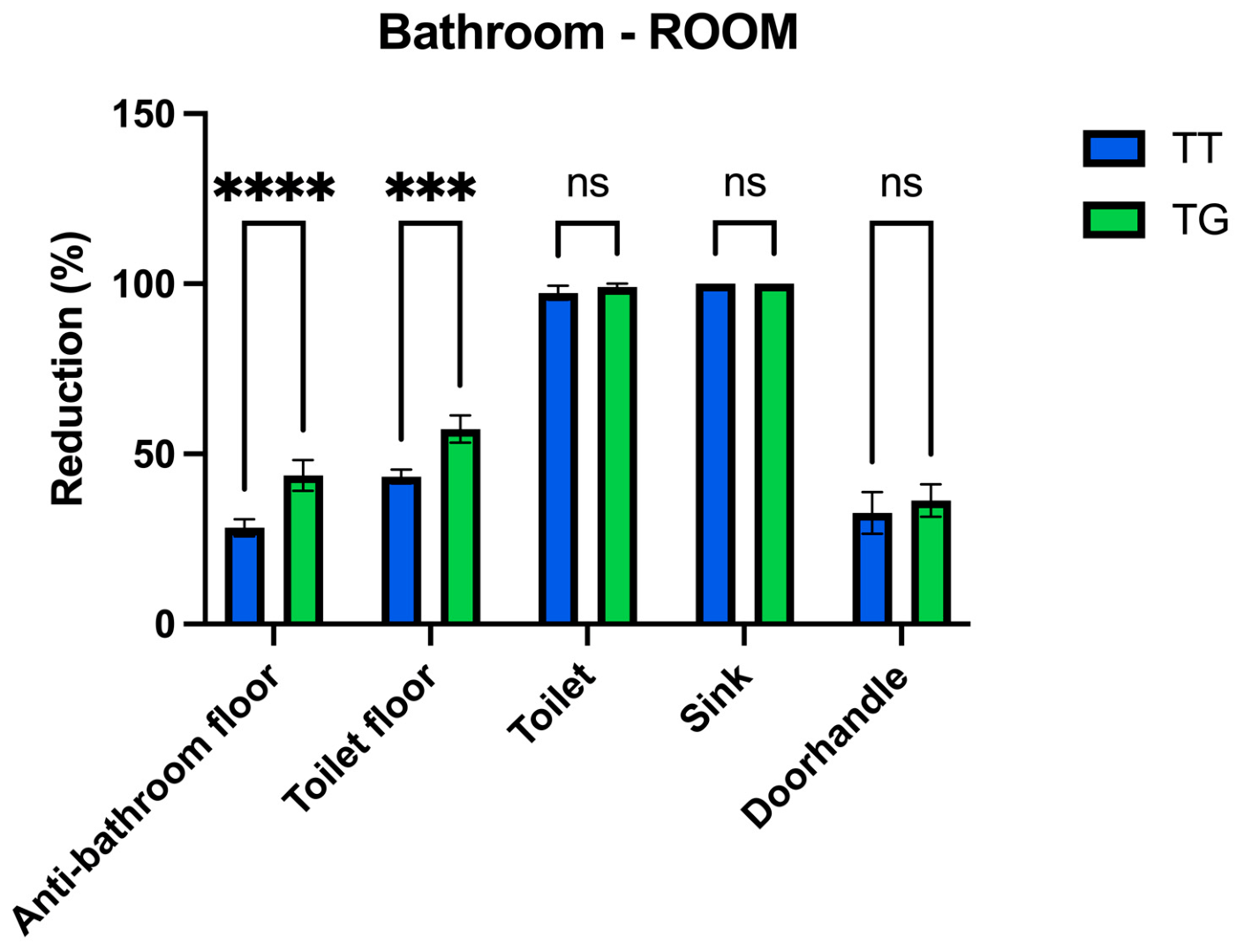
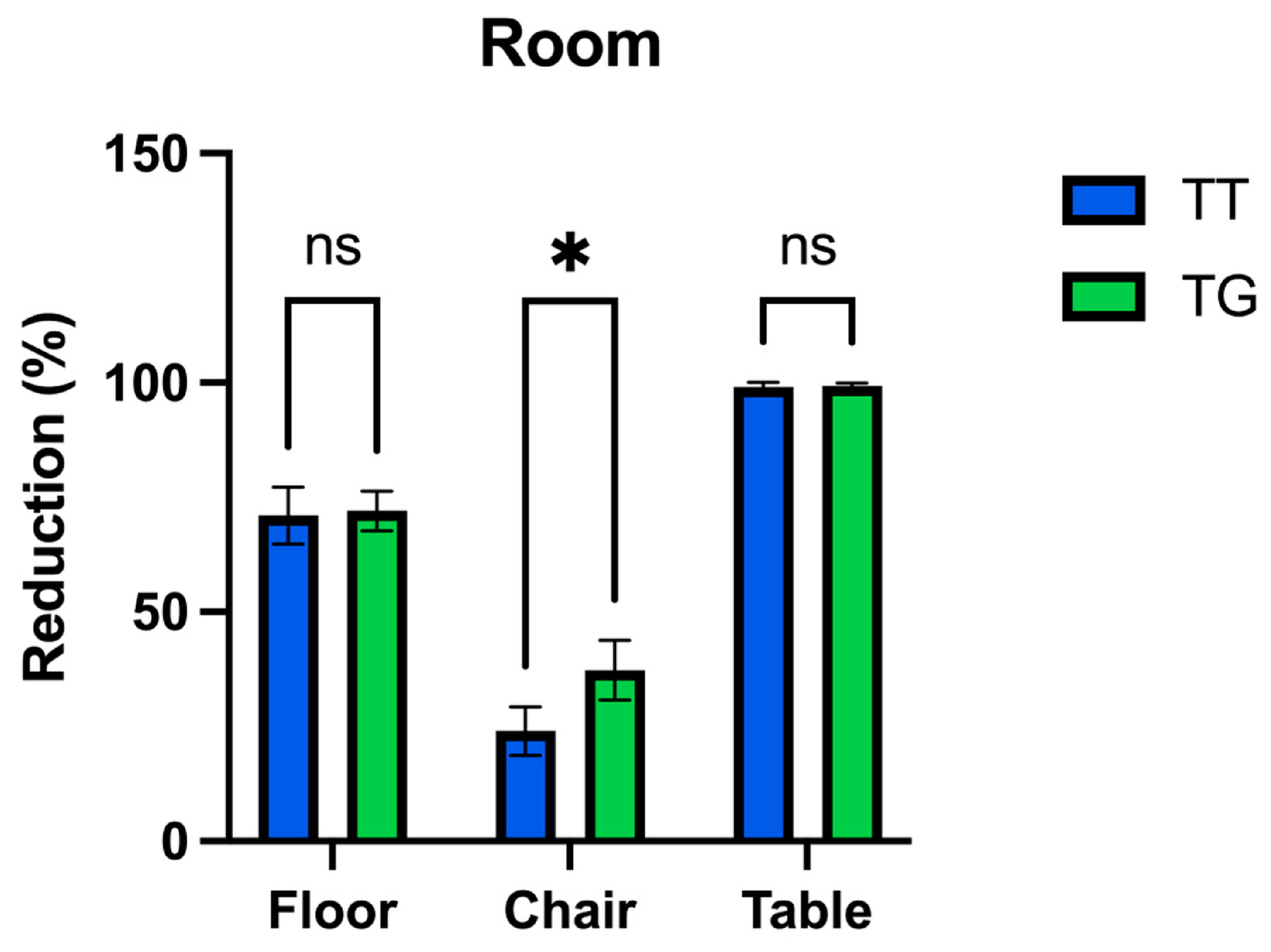
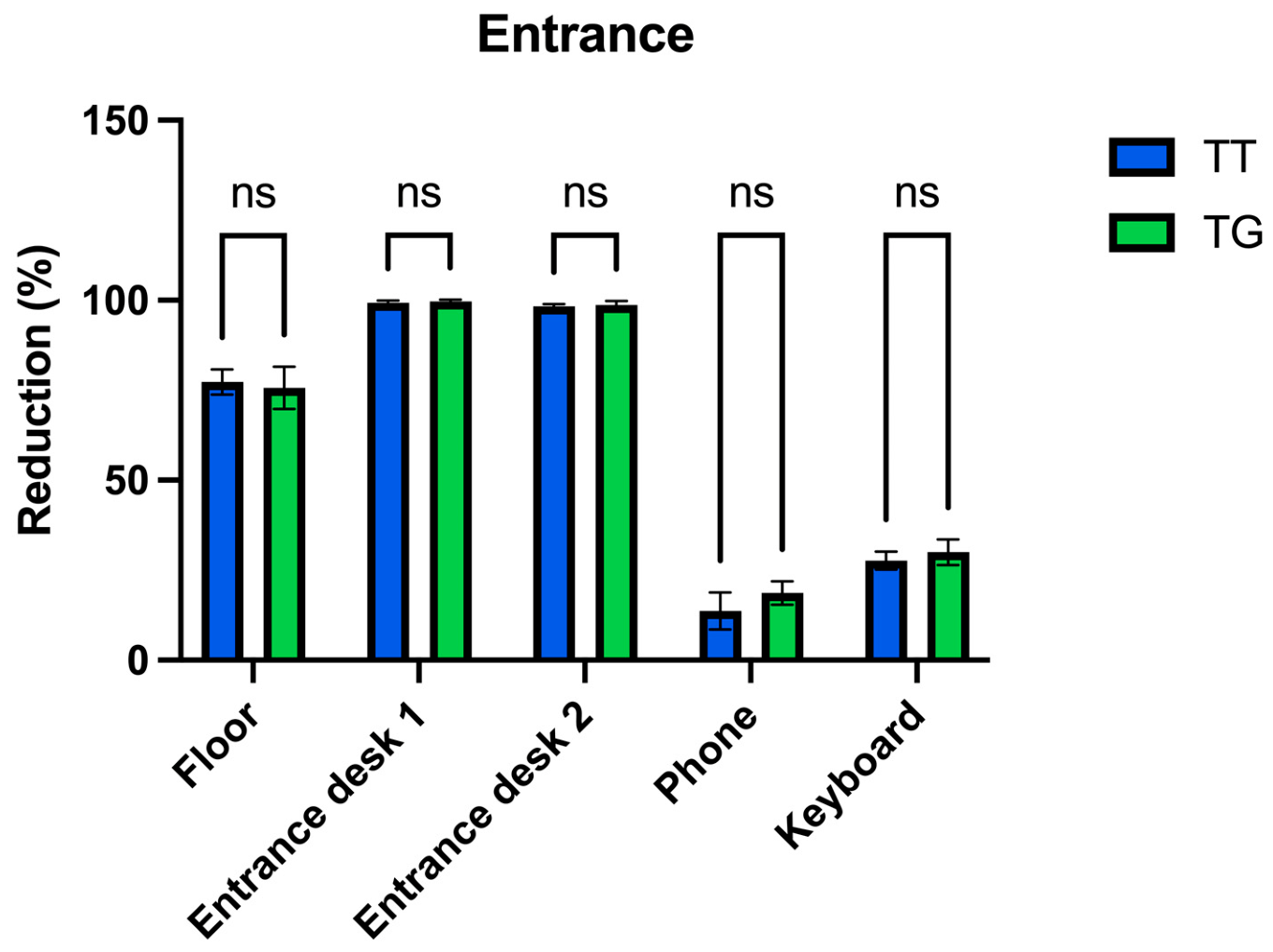
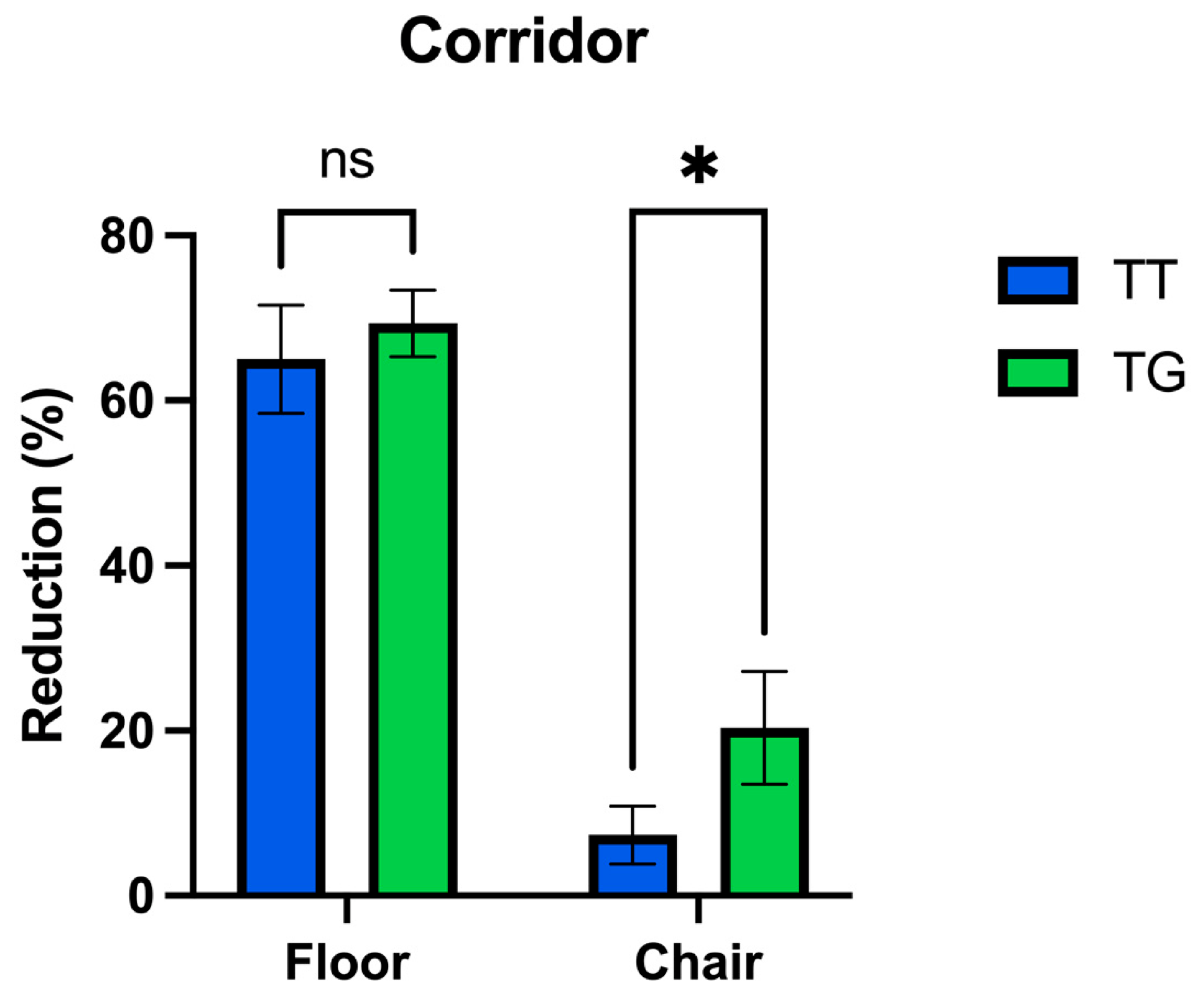
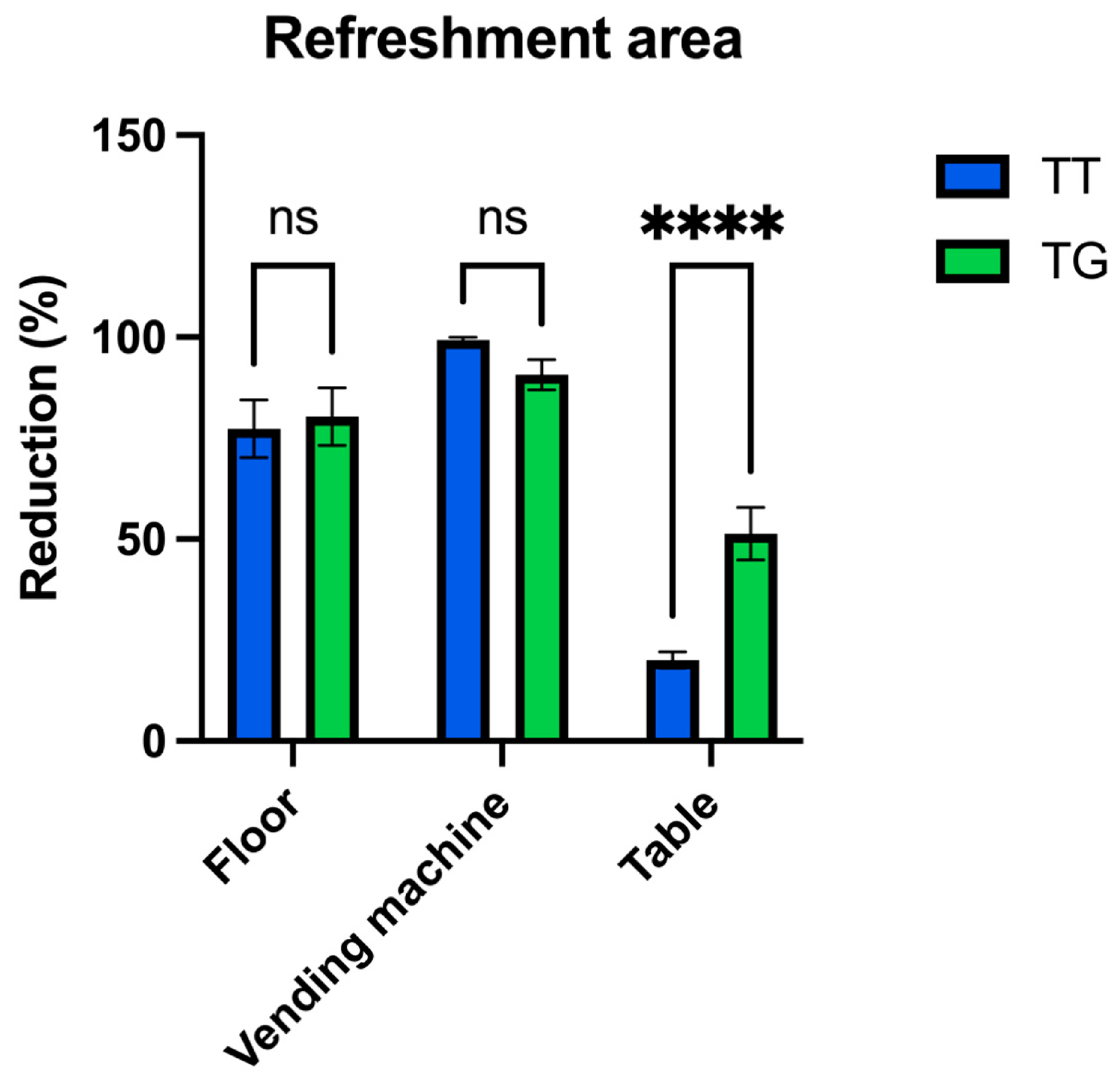
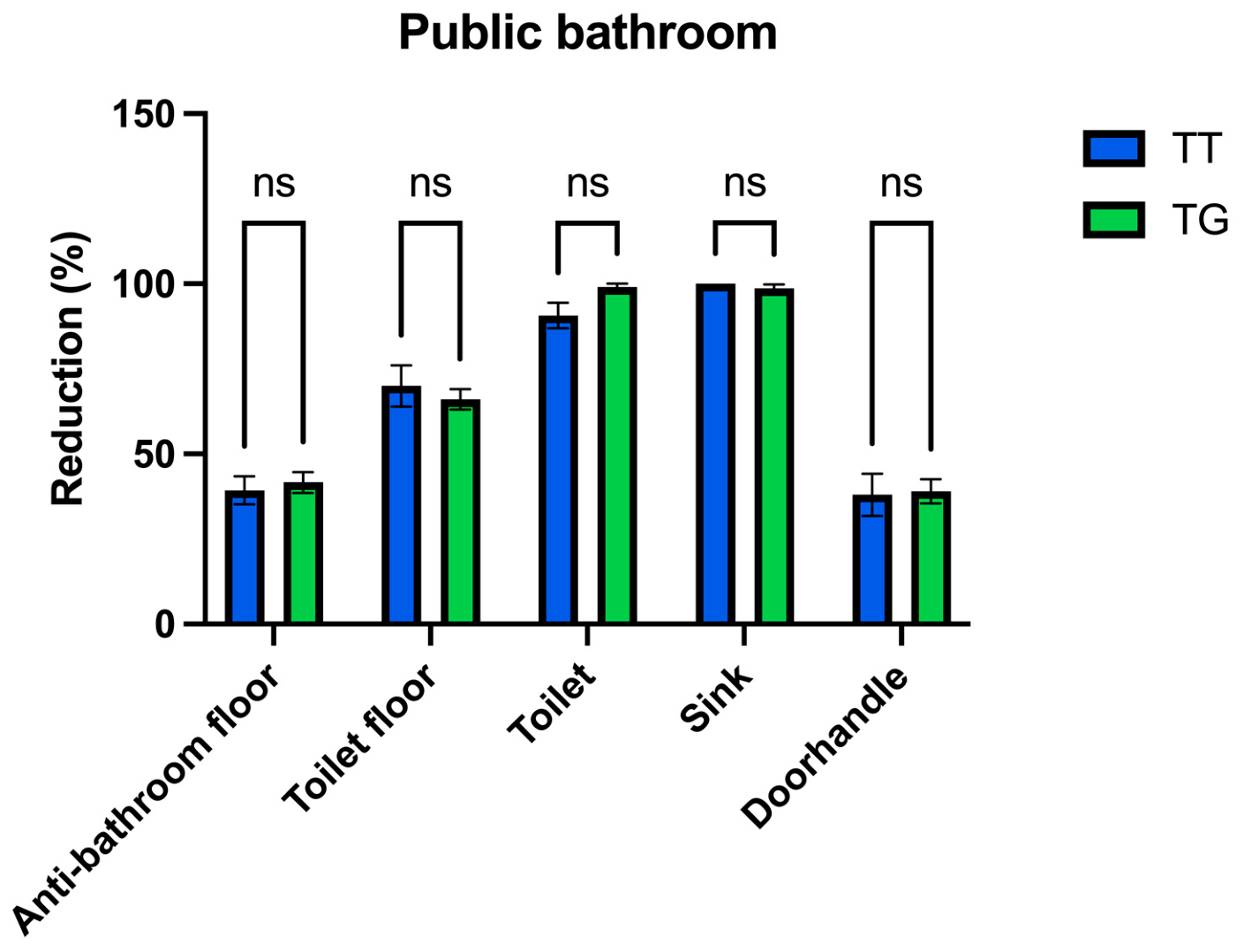
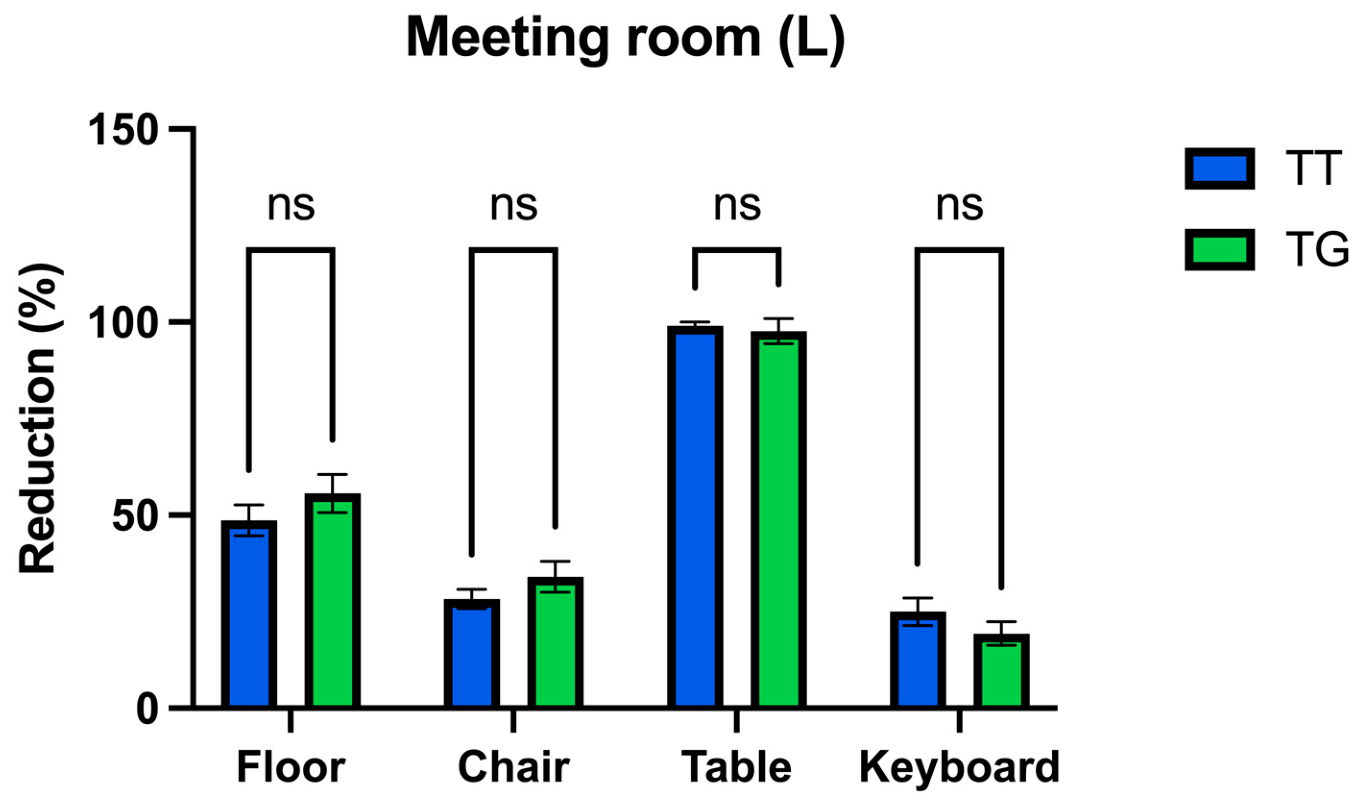
- Both protocols achieved substantial reductions in total mesophilic aerobic counts.
- Across the majority of sampled surfaces, the green protocol achieved microbial reductions comparable to the traditional protocol, and in some cases, greater reductions were observed.
- While no overall statistically significant differences were observed between protocols (p > 0.05), selected high-contact surfaces demonstrated significantly greater microbial reductions under the green protocol (p < 0.01–0.001).
3.2.3. CAM Compliance Verification
4. Discussion
4.1. Reframing Cleaning Services as Climate-Relevant Activities
- formulation selection,
- dosage control,
- textile durability enhancement,
- and energy-efficient equipment operation,
4.2. The Central Role of Chemical Flow Reduction
4.3. Energy Reduction Without Hygienic Compromise
4.4. Durability as a Sustainability Lever
- manufacturing emissions,
- waste generation, transport and treatment,
- and replacement frequency.
4.5. Environmental Gains and Microbiological Safety: Dispelling a False Dichotomy
- correct protocol design
- proper execution
- targeted disinfection
- and standardized monitoring
4.6. Implications for CAM and Green Public Procurement
- SDG 12 (Responsible Consumption and Production),
- SDG 13 (Climate Action),
- and EU Green Deal objectives.
4.7. Methodological Reflections
- standardized ISO-based LCA,
- PCR-aligned service modelling,
- and empirical microbiological validation.
4.8. Broader Sustainability Perspective
5. Conclusions
Author Contributions
Funding
Institutional Review Board Statement
Informed Consent Statement
Data Availability Statement
Acknowledgments
Conflicts of Interest
Abbreviations
| AGH | Adriatico Guest House |
| ANOVA | Analysis of Variance |
| CAM | Minimum Environmental Criteria (Criteri Ambientali Minimi) |
| CFU | Colony-Forming Units |
| CO2e | Carbon Dioxide Equivalent |
| ESG | Environmental, Social and Governance |
| GPP | Green Public Procurement |
| GWP | Global Warming Potential |
| GWP100 | Global Warming Potential over 100 years |
| ICTP | International Centre for Theoretical Physics |
| IPCC | Intergovernmental Panel on Climate Change |
| ISO | International Organization for Standardization |
| LCA | Life Cycle Assessment |
| PCR | Product Category Rules |
| SDGs | Sustainable Development Goals |
| TSA | Tryptic Soy Agar |
| TVC | Total Viable Count |
References
- Market Data Forecast. Europe Cleaning Services Market Report—Europe Cleaning Services Market Size, Share, Trends, COVID-19 Impact & Growth Forecast Report, Segmented by Type, End-User, and by Country (UK, France, Spain, Germany, Italy, Russia, Sweden, Denmark, Switzerland, Netherlands, Turkey, Czech Republic & Rest of Europe), Industry Analysis from 2025 to 2033; 2025. Available online: https://www.marketdataforecast.com/market-reports/europe-cleaning-services-market (accessed on 10 March 2026).
- Storr, J.; Kilpatrick, C.; Lee, K. Time for a renewed focus on the role of cleaners in achieving safe health care in low- and middle-income countries. Antimicrob. Resist. Infect. Control 2021, 10, 59. [Google Scholar] [CrossRef] [Scilit]
- OECD. Industrial Use of Industrial Cleaners; OECD: Paris, France, 2015. [Google Scholar] [CrossRef] [Scilit]
- Dong, Y.; Ng, S.T.; Liu, P. A comprehensive analysis towards benchmarking of life cycle assessment of buildings based on systematic review. Build. Environ. 2021, 204, 108162. [Google Scholar] [CrossRef] [Scilit]
- Francart, N.; Widström, T.; Malmqvist, T. Influence of methodological choices on maintenance and replacement in building LCA. Int. J. Life Cycle Assess. 2021, 26, 2109–2126. [Google Scholar] [CrossRef] [Scilit]
- John, J.; Collins, M.; O’Flynn, K.; Briggs, T.; Gray, W.; McGrath, J. Carbon footprint of hospital laundry: A life-cycle assessment. BMJ Open 2024, 14, e080838. [Google Scholar] [CrossRef] [Scilit]
- Crepaldi, G. I criteri ambientali minimi nel nuovo Codice dei contratti pubblici e nel Piano d’azione nazionale del Green public procurement. Responsab. Civ. Previd. 2024, 6, 1750–1764. [Google Scholar]
- ISO 14044:2006; Environmental Management—Life Cycle Assessment—Requirements and Guidelines. ISO: Geneva, Switzerland, 2006. Available online: https://www.iso.org/standard/38498.html (accessed on 10 August 2022).
- ISO 14040:2006; Environmental Management—Life Cycle Assessment—Principles and Framework. ISO: Geneva, Switzerland, 2006. Available online: https://www.iso.org/standard/37456.html (accessed on 10 August 2022).
- EPD International AB. Product Category Rules (PCR): Professional Cleaning Services for Buildings; PCR 2011:03, Version 3.0.2; The International EPD System: Stockholm, Sweden, 2025; Available online: https://www.environdec.com/pcr-library/pcr2011-03v3 (accessed on 10 March 2026).
- Fontana, R.; Buratto, M.; Marzola, M.; Trioschi, G.; Bandera, B.; Buffone, C.; Vogli, L.; Marconi, P. An Evaluation of Hospital Cleaning Regimes—Microbiological Evaluation and LCA Analysis after Traditional and Sustainable/Green Procedures. Sustainability 2022, 14, 11465. [Google Scholar] [CrossRef] [Scilit]
- Fontana, R.; Buratto, M.; Caproni, A.; Nordi, C.; Pappadà, M.; Bandera, B.; Vogli, L.; Buffone, C.; Marconi, P. Evaluating Cleaning Services in Civil Environments: Microbiological and Life Cycle Analysis Comparing Conventional and Sustainable Methods. Sustainability 2024, 16, 487. [Google Scholar] [CrossRef] [Scilit]
- Fontana, R.; Marzola, M.; Buratto, M.; Trioschi, G.; Caproni, A.; Nordi, C.; Buffone, C.; Bandera, B.; Vogli, L.; Marconi, P. Analysis of Civil Environments Cleaning Services—Microbiological and LCA Analysis after Traditional and Sustainable Procedures. Sustainability 2022, 15, 696. [Google Scholar] [CrossRef] [Scilit]
- Hauschild, M.Z.; Rosenbaum, R.K.; Olsen, S.I. (Eds.) Life Cycle Assessment; Springer International Publishing: Cham, Switzerland, 2018. [Google Scholar] [CrossRef] [Scilit]
- ISO 14067:2018; Greenhouse Gases—Carbon Footprint of Products—Requirements and Guidelines for Quantification. ISO: Geneva, Switzerland, 2018. Available online: https://www.iso.org/standard/71206.html (accessed on 10 August 2022).
- AR6 Synthesis Report: Climate Change 2023—IPCC. Available online: https://www.ipcc.ch/report/sixth-assessment-report-cycle/ (accessed on 17 April 2025).
- Elsergany, M.; Moussa, M.; Ahsan, A.; Khalfan, A.; Eissa, A. Exploratory Study of Bacterial Contamination of Different Surfaces in Four Shopping Malls in Sharjah, UAE. J. Environ. Occup. Sci. 2015, 4, 101. [Google Scholar] [CrossRef] [Scilit]
- Fijan, S.; Šostar-Turk, S.; Cencič, A. Implementing hygiene monitoring systems in hospital laundries in order to reduce microbial contamination of hospital textiles. J. Hosp. Infect. 2005, 61, 30–38. [Google Scholar] [CrossRef] [Scilit]
- Doll, M.; Stevens, M.; Bearman, G. Environmental cleaning and disinfection of patient areas. Int. J. Infect. Dis. 2018, 67, 52–57. [Google Scholar] [CrossRef] [Scilit]
- de Lapuente Díaz de Otazu, R.L.; Akizu-Gardoki, O.; de Ulibarri, B.; Iturrondobeitia, M.; Minguez, R.; Lizundia, E. Ecodesign coupled with Life Cycle Assessment to reduce the environmental impacts of an industrial enzymatic cleaner. Sustain. Prod. Consum. 2022, 29, 718–729. [Google Scholar] [CrossRef] [Scilit]
- Tascione, V.; Simboli, A.; Taddeo, R.; Del Grosso, M.; Raggi, A. A comparative analysis of recent life cycle assessment guidelines and frameworks: Methodological evidence from the packaging industry. Environ. Impact Assess. Rev. 2024, 108, 107590. [Google Scholar] [CrossRef] [Scilit]
- Paulillo, A.; Kim, A.; Mutel, C.; Striolo, A.; Bauer, C.; Lettieri, P. Influential parameters for estimating the environmental impacts of geothermal power: A global sensitivity analysis study. Clean. Environ. Syst. 2021, 3, 100054. [Google Scholar] [CrossRef] [Scilit]
- Sonnemann, G.; Gemechu, E.D.; Remmen, A.; Frydendal, J.; Jensen, A.A. Life Cycle Management: Implementing Sustainability in Business Practice. In Life Cycle Management, LCA Compendium-The Complete World of Life Cycle Assessment; Sonnemann, G., Margni, M., Eds.; Springer: Dordrecht, The Netherlands, 2015; pp. 7–21. [Google Scholar] [CrossRef] [Scilit]
- IPCC Sixth Assessment Report—Industry. In Climate Change 2022—Mitigation of Climate Change; Cambridge University Press: Cambridge, UK, 2023; pp. 1161–1244. [CrossRef] [Scilit]
- Al-Obaidi, K.M.; Omrany, H. Carbon technologies and decarbonisation strategies in buildings: A scoping review and conceptual framework. Hum. Settl. Sustain. 2026, 2, 14–32. [Google Scholar] [CrossRef] [Scilit]
- Mohamed, A.-M.O.; Mohamed, D.; Fayad, A.; Al Nahyan, M.T. Environmental Management and Decarbonization Nexus: A Pathway to the Energy Sector’s Sustainable Futures. World 2025, 6, 13. [Google Scholar] [CrossRef] [Scilit]
- Everard, M. Assessment of the sustainable use of chemicals on a level playing field. Integr. Environ. Assess. Manag. 2023, 19, 1131–1146. [Google Scholar] [CrossRef] [Scilit]
- Luthin, A.; Traverso, M.; Crawford, R.H. Circular life cycle sustainability assessment: An integrated framework. J. Ind. Ecol. 2024, 28, 41–58. [Google Scholar] [CrossRef] [Scilit]
- Fontana, R.; Buratto, M.; Caproni, A.; Nordi, C.; Pappadà, M.; Facchini, M.; Buffone, C.; Bandera, B.; Vogli, L.; Marconi, P. Eco-Friendly vs. Traditional Cleaning in Healthcare Settings: Microbial Safety and Environmental Footprint. Hygiene 2025, 5, 37. [Google Scholar] [CrossRef] [Scilit]
- Nikolić, D.; Jovanović, S.; Skerlić, J.; Šušteršič, J.; Radulović, J. Methodology of Life Cycle Sustainability Assessment. Proc. Eng. Sci. 2019, 1, 793–800. [Google Scholar] [CrossRef] [Scilit]
- Cave, R.; Cole, J.; Mkrtchyan, H.V. Surveillance and prevalence of antimicrobial resistant bacteria from public settings within urban built environments: Challenges and opportunities for hygiene and infection control. Environ. Int. 2021, 157, 106836. [Google Scholar] [CrossRef] [Scilit] [PubMed]
- Klassert, T.E.; Zubiria-Barrera, C.; Neubert, R.; Stock, M.; Schneegans, A.; López, M.; Driesch, D.; Zakonsky, G.; Gastmeier, P.; Slevogt, H.; et al. Comparative analysis of surface sanitization protocols on the bacterial community structures in the hospital environment. Clin. Microbiol. Infect. 2022, 28, 1105–1112. [Google Scholar] [CrossRef] [Scilit]
- Alruwaili, R.F.; Alsadaan, N.; Alruwaili, A.N.; Alrumayh, A.G. Unveiling the Symbiosis of Environmental Sustainability and Infection Control in Health Care Settings: A Systematic Review. Sustainability 2023, 15, 15728. [Google Scholar] [CrossRef] [Scilit]




| System | Δ% GWP EVA SmartClean vs. Traditional | Δ GWP EVA SmartClean vs. Traditional | M.U. |
|---|---|---|---|
| Reduction in GWP of service per square metre per year | −47.7% | −110 | g CO2e/m2 year |
| Reduction of GWP of service per site per year | −908 | kg CO2e/site year | |
| Reduction in GWP of service per yard for the duration of the contract (60 months) | −4.540 | kg CO2e/site contract (5 years) |
| ASPECT | Δ% GWP EVA SmartClean vs. Traditional | Δ GWP EVA SmartClean vs. Traditional | M.U. |
|---|---|---|---|
| CHEMICALS | −82.6% | −474.8 | kg CO2e/site year |
| ENERGY CONSUMPTION | −49.5% | −322.6 | kg CO2e/site year |
| TEXTILES | −92.4% | −73.7 | kg CO2e/site year |
| PROD. AND END OF LIFE MACHINERY AND TROLLEYS | −4.3% | −22.1 | kg CO2e/site year |
| WASTE WATER TREATMENT | −18.0% | −12.9 | kg CO2e/site year |
| WATER CONSUMPTION | −17.0% | −2.1 | kg CO2e/site year |
| INDICATOR | U.M. | EVA SmartClean Protocol | Traditional Protocol | ABSOLUTE Δ EVA SmartClean vs. Traditional | Δ% EVA SmartClean vs. Traditional |
|---|---|---|---|---|---|
| CHEMICALS CONSUMPTION | kg | 64.7 | 832.5 | −767.8 | −92.2% |
| WATER CONSUMPTION | m3 | 63.5 | 76.5 | −13.0 | −17.0% |
| ENERGY CONSUMPTION | kWh | 745.0 | 1476.6 | −731.6 | −49.5% |
| PRODUCTION OF DIFFERENTIATED WASTE | kg | 3.2 | 77.2 | −74.0 | −95.9% |
| PRODUCTION OF UNDIFFERENTIATED WASTE | kg | 4.6 | 17.5 | −12.9 | −73.5% |
| WASTEWATER PRODUCTION | m3 | 63.1 | 76.7 | −13.7 | −17.8% |
| CAM CONFORMING PRODUCTS | % | 100.0% | 91.7% | - | 8.3% |
| CO2 EQUIVALENT EMISSIONS | kg CO2e | 996.4 | 1904.4 | −908.1 | −47.7% |
Disclaimer/Publisher’s Note: The statements, opinions and data contained in all publications are solely those of the individual author(s) and contributor(s) and not of MDPI and/or the editor(s). MDPI and/or the editor(s) disclaim responsibility for any injury to people or property resulting from any ideas, methods, instructions or products referred to in the content. |
© 2026 by the authors. Licensee MDPI, Basel, Switzerland. This article is an open access article distributed under the terms and conditions of the Creative Commons Attribution (CC BY) license.
Share and Cite
Fontana, R.; Smiderle, E.; Lagreca, N.; Buratto, M.; Facchini, M.; Nordi, C.; Bandera, B.; Vogli, L.; Marconi, P. Environmental and Microbiological Performance of a CAM-Compliant Green Cleaning Protocol: An Integrated Life Cycle and Surface Contamination Assessment in a Civil Facility. Sustainability 2026, 18, 4330. https://doi.org/10.3390/su18094330
Fontana R, Smiderle E, Lagreca N, Buratto M, Facchini M, Nordi C, Bandera B, Vogli L, Marconi P. Environmental and Microbiological Performance of a CAM-Compliant Green Cleaning Protocol: An Integrated Life Cycle and Surface Contamination Assessment in a Civil Facility. Sustainability. 2026; 18(9):4330. https://doi.org/10.3390/su18094330
Chicago/Turabian StyleFontana, Riccardo, Elena Smiderle, Noemi Lagreca, Mattia Buratto, Martina Facchini, Chiara Nordi, Beatrice Bandera, Luciano Vogli, and Peggy Marconi. 2026. "Environmental and Microbiological Performance of a CAM-Compliant Green Cleaning Protocol: An Integrated Life Cycle and Surface Contamination Assessment in a Civil Facility" Sustainability 18, no. 9: 4330. https://doi.org/10.3390/su18094330
APA StyleFontana, R., Smiderle, E., Lagreca, N., Buratto, M., Facchini, M., Nordi, C., Bandera, B., Vogli, L., & Marconi, P. (2026). Environmental and Microbiological Performance of a CAM-Compliant Green Cleaning Protocol: An Integrated Life Cycle and Surface Contamination Assessment in a Civil Facility. Sustainability, 18(9), 4330. https://doi.org/10.3390/su18094330