Article

Environmental and Microbiological Performance of a CAM-Compliant Green Cleaning Protocol: An Integrated Life Cycle and Surface Contamination Assessment in a Civil Facility


1
Department of Chemical, Pharmaceutical and Agricultural Sciences, University of Ferrara, 44121 Ferrara, Italy
2
Department of Environmental Sciences and Prevention, University of Ferrara, 44121 Ferrara, Italy
3
Punto 3 Srl, 44121 Ferrara, Italy
4
LTTA—Laboratory for Technologies of Advanced Therapies, Tecnopolo of Ferrara, University of Ferrara, 44121 Ferrara, Italy
*
Author to whom correspondence should be addressed.
Sustainability 2026, 18(9), 4330; https://doi.org/10.3390/su18094330
Submission received: 20 March 2026 / Revised: 21 April 2026 / Accepted: 23 April 2026 / Published: 27 April 2026

Abstract

The transition toward sustainable facility management requires cleaning systems that reduce environmental burdens while maintaining high hygienic standards. This study presents a comparative evaluation of a green cleaning protocol (EVA SmartClean), compliant with the Italian Minimum Environmental Criteria (CAM; D.M. 29 January 2021), compared with a conventional cleaning system implemented in a civil facility (Adriatico Guest House, Trieste, Italy; 8260 m2). The assessment integrates a cradle-to-grave Life Cycle Assessment (LCA), conducted in accordance with ISO 14040, ISO 14044, ISO 14067 and PCR 2011:03 for professional cleaning services, with an extensive microbiological surface monitoring campaign performed using RODAC plates and swab sampling. The functional unit was defined as 1 m2 of representative surface maintained clean for one year. The green protocol achieved a 47.7% reduction in Global Warming Potential (GWP100 based on IPCC AR6 characterization factors), corresponding to −110 g CO2e/m2·year and −908 kg CO2e/year for the entire facility. Major reductions in climate impact were associated with chemical consumption (−82.6%), energy use (−49.5%), and textile waste generation (−92.4%). Microbiological analyses demonstrated that both protocols complied with reference hygiene thresholds, while the green system achieved reductions in total mesophilic counts that were comparable or superior across representative surfaces. The results confirm that environmental optimization in cleaning services can be achieved without compromising microbiological safety, supporting public procurement policies aligned with CAM requirements and Sustainable Development Goals (SDGs 12 and 13).

1. Introduction

Professional cleaning services play a pivotal role in ensuring hygiene, occupational safety, and user well-being in public and private facilities. However, these services are resource-intensive, requiring significant consumption of chemicals, water, energy, and materials, as well as generating waste and greenhouse gas emissions. In the European context, Green Public Procurement (GPP) policies and national regulatory frameworks increasingly require environmental performance to be demonstrated through standardized methodologies, such as Life Cycle Assessment (LCA) [1,2,3].
Several studies have demonstrated that cleaning services can represent a non-negligible share of the environmental footprint associated with building operations. Life Cycle Assessment (LCA) analyses applied to cleaning systems in healthcare and civil environments have identified key environmental hotspots, including the production and use of chemical agents, laundering of textiles, energy consumption of equipment, and operator transportation [4,5,6]. In particular, previous investigations have reported that cleaning-related processes can contribute significantly to greenhouse gas emissions and resource consumption within facility management systems, especially when evaluated over extended operational periods. These findings highlight that, although often considered ancillary activities, cleaning services constitute a relevant leverage point for reducing the environmental impact of buildings, supporting the integration of sustainability criteria into operational practices and procurement strategies.
Despite these advances, existing studies present important limitations. Most analyses focus primarily on environmental impacts without systematically verifying whether reduced chemical consumption and energy use may affect hygienic performance. Moreover, integrated assessments combining Life Cycle Assessment with experimental microbiological validation under real operating conditions remain limited, particularly in the context of CAM-compliant cleaning systems.
In this context, the present study aims to address these gaps by providing an integrated evaluation of environmental and microbiological performance. The innovative contribution of this work lies in the combined application of cradle-to-grave LCA and standardized surface contamination monitoring to compare a conventional cleaning protocol with a CAM-compliant green system under real operational conditions. This approach enables a simultaneous assessment of sustainability and hygienic efficacy, directly supporting evidence-based implementation of green procurement criteria in facility management.
In Italy, the updated Minimum Environmental Criteria (CAM) for cleaning services (D.M. 29 January 2021) explicitly requires evidence of environmental improvement compared to conventional approaches and, as an award criterion, proof that alternative protocols ensure equivalent or superior hygienic efficacy. This dual requirement-environmental sustainability and microbiological effectiveness-calls for integrated assessment models [7]. Within the framework of building life cycle assessment (LCA), professional cleaning services are part of the use stage, as defined by EN 15978. In particular, routine cleaning activities fall under Module B2 (Maintenance), as they are required to preserve the functional and hygienic performance of building surfaces over time. At the same time, the associated energy consumption (e.g., laundering processes and equipment operation) contributes to Module B6 (Operational energy use). Despite being recurrent and resource-intensive, these activities are often underrepresented in whole-building LCA studies, where greater emphasis is typically placed on structural materials and energy systems. However, due to their frequency and scalability across building portfolios, cleaning services represent a non-negligible contribution to the environmental profile of buildings during operation.
Life Cycle Assessment, standardized under ISO 14040 and 14044, is the most robust methodological framework for quantifying environmental impacts associated with services across their entire life cycle. For climate-related performance, ISO 14067 provides specific guidance on quantifying carbon footprints. In the professional cleaning sector, PCR 2011:03 (version 3.0.2) specifically defines system boundaries, functional units, and data quality requirements [8,9,10].
Within the broader framework of sustainable development, as defined by the United Nations Sustainable Development Goals (SDGs), operational services such as cleaning play a role in responsible resource use (SDG 12) and climate change mitigation (SDG 13).
Previous research has demonstrated that cleaning services are often dominated by impacts related to chemical production, energy use in laundering, and equipment manufacturing. Nonetheless, reducing chemical loads and lowering washing temperatures must not compromise microbial control. Surface contamination monitoring-through contact plates and swab methods-remains the gold standard for evaluating hygienic performance in civil environments [11,12,13]. From a sustainability assessment perspective, cleaning services also contribute to indirect (Scope 3) emissions, particularly through the consumption of chemicals, textiles, packaging, and outsourced operational activities. These aspects are increasingly relevant within ESG reporting frameworks and building sustainability certification systems such as LEED (Operations and Maintenance), BREEAM In-Use, and the EU Level(s) framework, which recognize the role of operational practices in determining environmental performance. Therefore, integrating cleaning services into building-level LCA models provides an opportunity to identify actionable strategies for reducing operational emissions without requiring structural interventions.
This study aims to address the current gap between environmental assessment and hygienic validation in cleaning services by providing an integrated evaluation of a CAM-compliant green cleaning protocol. Specifically, the study contributes by:
(i)
quantifying environmental performance through a cradle-to-grave LCA approach;
(ii)
experimentally validating microbiological efficacy under real operating conditions;
(iii)
assessing whether environmental optimization can be achieved without compromising hygiene, in alignment with CAM requirements.

2. Materials and Methods

2.1. Case Study Description

The study was conducted at the Adriatico Guest House (AGH), part of the International Centre for Theoretical Physics (ICTP), located in Trieste, Italy. The building covers 8260 m2 and includes meeting rooms, offices, corridors, guest rooms, reception areas, bar/cafeteria spaces, and sanitary facilities. The site was selected as representative of civil cleaning services across surface typologies, occupancy patterns, and cleaning frequencies. From an operational perspective, the facility includes a heterogeneous mix of surface types (e.g., high-contact surfaces, sanitary areas, and floor coverings) and usage intensities, which directly influence cleaning frequency, resource consumption, and contamination dynamics. These characteristics make the site particularly suitable for assessing the environmental and microbiological performance of cleaning protocols under realistic service conditions.
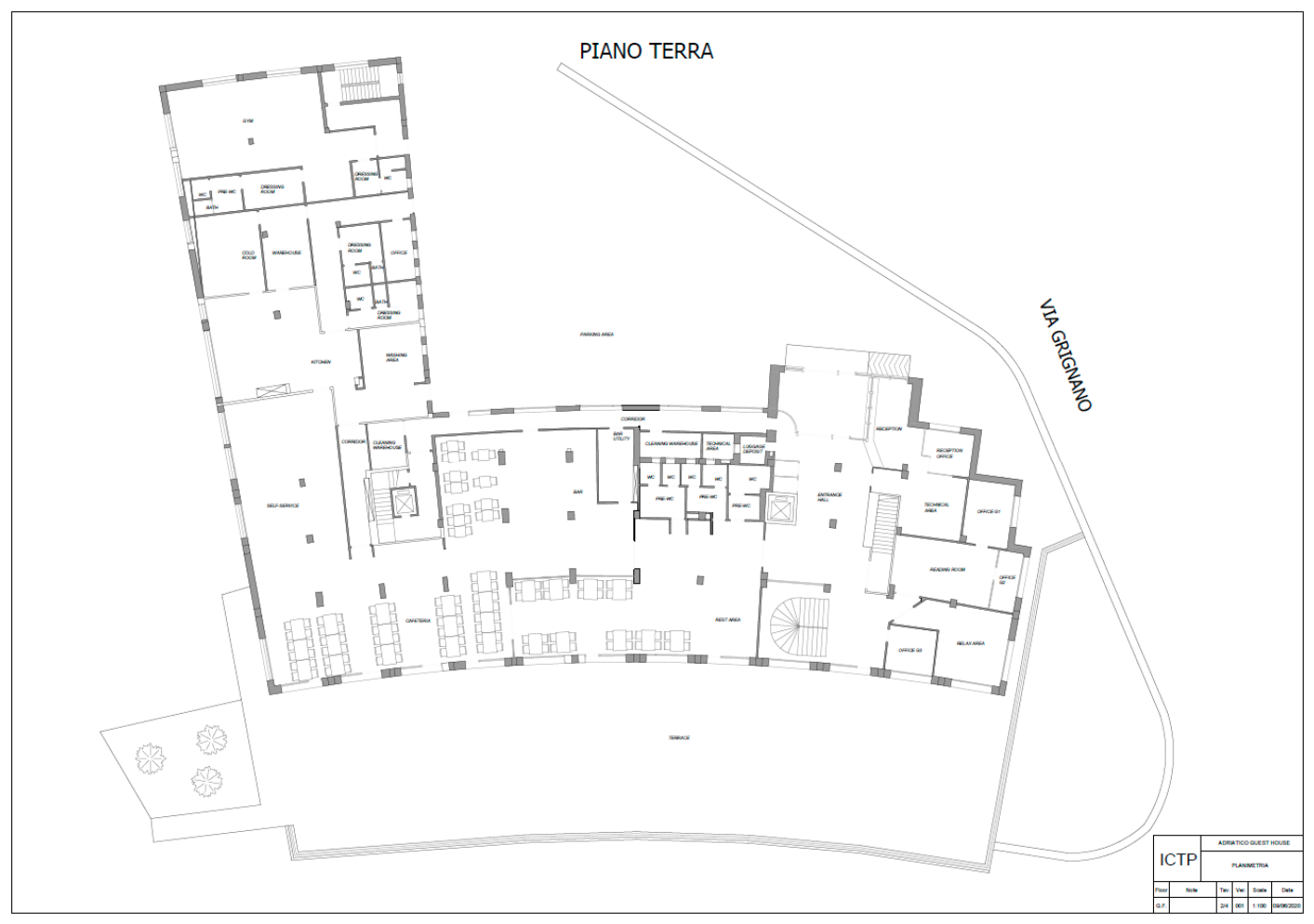
The ground floor layout of the facility is presented in Figure 1.

2.2. Description of Compared Protocols

Two systems were analyzed:
  • Traditional Protocol: conventional detergents and disinfectants, standard textile materials, laundering at 60 °C, and conventional machinery settings.
  • EVA SmartClean Protocol (Green): CAM-compliant detergents with lower impact formulations, higher-concentration packaging, optimized dosage systems, eco-mode floor scrubbers, laundering at 40 °C, and higher-durability microfiber textiles.
Cleaning frequencies and treated surfaces were identical for both protocols to ensure comparability.
All collected operational data were normalized to an annual reference period to ensure full comparability between monitoring windows of different duration.

2.3. Life Cycle Assessment

2.3.1. Goal and Scope

The LCA aimed to compare the carbon footprint of the two protocols. The functional unit was:
1 m2 of representative surface maintained clean for 1 year.
In alignment with building-level LCA methodologies (EN 15978), the functional unit is representative of the operational phase of the building, specifically the maintenance of surfaces during use. The assessed system is therefore attributable to Module B2 (Maintenance), while energy-related inputs associated with cleaning processes contribute to Module B6 (Operational energy use). This positioning enables direct integration of the results into whole-building environmental assessments and facilitates comparison with other operational flows.
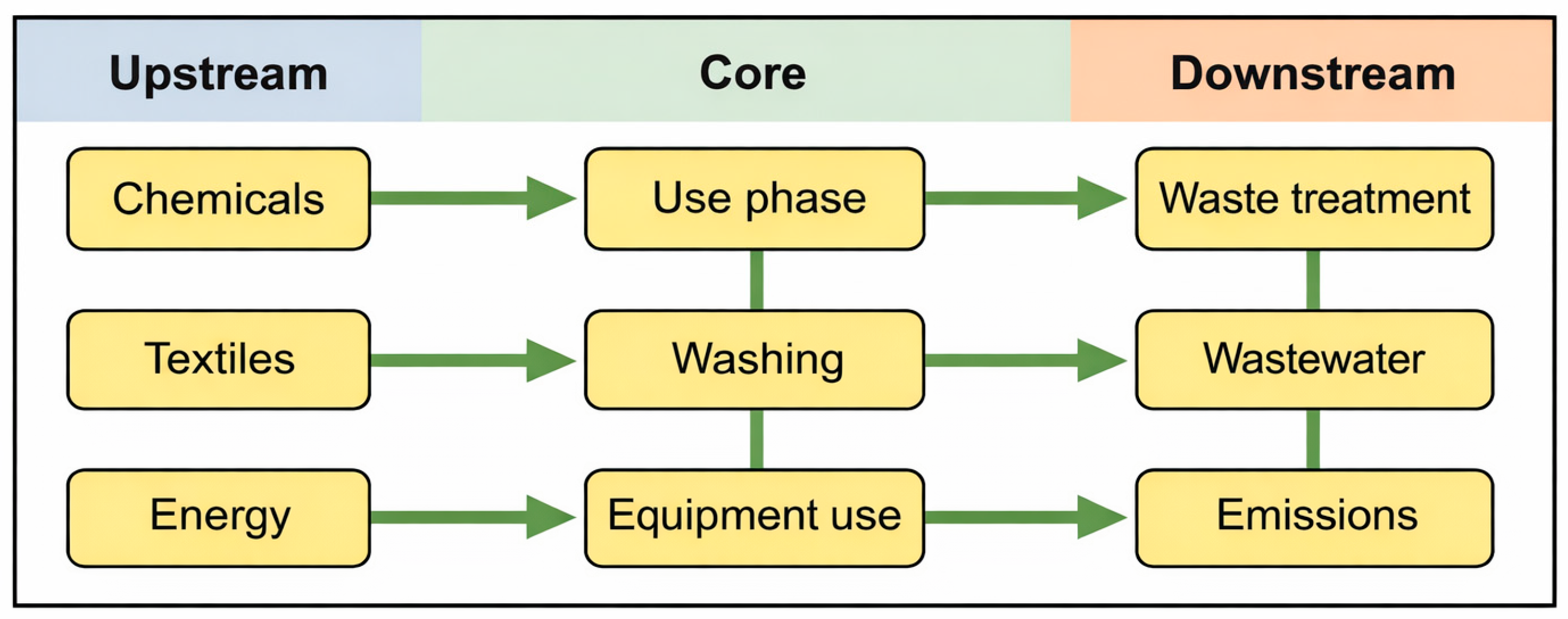
System boundaries were cradle-to-grave, including upstream (raw materials, manufacturing), core (transport, use phase, energy and water consumption), and downstream (waste treatment and wastewater management) processes [14]. The LCA model was structured according to a modular framework including upstream processes (raw material extraction and manufacturing of chemicals, textiles, and equipment), core processes (transport, use phase, energy and water consumption), and downstream processes (waste treatment and wastewater management) as seen in Figure 2. Foreground data were based on primary measurements collected on site, while background processes were sourced from the Managed LCA Content database (v.2025.2, Sphera). Model parameterisation followed PCR 2011:03 requirements and standard LCA practice.
Excluded processes were identical in both systems (e.g., PPE, soap dispensers) to preserve equivalence.

2.3.2. Impact Category

The impact category selected was:
  • Global Warming Potential (GWP100), based on IPCC AR6 characterization factors (kg CO2e), in accordance with ISO 14067 [15,16].

2.3.3. Data Collection

Primary site-specific data were collected during two monitoring windows:
  • Traditional protocol: April 2025 (18 days)
  • Green protocol: May–June 2025 (29 days).
Data included:
  • Chemical consumption (kg)
  • Water consumption (m3)
  • Electricity use (kWh)
  • Textile use and replacement (nr)
  • Waste generation (kg)
  • Equipment characteristics
Inventory modeling followed PCR requirements.
LCA modeling was performed using LCA for Experts (https://sphera.com/product-sustainability-software/, accessed on 23 March 2026) software, and the Managed LCA Content version 2025.2 database, both produced by Sphera.

2.4. Microbiological Sampling and Analysis

Microbiological monitoring was conducted to evaluate and compare the hygienic performance of the traditional and green cleaning protocols under real operating conditions. Sampling activities were performed in representative civil environments within the Adriatico Guest House facility, including meeting rooms, guest rooms, sanitary facilities, bar and cafeteria areas, reception spaces, and corridors. Both high-contact surfaces (e.g., tables, chairs, counters, and sanitary fixtures) and floor surfaces were included to capture contamination dynamics across different functional areas and usage intensities [17,18].
Sampling was carried out under three experimental conditions: prior to cleaning (baseline condition), after the traditional protocol, and after the green protocol. All procedures were conducted by trained microbiology personnel using sterile equipment and standardized operating protocols to ensure repeatability and minimize operator-dependent variability.
Two complementary surface sampling techniques were employed depending on surface geometry and accessibility. Flat, smooth, and non-porous surfaces were analyzed using RODAC (Replicate Organism Direct Agar Contact) plates containing Tryptic Soy Agar (TSA), a non-selective medium suitable for enumerating total aerobic mesophilic microorganisms. The convex agar surface of each plate was brought into direct contact with the sampling area using a calibrated applicator to maintain uniform pressure. Contact was sustained for approximately 30 s to standardize microbial transfer. Each RODAC plate sampled an area of approximately 25 cm2. To avoid underestimation of viable microorganisms due to residual disinfectants, the culture media were supplemented with validated chemical neutralizers that inactivate commonly used sanitizing agents, including quaternary ammonium compounds, chlorine-based disinfectants, phenolics, and aldehydes [19].
For irregular, curved, or difficult-to-access surfaces-such as washbasin edges, toilet rims, handles, and structural corners-sterile swab sampling was adopted. Where surface geometry permitted, a sterile 10 × 10 cm template (100 cm2) was positioned to define a standardized sampling area. The swab tip was pre-moistened in a neutralizing buffer solution to improve microbial recovery and counteract residual disinfectant activity. The designated area was sampled systematically using horizontal, vertical, and diagonal strokes to ensure complete coverage. Immediately after collection, the swab was transferred into a sterile tube containing neutralizing solution and transported to the laboratory under controlled conditions. In cases where the template could not be applied due to surface configuration, the entire accessible area was swabbed and results were normalized during analysis.
All samples were processed within 12 h of collection. RODAC plates and aliquots obtained from swab eluates (subsequently plated onto TSA) were incubated under aerobic mesophilic conditions at 35 ± 2 °C for 24–48 h. After incubation, visible colonies were enumerated manually. Microbial loads were expressed as colony-forming units (CFU) per sampled surface area and normalized to CFU per 25 cm2 or 100 cm2, depending on the sampling technique. Plates showing confluent growth were excluded from quantitative analysis in accordance with standard microbiological practice [20].
Although additional selective and differential media—including Mannitol Salt Agar, MacConkey Agar, and Sabouraud Dextrose Agar—were used during the broader experimental campaign to detect specific microbial groups, total mesophilic aerobic counts obtained on TSA accurately reflected overall contamination trends. For clarity, comparability, and consistency of interpretation, only TSA-derived results are presented in this manuscript. The apparent differences in impact structure between the traditional and green protocols do not indicate inconsistency, but rather reflect a redistribution of environmental burdens, where the reduction of high-frequency operational inputs (e.g., chemicals and energy) in the green system increases the relative contribution of long-life components without increasing their absolute impact.
Microbial reductions were calculated relative to untreated baseline surfaces and interpreted according to established hygiene reference criteria for civil indoor environments. All laboratory analyses were conducted at the University of Ferrara, Laboratory of Microbiology, under controlled and standardized conditions.

2.5. Statistical Analysis

Microbiological data were analyzed to compare surface contamination levels across the three experimental conditions (untreated baseline, post-traditional cleaning, and post-green cleaning). Colony-forming unit (CFU) counts were first normalized to the sampled surface area and log-transformed, as needed, to account for the non-normal distribution typically observed in environmental microbiological datasets. Normality of data distribution was assessed using the Shapiro–Wilk test. When assumptions of parametric analysis were satisfied, comparisons between groups were performed using one-way analysis of variance (ANOVA) followed by post hoc pairwise comparisons with Tukey’s correction. In cases where normality assumptions were not met, non-parametric equivalents (Kruskal–Wallis test followed by Dunn’s multiple comparison test) were applied. Statistical significance was set at p < 0.05.
In addition to absolute CFU values, percentage reductions relative to baseline were calculated for each protocol and surface category to facilitate performance comparison. Data were expressed as mean ± standard deviation. Statistical analyses were performed using GraphPad Prism (version 11, GraphPad Software, San Diego, CA, USA), and all tests were two-tailed.
This analytical approach allowed assessment of whether differences observed between cleaning protocols reflected true performance variation rather than random environmental fluctuation.

3. Results

3.1. Life Cycle Impact Assessment

3.1.1. Carbon Footprint per Functional Unit

The comparative Life Cycle Assessment demonstrated a marked reduction in Global Warming Potential (GWP100, with IPCC AR6 characterization factors) associated with the implementation of the EVA SmartClean protocol.
The comparative results for the different assessment scenarios are summarized in Table 1.
Per functional unit (1 m2 maintained clean for 1 year), the green protocol generated 110 g CO2e less than the traditional protocol, corresponding to a 47.7% reduction in GWP.
When extrapolated to the entire facility (8260 m2), the annual avoided emissions reached 908 kg CO2e/year, equivalent to approximately 4.54 tonnes CO2e over a five-year contract period.
The magnitude of reduction indicates that cleaning services, although often considered operationally marginal in building sustainability assessments, can represent a non-negligible contribution to Scope 3 emissions in facility management.

3.1.2. Contribution Analysis by Life Cycle Stage

A disaggregated contribution analysis reveals substantial structural differences between the two protocols.
Traditional Protocol—Impact Structure
The dominant contributors to GWP were:
  • Electricity consumption for laundering (≈30%)
  • Production of cleaning chemicals (≈21%)
  • Production of carts and durable equipment (≈18%)
  • Chemical transport logistics (≈6%)
  • Electricity consumption by floor scrubber machine (≈4%)
  • Textile production and replacement (≈4%)
This profile indicates a system heavily influenced by recurring operational inputs-particularly chemicals and electricity-intensive washing cycles.
EVA SmartClean Protocol—Impact Structure
For the green protocol, impact contributions shifted toward:
  • Production of durable equipment (≈33%)
  • Laundering energy (≈27%)
  • End-of-life of carts (≈8%)
  • Floor scrubber production (≈7%)
  • Chemical production (≈6%)
  • Electricity consumption by floor scrubber machine (≈6%)
The relative increase in durable equipment’s contribution does not reflect higher absolute impacts but rather a compression of operational emissions, thereby elevating the proportional weight of long-life components.
The detailed variations by macro-aspect are reported in Table 2.
This structural redistribution is a key finding: the green protocol effectively suppresses recurring high-impact flows (chemicals and energy), leaving capital goods as the primary contributors.

3.1.3. Reduction Drivers

The −47.7% GWP reduction can be attributed to synergistic interventions:
(a)
Chemical Consumption Optimization
Chemical use decreased by 767.8 kg/year (−92.2%).
Impact reduction was driven by:
  • Higher product concentration and controlled dosing
  • Larger packaging volumes reducing plastic and cardboard production
  • Lower embodied emissions per kg of cleaning solution
  • Reduced upstream transport frequency
Chemical-related GWP decreased by 474.8 kg CO2e/year (−82.6%).
This confirms that formulation strategy and dosage management are primary leverage points in decarbonizing cleaning services.
(b)
Energy Consumption
Electricity consumption decreased by 731.6 kWh/year (−49.5%).
Two factors were determinant:
  • Laundering at 40 °C instead of 60 °C
  • Eco-mode operation of floor scrubbers
Energy-related emissions decreased by 322.6 kg CO2e/year.
This highlights laundering temperature as a major environmental hotspot in professional cleaning systems.
(c)
Textile Lifecycle Extension
Textile-related emissions decreased by 92.4%, corresponding to −73.7 kg CO2e/year.
This reduction is derived from:
  • Increased microfiber durability
  • Higher number of washing cycles tolerated before disposal
  • Lower textile waste generation (−12.9 kg/year)
Durability enhancement emerges as an underappreciated sustainability lever.

3.1.4. Resource and Waste Indicators

Beyond GWP, the green protocol demonstrated significant reductions across multiple resource and waste indicators, reflecting a consistent optimization of operational processes.
The observed reductions can be attributed to specific underlying drivers:
  • Water consumption (−17%) was primarily reduced through optimization of laundering processes, including a decrease in the number of washing cycles required due to improved textile management and higher material efficiency.
  • Energy consumption (−49.5%) decreased mainly as a result of lower washing temperatures (40 °C vs. 60 °C) and a reduced number of washing cycles, as well as the use of energy-efficient equipment operating modes.
  • Reduction in differentiated waste (−95.9%) is associated with decreased packaging waste, driven by the use of more concentrated chemical products and larger packaging formats, resulting in fewer containers per unit of service delivered.
  • Reduction in undifferentiated waste (−73.5%) is primarily linked to improved textile durability and lower material turnover, reducing disposal frequency.
  • Wastewater generation (−17.8%) is directly correlated with reduced water consumption, particularly in textile laundering processes.
These results confirm that the environmental improvements observed are not limited to carbon footprint reduction but reflect a broader systemic optimization of resource use and waste generation across the cleaning service life cycle.
A comprehensive summary of annual environmental indicators is provided in Table 3.

3.2. Microbiological Performance

3.2.1. Overall Hygiene Compliance

Microbiological monitoring performed through RODAC plates and swab sampling confirmed that both protocols complied with accepted hygiene reference thresholds in all sampled environments.
No post-treatment surface exceeded admissible microbial limits.

3.2.2. Comparative Surface Reductions

When compared to untreated surfaces:
  • Both protocols achieved substantial reductions in total mesophilic aerobic counts.
  • Across the majority of sampled surfaces, the green protocol achieved microbial reductions comparable to the traditional protocol, and in some cases, greater reductions were observed.
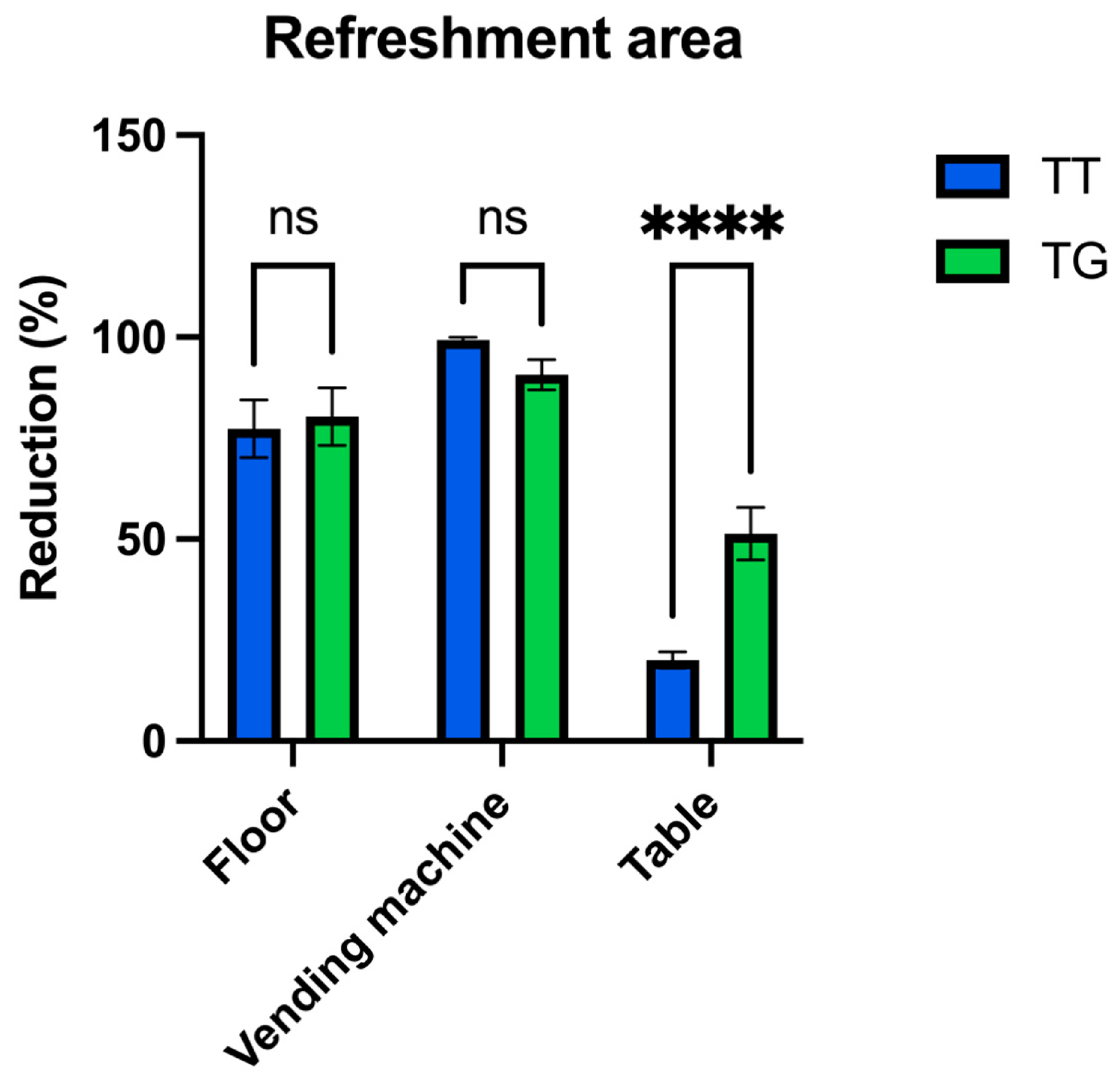
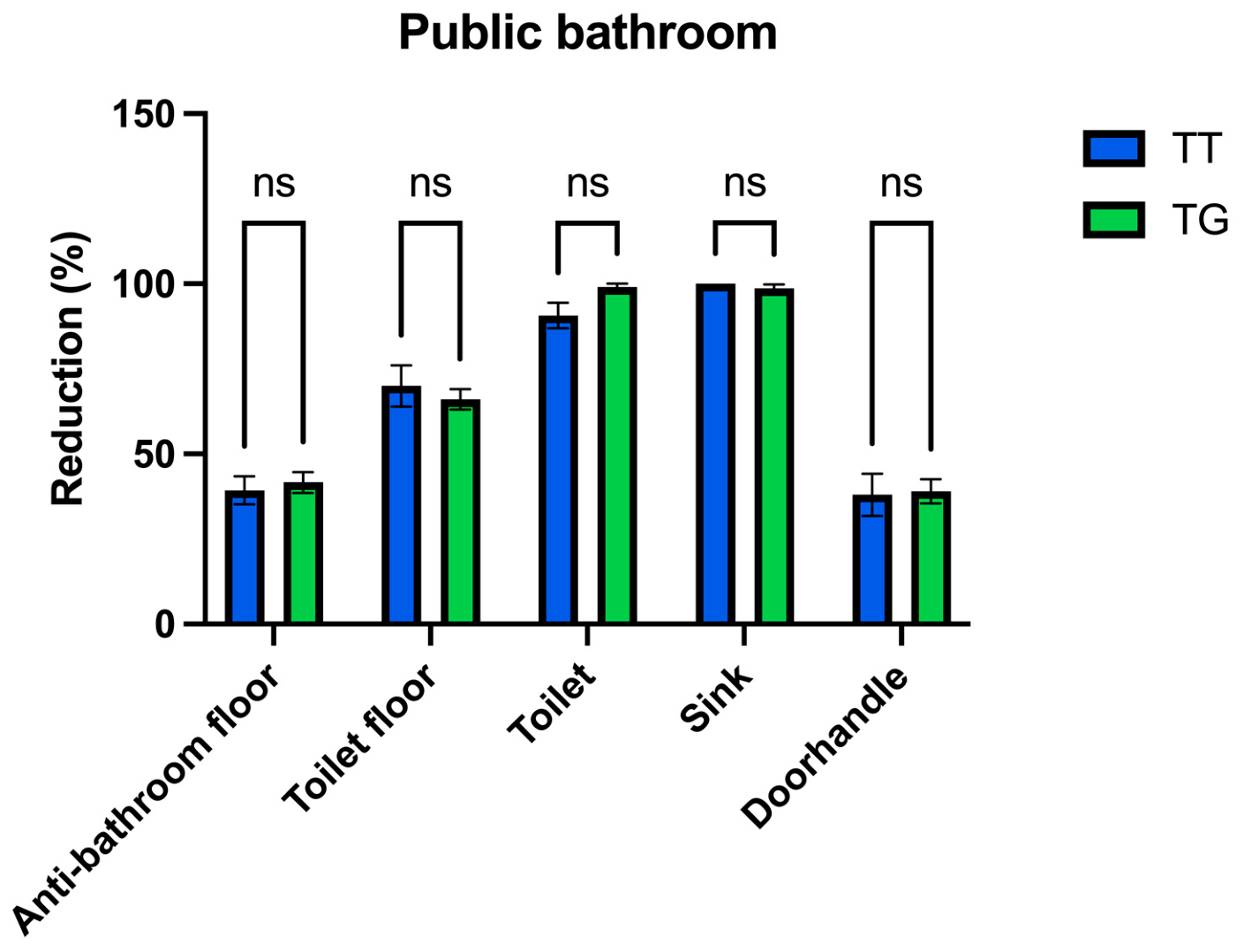
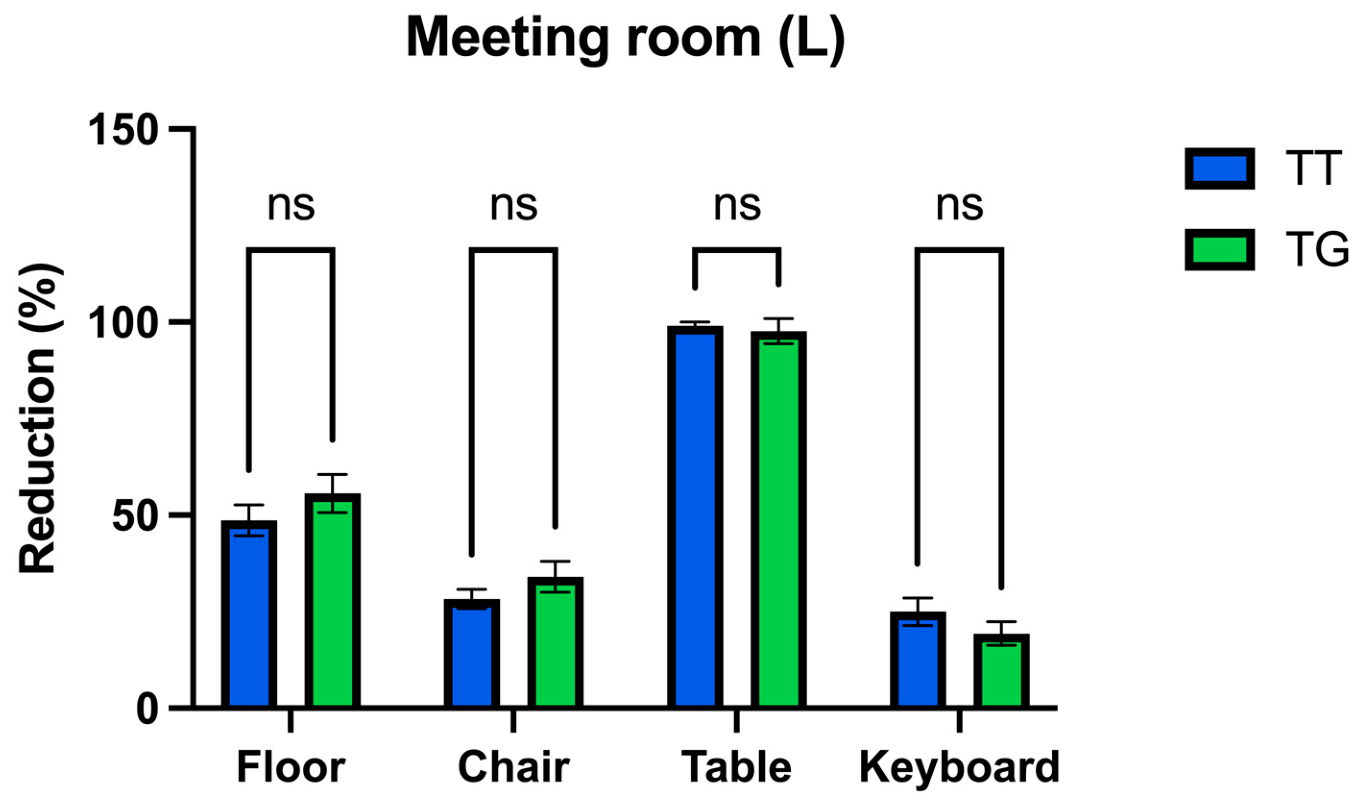
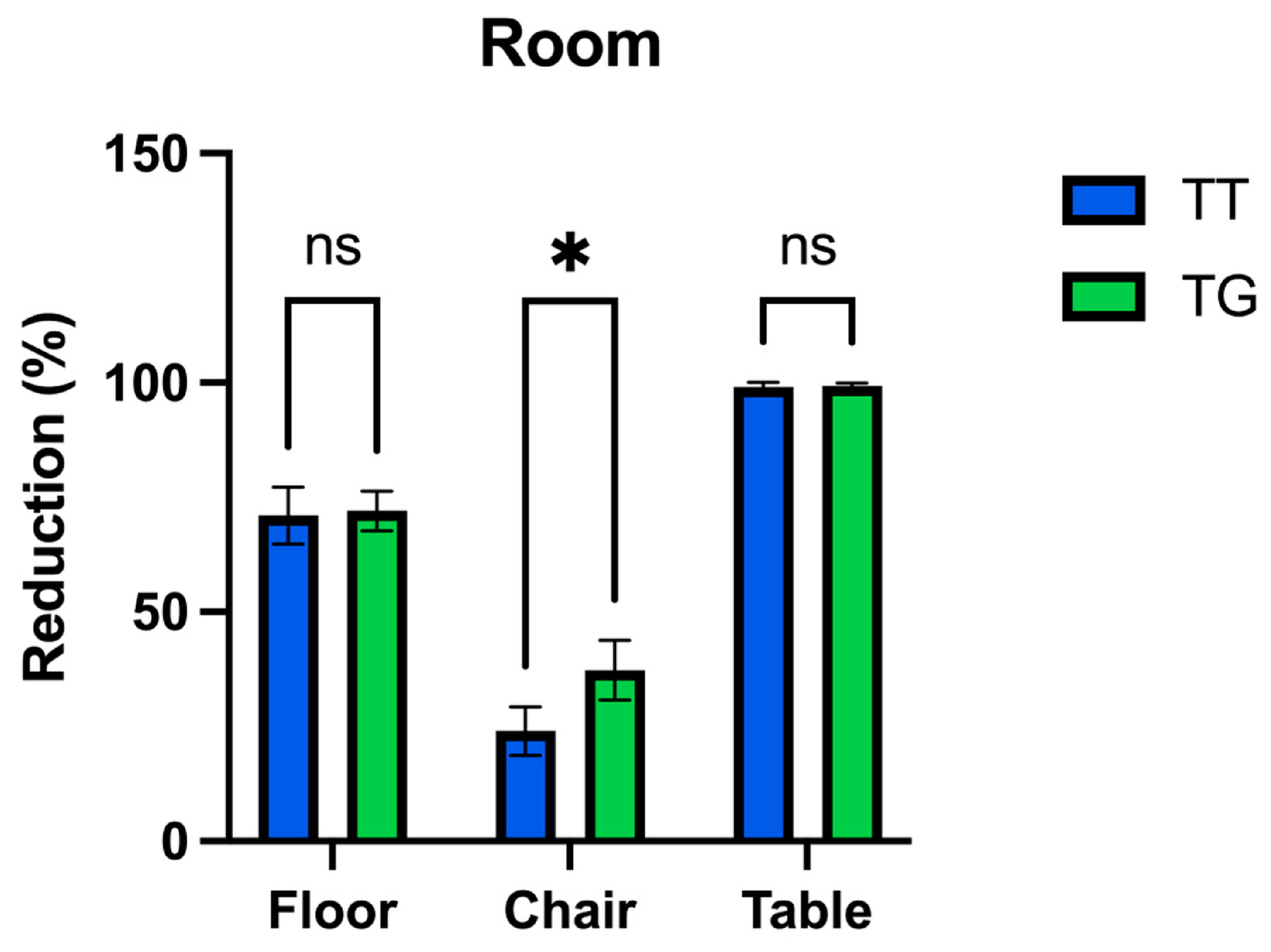
  • While no overall statistically significant differences were observed between protocols (p > 0.05), selected high-contact surfaces demonstrated significantly greater microbial reductions under the green protocol (p < 0.01–0.001).
These findings are particularly relevant in high-contact areas (e.g., sanitary fixtures, bar counters, meeting tables), where reductions remained robust despite the lower chemical mass and reduced washing temperatures applied in the green protocol.
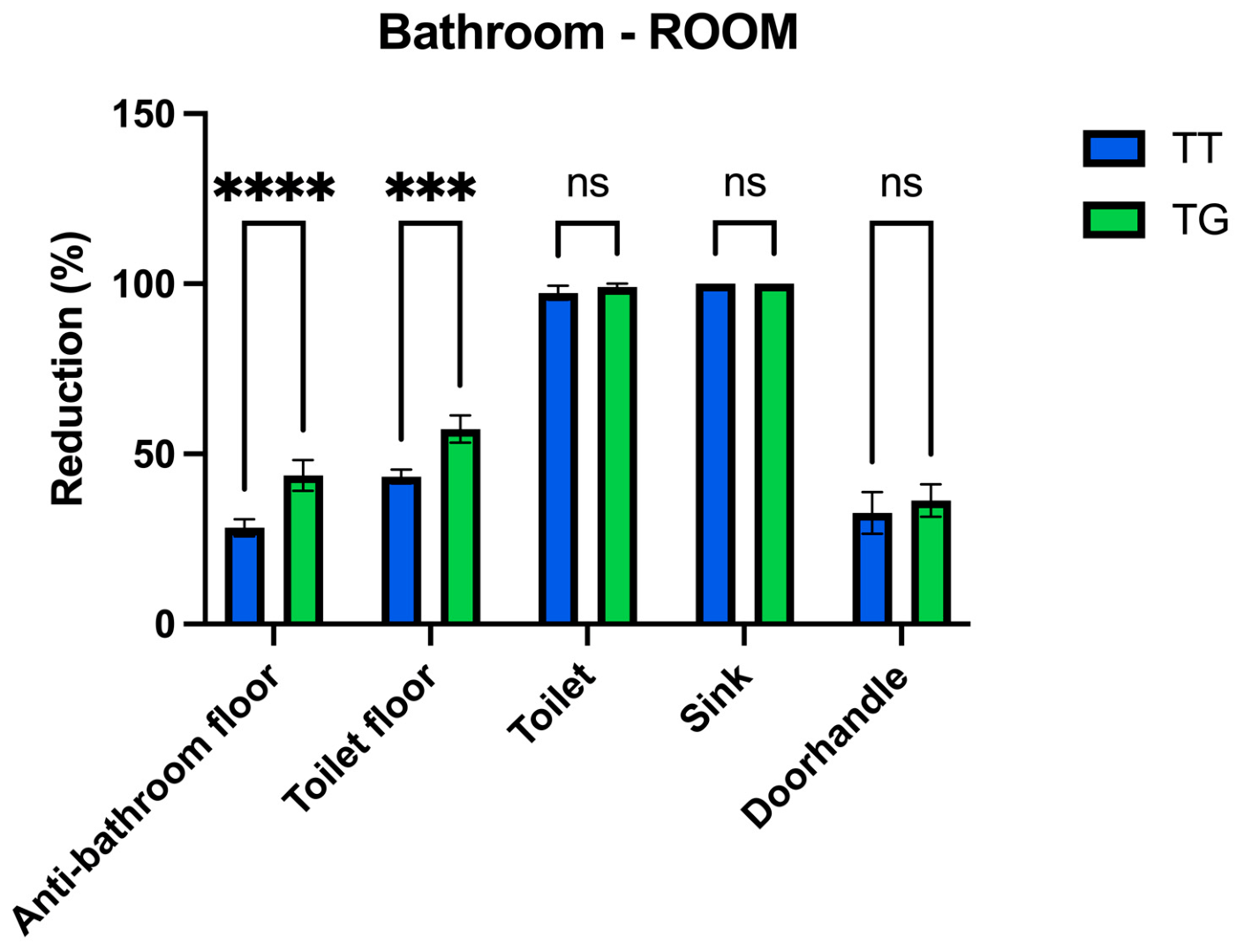
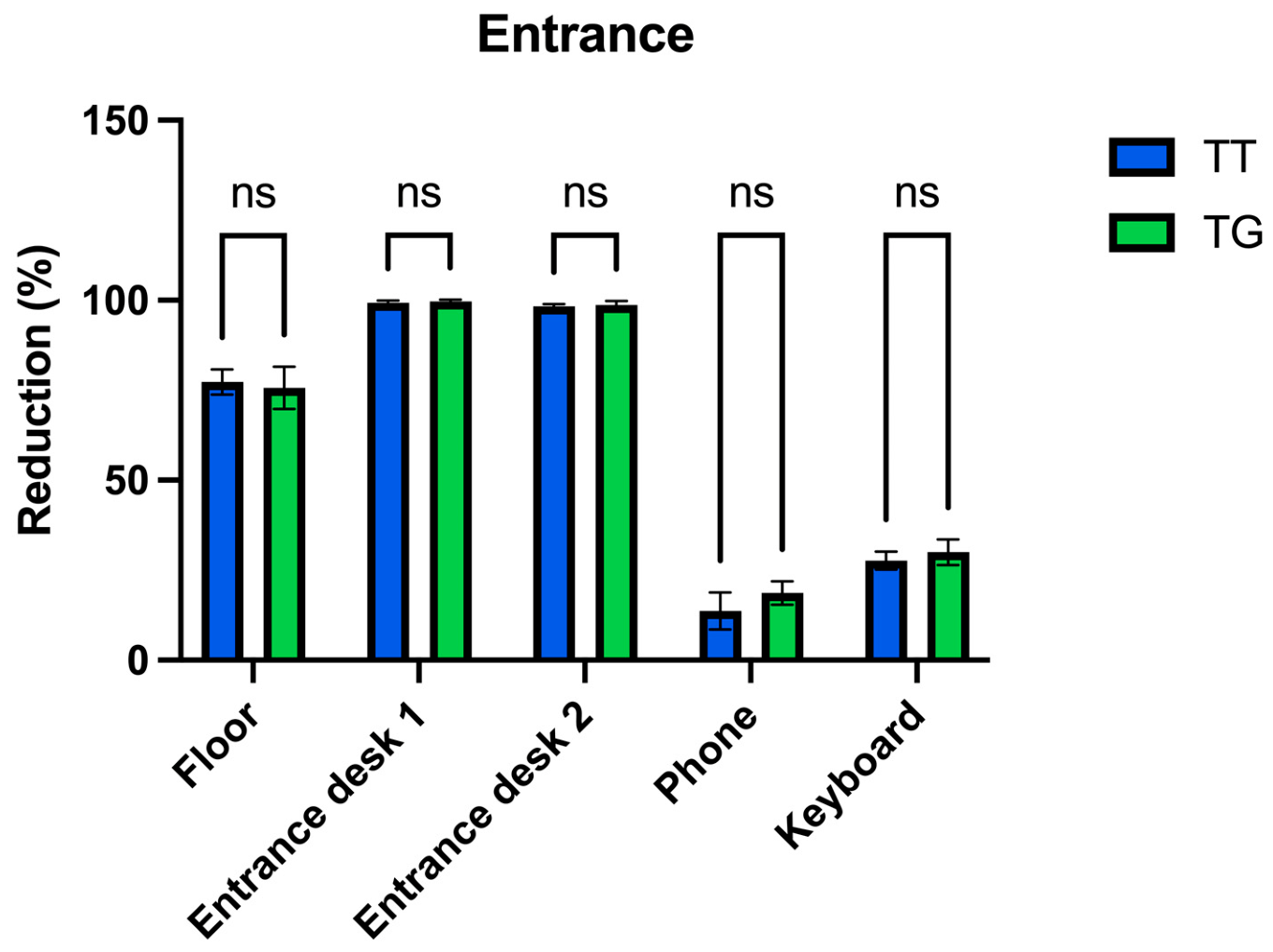
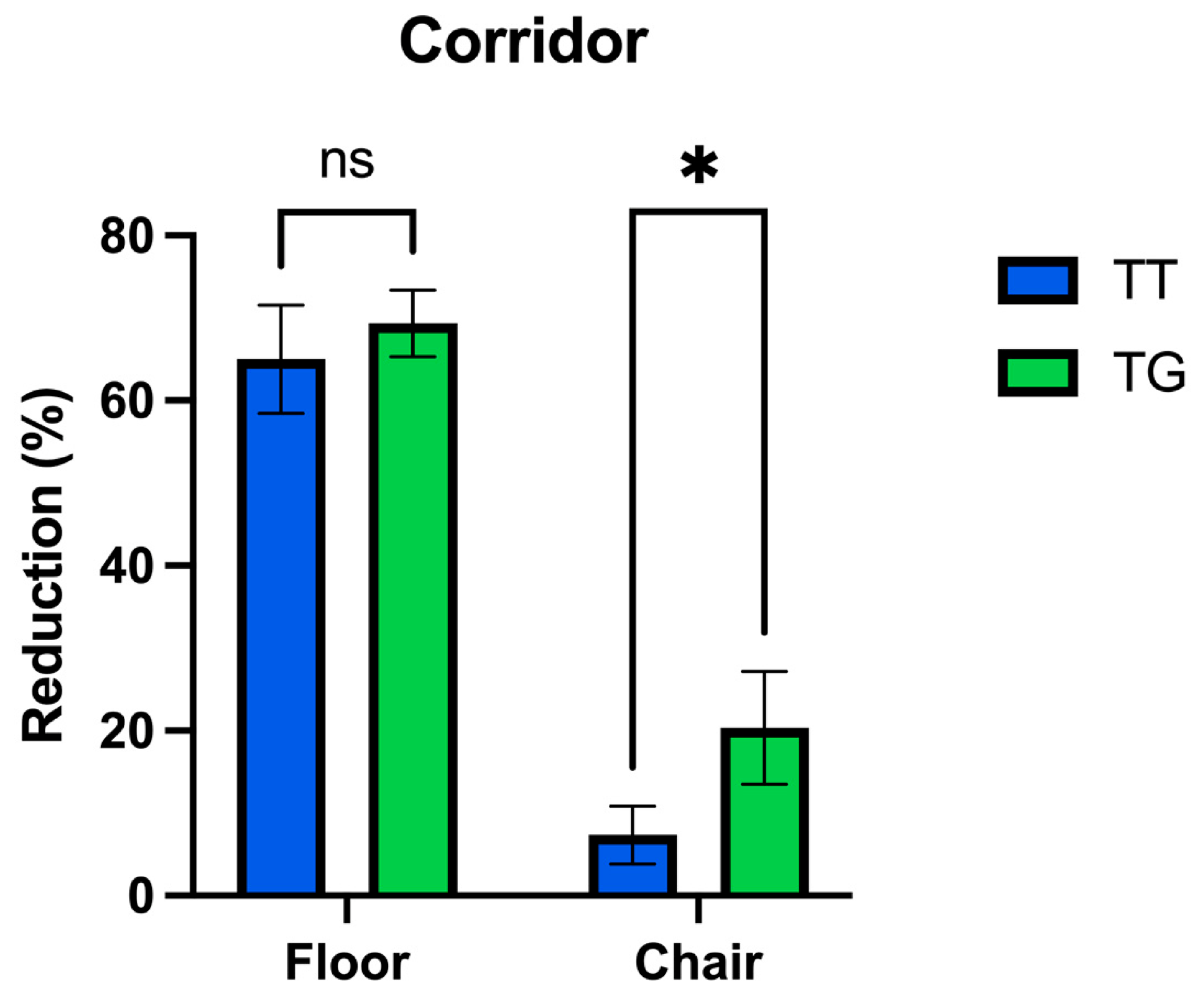
Figure 3 shows the results for private bathrooms, while Figure 4, Figure 5 and Figure 6 report data from rooms, entrance areas and refreshment zones; Figure 7 shows the results for public bathrooms and Figure 8 and Figure 9 report data from corridors and meeting rooms
The observed variability in microbial reductions across surfaces can be interpreted in light of operational and environmental factors. Greater reductions associated with the green protocol were primarily observed in high-contact surfaces and areas characterized by higher initial contamination levels, where the combined effect of mechanical removal and optimized cleaning procedures is more pronounced.
Although the green protocol employs lower chemical dosages and reduced laundering temperatures, its effectiveness can be explained by a combination of factors, including improved microfiber performance, controlled dosing systems ensuring optimal product use, and consistent application procedures. These elements enhance the physical removal of microorganisms and improve the efficiency of cleaning actions, partially compensating for the reduced chemical and thermal inputs.
These findings support the interpretation that microbial reduction in cleaning systems is a multifactorial process, in which mechanical action, material properties, and process standardization play a critical role alongside chemical composition and temperature. However, it should be noted that the present study was not designed to isolate the individual contribution of these variables, and further controlled investigations would be required to quantify their relative influence.

3.2.3. CAM Compliance Verification

The Italian Minimum Environmental Criteria (CAM; D.M. 29 January 2021) require that environmentally improved cleaning systems demonstrate hygienic performance equal to or better than that of conventional protocols, particularly when used as an award criterion in public procurement processes. This requirement implies that environmental optimization must not compromise microbiological safety.
In the present study, compliance with CAM requirements was assessed through a comparative analysis of surface contamination levels following the application of both protocols. As reported in Section 3.2.2 and illustrated in Figure 2, Figure 3, Figure 4, Figure 5, Figure 6, Figure 7 and Figure 8, both systems achieved microbial reductions consistent with accepted hygiene thresholds, with no post-treatment surface exceeding admissible contamination limits.
The concept of microbiological equivalence is supported by the absence of statistically significant differences between the two protocols across the majority of sampled surfaces (p > 0.05), indicating comparable hygienic performance. In addition, improved performance was observed in selected high-contact surfaces, where the green protocol achieved significantly greater reductions (p < 0.01–0.001).
Based on these results, the green protocol can be considered fully compliant with CAM award criteria, as it ensures hygienic efficacy equal to or exceeding that of the traditional system. These findings demonstrate that environmental improvements—such as reduced chemical use and lower energy input—can be achieved without compromising microbiological safety.

4. Discussion

The present study provides evidence that environmental optimization in professional cleaning services can be achieved without compromising microbiological safety. While this conclusion may appear intuitive within sustainability discourse, empirical validation is rarely conducted through an integrated environmental–microbiological framework. The combined application of cradle-to-grave Life Cycle Assessment and surface contamination monitoring offers a multidimensional perspective that extends beyond conventional single-indicator evaluations [21,22,23].

4.1. Reframing Cleaning Services as Climate-Relevant Activities

When interpreted within a building life cycle perspective, the results of this study provide quantitative evidence of the environmental relevance of maintenance activities during the operational phase. As components of Module B2 (Maintenance) and partially B6 (Operational energy use), cleaning services contribute to the overall environmental footprint of buildings and should therefore be systematically included in building LCA models. The magnitude of the observed emission reductions indicates that optimization of routine operational practices can generate measurable improvements in building-level environmental performance. Cleaning services are typically perceived as operational necessities with limited strategic relevance to decarbonization. However, the 47.7% reduction in GWP observed in this study challenges this assumption. When extrapolated over multi-year public contracts and across large building portfolios, the cumulative emission mitigation potential becomes substantial.
Unlike structural retrofitting or energy infrastructure interventions, cleaning protocol optimization operates at the procedural and procurement level. This means that climate benefits can be achieved through:
  • formulation selection,
  • dosage control,
  • textile durability enhancement,
  • and energy-efficient equipment operation,
Without altering the built environment itself. From a systems perspective, this positions cleaning services within Scope 3 emissions management, an area increasingly emphasized in ESG reporting and public procurement policy.
Cleaning services are often treated as operational necessities with limited strategic relevance in decarbonization pathways. However, previous studies have shown that these activities contribute significantly to resource consumption and greenhouse gas emissions within building operations, particularly when evaluated over extended time horizons and across large facility portfolios [24,25,26]. Similar findings have been reported in both healthcare and civil environments, where chemical production, laundering processes, and logistics have been identified as key environmental hotspots [11,12,13].
These results support the interpretation that cleaning services, although frequently overlooked, represent a scalable and actionable leverage point for reducing operational environmental impacts.
The findings, therefore, contribute to a broader reframing of facility management: operational services are not merely maintenance activities but modifiable environmental vectors.

4.2. The Central Role of Chemical Flow Reduction

The reduction of over 90% in chemical mass flow under the green system was not achieved solely through substitution, but through a structural redesign of usage patterns. This redesign includes the use of concentrated products diluted directly on site, the implementation of automated dosing systems, and the adoption of textile impregnation technologies that ensure consistent and optimized distribution of cleaning solutions. These measures significantly reduce overuse associated with manual dosing and improve process standardization.
The importance of this approach is supported by the LCA results presented in Section 3.1.3, where chemical consumption decreased by 92.2%, corresponding to a reduction of 474.8 kg CO2e/year (−82.6% of chemical-related impacts). This represents the largest single contribution to the overall reduction in Global Warming Potential. These data indicate that reducing the total mass of chemicals used has a substantially greater effect on environmental performance than marginal differences in product formulation alone.
This finding suggests that optimization of consumption patterns, rather than substitution alone, represents a primary leverage point for improving the environmental sustainability of cleaning services.
This reinforces a fundamental LCA principle: environmental gains are most significant when material throughput is minimized rather than merely modified [27,28].

4.3. Energy Reduction Without Hygienic Compromise

Lower laundering temperature (40 °C vs. 60 °C) was a decisive parameter in reducing electricity consumption. Conventionally, higher washing temperatures are associated with enhanced sanitization. However, the microbiological results indicate that hygienic efficacy was preserved.
The results presented in Section 3.2.2 show that the green protocol achieved microbial reductions comparable to, and in some cases greater than, those obtained with the traditional system, despite the use of lower chemical dosages and reduced laundering temperatures. This evidence suggests that microbial removal cannot be attributed solely to thermal input. Rather, it is likely influenced by a combination of factors, including mechanical action, microfiber properties, detergent formulation, and process standardization. While the present study does not isolate the individual contribution of these variables, their combined effect is consistent with the observed microbiological outcomes.
The results of this study are consistent with previous investigations reporting that reductions in chemical consumption and optimization of operational parameters represent the primary drivers of environmental improvement in cleaning systems [29]. In particular, the magnitude of chemical reduction observed in this study (−92.2%) is in line with or exceeds values reported in similar analyses, confirming the central role of dosage control and process optimization.
At the same time, the present findings extend existing literature by demonstrating that such environmental improvements can be achieved without compromising microbiological performance, an aspect that has rarely been validated through experimental data under real operating conditions.
The study demonstrates that thermal intensity can be reduced when these other variables are optimized. From an environmental standpoint, this is significant because electricity generation remains a primary contributor to GWP in many professional cleaning systems.
The implication extends beyond cleaning: it supports a general sustainability principle whereby energy-intensive safeguards may be reconsidered if equivalent performance can be achieved through integrated system design [30].

4.4. Durability as a Sustainability Lever

The marked reduction in textile-related emissions reflects an often-overlooked dimension of environmental strategy: durability.
In service-based systems, consumable materials represent recurring environmental flows. Extending textile lifespan decreases:
  • manufacturing emissions,
  • waste generation, transport and treatment,
  • and replacement frequency.
This aligns with circular economy logic, which prioritizes longevity over disposability. In this context, microfiber resilience becomes an environmental attribute as relevant as chemical formulation.
The shift observed in impact structure, where durable equipment becomes proportionally dominant in the green protocol, illustrates a desirable transition from recurrent consumable impacts toward longer-lived capital goods. While durable goods still carry embodied emissions, their extended service life distributes impact over longer operational periods, improving overall efficiency per functional unit.

4.5. Environmental Gains and Microbiological Safety: Dispelling a False Dichotomy

A persistent concern in sustainable cleaning discourse is the perceived trade-off between environmental responsibility and hygienic assurance. Particularly in high-occupancy environments, stakeholders may fear that reducing chemicals or lowering washing temperatures could weaken microbial control [31].
The microbiological data from this study do not support this concern. Both protocols complied with hygiene benchmarks, and the green system frequently demonstrated equal or improved reductions in total mesophilic counts [32,33].
This finding is conceptually important. It suggests that hygiene outcomes are not linearly correlated with chemical intensity. Instead, effective microbial control depends on:
  • correct protocol design
  • proper execution
  • targeted disinfection
  • and standardized monitoring
By integrating LCA with surface sampling, the study provides empirical reassurance that sustainability-oriented interventions can coexist with public health safeguards.

4.6. Implications for CAM and Green Public Procurement

The Italian CAM framework requires not only environmental improvement but also proof of equivalent or superior hygienic performance. This dual requirement creates a higher evidentiary threshold compared to voluntary eco-label adoption.
The present analysis demonstrates that integrated assessment methodologies can meet this threshold. From a policy standpoint, this reinforces the feasibility of embedding LCA-based evidence within public procurement processes.
Moreover, the magnitude of avoided emissions supports alignment with:
  • SDG 12 (Responsible Consumption and Production),
  • SDG 13 (Climate Action),
  • and EU Green Deal objectives.
Scaling such protocols across public facilities could meaningfully contribute to emission-reduction targets without requiring infrastructure modifications. From a carbon accounting perspective, the analyzed cleaning processes fall within Scope 3 emissions, as they are associated with purchased goods, consumables, and outsourced services within facility management. The demonstrated reductions in chemical use, energy consumption, and material flows therefore represent actionable levers for organizations seeking to reduce indirect emissions. Furthermore, these improvements are directly relevant to building sustainability certification systems, where operational practices contribute to credits related to sustainable procurement, resource efficiency, and indoor environmental quality. The integration of LCA-based evidence into cleaning service design can thus support compliance with certification requirements while enhancing transparency in environmental reporting.

4.7. Methodological Reflections

From a methodological perspective, the study illustrates the value of combining:
  • standardized ISO-based LCA,
  • PCR-aligned service modelling,
  • and empirical microbiological validation.
Service LCAs pose unique challenges compared to product LCAs due to variability in operational intensity, occupancy patterns, and intervention frequency. The use of a defined functional unit (1 m2 maintained clean for 1 year) enhances comparability and reproducibility.
However, the analysis was limited to GWP. While climate impact is highly relevant, additional categories such as eutrophication, ecotoxicity, and water scarcity could provide a more comprehensive environmental profile. Future research should expand impact coverage to capture potential trade-offs beyond carbon.

4.8. Broader Sustainability Perspective

At a broader level, the study contributes to the understanding that sustainability transitions often emerge from cumulative optimization of routine practices rather than disruptive technological innovation alone.
Cleaning services are ubiquitous across sectors-education, hospitality, healthcare, and public administration. Incremental improvements in chemical dosing, laundering temperature, packaging reduction, and textile durability may appear modest in isolation. Yet, when aggregated across national or regional scales, their environmental significance becomes considerable.
The results, therefore, underscore a strategic insight: operational sustainability is scalable sustainability.
The innovative contribution of this study lies in the integration of environmental and microbiological assessment within a single analytical framework. While previous studies have typically addressed these aspects separately, the present approach provides a combined evaluation that directly responds to regulatory requirements such as CAM, where environmental improvement must be demonstrated alongside maintained or improved hygienic efficacy. This integrated perspective contributes to bridging the gap between sustainability assessment and operational validation in cleaning services, providing a more robust basis for decision-making in sustainable facility management.

5. Conclusions

This study demonstrates that environmental optimization of professional cleaning services can produce substantial climate benefits while fully preserving hygienic performance. Through the integration of a cradle-to-grave Life Cycle Assessment and an extensive microbiological surface monitoring campaign, the comparative evaluation of a CAM-compliant green protocol (EVA SmartClean) and a conventional cleaning system provides robust, empirical evidence that sustainability and sanitation objectives are not mutually exclusive.
From an environmental perspective, the green protocol achieved a 47.7% reduction in Global Warming Potential per functional unit, corresponding to an annual avoidance of 908 kg CO2e for the investigated facility. The magnitude of this reduction is particularly significant when considered in the context of multi-year public procurement contracts and large facility portfolios. The findings confirm that operational services, often overlooked in decarbonization strategies, represent an actionable, scalable pathway for mitigating emissions within facility management.
The most relevant environmental drivers were the drastic reduction in chemical mass flow, improved dosage control, lower laundering temperature, and enhanced textile durability. Importantly, these reductions were not achieved through technological overhauls or structural modifications, but through systemic optimization of procurement choices and operational procedures. This highlights the strategic role of process redesign and resource efficiency in service-based sustainability transitions.
Equally important is the microbiological validation of these interventions. Surface contamination analyses confirmed that the green protocol consistently met hygiene reference thresholds and, in several contexts, demonstrated reductions in total mesophilic counts equal to or greater than those achieved with the traditional system. The data therefore dispel the perceived trade-off between reduced chemical intensity and microbial safety. Lower detergent quantities and decreased washing temperatures did not compromise hygienic outcomes, underscoring the multifactorial nature of sanitation efficacy and the importance of protocol design and execution.
The study also provides methodological value by demonstrating the feasibility and relevance of integrating ISO-based LCA modelling with empirical microbiological assessment for evaluating cleaning services. This dual approach directly addresses the evidentiary requirements embedded in the Italian CAM framework and offers a replicable model for Green Public Procurement processes. The results support alignment with Sustainable Development Goals 12 and 13, reinforcing the role of responsible consumption practices and climate action within public service delivery.
Some limitations should be acknowledged. The analysis focused on a single case study and primarily on the climate impact category (GWP100). Although carbon footprint is highly relevant for policy alignment and comparability, future investigations should expand to additional environmental impact categories and explore multi-site applications to strengthen obtained results and consolidate and generalise these conclusions. Long-term durability assessments and cost–benefit analyses would further strengthen the evidence base for large-scale adoption.
From a practical perspective, the findings of this study support the adoption of cleaning protocols based on optimized chemical dosing, reduced laundering temperatures, and extended textile lifecycles. Facility managers and procurement stakeholders may leverage these results to implement CAM-compliant solutions that simultaneously reduce environmental impacts and maintain high hygienic standards. The integration of LCA-based evidence into procurement criteria can further enhance transparency and support informed decision-making in sustainable facility management.
Overall, the findings confirm that sustainability in professional cleaning is not dependent on disruptive innovation but can emerge from cumulative, evidence-based optimization of routine practices. When systematically implemented, such operational improvements have the potential to generate meaningful environmental benefits at scale without compromising public health safeguards. In this sense, professional cleaning services should be recognized not merely as maintenance functions, but as modifiable components of sustainable facility management systems.

Author Contributions

Conceptualization, P.M., L.V. and R.F.; methodology, R.F. and P.M.; formal analysis, R.F. and M.B.; investigation, R.F. and P.M.; data curation, R.F.; writing—original draft preparation, R.F. and P.M.; visualization, R.F. and P.M.; validation, R.F., E.S. and N.L.; investigation support, E.S., N.L., M.B., M.F., C.N. and B.B.; writing—review and editing, P.M., L.V. and all co-authors; resources, P.M. and L.V.; supervision, P.M. and L.V.; project administration, P.M. and L.V.; funding acquisition, P.M. and L.V. All authors have read and agreed to the published version of the manuscript.

Funding

This research was funded by Euro&Promos FM S.p.A.—Engineering Department—Via Antonio Zanussi 11/13 33100 Udine.

Institutional Review Board Statement

Not applicable.

Informed Consent Statement

Not applicable.

Data Availability Statement

The original contributions presented in this study are included in the article. Further inquiries can be directed to the corresponding author.

Acknowledgments

We would like to thank all the hygiene operators at the ICTP in Trieste for their valuable support during the data collection phase, particularly for their assistance in monitoring product consumption, water use, and energy consumption. We also gratefully acknowledge the contribution of the master’s thesis students who assisted in the preparation, processing, and enumeration of microbiological samples.

Conflicts of Interest

Author Beatrice Bandera and Luciano Vogli were employed by the company Punto 3 Srl. The remaining authors declare that the research was conducted in the absence of any commercial or financial relationships that could be construed as a potential conflict of interest. The funders had no role in the design of the study; in the collection, analyses, or interpretation of data; in the writing of the manuscript; or in the decision to publish the results.

Abbreviations

The following abbreviations are used in this manuscript:
AGHAdriatico Guest House
ANOVAAnalysis of Variance
CAMMinimum Environmental Criteria (Criteri Ambientali Minimi)
CFUColony-Forming Units
CO2eCarbon Dioxide Equivalent
ESGEnvironmental, Social and Governance
GPPGreen Public Procurement
GWPGlobal Warming Potential
GWP100Global Warming Potential over 100 years
ICTPInternational Centre for Theoretical Physics
IPCCIntergovernmental Panel on Climate Change
ISOInternational Organization for Standardization
LCALife Cycle Assessment
PCRProduct Category Rules
SDGsSustainable Development Goals
TSATryptic Soy Agar
TVCTotal Viable Count

References

  1. Market Data Forecast. Europe Cleaning Services Market Report—Europe Cleaning Services Market Size, Share, Trends, COVID-19 Impact & Growth Forecast Report, Segmented by Type, End-User, and by Country (UK, France, Spain, Germany, Italy, Russia, Sweden, Denmark, Switzerland, Netherlands, Turkey, Czech Republic & Rest of Europe), Industry Analysis from 2025 to 2033; 2025. Available online: https://www.marketdataforecast.com/market-reports/europe-cleaning-services-market (accessed on 10 March 2026).
  2. Storr, J.; Kilpatrick, C.; Lee, K. Time for a renewed focus on the role of cleaners in achieving safe health care in low- and middle-income countries. Antimicrob. Resist. Infect. Control 2021, 10, 59. [Google Scholar] [CrossRef]
  3. OECD. Industrial Use of Industrial Cleaners; OECD: Paris, France, 2015. [Google Scholar] [CrossRef]
  4. Dong, Y.; Ng, S.T.; Liu, P. A comprehensive analysis towards benchmarking of life cycle assessment of buildings based on systematic review. Build. Environ. 2021, 204, 108162. [Google Scholar] [CrossRef]
  5. Francart, N.; Widström, T.; Malmqvist, T. Influence of methodological choices on maintenance and replacement in building LCA. Int. J. Life Cycle Assess. 2021, 26, 2109–2126. [Google Scholar] [CrossRef]
  6. John, J.; Collins, M.; O’Flynn, K.; Briggs, T.; Gray, W.; McGrath, J. Carbon footprint of hospital laundry: A life-cycle assessment. BMJ Open 2024, 14, e080838. [Google Scholar] [CrossRef]
  7. Crepaldi, G. I criteri ambientali minimi nel nuovo Codice dei contratti pubblici e nel Piano d’azione nazionale del Green public procurement. Responsab. Civ. Previd. 2024, 6, 1750–1764. [Google Scholar]
  8. ISO 14044:2006; Environmental Management—Life Cycle Assessment—Requirements and Guidelines. ISO: Geneva, Switzerland, 2006. Available online: https://www.iso.org/standard/38498.html (accessed on 10 August 2022).
  9. ISO 14040:2006; Environmental Management—Life Cycle Assessment—Principles and Framework. ISO: Geneva, Switzerland, 2006. Available online: https://www.iso.org/standard/37456.html (accessed on 10 August 2022).
  10. EPD International AB. Product Category Rules (PCR): Professional Cleaning Services for Buildings; PCR 2011:03, Version 3.0.2; The International EPD System: Stockholm, Sweden, 2025; Available online: https://www.environdec.com/pcr-library/pcr2011-03v3 (accessed on 10 March 2026).
  11. Fontana, R.; Buratto, M.; Marzola, M.; Trioschi, G.; Bandera, B.; Buffone, C.; Vogli, L.; Marconi, P. An Evaluation of Hospital Cleaning Regimes—Microbiological Evaluation and LCA Analysis after Traditional and Sustainable/Green Procedures. Sustainability 2022, 14, 11465. [Google Scholar] [CrossRef]
  12. Fontana, R.; Buratto, M.; Caproni, A.; Nordi, C.; Pappadà, M.; Bandera, B.; Vogli, L.; Buffone, C.; Marconi, P. Evaluating Cleaning Services in Civil Environments: Microbiological and Life Cycle Analysis Comparing Conventional and Sustainable Methods. Sustainability 2024, 16, 487. [Google Scholar] [CrossRef]
  13. Fontana, R.; Marzola, M.; Buratto, M.; Trioschi, G.; Caproni, A.; Nordi, C.; Buffone, C.; Bandera, B.; Vogli, L.; Marconi, P. Analysis of Civil Environments Cleaning Services—Microbiological and LCA Analysis after Traditional and Sustainable Procedures. Sustainability 2022, 15, 696. [Google Scholar] [CrossRef]
  14. Hauschild, M.Z.; Rosenbaum, R.K.; Olsen, S.I. (Eds.) Life Cycle Assessment; Springer International Publishing: Cham, Switzerland, 2018. [Google Scholar] [CrossRef]
  15. ISO 14067:2018; Greenhouse Gases—Carbon Footprint of Products—Requirements and Guidelines for Quantification. ISO: Geneva, Switzerland, 2018. Available online: https://www.iso.org/standard/71206.html (accessed on 10 August 2022).
  16. AR6 Synthesis Report: Climate Change 2023—IPCC. Available online: https://www.ipcc.ch/report/sixth-assessment-report-cycle/ (accessed on 17 April 2025).
  17. Elsergany, M.; Moussa, M.; Ahsan, A.; Khalfan, A.; Eissa, A. Exploratory Study of Bacterial Contamination of Different Surfaces in Four Shopping Malls in Sharjah, UAE. J. Environ. Occup. Sci. 2015, 4, 101. [Google Scholar] [CrossRef]
  18. Fijan, S.; Šostar-Turk, S.; Cencič, A. Implementing hygiene monitoring systems in hospital laundries in order to reduce microbial contamination of hospital textiles. J. Hosp. Infect. 2005, 61, 30–38. [Google Scholar] [CrossRef]
  19. Doll, M.; Stevens, M.; Bearman, G. Environmental cleaning and disinfection of patient areas. Int. J. Infect. Dis. 2018, 67, 52–57. [Google Scholar] [CrossRef]
  20. de Lapuente Díaz de Otazu, R.L.; Akizu-Gardoki, O.; de Ulibarri, B.; Iturrondobeitia, M.; Minguez, R.; Lizundia, E. Ecodesign coupled with Life Cycle Assessment to reduce the environmental impacts of an industrial enzymatic cleaner. Sustain. Prod. Consum. 2022, 29, 718–729. [Google Scholar] [CrossRef]
  21. Tascione, V.; Simboli, A.; Taddeo, R.; Del Grosso, M.; Raggi, A. A comparative analysis of recent life cycle assessment guidelines and frameworks: Methodological evidence from the packaging industry. Environ. Impact Assess. Rev. 2024, 108, 107590. [Google Scholar] [CrossRef]
  22. Paulillo, A.; Kim, A.; Mutel, C.; Striolo, A.; Bauer, C.; Lettieri, P. Influential parameters for estimating the environmental impacts of geothermal power: A global sensitivity analysis study. Clean. Environ. Syst. 2021, 3, 100054. [Google Scholar] [CrossRef]
  23. Sonnemann, G.; Gemechu, E.D.; Remmen, A.; Frydendal, J.; Jensen, A.A. Life Cycle Management: Implementing Sustainability in Business Practice. In Life Cycle Management, LCA Compendium-The Complete World of Life Cycle Assessment; Sonnemann, G., Margni, M., Eds.; Springer: Dordrecht, The Netherlands, 2015; pp. 7–21. [Google Scholar] [CrossRef]
  24. IPCC Sixth Assessment Report—Industry. In Climate Change 2022—Mitigation of Climate Change; Cambridge University Press: Cambridge, UK, 2023; pp. 1161–1244. [CrossRef]
  25. Al-Obaidi, K.M.; Omrany, H. Carbon technologies and decarbonisation strategies in buildings: A scoping review and conceptual framework. Hum. Settl. Sustain. 2026, 2, 14–32. [Google Scholar] [CrossRef]
  26. Mohamed, A.-M.O.; Mohamed, D.; Fayad, A.; Al Nahyan, M.T. Environmental Management and Decarbonization Nexus: A Pathway to the Energy Sector’s Sustainable Futures. World 2025, 6, 13. [Google Scholar] [CrossRef]
  27. Everard, M. Assessment of the sustainable use of chemicals on a level playing field. Integr. Environ. Assess. Manag. 2023, 19, 1131–1146. [Google Scholar] [CrossRef]
  28. Luthin, A.; Traverso, M.; Crawford, R.H. Circular life cycle sustainability assessment: An integrated framework. J. Ind. Ecol. 2024, 28, 41–58. [Google Scholar] [CrossRef]
  29. Fontana, R.; Buratto, M.; Caproni, A.; Nordi, C.; Pappadà, M.; Facchini, M.; Buffone, C.; Bandera, B.; Vogli, L.; Marconi, P. Eco-Friendly vs. Traditional Cleaning in Healthcare Settings: Microbial Safety and Environmental Footprint. Hygiene 2025, 5, 37. [Google Scholar] [CrossRef]
  30. Nikolić, D.; Jovanović, S.; Skerlić, J.; Šušteršič, J.; Radulović, J. Methodology of Life Cycle Sustainability Assessment. Proc. Eng. Sci. 2019, 1, 793–800. [Google Scholar] [CrossRef]
  31. Cave, R.; Cole, J.; Mkrtchyan, H.V. Surveillance and prevalence of antimicrobial resistant bacteria from public settings within urban built environments: Challenges and opportunities for hygiene and infection control. Environ. Int. 2021, 157, 106836. [Google Scholar] [CrossRef] [PubMed]
  32. Klassert, T.E.; Zubiria-Barrera, C.; Neubert, R.; Stock, M.; Schneegans, A.; López, M.; Driesch, D.; Zakonsky, G.; Gastmeier, P.; Slevogt, H.; et al. Comparative analysis of surface sanitization protocols on the bacterial community structures in the hospital environment. Clin. Microbiol. Infect. 2022, 28, 1105–1112. [Google Scholar] [CrossRef]
  33. Alruwaili, R.F.; Alsadaan, N.; Alruwaili, A.N.; Alrumayh, A.G. Unveiling the Symbiosis of Environmental Sustainability and Infection Control in Health Care Settings: A Systematic Review. Sustainability 2023, 15, 15728. [Google Scholar] [CrossRef]
Figure 1. Ground floor plan of the Adriatico Guest House building in Grignano, Trieste (TS).
Sustainability 18 04330 g001
Figure 2. Schematic representation of the LCA model framework.
Sustainability 18 04330 g002
Figure 3. Bathroom (private) microbial assessment: total mesophilic aerobic counts expressed as percentage reduction, measured on selected high-contact surfaces following application of the traditional protocol (TT—Blue) and the green protocol (TG—Green). Data are expressed as mean values with standard deviation bars. (ns), not significant, *** p < 0.0005, and **** p < 0.0001.
Sustainability 18 04330 g003
Figure 4. Room microbial assessment: total mesophilic aerobic counts expressed as percentage reduction, measured on selected high-contact surfaces following application of the traditional protocol (TT—Blue) and the green protocol (TG—Green). Data are expressed as mean values with standard deviation bars. (ns) not significant, * p < 0.05.
Sustainability 18 04330 g004
Figure 5. Entrance microbial assessment: total mesophilic aerobic counts expressed as percentage reduction, measured on selected high-contact surfaces following application of the traditional protocol (TT—Blue) and the green protocol (TG—Green). Data are expressed as mean values with standard deviation bars. (ns) not significant.
Sustainability 18 04330 g005
Figure 6. Refreshment area microbial assessment: total mesophilic aerobic counts expressed as percentage reduction, measured on selected high-contact surfaces following application of the traditional protocol (TT—Blue) and the green protocol (TG—Green). Data are expressed as mean values with standard deviation bars. (ns) not significant, **** p < 0.0001.
Sustainability 18 04330 g006
Figure 7. Bathroom (public) microbial assessment: total mesophilic aerobic counts expressed as percentage reduction, measured on selected high-contact surfaces following application of the traditional protocol (TT—Blue) and the green protocol (TG—Green). Data are expressed as mean values with standard deviation bars. (ns) not significant.
Sustainability 18 04330 g007
Figure 8. Corridor microbial assessment: total mesophilic aerobic counts expressed as percentage reduction, measured on selected high-contact surfaces following application of the traditional protocol (TT—Blue) and the green protocol (TG—Green). Data are expressed as mean values with standard deviation bars. (ns) not significant, * p < 0.05.
Sustainability 18 04330 g008
Figure 9. Meeting room microbial assessment: total mesophilic aerobic counts expressed as percentage reduction, measured on selected high-contact surfaces following application of the traditional protocol (TT—Blue) and the green protocol (TG—Green). Data are expressed as mean values with standard deviation bars. (ns) not significant.
Sustainability 18 04330 g009
Table 1. Service GWP changes for different scenarios.
SystemΔ% GWP
EVA SmartClean vs. Traditional
Δ GWP
EVA SmartClean vs. Traditional
M.U.
Reduction in GWP of service per square metre per year−47.7%−110g CO2e/m2 year
Reduction of GWP of service per site per year−908kg CO2e/site year
Reduction in GWP of service per yard for the duration of the contract (60 months)−4.540kg CO2e/site contract (5 years)
Table 2. GWP variations by macro-aspect of the analyzed protocols.
ASPECTΔ% GWP
EVA SmartClean vs. Traditional
Δ GWP
EVA SmartClean vs. Traditional
M.U.
CHEMICALS−82.6%−474.8kg CO2e/site year
ENERGY CONSUMPTION−49.5%−322.6kg CO2e/site year
TEXTILES−92.4%−73.7kg CO2e/site year
PROD. AND END OF LIFE MACHINERY AND TROLLEYS−4.3%−22.1kg CO2e/site year
WASTE WATER TREATMENT−18.0%−12.9kg CO2e/site year
WATER CONSUMPTION−17.0%−2.1kg CO2e/site year
Table 3. Results of the comparative environmental analysis for one year of service delivery on the entire construction site.
INDICATORU.M.EVA SmartClean ProtocolTraditional ProtocolABSOLUTE Δ
EVA SmartClean vs. Traditional
Δ%
EVA SmartClean vs. Traditional
CHEMICALS CONSUMPTION kg64.7832.5−767.8−92.2%
WATER CONSUMPTIONm363.576.5−13.0−17.0%
ENERGY CONSUMPTIONkWh745.01476.6−731.6−49.5%
PRODUCTION OF DIFFERENTIATED WASTEkg3.277.2−74.0−95.9%
PRODUCTION OF UNDIFFERENTIATED WASTEkg4.617.5−12.9−73.5%
WASTEWATER PRODUCTIONm363.176.7−13.7−17.8%
CAM CONFORMING PRODUCTS%100.0%91.7%-8.3%
CO2 EQUIVALENT EMISSIONSkg CO2e996.41904.4−908.1−47.7%
Disclaimer/Publisher’s Note: The statements, opinions and data contained in all publications are solely those of the individual author(s) and contributor(s) and not of MDPI and/or the editor(s). MDPI and/or the editor(s) disclaim responsibility for any injury to people or property resulting from any ideas, methods, instructions or products referred to in the content.