1. Introduction
Tourism represents a major driver of regional economic development, particularly in areas endowed with distinctive natural and cultural resources. Mexico ranks among the world’s leading tourism destinations, with the Yucatán Peninsula emerging as one of its most dynamic regions due to the international success of coastal destinations such as Cancún and the Riviera Maya. This development, however, has largely followed a mass tourism model centred on coastal “sun–sea–sand” activities, generating increasing environmental and socio-spatial pressures.
The concentration of tourism infrastructure along coastal zones has intensified pressure on fragile ecosystems while reinforcing disparities between coastal and inland areas. In the karst landscapes of the Yucatán Peninsula, characterized by highly permeable limestone geology, tourism development contributes to groundwater contamination, as pollutants can spread rapidly through interconnected aquifer systems [
1]. These conditions highlight the vulnerability of tourism systems dependent on sensitive environmental resources.
In response, both scholars and policymakers increasingly point to diversification as a key strategy. Reducing dependence on coastal mass tourism requires more spatially balanced development pathways. At the same time, tourism demand has shifted toward experience-oriented and nature-based travel, with visitors seeking closer engagement with landscapes and local cultures.
In this context, cenotes—natural sinkholes formed through limestone dissolution—represent one of the most distinctive features of the Yucatán Peninsula. As surface expressions of the Great Maya Aquifer, they function as critical freshwater reservoirs and remain directly connected through subterranean hydrological networks. This makes them particularly sensitive to anthropogenic disturbance [
2,
3].
Historically, in the absence of permanent surface rivers, cenotes were essential for human settlement. Cenotes also hold strong cultural significance. In Maya civilization, they served both as freshwater sources and as sacred ritual spaces [
4]. Today, they attract tourists engaging in swimming, diving, and other nature-based activities, while increasingly emerging as part of inland tourism development. Interest in such attractions has been reinforced by environmental pressures affecting coastal tourism, including beach erosion and increasing sargassum influx events [
5].
Despite their growing relevance, research on cenote-related tourism remains fragmented, with existing studies typically focusing on hydrogeology, biodiversity, or specific recreational uses rather than treating cenote-based tourism as a distinct phenomenon within regional tourism systems. As a result, there is no integrated framework linking tourism demand, environmental vulnerability, and regional development processes.
To address this gap, the study introduces the concept of cenotourism, defined as a form of nature-based and geoculturally embedded tourism centred on cenotes and their associated karst environments. The concept is further developed in
Section 3. Rather than describing entirely new practices, cenotourism brings together activities such as swimming, cave exploration, diving, and cultural interpretation within a single analytical framework. What distinguishes it is its direct connection to highly vulnerable groundwater systems.
From a regional perspective, cenotourism represents both an opportunity and a challenge. It may contribute to the potential redistribution of tourism flows, although this inference is based on demand-side indicators rather than observed changes in actual tourism flows. At the same time, increased visitation may generate environmental pressure and raise governance and community-related challenges.
This study examines these dynamics using a large-scale tourism survey conducted in Yucatán (approx. 2800 observations). Importantly, the analysis relies in part on intention-based measures, which do not necessarily translate into actual visitation behaviour and therefore should be interpreted with caution. By combining demand-side analysis with sustainability considerations, the paper evaluates both the development potential and the risks associated with cenotourism.
The main objective is to assess cenotourism as an emerging component of regional tourism systems and to examine its implications for sustainable development. The study addresses the following research questions:
RQ1: What tourist characteristics and motivations support the emergence of cenotourism in Yucatán?
RQ2: Does tourist expenditure indicate economic potential for inland tourism development linked to cenotes?
RQ3: What environmental risks are associated with increasing cenote visitation within karst aquifer systems?
RQ4: What social challenges may affect local communities participating in cenotourism development?
RQ5: Under what governance conditions can cenotourism function as a sustainable alternative to coastal mass tourism?
While RQ1 and RQ2 are addressed through empirical analysis of survey data, RQ3–RQ5 are explored conceptually based on existing literature and the proposed framework.
By introducing cenotourism as a new analytical framework, this study contributes to broader debates on tourism diversification in environmentally sensitive regions, emphasizing that sustainability outcomes depend on governance, management practices, and community participation rather than tourism form alone. The study contributes to sustainability research by linking tourism demand, environmental vulnerability, and governance within groundwater-dependent tourism systems.
2. Literature Review and Research Framework
2.1. Tourism Spatial Concentration and Regional Inequality
Tourism development is widely characterized by strong spatial concentration, with tourist flows and infrastructure disproportionately located in a limited number of destinations. This pattern has been extensively documented in tourism research, particularly in contexts dominated by mass tourism models and coastal resort development [
6,
7]. Concentration processes are often reinforced by accessibility, investment patterns, and the presence of flagship attractions, which together create highly uneven spatial distributions of tourism activity.
Such concentration generates multiple implications for regional development. Economically, it contributes to disparities between core tourism nodes and peripheral areas, where tourism potential often remains underutilized. Environmentally, it intensifies pressure on already saturated destinations, increasing risks related to ecosystem degradation, overcrowding, and infrastructure overuse. These dynamics are particularly evident in destinations where tourism development has historically followed enclave-based models.
In response, diversification has emerged as a key strategy in tourism policy and research. The redistribution of tourist flows toward less-developed areas is increasingly promoted as a mechanism for reducing spatial imbalances and mitigating overtourism pressures [
8]. Diversification strategies often focus on developing alternative attractions, supporting local tourism initiatives, and encouraging greater spatial mobility of tourists within destination systems.
Within this context, inland and nature-based attractions have gained particular importance as potential drivers of spatial redistribution. Their dispersed geographical distribution and experiential character make them suitable for extending tourism activity beyond traditional concentration zones. However, the effectiveness of such diversification processes depends on multiple factors, including accessibility, visitor motivations, infrastructure availability, and governance capacity. These considerations are especially relevant in regions characterized by environmentally sensitive resource systems, where the expansion of tourism into previously less-visited areas may simultaneously create new development opportunities and introduce additional environmental pressures.
2.2. Sustainable Tourism and Nature-Based Tourism Transformation
Contemporary sustainability research increasingly conceptualizes tourism destinations as coupled human–environment systems, in which environmental quality, visitor experience, governance capacity, and regional socio-economic development evolve simultaneously [
9,
10,
11,
12,
13]. Within this perspective, tourism development represents a dynamic interaction between ecological processes and human activity, explaining why tourism expansion may simultaneously generate economic benefits and environmental degradation.
Sustainability outcomes are therefore understood as dependent on interactions among tourism demand, spatial organization, environmental vulnerability, and governance arrangements. This systemic perspective is particularly relevant for destinations based on sensitive natural resources. Parallel to these developments, tourism demand has shifted toward experience-oriented and nature-based travel [
14,
15,
16,
17]. Participation in such tourism is shaped by visitor motivations and behavioural patterns, which influence both environmental impacts and economic outcomes. Importantly, nature-based tourism does not inherently produce sustainable outcomes; rather, sustainability depends on how tourism activities are organized and managed.
Fredman et al. [
18] emphasize that nature-based tourism should be understood as a multidimensional system involving accessibility, infrastructure, interpretation, and governance. This perspective is particularly relevant for cenote environments, where tourism experiences depend directly on visitor regulation, environmental education, and monitoring practices.
To clarify the conceptual contribution of this study, cenotourism is distinguished from related forms of tourism such as geotourism, karst tourism, nature-based tourism, and ecotourism. While these categories provide important reference points, they do not fully capture the specific hydrological and biocultural characteristics of tourism centred on cenotes.
First, unlike most forms of geotourism or karst tourism, cenotourism involves direct physical immersion in groundwater systems. Tourist activity does not occur adjacent to geological features, but within highly sensitive hydrological environments. This creates an immediate and material connection between human behaviour and ecosystem response, which is only partially addressed in existing conceptual frameworks.
Second, cenotourism is defined by a high degree of hydrological exposure. Cenotes are part of interconnected karst aquifer systems characterized by rapid water circulation and limited natural filtration. As a result, tourism activities may have direct and immediate impacts on groundwater quality, distinguishing cenotourism from other forms of nature-based tourism where human–environment interactions are typically more indirect.
Third, cenotourism is embedded in a distinct biocultural context. In the Yucatán Peninsula, cenotes have historically functioned not only as water sources but also as culturally significant sites within Maya cosmology. Contemporary tourism therefore operates within a layered system combining environmental, cultural, and economic dimensions. This integration of hydrological vulnerability and biocultural significance constitutes a defining feature of cenotourism.
Taken together, these characteristics support the analytical distinction of cenotourism as a specific category within tourism studies, rather than a simple relabelling of existing concepts. This distinction is particularly important in groundwater-dependent regions, where tourism development is directly linked to the functioning of subsurface hydrological systems.
2.3. Tourism Diversification, Spatial Redistribution and Environmental Vulnerability
Tourism diversification is widely promoted as a strategy for redistributing tourist flows away from saturated destinations and mitigating overtourism pressures [
6,
7,
8,
19]. Policy frameworks emphasize dispersal strategies, carrying capacity management, and monitoring systems as key mechanisms for sustainable tourism development. However, diversification does not eliminate environmental risks. Research shows that uncontrolled tourism growth may generate new forms of environmental pressure and social conflict, particularly when tourism expands into previously less-visited areas [
20]. Diversification strategies must therefore ensure that environmental impacts are not simply relocated.
Within the Yucatán Peninsula, cenotes function as inland tourism nodes that encourage tourist mobility beyond coastal resort zones, potentially contributing to the diversification of tourism activity and the emergence of more spatially distributed patterns, although no direct evidence of systemic redistribution is established. At the same time, their hydrogeological characteristics make them exceptionally vulnerable to anthropogenic disturbance. As components of highly permeable karst aquifer systems, cenotes exhibit rapid groundwater circulation and limited filtration capacity, increasing susceptibility to contamination [
21].
Empirical studies demonstrate that tourism development contributes to groundwater pollution through wastewater infiltration and land-use change [
1], while recent research identifies the presence of contaminants including emerging contaminants such as pharmaceuticals, personal care products and UV filters, which have been detected in groundwater systems [
1,
2,
3,
22,
23]. Because tourism activities in cenotes involve direct water contact, they create an immediate coupling between tourist behaviour and ecosystem response, reinforcing environmental vulnerability as a central dimension of cenotourism.
2.4. Governance, Community Participation and the Cenotourism Research Framework
Sustainable tourism development requires not only environmental protection but also equitable socio-economic outcomes. Community-based tourism literature emphasizes that tourism contributes to development only when local communities participate meaningfully in decision-making and benefit distribution processes [
24]. In cenote contexts, where natural sites often form part of indigenous and community-managed landscapes, tourism development may generate both livelihood opportunities and risks of cultural commodification.
Governance and participation therefore function as critical mechanisms shaping sustainability outcomes [
6,
9,
25,
26]. Effective governance requires institutional capacity to regulate tourist behaviour, coordinate stakeholders, and adapt policies in response to environmental change.
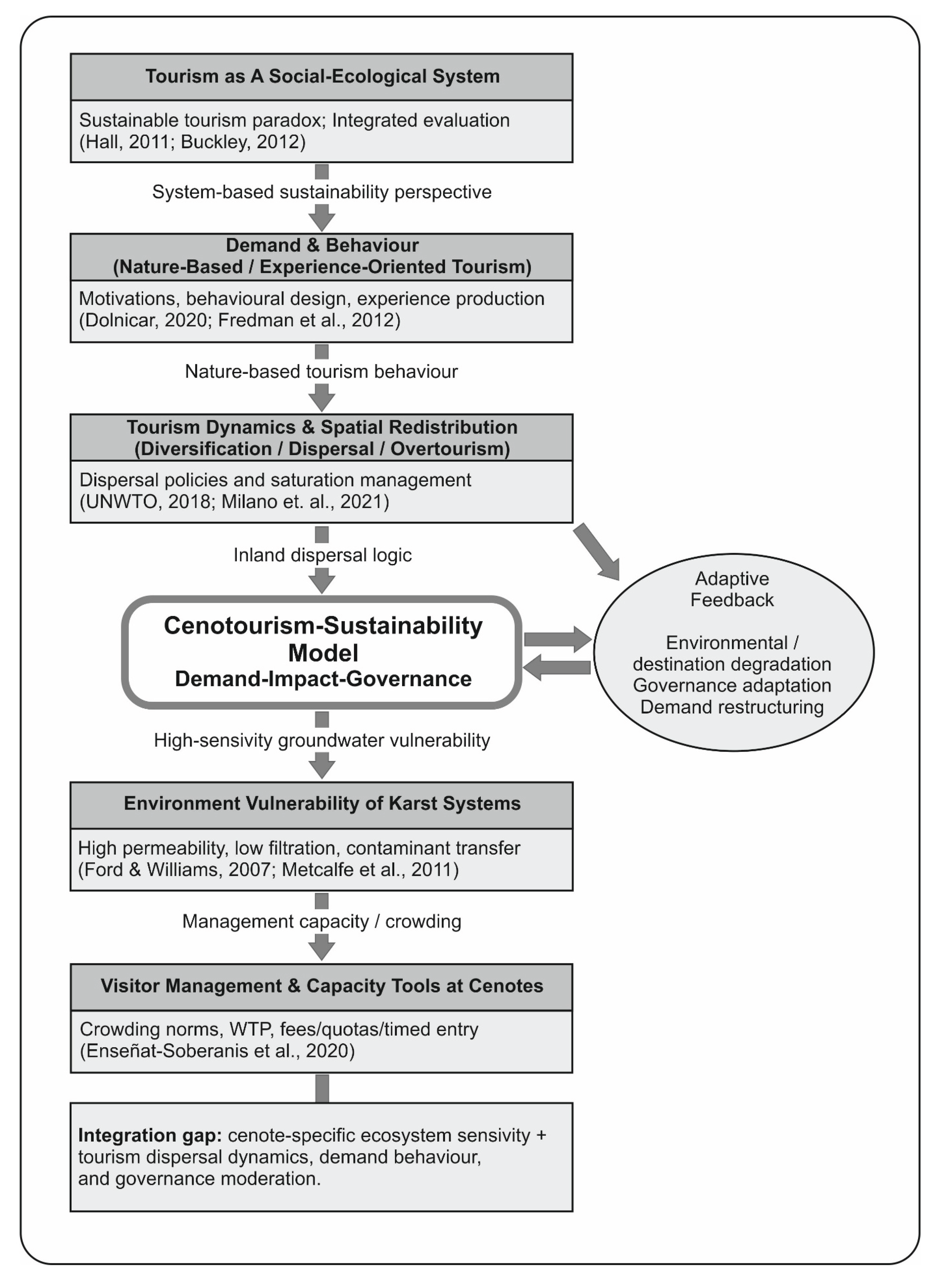
Figure 1 synthesizes these literature streams into an integrated framework linking tourist demand behaviour, spatial diversification processes, environmental vulnerability, and governance mechanisms. As shown in
Figure 1, these components can be understood as forming a sequential yet feedback-sensitive system in which demand dynamics may contribute to patterns of inland redistribution, potentially leading to intensified interaction with highly sensitive karst groundwater systems, while governance and adaptive feedback mechanisms shape subsequent tourism development trajectories.
Despite extensive research on sustainable and nature-based tourism, these dimensions are rarely analysed jointly in groundwater-dependent contexts. This integrated perspective provides the conceptual foundation for the cenotourism framework developed in the following section.
This fragmentation highlights a key research gap and motivates the conceptualization of cenotourism as an integrative framework connecting tourism demand, environmental impacts, governance processes, and regional development outcomes.
3. Cenotourism: Concept and Framework
3.1. Conceptualization of Cenotourism
The diversification of tourism has led to the emergence of increasingly specialized concepts reflecting particular environmental settings, tourist motivations, and experiential characteristics. Over recent decades, tourism research has introduced categories such as ecotourism, geotourism, adventure tourism, and nature-based tourism in order to better understand relationships between tourism activities and specific natural environments [
28,
29]. Concept formation in tourism studies therefore represents an established scientific process aimed at capturing evolving tourism phenomena rather than merely introducing terminological novelty.
Within this context, tourism activities associated with cenotes on the Yucatán Peninsula have expanded significantly; however, they remain conceptually dispersed across broader categories such as nature-based tourism, cave tourism, aquatic recreation, or diving tourism [
28,
29]. While analytically useful, these classifications fail to capture the integrated environmental, hydrological, cultural, and spatial characteristics that distinguish tourism centred specifically on cenote systems. Consequently, the absence of a unified conceptual framework limits systematic analysis of this rapidly expanding tourism phenomenon.
To address this gap, this study proposes the concept of cenotourism as a distinct analytical category describing tourism practices fundamentally organized around cenotes and their associated karst environments. The introduction of the term follows conceptual development approaches commonly applied in tourism scholarship, where emerging destination-specific practices require theoretical clarification prior to empirical assessment [
30,
31]. In this paper, cenotourism is defined as
a form of nature-based tourism centred on cenotes as primary attractions, involving direct immersion and recreational, ecological, and cultural interactions within interconnected karst groundwater systems characterized by high environmental sensitivity.
This definition points to four key characteristics that distinguish cenotourism from related tourism forms. First, cenotourism is inherently linked to karst hydrogeological systems. Unlike many nature-based tourism activities occurring in relatively resilient environments, cenotes represent direct access points to highly vulnerable groundwater aquifers characterized by rapid water exchange and limited filtration capacity [
21]. Environmental disturbances introduced at individual cenotes may therefore propagate across regional aquifer systems [
32], giving cenotourism a systemic environmental significance beyond conventional aquatic recreation.
Second, cenotourism integrates geological and geomorphological heritage, aligning partially with geotourism. Cenotes are visible expressions of long-term karst evolution, but cenotourism extends beyond geological interpretation by incorporating intensive recreational interaction with water environments, including swimming, snorkeling, cave exploration, and diving. It may therefore be understood as a hybrid form positioned at the intersection of geotourism and aquatic nature-based tourism.
Third, cenotourism possesses a strong biocultural dimension. Cenotes function not only as geomorphological formations but also as culturally embedded landscapes shaped by historical relationships between Maya communities and freshwater resources. Their ritual and symbolic significance situates cenotourism within broader discussions of cultural landscape tourism and heritage interpretation [
33].
Cenotes constitute not only hydrogeological features but also culturally embedded landscapes with long-standing symbolic and ritual significance in Maya cosmology produced through interactions between environment, cultural practices, and meanings e.g., [
4,
34,
35].
From a relational perspective, such landscapes are not merely physical settings but are continuously produced through interactions between environment, cultural practices, and meanings. In this sense, cenotourism involves not only physical interaction with fragile karst systems but also engagement with culturally meaningful spaces. For example, cenotes that historically functioned as sacred ritual sites are increasingly incorporated into tourism experiences as spaces of cultural interpretation, where symbolic meanings are selectively reinterpreted and mediated for tourists.
Fourth, cenotourism may be associated with spatial redistribution processes within regional tourism systems. Unlike coastal resort tourism concentrated in enclave destinations, cenotes are predominantly located in inland rural or peri-urban territories. Tourism development associated with these sites may encourage tourist mobility beyond traditional tourism corridors and may support localized economic participation and community-based tourism initiatives.
Despite these potential benefits, cenotourism should not be interpreted as inherently sustainable. Nature-based tourism may generate significant environmental pressures when visitation exceeds ecological carrying capacity or governance remains insufficient [
10]. In karst environments, even low-intensity tourism may introduce chemical contaminants, microbiological pollution, sediment disturbance, and physical degradation of cave structures [
23]. Environmental vulnerability can therefore be understood as a defining rather than incidental characteristic of cenotourism.
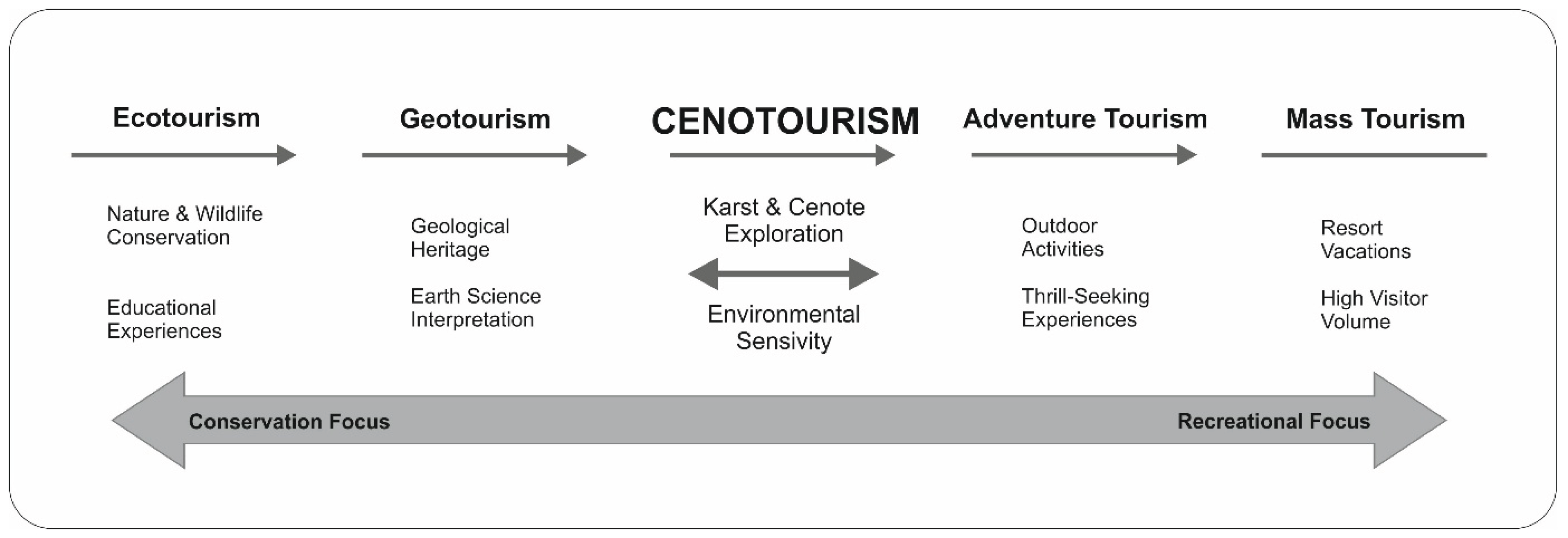
From a theoretical perspective, cenotourism can be positioned within a broader continuum of tourism–environment relationships (
Figure 2). As illustrated in
Figure 2, cenotourism occupies an intermediate position between conservation-oriented forms such as ecotourism and recreation-oriented forms such as adventure and mass tourism, reflecting its hybrid character that combines high environmental sensitivity with direct recreational engagement.
While ecotourism emphasizes conservation-oriented travel and geotourism highlights geological appreciation, cenotourism integrates recreation, environmental interaction, and cultural meaning within hydrologically sensitive systems.
Table 1 summarizes the key distinguishing characteristics of cenotourism in relation to selected tourism forms, highlighting its unique combination of hydrological sensitivity, direct immersion, and inland spatial distribution.
Operationally, cenotourism in this study encompasses tourism activities meeting at least one of the following criteria: (1) visitation motivated primarily by cenotes, (2) participation in recreational or exploratory activities within cenotes, or (3) engagement with cultural or environmental interpretation related to cenote landscapes. This operationalization provides the foundation for the empirical analysis conducted in the following sections. Importantly, this operationalization includes both reported visitation and intention to visit cenotes. Intention-based measures do not necessarily translate into actual behaviour and are therefore interpreted as indicative of potential participation rather than realized tourism activity. The continuum serves as a positioning tool rather than a classification framework, highlighting the hybrid nature of cenotourism.
By proposing cenotourism as a distinct conceptual category, this study enables more precise examination of tourism impacts occurring within cenote environments and contributes to expanding tourism theory by recognizing destination-specific tourism systems emerging from unique environmental conditions.
The introduction of the concept of cenotourism does not aim to replace existing tourism categories, but to provide a more precise analytical lens for examining tourism processes specific to karst groundwater environments. While existing categories capture selected dimensions of tourism–environment interactions, none explicitly integrates hydrological sensitivity, direct immersion, and systemic groundwater connectivity, which together define cenotourism as a distinct analytical category.
In summary, cenotourism can be analytically distinguished from related forms of nature-based tourism through four defining characteristics: (1) direct immersion in highly vulnerable groundwater systems, (2) immediate hydrological connectivity between human activity and ecosystem response, (3) strong biocultural significance rooted in Maya cosmologies and practices, and (4) its role in spatial redistribution of tourism flows from coastal to inland areas. These features collectively position cenotourism as a distinct category requiring integrated socio-ecological analysis.
3.2. Conceptual Framework of Cenotourism–Sustainability Relationships
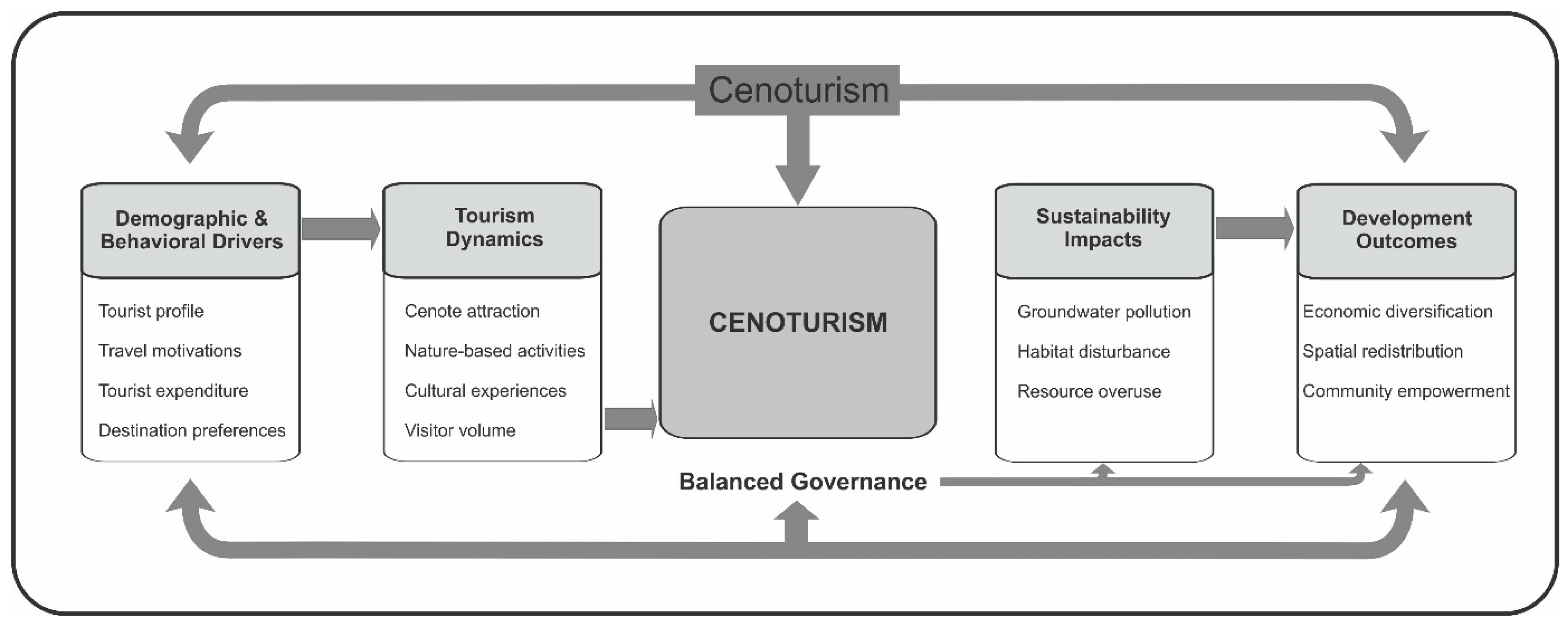
The conceptual framework presented in
Figure 3 illustrates the relationships between tourist demand, tourism dynamics, environmental impacts, governance mechanisms, and development outcomes within cenotourism systems. The model conceptualizes cenotourism as a central socio-ecological interface linking tourist behaviour with environmentally sensitive karst groundwater systems.
Cenotourism is not an isolated tourism activity but a dynamic system shaped by interactions between demand, environmental conditions, and governance. Sustainability outcomes depend on how these interactions are managed rather than on the form of tourism itself. The framework can be treated as an analytical tool for evaluating sustainability trade-offs in tourism systems dependent on sensitive environmental resources. The framework is not intended as a predictive model but as a heuristic structure supporting integrated analysis of tourism–environment relationships.
3.2.1. Model Structure and Drivers
The model frames cenotourism not merely as a tourism activity but as a dynamic socio-ecological process shaped by interactions between tourist demand, environmental vulnerability, governance mechanisms, and regional development outcomes.
The framework adopts a systems-based sustainability perspective, recognizing tourism destinations as coupled human–environment systems in which economic, environmental, and social processes remain interdependent [
9,
10]. Cenotourism is positioned at the centre of the model as an intermediary mechanism linking tourism demand drivers with sustainability impacts and long-term development trajectories.
The first component of the framework concerns demographic and behavioural drivers that initiate cenotourism development. These include tourist socio-demographic characteristics, travel motivations, expenditure patterns, and destination preferences identified through empirical survey data. Tourist profiles influence both the intensity and nature of environmental interaction. Experience-oriented tourists seeking authentic nature-based activities are more likely to engage in cenote visitation than traditional resort tourists, while motivations also shape environmental behaviour, spending distribution, and participation in local economies [
17].
A second component concerns tourism dynamics. Cenotes function as focal attractions that may influence tourism mobility patterns by encouraging tourist mobility beyond coastal resort zones toward inland rural territories. This process may contribute to tourism diversification, expands nature-based activities, and creates opportunities for small-scale enterprises while simultaneously generating new ecological pressures.
3.2.2. Cenotourism as a Socio-Ecological Interface and Its Impacts
At the core of the model lies cenotourism as a socio-ecological interface connecting human activity with highly sensitive karst groundwater systems. Unlike many tourism environments, cenotes represent direct access points to interconnected aquifer systems characterized by extreme environmental sensitivity. Tourism interaction therefore occurs through direct immersion rather than passive observation. Activities such as swimming, diving, or cave exploration may affect water quality, biodiversity, and geomorphological stability.
From this perspective, cenotourism simultaneously generates experiential tourism value, environmental exposure, cultural interaction, and economic exchange. This central position in the framework highlights why cenotourism cannot be evaluated exclusively through economic indicators but requires integrated sustainability assessment.
The model identifies three categories of impacts emerging from cenotourism development. Environmental impacts include groundwater contamination, habitat disturbance, sediment resuspension, and resource overuse. Due to hydrological connectivity between cenotes, localized disturbances may extend across regional aquifers, amplifying ecological risk [
2,
3]. Social impacts include employment creation but also unequal benefit distribution, land price inflation, or cultural commodification. Economic impacts involve diversification of tourism revenues beyond coastal enclaves and potential strengthening of rural economies.
The coexistence of these positive and negative effects illustrates the sustainability paradox embedded within nature-based tourism development. While the framework explicitly highlights environmental impacts, these processes are closely linked with broader social and economic effects.
3.2.3. Governance, Development Outcomes, and Theoretical Contribution
A key element of the framework is the inclusion of governance as a moderating mechanism shaping the relationship between tourism growth and sustainability outcomes. As illustrated in
Figure 3, governance moderates both environmental impacts and development outcomes. Governance mechanisms include tourist carrying capacity regulation, environmental monitoring, community participation, certification systems, and behavioural management. Rather than assuming sustainability as an automatic outcome of alternative tourism, the framework positions governance as the determinant separating sustainable cenotourism from environmental degradation pathways.
The final component concerns long-term regional development outcomes. When governance mechanisms function effectively, cenotourism may be associated with economic diversification and more spatially distributed tourism activity, empowerment of local communities, and reduction in coastal tourism pressure. Conversely, inadequate regulation may result in environmental degradation, social exclusion, and replication of mass-tourism externalities within inland ecosystems.
An essential feature of the model is the presence of feedback relationships. Development outcomes influence future tourism demand, destination attractiveness, and governance responses. Environmental degradation may reduce tourism quality, while successful sustainability management may reinforce destination competitiveness. This cyclical structure reflects adaptive destination systems theory, where tourism development evolves through continuous interaction between ecological limits and socio-economic processes [
9,
19].
The proposed framework contributes to tourism research in three ways. First, it operationalizes the newly introduced concept of cenotourism within sustainability theory. Second, it integrates tourism demand analysis with environmental vulnerability specific to karst systems. Third, it provides a transferable analytical model applicable to groundwater-dependent tourism destinations globally.
By positioning cenotourism within a tourism–environment continuum, the framework enables systematic evaluation of both opportunities and risks associated with emerging nature-based tourism forms. The framework is intended as a conceptual and analytical tool that requires further empirical validation in different geographical and institutional contexts. Its role in this study is to structure the analysis and support interpretation of observed patterns rather than to provide a fully tested model.
These characteristics indicate that cenotourism is not merely a subcategory of existing forms such as geotourism or karst tourism, but represents a distinct configuration of human–environment interaction defined by direct immersion in groundwater systems, high hydrological sensitivity, and embedded biocultural meanings. The framework provides the analytical basis for addressing RQ1–RQ5 by linking demand-side patterns (RQ1–RQ2) with conceptual interpretations of environmental, social, and governance dynamics (RQ3–RQ5).
4. Research Propositions
The five propositions developed in this section are conceptual in nature and are not formulated as statistically testable hypotheses within the scope of this study. Instead, they serve as analytically grounded propositions derived from the proposed conceptual framework, which are subsequently explored and illustrated using descriptive empirical evidence from the Yucatán tourist survey dataset.
4.1. Tourist Characteristics and the Emergence of Cenotourism
Research shows that socio-demographic characteristics and travel motivations influence participation in nature-based and experience-oriented activities. Tourists seeking authentic environmental experiences are more likely to engage in outdoor recreation, exploration, and interaction with natural landscapes, while also demonstrating higher levels of spatial mobility within destinations [
15,
36].
As cenotourism involves active engagement with inland environments and requires movement beyond coastal resort areas, its emergence is expected to be associated with experience-oriented tourist profiles. Tourists motivated by exploration, cultural learning, and nature-based recreation are therefore more likely to participate in cenote-related activities.
Proposition 1. Tourists characterized by experience-oriented travel motivations are more likely to participate in cenotourism activities.
4.2. Tourism Diversification and Spatial Redistribution of Tourist Flows
Tourism diversification is widely promoted as a mechanism for reducing spatial concentration of tourist flows and mitigating overtourism pressures [
6,
8,
19]. Attractions located outside traditional tourism corridors may encourage exploration of peripheral regions and contribute to a more spatially balanced tourism system.
In the Yucatán Peninsula, cenotes are distributed across inland areas rather than coastal zones. Their visitation may therefore stimulate tourist mobility beyond resort destinations and support the expansion of tourism activity into rural municipalities.
Proposition 2. Participation in cenotourism is associated with more spatially diversified tourist activity patterns beyond coastal tourism destinations.
4.3. Cenotourism and Tourist Expenditure
Research suggests that experience-oriented and nature-based tourists often demonstrate a higher willingness to pay for distinctive environmental experiences [
18]. Such tourists tend to allocate a greater share of expenditure to local services, including guiding, transportation, and small-scale enterprises.
Given that cenotes are typically located in rural or peri-urban areas with less dominance of large-scale resort infrastructure, cenotourism may strengthen local economic linkages and support economic diversification within inland communities.
Proposition 3. Participation in cenotourism is associated with relatively higher levels of tourist expenditure within local destination economies.
4.4. Cenotourism Intensity and Environmental Pressure
Although alternative tourism forms are often considered environmentally sustainable, increasing visitation may generate ecological pressure when it exceeds the carrying capacity of fragile ecosystems [
10]. Karst environments are particularly vulnerable due to high permeability, rapid groundwater circulation, and limited filtration capacity [
21].
Because cenotes provide direct access to interconnected aquifer systems, tourism activities involving physical immersion may introduce chemical and microbiological contaminants and disturb aquatic habitats.
Proposition 4. Increasing cenotourism intensity is associated with increased environmental pressures on cenote ecosystems.
4.5. Governance and Sustainable Cenotourism Development
Sustainability outcomes in tourism systems depend not only on tourist behaviour and environmental sensitivity but also on governance capacity, institutional regulation, and stakeholder coordination [
9]. Mechanisms such as tourist management, environmental monitoring, and community participation are essential for balancing tourism development with environmental protection. Within this framework, governance acts as a moderating factor determining whether cenotourism contributes to sustainable regional development or generates environmental and social pressures.
Proposition 5. Effective governance mechanisms moderate the relationship between cenotourism development and sustainability outcomes by potentially reducing environmental risks and supporting inclusive regional development.
Propositions 1–3 correspond primarily to RQ1–RQ2 and are explored empirically, while Propositions 4–5 address RQ3–RQ5 and are examined conceptually based on the framework and existing literature.
5. Materials and Methods
5.1. Study Area
The study was conducted in the state of Yucatán, located in southeastern Mexico on the northern portion of the Yucatán Peninsula. The region is a flat limestone karst platform with no permanent surface rivers and thousands of groundwater sinkholes known as cenotes. These formations function as natural access points to interconnected aquifer systems that constitute the primary freshwater resource of the peninsula.
Historically, cenotes played a fundamental role in regional settlement patterns. For the pre-Hispanic Maya civilization, they served as essential freshwater sources and held significant ritual and cosmological importance, shaping long-term human–environment relationships.
Today, Yucatán has emerged as a rapidly growing tourism destination complementing the coastal tourism corridor of the Mexican Caribbean. Unlike neighbouring resort-dominated regions, tourism development in Yucatán is largely structured around cultural heritage, nature-based experiences, and inland attractions, including archaeological sites, colonial cities, protected areas, and cenotes.
Tourism contributes significantly to regional economic development through employment generation, small-business creation, and diversification of rural economies. However, the growing popularity of cenotes as tourism attractions has transformed previously community-managed resources into globally marketed sites. Due to their direct connection to groundwater systems, tourism activities within cenotes may generate environmental pressures extending beyond individual locations, making the region a relevant case for analysing tourism development within fragile socio-ecological systems. The analysis is descriptive and exploratory in nature, focusing on identifying demand-side patterns rather than testing causal relationships.
5.2. Data Source
The empirical analysis is based on secondary microdata obtained from the Tourism Observatory of Yucatán [
37], derived from a site-based intercept survey (Estudio de Perfil y Grado de Satisfacción del Turista, Yucatán 2019) conducted as part of an ongoing tourism monitoring programme. The data originate from an official tourism monitoring system, ensuring methodological consistency and comparability across observations. The study uses microdata from the survey Estudio de Perfil y Grado de Satisfacción del Turista, Yucatán 2019, conducted as part of an ongoing tourism monitoring programme.
Data were collected through structured face-to-face questionnaires administered at major tourist locations, including urban areas, transport nodes, and principal attractions. The dataset includes information on socio-demographic characteristics, travel motivations, tourism activities, visitation of attractions (including cenotes), expenditure patterns, length of stay, accommodation type, and tourist satisfaction. The observatory-based dataset provides methodological consistency, behavioural (as opposed to purely attitudinal) evidence, and transparency associated with open-access monitoring systems.
The sampling strategy followed a non-probability intercept approach, targeting tourists present at key destinations during the survey period. This method is widely applied in tourism research, as it enables the collection of real-time data on tourist motivations, behaviours, and experiences in their actual spatial context.
The selection of survey locations was purposive and designed to capture a diverse range of tourist profiles across different types of attractions. However, as participation depended on tourist availability and willingness to respond, the resulting sample cannot be considered statistically representative of the entire tourist population in Yucatán.
Potential biases include the overrepresentation of more active or accessible tourists and the underrepresentation of less mobile or time-constrained tourist segments. The data were collected during a defined survey period (Observatorio Turístico de Yucatán, 2019), which should be taken into account when interpreting the results, particularly with regard to potential seasonal variation. It should be noted that intention-based measures may overestimate actual visitation behaviour, as not all declared intentions necessarily translate into realized activities during the trip.
Given the non-probability sampling design and the exploratory character of the dataset, the analysis is limited to descriptive and non-inferential comparative statistics. No inferential statistical techniques are applied, and results are not interpreted as statistically generalizable. The use of inferential or comparative statistical techniques was considered not appropriate given the characteristics of the sample, as the sample does not meet the assumptions required for statistical generalization.
5.3. Operationalization of Cenotourism
Cenotourism is operationalized through survey variables capturing attraction preferences and tourism activities related to cenotes. Respondents indicating cenote visitation or intention to visit cenotes during their stay are classified as participants in cenotourism.
This operationalization reflects the experiential nature of cenotourism, involving direct interaction with cenote environments (e.g., swimming, snorkeling, diving, or cave exploration). As cenotes are geographically dispersed inland attractions, their visitation also serves as an indicator of spatial diversification of tourism flows beyond coastal zones, reflecting shifts in tourist mobility from concentrated resort areas toward inland destinations. Additional variables include socio-demographic characteristics, travel motivations, expenditure, length of stay, and tourist satisfaction.
Table 2 summarizes the variables and their operationalization. Importantly, intention-based measures should not be equated with actual behaviour and must be interpreted with caution when discussing broader tourism system dynamics.
The variables presented in
Table 2 correspond to specific analytical dimensions used to address the research questions, as detailed in
Section 5.6. The variables presented in
Table 2 operationalize the analytical dimensions corresponding to the research questions (RQ1–RQ4).
The analytical framework links empirical variables to the research questions as follows. Tourist motivations and characteristics are used to address RQ1. Tourist expenditure data informs RQ2 by indicating economic potential associated with cenotourism. Variables related to visitation patterns and spatial behaviour contribute to RQ1 and partially to RQ2.
Research questions RQ3–RQ5, which concern environmental risks, social challenges, and governance conditions, are addressed through conceptual analysis supported by existing literature, as the dataset does not include direct environmental or governance indicators.
This operationalization is consistent with the conceptual definition of cenotourism proposed in
Section 3, particularly its emphasis on direct interaction with hydrologically sensitive environments and its role within broader tourism system dynamics. It also justifies the analytical distinction of cenotourism from related forms of nature-based tourism by capturing both behavioural engagement and spatial mobility patterns associated with cenote visitation.
5.4. Data Preparation
Prior to analysis, the dataset was cleaned to ensure internal consistency. Records with incomplete responses for key variables—such as tourism activities, expenditure, and socio-demographic characteristics—were excluded.
Variables related to attraction visitation were recoded to identify respondents indicating cenote visitation or intention to visit cenotes. These responses were transformed into binary indicators distinguishing participants from non-participants. Additional variables, including travel motivations, expenditure, and satisfaction, were standardized according to survey measurement scales, enabling subsequent descriptive and comparative analysis.
5.5. Potential Sources of Bias
Several limitations associated with survey-based data should be acknowledged. First, sampling bias may result from location-based data collection, as surveys conducted at major tourist sites may underrepresent tourists engaging in peripheral or less accessible activities. Second, self-selection bias may occur because participation was voluntary. This may affect the representation of certain tourist groups. Third, recall bias may influence variables such as expenditure or number of visited attractions, which were reported retrospectively. The reliance on intention-based indicators may overestimate actual participation in cenotourism activities. Finally, social desirability bias may affect responses related to motivations or environmental attitudes.
Despite these limitations, the dataset benefits from standardized data collection procedures within an official tourism observatory framework, a relatively large sample size, and diverse respondent profiles. As the study focuses on identifying patterns rather than producing statistically generalizable estimates, these limitations should be interpreted as affecting the scope and robustness of the findings rather than invalidating the analytical insights.
5.6. Analytical Approach
The analytical framework of the study is structured around the research questions (RQ1–RQ5) defined in the Introduction. The empirical analysis follows a descriptive and exploratory approach aimed at identifying patterns of tourist behaviour associated with cenotourism participation. First, descriptive statistics are used to examine the socio-demographic profile of respondents, including age structure, gender distribution, travel motivations, and expenditure patterns. Second, frequency analysis assesses tourist attraction preferences, with particular attention to cenote-related indications. Third, comparative analysis explores differences between tourists participating in cenotourism and those who do not.
Cenotourism participation was operationalized using both reported visitation and stated intention to visit cenotes. While intention-based measures capture preferences and planned behaviour, they may not fully correspond to actual visitation patterns.
Together, these methods provide insight into the demand-side foundations of cenotourism and support evaluation of its role in regional tourism development. The analytical design is aligned with the conceptual framework presented in
Figure 3, linking tourism demand, environmental vulnerability, governance mechanisms, and development outcomes. While empirically grounded in the Yucatán Peninsula, the framework is applicable to tourism systems dependent on environmentally sensitive groundwater or karst environment.
While the analysis is primarily descriptive, it is designed to provide an empirical grounding for the proposed conceptual framework rather than to test causal relationships. The approach is consistent with exploratory research aimed at identifying demand-side patterns in emerging tourism systems.
To ensure analytical consistency, specific variables and analytical procedures were aligned with individual research questions. Tourist motivation variables were used to address RQ1, participation in cenote visits and visitation patterns informed RQ2, while RQ3–RQ5 were addressed at a conceptual level based on the interpretation of empirical patterns in relation to existing literature. Indicators related to spatial diversification were used to explore RQ4. Due to data limitations, RQ5 was addressed at a conceptual level, based on the interpretation of empirical patterns in relation to existing literature.
6. Results
The results are presented in relation to the research questions, with empirical analysis directly addressing RQ1 and RQ2, while providing a descriptive basis for the conceptual discussion of RQ3–RQ5. This section presents the results of the empirical analysis of tourist behaviour associated with cenote visitation within the tourism system of Yucatán. The analysis addresses primarily RQ1 and RQ2, while providing an empirical basis for the conceptual discussion of RQ3–RQ5 developed in subsequent sections.
The results are based on descriptive, frequency, and comparative analyses of the survey dataset. The analysis proceeds from the broader spatial structure of tourism in Mexico and Yucatán to the characteristics of tourists, their motivations and expenditure patterns, and finally to the role of cenotes within tourists’ activity portfolios.
6.1. Spatial Structure of Tourism in Mexico and Yucatán
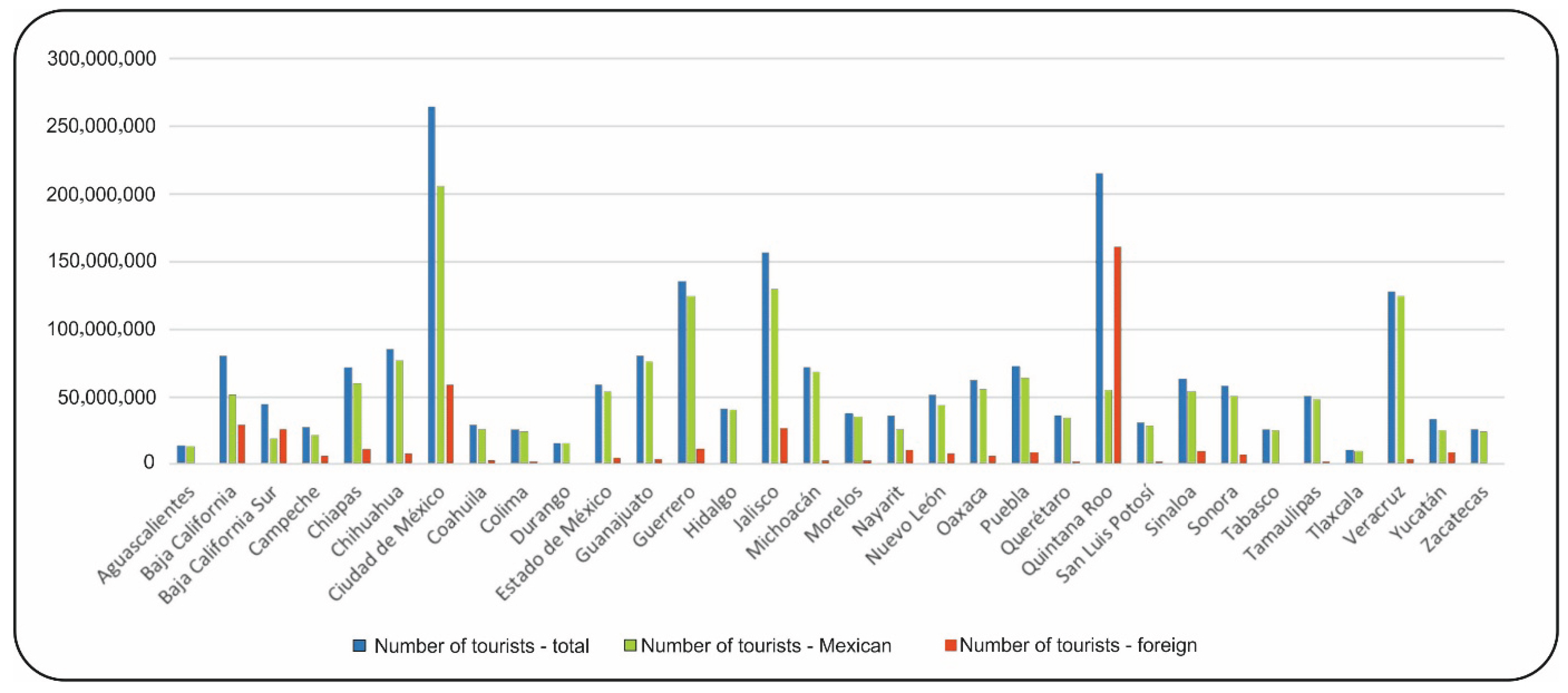
Tourism in Mexico is characterized by a strong spatial concentration of tourist flows. As shown in
Figure 4, tourist flows are concentrated in a limited number of states, with Quintana Roo representing the dominant destination in terms of total and international arrivals. Other states attract substantially lower tourist numbers, indicating an uneven national distribution of tourism activity.
The spatial distribution of tourism infrastructure within the state of Yucatán is illustrated in
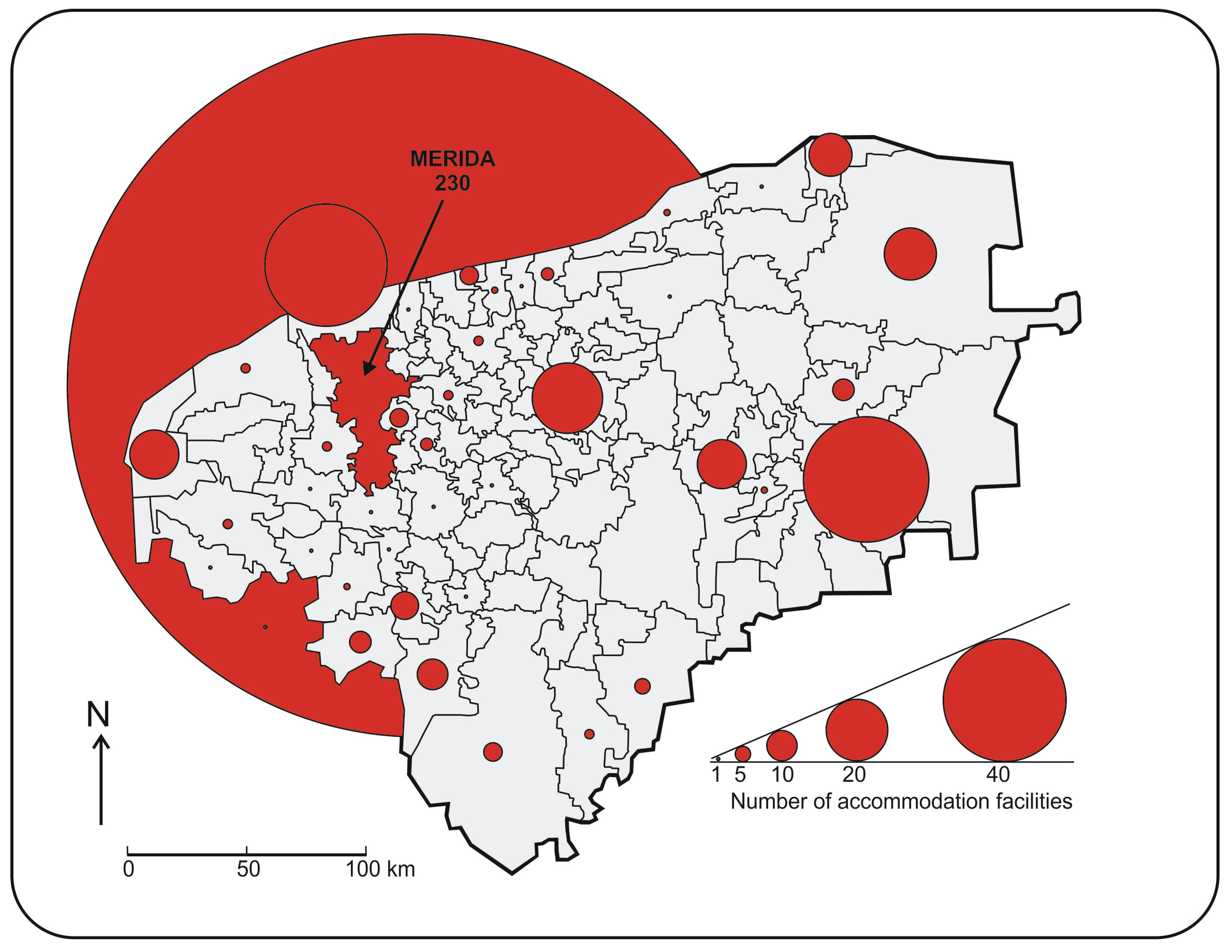
Figure 5. Accommodation facilities are strongly concentrated in the metropolitan area of Mérida, while peripheral municipalities exhibit significantly lower accommodation capacity.
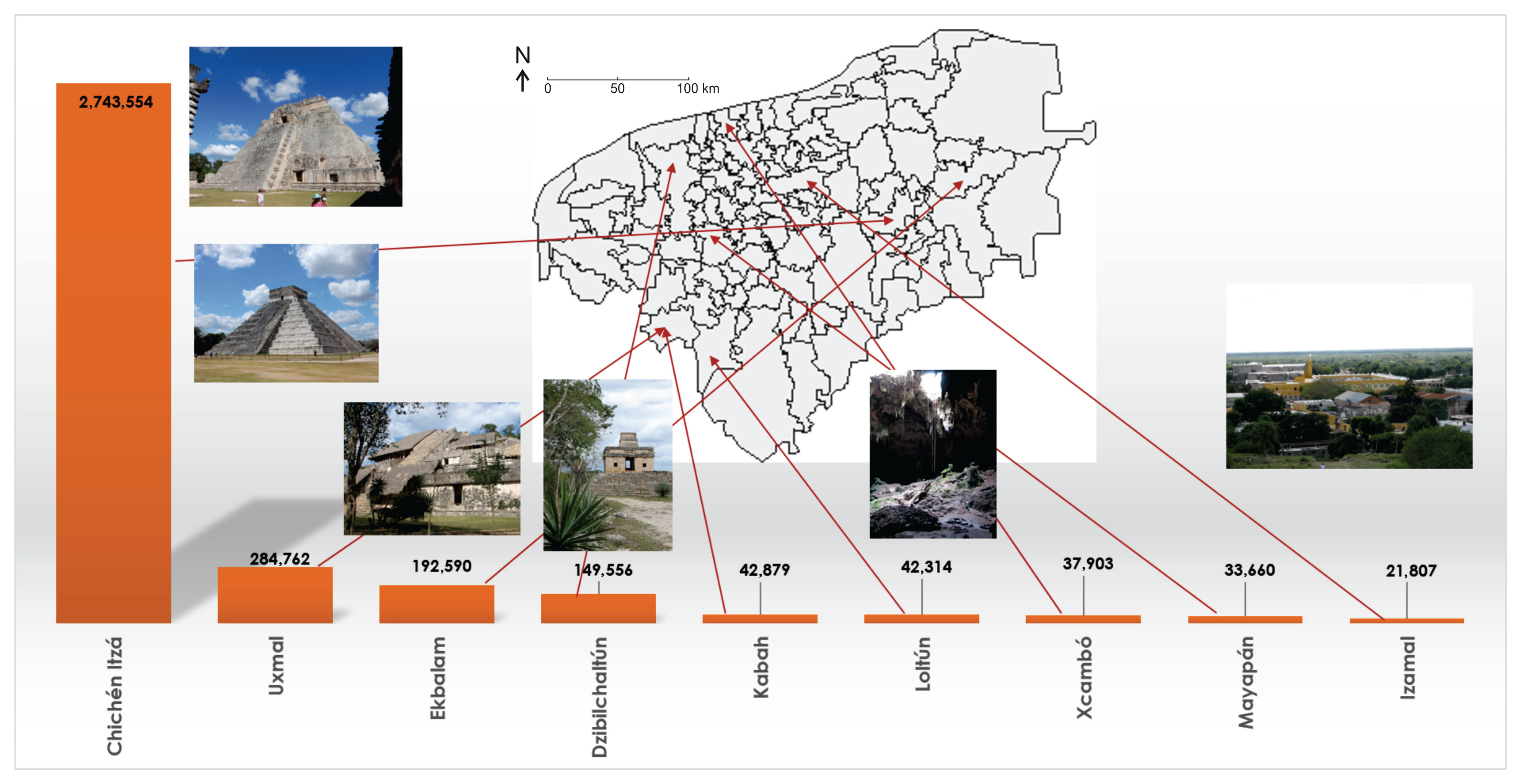
Tourist numbers at major tourist attractions further illustrate this concentration (
Figure 6). Archaeological sites dominate tourism demand, with Chichén Itzá receiving over 2.7 million tourists annually, far exceeding other sites such as Uxmal, Ek Balam, and Dzibilchaltún. Natural attractions, including cenotes and cave systems, attract comparatively lower tourist numbers.
This spatial context provides a macro-level background for interpreting tourist behaviour analyzed in relation to RQ1 and RQ2. This spatial concentration provides an important structural context for interpreting the role of cenotourism as a potential component of more spatially diversified tourism dynamics.
6.2. Tourist Profile
The sample provides insight into the socio-demographic structure of tourists visiting Yucatán in 2019. The age distribution indicates that the majority of tourists belong to economically active age groups. The largest share of respondents falls within the 18–30 age category (32.8%), followed by tourists aged 31–40 (28.2%) and 41–55 (24.7%). Tourists aged 56 and above represent 14.3% of the sample. The gender composition is relatively balanced, with 54.6% male and 45.4% female respondents.
Analysis of tourists’ place of origin reveals a diversified international structure. Among international tourists, tourists from the United States represent the largest group (22.2%). European markets include France (9.6%), Spain (8.7%), the Netherlands (4.0%), Germany (3.8%), Italy (4.0%), and Belgium (2.5%). Latin American tourists include Colombia (8.7%), Argentina (5.4%), Chile (3.8%), Peru (3.4%), Guatemala (2.5%), and Costa Rica (1.6%). Tourists from Canada account for 5.1% of the sample. These socio-demographic characteristics provide the background for understanding tourist motivations and expenditure patterns associated with travel in Yucatán.
6.3. Tourist Motivations and Expenditure
Tourism in Yucatán is primarily driven by leisure-oriented travel, which directly addresses RQ1 concerning tourist motivations. The primary motivation reported by respondents is vacations, leisure, or recreation (69.8%). Other motivations include visiting relatives and friends (16.6%), cultural or exploratory purposes (9.3%), business-related travel (2.5%), and romantic or wedding tourism (3.0%). After excluding extreme values (outliers in the upper expenditure range), the average daily tourist expenditure is approximately 3262 MXN per person. The analysis of daily tourist expenditure directly informs RQ2 by providing an indication of the potential economic relevance associated with cenotourism-related travel.
6.4. Tourist Attraction Preferences
The survey dataset provides information on tourists’ preferred attractions during their stay. Responses indicate that tourism demand in Yucatán can be grouped into three main categories: cultural–archaeological heritage sites, urban heritage destinations, and natural attractions. Archaeological sites such as Chichén Itzá, Uxmal, Ek Balam, and Dzibilchaltún represent the most frequently indicated attractions and constitute the core of tourism demand. Urban heritage destinations, particularly Mérida, also play a significant role in tourist itineraries.
Natural attractions—including protected areas, caves, coastal ecosystems, and cenotes—are indicated less frequently than major cultural sites but remain present within tourist activity portfolios. The coexistence of these categories indicates that tourists combine different types of attractions during their stay. This pattern suggests a multi-attraction travel structure, in which tourists combine cultural and natural experiences within a single trip. These patterns contribute to RQ1 by clarifying the structure of tourist preferences and multi-attraction travel behaviour. This multi-attraction structure creates conditions under which cenotes may function as complementary rather than standalone attractions within broader tourist itineraries.
6.5. Cenotourism Demand and Preference Structure
This section addresses RQ1 and RQ2 by examining participation in cenote visitation and the relative importance of cenotes within tourist preference structures. A total of 692 out of 2810 respondents (24.6%) declared an intention to visit cenotes during their stay in Yucatán. This reflects declared intention rather than observed behaviour. The gender distribution among potential cenote visitors is relatively balanced, with 53.5% male and 46.5% female respondents.
In total, 781 cenote-related indications were recorded across attraction preference rankings, allowing for an assessment of the relative position of cenotes within tourists’ planned itineraries. Among these, 413 respondents (52.9%) identified cenotes as their first preferred attraction, followed by 213 second-preference indications (27.3%), 110 third-preference indications (14.1%), and 45 fourth-preference indications (5.8%;
Table 3). It should be emphasized that declared intentions to visit cenotes do not necessarily translate into actual visitation behaviour, and therefore cannot be directly interpreted as evidence of realized tourism flows or spatial redistribution processes.
This distribution indicates that cenotes are not only frequently included in tourist activity portfolios but are often prioritized as key attractions within travel plans. These patterns are consistent with the demand component of the conceptual framework (
Figure 3), particularly in relation to tourist preferences and activity structures. However, as the empirical analysis is limited to demand-side data, environmental impacts and governance mechanisms are not directly observed and are therefore addressed only at a conceptual level in the subsequent discussion.
While the empirical results primarily address RQ1 and RQ2, they also provide a basis for the conceptual interpretation of RQ3–RQ5, which are further developed in the Discussion section. Consequently, these results should be interpreted as indicative of potential demand patterns rather than evidence of realized spatial redistribution of tourism flows.
7. Discussion
While the empirical results primarily address RQ1 and RQ2, the following discussion extends the interpretation toward RQ3–RQ5, which are examined at a conceptual level based on the integration of empirical findings with existing literature. It should be emphasized that the empirical analysis presented in this study is limited to demand-side patterns derived from survey data. The subsequent discussion of environmental vulnerability, governance, and community dimensions is conceptual in nature and based on the analytical framework and existing literature, rather than on direct empirical evidence from the dataset.
7.1. Cenotourism Within the Regional Tourism System
The findings indicate the presence of two coexisting spatial processes shaping tourism development in the Yucatán Peninsula. Tourism activity remains concentrated in a limited number of flagship destinations, particularly major archaeological sites and urban centres such as Mérida. This pattern reflects broader structural tendencies observed in Mexico, where tourist flows and infrastructure are concentrated in a small number of highly developed locations. At the same time, the results reveal a gradual diversification of tourism linked to nature-based attractions, especially cenotes.
These findings should be interpreted in light of the sampling approach, which captures patterns at key tourism sites rather than the full population of tourists to the region. The absence of comparative statistical testing reflects the exploratory design of the study rather than a limitation in analytical rigor.
Although these sites attract fewer tourists than major cultural landmarks, they consistently appear in tourists’ activity portfolios. Nearly one-quarter of respondents (24.6%) declared an intention to visit cenotes, and they frequently rank among preferred attractions.
Rather than replacing existing tourism structures, cenotourism complements them, potentially contributing to a more polycentric system in which cultural and natural attractions coexist. This pattern aligns with diversification strategies discussed in the literature as a response to spatial concentration and overtourism [
6,
7]. These findings, in combination with existing literature, support the view that diversification does not eliminate environmental pressures but may contribute to their spatial redistribution [
7].
These findings are consistent with the demand-side component of the conceptual framework (
Figure 3), which highlights the role of diversification processes in potentially contributing to the redistribution of tourism flows from concentrated core destinations toward more spatially dispersed inland systems. However, as the empirical analysis is based on declared preferences and intention-based measures, these findings should be interpreted as indicative of potential diversification dynamics rather than direct evidence of realized spatial redistribution of tourism flows.
7.2. Tourist Demand and Experiential Nature-Based Tourism
The prominence of cenotes in tourists’ activity portfolios reflects broader shifts in tourism demand toward experience-oriented and nature-based travel. Rather than focusing solely on passive sightseeing, tourists increasingly seek direct engagement with natural environments and place-specific experiences.
This pattern is consistent with previous research on the experience economy, which emphasizes immersion, participation, and authenticity as central elements of contemporary tourism [
14]. However, this interpretation is based on observed preference patterns rather than direct behavioural measurement, which emphasizes immersion, participation, and authenticity as central elements of contemporary tourism [
14]. Cenotes offer precisely such forms of engagement, involving physical interaction with water environments and exploration of unique geological settings.
The findings also align with studies on nature-based tourism, where participation is shaped by motivations related to exploration, learning, and environmental interaction [
15,
18]. In this context, cenotourism can be interpreted as part of a broader transition toward more active and experience-driven travel behaviour. This pattern further refines the interpretation of RQ1 by linking tourist motivations with experiential and nature-based travel behaviour.
The international composition of tourists may further reinforce this dynamic. Previous studies suggest that long-haul tourists tend to engage in more diversified activity patterns and explore destinations beyond primary tourism nodes [
41]. In this context, cenote-related activities may form part of a broader portfolio of tourism experiences. These findings provide an empirical indication relevant to RQ1 and partially to RQ2, suggesting a potential for spatial diversification of tourism flows, although this interpretation is based on intention and preference data rather than observed behaviour.
At the same time, engagement in nature-based tourism does not automatically translate into environmentally responsible behaviour. As highlighted by Dolnicar [
17], environmental outcomes depend on how tourism activities are organized and managed. In the case of cenotes, where tourist interaction occurs directly within sensitive groundwater systems, this relationship becomes particularly critical.
7.3. Biocultural Transformation and Environmental Vulnerability
Cenotourism should be understood not only as a spatial or economic process but also as a transformation of historically embedded biocultural landscapes. In the Maya civilization, cenotes functioned both as primary freshwater sources and as sacred sites associated with ritual practices and cosmological beliefs [
4,
34].
Contemporary tourism represents a reconfiguration of these roles. While cenotes no longer serve as central water sources, their cultural significance persists and is increasingly reinterpreted within tourism contexts. In some cases, elements of Maya ritual practices are incorporated into staged tourism experiences, reflecting broader processes of cultural reinterpretation and commodification [
33,
42].
This creates a layered biocultural system in which cenotes function simultaneously as natural environments, cultural heritage sites, and economic resources. While this integration supports diversification, it also raises questions about authenticity and the transformation of cultural meaning.
At the same time, cenotourism operates within highly sensitive environmental conditions. Tourism activities involve direct immersion in karst groundwater systems characterized by rapid circulation and limited filtration capacity. As a result, even relatively low levels of visitation may generate environmental pressure [
21,
32]. This inference is based on the known vulnerability of karst systems documented in the literature, rather than on direct environmental measurements within the present study. This is consistent with broader findings in sustainable tourism research, which indicate that environmental impacts depend not only on tourist numbers but also on ecosystem sensitivity and management conditions [
10].
This feature analytically distinguishes cenotourism from many other forms of nature-based tourism. Tourist activity does not occur adjacent to the environment but within it, creating an immediate link between human behaviour and ecosystem response.
This dual character highlights the need for integrated management approaches combining environmental protection, cultural sensitivity, and tourism planning. Cenotourism may be interpreted as supporting diversification and inland development, while simultaneously introducing potential risks to fragile groundwater systems, as suggested by the conceptual framework and existing literature (
Figure 3).
7.4. Governance and Policy Implications
This section addresses RQ5 at a conceptual level. The following governance implications are derived from the conceptual framework and existing literature rather than directly from the empirical dataset used in this study. These considerations should therefore be interpreted as conceptual implications rather than empirically derived findings. The findings, in combination with existing literature, suggest that cenotourism operates within a highly sensitive socio-ecological system, where tourism development is directly linked to environmental conditions and local community dynamics. Governance therefore plays a central role in determining whether cenotourism contributes to sustainable regional development or generates new forms of environmental and social pressure.
First, the physical characteristics of cenotes necessitate strict tourist management. Because tourism activities involve direct contact with groundwater systems, even moderate increases in visitation may affect water quality and ecosystem stability. Regulation of tourist numbers, access conditions, and on-site behaviour is therefore essential. Instruments such as carrying capacity limits, controlled entry systems, and basic infrastructure can help mitigate direct environmental impacts. It should be noted that environmental risks discussed in this study are inferred from the known vulnerability of karst systems and existing hydrogeological research, rather than directly measured within the present dataset. Importantly, Propositions 4 and 5, relating to environmental pressure and governance, are not directly tested in this study. These propositions remain conceptual and are grounded in the existing literature rather than in the empirical dataset used here.
Second, monitoring systems are required to detect early signs of ecosystem degradation. Regular water quality assessment, combined with tourist monitoring, should be integrated into destination management practices.
Third, the results highlight the importance of local participation. Many cenotes are located in rural areas where tourism creates opportunities for small-scale entrepreneurship. Ensuring equitable benefits requires inclusive governance structures and support for locally owned businesses.
Fourth, the biocultural character of cenotes calls for careful management of cultural heritage. The use of Maya-related narratives and symbolic elements in tourism development should be designed in collaboration with local communities to avoid superficial commodification. Cenotourism should also be embedded within broader regional planning strategies linking coastal, urban, and inland destinations. This corresponds to RQ5, addressing governance conditions for sustainable cenotourism development.
Governance challenges are further complicated by fragmented and often unclear property regimes associated with cenotes, which may influence access, management practices, and benefit distribution. Although these aspects were not analysed in detail due to data limitations, they represent a critical area for future research.
Overall, cenotourism governance should be approached as part of broader water-sensitive tourism planning. In line with the conceptual framework (
Figure 3), governance functions as a mediating mechanism shaping whether tourism development follows sustainable or degradation-oriented trajectories. In practice, this requires coordination across local authorities, environmental agencies, and community stakeholders.
These results provide an exploratory characterization of cenote-related tourism behaviour, rather than a comprehensive explanation of its determinants. These governance implications should therefore be interpreted as theoretically grounded and contextually informed rather than empirically verified within the scope of this study.
8. Conclusions
The conclusions distinguish between empirically grounded findings (RQ1–RQ2) and broader conceptual implications related to sustainability, governance, and environmental risks (RQ3–RQ5).
The findings of this study provide partial empirical support for the proposed conceptual framework, particularly for its demand-side components of cenotourism–sustainability relationships (
Figure 3), particularly for components related to tourist demand and behavioural patterns, while relationships involving environmental vulnerability and governance remain conceptual within groundwater-dependent tourism systems. The study introduces cenotourism as a distinct form of nature-based tourism centred on cenotes within karst groundwater systems and illustrates its analytical relevance within the regional tourism system of the Yucatán Peninsula.
Importantly, intention-based measures should not be equated with actual behaviour and must be interpreted with caution when discussing broader tourism system dynamics. Cenotourism can be seen as part of a broader shift toward a more diversified and potentially more spatially distributed tourism structure. While tourism activity remains concentrated in major cultural and urban destinations, cenotes increasingly function as complementary elements within tourists’ activity portfolios. This trend may reflect changing demand patterns, with growing interest in experience-oriented and nature-based travel involving direct engagement with natural environments and culturally embedded landscapes.
At the same time, cenotourism operates under conditions of pronounced environmental sensitivity. The hydrogeological characteristics of karst systems mean that tourism activities involve direct immersion in groundwater environments, creating a close link between tourist behaviour and ecosystem response. This relationship creates both opportunities for regional development and risks of environmental degradation.
Cenotourism can therefore be understood as a demand-driven system in which experience-oriented behaviour may contribute to the potential redistribution of tourism flows toward inland areas, while simultaneously increasing exposure to vulnerable groundwater systems. However, this interpretation is based on intention-based and preference data and should not be treated as evidence of realized spatial redistribution of tourism flows. In this context, governance plays a decisive role in shaping development trajectories, influencing whether tourism expansion results in sustainable outcomes or cumulative environmental pressures.
Ensuring sustainability therefore requires effective tourist management, continuous environmental monitoring, and meaningful community participation. At the same time, governance challenges extend beyond environmental regulation. The ownership of cenotes is often fragmented and institutionally complex, influencing access, management practices, and the distribution of economic benefits. These dimensions remain insufficiently explored and represent an important direction for future research.
Several limitations should be acknowledged. The analysis relies on survey data capturing declared tourist behaviour and intentions rather than direct measurements of environmental impacts or institutional arrangements. The use of a non-probability, site-based intercept sampling approach limits the generalizability of the findings to the entire tourist population. The results should therefore be interpreted as indicative of patterns observed among tourists at selected tourist sites rather than as statistically representative outcomes.
Additionally, the timing of data collection may influence the observed structure of tourist behaviour due to potential seasonal effects. Consequently, the study does not aim to test statistically significant differences between groups, but rather to identify patterns and tendencies within the observed sample. The dataset does not include environmental or governance-related variables; therefore, the study does not allow for empirical testing of environmental impacts or governance mechanisms associated with cenotourism. Therefore, Propositions 4 and 5 should be interpreted as conceptual extensions rather than empirically tested relationships.
Governance dimensions related to ownership structures, regulatory frameworks, and management practices were not examined in detail. In addition, the study does not rely on direct measurements of environmental impacts or hydrogeological parameters, which limits the ability to assess the magnitude of ecological change associated with cenotourism.
The descriptive nature of the analysis limits causal inference, and the results should therefore be interpreted as indicative rather than explanatory. In particular, Propositions 4 and 5, related to environmental pressure and governance, are not directly tested using the available dataset and rely primarily on conceptual reasoning and existing literature. These propositions therefore require further empirical validation in future research. While the study provides empirical insights into demand-side dynamics and spatial diversification, conclusions regarding environmental vulnerability and governance should be understood as conceptual implications rather than empirically verified findings.
Future research should therefore adopt a more integrated socio-institutional perspective, incorporating property regimes, governance systems, and environmental monitoring data. Comparative studies across different karst regions may further contribute to understanding tourism development in groundwater-dependent environments.
While the conceptual framework proposed in this study may be applicable to other groundwater-dependent tourism systems, its empirical manifestation is likely to vary depending on local governance structures, cultural contexts, and property regimes. Future research could benefit from mixed-method approaches combining tourist survey data with environmental monitoring (e.g., water quality analysis), institutional studies, and qualitative research with local communities.
Overall, the study contributes to tourism research by conceptualizing cenotourism as a distinct analytical framework linking tourism demand, environmental sensitivity, and governance processes within groundwater-dependent systems. The results underline that sustainability outcomes depend not on the form of tourism itself, but on how interactions between these elements are managed over time. From a policy perspective, the findings highlight the need for integrated governance approaches that combine environmental protection, tourism management, and community participation in groundwater-dependent regions.
The framework developed in this study may support decision-making processes in similar karst environments facing increasing tourism pressure. Although the analysis is based on the case of the Yucatán Peninsula, the conceptual framework is applicable to other groundwater-dependent tourism systems characterized by similar environmental sensitivity and governance challenges. These findings should therefore be interpreted as indicative of demand-side dynamics, while environmental and governance implications remain conceptual. Accordingly, conclusions related to environmental risks, governance, and community dynamics should be understood as conceptually grounded interpretations, not as direct empirical outcomes of the present study.