Article

Effects of Nitrogen Fertilizer Levels on Rice Quality and Starch Properties of Common and Glutinous Japonica Rice: Implications for Sustainable Nitrogen Management

College of Resources and Environment, Northeast Agricultural University, Harbin 150038, China
*
Author to whom correspondence should be addressed.
Sustainability 2026, 18(8), 3828; https://doi.org/10.3390/su18083828
Submission received: 2 March 2026 / Revised: 20 March 2026 / Accepted: 1 April 2026 / Published: 13 April 2026
(This article belongs to the Section Sustainable Agriculture)

Abstract

Optimizing nitrogen (N) fertilizer application within conventional rice production systems remains essential for improving grain quality while avoiding inefficient resource use. This study examined how different N application levels influence rice quality, starch structure, and physicochemical properties in two japonica rice types cultivated under cold-region conditions in Northeast China. Using two cultivars, common japonica rice ‘Putian 1498’ and glutinous japonica rice ‘Longjing 57’, four nitrogen levels were established under machine-transplanting conditions: N0 (0 kg/hm2), N1 (80 kg/hm2), N2 (135 kg/hm2), and N3 (190 kg/hm2). The results indicate that increasing nitrogen application differentially affected the milling quality of the two rice types: it reached its maximum at the N1 level for common japonica rice and at the N3 level for glutinous japonica rice. However, the taste value decreased and chalkiness increased in both types. Regarding starch properties, increased nitrogen application led to rougher starch granule surfaces, a decrease in large granules, and an increase in medium and small granules. Starch content decreased, and the amylose-to-amylopectin ratio declined. Relative crystallinity increased, while the FTIR ratio of 1045/1022 cm−1 decreased. Solubility showed an increasing trend, whereas swelling power exhibited the opposite trend. The gelatinization enthalpy and pasting temperatures were positively correlated with nitrogen rate, whereas retrogradation degree showed a negative correlation. These results demonstrate that nitrogen application regulates rice quality through changes in starch structure and physicochemical properties, with distinct responses between common and glutinous japonica rice. Moderate nitrogen input improves milling quality, but excessive application reduces eating quality, indicating a trade-off between processing performance and consumer-oriented quality. This study provides mechanistic evidence to support more precise nitrogen management in conventional rice systems, contributing to improved resource-use efficiency without overstating broader sustainability claims. In conclusion, moderate nitrogen application optimizes rice quality by balancing milling performance and eating quality through its effects on starch structure, whereas excessive nitrogen input leads to quality deterioration and inefficient resource use.

1. Introduction

Rice holds a pivotal position in the dietary culture of the Chinese people [1]. Heilongjiang Province, known as the “Great Northern Granary” and serving as a stabilizer for national grain production, contributes significantly to rice supply with a planting area of up to 53 million mu [2,3,4]. However, with the improvement of living standards and the increase in rice yield, both producers and consumers have increasingly higher demands for rice quality, particularly concerning taste and nutritional content [5]. Currently, the rice produced in Heilongjiang region is mainly categorized into common japonica rice and glutinous japonica rice. The planting area of common japonica rice is nearly 50 million mu, while that of glutinous japonica rice is about 3 million mu. The cultivation scale of common japonica rice continues to expand, maintaining a high level of market circulation and generating significant economic benefits [6]. Glutinous japonica rice, due to its unique texture, is widely used in food processing and brewing, greatly enriching the diversity of China’s dietary culture [7,8].
In the context of modern agricultural development, improving crop quality while maintaining efficient resource use has become a key objective of rice production systems. Nitrogen fertilizer management remains a central agronomic factor influencing both yield and grain quality. Although recent research has increasingly explored biological fertilization strategies, such as nitrogen-fixing microorganisms, conventional nitrogen application continues to dominate large-scale rice production in many regions. Therefore, optimizing nitrogen input levels within existing production systems remains a practical and necessary approach to improving nitrogen use efficiency while minimizing excessive input and associated environmental risks. Excessive nitrogen application not only reduces nitrogen use efficiency but may also negatively affect grain quality and lead to unnecessary resource consumption. Consequently, refining nitrogen management strategies under current production conditions is essential for balancing grain quality and input efficiency [9].
Extensive previous research has been conducted on this subject. Regarding the impact of nitrogen on rice yield, a consensus has largely been reached among producers, recognizing a clear law of diminishing returns rather than a simple “more nitrogen, higher yield” relationship [10,11]. However, considerable controversy exists concerning the effects of nitrogen on rice quality. Some studies indicate that increased nitrogen application leads to a gradual decrease in amylose content and a deterioration in eating quality [12]. Conversely, other research suggests a significant positive correlation exists between nitrogen application rate and chalky grain rate, protein content, and amylose content, thereby potentially improving appearance and taste quality [13]. Li Hongyu et al. [14] found that a 20% nitrogen reduction in cold regions resulted in the highest taste score. Meanwhile, Liu Hong et al. [15], studying late-maturing rice in the Hanzhong rice area, reported that amylose content was positively correlated with nitrogen rate, while gel consistency and chalky rice rate were negatively correlated. Milling quality indicators initially increased and then decreased with increasing nitrogen application. These findings demonstrate that the response of rice quality to nitrogen application rate varies not only across different regions but also among different cultivar types within the same region. These variations are closely related to differences in starch structure and physicochemical properties in rice grains under different nitrogen application levels [16,17]. However, existing studies have primarily focused on isolated quality indicators, while limited attention has been given to the integrated relationship between nitrogen management, starch structural characteristics, and overall grain quality formation. Although previous studies have extensively examined the agronomic and physicochemical responses of rice to nitrogen fertilizer, limited attention has been given to understanding these responses within the broader framework of sustainable fertilizer management. From a sustainability perspective, identifying optimal nitrogen application levels that maintain grain quality while improving nitrogen use efficiency is critical for reducing environmental impacts and promoting sustainable agricultural intensification. Such knowledge contributes to the development of evidence-based nitrogen management strategies that enhance production efficiency while supporting environmental sustainability and long-term agricultural resilience. Against this backdrop, this study focuses on understanding how nitrogen application influences rice quality formation through changes in starch structure and physicochemical properties under field conditions. Two representative cultivars, common japonica rice and glutinous japonica rice, widely cultivated in Heilongjiang Province, were selected to examine differential responses to nitrogen application. The contribution of this study lies in three aspects. First, it provides a comparative analysis of nitrogen responses between common and glutinous japonica rice, which differ substantially in starch composition and functional properties. Second, it integrates grain quality evaluation with detailed characterization of starch granule morphology, particle size distribution, and physicochemical behavior, thereby linking agronomic management to underlying structural mechanisms. Third, the study was conducted under machine-transplanted conditions in a cold-region production system, offering context-specific insights relevant to large-scale rice cultivation in Northeast China. Rather than proposing new fertilization technologies, this study aims to clarify how nitrogen application affects rice quality through starch-related mechanisms and to identify nitrogen levels that improve processing quality without excessive input. This provides a practical basis for optimizing nitrogen management within conventional rice production systems. The remainder of this paper is organized as follows. Section 2 presents the materials and methods, including the experimental design, nitrogen treatments, and analytical procedures used to evaluate rice quality and starch characteristics. Section 3 presents the results of the effects of nitrogen application on rice quality, starch structure, and physicochemical properties. Section 4 discusses the implications of these findings in relation to starch formation mechanisms, grain quality development, and sustainable nitrogen management. Finally, Section 5 provides the conclusions and outlines the implications of this study for sustainable rice production and nitrogen fertilizer optimization.

2. Materials and Methods

2.1. Experimental Materials and Site

The test cultivars were common japonica rice (‘Putian 1498’) and glutinous japonica rice (‘Longjing 57’).
The field experiment was conducted in 2024 at the experimental field of Team 9, Chuangye Farm, Jiansanjiang Administration, Jiamusi City, Heilongjiang Province. The preceding crop in the experimental field was wheat. The soil type is black soil with high fertility, characterized by the following properties: soil organic matter 46.53 g/kg, total nitrogen 1.66 g/kg, alkali-hydrolyzable nitrogen 121.42 mg/kg, available phosphorus 24.25 mg/kg, and available potassium 164.24 mg/kg. During the rice growing season (April to September 2024), meteorological data were obtained from a nearby meteorological station. The total rainfall during the experimental period was 451.4 mm, with monthly rainfall distributed as follows: April (11.2 mm), May (92.4 mm), June (168.8 mm), July (75.5 mm), August (54.4 mm), and September (49.1 mm). The average temperature during the growing season was 17.4 °C. These climatic conditions are consistent with the typical environmental characteristics of rice-growing regions in Heilongjiang Province and provide important context for interpreting the field experimental results.

2.2. Experimental Design

A two-factor split-plot design was employed. The main plots consisted of the two cultivar types (common japonica rice and glutinous japonica rice), and the subplots consisted of four nitrogen (N) application levels: 0, 80, 135, and 190 kg N/hm2, designated as N0, N1, N2, and N3, respectively. The N2 level (135 kg N/hm2) represents the local conventional N application rate. This resulted in 8 treatments, each replicated 3 times and arranged randomly, totaling 24 plots. Each plot area was 20 m2 (5 m × 4 m). Bunds between plots were covered with 0.3 m wide plastic film to prevent fertilizer interaction. Rice was established using the mat seedling machine transplanting method. Seeds were sown on 10 April 2024, and seedlings were machine-transplanted into the field on May 15 at the 4-leaf stage. The planting spacing was 25 cm × 13 cm, with 3.2–3.8 seedlings per hill. Nitrogen fertilizer was split-applied in the following ratio: basal fertilizer: tillering fertilizer: panicle fertilizer: grain fertilizer = 4:3:2:1. Phosphorus (P) and potassium (K) fertilizers were applied based on the N2 treatment rate (135 kg N/hm2), following an N:P2O5:K2O ratio of 2:1:1. All phosphorus fertilizer was applied as basal fertilizer. Potassium fertilizer was split into two applications: basal fertilizer and panicle fertilizer.

2.3. Measurements

2.3.1. Rice Quality Measurement

After harvesting and threshing, the rice was sun-dried and stored indoors for three months. Subsequently, the grains were winnowed using a winnowing machine. The major quality indicators, including milling quality, appearance quality, cooking and eating quality, and nutritional quality, were determined according to the Chinese National Standard “GB/T 17891-1999 High Quality Paddy”.

2.3.2. Starch Extraction

Ten grams of rice flour were weighed into a 50 mL centrifuge tube.
Prior to starch extraction, harvested rice grains were dehulled and milled, and the obtained rice kernels were ground into fine flour using a laboratory mill. The flour was passed through a 100-mesh sieve to ensure uniform particle size and stored in sealed containers at room temperature until further analysis. This procedure isolates starch granules by removing proteins, lipids, and soluble components through enzymatic hydrolysis, alkaline treatment, and repeated washing steps, resulting in purified starch suitable for structural and physicochemical analysis. A 1 × 10⁻⁵ mol/L NaOH solution was added up to the 35 mL mark, followed by the addition of alkaline protease at 50 mg/g. The mixture was incubated with constant shaking at 42 °C for 24 h. The resulting slurry was then filtered through a 75 μm sieve and centrifuged at 4000 r/min for 20 min. The supernatant was discarded, and the top yellow layer was scraped off. The pellet was resuspended in deionized water and centrifuged again at 4000 r/min for 20 min. This washing step was repeated 3–5 times. Subsequently, the starch was defatted by sequential washing 2–3 times each with 95% ethanol, (Sinopharm Chemical Reagent Co., Ltd., Shanghai, China) a chloroform–methanol mixture (1:1, v/v), (Sinopharm Chemical Reagent Co., Ltd., Shanghai, China) and a methanol–acetone mixture (1:1, v/v). (Sinopharm Chemical Reagent Co., Ltd., Shanghai, China). The sample was then dried (stirred with a glass rod when semi-dry), sieved through a 75 μm mesh to obtain pure starch, and stored sealed at 4 °C for further use.

2.3.3. Amylose and Amylopectin Content

Five grams of rice starch were placed in a beaker containing 50 mL of water and gelatinized in a constant-temperature water bath maintained above 90 °C until transparent. Solutions of 200 mL of 1 mol/L NaCl and 200 mL of 1 mol/L KOH were prepared separately. The gelatinized starch was transferred into the 200 mL of 1 mol/L NaCl solution and stirred to dissolve. Then, 200 mL of 1 mol/L KOH solution was added, with continuous stirring until complete dissolution. The pH was adjusted to 7 using dilute HCl. n-Butanol, 2–3 times the volume of the KOH solution used, was added, and the mixture was centrifuged. After centrifugation, the solution separated into three layers: the top layer, consisting of n-butanol, was discarded; the middle layer, containing amylopectin, was poured into a beaker; and the bottom precipitate was amylose. The amylose fraction was centrifuged (3500 r/min, 5 min) and washed with water 2–3 times. It was then transferred to a Petri dish and dried in an oven until completely dry. Absolute ethanol was added to the amylopectin solution, and the alcohol concentration was measured using an alcohol meter until it reached 70–80%. The solution was centrifuged to recover the absolute ethanol. The bottom layer, containing amylopectin, was centrifuged and washed with water 2–3 times, then transferred to a Petri dish and dried in an oven until completely dry.

2.3.4. Starch Granule Morphology

The morphology of starch granules was analyzed using a scanning electron microscope (SEM, Hitachi High-Technologies Corporation, Tokyo, Japan). The testing procedure followed the method described in a previous study [18]. An appropriate amount of starch sample was dispersed onto conductive double-sided adhesive tape, followed by gold coating under vacuum conditions. The thickness of the gold coating was approximately 10 nm. The observation was conducted at an accelerating voltage of 15 kV.

2.3.5. Starch Granule Size Analysis

The particle size and distribution of starch granules were determined using a laser diffraction particle size analyzer (Mastersizer 3000, Malvern Panalytical Ltd., Malvern, UK). Deionized water was used as the dispersion solvent. The refractive index and absorption rate of the particle size analyzer were set to 1.520 and 0.001, respectively. Starch granule size was characterized by the percentage of small granules (<2 μm), medium granules (2–5 μm), and large granules (>5 μm), as well as the volume-weighted mean diameter D[4,3] and the surface-weighted mean diameter D[3,2].

2.3.6. Swelling Power and Solubility

Approximately 30 mg of starch sample was weighed into a pre-weighed 2 mL EP tube (A). Then, 1 mL of ultrapure water was added. The tube was placed in a 90 °C shaking water bath for 1 h, followed by centrifugation at 4000× g for 10 min. The supernatant was carefully poured into another pre-weighed 2 mL EP tube (B). Tube B was dried at 60 °C and then weighed. The gel adhering to the wall of tube A was considered the water-absorbed and swollen mass.
Solubility (%) = (Mass of dissolved sample/Original sample mass) × 100%
Swelling Power (g/g) = (Mass after water absorption and swelling)/(Original sample
mass − Mass of dissolved sample)

2.3.7. Starch Relative Crystallinity

The sample was placed into a glass holder and compacted. X-ray diffraction patterns of the starch were obtained using an RU200R X-ray diffractometer (Rigaku, Tokyo, Japan). The X-ray source was Cu-Kα filtered radiation (λ = 0.154 nm), with the X-ray tube operating at 40 mA and 40 kV. The scattering angle (2θ) was scanned from 3° to 40° at a scanning rate of 0.02°/min. The relative crystallinity was analyzed using JADE 5.0 software.

2.3.8. Thermodynamic Properties of Starch

The thermodynamic properties of starch were determined using a differential scanning calorimeter (DSC, model not specified, manufacturer not specified). Approximately 3 mg of starch sample (dry basis) was weighed into an aluminum pan, and distilled water was added at a starch-to-water ratio of 1:3 (w/w). The pan was hermetically sealed and equilibrated at room temperature for 12 h prior to analysis. The sample was then heated from 30 °C to 100 °C at a rate of 10 °C/min. An empty sealed pan was used as a reference. The onset temperature (T0), peak temperature (Tp), conclusion temperature (Tc), and gelatinization enthalpy (ΔHgel) were recorded. After gelatinization, samples were stored at 4 °C for 7 days to determine retrogradation properties, including retrogradation enthalpy (ΔHret) and retrogradation degree (RD%).

2.4. Data Statistical Analysis

Data processing and analysis were performed using Microsoft Excel 2019 and SPSS 26.0 software. The Least Significant Difference test was used for multiple comparisons among treatment means.

3. Results and Analysis

3.1. Quality

As shown in Table 1, both cultivar type and nitrogen fertilizer level significantly affected brown rice rate, milled rice rate, head rice rate, chalkiness degree, chalky grain rate, and taste value, with significant interaction effects observed for brown rice rate, head rice rate, and taste value. Under the same nitrogen level, common japonica rice consistently exhibited higher milling quality than glutinous japonica rice. For example, the head rice rate of common japonica rice ranged from 69.522% to 71.939%, whereas that of glutinous japonica rice ranged from 64.899% to 68.127%, representing an overall increase of approximately 4.0–7.0%. In contrast, glutinous japonica rice showed substantially higher taste values, with values of 89.333–95.333 compared to 75.333–84.667 for common japonica rice. For common japonica rice, increasing nitrogen application from N0 to N3 resulted in a non-linear response in milling quality. The brown rice rate increased from 82.973% at N0 to a maximum of 84.598% at N1, followed by a decline to 83.076% at N3. Similarly, the milled rice rate increased from 75.467% to 77.264% at N1, then decreased to 75.774% at N3. The head rice rate showed a comparable trend, peaking at 71.939% under N1 before declining to 69.522% at N3. In contrast, glutinous japonica rice exhibited a continuous increase in milling quality with increasing nitrogen application. The brown rice rate increased from 82.242% at N0 to 83.730% at N3, while the milled rice rate increased from 71.439% to 73.587%, and the head rice rate increased from 64.899% to 68.127%. However, the incremental improvement between N2 and N3 was relatively small, indicating diminishing returns at higher nitrogen levels. The taste value of both japonica rice types decreased with increasing nitrogen levels. Compared with the N0 treatment, the taste value of common japonica rice decreased by 5.12%, 8.66%, and 11.02% under the N1, N2, and N3 treatments, respectively, while glutinous japonica rice decreased by 2.45%, 3.85%, and 6.29%. This indicates that the sensitivity of eating quality to nitrogen application was markedly higher in common japonica rice than in glutinous japonica rice. In terms of appearance quality, the chalky grain rate of common japonica rice increased from 3.267% at N0 to 6.080% at N3, while the chalkiness degree increased from 0.97% to 1.67%, representing increases of approximately 86% and 72%, respectively. These results demonstrate that excessive nitrogen application significantly deteriorates appearance quality. Overall, these results reveal a clear trade-off: moderate nitrogen application improves milling quality, particularly in common japonica rice, whereas excessive nitrogen input leads to deterioration in both appearance and eating quality.

3.2. Starch Structure

3.2.1. Starch Granule Morphology

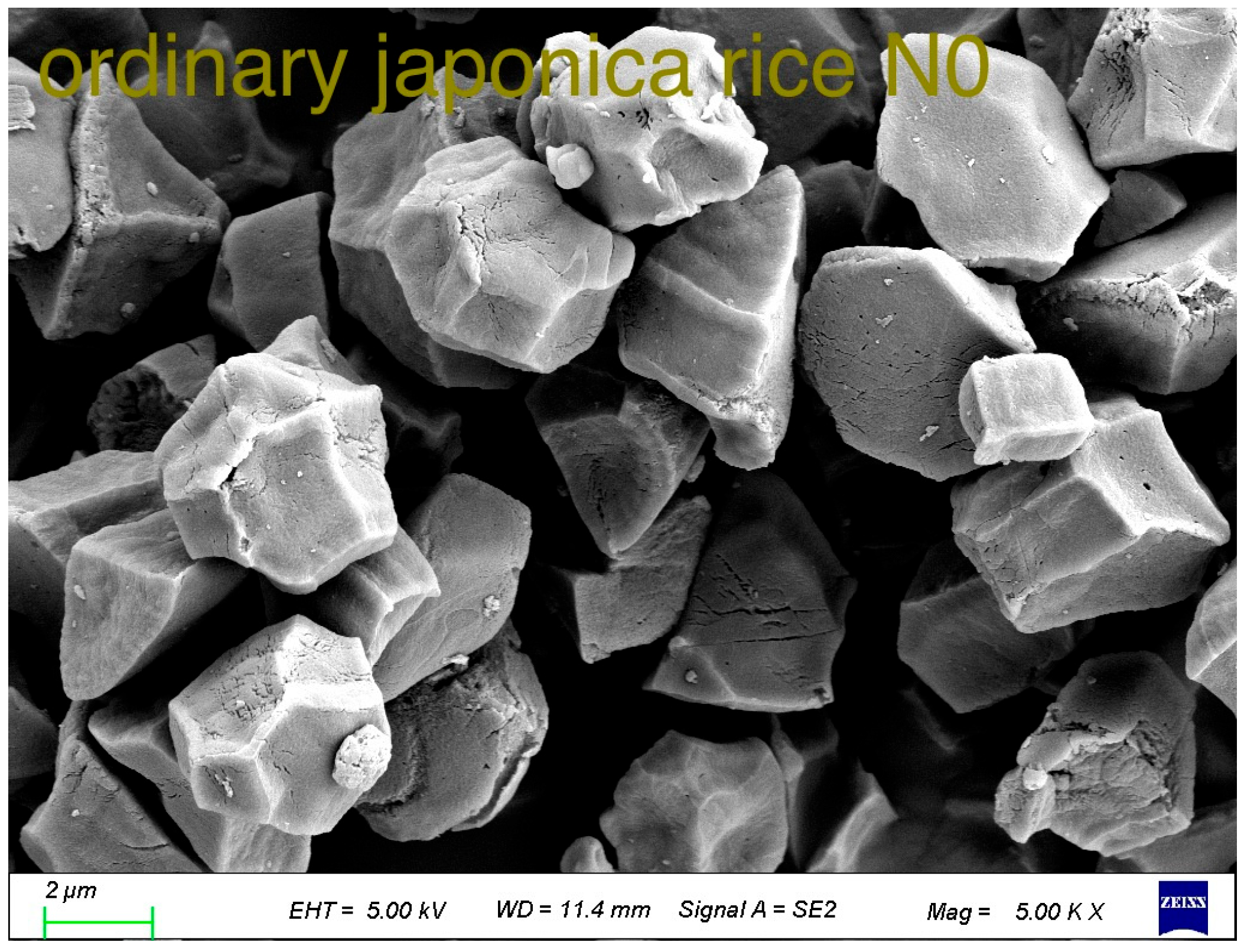
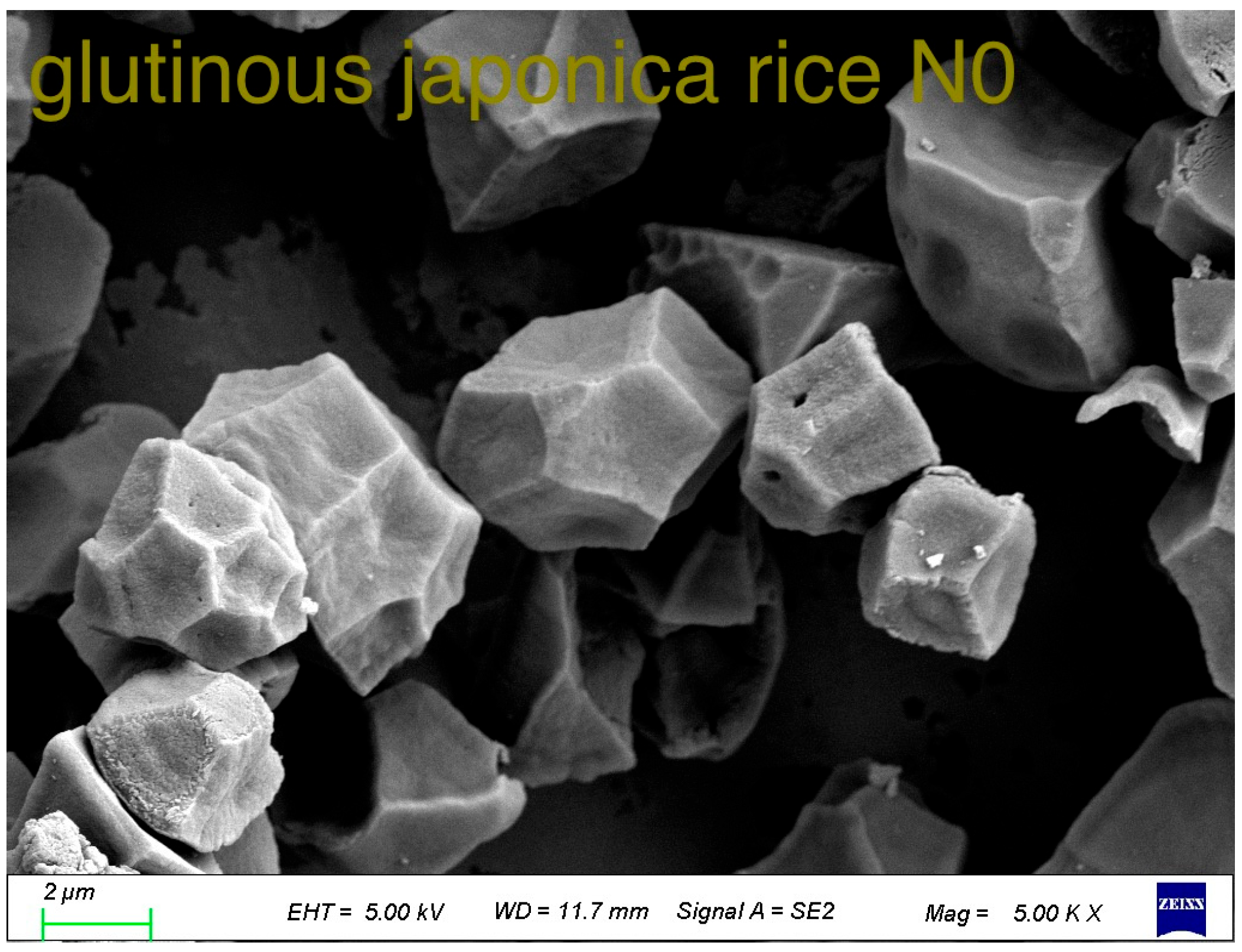
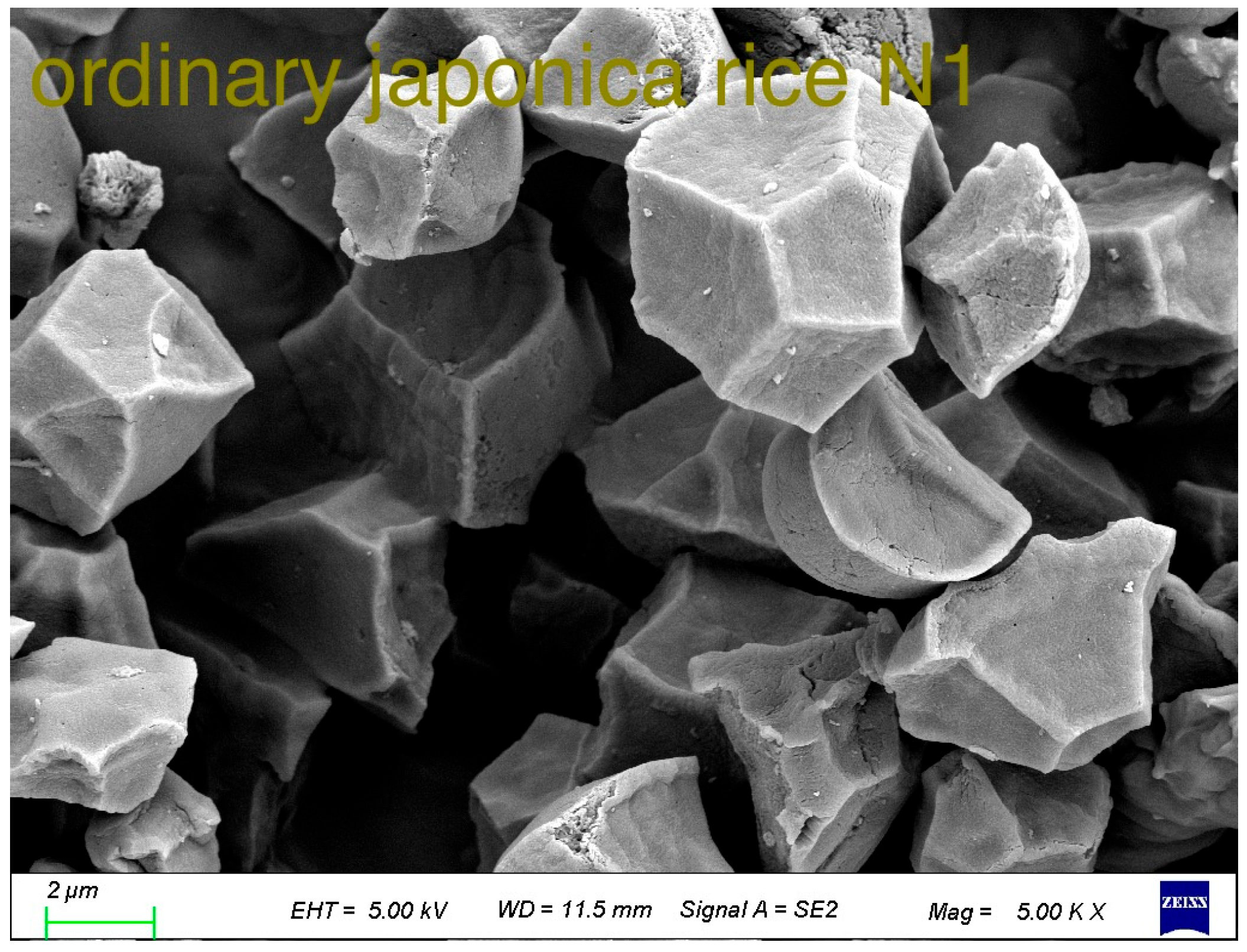
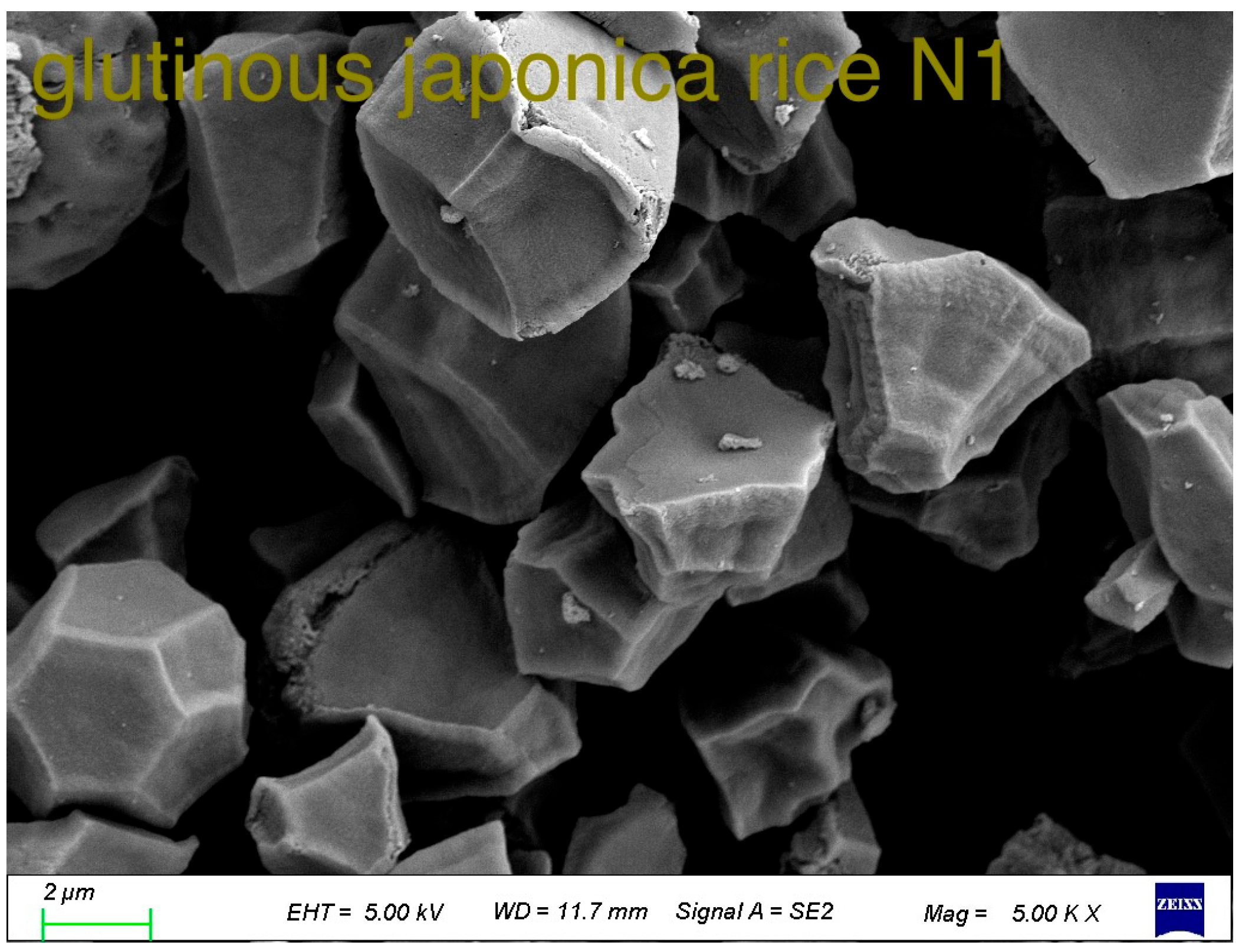
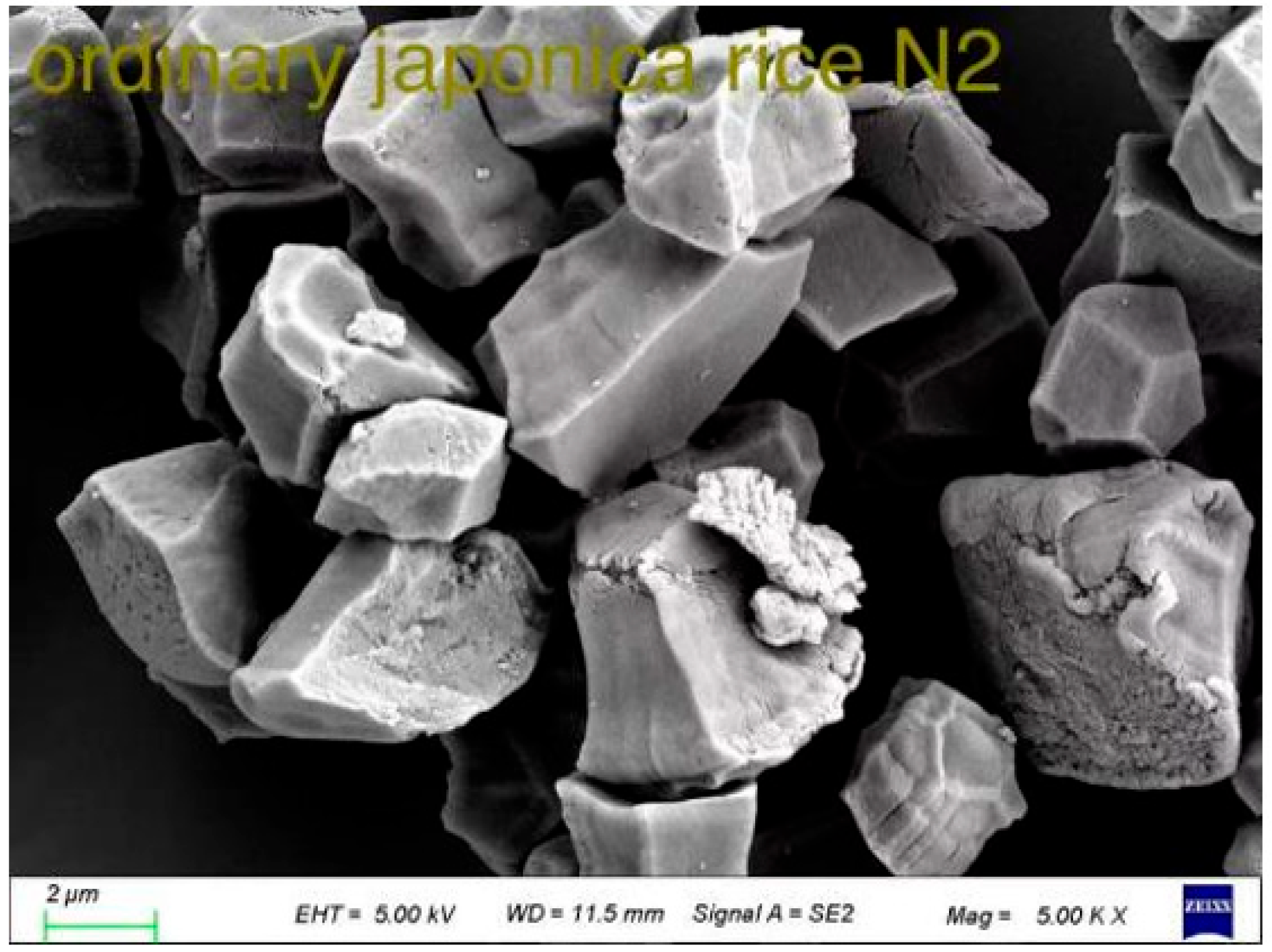
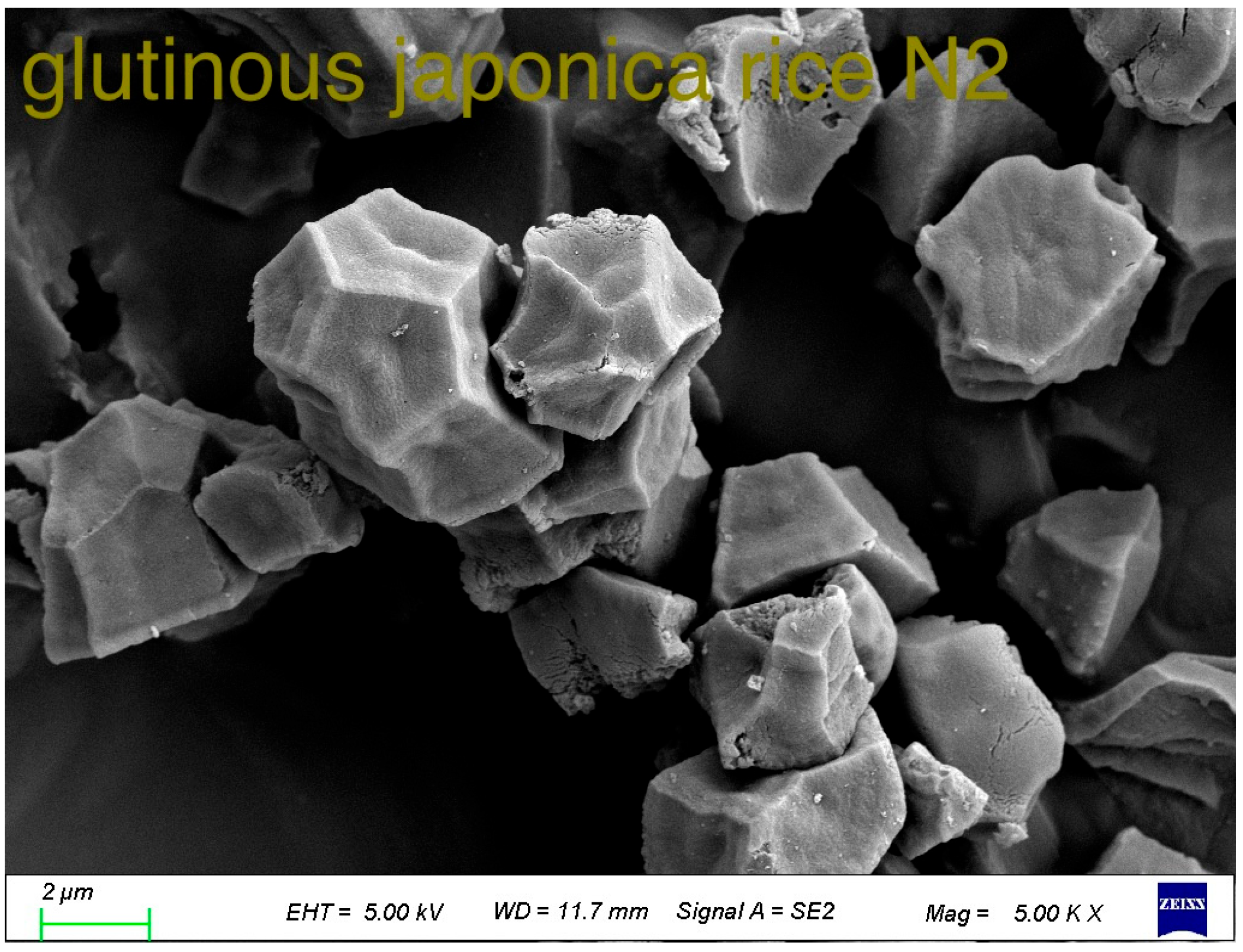
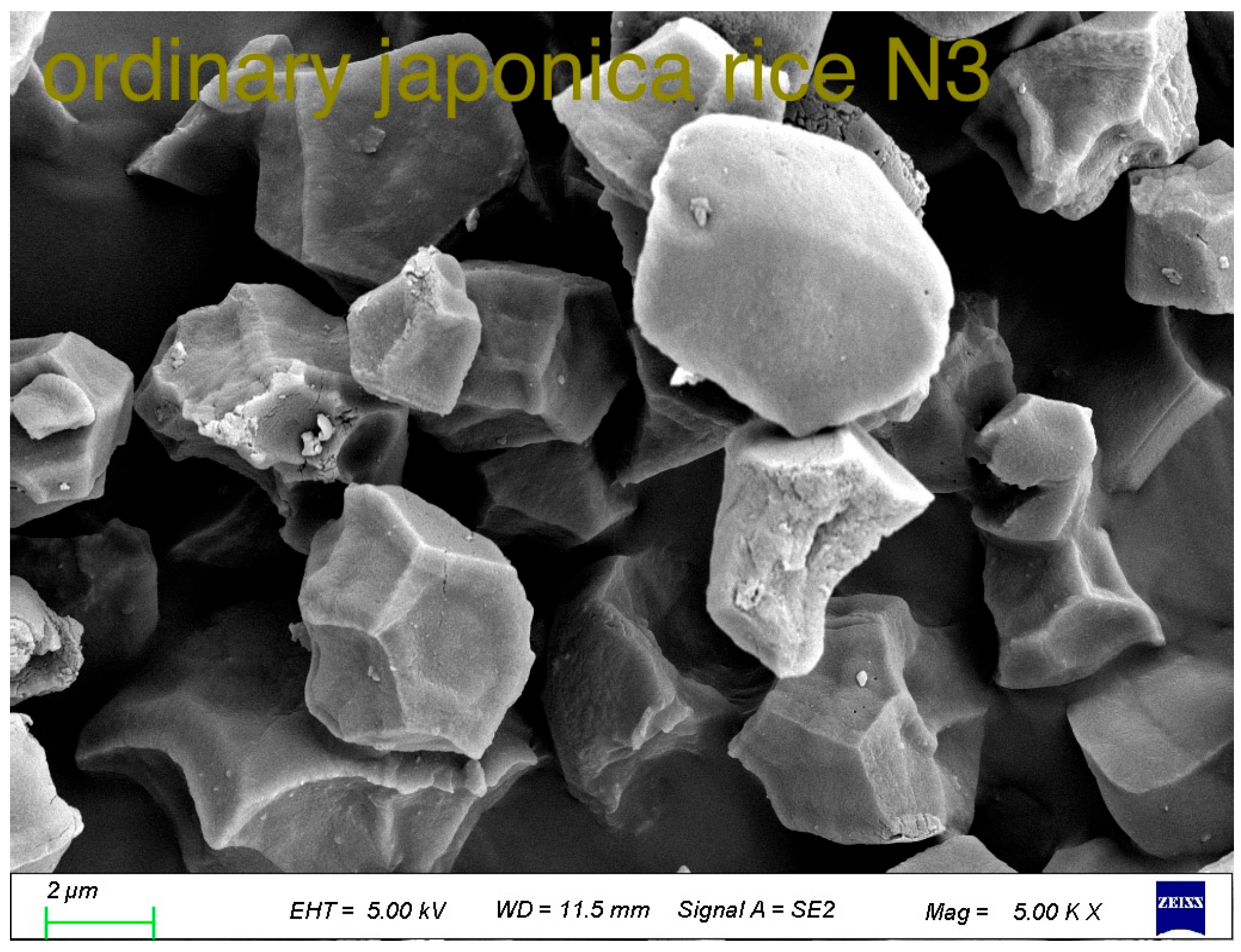
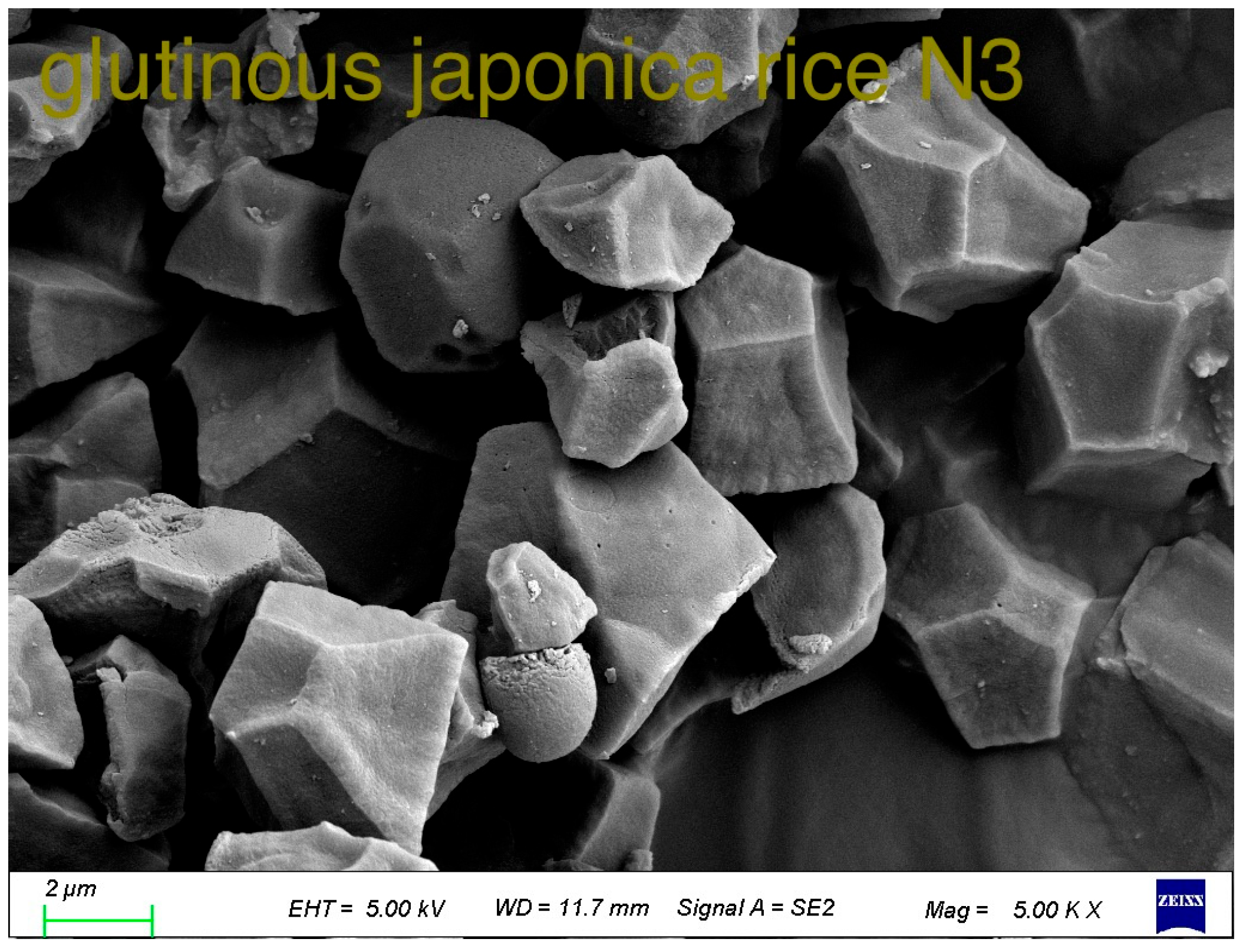
As shown in Figure 1, Figure 2, Figure 3, Figure 4, Figure 5, Figure 6, Figure 7 and Figure 8, common japonica rice exhibited more compound starch granules, with relatively larger starch granules that were mostly polyhedral in shape and had smooth surfaces. In contrast, glutinous japonica rice showed relatively fewer compound granules, with smaller starch granules and more irregular shapes. Starch granules differed significantly under different nitrogen levels. Under the N1 condition, starch granules were mostly regular polygons or ellipses with clear edges. Under the N2 condition, the granule shapes became more irregular, with blurred edges, and phenomena such as breakage and depressions appeared, leading to reduced integrity. The N3 condition resulted in rougher starch granule surfaces, increased pores and cracks, and the attachment of more fine particles.

3.2.2. Particle Size Distribution

Both cultivar type and nitrogen application level had highly significant effects on all starch particle size parameters. Between the different types, the number of large granules, D[3,2] (surface-weighted mean diameter), and D[4,3] (volume-weighted mean diameter) of common japonica rice were significantly higher than those of glutinous japonica rice. In contrast, the numbers of small and medium granules showed the opposite trend, being significantly lower in common japonica rice. This indicates that the average starch granule size of common japonica rice is larger than that of glutinous japonica rice.
Under different nitrogen application rates, the proportions of medium and small granules in both japonica rice types increased with increasing nitrogen application, with the increase being greater in common japonica rice. Conversely, the proportion of large granules decreased with increasing nitrogen application, and the reduction was significantly smaller in common japonica rice. The increases in small granules for common japonica rice were 7.85%, 13.86%, and 20.65%, respectively; for medium granules, 6.55%, 9.72%, and 14.26%; the decreases in large granules were −3.41%, −5.38%, and −7.93%. For glutinous japonica rice, the increases in small granules were 10.66%, 14.06%, and 19.14%, respectively; for medium granules, 2.45%, 6.84%, and 8.71%; the decreases in large granules were −3.95%, −7.30%, and −9.60%. The D[3,2] and D[4,3] values of both japonica rice types gradually decreased with increasing nitrogen application. Table 2. presents the starch granule size distribution of different japonica rice types under various nitrogen application levels.

3.2.3. Starch Composition

As shown in Table 3, both cultivar type and nitrogen application level exhibited highly significant effects on all starch composition parameters. Furthermore, the interaction between cultivar type and nitrogen level also showed highly significant effects on all starch composition indicators, except for total starch content. The starch content of both common japonica rice and glutinous japonica rice decreased with increasing nitrogen application, accompanied by a reduction in the amylose-to-amylopectin ratio. The total starch content decreased more significantly in common japonica rice than in glutinous japonica rice, while the amylose-to-amylopectin ratio was lower in common japonica rice. Compared to the N0 level, the total starch content of common japonica rice decreased by 1.64%, 3.06%, and 4.72% under N1, N2, and N3 treatments, respectively, while glutinous japonica rice decreased by 0.88%, 2.29%, and 3.91%. The amylose-to-amylopectin ratio of common japonica rice decreased by 7.69%, 13.92%, and 17.22%, while that of glutinous japonica rice decreased by 18.75%, 43.75%, and 62.50%. However, under different nitrogen levels, common japonica rice showed significant or highly significant differences in all parameters except amylopectin content, whereas glutinous japonica rice exhibited significant differences only in total starch content.

3.3. Structural and Physicochemical Properties of Starch

3.3.1. Fourier Transform Infrared (FTIR) Spectroscopy Characteristics and Relative Crystallinity

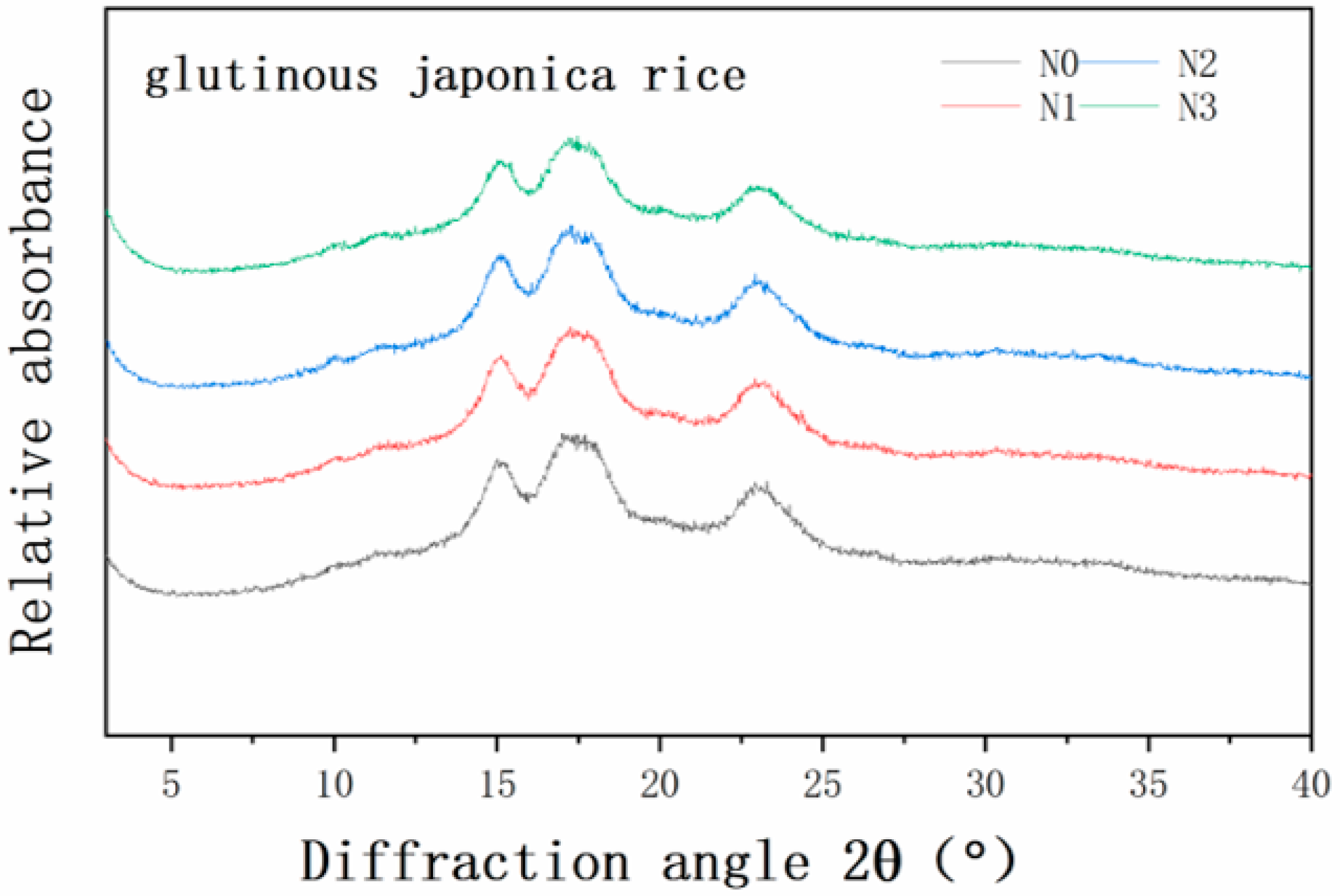
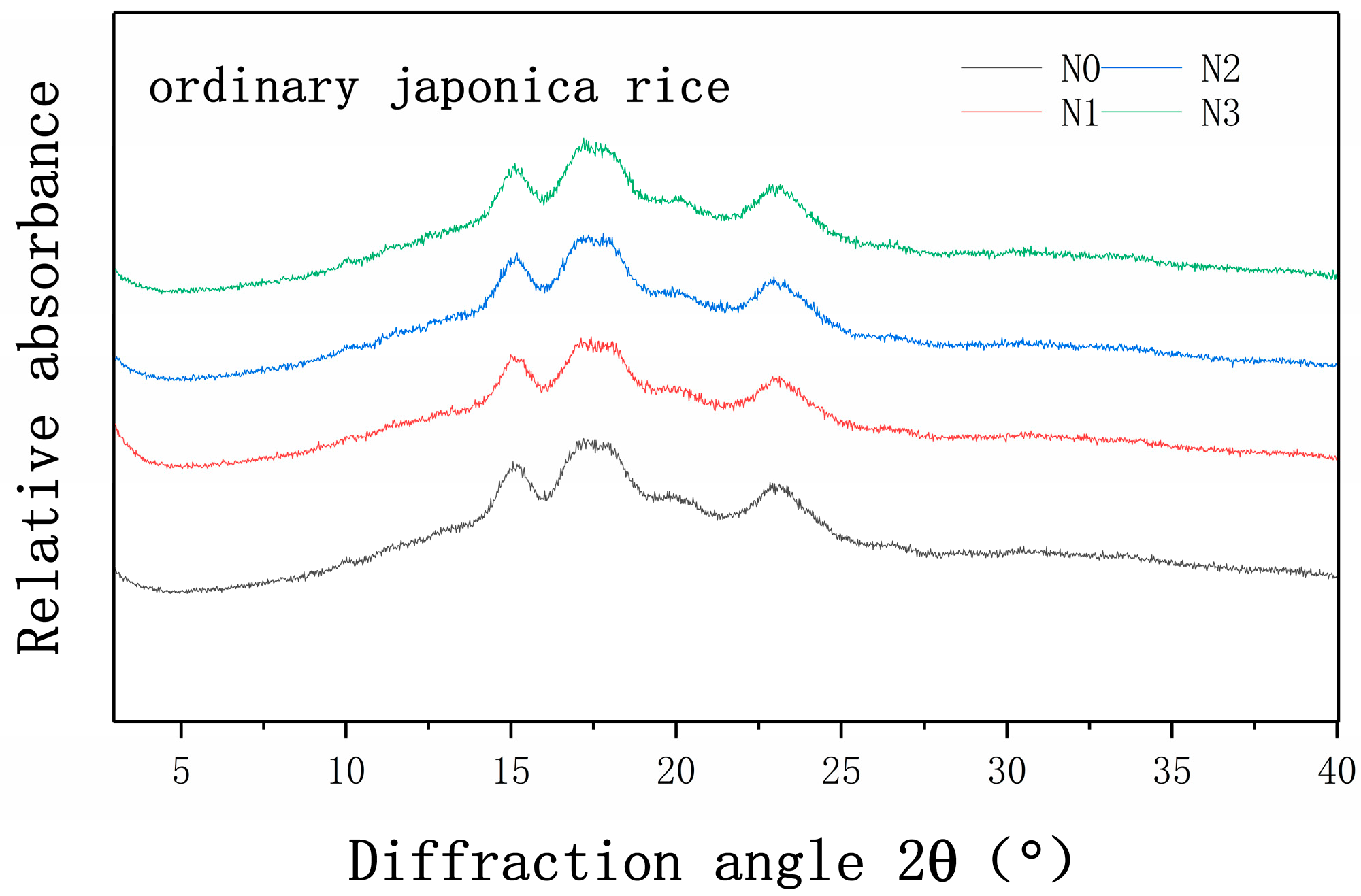
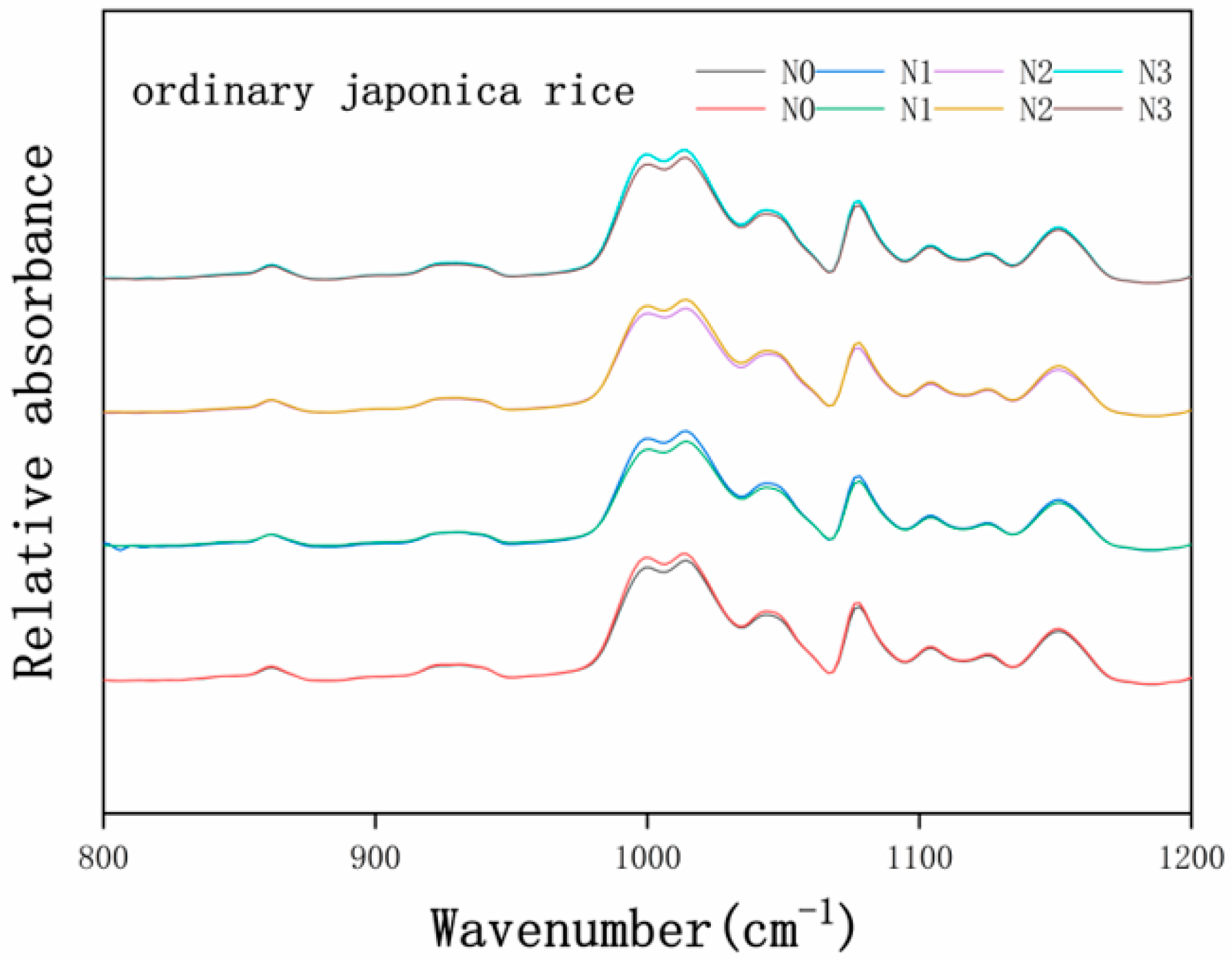
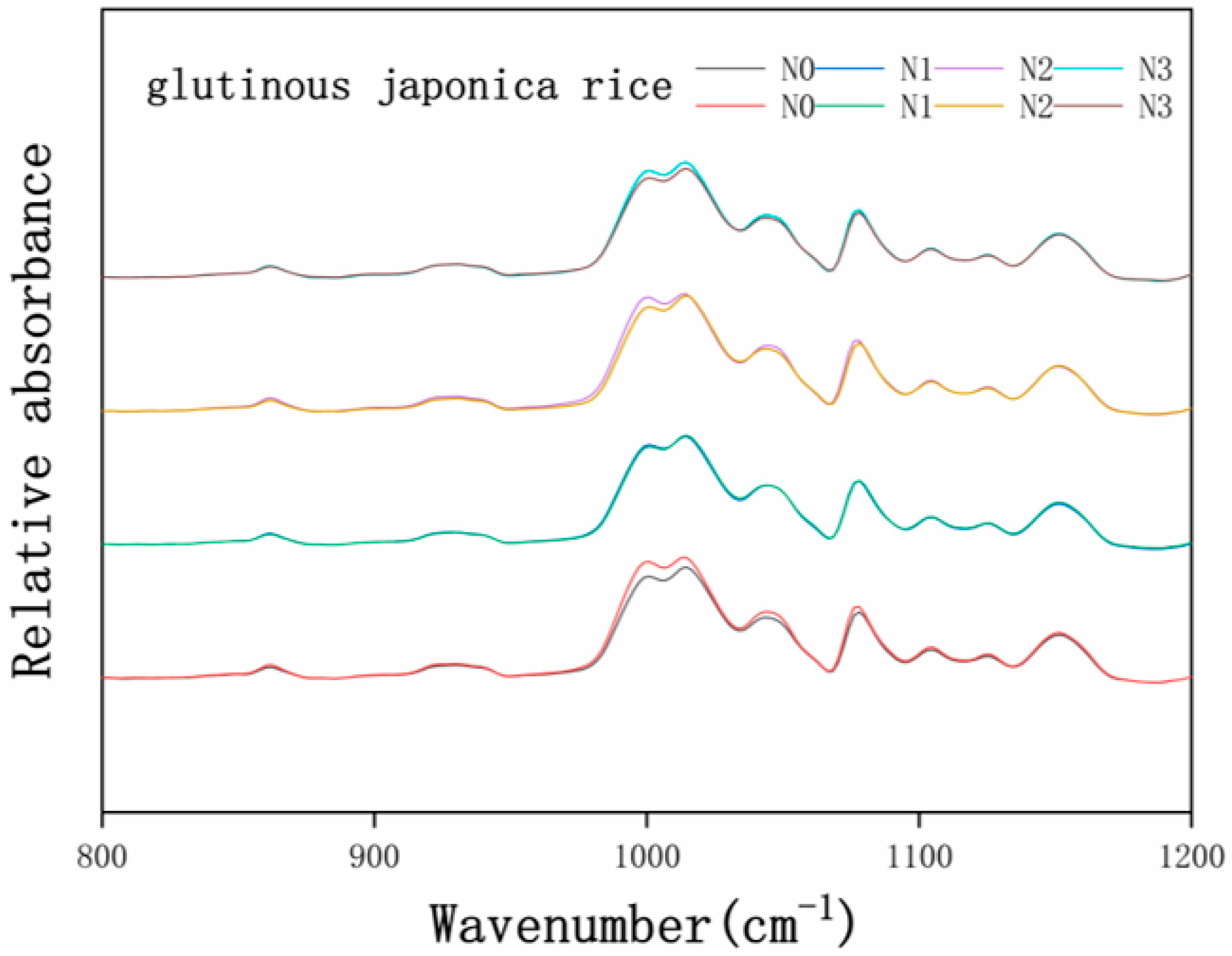
Different experimental treatments did not alter the X-ray diffraction pattern of rice starch, which consistently exhibited an A-type crystal structure (Figure 9 and Figure 10). Both cultivar type and nitrogen application level had highly significant effects on the relative crystallinity of rice starch (Table 4). Between the cultivar types, the relative crystallinity and FTIR ratio of common japonica rice were lower than those of glutinous japonica rice, with the difference in relative crystallinity reaching a highly significant level. Under different nitrogen application levels, the relative crystallinity of both japonica rice types increased with increasing nitrogen application. The increase was smaller in common japonica rice compared to glutinous japonica rice. Relative to the N0 level, the increases in common japonica rice under N1, N2, and N3 treatments were 3.05%, 5.08%, and 10.15%, respectively, while the increases in glutinous japonica rice were 5.38%, 7.17%, and 11.66%, respectively. As shown in Figure 11 and Figure 12, the FTIR spectra provide further insight into the short-range ordered structure of starch granules. The absorption bands at 1045/1022 cm−1 and 1022/995 cm−1 are associated with molecular order and amorphous regions, respectively. With increasing nitrogen application, the 1045/1022 cm−1 ratio showed a decreasing trend, indicating a reduction in molecular order at the starch granule surface. However, these changes were not statistically significant (Table 4).

3.3.2. Solubility and Swelling Power

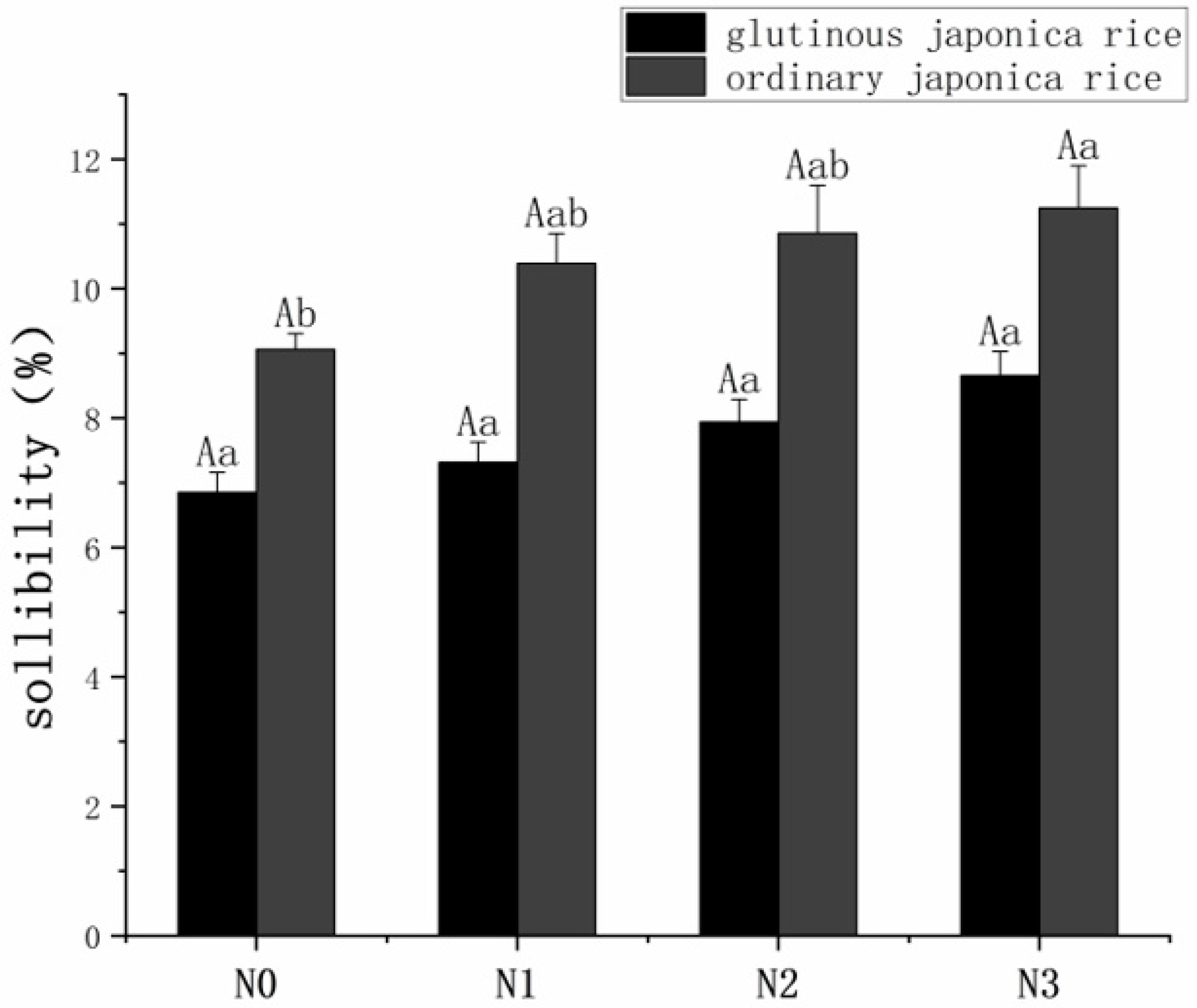
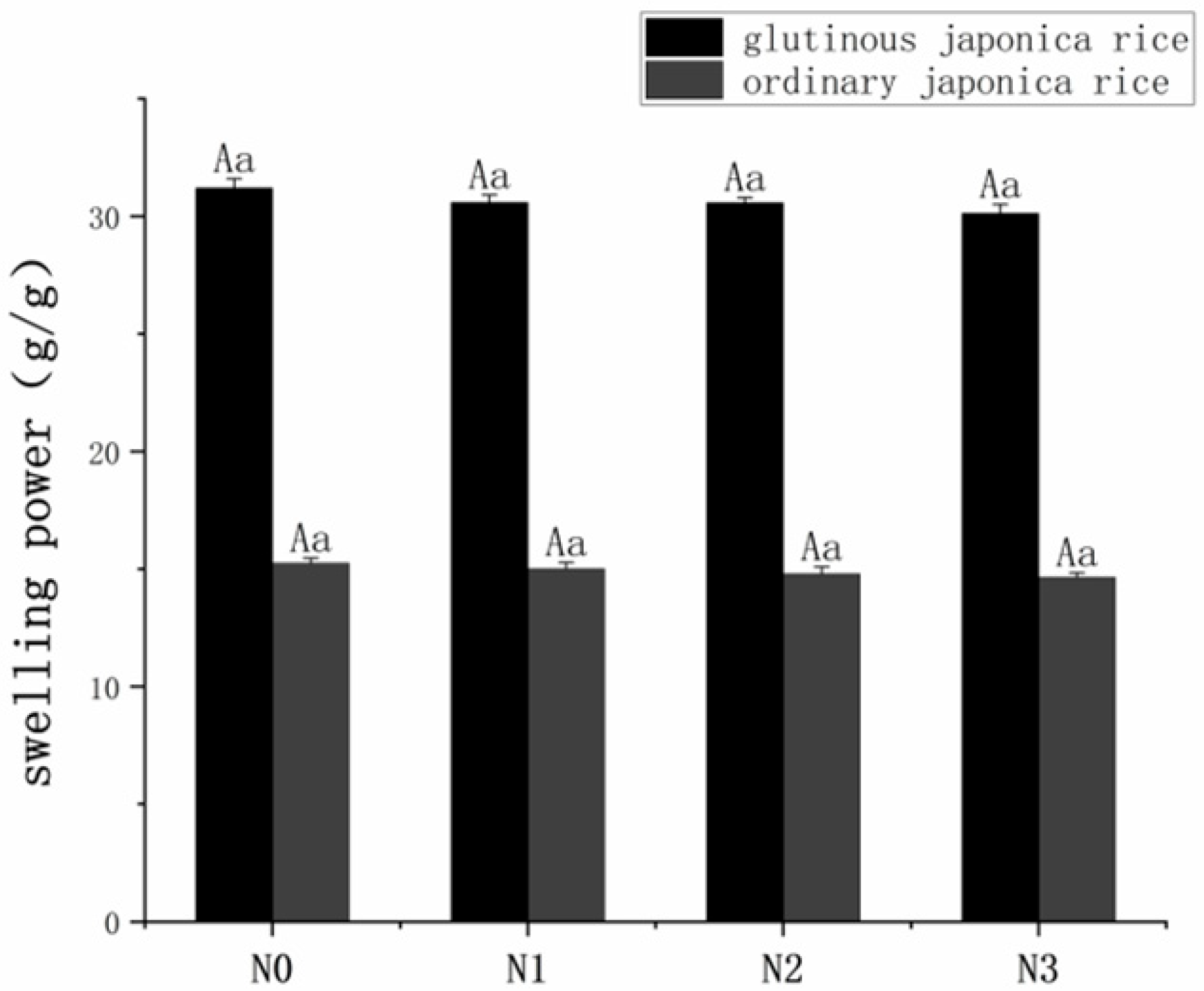
As shown in Figure 13 and Figure 14, distinct differences in solubility and swelling power of starch were observed between the two cultivar types. The solubility of starch from common japonica rice was significantly higher than that of glutinous japonica rice, while the swelling power of starch showed the opposite trend. With increasing nitrogen application, starch from both common and glutinous japonica rice exhibited an increasing trend in solubility and a decreasing trend in swelling power. However, the differences among different nitrogen levels were not statistically significant for either rice type. Figure 13 and Figure 14 present both the solubility and swelling power of starch under different nitrogen application levels for the two cultivar types.

3.3.3. Thermodynamic Properties

As shown in Table 5, both cultivar type and nitrogen application level had highly significant effects on the onset temperature, retrogradation enthalpy, and retrogradation degree. Additionally, cultivar type significantly influenced the peak temperature, while nitrogen level significantly affected the gelatinization enthalpy. The interaction between cultivar type and nitrogen level had a significant effect on the onset temperature. The peak temperature and onset temperature of common japonica rice were significantly lower than those of glutinous japonica rice, whereas its retrogradation enthalpy and retrogradation degree were significantly higher. With increasing nitrogen application, the gelatinization enthalpy, peak temperature, onset temperature, and conclusion temperature of both japonica rice types showed an increasing trend, while retrogradation enthalpy and retrogradation degree exhibited a decreasing trend. The increase in peak temperature was smaller in common japonica rice compared to glutinous japonica rice (relative to the N0 level, the peak temperature of common japonica rice increased by 0.10%, 0.41%, and 0.52% under N1, N2, and N3 treatments, respectively, while glutinous japonica rice increased by 0.78%, 1.61%, and 2.59%). In contrast, the increases in onset and conclusion temperatures were greater in common japonica rice (relative to N0, the onset temperature of common japonica rice increased by 2.41%, 2.46%, and 3.76% under N1, N2, and N3, respectively, while glutinous japonica rice increased by 0.06%, 0.40%, and 1.08%; the conclusion temperature of common japonica rice increased by 3.37%, 5.65%, and 5.79%, while glutinous japonica rice increased by 2.92%, 5.42%, and 6.41%). The reduction in retrogradation degree increased with higher nitrogen application (common japonica rice decreased by 19.80%, 25.90%, and 37.20%; glutinous japonica rice decreased by 7.30%, 17.10%, and 22.80%).

3.4. Correlation Analysis

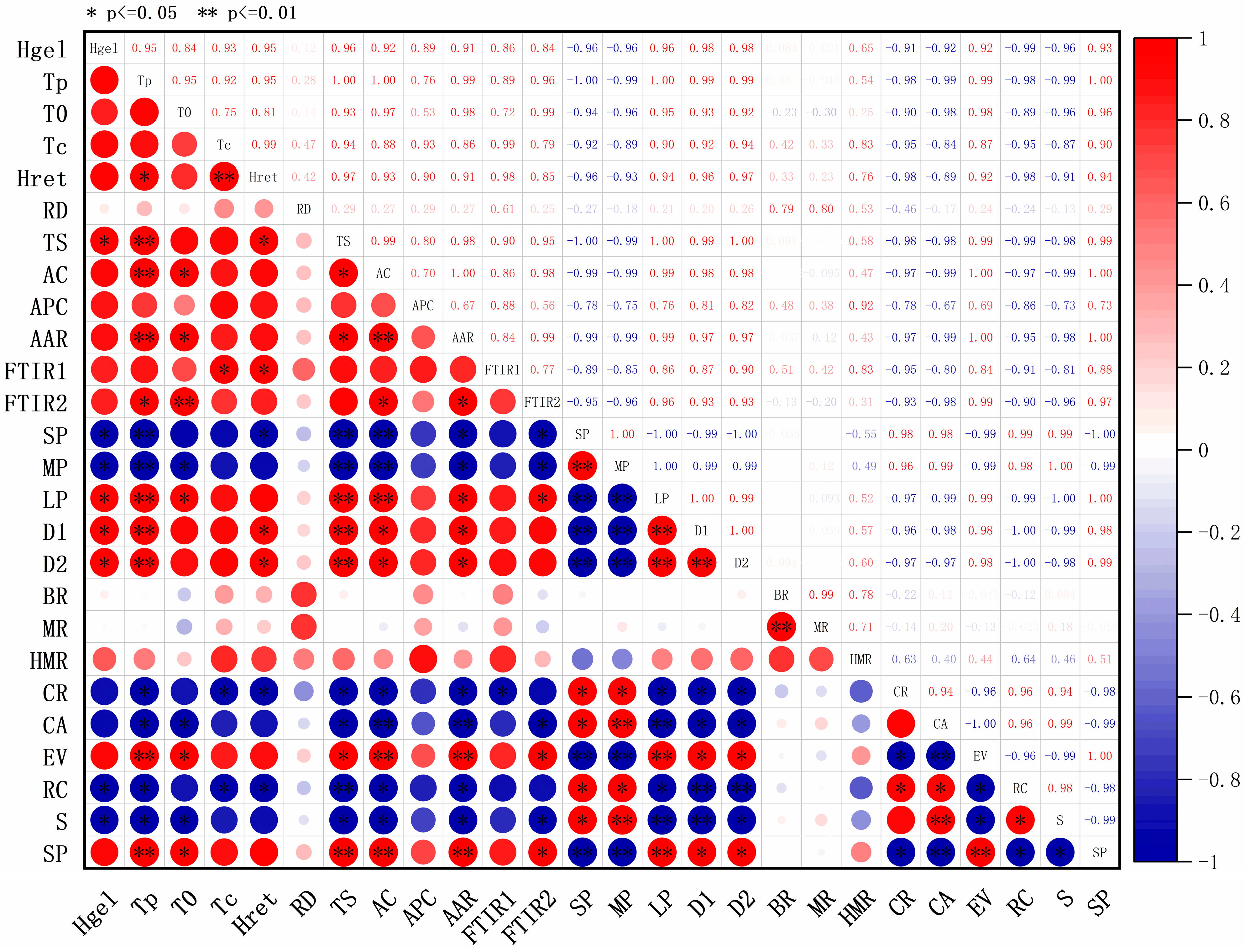
As shown in Figure 15, in terms of starch granule structure, small granule content showed a highly significant positive correlation with medium granule content, but exhibited highly significant negative correlations with large granule content and the particle size parameters D[2,3] and D[3,4]. The contents of medium and small granules were significantly or highly significantly positively correlated with chalky area and solubility, but highly significantly negatively correlated with taste value and swelling power. Regarding starch composition, both total starch content and amylose content were highly significantly positively correlated with large granule content and swelling power, while being highly significantly negatively correlated with the contents of small and medium granules. Furthermore, total starch content showed highly significant positive correlations with the particle size parameters D[2,3] and D[3,4], but a highly significant negative correlation with relative crystallinity.
Both amylose content and the amylose-to-amylopectin ratio were highly significantly negatively correlated with chalky area and positively correlated with taste value. Additionally, the amylose-to-amylopectin ratio showed a highly significant positive correlation with swelling power. Concerning thermodynamic properties, peak temperature demonstrated a highly significant positive correlation with chalky grain rate, while conclusion temperature showed a highly significant negative correlation with the FTIR ratio of 1022/995 cm−1. Retrogradation degree was highly significantly negatively correlated with medium granule content, chalky area, and solubility, but highly significantly positively correlated with large granule content. In final quality performance, chalky area was highly significantly negatively correlated with taste value and swelling power, but highly significantly positively correlated with solubility. Meanwhile, a highly significant positive correlation was observed between taste value and swelling power.
* and ** indicate significance at the 5% and 1% probability levels, respectively.

4. Discussion

Xu Jian et al. [19] demonstrated that there was no significant difference in milling quality between the commonly cultivated common japonica rice and soft japonica rice in Jiangsu Province. However, common japonica rice exhibited superior appearance quality, with significantly lower chalky grain rate and chalkiness degree compared to soft japonica rice. Nevertheless, appropriate nitrogen application at later growth stages can effectively improve the milling quality of different rice varieties, increasing brown rice rate and head rice rate [20]. In this study, the milling quality of common japonica rice was significantly higher than that of glutinous japonica rice, particularly after nitrogen application. The two types showed differential responses: common japonica rice achieved optimal milling quality at 80 kg N/ha, whereas the milling quality of glutinous japonica rice continuously improved with increasing nitrogen application, though the rate of improvement diminished at high nitrogen levels. This may be attributed to differences in nitrogen tolerance ranges between the two cultivar types, with glutinous japonica rice having a broader nitrogen tolerance range than common japonica rice [18,20,21]. Furthermore, the appearance quality of common japonica rice gradually deteriorated with increasing nitrogen application. This could be due to increased grain numbers under higher nitrogen rates leading to uneven distribution of grain-filling substances, resulting in larger voids between starch granules in the abdominal and central parts of the grains, and ultimately affecting appearance quality [22]. Regarding cooking and eating quality, Wang Yan [23] reported that increased nitrogen application reduces rice taste value. This study also found that the taste value of glutinous japonica rice was higher than that of common japonica rice, and both significantly decreased with increasing nitrogen application, which is generally consistent with previous research findings. From a sustainability perspective, these findings highlight the importance of optimizing nitrogen fertilizer application rather than maximizing nitrogen input.
It should be noted that recent studies have increasingly focused on biological fertilization strategies, such as nitrogen-fixing microorganisms, to reduce synthetic nitrogen inputs. However, conventional nitrogen fertilization remains the dominant practice in large-scale rice production systems. Therefore, the present study focuses on optimizing nitrogen application rates within existing production systems rather than evaluating alternative fertilization approaches. Excessive nitrogen application does not necessarily improve grain quality and may reduce eating quality, indicating inefficient use of nitrogen resources. Improving nitrogen use efficiency is a key objective of sustainable agriculture, as it helps reduce environmental risks such as nitrogen loss, greenhouse gas emissions, and soil degradation while maintaining high-quality crop production.
The quality of rice is primarily determined by the starch present in the endosperm, which mainly exists in the form of starch granules. Variations in the morphology and size distribution of rice starch granules significantly influence their physicochemical properties. Previous studies have indicated that nitrogen fertilizer plays a notable regulatory role in the morphological characteristics of starch granules. Tang Jian et al. [17]. observed that under zero nitrogen application, rice starch granules predominantly exhibited regular polyhedral structures with relatively smooth surfaces. However, as nitrogen application increased, the granule surfaces became progressively rougher, with an increase in small granules adhering to larger ones and even the appearance of depressions. Yang Biao [24] further noted that starch granules under the zero nitrogen treatment (N0) had the smoothest surfaces, while nitrogen application promoted irregular granule morphology and increased the number of small starch granules. The findings of this study align with these observations: starch granules of both japonica rice types displayed typical polyhedral structures under zero nitrogen treatment, but as nitrogen levels increased, surface roughness intensified, and the adherence of small granules to larger ones became more prevalent.
This change may be associated with alterations in the carbon–nitrogen metabolic balance within rice grains due to nitrogen fertilization: increased nitrogen availability redirects more carbon sources and energy toward protein synthesis, thereby affecting normal starch accumulation and structural formation, ultimately leading to the “roughening” of starch granule surfaces [25]. Simultaneously, differences were observed between the two cultivar types. Under the same nitrogen level, glutinous japonica rice exhibited fewer compound granule structures. Analysis of starch granule size revealed that the average granule size of glutinous japonica rice was significantly smaller than that of common japonica rice. In this regard, Shen Yong et al. [26] similarly found that the effect of nitrogen application rate on starch granule size and quantity varied with rice type. With increasing nitrogen application, rice varieties with higher amylose content showed a significant increase in small granules (<1.5 μm) and a significant decrease in medium (1.5–20 μm) and large (>20 μm) granules. In contrast, varieties with lower amylose content initially exhibited a decrease followed by an increase in small granules, while medium and large granules first increased and then decreased. However, different nitrogen application levels significantly influenced the granule size distribution of all japonica rice types. In this experiment, starch granules of japonica rice were categorized into three types: small (<2 μm), medium (2–5 μm), and large (>5 μm). The study found that as nitrogen application increased, the proportion of small and medium starch granules increased, while the proportion of large starch granules decreased, consistent with previous research findings. The primary reason for this is the differential synthesis periods of starch granules of varying sizes: large granules mainly form during the early grain-filling stage, while medium and small granules primarily develop during the later stages [27].
Increased nitrogen application prolongs the grain-filling period of rice, promoting the breakdown of large granules into medium and small ones, ultimately resulting in a trend of decreasing large granules and increasing medium and small granules. These structural changes suggest that excessive nitrogen application alters the physiological balance of starch biosynthesis, which may reduce resource use efficiency and negatively affect grain functional quality. From a sustainable production standpoint, maintaining appropriate nitrogen levels is essential to ensure efficient conversion of nitrogen into desirable grain quality traits while avoiding unnecessary resource inputs and environmental burden. During the process of increasing nitrogen application, a competitive relationship exists between protein synthesis and starch granule formation. Wang Jing [28] proposed that proteins inhibit starch granule development either by influencing the physical properties of starch granules or acting enzymatically to affect starch biochemistry. Li Yunxiang et al. [29] demonstrated that increased nitrogen application reduces amylose content but does not affect amylopectin accumulation, thereby lowering the amylose-to-amylopectin ratio and subsequently influencing the cooking and eating quality of rice. This study confirms that amylose content decreases with higher nitrogen application rates, consistent with previous reports. However, it was also observed that amylopectin content decreases, though the differences among nitrogen levels were not statistically significant.
The reduction in both amylose and amylopectin contents collectively impacts the cooking and eating quality of rice. These findings further emphasize that excessive nitrogen input may disrupt the biochemical balance of starch synthesis, highlighting the importance of precise nitrogen management to improve nitrogen use efficiency and ensure sustainable grain quality formation. Relative crystallinity is an important parameter characterizing the crystalline properties of starch granules and influences their physicochemical characteristics. The ordered surface structure of starch granules is positively correlated with relative crystallinity, and the amount of this ordered structure affects the stickiness of cooked rice. A higher content promotes the dissolution of more amylopectin from the starch granule surface during cooking, thereby enhancing rice stickiness [30]. Li Yuwei et al. [31] found that nitrogen application did not alter the crystalline type of rice starch but significantly increased its relative crystallinity with increasing nitrogen rates.
This study observed that the relative crystallinity of both common japonica and glutinous japonica rice increased with higher nitrogen application, consistent with the findings of Tang Jian et al. [17]. This may be attributed to enhanced activities of starch branching enzymes and starch synthases under sufficient nitrogen supply, favoring the formation of amylopectin structures with higher crystallinity [32]. Fourier transform infrared spectroscopy can be used to study the ordered surface structure of starch granules. The intensity ratios of the FTIR bands at 1045/1022 cm−1 and 1022/995 cm−1 are considered indicators of the ordered structure in starch granules. Specifically, the 1045/1022 cm−1 ratio reflects the degree of molecular order, with a higher ratio indicating greater order [33]. In this experiment, the 1045/1022 cm−1 ratio decreased with increasing nitrogen application, while the 1022/995 cm−1 ratio increased. This phenomenon may result from the increase in small starch granules induced by higher nitrogen application [34].
The solubility and swelling power of rice starch granules are key physicochemical properties that determine their processing and eating qualities. Most studies have found a significant negative correlation between amylose content and swelling power [35,36]. This study observed that with increasing nitrogen application, amylose content decreased, solubility increased, and swelling power decreased in all japonica rice types, which aligns with previous research. Xue Wei [37] reported that soft rice exhibits higher starch solubility but lower swelling power compared to common japonica rice. However, this study found that common japonica rice had higher solubility but lower swelling power than glutinous japonica rice. The discrepancy may be attributed to differences in rice cultivar types. Common japonica rice, with its higher amylose content, tends to be more soluble in water, while exhibiting lower swelling power. This relationship holds significant implications for food processing and starch applications.
Numerous studies have investigated the effects of nitrogen application rate on the thermodynamic properties of rice starch, with most indicating that high nitrogen treatments result in higher gelatinization temperatures and gelatinization enthalpy compared to low nitrogen treatments, while retrogradation values decrease with increasing nitrogen application [38,39]. In this study, gelatinization enthalpy and gelatinization temperature increased with higher nitrogen application rates, and these values were significantly greater in nitrogen-treated plots than in the zero-nitrogen control. Conversely, retrogradation enthalpy and retrogradation degree decreased. Consequently, increased nitrogen application made rice more difficult to cook and led to a decline in cooking and eating quality. However, slight differences were observed between the two cultivar types. After increased nitrogen application, the increases in onset and conclusion temperatures were greater in common japonica rice than in glutinous japonica rice, and the reduction in retrogradation degree was also more pronounced. This indicates that the cooking and eating quality of common japonica rice is more significantly affected by increased nitrogen application than that of glutinous japonica rice.
These results reinforce the importance of optimizing nitrogen input levels to achieve a balance between production efficiency and grain quality, which is a fundamental principle of sustainable agricultural systems aimed at maximizing productivity while minimizing environmental impacts. In summary, nitrogen application rate significantly affects the quality of japonica rice, with differential responses observed between cultivar types: common japonica rice achieves optimal milling quality under moderate nitrogen application (80 kg/hm2), whereas glutinous japonica rice shows continuous improvement in milling quality with increasing nitrogen rates. However, increased nitrogen application leads to deterioration in appearance quality and a significant decline in taste value. Regarding starch structure and physicochemical properties, higher nitrogen application results in rougher starch granule morphology, increased proportions of small and medium-sized granules, and elevated relative crystallinity, but reduces molecular order. Simultaneously, amylose content decreases, solubility increases, while swelling power and retrogradation degree decline. These changes collectively contribute to increased cooking difficulty and reduced eating quality. Therefore, nitrogen fertilizer management should be rationally adjusted according to cultivar type to optimize rice quality in production. From a sustainability perspective, identifying optimal nitrogen application levels that maintain grain quality while improving nitrogen use efficiency is essential for promoting environmentally sustainable rice production and supporting long-term agricultural sustainability [40,41].

5. Conclusions

This study demonstrated that nitrogen fertilizer application significantly influences the milling quality, starch structure, and physicochemical properties of common and glutinous japonica rice, with clear differences observed between cultivar types. Moderate nitrogen application improved milling quality, particularly in common japonica rice, which achieved optimal performance at 80 kg N/hm2, while glutinous japonica rice showed continued improvement at higher nitrogen levels, although with diminishing returns. However, excessive nitrogen application resulted in deterioration of appearance quality and a decline in eating quality, as reflected by increased chalkiness and reduced taste value. Specifically, common japonica rice achieved optimal milling quality at 80 kg N/hm2 (N1), while glutinous japonica rice reached its highest milling performance at 190 kg N/hm2 (N3). Compared with the N0 treatment, the taste value of common japonica rice decreased by 5.12%, 8.66%, and 11.02% under N1, N2, and N3, respectively, whereas glutinous japonica rice showed smaller reductions of 2.45%, 3.85%, and 6.29%. In addition, the chalky grain rate of common japonica rice increased from 3.267% to 6.080% with increasing nitrogen application, indicating a substantial deterioration in appearance quality under high nitrogen input. These changes were associated with significant alterations in starch granule morphology, including increased proportions of small and medium granules, reduced amylose content, increased relative crystallinity, and modified physicochemical properties, such as increased solubility and reduced swelling power and retrogradation degree.
Overall, nitrogen application regulates rice quality through its impact on starch structural organization and functional properties, and the magnitude of these effects differs between cultivar types. The results highlight a clear trade-off between improving milling quality and maintaining eating quality under increasing nitrogen input.
From a management perspective, the findings indicate that optimizing nitrogen application rates, rather than maximizing input, is essential for achieving desirable grain quality and improving fertilizer use efficiency. While this study does not evaluate alternative fertilization strategies such as biological nitrogen inputs, it provides mechanistic evidence supporting more precise nitrogen management within existing rice production systems. Such an approach can contribute to reducing unnecessary nitrogen application and improving resource-use efficiency in large-scale rice cultivation [40,41].

Author Contributions

Conceptualization, B.J.; Methodology, B.J.; Validation, X.Y.; Formal analysis, D.H.; Investigation, X.Y.; Resources, B.J.; Data curation, D.H.; Writing—original draft, D.H.; Writing—review and editing, D.H.; Visualization, D.H.; Supervision, B.J.; Project administration, D.H.; Funding acquisition, B.J. All authors have read and agreed to the published version of the manuscript.

Funding

This study was supported by the Strategic Priority Research Program of the Chinese Academy of Sciences (XDA28100200).

Institutional Review Board Statement

Not applicable.

Informed Consent Statement

Not applicable.

Data Availability Statement

The raw data supporting the conclusions of this article will be made available by the authors on request.

Conflicts of Interest

The authors declare no conflicts of interest.

References

  1. Zhang, Q.F. Strategies for developing green super rice. Proc. Natl. Acad. Sci. USA 2007, 104, 16402–16409. [Google Scholar] [CrossRef] [PubMed]
  2. Sun, X.R.; Bian, J.Y.; Shao, K.; Liu, L.S.; Li, J.; Wang, D.; Liu, K.; Dong, Q.H. Technical regulations for rice seedling cultivation in saline-alkali areas of western Heilongjiang Province. Heilongjiang Agric. Sci. 2025, 128–131. [Google Scholar] [CrossRef]
  3. Liu, A.J.; Lin, J.Y.; Le, Y.; Ben, Z.Y.; Liu, X.Y.; Zhang, X.W.; Wang, S.; Shang, Q.Y. Analysis of agronomic traits of 15 rice varieties in high-latitude cold regions of Heilongjiang Province. Anhui Agric. Sci. 1–4. Available online: https://link.cnki.net/urlid/34.1076.S.20250728.1850.008 (accessed on 27 February 2026).
  4. Zheng, B.W.; Wang, S.P.; Wan, L.; Che, G.; Zhang, L.G.; Wang, X. Experimental study on rice yield measurement in Heilongjiang. Mod. Agric. Res. 2025, 31, 71–77. [Google Scholar] [CrossRef]
  5. Xiao, S.S. Study on Young Consumers’ Evaluation Of Rice Eating Quality. Master’s Thesis, Shanghai Normal University, Shanghai, China, 2022. [Google Scholar] [CrossRef]
  6. Liu, Q.; Liu, Y.Q.; Chang, H.L.; Ma, C.; Wang, J.Z.; Men, L.N.; Wang, C.L.; Nie, S.J. Challenges and strategies for the development of japonica rice industry in Heilongjiang Province. Grain Oil Food Sci. Technol. 2025, 33, 99–107. [Google Scholar]
  7. Wang, Y.F. The functions of glutinous rice in ancient China. Anc. Mod. Agric. 2024, 15–22+14. [Google Scholar]
  8. Wang, Z.Q. Identification of Characteristics of Different Glutinous Rice Varieties. Master’s Thesis, Zhejiang Normal University, Jinhua, China, 2024. [Google Scholar] [CrossRef]
  9. Huang, Q. Effects of different nitrogen levels on the cultivation of high-quality late japonica rice. Shanghai Agric. Sci. Technol. 2025, 102–106. [Google Scholar]
  10. Lin, L.T.; Han, X.X.; Yu, Z.Y.; Sun, X.; Huang, Y.; Zeng, D. Regulation of plant photosynthesis on soil respiration under nitrogen addition in a sandy grassland. Chin. J. Appl. Ecol. 2019, 30, 3019–3027. [Google Scholar]
  11. Zhang, C.; Liu, Z.K. Effect analysis of different nitrogen application rates on soil respiration in paddy fields and optimization of nitrogen application scheme. Water Sci. Cold Reg. Eng. 2019, 2, 33–38. [Google Scholar]
  12. Jin, Z.X.; Qiu, T.Q.; Sun, Y.L.; Zao, J.M.; Jin, X.Y. Effects of nitrogen fertilizer on chalkiness and cooking/eating quality characteristics of rice. J. Plant Nutr. Fertil. 2001, 31–35+10. [Google Scholar]
  13. Pan, Z.Y.; Jiang, H.B.; Lyu, J.; Liu, J.; Xie, W.X.; Yao, J.P.; Liu, L. Analysis of the effects of different nitrogen application rates on yield and quality of Liaojing 1540. Agric. Sci. Technol. Commun. 2025, 63–66+70. [Google Scholar]
  14. Li, H.Y.; Zhou, X.S.; Yang, X.T.; Liu, M.H.; Zhao, H.C.; Zheng, G.P.; Chen, L.Q.; He, C. Effects of nitrogen reduction on yield, quality and lodging resistance of rice in cold region. J. Heilongjiang Bayi Agric. Univ. 2019, 31, 1–8. [Google Scholar]
  15. Liu, H.; Zhang, J.J.; Wei, H.Z.; Wu, H. Study on balanced fertilization technology for late-maturing rice Huasheng 3 in Hanzhong rice area. Shaanxi J. Agric. Sci. 2018, 64, 11–12+24. [Google Scholar]
  16. Che, X.Q.; Li, Z.Y.; Xing, Y.N.; Guo, L.; Zhang, L.L.; Sang, H.X. Evaluation of blast resistance of Yanjing series rice varieties (lines) under nitrogen management and the impact of blast on rice quality. North Rice 2023, 53, 10–13+19. [Google Scholar] [CrossRef]
  17. Tang, J. Effects of Nitrogen Application Rate on Yield Formation, Quality, and Nitrogen Absorption and Utilization Characteristics of Machine-Transplanted High-Quality Double-Cropping Late Rice. Master’s Thesis, Yangzhou University, Yangzhou, China, 2020. [Google Scholar]
  18. Cheng, C.; Zeng, Y.J.; Wang, Q.; Tan, X.M.; Shang, Q.Y.; Zeng, Y.H.; Shi, Q.H. Effects of nitrogen application rate on yield, quality and nitrogen absorption and utilization of late japonica rice Yongyou 1538. J. Soil Water Conserv. 2018, 32, 222–228. [Google Scholar]
  19. Xu, J. Response of Main Japonica Rice Varieties and Their Yield, Quality, and Benefits to Nitrogen Fertilizer in Jiangsu from 2016 to 2020. Master’s Thesis, Yangzhou University, Yangzhou, China, 2024. [Google Scholar]
  20. Ma, Q. Effects of Nitrogen Application Rate on Rice Quality of Different Variety Types. Master’s Thesis, Yangzhou University, Yangzhou, China, 2009. [Google Scholar]
  21. Jiang, H.X.; Huang, H.; Wang, Y.; Zhao, C.; Wang, W.L.; Huo, Z.Y. Effects of side-deep fertilization with reduced slow-release urea on yield and quality of rice in the middle and lower reaches of the Yangtze River. J. Henan Agric. Sci. 2022, 51, 20–29. [Google Scholar]
  22. Li, G.S. Effects of Nitrogen and Soil Moisture During Grain Filling Stage on Rice Quality. Master’s Thesis, Yangzhou University, Yangzhou, China, 2007. [Google Scholar]
  23. Wang, Y. Effects of Nitrogen Application Rate and Pre-Harvest Drainage Time on Yield, Rice Quality and Population Quality of Japonica Rice. Master’s Thesis, Yangzhou University, Yangzhou, China, 2024. [Google Scholar]
  24. Yang, B. Effects of Nitrogen Reduction on Rice Eating Quality and Starch Physicochemical Properties. Master’s Thesis, Yangzhou University, Yangzhou, China, 2022. [Google Scholar]
  25. Yang, S.J.; Han, Z.F.; Liu, M.J.; Zhang, M.Q.; Yang, B.; Zhang, W.J. Effects of nitrogen application rate on rice quality and main mineral element contents of japonica rice in Jianghuai region. Jiangsu J. Agric. Sci. 2012, 28, 703–708. [Google Scholar]
  26. Shen, Y. Differences in Response of Rice Quality to Nitrogen Application Rate Among Different Japonica Rice Varieties and Its Causes. Master’s Thesis, Yangzhou University, Yangzhou, China, 2021. [Google Scholar]
  27. Koroteeva, D.A.; Kiseleva, V.I.; Sriroth, K.; Piyachomkwan, K.; Bertoft, E.; Yuryev, P.V.; Yuryev, V.P. Structural and thermodynamic properties of rice starches with different genetic background: Part 1. Differentiation of amylopectin and amylose defects. Int. J. Biol. Macromol. 2007, 41, 391–403. [Google Scholar] [CrossRef]
  28. Wang, J.; Dai, C.J.; Wang, C.L.; Zhang, R.Y. Research progress on the mechanism of rice starch affecting eating quality. China Rice 2023, 29, 35–43. [Google Scholar]
  29. Li, Y.X.; Wang, Z.; Gu, Y.J.; Chen, Z.Z. Effects of nitrogen application on starch accumulation in rice. J. Nanjing Norm. Univ. (Nat. Sci. Ed.) 2003, 26, 68–71. [Google Scholar]
  30. Ayabe, S.; Kasai, M.; Ohishi, K.; Hatae, K. Textural properties and structures of starches from indica and japonica rice with similar amylose content. Food Sci. Technol. Res. 2009, 15, 299–306. [Google Scholar] [CrossRef]
  31. Li, Y.W. Effects of Nitrogen Application Rate on Grain Filling Characteristics, Yield and Quality of Rice. Master’s Thesis, Huazhong Agricultural University, Wuhan, China, 2020. [Google Scholar]
  32. He, W.; Fan, X.X.; Wang, Z.F.; Wei, C.X. Application of quantitative mapping analysis of small-angle X-ray scattering spectra in crop starch research. Acta Agron. Sin. 2017, 43, 1827–1834. [Google Scholar] [CrossRef]
  33. Qian, B.C.; Fang, L.; Xia, A.Y.; Li, W.Y. Effects of nitrogen fertilizer on starch granule distribution and pasting properties of maize endosperm. J. Yunnan Agric. Univ. (Nat. Sci.) 2018, 33, 1011–1015. [Google Scholar]
  34. Cai, J.W. Study on Structure and Functional Properties of Common Rice Starch. Master’s Thesis, Yangzhou University, Yangzhou, China, 2015. [Google Scholar]
  35. Zhang, Y.X.; Ding, Y.F.; Li, G.H.; Wang, Q.S.; Huang, P.S.; Wang, S.H. Studies on starch structure and pasting properties of rice with different amylose content. Acta Agron. Sin. 2007, 33, 1201–1205. [Google Scholar]
  36. Kozik-Kołodziej, N. Consumer attitudes and perceptions toward sustainable packaging: A systematic literature review. Sustainability 2026, 18, 1235. [Google Scholar] [CrossRef]
  37. Xue, W. Quality Analysis of Japonica Rice and Study on Its Starch Properties in Jiangsu Province. Master’s Thesis, Jiangnan University, Wuxi, China, 2021. [Google Scholar]
  38. Zhu, D.W.; Zhang, H.C.; Guo, B.W.; Xu, K.; Dai, Q.; Wei, C.; Zhou, G.; Huo, Z. Effects of nitrogen level on structure and physicochemical properties of rice starch. Food Hydrocoll. 2017, 63, 525–532. [Google Scholar] [CrossRef]
  39. Li, R.Q.; Shen, Y.; Zhu, K.Y.; Wang, Z.; Yang, J. Effects of nitrogen application rate on yield, RVA profile characteristics and physicochemical properties of super rice Nanjing 9108. Crops 2022, 38, 205–212. [Google Scholar]
  40. Rivera Chavez, Z.B.; Porcaro, A.; De Simone, M.C.; de Falco, D.; Guida, D. A low-cost autonomous rover for proximal phenological monitoring in vineyards: Design and virtual evaluation. Sustainability 2026, 18, 2269. [Google Scholar] [CrossRef]
  41. Xia, Y.; Wu, Y. Air pollution regulation for sustainable development in China: A BERTopic analysis of 12,081 policies. Sustainability 2026, 18, 2272. [Google Scholar] [CrossRef]
Figure 1. Starch granule morphology of ordinary japonica rice at the N0 level.
Sustainability 18 03828 g001
Figure 2. Starch granule morphology of glutinous japonica rice at the N0 level.
Sustainability 18 03828 g002
Figure 3. Starch granule morphology of ordinary japonica rice at the N1 level.
Sustainability 18 03828 g003
Figure 4. Starch granule morphology of glutinous japonica rice at the N1 level.
Sustainability 18 03828 g004
Figure 5. Starch granule morphology of ordinary japonica rice at the N2 level.
Sustainability 18 03828 g005
Figure 6. Starch granule morphology of glutinous japonica rice at the N2 level.
Sustainability 18 03828 g006
Figure 7. Starch granule morphology of ordinary japonica rice at the N3 level.
Sustainability 18 03828 g007
Figure 8. Starch granule morphology of glutinous japonica rice at the N3 level.
Sustainability 18 03828 g008
Figure 9. XRD patterns of starch from ordinary japonica rice types under various nitrogen application rates.
Sustainability 18 03828 g009
Figure 10. XRD patterns of starch from glutinous japonica rice types under various nitrogen application rates.
Sustainability 18 03828 g010
Figure 11. Attenuated total reflectance–Fourier transform infrared (ATR-FTIR) spectra of starch from ordinary japonica rice types under various nitrogen application rates.
Sustainability 18 03828 g011
Figure 12. Attenuated total reflectance–Fourier transform infrared (ATR-FTIR) spectra of starch from glutinous japonica rice types under various nitrogen application rates.
Sustainability 18 03828 g012
Figure 13. Solubility of starch from different japonica rice types under various nitrogen application levels. Uppercase and lowercase letters indicate significant differences at the 1% and 5% levels, respectively. Different letters indicate significant differences among treatments.
Sustainability 18 03828 g013
Figure 14. Swelling power of starch from different japonica rice types under various nitrogen application levels. Uppercase and lowercase letters indicate significant differences at the 1% and 5% levels, respectively. Different letters indicate significant differences among treatments.
Sustainability 18 03828 g014
Figure 15. Correlation coefficients among various quality indicators of different japonica rice types under different nitrogen application rates and pre-harvest water cutoff periods. Note: ΔH~gel~: gelatinization enthalpy; T~P~: peak temperature; T~0~: onset temperature; T~C~: conclusion temperature; ΔH~ret~: retrogradation enthalpy; RD: retrogradation degree; TS: total starch content; AC: amylose content; APC: amylopectin content; AAR: amylose-to-amylopectin ratio; FTIR1: FTIR ratio 1045/1022 cm−1; FTIR2: FTIR ratio 1022/995 cm−1; SP: small particles; MP: medium particles; LP: large particles; D[2,3]: surface-weighted mean diameter; D[3,4]: volume-weighted mean diameter; BR: brown rice rate; MR: milled rice rate; HMR: head rice rate; CR: chalky grain rate; CA: chalky area; EV: eating quality value; RC: relative crystallinity; S: solubility; SP: swelling power.
Sustainability 18 03828 g015
Table 1. Milling quality (brown rice rate, milled rice rate, head rice rate), appearance quality (chalky grain rate, chalkiness degree), and cooking/eating quality (taste value) of different japonica rice types under various nitrogen application levels.
Cultivar TypeN LevelBrown Rice Rate (%)Milled Rice Rate (%)Head Rice Rate (%)Chalky Grain Rate (%)Chalkiness Degree (%)Taste Value
Common JaponicaN083.0 Bc75.5 Bb70.9 ABa3.3 Bc1.0 Cc84.7 Aa
N184.6 Aa77.3 Aa71.9 Aa3.8 Bc1.3 Bb80.3 Bb
N283.7 Bb76.3 ABab71.4 Aa5.3 Ab1.5 ABa77.3 Cc
N383.1 Bbc75.8 ABb69.5 Bb6.1 Aa1.7 Aa75.3 Dd
Mean83.6 Aa76.2 Aa70.9 Aa//79.4 Bb
Glutinous JaponicaN082.2 Bc71.4 Bb64.9 Bc//95.3 Aa
N183.0 ABb72.7 ABa66.7 Ab//93.0 Bb
N283.6 Aab73.4 Aa67.4 Aab//91.7 Bb
N383.7 Aa73.6 Aa68.1 Aa//89.3 Cc
Mean83.1 Bb72.8 Bb66.8 Bb//92.3 Aa
F-ValueC9.0 **203.5 **292.7 **//1571.7 **
N13.2 **8.2 **8.2 **44.7 **36.5 **100.7 **
C × N10.6 **5.1 *17.4 **//6.5 **
Note: Brown rice rate, milled rice rate, and head rice rate represent milling quality; chalky grain rate and chalkiness degree represent appearance quality; taste value represents cooking and eating quality. Uppercase and lowercase letters indicate significant differences at the 1% and 5% levels, respectively. Different letters indicate significant differences among treatments. * and ** denote significance at the 0.05 and 0.01 probability levels, respectively. C: cultivar type; N: nitrogen level; C × N: interaction between cultivar type and nitrogen level. The same applies below.
Table 2. Starch granule size distribution of different japonica rice types under various nitrogen application levels.
Cultivar TypeN LevelSmall Granules (<2 μm, %)Medium Granules (2–5 μm, %)Large Granules (>5 μm, %)D[3,2] (μm)D[4,3] (μm)
Common JaponicaN09.4 Cc23.6 Cd67.0 Aa5.4 Aa4.0 Aa
N110.2 BCb25.1 Bc64.7 Bb5.2 ABab3.9 ABab
N210.7 ABb25.9 Bb63.4 Cc5.1 ABab3.7 ABbc
N311.4 Aa27.0 Aa61.7 Dd4.8 Bb3.5 Bc
Mean10.4 Bb25.4 Bb64.2 Aa5.1 Aa3.8 Aa
Glutinous JaponicaN013.0 Cc32.0 Bc55.0 Aa4.6 Aa2.9 Aa
N114.4 Bb32.7 Bb52.8 Bb4.5 Aab2.7 ABab
N214.9 ABb34.1 Aa51.0 Cc4.3 Aab2.6 ABb
N315.5 Aa34.7 Aa49.7 Dd4.2 Ab2.5 Bb
Mean14.5 Aa33.4 Aa52.1 Bb4.4 Bb2.7 Bb
F-ValueC790.5 **2213.2 **3249.1 **74.4 **295.6 **
N42.5 **61.6 **115.2 **7.4 **10.4 **
C × N11.20.30.20.1
Note: Uppercase and lowercase letters indicate significant differences at the 1% and 5% levels, respectively. Different letters indicate significant differences among treatments. ** indicates significant difference at the 0.01 level (p < 0.01). C × N: cultivar × nitrogen interaction.
Table 3. Starch composition of different japonica rice types under various nitrogen application levels.
Cultivar TypeN LevelTotal Starch Content (%)Amylose Content (%)Amylopectin Content (%)Amylose-to-Amylopectin Ratio
Common JaponicaN075.6 Aa16.2 Aa59.4 Aa0.273 Aa
N174.4 Bb15.0 Bb59.4 Aa0.252 Bb
N273.3 Cc13.9 Cc59.4 Aa0.235 Cc
N372.0 Dd13.3 Dd58.8 Ab0.226 Cd
Mean73.8 Bb14.6 Aa59.2 Bb0.246 Aa
Glutinous JaponicaN080.7 Aa1.3 Aa79.4 Aa0.016 Aa
N179.9 Ab1.0 ABab78.9 Aa0.013 Aab
N278.8 Bc0.7 BCbc78.1 Bb0.009 Aab
N377.5 Cd0.4 Cc77.1 Cc0.006 Ab
Mean79.2 Aa0.9 Bb78.4 Aa0.011 Bb
F-valueC2004.8 **23,304.7 **29,298.5 **19,630.3 **
N144.2 **85.0 **33.5 **57.3 **
C × N126.2 **11.3 **23.7 **
Note: Uppercase and lowercase letters indicate significant differences at the 1% and 5% levels, respectively. Different letters indicate significant differences among treatments. ** indicates significant difference at the 0.01 level (p < 0.01). C × N: cultivar × nitrogen interaction.
Table 4. Starch relative crystallinity and FTIR characteristics of different japonica rice types under various nitrogen application rates.
Cultivar TypeN LevelFTIR RatioRelative Crystallinity (%)
1045/1022 cm−11022/995 cm−1
Common JaponicaN00.692 Aa0.971 Aa0.197 Ab
N10.687 Aa0.939 Aa0.203 Aab
N20.686 Aa0.913 Aa0.207 Aab
N30.680 Aa0.911 Aa0.217 Aa
Mean0.686 Aa0.933 Aa0.206 Bb
Glutinous JaponicaN00.703 Aa1.018 Aa0.223 Bc
N10.694 Aa0.998 Aa0.235 ABbc
N20.693 Aa0.969 Aa0.239 ABab
N30.688 Aa0.954 Aa0.249 Aa
Mean0.694 Aa0.985 Aa0.237 Aa
F-ValueC1.1924.186124.306 **
N0.5431.27612.019 **
C × N0.0160.0230.305
Note: Uppercase and lowercase letters indicate significant differences at the 1% and 5% levels, respectively. Different letters indicate significant differences among treatments. ** indicates significant difference at the 0.01 level (p < 0.01). C × N: cultivar × nitrogen interaction.
Table 5. Thermodynamic properties of different japonica rice types under various nitrogen application levels.
Cultivar TypeN LevelΔHgel (J g−1)TP (°C)T0 (°C)TC (°C)ΔHret (J g−1)RD (%)
Common JaponicaN07.8 Bb64.0 Aa56.8 Bb70.2 Aa5.6 Aa0.711 Aa
N110.4 Aa64.1 Aa58.2 Aa72.6 Aa5.3 ABa0.513 Bb
N210.4 Aa64.3 Aa58.2 Aa74.2 Aa4.6 Bb0.452 BCb
N310.9 Aa64.4 Aa58.9 Aa74.3 Aa3.6 Cc0.339 Cc
Mean9.9 Aa64.2 Bb58.0 Bb72.8 Aa4.8 Aa0.504 Aa
Glutinous JaponicaN08.1 Cc64.3 Bb58.6 Aa70.7 Aa2.3 Aa0.279 Aa
N110.5 Bb64.8 ABb58.7 Aa72.8 Aa2.2 Aa0.206 ABa
N210.7 ABb65.4 ABab58.9 Aa74.5 Aa1.2 Bb0.108 BCb
N312.3 Aa66.0 Aa59.3 Aa75.2 Aa0.6 Bb0.051 Cb
Mean10.4 Aa65.1 Aa58.9 Aa73.3 Aa1.5 Bb0.161 Bb
F-ValueC3.313.0 **23.0 **0.2460.0 **249.9 **
N29.5 **2.810.7 **3.229.5 **34.5 **
C × N1.11.23.8 *00.42.2
Note: Uppercase and lowercase letters indicate significant differences at the 1% and 5% levels, respectively. Different letters indicate significant differences among treatments. * and ** denote significance at the 0.05 and 0.01 probability levels, respectively. C: cultivar type; N: nitrogen level; C × N: interaction between cultivar type and nitrogen level.
Disclaimer/Publisher’s Note: The statements, opinions and data contained in all publications are solely those of the individual author(s) and contributor(s) and not of MDPI and/or the editor(s). MDPI and/or the editor(s) disclaim responsibility for any injury to people or property resulting from any ideas, methods, instructions or products referred to in the content.