1. Introduction
The Yellow River is considered the “mother river” of the Chinese nation. Originating in the Qinghai–Tibet Plateau, it flows through nine provinces or autonomous regions (Qinghai, Sichuan, Gansu, Ningxia, Inner Mongolia, Shanxi, Shaanxi, Henan, and Shandong). After the Yangtze River, the Yellow River is the second longest river in China at a length of 5464 km. At the end of 2018, the total population of provinces located along this river was 420 million, accounting for 30.3% of the country’s total population. The regional GDP was 23.9 trillion yuan, accounting for 26.5% of the national GDP. Following the 19th National Congress of the CPC, the Central Committee headed by Xi Jinping further refined the country’s development strategy by designing a new pattern of coordinated development among different regions. The Yellow River Basin is an important ecological barrier and economic zone in China and a key region to focus on in efforts to win the battle against poverty.
There is a spatial imbalance in the distribution of poverty in China [
1,
2]. The Yellow River Basin is a multi-ethnic region, mainly populated by Han, Hui, Tibetan, Mongolian, Dongxiang, Tu, Sala, Baoan, and other ethnic groups, of which about 10% are ethnic minorities. Because of historical and natural conditions, the economic and social development of this region is relatively backward, especially in the upper and middle reaches and the lower reaches of the floodplain, where the poor population is relatively concentrated. The mountainous areas of Liupan, Qinba, Luliang, Yanshan-Taihang, and Dabieshan in the Yellow River Basin belong to 14 demarcated areas of extreme poverty in China that are concentrated and contiguous. The “four Provinces of Tibetan” are demarcated as the “three regions and three states” of impoverishment in China. They are characterized by their remote geographical locations, poor natural ecological conditions, weak infrastructure, and inadequate basic public services. Not only are they deeply impoverished and constrained by their natural conditions, but they also exhibit multiple dimensions of poverty. The meaning of poverty in these areas has gradually shifted from the traditional conception of absolute income-related poverty to a situation of multidimensional poverty encompassing education, medical care, housing, and other complex factors. Therefore, studies on multidimensional poverty are both essential and timely. General Secretary Xi Jinping has stressed that “freedom from worries over food and clothing” is essential at this stage and that China should focus on the “three guarantees” of compulsory education, basic medical care, and housing security to alleviate poverty caused by illness, disability, and dropping out of school as well as the lack of safe drinking water, ecological security, and housing security. He noted that poverty alleviation, relocation, improved education, employment, and infrastructure construction must be vigorously promoted to maintain social stability and promote national unity. Moreover, contiguous areas of concentrated poverty require active support to win the battle against multidimensional poverty and solve problems of inadequate livelihoods, education, medical treatment, housing, safe drinking water, ecological security, and other critical issues.
Moreover, poverty is fundamentally connected to ecological and environmental problems [
3]. The inherent and well-established correlation between an ecological civilization and poverty alleviation must be fully recognized. Ecological migration is an important strategy for poverty reduction and entails moving poor people out of areas that are not suitable for human habitation, thus enabling the restoration of the natural ecological environment. This strategy not only entails a win–win effect of alleviating multidimensional poverty and protecting the environment but also reveals the spatial evolution and laws of multidimensional poverty. Therefore, a study of the spatial patterns of multidimensional poverty from the perspective of ecological migration conducted against the backdrop of the implementation of major strategies such as ecological protection and rural revitalization is essential [
4]. It can provide strong resource guarantees for regional poverty reduction, help to improve the spaces of regional poverty and the livelihoods of the poor, promote connections among comprehensive poverty alleviation and rural revitalization initiatives, and contribute to the realization of regional development that is economically and socially sustainable.
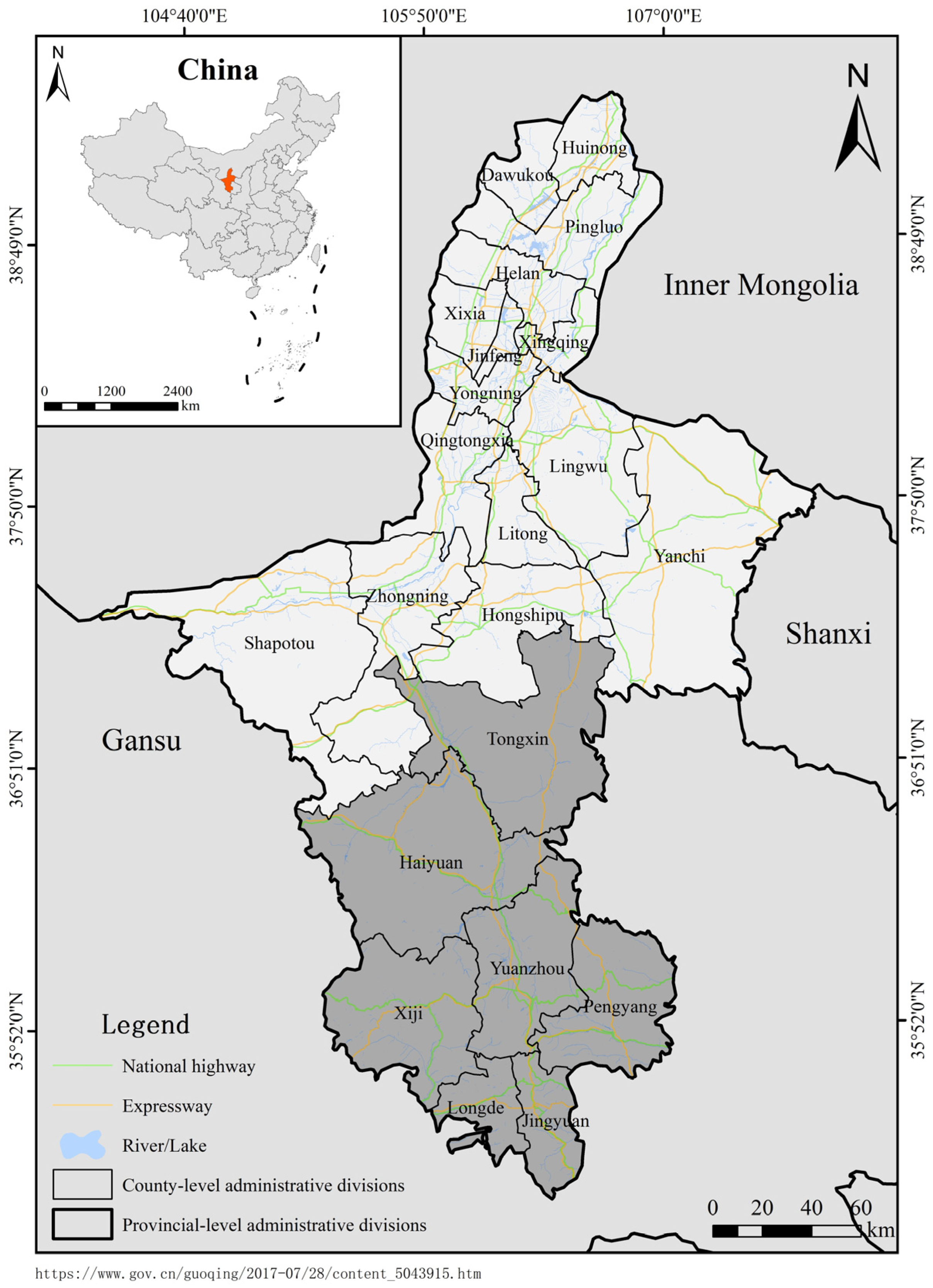
In summary, the authors of this study aimed to introduce an ecological migration index into the multidimensional poverty index from the perspective of ecological migration. This approach enabled the spatial and temporal evolution and laws of regional multidimensional poverty to be traced, profoundly reflecting the process of reconstructing the spatial structure of regional multidimensional poverty. Accordingly, the mechanism behind the formation of multidimensional poverty in the study area was elucidated from a spatial perspective. The possible contributions of this study to the existing literature are as follows. First, it focuses on contiguous areas of concentrated poverty in the Liupan Mountains in Ningxia, which is a typical Hui settlement area. This area is not only highly representative of multi-ethnic agglomeration in the Yellow River Basin but also provides important experiences and insights for further exploring and formulating targeted poverty alleviation strategies for poverty-stricken areas so as to improve their governance. Second, a multidimensional poverty index system is constructed based on the theories of spatial poverty and ecomigration, bringing ecological migration, multidimensional poverty, and spatial reconstruction into the same analytical framework. Thus, this study is based on a cross-disciplinary theoretical framework aimed at promoting multi-scale integration. Third, this study examines the spatial distribution and structural evolution characteristics of multidimensional poverty in contiguous areas of concentrated poverty spanning several counties in the Liupan Mountains in Ningxia, shedding light on the general dynamic trend of multidimensional poverty in this region.
This paper is organized as follows:
Section 2 presents a review of the literature, describes the construction of the multidimensional index system for measuring spatial poverty, and presents a theoretical framework.
Section 3 elaborates in full detail the data sources, research methodology, and complete calculation processes adopted in this study.
Section 4 presents an empirical analysis of the spatial panel data compiled for the research area during the period spanning the eleventh five-year plan to the thirteenth five-year plan. The empirical analysis attempts to answer the following questions: (1) What has been the outcome of the reconstruction of the space of multidimensional poverty within counties? (2) Is ecological migration the main factor affecting the evolution of the spatial structure of multidimensional poverty? The fifth and final section presents some discussions and insights derived from this study.
4. Results
4.1. Reconstruction of the Spatial Pattern of Multidimensional Poverty in the Study Area
4.1.1. Reconstruction of the Spatial Distribution of Multidimensional Poverty in the Study Area
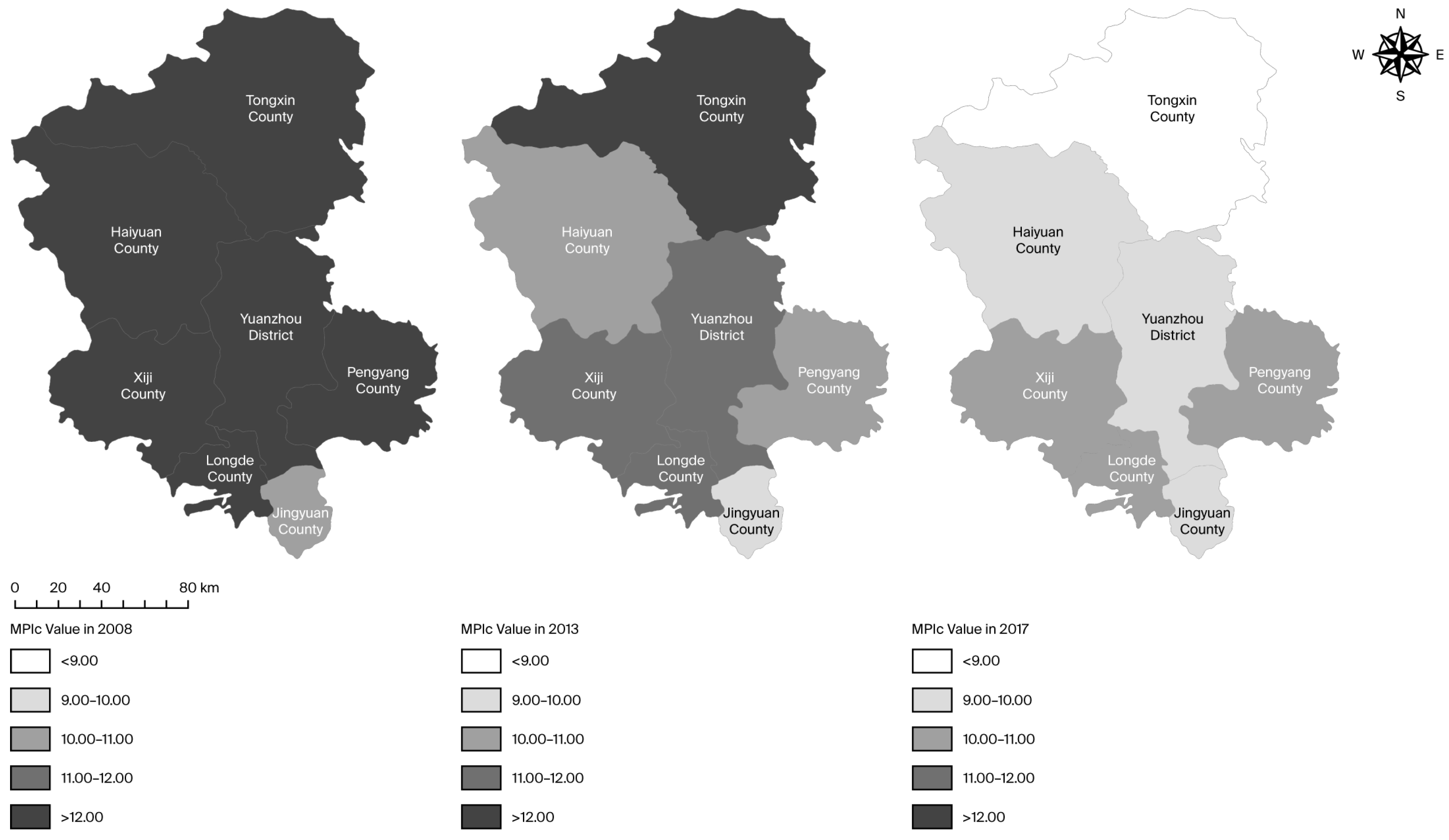
Using ARCGIS10.4, five levels of multidimensional poverty were categorized according to the distribution and needs of the MPI. These five levels reflected the spatial distribution of multidimensional poverty in the region, ranging from deep (level 1) to shallow (level 5) (
Figure 2). As can be seen from
Figure 2, in 2008, all seven counties and districts in the study area were between the first and second levels, which are identified here as deeply impoverished. After five years, by 2013, only Jingyuan County remained in deep poverty, while the other counties and districts had all emerged from deep poverty and moved towards moderate poverty. After another five years of development, by 2017, not only had all counties and districts exited deep poverty, but all except Jingyuan County were at the fifth level.
4.1.2. Reconstruction of Spatial Correlations of Multidimensional Poverty
The global Moran’s I values were estimated at −0.064, −0.358, and −0.226 for the three study years, with corresponding p-values all greater than the 0.05 significance level. These results indicate that no statistically significant spatial autocorrelation was detected. Given the small number of spatial units included in this study (N = 7), the limited sample size restricts the statistical power of formal inferential testing. Accordingly, the LISA cluster maps and spatial correlation analysis have been revised to serve as descriptive spatial pattern analyses rather than rigorous statistical inference. Interpretation of the evolving spatial distribution trends is therefore based primarily on visual patterns displayed in the maps and actual changes in the poverty index, rather than on statistical tests of spatial dependence.
- 2.
Local spatial correlation
As shown in
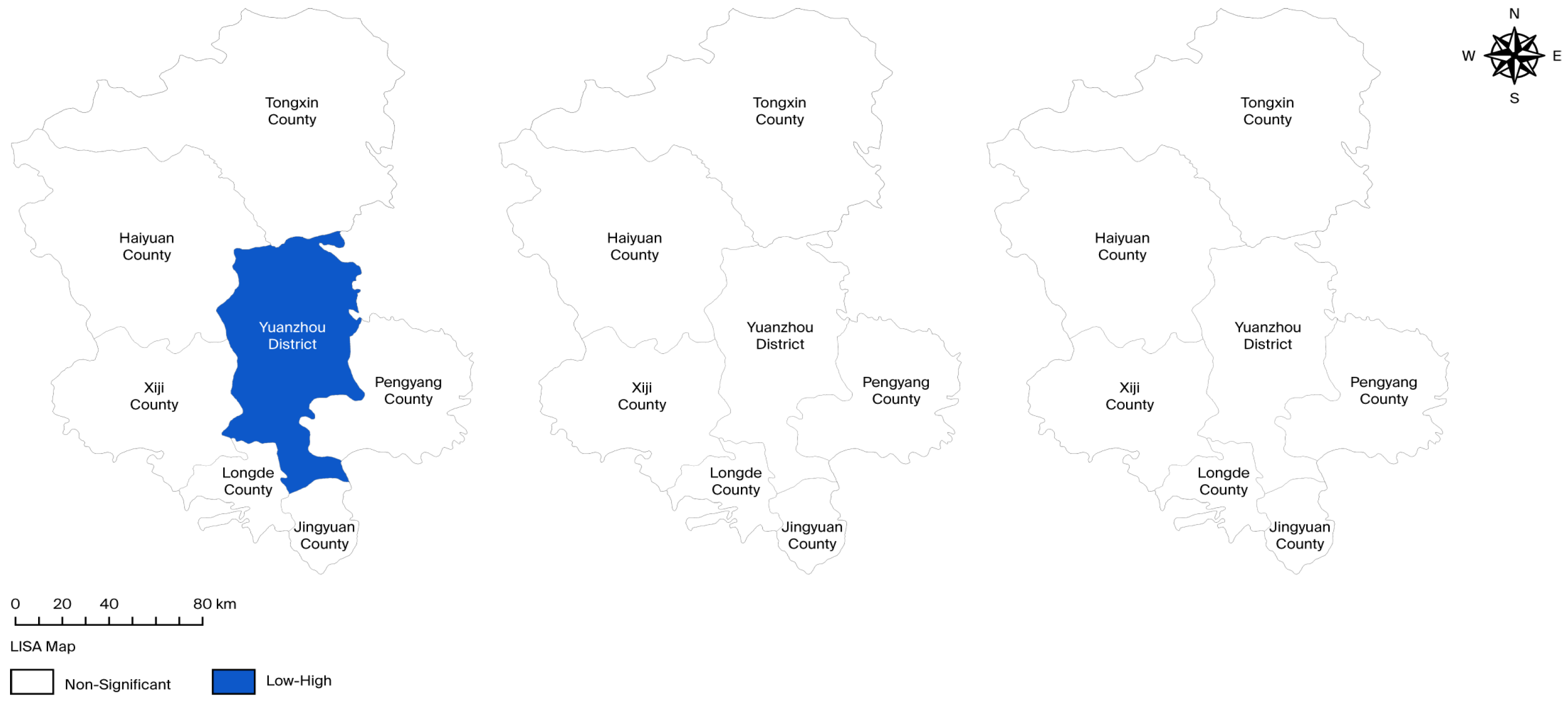
Figure 3, LISA cluster maps for the study area were generated for three key time points (2008, 2013, and 2017) using the Queen spatial adjacency method. Close examination of these maps reveals that in 2008, Yuanzhou District exhibited a typical low–high (L–H) clustering pattern, meaning this district itself had a relatively low value while its neighboring areas had high values. This distinct local spatial pattern is consistent with the global spatial autocorrelation results reported earlier.
By 2013, the spatial structure had changed noticeably. The low–high clustering pattern in Yuanzhou District gradually weakened and gave way to a more scattered spatial distribution. Pengyang and Jingyuan counties began to show incipient high–high (H–H) clustering, suggesting that these counties not only had high poverty index values themselves but were surrounded by neighboring areas with similarly high levels. This shift implies that the spatial agglomeration of poverty underwent structural adjustment, from a periphery-dependent distribution centered on a single core to a multicentric clustering pattern.
The 2017 LISA cluster maps reveal a more complex process of spatial restructuring. Xiji County and Haiyuan County emerged as areas with significant high–high clustering, becoming new poverty agglomeration centers. Meanwhile, Yuanzhou District fully transitioned to low–low (L–L) clustering, indicating that both the district and its surrounding areas exhibited relatively low poverty levels, marking its shift from a poverty periphery to a growth core. Longde and Pengyang counties showed transitional high–low (H–L) clustering, signaling rising within-county developmental inequality.
By synthesizing the spatial dynamics across the three time points, a three-stage evolutionary trajectory of poverty distribution can be identified: a core–periphery structure centered on Yuanzhou District in 2008; a transitional pattern marked by incipient multipolarity in 2013; and a mature configuration of dual-core agglomeration with gradient differentiation by 2017. This evolution aligns closely with the spatiotemporal deployment of regional poverty alleviation policies: around 2008, the whole-village advancement program focused on high-value areas around Yuanzhou; in 2013, implementation of the Liupan Mountain poverty alleviation program shifted resources toward southern counties; and by 2017, the targeted poverty alleviation strategy further intensified policy focus on core poverty-stricken counties such as Xiji and Haiyuan.
It is emphasized that the above interpretations are grounded in qualitative analysis of visual patterns and changes in the poverty index, not in tests of statistical significance. The small number of spatial units prohibits definitive claims about the statistical robustness of these clustering patterns. Nevertheless, the relative trends revealed through temporal comparison still provide valuable descriptive evidence for understanding the spatial dynamics of regional poverty.
4.1.3. Reconstruction of the Spatial Differentiation of Multidimensional Poverty Indicators
Information entropy reflects the degree of equilibrium in the spatial distribution of variables. A lower value of information entropy corresponds to a lower degree of equilibrium relating to the spatial distribution of the variables. From
Table 3, it is apparent that most of the indexes for information entropy increased between 2008 and 2017, indicating that multidimensional poverty in areas with clusters of ethnic minority groups demonstrated an overall complex trend. However, a number of these indexes, notably per capita net incomes in rural areas, the sex ratio, the proportion of dilapidated housing in rural areas, education levels, residents’ minimum living security, ecological vulnerability, and ecological migration outside the counties decreased. These results indicate that during this decade, the degree of equilibrium relating to the spatial distribution of income and education levels, living conditions, and ecological migration of farmers in areas with clusters of ethnic minority groups decreased. The variable associated with the largest increase in information entropy was ecological migration within counties (an increase of 0.4305), followed by the provision rate of rural tap water (an increase of 0.14563). The remaining indexes showed reductions below 0.1. These results suggest that under the directives of ecological migration policies during the eleventh, twelfth, and thirteenth five-year plans, the spatial distribution of the ecological migrant population in the counties shifted toward a balance, whereas the spatial distribution of the ecological migrant population outside of the counties became concentrated, particularly in Jingyuan, Xiji, and Pengyang.
- 2.
The Absolute Spatial Differentiation of Multidimensional Poverty
The calculated values of the absolute differentiation index reflect each index’s spatial differentiation relative to the absolute equilibrium distribution. Increased absolute differentiation index values were obtained for the rural gender ratio, per capita living area, proportion of dilapidated housing, education levels, minimum living security rate, the per capita arable land area, ecological vulnerability, and the scale of ecological migration from the counties. These results indicate that over time, the spatial differentiation of the gender ratio, rural housing conditions, education levels, living security and the ecological environment has been increasing, especially for the proportion of unfit rural housing and the scale of ecological migration from the counties. Moreover, they reveal the continuous targeted penetration of poverty alleviation policies in China and differences in investments made to improve the living conditions of rural residents in various regions. The absolute differentiation index values show that during the period from 2008 to 2017, the scale of ecological migration from and into the counties remained above 0.3, indicating that the spatial differentiation of ecological migrants was significant during this period.
- 3.
Relative Spatial Differentiation of Multidimensional Poverty
The calculated values of the relative differentiation index reflect the spatial differentiation of each index relative to the population distribution of each county. The relative differentiation index values reflected matching spatial conditions between the spatial distribution of each index and the rural population. Compared with the increase in the absolute differentiation index values, that for the relative differentiation index values was lower, with the exception of the proportion of Hui residents within the rural population, weak housing, education levels, access ratio, and per capita arable land. The relative spatial differentiation index for other indicators showed decreasing values. These changes in relative differentiation index values indicated upward trends for the consistency of the spatial distribution of most indicators in the MPI and for spatial matching of the rural population in the study area. The values of only a few indicators deviated from these trends, with the proportion of unfit rural housing being the most obvious one.
4.2. Spatial Reconstruction of the Centers of Gravity of Multidimensional Poverty in the Study Area
4.2.1. Reconstruction of Centers of Gravity of Multidimensional Poverty and Incomes
As seen in
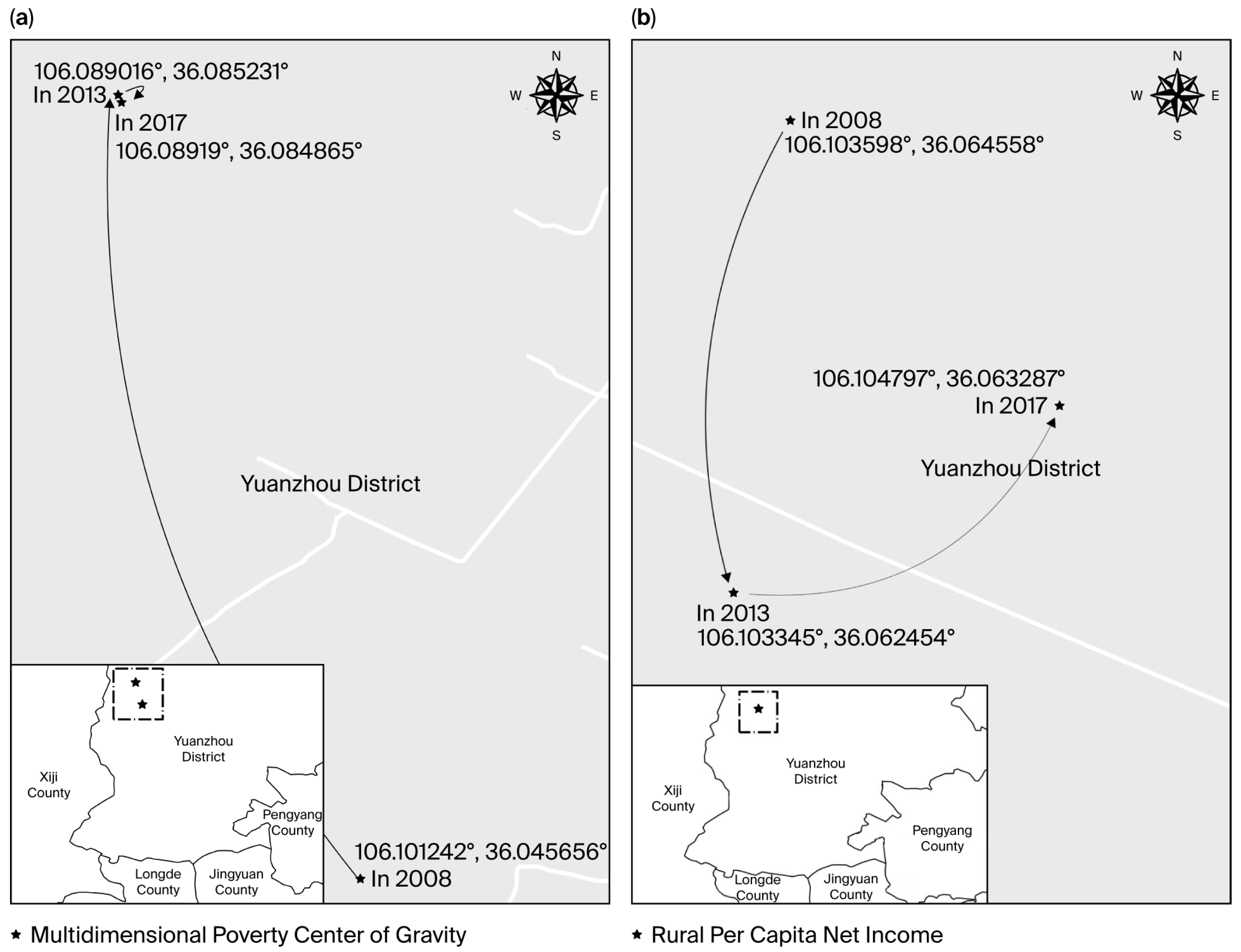
Figure 4, in the contiguous destitute area of Liupan Mountain in Ningxia, from 2008 to 2017, the center of multidimensional poverty was located between latitudes 36°2′44.36″ and 36°5′5.513″ and between longitudes 106°6′4.47″ and 106°5′21.083″, and the center of per capita net income of farmers was located between latitudes 36°3′52.407″ and 36°3′47.835″ and between longitudes 106°6′12.953″ and 106°6′28.696″, both within Yuanzhou District of Guyuan City. In terms of the direction of movement, between 2008 and 2013, the center of multidimensional poverty moved from the south to the northwest, while the center of rural per capita net income showed an opposite trend, moving southwest, reflecting the reverse nature of their migration. Though not obvious, the center of multidimensional poverty moved towards the southeast from 2013 to 2017, while the rural per capita net income center showed a strong reverse (northeast) movement characteristic. In terms of moving distance, the multidimensional poverty center moved about 12.3 km between 2008 and 2013, and only about 3.5 km between 2013 and 2017, showing a significant slowdown, indicating that the marginal effect of the ecological migration policy is gradually decreasing. The center of farmers’ per capita net income moved about 8.7 km between 2008 and 2013, and the moving distance expanded to 15.6 km between 2013 and 2017, indicating that the dynamic mechanism of income spatial restructuring has undergone a significant transformation in the latter period. This reverse movement characteristic profoundly reveals the spatial tension between multidimensional poverty governance and income growth: when external intervention means such as ecological migration push the poverty center northward, the cultivation of local endogenous development capacity makes the income center swing back southward, forming a game pattern between two spatial forces: those that are “policy-driven” and those that are “market endogenous”.
Further analysis of the changes in longitude and latitude of the center trajectory shows that the multidimensional poverty center showed a continuous eastward trend in the longitudinal direction, moving eastward from 106.0891896° in 2008 to 106.1012417° in 2017, while in the latitudinal direction, it showed an “inverted V-shaped” characteristic of first moving north and then south, reaching the northernmost point of 36.08486475° in 2013. This trajectory is highly consistent with the topography and geomorphology of Ningxia and the spatial layout of ecological migration resettlement areas—the east is a loess hilly and gully area, which is the main source region of ecological migrants; the north is the Yellow River irrigation area, which is the main destination of ecological migrants outside the county. The movement trajectory of the farmers’ per capita net income center is more complex, showing a “westward–eastward” swing in the longitudinal direction and a continuous southward movement in the latitudinal direction, moving southward from 36.06455763° in 2008 to 36.06328748° in 2017. Although the amplitude is small, it reflects that the southern mountainous areas have gradually cultivated certain endogenous growth poles in the later stage of targeted poverty alleviation.
The evolution of the spatial distance between the two types of centers is also worthy of attention. The straight-line distance between the multidimensional poverty center and the income center was about 2.8 km in 2008, 4.6 km in 2013, and 3.2 km in 2017, showing an evolution law of “first expanding and then shrinking”. This law is closely related to the phased characteristics of poverty alleviation policies: large-scale ecological migration during the “12th Five-Year Plan” period led to increased separation of the two centers, while targeted measures such as industrial poverty alleviation and educational poverty alleviation during the “13th Five-Year Plan” period promoted the recovery of spatial coupling. The change range and direction of the center distance essentially quantify the differences in spatial effects between the two mechanisms of “external blood transfusion” and “internal blood production” in the process of regional development, providing a visual tool for evaluating the spatial performance of poverty alleviation policies.
4.2.2. Spatial Coupling Trend of Multidimensional Poverty and Income
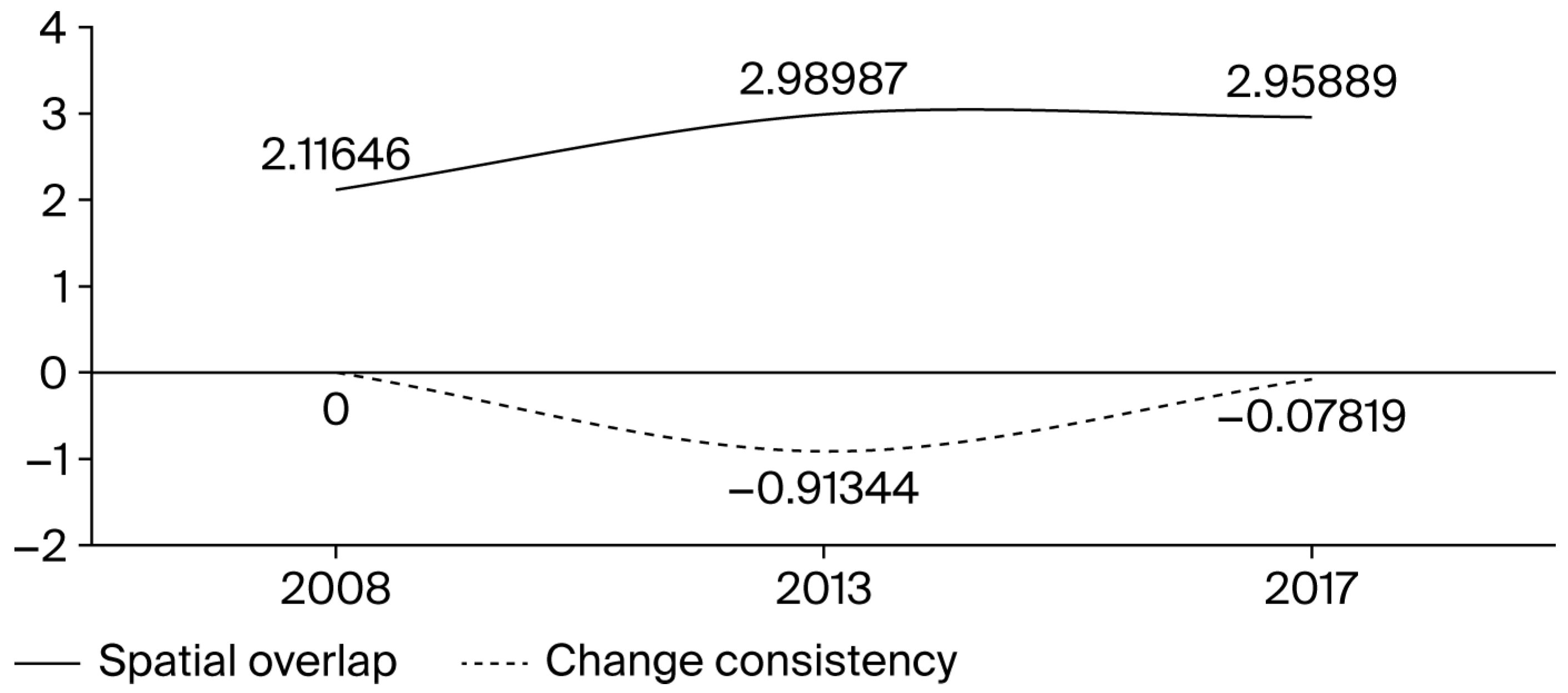
As depicted in
Figure 5, the overlap between the centers of multidimensional poverty and rural per capita net incomes decreased significantly from 2008 to 2013. Both of these centers changed to the same extent but in opposite directions. This result indicates that during these years, the centers of multidimensional poverty and rural per capita net income increasingly diverged. Specifically, the center of rural per capita net incomes lagged behind the multidimensional poverty center, indicating that incomes in the study area continue to exert a critical influence on multidimensional poverty. However, the spatial overlap between the centers of multidimensional poverty and rural per capita net income increased from 2013 to 2017. Changes in both were similar, ranging from −0.91344 to −0.07819, indicating a significant reduction in lagging. All of the above findings reveal that the impact of rural per capita net income on multidimensional poverty in the region has gradually been lessening. Moreover, they show that regional poverty cannot be measured solely on the basis of income; a multidimensional poverty measurement approach that includes factors like population structure, education, living conditions, and geographical environment is required.
4.3. The Formation Mechanism of Multidimensional Poverty in the Study Area
Indicators were ranked in descending order according to the degree of their influence in the study area during the period 2008–2017. The resulting hierarchy was as follows: per capita cultivated land area, rural Engel’s coefficient, per capita living area, proportion of Hui residents within the total population, per capita net income, ecological vulnerability, lowest subsistence allowances, and the scale of ecological migration outside the counties. To account for differences among the counties, the influences of the spatial structures of multidimensional poverty in these counties were ranked from 1 to 18 for each indicator, thereby obtaining the average ranking of the indicators’ influence, as shown in
Table 4.
An analysis of the average degrees of influence and the average ranking of the indicators showed that natural geographical conditions were the primary factor influencing the spatial structure of multidimensional poverty in contiguous areas of concentrated poverty in the Liupan Mountains in Ningxia. This region is characterized by a complex terrain, entailing barren land, degraded grasslands, numerous deep ravines, and low precipitation. Its ecological environment is extremely vulnerable and natural conditions are unfavorable for agricultural development. All of these conditions constrain development of the region. The second most important factor was weak economic growth. The study area has a weak economic foundation. It lacks the necessary conditions for economic development, such as the necessary funds, technologies, and resources. Moreover, because of the inappropriate and undeveloped industrial structure, industrial levels are low and the per capita GDP of the area was only 36.8% of the district average during the study period. Other important factors influencing the spatial structure of multidimensional poverty in this region include the particular lifestyle and higher birth rate of ethnic minority groups, inadequate infrastructure, limited skills possessed by the poor, and the scale of ecological migration.
In addition, Stata15.0 was used to conduct a stepwise linear regression analysis on the influencing factors of the poverty incidence rate. The results in
Table 5 show that the model has a high goodness of fit (R
2 = 0.9810). However, limited by the ratio of the number of observations (21 samples) to the number of explanatory variables, this high goodness of fit is at risk of overfitting and should not be regarded as evidence of strong explanatory power.
Therefore, the regression analysis only serves as a robustness test and does not undertake the core identification function; the core basis for the driving factors of multidimensional poverty in this paper is the more stable indicator influence and average ranking (
Table 4). The regression results are consistent with the direction of the influence ranking and are only used to verify the direction of the indicator’s effect, without making strong causal inferences.
The two methods described above were applied to select the eight highest-ranked factors influencing the spatial structure of multidimensional poverty in the study area, as shown in
Figure 4, for further analysis. These factors for degrees of influence were 67.7%, 52.3%, 47.9%, 47.1%, 39.2%, 36.27%, and 36.18%, respectively. The analysis revealed that the condition of the geographical environment, the level of economic development, the scale of ecomigration, and the population structure were the main factors influencing the spatial structure of multidimensional poverty in this region.
The lack of natural resources caused by differences in geographical and ecological environments was the root factor influencing the spatial structure of multidimensional poverty in the region under investigation. The study areas are mostly located in the Loess Plateau and in mountainous areas characterized by harsh natural conditions, complex terrains, inadequate transportation, lack of access to information, and harsh natural environments. On the one hand, farmers have long been constrained by natural conditions, compounded by a single industrial structure and limited arable land resources and agricultural mechanization, which impede agricultural development. On the other hand, facilities for conserving water are difficult to construct because of the steep slopes and high altitudes. Moreover, in the absence of these facilities, the problem of a lack of safe drinking water, which is prevalent in the region, is accentuated. Further, constraints relating to natural ecological conditions restrict the provision of investment structure of social capital, technology, and other productive resources in areas of concentrated poverty, which indirectly affects the change process relating to the region’s spatial structure of multidimensional poverty.
The development of a stable local economy is impeded by insufficient funds, technology, and talent. Research on the region’s historical background revealed that its poverty could be attributed to deficits in financial investments, technology, and other factors relating to production. However, proactive support extended via China’s targeted poverty alleviation funds has led to investments of capital in these areas that have contributed to poverty mitigation. Thus, the shortage of funds has been greatly alleviated, and workers who have rich cultural backgrounds and a variety of technical talents are playing a key role in the region’s economic development. Nevertheless, for historical reasons, workers in contiguous areas of concentrated poverty in the study area are still less educated than in other regions, which has a direct adverse impact on economic development, thereby contributing to the region’s overall poverty.
Ecological migration is the fundamental and sustained external force driving the evolution of the spatial structure of multidimensional poverty in the study area, as well as the core analytical perspective and carrier of spatial restructuring in this paper. Although empirical results show that the direct impact of ecological migration ranks only 8th among the 18 indicators, with the inter-county migration variable (X72) eliminated in the stepwise regression, and with geographic capital and economic development exhibiting a higher degree of direct influence on multidimensional poverty (
Table 4), this finding does not diminish the core role of ecological migration. On the contrary, it confirms that its mechanism of action is indirect, spatial, and structural, rather than functioning as a direct first-order input factor. As a spatial adjustment mechanism, ecological migration reshapes the spatial distribution of population, residential patterns, cultivated land resources, ecological pressure and infrastructure, improves living conditions, alleviates ecological vulnerability, and optimizes population structure. Its effects are embedded in core indicators related to housing, ecology, population and public services, such as per capita living area, per capita cultivated land, and ecological vulnerability, which is highly consistent with the theoretical positioning of “spatial restructuring” in this study.
An imbalance in the population structure and its excessive growth rate are major internal factors affecting the spatial structure of contiguous areas of concentrated multidimensional poverty in the Liupan Mountains in Ningxia. This region is one of the most important ethnic minority (Hui) settlements in China. Salient demographic characteristics of this impoverished region are as follows. The birth rate is relatively high and the population structure is seriously unbalanced, indicating a high proportion of groups with special challenges, notably those who are unemployed and unable to escape poverty. They include individuals who suffer from chronic illness, the disabled, older residents who live alone, and those who are poor and lack access to self-development. The government is compelled to provide social security for these impoverished people. However, changes in the spatial structure of multidimensional poverty are difficult to make given its entrenched characteristics. Further, the cultural and professional backgrounds of impoverished people often differ from those of other groups, making it more difficult for them to access and adopt certain concepts and skills. They may have fewer channels for promoting entrepreneurship and adapt slowly to new lifestyles. All of these realities ultimately affect the evolutionary trajectory of the spatial structure of multidimensional poverty in the region.
4.4. Multidimensional Poverty Reduction Planning for Contiguous Poverty-Stricken Areas in the Liupan Mountains in Ningxia
The above analysis has revealed the factors influencing the spatial structure of multidimensional poverty in areas of concentrated poverty in the Liupan Mountains in Ningxia. Here, we offer feasible recommendations for alleviating and eliminating poverty in this region that take into account the above factors, the relationship between the construction of an ecological civilization and poverty alleviation, and the “two-mountain theory” proposed by General Secretary Xi Jinping. These inputs can contribute to the formulation of policies for poverty alleviation and high-quality development during the new five-year plan period.
4.4.1. Establishment of an Efficient and Long-Term Mechanism for Promoting Industrial Development and Poverty Alleviation in the Study Region
President Xi Jinping has stated that “areas alongside the Yellow River have to develop based on [their] realities, making use of water and mountain resources, growing crops, and developing agriculture, industry, or business where conditions permit, and actively exploring a path with local characteristics for high-quality development.” (An important speech by General Secretary Xi Jinping at the Symposium on Ecological Protection and High-Quality Development of the Yellow River Basin on 18 September 2019.) Accordingly, the above mechanism should have the following characteristics. First of all, it should be market-oriented, availing itself of resources and competitive advantages and emphasizing the basic role of agriculture and tourism in poverty alleviation. Moreover, it should foster and strengthen the characteristics and advantages of the industrial system, support the development of a new system of agricultural management, and promote e-commerce and poverty alleviation channels along with characteristic products. By focusing on these areas, it can boost the developmental capabilities of the region, enabling the poor to increase and stabilize their incomes. It will also be necessary to promote financial markets proactively to guarantee the development of industries with the required characteristics and advantages, introduce small loans and insurance for poverty alleviation and development to resolve poor farmers’ financing problems, and develop special poverty alleviation insurance that is customized for poor farmers. These measures can contribute to the achievement of the double goals of effectively preventing poverty caused by diseases and disasters and increasing income and wealth through the development of characteristic industries.
4.4.2. Establishment of a Multidimensional Educational System, Comprising Core Basic Education and Vocational Skills Training to Reduce Poverty
Most of the areas of concentrated poverty in the Liupan Mountains in Ningxia are Hui-inhabited areas. The influences of ethnic diversity, culture, and religion in the region require full consideration, attaching importance to investments in the multicultural makeup of impoverished areas. This will require the establishment of a multidimensional education system comprising core basic education and vocational skills training for poverty alleviation. Basic education targeting poverty alleviation is essential for fundamentally improving educational levels within the local population. The destinies of poor children change when they receive an education, and the intergenerational transmission of poverty is consequently halted. Vocational skills training should subsequently be established for children from poor peasant households who cannot attend high school and university. Vocational skills training as well as training relating to practical agricultural technology and entrepreneurship should be actively developed for the poor labor force, and labor export and income generation work should be encouraged, helping more poor people master vocational skills. These efforts will contribute to the transformation of the poverty alleviation approach from one akin to a “blood transfusion” to a “hematopoietic” model of poverty alleviation. A third related recommendation is to strengthen cultural self-confidence relating to poverty alleviation and to rebuild the spiritual home. The driving motivation to eliminate poverty and acquire wealth must come from poor people themselves. Therefore, efforts to stimulate the endogenous driving force of poverty-stricken farmers and activate a deep-seated desire for wealth are essential to foster favorable conditions in which they eliminate their poverty.
4.4.3. Widespread Implementation of an Ecology-First and Green Development Strategy Entailing Ecomigration
Ecomigration is an important strategy for alleviating poverty in the study region. Because of the specific geological conditions in this region, including steep slopes and high altitudes, farmers’ productive and living conditions are poor, and increases in incomes and in basic public services cannot be guaranteed. To alleviate poverty in such areas is almost impossible. As President Xi Jinping pointed out, “Lucid waters and lush mountains are invaluable assets. Insist on ecology first, green development, development based on local conditions, and giving targeted guidance.” (An important speech by General Secretary Xi Jinping at the Symposium on Ecological Protection and High-Quality Development of the Yellow River Basin on 18 September 2019.) Ecological migration can alleviate different dimensions of poverty relating to income, health, education, and living standards. Moreover, it can promote development and better living conditions for farmers, effectively expand and increase income channels, reduce human impacts on the environment, and stem the process of deterioration of the ecological environment. It can also foster the development of land resources and promote regional integration and solidarity among ethnic groups. Finally, Hui and other ethnic minority groups can work together for their development and common prosperity.
5. Discussion
Along with the natural environment, historical and other factors have contributed to the slow pace of economic development, irrational and weak industrial structure, and deep poverty in contiguous areas of concentrated poverty in the Lipuan Mountains in Ningxia. Poverty has been the biggest obstacle to achieving sustainable development in the region. Against the background of China’s national development strategy of promoting targeted poverty alleviation and drawing on the unique perspective of ecomigration, this study sought to construct a spatial model for measuring multidimensional poverty at the county level. This was accomplished by introducing the ecomigration indicator into the index system for identifying the spatial structure of multidimensional poverty. The use of these models and spatial measurement tools revealed the spatial distribution and pattern of evolution of multidimensional poverty in the study area. Further, the evolution of multidimensional poverty and incomes in the study area was tracked for the period 2008–2017 by calculating the spatial overlap and change consistency between the centers of gravity of multidimensional poverty and incomes. This analysis has contributed important insights into the process of reconstructing the spatial structure of regional multidimensional poverty. Finally, the main factors influencing the spatial structure of multidimensional poverty in the study area were explored by calculating the degree of influence of each index in the MPI system and applying a method of stepwise regression. A systematic and in-depth analysis was also conducted on the spatial reconstruction mechanism and approach aimed at reducing multidimensional poverty in the study area. The following conclusions were derived from this study.
First, whereas the spatial distribution of multidimensional poverty in contiguous areas of concentrated poverty in the Liupan Mountains in Ningxia was extensive and intense in 2008, the scope and extent of poverty in this area had been greatly reduced by 2017, revealing a trend of transformation from global to local poverty. Following successive recent five-year plans (from the eleventh to the thirteenth), the government of the Ningxia Hui Autonomous Region developed an overall plan to eliminate deep poverty. This plan, aimed at eradicating or alleviating poverty in remote areas, centers on the implementation of projects guaranteed to address the multiple dimensions of poverty, such as consolidating and improving drinking water safety, renovating dilapidated houses and kilns, improving the quality and efficiency of industries, and providing education and employment-related training. All of these measures have led to substantive improvements in multidimensional poverty experienced in areas inhabited by ethnic minority groups in the Liupan Mountains in Ningxia.
Second, spatial analysis reveals no significant global spatial autocorrelation in multidimensional poverty, and the small sample of spatial units (N = 7) restricts statistical inference. Based on descriptive LISA patterns, the spatial structure of poverty transformed from a core–periphery structure to a multi-polar pattern and finally to a dual-core agglomeration regime, which was highly consistent with the progression of regional poverty alleviation policies. While these findings are descriptive rather than statistically inferential, they effectively illustrate the continuous spatial restructuring of multidimensional poverty in the region.
Differentiation in the MPI revealed the increasing complexity of multidimensional poverty in the study area. The spatial distribution of most indexes, especially ecomigration and the provision rate of rural tap water, showed a trend toward balance. However, the degree of balance in the spatial distribution for some of the indexes showed a decline, notably those for ecomigration out of counties and the proportion of unfit buildings. At the same time, increases in the values of these two indexes reached maximal levels relating to the absolute differentiation index. These results clearly indicate that the degree of spatial differentiation is being continually intensified by ecomigration out of the counties and the proportion of unfit buildings. This trend is closely linked to the ecomigration policy implemented in the Ningxia Hui Autonomous Region and differences in improving residents’ living conditions relating to investments in various regions. These results indicate that relative to the change in differentiation index, there is a pattern of increasing consistency in the spatial distribution of most indexes and in the spatial matching of rural populations in the study area in the MPI.
Third, our analysis of the spatial reconfiguration of multidimensional poverty revealed a continual increase in the spatial distance between the centers of multidimensional poverty in the Liupan Mountains in Ningxia and rural per capita net incomes between 2008 and 2013. The variation consistency reached a negative consensus, confirming that incomes in the study area play a leading role in multidimensional poverty. Between 2013 and 2017, the spatial distance between the centers of multidimensional poverty and rural per capita net incomes showed a slight reduction. The reverse consistency of variation reflected a shift from being strong to being weak, indicating that the influence of incomes on multidimensional poverty was gradually weakening. Although this trend may not be clearly discernible yet, it will become more apparent when China begins to “pay more attention to sounding employment, education, culture, social security, medical treatment and housing, stabilizing improvement on equalization of basic public services and solving overall regional poverty.” (“Outline of the 13th Five-Year Plan for National Economic and Social Development (Draft)”.) Consequently, a study of multidimensional poverty in areas with particular challenges is essential.
Finally, the analysis of influencing factors demonstrates that the spatial structure of multidimensional poverty in the Liupan Mountains region is jointly driven by multiple forces. Natural geographical conditions and economic development level represent the primary and secondary dominant factors, respectively, followed by ecological migration and population structure. Specifically, the fragile ecological environment, complex terrain, and harsh agricultural conditions restrict local development and infrastructure construction. A weak economic foundation; shortages of funds, technology, and talent; and low-level industrial structures have further exacerbated multidimensional poverty. As a key carrier of spatial restructuring, ecological migration is not a direct first-order input factor. Instead, it indirectly affects the spatial restructuring of poverty by reshaping the distribution of population, housing, cultivated land, and infrastructure. Its role is reflected in multiple core indicators such as per capita living area, per capita cultivated land, and ecological vulnerability, which is highly consistent with the theoretical positioning of “spatial restructuring” in this study. In addition, the imbalanced population structure, high birth rate, and low human capital among the poor population are important internal factors maintaining the spatial pattern of multidimensional poverty. These research results collectively reveal the formation mechanism of the spatial restructuring of poverty in contiguous poverty-stricken areas with fragile ecosystems and concentrated ethnic minority populations.
This study has certain limitations, which need to be explicitly acknowledged when interpreting the conclusions. First, this study only covers seven county-level spatial units (sample size N = 7), which greatly weakens the statistical power of spatial tests such as global Moran’s I and local spatial association indicator (LISA) clustering. Therefore, all spatial interpretations are descriptive analyses and cannot make robust statistical inferences about spatial agglomeration and spatial dependence. Second, the county-level panel data contain only 21 observations. Although the goodness of fit of the stepwise regression model is relatively high, there is a significant risk of overfitting. Therefore, the regression analysis only serves as an auxiliary robustness test, and this study uses the ranking of indicator influence as the core basis for identifying driving factors to ensure the stability of the results. Third, ecological migration is measured only by the population size indicator and does not cover aspects such as resettlement quality, livelihood transformation, the intensity of special financial investment in ecological migration, and the scale of land development and consolidation in resettlement areas. This may underestimate its comprehensive spatial effects. Finally, this study only reveals correlations rather than causal effects, and it does not quantify the spatial spillover effects and long-term effects of ecological migration on multidimensional poverty. Future research can expand spatial samples, use micro-data, and apply causal identification strategies to enhance explanatory power and extrapolation.
These limitations point to several promising directions for future research. First, expanding the spatial scope to include more counties in the Ningxia Hui Autonomous Region or similar ecological migration areas in other western provinces will improve statistical power and help build more robust spatial econometric models. Second, extending the time dimension beyond 2008–2017 can capture the medium- and long-term effects of ecological migration, especially the sustainability of livelihood transformation and potential poverty recurrence. Third, ecological migration can be divided into different types (for example, urbanization migration, in situ relocation, cross-regional migration), and a comparative analysis of their differential impacts on household multidimensional poverty can be conducted. By clarifying the heterogeneous effects of different migration modes on livelihood capital accumulation, capacity improvement, and welfare enhancement, the potential causal paths and boundary conditions can be further elucidated. At the same time, it is necessary to construct a theoretical framework for the coupled and coordinated development of multidimensional poverty alleviation of ecological migration groups and rural revitalization. Empirical research can explore the synergistic mechanisms, interactive constraints, and integrated development paths between poverty reduction and rural revitalization from the aspects of industrial upgrading, equalization of public services, ecological governance, and social integration. This would allow researchers to provide targeted policy implications for consolidating poverty alleviation achievements, promoting the sustainable development of resettlement areas, and realizing the strategic integration of ecological migration and rural revitalization.
From a policy perspective, the research results indicate that ecological migration should not be regarded as an isolated poverty reduction tool but rather as a spatial governance mechanism that serves to facilitate and amplify the effects of economic development and geographical capital accumulation. This means that future policy designs should strengthen the synergistic connection between resettlement plans and subsequent livelihood support systems, including vocational training, the development of industrial parks in resettlement areas, and the provision of social services that match the needs of relocated populations. The persistent spatial agglomeration of high-poverty counties also suggests that targeted regional policies are still necessary, but they should be supplemented by relevant investments to enhance connectivity between surrounding areas and economic centers, reducing distance friction. Ultimately, the evolution of multidimensional poverty in western China reflects the complex interaction between state-led spatial restructuring, market-driven economic transformation, and the enduring constraints of natural geography—a dynamic that will continue to influence rural development outcomes in the coming decades.