1. Introduction
Currently, the resilience and sustainability of urban areas depend heavily on the ability to implement strategic programs for the protection and maintenance of civil infrastructure ([
1] and references therein). Structural Health Monitoring (SHM) of transport infrastructure (e.g., tunnels, bridges and railways) and lifeline pipelines (e.g., water and energy networks and communication networks) is one of the main pillars of urban planning [
2,
3]. Considering the growing urbanization process on a global scale and the exponential increase in extreme events related to climate change, the capability to manage and protect urban infrastructure more effectively is becoming increasingly important also in view of the compliance with SDGs 9 and 11 [
4]. In this scenario, urban areas will be more exposed to and vulnerable to these catastrophic events, resulting in increased socio-economic costs for maintaining civil infrastructure [
5]. Furthermore, even minor natural events could cause damage through cascading effects affecting urban networks.
Another key action within the urban planning framework is the introduction of the concept of ‘compact cities’ [
6,
7]. In fact, there is a growing interest in creating spaces that accommodate multiple urban functions and services in close proximity to one another. In this way, it is possible to reduce the environmental footprint and energy consumption of urban areas. Compact cities also avoid the problems associated with urban sprawl and are an effective way of adapting to climate change. Once again, the organization of compact cities requires modern, innovative systems for managing and making sustainable service infrastructures. Smart monitoring is even more important in suburban areas and remote areas, as it enables the concept of inclusivity for the populations living in these areas [
8].
In this scenario, applied geophysics, also known as near-surface geophysics, can significantly support a wide range of urban planning activities [
9]. Capello et al. [
10] and numerous position papers from international organizations [
11,
12] clearly outline the scientific progress, new technological challenges and social impacts of near-surface geophysics. Geophysical exploration has become an essential tool for many engineering sciences, providing high-resolution 2D, 3D, and 4D tomographic images of the subsurface [
13,
14,
15,
16]. Usually, geophysical exploration is performed in areas with minimal anthropogenic interference to reduce ambiguities in data processing and inversion. Now, these methods have to be applied in urban areas, where the level of natural and anthropogenic noise represents a scientific and technological challenge and must be properly managed and mitigated.
The use of near-surface geophysics is also crucial for enabling the exploitation of underground spaces for infrastructures and networks as transport networks or energy production systems. This reduces surface traffic and associated gas emissions as well as the pressure on land use while increasing the surface of green areas [
17]. Because of natural thermal insulation at a certain depth, it is also established that underground construction contributes to energy efficiency. In seismic areas, it plays a key role in ensuring the resilience of buildings and networks. Underground is an “environment” considered as less safe with respect to the surface one; for example, underground natural motions or hydrogeology as well as public works can be a source of risk for surface structures.
This review focuses on the role of ground-based electromagnetic methods in near-surface geophysics, with a focus on the necessity to ensure resilient and sustainable urban areas and infrastructures [
18,
19]. These methods are exploited in civil engineering for non-invasive testing, involving the measurement of the electrical and magnetic properties of the materials under investigation. They can generally be classified as geoelectrical, magnetic, or electromagnetic methods working in the frequency or time domain. The most widely used methods in urban environments are Electrical Resistivity Tomography (ERT) and Ground-Penetrating Radar (GPR), which are effective tools that can contribute significantly to infrastructure monitoring and maintenance programs. Typical applications include characterizing concrete conditions, identifying structural integrity and defects, searching for and characterizing the status of embedded rebars, monitoring the corrosion of steel reinforcement, characterizing road paving materials, investigating foundation systems and pillars, and mapping water infiltration processes. These methods can address many other issues related to the maintenance and the resilience of engineering infrastructure [
20,
21,
22,
23,
24,
25].
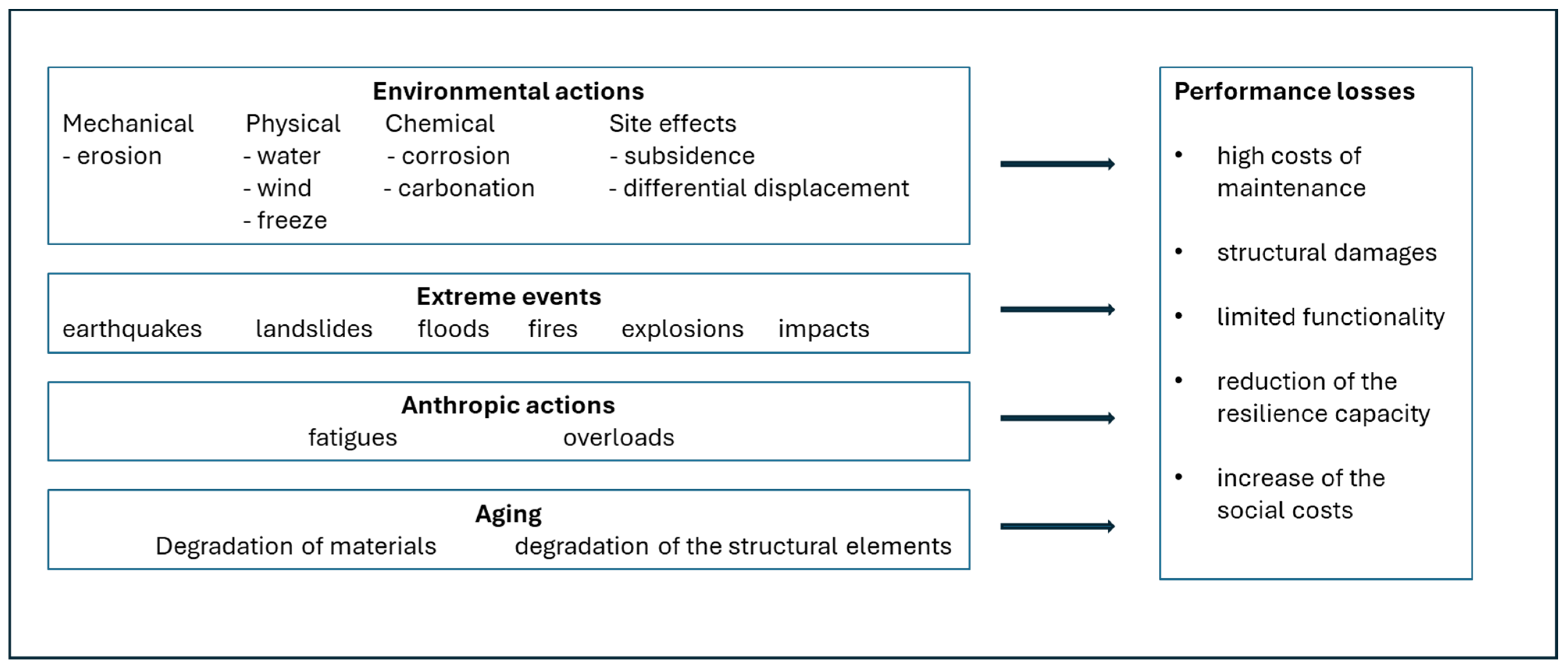
The aim of this work is to analyze the current state of research, with a specific focus on the application of non-invasive electromagnetic methods for monitoring and surveying civil infrastructure, and to identify possible future directions for scientific activities. The critical analysis presented in this work is achieved through a review of the literature from the last 20 years, with a detailed discussion of a list of best practice examples. The analysis not only describes the main scientific and real-world results concerning the use of non-invasive electromagnetic methods for monitoring and surveying of engineering infrastructure but also identifies the impact of these results on the activities of stakeholders (
Figure 1). This review is organized to address the following questions:
How can these methods help to make strategic infrastructure more resilient? How does near-surface geophysics contribute to characterizing the site on which the infrastructure is located? What are the real, cost-effective contributions of these geophysical methods to evaluating performance losses in strategic infrastructure? The analysis will contribute to identifying technological and scientific strategies to enhance the use of near-surface geophysics in all phases related to the monitoring and maintenance of civil engineering infrastructures.
2. Materials and Methods
The theory underlying the Electromagnetic (EM) methods is robust and well assessed, based on classical Maxwell’s equations and the principle of charge continuity. In near-surface geophysics, EM methods can be active or passive and are able to map the spatial and temporal variability of electrical conductivity, magnetic permeability and dielectric permittivity in the structures under investigation. Nowadays, a wide variety of EM methods are available and applied in many different fields, ranging from near-surface investigations to deep explorations; therefore, a comprehensive classification is impractical [
26].
This review, therefore, focuses on ground-based Electromagnetic (EM) methods, which are primarily used in engineering geophysics. These EM methods can be classified as geoelectrical and magnetic methods in static or quasi-static conditions. When electromagnetic waves/transient pulses are used as active sources in a dynamic (non-static) regime, the main methods can be classified as Frequency Domain Electromagnetics (FDEM), Time Domain Electromagnetics (TDEM), and Ground-Penetrating Radar (GPR) (see
Table 1 for a comprehensive description of the sensing technologies considered in the present paper).
The geoelectrical methods are subdivided into Electrical Resistivity Tomography (ERT), Self-Potential (SP) and Induced Polarization (IP) [
27]. ERT is an active method in which a DC current is injected into the subsurface, and sensors distributed along profiles and/or a regular grid measure the voltage signals generated by the emitting source. The results of the experiment are 2D and 3D pseudo-images of the apparent resistivity of the subsurface [
13]. Algorithms for resistivity data inversion transform these pseudo-sections into tomographic resistivity images. Several inversion methods are well defined in this context, and using High Performance Computers (HPCs) makes the inversion process faster and easier [
28,
29,
30]. Furthermore, time-lapse ERT imaging involves analyzing 2D or 3D resistivity images obtained at different time intervals, combining two or three spatial dimensions with the temporal dimension (4D ERT). The ERT method has a wide range of applications spanning different disciplines, including hydrogeology, agriculture, engineering geology, geohazards, geo-energy resource mapping, and studying of the impact of climate change on soils. In the field of engineering geophysics, the main applications of the ERT method include site characterization, sinkhole identification, pipeline network mapping, seepage detection in earth embankments and levees, and imaging of concrete structure, particularly in urban areas ([
27] and references therein, ref. [
31]).
Self-Potential (SP) is a non-invasive, passive method and one of the oldest in geophysics. One advantage of the SP method is its ability to detect water flow in the subsurface. For this reason, it has a long history in the study of hydrogeological and geothermal systems [
32]. No other geophysical method can be used as a sensor for water flow with such degree of non-invasiveness. The flow of water in the subsurface generates an electrokinetic current known as a streaming current. This current is associated with the drag of excess charge located near the surface of minerals and in liquid pore water in the Gouy–Chapman diffuse layer. The streaming current in turn generates an electrical field, known as the streaming potential, which can be remotely recorded at ground level (or in boreholes) using array systems equipped with voltmeters and non-polarizing electrodes. SP measurements are generally performed along profiles or maps. There are currently many algorithms available for the forward and inverse interpretation of SP data, enabling the localization of electrical source accumulations and water flow in the subsurface. The SP method has been used to identify leachate leakage in urban landfills, detect water seepage and evaluate the corrosion of bars embedded in concrete materials, among many other engineering and environmental applications [
33,
34,
35].
Induced Polarization (IP) is an active geophysical technique used to characterize the chargeability of the material under investigation. Electrical chargeability describes the reversible storage of electrical charges in a porous material when a time-varying electrical field or current at low frequencies is applied [
27]. IP is often still referred to as a geoelectrical method because the frequencies are relatively low, and the arrays used in the field are the same as those used for ERT measurements. In the time domain, studying the time-dependent decay of voltage signals produced by abruptly interrupting the injection of a Direct Current (DC) into the ground (normally used in ERT surveys) can provide information about the apparent chargeability of the subsurface. This method is widely used in mineral exploration and for addressing environmental issues. In the frequency domain, an oscillating source current can be used to observe phase shifts in voltage signals, evaluating the impedance spectrum commonly referred to as spectral IP. This method is primarily used in mineral exploration and environmental studies. In an engineering context, few experimental studies have been conducted to identify the presence of clay material in foundation soil and leaks in industrial sites [
36,
37].
In the static case, the magnetic methods aim at studying local anomalies and perturbations in the natural magnetic field, which are caused by metallic and/or magnetized bodies in shallow layers and structures that exhibit lateral variations in magnetic susceptivity. It is a passive method involving rapid and cost-effective data acquisition [
38]. Modern magnetometers, such as flux gradiometers, optically pumped cesium vapor magnetometers and innovative SQUID sensors, make it possible to obtain high-resolution maps of local anomalies in the Earth’s magnetic field. The first step in data processing involves removing the effect of the Earth’s magnetic field, considering the latitude and local features of the site under investigation (reduction to the pole). At the second step, data processing approaches are used to enhance the features of the local anomalies. Finally, a wide range of forward and inverse methods can be employed to locate and characterize the sources of magnetic anomalies. The magnetic method is widely used in various fields, ranging from mineral exploration to archaeological prospections. In engineering, this passive method has a few applications, mainly concerning the detection of buried metallic objects in structures [
39]. Conversely, analyzing changes in magnetic properties of the investigated material or structure due to the external magnetic fields is largely applied to energy pipeline monitoring [
40].
In dynamic cases, electrical and magnetic fields are time-varying, and EM methods can be divided into FDEM, TDEM and GPR. The first two methods are characterized by inductive phenomena in the investigated subsurface, while GPR is based on the study of the EM wave propagation generated by a source dipole. The FDEM method uses electromagnetic induction to detect spatial variability in electrical conductivity in the subsurface. A primary magnetic field induces an alternating current within the buried electrically conductive bodies. By comparing the amplitude and phase of the secondary magnetic field with those of the generated primary field, it is possible to evaluate the electrical conductivity of the material/area under investigation. Unlike geoelectrical methods, the FDEM method is non-invasive and contactless and does not require direct contact with the ground. A variety of equipment is now available for use in ground-based and aerial surveys over land or water. Additionally, inversion approaches are used to interpret the data and map the distribution of electrical conductivity with depth [
31]. FDEM has been used to monitor engineering infrastructure in coastal environments and to map soil-polluted zones and contaminant plumes in groundwater [
41].
TDEM is a non-invasive geophysical method used to obtain information about the electrical conductivity of the subsurface. When the current is abruptly shut off in an ungrounded transmitting loop on the surface, a time-varying magnetic field is produced. This primary signal generates eddy currents in conductive bodies embedded in the investigated structure. These eddy currents then generate a secondary magnetic field, which can be measured on the surface in the time domain. The decaying behavior of the secondary field’s amplitude is related to the subsurface’s electrical conductivity. Inversion of transient electromagnetic data uses multiple soundings to produce a one-dimensional electrical resistivity profile at a given depth. Each vertical profile is assumed to be located directly beneath the center of the concentric transmitter/receiver loops. These processed profiles are then combined to display the data as two-dimensional cross-sections or three-dimensional volumes. The TDEM method has been used in mineral exploration for over half a century and is now employed for a wide range of engineering, hydrogeological and environmental applications. In the context of engineering geophysics, a classic application is the localization of metallic objects in the subsurface or embedded structures [
42,
43].
One of the key geophysical methods typically used to solve engineering problems is Ground-Penetrating Radar (GPR), which is commonly employed for the high-resolution, non-invasive diagnosis of shallower subsurface layers [
44,
45]. Electromagnetic waves in the 10–2000 MHz range are generated and radiated into the investigated structure. The propagation and scattering of the waves are controlled by the electromagnetic properties (dielectric permittivity, electrical conductivity and magnetic permeability) of the embedding soil. The presence of interfaces with contrasting dielectric values can produce reflected waves that are detected on the surface. Typically, the transmitting and receiving antennas are moved along a profile, and the amplitude and travel time of the scattered/reflected electromagnetic waves are collected at each position of the GPR antenna. The result is the classic radargram in B-scan format. In the presence of conductive materials, the energy of the waves is attenuated, and the penetration of EM signals is greatly reduced. Currently, a wide variety of GPR systems and data interpretation algorithms are available. Interpreting GPR data is challenging in complex scenarios (such as those arising in engineering geophysics), and advanced data processing is necessary. A robust and widely used technique for data processing is Microwave Tomography (MT), which states that GPR imaging is a more general framework for an electromagnetic inverse problem [
46,
47]. The aim of this inverse problem is to detect, localize and estimate the geometry of hidden targets, starting from the backscattered field by probing the test scenario with a known incident field. Ground-Penetrating Radar (GPR) is the most widely used geophysical method for surveying engineering infrastructures. Its main applications include mapping underground pipelines, identifying bars embedded in concrete structures, monitoring road pavements and characterizing foundation soil and archaeological sites. In the recent years, new GPR systems have been realized that exploit multi-antennas with clear advantages in terms of measurement time and interpretability of the results [
48,
49,
50].
3. A Selected List of Best Practice Examples
This section presents and discusses a selected list of the best practices for applying ground-based Electromagnetic (EM) methods to the monitoring and surveillance of strategic civil infrastructures. The selection of papers was carried out by analyzing scientific literature from 2000 to the present days. For each method, the selection procedure was based on the following steps: (i) consider only the most cited and/or relevant papers (Clarivate–Web of Science database); (ii) take into account the relevance of the case-study and the strategic role of the urban and engineering infrastructures; (iii) evaluate the contribution of geophysical results to programs for increasing the resilience and maintenance of critical infrastructures.
This survey is not intended to be a simple bibliometric analysis but rather an accurate identification of case studies of general interest that may be useful in assessing the potential role of ground-based EM methods. This review aims to highlight the scientific and technological advances of ground-based EM methods and the potentialities in helping policymakers and infrastructure managers prioritize interventions, optimize resource allocation and develop adaptive strategies for the long-term management of urban and engineering infrastructures.
3.1. Geoelectrical Methods
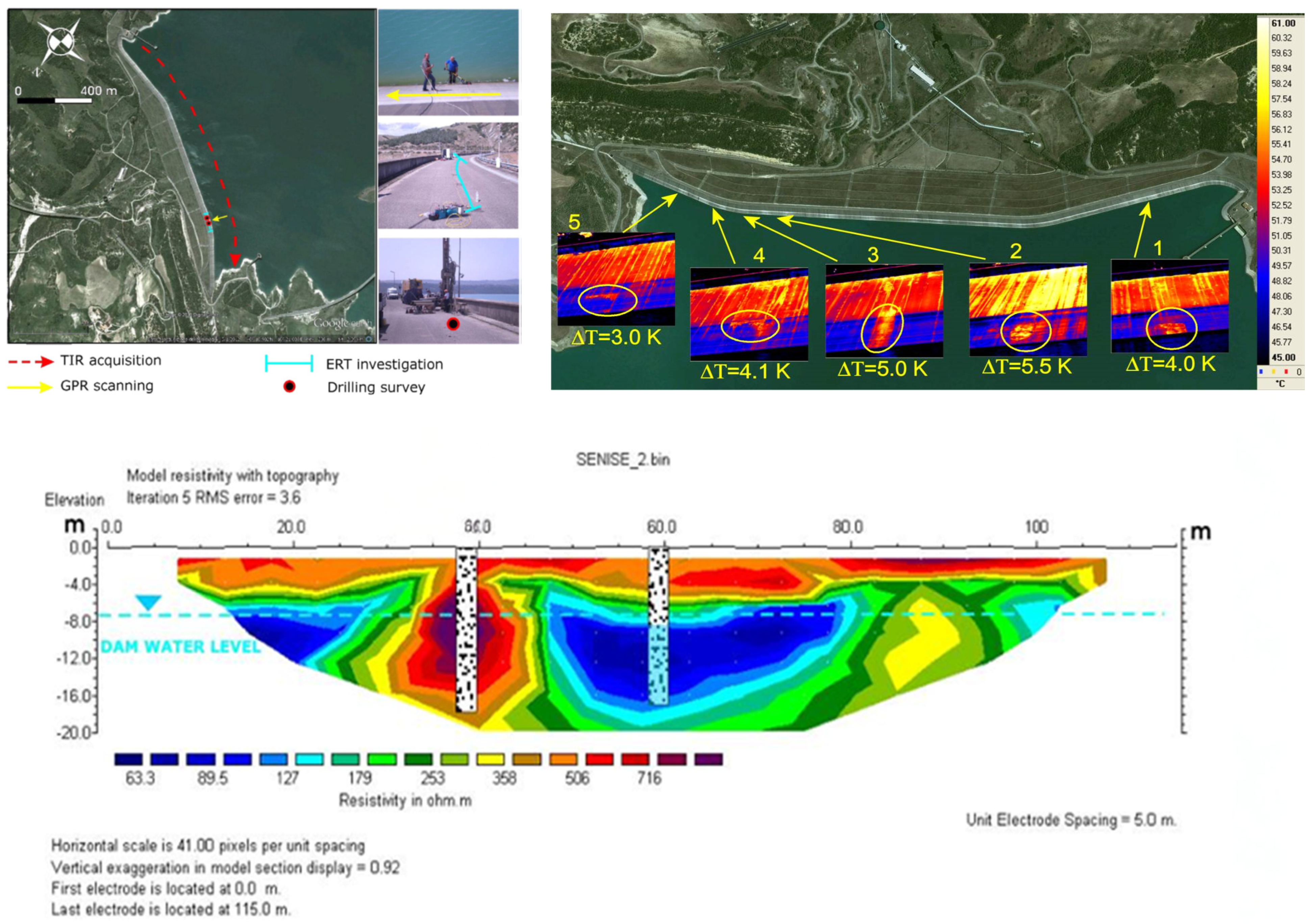
In recent years, the ERT method has been widely used in engineering geophysics. One of the most interesting applications is the monitoring of strategic civil infrastructure, such as the study of water seepage in earthen dam embankments. This paper presents and discusses two recent and relevant studies that were carried out to monitor the Monte Cotugno dam (the largest earth-filled dam in Europe) [
51] and a dam located on the Jialing River at Dashi Town in western China [
52]. In the Monte Cotugno dam case, the ERT method was used alongside GPR surveys, Thermal Infrared mapping (TIR) and geotechnical measurements (
Figure 2).
The cascade approach adopted for deploying geophysical methods was the key to providing information about the geometry of visible micro-fractures at the dam’s surface and rapidly mapping the inner areas of the dam affected by water infiltration. The TIR method was used to rapidly survey the dam along its entire length to determine its status. In a second step, GPR surveys were performed on the sloping side of the dam, investigating a few areas identified by the TIR analysis. This made it possible to determine whether water infiltration had affected the deeper parts of the dam. Finally, the ERT method was applied to detect deeper inner areas affected by water leakage (
Figure 2) along the whole dam. The geophysical results enabled local seepage phenomena to be localized and confirmed by shallow direct sounding. This contributed to identifying priority maintenance areas for the Monte Cotugno dam, which is a strategic nodal point in the water system that feeds southern Italy.
Another interesting case study involves the combined use of ERT and SP methods to monitor an earthen dam in the Hechuan district of Chongqing, China [
52]. This integrated approach made it possible to identify the seepage paths within the dam structure. The ERT method enabled the resistivity pattern of the inner part of the embankment to be reconstructed; the zones affected by water seepage were characterized by extremely low resistivity values, which were much lower than the typical values of the surrounding rock. The high resolution of the ERT images enabled the positions and depths of the seepage outfalls to be localized. Furthermore, SP data were exploited to obtain the electrokinetic current density, which is useful for evaluating water flow dynamics. The results show that negative current density primarily gathers at the seepage inlet and increases towards positive anomalies along the seepage direction. The joint application of the ERT and SP methods represents a robust, cost-effective tool for rapidly mapping water seepage phenomena in earth-fill embankments.
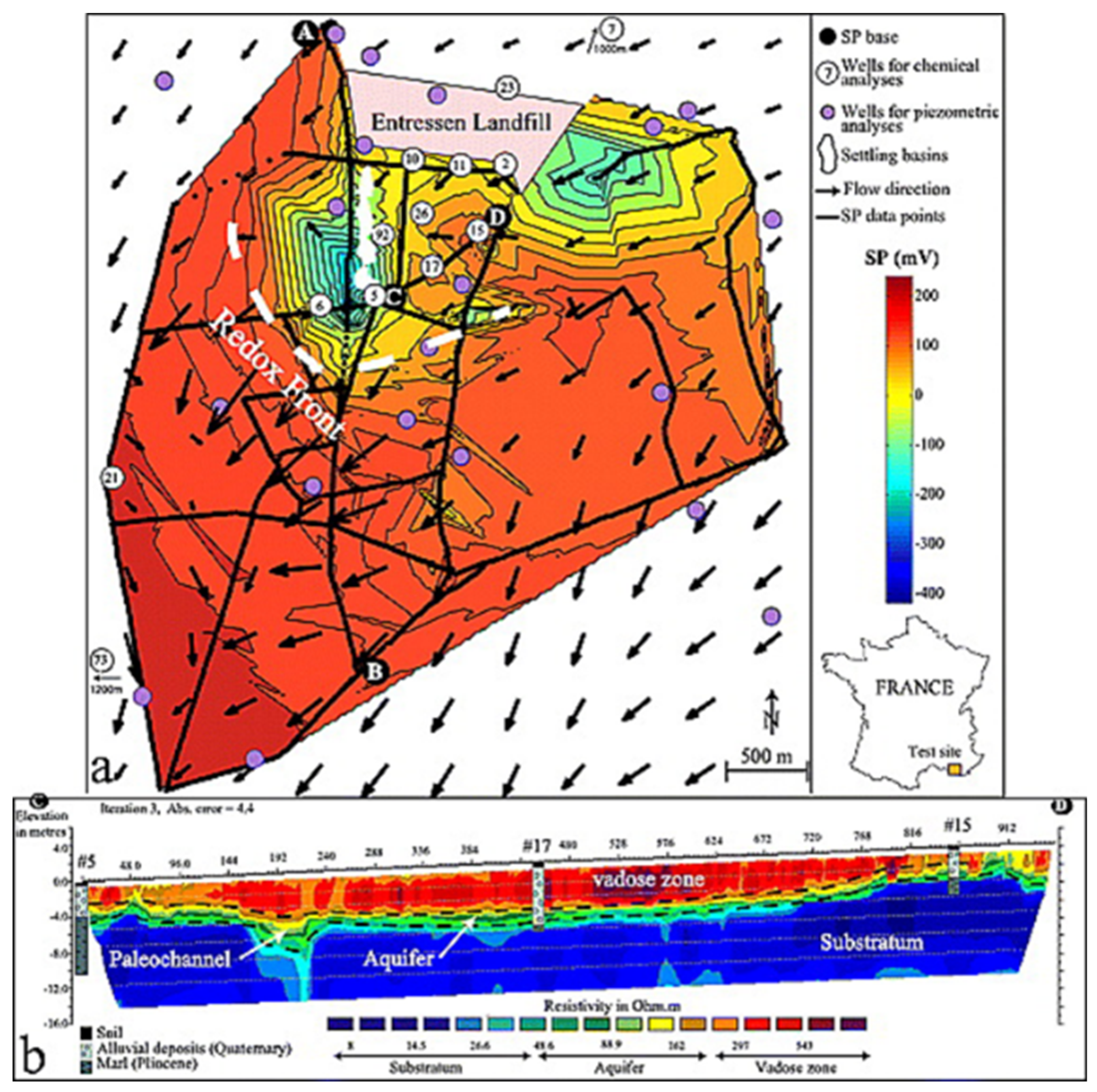
The SP method is widely used in conjunction with ERT measurements to monitor engineering infrastructure. One of the most interesting applications is using the SP method to detect contaminant leakage from landfills or other waste disposal systems. The SP method can be considered a useful complement to geochemical measurements, which are more difficult to perform in the field and expensive and time-consuming. Pioneering work on the SP method was carried out at the Entressen municipal waste landfill in south-eastern France, the largest open-air landfill in Europe, with around 600,000 tons of municipal and domestic waste stored per year [
53,
54]. The SP method enabled the delineation of the redox front of the contaminant plume in the groundwater due to the presence of the landfill. The researchers clearly demonstrated that residual SP signals are linearly correlated with in situ redox potential measurements after removing the electrokinetic component associated with groundwater flow. They proposed a quantitative relationship between SP values and redox potential and inverted the SP field measurements in terms of in situ redox potential values in the contaminant plume (
Figure 3).
The Induced Polarization (IP) method is primarily used in mineral mining and environmental monitoring. In engineering geophysics, this method has a limited number of applications; the most relevant studies concern the analysis of corrosion phenomena in concrete structures and the discrimination of clay layers in foundation rock characterization for the design of engineering infrastructure. One example of best practice is the study carried out in southeastern Guangdong, China, for the development of the High Intensity Accelerator Facility Project [
55]. The presence of fracture zones, weathered/fractured rock and faults meant that the heterogeneous conditions of the terrain had to be accurately studied before the engineering project could be designed. ERT and IP methods were employed to contribute to the definition of the geotechnical model of the subsurface and the quality of the rock mass of the foundation subsoil. ERT measurements were carried out to estimate the integrity of the rock mass in the foundation soil, reducing the number of drillings and the cost of the procedure. The IP method was applied to remove the ambiguity between water and clay in the interpretation of the ERT data, which is a classic problem in near-surface geophysics. ERT’s low resistivity cannot distinguish between clay and water because both can be assessed with low resistivity. IP, on the other hand, can distinguish between clay and water. A high chargeability value indicates a high clay content. Therefore, integrating ERT and IP is useful for clearly mapping clay layers.
In summary, geoelectric methods are particularly well suited for the geological characterization of sites and foundation areas for major engineering projects. Using very low frequency electrical signals enables good penetration depths of up to 200 m. Furthermore, integrating ERT, IP and SP methods yields good results in studying seepage phenomena in dam embankments and pollutant diffusion in the subsoil. However, the spatial resolution of geoelectric methods is quite limited, and surveys are time-consuming due to the necessity of galvanic contact with the soil.
3.2. Magnetic Methods
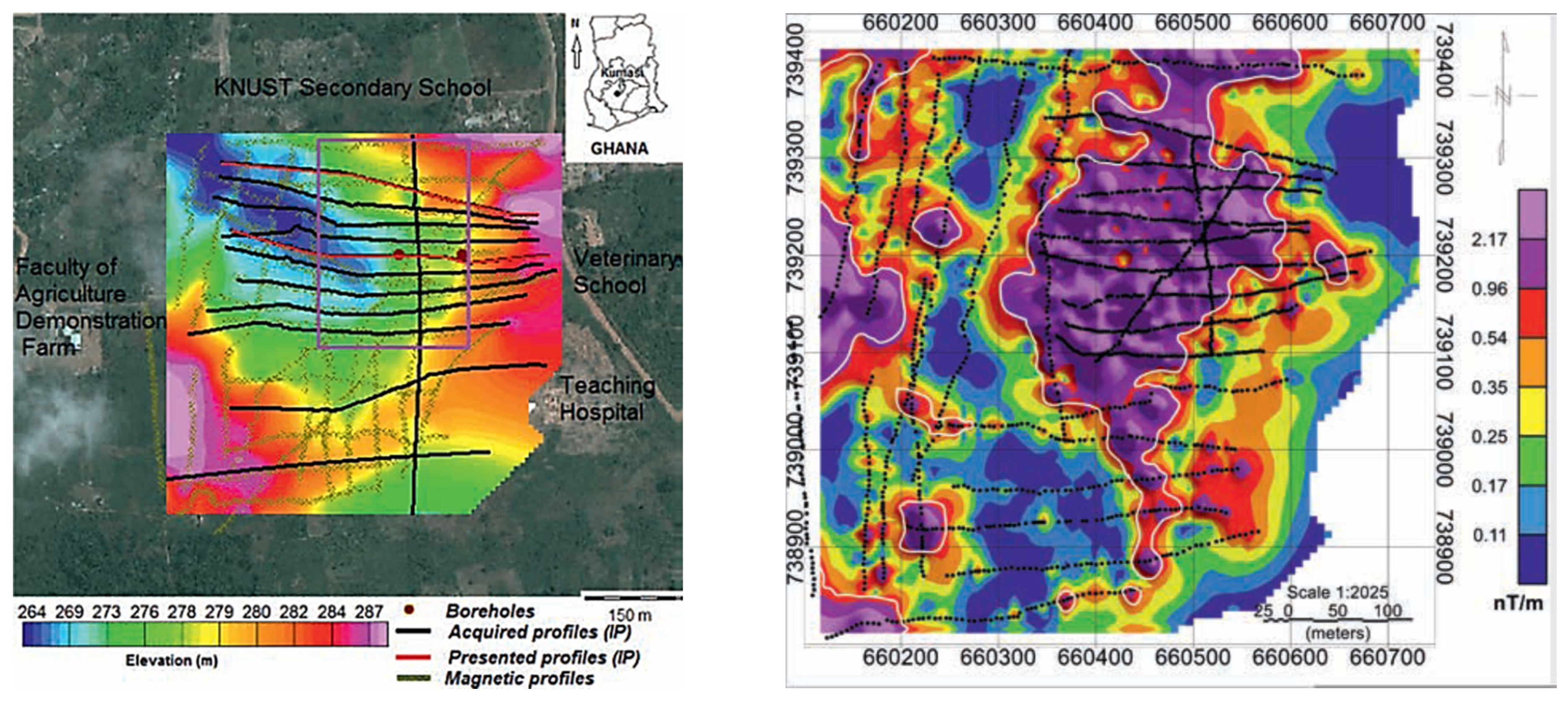
In near-surface geophysics, the static magnetic method is primarily used for mineral exploration and for detecting buried metallic objects. Its applications in engineering geophysics are limited, with only a few examples relating to the monitoring of civil infrastructure. One of the main applications of subsurface magnetic mapping is monitoring solid waste in landfills. This is particularly relevant in developing countries, where there are many uncontrolled landfills. An interesting study was conducted to map the decommissioned, un-engineered municipal solid waste disposal site of the Kwame Nkrumah University of Science and Technology, which is in the Kumasi Metropolis of Ghana [
56]. Joint use of magnetic and IP methods permitted the identification of the presence of solid waste (see
Figure 4). Then, the results of the geophysical survey were exploited to evaluate the environmental risk posed by the waste deposit to soil and groundwater quality in a high-density urban area.
In recent years, there has been growing interest in a set of non-invasive methods that can investigate local macroscopic magnetic anomalies produced by changes in the ferromagnetic properties of metallic bodies at a microscopic level. External stresses and magnetic fields can induce a reorganization of magnetic domains at a microscopic level. Consequently, the intensity of the magnetic field nearby the material is modified at a macroscopic level, and these variations can be detected by sensors. In the context of structural health monitoring, a variety of magnetic non-invasive methods have been developed, including Magneto-Acoustic Emission (MAE), Magnetic Flux Leakage (MFL) and Metal Magnetic Memory (MMM) [
57]. The first two methods require an external magnetic source, whereas the third one is merely passive. MFL is one of the most common methods for detecting corrosion and defects in oil and gas pipelines. Recently, interest in the MMM method has grown, and it has been used to investigate steel structures in buildings, bridges, Reinforced Concrete (RC) structures, bridge cables and steel wire ropes [
58].
The classical survey, which is based on the observation of local magnetic anomalies in the Earth’s magnetic field due to the presence of metallic objects in the subsoil, has few applications in urban and infrastructure geophysics, and the most interesting application is monitoring of soil pollution in industrial sites and waste deposits. Conversely, the study of the effects produced by an external magnetic field applied in proximity to metallic pipelines has a wide range of applications. These results are already being used to detect defects and/or corrosion phenomena that can potentially reduce the functionality of energy pipelines.
3.3. Non-Stationary Electromagnetic Methods
Nowadays, the Frequency Domain Electromagnetic Method (FDEM) is widely used in hydrogeological studies, such as mapping saltwater intrusion and geothermal monitoring, as well as in many other geological and environmental applications [
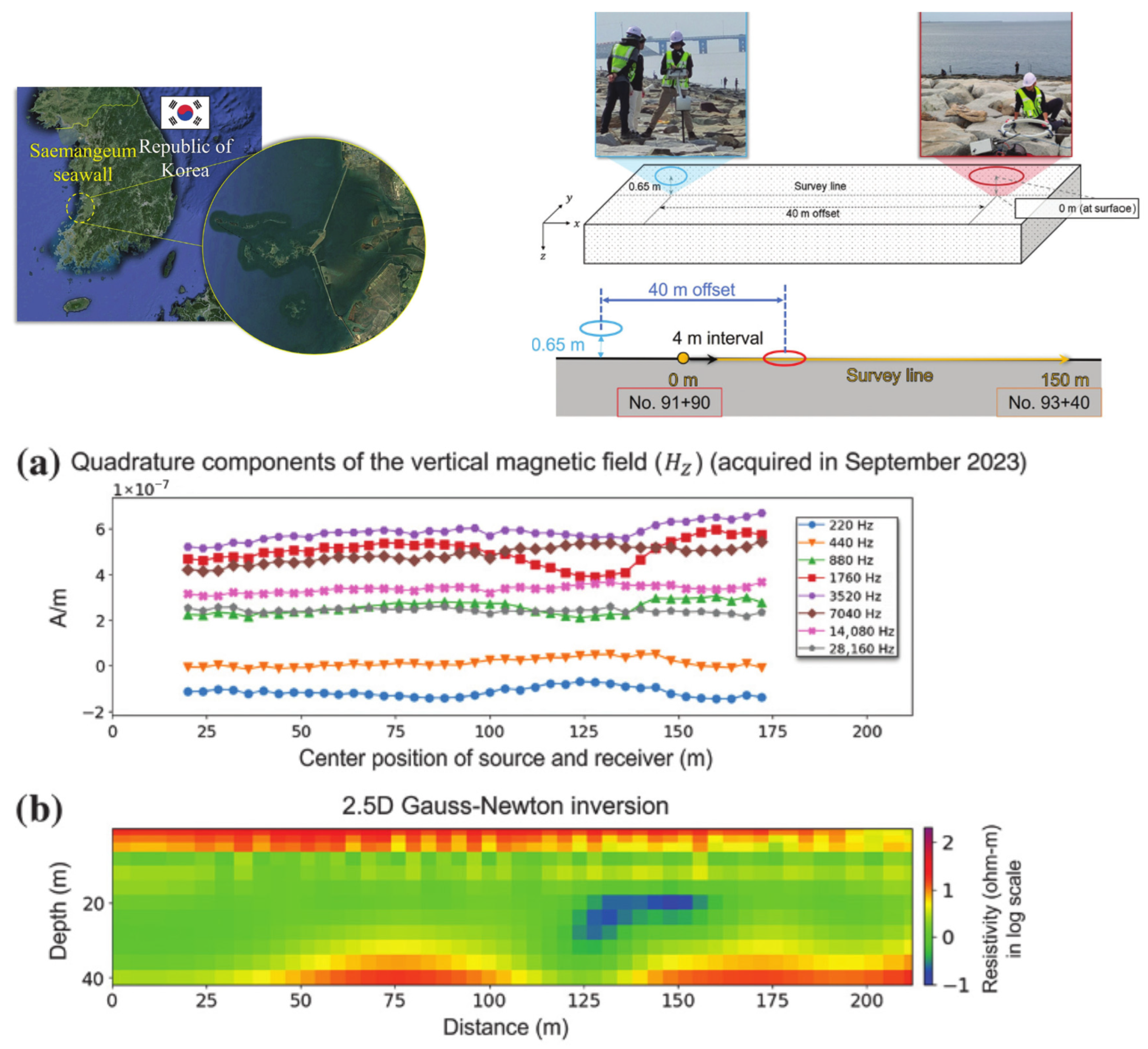
59]. In engineering geophysics, the FDEM method is primarily exploited for mapping the leakage of contaminants from buried waste or landfills, for monitoring oil and gas pipelines, and for delineating water seepage in earth embankments. A recent paper [
60] described an interesting case study in which the scholars used a deep neural network to invert FDEM profiles acquired along the Seamangeum seawall in South Korea, recognized as the world’s longest one. Long-term geophysical monitoring was carried out to evaluate internal erosion in the seaward slope; the use of GPR and seismic methods was limited by the presence of an irregular layer of saturated, conductive stones on the surface. FDEM was the most suitable method for locating potential hazards in this coastal infrastructure (
Figure 5).
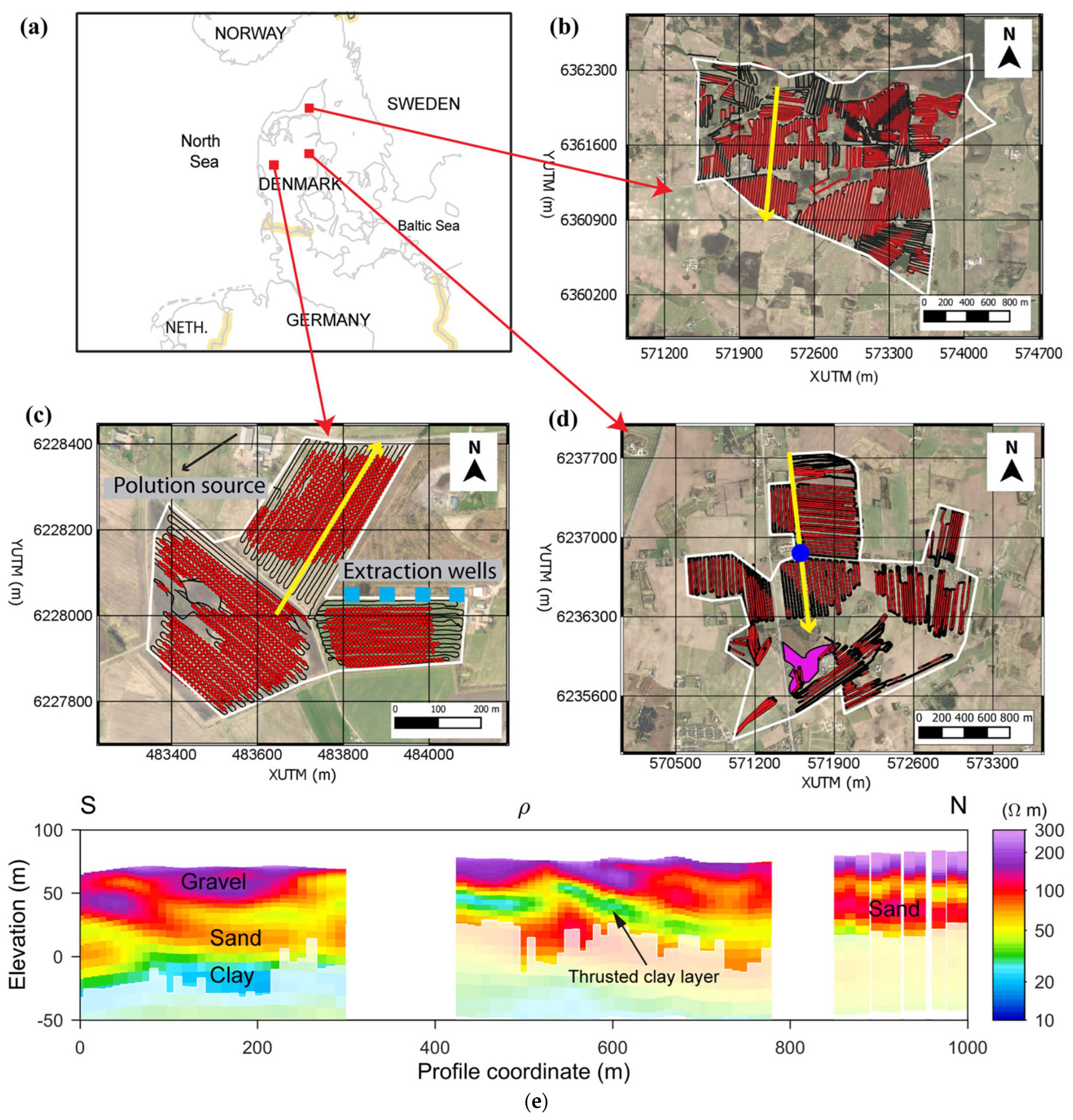
Another classical electromagnetic method that is widely used in hydrogeological and environmental studies is the Transient Electromagnetic Method (TEM). One of the more recent applications of this method regards a towed TEM system (tTEM) for the rapid mapping of resistivity patterns in the shallow subsurface (0–100 m depth) [
61]. This method has been successfully used in Denmark to map raw materials for engineering constructions (e.g., sand and gravel), to evaluate the geometry of a clay layer protecting an aquifer from pesticide pollution, and to investigate the geological layers in an area surrounding a landfill (see
Figure 6).
The FDEM and TEM methods are generally used for the rapid mapping of the subsurface resistivity patterns covering wide areas of interest; furthermore, they are currently applied to map the presence of water seepage in levees and embankments. However, their spatial resolution is quite limited, and it is difficult to obtain accurate 2D and 3D subsurface images.
3.4. The GPR Method
The GPR method is one of the most common in engineering geophysics and has a wide range of applications. These include mapping road networks, detecting rebars in concrete structures, monitoring bridges, identifying water infiltration in levees, as well as solving many other engineering problems [
62,
63]. One of the most challenging applications is the monitoring of energy pipelines, with the aim of reconstructing the map of the underground network and identifying any reduction in functionality due to environmental phenomena and/or soil foundation problems at an early stage.
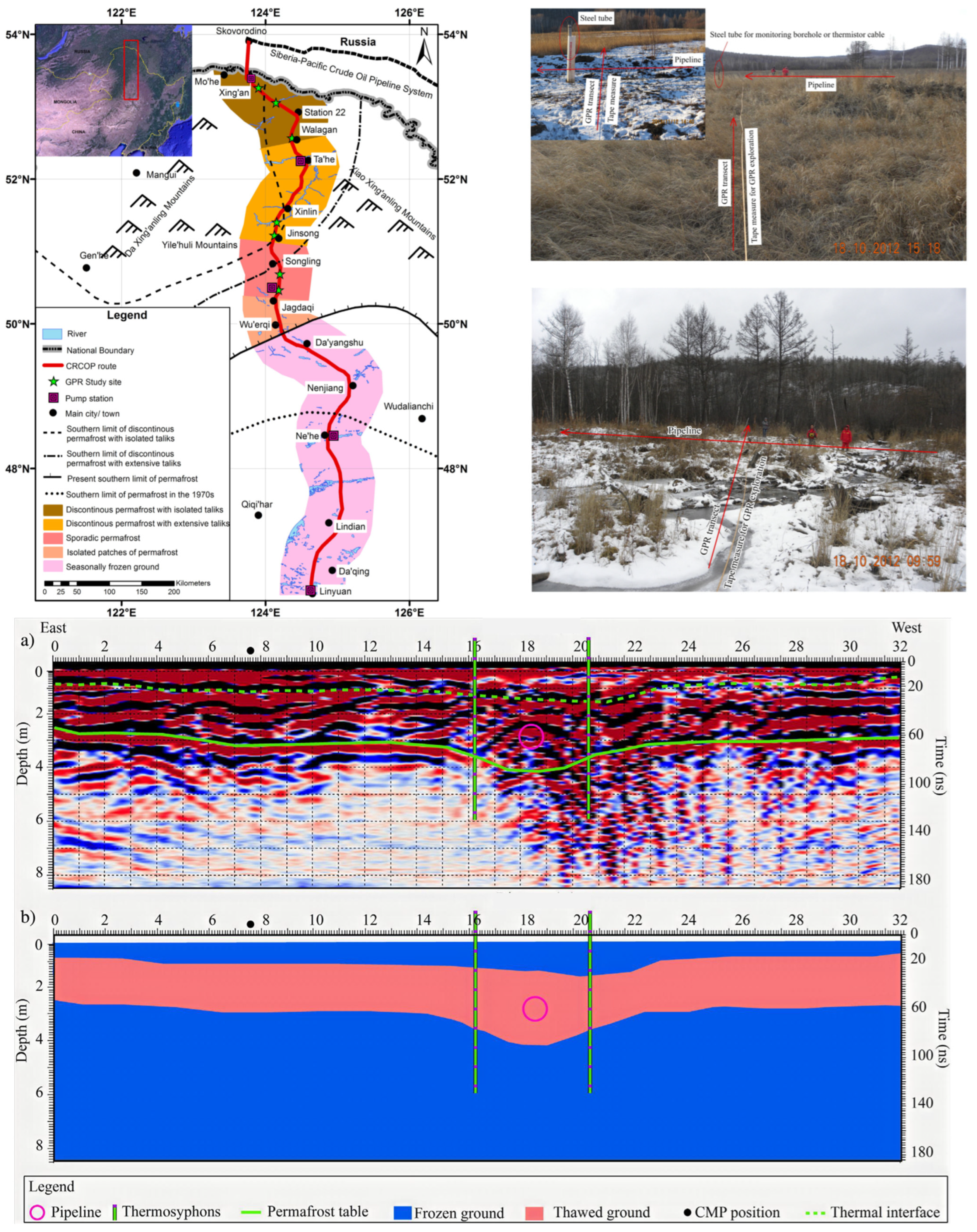
One interesting case study is the GPR survey conducted to evaluate the thaw settlement of foundation soils along the 1030 km China–Russia Crude Oil Pipeline (CRCOP) in the Arctic region [
64]. To assess the long-term stability and engineering safety of the pipeline foundations, Ground-Penetrating Radar (GPR) was used to detect the freeze–thaw state of the foundation soils in the permafrost zones. A total of 2780 m of GPR profiles and 62 cross-sections (perpendicular to the CRCOP route) were obtained at eight GPR study sites on various terrains with different levels of vegetative coverage and thermal insulation configurations around the pipe (see
Figure 7). The GPR results were analyzed and interpreted jointly with drilling and temperature measurement data in order to investigate the spatial and temporal extent and development processes of the freeze–thaw states of the pipeline foundations and the underlying permafrost. Given the prevailing climate trends, studying the permafrost is a strategic priority for maintaining civil infrastructure in polar regions.
Another application of the GPR method with an enormous social and economic impact is monitoring airport pavements. This strategic civil infrastructure provides an essential service for transporting millions of people around the globe every day. Airport pavements are constructed using advanced technologies to ensure integrity and safety; however, continuous aircraft traffic and environmental factors (rainfall, temperature changes, etc.) can cause pavement defects. In airport runway pavements, loose layers and small holes are the most common diseases.
Consequently, there is an increasing demand for technologies that can detect and map anomalies in pavement structures at an early stage. Studying airport pavements using the GPR method is more difficult than using it for classical road monitoring applications on a large scale because defects occur on a millimeter scale and are difficult to detect. Recently, a novel approach based on the analysis of lateral electromagnetic wave characteristics at common midpoints has been proposed [
65]. A lateral wave is generated near the boundary between two different dielectrics (e.g., air and pavement surface) and propagates in the shallow subsurface, carrying information that can be used to detect small anomalies in the pavement structure. This approach was applied to investigate the Tokyo International Airport pavement, with the aim of identifying the debonding layers.
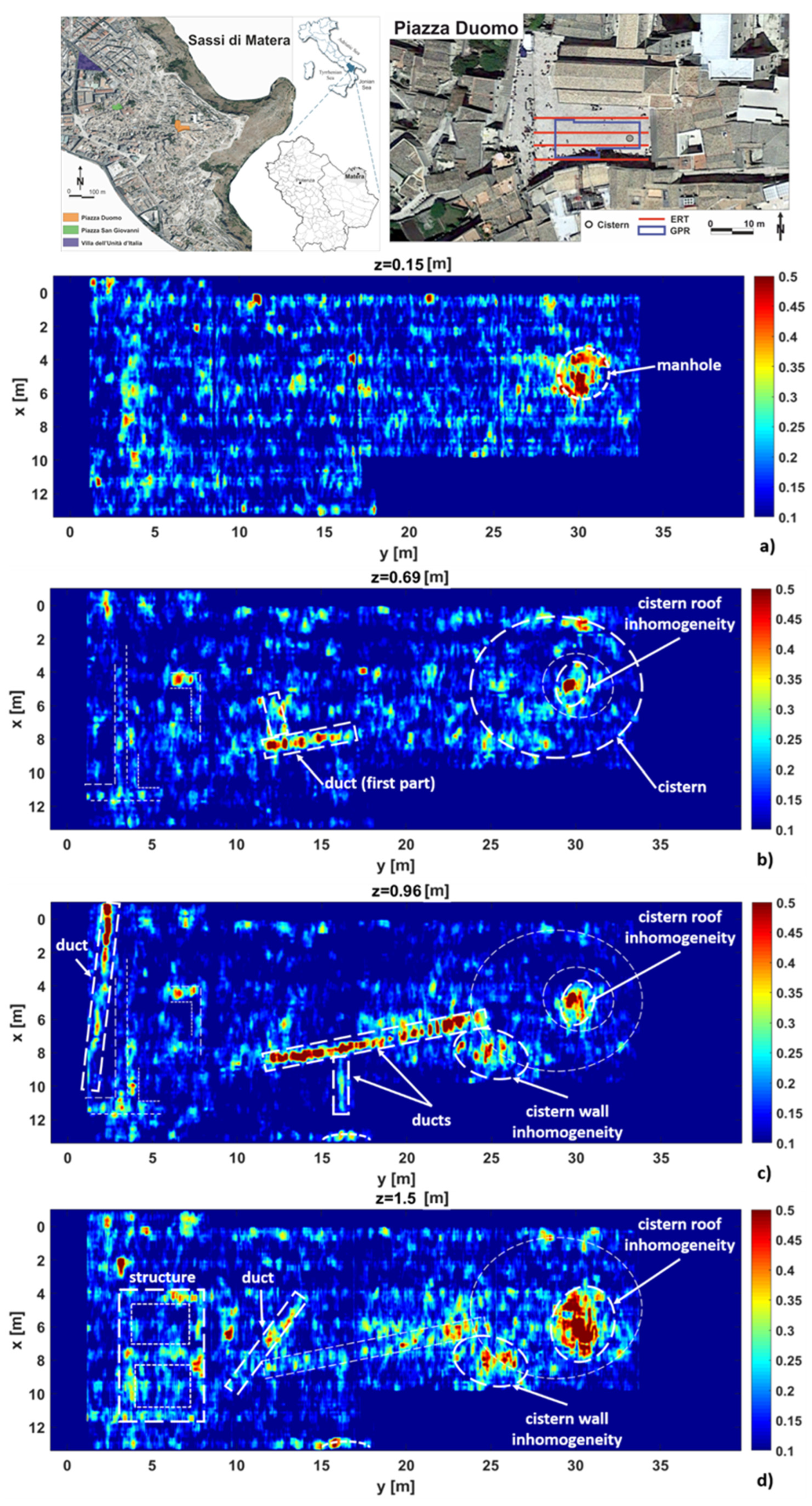
An interesting example of an integrated near-surface geophysical investigation was the one done at the UNESCO World Heritage site of Matera (Southern Italy), focusing on its highly human-modified underground environment (
Figure 8). The study exploits Ground-Penetrating Radar (GPR) and Electrical Resistivity Tomography (ERT) as non-invasive, complementary techniques to characterize subsurface features beneath an urban setting [
66].
The integrated approach will perform the successful identification of bottleneck zones and karstic discontinuities; buried historical structures; underground voids; bater ducts and cavities. The work demonstrates how an integrated approach allows (i) preventive risk assessment; (ii) reduction in collapse risk in public spaces; and (iii) early detection of instability. This supports long-term resilience strategies and creates a scientific basis for safer infrastructure management and emergency planning in historical cities affected by hydrogeological or structural risk. The study also demonstrated that these methods can (i) reveal hidden historical structures without excavation; (ii) protect heritage assets from damage; and (iii) guide targeted archaeological interventions.
This approach is consistent with modern conservation principles, which prioritize preservation, minimal disturbance, and sustainable exploration.
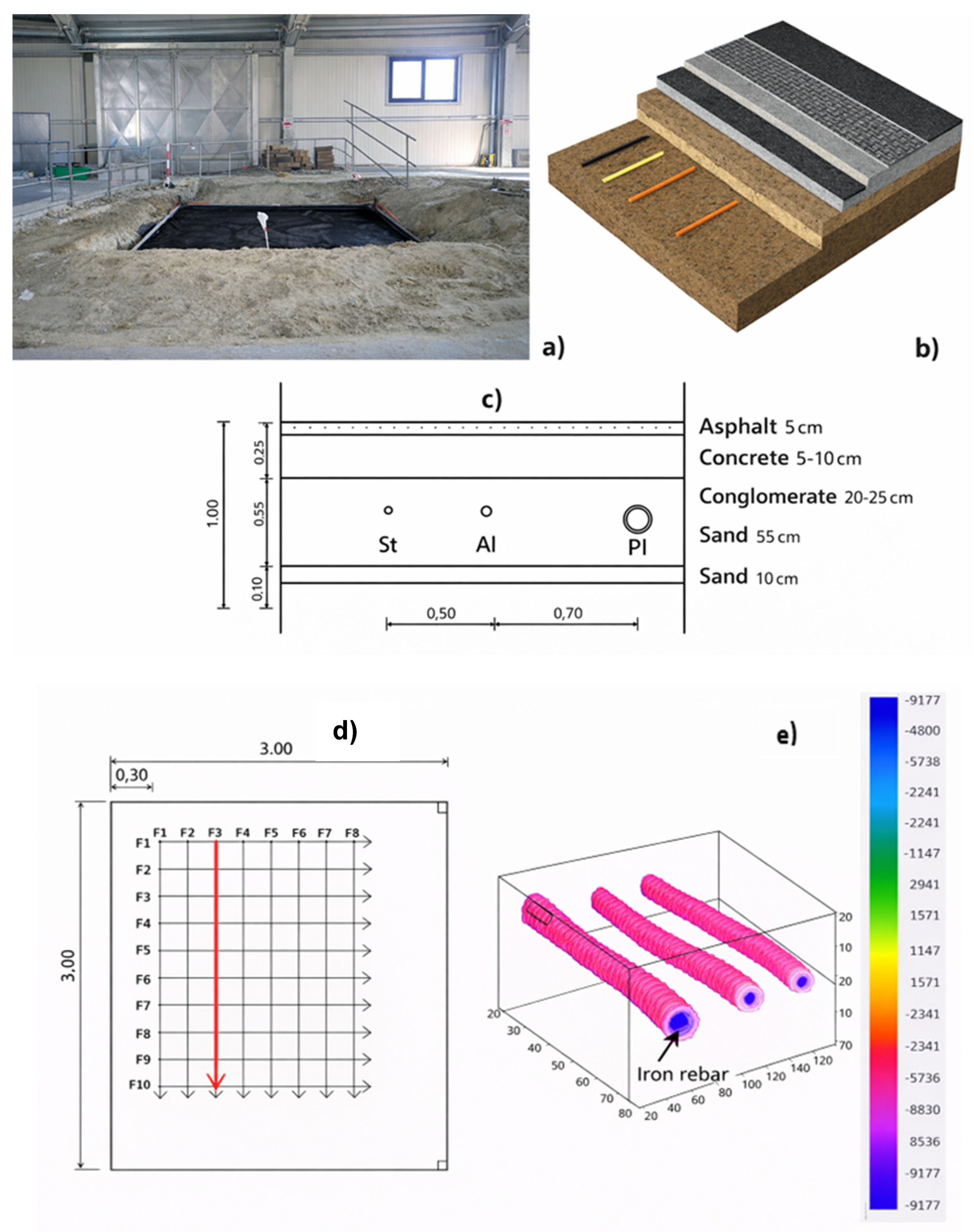
Lastly, this overview of interesting and challenging applications of ground-based electromagnetic methods in engineering geophysics focuses on laboratory tests and measurements. An interesting experiment evaluating the GPR potentiality to investigate road structures with pipelines present was carried out at the Hydrogeosite facility (Marsiconuovo, Italy). This is a full-scale laboratory for testing the performance of geophysical methods under controlled conditions (
Figure 9). The experiment involved 2D and 3D ground-penetrating radar monitoring of a reinforced concrete asphalt plate affected by mechanical deformation. The Hydrogeosite laboratory is a large concrete pool measuring 12 × 7 × 3 m and containing 252 m
3 of silica sand (95% SiO
2, with an average diameter of approximately 0.09 mm, porosity of around 50%, and a hydraulic conductivity of approximately 10
−5 m/s). It represents an intermediate stage between laboratory experiments and field surveys (
Figure 9). Therefore, it offers the advantage of obtaining controlled results, as in a laboratory experiment, but at a scale comparable with that of a field survey [
67].
A simulation of a road segment characterized by a multi-layer structure was realized to simulate damage to the asphalt layer. Specifically, the structure under test comprised several layers, rebar and utilities (metallic and non-metallic pipes), with a maximum depth of approximately one meter. GPR data acquired with a 400 MHz antenna identified all the elements of the road segment. The 2D acquisitions made it possible to construct 3D high-reflection-amplitude iso-volumes that highlighted the presence of pipelines (see
Figure 9e).
As the last case study, we present the work carried out by Kaur et al. [
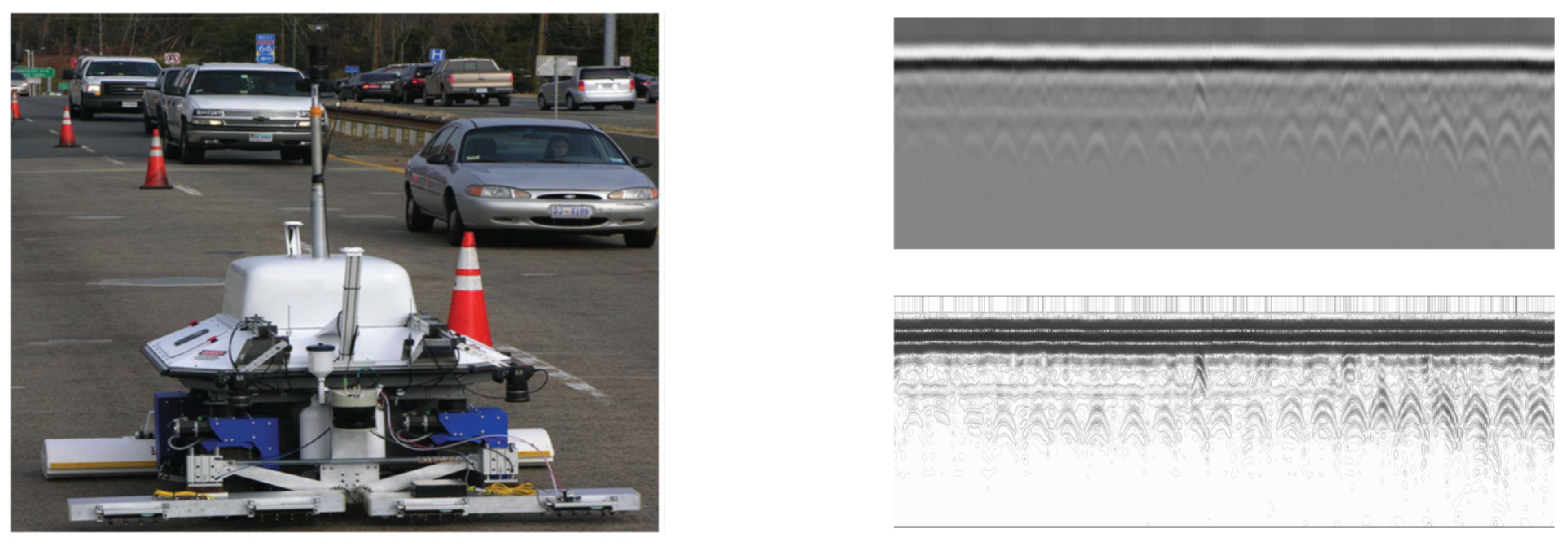
68] representing one of the first examples concerning the use of robot technologies to support Ground-Penetrating Radar (GPR) surveys. They developed a novel robotic bridge inspection system equipped with GPR antennas to investigate the deterioration of the reinforced concrete structures of bridge decks in the state of New York (USA). The key to rapidly mapping the degraded and corroded rebars was the use of a robotic system combined with machine learning algorithms (
Figure 10).
The possibility of high spatial resolution and the capability to effectively map large areas makes the GPR method one of the most appropriate tools for a wide range of engineering applications. Mapping buried pipelines, searching for cavities in urban areas and characterizing road pavements are classic examples of applications where the GPR method is well assessed and even used by agencies and private companies. However, attenuation phenomena due to the presence of shallow conductive layers strongly limit the exploration depth; therefore, the GPR method cannot be applied for studies where it is necessary to investigate depths greater than a few meters. In recent years, large attention has been devoted to novel tomographic algorithms improving the interpretability of radar data for delineating complex geometry of shallow buried objects.
4. Discussion
The list of case studies selected for discussion in the previous section is obviously not exhaustive; many other applications of ground-based electromagnetic methods exist in the field of engineering geophysics. This paper aims at providing a critical analysis of the potential of these methods and the trends for future developments rather than a mere bibliographic review. The case studies described clearly demonstrated the capability of ground-based EM methods to contribute to all phases of surveillance and maintaining strategic infrastructure, including reducing their environmental impact on the territory.
The geoelectrical methods appear particularly suitable for geological site characterization to support urban planning, for estimating the geomechanical properties of the soil foundation of strategic infrastructures, and for evaluating the environmental impact of urban activities. These active methods are unaffected by limits to the investigation depth due to attenuation phenomena and can easily be adopted to explore the subsurface at a range of depths between 0 and 100 m. Also, geoelectrical methods can be applied to perform micro-surveys (investigation depth less than 1 m) for investigating fractures in cement-reinforced concrete structures or to map the geological layers for site engineering characterization (investigation depth greater 10 m). This flexibility of the field measurement arrays is the key to the success of the geoelectrical methods.
The magnetic methods are well suited for mapping defects or corrosion phenomena in buried pipelines with sensors installed close to the structures, and the development of miniaturized sensors will improve the diffusion of these methods. The classical magnetic survey is a powerful tool for the rapid mapping of buried metallic objects, but its application in engineering geophysics is quite limited.
The TEM and FDEM methods are mainly adopted to map the pipeline networks and to evaluate the geological conditions potentially critical for the functioning of infrastructure. These methods do not require galvanic contact with the ground and, therefore, are very quick to explore even large areas. However, their resolution is quite limited.
GPR is the more robust and cost-effective method for the rapid mapping and monitoring of engineering infrastructures, with a high capacity to reconstruct the 3D geometry of the buried objects, and to provide information about targets in concrete structures. The only problem related to the application of the GPR method is the limited investigation depth in the presence of conductive materials.
Summarizing, the main methodological strengths include the high resolution of 2D and 3D electromagnetic imaging, the capability to explore subsurface layers at different depths (from 10−3 to 102 m) and the possibility to integrate electromagnetic data with other geophysical and geological information. Their robustness, combined with their low cost and non-invasive nature, makes them particularly suitable for engineering geophysics. However, the experimental activities presented and discussed in the list of best practice examples are not routine procedures but rather excellent research studies designed to demonstrate and/or exploit the capability of ground-based electromagnetic methods to address engineering problems.
By enlarging the point of view and considering the geophysical techniques in the more general frame of monitoring [
69,
70,
71], several scientific/technological challenges should be faced:
The inclusion of these technologies in a monitoring platform able to integrate different kinds of sensing/diagnostic technologies, with spatial data infrastructure and ICT architectures as digital twins;
The capability to assimilate monitoring data and indicators, as the one above described, into civil engineering models, with the end goal being to assess the loss of performance of aging structures.
The above two challenges pave the way to use the outcomes of the EM geophysical techniques, integrated with other sensing techniques, to plan actions and strategies for an effective and economically sustainable management of engineering infrastructures. The outcomes of the geophysical techniques are not only suitable for monitoring but also for early warning and quick damage assessment of interest in crisis management and to better support the strategic programs to make urban areas more resilient and sustainable.
From a technological point of view, the general conceptual scheme to be adopted can be devised to deal with the following challenges:
Definition of the most suitable sensing strategy for each sector of urban areas, depending on type, localization, extension and severity of defect/degradation/damage scenario;
Exploitation and integration of different non-invasive EM sensing techniques and sensor set-ups to monitor the areas and single structures during their life cycle;
Selection of the most suitable data processing technique, modeling approach and method of analysis, including AI and big data, for the different defect/degradation/damage effects in multi-risk present and future scenarios. This is important, for example, to plan the maintenance interventions and provide support in shaping the urban planning;
Real-time assessment of the levels of risk of the infrastructure regarding the attainment of different performance levels under service and ultimate conditions.
In the implementation of this systematic approach, several critical aspects should be considered to ensure performance optimization. First, the exploitation of non-redundant sensing configurations and set-ups is fundamental to acquire data ready to be used. Second, the results derived from data processing should be presented via web in an integrated common framework to achieve a rapid and comprehensive evaluation of the health status of the area and the single structures (integration of EM geophysical techniques with other kinds of sensors). Third, different sensing techniques and/or sensor set-ups should be used for both monitoring the long-term degradation and performing quick damage assessment after crisis events.
In the end, from the analysis of the case-studies and the potentiality of the ground-based EM methods, we see the possibility to better use these methods in the different phases of disaster risk management in urban areas. Of course, the adoption and the use of the results of these methods in operative programs strongly require preparatory activity and a collaboration between academia and institutional agencies. Finally,
Table 2 summarizes the potential role and contribution of the ground-based EM methods to the different phases of disaster risk management.
5. Future Research Directions
In the near future, it will be necessary to overcome this limitation by transforming these methods into efficient, cost-effective and operative tools that are widely adopted within programs for the resilience and long-term economic sustainability of civil infrastructure. In the medium term (5–10 years), integrating electromagnetic methods with robotics, miniaturized sensors and AI-based technologies for multi-source geophysical data analysis could be key to achieving this objective.
Recent progress in soft robotics has produced robots with new capabilities, such as squeezing, climbing, growing and morphing. The result is an increased capacity for robots to grow, evolve and adapt their morphology to their environment [
72]. These technological advances reveal ways to use robots for challenging activities in the engineering geophysics application domain. The rapid inspection of tunnel walls, bridge pillars, dam embankments and pipelines in extreme environments, for example, strongly requires the ability to house and manage sensors on remotely controlled robotic systems [
73].
Another technological opportunity for engineering geophysics is the use of miniaturized sensors. Regarding EM methods, low-cost, small and lightweight magnetic sensors based on Anisotropic Magnetoresistance (AMR) technology and the Hall effect are already available [
74]. Recently, small, compact magnetic sensors based on the Hall effect, which are installed in smartphones, were used in real geophysical applications [
75]. In the future, the most sensitive magnetic field sensors available today, the Superconducting Quantum Interference Device (SQUID), could be adopted in engineering geophysics once the issues surrounding their use and cost have been resolved [
76].
Finally, the scientific advances of AI-based methods such as Deep Learning are completely transforming the capacity to jointly analyze electromagnetic imaging obtained with different sensors and with different resolutions. Deep learning provides new power for geophysical exploration and is becoming an essential tool for processing, modeling and analyzing geophysical data [
77]. AI-based methods could make a significant contribution to multi-source data representation and fusion, the removal of man-made and artificial noise, and tomographic inversion of electromagnetic data. The rapid and widespread adoption of deep neural networks, including Artificial Neural Networks (ANNs), Convolutional Neural Networks (CNNs) and Recurrent Neural Networks (RNNs), in ground-based electromagnetic methods is highly likely [
78]. Indeed, the number of published papers applying AI-based methods to analyze EM data is growing exponentially, although the most cited work mainly concerns theoretical studies and/or numerical simulations [
79,
80,
81]. Furthermore, the AI-based methodologies will give a relevant contribution to jointly analyzing electromagnetic and other typology of geophysical data. Ma et al. [
82] analyzed the recent advances in the joint inversion of electromagnetic and seismic data based on the application of machine learning. This multi-source approach will play a relevant role in improving the quality of geophysical results and will promote the inclusion of geophysical methods in the various operational phases related to risk mitigation and prevention in urban areas.
Finally, another opportunity for the ground-based EM methods will be the integration of their results into the context of digital twins for city buildings and infrastructures [
83,
84].
6. Conclusions
A review analysis of the main applications of ground-based electromagnetic methods in engineering geophysics was carried out, with the aim of presenting and discussing a selection of the best examples of good practice. The case studies were identified by evaluating the citation rank and relevance of the results within programs for resilience and maintenance as well as considering the socio-environmental impact of engineering infrastructures.
The results clearly demonstrate that there is considerable potential for the development of these methods in the context of engineering geophysics. Based on the review, the most common and widely used are the ERT and GPR methods, which are robust, completely non-invasive and cost-effective. The ERT method appears to be a robust and cost-effective tool for the geological and geophysical characterization of the sites on which the strategic infrastructure is located. The GPR method is a rapid and cost-effective tool for the early detection of defects and/or degradation phenomena in pipelines, for the evaluation of the quality of the asphalt pavement in airport runways, and for mapping the presence of voids along roadways.
About the main questions raised in the Introduction, conclusive remarks are reported.
The near surface geophysical methods represent a crucial element of a comprehensive observational chain (integrated approach) for a multi-scale monitoring of the infrastructures and the territory enclosing them. The monitoring of the subsurface and of the inner areas of the structures is relevant in order to assess the exposure of the structures by characterizing risk factors, see for example the mapping of a landslide impacting on a structure. The methods are relevant also for the diagnostics of the inner areas of the structure, so as to detect at an early stage and monitor, through repeated surveys, the weakness areas (for example fractures or corroded rebars); this is important also for assessing the vulnerability of the structure and for planning reliable and sustainable maintenance interventions.
As we can see from the best practice cases in
Section 3, integrating near surface technologies allows for monitoring across different levels. This includes monitoring at different scales (2D/3D), ranging from large areas to the investigation of individual parts of structures. It also includes monitoring at different depths, which is where ERT and GPR surveys come in. In particular, the results of the 2D and 3D electrical resistivity imaging are useful to reconstruct the geometry of the geological layers and to evaluate the presence of fractured materials or preferential water flow zones. The ERT and GPR methods can be easily integrated with other non-electromagnetic geophysical tools, such as seismic tomography. Although the methods presented in this paper are able to provide information about electrical and magnetic properties of the materials, there is a huge amount of literature regarding the relationship between electromagnetic and mechanic/physical properties of the materials.
The true value of near-surface geophysics has been thoroughly demonstrated in several real cases, a few of them described in the present paper. The results of the GPR measurements can give a contribution to better evaluating the performance losses in engineering infrastructures and selecting the priority actions in the maintenance operative services. The integration of the GPR and the magnetic methods seems to be the most appropriate solution to monitor the functionality of the energy pipelines. The key benefits of the presented methods include their non- or quasi-non-invasive nature, portability, easiness of use and installation of the instrumentation. Furthermore, the majority of methodologies have been thoroughly evaluated in the literature, ensuring the reliability of the diagnostic findings. Finally, the cost-effectiveness of the technologies is ultimately determined by the definition and exploitation of effective observational chains.
Finally, the acceptance of these methods in operational programs for making resilient and sustainable strategic infrastructures remains an open problem. At present, they are not systematically included in the strategic programs of public authorities and private companies responsible for the managing of the urban areas and strategic infrastructures. In the future, it is necessary to strength the collaboration between academia, policymakers and private companies to include the EM methods in the operational programs for the monitoring, surveillance, and maintenance of strategic infrastructures.
In the medium-term scenario (5 years), technological advances in AI-based methods, miniaturized sensors and soft robotics will facilitate the rapid adoption and application of ground-based electromagnetic methods in market-oriented services and/or products. The adoption of innovative approaches based on multi-sources, multi-resolutions, geophysical data fusion, and tomographic algorithms will increase the quality of the scientific results and open the way to the development of novel applications of the EM methods in engineering geophysics.