1. Introduction
Climate change mitigation and environmental sustainability have become central priorities in global economic policy. The continued rise in greenhouse gas emissions, combined with increasing energy demand, calls for a fundamental transformation of energy systems, particularly in developed economies with historically high carbon footprints. The Intergovernmental Panel on Climate Change [
1] emphasizes the urgent need to accelerate the deployment of low-carbon energy technologies to limit global warming and stabilize the climate system. In this context, renewable energy has emerged as a key instrument for reducing emissions while supporting sustainable economic growth.
A substantial body of empirical research has examined the renewable energy–environment nexus, generally documenting a mitigating effect of renewable energy on CO
2 emissions. Early cross-country panel studies show that renewable energy contributes to reducing CO
2 emissions and supports sustainable growth trajectories [
2,
3,
4]. More recent evidence confirms that renewable energy deployment improves environmental outcomes, particularly in OECD and advanced economies [
5,
6]. Global assessments, such as those by the International Energy Agency [
7], further highlight that increasing renewable penetration has been a major driver of recent emission reductions in advanced economies.
Despite this broad consensus, empirical findings remain heterogeneous in magnitude and statistical significance. These differences are largely explained by variations in econometric approaches, sample composition, and institutional contexts. In particular, studies based on first-generation panel techniques may produce biased estimates because they assume cross-sectional independence, an assumption that is often violated in integrated macro panels exposed to common shocks such as energy price fluctuations, coordinated climate policies, and global financial disturbances [
8].
OECD economies provide a particularly relevant setting to reassess the environmental role of renewable energy. Many countries have adopted ambitious net-zero targets and implemented policies such as carbon pricing, renewable portfolio standards, and large-scale renewable energy deployment. From a methodological perspective, OECD economies are highly interconnected through trade, financial markets, and synchronized economic cycles. Such interdependence generates cross-sectional dependence, which requires econometric approaches capable of capturing common shocks and heterogeneous country dynamics [
8,
9]. Recent sustainability research increasingly emphasizes the importance of these approaches when analyzing integrated macro panels [
10,
11]. By capturing both common global shocks and country-specific dynamics, these methods provide more reliable inference on long-run relationships and short-run adjustment processes.
Against this backdrop, this study examines the impact of renewable energy consumption on environmental quality in ten OECD economies over the period 1990–2024. It aims to assess whether renewable energy plays an important role as a structural driver of decarbonization in advanced economies. The analysis employs a second-generation panel framework that captures both long-run cointegration relationships and short-run dynamics. Robustness checks using alternative estimators and environmental indicators further enhance the credibility of the findings. However, empirical evidence remains sensitive to model specification and methodological choices, particularly in panels characterized by strong interdependence and heterogeneous dynamics.
Despite the growing literature, few studies jointly account for cross-sectional dependence, slope heterogeneity, and dynamic adjustment when evaluating the long-run environmental effects of renewable energy in OECD economies.
This study contributes to the literature in three main ways. First, it provides long-horizon evidence spanning more than three decades of energy transition in advanced economies. Second, it applies econometric techniques that explicitly account for cross-sectional dependence and heterogeneous slope coefficients, thereby improving the reliability of long-run estimates. Third, it offers policy-relevant insights for OECD countries pursuing carbon neutrality by assessing renewable energy as a structural driver of environmental improvement rather than as a by-product of income growth alone.
Building on the theoretical mechanisms and empirical evidence discussed above, the present study examines the renewable energy–environment nexus through a structured empirical framework that links energy composition, economic activity, and structural factors to environmental outcomes. To better guide the empirical analysis, this study is structured around the following research questions:
RQ1: Does renewable energy consumption contribute to improving environmental quality in OECD economies?
RQ2: What is the role of overall energy consumption in driving CO2 emissions?
RQ3: Does the relationship between economic growth and environmental degradation follow the Environmental Kuznets Curve (EKC) hypothesis?
RQ4: How do financial development and other structural factors influence environmental outcomes?
The remainder of the paper is organized as follows.
Section 2 presents the theoretical framework and literature review.
Section 3 describes the data and econometric methodology.
Section 4 reports the empirical results.
Section 5 discusses the findings, and
Section 6 concludes with policy implications and directions for future research.
2. Literature Review and Conceptual Background
2.1. Structural Mechanisms Linking Renewable Energy to Environmental Outcomes
Within macroeconomic production frameworks, environmental degradation is commonly explained through the interaction of scale, composition, and technique effects. Renewable energy primarily operates through the composition effect, replacing fossil fuel inputs with low-carbon alternatives. The extent to which this substitution translates into emissions reduction depends on energy system characteristics, including grid integration, storage capacity, and technological efficiency [
1,
7].
Endogenous growth theory [
12] provides a conceptual foundation for this transformation, emphasizing that technological innovation drives long-run structural change. Renewable energy technologies—such as solar, wind, and storage systems—represent innovation-intensive investments that reduce the carbon intensity of production [
13]. Earlier contributions [
14,
15] already highlighted that environmental improvement depends on structural transformation rather than income growth alone.
The recent literature extends this framework by emphasizing the role of policy design, innovation, and financial systems. For instance, Ref. [
16] show that green fiscal policies and R&D investments significantly reduce pollution in OECD countries, while poorly designed incentives may be ineffective or counterproductive. Similarly, Ref. [
17] demonstrate that environmental regulation and green innovation jointly contribute to emissions reduction through technological progress.
Recent reviews further highlight that renewable energy contributes to sustainability through multiple channels, including technological innovation, energy efficiency, and environmental protection. Ref. [
18] show that renewable technologies reduce greenhouse gas emissions while supporting broader environmental benefits such as improved air quality and smart energy systems.
Moreover, the environmental impact of renewable energy depends on the degree of fossil fuel displacement. Ref. [
19] confirm that renewable energy reduces both carbon emissions and air pollution, although continued reliance on fossil fuels limits these gains. This reinforces the importance of system-wide energy transition rather than isolated renewable expansion.
Recent theoretical developments further enrich the analysis. Ref. [
20] introduce the Renewable Energy Kuznets Curve (RKC), suggesting that renewable energy adoption follows a nonlinear trajectory across income levels and may precede emissions reduction. This perspective complements the traditional Environmental Kuznets Curve by emphasizing the role of energy structure transformation in driving environmental improvement.
Overall, both classical and recent literature converge on the view that renewable energy improves environmental quality through structural, technological, and policy-driven mechanisms.
2.2. Evidence from Advanced Economies
A substantial body of empirical research documents the mitigating role of renewable energy in reducing environmental degradation. Early panel studies provide consistent evidence that renewable energy consumption contributes to long-run reductions in CO
2 emissions [
2,
3]. Similar findings are reported by [
4,
5], who show that renewable energy significantly improves environmental quality in OECD and European economies.
More recent contributions reinforce and extend these results. Ref. [
21] demonstrate that increasing the share of renewable energy leads to significant reductions in CO
2 emissions, with stronger effects observed in developed economies. In parallel, recent studies highlight the importance of environmental policy frameworks, showing that instruments such as green taxation and R&D investment can further enhance environmental sustainability when effectively implemented [
22]. Institutional quality also plays a crucial role in shaping environmental outcomes, as effective governance, regulatory frameworks, and policy enforcement mechanisms enhance the effectiveness of renewable energy policies and sustainability strategies.
The interaction between renewable energy and economic growth has also attracted increasing attention. Ref. [
23] provide evidence that renewable energy sources, including solar, wind, and biomass, simultaneously support economic growth and reduce environmental degradation, confirming their dual role in sustainable development. Consistent with this view, Refs. [
24,
25] show that renewable energy contributes positively to sustainable growth while mitigating emissions in OECD countries.
Recent research further emphasizes the importance of broader macroeconomic and institutional conditions. Ref. [
26] find that the energy transition contributes to financial stability in OECD economies, suggesting that renewable energy operates within a wider system of economic and financial interactions. This perspective highlights that environmental outcomes are shaped not only by energy structure but also by financial and institutional dynamics.
In addition, heterogeneity across countries plays a critical role in shaping the renewable energy–environment nexus. Ref. [
24] show that the impact of renewable energy on emissions varies with countries’ development stages and their position relative to the Environmental Kuznets Curve turning point. In particular, renewable energy tends to exert stronger emissions-reducing effects in earlier stages of development, while other factors, such as human capital, become increasingly important in more advanced economies.
Despite the broad consensus on the environmental benefits of renewable energy, empirical results remain heterogeneous in magnitude and significance. These differences are largely driven by variations in econometric approaches, policy frameworks, and structural characteristics across countries. For example, Ref. [
17] show that environmental regulation and innovation significantly reduce emissions, underscoring the importance of policy-driven technological change. Overall, the literature provides strong support for the role of renewable energy in improving environmental quality in advanced economies. However, recent studies emphasize that its effectiveness depends on complementary institutional factors such as policy design, financial development, technological innovation, and structural conditions.
2.3. Econometric Integration and Analytical Contribution in OECD Panel Analysis
In highly integrated OECD economies, strong trade, financial, and policy linkages generate substantial cross-country spillovers in emissions and energy dynamics, implying the presence of cross-sectional dependence in panel settings. Ignoring such interdependencies may lead to biased and inconsistent long-run estimates, as conventional first-generation estimators assume cross-sectional independence [
8]. Moreover, heterogeneous adjustment speeds and country-specific dynamics require cointegration techniques that allow for differential long-run relationships and error-correction mechanisms across panel units [
9]. Although much of the renewable-energy–environment literature relies on traditional panel approaches, fewer studies explicitly address both cross-sectional dependence and slope heterogeneity while simultaneously modeling long-run equilibrium and short-run adjustment dynamics in advanced economies. This methodological gap is particularly relevant for OECD countries, where common global shocks, such as energy price volatility or coordinated climate policies, affect multiple economies simultaneously. By applying second-generation panel econometric techniques that incorporate unobserved common factors and heterogeneous dynamics, the present study provides a more robust assessment of the structural relationship between renewable energy consumption and environmental quality. The following section therefore details the data and econometric framework employed to estimate long-run elasticities and short-run convergence dynamics within this integrated macro panel context.
3. Data and Methodology
To provide a clear roadmap of the empirical strategy, the econometric procedure is implemented in a sequential manner. First, cross-sectional dependence is examined to assess the extent of interdependence across OECD countries. Second, the stationarity properties of the variables are tested using second-generation panel unit root tests that account for such dependence. Third, given the integration properties of the variables, panel cointegration techniques are applied to verify the existence of a long-run equilibrium relationship. Finally, long-run elasticities are estimated using the CCE-MG and AMG estimators, and short-run dynamics are analyzed within a panel error-correction framework.
3.1. Data
This study uses an annual panel of ten OECD countries—Australia, Canada, France, Germany, Italy, Japan, Spain, Sweden, the United Kingdom, and the United States—over the period 1990–2024. The panel is unbalanced due to limited data availability in the early years, resulting in a total of 260 observations. Missing observations are relatively few and arise primarily from initial data gaps. No interpolation is applied, and the analysis relies on available observations to preserve data integrity.
The selection of countries is guided by data availability and consistency requirements. Although some early-year observations are missing, the selected economies provide sufficiently consistent and comparable data across all variables to ensure reliable estimation within a second-generation panel framework. In addition, these countries represent major advanced OECD economies, making them particularly relevant for analyzing the role of renewable energy in environmental performance.
Data are obtained from the World Development Indicators (WDI) and OECD databases to ensure cross-country consistency. Environmental quality is proxied by CO
2 emissions per capita (CO
2) as the baseline dependent variable, while carbon intensity (CI), defined as CO
2 emissions per unit of GDP, is used for robustness analysis. CO
2 emissions per capita are measured in metric tons per person, while carbon intensity is defined as CO
2 emissions per unit of GDP, capturing emissions efficiency rather than absolute emissions. The main explanatory variable is renewable energy consumption (REN), measured as the share of renewables in total final energy use. This aggregate measure is adopted to ensure data consistency and comparability across countries over the full sample period. While disaggregated data (e.g., solar, wind, hydro) could provide more detailed insights into technology-specific environmental effects, such data are not consistently available for all countries over the entire time horizon. Therefore, the aggregate indicator is appropriate for capturing the overall contribution of renewable energy to environmental performance in a long-run panel context. Control variables include GDP per capita (GDPpc) and its squared term (GDPpc
2) to test the Environmental Kuznets Curve (EKC) hypothesis; energy use per capita (ENERGY); trade openness (TRADE); financial development (FD), proxied by domestic credit to the private sector; and urbanization (URB). GDP per capita captures the scale effect associated with economic activity, while its squared term is used to test the Environmental Kuznets Curve hypothesis. Energy use reflects overall energy intensity and is expected to be a primary driver of emissions. Financial development captures the role of credit expansion and capital allocation, which may either increase emissions through industrial activity or reduce them if directed toward green investments. Trade openness reflects the impact of international integration, which may affect emissions through scale, composition, and technique effects. Urbanization captures demographic concentration and structural transformation, which may influence energy demand and environmental pressure. Although the literature emphasizes the role of institutional quality and environmental policy frameworks, such variables are not explicitly included in the empirical specification due to data comparability constraints across countries and over the full sample period. Moreover, in highly integrated OECD economies, policy and regulatory factors often exhibit common dynamics across countries. The use of second-generation estimators such as CCE-MG partially captures these common influences through cross-sectional averages, thereby mitigating omitted variable bias associated with unobserved shared policy factors. All variables are transformed into natural logarithms prior to estimation. This transformation serves several purposes. First, it reduces heteroskedasticity and improves the normality of the data distribution. Second, it allows the estimated coefficients to be interpreted as elasticities, which facilitates economic interpretation. Third, logarithmic transformation mitigates the influence of extreme values and enhances comparability across countries.
Table 1 presents the definition, measurement, data sources, and expected signs of all variables included in the empirical analysis.
3.2. Econometric Methodology
3.2.1. Cross-Sectional Dependence and Stationarity
Given the strong integration among OECD countries, we first test for cross-sectional dependence using [
27]’s CD test. Evidence of significant dependence justifies the use of second-generation estimators.
The order of integration is then examined using the Cross-Sectionally Augmented IPS (CIPS) test [
28], which controls for unobserved common factors by augmenting standard unit root regressions with cross-sectional averages. Establishing integration properties is necessary before testing for cointegration. This test is particularly appropriate in the present context because it relaxes the cross-sectional independence assumption embedded in first-generation unit root tests and therefore provides more reliable inference for integrated macro panels such as OECD economies.
3.2.2. Panel Cointegration
We test for long-run equilibrium relationships using the [
9] error-correction-based panel cointegration test. This approach directly evaluates the presence of a significant error-correction mechanism while allowing for heterogeneous adjustment across countries. Rejection of the null hypothesis supports estimation of long-run elasticities within a cointegrated framework. The Westerlund approach is especially suitable here because it is based on the error-correction mechanism and does not impose homogeneous adjustment dynamics across countries.
3.2.3. Baseline Long-Run Specification
The baseline long-run model is specified in logarithmic form:
The baseline model excludes the squared income term to estimate the linear effect of economic activity on emissions and to reduce multicollinearity associated with the polynomial income specification. Coefficients are interpreted as elasticities.
Long-run parameters are estimated using the Common Correlated Effects Mean Group (CCE-MG) estimator [
8], which controls for unobserved common factors and permits slope heterogeneity. The Augmented Mean Group (AMG) estimator is used as a complementary validation estimator. These estimators allow for heterogeneity by estimating country-specific slope coefficients and averaging them, although the analysis focuses on mean-group effects rather than individual country estimates.
The selection of the CCE-MG and AMG estimators is based on several econometric considerations. First, OECD economies are exposed to common shocks and unobserved common factors arising from trade integration, financial interdependence, and coordinated policy changes. Second, the environmental effects of renewable energy are unlikely to be identical across countries, which justifies allowing for heterogeneous slope coefficients. Third, these estimators are appropriate in a cointegrated panel setting, as they provide consistent mean-group estimates while controlling for cross-sectional dependence. For these reasons, CCE-MG and AMG are well suited to the present panel structure.
3.2.4. Extended EKC Specification
To test the Environmental Kuznets Curve (EKC), the baseline model is extended by including the squared term of income as follows:
The EKC hypothesis is evaluated on the basis of the signs and joint significance of the income terms. An inverted U-shaped relationship requires a positive coefficient on lnGDPpc and a negative coefficient on lnGDPpc2.
3.2.5. Short-Run Dynamics
Short-run adjustments are examined using a panel error-correction model:
where
Xit includes renewable energy consumption, GDP per capita, energy use, financial development, trade openness, and urbanization. The coefficient
λ measures the speed of adjustment toward the long-run equilibrium; a negative and statistically significant value confirms convergence.
3.2.6. Robustness
To ensure that results are not driven by scale effects, the model is re-estimated using carbon intensity (CI) as an alternative dependent variable, allowing assessment of emissions efficiency effects.
Potential endogeneity may arise from simultaneity between economic activity, energy consumption, financial development, and environmental outcomes. While instrumental variable or GMM approaches are commonly used to address such issues, the CCE-MG and AMG estimators employed in this study partially mitigate endogeneity concerns by controlling for unobserved common factors and cross-sectional dependence, which are major sources of bias in macro panel settings. Nevertheless, these estimators do not fully eliminate all forms of endogeneity.
4. Results
Before proceeding to the econometric estimations, we begin by examining the descriptive properties of the data to provide an overview of the distributional characteristics of the variables across OECD countries.
4.1. DSummary Statistics and Preliminary Insights
Table 2 reports the descriptive statistics for all variables used in the empirical analysis.
Table 2 presents the descriptive statistics for the log-transformed variables. CO
2 emissions (ln_CO2) exhibit moderate dispersion (Std. Dev. = 0.4323), indicating noticeable cross-country and temporal variation in carbon performance across OECD economies. Carbon intensity (ln_CI) shows similar variability, reflecting differences in emissions efficiency.
Renewable energy consumption (ln_REN) displays the highest standard deviation (0.9249), suggesting substantial heterogeneity in renewable penetration across countries and over time. GDP per capita (ln_GDPpc) presents relatively low dispersion, consistent with the comparable income levels of advanced OECD economies, while its squared term follows mechanically from this distribution. Energy use (ln_ENERGY), financial development (ln_FD), and trade openness (ln_TRADE) exhibit moderate variability, indicating meaningful structural differences across countries. Urbanization (ln_URB) shows minimal dispersion, reflecting the mature demographic structures typical of advanced economies. Overall, the data display sufficient variation to support reliable panel estimation.
4.2. Correlation Analysis and Multicollinearity Diagnostics
This subsection examines the pairwise correlations among the variables and assesses potential multicollinearity issues prior to estimating the regression models.
Table 3 presents the pairwise correlation matrix and shows that renewable energy consumption (ln_REN) is negatively correlated with both CO
2 emissions (−0.1806) and carbon intensity (−0.283), providing preliminary support for its mitigating role. Energy use (ln_ENERGY) exhibits a strong positive association with CO
2 (0.7207), confirming the importance of the scale effect, while financial development (ln_FD) is positively correlated with emissions (0.5567) and strongly linked to carbon intensity (0.6929). GDP per capita displays a moderate positive correlation with CO
2 (0.497), and its squared term is almost perfectly correlated with the linear income term (0.9999), reflecting their mechanical relationship in the EKC specification.
Although the reported VIF values are high, particularly for GDP per capita and its squared term due to their mechanical relationship, this does not invalidate the estimation results (
Table 4). First, the empirical strategy separates the baseline specification from the EKC model, thereby reducing multicollinearity in the main estimations. Second, multicollinearity primarily affects the precision of individual coefficients rather than their consistency. Third, the use of second-generation estimators such as CCE-MG and AMG mitigates this concern by controlling for unobserved common factors and cross-sectional dependence. Therefore, while coefficient standard errors may be inflated, the overall interpretation of the results, particularly the direction and economic significance of key variables, remains stable and reliable.
4.3. Cross-Sectional Dependence and Panel Diagnostics
4.3.1. Testing for Cross-Sectional Dependences
Before proceeding with panel unit root and cointegration analyses, it is essential to examine whether cross-sectional dependence exists across OECD countries.
Table 5 shows that all variables, including CO
2 emissions (CO
2) and the alternative environmental indicator (CI), display strong cross-sectional dependence at the 1% significance level, as evidenced by the highly significant Pesaran CD and Breusch–Pagan LM statistics (
p-values = 0.000). The null hypothesis of cross-sectional independence is consistently rejected across all series. The magnitude of the CD and LM statistics is particularly large for FD (CD = 37.6247; Avg. Corr = 0.9915), CI (CD = 35.5505; Avg. Corr = 0.9368), GDPpc (CD = 33.7545; Avg. Corr = 0.8895), GDPpc
2 (Avg. Corr = 0.8788), and URB (Avg. Corr = 0.871), suggesting the presence of strong common shocks and spillover effects among OECD economies. Even renewable energy consumption (REN) and trade openness (TRADE) exhibit substantial cross-country interdependence. These results indicate that OECD countries are highly interconnected through economic integration, financial linkages, and coordinated environmental policies. Consequently, first-generation panel techniques that assume cross-sectional independence would yield biased and inconsistent estimates. Therefore, the application of second-generation panel econometric methods, such as CCE-MG and AMG estimators, is fully justified in both the baseline and robustness analyses.
4.3.2. Unit Root Tests (Panel Stationarity)
To determine the order of integration of the variables, we apply second-generation panel unit root tests that account for cross-sectional dependence across OECD countries.
Table 6 presents the Pesaran CIPS unit root results accounting for cross-sectional dependence. Most variables, CO
2, CI, REN, GDPpc, GDPpc
2, ENERGY, and FD, are non-stationary at levels but become stationary after first differencing (
p = 0.000), indicating they are integrated of order one, I(1). In contrast, TRADE and URB are stationary at levels, confirming they are I(0). Thus, the panel exhibits a mixed integration order dominated by I(1) variables. The alternative dependent variable (CI) shows the same integration properties as CO
2, supporting the use of second-generation panel cointegration techniques in both baseline and robustness estimations.
4.4. Cointegration Tests
Given the predominance of I(1) variables and the presence of cross-sectional dependence, we proceed to second-generation panel cointegration tests to examine the existence of a long-run equilibrium relationship among the variables.
The Westerlund (2007) [
9] Group-Mean (ECM) cointegration test strongly rejects the null hypothesis of no cointegration. As shown in
Table 7, the estimated error-correction coefficient (mean α = −0.702) is negative and highly significant (t = −9.3428;
p = 0.000), satisfying the theoretical requirement for a stable long-run relationship. The negative and statistically significant adjustment parameter indicates that deviations from the long-run equilibrium are corrected over time, with approximately 70% of short-run disequilibria adjusted within one period. Therefore, the results confirm the existence of a robust long-run equilibrium relationship among the variables in the OECD panel, justifying the estimation of long-run coefficients using second-generation panel estimators such as CCE-MG and AMG.
4.5. Long-Run Estimation Results (CCE-MG and AMG)
To estimate the long-run relationship, we apply the CCE-MG and AMG estimators, which account for cross-sectional dependence and slope heterogeneity. Environmental degradation CO
2 is specified as the dependent variable, with renewable energy (REN) as the main explanatory variable. Control variables include GDPpc, ENERGY, FD, TRADE, and URB.
Table 8 reports the long-run elasticities estimated using the CCE-MG and AMG estimators.
The results in
Table 8 show that the coefficients are largely consistent across both approaches, confirming the robustness of the results to alternative treatments of cross-sectional dependence and unobserved common factors.
Renewable energy (ln_REN) exhibits a negative coefficient across both estimators (CCE-MG: −0.0668; AMG: −0.0798), indicating that higher renewable energy consumption is associated with lower CO2 emissions in the long run. However, the statistical evidence remains limited. The coefficient is only marginally significant under the CCE-MG estimator (p = 0.0982) and becomes statistically insignificant under AMG (p = 0.1766). Therefore, the long-run effect should be interpreted with caution and not as strong standalone evidence.
Nevertheless, the consistency of the negative sign across estimators suggests a stable directional relationship between renewable energy and environmental quality. However, given the limited statistical significance, the long-run effect should be interpreted with caution.
Energy consumption (ln_ENERGY) emerges as the strongest and most robust determinant of emissions. The elasticity ranges between 0.5514 and 0.6197 (p < 0.01 in both models), implying that a 1% rise in energy use increases emissions by more than 0.5%. This confirms that overall energy intensity remains the primary driver of environmental pressure.
Financial development (ln_FD) also exerts a positive and statistically significant long-run effect (CCE-MG: 1.0871, p < 0.01; AMG: 1.0450, p = 0.0014), suggesting that credit expansion is associated with higher emissions, potentially through increased industrial activity and consumption unless directed toward green investment.
By contrast, GDP per capita (ln_GDPpc), trade openness (ln_TRADE), and urbanization (ln_URB) are statistically insignificant, indicating that their long-run effects are limited once energy structure and financial factors are controlled for.
The similarity between CCE-MG and AMG estimates strengthens confidence in the stability of the long-run relationships. To complement the long-run analysis, we estimate an error-correction model (ECM) to examine short-run dynamics and the speed of adjustment toward the long-run equilibrium.
4.6. Short-Run Dynamics (ECM)
Table 9 presents the short-run dynamics based on the ECM specification. The dependent variable is ΔlnCO
2, while the main explanatory variable is ΔlnREN. Control variables include ΔlnGDPpc, ΔlnENERGY, ΔlnFD, ΔlnTRADE, and ΔlnURB, alongside the lagged error-correction term (ECM(t − 1)) capturing the speed of adjustment toward long-run equilibrium.
Table 9 reports the short-run dynamics derived from the panel error-correction model. The coefficient on the lagged error-correction term (ecm_lag) is −1.0543 and highly statistically significant (t = −6.99,
p < 0.001), confirming rapid adjustment toward the long-run equilibrium identified by the Westerlund cointegration test. The magnitude of the coefficient exceeds unity in absolute value, indicating a very fast convergence process. Specifically, more than 100% of short-run disequilibria are corrected within one period. Such a coefficient suggests the presence of short-run overshooting dynamics, where the adjustment process may temporarily exceed the equilibrium path before stabilizing. This pattern is consistent with highly responsive systems in which deviations are corrected quickly, albeit with possible short-run fluctuations. In the short run, changes in renewable energy consumption (ΔlnREN) exert a negative and highly significant effect on emissions (coef = −0.0542,
p < 0.001). This indicates that a 1% increase in renewable energy consumption reduces CO
2 emissions by approximately 0.05% in the short term. The result confirms that renewable energy contributes not only to long-run structural decarbonization but also to immediate emissions mitigation.
Economic growth (ΔlnGDPpc) shows a positive and significant short-run effect (coef = 0.1909, p = 0.0051), implying that increases in income temporarily raise emissions. This suggests that scale effects dominate in the short run before structural adjustments take place.
Energy consumption (ΔlnENERGY) remains the strongest short-run driver of emissions (coef = 0.6971, p < 0.001). The magnitude indicates that a 1% increase in energy use increases emissions by nearly 0.7%, highlighting the central role of energy intensity in shaping environmental outcomes. Similarly, financial development (ΔlnFD) exerts a positive and statistically significant short-run effect (coef = 0.7128, p < 0.001), suggesting that credit expansion may stimulate emission-intensive activities.
By contrast, trade openness (ΔlnTRADE) and urbanization (ΔlnURB) are statistically insignificant, indicating that their short-run influence on emissions is limited once energy use and financial factors are controlled for.
Overall, the ECM results complement the long-run CCE-MG findings by demonstrating that renewable energy contributes to emissions reduction both structurally and contemporaneously, while short-run emissions dynamics remain strongly driven by energy consumption, income growth, and financial expansion. The significant and negative error-correction term confirms the stability and validity of the estimated long-run relationship.
4.7. The EKC Test
To examine whether the Environmental Kuznets Curve (EKC) hypothesis holds in OECD countries, we extend the baseline model by incorporating the squared term of income (lnGDPpc2). The EKC framework posits an inverted U-shaped relationship between economic growth and environmental degradation, whereby emissions initially increase with income but decline after a certain development threshold. Testing the EKC is important for this study because it allows us to assess whether economic growth alone can eventually improve environmental quality or whether structural factors, such as renewable energy and energy intensity, remain decisive. To formally evaluate this nonlinear income-emissions relationship, we re-estimate the long-run model using the CCE-MG estimator, including both lnGDPpc and lnGDPpc2.
Table 10 presents the re-estimated CCE-MG results under the EKC specification, including both lnGDPpc and lnGDPpc
2 to test for a nonlinear income–emissions relationship. The EKC hypothesis requires a positive coefficient on lnGDPpc and a negative coefficient on lnGDPpc
2 (inverted U-shape), both statistically significant.
The results do not support this pattern. The coefficient on lnGDPpc is negative (−2.1595) and statistically insignificant (p = 0.8191), while the squared term lnGDPpc2 is positive (0.1095) and also insignificant (p = 0.8085). The joint insignificance and the sign configuration suggest no evidence of an inverted U-shaped relationship. Instead, the estimated signs suggest a weak U-shaped pattern; however, this does not correspond to the inverted U-shape required to validate the Environmental Kuznets Curve (EKC) hypothesis. Therefore, the Environmental Kuznets Curve (EKC) hypothesis is not supported by the data. Importantly, the inclusion of the squared income term does not alter the core findings. Renewable energy (ln_REN) retains a negative effect on emissions (−0.0735, p = 0.0516), remaining close to conventional significance levels. Energy consumption (ln_ENERGY) continues to exert a strong positive impact (0.6382, p < 0.01), and financial development (ln_FD) and trade openness (ln_TRADE) are also positively and significantly associated with emissions. Overall, the results indicate that structural and energy-related factors, rather than income dynamics alone, drive long-run environmental outcomes in OECD countries.
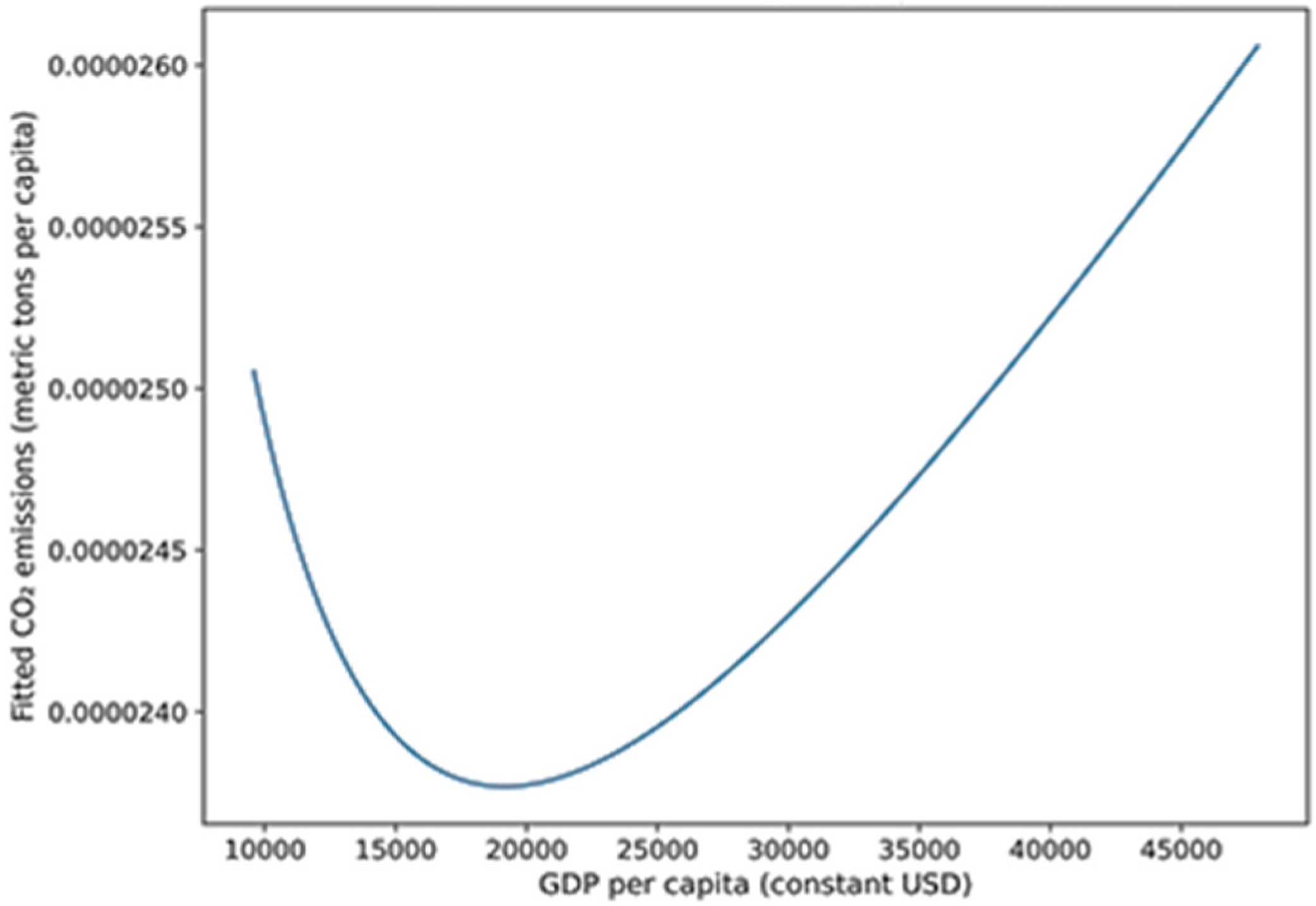
Figure 1 illustrates the fitted long-run relationship between GDP per capita and CO
2 emissions estimated using the CCE-MG approach. The curvature suggests a U-shaped pattern, indicating that emissions initially decline with income but increase beyond a certain income level. This result contrasts with the traditional Environmental Kuznets Curve (EKC) hypothesis and implies that environmental improvements in OECD countries are not solely driven by income dynamics.
The U-shaped relationship observed in
Figure 1 provides an additional insight into the environmental dynamics of OECD economies. Unlike the traditional EKC framework, which predicts that emissions decline after a certain income threshold, the results suggest that emissions may increase again at higher levels of income. One possible explanation lies in persistent consumption patterns and energy demand in highly developed economies. Despite technological progress and renewable energy adoption, rising consumption, increased mobility, and energy-intensive lifestyles may generate renewed upward pressure on emissions. In addition, structural factors such as slow decarbonization in certain sectors (e.g., transport and heavy industry) and rebound effects from efficiency gains may offset part of the environmental benefits. This finding highlights that economic maturity alone is insufficient to ensure sustained environmental improvement, reinforcing the need for continuous policy intervention and structural transformation.
4.8. Robustness Checks
To verify that our findings are not driven by the scale of emissions, we re-estimate the model using carbon intensity (CI) as an alternative dependent variable. The results remain qualitatively unchanged.
Table 11 reports the CCE-MG long-run estimates when carbon intensity (lnCI) is used as an alternative dependent variable. This specification is estimated independently from the baseline CO
2 model in order to assess whether the main results remain robust when environmental performance is measured in efficiency terms rather than absolute emissions.
The coefficient on renewable energy consumption (ln_REN) remains negative and statistically significant at the 10% level, indicating that renewable energy contributes to reducing carbon intensity. Energy use (ln_ENERGY) continues to exert a strong and positive effect, confirming that higher energy consumption increases emissions intensity. Financial development (ln_FD) also remains positive and statistically significant, suggesting that credit expansion may increase emissions unless directed toward green investments.
Although some coefficient magnitudes are close to those of the baseline model, the robustness specification is independently estimated using carbon intensity as a distinct dependent variable. The similarity of results therefore reflects the stability of the underlying relationship of the baseline estimates.
Overall, the robustness analysis confirms that renewable energy contributes to improving both absolute emissions and emissions efficiency, strengthening the reliability of the main findings.
5. Discussion
The results provide consistent evidence that renewable energy consumption is associated with improvements in environmental quality in OECD economies. This finding is consistent with earlier studies such as [
2,
3,
7], which document a negative relationship between renewable energy and CO
2 emissions. It also aligns with more recent evidence, including [
16,
21], confirming that renewable energy expansion contributes to emissions reduction in developed economies. However, the relatively moderate statistical significance of the long-run coefficient in this study suggests that the magnitude of the effect may vary depending on model specification and country characteristics, which is consistent with the heterogeneous findings reported in the literature. Importantly, the broader empirical results reinforce this finding. The short-run estimates from the error-correction model indicate a negative and highly significant effect of renewable energy on emissions, while the robustness analysis using carbon intensity confirms the persistence of this relationship. This suggests that renewable energy contributes to both immediate and structural emissions reduction.
The findings align with recent empirical evidence showing that renewable deployment increasingly explains emissions reductions in advanced economies [
11,
13]. These results are further supported by recent empirical studies showing that renewable energy reduces both carbon emissions and broader environmental pressures when combined with appropriate policy frameworks [
16]. Similarly, Ref. [
19] demonstrate that renewable energy contributes to improvements in air quality and emissions reduction, reinforcing the robustness of the environmental benefits identified in this study. In highly industrialized countries, where technological diffusion and institutional capacity are stronger, renewable energy appears to operate through a composition effect: fossil-fuel inputs are progressively displaced, lowering the carbon intensity of production. The short-run significance of renewable energy in the ECM model further indicates that substitution effects materialize relatively quickly in mature energy systems, consistent with recent evidence documented by the International Energy Agency [
7].
However, the persistence of a strong positive elasticity for total energy consumption reveals an enduring scale effect. While renewable energy reduces emissions intensity, aggregate energy demand continues to exert upward pressure on carbon output. This result highlights a key challenge for OECD economies: supply-side decarbonization must be accompanied by improvements in energy efficiency and demand-side management. Without structural reductions in energy intensity, renewable expansion alone may not fully offset consumption-driven emissions growth. This result is consistent with the findings of [
23,
29,
30], who show that increasing energy demand can offset the environmental benefits of renewable energy, particularly in economies with high consumption levels. This finding also contrasts with studies that report weaker scale effects in economies with advanced energy efficiency policies, highlighting the importance of structural differences across OECD countries.
The positive long-run effect of financial development adds further nuance to the analysis. Although financial deepening can mobilize capital for renewable infrastructure, it may simultaneously stimulate carbon-intensive activity if credit allocation remains neutral or biased toward traditional sectors [
31]. Recent evidence also supports this interpretation. For example, Ref. [
24] shows that while energy transition can enhance financial stability, the environmental impact of financial development depends critically on the allocation of credit toward green versus carbon-intensive activities. This suggests that the environmental impact of finance is conditional on institutional quality and green investment orientation, as emphasized in recent sustainability research [
32]. Although institutional factors are not directly included in the empirical model, the results suggest that their role is likely reflected through financial development and policy-related dynamics. Aligning financial systems with climate objectives is therefore critical to reinforcing the emissions-reducing effect of renewable energy. This result is consistent with the growing literature emphasizing that financial development has an ambiguous environmental impact depending on whether financial resources are directed toward green or carbon-intensive sectors.
The rejection of the Environmental Kuznets Curve (EKC) hypothesis provides an important theoretical implication. The absence of a robust nonlinear income effect indicates that environmental improvement in OECD economies is not an automatic by-product of economic growth. Instead, it appears to be driven by deliberate structural transformation in energy systems. This finding supports the critique of income-centered environmental transition models and reinforces the importance of policy-induced technological change. This finding contrasts with studies such as [
23], which support the EKC hypothesis at the global level, suggesting that the income–environment relationship may differ across country groups and model specifications. The present results indicate that, in OECD economies, structural factors dominate income-driven dynamics.
Methodologically, the stability of results under second-generation panel techniques strengthens their credibility. Given the high degree of economic and financial integration among OECD countries, accounting for cross-sectional dependence is essential [
8]. By controlling for common shocks and heterogeneous country dynamics, the analysis confirms that renewable energy exerts an independent structural effect on environmental quality.
From a policy standpoint, the results suggest several key implications. First, consistent with the evidence of the emissions-reducing role of renewable energy reported by [
2,
3,
4,
21,
32], policymakers should accelerate renewable energy deployment through stable regulatory frameworks and long-term investment incentives. Second, in line with [
23], the strong positive effect of energy consumption highlights the need for energy efficiency policies to complement renewable expansion and mitigate scale effects. Third, the positive role of financial development, as also discussed by [
26,
32], suggests that financial systems must be better aligned with environmental objectives by promoting green finance instruments and directing credit toward low-carbon investments. Finally, the absence of support for the EKC hypothesis reinforces the argument advanced by [
14] that economic growth alone is insufficient to ensure environmental improvement, implying that targeted structural policies are necessary to achieve sustained decarbonization.
Overall, renewable energy emerges as a necessary pillar of environmental improvement in advanced economies. Yet its effectiveness depends on complementary reforms in efficiency, finance, and institutional design. Decarbonization in OECD countries is therefore not income-driven but structurally engineered through coordinated technological and policy transformation.
6. Conclusions
This study provides empirical evidence that renewable energy consumption contributes to improving environmental quality in OECD economies over the period 1990–2024. The results indicate that a 1% increase in renewable energy consumption reduces CO2 emissions by approximately 0.067% in the long run, while the short-run effect shows a reduction of about 0.05%. In contrast, energy consumption increases emissions significantly, with elasticities exceeding 0.55 in the long run and 0.69 in the short run, highlighting the dominance of the scale effect. The results indicate that renewable energy plays a meaningful role in reducing both CO2 emissions and carbon intensity, although the long-run statistical significance remains moderate. The consistency of the negative relationship across alternative specifications, combined with strong short-run effects, supports the view that renewable energy constitutes an important component of structural decarbonization in advanced economies.
The findings further reveal that environmental performance is primarily driven by structural and energy-related factors rather than income dynamics. The absence of support for the Environmental Kuznets Curve suggests that economic growth alone does not automatically lead to environmental improvement. Instead, reductions in emissions depend on deliberate changes in energy composition and technological adoption. At the same time, the persistent positive impact of total energy consumption highlights the continued importance of scale effects, indicating that renewable energy expansion must be complemented by improvements in energy efficiency and demand-side management.
From a policy perspective, the results emphasize the need for a comprehensive and coordinated energy transition strategy. First, maintaining stable regulatory frameworks and accelerating renewable energy deployment remain essential for sustaining decarbonization efforts. Second, policies should promote energy efficiency and technological innovation to mitigate the environmental pressures associated with rising energy demand. Third, financial systems must be better aligned with sustainability objectives by directing capital toward low-carbon investments and green technologies.
Despite the robustness of the findings, several limitations should be acknowledged. First, the analysis relies on an aggregate measure of renewable energy consumption and does not distinguish between specific technologies such as solar, wind, or hydro, which may have heterogeneous environmental effects. Second, institutional and policy-related factors are not explicitly incorporated, although they may influence the effectiveness of renewable energy deployment across countries. Third, the empirical framework is based on cointegration techniques, which identify long-run relationships but do not establish strict causality. This is particularly important given the positive association between financial development and emissions identified in the empirical analysis. In this context, the study does not employ instrumental variables or GMM approaches, and future research could use such methods to better address potential simultaneity issues. Finally, although the estimation approach allows for heterogeneous country dynamics, the study does not report country-specific coefficients, which limits the exploration of cross-country differences. Future research could address these limitations by incorporating disaggregated renewable energy data, institutional indicators, causal econometric techniques, and detailed country-level analyses of heterogeneity.
In sum, renewable energy emerges as a key pillar of environmental sustainability in OECD economies. However, its effectiveness ultimately depends on complementary policies that promote efficiency, guide financial flows, and support broader structural transformation.