Article

Sustainability Analysis of a Mass- and Energy-Integrated Gas Oil Hydrocracking Process Under the SWROIM Metric

by
Sofía García-Maza
1,
Segundo Rojas-Flores
2 and
Ángel Darío González-Delgado
1,*
1
Nanomaterials and Computer-Aided Process Engineering Research Group (NIPAC), Chemical Engineering Department, Universidad de Cartagena, Cartagena 130014, Colombia
2
Institutos y Centros de Investigación, Universidad Cesar Vallejo, Trujillo 13001, Peru
*
Author to whom correspondence should be addressed.
Sustainability 2026, 18(8), 3795; https://doi.org/10.3390/su18083795
Submission received: 29 January 2026 / Revised: 17 February 2026 / Accepted: 25 February 2026 / Published: 11 April 2026

Abstract

The growing demand for clean and efficient fuels, along with the need to reduce environmental impacts and operational risks, has driven the development of sustainability strategies in refining processes such as gas oil hydrocracking. This paper evaluates the sustainability of an industrial gas oil hydrocracking process with mass and energy integration, using the Safety and Sustainability Weighted Return on Investment (SWROIM) metric. This metric integrates economic, energy, environmental, technical, and safety criteria into a single quantitative indicator. The process was modeled and simulated considering heat exchange networks and direct water recycle to improve the overall system efficiency. The main objective was to calculate the SWROIM of the integrated process and analyze the relative influence of each sustainability indicator through a sensitivity study based on varying weighting factors. The results show that the process achieves an SWROIM value of 127.39%, significantly higher than the return on investment (ROI), demonstrating favorable sustainable performance. This behavior is attributed to high exergy efficiency, a reduction in potential environmental impact, improvements in water management, and a decrease in the inherent risk of the process. Sensitivity analysis confirmed that the energy indicator has the greatest influence on SWROIM, while the technical criterion has a relatively minor impact. Overall, the results demonstrate that mass and energy integration, evaluated using advanced metrics such as SWROIM, is a robust tool to support decision-making in the sustainable design and optimization of hydrocracking processes, opening opportunities for future applications in other complex systems within the refining industry.

1. Introduction

The petroleum refining industry is currently facing a transitional scenario marked by stricter environmental regulations and the need to improve the efficiency of energy and material resource use [1]. In this context, deep conversion processes, such as gas oil hydrocracking, play a strategic role by enabling the transformation of heavy fractions into higher value-added fuels with a lower environmental impact [2]. However, these processes are characterized by high energy consumption, harsh operating conditions, and significant waste stream generation, making it essential to evaluate their performance from a comprehensive sustainability perspective [3]. Incorporating approaches that integrate technical, energy, environmental, economic, and safety criteria is key to ensuring the long-term viability of these systems.
Gas oil hydrocracking is a catalytic process that combines cracking and hydrogenation reactions under high pressures and temperatures, improving product quality and reducing the presence of undesirable compounds such as sulfur, nitrogen, and aromatics [4]. Despite its operational advantages, this process presents significant challenges related to the intensive use of demineralized water, the thermal demands of furnaces and reactors, and the complexity of subsequent separation stages [5]. In this regard, the implementation of mass and energy integration strategies has proven to be an effective alternative for reducing auxiliary service consumption, minimizing exergy losses, and decreasing the generation of liquid and gaseous effluents [6]. These strategies enable the utilization of internal process streams, thereby improving overall performance without compromising the quality of the final products [7].
However, improving individual indicators, such as energy efficiency or emissions reduction, does not, by itself, guarantee comprehensive sustainable performance [8]. In many cases, optimizations focused solely on energy savings can increase operational risks or require additional investments that affect project profitability [9]. For this reason, the development of composite metrics that allow for the simultaneous evaluation of multiple dimensions of sustainability has gained relevance in recent years, facilitating decision-making in the design or operation stages of complex industrial processes. These tools seek to overcome the limitations of traditional analyses based exclusively on economic indicators [10].
Within this framework, the Safety and Sustainability Weighted Return on Investment Metric (SWROIM) emerges as a comprehensive methodology that extends the classic concept of return on investment by explicitly incorporating process safety and sustainability criteria. SWROIM allows for the weighting of technical, energy, environmental, and safety indicators according to priorities defined by decision-makers, generating a single value that reflects the overall performance of the evaluated system. In this way, a project can be compared not only for its economic profitability but also for its contribution to reducing risks, environmental impacts, and inefficient resource use [11].
Several studies have applied SWROIM in petrochemical and refining processes, demonstrating its usefulness for comparing design alternatives and evaluating technological improvements. Previous research has reported its application in different natural gas liquid (NGL) recovery configurations [12] and polymer production processes [13], showing that the inclusion of safety and sustainability indicators can significantly modify project prioritization compared to analyses based solely on ROI [14]. These studies highlight the indicator’s sensitivity to parameters such as exergy efficiency, the generation of environmental impacts, and the inherent risk level of the process.
Despite these advances, the available literature shows limited application of SWROIM in gas oil hydrocracking processes and evaluation at an industrial scale and under explicit mass and energy integration schemes. Most existing studies focus on isolated units or simplified configurations, without simultaneously considering the complexity of heat exchange networks, water recycling systems, and the multiple separation stages characteristic of these types of processes [15]. This gap limits the understanding of the true impact of integration strategies on the overall sustainability of hydrocracking.
In this context, the present study aims to evaluate the sustainability of an industrial gas oil hydrocracking process with mass and energy integration by calculating the SWROIM indicator. Applying this methodology allows for the integrated quantification of the effects of exergy efficiency, environmental impact reduction, effluent management, and inherent process safety, providing a holistic view of its performance. The novelty of this work lies in applying SWROIM to a fully integrated hydrocracking scheme, which helps to bridge the existing knowledge gap and offers a robust tool to support decision-making in the design and improvement of more sustainable refining processes.

2. Materials and Methods

2.1. Process Description

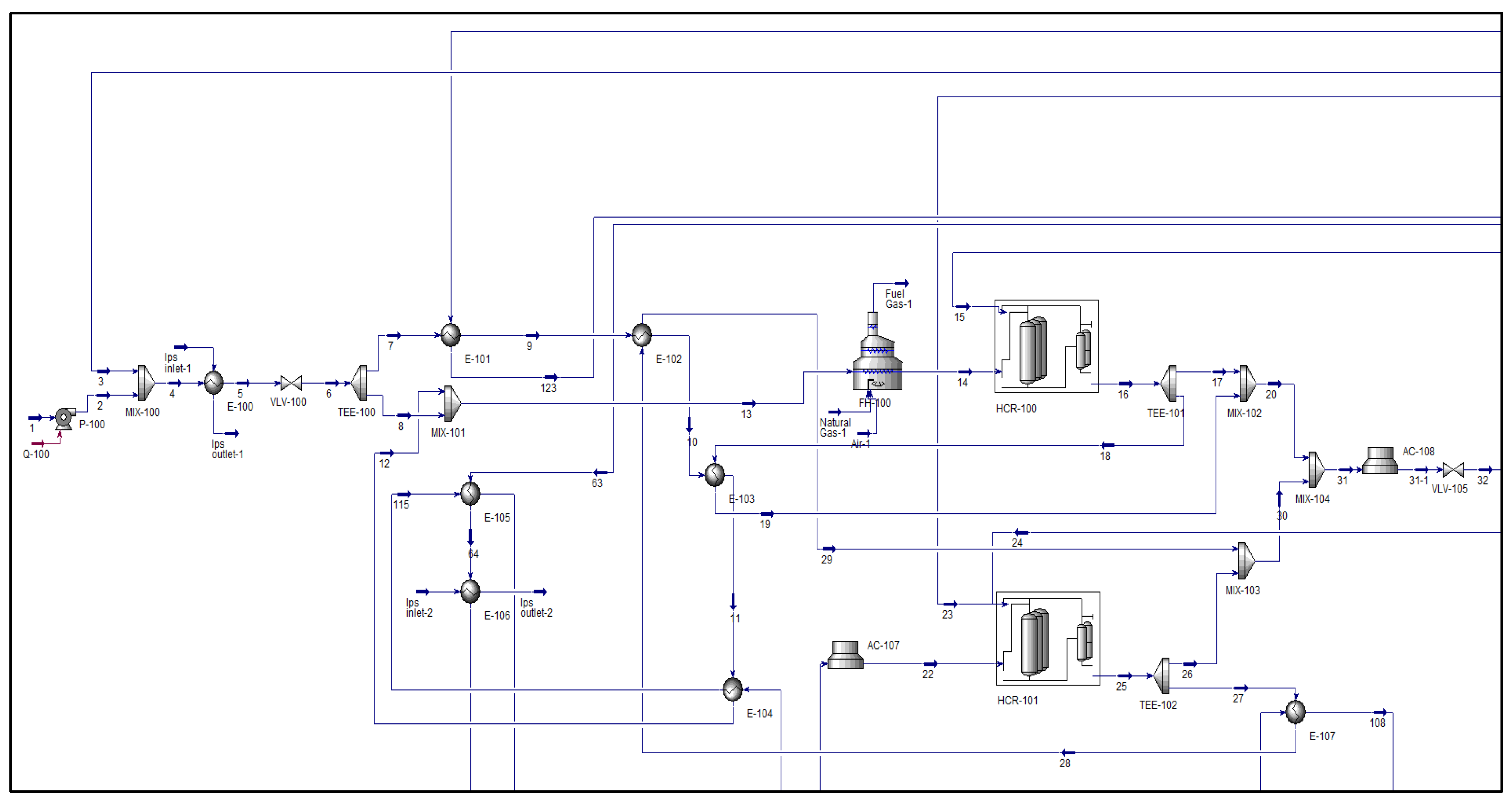
The mass- and energy-integrated gas oil hydrocracking process starts with the preheating and heating of 1,937,245.28 t/yr of gas oil feed to 112.22 °C at a pressure of 344.74 kPa. The feedstock is routed through a network of heat exchangers within the preheating section before entering a furnace. Subsequently, the heated gas oil is fed into the first hydrocracking reactor, operating at 379.44 °C and 16,402.63 kPa, where it reacts with recycled hydrogen supplied at 65.55 °C and 16,678.42 kPa. At the same time, unconverted oil (UCO) is withdrawn from the bottom of the fractionator. Part of this stream is directed to the fluid catalytic cracking (FCC) unit, while the remaining fraction is recycled, cooled in an air cooler, and sent to a second hydrocracker operating at 382.22 °C and 15,437.36 kPa. In this reactor, the stream reacts with two hydrogen recycle streams at 16,678.42 kPa, one at 65.55 °C and the other at 118.33 °C. The effluents from both reactors are then combined, producing a stream at 292.78 °C and 14,658.25 kPa, which is subsequently fed to the hot separator [15]. Figure 1 presents the simulated process flow diagram corresponding to the reaction section of the integrated mass and energy gas oil hydrocracking system. The process simulation was performed using the Aspen HYSYS® V 14.0 simulator. The steady-state simulation model implemented is based on an industrial-scale hydrocracking configuration. The thermodynamic framework, reaction scheme, and integration strategy were previously developed and validated against industrial reference data, ensuring consistency in mass and energy balances and realistic operational conditions. A detailed description of the modeling assumptions, parameter selection, and validation procedure is reported in García-Maza et al. [16]. In the present study, this validated model serves as the computational basis for the sustainability assessment using the SWROIM methodology.
In hydrocracking units, hydrotreating reactions generally take place first and proceed at a higher rate than hydrocracking reactions [17]. The main purpose of hydrotreating is to eliminate heteroatoms such as sulfur and nitrogen and to hydrogenate olefinic compounds. Additionally, it contributes to the removal of oxygen, metals, and halogens (e.g., chlorine and bromine), as well as other non-metallic species, while also promoting the saturation of aromatic compounds [18]. By comparison, hydrocracking involves the breakdown of heavy molecules in a manner comparable to fluid catalytic cracking (FCC), combined with hydrogen addition. The dominant reactions include the scission of aromatic, naphthenic, and paraffinic structures [19].
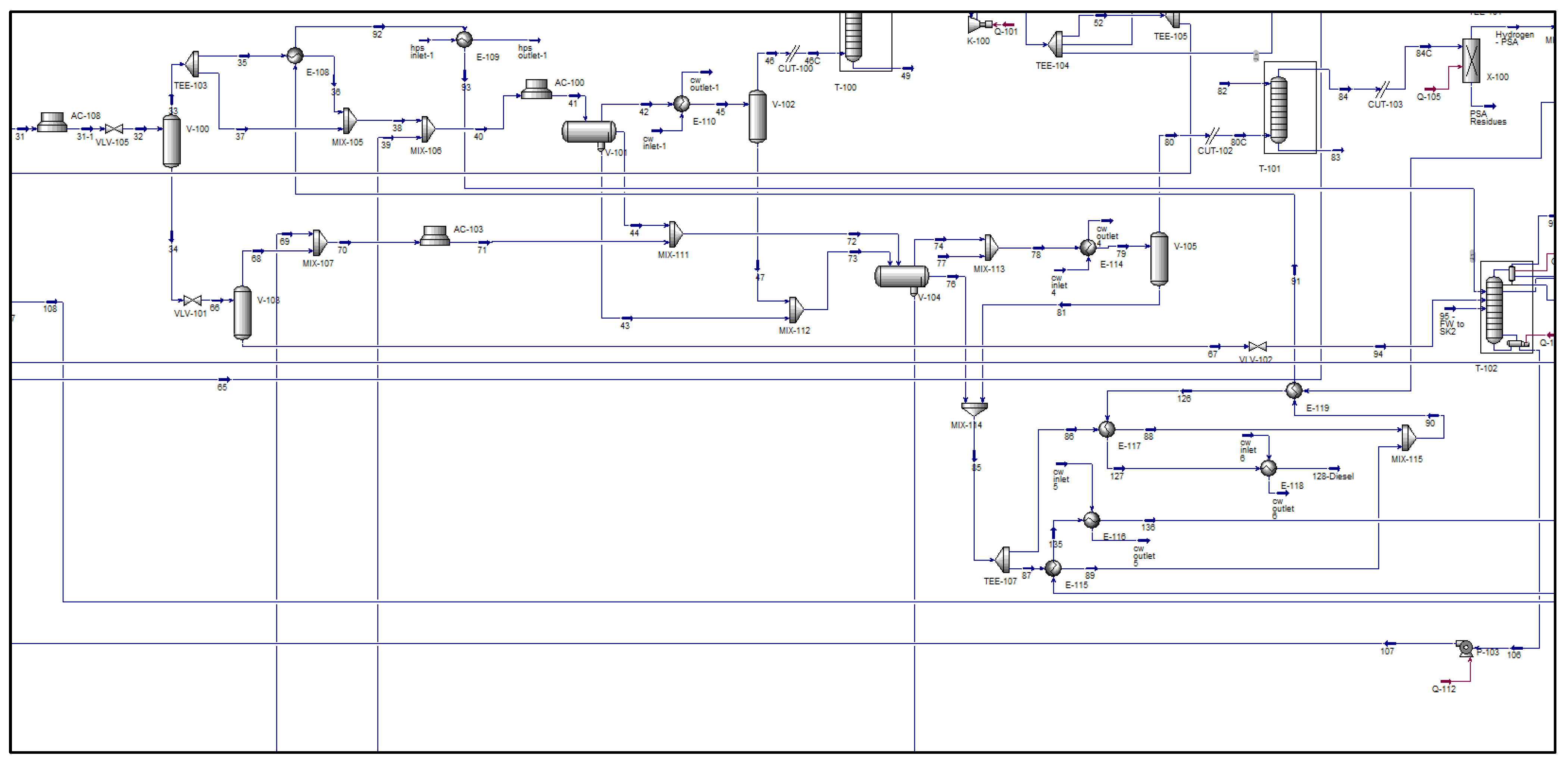
The process comprises multiple separation steps. At the beginning, the feed stream is split into a high-pressure top stream and a low-pressure bottom stream within a hot separator (flash evaporator). The high-pressure stream is subsequently cooled using an energy-integrated heat exchanger, washed with water at 43.33 °C and 14,554.83 kPa supplied from the makeup and recycle water system, passed through an air cooler, and then fed into a cold three-phase separator. In this unit, the stream is divided into one gaseous phase and two liquid phases, classified as light and heavy. The gaseous fraction is further cooled in a heat exchanger and directed to a recycle gas separator drum (flash evaporator), where it is separated into overhead and bottom streams [15]. Figure 2 illustrates the process flow diagram of the initial separation stage in the mass- and energy-integrated gas oil hydrocracking process that was obtained from the simulation results.
The hydrogen-enriched overhead stream is treated in an absorption column with lean amine at 48.89 °C and 14,478.99 kPa to eliminate impurities such as hydrogen sulfide and ammonia, producing a rich amine stream that is routed to the amine regeneration system. In parallel, the bottom stream from the recycle gas separator is merged with the heavy liquid fraction from the cold separator and sent to a cold flash drum (three-phase separator) to achieve additional phase separation. Simultaneously, the low-pressure effluent from the hot separator is directed to a hot flash drum, where it is divided into overhead and bottom streams. The vapor stream is subsequently washed with water at 43.33 °C and 14,554.83 kPa that is supplied from the makeup and recycle water unit, cooled in an air cooler, and blended with the light liquid fraction from the cold separator prior to entering the cold flash drum. In this unit, separation into one gaseous phase and two liquid phases (light and heavy) occurs. Finally, the bottom stream from the hot flash drum passes through a control valve and is conveyed to the stripping column for further processing [15].
The vapor stream leaving the cold flash drum is combined with a hydrogen-rich flow at 53.89 °C and 2447.64 kPa, subsequently cooled in a heat exchanger, and sent to an off-gas separator vessel, where it is divided into two streams. The top stream, characterized by a high hydrogen concentration, is routed to an off-gas scrubber to remove impurities such as hydrogen sulfide and ammonia using lean amine at 48.89 °C and 2482.11 kPa; the resulting rich amine is then treated in the amine regeneration unit. The cleaned hydrogen stream is forwarded to a pressure swing adsorption (PSA) system, where residual contaminants are eliminated to obtain high-purity hydrogen. This hydrogen is mixed with makeup and recycled hydrogen streams, yielding a hydrogen byproduct at 64.44 °C and 2413.17 kPa. Makeup hydrogen is conditioned through compressors, air coolers, and heat exchangers at 25 °C and 2054.64 kPa, and subsequently blended with treated recycled hydrogen for integration into the energy system before entering the reactor stage [15].
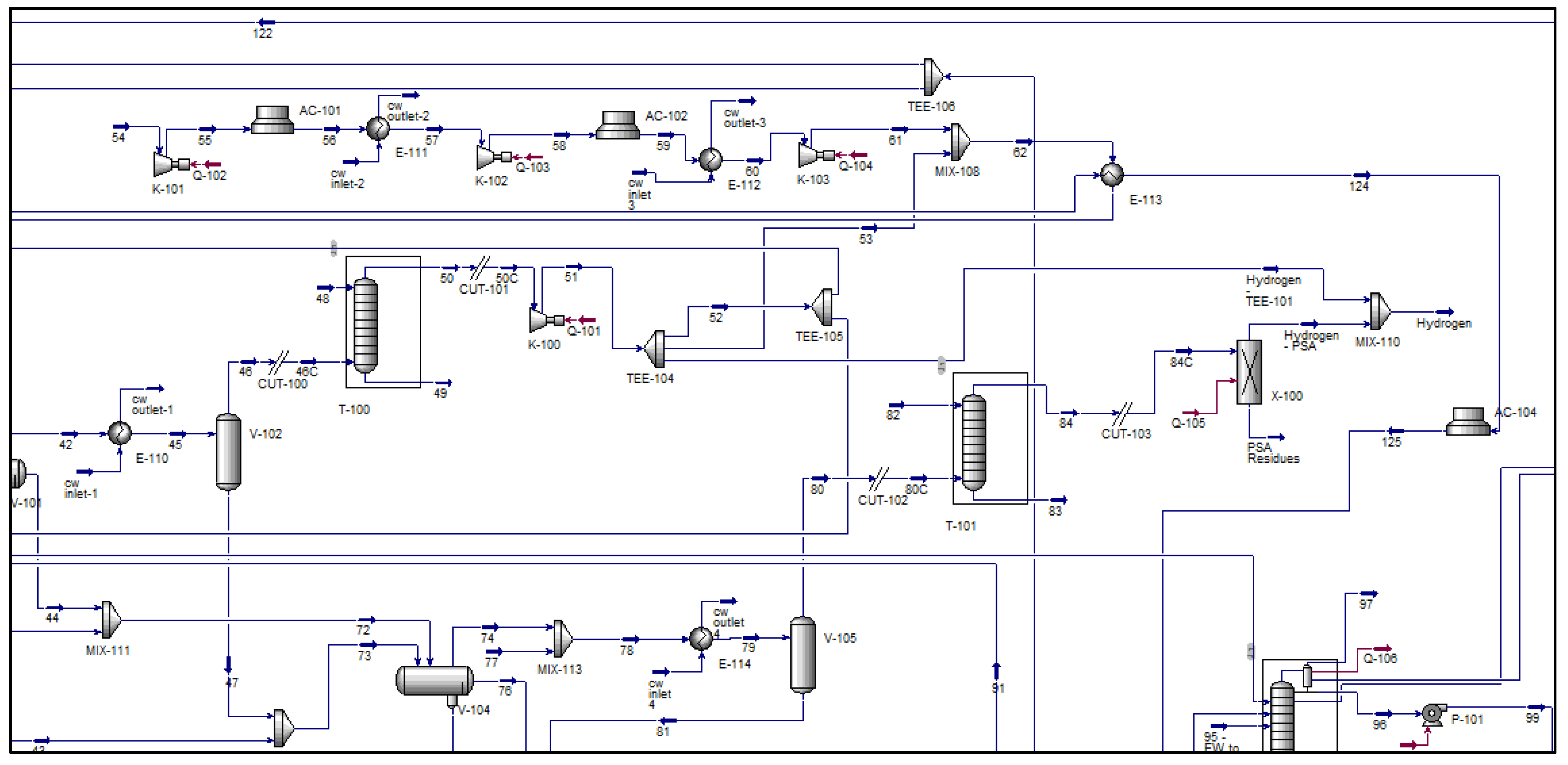
Simultaneously, the bottom stream from the waste gas separator combines with the light liquid fraction obtained from the cold flash drum. This combined stream is routed through an energy-integrated heat exchange network and subsequently sent to the stripping column. In contrast, the heavy liquid fraction from the cold flash drum constitutes part of the wastewater stream that is conveyed to the makeup and recycle water unit [15]. Figure 3 presents the simulated process flow diagram of the makeup and recycle hydrogen stage, including the absorption columns and the PSA unit, within the mass- and energy-integrated gas oil hydrocracking process.
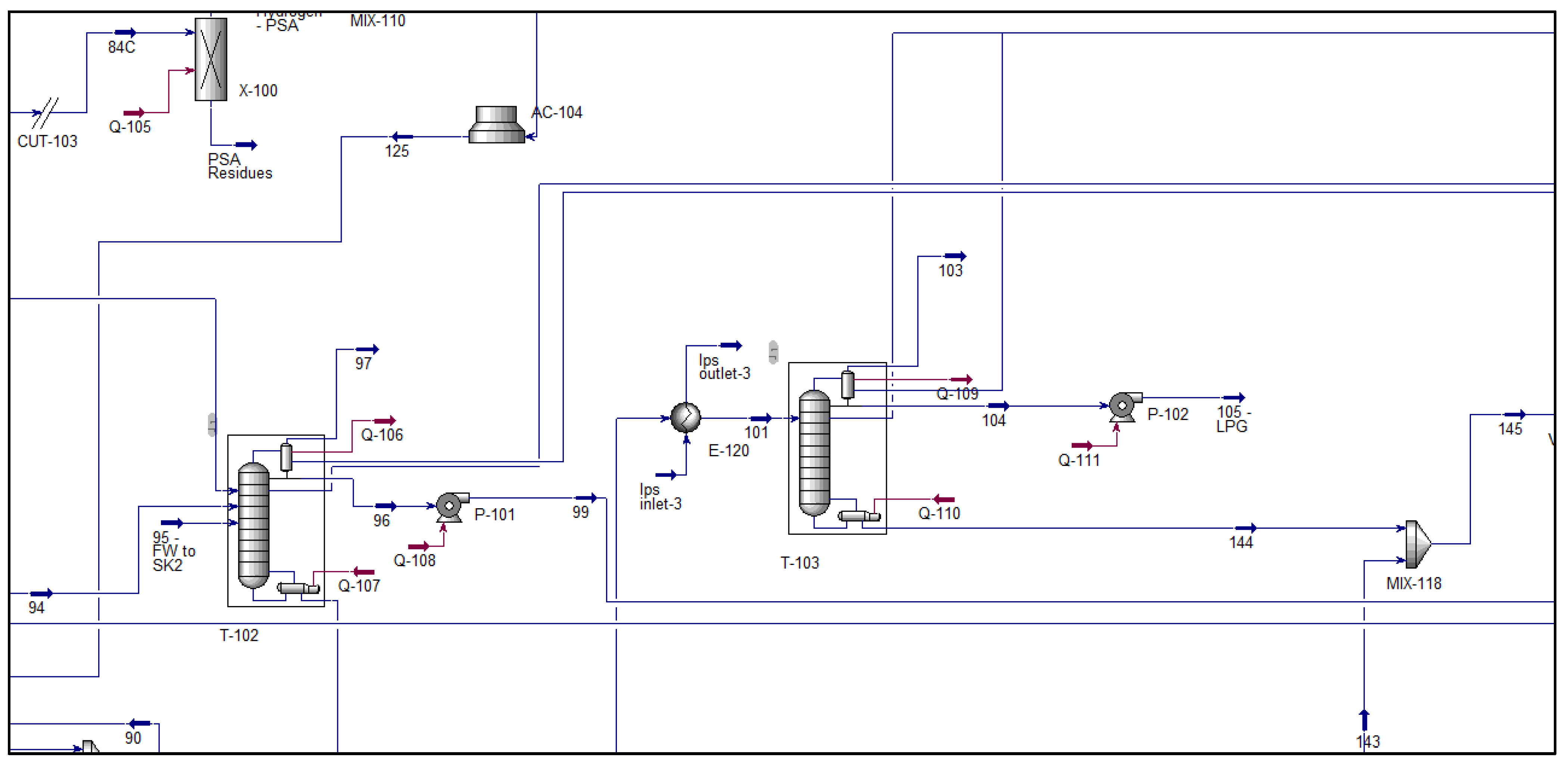
Subsequently, during the stripping step, two feed streams—one operating at 241.11 °C and 2413.17 kPa and another at 297.22 °C and 944.58 kPa—are fed into a distillation column together with a medium-pressure vapor stream at 189.44 °C and 965.27 kPa. In this unit, lighter compounds, including liquefied petroleum gas (LPG), light naphtha, and part of the heavy naphtha, are recovered as overhead products, whereas the heavier cuts, such as the remaining heavy naphtha, kerosene, diesel, and unconverted oil (UCO), are withdrawn from the bottom. The overhead stream is pumped, heated through a heat exchanger, and routed to the debutanizer [15].
Meanwhile, the bottom stream is pumped, preheated in an integrated heat exchanger, further heated in a furnace, and sent to the fractionation column. Waste streams, namely wastewater and sour gases, are produced in the stripper overhead drum; the wastewater is conveyed to the makeup and recycle water section. In the debutanization step, the stripper overhead stream enters the column at 133.89 °C and 1116.95 kPa, allowing LPG to be separated as the top product, while light naphtha and a portion of heavy naphtha are obtained at the bottom. This operation yields an LPG stream of 33,099.37 t/yr at 43.33 °C and 1034.21 kPa, in addition to wastewater and sour gas streams released from the overhead drum, with wastewater directed to the makeup and recycle water system [15]. Figure 4 illustrates the simulated process flow diagram of the stripping and debutanization sections within the mass- and energy-integrated gas oil hydrocracking process.
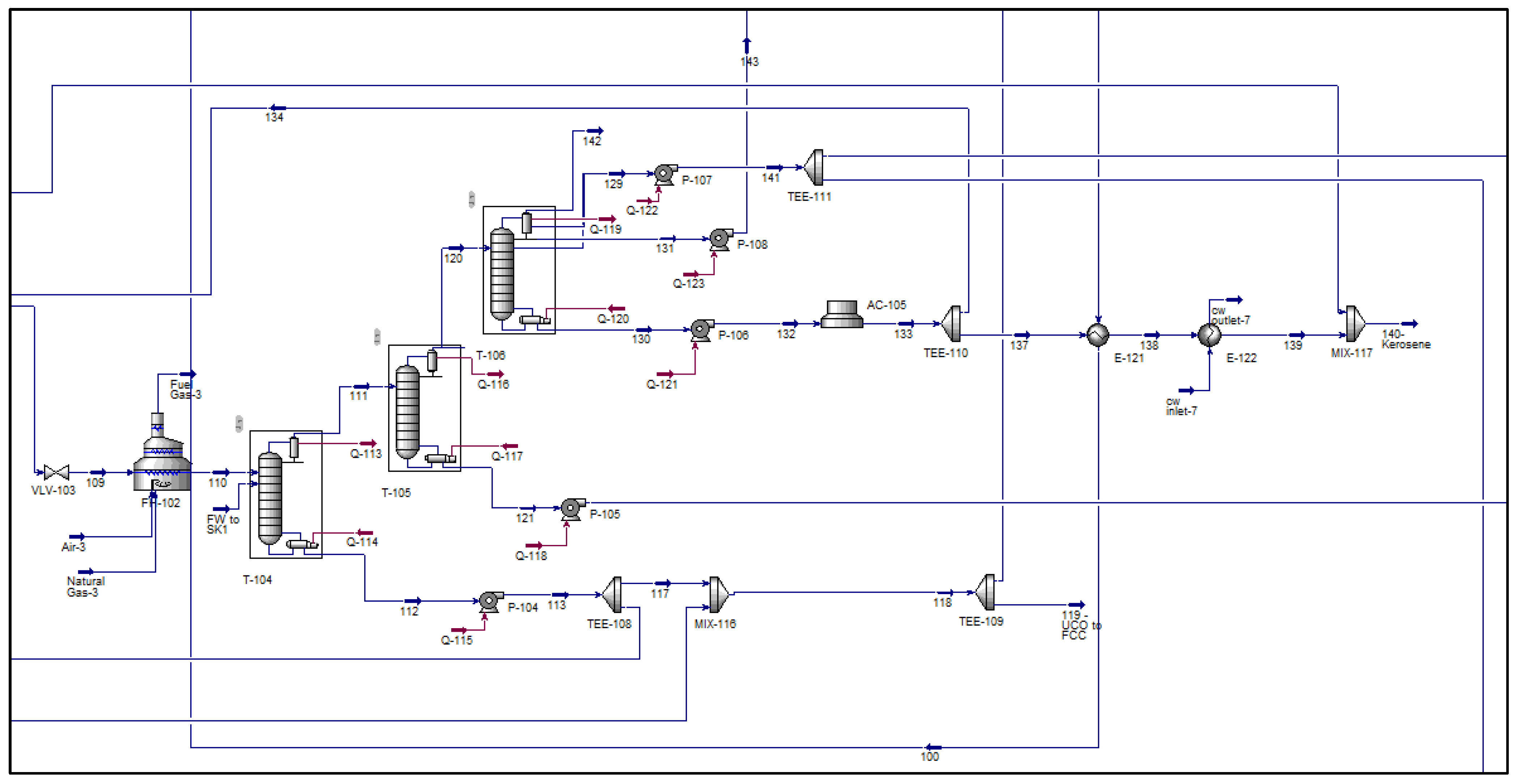
The fractionation section consists of three distillation columns arranged in series. The process starts with a feed stream entering the first column at 379.44 °C and 137.89 kPa, together with a low-pressure vapor stream at 166.67 °C and 379.21 kPa. In this column, diesel, kerosene, and part of the heavy naphtha are recovered as overhead products, whereas the unconverted oil (UCO) is withdrawn from the bottom. After cooling and pressurization, 4.7% of the UCO (79,837.69 t/yr) is routed to the FCC unit at 456.11 °C and 15,506.31 kPa, while the remaining flow (1,623,969.44 t/yr) passes through an energy integration network and is recycled to the reaction stage. In the second column, a feed at 281.67 °C and 34.47 kPa allows for the separation of kerosene and a fraction of heavy naphtha at the top, with diesel collected as the bottom product. This diesel stream is subsequently cooled and treated through energy-integrated heat exchangers and an air cooler, yielding 933,685.06 t/yr of product at 43.33 °C and 101.35 kPa [15].
The third column operates with an inlet stream at 190 °C and 75.84 kPa, producing heavy naphtha overhead and kerosene at the bottom. After passing through energy-integrated heat exchangers and an air cooler, the kerosene product reaches 530,346.69 t/yr at 43.33 °C and 101.35 kPa. Minor secondary emissions, such as recycled water and small quantities of fuel gas (treated as a byproduct), are discharged from the fractionator overhead drum; the recycled water is sent to the makeup and recycle water system. The heavy naphtha collected in the top drum is pumped and blended with the debutanizer bottom stream, which is rich in light and heavy naphtha, prior to entering the naphtha stripper column [15]. Figure 5 illustrates the process flow diagram of the fractionation stage within the mass- and energy-integrated gas oil hydrocracking process that was obtained from the simulation.
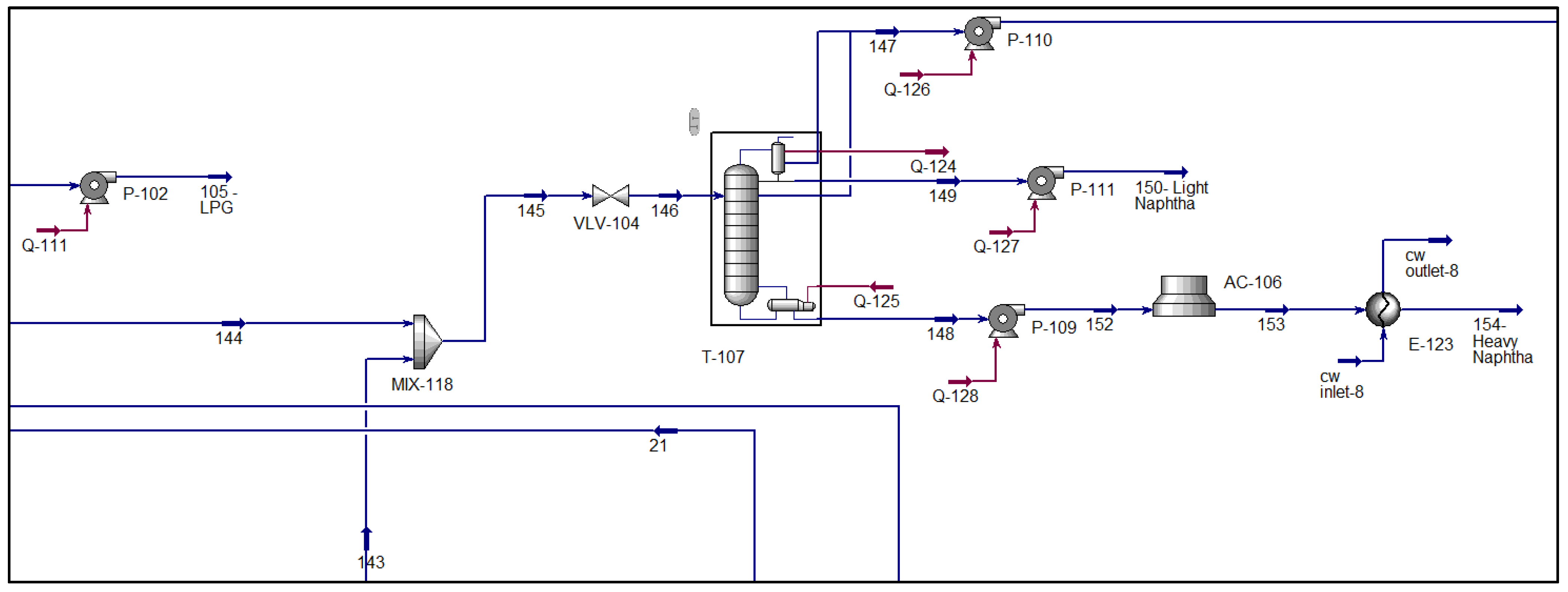
The process subsequently enters the naphtha separation section, where the feed stream arrives at 97.78 °C and 151.68 kPa. At this stage, the naphtha is fractionated into light and heavy components, with the lighter fraction recovered overhead and the heavier fraction collected at the bottom. Secondary streams, including recycled water, are generated in the overhead drum and routed to the makeup and recycle water unit. The overhead stream, rich in light naphtha, is pumped out to produce 85,845.64 t/yr at 38.33 °C and 999.74 kPa. In contrast, the bottom stream is pumped and cooled through an air cooler and a heat exchanger, yielding a heavy naphtha product of 272,374.36 t/yr at 43.33 °C and 951.48 kPa [15]. Figure 6 presents the process flow diagram of the naphtha separation section within the mass- and energy-integrated gas oil hydrocracking process that was obtained from the simulation.
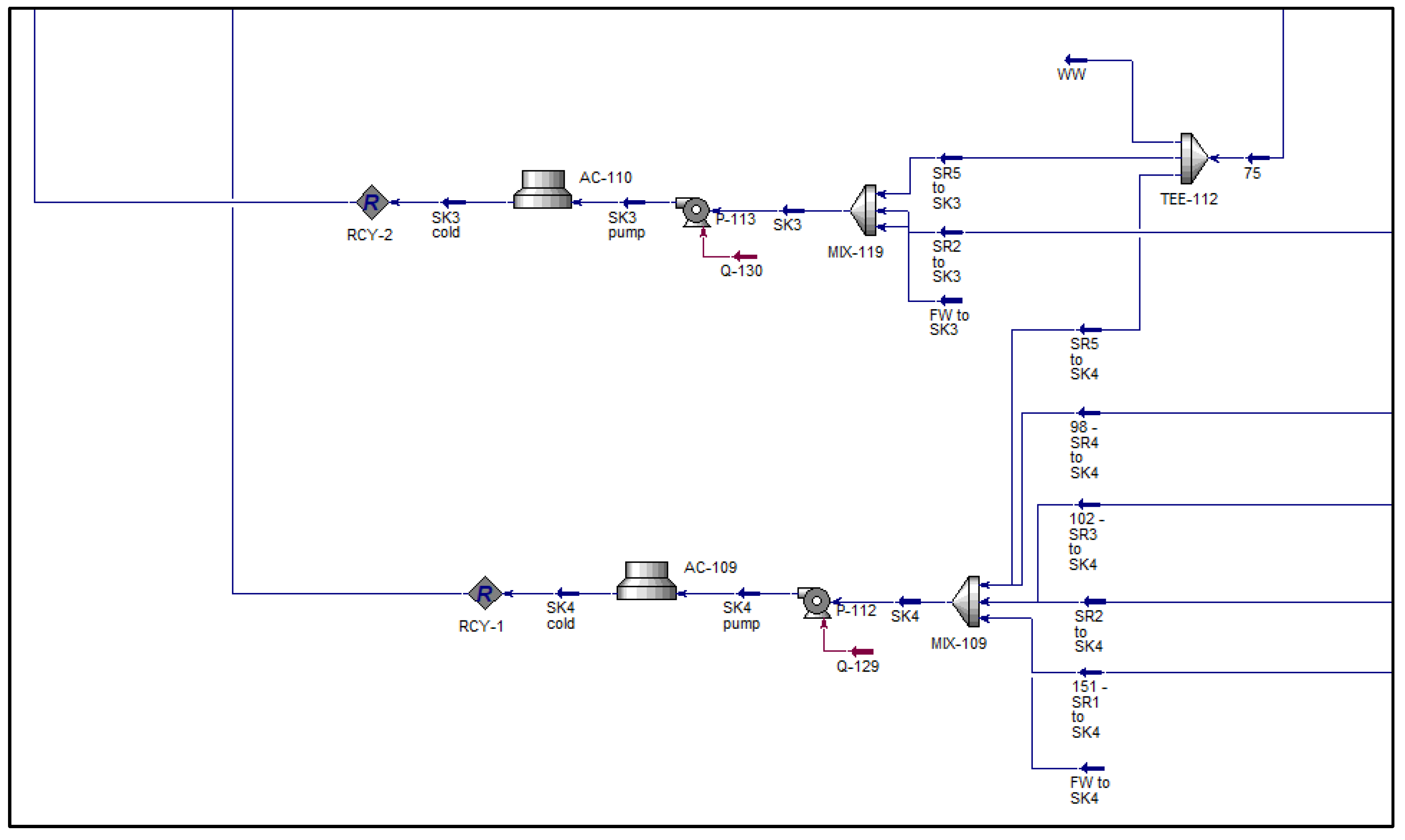
Lastly, the makeup and water reuse stage describes the mass integration strategy based on the direct recirculation of wastewater and internal process effluents. Wastewater streams originate from the cold flash drum, the stripping column, and the debutanizer, whereas recycled water is obtained from the fractionation section and the naphtha splitter. This stage determines the fresh water demand of the process (166,734.68 t/yr) and the volume of wastewater produced (239,097.51 t/yr), which contains ammonia (NH3) and hydrogen sulfide (H2S) as contaminants. To minimize the allowable concentrations of NH3 and H2S in the wash water, separators and mixers are implemented to enable direct recycling. Before being reintroduced into the washing units, both water streams are conditioned using pumps and air coolers. Furthermore, after applying mass and energy integration, the overall energy consumption of the process is 869.43 MW [15]. Figure 7 illustrates the process flow diagram corresponding to the makeup and water recycling stage of the mass- and energy-integrated gas oil hydrocracking process that was obtained from the simulation.

2.2. Sustainable Analysis Using the SWROIM Methodology

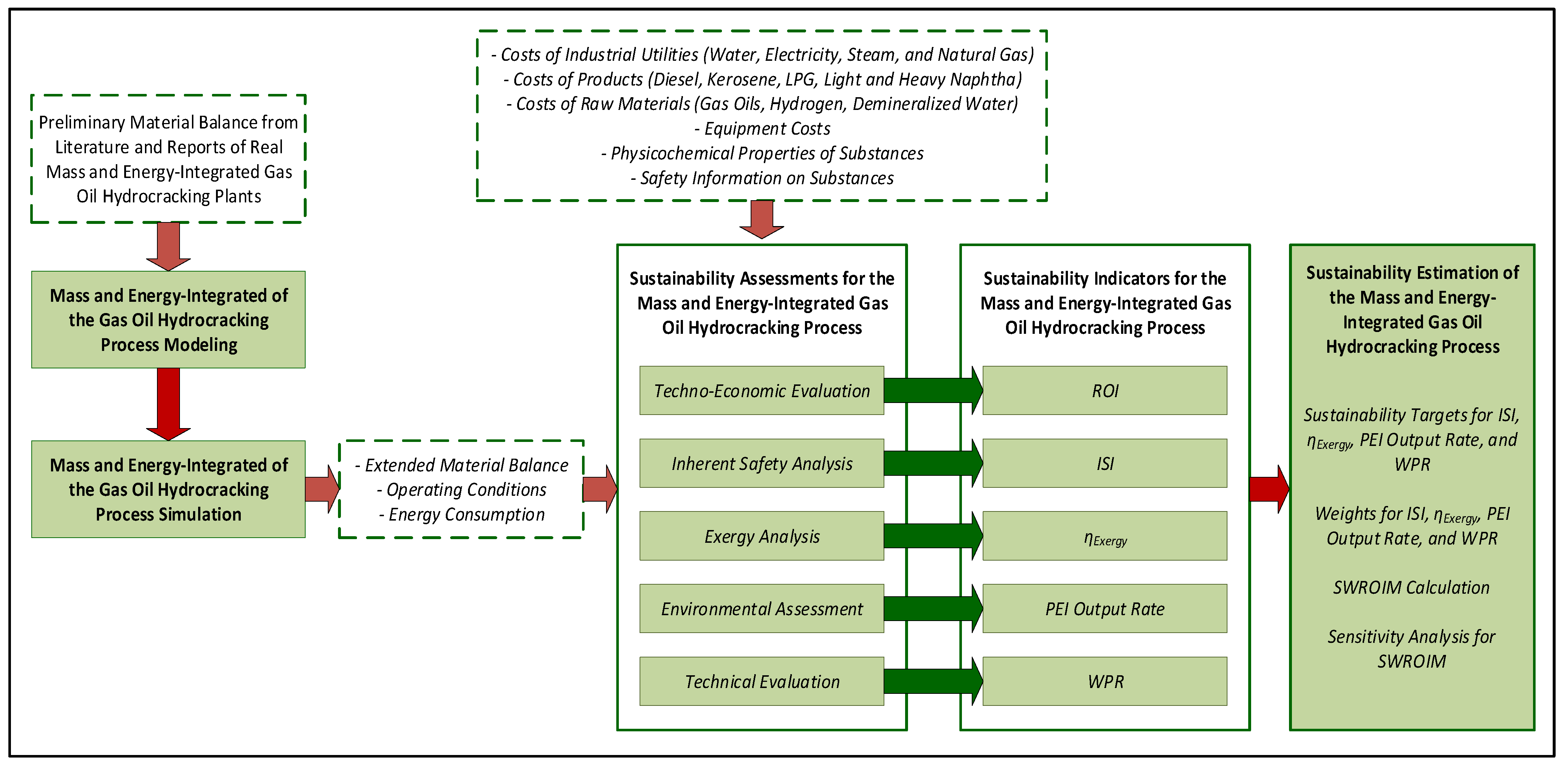
Figure 8 presents the framework applied to assess the sustainability performance of the integrated industrial-scale gas oil hydrocracking process from mass and energy perspectives. This assessment was carried out using the Safety and Sustainability Weighted Return on Investment Metric (SWROIM). The evaluation incorporated technical, energy, environmental, safety, and techno-economic dimensions as key sustainability criteria. For each dimension, a specific measurable indicator was defined. The SWROIM metric enables the integration of these aspects into a single numerical value that reflects the overall sustainability performance of the process. The methodology proposed in this work integrates economic, energy, environmental, technical, and safety considerations, and the SWROIM is calculated following Equation (1) from Guillen-Cuevas et al. [11].
S W R O I M = A E P 1 + i = 1 N i n d i c a t o r s w i I n d i c a t o r i I n d i c a t o r i T a r g e t T C I
In this expression, the project’s annual net profit is denoted as AEP, while w i represents the weighting factors associated with each sustainability indicator i. The terms I n d i c a t o r i and I n d i c a t o r i T a r g e t correspond to the current and desired values of sustainability indicator i, respectively; and TCI is the total capital investment. The allocation of w i is determined according to the priority established by the decision-makers [11].
Enhancing the sustainability indicators in a proposed design leads to an increase in the SWROIM, whereas a deterioration of these indicators results in a reduction in its value. This metric is evaluated against the project’s minimum acceptable threshold. Therefore, a project that shows a positive return on investment (ROI) but exhibits a low SWROIM should be disregarded. On the other hand, a project with strong sustainability performance may achieve an SWROIM that surpasses the traditional ROI, thereby supporting the decision to invest [10]. The ROI is calculated using Equation (2).
R O I = P A T T C I × 100 %
where PAT is the profitability after tax, and TCI is the total capital investment [20].
In this context, the safety criterion is evaluated through the Inherent Safety Index (ISI), determined using Equation (3), with a reference value of 24 that represents processes exhibiting a neutral level of inherent risk. Achieving an ISI value of 24 or below is associated with the removal of hazardous substances and the mitigation of operating conditions that present the highest risk within the process [21].
I S I = I C S + I P S
where I C S is the Chemical Inherent Safety Index, and I P S is the Process Inherent Safety Index [22].
Regarding the energy criterion, exergy efficiency ( η E x e r g y ) is considered and is determined using Equation (4), with a performance goal established at 99%. In chemical processing systems, exergy losses may be reduced through the recovery of waste streams and the reutilization of energy discharged at various process stages, thereby improving overall efficiency and approaching the intended performance objectives [23].
η E x e r g y = 1 E x ˙ l o s s E x ˙ i n
where E x ˙ l o s s is the total exergy flow lost, and E x ˙ i n is the total exergy flow entering a system [24].
Regarding the environmental criterion, the environmental impact is evaluated through the potential environmental impact (PEI) output rate, which is determined using Equation (5). Minimizing this indicator is a key requirement for advancing sustainable process design; therefore, a reduction target of 50% in PEI is established for the gas oil hydrocracking process. Additionally, the recovery of outlet streams that contain environmentally hazardous compounds can significantly contribute to lowering the overall environmental burden released to the environment [25].
i o u t ( t ) = i o u t ( c p ) + i o u t ( e p ) + i w e ( c p ) + i w e ( e p ) = j c p M j ( o u t ) k c p X k j ψ k + j e p g M j ( o u t ) k e p g X k j ψ k
where i o u t c p is the rate of exit of PEIs from the system due to the chemical interactions that occur within the system; i o u t e p is the speed of exit of PEIs of the system due to the energy generation processes in the system; i w e e p and i w e c p are the output impacts of the system as a result of the release of unused energy due to energy production and chemical processes occurring within the system, respectively; M j ( o u t ) is the mass flow of output of stream j; X k j is the mass fraction of component k in stream j; and ψ k is the overall Potential Environmental Impact of chemical substance k [26].
Finally, within the technical criterion, the efficiency of the wastewater production rate (WPR), determined according to Equation (6), was considered, establishing a target value of 50%. The application of mass integration strategies, including the direct reuse of wastewater streams, allows a reduction in freshwater consumption and supports process optimization in terms of both environmental performance and energy efficiency [15].
W P R = Q W W Q F W × 100 %
where Q W W is the wastewater volumetric flow, and Q F W is the freshwater volumetric flow.
For the base case study, the weighting factors w e n v i r o n m e n t a l , w e x e r g i c , w t e c h n i c a l , and w s a f e t y are set to one ( w i = 1 ), reflecting equal importance for environmental conservation, energy consumption reduction, wastewater reduction, and risk mitigation in the development of sustainable processes [10]. Table 1 details the indicators, targets, and weighting factors for each parameter considered. Both methodological and engineering aspects were considered when selecting the target values for the sustainability indicators. A target value of 24 was established for the ISI indicator because it is the methodological threshold that distinguishes between an intrinsically safe process and an intrinsically unsafe process. For the energy (99% exergy efficiency), environmental (50% PEI reduction), and technical (50% WPR efficiency) indicators, target values were established based on engineering considerations, with the purpose of obtaining the maximum possible exergy efficiency without reaching ideality, reducing environmental impacts by 50% of their current value, and increasing WPR efficiency by up to 50% to decrease the amount of fresh water that becomes wastewater.
On the other hand, when making a methodological comparison, multi-criteria optimization could provide broader information than the SWROIM-based approach, but it would not necessarily lead to the same result. While the SWROIM methodology integrates economic, energy, environmental, technical, and safety criteria into a single quantitative indicator using predefined weighting factors, multi-criteria optimization treats these aspects as simultaneous and potentially conflicting objectives.
In this sense, the multi-criteria approach would generate a Pareto front that would allow for the explicit visualization of trade-offs between indicators—for example, between exergy efficiency, environmental impact, or inherent safety—without depending on a prior weighting. This would provide more structural information about the possible solutions and facilitate a subsequent selection based on strategic preferences. In contrast, SWROIM offers a more direct tool for decision-making as it synthesizes overall performance into a single value, which is especially useful when priorities are clearly defined. Therefore, both approaches are complementary: SWROIM is effective as an evaluation and comparison tool, while multi-criteria optimization would allow for a deeper analysis of the trade-offs between objectives in complex and integrated systems, identifying and prioritizing the most important problems.

2.3. Sensitivity Analysis of the SWROIM Assessment

To evaluate the influence of each selected indicator on the SWROIM, a sensitivity analysis was conducted by adjusting the corresponding weighting factors. The analysis followed a single-variation approach in which only one variable was modified per scenario while the remaining variables were kept constant. In this process, the weights assigned to the sustainability indicators were changed as presented in Table 2, whereas the target indicators (Table 1) were not altered. Four distinct scenarios were defined following the work developed by Aguilar-Vásquez et al. [13] for a PVC production process, but in this case, the technical indicator was used instead of the social one. In the first scenario, the energy ( w e x e r g i c ) dimension was prioritized ( w i = 1 ) over the safety, environmental, and technical dimensions ( w i = 0.5 ). In the second scenario, greater importance was assigned to the environmental ( w e n v i r o n m e n t a l ) dimension ( w i = 1 ) compared to the others ( w i = 0.5 ). The third scenario emphasized the safety ( w s a f e t y ) dimension ( w i = 1 ), while the remaining dimensions were assigned lower weights ( w i = 0.5 ). Finally, the fourth scenario prioritized the technical ( w t e c h n i c a l ) dimension ( w i = 1 ) over the other aspects [13]. Table 2 provides a summary of the weighting factors applied across the four case studies. It should be noted that formal weighting techniques such as the Analytic Hierarchy Process (AHP) or expert-based elicitation methods were not applied in this study since the objective of the sensitivity analysis was not to determine stakeholder-specific preference structures, but to systematically evaluate the relative influence of each sustainability dimension on the SWROIM value under controlled and comparable prioritization scenarios.


3. Results and Discussion

3.1. Sustainable Analysis of the Mass- and Energy-Integrated Gas Oil Hydrocracking Process Using the SWROIM Methodology

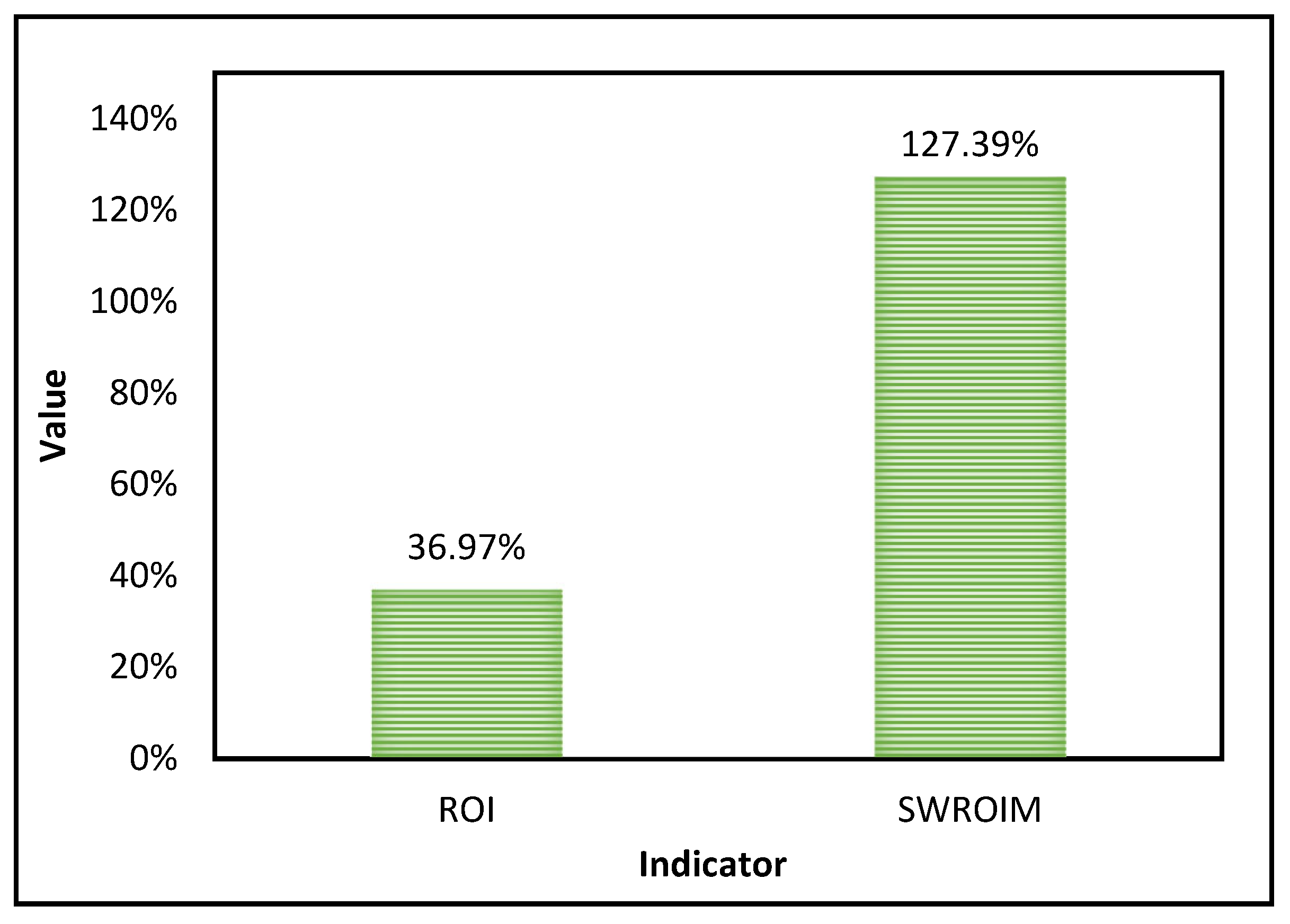
Figure 9 presents the outcomes of the sustainability evaluation for the analyzed case study. The mass- and energy-integrated gas oil hydrocracking process reached a sustainability performance of 127.39%, exceeding the obtained return on investment (ROI) of 36.97%. This indicates that the selected indicators contributed favorably to the overall performance, leading to an optimal economic behavior of the plant. Notably, improvements were associated with lower inherent process risks, enhanced energy efficiency, decreased total PEI generation, and higher efficiency in the wastewater production index (WPR).
Section 2.2 of this manuscript establishes that the objective function corresponds to the calculation of the SWROIM metric defined by Equation (1). The solution was carried out deterministically and algebraically once all the sustainability indicators were obtained from the steady-state process simulation. First, the current values of each indicator (ISI, overall exergy efficiency, PEI output rate, and WPR efficiency), as well as the annual net profit (AEP) and total capital investment (TCI), were calculated individually. Subsequently, the weighted term for each dimension was evaluated, considering the ratio between the current value and the corresponding target value multiplied by its weighting factor. It should be noted that the numerator of the indicators will be the smallest numerical value and the denominator the largest, depending on the study performed. Finally, the objective function (SWROIM) was obtained by substituting these values into the mathematical expression and performing the direct calculation without requiring additional numerical optimization techniques since it was not posed as an iterative problem.
This performance is not solely due to an arithmetic improvement in indicators, but rather to clearly identifiable thermodynamic and systemic integration mechanisms within the proposed scheme. From a thermodynamic perspective, the implementation of heat exchange networks and the internal recovery of hot streams reduce exergy losses associated with irreversibilities in furnaces, reactors, and columns, thereby increasing overall energy efficiency and decreasing the demand for external utilities. In terms of mass integration, the direct recirculation of aqueous streams and the minimization of discharges reduce both fresh water consumption and the net pollutant load of the system. Finally, from a systems integration perspective, the simultaneous integration of energy and water generates operational synergies that reduce inherent risks, emissions, and operating costs, which is reflected in the significant difference between the SWROIM and the traditional ROI for the integrated gas oil hydrocracking process.
In comparison with different natural gas liquid (NGL) recovery configurations, which reported an SWROIM of 47% for IPSI-1 (Enhanced NGL recovery process), 42% for GSP (Gas sub-cooled process) and 10% for IPSI-2 (Internal refrigeration for enhanced NGL recovery process), and considering economic, energy and environmental aspects [12], the integrated gas oil hydrocracking process exhibits a markedly superior sustainability performance. Furthermore, relative to other petrochemical processes such as suspension PVC production (54%), the integrated hydrocracking process achieved an SWROIM value more than twice as high [13].

3.2. Sensitivity Analysis of the SWROIM Assessment of the Mass- and Energy-Integrated Gas Oil Hydrocracking Process

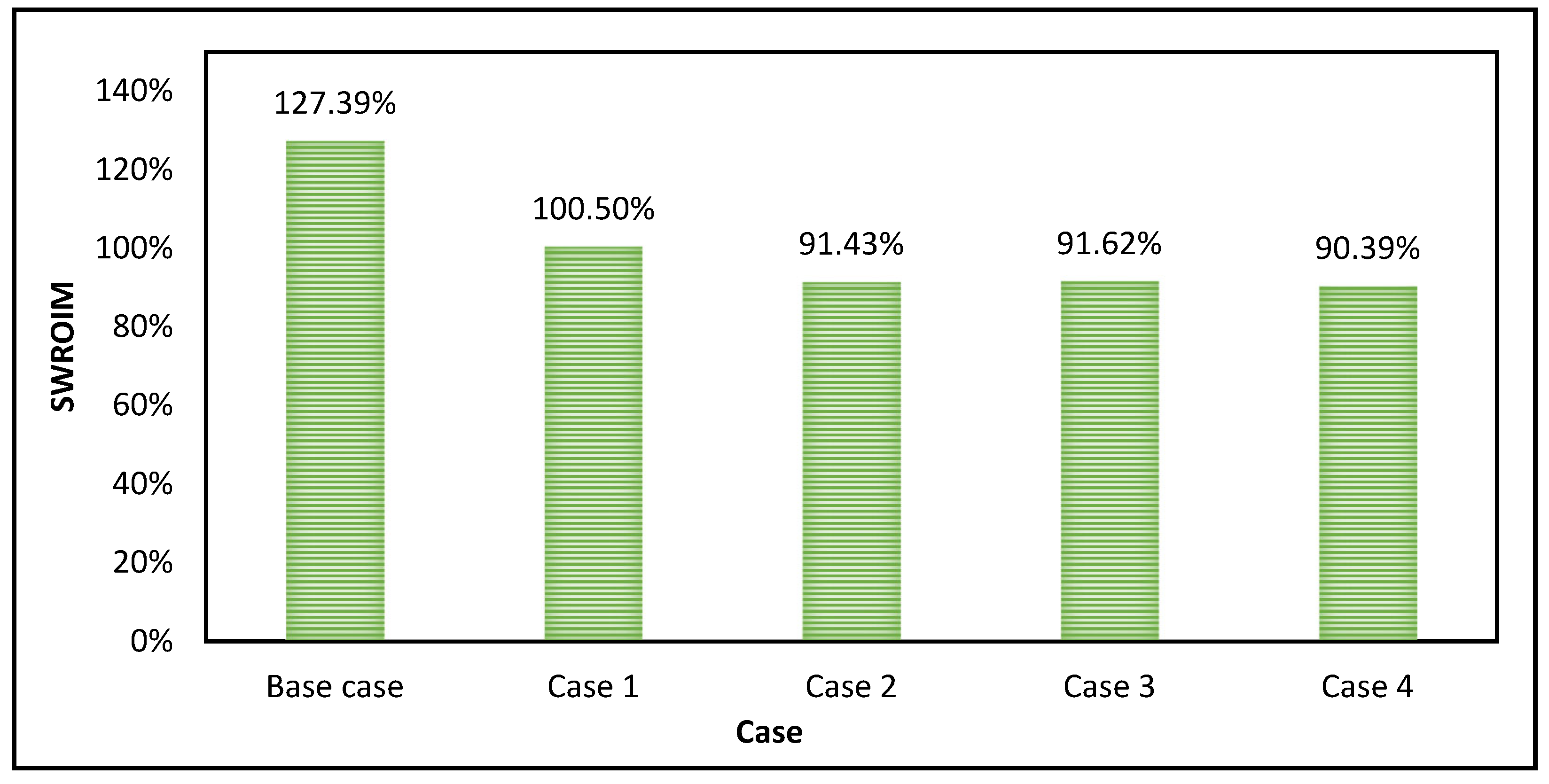
As illustrated in Figure 10, the energy-related parameter exhibited the largest influence on the SWROIM metric in the sustainability sensitivity analysis of the mass- and energy-integrated gas oil hydrocracking process.
The maximum SWROIM value corresponded to the base scenario (127.39%) where environmental, technical, energy, and safety indicators were assigned equal weights under favorable process conditions. This result was followed by scenario 1 (100.50%), reinforcing that the energy indicator—represented by the overall exergy efficiency—plays a dominant role in determining the SWROIM. In contrast, the technical indicator associated with the wastewater production efficiency index contributed less significantly, achieving a value of 90.39% in scenario 4 despite being assigned the highest weighting in that case. Future analyses could incorporate additional indicators under different specific characteristics and requirements of the process under study.

4. Conclusions

The sustainability analysis of the gas oil hydrocracking process with mass and energy integration allowed for a comprehensive evaluation of its performance using the SWROIM (Safety and Sustainability Weighted Return on Investment Metric) indicator, which incorporates economic, energy, environmental, technical, and inherent safety criteria. The results obtained demonstrate that the application of integration strategies leads to a sustainable performance superior to the traditional economic return, reaching an SWROIM value of 127.39%, significantly higher than the calculated ROI (36.97%). This performance reflects simultaneous improvements in the process’s exergy efficiency, a reduction in potential environmental impact, mitigation of inherent risk, and the utilization of internal streams to decrease wastewater generation. Compared to other petrochemical processes reported in the literature, the evaluated system exhibits a notably superior performance, confirming that mass and energy integration is a key tool for the design and evaluation of more sustainable refining processes.
The SWROIM sensitivity analysis demonstrated that the energy criterion, represented by overall exergy efficiency, exerts the greatest influence on the sustainable performance of the process, followed by the environmental and safety criteria, while the technical indicator associated with wastewater production rate (WPR) efficiency made a relatively minor contribution. These results highlight the importance of energy recovery and minimizing exergy losses in energy-intensive processes such as hydrocracking. However, the study has certain limitations as it did not consider dynamic operating scenarios, feed quality variability, operational failures, or social indicators, all of which could affect the actual performance of the process. In this regard, future studies could broaden the evaluation framework by incorporating dynamic analyses that include variability in feed, catalytic deactivation and regeneration, start-up and shutdown conditions, as well as operational disturbances and failures, and indicators of social and operational resilience, in order to assess the robustness of sustainable performance under real-world conditions. Additionally, given that the optimization showed high sensitivity to the energy criterion, future studies could analyze how changes in operational severity and exergy efficiency affect the SWROIM value under uncertainty while also incorporating reliability and resilience indicators. This would allow for progress toward dynamic and robust optimization schemes that maximize not only average performance but also the stability of the indicator in the face of operational variations, strengthening decision-making in the design of increasingly safe and sustainable hydrocracking processes.

Author Contributions

Conceptualization, Á.D.G.-D.; methodology, S.G.-M.; software, S.G.-M.; validation, Á.D.G.-D.; formal analysis, S.G.-M. and S.R.-F.; investigation, S.G.-M.; resources, Á.D.G.-D.; data curation, S.G.-M.; writing—original draft preparation, S.G.-M.; writing—review and editing, Á.D.G.-D.; visualization, Á.D.G.-D.; supervision, Á.D.G.-D.; project administration, Á.D.G.-D.; funding acquisition, S.R.-F. All authors have read and agreed to the published version of the manuscript.

Funding

This research was funded by the project approved by Resolution 01880 of 2022 and commitment act No. 027 of 2022.

Institutional Review Board Statement

Not applicable.

Informed Consent Statement

Not applicable.

Data Availability Statement

The data that support the findings of this study are available from the corresponding author, Á.D.G.-D., upon reasonable request.

Acknowledgments

The authors thank the Universidad de Cartagena for technical support. Angel Darío González-Delgado acknowledges Luis Angel Gonzalez-Fontalvo, whose early curiosity and constant presence over the past 10 months provided continuous inspiration for scientific reflection. His sense of wonder and attentive observation served as a daily reminder of curiosity as a fundamental driver of knowledge.

Conflicts of Interest

The authors declare no conflicts of interest.

References

  1. Rafeek, M.; Elwardany, M.; Nassib, A.M.; Ahmed, M.S.; Mohamed, H.A.; Abdelaal, M.R. Sustainable refining: Integrating renewable energy and advanced technologies. J. Therm. Anal. Calorim. 2025, 150, 17051–17071. [Google Scholar] [CrossRef]
  2. Iplik, E.; Aslanidou, I.; Kyprianidis, K. Hydrocracking: A perspective towards digitalization. Sustainability 2020, 12, 7058. [Google Scholar] [CrossRef]
  3. Stratiev, D.; Toteva, V.; Shishkova, I.; Nenov, S.; Pilev, D.; Atanassov, K.; Bureva, V.; Vasilev, S.; Stratiev, D.D. Industrial Investigation of the Combined Action of Vacuum Residue Hydrocracking and Vacuum Gas Oil Catalytic Cracking While Processing Different Feeds and Operating Under Distinct Conditions. Processes 2023, 11, 3174. [Google Scholar] [CrossRef]
  4. Nekrasov, I.; Tynchenko, V.; Bukhtoyarov, V.; Panfilova, T.; Sokolnikov, A.; Gorodov, A.; Panfilov, I. Simulation of the hydrocracking process to produce diesel fuel in the Aspen HYSYS system. In AIP Conference Proceedings; American Institute of Physics Inc.: College Park, MD, USA, 2023. [Google Scholar] [CrossRef]
  5. Zhou, H.; Lu, J.; Cao, Z.; Shi, J.; Pan, M.; Li, W.; Jiang, Q. Modeling and optimization of an industrial hydrocracking unit to improve the yield of diesel or kerosene. Fuel 2011, 90, 3521–3530. [Google Scholar] [CrossRef]
  6. Klemeš, J.J. Process Integration: An introduction. In Handbook of Process Integration (PI): Minimisation of Energy and Water Use, Waste and Emissions; Woodhead Publishing: Cambridge, UK, 2023; pp. 1–24. [Google Scholar] [CrossRef]
  7. El-Halwagi, M.M. Sustainable Design Through Process Integration: Fundamentals and Applications to Industrial Pollution Prevention, Resource Conservation, and Profitability Enhancement; Elsevier: Amsterdam, The Netherlands, 2025. [Google Scholar]
  8. Argoti, A.; Orjuela, A.; Narváez, P.C. Challenges and opportunities in assessing sustainability during chemical process design. Curr. Opin. Chem. Eng. 2019, 26, 96–103. [Google Scholar] [CrossRef]
  9. Kutlu, Ö.; Özçelik, F.Z. Exergy analysis of petroleum refinery hydrogen network integration based on reaction system. MANAS J. Eng. 2021, 9, 10–23. [Google Scholar] [CrossRef]
  10. Moreno-Sader, K.; Jain, P.; Tenorio, L.C.B.; Mannan, M.S.; El-Halwagi, M.M. Integrated Approach of Safety, Sustainability, Reliability, and Resilience Analysis via a Return on Investment Metric. ACS Sustain. Chem. Eng. 2019, 7, 19522–19536. [Google Scholar] [CrossRef]
  11. Guillen-Cuevas, K.; Ortiz-Espinoza, A.P.; Ozinan, E.; Jiménez-Gutiérrez, A.; Kazantzis, N.K.; El-Halwagi, M.M. Incorporation of Safety and Sustainability in Conceptual Design via a Return on Investment Metric. ACS Sustain. Chem. Eng. 2018, 6, 1411–1416. [Google Scholar] [CrossRef]
  12. Al-Sobhi, S.A.; AlNouss, A. Applying New Sustainability Metric in Different Natural Gas Liquid (NGL) Recovery Configurations to Extend Investment Decision and Incorporate Sustainability Analysis. In Computer Aided Chemical Engineering; Elsevier: Amsterdam, The Netherlands, 2018; Volume 43, pp. 145–150. [Google Scholar] [CrossRef]
  13. Aguilar-Vásquez, E.; Ramos-Olmos, M.; González-Delgado, Á.D. Sustainability assessment of suspension PVC production process. Revista EIA 2026, 23, 4501–4502. [Google Scholar] [CrossRef]
  14. El-Halwagi, M.M. A return on investment metric for incorporating sustainability in process integration and improvement projects. Clean Technol. Environ. Policy 2017, 19, 611–617. [Google Scholar] [CrossRef]
  15. García-Maza, S.; Rojas-Flores, S.; González-Delgado, Á.D. Assessment of a Mass and Energy-Integrated Gas Oil Hydrocracking Process via Water–Energy–Product Technical Indicators. Sci 2025, 7, 158. [Google Scholar] [CrossRef]
  16. García-Maza, S.; Acosta-Esalas, L.J.; Gonzalez-Delgado, A.D. Mass Integration of a Large-Scale Gas Oil Hydrocracking Process Using Pinch Analysis. Chem. Eng. Trans. 2025, 119, 421–426. [Google Scholar] [CrossRef]
  17. Pham, H.H.; Kim, K.H.; Go, K.S.; Nho, N.S.; Kim, W.; Kwon, E.H.; Jung, R.H.; Lim, Y.; Lim, S.H.; Pham, D.A. Hydrocracking and hydrotreating reaction kinetics of heavy oil in CSTR using a dispersed catalyst. J. Pet. Sci. Eng. 2021, 197, 107997. [Google Scholar] [CrossRef]
  18. Bandyopadhyay, R.; Upadhyayula, S. Thermodynamic analysis of diesel hydrotreating reactions. Fuel 2018, 214, 314–321. [Google Scholar] [CrossRef]
  19. Valavarasu, G.; Bhaskar, M.; Balaraman, K.S. Mild hydrocracking—A review of the process, catalysts, reactions, kinetics, and advantages. Pet. Sci. Technol. 2003, 21, 1185–1205. [Google Scholar] [CrossRef]
  20. Peters, M.S.; Timmerhaus, K.D.; West, R.E. Plant Design and Economics for Chemical Engineers; McGraw-Hill: New York, NY, USA, 2004. [Google Scholar]
  21. Jafari, M.J.; Mohammadi, H.; Reniers, G.; Pouyakian, M.; Nourai, F.; Torabi, S.A.; Miandashti, M.R. Exploring inherent process safety indicators and approaches for their estimation: A systematic review. J. Loss Prev. Process Ind. 2018, 52, 66–80. [Google Scholar] [CrossRef]
  22. Rahman, M.; Heikkilä, A.M.; Hurme, M. Comparison of inherent safety indices in process concept evaluation. J. Loss Prev. Process Ind. 2005, 18, 327–334. [Google Scholar] [CrossRef]
  23. Arshad, A.; Ali, H.M.; Habib, A.; Bashir, M.A.; Jabbal, M.; Yan, Y. Energy and exergy analysis of fuel cells: A review. Therm. Sci. Eng. Prog. 2019, 9, 308–321. [Google Scholar] [CrossRef]
  24. Querol, E.; Gonzalez-Regueral, B.; Perez-Benedito, J.L. Practical Approach to Exergy and Thermoeconomic Analyses of Industrial Processes; Springer: London, UK, 2013. [Google Scholar]
  25. Young, D.; Scharp, R.; Cabezas, H. The waste reduction (WAR) algorithm: Environmental impacts, energy consumption, and engineering economics. Waste Manag. 2000, 20, 605–615. [Google Scholar] [CrossRef]
  26. Cabezas, H.; Bare, J.C.; Mallick, S.K. Pollution prevention with chemical process simulators: The generalized waste reduction (WAR) algorithm—Full version. Comput. Chem. Eng. 1999, 23, 623–634. [Google Scholar] [CrossRef]
Figure 1. Simulated process flow diagram of the reaction stage of the mass- and energy-integrated gas oil hydrocracking process using Aspen HYSYS® V 14.0 simulator.
Sustainability 18 03795 g001
Figure 2. Simulated process flow diagram of the preliminary separation stage of the mass- and energy-integrated gas oil hydrocracking process using Aspen HYSYS® V 14.0 simulator.
Sustainability 18 03795 g002
Figure 3. Simulated process flow diagram of the hydrogen replenishment and recycle stage, absorption towers and PSA of the mass- and energy-integrated gas oil hydrocracking process using Aspen HYSYS® V 14.0 simulator.
Sustainability 18 03795 g003
Figure 4. Simulated process flow diagram of the stripping and debutanization stage of the mass- and energy-integrated gas oil hydrocracking process using Aspen HYSYS® V 14.0 simulator.
Sustainability 18 03795 g004
Figure 5. Simulated process flow diagram of the fractionation stage of the mass- and energy-integrated gas oil hydrocracking process using Aspen HYSYS® V 14.0 simulator.
Sustainability 18 03795 g005
Figure 6. Simulated process flow diagram of the naphtha separation stage of the mass- and energy-integrated gas oil hydrocracking process using Aspen HYSYS® V 14.0 simulator.
Sustainability 18 03795 g006
Figure 7. Simulated process flow diagram of the makeup and recycling water stage of the mass- and energy-integrated gas oil hydrocracking process using Aspen HYSYS® V 14.0 simulator.
Sustainability 18 03795 g007
Figure 8. Stages of the SWROIM methodology for the mass- and energy-integrated gas oil hydrocracking process.
Sustainability 18 03795 g008
Figure 9. ROI and SWROIM for the mass- and energy-integrated industrial-scale gas oil hydrocracking process.
Sustainability 18 03795 g009
Figure 10. Sensitivity analysis of the SWROIM metric for the mass- and energy-integrated gas oil hydrocracking process.
Sustainability 18 03795 g010
Table 1. Indicators, targets, and weighting factors for each parameter considered in the SWROIM methodology for the mass- and energy-integrated gas oil hydrocracking process.
AnalysisIndicatorIndicatoriIndicatoritargetwi
SafetyTotal inherent process safety index (ISI)46.0024.001
ExergicOverall exergy efficiency (%)98.7699.001
EnvironmentalPEI output rate (PEI/h)675,000.00337,500.001
TechnicalWastewater production rate (WPR) efficiency (%)22.3950.001
Table 2. Cases of the sensitivity analysis of the SWROIM methodology for the mass- and energy-integrated gas oil hydrocracking process.
Case w e x e r g i c w e n v i r o n m e n t a l w s a f e t y w t e c h n i c a l
110.50.50.5
20.510.50.5
30.50.510.5
40.50.50.51
Disclaimer/Publisher’s Note: The statements, opinions and data contained in all publications are solely those of the individual author(s) and contributor(s) and not of MDPI and/or the editor(s). MDPI and/or the editor(s) disclaim responsibility for any injury to people or property resulting from any ideas, methods, instructions or products referred to in the content.