1. Introduction
Wet scrub resistance (WSR) describes the ability of a dried paint film to withstand repeated washing or scrubbing without breaking down, without dissolving, without losing gloss, without crumbling, and without continuing to provide protection to the underlying surface. This is especially relevant when walls, ceilings, and other surfaces are frequently cleaned or wiped during daily use, especially in busy areas such as kindergartens, kitchens, school premises, hospital rooms, and other places. Paints with low wet scrub resistance tend to soften and wear and usually expose the underlying surface. Resistance depends heavily on the paint formulation: factors such as the type of binder, the concentration of the pigment volume (PVC), fillers, coalescing agents, and surfactants together determine the properties of the coating. Therefore, achieving a high scrub resistance is a complex optimization task for formulators [
1].
In certain coating systems (e.g., organosilicate paints), the choice of binder has a significant impact on scrub resistance, particularly under specific storage conditions. For instance, some binders are sensitive to saponification at high pH values, leading to chemical degradation and a consequent reduction in wet scrub resistance. In addition, the hydrophobic properties of the coating (e.g., through the incorporation of PDMS or silicones) influence not only water absorption but also the film’s resistance to repeated wet cleaning [
2,
3].
Modern water-based paints are used in a wide range of applications and can range from glossy to matt, abrasion-resistant interior coatings. In particular, wet scrub resistance is required in antibacterial or hygienic paints to ensure that the antimicrobial paint can withstand cleaning cycles. The main practical property of a binder used in interior paints with high pigment concentrations is its ability to bind the pigment, often described as ‘rub resistance’ or ‘wash resistance’ [
4,
5,
6].
Wet scrub resistance is a very important property of architectural coatings, as surfaces are constantly exposed to cleaning, moisture, and mechanical abrasion. This property is greatly influenced by the chemical composition, structure, and interaction of paint components. Scientific studies, in which scientists investigate and find ways to increase wet scrub resistance, demonstrate the importance and relevance of the wet scrub resistance of paints. Oliveira has shown that the incorporation of carboxyl monomers, such as itaconic acid, into latex particles improves the resistance to abrasion by enhancing particle interaction and film cohesion [
7]. Similarly, Ibrahim has shown that ‘green’ binders based on natural rubber can improve wash and abrasion resistance [
8]. Binder stability also affects durability, as shown by Aben et al., who compared VAE and styrene–acrylate binders in organosilicate paints under different storage conditions and found that certain binders maintained a high abrasion resistance even after prolonged storage at high temperatures [
2]. When developing and researching various protective coatings, scientists emphasize that the most important property of pigment binders used in highly pigmented interior paints is determined through the wet scrub test [
7,
9,
10]. Tang et al. demonstrated that the integration of aqueous resin coatings showed significant improvements in resistance to environmental factors such as water, alkali, and temperature fluctuations [
11]. Another study showed that the durability of decorative paints can be extended by using nanomaterials derived from tannins in coatings. In this case, a significant wet scrub resistance exceeding 4000 cycles was observed [
10]. Because wet scrub resistance reflects the combined effects of binder chemistry, pigment–binder interactions, additive systems, and film formation processes, it can serve as a measurable output variable in predictive models linking formulation strategies with long-term performance.
Surface hydrophobicity determines the abrasion resistance of paints, as supported by studies that found that varying amounts of silicone affect both water resistance and abrasion resistance, highlighting the balance between hydrophobicity and film cohesion [
3,
12]. Other researchers have found in their studies that different pigments, such as TiO
2 and Ca-CO
3, affect latex dispersibility and abrasion resistance, highlighting the role of pigment selection in mechanical durability, indicating the importance of pigment–binder interactions [
13]. Wet scrub resistance is emphasized in the analysis of all architectural coatings and in the presentation of tests for decorative materials. When factors in the coating production process are analyzed, such as paint formulas and compositions, the influence on selected physical parameters that determine the quality of coatings is studied: hydrophobicity, the ability to diffuse water vapor through coatings, and wet scrub resistance [
3,
14]. The wet scrub resistance property ensures that painted surfaces remain visually intact and physically strong even after repeated cleaning cycles, which extends the life of the coating.
Recent research emphasizes that the durability of a coating must be evaluated in terms of combined mechanical, environmental, and surface-related factors. Researchers Huang et al. [
15] showed that long-term performance depends on the interaction of material properties and external loading conditions. This approach provides a useful methodological framework for relating measurable coating properties, such as wet abrasion resistance, to durability under real-world service conditions. Lin et al. [
16] investigated that the friction-induced surface modification of a PTFE-based coating can significantly reduce friction and wear, emphasizing that surface properties can improve coating durability. These results are relevant for abrasion resistance, where repeated mechanical action drives the degradation mechanisms. Environmental effects are another important factor affecting the performance of a coating. Chen et al. [
17] studied moisture-induced damage in plastered building materials and showed that environmental parameters such as humidity and water ingress play a decisive role in degradation processes. This is of direct relevance to interior coatings, where repeated wet cleaning cycles combine mechanical abrasion with moisture exposure. In another study, Wang et al. [
18] showed that surface roughness and microstructural properties significantly affect performance under dynamic conditions. Their findings provide insights into how surface topology can affect wear mechanisms and contribute to a better understanding of wet wear resistance as a function not only of composition but also of surface structure.
Wet scrub resistance data for decorative paints are essential for sustainability assessments, life cycle analysis, and the development of predictive models linking paint composition to performance. Although wet scrub resistance is a mandatory performance parameter in industrial quality control and product classification, open access datasets covering long-term performance trends are virtually absent in the scientific literature. This creates a gap between the testing practice of industrial coatings and data availability for sustainability-oriented research. By publishing an open, ISO-compliant wet scrub resistance dataset for coatings, this study aims to bridge the gap between industrial coating performance test results and scientific data availability, enabling reproducible research, inter-study comparisons, and innovation in sustainable coating technologies. The research framework includes proposing wet scrub resistance as a functional durability indicator for sustainably evaluating interior decorative coatings, analyzing durability trends of waterborne coatings, and developing an integrated framework linking coating performance to service life, maintenance frequency, and life cycle impacts. This study goes beyond simply presenting a dataset and also analyzes paint durability trends and proposes a framework that links coating performance to sustainability assessment.
2. Materials and Methods
The dataset provides long-term, standardized records of wet scrub resistance measurements of decorative interior paints, obtained through testing according to EN ISO 11998 [
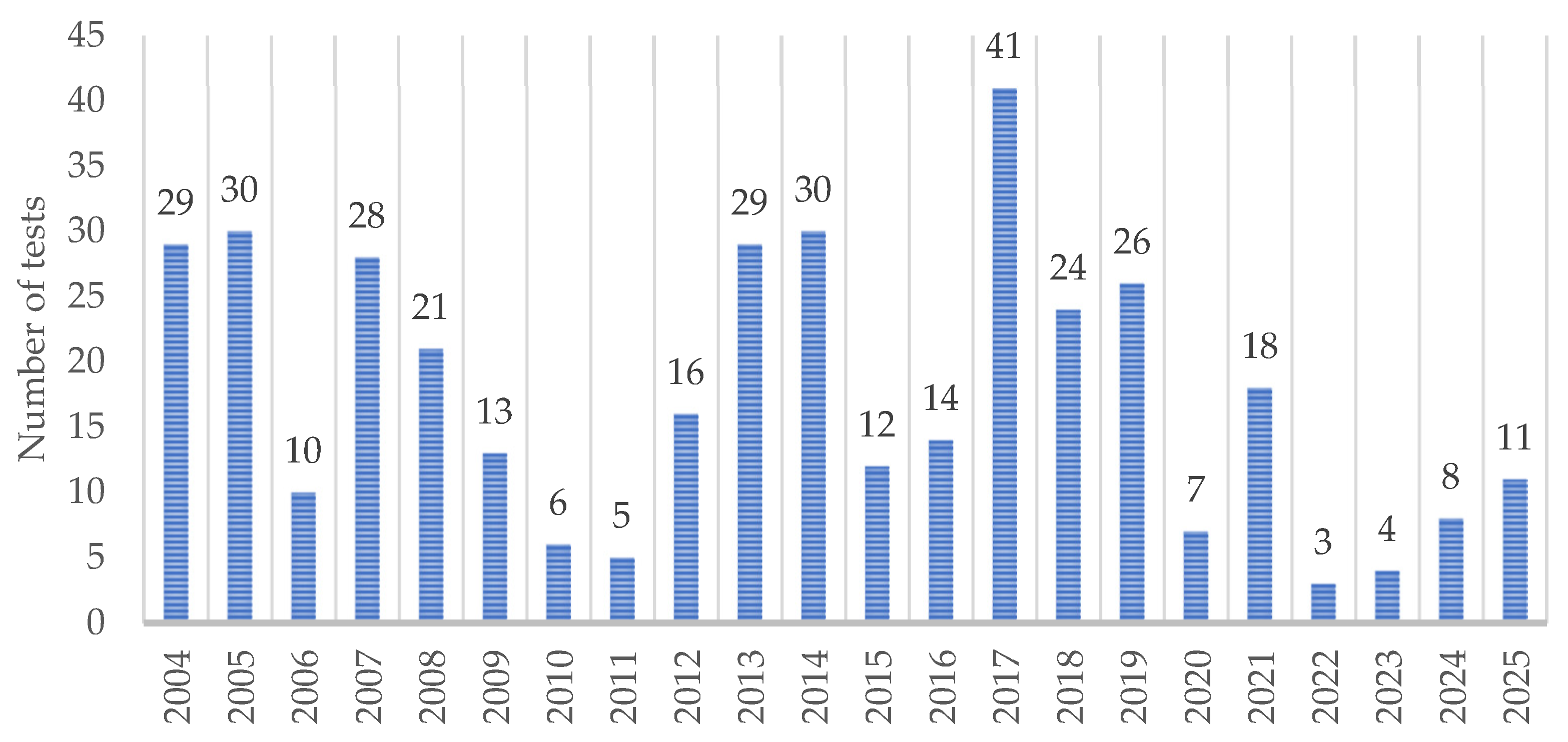
19] in an accredited laboratory. By maintaining continuity over time, these individual tests are converted into a structured performance dataset, which consists of 385 wet scrub test results of commercially available paints, obtained over a period of 21 years, making it a large and systematically collected resource in the field of coating performance research.
2.1. Materials
Wet scrub resistance was determined according to the international standard EN ISO 11998. Data presented in the frame of this study were collected from 2004 to 2025. The dataset consists of 385 commercial water-based decorative paints for interior use, with a variety of formulations, such as acrylic, latex, vinyl-based paints and other paints. All samples were tested as received from manufacturers or customers without additional modifications or dilutions. No additional selection criteria for the test paints were used, so the dataset is not a controlled experimental sampling, but represents an unfiltered and practice-based coating market, reflecting the variability of commercially available products over time. This strategy ensured that the dataset reflected real-world conditions and could be used for comparative analysis and sustainability-related assessments.
2.2. Determination of Wet Scrub Resistance
In practice, coatings are resistant to abrasion or degradation, regardless of the effects of chemicals or abrasive materials. The durability of coating films, that is, their ability to withstand a certain range of mechanical effects, is described by the scrub resistance. The international standard EN ISO 11998 specifies the principle of determining the characteristic related to this property. The main idea of the accelerated method presented in the standard is to obtain the coating film thickness loss after a controlled number of abrasion cycles under wet conditions. It is applicable to water-based and other decorative coatings intended for interior walls and ceilings where repeated wet cleaning is expected.
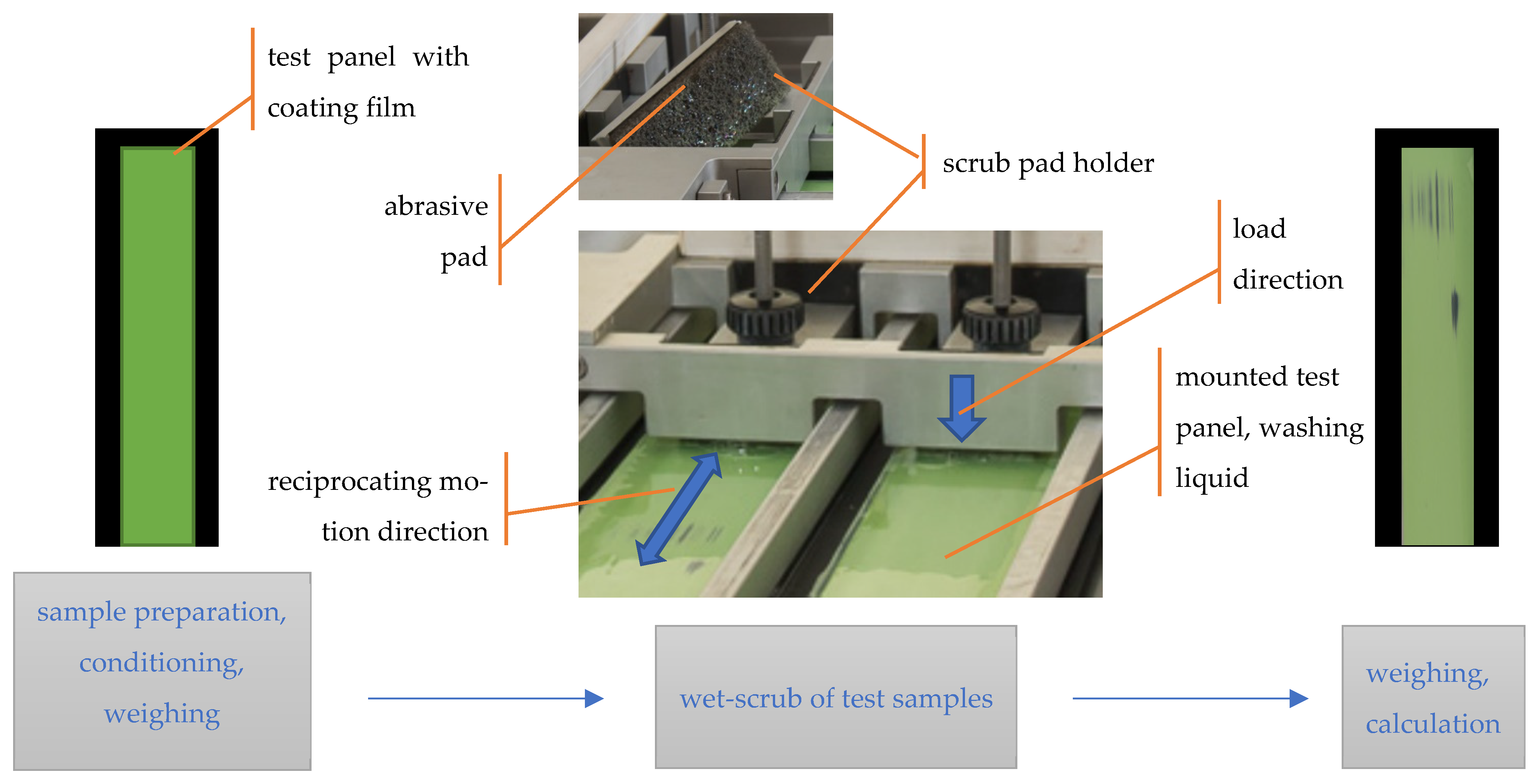
According to the standard procedures (
Figure 1), a test coating is applied to a test panel at a controlled wet film thickness and allowed to dry under controlled environmental conditions for a specified period. The dried film is then mechanically wet-scrubbed using a standardized apparatus and a specified abrasive material moistened with a detergent solution. Before scrubbing, the mass of the test plate and the dry coating film is determined. After a specified number of scrubbing cycles, the test panel is weighed, and loss in coating mass per unit area is calculated. The expression of the scrub resistance is the average loss in the dry film thickness, which is calculated taking this loss of mass and the dry film density into account.
The standard EN ISO 11998 specifies wet scrubbing cycles, technical characteristics of the apparatus, and consumables such as a film applicator, wet scrub tester, scrub pad holder, and abrasive pad. It also specifies the washing liquid and water to wet the surface before scrubbing the test panels. The standard also provides requirements for test panels and measuring instruments.
The limitations of the method are that the results depend on the substrate, the application method and the drying conditions. Wet scrub resistance is used to classify paint for walls and ceilings according to the standard EN 13300 [
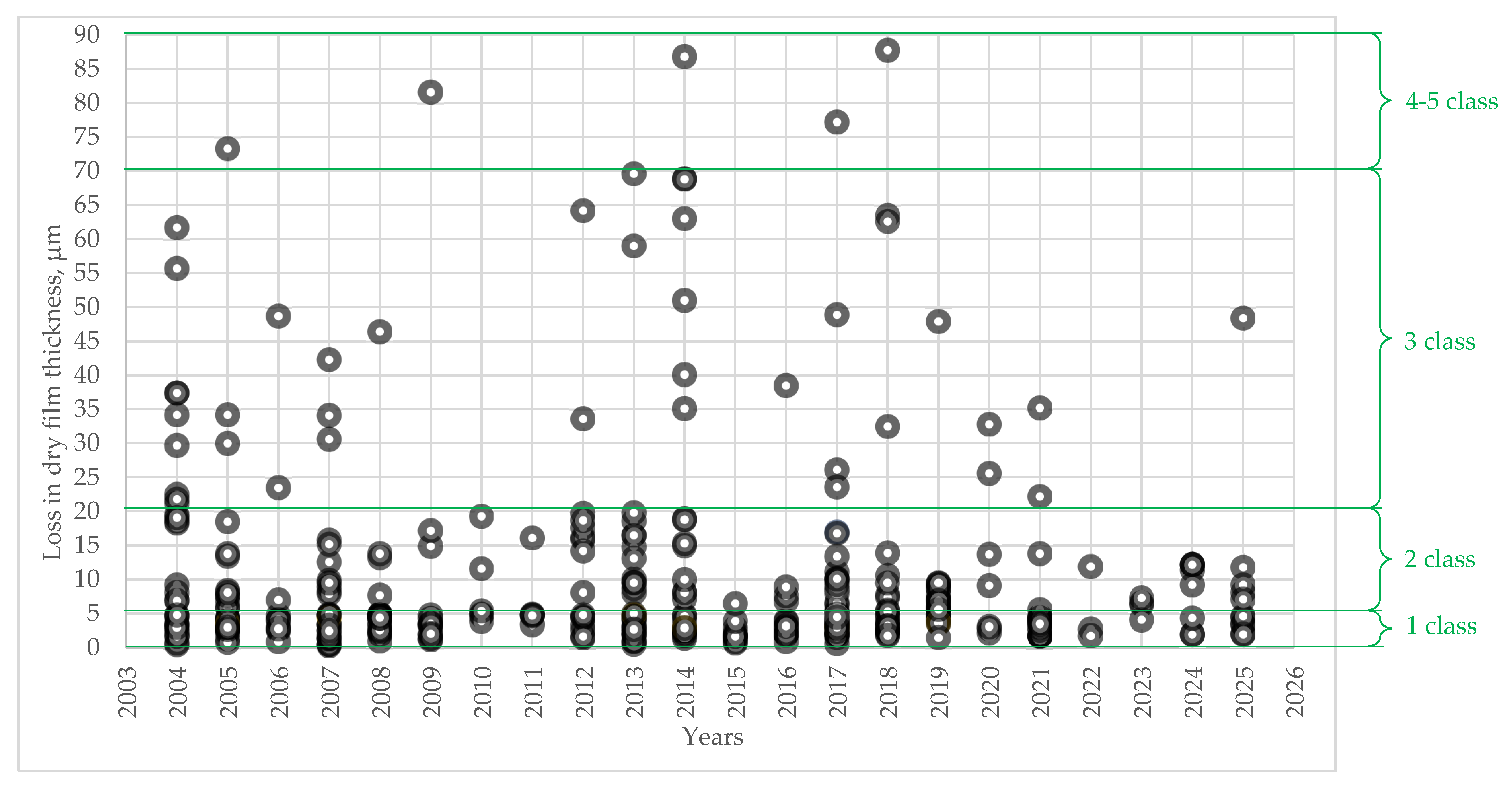
20], which ranges from class 1 to 5. Class 1 corresponds to a thickness reduction of less than 5 µm after 200 cycles; class 2: 5–20 µm after 200 cycles; class 3: 20–70 µm after 200 cycles; class 4: less than 70 µm after 40 cycles; and class 5: 70 µm or more after 40 cycles. After the test, the reduction in coating thickness was measured, and the results were compared with the aforementioned limit values to assign the corresponding EN 13300 class.
2.3. Description of the Test
The wet scrub test was performed in an accredited laboratory that meets the requirements of EN ISO/IEC 17025 [
21] according to the international standard EN ISO 11998. The testing and measuring equipment used in the test are presented in
Table 1.
Three specimens are prepared for the wet scrub test and two specimens for obtaining the density of the dry film of the coating. The coating is applied to the PVC sheets in a single coat to a controlled wet film thickness with a 250 µm applicator. The coated panels are conditioned for 28 days under standard laboratory conditions at 23 ± 2 °C and 50 ± 5% relative humidity to ensure complete cure. All tests are carried out in these conditioning environments. An aqueous solution of sodium n-dodecylbenzenesulfonate with a concentration of 2.5 g/L is used as a washing liquid. Water meets the requirements of standard ISO 3696 [
22]. The test requires that the abrasive pad is moistened with the washing liquid to a final mass of (4.0 ± 0.5) g. After scrubbing, the surface is gently rinsed under running water and allowed to dry under standard conditions. The test panel with a dried film is weighed before and after scrubbing/conditioning. The average loss in dry film thickness after 200 wet scrub cycles (µm) is calculated. The resistance class is assigned according to the EN 13300 standard.
2.4. Technical Validation
The wet scrub resistance tests, the results of which are presented, were conducted in an ISO/IEC 17025-accredited laboratory, ensuring the implementation of the quality assurance and validation principles set out in the standard, including technical competence, measurement traceability, and compliance with internationally recognized quality management requirements.
The tests were carried out strictly in accordance with the requirements of the EN ISO 11998 standard. All measuring equipment, including analytical balances and dimensional measuring instruments, is regularly calibrated by an independent calibration laboratory. The wet scrub tester is periodically tested according to a developed and approved methodology using calibrated measuring instruments. Routine equipment performance checks were implemented to verify the operational condition and repeatability of the wet scrub testing device prior to testing. Calibration intervals and verification procedures were defined within the laboratory’s quality management system according to EN ISO/IEC 17025.
Testing personnel were trained and authorized to perform the measurements. The reliability of the results was verified through interlaboratory comparisons and intralaboratory repeatability tests by two independent operators, demonstrating satisfactory agreement and reproducibility.
Each measurement of loss in dry film thickness determination is repeated three times. Measurement uncertainties are evaluated in compliance with EN ISO/IEC 17025. The following sources of uncertainty are identified and evaluated:
- ▪
Variability of the test object,
- ▪
Measurement of test plate and dry coating film mass,
- ▪
Measurement of mass of samples used for dry coating density calculation,
- ▪
Measurement of dimensions of sample sides used for dry coating density calculation,
- ▪
Measurement of coating thickness,
- ▪
Operator qualification and handling effects.
For each source, the uncertainties related to the measurement process, instrument resolution, and expanded uncertainty of the measuring devices are evaluated. The combined standard uncertainty was calculated by propagating individual uncertainty components, and the expanded uncertainty was determined using a coverage factor of k = 2, corresponding to a confidence level of approximately 95%. The typical expanded uncertainty in the laboratory was in the range of approximately 0.5–1.5 μm of thickness reduction (depending on the type of coating, the uniformity of the substrate and the repeatability of the abrasion process). In this study, the magnitude of the difference exceeded the estimated uncertainty in most cases, and the observed trends reflect actual differences in product performance.
The implemented quality assurance measures and uncertainty evaluation procedures ensure that the reported wet scrub resistance data are traceable, reproducible, and suitable for scientific analysis and long-term use, including comparative evaluations and sustainability-oriented decision-making.
4. Discussion
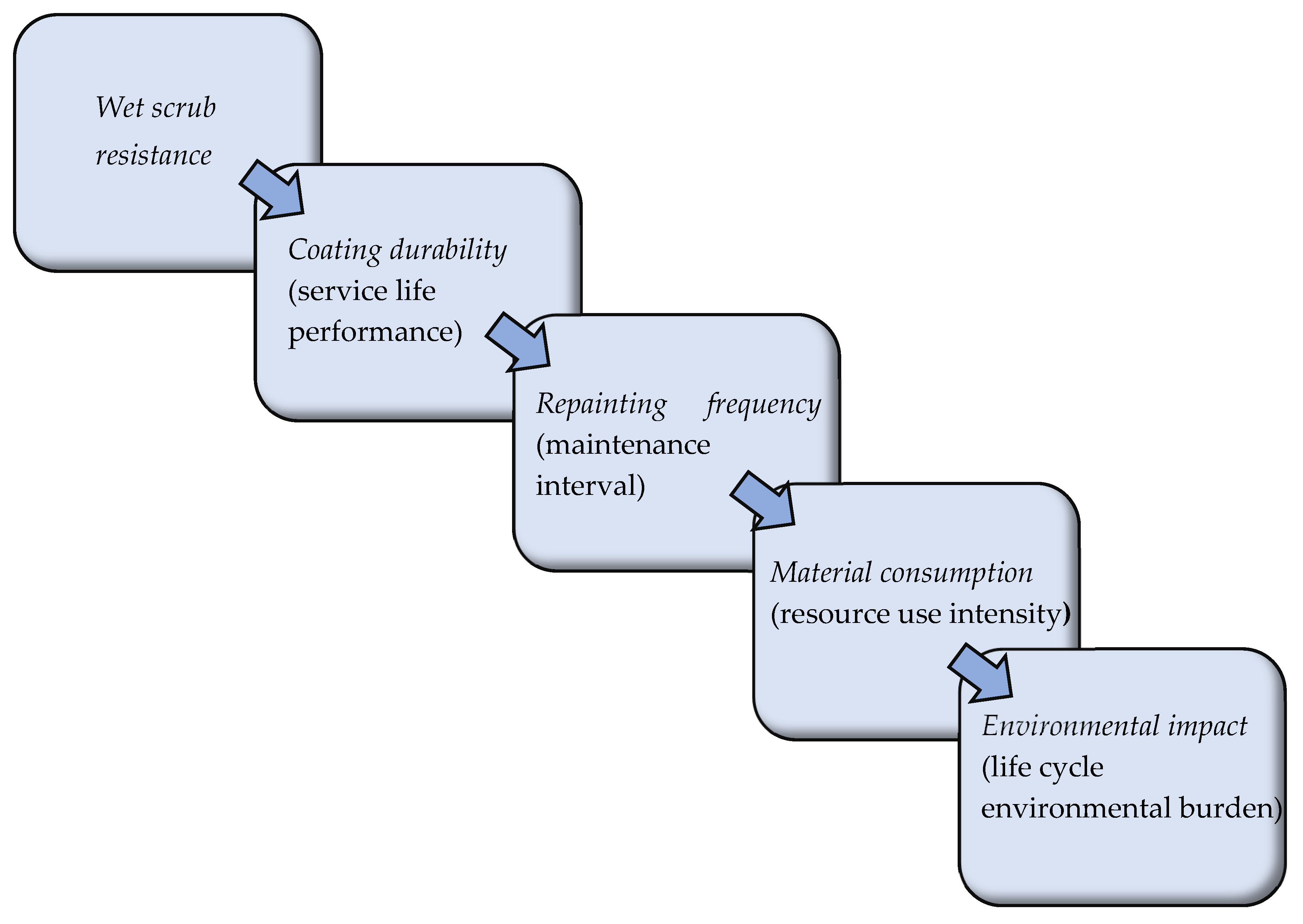
Wet scrub resistance is directly related to coating service life in interior environments (
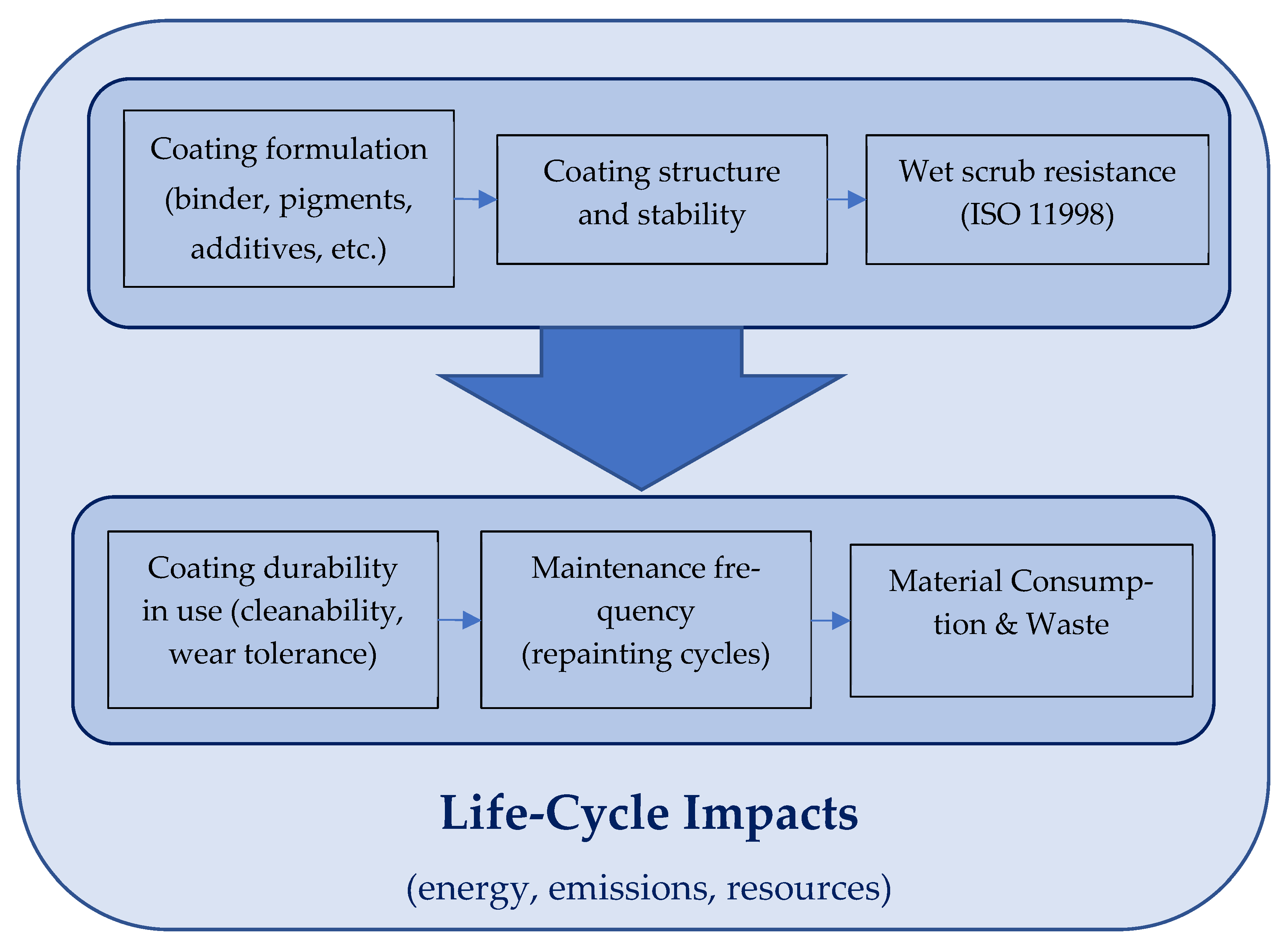
Figure 4), where surface cleanability and mechanical wear determine repainting intervals. Consequently, this parameter serves as a functional durability indicator necessary for sustainability assessments, life cycle analysis and service life modeling of building materials.
The proposed assessment framework can be interpreted as a step-by-step assessment method that links standardized performance data to sustainability-relevant outcomes. In this context, wet scrub resistance is the starting parameter that is translated into durability classes according to EN 13300. These classes are then interpreted in terms of the relative service life that reflects the resistance of the coating to mechanical abrasion and cleaning. Based on this interpretation of durability, maintenance intervals can be approximated, allowing for the assessment of material consumption over time. This enables the simplified assessment of environmental impacts, including resource use, emissions, and waste generation. Such a structured approach allows the use of standardized laboratory test results in practical decision-making, including coating selection, maintenance planning and sustainability-oriented material evaluation.
Wet scrub resistance ensures that painted surfaces remain visually intact and physically strong even after repeated cleaning cycles, extending the lifetime of the coating. Poor scrub resistance often indicates deficiencies in binder cohesion, pigment binding, or additive compatibility, and also indicates long-term chemical stability (e.g., binder saponification, leaching)—which is vital for storage, performance, and safety. Research to improve scrub resistance drives innovation (new binders, functional monomers, and nanoadditives), leading to more durable, sustainable, and high-performance paints.
The dataset focuses on water-based interior paints and does not include solvent-borne or specialty coatings. The weakness of the data is that the results are anonymized and the composition of the paint is not provided. However, the data provide paint manufacturers and researchers with an opportunity to see trends in paint research and production.
This study is based on the assumption that wet scrub resistance functions as a bridge performance indicator connecting coating formulation, durability, and sustainability outcomes in the built environment. The conceptual framework (
Figure 5) illustrates how standardized performance data can be translated into sustainability-relevant information.
Based on the practical applicability of the results, the wet scrub resistance classes according to EN 13300 were linked to maintenance intervals and life cycle effects. In heavily trafficked areas, such as school corridors, etc., the wear of the coating is significantly affected by repeated cleaning cycles. The wet scrub resistance classes can therefore be interpreted as indicators of abrasion resistance. For example, it can be assumed that class 1 coatings (≤5 µm loss after 200 cycles) withstand significantly higher total cleaning loads than class 3 coatings (≤70 µm loss after 200 cycles). Assuming a simplified linear relationship between material loss and the recoating limit, an indicative service life can be estimated. For example, if the recoating limit is defined at a critical reduction in film thickness (e.g., 50 to 70 µm), a class 1 coating in a school corridor may maintain acceptable performance for approximately 8 to 12 years, while a class 3 coating under similar conditions may need to be recoated every 3 to 5 years. Thus, such differences directly affect maintenance, i.e., recoating frequency. In this case, we see that, for example, over a 15-year building life, a class 1 system may require one recoating cycle, while a class 3 system may require three or four recoatings. This significantly increases overall material consumption, labor costs, environmental impact, finances, etc.
From a life cycle cost perspective, a reduced recoating frequency means lower overall costs, despite potentially higher initial material prices. The framework thus allows the integration of performance data into simplified life cycle cost calculations.
where
n is determined by the durability, as indicated by the wet scrub resistance.
At the system level, the reduced number of recoating cycles reduces the overall environmental burden, including raw material use, transportation, emissions, and waste generation. In the context of Green Public Procurement, such performance-based indicators could be used to define durability requirements, thus shifting the selection criteria from price-based to life cycle performance-based decision-making.
Standardized wet scrub resistance data can be applied in the proposed context, bridging the gap between laboratory testing and sustainability-based decision-making.
At the material level, wet scrub resistance is determined by formulation-related parameters, including binder chemistry, pigment volume concentration, filler type, and additive compatibility. These factors control film formation, cohesion, and resistance to mechanical and chemical stress during cleaning. At the performance level, wet scrub resistance reflects the mechanical integrity and chemical stability of the coating system. A higher resistance indicates improved wear tolerance, lower material loss during cleaning, and better retention of protective and aesthetic functions. At the use-phase level, the durability of the coating influences the maintenance frequency, as surfaces with lower resistance require more frequent repainting to restore performance and appearance. This directly affects material consumption, labor demand, and operational impacts.
At the system level, maintenance intervals determine life cycle resource flows, including paint production, transportation, application, and end-of-life waste. Reduced repainting cycles lead to lower cumulative environmental burdens, including embodied energy use, emissions, and waste generation.
By providing open, standardized wet scrub resistance data, this work operationalizes durability as a sustainability parameter and supports the transition from qualitative claims to performance-based sustainability assessment.
The Sustainable Development Agenda, adopted by the Member States of the United Nations, with its 17 Sustainable Development Goals (SDGs), provides a common blueprint for peace and prosperity for people and the planet. It is a call to action for all countries—developed and developing—in a global partnership. It recognizes that eradicating poverty and other deprivations must be combined with strategies that improve health and education, reduce inequality, and boost economic growth—while addressing climate change and preserving our oceans and forests [
25].
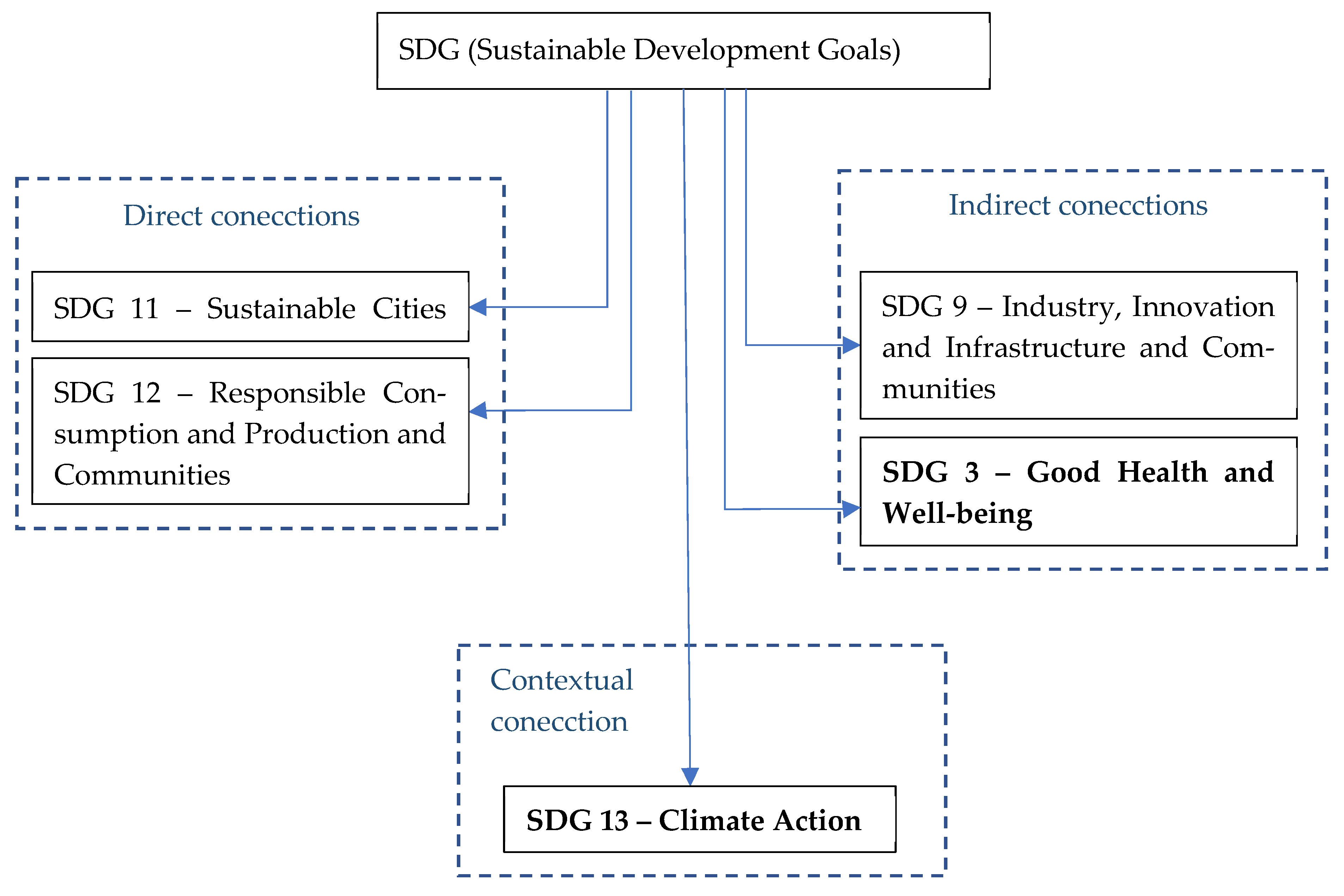
Contributing to the Sustainable Development Goals by providing standardized wet scrub resistance results, this study is directly aligned with SDG 11 (
Figure 6), allowing informed choices for durable interior coatings that reduce maintenance frequency, resource consumption, financial resources, and long-term environmental impacts in residential and public buildings. Wet scrub resistance is a key indicator of durability, allowing for a more responsible use of materials by linking the performance of the coating to its service life and maintenance cycles, thus directly supporting SDG 12 on resource efficiency and waste reduction. When considering the results analyzed from a life cycle perspective, the frequency of repainting is a major factor influencing the environmental impact of decorative coatings, often exceeding the impact of initial production. Studies have shown that extending the service life of a coating can reduce overall greenhouse gas emissions and resource use in proportion to the reduction in repainting cycles. Researchers Chen et al. [
26] have demonstrated that increased material durability can be directly translated into carbon offset potential when maintenance intervals are extended. Similarly, Wang et al. and Du et al. present frameworks that link material degradation mechanisms to long-term system performance, supporting the integration of durability indicators into sustainability assessments [
27,
28].
The results of wet scrub resistance indirectly provide a basis for innovation-based decision-making and digital tools in the paint industry, contributing to SDG 9 by supporting the development of data-driven infrastructure and sustainable industry practices. By enabling the selection of durable coatings that require less maintenance, wet scrubbing resistance results also indirectly meet SDG 3 by reducing the reexposure of paint emissions to the indoor environment during repainting.
The improved durability of the coating, as reflected by the resistance to wet scrubbing, contributes to actions addressing climate change (SDG 13) by reducing the total emissions associated with production and maintenance throughout the life cycle.
Wet scrub resistance is a very important durability parameter, often used in industrial quality control, but rarely available as open scientific data. As this property directly affects the service life, maintenance frequency and recoating cycles of a coating, it is a key functional input for sustainability assessments, life cycle assessments and the service life modeling of building materials. Furthermore, wet scrub resistance reflects the compatibility of binder systems, pigments and additives, making it suitable as a performance output variable in predictive models that link formulation strategies to functional properties. By providing an open, ISO-compliant dataset, this work bridges the gap between industrial testing practices and the availability of scientific data, supporting innovation, reproducibility and sustainability-oriented research in the coatings sector.
5. Conclusions
Wet rub resistance is a critical indicator of the durability and sustainability of decorative, especially interior, paints, as it is directly related to the service life of the coating, maintenance frequency, and life cycle costs in the building environment. The analysis of open datasets of wet rub resistance of interior paints allows for the identification of long-term technological trends (2004–2025) and monitoring progress in the development of more efficient and sustainable water-based coatings. Wet rub resistance is an indicator not only of the mechanical strength of the coating but also of the chemical stability, reflecting the compatibility of the binder, pigments and additives and the long-term reliability of the coating during storage and use.
An analysis of data on resistance to wet cleaning (2004–2025) shows that the vast majority of decorative paints (~88–90%) fall into classes 1–2, with class 1 alone accounting for 56.8% of samples. This indicates that the market consistently favors long-lasting coatings resistant to frequent cleaning—this is the primary performance requirement for interior and architectural applications. Long-term trends show that class 1 has remained dominant for two decades, often exceeding 50%. Periodic declines in class 1 prevalence, such as those observed from 2019 to 2024, are largely offset by an increase in class 2 rather than by growth in lower-quality products, underscoring consistently high baseline performance. Class 3 paints account for ~10% of samples and occur irregularly. Classes 4–5 constitute a minimal share (~1.6%) and are essentially absent for many years, indicating that low-quality formulations have largely been eliminated from the modern market. The results provide quantitative evidence of a long-term shift toward coatings with better functional properties. The presented dataset provides a valuable foundation for artificial intelligence (AI) and data-driven materials science, as standardized durability data can be used to develop predictive models linking coating performance, service life, and sustainability indicators.
Although the scope of the study analysis is limited by limited data availability, as the exact chemical composition of the studied paints remains undisclosed due to commercial confidentiality, the wet scrub resistance dataset of paints provides an important basis for applications in the fields of artificial intelligence, sustainable formulation optimization, BIM integration, evidence-based public policy, and green public procurement.