Article

Teachers’ Ecological Transformation in Artificial Intelligence Literacy: A Case Study on the Transition from an Anthropocentric to an Ecocentric Perspective


1
Department of Child Development, Karakocan Vocational School, Fırat University, 23000 Elazığ, Turkey
2
Department of Preschool Teacher Education, Faculty of Education, Fırat University, 23000 Elazığ, Turkey
*
Author to whom correspondence should be addressed.
Sustainability 2026, 18(8), 3793; https://doi.org/10.3390/su18083793
Submission received: 27 February 2026 / Revised: 26 March 2026 / Accepted: 6 April 2026 / Published: 11 April 2026

Abstract

The aim of this study is to determine teachers’ views on integrating sustainable artificial intelligence use into classroom teaching processes. The study was conducted using a qualitative research approach and adopted a case study design. The study group consisted of 38 teachers who were selected using maximum diversity sampling, who currently use AI, and who participated in a 4-week structured “Sustainable AI Training Program.” To ensure methodological triangulation, data were collected through semi-structured interviews, researcher diaries, and participant diaries and analyzed using inductive thematic content analysis. According to the analysis results, some findings reveal that teachers considered filtering AI tools through a pedagogical filter centered around the question “Is it really necessary?” rather than using them directly and intensively. Furthermore, digital minimalism was adopted in classroom practices, along with the use of a single, optimized prompt instead of trial-and-error queries, the practice of archiving and reusing generated content, and a shift toward low-tech alternatives. It was determined that teachers would adopt digital minimalism in classroom practices, aiming to serve as role models for sustainable use by bringing the hidden environmental costs of technology into the learning process and fostering eco-digital citizenship awareness among students. Consequently, AI integration has evolved from a technical decision into a pedagogical redesign process encompassing ethical and ecological dimensions.

1. Introduction

The integration of artificial intelligence (AI) and digital technologies into educational processes offers significant opportunities in terms of personalized learning opportunities and pedagogical efficiency [1]. However, current educational technology discourses predominantly focus on human-centered (anthropocentric) pedagogical benefits that optimize learning outcomes [2,3,4,5,6], leaving the enormous ecological costs associated with the production, operation, and use of these technologies out of the discussion [7,8,9]. To put it in concrete terms, a standard Google search requires an average of 0.3 Wh of energy, while a ChatGPT query consumes approximately 2.9 Wh of energy [10]. Training a single large language model (LLM) can produce 284 tons of CO2, which is equivalent to five times the emissions emitted by an average car over its lifetime [9,11,12]. The increasing use of AI at this level of intensity in training creates the risk of “digital pollution” as an invisible form of digitalization and seriously contradicts the United Nations Sustainable Development Goals (SDGs), particularly the “Responsible Consumption” (SDG 12) and “Climate Action” (SDG 13) [13,14].
Despite these ecological risks, teacher candidates and practicing teachers mostly view AI solely as a functional and pedagogical tool, and they are not sufficiently aware of the cost arising from the hardware, water, and energy consumption behind the technology [11]. This situation, which can be conceptualized as “ecological blindness” in the literature, stems largely from the fact that existing professional development programs for teachers focused on technology integration concentrate heavily on technical skills [11]. However, it is critically important for teachers to develop a critical awareness that enables them to question not only “how” AI tools are used when incorporating them into the classroom environment, but also “at what cost” they are used [15]. This digital minimalism adopted in micro-level classroom practices carries a profound pedagogical value rather than being a quantitative solution that will reverse global carbon emissions on its own [16]. Teachers’ conscious choices to limit technology are thought to create a powerful role model mechanism for raising eco-digital citizens by demonstrating an ethical stance towards technological consumption to students. In this context, there is a great need for evidence-based studies that redefine the role of AI in education within the sustainability paradigm and focus on teacher practices [17,18]. There are studies in the literature that examine teachers’ perceptions and experiences regarding the integration of artificial intelligence into classroom practices. For instance, Alavizadeh et al. (2022) observed that educators generally regard AI tools as beneficial resources for improving instructional efficiency, personalization, and content creation, while also voicing concerns about pedagogical control and ethical ramifications [19]. Similarly, in their systematic review of AI use in K–12 education, Crompton and Burke (2023) noted that existing research primarily focuses on learning outcomes, performance improvement, and instructional effectiveness, showing limited interest in broader socio-ethical dimensions [20]. Additionally, studies by Le et al. (2026) [18] and Ding et al. (2024) [1] indicate that teacher professional development programs tend to address AI literacy primarily in terms of technical proficiency and instructional integration skills. However, these studies largely exclude teachers’ classroom practices and perceptions regarding the ecological dimension of AI use—specifically issues related to energy consumption, carbon footprint, and environmental sustainability. Recent studies on the use of large language models (LLMs) in the context of sustainable education have shown that while these technologies have the potential to transform learning processes, this transformation carries risks without pedagogical guidance and structured use. Indeed, the study conducted within this scope reveals that the use of LLMs in learning processes based on sustainable development enhances students’ critical thinking, independent work, and problem-solving skills, while emphasizing that this effect is largely dependent on structured and guided usage conditions [21]. The same study notes that unsupervised use, however, increases the risks of superficial learning, the production of misinformation, and cognitive laziness. These findings indicate that the use of artificial intelligence in sustainable education is not merely a matter of technological integration; rather, it must be addressed in conjunction with pedagogical design, teacher guidance, and structured usage strategies. Global policy frameworks have also emphasized the need to reconsider the relationship between education, digital transformation, and ecological sustainability. The report “Reimagining Our Futures Together: A New Social Contract for Education” by UNESCO (2021) conceptualizes the contemporary world as a set of interconnected crises, including climate change, biodiversity loss, unsustainable resource use, and rapid technological transformation [22]. These overlapping challenges highlight that education can no longer be structured solely around efficiency, innovation, or economic productivity; rather, it must be reoriented toward sustainability, collective responsibility, and the common welfare The report further underscores the need to rethink curricula, redefine the role of teachers as transformative agents, and develop educational practices that respond to both ecological and digital challenges simultaneously. From this perspective, the integration of artificial intelligence into educational processes should not be evaluated only in terms of pedagogical effectiveness or technological advancement. Instead, it must be aligned with broader ecological and ethical considerations that address the environmental consequences of digital technologies. Therefore, examining teachers’ practices through the lens of sustainable AI use becomes critical for constructing an education system that responds to both the climate crisis and digital transformation. Building on this gap, this study aims to reveal teachers’ views on integrating sustainable AI use into classroom teaching processes.

2. Theoretical Framework

2.1. Transition from AI Literacy in Education to Sustainable Artificial Intelligence

Traditional technology literacy and technology acceptance models (TAM) define teachers’ fundamental barriers as a lack of technical knowledge and the adaptation process [7,19,23,24,25]. However, AI literacy cannot be limited to merely using tools effectively; it also requires critically evaluating the socio-technical relationships, political preferences, and ecological costs behind these tools [26]. It is essential for teachers to focus on the concrete limitations of “actually existing AI” rather than speculative “hype” narratives [27,28].
In this context, the “Green AI” approach, which centers on energy efficiency and reducing the carbon footprint, offers a more sustainable alternative to the “Red AI” paradigm, which prioritizes model accuracy and performance at all costs in educational settings [29,30,31,32]. Rather than remaining dependent on constantly cloud-based systems in the use of educational technologies, the adoption of the principles of “digital degrowth” and “frugal computing” has become a fundamental requirement for sustainable education [33,34,35]. In this context, it is emphasized that for LLMs to be effectively utilized in sustainable educational processes, it is necessary to develop not only technological capabilities but also structured usage frameworks. Indeed, a recent study noted that the effectiveness of LLM use depends largely on “prompt quality” and structured guidance processes; it was found that guided use enhances students’ critical thinking skills and deepens the learning process [21]. This situation demonstrates that a sustainable AI approach must not be limited to energy efficiency or carbon footprint considerations alone, but must also incorporate pedagogical structuring processes.

2.2. The Tension Between Anthropocentric and Ecocentric Approaches in AI Ethics

Current ethical approaches to AI use are generally limited to anthropocentric (human-centered) perspectives that focus on human benefit, such as data privacy, algorithmic bias, transparency, and fairness [36,37]. In contrast, the ecocentric (nature-centered) perspective, which focuses on elements such as the extraction of raw materials required for hardware production, the generation of electronic waste, and energy consumption that threatens planetary boundaries, is largely invisible in educational technology discourse [34].
In the “Anthropocene” era, it is important to acknowledge that digital technologies—including artificial intelligence—can cause indirect environmental harm beyond the benefits intended for humans. This phenomenon is conceptualized as “ecological colonialism,” referring to the exploitation of natural resources, energy consumption, and ecological degradation that disproportionately affect non-human beings and ecosystems. From this perspective, ecological colonialism should be addressed as a pedagogical and ethical issue in education, just as significant as widely discussed topics such as algorithmic discrimination [38,39]. The “transparency” of AI systems must be addressed not only in terms of how algorithmic decisions are made (black box) [40], but also in terms of the reality of “what these algorithms cost” the ecosystem. This holistic approach requires teachers to evaluate technology not only through pedagogical advantages but also through the lens of “eco-digital citizenship,” which relates it to the planet’s ecological boundaries [41,42]. In other words, teachers’ awareness of ecological colonialism at the macro level should be directly reflected in their lesson plans, material choices, and sustainability communication with their students at the micro level. However, the shift from an anthropocentric to an ecocentric perspective should be understood not as a simple shift in ethical priorities but as a multilayered process of pedagogical transformation. Within an anthropocentric framework, artificial intelligence is primarily evaluated in terms of its contribution to human learning efficiency, performance, and instructional effectiveness [39]. An ecocentric perspective expands this evaluative framework by integrating the ecological ramifications of technological utilization, including energy consumption, resource extraction, and environmental degradation [38]. This shift entails a fundamental restructuring of pedagogical reasoning, marking a shift from the question “How can AI improve learning outcomes?” to “Is the use of AI justified given its ecological cost and necessity?” [43]. In this sense, this shift is not merely about incorporating environmental concerns alongside existing criteria; rather, it is transformative, for it redefines what constitutes “responsible” and “effective” pedagogy. Therefore, the transition from anthropocentric to ecocentric can be conceptualized as a shift from technology integration focused on efficiency toward a responsibility-oriented pedagogical stance where teachers critically balance pedagogical benefits with ecological sustainability.

2.3. Teacher Agency and Changes in Pedagogical Intentions in Classroom Practices

Teacher agency refers to teachers’ capacity to make pedagogical decisions based on their own beliefs, values, and goals [44]. In the context of sustainable AI integration, this agency implies a critical stance that involves viewing technology not as a neutral tool but as something that can be limited in its use when necessary or consciously withdrawn (technological ascesis).
Teachers’ awareness of the hidden costs of AI tools on non-human beings and the planet triggers an “ethical awakening” in them, leading to a re-examination of classroom practices [27,45]. This transformation process enables teachers to move away from being “technicians” who passively apply technology and become “change agents” who demonstrate a values-based pedagogical stance [46]. Consequently, ecological awareness, supported through professional development programs, should become an integral ethical dimension of teachers’ pedagogical decision-making processes and be reflected in teaching strategies that offer students an eco-digital citizenship perspective. Examining how teacher agency, combined with this ecological awareness, translates into action is of critical importance for the Green AI literature in education. In this context, the aim of the study is to deeply examine teachers’ views on integrating sustainable AI use into classroom teaching processes.

3. Materials and Methods

This study aims to deeply examine teachers’ views on integrating sustainable AI use into classroom teaching processes. To this end, a qualitative research approach was adopted, and a case study design was used, which allows for a multidimensional analysis of the phenomenon within its own real-life context [47,48]. The case study consists of the experiences of teachers who have undergone a structured training process on sustainable AI use and plan to transfer this awareness to their own classroom environments.
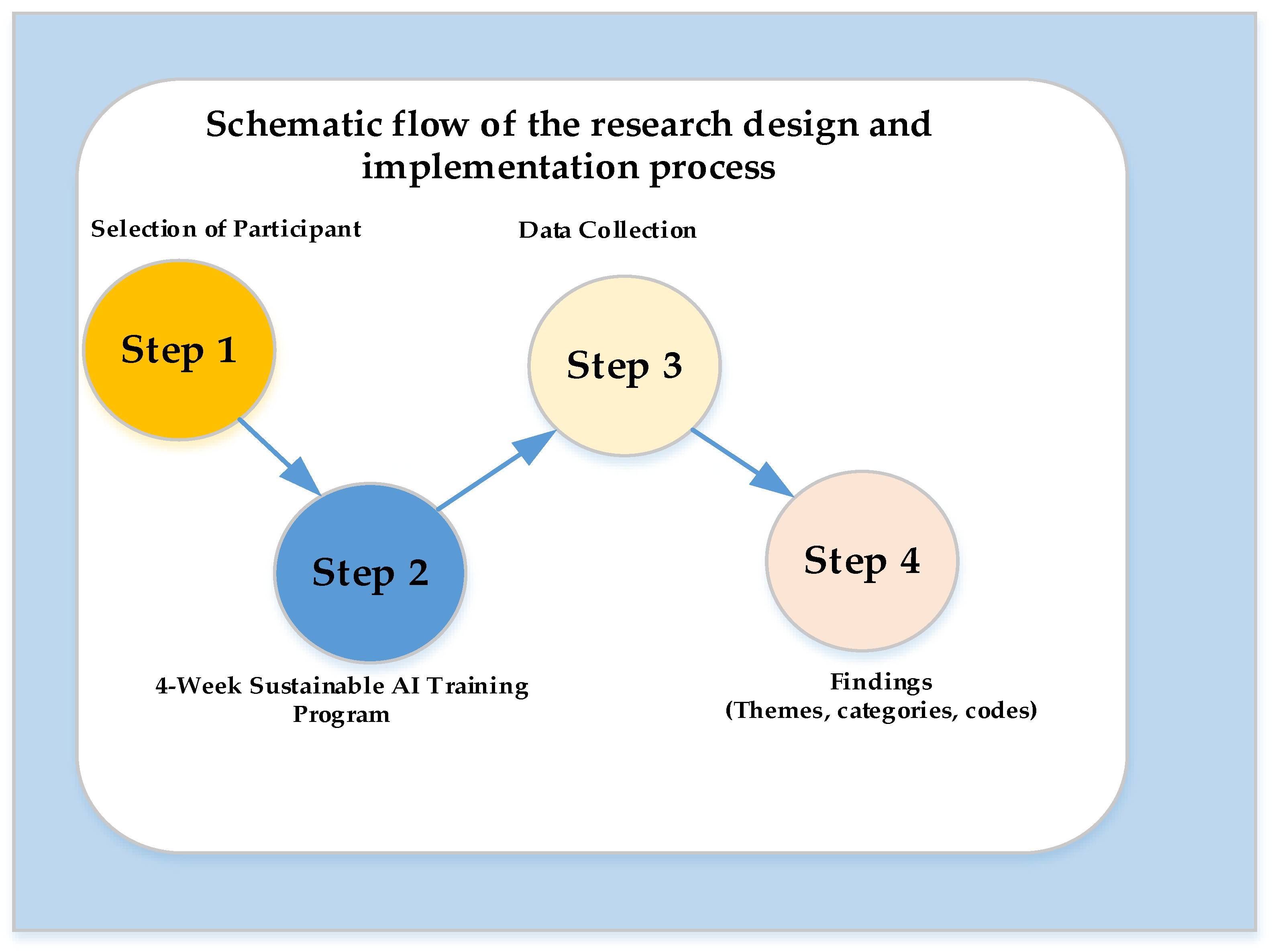
Figure 1 illustrates the overall research process, including participant selection, the four-week structured Sustainable AI Training Program, data collection through methodological triangulation, and inductive thematic analysis. This schematic representation provides a holistic overview of how the study progressed from intervention to interpretation.

3.1. Participants

The study group consists of 38 teachers working in state schools affiliated with the Ministry of National Education in Turkey during the 2025–2026 academic year. Participants were selected using maximum diversity sampling, one of the purposive sampling methods, to provide rich data appropriate to the focus of the study [49,50]. To implement the maximum diversity sampling strategy, an initial pool of approximately 62 teachers who had participated in the Sustainable Artificial Intelligence Training Program organized by researchers and affiliated institutions was identified. From this pool, participants were purposefully selected to ensure diversity across key characteristics such as teaching fields (preschool, elementary school, science, Turkish, and social studies), years of professional experience, and gender. The selection process aimed to capture a broad range of perspectives rather than focusing solely on statistical representativeness. Teachers meeting the inclusion criteria were first filtered, and then a balanced distribution across the defined diversity dimensions was ensured. As a result, 38 teachers representing maximum diversity across these characteristics were included in the study. Participants were selected through an invitation process conducted in collaboration with school administrations affiliated with the Ministry of National Education. First, teachers who met the study’s participation criteria were invited to participate. Participation in the study was entirely voluntary. Participants were purposefully selected based on predefined criteria to obtain information-rich cases. The main selection criteria were that teachers had previously received training in AI use and had actively used AI-supported applications in their classrooms for at least one year. Overall, 22 participants were female, and 16 were male, ranging in age from 23 to 38. The distribution by subject area was as follows: preschool (n = 12), classroom teaching (n = 9), science (n = 7), Turkish language (n = 5), and social studies (n = 5). In terms of professional experience, 17 teachers had 1–3 years of experience, 12 had 3–5 years, and 9 had 5 years or more. The research was conducted on a voluntary basis, the necessary ethical approvals were obtained, and participants were anonymized and coded as (T1, T2 … T38). The research process strictly adhered to various ethical principles, in addition to obtaining approval from the ethics committee. Participation in the study was entirely voluntary, and informed consent was obtained from all participants prior to data collection. Participants were clearly informed about the purpose of the study, the procedures to be followed, and their right to withdraw from it at any stage without facing any adverse consequences. To protect privacy and confidentiality, no personally identifiable information was gathered, and all data was coded and kept safe. Additionally, audio recordings and written data were used solely for research purposes and were not shared with third parties. During the reporting process, care was taken to present findings in a manner that prevents the identification of participants and protects their professional and personal integrity. The implementation process is outlined in Table 1.
Teachers’ opinions were gathered not through a purely theoretical discussion, but following a four-week educational intervention specifically designed for the study. The training program was designed and implemented directly by the researchers. Throughout the four-week process, the researchers actively facilitated theoretical sessions, guided practice-based activities, and monitored participants’ reflections through their diaries. This direct involvement enabled the researchers to ensure consistency in content delivery and to closely observe participants’ developmental processes. This program consisted of the following stages: the life cycle and ecological costs of AI systems (Red vs. Green AI) in the first week, the hidden environmental costs of digital technologies in the second week, the restructuring of lesson plans with sustainability-focused TPACK integration in the third week, and the design of sustainable AI awareness projects for students in the fourth week. This structured context prepared the ground for teachers to translate their sustainable pedagogical decision-making processes into action.

3.2. Data Collection Tools and Data Collection Process

In this study, methodological data triangulation was used to reveal teachers’ thoughts on how to integrate the sustainable use of AI into classroom teaching processes in a multidimensional way. Data triangulation is one of the fundamental validity strategies that strengthens the consistency of research results [49]. Semi-structured interviews and researcher and participant diaries were used together to increase the credibility of the research and the consistency of the findings.
Semi-Structured Interviews: In order to thoroughly determine teachers’ ethical awareness regarding AI use, their pedagogical decision-making processes, and their sustainability-focused classroom approaches, researchers developed a semi-structured interview form. The content of the form was reviewed by four academics specializing in educational sciences, teacher education, educational technologies, and assessment for its scope and research purpose, and finalized. The semi-structured interview form is presented in Appendix A. The use of a semi-structured interview form was preferred because it allows participants to express their experiences within their own contexts and enables the in-depth and comprehensive identification of perception, interpretation, and implementation processes related to the phenomenon under investigation [48,49]. During the interviews, probing questions such as “Can you explain your thoughts on this with an example?” were asked as appropriate to help teachers concretize their experiences and pedagogical decisions within their own contexts. In addition to the semi-structured interview form as a data collection tool, researcher diaries were used to observe teachers’ classroom practices throughout the training process. In addition, all semi-structured interviews were conducted following completion of the four-week educational intervention program. Consequently, the interviews allowed participants to reflect in depth on their experiences, the transformations they underwent, and their pedagogical decision-making processes following the structured training.
Researcher Diaries: Going beyond the structured views expressed in the interviews, researcher diaries were used to directly observe teachers’ reflections throughout the training on sustainable AI use. These diaries were used to reflect participants’ experiences and awareness development throughout the process.
Participant Diaries: Participant diaries were used to reflect the internal transformation and awareness developed by teachers regarding AI technologies and their ecological costs during the four-week training process from their own subjective perspectives. These diaries, containing individual reflections, enriched the data set by making visible the cognitive reasoning processes that cannot be directly observed and the pedagogical restructuring processes over time.
The diaries are an important data source that captures the participants’ evolving thoughts over time and makes visible the cognitive and ethical reasoning processes that the researcher cannot directly observe [51]. In this respect, the diaries contributed to tracking teacher agency and professional reflection regarding the sustainable use of artificial intelligence. Data triangulation, achieved by using multiple data sources in the study, aimed to increase the credibility and verifiability of the findings [52,53]. Data triangulation is one of the fundamental validity strategies that strengthens the consistency of research results by comparing information obtained from different methods and data types [49]. Thanks to this approach, teachers’ views, application behaviors, and individual reflections were analyzed together, developing a multi-layered understanding of sustainable AI use. In this study, data collection took place after the training program. This is because the primary objective of the study was not merely to describe teachers’ current status, but rather to conduct an in-depth examination of the processes of awareness, transformation, and pedagogical restructuring that emerged following the sustainable artificial intelligence training program.

3.3. Data Analysis

The multiple data sets obtained in this study (interview transcripts, researcher and participant diaries) were analyzed using an inductive thematic content analysis approach, in which patterns of meaning were extracted directly from the data without adhering to predetermined categories [48,54]. Face-to-face interviews with teachers lasted approximately 30–35 min, and all interviews were audio recorded and transcribed. Following the interviews, participants were asked to listen to their recordings again and confirm their statements, applying member checking. This practice is an important credibility strategy used to confirm the accuracy of participant statements and increase the extent to which the interpretations reflect participant experiences [50,53]. The inclusion of direct quotations from teacher statements in the findings section also strengthened the traceability of the interpretations based on the data. During the analysis process, all interview transcripts, researcher and participant diaries were read repeatedly to develop a comprehensive understanding of the research context. Subsequently, the texts were examined line by line, meaningful statements related to sustainable AI use were converted into open codes, and a data-driven coding approach was adopted [55]. MAXQDA 2020 qualitative data analysis software was used in the coding and data management process. In this study, MAXQDA 2020 was used as a systematic data organization, coding, and access environment to support the inductive analysis process. First, all interview transcripts and diary entries were imported into the software as separate document groups. Each data source was organized within MAXQDA to enable comparisons across data types. During the initial coding phase, meaningful units were identified through line-by-line reading, and open codes were assigned directly within the software. These codes were created inductively and improved over time by comparing them to each other. MAXQDA’s coding system enabled researchers to visually cluster similar codes and progressively develop higher-level categories and themes. While the software’s “Code System” and “Document System” functions were used to track relationships between codes and data sources, the “Selected Sections” function allowed researchers to review all excerpts associated with a specific code and ensure consistency in interpretation. Additionally, researchers examined code frequencies and distributions across different data sources using MAXQDA’s built-in analytical tools, which supported the identification of dominant patterns. Furthermore, MAXQDA facilitated the comparison of independently coded data segments during the inter-coder reliability process. Coded segments were reviewed within the software environment, and disagreements among coders were discussed by directly examining the associated data excerpts. This process provided transparency and traceability regarding how themes were derived from the raw data. After coding with the MAXQDA 2020 program, a comprehensive coding framework containing frequency and percentage values was created, and the distribution between themes was supported by quantitative indicators. To ensure coding reliability, two researchers independently coded 40% of the data set. The agreement rate between independent codings was calculated as 85%. In qualitative research, a concordance level of 80% or above is considered an acceptable indicator of reliability [54]. Therefore, the remaining data set was coded by one researcher. Discordant codes were discussed among the researchers and reorganized based on consensus, and the agreed-upon codes and themes were used in the final analysis. This process was conducted using a controlled analysis approach that strengthened the dependability of the research [53]. To increase the reliability of the findings, the interview data were compared with the researcher and participant diaries, thus cross-validating the data sources. In addition, some of the findings were read back to the participants to obtain feedback on the accuracy and clarity of the interpretations. This feedback, obtained through participant validation, was used to assess whether the researcher’s interpretations reflected the participants’ actual experiences [50]. In the later stages of the analysis process, it was observed that no new codes emerged, existing codes were repeated, and thematic patterns stabilized. The repetition of similar themes indicates a decrease in new information production and the attainment of data saturation. Data saturation is one of the fundamental criteria used in qualitative research to decide when to terminate the data collection process [56]. Accordingly, it was concluded that the themes obtained in the study were sufficient to represent the phenomenon.

4. Results

The findings obtained from the content analysis are presented in five thematic subsections. Each subsection focuses on a specific dimension of teachers’ experiences and decision-making processes regarding sustainable AI use, including pedagogical transformations, decision criteria, environmental awareness, instructional planning, and recommendations.

4.1. Changes in Teachers’ Pedagogical Approaches to AI Use

This subsection presents the changes in teachers’ pedagogical approaches to AI use following the training program, focusing on their shift from task-oriented to purpose-driven practices.
Table 2 shows that nearly all of the 38 participants adopted the question “Is it necessary?” as a pedagogical filter in the use of artificial intelligence. This high frequency proves that the awareness created by the training module among teachers is not accidental, but rather indicates a strong trend toward “purpose-driven transformation” shared across the group. Participants stated that they began to question the necessity of its use in line with pedagogical goals, rather than positioning AI as a tool used directly and intensively. For example, classroom teacher T4 stated, “…in the processes within the classroom, I will shift from the question ‘how do I use AI tools?’ to ‘why should I use them?” They stated that this change brought about a more conscious and selective approach in instructional decision-making processes…”. Science teacher T9 said, “Before the training, I evaluated AI tools more in terms of pedagogical efficiency, speed, and content production capacity. I actively used AI in processes such as preparing experiment handouts, generating alternative questions, adapting activities to different levels, and analyzing student responses, especially in science lessons. However, in my practice of using these tools, environmental aspects such as energy consumption, water usage in data centers, carbon footprint, or hardware e-waste production were almost completely absent. I was thinking about AI literacy in terms of technical, ethical, pedagogical, and critical dimensions, but the “ecological cost” remained an invisible area in this framework…”. The change in teachers’ understanding of efficiency was also reflected in the participants’ and researchers’ diaries. For example, in T12’s daily, “…I used to think that getting an activity plan from ChatGPT in seconds was a professional achievement. Today, when I consider the water and energy costs behind this action, I now question whether this plan is really necessary…” In the researcher diaries, the emotional change experienced by teachers while discussing the concepts of speed and efficiency was clearly observed. In the note at the end of the second week of the researcher diaries, “…I observed in the participants’ (especially T9 and T12) expressions that their initial proud attitude of ‘the fastest user of technology is the best’ gave way to deep astonishment and a slight sense of guilt after seeing the energy cost data. Ö12’s question, “While I thought I was doing something useful, was I actually harming the planet?” symbolized the moment when the AI in the classroom evolved into a cautious responsibility…” Teachers’ confrontation with invisible ecological costs triggered a deep professional reckoning within them. The astonishment and slight guilt experienced by T9 and T12, who had viewed their ability to quickly use AI before training as a source of ‘professional success’ and ‘pride,’ after being confronted with the energy data, is the most obvious sign of this internal reckoning. T12’s reaction, “I thought I was doing something useful, but was I actually harming the planet?”, is a striking example of how the ‘ecological blindness’ [11] discussed in the literature is broken in teacher practice. This moment of breaking represents a moment of ‘triggered ethical awakening’ [27,45], when the teacher stops seeing AI as a neutral tool that only provides benefits and realizes that their actions have planetary consequences. It has been determined that the understanding of efficiency is not limited to speed and time savings but is redefined by the joint assessment of ethical responsibility, learning quality, and environmental impacts. Awareness of the invisible ecological costs of AI systems, such as energy consumption, water usage, and carbon footprint, has increased. In line with this awareness, it has been understood that teachers tend to reduce unnecessary digital consumption by optimizing queries, creating shorter and more purpose-driven requests, and using selected content that supports the learning process instead of long outputs. Social studies teacher T13 stated, “…In the past, when students asked questions, I would directly obtain content from AI and project it onto the screen. Now, I first brainstorm with the students, then complete the missing points with a shorter and more targeted prompt…” These statements show that AI is being repositioned as an auxiliary element that supports students’ thinking processes rather than a tool that directly produces content in the teaching process. It is seen that pedagogical balance is being sought through practices such as brainstorming before class, creating joint outputs, and limiting the duration and scope of use. In this process, it was determined that the role of the teacher has also transformed from a technology consumer to a guide who regulates the learning process, and that instilling a culture of “less but effective use” in students is considered part of their professional responsibility. Some participants stated that they would begin to integrate the relationship between sustainability and technology into their course content, include discussions on environmental costs in discipline-based activities, and, in some cases, turn to low-cost alternative methods such as peer assessment, manual editing, and the use of open-source materials instead of artificial intelligence. Overall, the findings reveal that the training process did not merely increase teachers’ technical competence but also fostered a more critical and sustainable professional awareness that integrates pedagogical, ethical, and ecological responsibilities related to AI use.

4.2. Criteria Guiding Teachers’ AI Use Decisions

This subsection examines the criteria that teachers consider when deciding whether and how to use AI tools in their classroom practices.
Table 3 shows that teachers will now adopt a multidimensional evaluation process when deciding to use AI tools in their lessons. Participants primarily consider pedagogical justification as the fundamental criterion, stating that they question the use of AI in terms of “contributing to real learning” and “alignment with learning objectives,” and consciously avoid uses that only increase speed but do not create depth of learning. For example, classroom teacher T10 described this situation as follows: “…I used to routinely use tools like ChatGPT when writing activity plans. However, now, if I can produce the same plan myself in a short time or use existing material with a minor revision, I will not opt for AI use. Because every query means a processing load and therefore energy consumption…” Similarly, preschool teacher T1 stated, “…Before training, my main criterion for using AI was ‘time savings’. Now, I will try to strike a balance between time savings and environmental costs. If a use saves me 5 minutes but requires significant processing power, I will reevaluate that use…” Science teacher T9 also stated, “… If I am going to use AI to generate hypotheses in the process of designing experiments with students, I will evaluate whether this deepens the learning process. Producing something that requires high processing power just to save time or to produce ready-made content no longer seems like a sufficient pedagogical justification to me…” However, it was observed that environmental sustainability was included in the decision-making process, that unnecessary and computationally intensive production would be limited in line with awareness of invisible costs such as energy consumption and carbon footprint, and that the principle of minimal and necessary use was adopted. Participants do not consider time savings alone to be a sufficient justification, they have stated that they will strive to strike a balance between efficiency and sustainability, aiming to produce fewer but pedagogically high-quality outputs. In this context, it has been stated that query management and optimization strategies have been developed, and that digital consumption will be reduced by writing single, well-structured queries, reducing repetitive production, and limiting output volume. Social studies teacher T2 stated, “…If an activity can be done without using AI, I will prioritize methods such as face-to-face discussion, collaborative learning, or primary source analysis…” Similarly, mathematics teacher T6 stated, “…Instead of generating 50 different questions for a math skill, I will prefer to generate 8–10 high-quality questions appropriate for the teaching objective and discuss them in depth. Instead of constantly requesting re-production, I will use a single, optimized prompt…” It was understood that teachers would also prioritize alternative pedagogical methods over artificial intelligence, thus moving towards an understanding of technological minimalism. Awareness has also developed regarding ethical responsibility and data management, data privacy, and minimum data sharing, and sustainability criteria in platform selection have been considered. In addition, it has been observed that teachers position themselves as guides offering a sustainable usage model to students, aiming to foster digital citizenship awareness by bringing topics such as energy costs and conscious technology use into classroom discussions. Finally, some participants pointed to a collective sustainability approach that goes beyond the individual level, questioning school/institutional policies and aiming to reduce reproduction through shared materials. Turkish teacher T16 stated, “…When we get help from artificial intelligence, could there be an invisible energy cost?” I think this discussion will contribute to raising conscious individuals who question technology. When using AI tools in my lessons, I will now pay attention to the environmental dimension in addition to the ethical issues I previously considered…” These findings reveal that decisions regarding the use of AI have evolved from being a technical choice to a comprehensive evaluation practice that integrates pedagogical, ethical, and ecological responsibilities.

4.3. Impact of Environmental Cost Awareness on Decision-Making

This subsection explores how teachers’ awareness of the environmental costs of AI influences their classroom decision-making processes.
Table 4 shows that awareness of the environmental costs of AI technologies, such as energy and water consumption, will lead to a significant reframing of teachers’ decisions regarding classroom use. Participants stated that they now evaluate AI use through a pedagogical necessity filter based on the question “Is it really necessary?” and that information about environmental costs will become a criterion included in the decision-making process. Science teacher T19 stated, “…After gaining awareness of the environmental costs of AI technologies, such as energy and water consumption, I can say that I experienced a clear mental shift in my classroom usage decisions. Previously, I mostly evaluated AI tools in terms of pedagogical efficiency, time savings, and content diversity. However, after this training, knowing that every use creates energy consumption and an indirect carbon footprint in the background added a new ethical and ecological dimension to my decision-making process…” Social studies teacher T16 also stated, “…Before becoming aware of this, I used AI tools quite frequently, especially in processes such as lesson planning, question generation, and creating instant explanations. We even produced short content together with students in class. But now, when using AI tools, I will ask myself this question: Is this use truly pedagogically necessary, or am I choosing it simply because it is convenient? I will decide whether to use it or not based on the answer to this question…” stated. During the research process, teachers’ acquisition of ecological awareness was not a linear and smooth process; a distinct emotional transition phase was experienced. As reflected in the researchers’ diaries (Week 3), participants such as T2 and T16 initially perceived the usage restrictions as a threat to their professional efficiency and showed a tendency to protect their habits, stating, “All these details discourage us from using technology.” However, this resistance broke down when they experienced the quality output of a single optimized prompt, giving way to a feeling of “relief”. This situation shows that the ecological awakening among teachers occurred not only through the transfer of theoretical knowledge, but also through the experience that digital minimalism is more pedagogically satisfying. In this direction, a tendency to strike a balance between pedagogical benefit and ecological burden has emerged. The use of AI has been repositioned as a decision area involving ethical and environmental responsibility, rather than being a technical or practical preference. It has been determined that increased awareness has led not to a complete abandonment of usage frequency, but to a conscious reduction. Teachers have developed collective and planned usage strategies instead of fragmented and momentary queries, avoided repetition, and optimized processes with fewer but higher-quality requests. Approaches based on production economics, such as reusing and adapting produced content, evaluating existing materials, and turning to manual preparation or low-digital-intensity alternatives, have also attracted attention. For example, mathematics teacher T23 stated, “…Whereas I used to produce separate problem sets for 8th grade learning outcomes, I now create a multi-level question pool with a single optimized prompt and use it over a long period of time. This reduces the number of interactions with the system. But I don’t intend to stop using it completely. My only goal is to succeed in acting from a perspective of efficiency…” The role of AI in the classroom has also been redefined, shifting from a tool that directly produces content to a model where it is used as an auxiliary tool that supports the teacher’s thinking. It has been stated that applications that prioritize student production, group-based work, and physical activities will be preferred more. In addition, teachers stated that they aim to develop digital and ecological sustainability awareness in students, that they will bring the environmental impacts of AI use into classroom discussions, and that they will position themselves as role models who demonstrate conscious usage behavior. For example, preschool teacher T26 said, “… I was producing outputs from AI tools for many activities. However, I will now start to refocus on child-centered physical materials. We will now design cards with the children using recycled materials. I will carry out activities related to the correct use of technology, and I plan to mention the possible harms of using AI tools in order to raise awareness…” These findings reveal that environmental cost awareness will transform AI usage into a pedagogically justified, planned, and sustainable usage culture rather than reducing it.

4.4. Planned Instructional Adjustments for Sustainable AI Use

This subsection presents the instructional adjustments teachers plan to implement in order to ensure sustainable AI use in their lesson planning.
Table 5 shows that teachers plan to make conscious and systematic adjustments to their lesson plans in order to use AI tools more sustainably after the training. Participants stated that they adopted a necessity-based decision-making approach, evaluating the use of AI before each activity by asking, “Is it really necessary?” They also indicated that they considered adding explanatory sections to their lesson plans that highlight the pedagogical contribution, environmental cost, and alternatives of using artificial intelligence. In this process, practices aimed at reducing unnecessary and habit-based use, developing bulk and planned usage strategies instead of instant and fragmented queries, preventing re-production by reusing generated content, and ensuring output optimization with fewer but higher-quality prompts have come to the fore. For example, classroom teacher T15 stated, “…Previously, when preparing weekly plans, I would generate separate content for each lesson. Now, I plan to use bulk and optimized prompts to get structured output in one go. I will also use existing textbooks and materials from my own archive instead of AI for simple learning outcomes. I will also ask students to use AI for specific tasks rather than for every assignment…” Furthermore, the limitation of productions requiring high processing power, the conscious imposition of quotas on frequency of use, and the reflection of the digital minimalism approach—which prioritizes measured technology use—in the plans have been noteworthy. Within the scope of pedagogical sustainability, teachers showed a tendency to turn to alternative teaching methods, focus on student production, and position AI as an auxiliary tool that provides feedback and editing support rather than a tool that directly produces content. Furthermore, integrating ecological and ethical dimensions into course content, developing environmental awareness among students, designing activities linked to sustainability outcomes, and discussing AI usage decisions with students to foster a shared culture of responsibility were among the planned applications. Another classroom teacher participating in the research, T16, stated, “…I realized that I needed to model the sustainability dimension of education not only at the content level but also at the application level. When explaining environmental responsibility to students, it would be inconsistent for me to remain dependent on high-energy-consuming tools in my own teaching practices. Therefore, I now plan to have students write their own stories first in story-writing activities and use AI only as a feedback tool. Additionally, in projects requiring visual production, instead of creating separate visuals for each student, we will produce a shared example and analyze it as a class. I will also increase the use of physical materials in activities like STEM to reduce the need for digital production…” These findings reveal that teachers are moving towards a planned and sustainable teaching design that integrates pedagogical purpose, resource efficiency, and environmental responsibility, rather than a superficial limitation on AI use.

4.5. Teachers’ Recommendations for Sustainable AI Integration

This subsection outlines teachers’ recommendations for integrating AI into classroom practices in a sustainable and environmentally responsible manner.
Table 6 shows that participants’ suggestions for the use of sustainable AI that takes environmental impacts into account are concentrated in the dimensions of pedagogical necessity, digital minimalism, classroom sustainability pedagogy, institutional regulation, and ethical awareness. Teachers emphasized that AI should not be used automatically as a solution tool, but should only be employed when there is a genuine pedagogical need, and should be positioned as a supporting component rather than the centerpiece of the lesson. In this regard, it was recommended that its use be planned temporally, that purposeful production be carried out in a single session, that trial-and-error-based repetitions be reduced, that existing materials be improved and reused, and that duplicate production be prevented by creating shared content pools. Participants also noted the need to limit visually intensive productions requiring high processing power, avoid unnecessary data storage, and adopt practices that reduce digital consumption. In classroom applications, it was recommended to preserve low-energy alternative teaching methods (such as discussion, drama, drawing, and nature-based learning), to develop awareness among students about the invisible energy and carbon costs of artificial intelligence, and to address conscious usage behavior as a pedagogical goal. In addition, it was stated that sustainable AI use should not be limited to individual efforts, that guiding principles should be developed at the school level, that the ecological responsibility dimension should be systematically integrated into teacher training on AI literacy, and that institutional application consistency should be ensured. Another point emphasized by the participants was the need to approach technological innovations critically and cautiously, questioning the necessity and alternatives before each use. For example, classroom teacher T1 stated, “…When I learned that cloud storage also consumes energy, I realized that the habit of accumulating unnecessary files should be abandoned…” Similarly, social studies teacher T17 stated, “…The savings of a single teacher may be limited. However, if a conscious usage policy is established throughout the school, the impact will be greater…” Science teacher T2 stated, “…Teachers and students should acquire effective prompt writing skills. Furthermore, organized usage is more sustainable than unplanned and intensive individual usage…” … And Turkish teacher T4 stated, “…Digital tools should not eliminate pedagogical diversity. Furthermore, students should not only be users but also conscious digital citizens…” In the final week of the training, the researcher’s diaries indicate that the pressure on teachers to keep up with technology has decreased and been replaced by professional confidence. For example, “… Teachers now seem to have overcome the anxiety of being passive consumers of technology. In particular, the excitement on T26’s face as he described his plan to combine AI with recycled materials in the classroom shows that sustainability is perceived as a ‘creative space’. As a researcher, I have concretely observed that teachers develop suggestions in a collective solidarity and trust, saying to each other, ‘We don’t have to do this, we can use less energy this way’…” These findings reveal that the sustainable use of AI requires a holistic change supported not only by technical regulations but also by pedagogical choices, institutional policies, and ethical awareness.

5. Discussion

This study was conducted to determine teachers’ views on integrating sustainable AI use into classroom teaching processes. For this purpose, a Sustainable AI Education Program was developed. Teachers from different disciplines participated in this training program. During this training process, researchers and participants kept diaries. At the end of the training, data was collected through semi-structured interviews with the participating teachers. These data were described through content analysis.

5.1. Changes in Teachers’ Pedagogical Approaches to AI Use

The findings of this study show that there has been a clear paradigm shift in teachers’ pedagogical approaches to the use of AI. The shift of participants from the question “how do I use it?” to “why should I use it?” after the training aligns with the human-centered and critical AI approach emphasized in the literature in recent years. Holmes and colleagues (2022) state that AI in education should be positioned not as a productivity tool independent of pedagogical purpose, but as a system that empowers human agency and supports instructional decisions [57]. Similarly, Selwyn (2022, 2023) argues that using generative AI tools in education based on speed and automation logic can lead to pedagogical reductionism, and therefore a critical filter is needed [27,58]. In this study, teachers’ repositioning of AI not as a direct content-producing authority but as an auxiliary tool supporting students’ thinking processes shows a strong parallel with the aforementioned theoretical frameworks. Another finding that emerged in the research is the redefinition of the concept of efficiency. While participants evaluated AI in terms of speed, time savings, and content production capacity before the training, after the training, they developed a holistic approach that also took into account ethical responsibility, learning quality, and environmental impact. This change is consistent with the assessments of Kasneci and colleagues (2023) regarding the opportunities and risks that large language models offer in education [59]. The authors note that LLMs can only produce pedagogical benefits with conscious limitation and guidance. Crompton and Burke’s (2023) systematic review of AI research at the K-12 level also reveals that applications are mostly evaluated in terms of learning outcomes and performance improvement, while the sustainability dimension is largely neglected [60]. In this context, the current study is considered to fill an important gap in the literature by addressing the concept of efficiency alongside ecological responsibility. Teachers’ awareness of the hidden costs of AI systems, such as energy consumption, data center water usage, and carbon footprint, can also be linked to discussions on the environmental impact of machine learning. The carbon footprint of large language models presented by researchers such as Strubell et al. (2019), Henderson et al. (2020), Patterson et al. (2021), and Luccioni et al. (2022) has highlighted the carbon footprint of large language models and the Green AI literature, which has largely remained within the domain of computer science and macro-level policymakers to date [12,61,62,63]. The most significant novelty this research contributes to the field is that it takes the ecological cost of AI (water consumption, energy expenditure, and carbon footprint) out of the realm of abstract technological and engineering discussions and transforms it into a ‘concrete pedagogical micro-design variable’ that teachers take into account in their lesson plans, material choices, and classroom practices. Indeed, in our research, teachers moving beyond the mere motivation of saving time to engage in query optimization, creating single, targeted prompts to avoid redundant production, is the actual and actionable counterpart of these macro-scale global energy debates in classroom pedagogical practices. Teachers’ shift towards query optimization, creating shorter and targeted prompts, and avoiding unnecessary output production demonstrates that macro-level energy debates find their counterpart in the pedagogical sphere. The findings also point to a change in the role of teachers. UNESCO’s (2023) guide [57] on generative AI and the OECD’s (2023) [64] policy notes particularly emphasize the teacher’s role as a critical mediator and ethical guide. In this study, teachers positioning themselves as guides who regulate the learning process rather than as technology consumers is consistent with these international policy documents. However, the current research expands the framework by adding the dimension of ecological responsibility to this guiding role. Participants’ plans to integrate sustainability discussions into their course content and, in some cases, to prefer peer assessment or traditional methods over AI, demonstrate the development of a culture of conscious and balanced use, rather than technology opposition. In line with Selwyn’s (2023) critique of “techno-solutionism,” it can be said that a critical awareness has emerged regarding the avoidance of technology-dependent pedagogical approaches [58]. Ultimately, these findings show that AI literacy should not be limited to technical and ethical dimensions; the ecological cost dimension must also be integrated into teacher training programs. The study demonstrates that sustainable digital pedagogy is possible at the level of classroom practices and emphasizes that AI use requires a higher level of ethical and ecological sensitivity. In this respect, the research deepens the discussions in the educational technology literature on responsible and sustainable AI use through concrete teacher practices.

5.2. Criteria Guiding Teachers’ AI Use Decisions

The direct reflection of the macro-level global energy crisis on micro-level classroom practices is one of the most significant contributions this study offers to the literature. Indeed, teachers’ decisions to use AI tools have evolved from being a choice based solely on technical efficiency or time savings to a multi-layered evaluation practice that integrates pedagogical, ethical, and ecological dimensions. In particular, teachers’ statements such as “every query means a processing load and energy consumption” directly correspond to findings regarding the high energy consumption of large language models and deep learning systems. Strubell, Ganesh, and McCallum (2019) [12] and Patterson et al. (2021) [62] have shown that the training and use of large-scale language models generate significant carbon emissions, while Henderson et al. (2020) [61] argue that the carbon footprint of machine learning studies should be systematically reported. Calculations performed by Luccioni, Viguier, and Ligozat (2022) [63] on the BLOOM model have also made the concrete environmental costs of production processes visible. In this context, teachers’ decisions to avoid unnecessary and computationally intensive productions demonstrate that the sustainable AI approach discussed at the macro level in the literature is reflected in micro decision-making processes within the classroom. Van Wynsberghe’s (2021) [9] “Sustainable AI” framework emphasizes that AI must be sustainable not only for sustainability but also in terms of its own production and use processes. These findings show that the theoretical framework corresponds to the pedagogical practice level. Teachers’ refusal to view time savings as a sufficient justification on its own and their questioning of AI use based on its real contribution to learning and alignment with objectives parallels the critical literature on educational technologies. Selwyn (2022) [27] argues that digital technologies in education should be evaluated based on pedagogical value rather than narratives of inevitable progress; he proposes a critical stance against technological solutionism. Similarly, Macgilchrist, Allert, and Bruch (2020) [65] and Selwyn (2024) [34] note that low ecological impact and “degrowth” approaches are gaining increasing importance in scenarios regarding the future of educational technologies. UNESCO’s (2023) [57] guidance document on generative AI also emphasizes that AI use must be based on clear pedagogical justification and be consistent with ethical and sustainability principles. In this context, teachers’ preference for conducting activities that can be done without AI through face-to-face discussion and collaborative learning reflects an approach that positions technology not as a substitute for pedagogy, but as a tool serving pedagogical goals. This indicates a conscious departure from the superficial and demonstrative forms of use criticized in the literature as “AI theatre” [66]. The findings show that teachers develop strategies such as single and optimized requests, reducing repetition, and producing fewer but higher-quality outputs. This approach is consistent with discussions of digital minimalism and digital degrowth. In an educational context, digital degrowth advocates for the adoption of meaningful and measured use rather than increasing technological intensity [27,67]. In this study, teachers’ preference for focusing on fewer, high-quality questions rather than producing many questions indicates a pedagogical–ecological shift from quantity to quality. Thus, conscious limitation of digital production is adopted instead of its unlimited expansion, and a balance is established between pedagogical depth and environmental responsibility. Findings in the ethical and data management dimensions are also consistent with the existing literature. Bender and colleagues (2021) emphasized that large language models carry not only technical but also social and ethical risks, drawing attention to issues of data usage, transparency, and accountability [68]. UNESCO (2023) [57] has also established data privacy and minimum data sharing principles as the fundamental normative framework for the use of generative artificial intelligence. Teachers positioning themselves as role models for sustainable and conscious technology use among students demonstrates that AI use intersects with digital citizenship education. In this respect, the findings reveal that AI use is not only a matter of instructional design but also a matter of value transfer and social responsibility. Finally, the tendency of some teachers to shift their decision-making processes from the individual level to the institutional policy level shows that sustainability is understood as a collective responsibility. Hou (2025), who discusses the typology of AI integration in education, states that the policy and governance framework at the institutional level is decisive [69]. Similarly, the findings of this study show that the sustainable use of AI should not be limited to individual awareness; it must be supported by collective strategies such as sharing common materials, reducing reproduction, and reviewing school policies. Overall, these findings reveal that AI usage decisions have evolved into a new form of professional reasoning that integrates pedagogical competence, ethical responsibility, and environmental sustainability dimensions. This indicates that AI integration in education must be rethought around more conscious, justified, and sustainable technology use. Thus, teachers are positioned not merely as practitioners who use technology, but as responsible actors who reflect the ecological and ethical boundaries of the digital age in their pedagogical decisions.

5.3. Impact of Environmental Cost Awareness on Decision-Making

The research findings show that awareness of the environmental costs of AI tools creates a normative reframing in teachers’ pedagogical decision-making processes. This finding is consistent with the current literature highlighting the impact of AI on increasing global energy consumption and carbon footprint. For example, Pimenow, Pimenowa, and Prus (2024) note that the increasing computational power requirements of AI systems directly impact global energy consumption and create a new risk area in the context of climate change [70]. Similarly, Dere (2026) emphasizes that AI’s contribution to carbon emissions is often overlooked in policy and implementation discussions, defining this area as a neglected source of emissions [71]. Wang, Li, and Li (2024) empirically examine the impact of AI on the ecological footprint and energy transitions, drawing attention to the complex relationship between digitalization and environmental pressures [72]. These macro-level discussions are concretized at the micro-pedagogical level by making the question “Are teachers really necessary?” a decision filter in your work. The tendency toward optimization rather than reduction that emerges in your findings is also consistent with the energy-aware AI literature. Różycki, Solarska, and Waligóra (2025) define the development of energy-aware machine learning models as a fundamental requirement for sustainable artificial intelligence [73]. Hakimi, Tarashtwal, and Ghafory (2025) state that the Green AI approach should be based on the principles of less computation, less repetition, and more conscious model use [74]. In our study, teachers creating long-term content pools with single, optimized prompts, avoiding repetitive production, and developing planned usage strategies can be read as the practical counterpart of this theoretical framework in an educational context. Furthermore, studies highlighting the energy and water consumption aspects of AI also support your findings. Morain, Ilangovan, and Delhom (2024) systematically examine the effects of AI applications on water consumption and resource management, revealing that digital technologies should be evaluated not only in terms of energy but also in terms of their water footprint [75]. Ogundiran, Asadi, and Gameiro da Silva (2024) systematically address the effects of AI on energy efficiency and environmental quality, emphasizing that digital technologies must be considered alongside sustainability goals [76]. In the context of educational structures, Tariq et al. (2024) examine the use of complex AI models for energy sustainability in educational buildings, demonstrating that the field of education cannot be considered independently of energy debates [77]. When evaluated in light of this literature, the current study points to three important aspects. The findings show that the sustainable integration of AI in education is shaped not only at the technical infrastructure or policy level, but also in teachers’ micro decision-making processes. They indicate that sustainable AI pedagogy can be built through teacher awareness and ethical self-regulation.

5.4. Planned Instructional Adjustments for Sustainable AI Use

According to the research results, rather than superficially limiting the use of AI after training, teachers tend toward conscious, planned, and reasoned pedagogical restructuring. This situation parallels the pedagogical redesign approach proposed by Toha (2025) within the framework of sustainable higher education [78]. The fact that the teachers in the study ask the question “Is it really necessary?” before each activity is a concrete manifestation of the goal-oriented integration principle emphasized in the literature [79] at the classroom level. Furthermore, this questioning strongly aligns with the literature on digital minimalism, digital degrowth, and sustainable educational technologies. In particular, Selwyn’s (2024) digital degrowth approach emphasizes the need to adopt pedagogically and ecologically defensible uses of technology in education rather than its automatic expansion [33]. In this study, teachers developed planned, optimized, and collective usage strategies instead of habit-based and fragmented inquiries, which conceptually parallels Selwyn’s proposed radical sustainable educational technology perspective. Teachers’ use of collective and optimized prompts, reducing reproduction, and developing content reuse strategies demonstrates micro-level awareness towards reducing energy consumption and carbon footprint. This finding aligns with the recommendations of Shengjergji et al. (2024) and Zawacki-Richter and Cefa (2024), who highlight the invisible environmental costs of EdTech and suggest that carbon calculations should be made visible in an educational context [80,81]. Participants’ plans to limit high-computational-power productions, reduce reproductions, and optimize outputs relate to discussions on energy intensity and carbon footprint emphasized in the sustainable AI literature. Rapha (2024) states that technical, economic, and ecological dimensions must be considered together in the context of sustainable artificial intelligence, particularly noting the increased energy consumption of large-scale models [82]. De Chirico et al. (2024) highlight the invisibility of energy costs in the digital realm and recommend adopting minimalist and adaptive strategies [83]. Teachers’ approach of setting usage quotas and generating fewer but higher-quality requests aligns with the energy-sensitive design principles proposed in this literature. Findings indicate that teachers are beginning to treat environmental cost not as an abstract concept but as a concrete design variable at the planning level. In the context of pedagogical sustainability, teachers positioning AI as an auxiliary tool providing feedback and editing support rather than a direct content-generating tool aligns with responsibly orchestrated mediation approaches. Bakar and Tapsoba (2026) propose a “responsibly orchestrated mediation” framework for the use of AI in the classroom, emphasizing the importance of teachers maintaining pedagogical control [84]. Similarly, Wu, Zeng, and Song (2025) concluded that generative AI plays a supportive role in design education, but pedagogical goals must remain central [85]. The findings of this research show that teachers’ conscious choices to preserve pedagogical autonomy and center student production are consistent with the balancing models proposed in the literature. Integrating ecological and ethical dimensions into course content and discussing AI usage decisions with students is also related to the perspective of sustainability literacy. Ott (2024) argues that sustainability communication in the digital age requires not only content transfer but also the development of critical digital awareness [86]. Ambar and Sena (2025) show that the principles of energy efficiency and minimalism can be integrated into instructional design in AI-supported digital education designs [87]. In this context, the current findings reveal that teachers have begun to address sustainability not only at the subject level but also at the pedagogical modeling level. The emphasis on modeling in the findings reinforces the principle of pedagogical coherence, which is frequently mentioned in the literature. Teachers’ plans to balance the need for digital production by increasing the use of physical materials are parallel to studies that question the assumption that digitization is automatically sustainable. Baxter (2025) highlights the invisible environmental costs of cloud technologies, showing that digital solutions often result in high energy consumption based on material infrastructure [88]. Teachers in this study also appear to have developed a critical awareness that digital production is not always more environmentally friendly. This aligns with the call to make invisible costs visible, emphasized in discussions on sustainable AI [82]. Based on these findings, awareness training on environmental and invisible costs generally leads to a rethinking of the epistemological and ethical foundations of instructional design rather than a superficial technology restriction. When the pedagogical contribution of AI tools is evaluated alongside energy consumption and alternatives, teachers position technology use not as an automatic indicator of innovation, but as an area of decision-making that requires responsibility. This situation highlights the need for structured approaches to sustainable AI literacy in teacher education programs.

5.5. Teachers’ Recommendations for Sustainable AI Integration

Sustainable AI use necessitates an institutional and systematic transformation beyond individual ethical preferences. The study found that teachers position technology integration not merely as a technical issue but as a holistic transformation area within the context of pedagogical justification, digital minimalism, institutional policy development, and ethical responsibility. This aligns significantly with the current literature on how AI is addressed in teacher education. Daher’s 2025 thematic review of AI in the context of teacher education emphasizes that AI literacy should be approached within an expanded framework that includes critical and ethical dimensions, not merely technical skills [89]. Similarly, Ariza and Mountford (2025) state that AI literacy must be integrated with the principles of sustainability and inclusivity, drawing attention to the importance of keeping pedagogical design central in teacher preparation programs [90]. These findings directly align with the participants’ emphasis that “AI should be a supporting component, not the center of the lesson.” Findings related to environmental cost and invisible energy awareness are also parallel to the sustainable AI literature. De Chirico and colleagues (2024) advocate for the development of design strategies for energy sustainability in the digital realm, specifically recommending the critical evaluation of applications requiring high processing power [83]. Participants’ suggestions to limit visually intensive productions requiring high processing power and avoid unnecessary cloud storage are consistent with these studies. These findings show the reader that teachers now view environmental sustainability not as a macro-level policy debate but as part of micro-pedagogical decisions within the classroom. The dimensions of digital minimalism and conscious use are also reflected in the literature. Ott (2024) argues that a new literacy paradigm is needed in the context of sustainability communication in the digital age and that the critical, measured, and purposeful use of digital tools has become a pedagogical necessity [86]. Ambar and Sena (2025) suggest integrating energy efficiency and minimalism into instructional design in sustainability-focused educational design [87]. Participants’ suggestions, such as purposeful production in a single session, reducing trial-and-error repetitions, and creating shared content pools, demonstrate that digital minimalism can be transformed into a pedagogical strategy. This situation reveals that the use of sustainable AI must evolve from individual awareness to institutional collaboration. From the perspective of classroom sustainability pedagogy, the findings show that the environmental impacts of AI can be made a direct teaching goal. Capecchi et al. (2025) reveal that AI-supported applications can be used to develop sustainable consumption and digital literacy [91], while Wu, Zeng, and Song (2025) state that generative AI can be integrated into pedagogical models in the context of sustainable design education [85]. Osman (2026) emphasizes that AI literacy should be linked to sustainable development goals [92]. The participants’ views on educating students not only as users but as conscious digital citizens are consistent with this literature. This finding shows that the use of sustainable AI is a pedagogical goal that encompasses not only teacher behavior but also the development of students’ values and attitudes. Finally, the emphasis on the need for institutional regulation and policy, when evaluated together with participant views pointing to the limitations of individual action, aligns with calls for systemic transformation in the literature. Mahajan (2025) emphasizes the importance of structural regulations when discussing the effects of AI on cognitive and social sustainability [93]. Carrillo et al. (2025) state that teacher education programs need to be restructured within an institutional framework [94]. In this context, the findings clearly show that the sustainable use of AI cannot be limited to individual ethical preferences; it must be supported by school policies, teacher education curricula, and institutional guiding principles. Overall, based on these findings, it offers a unique contribution that is consistent with the current literature, which extends AI literacy from technical skills to the dimensions of ecological and ethical responsibility, and concretizes it through teacher experiences.

6. Conclusions

This study was conducted to examine teachers’ views on integrating the sustainable use of artificial intelligence (AI) into classroom teaching processes, particularly in the context of the tension between human-centered efficiency and environment-centered sustainability. The findings clearly demonstrate that the research objective was achieved and that the study successfully addressed its central research question. First, the results indicate that teachers have undergone a significant shift in their pedagogical reasoning regarding AI use. Participants have begun to adopt a critical decision-making framework focused on the question “Is this approach really necessary?” rather than merely focusing on efficiency, speed, and content production. This shift demonstrates that the educational intervention effectively fostered a deeper awareness of the ethical and ecological dimensions of AI use. Second, the study reveals that awareness of ecological costs—particularly regarding energy consumption, water usage, and carbon footprint—has become an integral part of teachers’ instructional decision-making processes. This finding directly addresses the research objective of examining how sustainable AI perspectives can be integrated into classroom practices. Third, teachers’ practices have evolved from habitual and intensive use toward a more planned, optimized, and minimal use of AI tools. Strategies such as command optimization, reuse of generated content, and prioritizing low-tech alternatives signal a transition toward sustainable digital pedagogy. Overall, the findings indicate that the integration of AI in education should be evaluated not merely as a technical or efficiency-focused process but as a multidimensional pedagogical design issue that encompasses ethical responsibility and ecological sustainability. This study contributes to the literature by demonstrating that sustainable AI use can be implemented at the micro-level of classroom practices through teachers’ awareness and initiative. In conclusion, the study confirms that raising awareness of AI’s environmental costs can trigger a meaningful transformation in teachers’ pedagogical orientations. However, sustaining this transformation requires long-term support through institutional policies, teacher education programs, and continuous professional development initiatives.

7. Limitations of the Study

This study aimed to reveal teachers’ views, intentions, and pedagogical planning regarding the sustainable use of artificial intelligence. The dataset relies heavily on teachers’ self-reports. Although the data was triangulated with researcher observation reports, the actual energy savings, water footprint, or reduction in digital carbon emissions generated in the classroom by teachers’ digital minimalism or query optimization strategies were not quantitatively measured. Furthermore, the research implementation process is limited to a four-week structured training and reflection program. Whether participants’ behavioral intentions, such as using pedagogical filters or turning to alternative low-tech methods instead of AI, are sustainable in the long term is beyond the scope of this study. Longitudinal designs are needed to determine whether old habits are resumed over time. These constitute the limitations of this research.

8. Recommendations

Based on the research findings, the following recommendations have been developed for teachers, school administrators, teacher training programs, and future research in order to ensure sustainable AI integration in classroom teaching processes:
Recommendations for Teachers:
  • Teachers should use the question “Is using this tool pedagogically necessary, or can the same results be achieved with low-tech alternatives?” as a self-assessment criterion before incorporating AI tools into their lesson plans.
  • Single, structured prompt strategies that reduce energy costs should be adopted instead of instant and fragmented in-class queries. Furthermore, unnecessary visual and video productions requiring high processing power should be limited, and any text-based materials produced should be archived for reuse in different contexts.
Recommendations for Institutions and School Administrators:
  • The production of repetitive content via AI by different teachers in the school for the same or similar learning outcomes creates a hidden ecological cost. A shared “AI Content Archive” should be established among school departments to reduce unnecessary energy consumption at the institutional level.
  • School administrations should develop institutional guiding principles that question not only data privacy but also the energy intensity and sustainability transparency of the AI tools used in decisions regarding digital platform and technology integration.
Recommendations for Policymakers and Teacher Training Programs:
  • In current pre-service and in-service teacher training programs, AI literacy is mostly taught in terms of technical skills and academic integrity. Education policies should be updated to make the issue of invisible environmental costs, as indicated by the findings, an integral part of technology integration courses as an eco-digital citizenship and ethics module.
Recommendations for Future Research:
  • This study focused on teachers’ statements and plans regarding the sustainable use of AI. Future research should include experimental studies measuring the actual carbon and energy footprint differences between different classes implementing Red AI and Green AI strategies.
  • Longitudinal studies examining students’ cognitive awareness levels regarding the environmental costs of AI and the impact of this on their technology usage habits will make significant contributions to the field.

Author Contributions

Conceptualization, H.U. and M.U.; methodology, H.U. and M.U.; validation, H.U. and M.U.; formal analysis, H.U. and M.U.; investigation, H.U. and M.U.; resources, H.U. and M.U.; data curation, H.U. and M.U.; writing—original draft preparation, H.U. and M.U.; writing—review and editing, H.U. and M.U.; visualization, M.U.; supervision, H.U. and M.U.; project administration, H.U. and M.U.; funding acquisition, H.U. and M.U. All authors have read and agreed to the published version of the manuscript.

Funding

This research received no external funding.

Institutional Review Board Statement

The study was conducted in accordance with the Declaration of Helsinki, and the ethics committee report required for the research was obtained from the Fırat University Social and Human Sciences Research Ethics Committee (date: 15 January 2025; document number: 217816).

Informed Consent Statement

Informed consent was obtained from all subjects involved in the study.

Data Availability Statement

Due to the qualitative nature of the data (including interview transcripts and participant diaries) and ethical considerations regarding participant confidentiality, the dataset is not publicly available. However, the corresponding author can provide the data presented in the article in anonymized form upon reasonable request.

Conflicts of Interest

The authors declare no conflicts of interest.

Appendix A

The Semi-Structured Interview Form

  • How has your general approach to the classroom use of artificial intelligence tools changed after the training process?
  • What criteria will you now consider when deciding to use artificial intelligence tools in your lessons?
  • How will awareness of the environmental costs of artificial intelligence technologies, such as energy and water consumption, affect your decisions regarding classroom use?
  • What teaching approach do you plan to implement to develop awareness among your students regarding the ethical and environmental responsibility aspects of artificial intelligence?
  • What recommendations would you make to teachers regarding the sustainable use of artificial intelligence that takes environmental impacts into account?

References

  1. Ding, A.-C.E.; Shi, L.; Yang, H.; Choi, I. Enhancing Teacher AI Literacy and Integration through Different Types of Cases in Teacher Professional Development. Comput. Educ. Open 2024, 6, 100178. [Google Scholar] [CrossRef]
  2. Mortati, M.; Viana Mundstock Freitas, G. AI in Service Design: A New Framework for Hybrid Human–AI Service Encounters. J. Serv. Res. 2026, 29, 81–96. [Google Scholar] [CrossRef]
  3. Yan, Y.; Sun, W.; Zhao, X. Metaphorical Conceptualizations of Generative Artificial Intelligence Use by Chinese University EFL Learners. In Proceedings of the Frontiers in Education; Frontiers Media SA: Lausanne, Switzerland, 2024; Volume 9, p. 1430494. [Google Scholar]
  4. Hourdequin, M. Environmental Ethics: The State of the Question. South. J. Philos. 2021, 59, 270–308. [Google Scholar] [CrossRef]
  5. Moyano-Fernández, C.; Rueda, J. AI, Sustainability, and Environmental Ethics. In Ethics of Artificial Intelligence; Springer: Berlin/Heidelberg, Germany, 2024; pp. 219–236. [Google Scholar]
  6. van Uffelen, N.; Lauwaert, L.; Coeckelbergh, M.; Kudina, O. Towards an Environmental Ethics of Artificial Intelligence. arXiv 2024, arXiv:2501.10390. [Google Scholar]
  7. Abulibdeh, A. A Systematic and Bibliometric Review of Artificial Intelligence in Sustainable Education: Current Trends and Future Research Directions. Sustain. Futures 2025, 10, 101033. [Google Scholar] [CrossRef]
  8. Alshami, A.; Elsayed, M.; Ali, E.; Eltoukhy, A.E.; Zayed, T. Monitoring Blockage and Overflow Events in Small-Sized Sewer Network Using Contactless Flow Sensors in Hong Kong: Problems, Causes, and Proposed Solution. IEEE Access 2023, 11, 87131–87149. [Google Scholar] [CrossRef]
  9. Van Wynsberghe, A. Sustainable AI: AI for Sustainability and the Sustainability of AI. AI Ethics 2021, 1, 213–218. [Google Scholar] [CrossRef]
  10. Chen, J.M.; Zhang, L.; Pengnate, S.; Ma, E.; Leung, X.Y. Integrating a Custom Chatbot into Higher Education: From Passive to Interactive E-Learning. J. Inf. Syst. Educ. 2025, 36, 384–399. [Google Scholar] [CrossRef]
  11. Karaismailoğlu, E.S.; Erten, S. Awareness of New Generation Environmental Problems: Scale Development for Pre-Service Science Teachers: Scale Development for Pre-Service Science Teachers. Int. J. Curric. Instr. 2025, 17, 874–891. [Google Scholar]
  12. Strubell, E.; Ganesh, A.; McCallum, A. Energy and Policy Considerations for Deep Learning in NLP. In Proceedings of the 57th Annual Meeting of the Association for Computational Linguistics; Association for Computational Linguistics: Florence, Italy, 2019; pp. 3645–3650. [Google Scholar]
  13. Ewim, D.R.E.; Ninduwezuor-Ehiobu, N.; Orikpete, O.F.; Egbokhaebho, B.A.; Fawole, A.A.; Onunka, C. Impact of Data Centers on Climate Change: A Review of Energy Efficient Strategies. J. Eng. Exact Sci. 2023, 9, 16397-01e. [Google Scholar] [CrossRef]
  14. Katirai, A. The Environmental Costs of Artificial Intelligence for Healthcare. Asian Bioeth. Rev. 2024, 16, 527–538. [Google Scholar] [CrossRef]
  15. Riandi, R.; Ismail, I.; Kaniawati, I.; Sopandi, W.; Rostikawati, D.A.; Hamka, D.; Suhendar, S. Teacher Involvement in Developing Sustainable Education Materials for AI Integration in Green Energy Education. Sci. Rep. 2026, 16, 4286. [Google Scholar] [CrossRef] [PubMed]
  16. Sterling, D.T. Beyond Reality: The Digital Identity Revolution. Sci. Rep. 2026, 15, 4286. [Google Scholar] [CrossRef]
  17. Fatima, K. The Role of AI in Teacher Professional Development: Implications for AI Literacy and Training. AI EDIFY J. 2025, 2, 29–37. [Google Scholar]
  18. Le, T.H.; Huynh, L.; Dang, B.; Pham, H.-H.; Nguyen, N.T.V.; Nguyen, A. Development and Evaluation of Artificial Intelligence Literacy Training for Teacher Education Students. Br. J. Educ. Technol. 2026, 1–32. [Google Scholar] [CrossRef]
  19. Alavizadeh, H.; Alavizadeh, H.; Jang-Jaccard, J. Deep Q-Learning Based Reinforcement Learning Approach for Network Intrusion Detection. Computers 2022, 11, 41. [Google Scholar] [CrossRef]
  20. Crompton, H.; Burke, D. Artificial Intelligence in Higher Education: The State of the Field. Int. J. Educ. Technol. High. Educ. 2023, 20, 22. [Google Scholar] [CrossRef]
  21. Jurišević, N.; Nikolić, N.; Nemś, A.; Gordić, D.; Rakić, N.; Končalović, D.; Kocsis, D. Bridging LLMs, Education, and Sustainability: Guiding Students in Local Community Initiatives. Sustainability 2025, 17, 10148. [Google Scholar] [CrossRef]
  22. UNESCO. Reimagining Our Futures Together: A New Social Contract for Education; UNESCO: Paris, France, 2021. [Google Scholar]
  23. Alwaqdani, M. Investigating Teachers’ Perceptions of Artificial Intelligence Tools in Education: Potential and Difficulties. Educ. Inf. Technol. 2025, 30, 2737–2755. [Google Scholar] [CrossRef]
  24. Dhanachandra, N.; Manglem, K.; Chanu, Y.J. Image Segmentation Using K-Means Clustering Algorithm and Subtractive Clustering Algorithm. Procedia Comput. Sci. 2015, 54, 764–771. [Google Scholar] [CrossRef]
  25. Luckin, R.; Cukurova, M. Designing Educational Technologies in the Age of AI: A Learning Sciences-driven Approach. Br. J. Educ. Technol. 2019, 50, 2824–2838. [Google Scholar] [CrossRef]
  26. Khan, R.; Mackenzie, T.; Bhaduri, S.; Paul, A.; Radeljić, B.; Ansah, J.O.; Guler, B.N.; Bhaduri, I.; Kimbangu, R.; Llerena, N.E.M. Whole-Person Education for AI Engineers. arXiv 2025, arXiv:2506.09185. [Google Scholar] [CrossRef]
  27. Selwyn, N. The Future of AI and Education: Some Cautionary Notes. Eur. J. Educ. 2022, 57, 620–631. [Google Scholar] [CrossRef]
  28. Vinsel, L. You’re Doing It Wrong: Notes on Criticism and Technology Hype. Medium 2021, 1, 2021. [Google Scholar]
  29. Rojek, I.; Prokopowicz, P.; Piechowiak, M.; Kotlarz, P.; Náprstková, N.; Mikołajewski, D. The Impact of Data Analytics Based on Internet of Things, Edge Computing, and Artificial Intelligence on Energy Efficiency in Smart Environment. Appl. Sci. 2025, 16, 225. [Google Scholar] [CrossRef]
  30. Barbierato, E.; Gatti, A. Toward Green Ai: A Methodological Survey of the Scientific Literature. IEEE Access 2024, 12, 23989–24013. [Google Scholar] [CrossRef]
  31. Osondu, J. Red AI vs. Green AI in Education: How Educational Institutions and Students Can Lead Environmentally Sustainable Artificial Intelligence Practices. Available online: https://www.researchgate.net/profile/Joshua-Osondu/publication/387735635_Red_AI_vs_Green_AI_in_Education_How_Educational_Institutions_and_Students_Can_Lead_Environmentally_Sustainable_Artificial_Intelligence_Practices/links/677a27b0e74ca64e1f4d83d4/Red-AI-vs-Green-AI-in-Education-How-Educational-Institutions-and-Students-Can-Lead-Environmentally-Sustainable-Artificial-Intelligence-Practices.pdf (accessed on 5 April 2026).
  32. Schwartz, R.; Dodge, J.; Smith, N.A.; Etzioni, O. Green Ai. Commun. ACM 2020, 63, 54–63. [Google Scholar] [CrossRef]
  33. Selwyn, N. Digital Degrowth: Toward Radically Sustainable Education Technology. Learn. Media Technol. 2024, 49, 186–199. [Google Scholar] [CrossRef]
  34. Selwyn, N. On the Limits of Artificial Intelligence (AI) in Education. Nord. Tidsskr. Pedagog. Krit. 2024, 10, 3–14. [Google Scholar] [CrossRef]
  35. Selwyn, N. Digital Degrowth: Radically Rethinking Our Digital Futures; John Wiley & Sons: Hoboken, NJ, USA, 2025. [Google Scholar]
  36. Akgun, S.; Greenhow, C. Artificial Intelligence in Education: Addressing Ethical Challenges in K-12 Settings. AI Ethics 2022, 2, 431–440. [Google Scholar] [CrossRef]
  37. Tahir, M.; Hassan, F.D.; Shagoo, M.R. Role of Artificial Intelligence in Education: A Conceptual Review. World J. Adv. Res. Rev. 2024, 22, 1469–1475. [Google Scholar] [CrossRef]
  38. Upreti, G. Climate Change and Its Threat to Humanity in the Anthropocene. In Ecosociocentrism: The Earth First Paradigm for Sustainable Living; Springer: Berlin/Heidelberg, Germany, 2023; pp. 137–162. [Google Scholar]
  39. Siddique, Z.F. Anthropocene Literature: Reimagining Forms, Communication, and Education of Climate Change Fiction. Doctoral Dissertation, Indiana University of Pennsylvania, Indiana, PA, USA, 2026. [Google Scholar]
  40. Shafik, W. Towards Trustworthy and Explainable AI Educational Systems. In Explainable AI for Education: Recent Trends and Challenges; Springer: Berlin/Heidelberg, Germany, 2024; pp. 17–41. [Google Scholar]
  41. Juca-Maldonado, F.X.; Medina-Peña, R. Educational Technologies in Environmental Law: Implications for Sustainable Development and Modern Education. Rev. Científica Epistem. Prax. 2024, 2, 5–13. [Google Scholar] [CrossRef]
  42. Rani, S.; Kaur, G.; Dutta, S. Educational AI Tools: A New Revolution in Outcome-Based Education. In Explainable AI for Education: Recent Trends and Challenges; Springer: Berlin/Heidelberg, Germany, 2024; pp. 43–60. [Google Scholar]
  43. Akin-Olayemi, T.H.; Idris-Tajudeen, R. From the Ground Up: Leveraging AI to Transform Education at the School Level in Nigeria. Tech-Sphere J. Pure Appl. Sci. 2025, 2. [Google Scholar]
  44. Pantić, N. An Exploratory Study of Teacher Agency for Social Justice. Teach. Teach. Educ. 2017, 66, 219–230. [Google Scholar] [CrossRef]
  45. Green, B. Data Science as Political Action: Grounding Data Science in a Politics of Justice. J. Soc. Comput. 2021, 2, 249–265. [Google Scholar] [CrossRef]
  46. Villegas, A.M.; Lucas, T. Educating Culturally Responsive Teachers: A Coherent Approach; Suny Press: Albany, NY, USA, 2002. [Google Scholar]
  47. Yin, R.K. Case Study Research and Applications; Sage: Thousand Oaks, CA, USA, 2018; Volume 6. [Google Scholar]
  48. Merriam, S.B.; Tisdell, E.J. Qualitative Research: A Guide to Design and Implementation; John Wiley & Sons: Hoboken, NJ, USA, 2015. [Google Scholar]
  49. Patton, M.Q. Qualitative Research & Evaluation Methods: Integrating Theory and Practice; Sage publications: Thousand Oaks, CA, USA, 2014. [Google Scholar]
  50. Creswell, J.W.; Poth, C.N. Qualitative Inquiry and Research Design: Choosing among Five Approaches; Sage publications: Thousand Oaks, CA, USA, 2016. [Google Scholar]
  51. Bolger, N.; Davis, A.; Rafaeli, E. Diary Methods: Capturing Life as It Is Lived. Annu. Rev. Psychol. 2003, 54, 579–616. [Google Scholar] [CrossRef]
  52. Denzin, N.K. The Research Act: A Theoretical Introduction to Sociological Methods; Transaction Publishers: Piscataway, NJ, USA, 2017. [Google Scholar]
  53. Lincoln, Y.; Guba, B. Naturalistic Inquiry; Sage Publications: Thousand Oaks, CA, USA, 1985. [Google Scholar]
  54. Miles, M.B.; Huberman, A.M.; Saldana, J. Qualitative Data Analysis: A Methods Sourcebook; SAGE Publications: Thousand Oaks, CA, USA.
  55. Saldaña, J. The Coding Manual for Qualitative Researchers; Sage Publications: Thousand Oaks, CA, USA, 2021. [Google Scholar]
  56. Guest, G.; Bunce, A.; Johnson, L. How Many Interviews Are Enough? An Experiment with Data Saturation and Variability. Field Methods 2006, 18, 59–82. [Google Scholar] [CrossRef]
  57. Holmes, W.; Miao, F. Guidance for Generative AI in Education and Research; UNESCO Publishing: Paris, France, 2023. [Google Scholar]
  58. Selwyn, N. Digitalisation of Education in the Era of Climate Collapse and Planetary Breakdown. In World Yearbook of Education 2024; Routledge: London, UK, 2023; pp. 261–275. [Google Scholar]
  59. Kasneci, E.; Sessler, K.; Küchemann, S.; Bannert, M.; Dementieva, D.; Fischer, F.; Gasser, U.; Groh, G.; Günnemann, S.; Hüllermeier, E.; et al. ChatGPT for Good? On Opportunities and Challenges of Large Language Models for Education. Learn. Individ. Differ. 2023, 103, 102274. [Google Scholar] [CrossRef]
  60. Crompton, H.; Jones, M.V.; Burke, D. Affordances and Challenges of Artificial Intelligence in K-12 Education: A Systematic Review. J. Res. Technol. Educ. 2024, 56, 248–268. [Google Scholar] [CrossRef]
  61. Henderson, P.; Hu, J.; Romoff, J.; Brunskill, E.; Jurafsky, D.; Pineau, J. Towards the Systematic Reporting of the Energy and Carbon Footprints of Machine Learning. J. Mach. Learn. Res. 2020, 21, 1–43. [Google Scholar]
  62. Patterson, D.; Gonzalez, J.; Le, Q.; Liang, C.; Munguia, L.-M.; Rothchild, D.; So, D.; Texier, M.; Dean, J. Carbon Emissions and Large Neural Network Training. arXiv 2021, arXiv:2104.10350. [Google Scholar] [CrossRef]
  63. Luccioni, A.S.; Viguier, S.; Ligozat, A.-L. Estimating the Carbon Footprint of Bloom, a 176b Parameter Language Model. J. Mach. Learn. Res. 2023, 24, 1–15. [Google Scholar]
  64. Pons, A. Generative AI in the Classroom: From Hype to Reality. Available online: https://one.oecd.org/document/EDU/EDPC(2023)11/en/pdf (accessed on 25 March 2026).
  65. Macgilchrist, F.; Allert, H.; Bruch, A. Students and society in the 2020s. Three future ‘histories’ of education and technology. Learn. Media Technol. 2020, 45, 76–89. [Google Scholar] [CrossRef]
  66. Konstantinidis, A. A Metaphor for Rethinking Artificial Intelligence in/and Education. J. Interact. Media Educ. 2025, 2025. [Google Scholar] [CrossRef]
  67. Gorur, R.; Landri, P.; Normand, R. Rethinking Sociological Critique in Contemporary Education; Routledge: London, UK, 2023. [Google Scholar]
  68. Bender, E.M.; Gebru, T.; McMillan-Major, A.; Shmitchell, S. On the Dangers of Stochastic Parrots: Can Language Models Be Too Big? In Proceedings of the 2021 ACM Conference on Fairness, Accountability, and Transparency; Association for Computing Machinery: New York, NY, USA, 2021; pp. 610–623. [Google Scholar]
  69. Hou, Y. What Do We Mean by “AI Integration”? Toward a Typology of Integrating Artificial Intelligence in Higher Education. High. Educ. 2025, 1–19. [Google Scholar] [CrossRef]
  70. Pimenow, S.; Pimenowa, O.; Prus, P. Challenges of Artificial Intelligence Development in the Context of Energy Consumption and Impact on Climate Change. Energies 2024, 17, 5965. [Google Scholar] [CrossRef]
  71. Dere, G. Relationship Between Artificial Intelligence and Carbon Footprint. In Synergizing Sustainability for Integrated Waste Management: Artificial Intelligence, Economic Stability and Energy Recovery; Springer: Berlin/Heidelberg, Germany, 2026; pp. 17–33. [Google Scholar]
  72. Wang, Q.; Li, Y.; Li, R. Ecological Footprints, Carbon Emissions, and Energy Transitions: The Impact of Artificial Intelligence (AI). Humanit. Soc. Sci. Commun. 2024, 11, 1043. [Google Scholar] [CrossRef]
  73. Różycki, R.; Solarska, D.A.; Waligóra, G. Energy-Aware Machine Learning Models—A Review of Recent Techniques and Perspectives. Energies 2025, 18, 2810. [Google Scholar] [CrossRef]
  74. Hakimi, M.; Tarashtwal, O.; Ghafory, H. Green Artificial Intelligence: Foundations, Applications, and Pathways to Sustainable Development. AMPLITUDO J. Sci. Technol. Innov. 2026, 5, 36–52. [Google Scholar] [CrossRef]
  75. Morain, A.; Ilangovan, N.; Delhom, C.; Anandhi, A. Artificial Intelligence for Water Consumption Assessment: State of the Art Review. Water Resour. Manag. 2024, 38, 3113–3134. [Google Scholar] [CrossRef]
  76. Ogundiran, J.; Asadi, E.; Gameiro da Silva, M. A Systematic Review on the Use of AI for Energy Efficiency and Indoor Environmental Quality in Buildings. Sustainability 2024, 16, 3627. [Google Scholar] [CrossRef]
  77. Tariq, M.U. AI-Driven Learning and Engagement in Higher Education; IGI Global: Hershey, PA, USA, 2024. [Google Scholar]
  78. Toha, M.A. Artificial Intelligence, Sustainability and Higher Education: A Systematic Literature Review toward Sustainable Higher Education (SHE) Framework. Int. J. Educ. Manag. 2025, 40, 29–52. [Google Scholar] [CrossRef]
  79. AlSagri, H.S.; Sohail, S.S. Evaluating the Role of Artificial Intelligence in Sustainable Development Goals with an Emphasis on “Quality Education”. Discov. Sustain. 2024, 5, 458. [Google Scholar] [CrossRef]
  80. Shengjergji, S.; Luzai, A.; Mills, S.; Van Nostrand, P.; Cermakova, A.L.; Kucirkova, N.I. Environmental Impact of EdTech: The Hidden Costs of Digital Learing; University of Stavanger: Stavanger, Norway, 2024. [Google Scholar]
  81. Zawacki-Richter, O.; Cefa, B. Is Open, Distance, and Digital Education (ODDE) Good for the Environment? A Systematic Review of Carbon Footprint Studies. Syst. Rev. Carbon Footpr. Stud. Forthcom. Online Learn. J. 2025; preprint.
  82. Rapha, A.J. Navigating the Trilemma of Sustainable Artificial Intelligence: Evidence from Germany. Master’s Thesis, University of Münster, Münster, Germany, 2025. [Google Scholar]
  83. De Chirico, M.; Fagnoni, R.; Leonardi, C.; Licaj, A.; Lotti, G.; Sottani, M.; Vacanti, A. Towards Energy Sustainability in the Digital Realm. A Compass of Strategies between Natural and Artificial Intelligence. PAD 2024, 329–353. [Google Scholar]
  84. Bakar, S.; Tapsoba, R. Artificial Intelligence in Classroom Teaching: Prospects, Challenges and Framework for Responsibly Orchestrated Mediation. Soc. Sci. Chron. 2026, 6, 1–21. [Google Scholar] [CrossRef]
  85. Wu, Y.; Zeng, X.; Song, W. Exploring the Impact of Generative AI for Sustainable Design Education: Developing and Evaluating an AI-Assisted Pedagogical Model. Res. Sq. 2025. [Google Scholar]
  86. Ott, B.L. Communicating for Sustainability in the Digital Age: Toward a New Paradigm of Literacy. Challenges 2024, 15, 29. [Google Scholar] [CrossRef]
  87. Ambar, M.K.; Sena, A.Z. Harnessing Sustainability: Integrating AI and XR for Eco-Friendly Education. J. STEAM Educ. 2025, 8, 38–55. [Google Scholar] [CrossRef]
  88. Baxter, N. The Spectacle of Digital Waste. Spect. Online Life 2025, 261. [Google Scholar]
  89. Daher, R. Integrating AI Literacy into Teacher Education: A Critical Perspective Paper. Discov. Artif. Intell. 2025, 5, 217. [Google Scholar] [CrossRef]
  90. Ariza, E.N.W.; Mountford, M. Global Leadership and Artificial Intelligence (AI) Literacies: A Fulbright Perspective. J. Lit. Technol. 2025, 26. [Google Scholar]
  91. Capecchi, I.; Borghini, T.; Bellotti, M.; Bernetti, I. Enhancing Education Outcomes Integrating Augmented Reality and Artificial Intelligence for Education in Nutrition and Food Sustainability. Sustainability 2025, 17, 2113. [Google Scholar] [CrossRef]
  92. Osman, S.; Bashir, R. Utilizing AI Tools to Achieve Global Citizenship: Cross-Cultural Collaboration and Sustainable Development Goals Awareness in Higher Education in the UAE. Soc. Sci. Humanit. Open 2026, 13, 102544. [Google Scholar] [CrossRef]
  93. Mahajan, S.; Pandey, P.K.; Pandey, P.K.; Guleria, N. Leveraging Artificial Intelligence in Indian Higher Education Institutions to Foster Sustainable Practices: A Comprehensive Analysis. In Adaptive Strategies for Green Economy and Sustainability Policies; IGI Global Scientific Publishing: Hershey, PA, USA, 2025; pp. 301–320. [Google Scholar]
  94. Carrillo, C.; Flores, M.A.; Mena, J. Artificial Intelligence in the Context of Teacher Education: Emerging Themes and Critical Issues. Eur. J. Teach. Educ. 2025, 48, 1143–1162. [Google Scholar] [CrossRef]
Figure 1. Schematic flow of the research design and implementation process.
Sustainability 18 03793 g001
Table 1. Implementation process.
WeekFocusTheoretical ComponentPractice-Based ActivitiesData Generated
Week 1AI Literacy and Ecological AwarenessLifecycle of AI systems (development, deployment, usage); energy consumption, carbon footprint; Green AI vs. Red AI conceptsAnalysis of sample AI-supported classroom scenarios; group discussions on potential environmental impacts; reflection writingBaseline awareness reflections; notes on existing AI classroom practices
Week 2Environmental Impact of Classroom AI UseHidden environmental costs of digital technologies (cloud processing, storage, repeated queries); sustainability in digital pedagogyDevelopment of an Environmental Impact Matrix analyzing participants’ own AI-supported teaching practicesEnvironmental impact matrices prepared by participants
Week 3Sustainable Pedagogical Integration of AISustainability-oriented TPACK perspective; responsible and necessity-based AI use; efficiency-focused instructional planningRedesign of an existing lesson plan considering ecological AI use; peer feedback sessionsSustainable lesson plan drafts
Week 4Development of Sustainable Classroom StrategiesStudent awareness of ethical and ecological AI use; integrating sustainability into classroom learning environmentsDesign of mini-projects or classroom activities promoting sustainable AI awareness; final reflective reportsStrategy reports and activity/project designs
Table 2. Teachers’ views on changes in their approaches to the use of AI in the classroom.
ThemeCategoryCodef
Transition from task-oriented to goal-orientedRe-establishment of the reason for use“Is it necessary?” questioning33
“Why am I using it?” questioning32
Removing AI as the first source of reference30
Redefining the concept of efficiencyExpanding the scope of efficiencyHolistic decision-making based on pedagogical benefit, ethical responsibility, and ecological awareness33
Responsible production instead of rapid production30
Translating ecological cost awareness into decisionsInvisible cost informationEnergy–water consumption30
Carbon footprint awareness20
E-waste18
Integrating environmental information into ethicsViewing the ecological dimension as part of the ethical field28
Query optimization and reduction of digital consumptionPrompt strategiesWriting targeted prompts in one go31
Reducing multiple small queries with a single comprehensive query26
Summary and targeted output instead of long output24
Creating templates and reusable content20
Critique of digital consumptionAwareness of digital consumption and consumption culture19
Classroom organization in pedagogical practicePrioritizing the student’s thought processBrainstorming before AI25
Collaborative productionProducing and editing output together as a class23
Limiting usagePlanned use with limitations within the lesson20
The role of the teacherProfessional positioningTransition from consumer to conscious regulator role19
Guidance roleInstilling a culture of minimal but effective use in students18
Integrating the environmental dimension of AI into teaching contentIntegration into the lessonClass discussions on the relationship between sustainability and technology16
Discipline-specific applicationCalculating the environmental cost in lesson outcomes13
Adaptation to the student’s levelSimplifying to a child’s level12
Shifting towards alternative methods instead of AILow-cost alternativesPeer assessment16
Manual editing14
Open-source material13
Table 3. Teachers’ opinions on the criteria they consider when deciding to use AI tools in their lessons.
ThemeCategoryCodef
Decision-Making with Pedagogical JustificationPedagogical necessityPedagogical value-added test28
Pedagogical purpose alignmentClarity of learning outcomes and objectives25
Deepening learningAvoiding superficiality23
Ecological Sustainability and Awareness of ‘Invisible Costs’Environmental cost awarenessSensitivity to energy, water, and carbon footprint18
Minimum usageUsing only what is necessary and consciously16
Limiting high-density productionReducing production requiring intensive processing12
Establishing the Efficiency–Sustainability BalanceTime–cost balanceTime savings alone are not a sufficient justification15
MinimalismMaximum pedagogical output with minimal processing14
Query ManagementPrompt qualitySingle and optimized prompt28
Reducing repetitionNot reproducing the same output20
Prioritizing Alternatives and Technological MinimalismLow-cost alternativeAlternative method instead of AI14
Collaborative and face-to-face learningFocusing on student production10
Ethical Responsibility and Data GovernanceExpanding the ethical frameworkEthical and ecological integrity13
The Teacher’s Role as a Role ModelServing as a modelProviding students with a sustainable usage model17
Raising awarenessTranslating energy costs into classroom language14
Institutional and Long-Term Sustainability PerspectiveCollective sustainabilitySharing and common materials10
Table 4. Teachers’ views on the impact of awareness of the environmental costs of AI on decisions regarding its use in the classroom.
ThemeCategoryCodef
Change in decision-making logicReframing decision criteriaPedagogical necessity filter33
Incorporating ecological cost into decision-making31
Frequency of use and production economyReorganizing frequency of useConscious reduction29
Productivity managementCollective–planned use28
Avoiding reproduction25
Prompt optimization25
Resource utilization strategyMaterial reuse23
Pedagogical repositioning in usageChanging the role of toolsShifting to a perspective that supports thinking from the product producer towards AI tools27
Alternative production methodsUsing existing resources25
Learner-centerednessPrioritizing student production20
Classroom organizationCreating joint output19
Low digital intensityTurning to physical alternatives15
Transformation reflected on students and classroom cultureAwareness teachingDigital sustainability awareness among students17
Role modelingRedefining the teacher as a model12
Table 5. Teachers’ views on the arrangements they plan to ensure sustainable AI usage in their lesson plans.
ThemeCategoryCodef
Transforming AI into a justified pedagogical choiceNeed-based decision makingIs it necessary? filter27
Making visible at the lesson plan levelAdding a field for justification of AI usage25
Reducing unnecessary and repetitive useReducing frequency of useReducing unnecessary and habit-based usage25
Batch and planned useBatch and scheduled queries24
Reuse and archivingLong-term and multi-purpose use of generated output20
Prompt qualityMaximum output with minimal querying20
Limiting high processing powerLimiting production that requires intensive processing14
Setting behavioral boundariesWeekly usage quota13
Pedagogical sustainabilityReturning to low technologyShifting towards alternative pedagogical methods10
Leaving production responsibility to the studentStudent production first, AI second10
Redefining the role of AIPositioning AI as a feedback and final control tool9
Integrating the ecological-ethical dimension into lesson plans and transforming student awarenessDeveloping student awarenessTeaching ecological awareness and environmental ethics8
Content integrationLinking to sustainability gains8
Collaborating on the decision-making processDiscussing the decision to use AI with students7
Table 6. Teachers’ recommendations for sustainable AI use that considers environmental impacts.
ThemeCategoryCodef
Conscious use in the balance of pedagogical necessity and environmental costNecessity filterUse only when there is a genuine pedagogical need35
ProportionalityRemove AI from being the center of the lesson and position it as a supporting component.32
Temporal arrangementUse it weekly and with planning28
Reducing workload and efficient productionQuery efficiencyReduce retries with structured prompts34
Reducing repetitionExisting material archive32
Progress through textbooks and use AI to improve and meet specific needs.30
Shared productionCreate a shared pool within the school.29
Output managementReduce storage25
Limiting high-processing productionAvoid unnecessary visuals and high resolution25
Classroom sustainability pedagogy and digital citizenshipPedagogical diversityPreserve and use low-energy alternative methods30
Student awarenessRaise awareness of ecological AI25
Institutionalization and program integrationSchool policy creationDevelop corporate policy and guidelines21
AI-L framework in teacher trainingIntegration of the ecological dimension into AI21
Deepening ethical stancePrudenceQuestion its necessity20
Disclaimer/Publisher’s Note: The statements, opinions and data contained in all publications are solely those of the individual author(s) and contributor(s) and not of MDPI and/or the editor(s). MDPI and/or the editor(s) disclaim responsibility for any injury to people or property resulting from any ideas, methods, instructions or products referred to in the content.