1. Introduction
The World Health Organization (WHO) considers air pollution a major global environmental health problem and has expressed concern about its impact on human health worldwide [
1]. Lelieveld et al. [
2] estimated that approximately 8.8 million excess deaths per year are attributable to air pollution globally, with nearly 800,000 deaths annually in Europe alone. Most of these deaths are associated with cardiorespiratory and cardiovascular diseases, leading to a reduction in life expectancy.
Among the different types of air pollution, particulate matter has received particular scientific attention due to its detrimental effects on human health. These particles, largely derived from industrial activity and fossil fuel combustion, remain suspended in the air and can be inhaled and deposited in the respiratory tract and alveolar surfaces, causing serious health problems [
3]. In southern Europe, several studies have characterised particulate pollution levels over the last decade [
4], including research conducted in Andalusian populations, where the present study is focused [
5].
The town of Jaén, located in southern Spain, has approximately 8300 inhabitants and an economy primarily based on agricultural activities, particularly olive farming and related agro-industrial processes. In addition, biomass power plants, using olive by-products for energy generation, together with the local orography, have contributed to exceptionally high levels of particulate pollution (µgPM
10·m
−3) [
5]. During recent years, daily PM
10 concentrations have reached mean values of up to 95 µg·m
−3 during specific periods, prompting the Andalusian Government to implement a short-term air-quality action plan in April 2019.
These pollution levels are unusual given the small population size of the area. Comparable concentrations are typically reported in much larger cities such as Madrid [
6] or Barcelona [
7]. In addition to industrial sources, domestic heating systems using biomass and the open-air burning of agricultural and forestry residues further contribute to particulate emissions. Biomass burning has been identified as a major source of primary carbon aerosols, accounting for a substantial proportion of global organic particulate matter [
8], with particles composed mainly of organic compounds alongside black carbon and inorganic salts [
9]. Consequently, the number of days exceeding PM
10 limits in southern Spain has increased in recent years [
4], with adverse health consequences including inflammation and oxidative stress [
8].
Particulate pollution has been consistently linked to negative health outcomes, particularly affecting the cardiorespiratory system. According to the National Atlas of Mortality in Spain, the municipality where the study participants reside ranks among the areas with the highest mortality related to chronic respiratory diseases. These epidemiological indicators may be associated with elevated particulate pollution levels recorded in the region, where PM10 daily limits (50 µg·m−3) were exceeded on multiple occasions between 2019 and 2020, alongside high concentrations of other pollutants such as CO and NO2.
Current evidence indicates that prolonged exposure to polluted environments is associated with an increased risk of respiratory diseases in both children and adults [
10,
11]. These conditions often impair cardiorespiratory capacity, a key determinant of physical fitness and overall health. International organisations such as the WHO, the American College of Sports Medicine, the American Heart Association, and the European Society of Cardiology have highlighted the importance of maintaining adequate physical fitness for general health. Health-related physical fitness encompasses multiple physiological systems, with cardiorespiratory capacity playing a central role [
12]. Previous studies have shown that higher cardiorespiratory fitness is associated with improved cardiometabolic health and better functional capacity/physical fitness in daily life [
13,
14].
Maximal oxygen uptake (VO
2max) is widely recognised as a key indicator of cardiorespiratory fitness and a sensitive marker of children’s health status [
15,
16,
17,
18,
19,
20]. However, VO
2max and physical fitness can be influenced by environmental stressors such as air pollution, temperature, and altitude, as well as behavioural factors including physical activity and nutrition [
18,
21,
22]. Low VO
2max levels and non-normal body weight in children have been associated with poorer physical fitness and cognitive performance, and previous studies have suggested potential links between unhealthy fitness profiles and alterations in immune function [
17,
19,
20].
An adequate level of cardiorespiratory fitness has been associated with a reduced risk of chronic diseases and premature mortality [
19,
20]. Conversely, exposure to polluted air may negatively affect VO
2max and cardiorespiratory performance through inhalation of particulate matter (PM
2.5 and PM
10) [
21,
22], potentially increasing susceptibility to cardiovascular and respiratory diseases such as hypertension, myocardial infarction, and stroke [
23].
From a preventive health perspective, understanding how particulate pollution influences physical fitness during childhood is essential. High levels of physical fitness at early ages may contribute to long-term health and partially buffer the physiological stress induced by air pollution, highlighting a bidirectional relationship between environmental quality and fitness [
18,
19,
22,
24,
25]. Therefore, the aim of this study was to examine the effects of particulate pollution during a specific period of the year (higher vs. lower pollution levels) on physical fitness, specifically estimated maximal oxygen uptake (VO
2max), in primary and secondary schoolchildren from one of the most polluted villages in southern Spain. Based on existing evidence, we hypothesised that: (i) children exposed to higher levels of particulate pollution would present lower estimated VO
2max compared to peers from a lower-pollution environment; and (ii) following the period of improved air quality, the experimental group would show a greater increase in estimated VO
2max compared to the control group.
2. Materials and Methods
2.1. Participants and Study Area
A total of 938 students from two similar villages from the province of Jaén (Spain) with a population ranging from 5000 to 10,000 inhabitants, both villages, according to the National Institute of Statistics from the Spanish Government (
http://www.ine.es/, accessed on 12 February 2022). Divided into two groups, 476 were located in the experimental group (EG) (Primary education: 8.79 ± 1.72 years, 36.40 ± 12.43 kg, 1.38 ± 0.13 m, and 18.18 ± 4.11 kg/m
2. Secondary education: 13.59 ± 1.09 years, 55.69 ± 11.26 kg, 1.63 ± 0.08 m, and BMI: 20.92 ± 3.20 kg/m
2); and 462 in the control group (CG) (Primary education: 8.78 ± 1.74 years, 35.36 ± 9.38 kg, 1.39 ± 0.12 m, and 18.05 ± 3.15 kg/m
2. Secondary education: 13.75 ± 1.52 years, 53.96 ± 11.90 kg, 1.62 ± 0.10 m, and BMI: 20.30 ± 2.89 kg/m
2). All participants were previously asked about their sports habits, possible allergies and/or diseases in order to know if they could interfere with the practice and completion of the 6 min walking test. No student was discarded from the study due to problems in the test performance, and no issues were detected affecting the results obtained. Only students over 18 years of age were excluded from the study. This information was used to verify eligibility for participation and to ensure safe test performance. Although physical activity and body composition are recognised determinants of cardiorespiratory fitness, the present study followed a naturalistic ecological design. Baseline BMI differences between groups were small and not clinically meaningful, and no systematic changes in organised physical education or extracurricular activity were reported during the study period. Therefore, additional covariate adjustment was not applied. Nevertheless, this aspect is acknowledged as a limitation.
Concerning the study area, Andalusia is the region with the largest area of olive groves in the Mediterranean basin, estimated at about 1.5 MHa, 30% of the cultivated area of Spain [
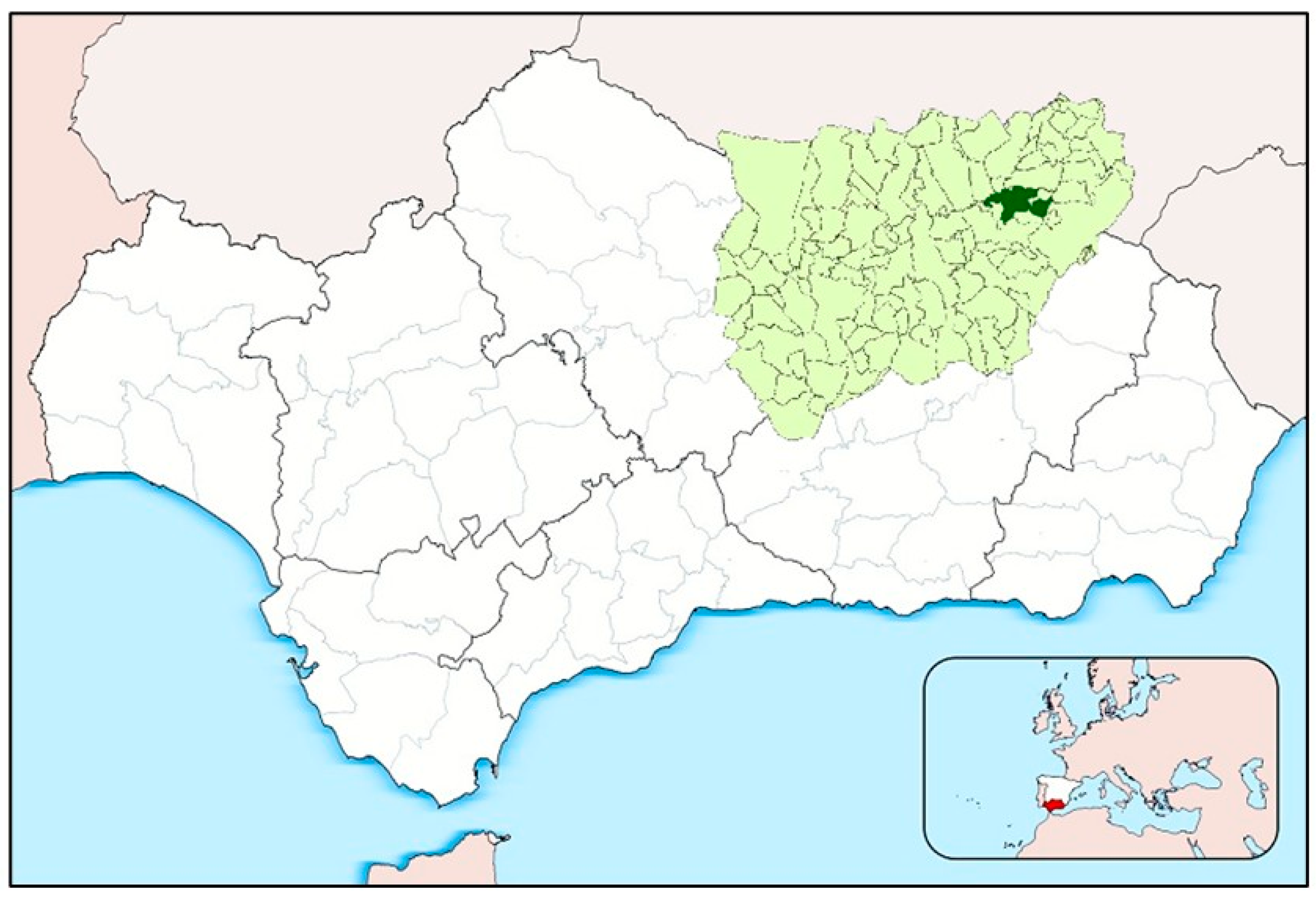
26]. In this regard, the main Andalusian olive grove area is Jaén (0.57 MHa). Thus, due to the circumstances aforementioned, we selected as EG the village of Villanueva del Arzobispo, covering an area of approximately 177,381 km
2 (See
Figure 1, for more information).
Figure 1 illustrates the geographical location and environmental context of the experimental village, where the highest particulate pollution levels were recorded during the study period.
Regarding the control group (CG), the village of Villacarrillo was selected due to its similar population size, socioeconomic characteristics, main economic activity, and educational context. Importantly, unlike the experimental village, Villacarrillo does not present major industrial or biomass-combustion sources and has consistently recorded substantially lower levels of particulate matter, with no documented episodes of extreme PM10 concentrations during the study period. This environmental profile allowed Villacarrillo to serve as a suitable comparison site with relatively lower exposure to particulate pollution.
2.2. Experimental Approach
The study was conducted between January and April 2021 using a two-group parallel longitudinal design. Two assessment time points were established to coincide with distinct periods of environmental exposure in the experimental village. Baseline anthropometric variables (age, height, and body mass index), as well as cardiorespiratory fitness assessed at both time points using the same procedures, were collected. Cardiorespiratory fitness was evaluated through the 6 min walk test, from which maximal oxygen uptake (VO2max) was estimated.
The first assessment (“pre”) was conducted after a period characterised by persistently unfavourable to very unfavourable air-quality conditions in the experimental village. The second assessment (“post”) took place after a subsequent period in which particulate pollution levels decreased due to the temporary suspension of biomass combustion and favourable meteorological dispersion. Thus, the terms “pre” and “post” refer to measurements obtained before and after the improvement in air quality, rather than to the beginning and end of the study period.
Participants from both the experimental group (EG; locality with higher particulate pollution levels) and the control group (CG; locality with lower particulate pollution levels) were asked to maintain their usual daily routines throughout the study. Environmental air-quality data, including sulphur dioxide (SO
2), ozone (O
3), nitrogen dioxide (NO
2), PM
10, and PM
2.5, were obtained from the Andalusian Regional Government environmental monitoring network.
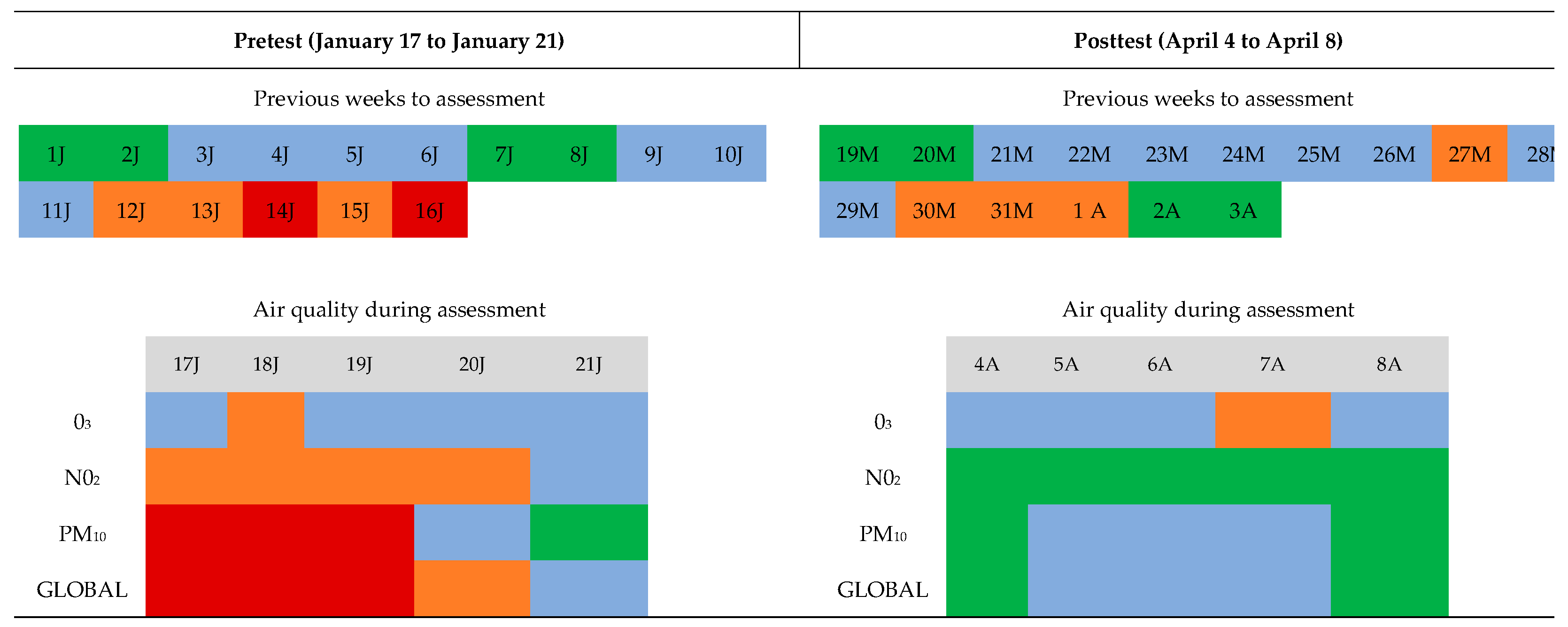
Figure 2 summarises the study timeline and air-quality conditions for the experimental group.
During January, the EG locality (Villanueva del Arzobispo) experienced recurrent ‘unfavourable’ to ‘very unfavorable’ air-quality days, especially during the 5-day measurement period and the previous week (n = 8 out of 10 days), with mean PM10 levels of 92 µg·m−3 (max = 126 µg·m−3) for those 8 days, largely attributed to biomass burning and domestic heating. By March–April, a temporary suspension of biomass combustion and favourable meteorological dispersion reduced the number of ‘unfavorable’ days to n = 3 within a 10-day period, yielding a mean PM10 of 58.3 µg·m−3, for those 3 unfavorable days. This transition period was therefore selected to evaluate whether children’s VO2max, an integrative marker of cardiorespiratory fitness, reflected measurable recovery after exposure mitigation.
Within the same period, the control village did not experience comparable episodes of unfavourable air quality and consistently recorded substantially lower particulate matter concentrations, with no extreme PM10 exceedances (between 8 and 23 µg·m−3).
2.3. Procedures
A sample set was obtained from three primary schools and one secondary school for the EG and three primary schools and one secondary school for the CG. Every school management was contacted in order to request their participation.
The participants’ parents were informed about the objectives of the investigation and signed consent forms detailing their possible benefits and risks. Families were informed that they could revoke the participation agreement at any time. All participants in this study were treated according to the American Psychological Association (APA) guidelines, which ensure the anonymity of participants’ responses. They were verbally informed and asked to provide consent prior to the intervention. In addition, they were fully debriefed about the purpose of the study at the end of the experiments. The study was conducted in accordance with the ethical principles of the Helsinki declaration for human research and was approved by the Research Ethics Committee of the first co-author’s institution (Code: 2021/90; Date: 26 July 2021).
The main researcher held a meeting with the different teachers of physical education in order to explain the protocol. In fact, before starting the study, the teacher performed a familiarisation process. Anthropometrical measures and 6 MWT were evaluated in a single session, both in two different periods (pre–post environmental conditions). The evaluation schedules were from 9:00 to 13:30 in the morning, maintaining exactly the same structure in both measurements. Instructions were carefully explained to the students and previous questions were solved in order to avoid any doubts. In all cases, the explanation was performed by the main researcher. The anthropometrical measures were conducted in a gym and the 6 MWT pre and post were performed on sports courts, everything belonging to each participating school (facilities that were previously measured and conditioned for the correct test performance). In addition, all schoolchildren were instructed to wear comfortable sports clothing and shoes for the proper performance of the different tests.
2.4. Measures
2.4.1. Anthropometry
Baseline height, body weight and body mass index were collected at the pre-test assessment, at the same hour and on the same day of the week for both groups. Height was measured using a stadiometer (SECA 213, Birmingham, UK) to the nearest 0.1 cm, and players were asked to remove their shoes and other accessories that could influence the assessment. Players also had to be in a vertical and immobile position, with arms extended along the body, and look straight ahead in an upright position. For each measure, only one measurement was collected.
2.4.2. Physical Fitness: 6 min Walking Test (6 MWT)
The 6 MWT was administered using a 30 m long course in a corridor of selected schools according to the guidelines of the American Thoracic Society. All participants were instructed to walk back and forth in a straight line as fast as possible with self-paced over a 6 min period of time. During the 6 MWT, subjects were given standardised phrases and informed of the time elapsed every 1 min. At the end of the 6 MWT, the total distance covered over 6 min was recorded as 6 MWD. To confirm the reproducibility of the 6 MWT, 80 participants were randomly asked to repeat the 6 MWT with an interval of 1 week. Estimated maximal oxygen uptake (VO
2max) was calculated using previously validated predictive equations derived from the 6 min walk test performance. Specifically, VO
2max estimation was based primarily on the total distance walked during the test, together with anthropometric variables including age, sex, body weight, height, and body mass index. These multivariable regression models have been shown to provide valid and reliable indirect estimates of cardiorespiratory fitness in children and adolescents when direct cardiopulmonary exercise testing is not feasible [
27,
28]. Indirect estimation of VO
2max using the 6 MWT is widely accepted in paediatric field studies due to its feasibility, safety, and strong association with directly measured cardiorespiratory fitness.
2.5. Statistical Analysis
Data are presented as mean ± standard deviation (SD) or percentages. Data normal distribution and homogeneity were examined using the Kolmogorov–Smirnov test (>50 samples) and Levene’s test, respectively. Within-group pre–post differences in estimated VO
2max were analysed using paired-sample
t-tests separately for the experimental group (EG) and the control group (CG), considering primary education, secondary education, and the whole sample. Analyses were stratified by academic level (primary vs. secondary education) to account for age- and maturation-related differences in cardiorespiratory fitness and physiological development. To examine between-group differences and changes over time, two complementary approaches were applied. First, a multivariate analysis of variance (MANOVA) was performed using pre-test and post-test values as dependent variables, with group (experimental vs. control) and academic level (primary vs. secondary education) as fixed factors, allowing the assessment of group × time effects. Second, individual change scores were calculated as the difference between post-test and pre-test values (Δ = post − pre). These change scores were then compared between EG and CG using independent-sample
t-tests (Welch’s correction when appropriate), in order to directly evaluate whether the magnitude of change over time differed between groups. The significance level was set at 5% (
p < 0.05). For comparisons of pre–post changes between groups, Cohen’s
d was computed based on the difference in individual change scores (Δ = post − pre), using pooled standard deviations [
29]. The interpretation of the d regardless of the sign, followed the scale: very small (0.01), small (0.20), medium (0.50), large (0.80), very large (1.20), huge (2.0) [
29,
30]. Statistical analyses were performed using SPSS v.26 (SPSS Inc., Chicago, IL, USA).
3. Results
Descriptive statistics were calculated for both, EG and CG, by academic level (primary and secondary education) in a whole stage as well as divided by academic year (1° to 6° primary; 1° to 4° secondary).
Baseline body mass index (BMI) values were very similar between the experimental and control groups in both primary and secondary education levels. In primary education, mean BMI differed by only 0.13 kg/m2 between groups, while in secondary education the difference was 0.62 kg/m2, corresponding to a small effect size. These differences were not considered clinically meaningful enough in order to be used as possible covariates in the study.
Table 1 shows the difference percentage between pre-test and post-test values, the paired
t-test with t-score and
p-value. Additionally, the effect size according to the moment (pre- and post-tests) within each group (EG and CG) and by academic year/stage, is shown in
Table 1.
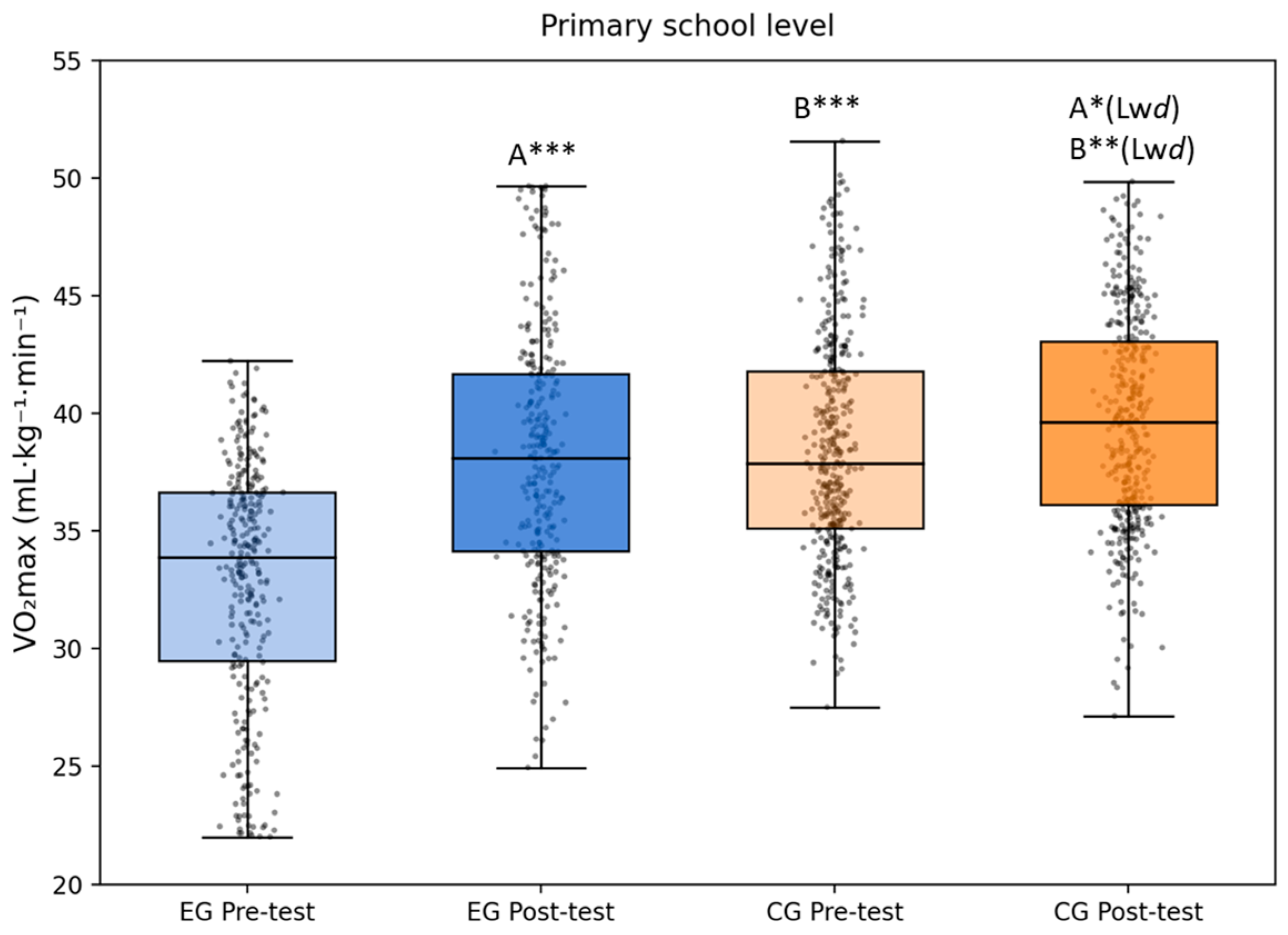
The primary education level (
Figure 3) showed the highest difference percentage between pre- and post-tests in the EG (16.19 vs. 12.29%Dif), compared to the secondary education level) but in both academic levels, the results were significantly different between the pre- and post-test measure [(t)−14.080, −13.125, for the primary and secondary levels, respectively;
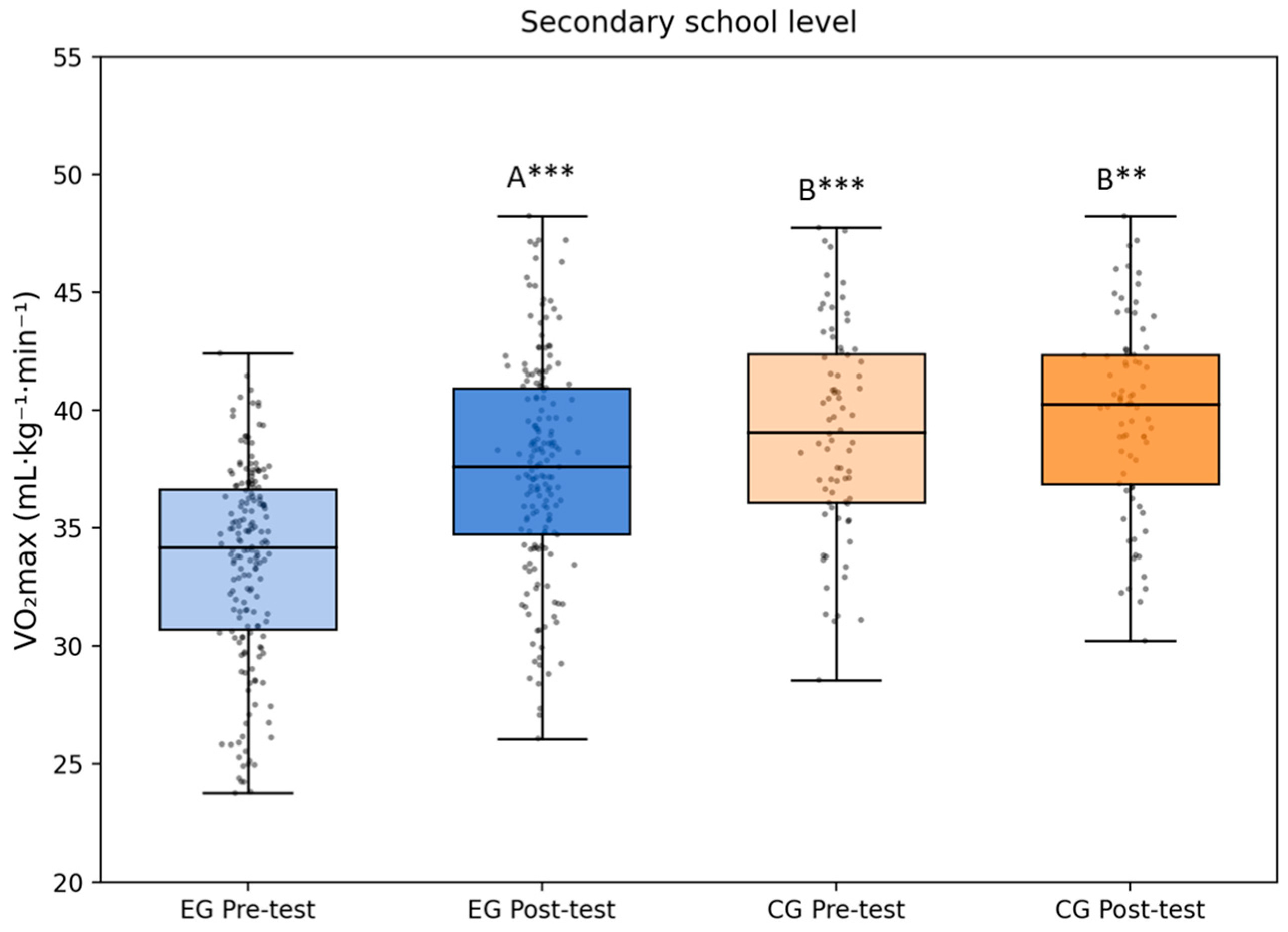
p < 0.001; ES(d) = 0.91]. In the CG, although the differences between pre- and post-tests are significant as well for primary education, the difference percentage is considerably lower compared to the EG (3.07%Dif., showing a small ES = 0.26 vs. 16.19%Dif., showing a large ES = 0.91, respectively), indicating limited practical relevance. No significant pre–post differences were found for secondary education level in the CG (
Table 1 and
Figure 4).
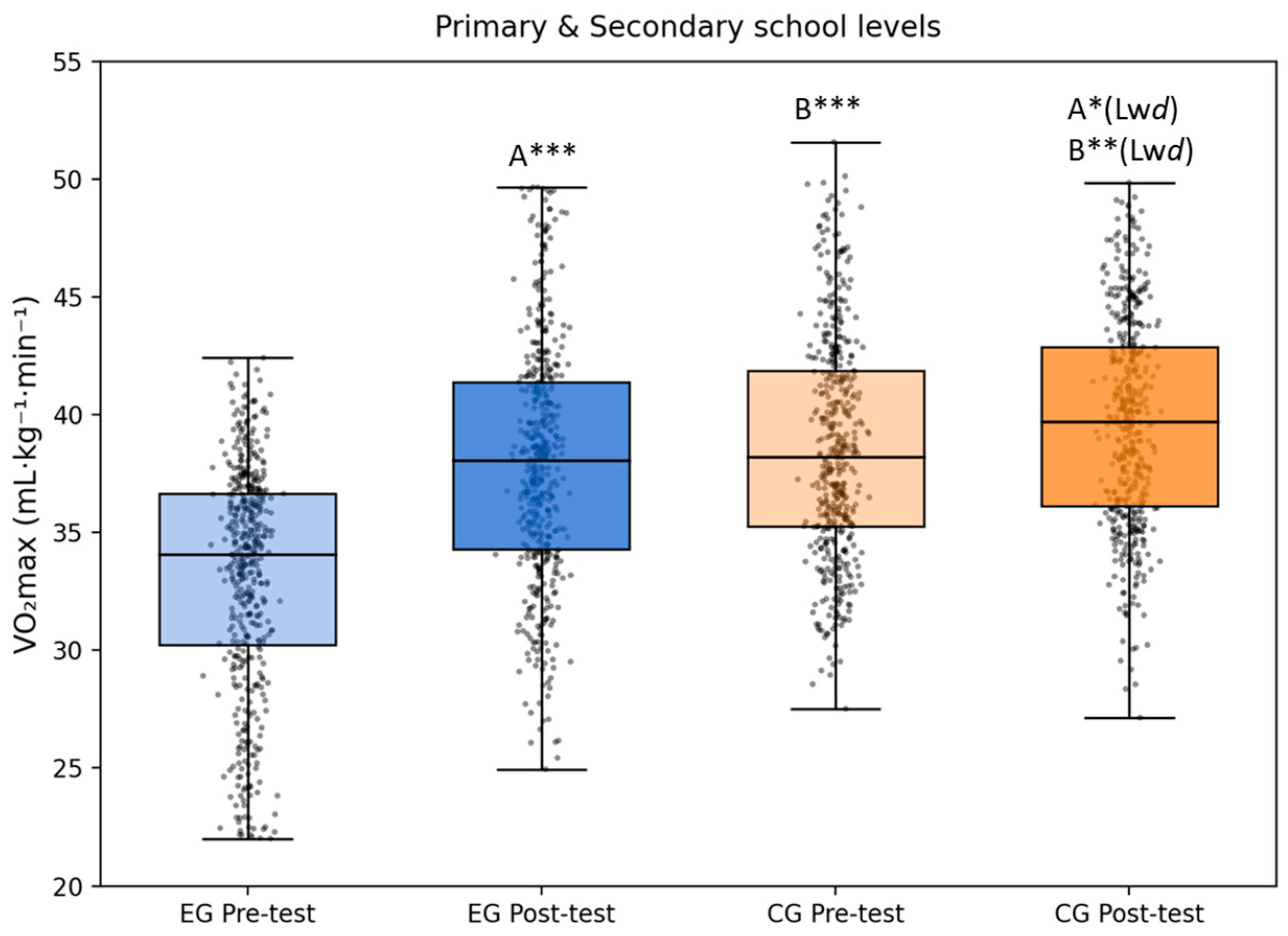
The visual differences between pre- and post-tests in the EG and CG, specifically for the primary education level, are shown in
Figure 3. In addition to the previous information in
Table 1, significant differences between CG and EG were reported within the pre- and post-test periods, showing a considerably elevated pre-test value in the CG compared to the EG (38.49 ± 4.79 vs. 32.90 ± 5.12, respectively; F = 232.786;
p < 0.001; ES = 1.17). Although statistically significant differences were observed in the post-test comparison between CG and EG (F = 14.581;
p < 0.01), the magnitude of this difference was small, as reflected by a low effect size (ES(d) = 0.32).
Similar data specifically for secondary education level is shown in
Figure 4, finding additionally to the information reported in
Table 1, differences between CG and EG in pre-test (39.14 ± 4.38 vs. 33.54 ± 4.18, respectively; F = 73.384;
p < 0.001; ES = 1.28); and post-test (39.80 ± 4.08 vs. 37.66 ± 4.53, respectively; F = 9.909;
p < 0.01; ES = 0.52 “medium”) (
Figure 4).
Taking into consideration the EG and CG with the whole student population,
Figure 5 showed similar results to the previous ones (F = 223.241;
p < 0.001; ES = 1.15, for pre-test CG vs. EG; and F = 21.295;
p < 0.01; ES = 0.38 “small”, for post-test CG vs. EG). Similarly, to the primary level results, although statistically significant differences were observed in the CG and EG post-test comparison, the low effect size (ES(d) = 0.32) indicates reduced practical meaning again. Finally, no significant differences were found concerning the variable academic level for both time points and groups.
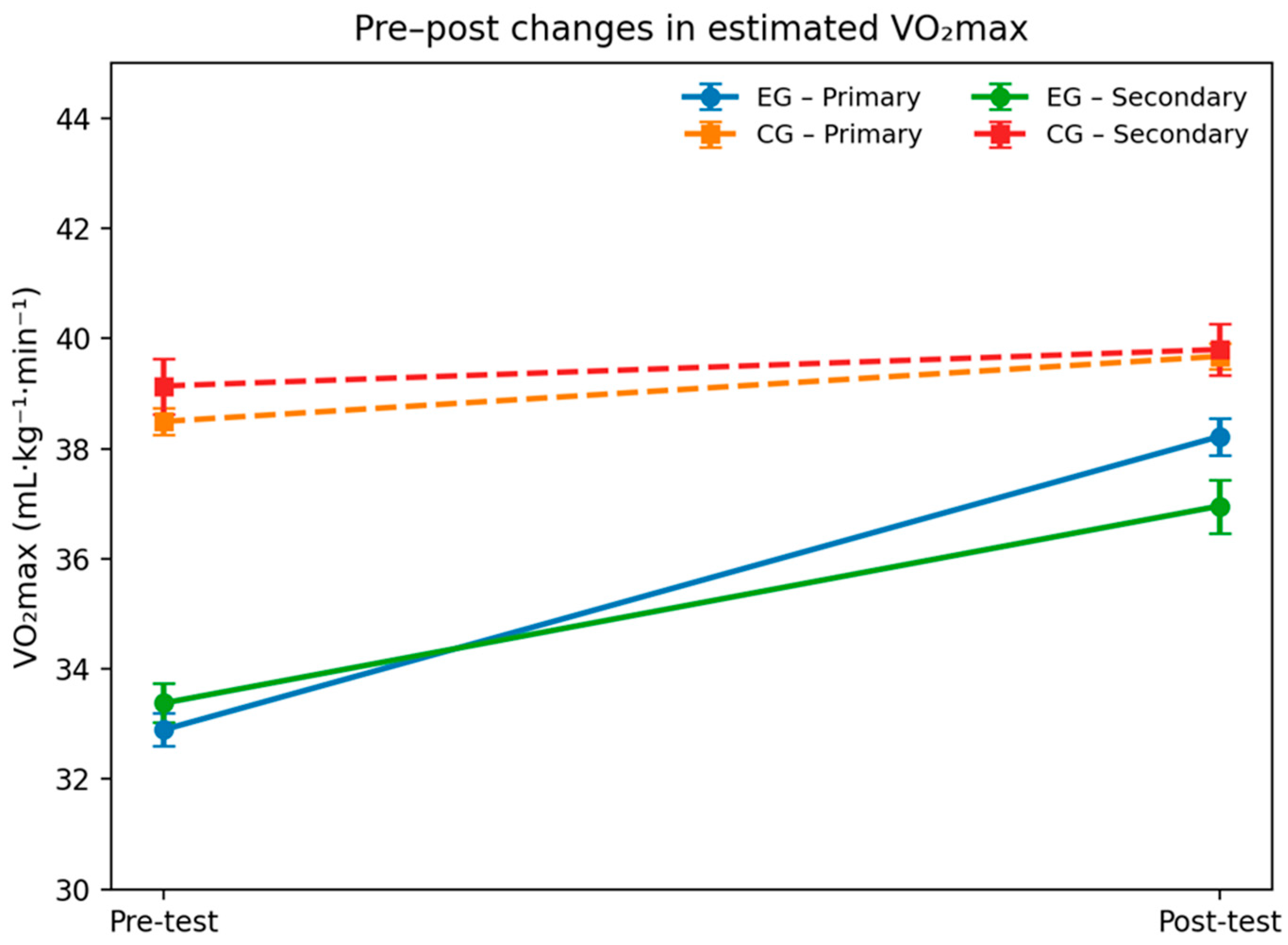
Additionally, visual pre–post changes in estimated VO
2max for both groups and academic levels are shown in
Figure 6. The increase in VO
2max was significantly larger in EG than in CG for primary education (ΔEG = 5.32 ± 6.54 vs. ΔCG = 1.18 ± 4.20;
p < 0.001; ES = 0.77), secondary education (ΔEG = 4.10 ± 4.16 vs. ΔCG = 0.66 ± 3.27;
p < 0.001; ES = 0.87), and in the full sample (ΔEG = 4.88 ± 5.80 vs. ΔCG = 1.10 ± 4.06;
p < 0.001; ES = 0.75), indicating a greater improvement over time in the experimental group.
4. Discussion
This study investigated the association between particulate pollution and cardiorespiratory fitness, assessed through estimated VO2max, in school-aged children from two rural villages in southern Spain with contrasting levels of particulate matter.
The current research reveals that the population exposed to a previous period of higher particulate pollution showed lower estimated maximal oxygen uptake (VO
2max) compared with peers not exposed to such conditions. This finding aligns with previous evidence reporting negative associations between ambient air pollution and cardiorespiratory performance [
10,
11,
31,
32]. In our cohort, the experimental locality experienced a month of unfavourable particulate matter levels, and participants from this area presented markedly lower VO
2max values than those living in the control locality. These results are consistent with earlier studies demonstrating that exposure to higher concentrations of particulate matter is associated with reduced cardiovascular fitness and lower predicted VO
2max in youth and healthy adults [
18,
33,
34].
Particulate matter represents a heterogeneous mixture of solid and liquid components of various sizes and chemical compositions. Higher exposure levels are known to induce oxidative stress, bronchial hyperresponsiveness, airway inflammation, and increased airway resistance [
35], all of which may transiently limit pulmonary ventilation and gas-exchange efficiency during exercise [
36]. Consequently, the observed differences in VO
2max could reflect a short-term physiological response to poor air quality rather than permanent functional impairment. Supporting this view, previous controlled studies have shown that exposure to elevated particulate matter reduces exercise-induced bronchodilation and impairs performance on short-duration aerobic tests such as the 6 min walk [
37].
Cardiovascular responses may also be affected, as exposure to greater particulate matter (even within the two days preceding exercise) has been associated with transient ST-segment depression and elevated cardiac workload [
18,
33]. Therefore, it can be hypothesised that children and adolescents residing in Villanueva del Arzobispo (Spain) may experience temporary reductions in oxygen uptake capacity during or following episodes of high particulate pollution compared with peers from areas with better air quality.
In this regard, the separate analysis of primary and secondary schoolchildren allowed us to explore whether the association between particulate pollution and changes in cardiorespiratory fitness differed across developmental stages, which is relevant given age-related differences in VO2max and physiological adaptation.
Interestingly, when the same population was reassessed after a period of improved air quality, significant within-group increases in VO2max were observed. On average, primary-school participants improved by 16.19%, and secondary-school students by 14.72%, whereas the control group showed only modest gains (3.07% and 1.69%, respectively). In this case, the magnitude of pre–post improvement differed between groups, supporting an association between exposure context and changes in cardiorespiratory fitness. These findings suggest a degree of physiological adaptability and recovery once the environmental stressor is alleviated.
Importantly, the magnitude of the observed effect sizes (d ≈ 0.9 in the experimental group) can be interpreted as large according to conventional thresholds, suggesting that the changes in estimated VO2max were not only statistically significant but also potentially meaningful from a physiological and public health perspective. In paediatric populations, variations of this magnitude may reflect short-term functional adaptation associated with environmental exposure context.
Chronic exposure to polluted air has been associated with reduced expiratory flow and lung volume [
18,
33], while acute improvements in air quality may allow a partial restoration of respiratory efficiency. In this sense, physical fitness may act as both a marker of vulnerability and a protective factor: individuals with lower baseline fitness could experience greater decrements under polluted conditions, whereas those with higher fitness levels may better tolerate transient stress [
36].
Despite the negative consequences of exercising in polluted environments, regular physical activity remains an essential health behaviour. Populations with lower aerobic fitness and higher body mass index appear more susceptible to the hypertensive effects of pollution [
38]. Similarly, individuals with lower baseline fitness or resting heart rates above 70 bpm show greater increases in diastolic and mean arterial pressure under polluted air compared with fitter peers [
39]. Consequently, maintaining adequate fitness levels may confer cardioprotective benefits even under suboptimal air conditions, complementing environmental health policies aimed at reducing pollution exposure [
36]. In extreme contexts, protective strategies such as wearing particulate-filter facemasks during outdoor exercise have been shown to mitigate blood pressure increases and cardiovascular strain [
40].
This study had some limitations. Not controlling the physical exercise performed in between the assessments may skew the information about the reasons for the difference between intervals of assessments. Moreover, although body mass index is a relevant determinant of cardiorespiratory fitness, in our study, baseline BMI values were comparable between groups and showed only small differences, suggesting that body composition alone as a covariate does not account for the observed between-group differences in VO2max. In any case, characterization of participants based on body mass index or fat mass and organization based on levels would be beneficial to analyse how they cope with air pollution. Future research should prioritise longitudinal multi-season designs incorporating objective physical activity monitoring (e.g., accelerometry), individual-level pollution exposure assessment, and direct cardiopulmonary exercise testing to measure VO2max. Such approaches would strengthen causal inference and clarify the dose–response relationship between particulate matter exposure and cardiorespiratory fitness in youth populations.
5. Conclusions
Air pollution remains one of the most pressing environmental and public health challenges worldwide. Urban residents are frequently compelled to exercise or commute in environments where particulate matter concentrations exceed recommended thresholds. Although physical activity improves cardiorespiratory fitness, a key determinant of long-term health, our findings indicate that temporary exposure to high particulate levels can be associated with short-term reductions in estimated VO2max among schoolchildren.
Importantly, the improvement observed when air quality returned to favourable levels suggests that these functional effects may be at least partially reversible, emphasising the adaptability of the paediatric cardiorespiratory system. From a health-promotion perspective, encouraging regular physical activity and maintaining adequate fitness levels could mitigate some of the adverse physiological responses triggered by polluted air, particularly during critical stages of growth and development.
From a policy standpoint, these results underscore the importance of integrating air-quality surveillance into school-zone management and urban planning. Local administrations should consider targeted interventions, such as restricting biomass burning near residential and educational areas, establishing real-time air-quality monitoring around schools, and providing clear guidelines for outdoor physical activity during high-pollution episodes, to safeguard children’s health. These actions align with sustainable development goals seeking cleaner, healthier, and more equitable urban environments.
In summary, the present study supports a possible association between particulate pollution and lower cardiorespiratory fitness in school-aged children, together with signs of recovery following pollution abatement. Further longitudinal and experimental studies using objective measures of physical activity and direct VO2max assessment are warranted to confirm these preliminary findings and to inform evidence-based public health and environmental policies.




 ,
,