Article

Factors Influencing Building Information Modeling (BIM) Adoption Intention Among Multiple Stakeholders to Promote the Sustainable Development of the Construction Industry: Insights from the Technology–Organization–Environment (TOE) Theoretical Framework


1
School of Engineering, Sichuan Normal University, Chengdu 610101, China
2
School of Civil Engineering, Southwest Jiaotong University, Chengdu 610031, China
3
Key Laboratory of Transportation Tunnel Engineering, Ministry of Education, Southwest Jiaotong University, Chengdu 610031, China
*
Author to whom correspondence should be addressed.
Sustainability 2026, 18(8), 3704; https://doi.org/10.3390/su18083704
Submission received: 23 February 2026 / Revised: 5 April 2026 / Accepted: 6 April 2026 / Published: 9 April 2026

Abstract

BIM is a key technology for the digital transformation and sustainable development of the construction industry through enhanced productivity, transparency, and fostered innovation. Although scholars have investigated the constructs driving BIM adoption intention, a comprehensive framework has seldom been adopted, and thus some vital factors have been overlooked, such as collaboration partner pressure. Meanwhile, the targeted group is usually practitioners of a certain type of company while a construction project requires the participation of multiple types of companies. To address these research gaps, the aim of this study is to explore the factors driving various stakeholders’ intention to adopt BIM by applying the TOE framework, considering nine factors across three dimensions. A total of 512 valid responses from owners, consulting firms, design firms, construction companies, suppliers, engineering surveying firms, and universities or research institutes were collected and analyzed through the structural equation modeling (SEM) method. The SEM results indicated that six factors were positively related to the intention to employ BIM, among which management commitment (β = 0.182, p < 0.001) and perceived ease of use (β = 0.180, p < 0.001) exhibited the strongest effects. However, three factors (perceived usefulness, supporting technical facilities, and mimetic pressure) exerted no significant influence. The findings of this study may provide a valuable reference for promoting the application of BIM technology in the construction industry.

1. Introduction

In recent years, the application of BIM in the construction industry has expanded significantly because of its potential for improving efficiency and reducing errors [1]. BIM is a technology-enabled methodology for generating, communicating, and analyzing digital representations of construction projects [2]. These models not only accurately capture the geometric properties of structures but also encompass comprehensive information covering prefabrication, procurement, construction, and even operation and maintenance. Serving as a collaborative platform for information exchange, BIM eliminates interdisciplinary barriers and enables comprehensive management of project quality, schedule, cost, and human resources [3]. Therefore, this approach delivers higher quality, reduced costs, shorter construction duration, and optimized resource utilization, which is of great significance in promoting the sustainable development of the construction industry. Furthermore, it serves as a foundation for building lifecycle management and the integration of other emerging technologies. Although existing research shows that the potential of BIM remains largely untapped [4], it is evident that BIM appears to be an indispensable technology to achieve the goal of sustainable development.
Considering the important role of BIM technology, numerous studies have devoted considerable attention to factors influencing BIM adoption intention to formulate effective implementation strategies. The facilitating or inhibiting effects of different factors may vary across different countries [5], industries [6], enterprise types [7], and objectives [8]. Table 1 summarizes previous studies, including theories, methodologies, dependent variables, independent variables, and target populations. Ding et al. employed the Theory of Reasoned Action (TRA) to explore the factors influencing architects’ intention to apply BIM [9], and results showed that motivation, technical flaws, and BIM capability significantly affected participants’ BIM adoption. Except for TRA, the Modified Technology Acceptance Model (TAM) and Theory of Planned Behavior (TPB) are the most common theories adopted by researchers in this field [10,11,12,13]. Wong et al. proposed a quantitative research study using a new conceptual framework to identify the factors influencing stakeholders in Malaysia to use BIM technology [14]. The results showed that perceived usefulness, influenced by technological quality, personal competency, and organizational commitment, was a key facilitator of BIM adoption in Malaysia’s construction industry. Meanwhile, many other previous studies selected a series of factors based on the literature review and explored their influence on multiple construction professionals’ intention to adopt BIM technology [15,16,17,18]. A previous study proposed a modified Technology Acceptance Model (TAM) model to investigate contractors’ BIM adoption and validated the important role of participant attitude in predicting their intention [10]. What is more, researchers from Yemen also highlighted the influence of the environment on the professionals’ BIM adoption intention, in addition to the individual perceptions [15]. This environment includes both internal and external organizational contexts, including facility management and risk management within the organization, as well as external economic conditions, and some previous studies also confirmed this conclusion [7,16,19]. Okakpu et al. found that positive organizational culture contributed to BIM adoption intentions among construction professionals who had participated in refurbishment projects [11], indicating that promoting emerging technology is not merely a matter of personal choice but requires organizational efforts, and this finding has been validated by many previous studies [6,13,20,21]. In summary, numerous scholars worldwide have employed multiple theoretical frameworks to determine drivers and barriers to BIM implementation in recent decades, and the conclusions have significantly contributed to overcoming obstacles to BIM acceptance and advancing the digital transformation and sustainable development of the construction industry.
Although the body of current literature is extensive, several research gaps persist. Firstly, many studies have adopted individual-centered theoretical frameworks such as TRA, TAM, and TPB, which fail to cover all dimensions comprehensively. For example, TAM pays attention to individual perceptions (perceived usefulness and ease of use) of emerging technology, whereas organizational-level factors also influence technology adoption intention, such as organizational support. So, a comprehensive framework is required to cover potential factors in different aspects. Furthermore, numerous studies have grouped various items derived from literature reviews into key factors using exploratory factor analysis; however, certain critical factors remain unexplored. For instance, few studies have examined pressure from collaboration partners, ignoring the fact that construction projects require participation from multiple parties. On the other hand, previous studies have typically focused on limited target populations. As BIM adoption among all stakeholders is essential for the construction industry’s digital transformation and sustainable development, expanding the target population to include diverse organizational types is imperative to ensure the generality of conclusions. Lastly, it is crucial to determine the relative importance of factors influencing BIM adoption intention across different stages of technology diffusion, given that the significance of these factors may vary across stages. That is to say, findings from previous studies conducted at earlier stages may differ from those in the present context, and thus, the major drivers at present should be explored to formulate targeted measures. Hence, a comprehensive study is needed to assess the impact of potential factors currently, providing empirical insights for advancing BIM implementation at the present stage.
To address the gaps mentioned above, this study employs the comprehensive TOE framework by integrating a set of factors across three dimensions: technological, organizational, and environmental. The purpose of this study is to empirically examine the impact of these factors on multiple stakeholders’ intentions to adopt BIM technology, particularly those that have been underexplored in previous studies, such as pressure from collaborators. Consequently, this study complements previous studies by considering more comprehensive factors and determining the influence of potential factors at current stage. This study includes diverse stakeholders across the construction industry (N = 512 valid responses from owners, consultants, designers, contractors, suppliers, and other participants), which enhances the generalizability of the findings. Data were analyzed using SEM, and based on the results, strategies tailored for the current BIM diffusion stage were identified.
The paper is organized as follows: Section 2 proposes the research hypotheses based on the existing literature; Section 3 presents a discussion of the research methods; Section 4 shows the results of data analysis; Section 5 presents the discussions of the findings, practical contributions, and limitations of this study; and Section 6 presents the conclusions of the study.

2. Literature Review and Research Model

2.1. Technical Factors

2.1.1. Perceived Usefulness

The concept of perceived usefulness was originally proposed by Davis et al. [43] and constitutes a core construct of TAM. Perceived usefulness reflects the extent to which an individual believes that adopting specific technology can improve work performance. Many previous studies have already validated the significant effects of perceived usefulness on behavioral intentions, particularly in the computer-related fields. In a longitudinal study conducted in Peru from 2017 to 2020, the findings showed perceived usefulness exerted a significant impact on contractors’ attitude toward BIM and adoption intention [10]. Wang et al. developed an integrated model incorporating TPB with TAM to investigate BIM adoption behavior and revealed that the perceived usefulness by participants was the most critical driver influencing their adoption intentions [44]. Another previous research concluded that perceived usefulness exerted a direct and strong influence on satisfaction with BIM, thereby enhancing perceived performance [45]. Although the finding does not directly show that perceived usefulness is a significant driver of BIM adoption intention, satisfaction and performance improvement undoubtedly stimulate the enthusiasm for adoption [46]. It is widely recognized that BIM enables related tasks to be completed more efficiently compared with traditional techniques [34]. From the perspective of the user, they may receive extra benefits such as accelerated career development, which also contributes to promoting BIM technology. Therefore, we propose this hypothesis:
H1. 
Perceived usefulness positively influences the intention to adopt BIM.

2.1.2. Perceived Ease of Use

Perceived ease of use, representing the extent to which a user finds a particular system or technology effortless and straightforward to use, also originates from the TAM [43] and has been widely acknowledged as a key factor influencing system usage and intention [47]. Evidently, it is more likely for users to adopt an emerging technology if this technology involves shorter processes, is easier for users to comprehend and master, and minimizes errors [48]. Cui et al. combined the TAM with the expectation confirmation theory (ECT) to study the factors influencing the willingness of architectural designers to continue to use BIM technology [39]. The results showed that improving BIM’s ease of use and user satisfaction is crucial to promoting its continuous application, thereby facilitating the deep integration of BIM technology in the architectural design stage. Son et al. proposed a model exploring key factors influencing architects’ adoption of BIM based on the TAM, and found that while both perceived usefulness and perceived ease of use significantly influenced behavioral intentions, perceived ease of use had a stronger effect [26]. Therefore, the following hypothesis is proposed:
H2. 
Perceived ease of use positively influences intention to adopt BIM technology.

2.1.3. Compatibility

In the diffusion of innovation theory, compatibility reflects the extent to which an emerging technology is regarded as aligned with users’ core beliefs, backgrounds, and immediate requirements [49]. Numerous studies have shown that compatibility is significantly related to users’ intention to adopt digital technologies within fields such as cloud computing [50], electronic logistics information systems [51], and online shopping systems [52]. In the construction industry, BIM compatibility is manifested in two aspects: the ability to operate smoothly without requiring significant changes to existing software or programs, and improved efficiency in employee collaboration [22]. Wang et al. concluded that the relative advantage and compatibility influence adoption intention through perceived usefulness [22], and Xu et al. also validated this conclusion [30]. Up to now, few studies have examined whether compatibility is a direct predictor of BIM adoption intention among construction industry stakeholders. However, it is reasonable that the adoption rate and users’ acceptance increase significantly if BIM integrates well with existing software and hardware and workflows. Consequently, the following hypothesis is proposed:
H3. 
Compatibility positively influences the intention to adopt BIM technology.

2.2. Organizational Factors

2.2.1. Management Commitment

Management commitment manifests as engaging in and sustaining behaviors that support subordinates in achieving organizational goals [53]. In the context of BIM adoption, the management commitment refers to the relevant policies, resources, and institutional support provided by the management of the organization [13]. Previous studies explored the impact of management commitment or organizational support on professionals’ intentions to adopt BIM. A previous study found that senior management support not only directly affected BIM adoption but also exerted an indirect influence on it through two mediating variables [54]. Abbasnejad et al. aimed to identify enabling factors for BIM implementation and found BIM leadership and senior management support emerged as the strongest driving forces during the initial stages of BIM promotion [55]. Tavallaei et al. revealed that top management support shaped the cognition pattern of the members within the organization and significantly promoted the levels of BIM adoption among various samples [20]. Consequently, we put forward the hypothesis:
H4. 
Management commitment positively influences the intention to adopt BIM technology.

2.2.2. Training

Training can be defined as the efforts made by the enterprise to help employees cultivate understanding and practical skills related to a new technology, and it appears to be a significant factor influencing the acceptance of that technology [56]. Besides imparting necessary knowledge, training influences workers’ shared beliefs, which in turn contribute to technology adoption [56]. Several studies have validated this finding in the context of BIM technology. A previous study identified four dominant factors for BIM adoption: BIM training (or capability development) for people without a BIM technical background, software efficiency and simplicity, organizational top management support, and initial investment cost [57]. Kineber et al. also found that training and people were listed as one primary obstacle to BIM implementation within Egypt’s construction sector, and argued that overcoming implementation hurdles was critical for achieving breakthroughs in BIM adoption [58]. In the practical implementation of BIM, the purpose of training is to provide opportunities for trial and error, enabling participants to become proficient and drive the process forward quickly. Therefore, we put forward the hypothesis:
H5. 
Training positively influences intention to adopt BIM technology.

2.2.3. Supporting Technical Facilities

Supporting technical facilities refer to the hardware equipment, software tools, and network resources provided by an organization to facilitate the adoption of new information technology. Facilitating conditions, a key construct in the UTAUT [59], encompass supporting technical facilities—including hardware, software, and network resources—as merely one component. Unlike the broader facilitating conditions, supporting technical facilities excludes other forms of support, such as guidance, policies, and organizational culture. Previous studies have validated the significant impact of facilitating conditions on BIM adoption intention. Wang et al. concluded that the influence of facilitating conditions was stronger in studies with smaller sample sizes conducted in individualistic cultures [60]. Howard et al. extended the UTAUT framework to explore the key factors influencing adoption intentions for BIM, and concluded that facilitating conditions exerted the strongest influence on actual user behavior [61]. In addition to these findings, software [38] and ICT infrastructure [33] are also key determinants for BIM adoption intention. These results underscore the critical importance of supporting technical facilities—a core component of facilitating conditions—in BIM implementation. Therefore, we propose this hypothesis:
H6. 
Supporting technical facilities positively influence intention to adopt BIM technology.

2.3. Environmental Factors

2.3.1. Government Policies

In the context of BIM promotion, government policies refer to formal principles, guidelines, and regulations issued by national or local governments to promote BIM adoption in the construction industry [62]. These policies typically employ various instruments, including mandatory requirements, subsidies, technical standards, and demonstration projects, which are recognized as important drivers for new technology adoption [63]. Consistently, Wang et al. found that government policy pressure and innovation strategy are important driving factors for BIM application, especially for state-owned enterprises, which are more susceptible to policy influences [64]. In the context of Chinese construction enterprises, Zhang et al. combined the TOE and TAM frameworks to investigate the key drivers of BIM application, and results showed that government policies, particularly external incentives, could significantly accelerate BIM diffusion [65]. Hany Omar et al. used a combination of quantitative and qualitative methods to discuss the reasons that hindered the development of BIM [66]. They concluded that the lack of mandatory BIM requirements from the government or clients constitutes the primary obstacle to BIM diffusion. Therefore, we propose this hypothesis:
H7. 
Government policies positively influence intention to adopt BIM technology.

2.3.2. Mimetic Pressure

Mimetic pressure refers to organizations’ imitation of legitimized or high-performing peers under conditions of uncertainty [67]. Intense competition often triggers mimetic responses, as organizations imitate successful practices to avoid competitive disadvantages [68]. Previous research has concluded that there was a positive relationship between mimetic pressure and the implementation of BIM in small and medium-sized enterprises, while normative and coercive pressure exerted a significant influence on the implementation and organizational cognition of BIM technology [7]. Similarly, Gao et al. reached the conclusion that mimetic pressure exerted the strongest influence on BIM acceptance and perceived usefulness [69]. Therefore, it is reasonable to assume that organizations are likely to adopt BIM when their competitors do so [33], especially when the competitors gain a great advantage. Therefore, we propose this hypothesis:
H8. 
Mimetic pressure correlates positively with the intention to adopt BIM technology.

2.3.3. Collaboration Partner Pressure

In addition to mimetic pressure, professionals may also face collaborative pressure from external stakeholders to adopt BIM, which few scholars have examined. Previous studies have focused primarily on coercive pressure, which originates from regulatory agencies and is mandatory in nature, differing from collaborative pressure [70]. Few enterprises can complete a construction project alone, and thus multiple stakeholders, including clients, designers, contractors, consultants, and others, take part in the whole process of the project [71]. During data exchange among project parties, using the same software and file format enhances interoperability and reduces errors. To achieve this smooth coordination, collaboration partners may require the use of BIM, which provides significant advantages for multi-party collaboration. Therefore, although the pressure from collaboration partners is not coercive, this pressure cannot be neglected, and it is reasonable to assume that collaboration partner pressure promotes the adoption intention of BIM, considering the advantages of this technology. Therefore, we propose this hypothesis:
H9. 
Collaboration partner pressure correlates positively with the intention to adopt BIM technology.
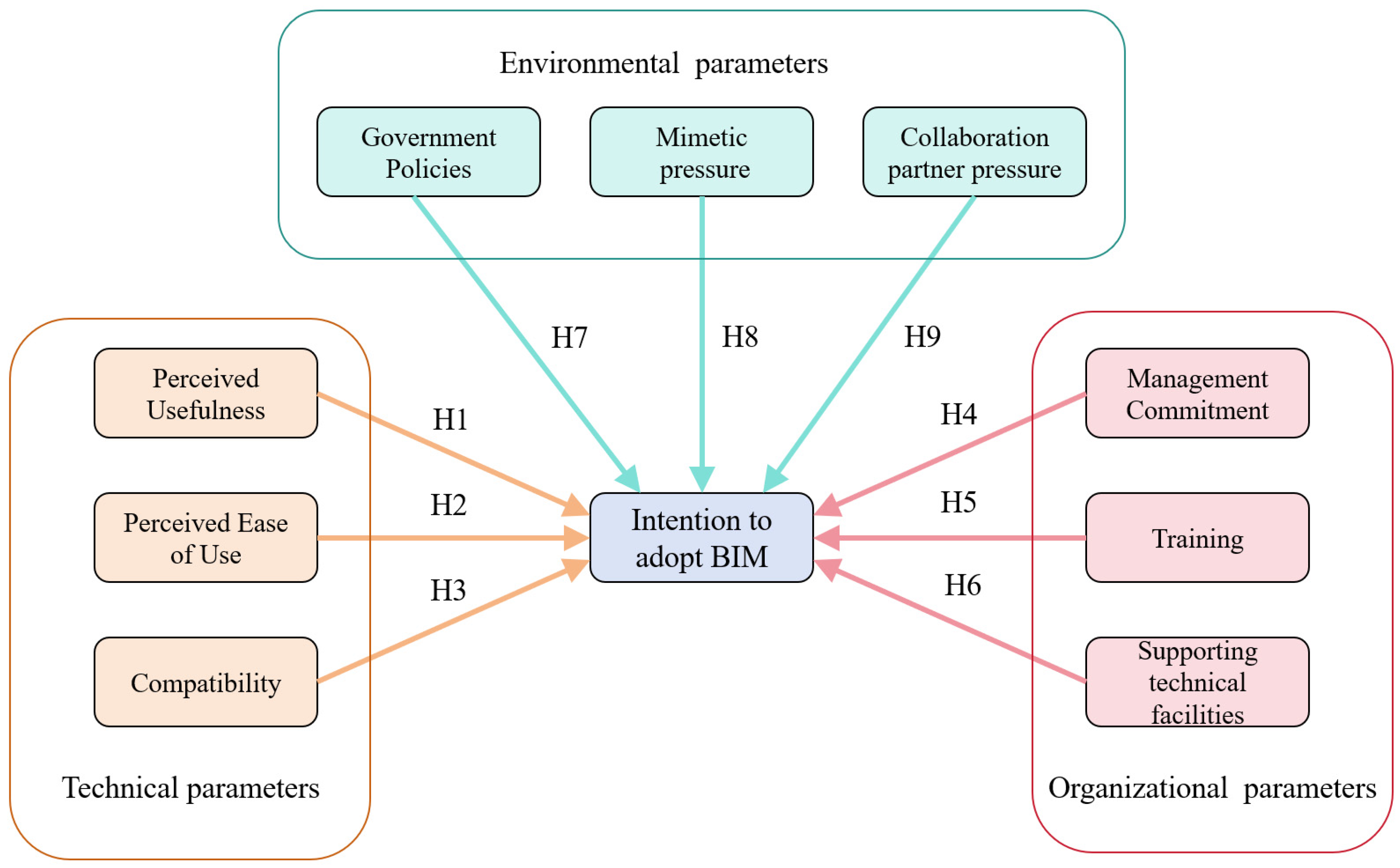
To summarize, nine potential determinants of BIM technology adoption intention were identified and grouped into three categories: technological, organizational, and environmental. Figure 1 illustrates the proposed model of this study.

3. Methods

3.1. Sample and Data Collection

To identify drivers of BIM adoption intention, a survey was carried out to collect self-reported data from practitioners in the construction industry. Different types of firms have potential BIM users, and thus, this study aims to include practitioners from various enterprises across the industry. Given the heterogeneity of the construction industry, a large sample size was required to adequately cover firms from diverse sectors. It should be noted that the diversity of the sample in this study enhances the scope of applicability relative to studies limited to specific firm categories [39]. The survey went through two rounds in September 2025 using the Questionnaire Star system, which is a popular platform to gather data from questionnaires. In the first round, convenience sampling was adopted via Wenjuanxing to send an online link to construction industry practitioners without special requirements for the type of organization. Then, we collected data from researchers’ acquaintances in the construction sector. Finally, 563 responses were collected in total. Before filling out the questionnaire, all subjects signed informed consent forms. In addition, they were assured that the collected data would be kept confidential and used for academic research only. To ensure data quality, responses were excluded based on three criteria: (a) incomplete submissions, (b) unreasonably short completion duration, and (c) responses with pattern responding. Finally, 512 valid responses were retained for data analysis. The protocol received ethics committee approval at Sichuan Normal University.
Respondents’ demographic characteristics are summarized in Table 2. Most were male (63.3%), consistent with the gender distribution in the construction industry [41]. Regarding age, 31.6% were 26–35 years old, 27.7% were older than 45, 22.7% were aged from 36 to 44, and 18.0% were younger than 25. This study includes five types of enterprises. Most participants (32.4%) were from construction contractors, 22.9% from owners or consulting companies, 18.2% from design companies, 17.6% from suppliers or engineering surveying companies, and 8.9% from universities or research institutes. Among the participants, the majority (49.2%) held a bachelor’s degree, 30.3% had an associate degree or below, and the remaining 20.5% had graduate degrees. Participants with 0–3 years and 4–5 years of work experience accounted for 29.7% and 29.5%, respectively; 30.5% had 6–10 years, and 10.4% had over 10 years of experience. The rounding principle, which the respondents were informed of by the researchers, is applied for work experience.

3.2. Measurements

This study adopts a quantitative approach to determine the influence of factors on the intention to employ BIM. The questionnaire encompasses two parts: (1) participants’ demographic information; (2) their perceptions of factors which may exert a significant impact on BIM adoption intention. At first, all the respondents were required to provide their demographic information, including gender, age, type of employing organization, educational background, and years of work experience. The second part consists of nine factors and one outcome variable: perceived usefulness (PU), perceived ease of use (PEU), compatibility (CO), management commitment (MC), training (TR), supporting technical facilities (STF), government policies (GP), mimetic pressure (MP), collaboration partner pressure (CPP), and BIM adoption intention (INT). The questions for each construct were drawn from or adapted from previous research. The measuring items for PU and PEU were adapted from Zhao et al.’s work [34], while those for CO were adapted from Park et al.’s study [41]. The questionnaire on three factors from an organizational perspective was based on some previous studies [13,23,38,41]. The scales for GP and MP were adapted from two studies [13,20]. As limited research has examined CPP, we developed the questionnaire for CPP by referring to some related studies [13,72]. The items for the outcome variable were adapted from Hong et al.’s work [23]. Two items were adopted to measure the dependent variable. The details of the second part are shown in Table A1, where a five-point Likert scale (strongly disagree = 1, strongly agree = 5) was employed.
Although most of the measurement items are adapted from previous studies, their validity was further ensured through pilot testing. Therefore, once the questionnaire was developed, five professionals in this field were invited to review the items for content validity. The questionnaire was modified based on feedback, and some items were rephrased to make it easier to understand.

3.3. Data Analysis Approach

Data analysis was carried out in two stages by employing SPSS 24 and SmartPLS 3.2.9. In the first stage, SPSS 24 was used to analyze the frequency distribution of each item in the first part of the questionnaire. In the second stage, SmartPLS 3.2.9 was adopted to examine the causal relationships between the nine factors and the outcome variable, and the statistical distribution of the responses for all variables was analyzed using SPSS 24. SmartPLS is on the basis of Partial Least Squares Structural Equation Modeling (PLS-SEM) and employs a component-based approach. Compared with covariance-based methods, PLS-SEM is advantageous when sample sizes are small and distributional assumptions fail [73]. Furthermore, PLS-SEM is also suitable for the research models which encompass many latent variables and aim to identify key antecedents of the outcome variable and assess their predictive capacity. However, Covariance-based SEM prioritizes the evaluation of the proposed model’s goodness-of-fit, which does not align with the research aim of this study. Therefore, this study selected PLS-SEM as the statistical analysis method. There are some requirements for the minimum number of cases for PLS-SEM. The sample size should be greater than the larger of (a) the maximum number of indicators for any single construct or (b) the maximum number of structural paths pointing to any construct in the proposed model [73], which is satisfied in this research.

4. Results

4.1. Assessment of the Measurement Model

Before evaluating the measurement model, it is important to address potential Common Method Variance (CMV). CMV, also called common method bias, represents the systematic error variance attributable to methodological approach rather than theoretical variables, and poses a critical threat to the internal validity of research conclusions [74]. To assess the potential CMV, we conducted Harman’s single-factor test. The analysis revealed that the first factor accounted for 32.9% of the variance, which was below the threshold [75]. The findings indicate that CMV does not appear to be a significant concern in this study.
The evaluation of the measurement model involves three steps: (1) convergent validity, (2) internal consistency or construct reliability, and (3) discriminant validity. For convergent validity, the loadings of indicators on their related constructs should exceed 0.70 and be statistically significant [76]. The bootstrapping procedure was employed to examine the statistical significance of the loadings, which were all found to be significant in this study. Furthermore, Table 3 shows that most outer loadings exceeded 0.70, with a few exceptions ranging from 0.65 to 0.70. Hair et al. concluded that it is unnecessary to delete measurement items whose loadings are slightly below the threshold because the deletion deteriorates other validity indices, such as composite reliability [77]. If the average variance extracted (AVE), representing the variance explained by the construct, exceeds 0.50, convergent validity is established. As shown in Table 3, values of all constructs’ AVE were larger than 0.50, and thus convergent validity was established. Cronbach’s α and the composite reliability (CR) are recommended to be higher than 0.70 [76]. Table 3 shows that values of Cronbach’s α and CR for all latent constructs were larger than the threshold of 0.70, satisfying the requirements for internal consistency reliability. To establish discriminant validity, indicators must exhibit stronger correlations with their assigned constructs relative to other constructs. In terms of evaluating discriminant validity, the Fornell–Larcker criterion and the HTMT (Heterotrait–Monotrait ratio) are two popular methods. For the Fornell–Larcker criterion [78], the square root of each construct’s AVE is supposed to exceed the correlations with other latent constructs, as confirmed in Table 4. Furthermore, the HTMT values should be lower than 0.85 [74]. As shown in Table 5, the highest HTMT value in this study was 0.807, supporting discriminant validity.

4.2. Assessment of the Structural Model

As for the assessment of the structural model, the coefficient of determination (R2) is adopted to determine the in-sample explanatory power, while the cross-validated redundancy index (Q2) assesses the predictive relevance [77]. The R2 value is supposed to range from 0 to 1, and a previous study recommended that this value exceed 0.10 to indicate sufficient explanatory power [73]. In this study, the R2 value for the sole endogenous construct (INT) was 0.629, reflecting substantial explanatory power. In addition, the value of Q2 for INT (blindfolding distance = 7) exceeded the threshold of zero, indicating predictive relevance of the proposed model [79].
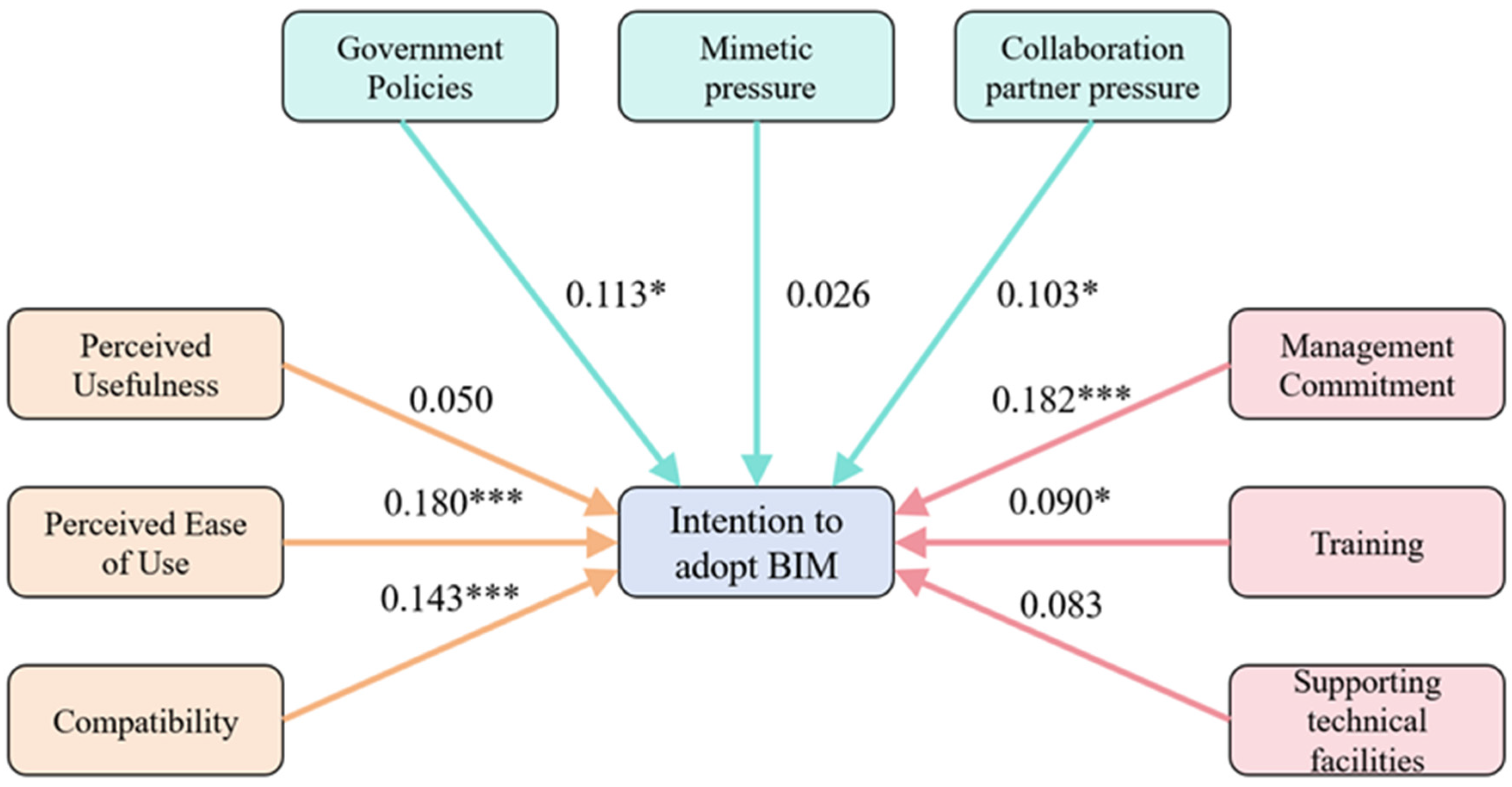
Then, the significance and value of the path coefficients were assessed using bootstrapping, and 5000 subsamples were considered sufficient to determine reasonable standard error estimates [79]. Table 6 presents the testing results for all hypotheses. Six hypotheses were supported, whereas three (H1, H6, and H8) were rejected. Among the nine factors, PEU (β = 0.180, p < 0.001) and MC (β = 0.182, p < 0.001) had the two strongest effects on the intention to adopt BIM. In addition, CO (β = 0.143, p < 0.001), TR (β = 0.090, p < 0.05), GP (β = 0.113, p < 0.05), and CPP (β = 0.103, p < 0.05) were significant predictors of BIM adoption intention. Notably, the impacts of CPP and GP were comparable. What is more, PU (β = 0.050, p = 0.373), STF (β = 0.083, p = 0.082), and MP (β = 0.026, p = 0.482) were insignificantly related to BIM adoption intention, as shown in Figure 2.

5. Discussion

This paper proposes a comprehensive framework to explore the influence of nine factors on the BIM adoption intention from three dimensions: technological, organizational, and environmental. 512 valid responses from multiple stakeholders, including owners, consulting firms, design firms, construction companies, suppliers, engineering surveying firms, and universities or research institutes, have been collected and retained for data analysis. The SEM results show that six factors exerted a significant impact on the BIM adoption intention, while three factors were not antecedents of the intention.
Among the three technical factors, perceived ease of use and compatibility are two important antecedents of BIM adoption intention, while perceived usefulness has no significant impact. The insignificant relationship between perceived usefulness and intention is contrary to the findings of previous studies, which have confirmed the significant impact of participants’ perception of usefulness regarding BIM technology [80,81]. The possible reasons for this conclusion are as follows. On the one hand, the advantages of BIM have been increasingly recognized after so many years of promotion [39]. Existing users may have experienced great benefits, such as enhanced visualization and interdisciplinary coordination, when applying BIM technology in their work, whereas potential users may have been frequently informed of these advantages due to the wide promotion. Therefore, the usefulness of BIM is supposed to be widely recognized among multiple stakeholders, and thus, this factor may not be a bottleneck for the wide application of BIM anymore. On the other hand, many emerging technologies are expected to be integrated with BIM, placing higher demands on BIM capabilities, which may indicate that using BIM technology alone cannot fully leverage its potential [82,83]. This study confirms that perceived ease of use significantly promotes the adoption intention of BIM, which is in line with extant literature, and represents the second most important predictor. In a previous study, Son et al. expanded the TAM and identified perceived ease of use as a key factor directly influencing willingness to adopt BIM [26]. If workers find it easy to use some technology, the cognitive load will be reduced. Jiang et al. argue that if the user interface is intuitive and the operation is smooth, users do not need to spend a lot of time and energy learning the tool, allowing them to focus on the task [84]. Furthermore, technological complexity may lead to black-box anxiety, which can be alleviated by perceived ease of use. It needs to be pointed out that many technologies are being applied in a coordinated manner in the construction industry, which undoubtedly increases the difficulty of learning and adopting BIM for the users and potential users. Higher usability of BIM, especially when integrated with other emerging technologies, will lower the barriers to BIM adoption intention. Existing evidence suggests that compatibility influences respondents’ intention to use BIM through the mediating factor of perceived usefulness [22], and a recent study also demonstrates that cognitive level mediates the relationship between the features of BIM (including compatibility) and its adoption [85]. The results of this study show that compatibility directly influences the adoption intention of BIM. BIM relies on specialized software and hardware to be effective. When the implementation of BIM is compatible with existing IT infrastructure, it yields favorable results. If technological challenges have been overcome, it may also be important to consider whether BIM is compatible with the current practices of professionals. However, a previous study revealed the insignificant relationship between perceived compatibility and BIM-Augmented Reality (AR) adoption [33]. This contradiction likely stems from differences in the technological scope between BIM-AR and BIM. First, BIM-AR applications are developed to solve context-specific problems (e.g., on-site visualization). Second, BIM serves as an interoperable tool requiring integration with multiple other technologies, imposing stricter compatibility demands.
According to the results of this study, management commitment and training exert a significant influence on BIM adoption intention, with management commitment being the greatest antecedent, while supporting technical facilities are not a key antecedent. A study has also demonstrated the significant impact of management commitment on the adoption intention of BIM [20]. Caglayan et al. have built a systematic evaluation framework and revealed that senior management support directly affected the implementation of BIM [86]. Open communication and proactive engagement of the management could effectively reduce resistance to adopting new technology and enhance employee engagement [87]. And a previous study found that management’s motivation plays a key role in driving innovation in the construction industry [40]. In addition to high priority, management commitment also means the guarantee of various resources such as funds and time, which may be one of the key reasons for the BIM promotion. The application of new technology is not a matter of an individual and requires efforts from many members within the organization. Sufficient input, including money and time, can also enhance the confidence of the whole team and send positive signals, which is of great strategic significance [88]. The statements above align with the findings of this study that management commitment plays a dominant role in removing inevitable barriers and ensuring the smooth implementation of BIM within the organization. Furthermore, according to the results of this study, training also significantly influences BIM adoption intention, which is consistent with previous studies. Ding et al. argued that the BIM capability of a team was an important predictor of architects’ intention to use BIM [9]. This highlighted the opportunities for BIM training provided by the companies and project managers and showed that enriching relevant experience promoted architects’ capability and intention. Seman et al. also revealed that technical training significantly affected user capabilities and helped users to understand potential construction logic and processes more comprehensively, and had become a key factor in accelerating the application of BIM [29]. Unskilled workers are a key barrier to the application of new technology. Training may not only directly improve the abilities of workers but also play a key role in the process of transforming abstract theories into concrete strategies. With the emergence of new technologies [82,83,89], integrating BIM with these technologies may have become a critical challenge for BIM users, which necessitates sufficient training support. The results show that supporting technical facilities do not appear to have a significant impact on the adoption intention of BIM, which contrasts with the conclusions of many previous studies. The implementation of BIM requires relevant software and hardware facilities to be effective [90]. Pan et al. found that favorable conditions directly affect the learning behavior of BIM, among which institutional resources (such as hardware facilities and software) and teacher support are the key factors [91]. Zhang et al. observed that favorable conditions exerted a continuous positive influence on behavioral intention and usage behavior, with hardware, software, and technical support being the key ones for BIM adoption intention [42]. This contradiction can be explained by two factors. First, BIM does not impose high hardware requirements, so the impact of hardware, software, and other facilities may be less significant than other factors, such as training provided by the management. Second, these technical resources are now readily available to enterprises after years of BIM promotion. Consequently, the lack of such facilities may no longer constitute a major obstacle to BIM implementation.
As for environmental factors, mimetic pressure is not an important predictor of BIM adoption intention, whereas government policies and collaboration partner pressure are both significant predictors and similar in terms of influence. This study demonstrates that government policies are an enabler for BIM implementation, which is in line with many previous studies. Algahtany et al. confirmed government initiatives, such as clarifying the direction of development and establishing standards, had a profound impact on the application of BIM [92]. Furthermore, government financial support and guidelines are also critical for overcoming barriers faced by enterprises during the initial stage of BIM adoption [90]. Qin et al. took Chinese construction enterprises as the research subject and also found that government policies were the strongest driving factors affecting the application of BIM in enterprises [93]. The state-owned enterprises in China are more sensitive to government policies because they will receive more government subsidies and media reputation as compensation mechanisms when assuming heavier policy burdens [94]. In the institutional environment with Chinese characteristics, state-owned construction enterprises function simultaneously as policy implementers and instruments of state capacity. Meanwhile, non-state-owned construction enterprises would benefit from market-oriented incentive policies and proactively adopt BIM technology to enhance their competitive advantage. Standardized construction norms and other mandatory policies may also be conducive to the increase in the adoption rate of BIM. This study fails to identify the significant correlation between mimetic pressure and the BIM adoption intention. In previous studies, the relationship between mimetic pressure and BIM adoption intention is controversial. For example, Ma et al. found that mimetic pressure positively affected the intention to adopt BIM [95], while Tavallaei et al. applied the institutional theoretical framework and concluded that mimetic pressure had no significant impact on the BIM adoption [20]. The reasons for this conclusion in this study are as follows. First, the completion of projects requires numerous technologies, and BIM is only one of them and may not be the decisive one. So, the pressure posed by competitors using BIM technology may still be limited. Second, there may be relatively little communication between competitors in the construction industry. Consequently, the weak ties between enterprises may further explain why mimetic pressure does not significantly increase BIM adoption intention. Unlike mimetic pressure, collaboration partner pressure significantly affects the adoption intention of BIM in this study. Few scholars have paid attention to the pressure from collaboration partners, yet such pressure may be important because construction projects require multi-party cooperation. Yuan et al. argued that social influence significantly promoted the perceived ease of use, which in turn predicted attitudes toward BIM and indirectly influenced adoption intention [13]. This social influence stems from colleagues, top management, and cooperative partners. Although this previous study did not directly examine the impact of pressure from collaboration partners, the findings still revealed the multifaceted collaborative nature of the construction industry, indicating that smooth collaboration among stakeholders may remain important. Similarly, Papadonikolaki et al. found that contractors tended to select partners who use BIM [96], which suggests that BIM adoption serves as a criterion for partner selection. BIM technology is widely recognized for facilitating collaboration among all participants, as it features enhanced information sharing, better communication, and real-time collaboration. The advantage of BIM, ensuring smooth coordination among different parties, may be the reason for this finding in this study.

5.1. Practical Implications

This study adopts a comprehensive framework to determine key predictors of BIM adoption intention. Specifically, we examine how nine factors, derived from previous literature across three dimensions, impact stakeholders’ intention to adopt BIM. The conclusions of this study have practical value for two reasons. First, a comprehensive range of factors is taken into consideration in this study, offering practical recommendations from multiple perspectives. Second, survey participants include owners, consulting firms, design firms, construction companies, suppliers, engineering surveying firms, and universities or research institutes. This diversity makes the results more generalizable than those of previous studies limited to one type of enterprise. The results show that the influence of three factors on BIM adoption intention is not significant. The insignificant relationship between two factors (perceived usefulness and supporting technical facilities) and BIM adoption intention is inconsistent with the conclusions of much previous research, reflecting the new situation of promoting BIM technology. After years of effort, it has been widely recognized that BIM is useful in the construction industry, while concerns about supporting technical facilities have lessened as an obstacle to BIM adoption intention. Regarding the impact of mimetic pressure, previous studies have yielded inconsistent conclusions. In this study, the insignificant influence of mimetic pressure is attributed to both the non-decisive role of BIM technology and the lack of communication among competitors. Regarding the other six key predictors of BIM adoption intention, practical suggestions are provided below for three groups: BIM technology service providers, enterprises in the construction industry, and regulatory agencies (including government and industry associations).
(1)
BIM technology service providers should pay attention to the ease of use of the relevant software and reduce the operational difficulty. Meanwhile, being compatible with existing software, hardware, and workflow is another concern for providers. With the emergence of many new technologies for the construction industry, new requirements have emerged for the service providers. From the perspectives of usability and compatibility, ensuring smooth collaboration between BIM and other new technologies has become imperative.
(2)
For the enterprises, a series of management measures could be implemented to promote BIM technology. First and foremost, the management should give high priority to BIM, setting an example for staff to follow. Apart from the visible commitment, enterprises should also allocate necessary resources, including funding and technical support. Training is also an efficient way, especially when other new technologies appear, bringing stricter requirements for professionals’ technical capabilities. As a result, training with up-to-date content, provided by enterprises, is necessary.
(3)
The government plays a vital role in facilitating new technology diffusion through policy instruments such as incentives, regulatory standards, and reference cases. Furthermore, the government and industry associations could organize seminars and invite all types of construction enterprises to participate. How to use BIM to enhance effective coordination among all parties is an important topic, as BIM has been widely accepted as the cornerstone of the industry’s digital transformation.

5.2. Limitations

Despite some innovative and useful findings, several limitations still exist in this study which necessitate future research. First, this study relied on self-reported questionnaire data to examine the influence of various factors on BIM adoption intention. Although this approach is widely employed in new technology adoption studies, it is susceptible to subjective biases. To reduce the negative impact, we assured participants of anonymity. However, objective data could be introduced to complement these findings in future research. In addition, common method variance (CMV) should be addressed using stronger statistical tests other than Harman’s single-factor test in future research. Second, this study relied on cross-sectional survey data. A future study would benefit from longitudinal data to establish causal relationships. As the impact of drivers and barriers on BIM adoption intention may vary over time, examining such temporal heterogeneity would contribute to more tailored recommendations for BIM promotion. Furthermore, multi-group analysis or an examination of mediation/moderation effects could be conducted to enhance the robustness of the findings. Third, the outcome variable in this study is BIM adoption intention, which is not equivalent to actual use of BIM technology. Therefore, future studies may target the actual use, like records of logging into relevant software, and adoption intention as the dependent variables to address the intention–behavior gap to effectively translate the intention into actual use.

6. Conclusions

Considering that BIM provides significant advantages in enhancing interdisciplinary coordination and optimizing the whole lifecycle management of projects, identifying antecedents of the intention to adopt BIM technology is essential for driving digital transformation and sustainable development in the construction industry. This study aims to explore how the factors influence BIM adoption intention among multiple stakeholders in the construction industry. The diverse sample and comprehensive factor coverage in this study provide valuable theoretical and practical insights for promoting BIM adoption intention. The major findings are as follows:
(1)
From a technological point of view, perceived usefulness no longer poses a challenge because prolonged advocacy has successfully established its value proposition among practitioners. By identifying the significant impact of perceived ease of use, this study highlights the importance of reducing the operational difficulty for BIM users. Compatibility with existing facilities and workflows further facilitates adoption. These findings direct service providers to take user-centric design seriously, particularly as emerging technologies that work together with BIM introduce new usability challenges at the current stage.
(2)
For enterprises, the management should give priority to BIM adoption, as this study validates the dominant role of management commitment. Once BIM’s value is recognized by the management, additional resources should also be allocated to implementation. Training improves professionals’ BIM capabilities and facilitates BIM adoption intention. This underscores the necessity of enterprise-sponsored training programs. Furthermore, emerging technologies pose new challenges for technical training. Due to long-term promotion efforts, supporting technical facilities are no longer a bottleneck for BIM adoption.
(3)
From the perspective of the environment, mimetic pressure is not a major concern, while collaborators’ opinions play an important role in predicting the intention to adopt BIM technology. Given BIM’s effectiveness in promoting interdisciplinary cooperation, practitioners adopting BIM expect their collaborators to adopt BIM technology to facilitate information sharing. Policies issued by the government are a key driver of new technology diffusion, and it is recommended that the government and industry associations organize BIM technical exchange seminars in addition to conventional policy instruments.

Author Contributions

Conceptualization, G.Y.; methodology, M.H.; software, M.H.; validation, G.Y.; formal analysis, M.H.; investigation, M.H.; data curation, G.Y.; writing—original draft preparation, M.H.; writing—review and editing, G.Y.; supervision, G.Y. All authors have read and agreed to the published version of the manuscript.

Funding

This study received no funding or project support.

Institutional Review Board Statement

The study was approved by the Ethics Committee of Sichuan Normal University, 2025LS0110, 16 May 2025.

Informed Consent Statement

Informed consent was obtained from all subjects involved in the study.

Data Availability Statement

Data generated or analyzed, models, or code used during the study are available from the corresponding author by request.

Acknowledgments

The authors gratefully appreciate all the support.

Conflicts of Interest

The authors declare no conflicts of interest.

Appendix A

Table A1. Description of measurable variables.
ConstructsVariable CodeMeasurement Item
Perceived Usefulness
PU1Using BIM improves my work productivity
PU2Using BIM enhances the quality of project deliverables
PU3Using BIM is beneficial to my professional development
Perceived Ease of Use
PEU1Learning to operate BIM software is easy for me
PEU2BIM software is user-friendly
PEU3I find it easy to use BIM to complete my tasks
Compatibility
CO1BIM software works with my present workflow
CO2BIM software is compatible with my other software and hardware
Management Commitment
MC1My organization understands the benefits of BIM
MC2Top management in my organization strongly supports the use of BIM
MC3My organization provides sufficient resources for BIM adoption
MC4My organization has given high priority to BIM
Training
TR1My organization provides proper education and training for BIM adoption and implementation.
TR2My organization provides proper technical guidance for using BIM
TR3My organization utilizes a specific person, group, or external consultants to solve difficulties in using BIM
Supporting technical facilities
STF1My organization possesses hardware capable of supporting BIM
STF2My organization has full access to BIM software
STF3In my organization, there are no barriers in terms of technical facilities hindering the collaboration among the staff using BIM
Government Policies
GP1The government has issued clear policies encouraging BIM adoption
GP2The government provides financial incentives for BIM implementation
GP3The government is trying to promote industry standards and references relevant to BIM
Mimetic pressure
CP1My company thinks that BIM technology influences competition in the industry
CP2My company is under pressure from competitors to adopt BIM technology
Collaboration partner pressure
CPP1My company’s major partners encouraged the implementation of BIM technology
CPP2My company’s major partners recommended the implementation of BIM technology
CPP3My company’s major partners requested the implementation of BIM technology
BIM adoption intention
INT1I intend to adopt BIM technology
INT2I will recommend BIM technology to other technicians or organizations

References

  1. Takyi-Annan, G.E.; Zhang, H. Assessing the impact of overcoming BIM implementation barriers on BIM usage frequency and circular economy in the project lifecycle using Partial Least Squares Structural Equation modelling (PLS-SEM) analysis. Energy Build. 2023, 295, 113329. [Google Scholar] [CrossRef]
  2. Eastman, C.M. BIM Handbook: A Guide to Building Information Modeling for Owners, Managers, Designers, Engineers and Contractors; John Wiley & Sons: Hoboken, NJ, USA, 2011. [Google Scholar]
  3. Zuppa, D.; Issa, R.R.; Suermann, P.C. BIM’s impact on the success measures of construction projects. Comput. Civ. Eng. 2009, 2009, 503–512. [Google Scholar]
  4. El-Habashy, S.; Alqahtani, F.K.; Mekawy, M.; Sherif, M.; Badawy, M. Identification of 4D-BIM Barriers in Offshore Construction Projects Using Fuzzy Structural Equation Modeling. Buildings 2023, 13, 1512. [Google Scholar] [CrossRef]
  5. Hong, Y.; Hammad, A.; Zhong, X.Y.; Wang, B.B.; Akbarnezhad, A. Comparative Modeling Approach to Capture the Differences in BIM Adoption Decision-Making Process in Australia and China. J. Constr. Eng. Manag. 2020, 146, 04019099. [Google Scholar] [CrossRef]
  6. Vitente, L.S.; Ong, A.K.S.; German, J.D. Assessment of Adoption and Acceptance of Building Information Modeling for Building Construction among Industries in Qatar. Buildings 2024, 14, 1433. [Google Scholar] [CrossRef]
  7. Saka, A.B.; Chan, D.W.M.; Ajayi, S.O. Institutional isomorphism and adoption of building information modelling (BIM) in small and medium-sized enterprises (SMEs) of the Nigerian Construction Industry. Eng. Constr. Archit. Manag. 2024, 31, 179–199. [Google Scholar] [CrossRef]
  8. Eadie, R.; Browne, M.; Odeyinka, H.; McKeown, C.; McNiff, S. BIM implementation throughout the UK construction project lifecycle: An analysis. Autom. Constr. 2013, 36, 145–151. [Google Scholar] [CrossRef]
  9. Ding, Z.K.; Zuo, J.; Wu, J.C.; Wang, J.Y. Key factors for the BIM adoption by architects: A China study. Eng. Constr. Archit. Manag. 2015, 22, 732–748. [Google Scholar] [CrossRef]
  10. Murguia, D.; Vasquez, C.; Demian, P.; Soetanto, R. BIM Adoption among Contractors: A Longitudinal Study in Peru. J. Constr. Eng. Manag. 2023, 149, 04022140. [Google Scholar] [CrossRef]
  11. Okakpu, A.; GhaffarianHoseini, A.; Tookey, J.; Haar, J.; Ghaffarianhoseini, A. Exploring the environmental influence on BIM adoption for refurbishment project using structural equation modelling. Archit. Eng. Des. Manag. 2020, 16, 41–57. [Google Scholar] [CrossRef]
  12. Wu, Z.Z.; Jiang, M.Y.; Li, H.; Luo, X.C.; Li, X.Y. Investigating the Critical Factors of Professionals’ BIM Adoption Behavior Based on the Theory of Planned Behavior. Int. J. Environ. Res. Public Health 2021, 18, 3022. [Google Scholar] [CrossRef]
  13. Yuan, H.P.; Yang, Y.; Xue, X.L. Promoting Owners’ BIM Adoption Behaviors to Achieve Sustainable Project Management. Sustainability 2019, 11, 3905. [Google Scholar] [CrossRef]
  14. Wong, C.F.; Lau, S.H.; Tan, O.K.; Yap, J.B.H. Critical factors influencing the adoption of building information modelling (BIM) using technological adoption framework and structural equation modelling. Eng. Constr. Archit. Manag. 2023, 32, 967–986. [Google Scholar] [CrossRef]
  15. Al-sarafi, A.H.M.; Alias, A.H.; Shafri, H.Z.M.; Jakarni, F.M. Factors Affecting BIM Adoption in the Yemeni Construction Industry: A Structural Equation Modelling Approach. Buildings 2022, 12, 2066. [Google Scholar] [CrossRef]
  16. Ariono, B.; Wasesa, M.; Dhewanto, W. Revealing Building Information Modeling Adoption Factors in Indonesia: A Mixed-Methods Exploration Through Constant Comparative Method and Structural Equation Modeling. Eng. Manag. J. 2025, 37, 163–182. [Google Scholar] [CrossRef]
  17. Waqar, A.; Othman, I.; González-Lezcano, R.A. Challenges to the Implementation of BIM for the Risk Management of Oil and Gas Construction Projects: Structural Equation Modeling Approach. Sustainability 2023, 15, 8019. [Google Scholar] [CrossRef]
  18. Waqar, A.; Othman, I.; Radu, D.; Ali, Z.; Almujibah, H.; Hadzima-Nyarko, M.; Khan, M.B. Modeling the Relation between Building Information Modeling and the Success of Construction Projects: A Structural-Equation-Modeling Approach. Appl. Sci. 2023, 13, 9018. [Google Scholar] [CrossRef]
  19. Belay, S.; Goedert, J.; Woldesenbet, A.; Rokooei, S.; Matos, J.; Sousa, H. Key BIM Adoption Drivers to Improve Performance of Infrastructure Projects in the Ethiopian Construction Sector: A Structural Equation Modeling Approach. Adv. Civ. Eng. 2021, 2021, 7473176. [Google Scholar] [CrossRef]
  20. Tavallaei, R.; Mashayekhi, A.; Harrison, N.; Talebian, M.; Moser, R. BIM adoption: A case of institutional pressures and top management support. J. Constr. Eng. Manag. 2022, 148, 04022084. [Google Scholar] [CrossRef]
  21. Aladağ, H.; Demirdöğen, G.; Demirbağ, A.T.; Işık, Z. Understanding the perception differences on BIM adoption factors across the professions of AEC industry. Ain Shams Eng. J. 2023, 14, 102545. [Google Scholar] [CrossRef]
  22. Wang, W.; Gao, S.; Mi, L.; Xing, J.; Shang, K.; Qiao, Y.; Fu, Y.; Ni, G.; Xu, N. Exploring the adoption of BIM amidst the COVID-19 crisis in China. Build. Res. Inf. 2021, 49, 930–947. [Google Scholar] [CrossRef]
  23. Hong, Y.; Hammad, A.W.A.; Sepasgozar, S.; Akbarnezhad, A. BIM adoption model for small and medium construction organisations in Australia. Eng. Constr. Archit. Manag. 2019, 26, 154–183. [Google Scholar] [CrossRef]
  24. Lee, S.; Yu, J. Longitudinal Study on Construction Organization’s BIM Acceptance. Appl. Sci. 2020, 10, 5358. [Google Scholar] [CrossRef]
  25. Jia, J.Y.; Zhang, M.Y.; Yang, G.S. Factors Influencing BIM Integration with Emerging Technologies: Knowledge Coupling Perspective. J. Manag. Eng. 2022, 38, 04022001. [Google Scholar] [CrossRef]
  26. Son, H.; Lee, S.; Kim, C. What drives the adoption of building information modeling in design organizations? An empirical investigation of the antecedents affecting architects’ behavioral intentions. Autom. Constr. 2015, 49, 92–99. [Google Scholar] [CrossRef]
  27. Ahmed, S.H.A.; Suliman, S.M.A. A structure equation model of indicators driving BIM adoption in the Bahraini construction industry. Constr. Innov. 2020, 20, 61–78. [Google Scholar] [CrossRef]
  28. Kordestani, N.; Babaeian Jelodar, M.; Paes, D.; Sutrisna, M.; Rahmani, D. A comprehensive evaluation of factors influencing offsite construction and BIM integration in the construction industry. Eng. Constr. Archit. Manag. 2024, 32, 6373–6397. [Google Scholar] [CrossRef]
  29. Semaan, J.; Underwood, J.; Hyde, J. An investigation of work-based education and training needs for effective BIM adoption and implementation: An organisational upskilling model. Appl. Sci. 2021, 11, 8646. [Google Scholar] [CrossRef]
  30. Xu, H.; Feng, J.; Li, S. Users-orientated evaluation of building information model in the Chinese construction industry. Autom. Constr. 2014, 39, 32–46. [Google Scholar] [CrossRef]
  31. Olanrewaju, O.I.; Kineber, A.F.; Chileshe, N.; Edwards, D.J. Modelling the Impact of Building Information Modelling (BIM) Implementation Drivers and Awareness on Project Lifecycle. Sustainability 2021, 13, 8887. [Google Scholar] [CrossRef]
  32. Olanrewaju, O.I.; Kineber, A.F.; Chileshe, N.; Edwards, D.J. Modelling the relationship between Building Information Modelling (BIM) implementation barriers, usage and awareness on building project lifecycle. Build. Environ. 2022, 207, 108556. [Google Scholar] [CrossRef]
  33. Addy, M.N.; Kwofie, T.E.E.; Agbonani, D.M.; Essegbey, A.E. Using the TOE theoretical framework to study the adoption of BIM-AR in a developing country: The case of Ghana. J. Eng. Des. Technol. 2024, 22, 1913–1935. [Google Scholar] [CrossRef]
  34. Zhao, Y.W.; Sun, Y.D.; Zhou, Q.Q.; Cui, C.Y.; Liu, Y. How A/E/C professionals accept BIM technologies in China: A technology acceptance model perspective. Eng. Constr. Archit. Manag. 2023, 30, 4569–4589. [Google Scholar] [CrossRef]
  35. Sajjad, M.; Hu, A.F.; Radu, D.; Waqar, A.; Almujibah, H.R.; Mateen, A. BIM implementation in project management practices for sustainable development: Partial Least square approach. Ain Shams Eng. J. 2024, 15, 103048. [Google Scholar] [CrossRef]
  36. Zhang, L.; Chu, Z.W.; Song, H.B. Understanding the Relation between BIM Application Behavior and Sustainable Construction: A Case Study in China. Sustainability 2020, 12, 306. [Google Scholar] [CrossRef]
  37. Waqar, A.; Othman, I.; Saad, N.; Azab, M.; Khan, A.M. BIM in green building: Enhancing sustainability in the small construction project. Clean. Environ. Syst. 2023, 11, 100149. [Google Scholar] [CrossRef]
  38. Famakin, I.O.; Othman, I.; Kineber, A.F.; Oke, A.E.; Olanrewaju, O.I.; Hamed, M.M.; Olayemi, T.M. Building Information Modeling Execution Drivers for Sustainable Building Developments. Sustainability 2023, 15, 3445. [Google Scholar] [CrossRef]
  39. Cui, Q.H.; Hu, X.C.; Liu, X.; Zhao, L.M.; Wang, G.B. Understanding Architectural Designers’ Continuous Use Intention Regarding BIM Technology: A China Case. Buildings 2021, 11, 448. [Google Scholar] [CrossRef]
  40. Tan, S.; Ayalp, G.G.; Tel, M.Z.; Serter, M.; Metinal, Y.B. Modeling the Critical Success Factors for BIM Implementation in Developing Countries: Sampling the Turkish AEC Industry. Sustainability 2022, 14, 9537. [Google Scholar] [CrossRef]
  41. Park, E.; Kwon, S.J.; Han, J. Antecedents of the adoption of building information modeling technology in Korea. Eng. Constr. Archit. Manag. 2019, 26, 1735–1749. [Google Scholar] [CrossRef]
  42. Zhang, W.; Li, J.; Liang, Z. Barriers to building information modeling from an individual perspective in the Chinese construction industry: An extended unified theory of acceptance and use of technology. Buildings 2023, 13, 1881. [Google Scholar] [CrossRef]
  43. Davis, F.D. Perceived usefulness, perceived ease of use, and user acceptance of information technology. MIS Q. 1989, 13, 319–340. [Google Scholar] [CrossRef]
  44. Wang, J.; Li, C.; Wu, J.; Zhou, G. Research on the Adoption Behavior Mechanism of BIM from the Perspective of Owners: An Integrated Model of TPB and TAM. Buildings 2023, 13, 1745. [Google Scholar] [CrossRef]
  45. Son, H.; Park, Y.; Kim, C.; Chou, J.-S. Toward an understanding of construction professionals’ acceptance of mobile computing devices in South Korea: An extension of the technology acceptance model. Autom. Constr. 2012, 28, 82–90. [Google Scholar] [CrossRef]
  46. Lee, S.; Yu, J.; Jeong, D. BIM Acceptance Model in Construction Organizations. J. Manag. Eng. 2015, 31, 04014048. [Google Scholar] [CrossRef]
  47. Wu, J.-H.; Wang, S.-C. What drives mobile commerce?: An empirical evaluation of the revised technology acceptance model. Inf. Manag. 2005, 42, 719–729. [Google Scholar] [CrossRef]
  48. Saadé, R.; Bahli, B. The impact of cognitive absorption on perceived usefulness and perceived ease of use in on-line learning: An extension of the technology acceptance model. Inf. Manag. 2005, 42, 317–327. [Google Scholar] [CrossRef]
  49. Rogers, E.M.; Singhal, A.; Quinlan, M.M. Diffusion of innovations. In An Integrated Approach to Communication Theory and Research; Routledge: New York, NY, USA, 2014; pp. 432–448. [Google Scholar]
  50. Ali, O.; Shrestha, A.; Osmanaj, V.; Muhammed, S. Cloud computing technology adoption: An evaluation of key factors in local governments. Inf. Technol. People 2021, 34, 666–703. [Google Scholar] [CrossRef]
  51. Tung, F.-C.; Chang, S.-C.; Chou, C.-M. An extension of trust and TAM model with IDT in the adoption of the electronic logistics information system in HIS in the medical industry. Int. J. Med. Inform. 2008, 77, 324–335. [Google Scholar] [CrossRef]
  52. Vijayasarathy, L.R. Predicting consumer intentions to use on-line shopping: The case for an augmented technology acceptance model. Inf. Manag. 2004, 41, 747–762. [Google Scholar] [CrossRef]
  53. Gonzalez, C.; Agrawal, V.; Johansen, D.; Hooker, R. Green supply chain practices: The role of institutional pressure, market orientation, and managerial commitment. Clean. Logist. Supply Chain 2022, 5, 100067. [Google Scholar] [CrossRef]
  54. Villena-Manzanares, F.; García-Segura, T.; Pellicer, E. Organizational factors that drive to BIM effectiveness: Technological learning, collaborative culture, and senior management support. Appl. Sci. 2020, 11, 199. [Google Scholar] [CrossRef]
  55. Abbasnejad, B.; Nepal, M.P.; Mirhosseini, S.A.; Moud, H.I.; Ahankoob, A. Modelling the key enablers of organizational building information modelling (BIM) implementation: An interpretive structural modelling (ISM) approach. J. Inf. Technol. Constr. 2021, 26, 974–1008. [Google Scholar] [CrossRef]
  56. Amoako-Gyampah, K.; Salam, A.F. An extension of the technology acceptance model in an ERP implementation environment. Inf. Manag. 2004, 41, 731–745. [Google Scholar] [CrossRef]
  57. Attarzadeh, M.; Nath, T.; Tiong, R.L. Identifying key factors for building information modelling adoption in Singapore. Proc. Inst. Civ. Eng.-Manag. Procure. Law 2015, 168, 220–231. [Google Scholar]
  58. Kineber, A.F.; Massoud, M.M.; Hamed, M.M.; Alhammadi, Y.; Al-Mhdawi, M. Impact of overcoming BIM implementation barriers on sustainable building project success: A PLS-SEM approach. Buildings 2023, 13, 178. [Google Scholar] [CrossRef]
  59. Venkatesh, V.; Morris, M.G.; Davis, G.B.; Davis, F.D. User acceptance of information technology: Toward a unified view. MIS Q. 2003, 27, 425–478. [Google Scholar] [CrossRef]
  60. Wang, K.; Guo, M.; Di Sarno, L.; Sun, Y. Decoding BIM adoption: A meta-analysis of 10 years of research—Exploring the influence of sample size, economic level, and national culture. Buildings 2024, 14, 920. [Google Scholar] [CrossRef]
  61. Howard, R.; Restrepo, L.; Chang, C.-Y. Addressing individual perceptions: An application of the unified theory of acceptance and use of technology to building information modelling. Int. J. Proj. Manag. 2017, 35, 107–120. [Google Scholar] [CrossRef]
  62. Succar, B. Building information modelling framework: A research and delivery foundation for industry stakeholders. Autom. Constr. 2009, 18, 357–375. [Google Scholar] [CrossRef]
  63. Cheng, J.C.; Lu, Q. A review of the efforts and roles of the public sector for BIM adoption worldwide. J. Inf. Technol. Constr. 2015, 20, 442–478. [Google Scholar]
  64. Wang, Z.; Liu, Z.; Liu, J. Innovation strategy or policy pressure? The motivations of BIM adoption in China’s AEC enterprises. J. Asian Archit. Build. Eng. 2022, 21, 1578–1589. [Google Scholar] [CrossRef]
  65. Zhang, R.; Tang, Y.; Wang, L.; Wang, Z. Factors influencing BIM adoption for construction enterprises in China. Adv. Civ. Eng. 2020, 2020, 8848965. [Google Scholar] [CrossRef]
  66. Omar, H.; Dulaimi, M. Solutions for effective diffusion of BIM for BIM late adopters: Case study of UAE AEC industry. Int. J. Constr. Manag. 2023, 23, 1484–1493. [Google Scholar] [CrossRef]
  67. DiMaggio, P.J.; Powell, W.W. The iron cage revisited: Institutional isomorphism and collective rationality in organizational fields. Am. Sociol. Rev. 1983, 48, 147–160. [Google Scholar] [CrossRef]
  68. Lieberman, M.B.; Asaba, S. Why do firms imitate each other? Acad. Manag. Rev. 2006, 31, 366–385. [Google Scholar] [CrossRef]
  69. Gao, Y.; Yue, M.; Zhang, J.; Jin, Z.; Zhang, S.; Pan, K. The impact of institutional pressures on BIM identity formation in the construction industry and the mediating role of perceived usefulness. J. Manag. Eng. 2023, 39, 04023038. [Google Scholar] [CrossRef]
  70. Bui, N. Implementation of building information modeling in Vietnamese infrastructure construction: A case study of institutional influences on a bridge project. Electron. J. Inf. Syst. Dev. Ctries. 2020, 86, e12128. [Google Scholar] [CrossRef]
  71. Dolla, T.; Venkatachalam, S.; Kumar Delhi, V.S. Institutional Shaping of CDE Implementation in BIM-Enabled AEC Projects. J. Inf. Technol. Constr. 2024, 29, 826–849. [Google Scholar] [CrossRef]
  72. Daoud, A.O.; Oke, A.E.; Singh, A.K.; Famakin, I.O.; Aziz, K.M.A.; Olayemi, T.M. Exploring the building information modelling benefits for sustainable construction using PLS-SEM. Sci. Rep. 2025, 15, 35781. [Google Scholar] [CrossRef]
  73. Hair, J.F.; Ringle, C.M.; Sarstedt, M. PLS-SEM: Indeed a Silver Bullet. J. Mark. Theory Pract. 2014, 19, 139–152. [Google Scholar] [CrossRef]
  74. Henseler, J.; Ringle, C.M.; Sarstedt, M. A new criterion for assessing discriminant validity in variance-based structural equation modeling. J. Acad. Mark. Sci. 2014, 43, 115–135. [Google Scholar] [CrossRef]
  75. Hulland, J. Use of partial least squares (PLS) in strategic management research: A review of four recent studies. Strateg. Manag. J. 1999, 20, 195–204. [Google Scholar] [CrossRef]
  76. Hair, J.F.; Astrachan, C.B.; Moisescu, O.I.; Radomir, L.; Sarstedt, M.; Vaithilingam, S.; Ringle, C.M. Executing and interpreting applications of PLS-SEM: Updates for family business researchers. J. Fam. Bus. Strategy 2021, 12, 100392. [Google Scholar] [CrossRef]
  77. Hair, J.F.; Risher, J.J.; Sarstedt, M.; Ringle, C.M. When to use and how to report the results of PLS-SEM. Eur. Bus. Rev. 2019, 31, 2–24. [Google Scholar] [CrossRef]
  78. Fornell, C.; Larcker, D. Structural equation models with unobservable variables and measurement error: Algebra and statistics. J. Mark. Res. 1981, 18, 382–388. [Google Scholar] [CrossRef]
  79. Hair, J.F.; Hult, G.T.M.; Ringle, C.M.; Sarstedt, M. A Primer on Partial Least Squares Structural Equation Modeling (PLS-SEM); Sage Publications: Thousand Oaks, CA, USA, 2017. [Google Scholar]
  80. Ahankoob, A.; Abbasnejad, B.; Aranda-Mena, G. Building Information Modelling (BIM) Acceptance and Learning Experiences in Undergraduate Construction Education: A Technology Acceptance Model (TAM) Perspective—An Australian Case Study. Buildings 2025, 15, 1804. [Google Scholar] [CrossRef]
  81. Van Tam, N.; Diep, T.N.; Quoc Toan, N.; Le Dinh Quy, N. Factors affecting adoption of building information modeling in construction projects: A case of Vietnam. Cogent Bus. Manag. 2021, 8, 1918848. [Google Scholar] [CrossRef]
  82. Deng, Y.; Gan, V.J.L.; Das, M.; Cheng, J.C.P.; Anumba, C. Integrating 4D BIM and GIS for Construction Supply Chain Management. J. Constr. Eng. Manag. 2019, 145, 04019016. [Google Scholar] [CrossRef]
  83. Pan, Y.; Zhang, L. Integrating BIM and AI for Smart Construction Management: Current Status and Future Directions. Arch. Comput. Methods Eng. 2022, 30, 1081–1110. [Google Scholar] [CrossRef]
  84. Xiaomin, J.; Kai, C.; Ping, W. Adoption intention of generative artificial intelligence among Chinese college students: An extended TAM-UTAUT2 model from the four-helix perspective. Front. Educ. 2025, 10, 1686408. [Google Scholar] [CrossRef]
  85. Ngowtanasawan, G. A causal model of BIM adoption in the Thai architectural and engineering design industry. Procedia Eng. 2017, 180, 793–803. [Google Scholar] [CrossRef]
  86. Caglayan, S.; Ozorhon, B. Determining building information modeling effectiveness. Autom. Constr. 2023, 151, 104861. [Google Scholar] [CrossRef]
  87. Vraňaková, N.; Gyurák Babeľová, Z. The Roles of Technology Acceptance and Technology Use Frequency in Employees’ Quality of Work Life. Systems 2025, 13, 893. [Google Scholar] [CrossRef]
  88. Munianday, P.; Radzi, A.R.; Esa, M.; Rahman, R.A. Optimal strategies for improving organizational BIM capabilities: PLS-SEM approach. J. Manag. Eng. 2022, 38, 04022015. [Google Scholar] [CrossRef]
  89. Wang, Q.-C.; Yu, S.-N.; Chen, Z.-X.; Weng, Y.-W.; Xue, J.; Liu, X. Promoting additive construction in fast-developing areas: An analysis of policies and stakeholder perspectives. Dev. Built Environ. 2023, 16, 100271. [Google Scholar] [CrossRef]
  90. Tam, N.V.; Toan, N.Q.; Phong, V.V.; Durdyev, S. Impact of BIM-related factors affecting construction project performance. Int. J. Build. Pathol. Adapt. 2023, 41, 454–475. [Google Scholar]
  91. Peng, P.; Ao, Y.; Li, M.; Wang, Y.; Wang, T.; Bahmani, H. Building information modeling learning behavior of AEC undergraduate students in China. Behav. Sci. 2022, 12, 269. [Google Scholar] [CrossRef]
  92. Algahtany, M.; Radzi, A.R.; Al-Mohammad, M.S.; Rahman, R.A. Government initiatives for enhancing building information modeling adoption in Saudi Arabia. Buildings 2023, 13, 2130. [Google Scholar] [CrossRef]
  93. Qin, X.; Shi, Y.; Lyu, K.; Mo, Y. Using a TAM-TOE model to explore factors of Building Information Modelling (BIM) adoption in the construction industry. J. Civ. Eng. Manag. 2020, 26, 259–277. [Google Scholar] [CrossRef]
  94. Li, A.; Zheng, C.; Wang, G.; Chen, Z. Policy burden and technological innovation of state-owned enterprises. Financ. Res. Lett. 2024, 70, 106312. [Google Scholar] [CrossRef]
  95. Ma, J.; Mao, S.; Lin, W.; Zhu, X. Exploring Behavioral Mechanisms of BIM Outsourcing in Construction Enterprises: A TPB-Based Empirical Study from China. Buildings 2025, 15, 3032. [Google Scholar] [CrossRef]
  96. Papadonikolaki, E.; Vrijhoef, R.; Wamelink, H. The interdependences of BIM and supply chain partnering: Empirical explorations. Archit. Eng. Des. Manag. 2016, 12, 476–494. [Google Scholar] [CrossRef]
Figure 1. The proposed model and hypotheses of this study.
Sustainability 18 03704 g001
Figure 2. Path diagram of BIM adoption drivers (* denotes p < 0.05; ** denotes p < 0.01; *** denotes p < 0.001).
Sustainability 18 03704 g002
Table 1. Determinants of the BIM adoption intention and behavior by stakeholders.
TheoryMethodologyDependent Variable (DV)Independent Variable (IV)The Target Population for the StudyYear of
Publication
Source
Theory of Reasoned Action (TRA)SEMIntention of BIM utilizationMotivation
Technical defects of BIM
BIM capability
Management support
Knowledge structure
Architects in Shenzhen, China2015[9]
Technological adoption framework (TAF)PLS-SEMIntention to UsePerceived Usefulness
Perceived Ease of Use
Technological Quality
Personal Competency
Organizational Commitment
Stakeholders in Malaysia’s construction industry, including consultants, contractors, and clients2023[14]
Modified Technology Acceptance Model (TAM)SEMActual System UsePerceived Usefulness
Perceived Ease of Use
Attitude Towards Using
Behavioral Intention to Use
Contractors in Lima, Peru2023[10]
Literature ReviewPLS-SEMIntention to Adopt the BIMPolicy
Process
Technology
People
Environment
Professionals in Yemen’s construction industry2022[15]
TAM and Social Network Analysis (SNA)SEMBIM adoptionStandards
Information Sharing
Retrofit Tools
Culture of the organization
Clients’ expectations
New Zealand construction professionals who have participated in a refurbishment project and have BIM experience2019[11]
Dimensions
of technology, research, and development
Mixed methods (Constant Comparative Method and SEM)BIM adoptionPerceived Benefits
External Influences
Internal Organizational Readiness
Individual Innovativeness
BIM specialists, engineers, and managers within Indonesia’s AEC (Architecture, Engineering, Construction) sector2024[16]
Literature ReviewPLS-SEMBIM ImplementationKnowledge Barriers
Technical Barriers
Creativity Barriers
Functioning Barriers
Supervision Barriers
Construction professionals within Malaysia’s oil and gas sector (including safety managers, contractors, consultants, etc.)2023[17]
Literature ReviewSEMBIM adoption intentionOrganizations’ needs
Potential Benefits
Knowledge support
Ease of operation
Downtime
Potential Benefits
Potential Challenges
Small and medium-sized construction enterprises in Australia and China2020[5]
BIM technical features and the strength of COVID-19SEMBIM Adoption IntentionRelative Advantage
Compatibility
Complexity
Perceived usefulness
Event criticality
Respondents included owners, designers, architects, engineers, contractors, and other project participants in China2021[22]
Theory of Planned Behavior (TPB)SEMBIM adoption behaviorTechnical feasibility
Economic viability
Industrial environment
Governmental supervision
Attitude towards behavior
Subjective norm
Perceived behavioral control
Developers, contractors, and research institutions in China’s construction industry2021[12]
Literature ReviewPLS-SEMBIM ImplementationKnowledge
Creativity
Evaluation
Function
Normalization
Regulation
Participants with work experience in Malaysia’s construction sector2023[18]
Literature ReviewSEMBIM AdoptionAdoption motivation
Potential benefits
Potential challenge
Knowledge support
Down time
Staff’s BIM capability
Small and medium-sized construction contractors in Australia2018[23]
Systematic Literature Review (SLR)SEMBIM adoption in infrastructure projectsApplication
Environment
Project
Organization
Information Management
Specialist departments across various organizations in Ethiopia2021[19]
TAM and Information System Success Model (ISSM)SEMIndividual Usage Acceptance
Organizational Usage Acceptance
Perceived Usefulness
Perceived Ease of Use
Financial Aspects
Organizational Efficiency
Innovativeness
Total Quality
Operational Efficiency
Project managers, architects, engineers, contractors, BIM specialists, suppliers, etc., within Qatar’s construction industry2024[6]
Institutional TheoryPLS-SEM and Questionnaire surveysBIM Adoption
BIM awareness
Coercive Pressure
Mimetic Pressure
Normative Pressure
Size of the SME
Organization Type
Years of Establishment
Small and medium-sized enterprises in Nigeria’s construction sector2024[7]
Institutional TheoryPLS-SEMLevel of BIM AdoptionNormative Pressure
Mimetic Pressure
Coercive Pressure
Top Management Support
BIM managers from AEC organizations in the United States2022[20]
TAM + TOESEMBIM Adoption BehaviorTechnical Features
Government Policies
Social Influence
Organizational Support
Perceived Usefulness
Perceived Ease of Use
Project owners within China’s construction sector2019[13]
TAMQuestionnaires + InterviewsActual BIM useOrganizational Factors
Personal Factors
Technology Quality
Financial Factors
Environmental Factors
Perceived Ease of Use
Consensus
Perceived Usefulness
Individua Intention
Organizational Intention
Architects and civil engineers with overseas experience working in contractors’ technical departments2023[21]
TAMSEMIndividual intention
Organizational intention
Organizational Competency
Technology Quality
Personal Competency
Behavior Control
Perceived Ease of Use
Perceived Usefulness
Consensus on Appropriation
Contractors, architects, and engineers within the South Korean2020[24]
Knowledge Coupling Theory + Knowledge GovernancePLS-SEMBIM Integration IntentionProcedural inertia
Learning inertia
Experience inertia
Formal knowledge governance
Informal knowledge governance
Managers with BIM integration experience in Chinese construction enterprises2022[25]
TAMSEMArchitects’ behavioral intentions towards BIMTop Management Support
Subjective Norm
Compatibility
Perceived Usefulness
Behavioral Intention
Facilitating Conditions
Perceived Ease of Use
Computer Self-Efficacy
Architects from three South Korean design firms2015[26]
TOESEMBIM AdoptionEnvironment
People
Policy
Technology
Process
Organization
Professionals in Bahrain2020[27]
Literature ReviewSEMOSC and BIM IntegrationIntegrated Knowledge Deficit
Competency and Preparedness Deficit
External Support and Policy Regulation
Implementation Cost
Integration Facilitators
Participants in engineering, construction, planning, and project management across New Zealand regions2024[28]
TAMSEMBehavioral Intention to UseAttitude
Knowledge Acquisition
Lean
Organizational Learning
Organizational Support
Process Training
Social Factors
Technical Training
User Competency
Professionals in the architecture, engineering, and construction sectors2021[29]
TAM + IDTSEMBIM AdoptionPerceived ease of use
Perceived Usefulness
BIM standards
Compatibility
Interoperability
Monitoring
Visualization
Advantage
Complexity
Support
Professionals
Training
Willingness
Interest
Perceived cost
China’s construction industry encompassing owners, design firms, construction companies, contractors, software companies, and operators2014[30]
Literature ReviewSEMBlM DriversConstruction
Process digitalization and economics
BlM Drivers
Sustainability and efficiency
Visualization and productivity
Professionals within the construction industry2021[31]
Literature ReviewPLS-SEMBlM Usage and AwarenessTechnology and business
Training and people
Cost and standards
Overcoming BlM barriers
Process and economic
Specialists in Nigeria’s construction sector2022[32]
TOESEMAdoption of BIM-ARExternal Support
Competitive pressure
Trading Partners Readiness
Subjective Norms
Size of firm
Demographic Composition
Scope of Business Operation
ICT Infrastructures
Technical know-how
Perceived Compatibility
Perceived Values
Security
Senior management of Ghanaian construction firms2023[33]
TOE + TAMSEMBIM BehaviorGovernment BIM Policies
Organization Supports
BIM Technical Features
Perceived Usefulness
Perceived Ease of Usefulness
Attitude toward BIM Adoption
Behavioral Intention
AEC professionals in China2022[34]
Literature ReviewSEMBIM implementationConflict & Risk Management
Communication & Safety Practices
Planning & Technical Safety Management
Resource & Facility Management
BIM specialists, project managers, and civil engineers in Pakistan2024[35]
TPB + TAMSEMActual behavior Perceptual behavior control
Perceived usefulness
Perceived ease of use
Behavior attitude
Behavior intention
Subjective norm
BIM practitioners within China’s construction sector2020[36]
Literature ReviewSEMImplementation of BIM in Small Construction ProjectsMaterial Selection & Life Cycle Assessment
Waste Reduction
& Prefabrication
Energy Efficiency &
Performance Analysis
Early-stage Design optimization
Practitioners involved in small-scale construction projects in Perak, Malaysia2023[37]
Literature ReviewPLS-SEMBIM implementation driversStandards
Knowledge
Software
Legalization
Management
Training
Professionals in Nigeria’s construction industry2023[38]
TAMSEMContinuous use intentionPerceived ease of use
Perceived usefulness
Confirmation
Satisfaction
Designers who have been directly involved in BIM usage2021[39]
Literature ReviewSEMBIM implementationAwareness of technological benefits
Organizational readiness and competitive advantages
Motivation of management regarding BIM
Architects and civil engineers working for companies employing BIM technology in Turkey2022[40]
TAMSEMIntention to UseSystem and Display Quality
Organizational Support
Perceived Usefulness
Perceived Control
Perceived Ease of Use
Perceived Cost
Compatibility
Construction site personnel in South Korea with BIM application experience2018[41]
Unified Theory
of Acceptance and Use of Technology (UTAUT)
SEMUse BehaviorPerformance Expectancy
Effort Expectancy
Perceived Cost
User Trust
Facilitating Conditions
Task-technology Fit
Behavioral Intention
BIM practitioners in China’s construction industry2023[42]
Note: Dependent variable (DV) for these previous studies generally refers to either the intention to adopt BIM or actual behavior.
Table 2. Demographic parameters of respondents. (N = 512).
Demographic ParameterDistributionFrequencyPercentage
Gender
Male32463.3%
Female18836.7%
Age
22–259218.0%
26–3516231.6%
36–4411622.7%
>4514227.7%
Type of organization
Owner/Consulting company11722.9%
Design company9318.2%
Construction contractor16632.4%
Supplier/Engineering Surveying company9017.6%
Universities or research institutes469.0%
Educational Background
College degree or below15530.3%
Undergraduate25249.2%
Graduate student or above10520.5%
Working experience
0–3 years15229.7%
4–5 years15129.5%
6–10 years15630.5%
Over 10 years5310.4%
Table 3. Reliability and convergent validity test.
ConstructsMeasuring ItemsOuter LoadingCronbach’s
α
CRAVE
Perceived Usefulness
PU10.7980.7740.8130.593
PU20.694
PU30.812
Perceived Ease of Use
PEU10.7090.8320.8580.670
PEU20.891
PEU30.844
Compatibility
CO10.7430.7520.7850.648
CO20.862
Management Commitment
MC10.8430.8140.8570.602
MC20.817
MC30.742
MC40.692
Training
TR10.7650.8370.8630.678
TR20.816
TR30.885
Supporting technical facilities
STF10.8860.8760.9030.756
STF20.854
STF30.868
Government Policies
GP10.8320.8120.8300.620
GP20.788
GP30.739
Mimetic pressure
CP10.8210.7630.7810.641
CP20.780
Collaboration partner pressure
CPP10.7670.8020.8380.633
CPP20.808
CPP30.812
BIM adoption intention
INT10.8380.7440.7770.636
INT20.755
Table 4. Fornell–Larcker criterion results.
ConstructPUPEUCOMCTRSTFGPMPCPPINT
PU0.770
PEU0.6160.819
CO0.5580.6280.805
MC0.4470.5220.5710.776
TR0.5770.6050.6570.4530.823
STF0.4620.5360.4780.6770.4690.869
GP0.5520.6190.6720.4670.5590.5870.787
MP0.6710.5470.4880.4730.3290.3940.4790.801
CPP0.4390.4160.3660.5530.4410.4770.4370.3770.796
INT0.3460.6320.5570.5690.6050.3820.6160.3760.5560.797
Table 5. HTMT results.
ConstructPUPEUCOMCTRSTFGPMPCPPINT
PU
PEU0.753
CO0.6410.784
MC0.5390.6720.661
TR0.6170.6420.7830.742
STF0.5330.4220.7010.7730.475
GP0.6380.5610.5050.4830.5660.641
MP0.5590.6290.6430.5660.4810.7350.807
CPP0.4470.7460.6280.5250.5340.7830.6330.572
INT0.7290.6530.7820.6520.7220.6730.4480.6230.755
Table 6. Results of Hypothesis Testing (significance level = 0.05).
HypothesisPathPath CoefficientStandard Deviationt-Valuep-Value
H1PU -> INT0.0500.0560.8910.373
H2PEU -> INT0.1800.0483.7610.000 ***
H3CO -> INT0.1430.0433.3020.001 ***
H4MC -> INT0.1820.0523.5100.000 ***
H5TR -> INT0.0900.0452.0050.045 *
H6STF -> INT0.0830.0481.7400.082
H7GP -> INT0.1130.0482.3790.017 *
H8MP -> INT0.0260.0380.7040.482
H9CPP -> INT0.1030.0521.9910.047 *
Note: * denotes p < 0.05; ** denotes p < 0.01; *** denotes p < 0.001.
Disclaimer/Publisher’s Note: The statements, opinions and data contained in all publications are solely those of the individual author(s) and contributor(s) and not of MDPI and/or the editor(s). MDPI and/or the editor(s) disclaim responsibility for any injury to people or property resulting from any ideas, methods, instructions or products referred to in the content.