1. Introduction
In the modern world, technological developments have significantly raised living standards, particularly in advanced economies. However, this process has also generated serious environmental and social risks. These human-induced impacts have led to numerous interconnected global crises, including the climate crisis, biodiversity loss, pollution, epidemics, and deepening socioeconomic inequalities. To address these threats and position environmental education as a strategic tool, landmark international initiatives such as the 1972 Stockholm Conference [
1] and the 1992 Rio Earth Summit [
2] were launched.
As the comprehensive outcome of these efforts, the United Nations adopted the “2030 Agenda for Sustainable Development” in 2015 [
3] to steer societies toward a sustainable path. The 17 Sustainable Development Goals (SDGs) define the fundamental development challenges facing humanity by providing a universal, transformative, and inclusive framework. The fundamental vision of these 17 goals is to ensure a peaceful and equitable life for all individuals on Earth, both today and for future generations, while protecting the planet’s limits [
4].
Progressing towards sustainable development requires a fundamental transformation in the way individuals and societies think, perceive, and act. Individuals must possess the knowledge, skills, values, and attitudes to participate effectively in this process. In this context, education is of importance as a central and strategic facilitator in achieving sustainable development goals [
4,
5]. The United Nations has developed the Education for Sustainable Development (ESD) framework, which aims to address global issues holistically by turning learners into conscious decision-makers [
6]. ESD offers an approach that balances economic development with the conservation of natural resources and respect for ecological limits while emphasizing the transformative power of lifelong learning in this transformation [
7]. The ESD approach aims not only to help individuals acquire theoretical knowledge but also to develop problem-solving skills to overcome the challenges they face. In this regard, it aims to ensure the delicate balance between global well-being and the protection of the planet by nurturing sustainable citizens who are sensitive to cultural diversity, have internalized ethical values, and actively contribute to social transformation [
8].
Language teaching, with its interdisciplinary nature and capacity to encourage learners to engage with global issues, provides an extremely favorable context for integrating the SDGs into education. In this process, learners develop their language and communication skills while discovering sustainability themes incorporated into the curriculum and have the opportunity to think critically about these issues. Recent studies in the literature demonstrate that educational processes conducted with sustainability-focused teaching materials lead to meaningful progress in students’ language proficiency and make them more sensitive to global issues [
9,
10,
11,
12,
13,
14].
While many materials can be used in sustainability education, textbooks are among the most widely used tools worldwide for incorporating these topics into the education system. Textbooks, which serve as guides for teachers and a fundamental source of content for students, are critically important to the teaching process [
15]. As Risager [
16] emphasizes, textbooks not only teach a specific subject but also serve as windows that shape students’ views of the world. Given these strategic roles, analyzing the degree to which sustainability-focused content is represented in textbooks, determining the prominence of its dimensions (social, economic, and environmental), and examining the strengths and weaknesses of these materials relative to ESD goals are crucial for formulating effective educational policies.
A review of the relevant literature reveals that current studies on integrating the SDGs into foreign language teaching materials are predominantly shaped by Western-centric languages such as English. Limited research in this field typically presents findings based on specific themes, such as instructional design criteria or the quantitative distribution of cultural elements. However, the way sustainability themes are addressed in the teaching of Turkish as a foreign language (TTFL), which is in growing demand worldwide, remains a research gap. The tendency of existing studies to prioritize formal characteristics over qualitative content analysis hinders the theoretical discussion regarding the potential of language teaching materials to foster sustainable citizenship. In this context, examining how Turkish, as the target language, codes the world, nature, and social relations in educational materials will go beyond a purely local analysis. Evaluating TTFL materials within the framework of the SDGs aims to contribute to the global ESD literature by offering an alternative, culturally enriching perspective on ecological and social justice issues.
In line with this primary objective, the study focuses on the following sub-objectives:
To determine the frequency and distribution of the 17 core Sustainable Development Goals (SDGs) represented in the “Yeni İstanbul” (A1, B1, C1) textbook set.
To analyze the hierarchical transition of sustainability content as language proficiency levels increase (from beginner to advanced).
To evaluate whether the sustainability themes included in the textbooks serve merely as superficial tools for vocabulary instruction or possess the potential to foster critical awareness and behavioral change.
To achieve these goals, the research employs a qualitative research design, specifically document analysis. The data obtained were subjected to qualitative content analysis using a coding scheme developed based on United Nations and UNESCO criteria.
The structure of the article is organized as follows: Following the introduction,
Section 2 provides a theoretical framework concerning the concepts of sustainability and ESD.
Section 3 details the research methodology, sampling, and data analysis processes.
Section 4 presents the findings derived from the analysis categorized by proficiency levels, while
Section 5 discusses these findings in the context of relevant literature. In the conclusion and recommendations section, insights regarding the study’s contributions and their broader implications are presented.
2. Literature Review
2.1. Sustainability
Throughout human history, the development of civilizations has generally been shaped by economic growth models that treat natural resources as unlimited. However, since the second half of the 20th century, the acceleration of industrialization, population growth, and changes in consumption habits have reached a point that approaches the planet’s limits [
17,
18]. This period marks the beginning of a new era, the “Anthropocene” (Age of Humans), in which human activities have become a dominant force shaping Earth systems [
19]. This transformation has led to questioning the understanding of development defined by economic indicators and material progress [
4]. The concept of development has shifted from a narrow, solely economic-growth approach to a holistic, sustainable development model that respects the planet’s ecological limits and is based on social justice and prosperity for all. Sustainable development offers a framework that meets the needs of the present without compromising the ability of future generations to meet their own needs [
20].
Sustainability is a concept that encompasses both ecological and economic dimensions. Examining the historical development of the concept reveals that economists in forestry literature initially used it to determine how much harvesting could be done to ensure the continuity of production. Growing concerns about environmental degradation and the depletion of natural resources have made sustainability a recognized concept. In its most general definition, sustainability means the capacity to maintain an entity, outcome, or process over time [
21]. The definition put forward by the 1987 Brundtland Report [
18], “meeting the needs of the present without compromising the ability of future generations to meet their own needs,” forms the basis of sustainability today.
The development of the concept of sustainability has led to the emergence of various models and definitions over time. Theoretically, sustainability is based on integrating economic, social, and environmental dimensions [
22]. This tripartite structure became systematic in the 1987 Brundtland Report, which emphasized the interdependence of the economic, social, and environmental dimensions of development [
18]. John Elkington [
23] contributed to the further development of sustainability with his “Triple Bottom Line” model, which includes the elements of “people, planet, and prosperity.” Academically, these three dimensions are widely accepted as a framework for defining sustainability [
22]. In this vein, the 2030 Agenda adopted by the United Nations General Assembly presents the 17 Sustainable Development Goals as an integrated and indivisible plan that balances these three dimensions [
3].
Economic Dimension: This encompasses protecting capital, efficiently using resources, creating jobs, and increasing prosperity. However, in the context of sustainability, this dimension focuses on qualitative development and alternative economic models such as “green growth” or “degrowth” rather than quantitative growth (GDP increase).
Social Dimension: This encompasses human rights, gender equality, education, health, justice, and cultural diversity. Social sustainability refers to social harmony, inclusiveness, and a fair system that enables individuals to realize their potential.
Environmental Dimension: This is based on protecting biological diversity, maintaining the continuity of ecosystem services, preventing pollution, and not exceeding the capacity of natural resources [
3].
2.2. Sustainable Development Goals
The idea of sustainable development gained momentum worldwide with the 1972 Stockholm [
1] and 1992 Rio Earth Summits [
2]. This process has been transformed into concrete, clear goals to be implemented worldwide, as reflected in the SDGs adopted in 2015. The SDGs aim to end poverty, protect the planet, and ensure peace and prosperity for all by 2030. The 17 SDGs and 169 targets provide a universal framework that is applicable to all developed and developing countries [
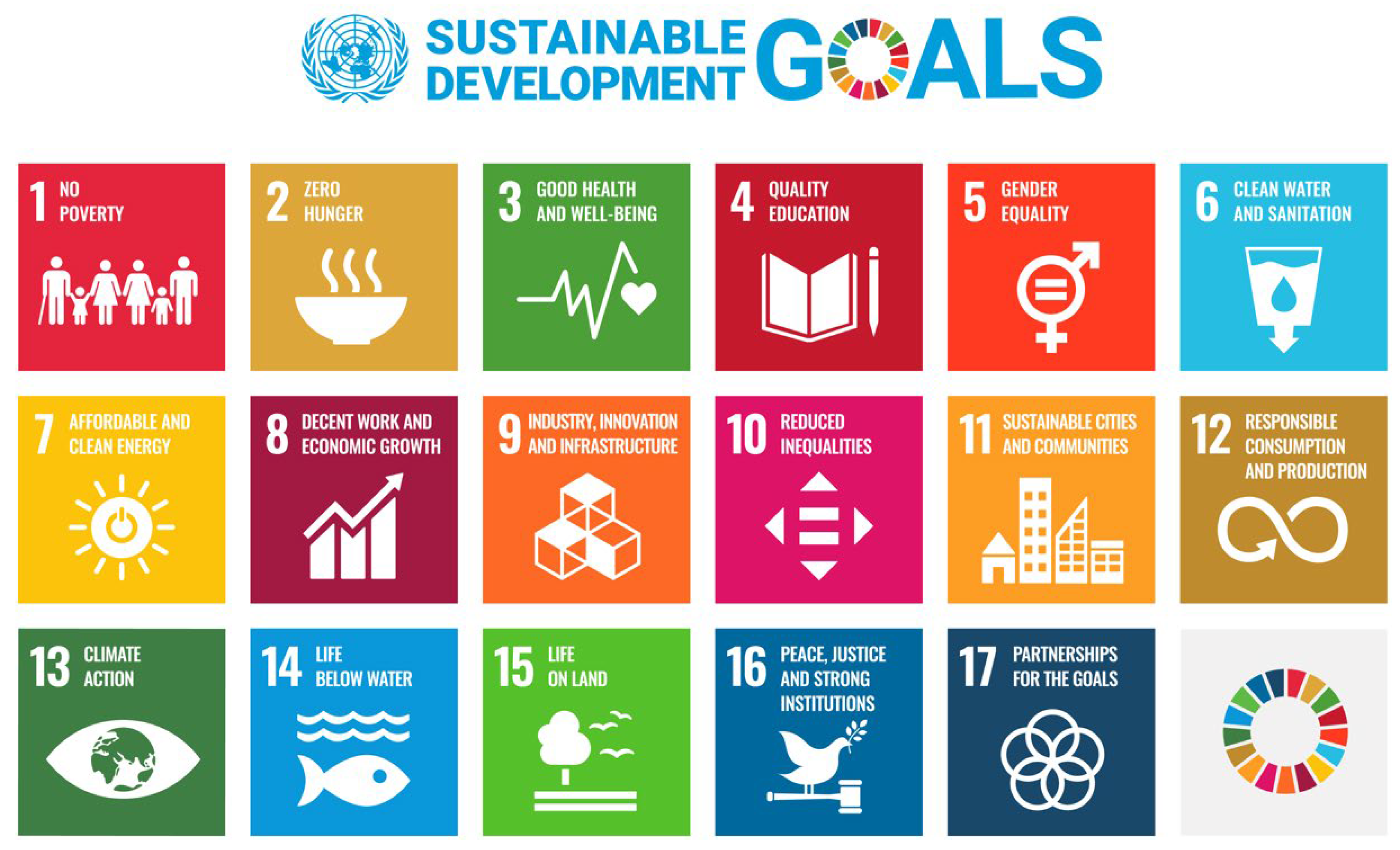
4]. The 17 SDGs and their corresponding visual representations are illustrated in
Figure 1. This universality acknowledges that sustainability is not a problem that can be solved through economic aid; it involves complex dynamics that require global cooperation, such as consumption habits, production models, gender equality, and the protection of ecological boundaries. As emphasized in the resolution adopted by the United Nations [
3], the SDGs are “indivisible and interdependent”; that is, economic growth, social inclusion, and environmental protection cannot be addressed independently of one another.
Reports [
3,
4,
5,
6,
7,
8,
9,
10,
11,
12,
13,
14,
15,
16,
17,
18,
19,
20] state that sustainable development is a multi-stakeholder process that exceeds the capacity of states. In this context, civil society, the private sector, and especially education systems are defined as implementation tools for the 2030 Agenda [
3]. Balancing the three dimensions of sustainability and achieving the goals is possible not only through policy changes but also through a shift in mindset. This is where “Education for Sustainable Development” comes into play.
2.3. Education for Sustainable Development
Education for Sustainable Development (ESD) is a holistic educational approach that encourages individuals to make informed decisions and take responsible actions for environmental integrity, economic viability, and a just society [
20]. With roots dating back to the 1972 Stockholm Conference, ESD has evolved beyond environmental education to encompass broader concepts such as social justice, economic equality, and cultural diversity [
25].
Education holds a position within the 2030 Agenda. It serves both as a goal in itself (SDG 4) and as a tool and accelerator for achieving the other 16 goals [
26]. The responsibility of education systems has gone beyond traditional functions such as increasing literacy rates or training personnel for the labor market. Education is now expected to nurture individuals who can analyze complex global issues such as the climate crisis, poverty, and inequality; make ethical decisions; and take action [
27].
The academic literature describes this role of education as a “transformative” force. This transformation involves restructuring knowledge, skills, and values at the individual level and, at the societal level, constructing a social contract based on justice, peace, and ecological integrity [
28]. The United Nations 2030 Agenda resolution text states that the future of humanity and the planet lies in the hands of today’s young generation, placing responsibility on education systems to raise generations who will carry this agenda forward [
3].
Therefore, education systems must move away from being mechanisms that reproduce existing economic growth models and become institutions that redefine prosperity within the limits of the planet [
28]. The ESD for 2030, led by UNESCO [
20], positions education as a facilitator for the success of all SDGs. The Berlin Declaration [
29] emphasizes that environmental and climate action must be a component of the curriculum and be carried out with a holistic perspective linked to other dimensions of sustainability. This role of education finds expression in foreign language teaching. Learning a language is not just about memorizing new words; it is also about interpreting the world through that language. In this regard, foreign language teaching serves as a bridge for conveying sustainability values to students.
2.4. The Relationship Between SDGs and Foreign Language Teaching
One of the debates in the ESD literature concerns the education system. Traditional education follows a transmission model in which knowledge is conveyed unidirectionally from the teacher to the student. Sterling [
6] and other researchers argue that this model is insufficient for sustainability because it reproduces existing “unsustainable” thought patterns. Transformative learning aims to change the individual’s way of thinking. Students not only acquire new information but also question their perceptions, value judgments, and assumptions [
30]. UNESCO’s [
20] ESD 2030 vision does not consider providing environmental information alone sufficient for education to bring about change. Instead, it emphasizes focusing on people’s perspectives on life and the root causes of problems. Language teaching plays a role in this regard, as it is a tool for transmitting culture and values.
Foreign language teaching was largely shaped by a structuralist approach based on grammar rules, vocabulary memorization, and repetition throughout most of the 20th century. However, globalization and the sustainability agenda have necessitated a redefinition of the purpose and methods of language teaching. At the heart of this transformation lies ESD. ESD aims to equip individuals with the knowledge, skills, values, and attitudes to understand complex global issues, feel responsible for them, and take action to find solutions. However, ESD is often seen as the responsibility of disciplines such as science or geography, while language education is perceived as the acquisition of instrumental skills (grammar, vocabulary, fluency). Yet language is a tool for perceiving, understanding, and constructing the world. Language is not only a code of communication but also a carrier of identity, values, and worldviews. Therefore, language teaching plays a role in building sustainability awareness [
31].
Sustainability-focused language teaching enables students to view global issues from a broader perspective, moving beyond thought patterns shaped by their native languages. Learning a foreign language offers individuals the opportunity to think differently [
32]. For an individual learning Turkish, this process begins with discovering how Turkish codes the world. For example, the concept of “gönül” in Turkish goes beyond the Western concepts of “heart” or “mind”, signifying an emotional, cognitive, and spiritual center. The concept of “kısmet” reflects an understanding of processes that unfold beyond the individual’s will. These conceptual structures provide the student not only with new words but also with a new perspective regarding human–nature and human–human relationships. By its nature, foreign language teaching confronts students with practices outside their own cultural and social norms, making it a context for transformative learning [
33]. For example, a foreign student learning Turkish in Turkey encountering the concept of “hospitality” may gain cultural knowledge; however, reading a text about the situation of Syrian refugees in Turkey and comparing it to immigration policies in their own country may initiate reflection on social justice and human rights.
Teaching language is also presenting a worldview. From this perspective, language teaching is not a neutral process. Freire [
34] argues that education has a political nature, serving both as a control mechanism that perpetuates existing inequalities and as a force that raises consciousness [
35]. An ESD-focused language pedagogy uses the tools of critical pedagogy. While learning the target language, students are encouraged to question power dynamics, the voice of the disadvantaged, and the root causes of environmental problems [
36]. Addressing topics such as climate change, the refugee crisis, or food justice in language classes takes students out of their comfort zone. According to Mezirow [
37], when supported by appropriate pedagogical methods such as critical reflection, this moment leads to a transformation of the individual’s worldview. The transformed worldview has a more inclusive and rationally grounded structure [
38]. This transformation underlies the “global citizen” profile aimed at by UNESCO. The construction of this profile and the transformation targeted at the pedagogical level are shaped through educational materials, which are concrete components of the learning process.
Educational materials function as cultural artifacts that embody the assumptions, ideological stances, and cultural priorities of their authors and the societies in which they are produced, beyond being tools for conveying information. When a student opens a foreign language textbook, they learn grammatical structures and internalize definitions of success, gender roles, human–nature relationships, and consumption habits. This process operates through what educational literature defines as the hidden curriculum [
39]. The hidden curriculum is a set of norms, values, and beliefs conveyed through school culture, teaching materials, and teacher attitudes. Therefore, textbooks reflect and reproduce social roles and power relations in society. While learning the target language, students adopt these social roles and ideological codes through the characters, dialogues, and images in the books.
This makes language teaching an actor in shaping students’ identities and their positioning as global citizens. In line with UNESCO’s SDG 4.7 target, these materials are expected to nurture students as individuals who can connect local and global issues, respect differences, and take responsibility. The relationship between foreign language teaching and SDGs goes beyond content transfer. Language is a tool for understanding, constructing, and transforming the world. Therefore, a foreign language textbook should serve as a guide that teaches how to engage in global dialogue about the climate crisis and inequalities [
40]. The SDGs included in textbooks give the language learning process social meaning and purpose [
41]. While developing their language skills, students also acquire skills such as systems thinking, empathy, and critical literacy [
3].
The current research analyzes, within a scientific framework, the level of integration of the Yeni İstanbul textbooks used in teaching Turkish as a foreign language (TTFL) with the global sustainability agenda. Education is being redefined as a process that produces solutions to real-world problems such as social injustice, environmental degradation, and economic inequality [
42]. The SDGs require language teaching materials to move beyond being mechanical language instructors and become guides for sustainable citizenship. In this context, the texts and activities in the Yeni İstanbul textbooks were scanned within the framework of the 17 SDGs defined by the United Nations to determine the level of integration of themes such as poverty, hunger, climate change, and quality education into the curriculum.
3. Method
The research adopts a qualitative design to determine the level of alignment between textbooks for teaching Turkish as a foreign language and the Sustainable Development Goals (SDGs) within the United Nations 2030 Agenda. In this context, the content of the textbooks related to the SDGs is examined. This section covers the research design, the objects of study, the data collection tools, and the data analysis. The methodological rationale for the research is explained.
3.1. Research Design
In this research, a qualitative method was adopted to examine the reflection of the SDGs in the Yeni İstanbul Turkish for Foreigners A1-B1-C1 teaching sets used in teaching Turkish as a foreign language. Qualitative research provides flexibility and depth in exploring complex social phenomena and the meanings attributed to them [
43,
44]. According to Creswell and Merriam, qualitative research allows for the development of an in-depth understanding by examining a problem or phenomenon in its natural environment. Unlike quantitative research, which emphasizes measurement and generalizability, qualitative research emphasizes depth and context [
45].
Document analysis, a qualitative research design, was used in this study. Document analysis is a method for analyzing written materials that contain information about the phenomenon under investigation. This design enables the analysis of data sources generated in natural environments, such as textbooks, within a specific theoretical framework (in this study, the SDG criteria). As Fairclough [
46] emphasizes, books contain linguistic knowledge and representations of the natural and social world, as well as values, beliefs, and assumptions.
Merriam [
44] emphasizes that the aim of qualitative research is to understand how people make sense of their lives and experiences. The study analyzes the distribution of SDG concepts and their implicit and explicit meanings in books. A qualitative approach was considered appropriate for this research as it allows for an examination of the representations of sustainability objectives. The adoption of qualitative content analysis as the primary methodological technique is directly aligned with the research objectives. This approach was preferred over purely quantitative content analysis because it facilitates the interpretation of the meaning and context surrounding Sustainable Development Goals (SDGs) within the textbooks, rather than being restricted to numerical frequencies alone. While alternative methodologies such as discourse analysis could offer a more profound examination of ideological power dynamics, the primary focus of this study is to systematically reveal how SDG content exhibits a thematic distribution across different language proficiency levels. Consequently, qualitative content analysis, reinforced by frequency counts, was deemed the most appropriate and functional method to holistically analyze both the presence and the mode of presentation of sustainability themes within instructional materials.
3.2. Objects of Study
The objects of study in this research are the Yeni İstanbul Turkish for Foreigners A1-B1-C1 textbooks, which are widely used in teaching Turkish as a foreign language and are structured according to the Common European Framework of Reference (CEFR) [
47] levels. The textbooks were treated as primary data sources containing information about a social and educational phenomenon and reflecting a system of pedagogical values [
44]. When analyzing the textbooks, the focus was on their qualities as educational documents that convey sustainability awareness and global citizenship values.
In the academic literature, the suitability of a language teaching set for sustainability analysis is evaluated through the diversity of the cultural and societal elements it incorporates. Accordingly, examinations of the ‘Yeni İstanbul’ series reveal a significantly higher density of content regarding cultural transmission compared to its counterparts. The identification of 607 distinct cultural elements—ranging from professions and value systems to culinary heritage and literature—provides a robust dataset that renders this series a primary choice for sustainability research [
48]. Comparative studies confirm that ‘Yeni İstanbul’ features a more contemporary reading text structure than other sets such as ‘Yedi İklim’ and ‘Yeni Hitit’; its balanced distribution of genres, including articles, news reports, and daily discourse, provides an ideal platform for integrating the multi-layered dimensions of sustainability: economic, social, and environmental [
49]. Regarding level sampling, the selection of A1, B1, and C1 levels is based on a strategy to represent ‘critical developmental thresholds.’ These three stages constitute the most significant milestones in a learner’s progression from a ‘Basic User’ to an ‘Independent User’ and ultimately to a ‘Proficient User,’ thereby facilitating a scientific analysis of progressive learning trajectories. Creswell [
50] emphasizes the importance of comparative analysis for understanding the development of a phenomenon over time or its reflection across different levels. Selecting the A1-B1-C1 levels provides an opportunity to examine whether language teaching remains a matter of vocabulary as the language level progresses or whether it evolves into behavioral change. Furthermore, the researcher’s direct experience as a practitioner with this series provided profound pedagogical insight, enhancing the qualitative sensitivity with the analytical depth required to decipher not only the theoretical content but also the implicit meanings and practical classroom reflections of the material.
The analysis framework and evaluation criteria are based on key policy documents published by the United Nations and UNESCO. In this context, textbooks were screened against the 17 SDGs defined in the 2030 Agenda for Sustainable Development. During the review process, the learning objectives and SDG sub-goals presented in the UNESCO [
4] guide, Education for Sustainable Development Goals: Learning Objectives, were used to assess the quality of the content. This theoretical framework served as a standard for assessing the compatibility between textbook content and global sustainability standards.
3.3. Data Collection and Analysis
The data collection process of this research was conducted in alignment with the principles of document analysis, a qualitative research method. Accordingly, the ‘Yeni İstanbul: Turkish for Foreigners’ (levels A1, B1, and C1) textbook set—which is currently and widely utilized in teaching Turkish as a foreign language—was accessed as the primary data source. The scope of the study included a total of three main textbooks, one from each level (A1, B1, and C1), including all the units they contain.
As data collection units, a total of 18 units (6 units per book) were subjected to a systematic scanning across reading and listening texts, visuals, and practical activities. As a result of this review, a total of 509 content/data units were analyzed: 105 from the A1 textbook, 221 from B1, and 183 from C1. Creswell [
50] states that when collecting data from documents, the researcher must determine which data types best serve the study. In this study, content identified for analyzing the three dimensions of sustainability (economic, social, environmental) for each language level (A1-B1-C1) was recorded in an Excel spreadsheet, as illustrated in
Table 1.
Qualitative content analysis was used to analyze the data collected in the study. The content analysis process aims to systematize and interpret data within the framework of specific concepts and themes [
51]. Although content analysis is often associated with quantitative research due to its systematic coding and inclusion of numerical data, it is also used to interpret meaning and context [
52]. The contents were meticulously analyzed not only through explicitly cited concepts but also through implicit meanings and visual contexts reflecting sustainability values. For instance, basic healthy lifestyle routines at the A1 level were mapped to SDG 3, participation in public transportation networks at the B1 level to SDG 11, and professional interview simulations at the C1 level to SDG 8. In cases where content related to multiple goals, the ‘dominant theme’ principle was adopted, and all data were hierarchically aligned with the conceptual depth of the CEFR levels to reflect progressive learning trajectories. While discourse analysis might offer a more detailed understanding of ideological positioning and implicit power relations in the texts, the main aim of this study was to examine how the SDGs are distributed across different proficiency levels. For this reason, a qualitative content analysis supported by frequency counts was considered the most appropriate method to analyze the presence and distribution of SDG-related content in the textbooks.
The analysis was structured according to the ‘Sustainable Development Goals Coding Table’ developed by the researcher, as detailed in
Table 2,
Table 3 and
Table 4. These tables were designed within the framework of a three-dimensional sustainability model [
22] to classify the data and establish a theoretical basis consistent with the literature.
Following the systematic steps proposed by Creswell [
50], the data were first tagged according to the SDGs and then interpreted comparatively with respect to their distribution and density across language levels. To ensure scope and structural validity, the analysis categories were aligned with the United Nations 2030 Agenda and UNESCO’s literature on the SDGs. In creating the categories, the integrated and indivisible structure of the economic, social, and environmental dimensions underpinning sustainable development was used as the guide. To increase objectivity in the analysis process, inter-coder reliability analysis was applied. To ensure the reliability of the research, a total of 60 randomly selected statements (
N = 60)—representing the A1, B1, and C1 language levels—were analyzed by an independent second coder. The comparative analysis revealed a full consensus on 46 statements, while discrepancies were identified in 14 instances. The inter-coder reliability was calculated using the Cohen’s Kappa coefficient, yielding a value of κ = 0.75.
4. Findings
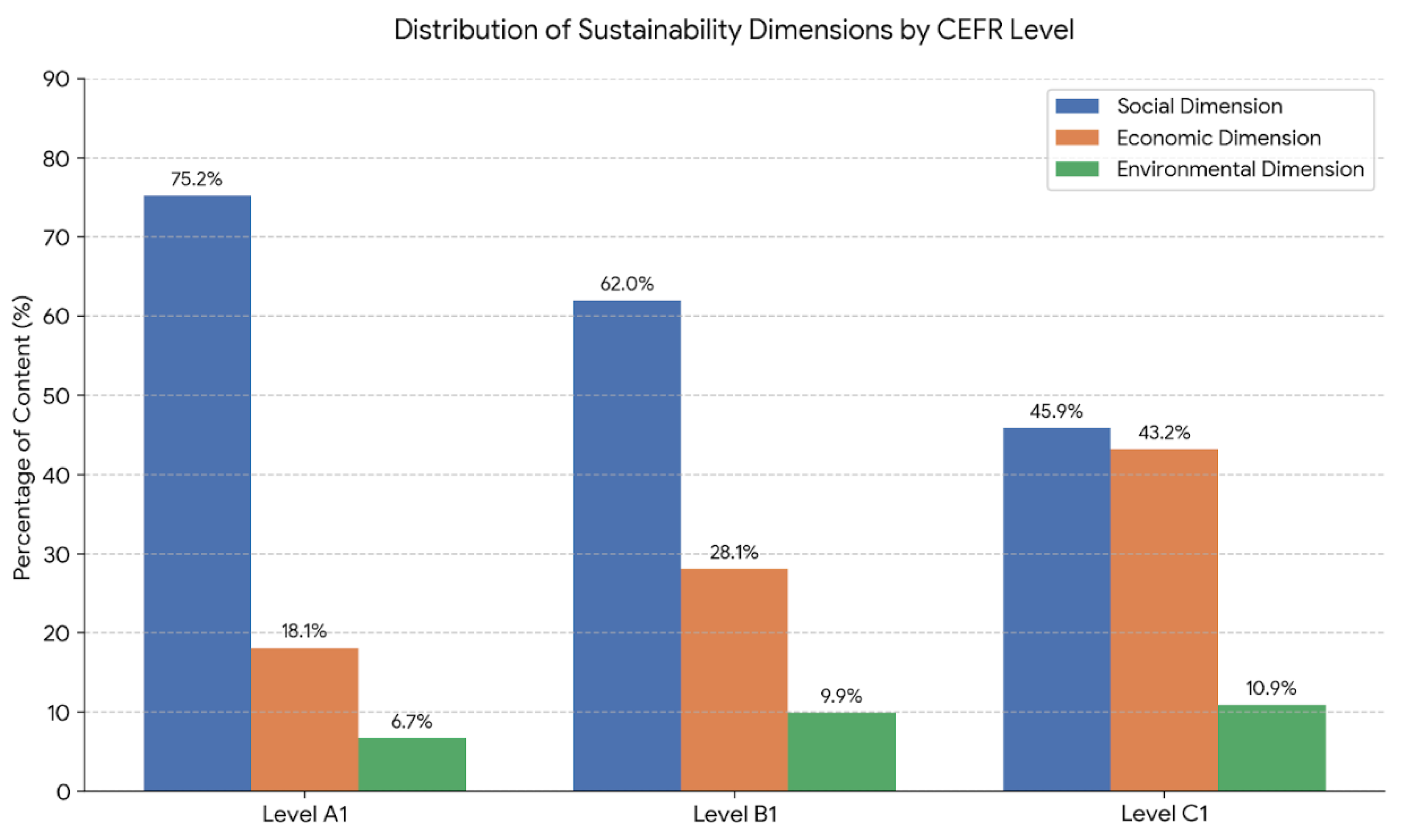
The analysis classifies textbook content within the 17 United Nations Sustainable Development Goals. The data were analyzed using frequency analysis based on the three dimensions of sustainability (Economic, Social, Environmental). The general distribution of content in the Yeni İstanbul (A1, B1, and C1) textbook series across proficiency levels according to sustainability dimensions is presented in
Figure 2.
4.1. Findings Regarding the Yeni İstanbul A1 Turkish Textbook
The analysis of the data presented in
Table 5 reveals that the majority of the content in the A1 textbook is focused on the social dimension. In particular, the prominence of SDG 11 (20%) and SDG 17 (13.33%) indicates that language teaching extends beyond language structures to include elements of social belonging and global cooperation. The emphasis on urban life and cultural heritage (Goal 11.4) enables language learners to connect with the target culture and become part of sustainable cities. Level A1 is the stage where learners introduce themselves and communicate with their social environment. Therefore, the textbook’s emphasis on the social dimension aligns with the principles of social sustainability. Furthermore, the 18.10% coverage of healthy living (SDG 3) is consistent with UNESCO’s [
4] requirement that learners acquire physical and mental health competencies.
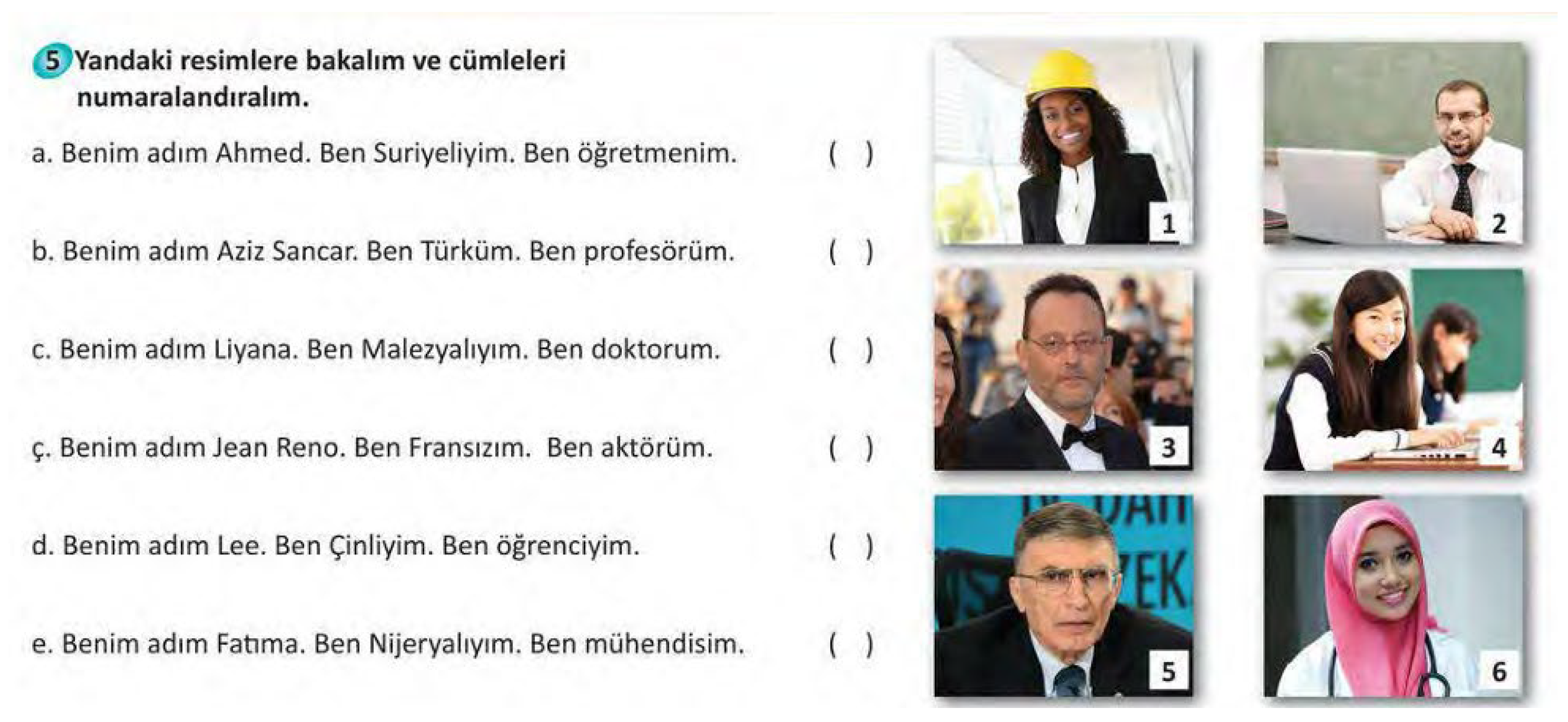
SDG 8, which accounts for 8.57% in the table, indicates that the textbook presents the individual not only as a language user but also as an economic actor. The presentation of various occupational groups in the textbook, such as doctors, police officers, nurses, and factory workers, reflects awareness of full and productive employment for all, as stated in Target 8.5, at a basic level. By learning about occupations and working conditions in the target language, language learners increase their capacity to participate in that society’s economic structure. This contributes to the relationship between education and economic development. Furthermore, the textbook’s representation of women and men in professional life supports the idea that economic growth should be inclusive. In
Figure 3, an illustration within a lead-in activity in the first unit of the A1-level textbook stands out as a positive example that challenges traditional gender roles.
SDG 12, which accounts for 4.76% of the analysis data, focuses on the impact of consumer behavior on sustainable development. The processing of concepts related to resource efficiency, such as shopping, waste prevention, and thriftiness, corresponds to Target 12.8, which aims to raise awareness about lifestyles in harmony with nature. Content such as sharing old clothes or the efficient use of resources establishes the cognitive foundation for sustainable consumption. Themes such as banking transactions, metro/transportation networks, and internet usage complete the infrastructure and access aspects of the economic dimension. The inclusion of digital tools and the internet in the language learning process supports awareness of technological infrastructure and digitalization within the scope of SDG 9.
It was determined that the environmental dimension (6.67%), one of the three dimensions of sustainability, is less represented in the textbook compared to the other dimensions. Most of the current content (3.81%) is presented through animal images and nature themes under SDG 15. SDG 13 is represented at 1.90% and is generally limited to images such as seasonal cycles. The low rate indicates that climate change awareness functions primarily as vocabulary instruction rather than as a priority in the textbook. The absence of issues such as water resource conservation and marine ecosystems in the beginner-level textbook limits learners’ exposure to ecological integrity themes. This pattern may be associated with A1-level language instruction, which focuses on concrete, everyday social needs. However, limited coverage of environmental topics at the basic level may constrain ESD-related learning objectives.
4.2. Findings Regarding the Yeni İstanbul B1 Turkish Textbook
The data in
Table 6 indicate that the content of the Yeni İstanbul B1 textbook is structured predominantly around the social dimension (61.99%), mirroring the trend at the A1 level but with an increased degree of depth. In particular, the prominence of SDG 3 (23.53%), SDG 4 (13.57%), and SDG 11 (13.57%) indicates that language teaching at the B1 (Threshold) level extends beyond basic communication to include physical and mental well-being, participation in academic processes, and adaptation to urban life. The high rate within SDG 3 suggests that healthy lifestyles and well-being awareness, as emphasized by UNESCO [
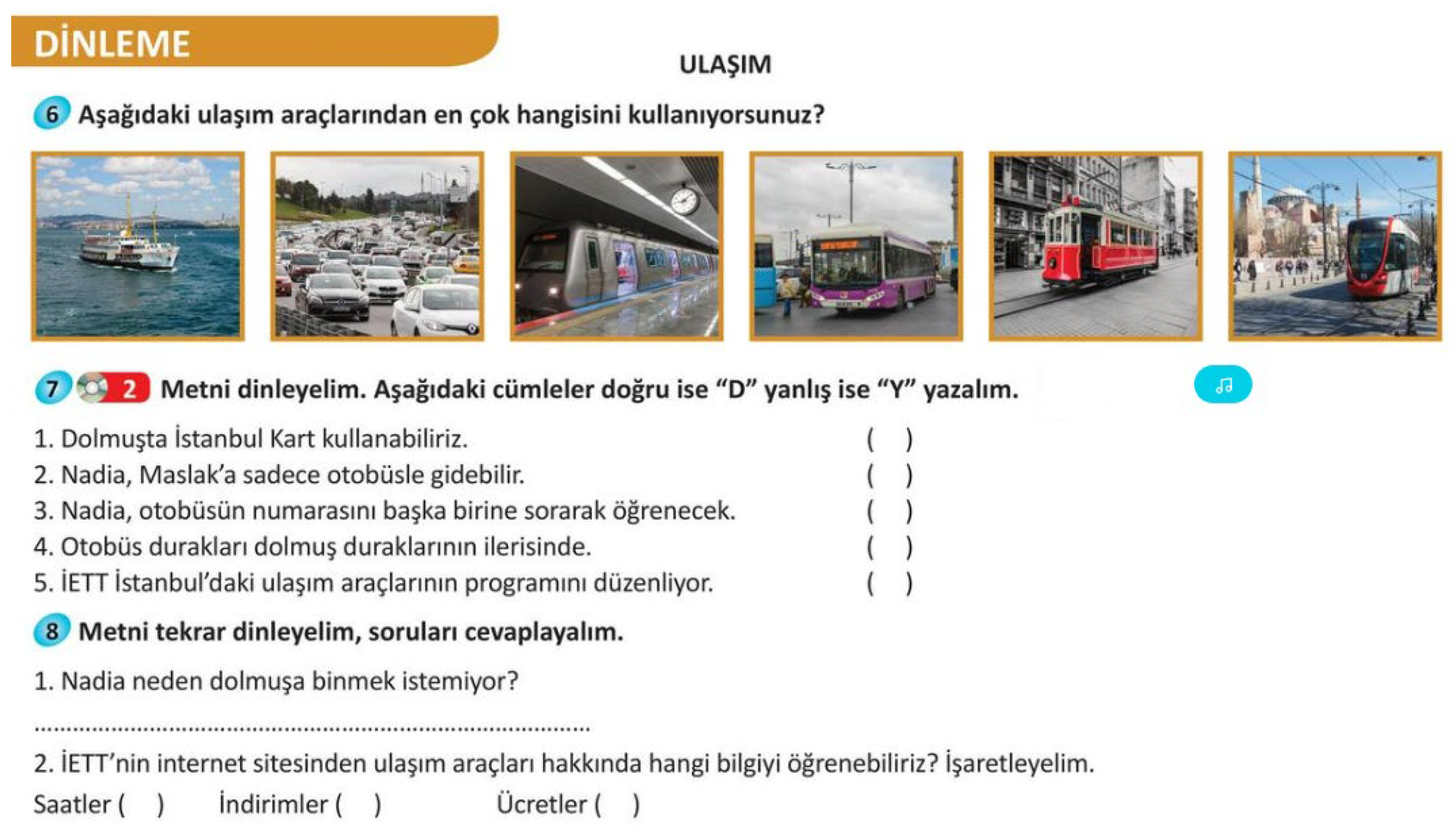
4], are integrated with functional language skills, such as expressing symptoms of illness and understanding treatment processes. When examining the nature of the content presented under SDG 11 in the book, it is evident that the learner’s adaptation to urban life constitutes a strategic priority. As illustrated in
Figure 4, various modes of public transportation—such as ferries, metros, buses, and trams—are introduced through visuals, and activities reference payment systems like ‘İstanbul Kart.’ The simultaneous presentation of the historical tram alongside modern transport vehicles merges the commitment to safeguarding cultural heritage (Target 11.4) with the importance of sustainable transport systems (Target 11.2). This type of content frames the learner not merely as a passive observer of the city but as an active stakeholder who effectively utilizes transit networks and is integrated into the urban fabric.
Since level B1 marks the point at which learners begin to discuss abstract topics, the emphasis on lifelong learning in SDG 4 frames language learning as a tool for academic and personal development.
The economic dimension, which accounts for 28.05% of the table, suggests that the textbook adopts an approach oriented toward professional life and the economic cycle. Going beyond the introduction of professions at the A1 level, the frequency of SDG 8 (12.22%) indicates that the concept of decent work, as outlined in Target 8.5, is integrated into language teaching through themes such as job interviews, working conditions, employee rights, and career planning. This supports language learners’ capacity to participate in the labor market of the target society. Furthermore, SDG 12, which accounts for 8.14% of the analysis data, includes topics such as questioning consumption habits, reducing waste, and conscious shopping. These contents contribute to the cognitive basis learners need to make informed decisions about resource use, in line with Target 12.5 and Target 12.8. The SDG 1 (4.52%) data within the economic dimension refer to real-life problems such as poverty and livelihood difficulties and relate economic growth to social justice.
It was determined that the environmental dimension (9.95%), one of the three dimensions of sustainability, has relatively limited representation in the textbook compared to the social and economic dimensions. A significant portion of the content is centered on SDG 13 (3.62%) and SDG 6 (2.26%). The inclusion of topics such as climate action and water conservation at the B1 level contributes to raising awareness of environmental issues. However, goals addressing the protection of biodiversity and ecosystems, such as SDG 14 (0.45%) and SDG 15 (1.81%), remain at low rates. Although environmental themes extend beyond vocabulary instruction compared to the A1 level, they are not consistently addressed through a holistic framework (e.g., cause-and-effect relationships of the climate crisis or global impacts of marine pollution). At this level, where learners can construct more complex structures in the target language, the limited emphasis on ecological literacy may be considered an area for further development in relation to ESD objectives.
4.3. Findings Regarding the Yeni İstanbul C1 Turkish Textbook
According to the data in
Table 7, the content in the Yeni İstanbul C1 textbook establishes a distinct balance between the social (45.90%) and economic (43.17%) dimensions, marking a departure from the trends observed at previous levels. In the social dimension, the prominence of SDG 3 (16.94%), SDG 11 (11.48%), and SDG 4 (8.74%) is noteworthy. Since the C1 (Advanced) level enables learners to engage in academic and intellectual discussions in the target language, the content covered under SDG 3 extends from basic health guidance to topics such as mental health, treatment processes, and quality of life. Similarly, SDG 11 addresses not only urban living but also themes such as the preservation of cultural heritage (Goal 11.4) and the transmission of social memory, positioning the learner in relation to the target culture. The emphasis on quality education within SDG 4 supports the engagement of C1-level learners with academic and lifelong learning processes.
The economic dimension (43.17%) represents the highest proportion compared to the A1 and B1 levels and is comparable to the social dimension. The high frequency of SDG 8 (18.58%) indicates that the textbook frames C1-level learners in relation to professional life. These contents, linked to Target 8.3 and Target 8.5, are addressed through themes such as career management, entrepreneurship, economic growth models, and business ethics. As a concrete illustration of this trajectory,
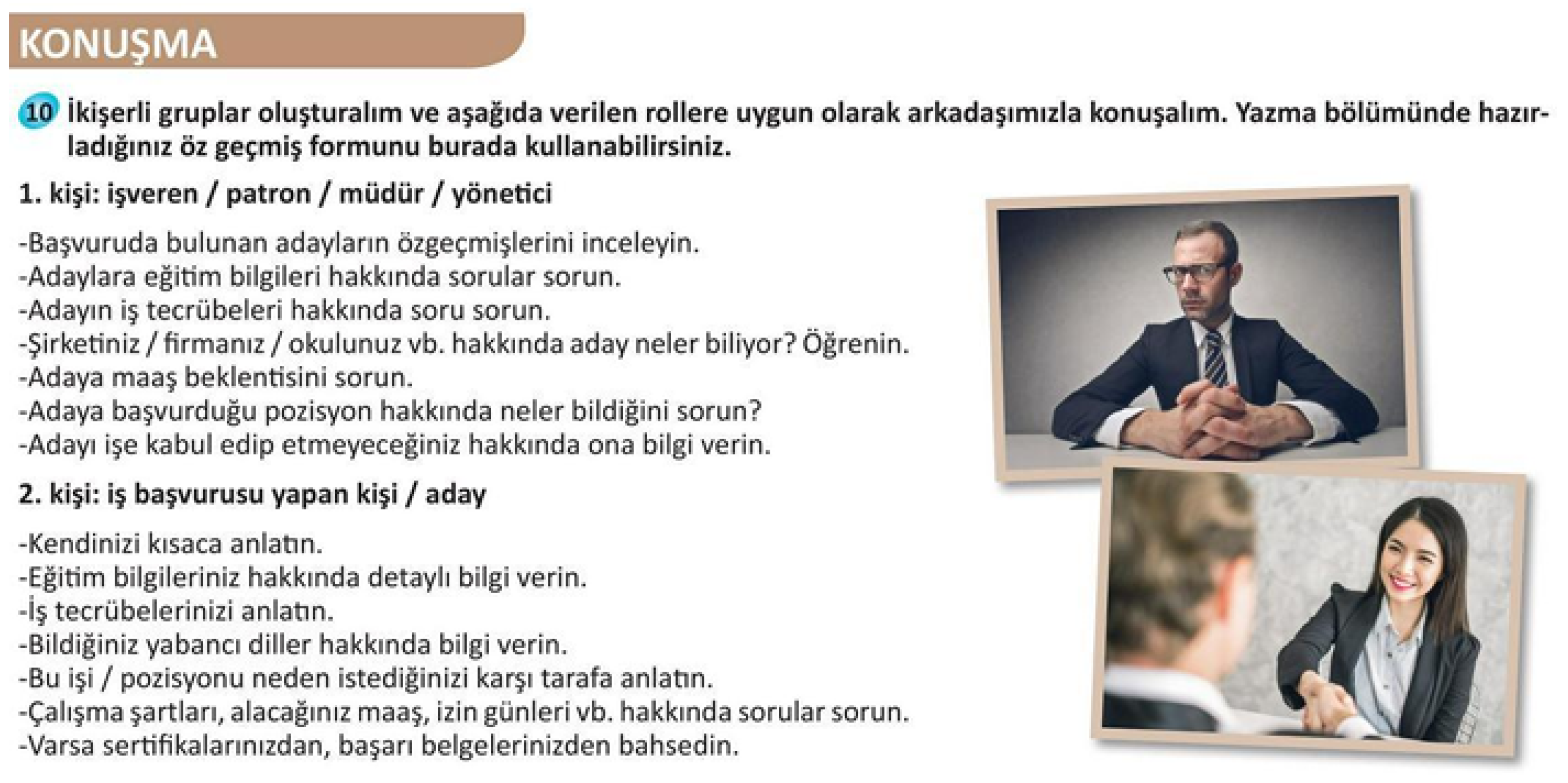
Figure 5 showcases a job interview simulation activity from the C1-level textbook.
As illustrated in
Figure 5, learners are tasked with assuming the roles of an employer and a candidate to conduct a professional interview. The activity encompasses direct labor market participation skills, including resume review, inquiries into educational background and professional experience, salary expectations, and foreign language proficiency. This suggests that language education is associated with economic participation at an advanced level. Furthermore, the intensity of SDG 12 (14.21%) and SDG 9 (7.10%) relates to themes of production, technological awareness, and resource management.
The environmental dimension (10.93%) consistently appears as the least represented dimension at the C1 level, as at other levels. Although a substantial portion of the content is grouped under SDG 13 (6.01%), the data under this heading mainly consist of descriptive situations such as daily weather, temperature changes, and precipitation forecasts (e.g., “Is it going to snow tomorrow?”, “It’s so cold that…”). At an advanced language level such as C1, learners have the capacity to engage with cause-and-effect relationships related to climate change; however, the current content remains largely descriptive. In addition, topics related to biodiversity and water management, such as SDG 15 (3.83%) and SDG 6 (1.09%), remain limited in scope. At the C1 level, where linguistic proficiency is highest, economic and social competencies appear more prominent than environmental themes, and environmental issues are mostly embedded in everyday communication contexts. This pattern may be considered in relation to the holistic aims of the ESD framework.
5. Discussion
This section discusses the findings from the analysis of the Yeni İstanbul Turkish teaching set (A1, B1, and C1 levels) and relates them to the literature on the SDGs. The findings reveal a hierarchy that varies across levels in how language teaching materials address sustainability dimensions.
The results demonstrate the social dimension has the highest frequency at all levels, although this rate declines from 75.24% at the A1 level to 45.90% at the C1 level. At the A1 level, the dominance of SDG 11 (Sustainable Cities and Communities) at 20% may be explained by the priority of beginner-level language education to help learners adapt to the physical and social environment of their target society (housing, transportation, orientation). This aligns with the goals of language education at the initial stage, which support learners’ survival skills, self-introduction, orientation, and basic communication.
In the CEFR context, level A1 focuses on meeting concrete needs. The textbook’s orientation toward urban life of the target culture may be interpreted as a social sustainability approach. The literature emphasizes that foreign language textbooks construct the learner not only as a language user but also as a social actor integrated into the urban structure of the target culture [
47,
56,
57]. Furthermore, language learners can compare the culture of the target language with their own culture through textbooks, which function as cultural mediators reflecting societal values [
58]. This is consistent with UNESCO’s [
4] educational goals of preserving urban heritage (Goal 11.4) and fostering a sense of social belonging. At the B1 level, the peak of 23.53% for SDG 3 (Good Health and Well-being) parallels threshold-level competencies that enable learners to express their mental and physical state. Furthermore, the increase in content under SDG 12 (Responsible Consumption and Production) (8.14%) suggests that learners can construct more complex structures regarding shopping, waste, and resource use. This parallels UNESCO’s goal of fostering conscious consumption.
The analysis data show that the economic dimension’s share systematically increases as the language level rises (A1: 16.19%; B1: 28.05%; C1: 43.17%). At the C1 level, SDG 8 (Decent Work and Economic Growth) reaches 18.58%, the highest rate among all goals. This finding suggests that advanced language teaching is associated with preparation for professional and economic participation. The literature [
59,
60] indicates that advanced language education may function as a human capital tool contributing to economic development. Furthermore, the fact that SDG 12 reaches 14.21% at the C1 level suggests that learners are positioned not only as producers but also as individuals managing global resources. This corresponds to UNESCO’s [
20] vision of promoting conscious consumption through education.
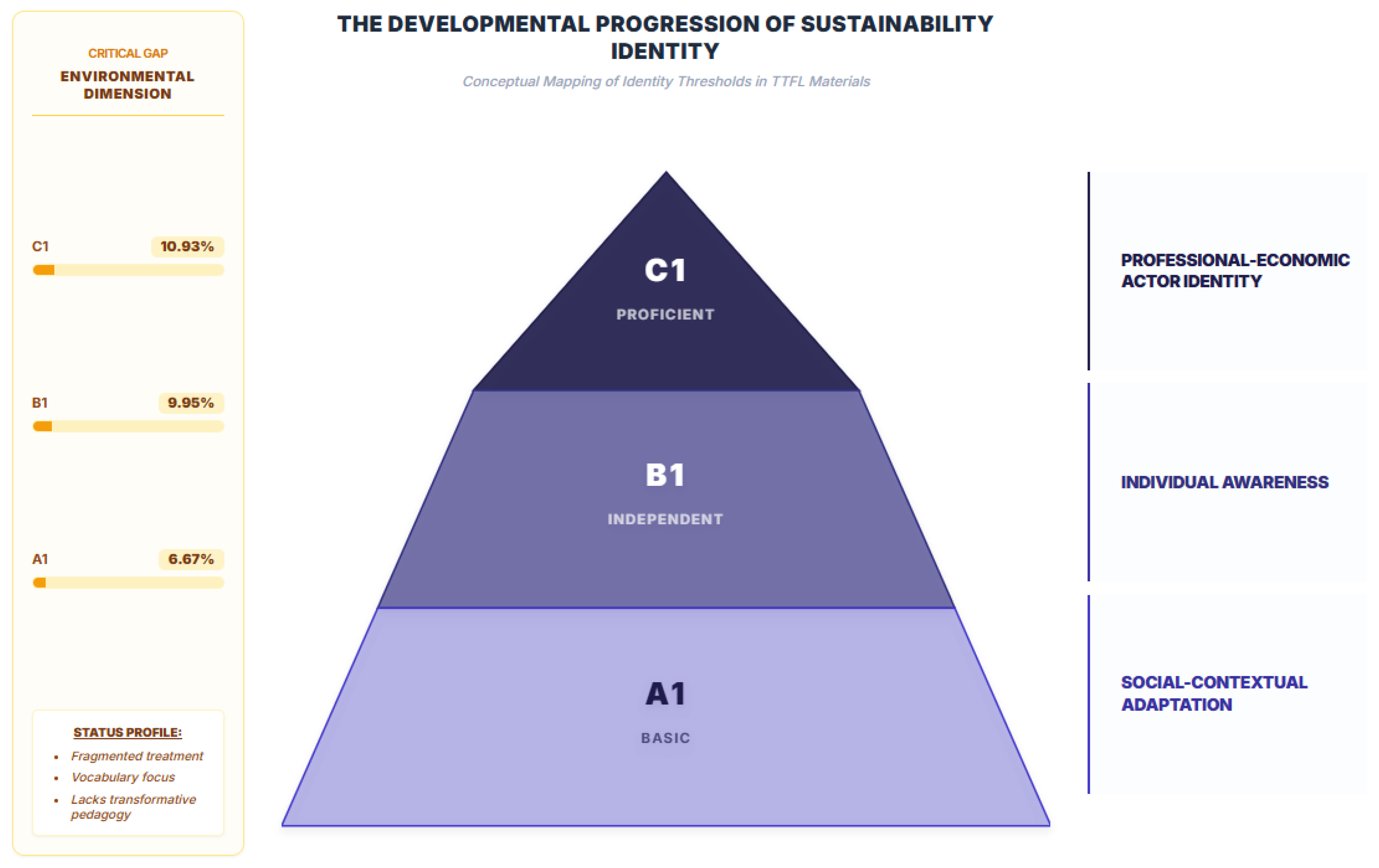
The findings of this study demonstrate that the dimensions of sustainability exhibit a hierarchical structure that progresses in tandem with language proficiency levels. This hierarchy presents an identity construction model evolving from social-contextual adaptation at the beginner level (A1) to individual awareness at the intermediate level (B1) and ultimately toward a professional-economic actor identity at the advanced level (C1) (
Figure 6). This trajectory theoretically confirms that textbooks serve as more than mere instruments for conveying grammatical structures; rather, they function as strategic ‘human capital’ tools that shape individuals in alignment with societal priorities.
The environmental dimension consistently appears as the least represented dimension at all levels (A1: 6.67%; B1: 9.95%; C1: 10.93%). At level A1, environmental content is mostly limited to elements such as animal images and seasonal cycles, which suggests that climate change awareness functions primarily as vocabulary content rather than as a central theme. At the C1 level, SDG 13 (Climate Action) content (6.01%) largely consists of weather forecasts and descriptions, which limits opportunities for multidimensional engagement with ecological issues. Ngo and Le-Khanh [
61] emphasize that sustainability themes in language education should support behavioral awareness rather than remain at the informational level. The findings of the present research indicate that environmental topics in the Yeni İstanbul set are mainly descriptive across levels. This differs from UNESCO’s Berlin Declaration [
29], which emphasizes climate action as a core curricular component and highlights transformative learning. Similar textbook studies [
62] have reported fragmented treatment of environmental themes, and the present findings are consistent with these observations. To address this deficiency, a transition from description to action is imperative. Textbook content must move beyond utilizing sustainability themes as superficial tools for vocabulary acquisition and instead steer learners toward action-oriented and innovative pedagogy that encourages the resolution of real-world problems. Particularly at the advanced level (C1), content should be reinforced with case studies and social projects designed to enhance the learner’s action competence, thereby aligning with the necessity for transformative learning as emphasized in the Berlin Declaration.
The findings derived from this research provide a strategic roadmap for policymakers to align foreign language curricula and textbooks with the United Nations 2030 Agenda. Primarily, ESD objectives must be integrated as a foundational and core element of education systems at all levels, rather than being treated merely as an auxiliary theme. Given the current deficiency of environmental dimensions in instructional materials, it is imperative that climate action and environmental ethics become core components of the curriculum. Curriculum designers should move beyond using sustainability themes as superficial tools for vocabulary acquisition and instead adopt innovative pedagogies that encourage learners to develop action competence through case studies and social responsibility projects focused on real-world problems.
When findings across all levels are evaluated, textbooks appear to frame sustainability primarily through economic and social cohesion dimensions, while ecosystem conservation receives comparatively less emphasis. This distribution may limit balanced coverage of themes such as environmental degradation, gender inequality, and poverty, which are central to global citizenship discourse [
63]. The limited space allocated to biodiversity (SDG 15) and water management (SDG 6), even at advanced levels, suggests that ecological themes are less prominent within language materials. Fill and Steffensen [
64] argue that language constructs social and ecological perception. The consistently low proportion of SDGs 13, 14, and 15 in the Yeni İstanbul set may influence the visibility of ecological themes within the language learning process. Studies highlighting the potential of language classrooms for global citizenship awareness [
13,
65] note that economic and social competencies often receive greater emphasis in existing materials. In conclusion, while the sustainability content of the Yeni İstanbul set supports the development of economic and social competencies, environmental sustainability themes remain comparatively less represented.
6. Conclusions
This research systematically analyzed the ‘Yeni İstanbul’ textbook series (A1, B1, and C1 levels), one of the primary reference sources in teaching Turkish as a foreign language (TTFL), within the framework of the United Nations 2030 Agenda and UNESCO’s vision for Education for Sustainable Development (ESD). The findings demonstrate a clear hierarchy and a configuration that varies across proficiency levels in the representation of sustainability dimensions (social, economic, and environmental) in the textbooks. While the social dimension, aiming for urban integration and social belonging, is prominent at the beginner level, the economic dimension—which constructs the learner as a professional economic actor—gains weight at the advanced level. One of the most critical outcomes of the study is that the environmental sustainability dimension remains the weakest area across all levels and is positioned more as a descriptive vocabulary teaching tool rather than fostering critical awareness.
The study holds significance in three fundamental aspects regarding its original theoretical contributions to the existing literature. First, it offers a culturally enriching, non-Western alternative to ESD debates—which are predominantly conducted through English and Western-centric languages—by exploring the unique way the Turkish language codes the world, nature, and social relations. Second, by establishing a correlation between sustainability themes and CEFR levels, it provides a theoretical framework for the evolutionary process of sustainability in language instruction, transitioning from initial ‘survival skills’ to the advanced roles of ‘global citizenship’ and ‘human capital.’ Third, the study provides empirical evidence supporting theoretical approaches that view textbooks not merely as grammar instruction tools but as strategic cultural artifacts and carriers of a ‘hidden curriculum’ that shapes students’ worldviews and identities. Consequently, transforming these materials to move beyond mere information transfer and instead cultivate ‘sustainability citizens’ who bear ethical responsibility toward real-world challenges is a strategic imperative for building a sustainable future.
7. Research Limitations
The present study has several limitations that should be acknowledged. First, the sample is restricted to the A1, B1, and C1 levels of the ‘Yeni İstanbul’ textbook series. Consequently, the findings may not be fully representative of all materials used in teaching Turkish as a foreign language (TTFL). Second, the study adopts a qualitative content analysis approach, which, while providing an in-depth perspective on the representation of sustainability themes, lacks statistical generalizability. Finally, the scope is limited to the written and visual content of the textbooks, excluding the actual implementation and perception of these materials in classroom settings.
8. Future Research Directions
Based on the findings of this study, recommendations are categorized under two main headings: suggestions for the development of teaching materials and directions for future academic research.
8.1. Recommendations for Curriculum and Material Development
To better align Turkish teaching materials with global sustainability standards, the following practical steps are proposed:
Deepening Environmental Content: Environmental issues related to SDGs 13 (Climate Action), 14 (Life Below Water), and 15 (Life on Land) should move beyond a mere vocabulary-focused approach. Materials should be enriched with reading and listening texts that explore the complex cause-and-effect relationships of the climate crisis and broader ecological themes.
Addressing Social Representation Gaps: Themes that are currently underrepresented, such as gender equality (SDG 5) and poverty eradication (SDG 1), should be given greater prominence to reflect the “leaving no one behind” principle of the 2030 Agenda.
Shift to Action-Oriented Pedagogy: Content should transition from purely informational presentation toward project-based learning and real-world scenarios. This approach encourages learners to engage critically with social and ecological issues and promotes behavioral change.
Integration of Authentic Materials: The inclusion of authentic materials, such as contemporary news reports and social media content regarding global and local sustainability challenges, can strengthen the connection between the classroom and real-life contexts.
Teacher Empowerment: Teacher education programs should incorporate specialized training on the SDGs and transformative pedagogies. Supporting educators in facilitating sustainability-related discussions is essential for the effective implementation of these themes in the classroom.
8.2. Recommendations for Future Research
To address the limitations of this study and expand the scientific knowledge in the field of ESD in language teaching, the following research directions are suggested:
Comparative Material Analysis: Future studies should conduct comparative analyses with other TTFL sets, such as Yedi İklim or Yeni Hitit, to evaluate the consistency of SDG integration across different publishing houses.
Impact Assessment on Learners: Quantitative research utilizing validated surveys or scales is needed to measure the actual impact of textbook content on students’ sustainability literacy levels and attitudes.
Observational Studies: Researchers should undertake observation studies to investigate how teachers actually translate the ecological and social justice themes found in textbooks into daily classroom practices.
Policy Mapping: A comprehensive analysis of a broader and more diverse dataset (including curricula and official guidelines) could map the strategic position of the SDGs within the overall foreign language teaching policies in Turkey.