Article

Research on the Impact of Corporate ESG Performance on Supplier Concentration in Chinese Manufacturing Firms

School of Management, Jiangsu University, Zhenjiang 212013, China
*
Author to whom correspondence should be addressed.
Sustainability 2026, 18(7), 3622; https://doi.org/10.3390/su18073622
Submission received: 15 March 2026 / Revised: 1 April 2026 / Accepted: 4 April 2026 / Published: 7 April 2026

Abstract

The global division of labor system is increasingly refined, and the core components of some manufacturing enterprises are concentrated in a few (or even a single) suppliers, resulting in supply dependence. Excessive concentration of suppliers can lead to a higher risk of supply chain disruption. To this end, taking manufacturing companies listed on the Shanghai and Shenzhen A-share markets in China from 2010 to 2024 as samples and referring to Huazheng ESG rating data, research shows how the ESG performance of manufacturing companies reduces supplier concentration. The research found that (1) the ESG performance of manufacturing enterprises significantly reduces supplier concentration,—this effect is mainly reflected in social responsibility (S dimension)—and firm size has a positive moderating effect; (2) ESG performance has a mediating effect of alleviating financing constraints and enhancing trade credit in the process of reducing supplier concentration; and (3) heterogeneity analysis results show that the inhibitory effect of ESG performance on supplier concentration is more significant in non-state-owned enterprises. Through empirical analysis, the research scope of ESG performance was expanded to the upstream supply chain field, emphasizing the importance of ESG performance in manufacturing enterprises and providing theoretical and empirical evidence for enterprises to achieve high-quality and sustainable development.

1. Introduction

Under the impact of the waves of globalization, informatization and digitalization, competition between traditional manufacturing enterprises has gradually evolved into competition between supply chains, which places higher [1] demands on the stability and reliability of supply chains. Unlike downstream customer concentration, which focuses on “demand-side dependence”, and supply chain cooperation stability, which emphasizes “partnership quality”, upstream supplier concentration reflects that “production-supply-side structural risk”-excessive reliance on a few suppliers for core components will exacerbate supply chain vulnerability [2]. In this context, supplier concentration has drawn common attention from both the industry and academia. Supplier concentration reflects the extent to which enterprises rely on key suppliers and is directly related to multiple aspects such as cost control, supply chain resilience, risk management [3] and innovation capabilities of enterprises. Excessive supplier concentration can significantly amplify the risk [4] of supply chain disruptions, weaken the bargaining power of enterprises over suppliers, reduce the profitability of enterprises, and become a potential “bottleneck” in the operation of enterprises. In addition, when reviewing IPO companies, the relevant regulatory authorities also list high supplier concentration as a risk matter that needs to be closely watched. Therefore, how to effectively manage and optimize supplier concentration has become one of the important decisions for enterprises to build resilient supply chains and ensure sustainable development.
In recent years, the concept of Environmental, Social and Governance (ESG) has gained increasing attention, and ESG performance has gradually become a core dimension for evaluating the sustainability level of manufacturing enterprises. Good ESG performance helps manufacturing enterprises acquire [5] resources through various stakeholder channels, enhance their competitive edge [6] and have a positive impact on financial performance [7,8,9]. China’s unique institutional environment provides a rich context for researching ESG and supply chain management. Since 2012, the China Securities Regulatory Commission has required listed companies to disclose information on their top five suppliers, enhancing supply chain transparency. In 2016, China launched the construction of green finance reform and innovation pilot zones, broadening financing channels for manufacturing enterprises with excellent ESG performance. In 2024, the Shanghai, Shenzhen and Beijing stock exchanges released the “Guidelines for Sustainable Development Reports of Listed Companies”, marking a new stage of development for ESG information disclosure in the manufacturing industry. This series of “policy-market-supply chain” institutional evolutions highlights the significance of researching the value of ESG performance impact on supply chains in this context. However, existing research neglects the “structural reconfiguration” attribute of upstream supplier concentration—unlike “cooperative stability” which emphasizes relationship continuity, supplier concentration focuses on the distribution pattern of the supplier network, and its optimization requires enterprises to have the ability to integrate resources and the initiative in bargaining, and how ESG affects the supplier concentration of manufacturing enterprises by breaking these structural constraints. The existing research has not clearly revealed the underlying mechanism.
Based on this, this paper takes manufacturing companies listed on the Shanghai and Shenzhen A-share markets in China from 2010 to 2024 as samples and empirically analyzes the impact of ESG performance of manufacturing companies on their supplier concentration. Further, this research aims to address the following two research questions: RQ1: Can the ESG performance of manufacturing enterprises effectively mitigate supplier concentration, and is this process realized through the mediating paths of alleviating financing constraints and enhancing corporate commercial credit? RQ2: Does the impact of ESG performance on supplier concentration exhibit heterogeneous effects across different firm sizes, types of ownership, and individual ESG dimensions. The marginal contributions of this paper mainly include the following two aspects:
RS1: (1) In existing literature studies, discussions on corporate ESG performance have mostly focused on internal dimensions such as corporate financial performance and value enhancement. This paper takes the “supplier concentration” of the upstream supply chain as the research object, expands the research scope of ESG performance to the upstream supply chain configuration field, enriches the research on ESG and corporate supply chain management, and it provides a fresh perspective on how ESG shapes the form of enterprise supply chain networks. Genuinely, this paper moves beyond simply correlating ESG with value, identifying ESG as a catalyst for structural reconfiguration in the supply chain.
RS2: (2) This paper systematically analyzes the impact of corporate ESG performance on supplier concentration from the perspectives of financing constraints and trade credit, and delves into the moderating effect of corporate scale to improve the research system between ESG and supplier concentration, providing valuable theoretical guidance and empirical evidence for a deeper understanding of the driving forces and realization paths of supply chain structure optimization.

2. Theoretical Analysis and Research Hypotheses

2.1. The Direct Effect of Manufacturing Enterprises’ ESG Performance on Supplier Concentration

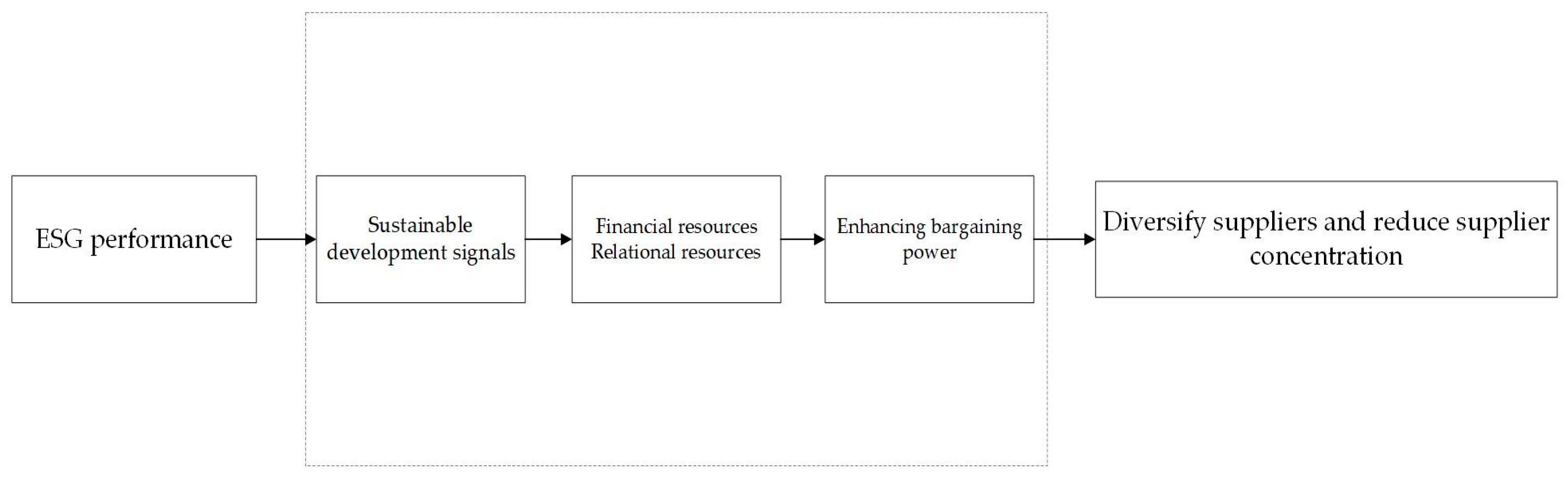
Under the “carbon peak and carbon neutrality” goals, the ESG concept is deeply aligned with the sustainable development of manufacturing enterprises, prompting an increasing number of investors to incorporate [10] the ESG performance of enterprises into decision-making considerations [11]. Based on the “structural constraint” feature of upstream supplier concentration, this paper constructs a unified chain causal mechanism as follows: ESG performance as a “sustainable operation signal” helps manufacturing enterprises obtain key resources such as financing and trade credit; resource accumulation enhances a company’s bargaining power over its suppliers; and bargaining power breaks through constraints such as asset specific lock-in and drives the reconfiguration of the supplier network from “concentrated dependence” to “diversified dispersion”, ultimately reducing the concentration of suppliers.
To further elucidate the theoretical logic underpinning this transition from “concentrated dependence” to “diversified dispersion,” this research identifies the following three progressive transmission channels: (1) ESG performance serves as a multidimensional signal conveying long-term orientation and risk resilience to upstream suppliers. Specifically, practices across E, S, and G dimensions manifest regulatory compliance, trustworthiness, and operational transparency, respectively, thereby alleviating supplier concerns regarding compliance risks and agency costs. Unlike downstream demand-side signals, these upstream signals prioritize “supply-side adaptability” to bolster cooperation willingness. By leveraging information [12], capital, and product advantages [13], robust ESG performance mitigates information asymmetry and enhances investment efficiency [14]. This enables firms to attract diverse supplier resources and promote networked configurations [15], ultimately leading to reduced supplier concentration. (2) Positive ESG signals are converted into the following two critical resource endowments: financial and relational. Financial resources—strengthened by enhanced transparency and green finance—alleviate financing constraints, providing the necessary capital for supplier diversification and qualification reviews. Relational resources, built on reputation, enhance trade credit [16] and foster trust-based partnerships that mitigate opportunistic risks. Collectively, these resources empower firms to shift from excessive reliance on specific “relationship-based” suppliers toward a resilient, multi-source supply network [17], while providing a strategic endorsement to attract diverse supplier bases [18]. (3) Financial and relational resources jointly bolster bargaining power by providing flexibility for multi-sourcing and increasing negotiation leverage. This enhanced power allows firms to overcome upstream structural constraints and asset-specific “lock-in” effects. By securing superior terms and attracting high-quality partners, firms can effectively reconstruct their supply networks, driving supplier diversification and ultimately reducing concentration.
The specific chain cause-and-effect diagram is shown in Figure 1 below:
Based on the above analysis, propose the research Hypothesis H1 of this paper:
Hypothesis H1.
With other factors remaining unchanged, good ESG performance of manufacturing enterprises can effectively reduce supplier concentration, that is, there is a significant negative correlation between the two.

2.2. Indirect Effects of Manufacturing ESG Performance on Supplier Concentration

2.2.1. Basic Premise: Easing Corporate Financing Constraints

To reduce the excessively high concentration of suppliers, enterprises need to expand their supplier channels in multiple ways, which usually requires a large amount of capital investment, and a large part of these funds come from external financing [19]. However, due to multiple factors such as the company’s own conditions, the external environment, the requirements of financial institutions, and policies and regulations, companies often encounter numerous obstacles in the process of financing, resulting in greater difficulty and higher [20] costs of financing. Against this backdrop, corporate ESG (environmental, social, and corporate governance) performance has become a closely watched solution. On the one hand, ESG performance is not only an important means of information disclosure, which can significantly enhance the transparency and credibility of enterprises, reduce the degree of information asymmetry, and enable investors to have a more comprehensive and in-depth understanding of the actual operation of enterprises. This transparency of information helps to enhance investors’ perception and trust of the enterprise, thereby broadening the financing channels of the enterprise and attracting more attention and investment [21] from potential investors. On the other hand, a company’s ESG performance also reflects its contribution and potential in the green economy. With the rapid development of green finance, more and more financial institutions are beginning to pay attention to and support enterprises with excellent ESG performance. By offering a wide range of green finance products and services such as green bonds, green credit, and green funds, these institutions have further broadened the green finance channels for enterprises and provided strong financial support for their sustainable development. When corporate financing constraints are relieved, companies will have more funds available for procurement and supply chain management, thereby enhancing their bargaining power with suppliers. This enables companies to secure more favorable purchase terms and prices while maintaining the quality of their purchases. On this basis, companies may be more flexible in choosing their suppliers to work with, reducing their reliance on large suppliers through decentralized procurement and thereby lowering the concentration of their suppliers.
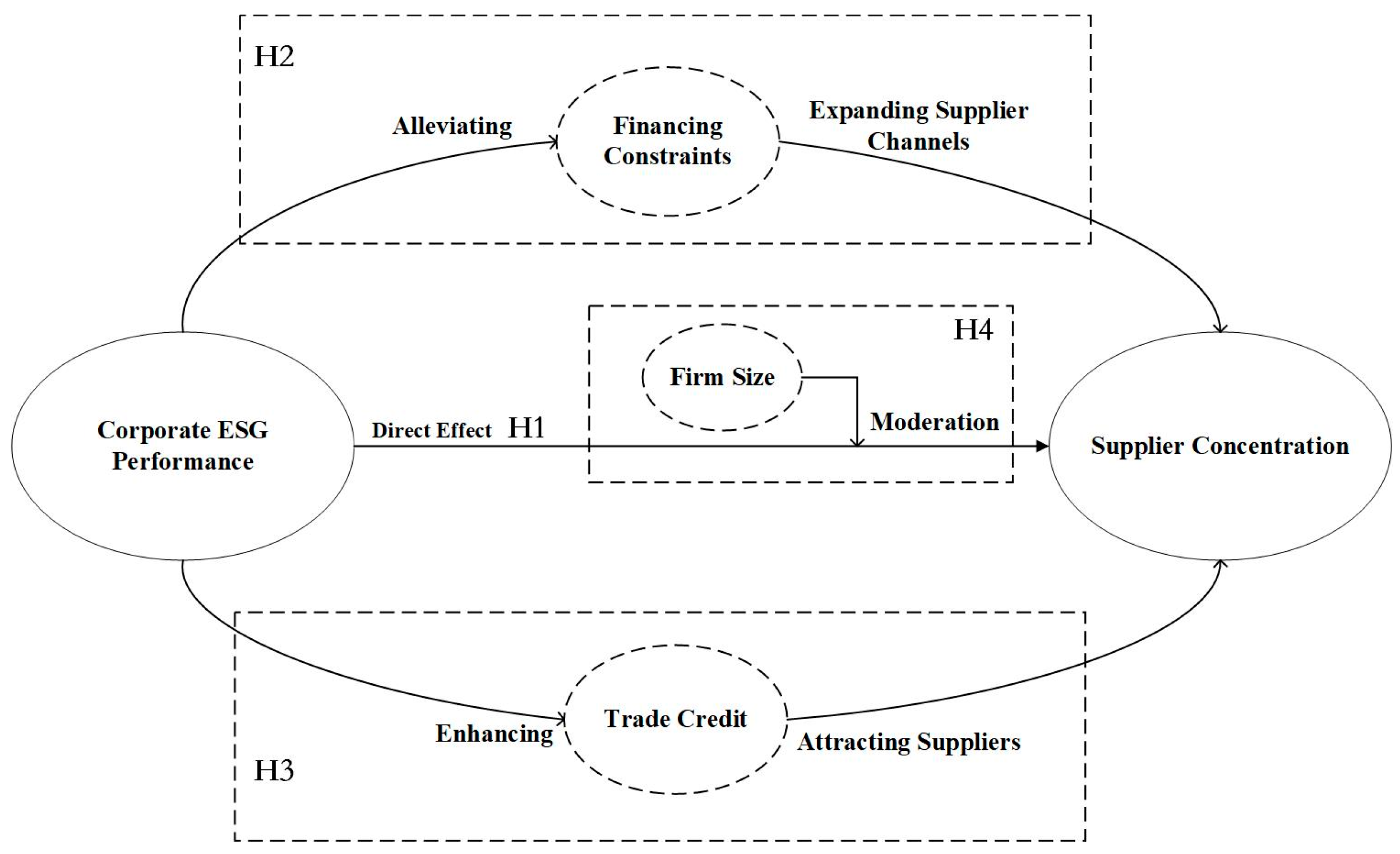
Based on this, this paper proposes research Hypothesis H2:
Hypothesis H2.
Corporate ESG performance can reduce the concentration of corporate suppliers by easing financing constraints.

2.2.2. Core Driving Force: Enhancing Trade Credit

In addition, trade credit is also a key factor influencing the concentration of a company’s suppliers. With good trade credit, enterprises can attract more suppliers and build trust relationships with them, providing the core impetus to reduce the concentration of enterprise suppliers. Enterprises with good trade credit can efficiently convey their earnings information to the outside world, alleviate information asymmetry between supply chains, and provide decision-making references [22] for investors. A good willingness to disclose information helps build mutual trust among supply chain partners, thereby increasing cooperation opportunities and reducing the company’s reliance on specific customers and suppliers. Corporate ESG performance plays a role in strengthening trade credit [23] in this process. The ESG performance of an enterprise can significantly enhance the social image and reputation of the enterprise, and this positive image helps to increase the trust of suppliers and customers, thereby enhancing the trade credit of the enterprise. Additionally, companies with excellent ESG performance tend to attract more attention from long-term investors who value not only financial returns but also sustainable development capabilities [24]. As a result, companies with good ESG performance are more likely to gain the trust and support of investors, thereby enhancing their trade credit. A company with good trade credit means it has a strong risk tolerance and bargaining [25] power and can negotiate better terms with suppliers more effectively. This bargaining advantage helps enterprises reduce their excessive reliance on a single supplier, thereby diverting the concentration of suppliers to a certain extent. At the same time, trade credit is not only a reflection of a company’s credit level but also shows strong willingness to cooperate and a high level of trust between the company and its suppliers. When an enterprise has a high level of trade credit, suppliers are more willing to establish a lasting and stable cooperative relationship with it, which provides more opportunities for the enterprise to adjust and optimize the supply chain structure.
Based on this, this paper proposes research Hypothesis H3:
Hypothesis H3.
Corporate ESG performance can reduce the concentration of corporate suppliers by strengthening corporate trade credit.

2.2.3. Key Support: Firm Size

Firm size reflects aspects [26] such as business operations, supply chain management, and market competition. Business size plays a significant role [27] in influencing the configuration of business supply chains. Large enterprises typically have more resources, including capital, technology, talent, etc., and have stronger economies of scale, which makes them more flexible in supplier selection and management. At the same time, large enterprises have a stronger brand influence and higher bargaining power [28] when negotiating with suppliers, attracting more quality suppliers to cooperate with them. In addition, as investors and consumers pay more attention to ESG issues, they have higher demands on the ESG performance of enterprises. Large companies are strengthening their ESG performance in order to meet market demands and remain competitive. Good ESG performance can bring a better reputation and word-of-mouth for enterprises and help them build a competitive edge [29] in the market. Compared to large enterprises, small and medium-sized enterprises may face resource constraints such as capital, technology, talent, etc. This leaves small and medium-sized enterprises relatively limited in supplier selection and management, and they may be more inclined to rely on a few key suppliers, thereby increasing supplier concentration. At the same time, small and medium-sized enterprises are often at a disadvantage in market competition, and in order to cut operating costs and enhance competitiveness, they tend to build long-term partnerships with a few suppliers to obtain more favorable prices and services.
Conversely, small and medium-sized enterprises may be relatively weak in ESG awareness, and due to limited resources, it is difficult for them to fully implement ESG strategies. When choosing suppliers, they tend to focus more on price advantages and service quality, which limits the space for optimizing supply chain management and keeps the concentration of suppliers at a high level. Based on the above analysis, this paper proposes research Hypothesis H4:
Hypothesis H4.
Large enterprises enhance the negative impact of ESG performance on supplier concentration; Small and medium-sized enterprises will mitigate this negative effect.
The specific mechanism is shown in Figure 2 below.

3. Research Design

3.1. Sample Selection and Data Sources

This paper takes manufacturing enterprises listed on the Shanghai and Shenzhen A-share markets from 2010 to 2024 as the initial research sample, and finally determines the research sample through a series of screening processes as follows: (1) excluding the sample of companies subject to ST and PT treatment; (2) observations with missing data or outliers were excluded; and (3) exclude companies that have been on the market for less than one year. After the above processing, 11,623 valid observation samples were finally obtained. In addition, to reduce the interference of extreme values on the regression results, winsorize the continuous variables at the top and bottom 1% level in this paper. In terms of the research data, the ESG scores were derived from Huazheng ESG ratings; other financial data were obtained from the CSMAR database, and the empirical analysis was conducted using STATA18 statistical software.

3.2. Model Construction

To examine the impact of an enterprise’s ESG performance on the concentration of suppliers, the following model is established in this paper:
S C i , t = α 0 + α 1 E S G _ S c o r e i , t + α 2 C o n t r o l i , t + F i r m i + Y e a r t + ξ i , t
Here represents the Huazheng ESG score of enterprise i in year t, which reflects the ESG performance of the enterprise. E S G _ S c o r e i , t S C i , t represents the supplier concentration of enterprise i in year t. C o n t r o l i , t represents the set of control variables at the enterprise level for enterprise i in year t. F i r m i and Y e a r t represent firm and year fixed effects, and ξ i , t represents the random error term for enterprise i in year t. If α 1 is significantly negative, it indicates a negative correlation between the ESG performance of enterprises and the concentration of suppliers, and the hypothesis is validated.
Further, to verify the possible mediating effect between financing constraints and corporate trade credit, this paper establishes the following model:
M e d i a n i , t = β 0 + β 1 E S G _ S c o r e i , t + β 2 C o n t r o l i , t + F i r m i + Y e a r t + ξ i , t
S C i , t = γ 0 + γ 1 E S G _ S c o r e i , t + γ 2 M e d i a n i , t + γ 3 C o n t r o l i , t + F i r m i + Y e a r t + ξ i , t
Here, represent the mediating variables financing constraints M e d i a n i , t (WW) and trade credit (NTC), and the other variables are the same as Formula (1). To verify whether corporate ESG performance affects corporate supplier concentration by easing financing constraints and increasing corporate trade credit, this paper calculates through the following two steps: step 1: using model (2) to test the impact of explanatory variables (ESG_Score) on mediating variables (WW, NTC); the second step is to incorporate the mediating variables (WW, NTC) into model (3) to test the impact of the mediating variables on the explained variables in order to test whether there is a mediating effect.
To test the moderating effect of firm size, this paper establishes the following model:
S C i , t = δ 0 + δ 1 E S G _ S c o r e i , t + δ 2 S i z e i , t + δ 3 S c o r e i , t × S i z e i , t + δ 4 C o n t r o l i , t + F i r m i + Y e a r t + ξ i , t
Here, S i z e i , t represents firm size, E S G _ S c o r e i , t × S i z e i , t represent the interaction term between enterprise ESG performance and firm size, and other variables are the same as Formula (1) to explore the moderating effect of firm size.

3.3. Variable Definitions and Descriptions

(1)
Core explained variable: supplier concentration (SC)
Supplier concentration is the main indicator for measuring the distribution of suppliers in an enterprise. This paper, drawing on the ideas of Patatoukas [30] and Dhaliwal [31] for measuring customer concentration and referring to the relevant practices of Li Wan [32] and Fu Yu [33], constructs the following three supplier concentration measurement indicators:
SC: the ratio of the purchases from the top five suppliers to the total annual purchases;
SC_HHI: the sum of the squares of the ratios of purchases from the top five suppliers to total purchases;
Top1SC: the ratio of the largest supplier’s purchase to the total purchase.
If the above three indicators are larger, they indicate that the enterprise has a higher concentration of suppliers; otherwise, it indicates a lower concentration of suppliers. In this paper, the regression uses SC to measure supplier concentration and SC_HHI and Top1SC indicators to test the robustness of the model. Importantly, the top-five supplier concentration is a mandatory disclosure item required by the China Securities Regulatory Commission (CSRCs) for all listed manufacturing firms. This regulatory consistency ensures that our measurements reflect actual strategic diversification rather than differences in reporting quality associated with high ESG scores.
(2)
Core explanatory variables: corporate ESG performance (ESG_Score), corporate environmental performance (E_Score), corporate social performance (S_Score), and corporate governance performance (G_Score).
With reference to the relevant research on ESG performance of enterprises by Wang Bo [34], He Ying [35], Cheng Ping [36], the Huazheng ESG rating score is used as the ESG performance of enterprises. The evaluation system of Huazheng ESG is closely linked to the Chinese market and has a wide coverage and high timeliness. The evaluation system consists of the following three pillars, Environment, Social, and Governance, covering 14 core themes, 26 key indicators, and more than 130 sub-indicators. The rating system of Huazheng ESG takes into full account the uniqueness of Chinese enterprises and policy directions when formulating indicators, including many evaluation indicators with Chinese characteristics, for example, greenhouse gas emissions and carbon neutrality strategies, rural revitalization, sustainability certification and supply chain management. Huazheng ESG’s rating system is divided into the following nine different levels, from high to low: AAA, AA, A, BBB, BB, B, CCC, CC and C. If the nine levels from C to AAA are scored on a scale of 10 to 90 to obtain the enterprise environmental performance (E_Score), enterprise social performance (S_Score), and enterprise governance performance (G_Score) scores, and these scores are accumulated with specific weights, then the total ESG score of the enterprise can be calculated. The higher the value of the ESG_Score, the better the ESG performance of the enterprise.
(3)
Mediating variables: financing constraints (WW), trade credit (NTC)
This paper selects enterprise financing constraints and enterprise trade credit as the mediating variables of enterprise ESG affecting the concentration of suppliers. Referring to the research by Whited, T.M [37] and Liu Zheng [38], the WW index is used to measure corporate financing constraints. The WW index is calculated based on a series of financial data such as the debt ratio, dividend distribution, and total assets of the enterprise. The specific calculation formula is as follows:
W W = 0.021 × T L T D 0.062 × D I V P O S 0.044 × L N T A 0.035 × S G + 0.102 × I S G 0.091 × C F
Here: TLTD represents the ratio of long-term liabilities to total assets; DIVPOS is a dummy variable, taking a value of 1 when the company makes a dividend, or 0 otherwise; LNTA is the natural logarithm of total assets; SG stands for enterprise sales growth rate; ISG represents the sales growth rate of the industry in which the enterprise is located; CF represents the ratio of cash flow to total assets. The larger the WW index, the higher the degree of financing constraints faced by the enterprise.
This paper, referring to the research of Ba Shusong [39] and Zhang Nan [40], uses “(accounts payable + advance receipts + notes payable − accounts receivable − advance payments − notes receivable)/total assets” to measure the trade credit (NTC) of enterprises. The larger the NTC, the higher the trade credit of the enterprise.
(4)
Moderating variable: Size of the enterprise
Referring to the research by You Jiyuan [41] et al., this paper selects Firm size as the moderating variable, measures Firm size using the natural logarithm of total enterprise assets, and examines the impact of enterprise ESG performance on supplier concentration [42].
(5)
Control variables
Following the common practice in the existing literature, this paper selects the following factors that may affect the concentration of enterprise suppliers: years since the enterprise was listed (Age), shareholding ratio of the largest shareholder (First), return on total assets (ROA), return on equity (ROE), separation of ownership rights (Sep), and current assets (CAs). In addition, this paper controls for firm and year fixed effects. The specific variable names and descriptions, following the standardized design of sustainable development metrics [43], are shown in Table 1.

4. Empirical Analysis

4.1. Descriptive Statistical Analysis and Correlation Analysis

Table 2 reports the descriptive statistical results of the main research variables. The results show that the mean, 50% quantile, standard deviation, minimum and maximum values of the ESG_Score of enterprises are 73.20, 73.30, 4.472, 60.77 and 83.49 respectively, indicating significant differences in ESG performance among enterprises. The mean supplier concentration (SC) was 34.76%, the standard deviation was 16.88, the minimum value was 7.99%, and the maximum value was 81.77%, indicating a significant disparity in supplier concentration among different enterprises, with some enterprises having a high supplier concentration of over 80% and a heavy reliance on major customers. This also indicates that there is much room for improvement in supplier concentration among enterprises. In addition, the correlation analysis shows that the Pearson correlation coefficient between ESG_Score and SC is −0.176, and the Spearman correlation coefficient is -0.167, both of which are significantly negative at the 1% level, preliminarily confirming that the ESG performance of enterprises has a significant negative impact on their supplier concentration. In addition, the multicollinearity diagnosis indicated that the variance inflation factor (VIF) of each variable was less than 10, suggesting that there was no multicollinearity problem among the model variables.

4.2. Regression Analysis

This paper selects a fixed-effect model for analysis. Table 3 shows the regression results of the impact of corporate ESG performance on supplier concentration. Where models (1) and (3) do not include control variables, and models (2) and (4) do, the results show that when control variables are included, the core explanatory variable, enterprise ESG performance (ESG_Score) coefficient, decreases but remains negative at the 1% significance level. Furthermore, when the fixed effects of enterprises and years were further added, the ESG_Score coefficient continued to decline, but the significance level remained at 1%, demonstrating the robustness of the regression results. The ESG concept focuses on the green and sustainable development of enterprises, which aligns with the supply chain that pursues stability and long-term value transformation. Good ESG performance of enterprises can help them obtain more social resources and attract more quality suppliers, thereby reducing supplier concentration, verifying Hypothesis H1. Regarding economic significance, the baseline coefficient of −0.1393 suggests that a one-unit improvement in a firm’s ESG score leads to a non-trivial reduction in supplier concentration relative to the sample mean of 34.76%, demonstrating the practical impact of ESG on supply chain optimization.

4.3. Endogeneity and Robustness Tests

(1)
Test for the lag effect of explanatory variables
This paper delves deeply into the interaction between corporate ESG performance and supplier concentration. Given that the ESG performance of manufacturing enterprises may have a lag effect on their supplier selection, this paper uses the corporate ESG performance lagging by one period as an explanatory variable and re-conducts a regression analysis of supplier concentration. The analysis results are shown in column (1) of Table 4, which indicates that an improvement in ESG performance leads to a decrease in supplier concentration, meaning that Hypothesis H1 still holds.
(2)
Instrumental variable test
To further alleviate the potential omission of variables and bidirectional causality in model (1), this paper, following the approach of Yao Zhenghai [42], selects the average ESG Huazheng score of other enterprises in the same industry in the same year as the instrumental variable IV. The ESG performance of the same industry will affect the ESG performance of the enterprise but will not directly affect the supplier concentration of the enterprise, which meets the exogeneity requirement. Table 4 (2) reports the 2SLS regression results as follows: the first-stage regression results show that the coefficients of IV and ESG_Score are both significantly positive, and the instrumental variable validity test results confirm that the instrumental variable selected in this paper is reasonable. The second-stage regression results show that after controlling for endogeneity issues, the ESG performance of enterprises is still negatively correlated with supplier concentration.
(3)
Propensity score matching method
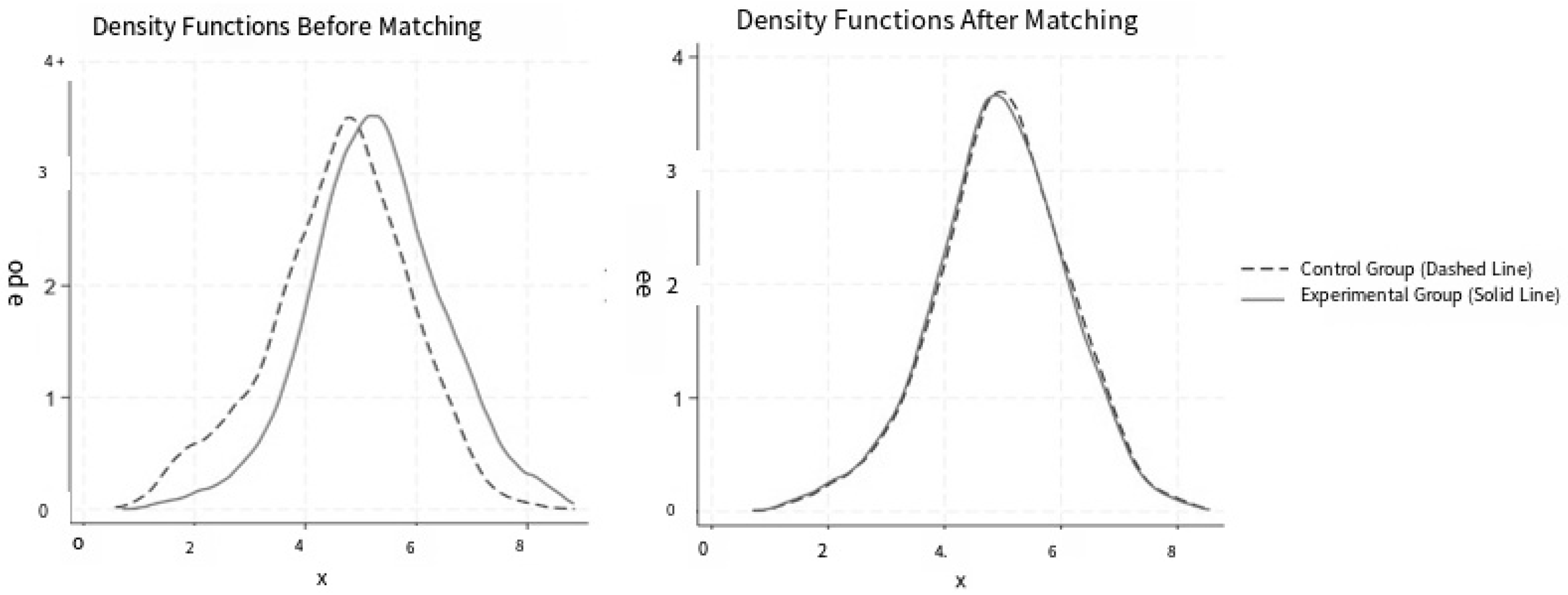
To avoid endogeneity problems resulting from sample self-selection, the propensity score matching (PSM) method was used for further analysis, referring to the practice in studies by Roman Lanis [44], Shan Bia [45], etc. The median of the core explanatory variable ESG_Score was used as the basis for grouping, with ESG_Score values greater than the median as the experimental group (Treat = 1) and less than the median as the control group (Treat = 0), using the principle of nearest neighbor matching 1:1 The control variables in the previous regression were used as matching variables, and the propensity match scores were calculated using Logit regression. Compare the kernel density function plots of the experimental group and the control group before and after matching in Figure 3. The kernel density functions of the experimental group and the control group after matching are closer, effectively reducing the systematic differences between the two groups. Then, regression analysis was conducted based on propensity match scores, and the results are shown in column (1) of Table 5. The results show that the ESG performance of manufacturing enterprises is still significantly negatively correlated with supplier concentration.
(4)
Replace the core-explained variables
Following the approach of Xiao [46] (SC), was replaced with the Herfindall index SC_HHI of supplier concentration and the ratio of the largest supplier’s purchase to total purchase (top1 SC). The regression of model (1) was re-conducted, and the regression results are shown in columns (2) and (3) of Table 5. The ESG performance of enterprises was significantly negatively correlated with both the Herfindar index SC_HHI of supplier concentration and the Top1SC of purchases from the largest supplier at the 1% level, indicating good robustness of the results.
(5)
Alter the sample time interval
Compared with the basic financial data, the acquisition of the explanatory variable “supplier concentration” is more difficult. Especially before 2007, as the China Securities Regulatory Commission did not put forward clear disclosure requirements for listed manufacturing enterprises, related research was almost in a blank state, and it was even more impossible to deeply explore its impact on enterprises. Since 2012, however, the CSRC has required listed manufacturing companies to disclose the proportion of purchase amounts from the top five suppliers and the proportion of sales amounts from the top five customers. The change has been endorsed by the majority of scholars, who believe that these proportions can reflect companies’ supply chain management concepts to a certain extent, provide key information for investors’ decision-making, and also facilitate academic research. Therefore, this paper excluded the data from 2011 to 2014 and re-examined model 1. The regression results are shown in column (4) of Table 5 and are consistent with the previous text.
(6)
Tobit model regression
Since the core explained variable supplier concentration (SC) data in this paper are all greater than 0, in order to verify the robustness of the model, the regression model was changed, and the Tobit model (truncated regression model) was used to re-regress model (1). The regression results are shown in column (5) of Table 5 below. There is still a significant negative correlation between enterprise ESG performance and supplier concentration. The results are consistent with the previous ones, indicating that the results are robust.

5. Further Research

5.1. Mechanism Analysis

Columns (1), (2), and (4) in Table 6 test the mediating effect of financing constraints (WW), and column (2) reports the regression results of the first step, where the coefficient of corporate ESG performance on corporate financing constraints is −0.002 and significantly negative at the 1% level, indicating that corporate ESG performance significantly reduces corporate financing constraints; (4) reports the regression results of the second step, with a coefficient of 0.5275 for the enterprise financing constraints (WW) on supplier concentration, which is significantly positive at the 5% level, indicating that a decrease in enterprise financing constraints leads to a decrease in enterprise supplier concentration. Combining the results of the two-step regression, it indicates a potential path the path of “good ESG performance—alleviating financing constraints—reducing supplier concentration”, that is, indicates a potential path Hypothesis H2. Good ESG performance sends a positive signal to investors that businesses operate more sustainably and at a lower risk. This lowers the risk premium demanded by investors, thereby reducing the financing costs for businesses. When corporate financing constraints are effectively alleviated, it will have the financial resources and strategic autonomy needed for a supplier diversification strategy to build a more resilient and flexible supply chain.
Columns (1), (3), and (4) of Table 6 examine the mediating effect of trade credit (NTC). Column (3) reports the regression results of the first step. The coefficient of enterprise ESG performance on enterprise trade credit is 0.0003, and it is significantly positive at the 10% level, indicating that enterprise ESG performance significantly enhances enterprise trade credit. Then, (4) reports the regression results of the second step, with the coefficient of trade credit (NTC) on supplier concentration being −1.8452 and significantly negative at the 5% level, indicating that enhanced trade credit reduces supplier concentration. Combining the results of the two-step regression, it indicates a potential path the path of “good ESG performance—enhanced trade credit—reduced supplier concentration” and indicates a potential path Hypothesis H3. The possible reason for this is that suppliers tend to work with reliable, stable, and reputable customers. Good ESG performance signals to suppliers that the business is stable, has low risk and focuses on long-term partnerships. Suppliers believe that such customers have a lower risk of default, are more likely to pay on time, and thus are more willing to work with them, thereby reducing the concentration of suppliers in the enterprise.

5.2. Analysis of the Moderating Effects of Firm Size

Table 7 reports the test results of the moderating effect of enterprise scale on supplier concentration in ESG performance. The interaction term between enterprise ESG performance and firm size was significantly negative at the 1% level, with a coefficient of −0.0277, indicating that large enterprises enhance the negative effect between enterprise ESG performance and supplier concentration. The possible reason is that large manufacturing enterprises typically have a leading position and demonstration effect in the industry, actively fulfill social responsibilities, and pay attention to employee benefits, consumer rights and community interests. By strengthening employee training, improving product quality and service levels, and participating in community building, companies can enhance employees’ sense of belonging and loyalty and increase social recognition, thereby attracting more suppliers and reducing supplier concentration. Hypothesis H4 is validated.

5.3. Heterogeneity Analysis

5.3.1. The Impact of Enterprise E, S, and G Performance on Supplier Concentration Respectively

Corporate ESG performance encompasses the integrated performance of the enterprise in the three aspects of environment, society, and corporate governance. These three dimensions are core indicators for assessing the enterprise’s sustainable development capacity and the level of social responsibility fulfillment. The previous text explored how the combined effect of these three dimensions affects the enterprise’s supplier concentration. To clarify the impact of each dimension on the enterprise’s supplier concentration, this paper constructs the following model (5), where score represents the score of the enterprise in the three dimensions (Score_E, Score_S, and Score_G). Regression tests were conducted on each of the three models, and the results are shown in columns (1), (2) and (3) of Table 8. Among them, the environmental, social, and corporate governance dimensions were all significantly negatively correlated with the concentration of enterprise suppliers, but the social dimension had the most significant effect (−0.0474 > −0.0558 > −0.0823). In the ESG performance of manufacturing enterprises, the social dimension emphasizes the impact on society and care for employees, communities, and customers, including employee benefits, respect for human rights, community engagement, and public welfare. These factors are directly related to the degree of partnership and trust between the enterprise and its supply chain partners. When there is a problem at a certain link in the supply chain, partners with better social connections are more likely to respond positively as soon as possible, solve the problem together, and reduce the adverse impact of the risk on the enterprise. So, when choosing downstream customers, suppliers tend to favor enterprises that perform well in terms of social responsibility. This preference helps enterprises broaden their supplier selection range and thereby effectively reduce their supplier concentration.
S C i , t = χ 0 + χ 1 S c o r e i , t + χ 2 C o n t r o l i , t + F i r m i + Y e a r t + ξ i , t

5.3.2. Heterogeneity Analysis of the Nature of Corporate Property

The nature of corporate property rights is often a key factor in differentiating corporate behavior. This research conducted heterogeneity analysis by dividing the sample enterprises into two major categories, state-owned manufacturing enterprises and non-state-owned manufacturing enterprises, based on the nature of their property rights. The results are shown in columns (4) and (5) of Table 8 below. The results show that ESG performance of enterprises has a significant negative correlation with supplier concentration in both types of enterprises, but the effect is more pronounced in non-state-owned enterprises (−0.1393 > −0.2086). Compared with state-owned enterprises, non-state-owned enterprises typically face a more intense market competition environment. In order to remain competitive, they may pay more attention to ESG performance in order to attract investors, consumers and partners. At the same time, suppliers are more inclined to work with companies that perform well in ESG when choosing partners, which may lead to more flexibility in supplier selection for non-state-owned enterprises, thereby reducing supplier concentration. In addition, non-state-owned enterprises typically face more attention and oversight from stakeholders such as investors, consumers, and the media, who may have higher expectations and requirements for the ESG performance of enterprises. In order to meet these expectations and requirements, non-state-owned enterprises may be more proactive in improving ESG performance, which in turn affects the selection and concentration of suppliers.

6. Conclusions and Discussion

6.1. Conclusions

In recent years, sustainable development has become the main theme of manufacturing enterprises’ operations, and the importance of manufacturing enterprises’ ESG performance to their development is self-evident. At the same time, the global division of labor system is increasingly refined, and some manufacturing enterprises’ core components are concentrated in a few (or even a single) suppliers, resulting in supply dependence and excessive supplier concentration. It can lead to a higher risk of supply chain disruptions. In this context, this paper delves into the impact of manufacturing companies’ ESG performance on supplier concentration using data from manufacturing companies listed on the Shanghai and Shenzhen A-share markets from 2010 to 2024. By constructing a regression model and conducting a series of empirical analyses, this paper draws the following main conclusions:
(1)
The improvement in ESG performance of manufacturing enterprises will reshape the value creation process of enterprises in areas such as social responsibility, environmental protection and corporate governance, mainly by alleviating the financing constraints of enterprises and enhancing the trade credit of enterprises to improve the market competitiveness of enterprises and reduce the dependence on a small number of suppliers, thereby reducing the concentration of suppliers. This is an important way for Chinese enterprises to actively respond to market challenges and achieve sustainable development goals. Based on the broad application perspective of the ESG concept, selecting a representative sample of listed manufacturing enterprises, comprehensively measuring the actual performance of enterprises in ESG, and deeply exploring the internal mechanism by which ESG performance affects the supplier structure of enterprises, helps to elucidate the underlying mechanism of the impact of ESG performance on the supply chain structure of manufacturing enterprises, so as to provide new ideas and strategies for better leveraging the leading role of ESG in building resilient supply chains.
(2)
Firm size, as a key factor that has a significant impact on business operations and strategy, reinforces the positive effect of enterprise ESG performance on optimizing the supplier structure. Large manufacturing enterprises, with their abundant resources and strong capabilities, can implement ESG strategies more efficiently. This amplification effect of resources and capabilities gives large enterprises a greater advantage in alleviating excessive concentration of suppliers. Large manufacturing companies typically have a larger market share and stronger market influence. Moreover, they are more focused on risk management and are proactive in seeking partnerships with multiple suppliers to reduce the risks associated with a single supplier. At the same time, large manufacturing enterprises will enhance the stability and sustainability of their supply chains by increasing supply chain transparency and establishing risk early warning mechanisms. All of these contribute to strengthening the positive role of ESG performance in balancing the layout of suppliers.
(3)
Social responsibility performance, as an important component of a company’s ESG performance, plays a more significant role in optimizing the supplier structure. Manufacturing companies with excellent social responsibility performance are more focused on partnerships with suppliers and tend to build long-term, stable supply chains, thereby reducing reliance on a single supplier. In addition, manufacturing enterprises with good social responsibility performance have a better reputation and can attract more suppliers to work with them, thus diversifying suppliers. In the non-state-owned enterprise group, the impact of manufacturing companies’ ESG performance on the supplier structure is more pronounced. Compared with state-owned enterprises, non-state-owned enterprises face more intense market competition and are thus more motivated to enhance their competitiveness and sustainability by improving ESG performance. In the process, non-state-owned enterprises will pay more attention to their partnerships with suppliers to reduce the risk of supply disruptions, thereby effectively alleviating the concentration of suppliers.

6.2. Policy Recommendations

Based on the above conclusions, the following Policy Implications can be drawn:
(1)
Government agencies should focus on standardizing ESG disclosure frameworks to reduce information asymmetry. Furthermore, implementing market-oriented incentives, such as preferential loans or tax credits, can encourage firms to improve disclosure and optimize supply chain resilience.
(2)
For manufacturing firms, ESG integration should be treated as a strategic tool for resource acquisition. By fulfilling social (S) and environmental (E) responsibilities, firms can establish an image as “responsible purchasers,” attracting a broader base of high-quality suppliers and building trust-based, multi-source networks.
(3)
For investors and external regulators: In the process of assessing the value of enterprises, full attention should be given to the ESG performance of enterprises. Good ESG performance can not only significantly alleviate financing constraints and enhance trade credit, but also effectively reduce potential risks in the supply chain and lay a solid foundation for sustainable development. Therefore, using ESG performance as one of the key indicators for assessing corporate value is of great significance for investors to make informed decisions and for regulators to implement effective supervision.

6.3. Limitations and Future Work

Despite its contributions, this research has limitations that point to future research directions.
(1)
The sample is restricted to Chinese A-share listed firms. Future studies could explore whether these mechanisms hold true in different institutional environments, such as the EU or North America, through cross-national comparative research.
(2)
Our reliance on secondary data means that “supplier trust” and “perceived risk” were inferred rather than directly measured. Future research could utilize qualitative methods, such as semi-structured interviews with procurement managers, to capture the micro-psychological foundations of these interactions.
(3)
Future inquiries could investigate the long-term dynamic evolution of supplier configurations in response to emerging ESG-related global shocks to further test the temporal stability of our findings.

Author Contributions

Validation, X.C.; writing—original draft, Y.B.; writing—review and editing, Y.W. All authors have read and agreed to the published version of the manuscript.

Funding

This research received no external funding.

Institutional Review Board Statement

Not applicable.

Informed Consent Statement

Not applicable.

Data Availability Statement

The original contributions presented in this study are included in the article. Further inquiries can be directed to the corresponding author.

Conflicts of Interest

The authors declare no conflicts of interest.

References

  1. Gong, B.; Xu, Z.; Cheng, C.; Chen, Y. Can digital supply chain finance reduce the quality risk of enterprises? Evidence from the Zhongzheng Accounts Receivable Financing Platform. Manag. World 2025, 41, 198–222. [Google Scholar] [CrossRef]
  2. Zhu, J.; Wang, Y.; Shi, H. Government procurement and supply chain resilience of enterprises. J. Fisc. Res. 2025, 3, 112–128. [Google Scholar] [CrossRef]
  3. Shen, J.; Chang, Z. How Industrial Synergy and Agglomeration Empower the Specialized, Refined, Distinctive and Innovative Development of Small and Medium-sized Enterprises. Sci. Technol. Prog. Policy 2025, 42, 60–69. [Google Scholar] [CrossRef]
  4. Jiang, W.; Wang, N.; Cao, S. Measurement and application of Supply Chain Disruption Risk: Analysis Based on Word Embedding Model. Nankai Bus. Rev. 2025, 28, 109–120. [Google Scholar]
  5. Houston, J.F.; Shan, H. Corporate ESG profiles and banking relationships. Rev. Financ. Stud. 2022, 35, 3373–3417. [Google Scholar] [CrossRef]
  6. Huang, Q.; Zhang, Y.; Cui, H.; Li, X. How does executive team ESG attention affect corporate resilience?—Empirical evidence based on text analysis and machine learning. Econ. Manag. Res. 2025, 46, 38–58. [Google Scholar] [CrossRef]
  7. Tang, L.; Yang, G. How can data assets empower Corporate ESG performance? Soft Sci. 2025, 39, 19–25. [Google Scholar] [CrossRef]
  8. Tan, W.; Cai, Y.; Luo, H.; Zhou, M.; Shen, M. ESG, technological innovation and firm value: Evidence from China. Int. Rev. Financ. Anal. 2024, 96, 103546. [Google Scholar] [CrossRef]
  9. Fan, M.; Liu, J.; Tajeddini, K.; Khaskheli, M.B. Digital technology application and enterprise competitiveness: The mediating role of ESG performance and green technology innovation. Environ. Dev. Sustain. 2025, 27, 1–31. [Google Scholar] [CrossRef]
  10. Sun, J.; Zhou, Q.; Gao, J.; Zhang, J. The impact of ESG accountability on digital technology innovation from the perspective of legitimacy. Sci. Res. Manag. 2025, 46, 140–150. [Google Scholar] [CrossRef]
  11. Ren, Z.; Ye, Z. Analysis of the development trend, project characteristics and key areas of the Business Administration Discipline Fund. J. Manag. 2025, 22, 2179–2189. [Google Scholar] [CrossRef]
  12. Yuan, H.; Han, W.; Peng, G. Research on the Impact of ESG Ratings on Common Prosperity within Enterprises. J. Nanjing Univ. Financ. Econ. 2025, 1, 56–66. [Google Scholar]
  13. Guo, M.; Yu, G. ESG Performance and Corporate RCEP Investment: An Empirical Research Based on a Sample of Listed Companies. Soft Sci. 2025, 39, 114–119. [Google Scholar] [CrossRef]
  14. Cao, Y.; Han, Z. The impact of ESG performance on Investment and financing maturity mismatch. Stat. Decis. 2025, 41, 139–143. [Google Scholar] [CrossRef]
  15. Xie, J.; Dong, Q.; Tan, W. Intensification or networking: Media ESG focus and supply chain configuration. Foreign Econ. Manag. 2024, 46, 101–118. [Google Scholar]
  16. Yuan, X.; Sun, Y. The Impact of ESG Performance on Corporate Risk during Economic Downturns: A quasi-natural Experiment Based on Financial Crisis and Public Health Crisis. Soft Sci. 2025, 39, 88–94. [Google Scholar] [CrossRef]
  17. Shi, J.; Deng, M.; Li, Y. How bank-enterprise dual-mode Networks Affect Corporate Debt Financing Costs: Empirical Evidence from syndicated loans in China. China Ind. Econ. 2025, 5, 119–137. [Google Scholar]
  18. Shi, M.; Yan, J. Corporate ESG Performance and Supplier Green Innovation: A Research Based on the Supply Chain Perspective. Audit Econ. Res. 2024, 39, 97–106. [Google Scholar]
  19. Du, S.; Wang, C. Can social capital enhance the export behavior of private enterprises? Ind. Econ. Rev. 2024, 4, 101–116. [Google Scholar]
  20. Tetlock, C.P. All the News That’s Fit to Reprint: Do Investors React to Stale Information? Rev. Financ. Stud. 2011, 24, 1481–1512. [Google Scholar] [CrossRef]
  21. Liu, R.; Wang, D.; Zheng, S. The Retrospective and Predictive Effectiveness of ESG Ratings: Evidence from China. Sustainability 2025, 17, 4819. [Google Scholar] [CrossRef]
  22. Yang, S.; Cao, Y. Corporate Social Responsibility Information Disclosure and Stock Price Synchrony: An Analysis Based on NER and TF-BIDF text techniques. Technol. Econ. 2025, 44, 1–17. [Google Scholar]
  23. Han, Z.; Duan, L.; Gao, X. Supplier Concentration and technological Innovation: Based on the Moderating role of Internal Capital Markets and trade credit. Soft Sci. 2021, 35, 61–67. [Google Scholar] [CrossRef]
  24. Li, Q.; Chen, L. Research on the Impact of ESG Performance on Corporate violations. J. Manag. 2025, 22, 2137–2146. [Google Scholar]
  25. Choi, Y.R.; Ha, S.; Kim, Y. Innovation ambidexterity, resource configuration and firm growth: Is smallness a liability or an asset? Small Bus. Econ. 2022, 59, 2183–2209. [Google Scholar] [CrossRef]
  26. Ren, X.; Wang, F. How does the Construction of artificial intelligence pilot zones affect the green governance performance of enterprises? Econ. Manag. Res. 2025, 46, 103–125. [Google Scholar] [CrossRef]
  27. Xu, G. Can cross-border e-commerce facilitate the diversification of enterprise supply chain Configuration?: A Quasi-natural Experiment Based on Cross-border E-commerce Pilot Zones. World Econ. Res. 2025, 9, 120–134. [Google Scholar] [CrossRef]
  28. Chen, Y.; Zhang, G.; Zhang, C. Wage determination mechanism from a risk perspective: An empirical evaluation from machine learning. Econ. Manag. 2025, 39, 64–72. [Google Scholar] [CrossRef]
  29. Xu, X.; Zhao, H. An empirical Research on ESG evaluation of Chinese energy enterprises based on high-quality development goals-A case Research of listed company data. Sustainability 2024, 16, 6602. [Google Scholar] [CrossRef]
  30. Patatoukas, P.N. Customer-Base Concentration: Implications for Firm Performance and Capital Markets. Account. Rev. 2012, 87, 363–392. [Google Scholar] [CrossRef]
  31. Dhaliwal, D.; Judd, J.S.; Serfling, M. Customer concentration risk and the cost of equity capital. J. Account. Econ. 2016, 21, 23–48. [Google Scholar] [CrossRef]
  32. Li, W.; Chen, L.; Chi, Y. Supplier/customer concentration and enterprise green innovation. Soft Sci. 2023, 37, 97–102. [Google Scholar] [CrossRef]
  33. Fu, Y.; He, X.; Hu, Y. Digital transformation, Supplier concentration and supplier geographical distribution. J. Shenzhen Univ. (Humanit. Soc. Sci. Ed.) 2025, 42, 97–108. [Google Scholar]
  34. Wang, B.; Yang, M. Research on the Impact Mechanism of ESG Performance on Enterprise Value: Empirical Evidence from A-share Listed Companies in China. Soft Sci. 2022, 36, 78–84. [Google Scholar] [CrossRef]
  35. He, Y.; Hao, X. “Empowerment” or “negativity”: Digitalization of Supply chains and ESG Performance of Enterprises. Econ. Manag. Res. 2025, 46, 96–118. [Google Scholar] [CrossRef]
  36. Cheng, P.; Yu, S. Digital Transformation and ESG performance: A Test of both Internal and External Pathways. Soft Sci. 2025, 39, 76–82. [Google Scholar] [CrossRef]
  37. Whited, T.M.; Wu, G. Financial constraints risk. Rev. Financ. Stud. 2006, 19, 531–559. [Google Scholar] [CrossRef]
  38. Liu, Z.; Kuang, H.; Zuo, Y.; Zhang, Y. Research on the Impact of Smart Supply Chain Construction on Enterprise Digital Innovation. Sci. Res. Manag. 2025, 46, 100–111. [Google Scholar] [CrossRef]
  39. Ba, S.; Xu, P. Statistical test of the impact of ESG performance on innovation in manufacturing enterprises. Stat. Decis. 2024, 40, 161–166. [Google Scholar] [CrossRef]
  40. Zhang, N.; Wang, S. Can the construction of a unified national market reduce enterprises’ dependence on major customers? Econ. Manag. Res. 2025, 46, 89–106. [Google Scholar] [CrossRef]
  41. You, J.; Zhang, B.; Nie, S. Data element flow environment and corporate ESG performance. Stat. Decis. 2025, 41, 177–182. [Google Scholar] [CrossRef]
  42. Hantao, L.; Zhang, X.; He, Y. Digital Transformation and ESG Performance Empirical Evidence from Chinese Listed Companies. Sustainability 2025, 17, 6165. [Google Scholar] [CrossRef]
  43. Deng, Z.; Sumbal; Li, L.; Khaskheli, M.B. Inclusive and Sustainable Digital Technological Transformation, Legal Innovation in Marketing and Business Performance of China and the European Union. Sustainability 2026, 18, 2523. [Google Scholar] [CrossRef]
  44. Yu, X.; Xiao, K. Does ESG performance affect firm value? Evidence from a new ESG-scoring approach for Chinese enterprises. Sustainability 2022, 14, 16940. [Google Scholar] [CrossRef]
  45. Song, F.; Wu, M.; Liu, R. The Impact of Supply Chain Structure Diversification on High-Quality Development: A Moderating Perspective of Digital Supply Chains. J. Theor. Appl. Electron. Commer. Res. 2025, 20, 301. [Google Scholar] [CrossRef]
  46. Xiao, L.; Xu, X.; Xue, W.; Lei, T. Research on the Antecedents of Corporate Inventory Agility under the COVID-19 Pandemic: An Exploration Based on the AMC Framework. J. Ind. Eng. Eng. Manag. 2025, 39, 274–290. [Google Scholar] [CrossRef]
Figure 1. Chain causality diagram of ESG performance reducing supplier concentration.
Sustainability 18 03622 g001
Figure 2. Diagram of mechanism of action.
Sustainability 18 03622 g002
Figure 3. Kernel density function plots of the control group and the experimental group before and after matching.
Sustainability 18 03622 g003
Table 1. Research variable names and descriptions.
Variable NamesVariable SymbolsVariable Description
Core explained variableSupplier concentrationSCThe ratio of purchases from the top five suppliers to total annual purchases
Core explanatory variablesEnterprise ESG performanceESG_ScoreWeighted sum of ESG rating scores
Corporate environmental performanceE_ScoreScore on different grades
Corporate social performanceS_ScoreThe same as E_Score calculation method
Corporate governance performanceG_ScoreThe same as E_Score calculation method
Mediating variablesFinancing constraintsWWSee above for detailed calculation methods
Trade creditNTC(accounts payable + advance receipts + notes payable − accounts receivable − advance payments − notes receivable)/total assets
Moderating variablesFirm sizeSizeTake the logarithm of total enterprise assets, that is, Ln(total enterprise assets)
Control variablesYears on the marketAgeObservation year − IPO year
Shareholding ratio of the largest shareholderFirst(Number of shares held by the largest shareholder/total share capital of the company) × 100%
Return on total assetsROANet profit/total assets × 100%
Return on net assetsROENet profit/average net assets × 100%
Two rights separation ratesSep(Control ratio − ownership ratio)/ownership ratio
Current assetsCATake the natural logarithm of current assets, that is, ln (current assets)
Table 2. Descriptive statistics of the main variables.
VariableNMeanP50SDMinMax
SC11,62334.7630.9216.887.99081.77
ESG_Score11,62373.2073.304.47260.7783.49
First11,62332.0029.8713.689.13070.53
ROA11,6230.03700.03700.0630−0.2350.208
ROE11,6230.05200.06400.132−0.6640.323
Sep11,6234.63207.286027.78
CA11,62321.5421.421.10919.2824.88
Age11,62310.1487.143128
Table 3. Regression results of enterprise ESG performance on supplier concentration.
Variables(1)(2)(3)(4)
SCSCSCSC
ESG_Score−0.2143 ***−0.1676 ***−0.1562 ***−0.1393 ***
(−7.8263)(−6.1020)(−5.5091)(−4.8898)
ControlsNOYESNOYES
FirmNONOYESYES
YearNONOYESYES
Constant50.1484 ***95.8748 ***46.2002 ***67.8240 ***
(24.5616)(22.7102)(22.2344)(8.1271)
N11,62311,62311,60611,606
adj. R2 0.6830.686
Note: *** respectively mean significant at the 1% levels.
Table 4. Results of the lag effect of the explanatory variable (ESG_Score) and instrumental variable tests.
Variables(1) Lag Effect Test(2) Instrumental Variable Test
SCPhase 1
ESG_Score
The Second Stage
SC
lesg−0.1001 ***
(−3.1573)
IV 0.7600 ***
(10.54)
ESG_Score −1.8425 ***
(−5.29)
ControlsYESYESYES
FirmYESYESYES
YearYESYESYES
Constant59.074 ***45.469 ***185.812 ***
(6.1221)(52.85)(10.96)
N908611,04211,042
adj. R20.703
Note: *** respectively mean significant at the 1% levels.
Table 5. Results of the robustness test analysis.
Variables(1) PSM Results(2) Replace the Variable(3) Replace the Variable(4) Adjust Intervals(5) Tobit Regression
SCSC_HHITop1SCSCSC
ESG_Score−0.2083 ***−0.0232 *−0.0528 **−0.1510 ***−0.1671 ***
(−6.0159)(−1.8784)(−2.4520)(−5.2300)(−6.0796)
ControlsYESYESYESYESYES
FirmYESYESYESYESYES
YearYESYESYESYESYES
Constant66.3874 ***9.2604 **19.6125 ***64.0647 ***95.6929 ***
(3.9217)(2.5594)(3.1058)(7.5142)(22.5424)
N580811,60611,60610,77511,623
Adj_R20.6370.5740.5830.701
Note: *, **, and *** respectively mean significant at the 10%, 5%, and 1% levels.
Table 6. Analysis of mediating effects based on financing constraints and trade credit.
Variables(1)(2)(3)(4)
SCWWNTCSC
ESG_Score−0.0842 ***−0.002 ***0.0003 *−0.0836 ***
(−4.8061)(−2.6366)(1.6835)(−4.7714)
WW 0.5275 **
(2.3453)
NTC −1.8452 **
(−2.0735)
ControlsYESYESYESYES
FirmYESYESYESYES
YearYESYESYESYES
Constant47.642 ***1.997 ***−0.418 ***
(9.3112)(8.7971)(−7.2965)
N11,60611,60611,606
Adj_R20.8810.4290.645
Note: *, **, and *** respectively mean significant at the 10%, 5%, and 1% levels.
Table 7. Analysis of moderating effects based on firm size.
Variables(1)(2)(3)
SCSCSC
ESG_Score−0.0842 ***−0.0835 ***0.5323 ***
(−4.8061)(−4.7782)(5.3896)
Size −2.4340 ***
(−7.2998)
ESG_Score × Size −0.0277 ***
(−6.3423)
ControlsYESYESYES
FirmYESYESYES
YearYESYESYES
Constant47.6415 ***57.7146 ***10.8541 *
(9.3112)(10.9172)(1.4045)
N11,60611,60611,606
adj. R20.8810.8820.882
Note: * and *** respectively mean significant at the 10% and 1% levels.
Table 8. Regression results on the impact of enterprise E, S, and G performance on supplier concentration.
Variables(1) Environment(2)
Society
(3) Governance(4) State-Owned Enterprises(5) Non-State-Owned Enterprises
SCSCSCSCSC
E_Score−0.0474 ***
(−2.4925)
S_Score −0.0823 **
(−5.0400)
G_Score −0.0558 ***
(−2.6522)
ESG_Score −0.139 ***−0.2086 ***
(−4.8898)(−6.6819)
ControlsYESYESYESYESYES
FirmYESYESYESYESYES
YearYESYESYESYESYES
Constant62.4175 ***64.5918 ***62.9646 ***67.8240 ***72.3669 ***
(7.5595)(7.8420)(7.6081)(8.1271)(10.0850)
N11606116061160635868020
adj. R20.6850.6860.6850.6860.686
Note: ** and *** respectively mean significant at the 5% and 1% levels.
Disclaimer/Publisher’s Note: The statements, opinions and data contained in all publications are solely those of the individual author(s) and contributor(s) and not of MDPI and/or the editor(s). MDPI and/or the editor(s) disclaim responsibility for any injury to people or property resulting from any ideas, methods, instructions or products referred to in the content.