Article

Aromatic Coconut Biochar Types and Rainfall Rates Affect Soil Nutrient Retention from Swine Wastewater


1
Environmental Technology Program, School of Energy, Environment and Materials, King Mongkut’s University of Technology Thonburi, 126 Pracha Uthit Rd, Bang Mod, Thung Khru, Bangkok 10140, Thailand
2
Environmental and Energy Management for Community and Circular Economy (EEC&C) Research Group, King Mongkut’s University of Technology Thonburi, 126 Pracha Uthit Rd, Bang Mod, Thung Khru, Bangkok 10140, Thailand
3
School of Engineering, Newcastle University, Newcastle NE1 7RU, UK
*
Author to whom correspondence should be addressed.
Sustainability 2026, 18(7), 3614; https://doi.org/10.3390/su18073614
Submission received: 3 March 2026 / Revised: 30 March 2026 / Accepted: 2 April 2026 / Published: 7 April 2026
(This article belongs to the Section Environmental Sustainability and Applications)

Abstract

Soil and water contamination with high nutrient concentrations from swine farms poses a risk to human and animal health. This study investigated the effects of biochar derived from young aromatic coconut husk (CH), coconut shell (CS), and their mixture (CHCS) on nutrient retention in biochar-amended soil columns for variable synthetic swine wastewater (SW) loading based on water use for piglets and fattening stalls. A 0.9 L leaching test column contained 3 g of each biochar type mixed with 300 g of soil. It was loaded daily with synthetic SW for 42 days at loading rates of 30 mL/day (piglet SW) and 60 mL/day (fattening SW). CH-amended soil was then selected to investigate the effect of rainfall rates at 0 (R0), 25 (R25), 70 (R70) and 140 (R140) mL/4 days on soil nutrient retention. Leachate was collected every 7 days to analyze nitrogen and phosphorus concentrations. The results showed that CH-amended soil had the highest retention of total nitrogen (TN) and phosphate among all treatments. For piglet SW, TN retention in CH-amended soil was 1.4–1.6 times higher than with CS and CHCS treatments, probably due to enhanced ammonium retention on exchangeable sites associated with the high cation exchange capacity of CH. High phosphate retention in CH-amended soil was linked to Ca2+ release from CH, facilitating phosphate precipitation. Moreover, CH-amended soil at R25 showed the highest ammonium retention but inhibited seed germination. Overall, CH-amended soil effectively retained nutrients and was suitable as a seedling growth medium, except under the R25 rainfall condition.

1. Introduction

Pork production in Asia continues to grow, raising environmental concerns related to wastewater and nutrient pollution. In the ASEAN countries, Thailand ranks as the third-largest pork exporter, with a total production of 914,635 tons in 2023 [1]. Large-scale swine farms often employ wastewater technologies to comply with effluent standards. However, most small-scale swine farms lack adequate wastewater treatment systems, leading to the discharge of wastewater rich in organic matter and nutrients, which contaminates soils and surrounding water bodies [2,3]. To mitigate these environmental impacts, eco-friendly treatment technologies such as multi-soil-layering systems and constructed wetlands demonstrate effectiveness in removing organic matter, nitrogen and phosphorus from swine wastewater (SW) to mitigate these environmental impacts [4]. Additionally, the application of biochar-amended soil has emerged as a promising alternative, offering environmental and economic benefits through the conversion of agricultural residues into value-added materials. Biochar has been widely reported to adsorb certain contaminants from SW [5], while enhancing nutrient retention, stimulating microbial activity, and improving crop productivity [6]. Several studies have demonstrated that the biochar application rate strongly influences nutrient retention. For instance, rice straw biochar applied at a low dosage (1% w/w) reduced nitrogen leaching by 29.31–30.67% and phosphorus leaching by 21.92–25.21% in agricultural runoff [7]. Similarly, Libutti et al. [8] reported that biochar application at 1% w/w reduced nitrogen leaching. Gunal [9] also reported reductions in phosphorus and potassium concentrations in leachate at 1–2% of hazelnut husk biochar application. In addition to the biochar dosage, rainfall is a critical environmental factor influencing nutrient leaching from soil and subsequent transfer into groundwater. Nevertheless, biochar application at 1% w/w has been shown to effectively reduce soil erosion under rainfall conditions [10]. Coconut, which is among the most important crops in Asia and Thailand, is a major producer of young aromatic coconuts, which are renowned for their unique taste and aroma. Coconut water and meat have high nutritional value, containing vitamins, sugars, proteins, and dietary fiber [11]. The rapid increase in market demand has led to the accumulation of large quantities of coconut waste, primarily husks and shells, which are often discarded as half or whole fruits. Moreover, young coconut waste has been converted into biochar and used as a sustainable reinforcing agent in natural rubber composites [12]. Substantial coconut residues remain and are often discarded in fields, contributing to environmental problems. Additionally, these residues mainly comprise cellulose, hemicellulose, and lignin, and are difficult to biodegrade [13]. Converting these wastes into biochar offers a promising strategy for waste valorization and sustainable resource management. The abundance of discarded young aromatic coconut residues represents particularly suitable feedstocks for biochar production, which typically requires large quantities of waste input for the kiln.
This study investigates, for the first time, the capacity of soil amended with biochar derived from young aromatic coconut husk (CH), coconut shell (CS), and their mixture (CHCS, 4:1 w/w) to retain nutrients from synthetic SW at different wastewater loading rates (30 mL/day for piglet SW and 60 mL/day for fattening SW). The synthetic SW was prepared based on the characteristics of real wastewater obtained from a small-scale swine farm in Thailand. Moreover, the influence of rainfall on nutrient leaching was evaluated, and nutrient recovery by planting from nutrient-loaded biochar (in contact with SW) was assessed through seed germination and plant seedling experiments.

2. Materials and Methods

2.1. Synthetic SW Preparation

Wastewater from a swine farm (retail trader swine; <50 swine), Ratchaburi province, Thailand, was selected in the present study. The farm had 29 swine in a stall with a total area of 24 m2. During the piglet-rearing stage, the piglet stall was cleaned daily using approximately 160 L of water per clean (160 L/day). As the pigs grew and were transferred to the fattening stall, the cleaning frequency increased to twice daily. Water samples were collected from the wash-water gutter and a nearby pond at the swine farm to determine the wastewater characteristics. The pH, electrical conductivity (EC) and dissolved oxygen (DO) of the samples were measured immediately on-site using a pH meter (pH 3210, WTW, Weilheim, Germany), a conductivity meter (WA-2017SD, Lutron, Taipei, Taiwan) and a DO meter (Oxi 3210, WTW, Weilheim, Germany), respectively.
Water samples were collected in clean plastic bottles, preserved with concentrated H2SO4 (Qrec, Auckland, New Zealand) to adjust the pH to below 2, and stored at 4 °C prior to analysis to measure total Kjeldahl nitrogen (TKN), total phosphorus (TP), and chemical oxygen demand (COD). Samples for ammonium (NH4+), nitrite (NO2), nitrate (NO3), and biochemical oxygen demand (BOD) analyses were collected in clean plastic bottles and stored at 4 °C. All analyses were conducted in the laboratory following the Standard Methods for the Examination of Water and Wastewater [14]. Organic nitrogen (org-N) was calculated by subtracting TKN from NH4+, while the total nitrogen (TN) was the sum of TKN, NO2, and NO3.
Synthetic SW was prepared based on the average concentrations of real SW collected from the study site to ensure controlled and reproducible experimental conditions. Each liter of wastewater contained 1.13 g of glucose (Ajax Finechem, Auckland, New Zealand), 49.30 g of urea (Qrec, Auckland, New Zealand), 1.03 g of NH4Cl (Qrec, Auckland, New Zealand), 0.19 g of KH2PO4 (KemAus, New South Wales, Australia), and 0.93 g of NaCl (KemAus, New South Wales, Australia). The pH of the SW was then adjusted to 7.8 ± 0.1 using 10 M NaOH (Qrec, Auckland, New Zealand).

2.2. Biochar Preparation and Characterization

Young aromatic coconut (Cocos nucifera) wastes, in the form of half fruits, were obtained from an aromatic coconut processing industry in Ratchaburi province, Thailand. The wastes were sun-dried for 3 weeks to reduce the moisture content to below 25%. While the recommended optimum moisture content for biowaste pyrolysis is below 10–15% to maximize heat transfer [15], achieving a moisture level below 25% via open-air sun-drying is practically sufficient to initiate auto-thermal carbonization in a traditional brick-mud kiln. Excess moisture consumes thermal energy for water vaporization, preventing the kiln from reaching optimal temperatures and ultimately degrading the biochar quality [16,17]. The dried coconut wastes were then carbonized in a traditional brick-mud kiln for 4 days at a maximum temperature of 375 °C. The CH biochar was manually separated from the CS biochar. The weight percentages of CH and CS were 79.92 ± 1.00% and 20.08 ± 1.00%, respectively, corresponding to a ratio of 4:1 by weight. Therefore, a mixture of CH and CS biochar (CHCS) in this ratio was used in the present study.
Each biochar sample was crushed using a mortar and pestle and sieved to obtain a particle size of <0.2 mm. It was then kept in screw-capped plastic containers for further use in all experiments. The pore volume, pore size, and surface area of CH, CS, and CHCS were analyzed using a Brunauer–Emmett–Teller (BET) surface area analyzer (Autosorb iQ-C-AG, Quantachrome, FL, USA). Surface functional groups were characterized using Fourier transform infrared (FTIR) spectroscopy (FT/IR-4600, JASCO, Tokyo, Japan). Elemental compositions of carbon (C), hydrogen (H), nitrogen (N), and sulfur (S) were analyzed using a CHNS elemental analyzer (Series II CHNS Analyzer 2400, PerkinElmer, Waltham, MA, USA), while the oxygen (O) content was calculated as %O = 100 − %C − %H − %N − %S. The pH of the biochar suspension (pHsol) was measured using a pH meter, and the pH at the point of zero charge (pHpzc) of biochar was determined following the method described by Le et al. [18]. The cation exchange capacity (CEC) of biochar was measured using a molar ammonium acetate solution in accordance with method ISO/TS 22171:2023 [19]. Ion releases from virgin CH, CS, and CHCS were conducted following the method adapted from Thongsamer et al. [20]. Each 125 mL Erlenmeyer flask containing 3 g of CH, CS, or CHCS was filled with 60 mL synthetic SW and 60 mL deionized (DI) water (control). The flasks were shaken at 100 rpm and at 30 °C for 4 h, followed by filtration through 0.45 µm nylon membrane filters (Millipore, MA, USA). The filtrates were analyzed for Na+, NH4+, K+, Ca2+, Mg2+, Cl, NO2, NO3, and PO43− using ion chromatography (761 Compact IC, Metrohm, Herisau, Switzerland), equipped with a Metrosep A Supp 5–150/4.0 column at a flow rate of 0.7 mL/min for anion analysis and a Metrosep C4–100/4.0 column at a flow rate of 0.9 mL/min for cation analysis.

2.3. Soil Sampling, Preparation, and Analysis

Loam soil (32.4% sand, 46.0% silt, and 21.6% clay) was collected from a swine farm in Ratchaburi province, Thailand. Soil samples were collected from a depth of 0–20 cm, sun-dried for 1–2 weeks, ground using a mortar and pestle, and sieved to obtain particle sizes of 1.0–2.0 mm. The sieved soil was stored in 20 L plastic buckets and used for all experiments. Soil characterization included pH (soil/DI water = 1:1), measured following Singh et al. [21], and EC (soil/DI water = 1:5), determined according to He et al. [22]. The TN was determined using digestion, distillation, and titration methods. Available NH4+ and NO3 were measured using the steam distillation method. Organic carbon (OC) was analyzed using the Walkley and Black method [23], and the C/N ratio was calculated as the ratio of soil OC to TN [24]. The CEC and ion releases from soil and biochar-amended soil were analyzed using the procedures described in Section 2.2.

2.4. Column Set-Up and Experimental Design

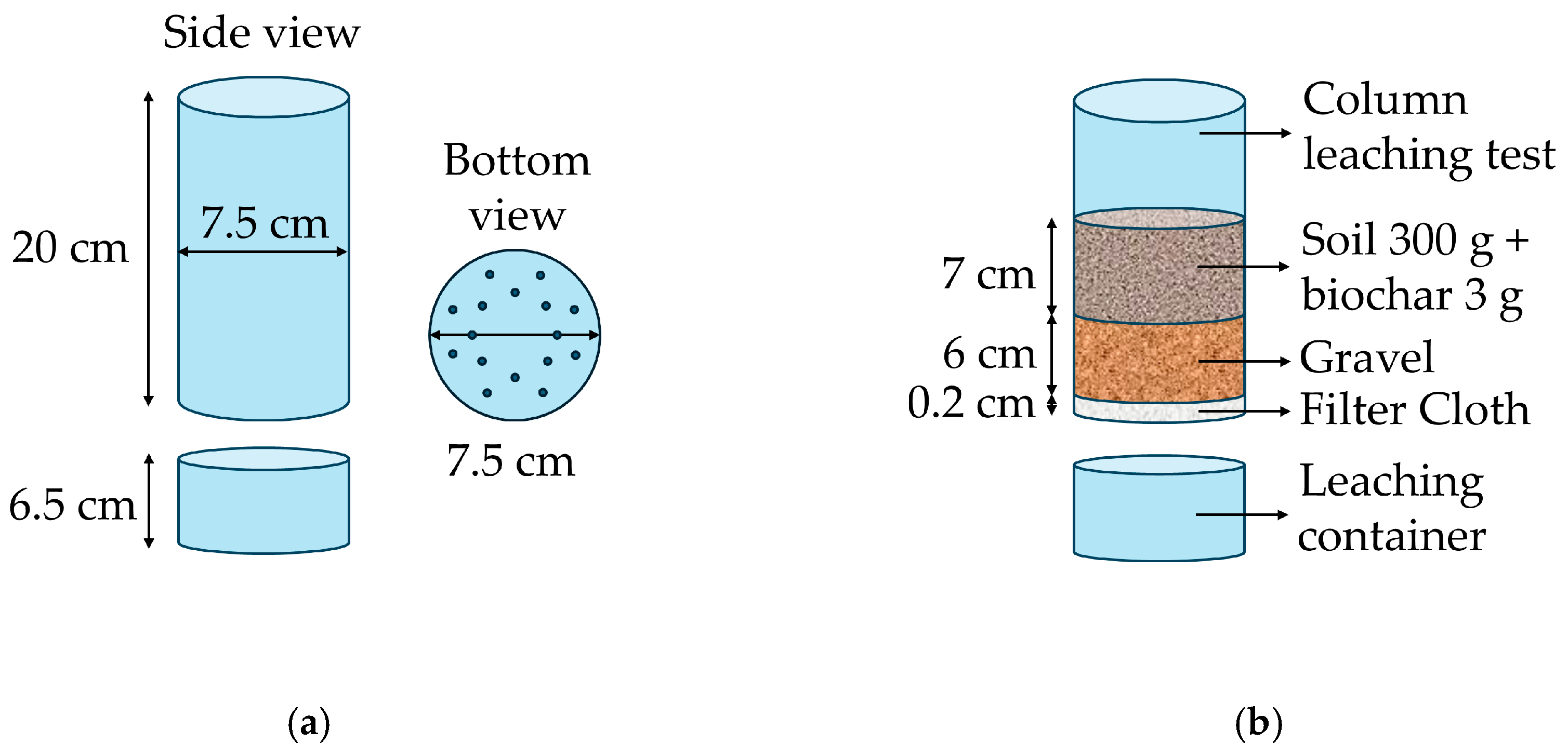
Leaching columns were prepared using polycarbonate containers, with 16 drainage holes (3 mm in diameter) drilled at the bottom (Figure 1a). Each column comprised the following layers (from bottom to top): (1) a filter cloth with a mesh size of 0.1 mm and a thickness of 0.2 cm; (2) a gravel layer (0.2–0.5 cm particle size), weighing 300 g with a height of 6 cm; and (3) a soil layer (1.0–2.0 mm particle size), weighing 300 g and amended with 3 g of biochar (0.2–0.5 mm particle size). The biochar–soil mixture was packed into the column to a layer height of 7 cm. Each biochar-amended soil column leaching experiment was conducted in triplicate. A separate polycarbonate container was placed beneath each column to collect the leachate (Figure 1b).

2.5. Study of Biochar Type and Wastewater Loading Effects on Nutrient Retention

CH, CS, and CHCS were used in this experiment. Biochar-amended soil columns were prepared using each biochar (see Section 2.4), while columns containing untreated soil (without biochar amendment) were used as controls (soil). Two wastewater loading rates, 30 and 60 mL/day, were applied separately, to represent water use in the piglet (piglet SW) and fattening (fattening SW) stalls, respectively. Synthetic SW was fed into each column daily at 12:00 PM for 42 days. For the piglet SW treatment (30 mL/day), leachate samples were collected starting on Day 5 and every 7 days thereafter until Day 42. For the fattening SW treatment (60 mL/day), samples were collected on Days 3 and 5, followed by 7-day intervals until Day 42. Leachate samples were analyzed for pH, EC, TKN and COD, org-N, and TN following the Standard Methods for the Examination of Water and Wastewater [14]. NH4+, NO2, NO3, and PO43− were analyzed using ion chromatography. The total inorganic nitrogen (inorg-N) was calculated as the sum of the NH4+, NO2, and NO3 concentrations. The accumulated leachate volume and nutrient retention were determined using Equations (1) and (2), respectively.
Accumulated   leachate   ( mg ) = i = 1 n C i ,   out × V i ,   out 1000
Nutrient   retention   ( mg ) = ( C S × V S , out 1000 ) ( C SB × V SB , out 1000 )
where Ci,out and Vi,out are the leachate concentration (mg/L) and the volume of leachate (mL) at Day i to n, respectively. CS and CSB are the leachate concentrations of control (soil) and biochar-amended soil on a specific day (mg/L), respectively. VS,out and VSB,out are the volumes of leachate of the control (soil) and biochar-amended soil on a specific day (mL), respectively.

2.6. Study of Rainfall Effects on Nutrient Retention

One biochar type (CH) was selected and used to investigate the effect of rainfall under a wastewater loading rate of 30 mL/day, applied at 12:00 PM for 42 days. Synthetic rainwater was prepared by adjusting the pH of DI water to 6.5 ± 0.5 using 1.0 N HCl. Every 4 days, DI water was applied as rainfall to the columns at rates of 0, 25, 70, and 140 mL/day, corresponding to R0, R25, R70, and R140, respectively. These rates were based on real rainfall data obtained from the Thai Meteorological Department (Ratchaburi province). Half of the rainfall volume was applied at 10:00 AM and the other half at 2:00 PM. For the R0 treatment, leachate samples were collected on Day 5 and subsequently at 4- and 7-day intervals until Day 42. For the R25, R70, and R140 treatments, leachate samples were collected on Days 4 and 5, followed by 4- and 7-day intervals until Day 42.

2.7. Study of Nutrient Recovery from Loaded BiocharAmended Soil

Loaded soil and loaded biochar-amended soil samples were removed from the leaching column at Day 42 and dried at 60 °C using a hot air oven (M610C, Yamato, Tokyo, Japan) for 24 h. Seed germination was performed following methods adapted from Kong et al. [25]. Samples (2 g) of untreated soil, loaded soil and loaded biochar-amended soil were extracted by adding 20 mL of DI water and shaking at 100 rpm, 30 °C for 2 h. The extracted solutions were filtered through 0.45 µm GF/C filters (Whatman, Maidstone, UK). Aliquots of 5 mL from each extract were applied to Petri dishes containing 10 red cos lettuce seeds (purchased from Chia Tai Co., Ltd., Bangkok, Thailand). The Petri dishes were incubated in the dark for 5 days before counting the number of germinated seeds and measuring root lengths. The germination index (GI) was calculated using Equation (3).
GI   ( % ) = RSG   ×   RRG 100
where RSG and RRG are relative seed germination and relative root growth, respectively. They were calculated following Equations (4) and (5)
RSG   ( % ) = number   of   seed   germinated   in   leachate   extract number   of   seeds   germinated   in   control × 100
RRG   ( % ) = mean   root   length   in   leachate   extract mean   root   length   in   control × 100
Red cos lettuce seeds were used for plant seedling growth following a modified method based on Liu et al. [26]. Samples (100 g) of untreated soil, dried loaded soil, and loaded biochar-amended soil were placed in plastic pots (approximately 10 cm in diameter and 8 cm in height). Ten seeds were sown per pot, and each pot was irrigated daily with 10 mL of DI water at 10:00 AM. The number of plant seedlings and aboveground plant height were measured on Days 7 and 14. Each treatment was conducted in triplicate.

2.8. Data Analysis

The results are presented as mean ± standard deviation. Tests for statistical differences were evaluated for each dataset at a significance level of 0.05 (p < 0.05) using one-way analysis of variance (ANOVA) performed in MATLAB (R2024a, MathWorks, Natick, MA, USA). Mean comparisons among treatments were performed using the least significant difference at α = 0.05 in MATLAB (R2024a, MathWorks, Natick, MA, USA). Different letters indicate statistically significant differences between groups.

3. Results and Discussion

3.1. Characteristics of SW

The SW contained high loadings of organic matter (BOD 1650 mg/L and COD 4898 mg/L) and nutrients (TN 516 mg/L and TP 36 mg/L) with DO < 1 mg/L (Table 1), indicating anaerobic conditions that inhibit nitrification and promote NH4+ accumulation [27]. The BOD, COD, TKN and TP in wash water and pond water exceeded the Thailand SW effluent standards [28]. The biodegradability index (BDI; BOD/COD) reflects the fraction of organic matter that can be biodegraded [29]. BDI < 0.02 indicates nonbiodegradable organic matter, whereas values >0.77 indicate easily biodegradable substances [30]. Readily biodegradable wastewater shows BDI values of 0.4–0.8, while wastewater that is difficult to treat biologically or contains toxic compounds typically has BDI values of 0.1–0.2 [31]. In this study, the BDI values were 0.25 for wash water and 0.47 for pond water, with an overall average of 0.34. These results are consistent with the BDI values for SW (0.23) from medium-scale farms [32] and pond water (0.42) [33].

3.2. Characteristics of Coconut Biochar

The BET surface areas of CH and CS were 10.20 and 9.70 m2/g, respectively (Table 2), higher than those reported by Nisa et al. [34] but lower than values reported by Suman and Gautam [35], probably due to CH slicing prior to carbonization in the latter study. Slicing increases the accessible surface area by increasing pore exposure and surface roughness. Biochars produced at lower pyrolysis temperatures (250–400 °C) typically exhibit surface areas below 10 m2/g. CH and CS showed low H/C ratios (<0.1; Table 2), indicating high aromaticity and chemical stability [36] and meeting the UK Biochar Quality Mandate for long-term carbon sequestration (H/C < 0.7 [37]). CH exhibited a higher O/C ratio (0.66), suggesting greater surface functionality but lower oxidative stability [38], as well as a higher pHpzc than CS, indicating a surface enriched with aromatic structures and insoluble functional groups [39].
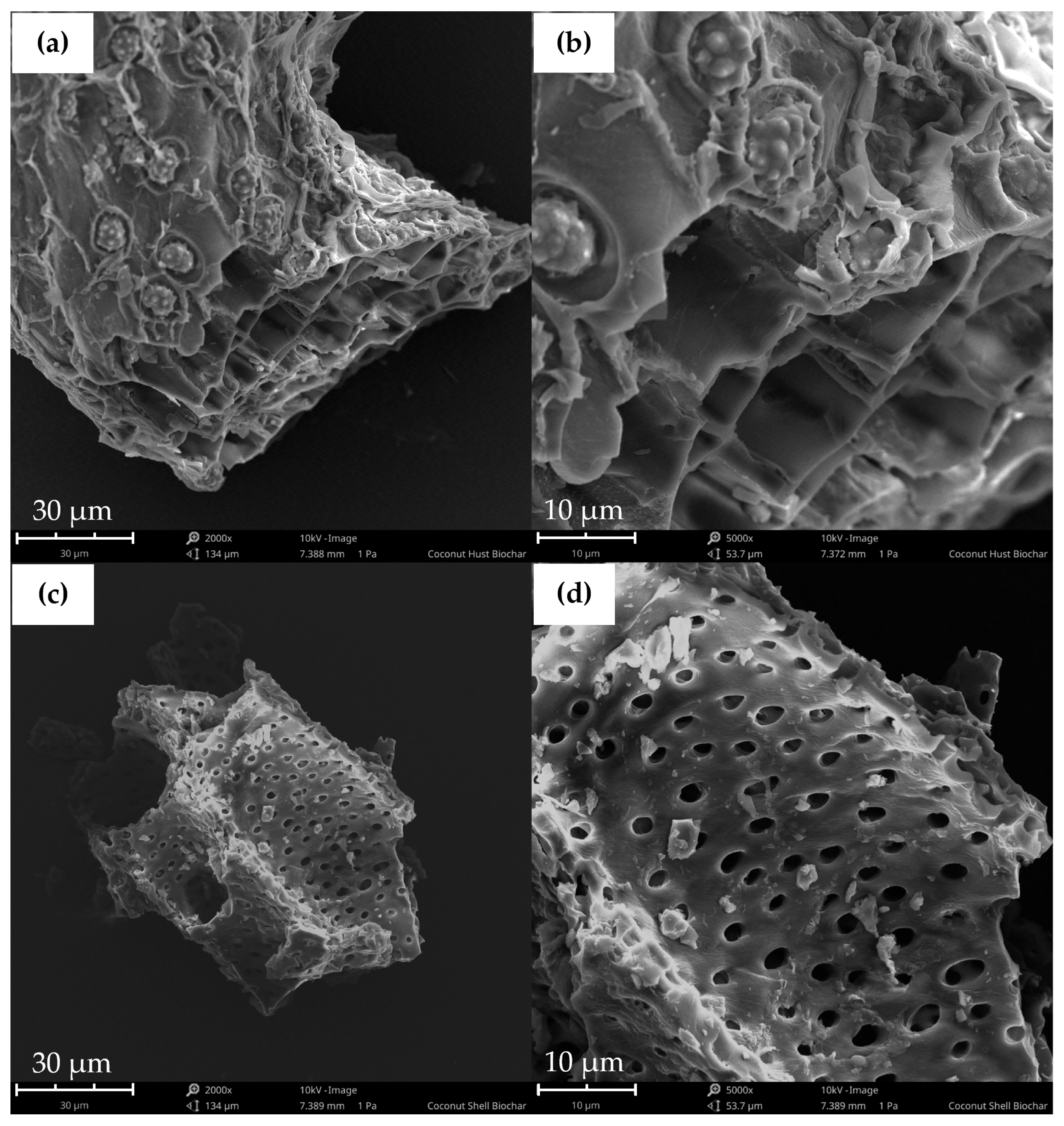
CH and CS exhibited distinct differences in porosity and structure (Figure 2). CH showed a fibrous morphology with a broader pore distribution, attributed to the partial retention of vascular bundles and decomposition of hemicellulose and cellulose, whereas CS displayed a more compact structure with fewer pores due to its higher lignin and lower volatile release during pyrolysis [35,40].
Table 2. Characteristics of biochar.
ParametersCoconut Part (Production Process)
Husk *Shell *Shell [34]Shell [34]Shell [41]Shell [41]Husk [42]Husk [35]
(Pyrolysis, Kiln)(Pyrolysis, Kiln)(Pyrolysis, Muffle
Furnace)
(Pyrolysis, Tubular
Furnace)
(Hydrothermal Carbonization)(Hydrothermal Carbonization)(Pyrolysis, Tubular Furnace)(Pyrolysis, Muffle
Furnace)
Pyrolysis
temperature (°C)
375375400400200220500400
C (%)56.4865.3675.2078.3053.8359.34-47.92
H (%)3.704.17--6.987.06-3.50
O (%)37.4128.2118.2012.5033.4428.16-47.06
N (%)1.591.43--1.480.83-1.34
S (%)0.820.830.20----0.17
O/C0.660.430.240.160.620.47-0.98
H/C0.070.06--0.130.12-0.07
pHsol6.32 ± 0.026.08 ± 0.11----10.508.50
pHpzc6.84 ± 0.096.28 ± 0.17------
Surface area (m2/g)10.209.702.082.552.819.630.1839.57
Pore volume (cm3/g)0.010.01--0.010.02--
Pore diameter (nm)4.304.3010.089.441.501.50--
CEC (cmol/kg)76.72 ± 1.7236.67 ± 2.01------
* This study; pHpzc refers to pH at point of zero charge, pHsol refers to pH of biochar in the solution. Data are expressed as mean ± SD (n = 3).
The CEC of CH was 76.72 ± 1.72 cmol/kg, which was 2.09 times higher than that of CS (Table 2), indicating a greater potential for cation exchange, particularly for NH4+ compared to CS. The X-ray fluorescence analysis showed that CH and CS contained high contents of K and Cl, followed by Ca (Table 3).
The CH increased the soil CEC from 10.68 ± 0.33 to 12.67 ± 2.22 cmol/kg, which was higher than that of the soil amended with CS (11.76 ± 0.81 cmol/kg) and CHCS (11.76 ± 3.84 cmol/kg), indicating enhanced CEC. This improvement is probably due to the high CEC of CH. NH4+ can interact with biochar through cation exchange, electrostatic attraction, and pore-filling mechanisms [43]. Functional groups such as carboxyl (-COOH) and carbonyl (-COC-) groups on biochar surfaces further contribute to NH4+ retention via cation exchange processes [44], enhancing the biochar’s role in nitrogen buffering within soil systems.
Ion release analysis revealed distinct patterns across biochar types and water matrices (Table A1). In DI water, Ca2+ and PO43− were released at higher concentrations compared to synthetic SW, indicating greater ionic mobility in DI water. These results indicate that water chemistry is important in controlling ion release and influencing interactions among ions.
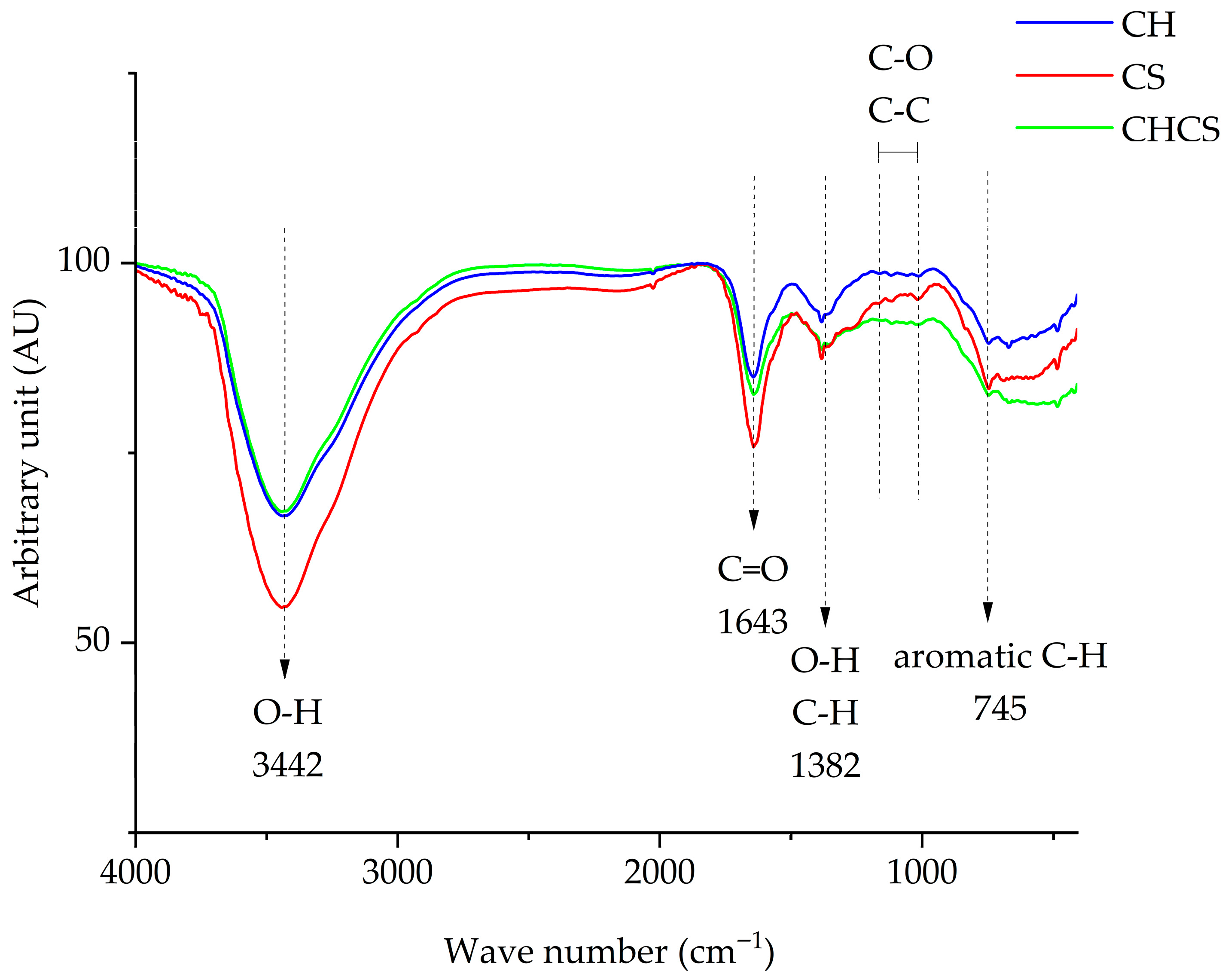
The FTIR spectra revealed oxygen-containing functional groups (Figure 3), including hydroxyl (O–H) at 3445 cm−1 [45] and carbonyl (C=O) groups at 1643 cm−1 [35], consistent with biochars produced below 400 °C [46]. Aliphatic C–H bands (2920 and 2850 cm−1) in CH and CHCS indicate the preservation of aliphatic structures, while aromatic C=C, C=O (1610 cm−1) and C-O-C symmetric stretching (1145–1100 cm−1) reflect contributions from cellulose and hemicellulose [45].

3.3. Effect of Biochar Parts on Soil Nutrient Retention

3.3.1. Nitrogen Retention

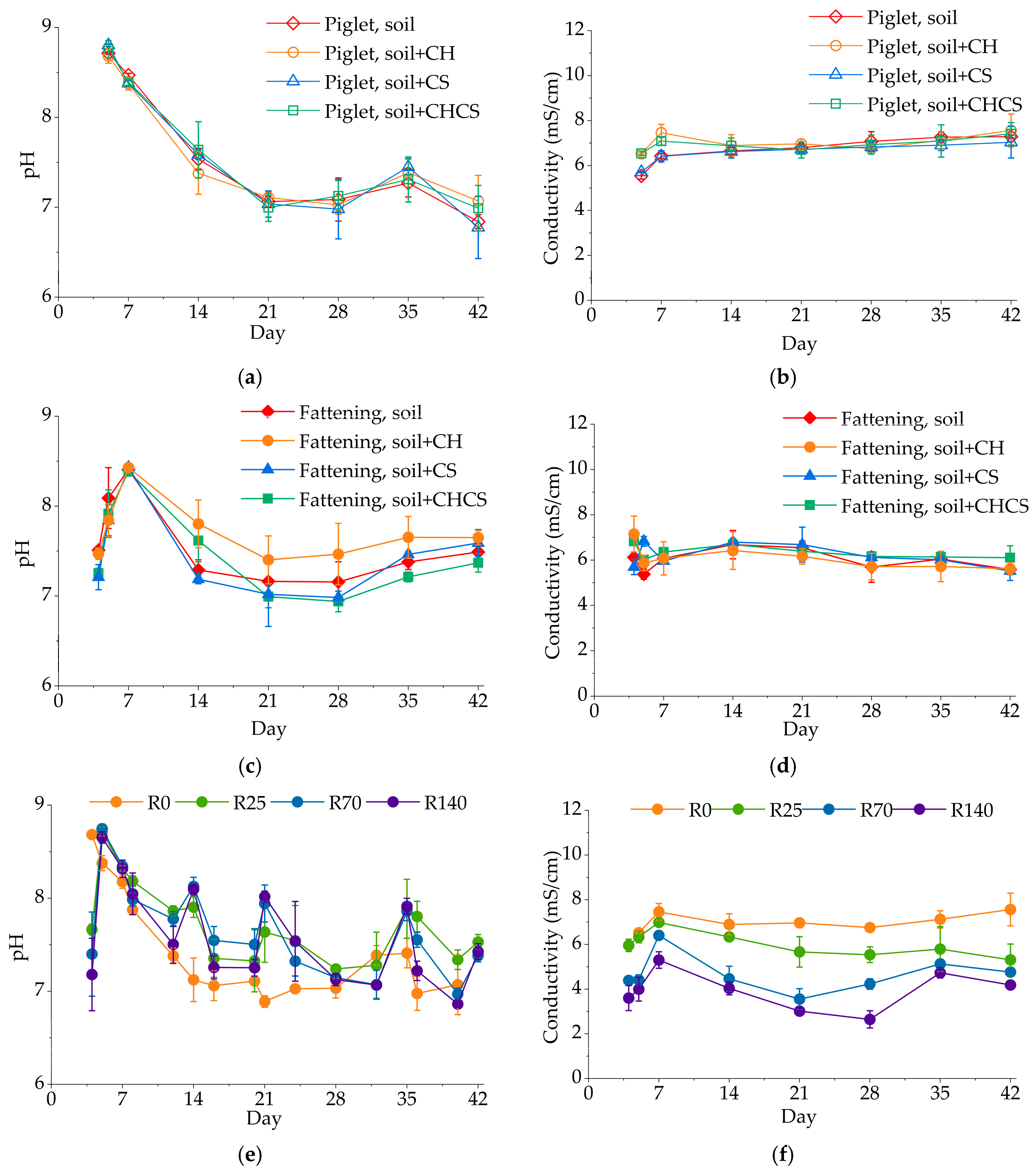
The pH values of leachate from piglet SW and fattening SW stall columns were 7.16–8.41 and 7.03–8.68, respectively. Similar pH ranges were observed in CH-, CS-, and CHCS-amended soils (Figure A1), with no significant differences among treatments (p > 0.05). On Days 5–14, the pH values of leachate in all treatments were higher than that of the SW influent (7.82 ± 0.05), probably due to organic matter decomposition, which releases ammonium through mineralization and increases alkalinity during the initial stage of ammonification [47]. Simultaneously, microbial degradation of OC generates carbon dioxide (CO2), which forms carbonic acid (H2CO3) [48]. However, buffering compounds from soil and biochar, particularly Ca2+ and Mg2+, can neutralize acidic components [49]. The EC values of the leachate from all biochar-amended soils for the fattening SW treatment were slightly higher than the values of those for the piglet SW treatment; however, the differences were not statistically significant (p > 0.05). In all cases, the leachate EC values were higher than that of influent SW (4.66 ± 0.04; Figure A1), probably due to ion release from biochar and the mineralization of organic matter.
CH released higher NH4+ and PO43− in DI water than in synthetic SW (Table A1), indicating that these ions are more readily desorbed at low ionic strengths. This is consistent with Muoghalu et al. [50], who reported nutrient release enhancement from biochar in DI water due to minimal ionic competition.
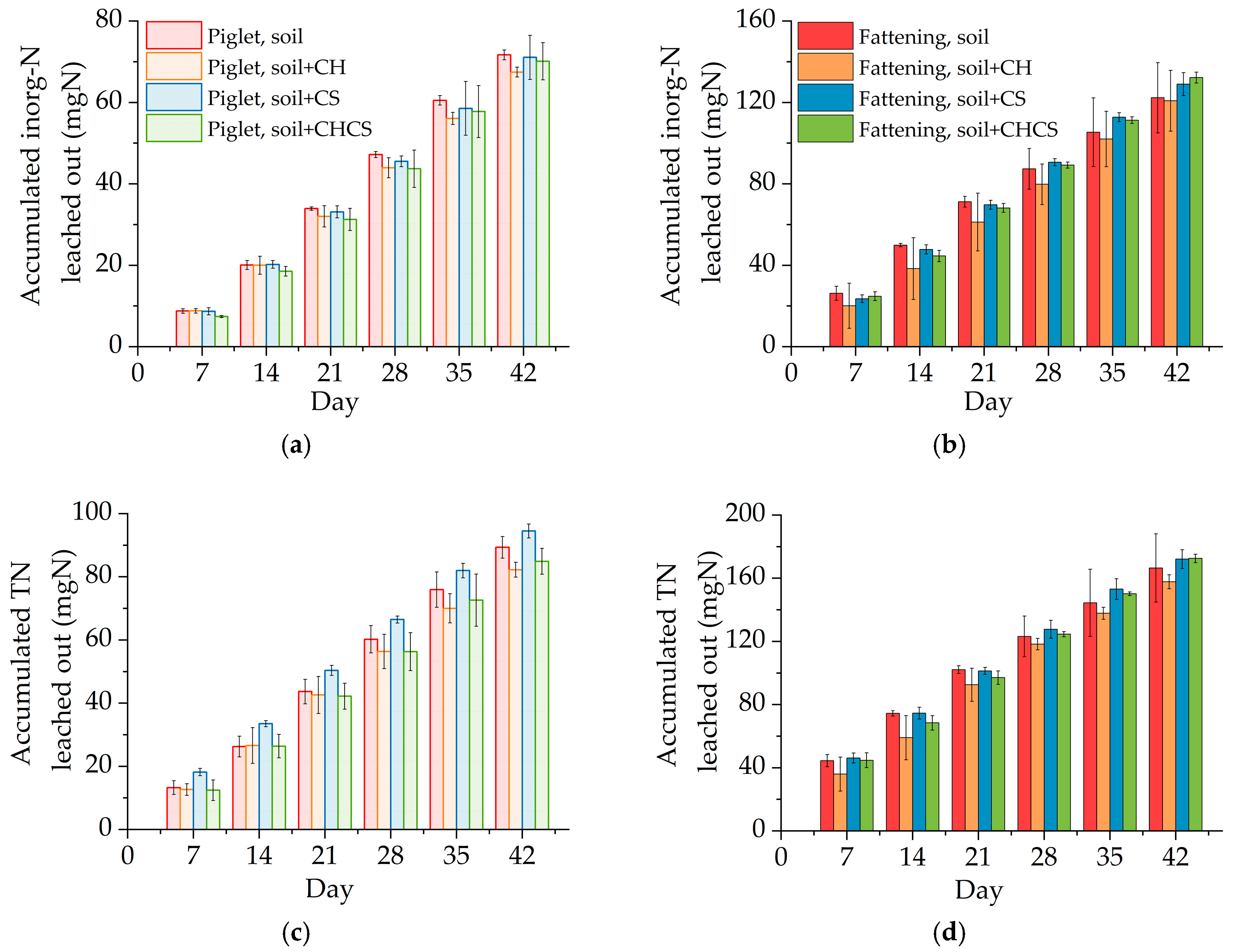
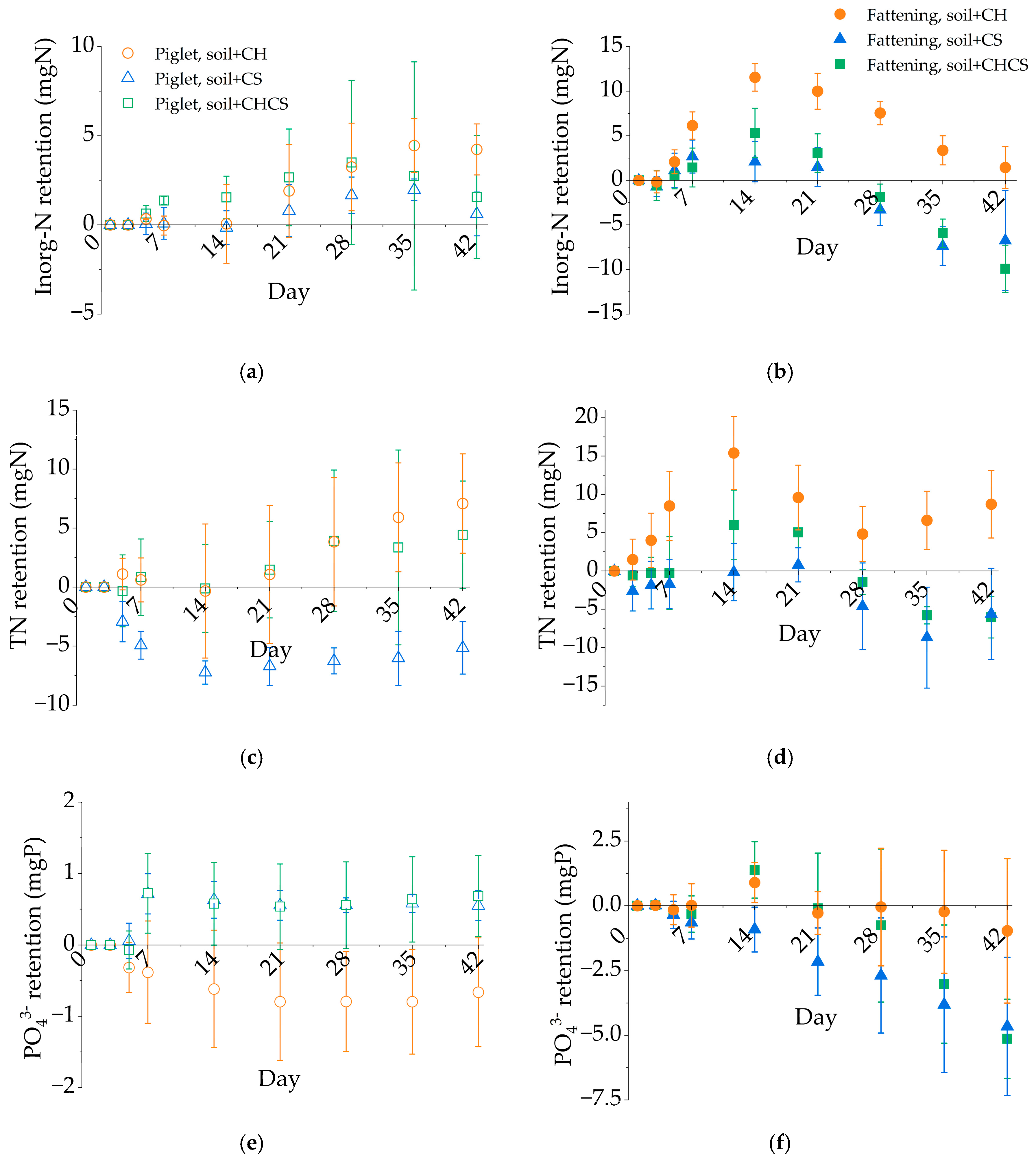
Nitrification occurred via NH4+ transformation to NO2 and NO3 on Days 7 and 14, respectively (see Table S1), which released H+. In the piglet SW treatment, NH4+ was continuously oxidized to NO2, whereas this transformation was limited in the fattening SW treatment due to the higher SW loading rate. Consequently, CS- and CHCS-amended soils showed higher accumulated inorg-N leached out (Figure 4a,b) and reduced inorg-N retention in soil over time (Figure 5a,b), particularly in fattening SW treatment. Conversely, the CH-amended soil exhibited the lowest accumulated inorg-N leached out. The highest soil inorg-N retention was found on Day 14 and stabilized by Day 35 in the piglet SW treatment (Figure 5a,b), indicating delayed nitrification and incomplete conversion of NH4+ to NO3. This is beneficial in leaching-prone systems, as NO3 is more mobile and environmentally hazardous than NH4+ [51]. The accumulated TN leached out from the CH treatment was 82.25 ± 2.34 mgN in the piglet SW treatment and 157.80 ± 4.41 mgN in the fattening SW treatments, which were 0.92- and 0.95-fold lower than those from the soil treatment, respectively (see Table S2). This study found that only CH treatment can retain TN in soil for the entire period of the experiment (Figure 5c,d).

3.3.2. Phosphate Retention and Removal

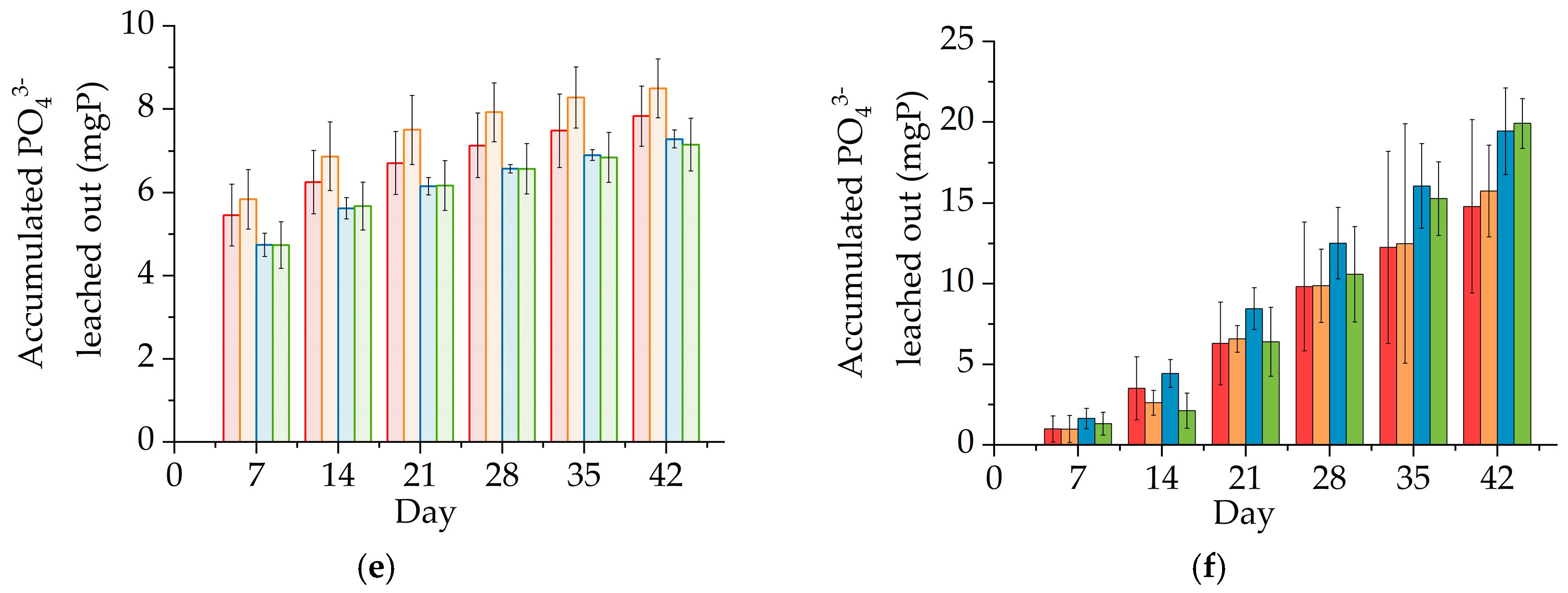
The accumulated PO43− leached out increased sharply during the first 7 days and then stabilized over time (Figure 4e,f). Under piglet SW conditions, only the CS and CHCS treatments retained PO43− (Figure 5e). At Day 42, the accumulated PO43− leached out from CH, CS, and CHCS treatments was 1.10, 0.92, and 0.91 times that of the control soil, respectively (see Table S3). However, no significant differences were observed among all treatments (p > 0.05). Ca and Fe are key elements involved in the formation of insoluble phosphate complexes in soil through adsorption or precipitation mechanisms [52]. Depending on the solution pH, phosphate can precipitate via reactions with Ca2+ and Fe3+ to form insoluble phosphate minerals, as presented in Equations (6)–(11) [53,54,55,56,57].
pH 4.0–7.0;     Ca2+ + HPO42− → CaHPO4 (s)
pH 6.0–8.0;     Fe3+ + PO43−→ FePO4 (s)
3Fe2+ + 2PO43− + 8H2O → Fe3(PO4)2·8H2O (s)
pH 7.0–9.0;     5Ca2+ + 3PO43− + OH → Ca5(PO4)3(OH) (s)
5Ca2+ + 3HPO42− + 4OH → Ca5(PO4)3(OH) (s) + 3H2O
5Ca2+ + 3H2PO4 + 7OH → Ca5(PO4)3(OH) (s) + 6H2O
At pH 7.0–9.0, calcium forms hydroxyapatite (Ca5(PO4)3OH), a stable and low-solubility compound [56]. The precipitation of iron as ferric phosphate (FePO4) or vivianite (Fe3(PO4)2·8H2O), typically occurs at pH 6.0–8.0, depending on redox conditions [57]. Calcium hydrogen phosphate (CaHPO4) can precipitate at pH 4.0–7.0, with maximum stability near pH 5.0, as recently demonstrated in soil retention studies using biochar amendments [55]. Leachate pH values across all treatments were 6.94–8.75, slightly higher than those observed in untreated soil and unloaded biochar-amended soils on Day 0 (7.17–7.95). Among the untreated soil and unloaded biochar-amended soils on Day 0 (Table 4), the CS and CHCS treatments exhibited slightly higher pH values (CHCS: 7.78 ± 0.06; CS: 7.30 ± 0.27) than CH (7.17 ± 0.19; thus, phosphate precipitation occurred. Although the pH values of CH were relatively lower, which can limit direct phosphate precipitation to some extent, the higher P retention observed in CH-amended soil can be explained by the release of Ca2+ and Mg2+ from the biochar providing additional binding sites for phosphate. The results from ion release from virgin biochar revealed that Ca2+ released from CH in synthetic SW was 0.55 ± 0.01, whereas no detectable Ca2+ release was observed from CS and CHCS. The lower Ca2+ release from CH in synthetic SW compared to DI water (Table A1) is probably due to competing cations (e.g., Na+, K+) and higher ionic strength, which suppress Ca2+ dissolution and reduce its availability for phosphate precipitation. However, phosphate removal may still proceed via combined mechanisms, including surface complexation and partial precipitation on biochar surfaces.
Based on soil nutrient retention, CH-amended soil exhibited superior retention of TN and phosphate compared to CS and CHCS. Therefore, CH-amended soil was chosen for the subsequent study on the effect of rainfall on nutrient retention. However, the observed nutrient retention is indeed a synergistic result of the biochar properties and the specific soil-biochar interactions. If applied to different soil types, the trends would probably shift. For instance, the structural and chemical contribution of the biochar would be much more pronounced in sandy soils with low native CEC [58]. Conversely, in clayey soils with high native CEC and reactive mineralogy, the relative impact of the biochar might be masked by the soil’s inherent retention capacity [59,60].

3.4. Effect of Rainfall Rate on Nutrient Retention

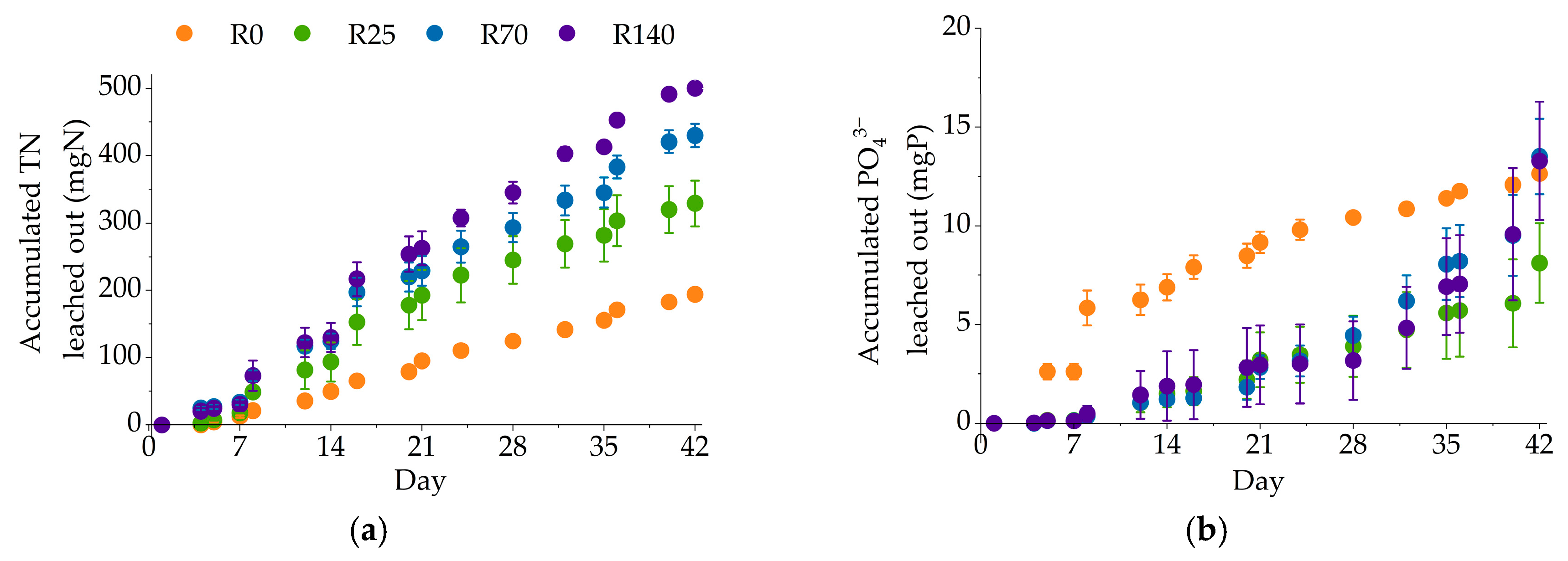
The accumulated TN leached out increased with the rainfall rate increased (Figure 6a), indicating that the hydraulic loading rate affected nitrogen transport in CH-amended soils. CH-amended soil exhibited slow nitrification rates with the R70 and R140 treatments, which delayed the conversion of NH4+ to NO3. The increase in accumulated TN leaching with higher rainfall rates (Figure 6a) underscores the influence of moisture on nutrient mobility in CH-amended soils. Notably, CH treatments exhibited slower nitrification rates under R70 and R140 conditions, delaying the conversion of NH4+ to NO3. Consequently, NH4+ remained in a more mobile, water-soluble form during early leaching events, contributing to higher NH4+ leaching compared to NO3. This delay helped retain nitrogen in the less mobile NH4+ form due to its positive charge and affinity for cation exchange sites from Day 1 to 28. The soil pH remained below or close to the CH biochar’s pHpzc (6.84) under low to moderate rainfall (R0–R70), indicating a net positive surface charge of biochar. This charge condition favored electrostatic attraction with anions, enhancing nitrogen retention. Under high rainfall (R140), however, the soil pH approached the pHpzc threshold, potentially weakening NH4+ adsorption and increasing its mobility within the soil matrix. TN could not be retained in soil at all rainfall rates, with no significant differences observed for R25–R140 (p > 0.05). Previous studies also reported that excessive water accelerates nitrogen leaching [5,52].
PO43− leaching was highest under the R0 rainfall treatment, as shown in Figure 6b. Conversely, R25 had the least PO43− leaching probably due to the presence of Ca2+ in the soil, which promoted phosphate immobilization. The pH values of leachate were 8–9.5 (Figure A1e); thus, HPO42− shifts toward PO43−, promoting the formation of more stable Ca2+ minerals such as Ca3(PO4)2 and Ca5(PO4)3OH. Moreover, the presence of Mg2+ and NH4+ promotes the formation of MgNH4PO4·6H2O (struvite) under alkaline conditions (pH 6.86–8.75) with a near 1:1:1 molar ratio of Mg2+: NH4+: PO43− [53]. The results showed that R25 maintained pH values of 8.0–9.5 for a longer duration than R0, R70, and R140 (Figure A1e), indicating high phosphorus immobility. Conversely, the pH of R0, R70, and R140 in remained at pH 6–8, where PO43− mainly exists as HPO42−, which readily precipitates with Ca2+ to form CaHPO4 [53].
Under higher rainfall intensities (R70 and R140), PO43− still leached less than R0; however, a sharp increase in leaching was observed by Day 42, suggesting that the cumulative water input may have exceeded the PO43− retention capacity, leading to phosphate mobilization and loss. The leaching out of R25, R70, and R140 was not significantly different from R0 (p < 0.05).
The C/N ratios in all loaded soil and biochar-amended soil on Day 0 were 16.2, approximately 36 times higher than those observed on Day 42, probably due to OC degradation, nitrogen accumulation, mineralization, and leaching over time. At high rainfall intensity, the air space in the soil was replaced with water, leading to anaerobic conditions. Additionally, C/N ratios below 18 significantly increase N2O emissions, indicating a higher risk of nitrogen loss [61]. At high rainfall intensities (R70, R140), the nutrient losses were evident for R70 and R140, as TN and OC declined markedly.

3.5. Plant Growth on Loaded Biochar-Amended Soil

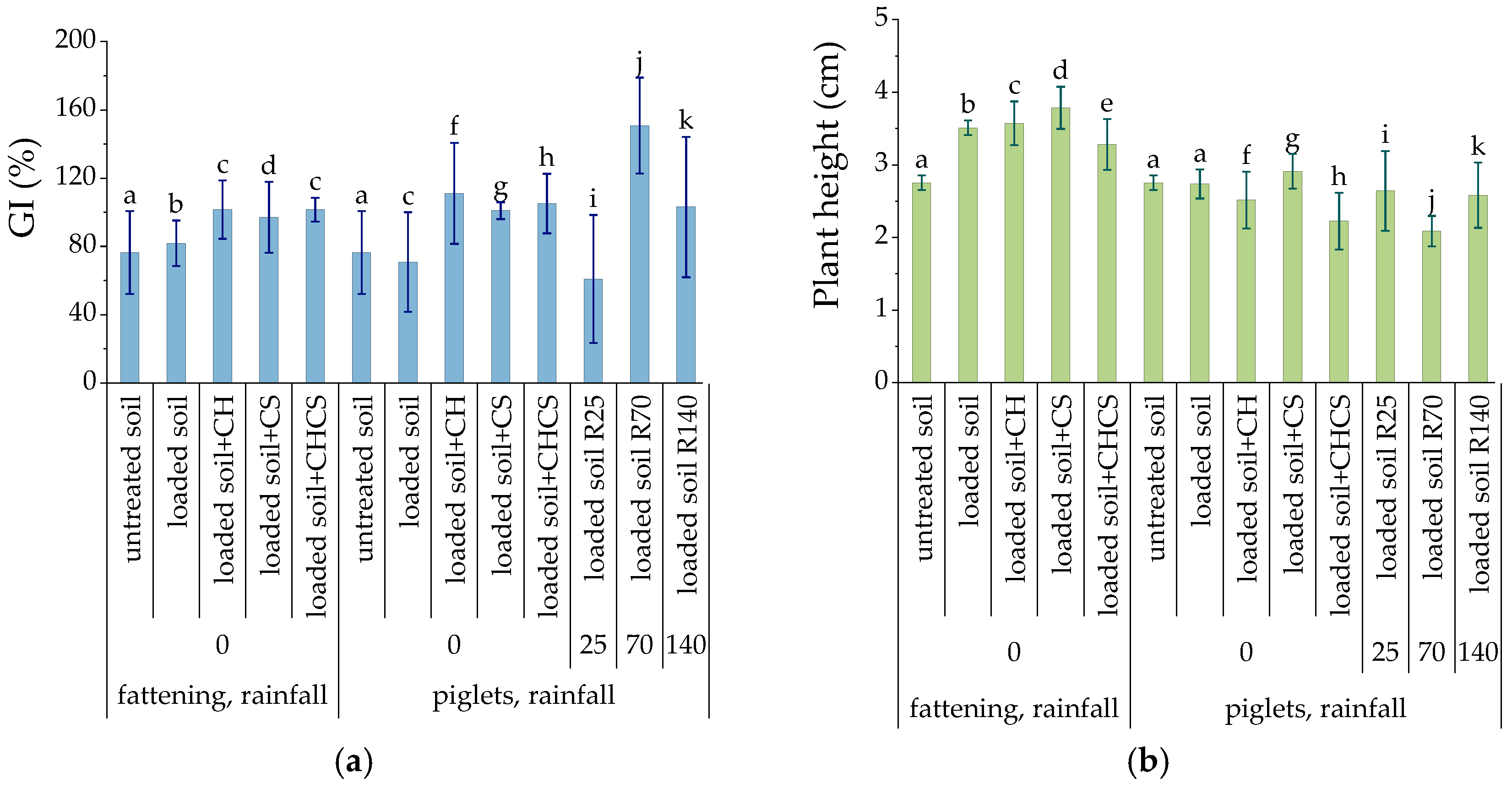
Seed germination assays using soil leachates revealed that biochar-amended soils under R0 conditions exhibited higher GIs than soil (Figure 7a). This suggests that biochar may mitigate phytotoxic compounds from SW and improve seed viability. Notably, no significant differences were observed between piglet SW and fattening SW sources (p > 0.05), indicating similar effects on germination potential across these waste types.
Rainfall intensity appeared to minimally impact the GI across R0, R70, and R140 treatments. However, R25 consistently showed lower GIs with soil and biochar treatments, suggesting a transient imbalance in salt or nutrient concentrations at moderate rainfall levels. This may be attributed to insufficient leaching, leading to the highest accumulation of NH4+ (Table 5) which can inhibit seed germination. This may have induced osmotic stress or ion toxicity during early germination stages, temporarily inhibiting radicle emergence [62]. Moreover, loaded soil containing NH4+ concentrations above 50 mg/kg adversely affected seed germination [63], resulting in lower GIs for soil, loaded soil, and R25 (Figure 7a). However, for field-scale applications, the scaling factors, such as preferential flow, root effects, heterogeneous soil conditions, and edge effects must be considered.
In seedling experiments, seedling emergence on Day 7 was highest in untreated soil, indicating favorable conditions for germination. By Day 14, germination improved across all treatments, particularly in biochar-amended soils, reflecting a delayed but progressive recovery from initial stress. These results align with previous findings that biochar can buffer toxic compounds and enhance microbial activity, improving soil health and seedling establishment [64].
Seed germination is influenced by several factors including pH, EC, bulk density, and nutrient availability. The pH values across treatments within the optimal range of 6.0–7.5 support enzymatic activity and nutrient solubility [65]. All EC values were below 2 mS/cm, which is widely considered safe for preventing osmotic stress and ensuring appropriate water uptake [66]. CH-treated soils showed the highest CEC of 12.67 cmol/kg, enhancing cation retention, particularly NH4+ and K+-compared to unamended soil (10.68 cmol/kg). However, this was not translated into improved phosphate availability, probably due to limited anion exchange capacity and Ca2+-induced precipitation, as also noted by Luo et al. [53]. Despite these limitations, soil amended with biochar can gradually release essential nutrients during plant growth. The porous structure and surface functional groups of CH biochar may act as a slow-release reservoir, supporting nutrient availability for plant uptake [67]. This mechanism helps buffer nutrient fluctuations, reduce leaching, and sustain root-zone fertility especially under fluctuating moisture conditions [68].
The C/N ratios of all soil treatments in this study were below 18, which was consistent with the values reported by Xu et al. [61]. Such low C/N ratios (generally <15–20 [69]) indicate a tendency for rapid nitrogen mineralization and enhance nitrogen availability, benefiting plant uptake. In the present study, loaded soil and loaded biochar-amended soil were dried before planting seedlings. This probably contributed to the loss of volatile compounds and gases such as ammonia and VOCs and may further reduce the presence of pathogenic microorganisms [61].

4. Conclusions

This study provides new insights into nitrogen dynamics in biochar-amended soils under combined wastewater loading and variable rainfall rates. CH exhibited greater nitrogen retention than CS and CHCS. Its relatively high CEC contributed to slower nitrification rates, reducing the conversion of NH4+ to NO3 and NO2, and thereby minimizing nitrogen losses through leaching. Consequently, nitrogen was retained in more stable forms, primarily as org-N and NH4+, enhancing overall nitrogen retention in soil. The favorable physicochemical properties of CH biochar also contributed to improved nutrient availability, promoting seed germination and early seedling growth. Notably, CH-amended soils maintained positive plant growth responses even under conditions of wastewater loading and varying rainfall rates. Overall, these findings demonstrate that CH biochar is a promising soil amendment for sustainable nitrogen management, nutrient recovery, and soil fertility improvement in agricultural systems, particularly under variable hydraulic and environmental conditions.

Supplementary Materials

The following supporting information can be downloaded at https://www.mdpi.com/article/10.3390/su18073614/s1, Table S1: Inorg-N leached out (mgN) of piglet and fattening SW condition; Table S2: TN leached out (mgN) of piglet and fattening SW condition; Table S3: PO43− leached out (mgP) of piglet and fattening SW condition.

Author Contributions

Conceptualization, S.W. (Siriwan Wongsod); methodology, S.W. (Siriwan Wongsod); software, S.W. (Siriwan Wongsod); validation, S.W. (Suchanya Wongrod), S.V. and D.W.; data curation, S.W. (Siriwan Wongsod); writing—original draft, S.W. (Siriwan Wongsod); writing—review and editing, S.W. (Suchanya Wongrod), S.V. and D.W.; supervision, S.W. (Suchanya Wongrod), S.V. and D.W. All authors have read and agreed to the published version of the manuscript.

Funding

This research was supported by a Petchra Pra Jom Klao. research scholarship from King Mongkut’s University of Technology Thonburi financial number 53/2565. This research was partially supported by King Mongkut’s University of Technology Thonburi (KMUTT), Thailand Science Research and Innovation (TSRI), and National Science, Research and Innovation Fund (NSRF), fiscal year 2023, grant number FRB660073/0164.

Institutional Review Board Statement

This article contains no studies with human participants or animals performed by any of the authors.

Informed Consent Statement

Not applicable.

Data Availability Statement

Data supporting these findings can be made available through the corresponding author on reasonable request.

Acknowledgments

The authors thank the School of Energy, Environment and Materials, King Mongkut’s University of Technology Thonburi, Thailand, for research facilities.

Conflicts of Interest

The authors declare no conflict of interest.

Appendix A

Table A1. Ion release from soil and virgin biochars in deionized water and synthetic wastewater.
ParametersDI WaterSW
SoilCHCSCHCSSoilCHCSCHCS
Na+ (mg/g)0.75 ± 0.065.47 ± 0.081.28 ± 0.034.93 ± 0.340.25 ± 0.043.95 ± 0.05ND3.10 ± 0.18
NH4+ (mg/g)0.10 ± 0.020.03 ± 0.010.05 ± 0.01NDNDNDNDND
K+ (mg/g)0.09 ± 0.0322.86 ± 0.454.20 ± 0.0319.95 ± 0.81ND25.30 ± 0.136.49 ± 0.0721.44 ± 0.51
Ca2+ (mg/g)0.82 ± 0.250.86 ± 0.100.39 ± 0.040.87 ± 0.042.95 ± 0.510.55 ± 0.01NDND
Mg2+ (mg/g)0.13 ± 0.051.18 ± 0.150.57 ± 0.031.28 ± 0.090.62 ± 0.081.22 ± 0.320.79 ± 0.090.79 ± 0.35
Cl (mg/g)0.08 ± 0.0229.00 ± 0.352.74 ± 0.1123.80 ± 1.02ND31.28 ± 0.074.18 ± 0.0425.90 ± 1.53
NO2 (mg/g)NDNDNDNDNDNDNDND
NO3 (mg/g)0.03 ± 0.020.03 ± 0.010.05 ± 0.010.03 ± 0.030.06 ± 0.010.05 ± 0.010.04 ± 0.010.02 ± 0.03
PO43−(mg/g)0.03 ± 0.014.53 ± 0.073.37 ± 0.314.79 ± 0.29ND3.29 ± 0.591.63 ± 0.272.26 ± 1.81
SO42− (mg/g)0.19 ± 0.010.75 ± 0.080.43 ± 0.020.64 ± 0.040.01 ± 0.020.55 ± 0.050.26 ± 0.010.47 ± 0.05
Note: ND: not detected. Each 125 mL Erlenmeyer flask contained 3 g of soil, coconut husk biochar (CH), coconut shell biochar (CS), or coconut husk mixed coconut shell biochar (CHCS) and 60 mL of either synthetic swine wastewater or deionized water (DI); shaken at 100 rpm at 30 °C for 4 h. Data are expressed as mean ± SD (n = 3).
Figure A1. Profiles of leachate pH and electrical conductivity (EC) for soil, CH-amended soil (soil + CH), CS-amended soil (soil + CS), and CHCS-amended soil (soil + CHCS) under (a,b) piglet SW (synthetic SW loading = 30 mL/day); (c,d) fattening SW (synthetic SW loading = 60 mL/day); and for CH-amended soil under (e,f) rainfall (piglet SW; synthetic SW = 30 mL/day) with varying rainfall rates (R0: 0 mL/4 days, R25: 25 mL/4 days, R70: 70 mL/4 days, and R140: 140 mL/4 days). Error bars represent the standard deviation of triplicates (n = 3). Statistical significance was established at p < 0.05.
Sustainability 18 03614 g0a1

References

  1. FAOSTAT Statistical Database: Livestock Primary—Thailand. Available online: https://www.fao.org/faostat/en/ (accessed on 30 August 2025).
  2. Huong, L.T.T.; Takahashi, Y.; Duy, L.V.; Son, C.T.; Chung, D.K.; Yabe, M. Wastewater treatment efficiency of small and large-scale pig farms in Vietnam. J. Fac. Agr. Kyushu Univ. 2021, 66, 291–297. [Google Scholar] [CrossRef]
  3. Zhang, D.; Wang, X.; Zhou, Z. Impacts of small-scale industrialized swine farming on local soil, water and crop qualities in a hilly red soil region of subtropical China. Int. J. Environ. Res. Public Health 2017, 14, 1524. [Google Scholar] [CrossRef] [PubMed]
  4. Sbahi, S.; Mandi, L.; Masunaga, T.; Ouazzani, N.; Hejjaj, A. Multi-soil-layering, the emerging technology for wastewater treatment: Review, bibliometric analysis, and future directions. Water 2022, 14, 3653. [Google Scholar] [CrossRef]
  5. Gao, R.; Ding, S.; Liu, Z.; Jiang, H.; Liu, G.; Fang, J. Recent advances and perspectives of biochar for livestock wastewater: Modification methods, applications, and resource recovery. J. Environ. Chem. Eng. 2024, 12, 113678. [Google Scholar] [CrossRef]
  6. Hossain, M.Z.; Bahar, M.M.; Sarkar, B.; Donne, S.W.; Ok, Y.S.; Palansooriya, K.N.; Kirkham, M.B.; Chowdhury, S.; Bolan, N. Biochar and its importance on nutrient dynamics in soil and plant. Biochar 2020, 2, 379–420. [Google Scholar] [CrossRef]
  7. Zhao, Y.; Lu, Y.; Zhuang, H.; Shan, S. In-situ retention of nitrogen, phosphorus in agricultural drainage and soil nutrients by biochar at different temperatures and the effects on soil microbial response. Sci. Total Environ. 2023, 904, 166292. [Google Scholar] [CrossRef]
  8. Libutti, A.; Cammerino, A.R.; Francavilla, M.; Monteleone, M. Soil amendment with biochar affects water drainage and nutrient losses by leaching: Experimental evidence under field-grown conditions. Agronomy 2019, 9, 758. [Google Scholar] [CrossRef]
  9. Gunal, E. Biochar-mediated changes in nutrient distribution and leaching patterns: Insights from a soil column study. PeerJ 2025, 13, e18823. [Google Scholar] [CrossRef]
  10. Li, Y.; Feng, G.; Tewolde, H.; Yang, M.; Zhang, F. Soil, biochar, and nitrogen loss to runoff from loess soil amended with biochar under simulated rainfall. J. Hydrol. 2020, 591, 125318. [Google Scholar] [CrossRef]
  11. Phonphoem, W.; Sinthuvanich, C.; Aramrak, A.; Sirichiewsakul, S.; Arikit, S.; Yokthongwattana, C. Nutritional profiles, phytochemical analysis, antioxidant activity and DNA damage protection of makapuno derived from Thai aromatic coconut. Foods 2022, 11, 3912. [Google Scholar] [CrossRef]
  12. Sittitanadol, I.-O.; Srakeaw, N.L.-O.; Somdee, P.; Chumsamrong, P.; Noyming, S.; Singsang, W.; Prasoetsopha, N. Utilizing coconut biochar as a bio-reinforcing agent in natural rubber composites. Starch-Stärke 2025, 77, 2400168. [Google Scholar] [CrossRef]
  13. Vieira, F.; Santana, H.E.P.; Jesus, M.; Santos, J.; Pires, P.; Vaz-Velho, M.; Silva, D.P.; Ruzene, D.S. Coconut waste: Discovering sustainable approaches to advance a circular economy. Sustainability 2024, 16, 3066. [Google Scholar] [CrossRef]
  14. APHA; AWWA; WEF. Standard Methods for the Examination of Water and Wastewater, 24th ed.; American Public Health Association: Washington, DC, USA; American Water Works Association: Denver, CO, USA; Water Environmental Federation: Alexandria, VA, USA, 2023. [Google Scholar]
  15. Barajas Godoy, F.D.; Martínez-Cinco, M.A.; Rutiaga-Quiñones, J.G.; Buenrostro-Delgado, O.; Mendoza, J. The significance of biowaste drying analysis as a key pre-treatment for transforming it into a sustainable biomass feedstock. PeerJ 2024, 12, e18248. [Google Scholar] [CrossRef]
  16. Mencarelli, A.; Cavalli, R.; Greco, R.; Grigolato, S. Comparison of technical and operational conditions of traditional and modern charcoal kilns: A case study in Italy. Energies 2023, 16, 7757. [Google Scholar] [CrossRef]
  17. Tomczyk, A.; Sokołowska, Z.; Boguta, P. Biochar physicochemical properties: Pyrolysis temperature and feedstock kind effects. Rev. Environ. Sci. Bio/Technol. 2020, 19, 191–215. [Google Scholar] [CrossRef]
  18. Le, P.T.; Bui, H.T.; Le, D.N.; Nguyen, T.H.; Pham, L.A.; Nguyen, H.N.; Nguyen, Q.S.; Nguyen, T.P.; Bich, N.T.; Duong, T.T.; et al. Preparation and characterization of biochar derived from agricultural by-products for dye removal. Adsorpt. Sci. Technol. 2021, 2021, 9161904. [Google Scholar] [CrossRef]
  19. ISO/TS 22171:2023; Soil Quality—Determination of Potential Cation Exchange Capacity (CEC) and Exchangeable Cations Buffered at pH 7, Using a Molar Ammonium Acetate Solution. ISO: Geneva, Switzerland, 2023.
  20. Thongsamer, T.; Vinitnantharat, S.; Pinisakul, A.; Werner, D. Chitosan impregnation of coconut husk biochar pellets improves their nutrient removal from eutrophic surface water. Sustain. Environ. Res. 2022, 32, 39. [Google Scholar] [CrossRef]
  21. Singh, M.; Singh, S.; Parkash, V.; Ritchie, G.; Wallace, R.W.; Deb, S.K. Biochar implications under limited irrigation for sweet corn production in a semi-arid environment. Front. Plant Sci. 2022, 13, 853746. [Google Scholar] [CrossRef]
  22. He, Y.; DeSutter, T.; Prunty, L.; Hopkins, D.; Jia, X.; Wysocki, D.A. Evaluation of 1:5 soil to water extract electrical conductivity methods. Geoderma 2012, 185–186, 12–17. [Google Scholar] [CrossRef]
  23. Sattraburut, T.; Yuttitham, M.; Vongvassana, S.; Pattanakiat, S.; Chankhao, A.; Prueksakorn, K. Rapid decline in soil organic carbon stocks following forest-to-maize field conversion within a watershed in Northern Thailand. Environ. Chall. 2024, 17, 101042. [Google Scholar] [CrossRef]
  24. Mao, L.; Ye, S.; Wang, S. Soil nutrient contents and stoichiometry within aggregate size classes varied with tea plantation age and soil depth in southern Guangxi in China. Soil 2022, 8, 487–505. [Google Scholar] [CrossRef]
  25. Kong, Y.; Zhang, J.; Yang, Y.; Liu, Y.; Zhang, L.; Wang, G.; Liu, G.; Dang, R.; Li, G.; Yuan, J. Determining the extraction conditions and phytotoxicity threshold for compost maturity evaluation using the seed germination index method. Waste Manag. 2023, 171, 502–511. [Google Scholar] [CrossRef]
  26. Liu, M.; Lin, Z.; Ke, X.; Fan, X.; Joseph, S.; Taherymoosavi, S.; Liu, X.; Bian, R.; Solaiman, Z.M.; Li, L.; et al. Rice seedling growth promotion by biochar varies with genotypes and application dosages. Front. Plant Sci. 2021, 12, 580462. [Google Scholar] [CrossRef]
  27. He, G.; Deng, D.; Delgado-Baquerizo, M.; Liu, W.; Zhang, Q. Global relative importance of denitrification and anammox in microbial nitrogen loss across terrestrial and aquatic ecosystems. Adv. Sci. 2025, 12, 2406857. [Google Scholar] [CrossRef]
  28. Ministry of Natural Resources and Environment. Notification on the Effluent Standards for Pig Farming Pollution Sources. Available online: https://epo14.pcd.go.th/th/index (accessed on 9 June 2025).
  29. Diwyanjalee, G.R.; Bellanthudawa, B.K.A.; De Silva, D.K.N.S.; Gunawardena, A.R. Biodegradability index (BDI) as an indicator for effluents quality measurement: A case study based on different industry sectors in Matara district, Sri Lanka. Water Pract. Technol. 2024, 19, 3092–3108. [Google Scholar] [CrossRef]
  30. Al-Rosyid, L.M.; Santoso, I.B.; Titah, H.S.; Mangkoedihardjo, S.; Trihadiningrum, Y.; Hidayati, D. Correlation between BOD/COD ratio and Octanol/Water partition coefficient for mixture organic compounds. Toxicol. Int. 2022, 29, 329–337. [Google Scholar] [CrossRef]
  31. Rudaru, D.G.; Lucaciu, I.; Fulgheci, A.M. Correlation between BOD5 and COD—Biodegradability indicator of wastewater. Rom. J. Ecol. Environ. Chem. 2022, 4, 80–86. [Google Scholar] [CrossRef]
  32. Mungruaiklang, N.; Iwai, C.B. Using vermiwash to enhance performance of small-scale vermifiltration for swine farm wastewater. Environ. Geochem. Health 2021, 43, 3323–3341. [Google Scholar] [CrossRef]
  33. Sreesai, S.; Asawasinsopon, R.; Satitvipawee, P. Treatment and reuse of swine wastewater. Thammasat Int. J. Sci. Technol. 2002, 7, 13–19. [Google Scholar]
  34. Nisa, Z.U.; Chuan, L.K.; Guan, B.H.; Ahmad, F.; Ayub, S. A comparative study on the crystalline and surface properties of carbonized mesoporous coconut shell chars. Sustainability 2023, 15, 6464. [Google Scholar] [CrossRef]
  35. Suman, S.; Gautam, S. Pyrolysis of coconut husk biomass: Analysis of its biochar properties. Energy Sources Part A 2017, 39, 761–767. [Google Scholar] [CrossRef]
  36. McCall, M.A.; Watson, J.S.; Tan, J.S.W.; Sephton, M.A. Biochar stability revealed by FTIR and machine learning. ACS Sustain. Resour. Manag. 2025, 2, 842–852. [Google Scholar] [CrossRef]
  37. UKBQM. Guidelines for Biochar Stability and Carbon Sequestration Potential; UKBQM: London, UK, 2023. [Google Scholar]
  38. Spokas, K.A. Review of the stability of biochar in soils: Predictability of O:C molar ratios. Carbon Manag. 2010, 1, 289–303. [Google Scholar] [CrossRef]
  39. Li, X.; Shen, Q.; Zhang, D.; Mei, X.; Ran, W.; Xu, Y.; Yu, G. Functional groups determine biochar properties (pH and EC) as studied by two-dimensional 13C NMR correlation spectroscopy. PLoS ONE 2013, 8, e65949. [Google Scholar] [CrossRef]
  40. Lee, J.W.; Kidder, M.; Evans, B.R.; Paik, S.; Buchanan Iii, A.C.; Garten, C.T.; Brown, R.C. Characterization of biochars produced from cornstovers for soil amendment. Environ. Sci. Technol. 2010, 44, 7970–7974. [Google Scholar] [CrossRef]
  41. Danso-Boateng, E.; Ross, A.B.; Mariner, T.; Hammerton, J.; Fitzsimmons, M. Hydrochars produced by hydrothermal carbonisation of seaweed, coconut shell and oak: Effect of processing temperature on physicochemical adsorbent characteristics. SN Appl. Sci. 2022, 4, 203. [Google Scholar] [CrossRef]
  42. Su, L.; Chen, M.; Zhuo, G.; Ji, R.; Wang, S.; Zhang, L.; Zhang, M.; Li, H. Comparison of biochar materials derived from coconut husks and various types of livestock manure, and their potential for use in removal of H2S from biogas. Sustainability 2021, 13, 6262. [Google Scholar] [CrossRef]
  43. Kohira, Y.; Fentie, D.; Lewoyehu, M.; Wutisirirattanachai, T.; Gezahegn, A.; Addisu, S.; Sato, S. Elucidation of ammonium and nitrate adsorption mechanisms by water hyacinth biochar: Effects of pyrolysis temperature. Environ. Sci. Pollut. Res. 2025, 32, 762–782. [Google Scholar] [CrossRef]
  44. Han, Z.; Zeng, J.; Zhao, X.; Dong, Y.; Han, Z.; Yan, T. Enhancement of nitrogen retention in cow manure composting with biochar: An investigation into migration and regulation mechanisms. Agronomy 2025, 15, 265. [Google Scholar] [CrossRef]
  45. Janu, R.; Mrlik, V.; Ribitsch, D.; Hofman, J.; Sedláček, P.; Bielská, L.; Soja, G. Biochar surface functional groups as affected by biomass feedstock, biochar composition and pyrolysis temperature. Carbon Resour. Convers. 2021, 4, 36–46. [Google Scholar] [CrossRef]
  46. Tsolis, V.; Barouchas, P. Biochar as soil amendment: The effect of biochar on soil properties using VIS-NIR diffuse reflectance spectroscopy, biochar aging and soil microbiology—A review. Land 2023, 12, 1580. [Google Scholar] [CrossRef]
  47. Wang, J.; Pan, J.; Ma, X.; Li, S.; Chen, X.; Liu, T.; Wang, Q.; Wang, J.J.; Wei, D.; Zhang, Z.; et al. Solid digestate biochar amendment on pig manure composting: Nitrogen cycle and balance. Bioresour. Technol. 2022, 349, 126848. [Google Scholar] [CrossRef]
  48. Yu, T.; Wu, W.; Liang, W.; Wang, Y.; Hou, J.; Chen, Y.; Elvert, M.; Hinrichs, K.-U.; Wang, F. Anaerobic degradation of organic carbon supports uncultured microbial populations in estuarine sediments. Microbiome 2023, 11, 81. [Google Scholar] [CrossRef]
  49. Liu, S.; Cen, B.; Yu, Z.; Qiu, R.; Gao, T.; Long, X. The key role of biochar in amending acidic soil: Reducing soil acidity and improving soil acid buffering capacity. Biochar 2025, 7, 52. [Google Scholar] [CrossRef]
  50. Muoghalu, C.C.; Owusu, P.A.; Lebu, S.; Nakagiri, A.; Semiyaga, S.; Iorhemen, O.T.; Manga, M. Biochar as a novel technology for treatment of onsite domestic wastewater: A critical review. Front. Environ. Sci. 2023, 11, 1095920. [Google Scholar] [CrossRef]
  51. Das, S.; Mohapatra, A.; Sahu, K.; Panday, D.; Ghimire, D.; Maharjan, B. Nitrogen dynamics as a function of soil types, compaction, and moisture. PLoS ONE 2024, 19, e0301296. [Google Scholar] [CrossRef]
  52. Zheng, Y.; Zimmerman, A.R.; Gao, B. Comparative investigation of characteristics and phosphate removal by engineered biochars with different loadings of magnesium, aluminum, or iron. Sci. Total Environ. 2020, 747, 141277. [Google Scholar] [CrossRef]
  53. Luo, D.; Wang, L.; Nan, H.; Cao, Y.; Wang, H.; Kumar, T.V.; Wang, C. Phosphorus adsorption by functionalized biochar: A review. Environ. Chem. Lett. 2023, 21, 497–524. [Google Scholar] [CrossRef]
  54. Lai, Y.-R.; Wang, S.-L. Effects of biochar on the temporal dynamics and vertical distribution of iron and phosphorus under soil submergence. Agronomy 2025, 15, 1394. [Google Scholar] [CrossRef]
  55. Dannhauser, A.; Schoenau, J.J.; Hangs, R.D.; Patra, B.R.; Dalai, A.K. Biochar amendments to improve soil phosphorus fertility and retention in Canadian prairie soils. J. Soil Sci. Plant Nutr. 2024, 24, 6707–6717. [Google Scholar] [CrossRef]
  56. Boniardi, G.; Esposito, L.; Pesenti, M.; Catenacci, A.; Guembe, M.; Garcia-Zubiri, I.X.; El Chami, D.; Canziani, R.; Turolla, A. Optimizing phosphorus precipitation from acidic sewage sludge ash leachate: Use of Mg-rich mining by-products for enhanced nutrient recovery. J. Environ. Manag. 2024, 370, 122943. [Google Scholar] [CrossRef]
  57. Chen, T.; Song, X.; Xing, M. Study on anaerobic phosphorus release from pig Manure and phosphorus recovery by vivianite method. Sci. Rep. 2023, 13, 16095. [Google Scholar] [CrossRef]
  58. Bekchanova, M.; Campion, L.; Bruns, S.; Kuppens, T.; Lehmann, J.; Jozefczak, M.; Cuypers, A.; Malina, R. Biochar improves the nutrient cycle in sandy-textured soils and increases crop yield: A systematic review. Environ. Evid. 2024, 13, 3. [Google Scholar] [CrossRef]
  59. Inagaki, T.M.; Weldon, S.; Bucka, F.B.; Farkas, E.; Rasse, D.P. Biochar reduces early-stage mineralization rates of plant residues more in coarse-textured soils than in fine-textured soils—An artificial-soil approach. Soil 2025, 11, 141–147. [Google Scholar] [CrossRef]
  60. Zhu, Z.; Zhang, Y.; Tao, W.; Zhang, X.; Xu, Z.; Xu, C. The biological effects of biochar on soil’s physical and chemical characteristics: A review. Sustainability 2025, 17, 2214. [Google Scholar] [CrossRef]
  61. Xu, J.; Zhang, Z.; Wu, Y.; Liu, B.; Xia, X.; Chen, Y. Effects of C/N ratio on N2O emissions and nitrogen functional genes during vegetable waste composting. Environ. Sci. Pollut. Res. 2024, 31, 32538–32552. [Google Scholar] [CrossRef] [PubMed]
  62. Singh, H.; Northup, B.K.; Rice, C.W.; Prasad, P.V.V. Biochar applications influence soil physical and chemical properties, microbial diversity, and crop productivity: A meta-analysis. Biochar 2022, 4, 8. [Google Scholar] [CrossRef]
  63. Lončarić, Z.; Galić, V.; Nemet, F.; Perić, K.; Galić, L.; Ragályi, P.; Uzinger, N.; Rékási, M. The evaluation of compost maturity and ammonium toxicity using different plant species in a germination test. Agronomy 2024, 14, 2636. [Google Scholar] [CrossRef]
  64. Nain, P.; Purakayastha, T.J.; Sarkar, B.; Bhowmik, A.; Biswas, S.; Kumar, S.; Shukla, L.; Biswas, D.R.; Bandyopadhyay, K.K.; Agarwal, B.K.; et al. Nitrogen-enriched biochar co-compost for the amelioration of degraded tropical soil. Environ. Technol. 2024, 45, 246–261. [Google Scholar] [CrossRef]
  65. Milon, A.R.; Chang, S.W.; Ravindran, B. Biochar amended compost maturity evaluation using commercial vegetable crops seedlings through phytotoxicity germination bioassay. J. King Saud Univ. Sci. 2022, 34, 101770. [Google Scholar] [CrossRef]
  66. Singh, A. Soil salinity: A global threat to sustainable development. Soil Use Manag. 2022, 38, 39–67. [Google Scholar] [CrossRef]
  67. Tang, K.H.D. Biochar amendments for soil restoration: Impacts on nutrient dynamics and microbial activity. Environments 2025, 12, 425. [Google Scholar] [CrossRef]
  68. Palansooriya, K.N.; Dissanayake, P.D.; El-Naggar, A.; Gayesha, E.; Wijesekara, H.; Krishnamoorthy, N.; Cai, Y.; Chang, S.X. Biochar-based controlled-release fertilizers for enhancing plant growth and environmental sustainability: A review. Biol. Fertil. Soils 2025, 61, 701–715. [Google Scholar] [CrossRef]
  69. Hu, Y.; Zhao, C.; Zhang, W.; Zhao, P.; Qin, S.; Zhang, Y.; Sui, F. Straw-increased C/N ratio mitigates nitrate leaching in fluvial soil by enhancing microbial N pool and reducing N mineralization. Agronomy 2025, 15, 2371. [Google Scholar] [CrossRef]
Figure 1. Column design: (a) dimension, and (b) column leaching materials.
Sustainability 18 03614 g001
Figure 2. SEM images of coconut husk at (a) 2000× (b) 5000× and coconut shell at (c) 2000× (d) 5000× magnifications.
Sustainability 18 03614 g002
Figure 3. FTIR spectra of biochar of CH, CS and CHCS (CH: coconut husk biochar; CS: coconut shell biochar; CHCS: coconut husk mixed with coconut shell at a ratio of 4:1).
Sustainability 18 03614 g003
Figure 4. Accumulated leached out mass of inorg-N, TN, and PO43− from (a,c,e) piglet SW (synthetic SW = 30 mL/day) and from (b,d,f) fattening SW (synthetic SW = 60 mL/day) stall leaching columns, respectively. Error bars represent standard deviations of triplicate samples (n = 3). Results were considered statistically significant when p < 0.05.
Sustainability 18 03614 g004aSustainability 18 03614 g004b
Figure 5. Retention of inorg-N, TN, and PO43− from (a,c,e) piglet SW (synthetic SW = 30 mL/day) and from (b,d,f) fattening SW (synthetic SW = 60 mL/day) stall leaching columns. Error bars represent standard deviations of triplicate samples (n = 3). Results were considered statistically significant when p < 0.05.
Sustainability 18 03614 g005
Figure 6. Accumulated leached out mass of (a) TN and (b) PO43− from CH-amended soil of piglet SW leaching columns (synthetic SW = 30 mL/day) under rainfall rates of R0 (0 mL/4 days), R25 (25 mL/4 days), R70 (70 mL/4 days), and R140 (140 mL/4 days). Error bars represent standard deviations of triplicate samples (n = 3). Results were considered statistically significant when p < 0.05.
Sustainability 18 03614 g006
Figure 7. Seed germination and seedling growth of red cos lettuce (a) GI (%) and (b) plant height. Error bars represent standard deviations of triplicate samples (n = 3). Mean comparisons among treatments were conducted using the least significant difference test at α = 0.05. Different letters (a–k) indicate statistically significant differences among treatments.
Sustainability 18 03614 g007
Table 1. Chemical characteristics of SW.
ParametersWash WaterPond WaterAverage (SW)Effluent Standard [28]
pH7.59 ± 0.048.08 ± 0.047.84 ± 0.355.5–9.0
DO (mg/L)0.70 ± 0.030.3 ± 0.010.5 ± 0.28-
EC (mS/cm)5.44 ± 0.033.89 ± 0.034.67 ± 1.10-
BOD (mg/L)1400 ± 941900 ± 1271650 ± 354≤80
COD (mg/L)5714 ± 23094082 ± 23094898 ± 1154≤350
TKN (mgN/L)728 ± 56299 ± 129513 ± 252≤200
Org-N (mgN/L)728 ± 56298 ± 129513 ± 252-
NH4+ (mgN/L)0.34 ± 0.050.41 ± 0.040.37 ± 0.05-
NO2 (mgN/L)0.15 ± 0.020.14 ± 0.010.15 ± 0.01-
NO3 (mgN/L)2.76 ± 0.511.51 ± 0.082.14 ± 0.88-
TN (mgN/L)731 ± 56300 ± 129516 ± 252-
TP (mgP/L)50 ± 722 ± 236 ± 18≤5
Note: Data are presented as mean ± standard deviation (n = 3). The applied threshold corresponds to small-scale farms, defined as those with 50–500 swine or a livestock unit weight ranging from 6 to 60 units (one livestock unit = 500 kg), classified as Type C according to the Notification of the Ministry of Natural Resources and Environment.
Table 3. X-ray fluorescence data of biochar samples.
Element (%w)
KClCaNaSiMgPSiFeBrRbMnZnAlCu
CH56.9122.959.922.812.611.791.410.860.210.140.130.100.070.060.05
CS68.7110.407.16ND3.243.123.332.000.860.190.300.320.18ND0.21
Note: CH: coconut husk biochar, CS: coconut shell biochar, ND: not detected.
Table 4. Nitrogen and organic contents in soil and biochar-amended soil at Days 0 and 42.
Soil
Treatment
DayCondition
(SW)
pHEC
(mS/cm)
org-N
(%)
NH4+
(mg/kg)
NO3
(mg/kg)
TN
(mg/kg)
OC
(%)
C/NTP (mg/kg)
Untreated soil0 7.95 ± 0.13 a0.19 ± 0.01 a0.08 ± 0.01 a31 ± 1 a23 ± 11 a841 ± 8 a0.8 ± 0.2 a9.1 ± 2.4 c123 ± 20 a
Loaded
soil
42piglet6.38 ± 0.23 c0.69 ± 0.09 b0.68 ± 0.10 b46 ± 8 c128 ± 32 b7000 ± 816 c0.6 ± 0.1 a0.8 ± 0.1 a755 ± 23 b
fattening6.88 ± 0.02 e0.47 ± 0.22 c0.11 ± 0.05 a139 ± 31 d177 ± 11 d1401 ± 495 a0.5 ± 0.1 a4.2 ± 0.9 b848 ± 78 c
Unloaded
soil + CH
0 7.17 ± 0.19 b0.26 ± 0.01 a0.11 ± 0.01 a15 ± 1 a15 ± 1 a934 ± 216 a1.5 ± 0.1 b16.8 ± 4.0 d134 ± 31 a
Loaded
soil + CH
42piglet6.15 ± 0.18 c0.68 ± 0.12 b0.88 ± 0.20 c46 ± 5 c108 ± 15 b9000 ± 1633 d1.2 ± 0.1 b1.3 ± 0.3 a808 ± 96 b
fattening7.03 ± 0.22 b0.23 ± 0.02 a0.21 ± 0.05 a164 ± 9 d105 ± 12 b2335 ± 535 b1.3 ± 0.7 b5.4 ± 2.3 b860 ± 67 c
Unloaded
soil + CS
0 7.30 ± 0.27 b0.21 ± 0.01 a0.08 ± 0.01 a8 ± 1 b23 ± 8 a794 ± 82 a0.4 ± 0.1 a4.7 ± 0.5 b128 ± 25 a
Loaded
soil + CS
42piglet6.49 ± 0.12 d0.64 ± 0.08 b0.87 ± 0.08 c46 ± 8 c113 ± 18 b8833 ± 624 d0.9 ± 0.1 a1.0 ± 0.1 a715 ± 86 b
fattening6.77 ± 0.06 d0.28 ± 0.02 a0.20 ± 0.12 a128 ± 25 e128 ± 18 e2277 ± 1238 b1.1 ± 0.8 b5.6 ± 1.0 b987 ± 36 d
Unloaded
soil + CHCS
0 7.78 ± 0.06 a0.27 ± 0.01 a0.08 ± 0.01 a15 ± 1 a15 ± 1 a841 ± 8 a0.5 ± 0.1 a5.4 ± 0.1 b131 ± 24 a
Loaded
soil + CHCS
42piglet6.61 ± 0.22 d0.71 ± 0.08 b0.77 ± 0.12 b51 ± 9 c92 ± 41 c7833 ± 943 c1.0 ± 0.3 b1.3 ± 0.5 a731 ± 147 b
fattening6.67 ± 0.10 d0.32 ± 0.01 a0.15 ± 0.01 a123 ± 22 e139 ± 1 e1751 ± 8 a0.8 ± 0.1 a4.6 ± 0.7 b977 ± 115 d
Note: Loaded soil + CH, loaded soil + CS, and loaded soil + CHCS refer to loaded CH-, CS-, and CHCS-amended soils, respectively. Each treatment was performed in triplicate (n = 3). Mean comparisons among treatments were conducted using the least significant difference test at α = 0.05. Different letters (a–e) indicate statistically significant differences among treatments.
Table 5. Chemical properties of CH-amended soil at Day 0 and Day 42 under different rainfall conditions.
Day 0Day 42
R0R25R70R140
pH7.17 ± 0.19 a6.15 ± 0.18 b6.37 ± 0.11 b6.33 ± 0.12 b6.73 ± 0.22 c
EC0.26 ± 0.01 a0.68 ± 0.12 b0.61 ± 0.01 b0.49 ± 0.08 c0.62 ± 0.05 b
Org-N (%)0.92 ± 0.05 a8.95 ± 2.04 c8.26 ± 0.30 b8.45 ± 0.88 b8.12 ± 1.06 b
NH4+ (mg/kg)16 ± 8 a46 ± 5 b70 ± 8 c47 ± 8 b47 ± 16 b
NO3 (mg/kg)16 ± 7 a105 ± 10 b86 ± 13 c114 ± 18 b88 ± 9 c
TN (mg/kg)934 ± 216 a9000 ± 1633 c8333 ± 292 b8500 ± 875 b8167 ± 1051 b
OC (%)1.52 ± 0.03 a1.15 ± 0.03 a0.90 ± 0.08 b0.88 ± 0.06 b1.07 ± 0.10 a
C/N16.83 ± 3.99 a1.32 ± 0.27 b1.08 ± 0.11 b1.04 ± 0.17 b1.32 ± 0.18 b
TP (mg/kg)134 ± 31 a860 ± 67 b984 ± 224 c831 ± 107 b1090 ± 323 c
Note: Rainfall (piglet SW; synthetic SW = 30 mL/day) with varying rainfall rates (R0: 0 mL/4 days, R25: 25 mL/4 days, R70: 70 mL/4 days, and R140: 140 mL/4 days). Mean comparisons among treatments were performed using least significant difference at α = 0.05 with triplicates per group (n = 3). Different letters (a, b, c) indicate statistically significant differences between groups.
Disclaimer/Publisher’s Note: The statements, opinions and data contained in all publications are solely those of the individual author(s) and contributor(s) and not of MDPI and/or the editor(s). MDPI and/or the editor(s) disclaim responsibility for any injury to people or property resulting from any ideas, methods, instructions or products referred to in the content.