1. Introduction
Project-based organizations (PBOs) often face challenges in planning effectively because their workloads fluctuate over time. These fluctuations can create cascading effects on performance, competitiveness, and critical management decisions, including resource allocation [
1]. Operating with low capacity may lower costs, but it can make it difficult to meet demand during peak periods, risking customer loss and revenue decline. Conversely, maintaining high capacity is expensive and can lead to inefficiencies such as overutilization, underutilization, and increased staff turnover [
2]. Recognizing these challenges, scholars have categorized the reasons for workload fluctuations in the construction sector into four primary groups: market-related, owner-related, contractor-related, and project-related factors.
Market-related causes include broad market dynamics and competitive pressures. Veliyath and Brouthers examined how firms simultaneously cooperate and compete within construction markets, while Tan et al. analyzed how competitive strategies influence contractor performance [
3,
4]. Beker and Hernando-Veciana studied bidding dynamics under financial constraints, and Wang et al. applied agent-based and system dynamics models to enhance competitiveness in bidding environments [
5,
6]. Collectively, these studies demonstrate that workload fluctuations often stem from market-level factors such as the volume of new projects awarded, the intensity of contractor competition, and the financial strength of participating firms.
Owner-related factors have primarily been examined through contractor bid selection methods. Tools used in this context include fuzzy decision frameworks [
7], data-mining approaches for optimizing bid selection [
8], and multi-criteria decision-support systems [
9]. Contractor-related factors primarily concern the bid/no-bid decision. Researchers have modeled this decision using several methods, including logistic regression [
10], adaptive neuro-fuzzy inference systems [
11], fuzzy TOPSIS [
12], and multi-criteria decision analysis [
13]. Additionally, several questionnaire-based studies have explored bidding determinants and contractor strategies [
14,
15,
16]. Project-related factors emphasize project-level performance outcomes. For instance, Habibi et al. and Mansour et al. examined how factors such as scope changes, rework, and delivery delays contribute to workload variability [
17,
18].
Although prior studies have identified numerous influencing factors, most have overlooked how managerial decisions shape workload trajectories over time. Decision makers typically seek to maintain workload near a stable target level, yet workload itself cannot be directly controlled. Instead, managers regulate inflows and outflows through interconnected decisions. These adjustments often involve time delays that ripple through the system and complicate other managerial choices, making traditional contingency approaches costly and less effective [
19,
20]. Managers also tend to underestimate how local, project-level actions accumulate into broader organizational consequences.
A holistic modelling approach can help address these challenges by integrating both portfolio and project-level dynamics. System dynamics (SD) provides a robust framework for capturing causal feedback loops, time delays, and nonlinear interactions [
19,
21]. Traditional SD models often view organizations as ‘black boxes’ or ‘homogeneous resource pools.’ They can indicate that a system is failing, but cannot identify where in the organizational structure the failure originates. Unlike correlation-based models, SD models explicitly represent causal structures and dynamic behaviors [
22,
23]. This makes SD particularly effective for examining workload fluctuations, as it reveals how changes in one part of the organization propagate throughout the system and create long-term consequences. Despite these advantages, most existing SD applications in construction management treat organizational processes as aggregated systems and rarely incorporate structural relationships among organizational actors or variables. To address this limitation, the present study complements system dynamics modeling with Social Network Analysis (SNA), enabling the identification of structurally influential variables and bottlenecks that shape workload-capacity behavior in project-based organizations.
We distinguish our work from existing System Dynamics (SD) models through a three-tiered contribution. This model specifically focuses on the ‘inter-phase’ dynamics, providing a unified framework that captures the transition from contract award to resource allocation depletion:
Primary Contribution (Structural Novelty): The Integration of Pre- and Post-Award Phases. Existing models typically treat bidding (pre-award) and execution (post-award) as decoupled systems. Our model captures the “Bid-Backlog-Execution” feedback loop, where execution performance dynamically informs bidding aggressiveness and risk premiums.
Methodological Novelty (SD + SNA): While SD is excellent for capturing temporal feedback, Social Network Analysis (SNA) models how specific communication networks and organizational structures influence the flow of work and information, providing a higher fidelity of behavioural realism.
Managerial Contribution (Policy Evaluation): We utilize this framework to demonstrate that “optimal” bidding policies in a vacuum often become “sub-optimal” when execution capacity is constrained by market-driven pricing mechanisms.
Although sustainability is not a standalone hypothesis, it is implemented through the model’s focus on Resource Levelling and Organizational Attractiveness. By reducing “hire-and-fire” cycles, the model safeguards Human Capital, avoiding skill loss and burnout often caused by extreme workload fluctuations. Labor levelling thus serves as a direct indicator of social sustainability, emphasizing long-term workforce stability over short-term peak utilization. Social capital is reflected in Organizational Attractiveness, which signifies the firm’s “social license to operate.” Internally, this measure reflects knowledge retention and trust; externally, it demonstrates the reputation needed to succeed in bidding. By aligning capacity with market demand, the firm creates a sustainable competitive advantage that prevents the quality failures linked to unsustainable resource exploitation.
The present study examines workload management from an organizational perspective. Its objective is to develop a decision-support system based on an SD model that allows companies to test policies for managing workload fluctuations more effectively. The research questions (RQ) of this study are: RQ1—How do the self-reinforcing feedback loops between bidding intensity and project execution quality impact the long-term stability of a project-based organization’s workload? RQ2—To what extent does the internal organizational network structure (Social Network) mitigate or amplify the negative impacts of aggressive bidding policies under volatile market pricing? In addition, the hypotheses (H) are: H1—Organizations that integrate post-award capacity feedback into their pre-award bidding mechanisms exhibit lower workload volatility and higher long-term profit margins compared to those using static bidding policies. H2—A decentralized social network structure enhances resilience against workload shocks but increases the coordination overhead during periods of high bidding activity. The model is validated through several procedures, including dimensional consistency checks of equations, experimental testing of configuration and behaviour under uncertainty, and expert reviews of system responses. Finally, sensitivity analysis is conducted to determine how various organizational subsystems influence overall performance, offering practical and theoretical insights for both managers and scholars.
The rest of the paper is organized as follows:
Section 2 reviews existing literature on workload dynamics in project-based organizations.
Section 3 details the research methodology and explains how the proposed system dynamics model was developed.
Section 4 discusses the methods used for model analysis and validation.
Section 5 presents the results across various policy and market scenarios and discusses them. Finally,
Section 6 concludes with a summary of the main findings and suggests directions for future research.
2. Literature Review
Workload management in project-based organizations (PBOs) involves two fundamental components: the current workload level (stock) and the flows of workload into and out of that stock (inflow and outflow). The manager’s goal is to regulate these flows in a manner that maintains the workload level close to a defined target [
21].
In PBOs, however, both inflow and outflow of workload lie largely beyond the direct control of managers. Workload inflow is shaped by the interaction of market conditions, project availability, owner decisions, and organizational strategies. Workload outflow, in contrast, is determined by project completions, change orders, rework, and the reassignment of resources to subsequent projects.
Rework and changes across different project phases can significantly influence both time and cost performance. For example, Li and Taylor examined rework originating in the design phase and found that delays in communication between phases can produce a “bullwhip effect,” where the initial problem propagates and amplifies through later project stages [
24].
Recent research further emphasizes the importance of understanding workload and workforce allocation as dynamic, system-level feedback processes rather than fixed forecasting or staffing methods. In particular, systems-oriented workforce research emphasizes that capacity planning in complex project environments must account for nested interactions, adaptive responses, and nonlinear feedback, rather than relying solely on linear resource-balancing assumptions. In construction-related multi-project settings, recent system dynamics work has similarly shown that workforce demand evolves through overlapping project interactions, execution risks, and delays in resource mobilization, thereby supporting a more dynamic interpretation of workload-capacity management [
25,
26].
More recent work has extended this line of inquiry by examining how organizations learn from rework and error propagation across projects. Love et al. show that absorptive-capacity routines, knowledge transfer, and cross-project learning mechanisms can materially improve how organizations detect, interpret, and mitigate rework [
27]. This is particularly relevant for PBOs, where the consequences of upstream errors are not confined to a single project but can influence future execution practices, organizational routines, and long-term workload management.
To influence workload inflow, contractors often rely on bidding strategies. While competitive bidding is essential, an excessive focus on winning contracts by offering the lowest possible price can generate long-term risks. Wibowo et al. caution that aggressive low-price strategies may undermine sustainability and profitability [
28]. Contractor behavior is also shaped by the owner’s level of strictness. When owners impose less stringent requirements, contractors may be tempted to underbid, even when such bids are unlikely to meet performance expectations [
29].
Recent studies also suggest that bidding behavior is more dynamic and path-dependent than earlier static formulations imply. Dodanwala and Santoso found that current workload, project size, staff availability, and financial capacity remain central to bid/no-bid reasoning, especially for small and medium-sized contractors [
30]. Extending this stream, Zhang et al. showed that contractors’ bidding trends in recurrent public-sector markets are non-stationary and evolve over time in response to shifting market forces [
31]. Likewise, Oo et al. demonstrated that the expected number of bidders is itself a strategically important but difficult-to-predict variable, influenced by economic and tender-related conditions [
32]. Together, these studies suggest that workload inflow is not merely a result of isolated bid decisions but rather emerges from adaptive, continuously changing competitive behavior.
When contractors consistently win projects through underbidding, they face increased risks. Elsayegh et al. noted that such practices can lead to unprofitable projects, financial losses, reputational harm, and declining competitiveness [
33]. For these reasons, scholars argue that organizations should avoid aggressive strategies and instead adopt approaches that align more closely with actual market demand. As suggested by Dangerfield et al., strategies that sustain a stable markup percentage reduce volatility in profits and contribute to long-term financial health [
34].
This interpretation is consistent with recent resilience-oriented research on contracting firms. Zungu et al. argue that construction-firm resilience frameworks remain underdeveloped unless they explicitly incorporate bid strategy, diversification, and market positioning [
35]. Their review is especially relevant here because it reframes bidding not only as a short-term market response but also as a survival and resilience mechanism that shapes the firm’s long-term adaptability under uncertainty.
Profitability at the project level directly drives organizational cash flow, making it a cornerstone of financial stability [
36], yet delays in income can destabilize finances and even result in overdrafts. Two widely documented strategies to mitigate such risks are overbilling and credit trade, which can cut overdrafts by 11 to 30 percent [
37].
Contemporary evidence also indicates that procurement-stage variables can significantly affect downstream schedule and cost outcomes. Hanak et al. found that the quality of tender documentation, together with communication and change-management practices in the pre-investment phase, has a measurable impact on project success [
38]. Similarly, Gómez-Cabrera et al., using open procurement data from road infrastructure projects, showed that competition intensity, award behavior, and project-intensity variables are associated with both schedule and cost deviations [
39]. These findings reinforce the argument that workload management cannot be fully understood without considering how procurement design and award processes shape post-award performance.
A more sustainable approach emphasizes considering the long-term consequences of bidding decisions. Rather than narrowly pursuing immediate contract wins, firms may strategically bid on projects that are less likely to be awarded but offer greater profitability, or on more technically challenging projects that provide valuable experience and expertise in new domains. These strategies strengthen organizational resilience and competitiveness for the future.
Recent research has also made the sustainability implications of workload and capacity decisions more explicit. Rajabi et al. proposed a project controls model that integrates sustainability indicators into construction performance monitoring, showing that operational decisions should be evaluated not only in terms of time and cost but also in relation to broader sustainability value [
40]. At the organizational level, Siahaan et al. further showed that proactive, system dynamics-based workforce allocation can improve long-term workforce resilience, reduce reactive staffing, and support more sustainable multi-project delivery [
26]. These developments support the view that capacity strategies should be evaluated in terms of both operational efficiency and organizational sustainability.
Beyond these factors, workload management is influenced by a broader set of variables. A recent study by Elnady and Hammad identified 28 interrelated factors that shape workload in project-based companies [
41]. These factors provided the foundation for the present study’s model.
Overall, the recent literature moves beyond isolated talks of bidding, rework, or project controls and increasingly highlights dynamic competition, resilience, procurement quality, and sustainable workforce planning. Despite these advances, most existing studies examine these elements in isolation, focusing either on bidding behavior, project execution performance, or organizational capacity planning without explicitly modeling the dynamic feedback relationships among them. As a result, the cumulative effects of bidding strategies, workload accumulation, execution performance, and financial feedback on the long-term stability of project-based organizations remain insufficiently understood. However, these areas remain mostly disconnected. A clear gap remains for an integrated framework that links bidding competitiveness, workload buildup, execution quality, capacity adjustment, and financial feedback within a single system-level model that also supports comparative policy testing under different market conditions.
Recent studies have also emphasized the value of network-based analytical approaches for understanding organizational complexity in project settings. Social Network Analysis (SNA) has been used to examine communication patterns, collaboration dynamics, and knowledge flows within project teams and organizations [
42,
43]. By analyzing relationships among actors or system variables, SNA can identify structural bottlenecks, key influencers, and information pathways that impact project performance and decision-making [
44]. Combining SNA with system dynamics offers complementary insights by merging structural topology with dynamic behavioral analysis, helping researchers better understand how organizational networks engage with feedback-driven system behavior in complex project environments [
42,
45].
Building on Elnady and Hammad, this research develops a model that accounts for workload fluctuations in PBOs while capturing the long-term implications of managerial decisions [
41]. The model integrates parameters related to project-portfolio execution, industry competitiveness factors, and the relationship between contractors and the industry. Furthermore, it incorporates a benchmarking mechanism that normalizes organizational performance against industry peers, allowing for the calculation of competitive winning percentages.
3. Methodology
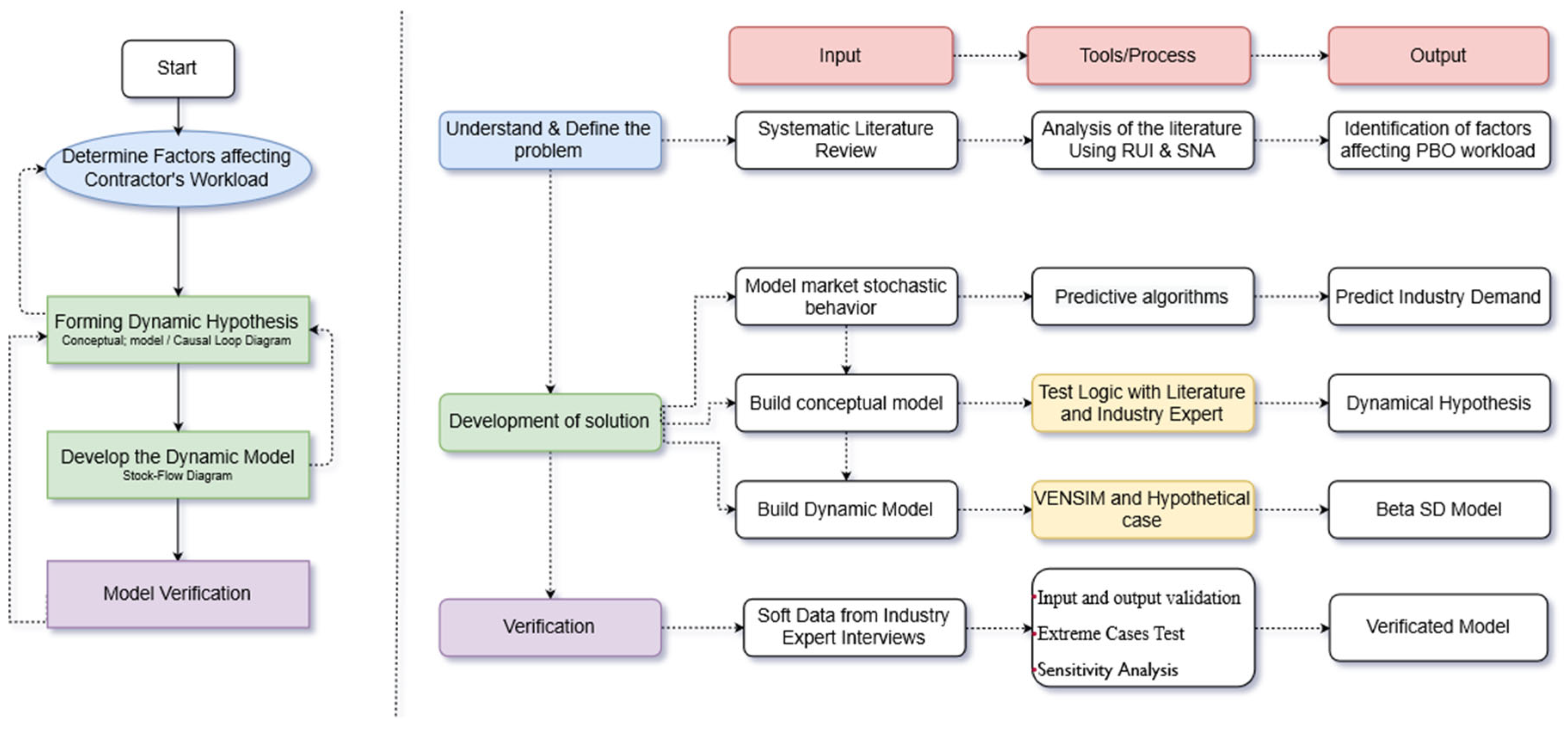
To achieve the research objective and assess how organizations manage workload fluctuations, this study develops and analyzes an SD model. The model-building process followed an iterative, multi-step approach to ensure robustness (
Figure 1). First, variables were identified through an extensive review of academic literature, industry reports, and expert interviews, resulting in a total of 28 variables [
41].
The identified variables were subsequently structured into four interconnected subsystems: (i) industry demand and capacity planning, (ii) work execution and capacity allocation, (iii) contractor competitiveness, and (iv) organizational finance. To illustrate the relationships among these subsystems, model equations and stock-and-flow diagrams were created. The model was validated and assessed through established system dynamics tests by Barlas, including structural, dimensional, and behavioral evaluations [
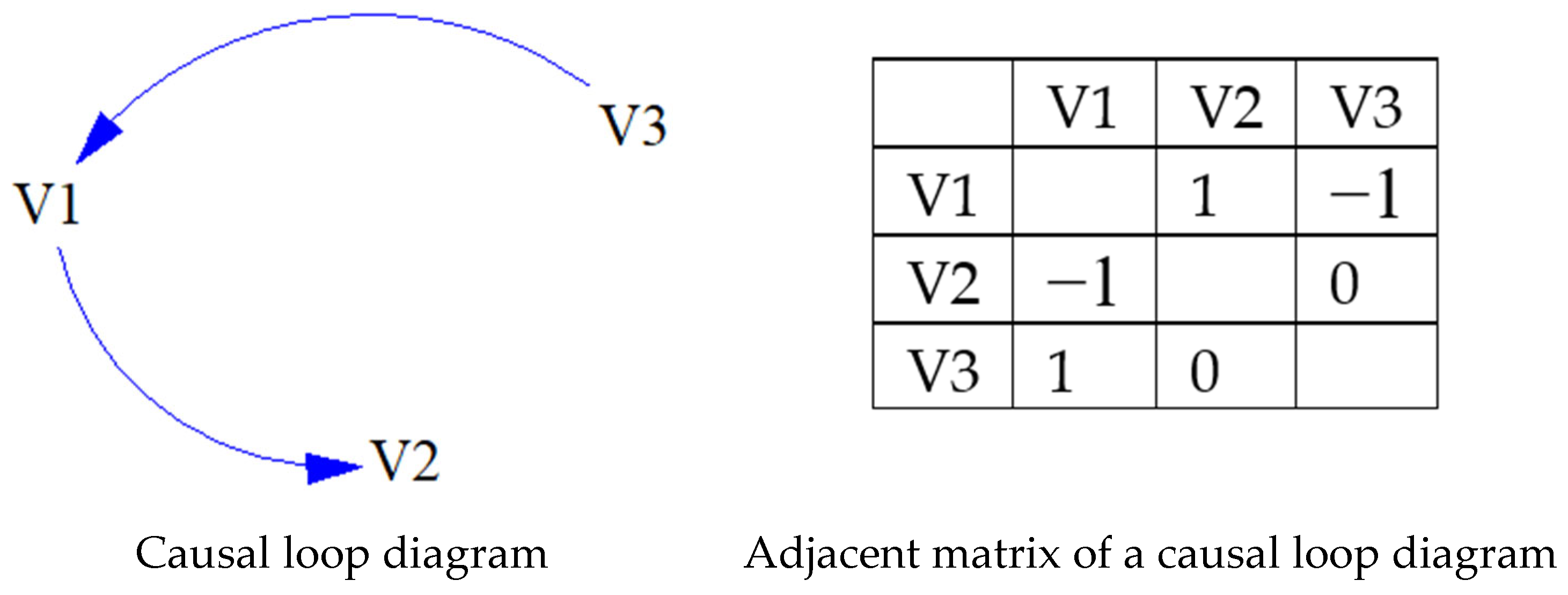
46]. Importantly, this process was iterative rather than linear, involving repeated refinements until a validated model output was achieved. Subsequently, the model underwent both social network analysis (SNA) and sensitivity analysis to evaluate system characteristics. In the SNA, causal loop diagrams were converted into network structures, while in the simulation, sensitivity analysis identified the most influential variables.
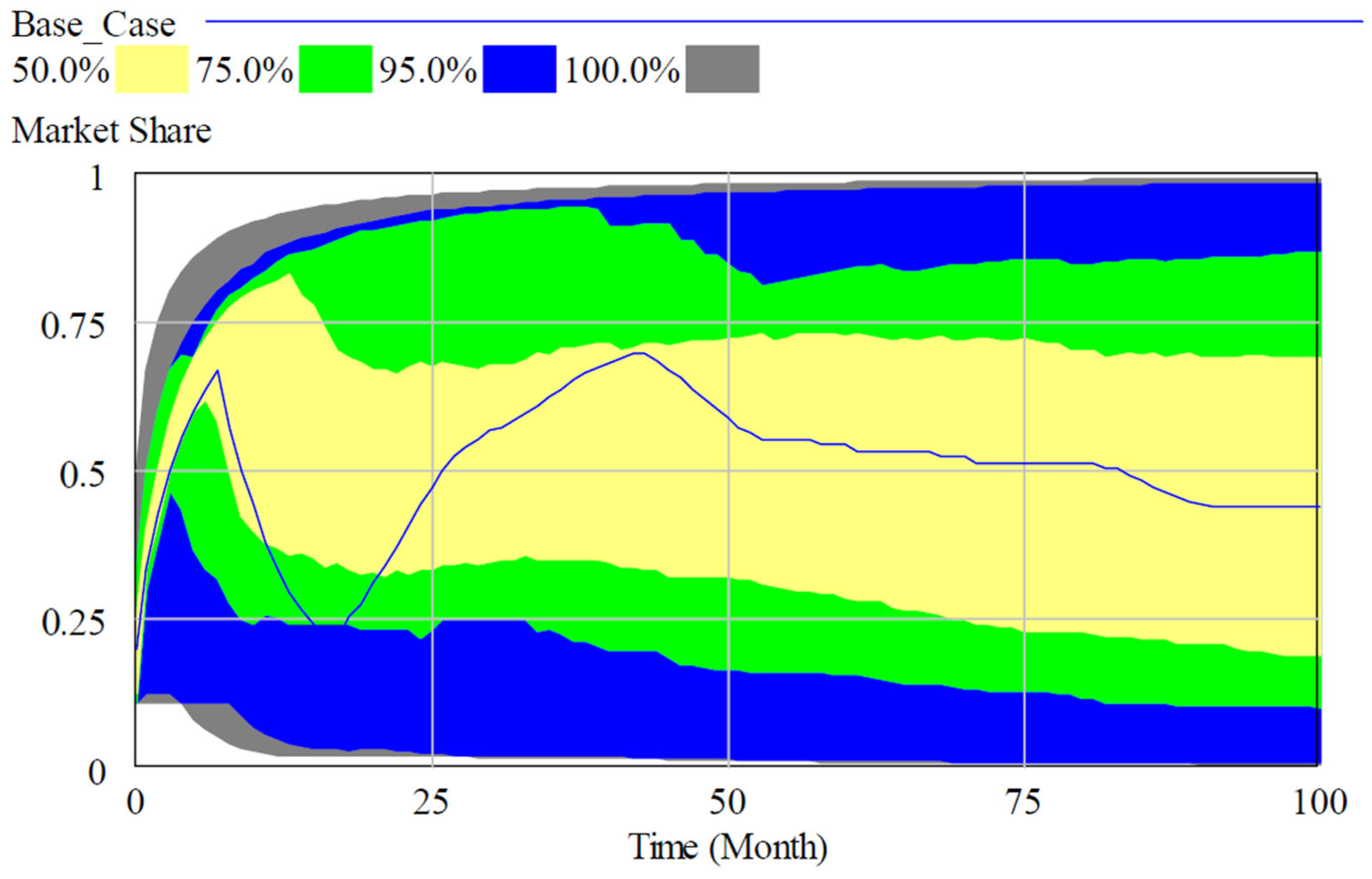
To quantify the impact of variations on stability, a Monte Carlo simulation was run for 1000 iterations over a 100-month project horizon. A 25% burn-in period was applied to eliminate initialization bias. Robustness was verified using 95% confidence intervals, and variance decomposition was used to rank the schedule’s sensitivity to specific resource constraints. An example of Montecarlo outputs is shown in
Figure 2.
The combination of SD and SNA creates a highly accurate diagnostic tool that shifts project management from broad behavioral models to detailed structural analysis. While SD captures the “behavioral physics” of a system, such as rework cycles caused by backlogs, it often overlooks differences in resources. Incorporating SNA helps identify local topological bottlenecks and specific “gatekeeper” nodes that aggregate models overlook.
This hybrid approach differentiates between parametric vulnerability (such as hiring rates) and topological vulnerability (failing relationships). It enables researchers to go beyond viewing delays as global constants and instead identify the specific inter-departmental connections that cause dynamic latency. By analyzing a network’s unique architecture, the model pinpoints particular failure points in the organizational structure that traditional sensitivity analysis cannot detect.
Finally, the framework shifts the managerial focus from capacity expansion to organizational connectivity. Instead of simply increasing staff, the model suggests “re-wiring” the network to bypass silos and break negative feedback loops. It also introduces resilience modeling, allowing managers to simulate “node-failures” and predict the impact on project stability if a key individual leaves, offering a level of granular risk mitigation that aggregate models cannot provide.
To further clarify the methodological contribution of this study, it is helpful to compare the proposed framework with traditional system dynamics approaches often used in project management research. While earlier studies have employed system dynamics to analyze workload fluctuations, bidding behavior, or resource allocation separately, the framework developed here combines multiple analytical perspectives into a single structure.
Table 1 summarizes the main conceptual and analytical differences between traditional SD approaches and the integrated SD-SNA framework introduced in this research.
As shown in
Table 1, the proposed framework builds on previous research in two main ways. First, it combines pre-award bidding dynamics with post-award project execution within a single system dynamics model, allowing workload changes to be viewed as part of an interconnected organizational system rather than separate decisions. Second, by integrating social network analysis into the SD modeling, the study offers a structural view that highlights influential variables and network bottlenecks that shape system behavior. This combined approach not only enables simulation of workload fluctuations but also helps identify structural leverage points to inform more effective managerial strategies in project-based contexts.
3.1. Model Building
This section presents the conceptual framework that explains the workload dynamics of a PBO. By visually mapping how key variables influence each other, the dynamic hypothesis goes beyond simple description to uncover the feedback loops that determine organizational behavior over time.
VENSIM DSS is an advanced SD simulation environment developed by Ventana Systems. It is intended to assist decision-making by helping researchers and practitioners model complex systems through causal loop diagrams, stock-and-flow structures, and mathematical relationships [
45,
47]. The subsequent sections describe how this dynamic hypothesis is operationalized within the VENSIM DSS simulation environment. Those outline the development of interconnected sub-models for contractor competitiveness, capacity management, and financial performance. This structured approach enables a comprehensive examination of the system’s behavior and provides practical insights into how workload can be managed effectively within a complex and uncertain project environment.
3.1.1. Dynamic Hypothesis
The dynamic hypothesis visually presents the system being studied by showing the causal links between the variables identified during data collection [
48]. The proposed model builds on Sterman’s foundational framework that assumes managers possess a full understanding of the system’s structure [
21]. Although this assumption presents a practical limitation, the present study addresses it by employing an SD computer simulation. SD helps decision-makers identify optimal policies for managing workload fluctuations under dynamic and uncertain conditions.
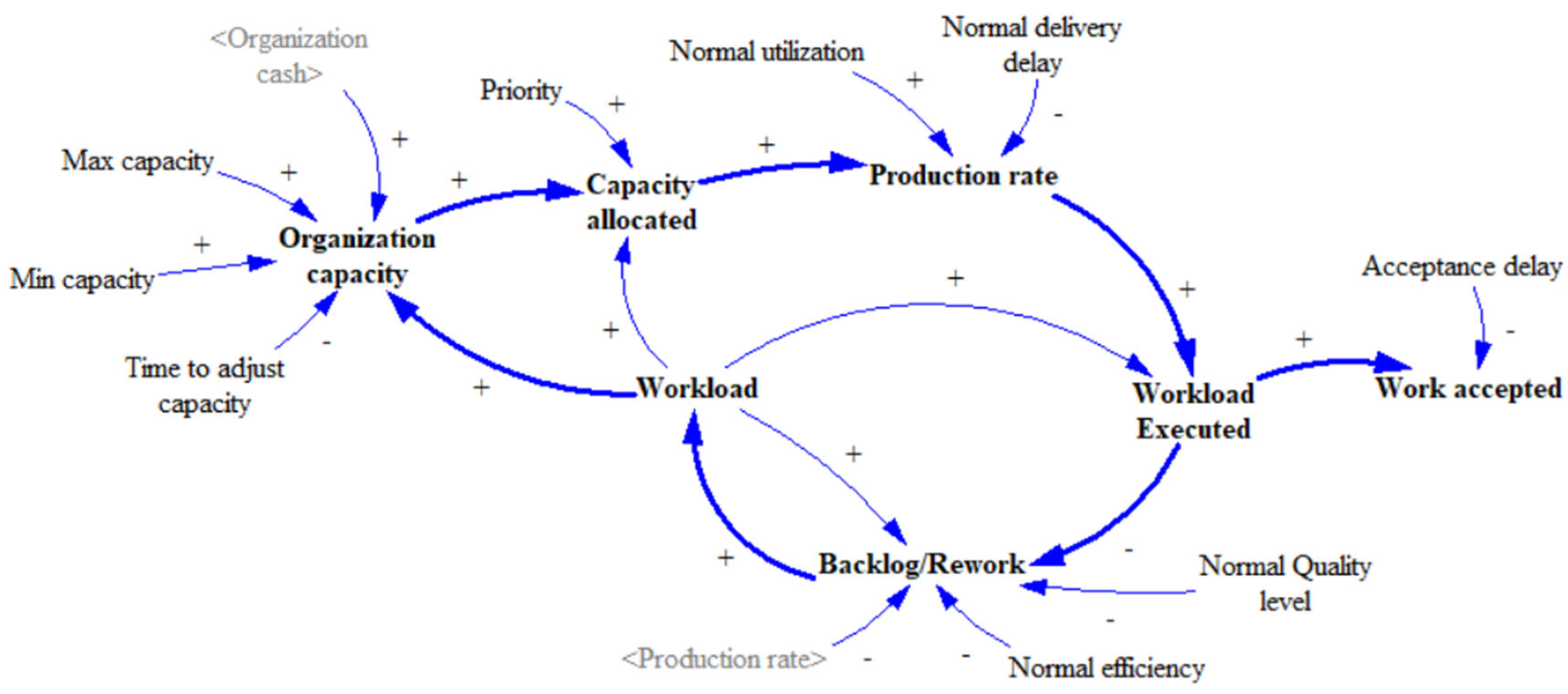
The study develops a dynamic hypothesis consisting of two interdependent feedback loops that govern workload behavior in project-based organizations. The first and most common is the after-award loop, which represents project execution (
Figure 3). In this loop, organizational cash flow increases the capacity to execute additional workloads. A portion of the completed work is accepted, generating new cash inflows and reinforcing capacity growth. However, another portion may be rejected, creating rework that places additional strain on organizational resources.
The second feedback structure, known as the
pre-award loop (
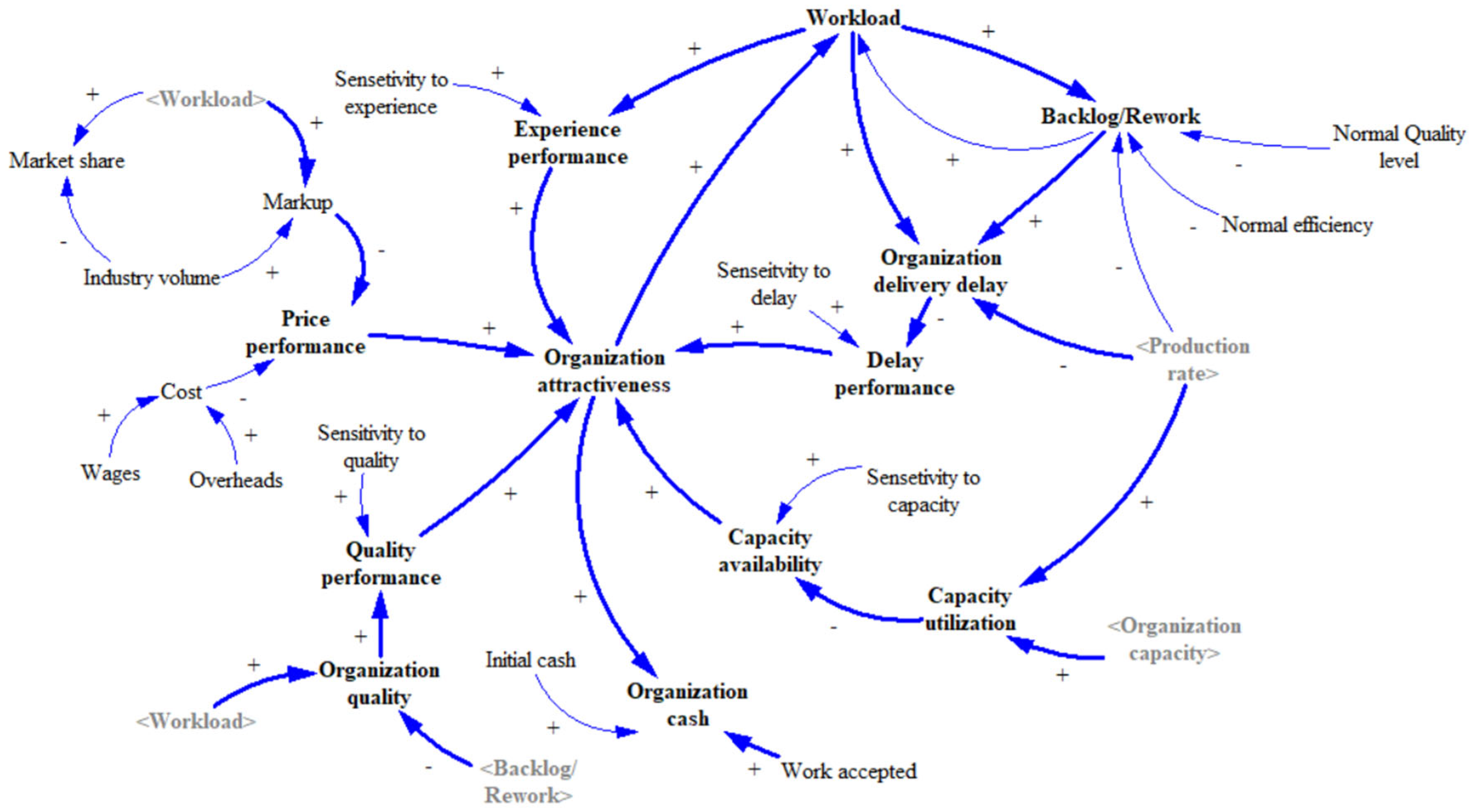
Figure 4), represents the organization’s bidding process for new projects. Success in this loop is determined by the organization’s
attractiveness function, i.e., the higher the attractiveness, the greater the likelihood of winning new contracts. Organizational attractiveness, in turn, is influenced by prior performance during the after-award phase, creating a feedback loop between project execution and future bidding success. The loop begins when a firm identifies a new project opportunity and ends when the contract is either awarded or rejected. In practice, attractiveness is evaluated by using performance indicators such as quality outcomes, delivery delays, and available capacity. Together, these metrics determine how competitive the organization appears to project owners during the bidding process.
3.1.2. Simulation Model
The proposed model captures both pre-award and post-award project phases, along with organizational finance and competition. It was developed and simulated using VENSIM DSS V8.1 under several simplifying assumptions. Considerable effort was devoted to ensuring that the model accurately reflects the dynamics of project-based organizations, particularly the interplay among project phases, financial systems, and market competition. By using a deterministic function, we ensure that every shift in workload is a direct, traceable result of the firm’s performance rather than a statistical anomaly. This allows us to clearly map the ‘Bid-Backlog-Execution’ loop without diluting the results with external probability distributions. The deterministic award logic effectively models the Expected Value of a probabilistic winning function. By focusing on mean behavior (winning) rather than individual bid variance, we provide a more stable platform for Social Network Analysis (SNA) to identify the structural nodes that drive long-term market dominance. The key assumptions are as follows:
The organization engages exclusively in project-based activities.
Intellectual capital is uniformly distributed among staff, forming an average level of specialized knowledge.
Staff technical capacity influences both project schedules and costs.
Projects are fully represented by three parameters: workload, duration, and price.
PBOs are represented by their productive capacity, financial resources (cash), and qualitative or “soft” variables.
Material supply delays and additional supply chain constraints are considered manageable.
Initial cash is provided at the beginning of the simulation, and borrowing is not permitted.
3.1.3. Contractor Competitiveness Sub-Model
In this study, contractor competitiveness is defined as the firm’s ability to win tenders, reflecting its overall market fitness. The key factors influencing competitiveness include bid price, prior experience, financial stability, quality performance, and safety record. Competitiveness (C
C) is calculated using Equation (1):
where:
= weight of the criterion,
= contractor’s performance in the criterion ,
= industry benchmark for criterion .
Benchmark values are assigned based on market orientation. For instance, bid price benchmarks are set to the minimum available value, while available capacity benchmarks are set to the maximum available value. Other criteria are normalized to averages. User preferences define the weights . The model compares the competitive scores of contractors, and the tender is awarded to the contractor with the highest CC. To ensure that static benchmarks do not induce modeling artifacts, we utilized Sensitivity Analysis to ‘stress-test’ the benchmark boundaries. The analysis confirmed that the Directional Behavior of the system (the oscillation patterns and feedback dominance) remained consistent, proving that the model’s insights are Structurally Robust and not dependent on a specific numerical ‘sweet spot’ in the benchmarking function.
3.1.4. Demand and Capacity Adjustment
Organizational capacity in the model comprises two components: fixed and variable capacity. Fixed capacity denotes the organization’s fundamental resources, while variable capacity refers to temporary resources mobilized to match the desired production rate to available capacity. The organizational objective is to keep the ratio of variable to fixed capacity as low as possible, since excessive dependence on variable resources is both costly and destabilizing. The model excludes instantaneous capacity adjustments but allows subcontracting, which may serve as a more cost-effective or strategic means of maintaining competitiveness. Organizational capacity is computed using Equation (2):
3.1.5. Capacity Allocation
The model depicts organizational resources in terms of their production capacity, reflecting the organization’s ability to manage workloads. Resource requirements for each project are estimated at the outset, and significant fluctuations in resource allocation are not permitted. The required production capacity is calculated using normal efficiency and utilization assumptions, as expressed in Equations (3) and (4)
where:
= required production rate,
= workload of the project (man-hours),
= project duration,
= available organizational capacity.
Accordingly, the allocated capacity (
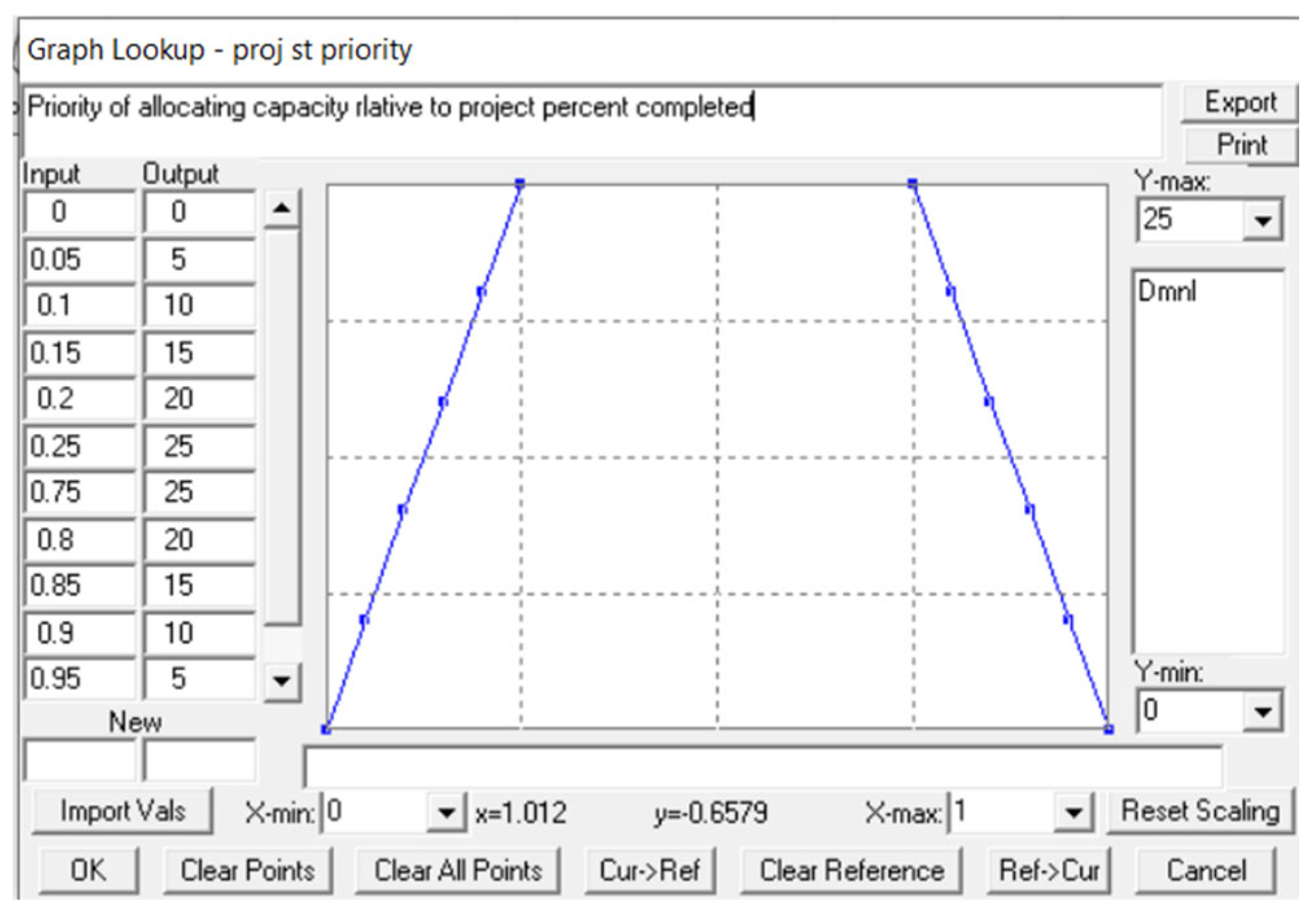
Cₐₗₗ) represents the minimum of the required and available capacities. Capacity is distributed among ongoing projects based on two parameters: the required number of crews and project priority. As illustrated in
Figure 5, project priority follows a trapezoidal distribution based on the percentage of project completion. Priority peaks when a project is between 25% and 75% complete and declines linearly at both the beginning and end of the process.
3.1.6. Financial Sub-Model
The model’s financial structure assumes a single source of income: cash inflows generated from accepted work. These inflows are used to cover expenditures such as resource hiring, wages, material costs, and other operating activities. Organizational cash is modeled as a stock, as shown in Equation (5):
Cash inflows are subject to payment delays of approximately 30–60 days, consistent with typical industry practices. Additionally, a percentage of each payment is retained until 50% of project progress is achieved, after which the withheld amount is released during the final payment. This mechanism reflects standard contractual terms that substantially influence cash flow and financial stability. The benefit of enforcing a ‘Cash-from-Operations’ constraint, we ensure that Organizational Cash remains a pure reflection of the firm’s ability to balance its bidding aggressiveness with its execution capacity. This provides a ‘cleaner’ signal for the Sensitivity Analysis (
Section 5.2) to identify which operational variables (e.g., Markup, Efficiency) are the true drivers of long-term survival.
5. Results and Discussion
This study’s results are organized into two main sections. The first presents the findings of the SNA, which identifies the most influential variables shaping workload-capacity behavior in project-based organizations. The second part focuses on the sensitivity analysis, which evaluates how parameter uncertainty affects overall system performance. The discussion integrates insights from both analyses to interpret their broader implications for project management and organizational policymaking.
5.1. Social Network Analysis (SNA) Results
The analysis emphasizes assessing the significance of variables in the causal loop network using centrality metrics: degree, betweenness, and closeness.
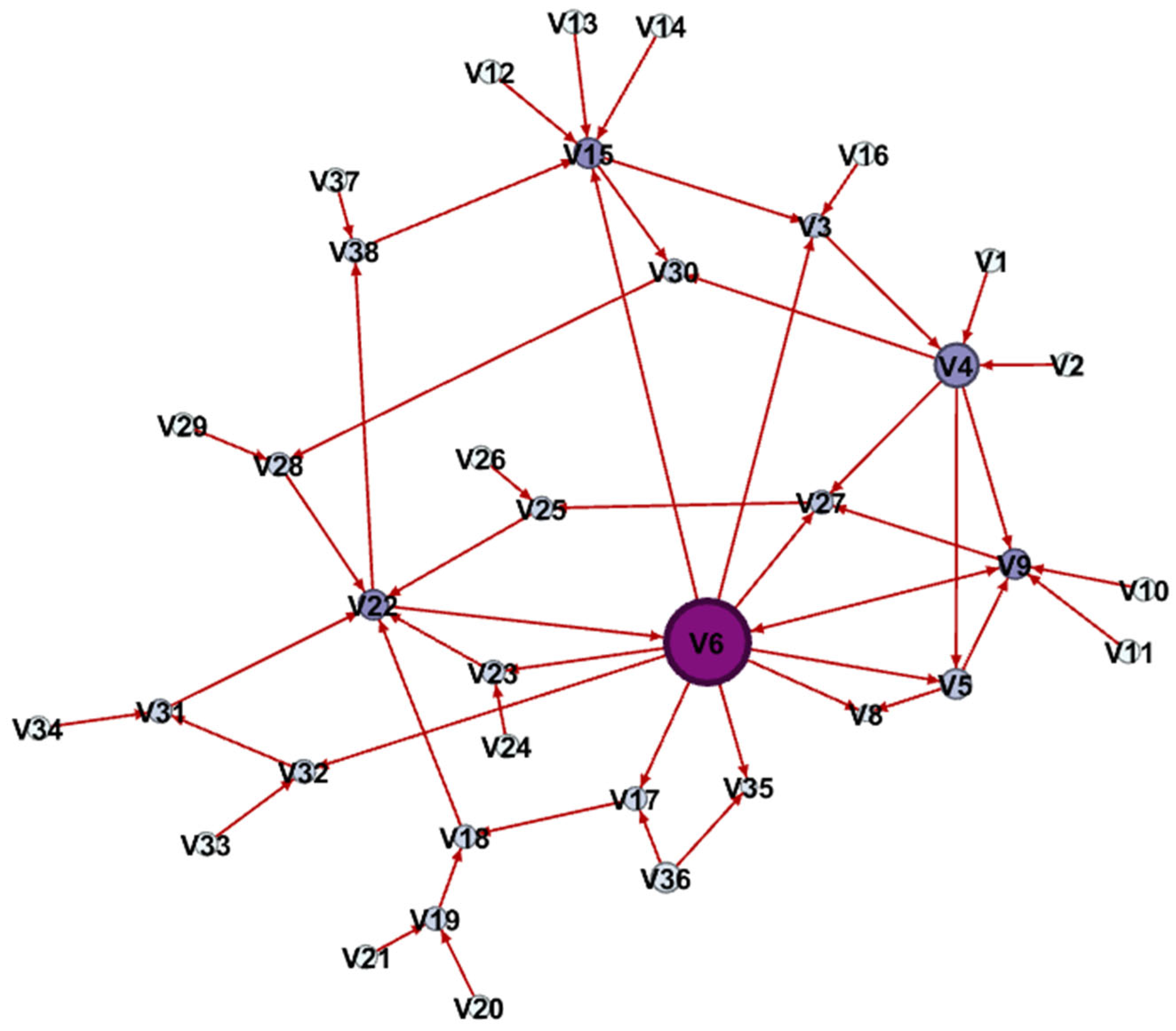
Degree centrality distinguishes between out-degree (variables exerting influence on others) and in-degree (variables most affected by others). Results (
Figure 7) show that workload (V06) is the most influential variable, with the highest out-degree centrality, meaning it exerts the strongest direct effect on other variables. The production rate (V04) is the second most influential variable. Conversely, the most affected variables (highest in-degree) are backlog (V09), organizational capacity (V15), and organizational attractiveness (V22).
Betweenness centrality measures how frequently a variable appears on the shortest path between other variables, highlighting its role in spreading uncertainty through the network. The analysis identifies workload (V06) as the dominant bridging variable, highlighting its central role in transmitting fluctuations across the system. Organizational attractiveness (V22) is the second most important, followed by capacity (V15), which also serves as a critical intermediary. These variables (V06, V22, V15) significantly influence how uncertainty propagates through the network.
Closeness centrality assesses how quickly a variable can influence or be influenced by others through direct and indirect connections. Here, workload (V06) again emerges as the most central, directly or indirectly affecting nearly 60% of variables. Other variables with high closeness include organizational attractiveness (V22), backlog (V09), and production rate (V04), each influencing approximately 40% of the network.
The findings reveal that workload systems in PBOs are tightly coupled. They also show strong interdependencies among variables. Variations in a single parameter can rapidly cascade across the system, amplified by feedback structures and inherent delays. This highlights the need to monitor key drivers like workload, attractiveness, capacity, and backlog. Doing so is essential when evaluating organizational policies for workload management.
5.2. Sensitivity Analysis Results
5.2.1. Screening Method
The screening method produced the following results:
Profit percentage initially shows a negative correlation with overheads and wages, and this relationship continues throughout the simulation, with overheads and average project workload run.
Organizational delivery delay is influenced by the mean load and normal utilization, and it decreases as the minimum capacity level increases.
Organizational cash flow is heavily affected by the initial cash invested and the starting capacity. However, this effect wanes over time as other process-related factors become more influential.
Organizational capacity strongly depends on its initial value and is directly impacted by initial cash. It decreases with a higher overhead-to-wages ratio and with standard delivery delay.
The markup percentage decreases as the normal quality level and minimum capacity increase.
The capacity variability index decreases as the organization’s minimum capacity and the average project duration increase.
Capacity utilization is greatly influenced by the time needed to alter capacity and the amount of preliminary cash on hand. At the start of the simulation, it is also inversely influenced by initial capacity and normal delivery delay. As the simulation progresses, other factors, such as minimum capacity, wages, overheads, maximum capacity, and demand level, exert a stronger impact.
5.2.2. Linear Regression Method
The regression analysis revealed the following:
Capacity variability index is shaped by capacity, cash, utilization, quality level, and wages. These effects amplify over time and balance through a mirror-like pattern of direct and inverse influences around zero.
Capacity utilization is initially affected by the time needed to adjust capacity and the usual delivery delay. As the simulation progresses, the average load of the project and demand levels become more significant, directly raising utilization. Conversely, quality level has the strongest negative effect, indicating that higher backlog leads to persistent overutilization of resources. Wages, overheads, and initial capacity also significantly affect utilization, as they determine capacity adjustments that, in turn, shape cash flow and utilization patterns.
Market share is influenced by organizational cash and overall efficiency, and this effect increases over time. Error rates and markup percentage negatively impact market share.
Profit percentage is positively influenced by efficiency and quality level and negatively affected by overheads and wages. This highlights the need for investment in efficiency-enhancing technologies and lean practices to reduce costs and improve profitability.
Organizational delivery delay is mainly affected by internal factors such as efficiency and quality level. Other internal drivers, including minimum capacity and time to adjust capacity, also exert inverse effects. As the simulation progresses, the relative impact of internal variables increases, while external factors such as demand level, project duration, and workload lose significance.
Organizational cash is initially determined by its starting value (initial cash). Over time, factors related to capacity, such as initial capacity, adjustment time, utilization, and quality, become more important. Cost-related variables, including overheads, wages, markup, and cash time buffer, also have a similar impact. These findings highlight the essential role of both capacity and cost structure in maintaining organizational cash flow.
Organizational capacity is determined by initial capacity, minimum capacity, markup percentage, and adjustment time. It decreases with higher quality level, utilization, efficiency, and average project load. Except for markup, which influences capacity indirectly via feedback loops, these variables directly impact organizational capacity.
5.2.3. ANOVA Method
The ANOVA results confirm the following:
Capacity utilization is greatly influenced by adjustment time, initial cash reserves, maximum capacity, and overhead costs. Slight changes in these variables can lead to substantial impacts.
Market share is heavily affected by factors such as wages (cost structure), maximum capacity, and demand level at the start of the simulation. This influence decreases during the first half but becomes significant again in the second half. The influence of markup, initial cash, and bidding time increases steadily over time, while sensitivity to demand level decreases.
Markup percentage is most sensitive to the cash time buffer, reflecting the importance of liquidity in sustaining operations. It is also sensitive to adjustment time, highlighting the role of organizational flexibility in responding to workload fluctuations.
Organizational cash is sensitive initially to starting cash and project duration. Over time, sensitivity shifts toward adjustment time, markup, overheads, and the frequency of capacity updates. This finding suggests the importance of flexible capacity management and lean cost structures for maintaining stable cash flow.
5.3. Policy Analysis
Following the analysis of organizational performance, the model was applied to evaluate policies commonly adopted by contracting organizations. Policies were tested by altering organizational goals, resulting in three defined strategies: balanced policy, competing policy, and stable capacity policy.
The balanced policy (Scenario 1) assigns approximately equal weight to multiple objectives. Under this approach, the organization seeks to increase profit and market share, reduce capacity variability and delivery delays, and maintain high-capacity utilization.
The competing policy (Scenario 2) positions the organization as a risk-taker. Here, the emphasis is placed more heavily on market share while retaining consideration of other performance dimensions.
The stable capacity policy (Scenario 3) focuses on maximizing the use of available resources. Here, the organization might operate with a high level of variable capacity, but this capacity must be fully leveraged. The organization prioritizes profit over cash reserves, with the policy designed to minimize expenditure while maintaining essential operations.
These three policies were tested under two distinct market orientations: (1) lowest-price markets, where contracts are awarded to the bidder offering the lowest price, and (2) nearest-to-average-price markets, where contracts are awarded to the bid closest to the mean of all submissions.
Traditional optimization perspectives often rely on linear or simplified delay costs. The model shows that delay costs are non-linear and self-reinforcing. A delay not only costs money but also diminishes Organizational Attractiveness (V_22), thereby hampering the firm’s ability to secure future work. ‘Path dependency’ is difficult to capture in Real-Options models but is essential to the SD-SNA framework. We argue that Systemic Resilience is not just about having the ‘option’ to expand but about preserving the structural integrity of the network under stress. This model’s findings can inform real-options triggers, such as, instead of triggers based purely on market demand, our model suggests triggers based on topological vulnerability. For example, expansion should be ‘triggered’ when the betweenness centrality of key resource nodes reaches a tipping point, rather than just when the backlog hits a certain dollar value.
5.3.1. Interaction Effects and System Non-Linearity
The consolidated sensitivity analysis (
Table 3) reveals that the system’s performance is not merely the sum of isolated variable impacts but is driven by significant non-linear interactions between structural anchors and operational cost drivers. Specifically, while Initial Capacity (Rank 1) and Normal Quality Level (Rank 2) establish the baseline for organizational scale and error suppression, their effectiveness is non-linearly moderated by the Wage Overhead Factor and Wages.
Simulation results indicate that when capacity expansion occurs concurrently with rising overheads, the resulting impact on Profit Percent follows an exponential decay pattern rather than a linear reduction. This suggests a “tipping point” in the organizational structure where the marginal gains from increased capacity are eclipsed by the compounding costs of labor management. Furthermore, the interaction between Normal Quality Level and Actual Error Percent demonstrates that quality deficiencies early in the simulation create a feedback loop that disproportionately destabilizes Market Share in later stages. These findings underscore the necessity of the proposed integrated framework, as optimizing for a single dimension—such as capacity—without accounting for the non-linear “human-system” behaviors of labor and quality can lead to significant operational fragility.
5.3.2. Lowest Price Market
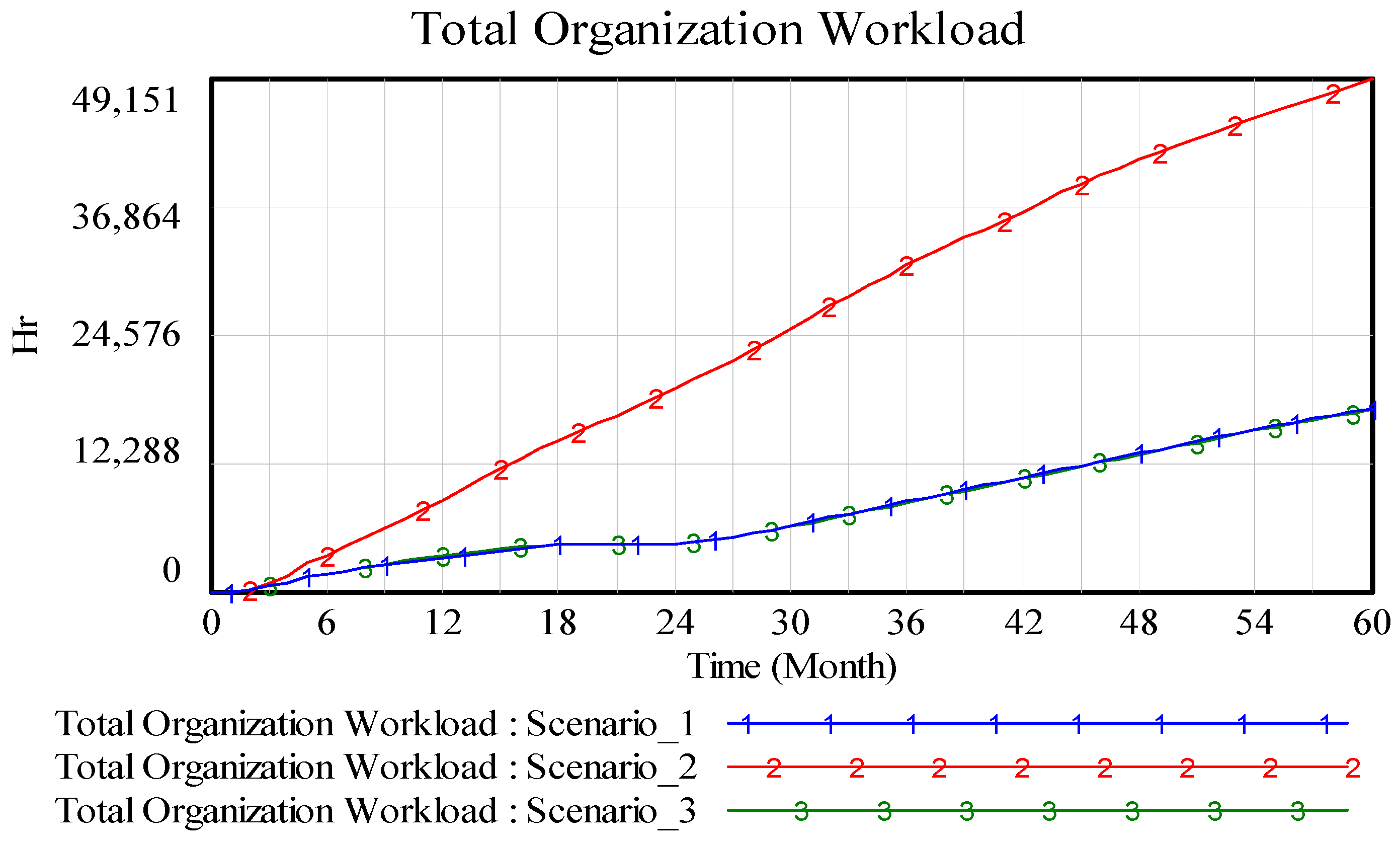
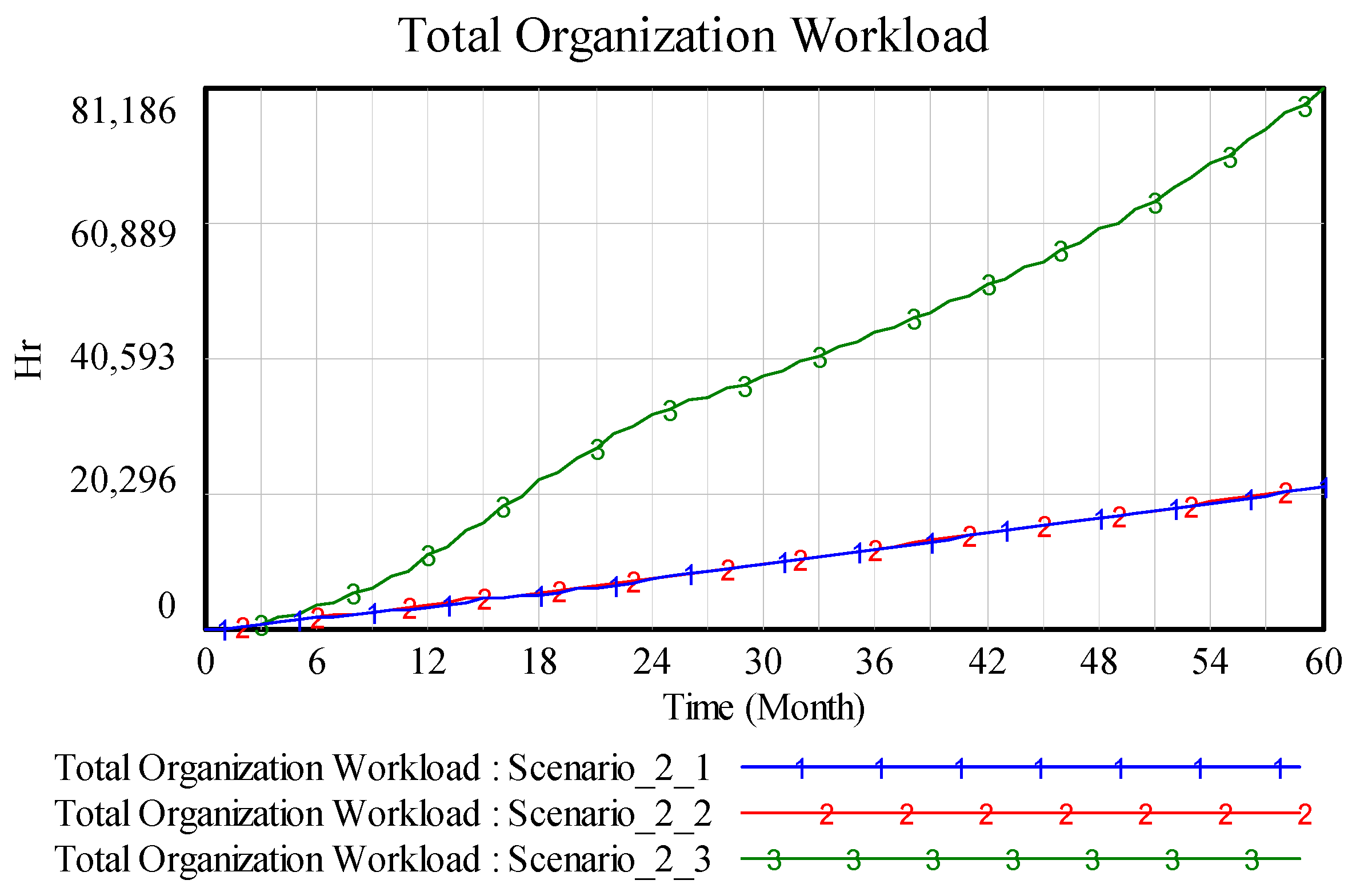
Workload (
Figure 8): Under the competing policy (Scenario 2), organizational workload doubles, surpassing the levels observed in the other two policies.
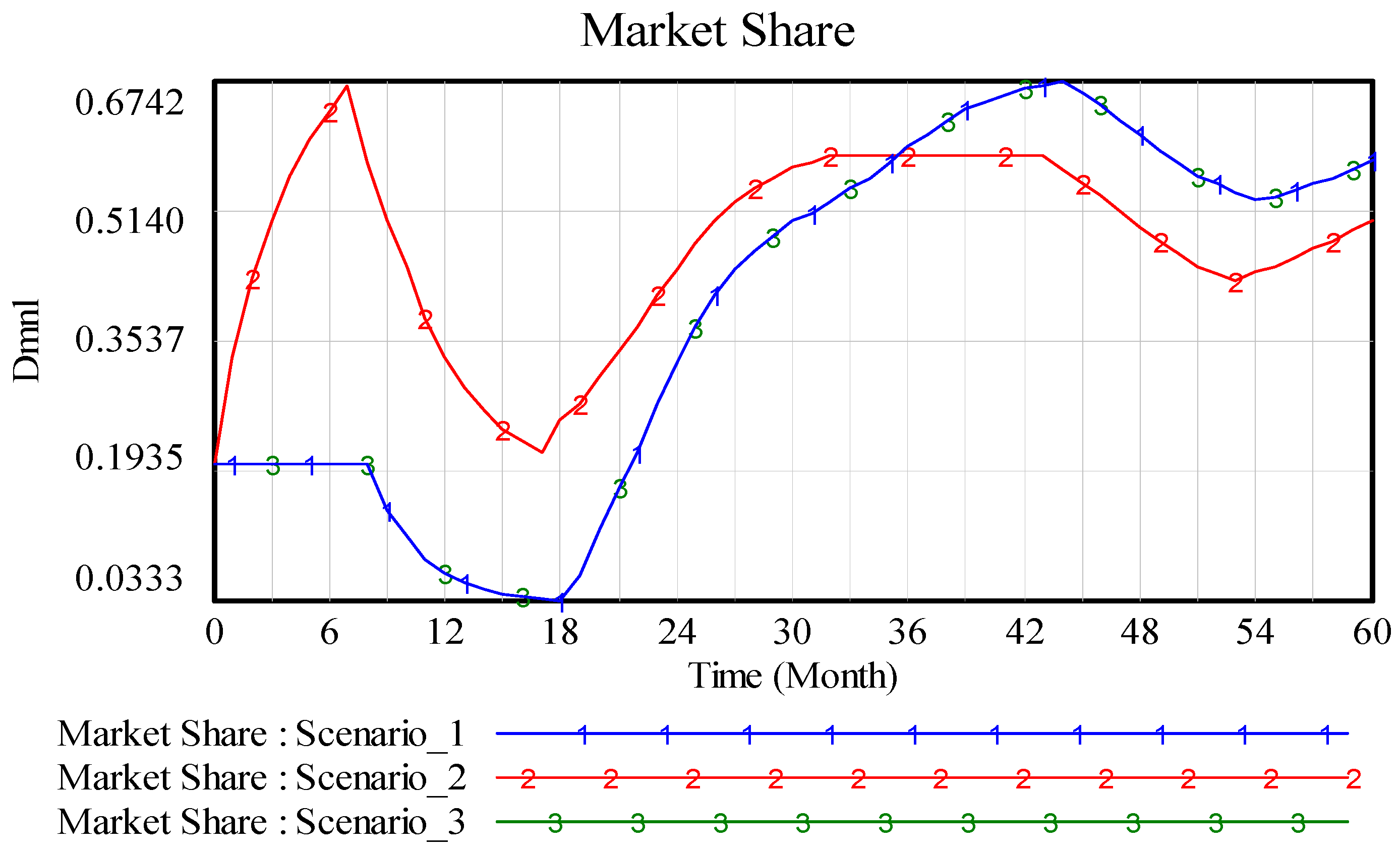
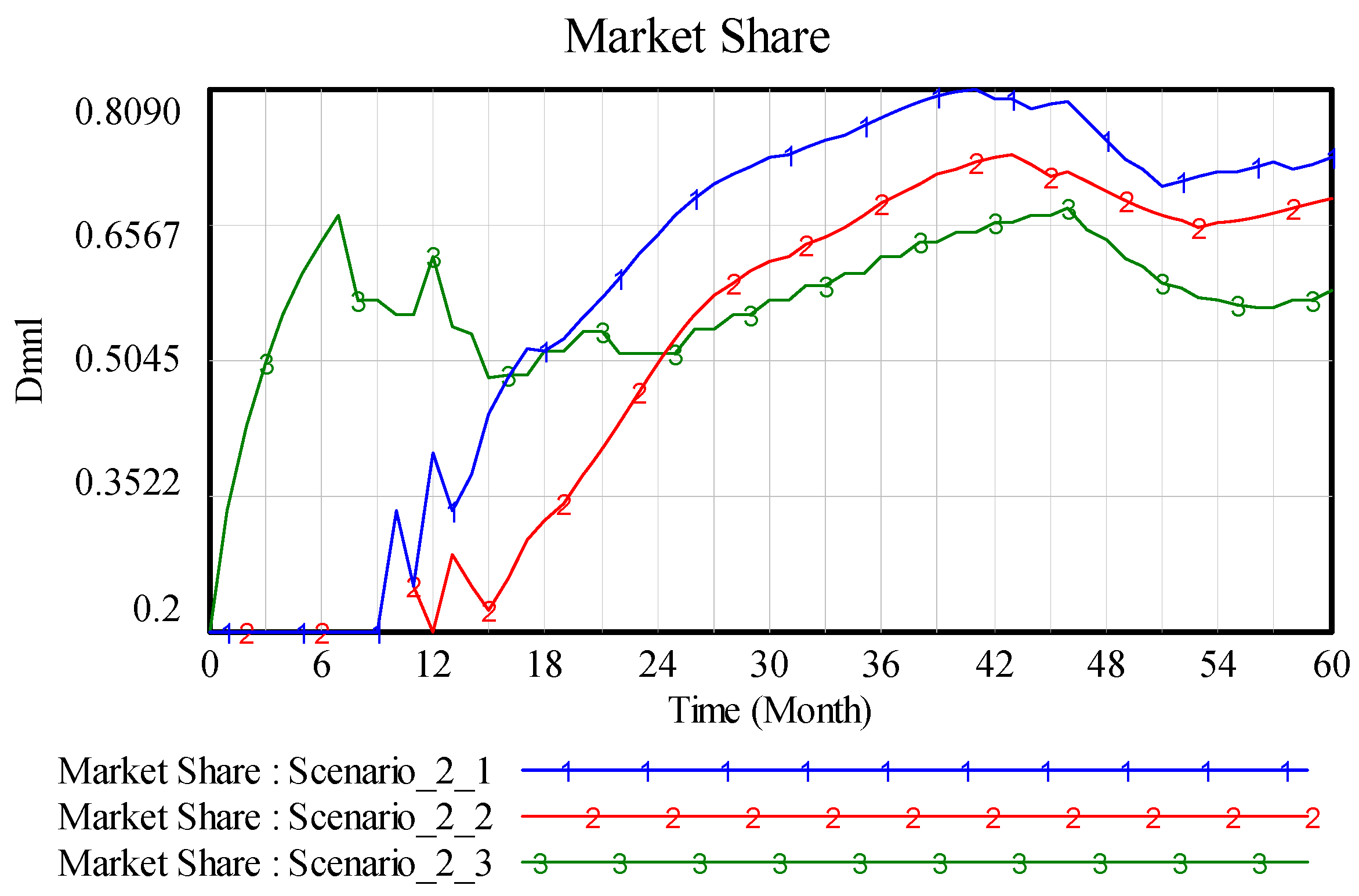
Market share (
Figure 9): The competing policy produces greater stability in market share compared to the balanced and stable capacity policies.
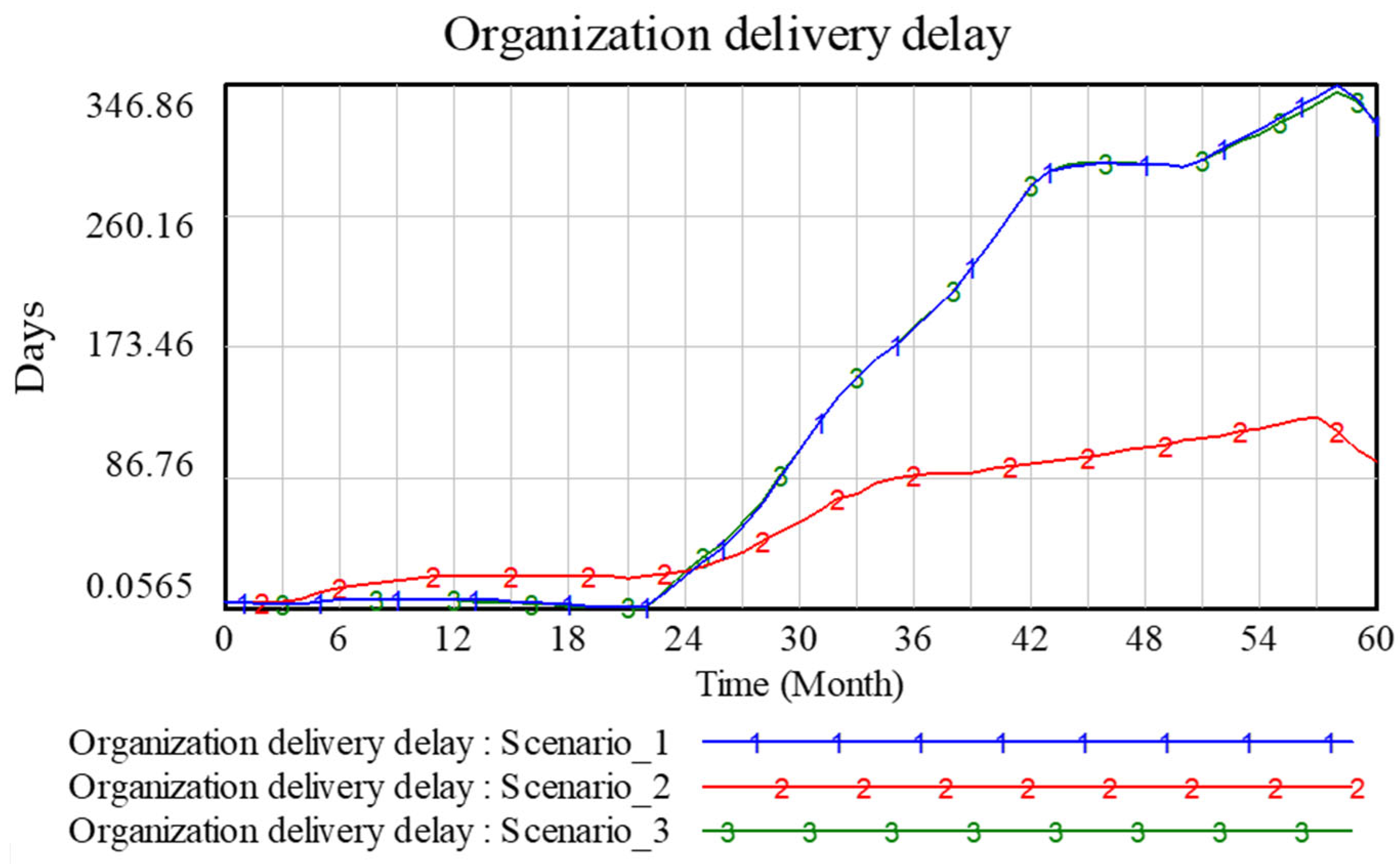
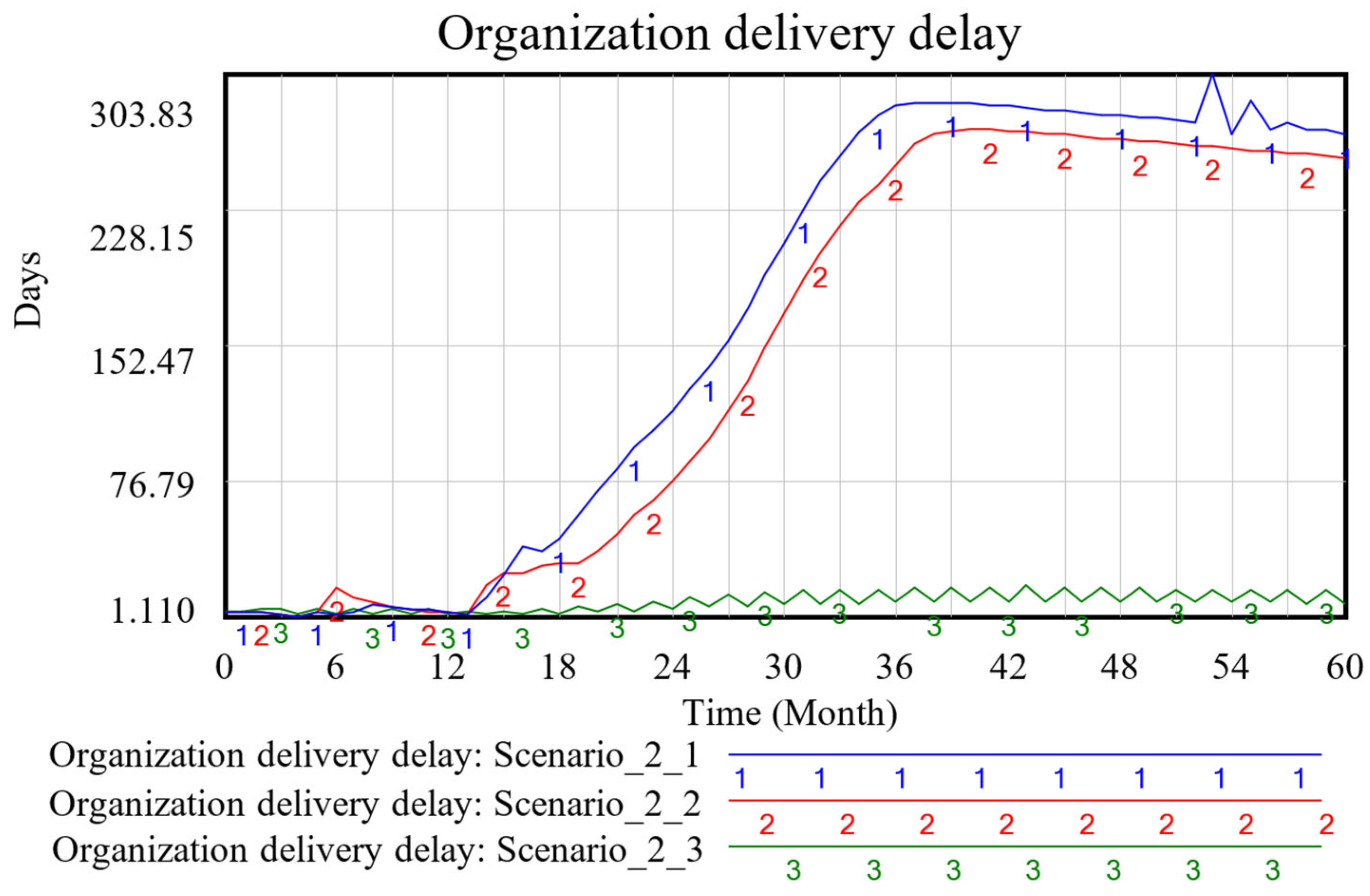
Delivery delay (
Figure 10): Scenario 2 achieves significantly lower delivery delays relative to the other policies.
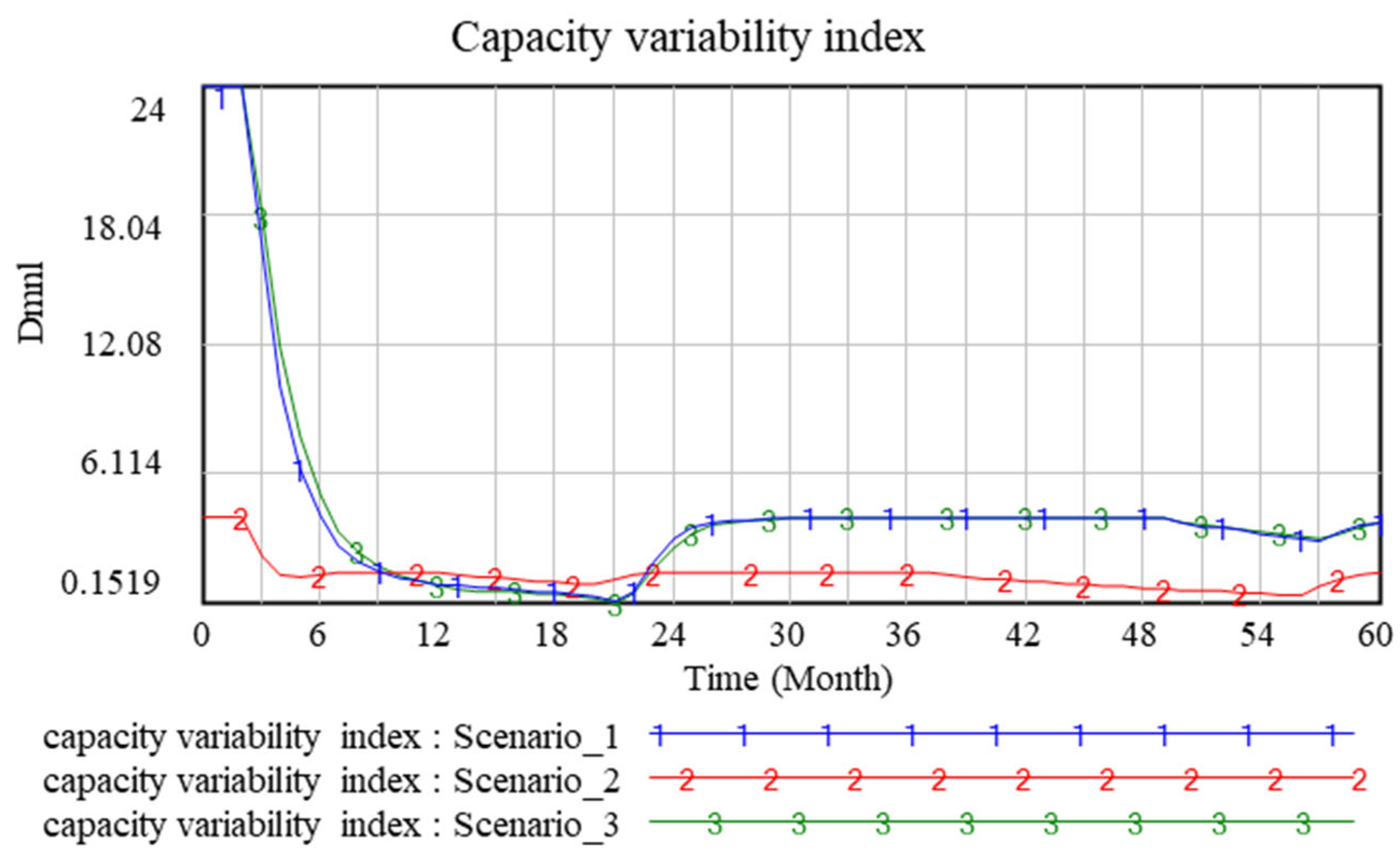
Capacity variability (
Figure 11): The competing policy also provides more stability in capacity variability.
Based on these results, Scenario 2, the competing policy, is recommended for PBOs operating in low-price markets. This approach enables organizations to optimize resource use, expand market share, handle more workload (gaining valuable experience), and ensure faster delivery delays.
5.3.3. Nearest to the Average Price Market
Workload (
Figure 12): The stable capacity policy (Scenario 3) generates the highest workload.
Market share (
Figure 13): This policy ensures a relatively stable market share compared with the alternatives.
Delivery delay (
Figure 14): Scenario 3 produces significantly lower delivery delays than the other policies.
Based on the two cases of market orientation and the three policies implemented, it is clear that in a market focused on the lowest prices, policy two, aimed at increasing market share and maintaining high competitiveness, is advisable. Conversely, in a market focused on reasonable pricing, policy three, which focuses on resource utilization and moderate competition, is preferable.
5.4. Discussions
The Causal Mechanism of Stability: The study finds that in Lowest Price Markets, the Competing Policy (Scenario 2) succeeds by creating a “High-Flow Equilibrium.” By doubling the workload, the organization triggers a reinforcing loop of experience and utilization that offsets the thin margins of low pricing. This explains why the “Delivery Delay” decreases: the high volume enables a more standardized, “industrialized” flow of tasks, reducing the idle time often found in lower-volume “Balanced” policies. This supports the MMRCPSP theories, which suggest that mode selection is not just about speed but about maintaining a constant pressure on the supply chain to minimize logistics-induced delays.
The Paradox of Market Orientation: In Nearest-to-Average Markets, the Stable Capacity Policy (Scenario 3) dominates because it leverages the “Safety in Numbers” principle of moderate pricing. The “why” behind this behavior is found in the In-degree Centrality of Backlog (V09). In moderate markets, a stable backlog acts as a buffer against market volatility. Unlike the “Lowest Price” market, where you must run fast to stay still, the moderate market allows the firm to optimize Resource Leveling, smoothing the labor histogram, and avoiding the rework costs associated with “Hire-and-Fire” cycles.
Scientific Contribution and Literature Mapping: By integrating SNA with SD, this research moves beyond the “Resource-Constrained” view of the 1990s and into the “System-Aware” era. While traditional literature suggests that “more capacity” is the solution to delays, our Sensitivity Analysis (Linear Regression) proves that Quality Level and Efficiency are the true inverse drivers of delay. This confirms the System Dynamics ‘Quality-Pressure’ archetype but adds a new layer of organizational topology: it is not just how much capacity you have but how connected that capacity is to the bidding process that determines long-term survival in project-based environments.
The primary contribution of this research for practitioners lies in its transition from a prescriptive “black box” approach to a transparent diagnostic framework. Rather than offering a definitive recipe for project success, the model functions as a strategic thinking tool that enables managers to map the “behavioral physics” of their organization. By identifying high-centrality variables, such as the rework cycle, the bid-backlog loop, and the organizational attractiveness (V_22), the framework highlights the topological bottlenecks where traditional accounting and scheduling tools typically fail.
Crucially, the model alerts decision-makers to the non-linear “tipping points” at which incremental increases in workload or capacity expansion can trigger exponential declines in profit margins and quality stability. This perspective encourages a shift in focus from isolated optimization to structural resilience. Managers are empowered to use the framework to generate internal hypotheses and run “what-if” scenarios, testing how their specific “internal metabolism,” including constraints such as credit buffers or labor market elasticity, might amplify or dampen systemic shocks. Ultimately, the model provides the diagnostic architecture necessary to anticipate and mitigate vulnerabilities before they manifest as operational failures.
The findings of this study both confirm and extend existing research on workload dynamics in project-based organizations. Consistent with earlier system dynamics studies, the results confirm that workload accumulation, delivery delays, and capacity adjustment mechanisms generate reinforcing feedback loops that strongly influence organizational stability over time. Previous research has also emphasized the importance of maintaining balanced capacity utilization and avoiding aggressive bidding strategies that may destabilize project portfolios. However, the present study contributes new insights by demonstrating how these dynamics are structurally mediated through organizational network relationships identified through Social Network Analysis. In particular, the analysis shows that variables such as workload, organizational attractiveness, and capacity act as structural transmission points through which disturbances propagate across the system. By integrating SD modeling with SNA, the proposed framework therefore extends prior work by revealing not only the behavioral dynamics of workload-capacity interactions but also the structural leverage points that shape organizational resilience under different market conditions.
6. Conclusions
This study develops an SD model for PBOs. The model integrates pre- and post-award phases with internal and external organizational dynamics. Its primary purpose is to analyze the factors driving workload fluctuations and to assess their influence on the overall performance of the PBO’s business model. Validation was achieved through a combination of dimensional consistency checks and reality-based inspections, ensuring the model’s structural robustness and credibility. Beyond the construction industry, the model is created as a flexible archetype for any Project-Based Organization (PBO). The essential feedback loops, such as bidding competitiveness and execution ability, are consistent features in high-stakes fields. While specific “nodes” may vary from site managers to software architects, the main idea stays the same: structural connectivity (topology) controls behavioral performance (metabolism). This model defines sustainability as systemic resilience. By incorporating supply-plan awareness, it avoids the wasteful “cannibalization” of resources where human effort is wasted due to material shortages. This alignment ensures that optimized schedules are not only logistically feasible but also socially responsible, creating a causal framework that supports long-term organizational health.
The performance parameters of PBOs were analyzed in two stages. Initially, the static structure of the model was assessed through SNA. This identified the relative importance of variables based on their network position and interdependencies. Second, the dynamic interactions among variables were explored using three complementary statistical methods: screening, ANOVA, and linear regression. Together, these approaches provided a comprehensive understanding of both direct and indirect influences within the system.
The results underscore the critical importance of internal factors in shaping long-term organizational performance. Initial organizational capacity was identified as the primary factor influencing outcomes, whereas minimum capacity was crucial for stabilizing operations and improving performance resilience. Flexibility in capacity adjustment was the second most influential factor overall. It was also the third most important in terms of long-term performance effects. External factors like demand levels have a greater impact on long-term performance compared to short-term results. Meanwhile, project-specific characteristics, including workload and duration, demonstrated moderate but notable impacts.
Beyond advancing theoretical insights, this work contributes practical value by highlighting how managers can use SD-based decision-support models to better anticipate workload fluctuations and adjust policies accordingly. For practitioners, the findings emphasize the need to maintain sufficient minimum capacity and enhance flexibility in capacity adjustments, as these strategies directly strengthen organizational resilience and competitiveness.
This study is not without limitations. First, the model adopts an aggregate system-level representation of organizational capacity to focus on the structural feedback mechanisms that govern workload fluctuations and competitive dynamics in project-based organizations. Consequently, operational factors commonly observed in practice, such as multi-skilled workforce allocation, individual learning effects, workforce fatigue, and hiring or layoff frictions, are not explicitly modeled and are instead represented indirectly through aggregate variables such as production rate and delivery delay. While this abstraction simplifies certain micro-level workforce behaviors, it enables clearer analysis of systemic interactions across bidding and execution phases. Second, the model employs deterministic tender-award logic and benchmark-based competitiveness measures to represent market competition. Although this approach facilitates the interpretation of feedback relationships, real bidding environments often involve probabilistic outcomes and heterogeneous owner preferences, which may introduce additional variability. Third, model validation relies primarily on structural and behavioral tests, supported by expert review, rather than on full empirical calibration using longitudinal project portfolio datasets. Furthermore, the framework primarily represents contracting organizations during the project execution phase and focuses mainly on financial and capacity-related indicators.
Future research can strengthen the model’s empirical grounding and extend the framework by incorporating probabilistic bidding mechanisms, multi-skilled workforce dynamics, and calibration with project portfolio data. In addition, broader sustainability-oriented indicators, such as workforce turnover, overtime intensity, and environmental impacts associated with subcontracting and logistics, could be incorporated to better align the framework with emerging ESG-oriented performance evaluation in project-based organizations.
In summary, this research demonstrates that system dynamics offers a powerful framework for modeling workload fluctuations in PBOs. By combining static network analysis with dynamic sensitivity testing, the study provides both scholars and practitioners with new tools to understand and manage the complex interdependencies that shape organizational performance.