Article

A Legal Framework for Mitigating Soil Pollution Risk in Rwanda: Transitioning from Reactive Regulation to Proactive Governance

1
School of Law, Ocean University of China, Qingdao 266100, China
2
School of Law, Wuhan University, Wuhan 430072, China
*
Author to whom correspondence should be addressed.
Sustainability 2026, 18(7), 3458; https://doi.org/10.3390/su18073458
Submission received: 11 February 2026 / Revised: 8 March 2026 / Accepted: 12 March 2026 / Published: 2 April 2026

Abstract

Agricultural soil contamination increasingly threatens food security, environmental health, and rural livelihoods in Rwanda. However, the country’s laws and regulations remain largely ineffective and reactive to issues. Existing environmental legislation broadly addresses pollution but lacks a clear, risk-based framework for the protection, monitoring, and remediation of soil. This study assesses the adequacy of Rwanda’s current legal and institutional frameworks for managing soil pollution and develops a governance structure to enhance agricultural sustainability. It employs a qualitative desk-based methodology that combines doctrinal legal analysis, comparative environmental governance review, and interdisciplinary literature synthesis to evaluate Rwanda’s regulatory frameworks alongside established models from China, Brazil, and Kenya. The analysis highlights critical gaps, including the absence of soil-specific standards, poor institutional coordination, and inadequate systems for early risk detection and liability enforcement. The research proposes a legally mandated, multi-phase soil risk management process that includes inquiry, monitoring, assessment, mitigation, and adaptive oversight, drawing on insights from previous studies. The findings suggest that incorporating preventive, risk-based measures into national legislation can improve environmental governance, lower long-term remediation costs, and promote sustainable agricultural practices. Conducted from mid-2024 to late 2025, this study advances environmental law and sustainability by providing a context-specific framework for regulating soil pollution applicable to Rwanda and other developing economies. It also contributes to the global dialogue on risk-based environmental governance and provides a model for improving soil protection laws in emerging regulatory settings.

1. Introduction

Agriculture is the foundation of Rwanda’s economy, accounting for over 25% of GDP and employing more than 40% of the labour force [1]. According to Vision 2050 and the National Strategy for Transformation (NST1), modernising agriculture is essential to alleviating poverty and ensuring food security [2]. The core of this strategy is the preservation of healthy soils, which deliver vital ecosystem services such as nutrient cycling and carbon sequestration [3]. The predominance of smallholder farming, with 70% of farms measuring less than two hectares, subjects Rwanda’s scarce arable soil to systemic degradation and pollution threats [4].
Healthy soils sustain food production, regulate water and nutrient cycles, and underpin ecological resilience. Productive soil not only provides Rwanda with food security but also serves as a buffer against the effects of climate change by storing carbon and increasing biodiversity [5]. Poor or contaminated soil, on the other hand, threatens these advantages by reducing yields, increasing production costs, and degrading food quality [6]. Therefore, the need to preserve soil health is critical to a country’s economic stability, human welfare, and long-term sustainability objectives [7].
The agricultural system in Rwanda is smallholder-dominated, with more than 70 per cent of the farms being less than two hectares [4]. Although this system encourages community-based farming, it also exposes the soils to degradation caused by over-farming, poor land management practices, and the excessive utilisation of chemical inputs [8]. As population growth continues to strain available arable land [9], the sustainability of Rwanda’s agricultural economy lies in its ability to manage soil pollution risks through a well-defined legal and regulatory framework.
Rwanda’s anthropogenic soil pollution threatens agricultural production. The most common sources are the overuse and misuse of agrochemicals (synthetic fertilisers and pesticides) [10]. Despite the fact that fertilisers such as urea and NPK increase short-term productivity, overuse of these fertilisers causes nutrient imbalances, soil acidification, and even the formation of toxic residues such as nitrates and phosphates [11]. Equally, other pesticides, such as organophosphates and carbamates, might linger in the soil and damage beneficial microorganisms, and they may also find their way into the food chain. Industrial discharge and littering are other significant causes [11]. Due to the growth of Rwanda’s manufacturing and mining industries, particularly in Kigali, Rwamagana, and Gicumbi, untreated effluents and heavy metals, including cadmium, lead, and mercury, enter agricultural soils via runoff and atmospheric deposition [12]. Closing mining operations in farmland areas, such as Muhanga and Ngororero, makes the soil more prone to trace metal contamination, thereby reducing soil fertility and increasing health risks to people due to crop uptake [13]. This is even aggravated by improper waste management in rural and peri-urban areas. Prolific use of non-biodegradable materials, open dumping of municipal waste, and leaching from landfills introduce persistent organic pollutants (POPs) and microplastics into agricultural soils [12]. These pollutants not only decrease soil porosity and microbial diversity, but also affect plant root activity and nutrient uptake.
On the other hand, longer dry seasons lead to the accumulation of contaminants and changes in soil chemistry [14]. Unsustainable agricultural accelerate erosion, exacerbating the detrimental effects on Rwanda’s hilly, erosion-prone landscape. The absorption of toxic substances such as cadmium, arsenic, pesticide residues, or heavy metals by crops can lead to chronic health issues, including cancer, neurological disorders, and cardiovascular diseases [15]. Soil contamination compromises water safety by leaching into rivers, marshes, and lakes. This adversely impacts aquatic ecosystems and compromises the safety of drinking water supplies. Contaminated soils adversely impact the economy by diminishing agricultural revenues, increasing production costs, depreciating land values, and imposing maintenance requirements that are financially prohibitive for Rwanda [15]. The cumulative impacts underscore the urgent need to implement soil governance initiatives.
Rwanda has made significant progress in environmental governance; however, its current laws are not enough to address soil pollution in agriculture. Rwanda’s environmental governance framework mainly focuses on biodiversity conservation, forest protection, water resource management, climate change mitigation, and land-use planning [16]. Soil-related issues are therefore addressed indirectly through general environmental protection laws rather than through a specific soil protection law or clear soil quality standards. As a result, soil contamination is not a distinct regulatory focus but remains part of broader environmental goals.
The primary law, Organic Law No. 04/2005 on Environmental Protection and Management, provides a broad framework for environmental conservation but lacks specific provisions for soil-related issues. Law No. 48/2018 on Environment focuses on offences and penalties against Environmental Pollution and imposes sanctions on polluters, but is reactive, punishing damage after it occurs. Additionally, Rwanda’s 2019 National Environment and Climate Change Policy emphasises land conservation and climate resilience but does not establish legal standards or indicators for soil pollution. While the 2017 Land Use and Management Policy and the 2018 Agriculture Policy acknowledge the importance of soil fertility, most measures are administrative rather than legally binding.
Effective soil preservation initiatives are currently hampered by a range of serious flaws and inadequacies, mainly due to insufficient institutional and legal frameworks. The Rwanda Environment Management Authority (REMA) and the Rwanda Agriculture and Animal Resources Development Board (RAB) are both part of different ministries and do different but related things. The Ministry of Environment oversees REMA, which is responsible for protecting the environment, conducting environmental impact assessments (EIAs), and overseeing pollution control [17]. RAB, on the other hand, works for the Ministry of Agriculture and Animal Resources and is primarily responsible for promoting agricultural productivity, research, and extension services [18]. REMA is responsible for ensuring the environment is safe, while RAB manages soil fertility and agricultural inputs. This dual structure leads to functional overlap in soil governance because soil health is related to both environmental protection and agricultural productivity. But there is no specific legal coordination mechanism for soil contamination, leading to fragmented oversight and limited integration across institutions.
A lack of effective enforcement procedures, especially at the municipal level, is exacerbated by inadequate budgets for environmental inspections and limited technical capabilities, further widening this legal void. With soil management responsibilities dispersed among the Rwanda Environment Management Authority (REMA), the Rwanda Agriculture and Animal Resources Development Board (RAB), and local government entities, the system’s operational shortcomings include a lack of a comprehensive risk management framework that incorporates risk identification, evaluation, mitigation, and continuous surveillance, as well as inadequate interagency coordination.
The weaknesses in these institutions and laws discourage Rwanda from officially identifying, preventing, and controlling soil pollution risks. In the absence of a specific Soil Protection and Pollution Control Act, enforcement is usually disjointed and relies primarily on administrative governmental prerogative, with no rigid statutory requirements.
Global environmental law offers some of the best principles and frameworks that Rwanda can utilise to enhance its soil pollution control. The Rio Declaration on Environment and Development (1992) came up with fundamental principles including the precautionary principle, which argues that a precaution should be taken to ensure that harm is averted even in cases where there is a lack of scientific knowledge [19]; or the polluter pays principle, which stipulates that the costs of preventing and remedying pollution must be shouldered by those who cause it [20]. Further emphasis on the control of hazardous waste and persistent organic pollutants [21], which are relevant to agricultural soil contamination, is provided in the Basel Convention (1989) and the Stockholm Convention (2001) [22,23].
The Soil Pollution Prevention and Control Law (2019) in China is a solid example of a preventionist regulation [24]. It requires minimal soil quality surveys for agricultural land pollution, land classification by contamination risk, and assessment of polluters’ liability. The legislation incorporates soil protection into national economic planning and obliges local governments to devise risk-control plans, a measure Rwanda can adopt. The National Environmental Policy and subsequent decrees have helped establish a robust legal framework by requiring the registration of agrochemicals and the issuance of environmental licenses. The legal system of Brazil also focuses on prevention and restoration, providing tools such as environmental compensation and compulsory rehabilitation of deteriorating lands. Kenya is an analogous country in the region, and it includes preventive soil management under the Environmental Management and Coordination Act and the Pesticides Control Products Act. These regulations set standards for environmental impact assessment, chemical use regulation, and public involvement in environmental decision-making, and could be adapted to the Rwanda context.
This study advocates for shifting from reactive management to a proactive, comprehensive doctrinal analysis of Rwanda’s fragmented legal and institutional frameworks for managing soil pollution, involving a comparative review of soil legislation from China, Brazil, and Kenya. It emphasises adaptable design principles rather than merely describing their regulations. Ultimately, it proposes a Rwanda-specific model for preventive soil governance structured around legally defined stages, including risk identification, assessment, mitigation, liability, and adaptive review.
Following this introduction, Section 2 examines the evolution of proactive environmental governance; Section 3 evaluates comparative legal frameworks in China, Brazil, and Kenya; and Section 4 advocates a comprehensive, legally enforceable risk management strategy to ensure sustainable agricultural protection in Rwanda.

2. Methodology

This study employs a qualitative, desk-based methodology that integrates doctrinal legal analysis, comparative environmental governance research, and a thematic interdisciplinary literature review, creating a unified analytical framework consistent with the paper’s conceptual and normative aims. The study took place from mid-2024 to late 2025. The research process was organised in phases comprising (i) comprehensive collection and classification of relevant legal instruments, (ii) analytical assessment of legislative structure and institutional mandates, and (iii) comparative evaluation and synthesis of reform-oriented findings.
The fundamental aim of this research is to assess the sufficiency of Rwanda’s legal and institutional framework for addressing soil contamination and to formulate a preventive, risk-based governance model; hence, doctrinal analysis serves as the principal methodological basis. This method is academically robust as it enables a systematic, interpretative examination of Rwanda’s existing legislation, including the Organic Law on Environment, Law No. 48/2018 on Environment, land and agricultural statutes, and relevant ministerial directives, to uncover fundamental legal assumptions, regulatory shortcomings, and internal inconsistencies that hinder adequate soil protection [25]. Doctrinal analysis is particularly essential in this instance due to the fragmented and dispersed nature of Rwanda’s land laws. Terry Hutchinson contends that doctrinal research is crucial for discerning the “law as it is” and uncovering the internal contradictions within a legal system that obstruct efficient governance. Utilizing this qualitative framework on “black-letter” law, the study transcends mere description to deliver a critical evaluation of regulatory efficacy concerning soil preservation. Legal scholars widely agree that doctrinal research is a systematic way to look at and understand primary legal materials in order to figure out if they are consistent with the law, fit with institutions, and work as intended [26,27]. The doctrinal aspect of this study entails a qualitative analysis of primary sources, encompassing Rwandan statutes, ministerial orders, environmental policy instruments, and official regulatory guidelines. To assess whether the current soil governance framework is consistent, comprehensive, and enforceable, these materials are examined alongside relevant secondary sources, such as academic literature and international environmental law principles. It is said that doctrinal analysis clarifies “law as it is” by identifying structural gaps and interpretative ambiguities that could impede regulatory goals [26].
The paper offers a cross-jurisdictional governance approach, drawing on cases from China, Brazil, and Kenya to deepen doctrinal insights and provide comparative analytical depth. The comparative legal method enables structured cross-jurisdictional examination of legal systems in order to extract transferable regulatory principles and institutional models [28,29]. (Rather than merely describing foreign legislation, this study’s comparative analysis applies functional evaluation to identify preventive mechanisms, enforcement structures, and risk-based governance instruments relevant to Rwanda’s context.) These countries were selected not just for their diversity but also for their capacity to illustrate various regulatory approaches that collectively augment the study’s conceptual contribution. China’s sophisticated Soil Pollution Prevention and Control Law exemplifies systematic, risk-based soil governance. The environmental licensing and responsibility frameworks in Brazil illustrate how federal systems can incorporate preventative obligations into legislation. Kenya serves as a regional exemplar, with its new regulations governing agrochemicals and soil fertility offering valuable insights for Sub-Saharan Africa. The comparative method is employed not superficially or descriptively; rather, it serves to identify transferable regulatory concepts, institutional frameworks, and enforcement modalities that may be normatively tailored to Rwanda’s political and administrative context. This introduces a novel methodological concept by positioning comparative environmental governance as a source of design principles for legal reform. This links normative theory with context-sensitive policy learning.
The study conducts a thematic literature assessment of interdisciplinary research on soil degradation, pollutant routes, environmental risk governance, and sustainability legislation to augment the legal and institutional analysis. This review employs peer-reviewed scientific literature, assessments of public policy, and authoritative guidelines from international organizations. This study focuses exclusively on normative legal analysis and institutional design, evaluating the structural coherence and preventive strength of Rwanda’s soil protection laws. It does not address administrative implementation, budgeting, or empirical enforcement data. These operational elements, such as staffing and financial models, are reserved for future interdisciplinary research. Ultimately, this work aims to establish a legally grounded governance architecture for soil protection. Figure 2 was generated with the assistance of an AI-based image generation tool to provide a high-quality visual representation of the concept discussed.

3. Literature Review

Soil pollution has become a growing global issue due to its impact on food safety, human health, and ecological integrity. Numerous studies indicate that agricultural soils are increasingly contaminated with heavy metals, pesticide residues, excessive nutrients, and industrial pollutants [7,30]. These contaminants alter the composition of microbial communities, diminish soil fertility, and reduce crop yield [31]. The global governance literature emphasizes the need for unified, proactive legal frameworks, highlighting the shortcomings of reactive enforcement [32,33,34]. Comparative studies identify China’s Soil Contamination Prevention and Control Law (2019) as a leading example of comprehensive soil governance: it defines soil contamination, establishes threshold values, mandates monitoring, and assigns institutional responsibilities [35]. The environmental licensing system in Brazil and the agrochemical restrictions in Kenya exemplify the effectiveness of risk-based governance instruments in addressing soil contamination [36,37].
Research indicates that soil pollution from agrochemicals, mining byproducts, and urban refuse is increasingly problematic in Sub-Saharan Africa [38,39]. This occurs due to inadequate regulatory frameworks and insufficient monitoring capabilities [40,41]. Research demonstrates that African governments often lack soil-quality standards, risk classification systems, and long-term monitoring networks, shortcomings that are also apparent in Rwanda [32,38,42,43].
Historically, research on Rwanda has focused on erosion, declining fertility, and watershed degradation [44]. Recent studies highlight the escalating risks posed by pesticides, fertilizers, mining effluents, and industrial waste [45]. However, these studies do not examine soil pollution governance from a legal perspective and rarely evaluate institutional mandates or regulatory shortcomings.
A notable gap is the absence of soil-specific legal analysis in Rwanda. No current research comprehensively assesses soil governance instruments, legal definitions of contamination, or statutory responsibilities regarding monitoring, classification, and remediation. The preponderance of reactive regulatory mechanisms, the lack of pollutant thresholds, limited enforcement capacity, and institutional fragmentation indicate substantial knowledge gaps.

4. The Regulatory Transition from Reactive Remediation to Proactive Soil Governance

The reliance on “end-of-pipe” strategies, rehabilitative measures designed to treat or mitigate contamination after discharge, represents a significant theoretical inconsistency for soil conservation [46]. This concept, originating from 20th-century industrialism, presupposes that the environment is resilient and capable of expansion, a characteristic that soil, as a static and intricate medium, lacks. Soil functions as a “sink,” indicating that contaminants remain within it for extended periods and exhibit significant stability [47]. This differs from the movement of air and water, which facilitates the dispersion of toxins. In the volcanic soils of Rwanda’s highlands, clay-rich formations frequently sequester heavy metals and pesticides, leading to their accumulation over generations rather than their natural degradation [30,48,49]. Consequently, a reactive framework ensures that when contamination is detected, the soil’s structure and microbial communities have frequently exceeded an irreversible ecological threshold, rendering smallholder agriculture functionally sterile [48,50].
The economic factors of soil remediation highlight the inadequacy of reactive governance in underdeveloped economies. Technological solutions such as thermal desorption, excavation, and phytoremediation require substantial capital investment and specialised technical expertise, which are largely lacking in Rwanda [51]. The financial obligation for post-incident remediation is excessively high; global instances illustrate the functioning of this “remediation trap.” In 2014, China’s national soil survey revealed that 16% of its land was contaminated, with remediation costs exceeding USD 1 trillion [52]. This figure prompted the nation to alter its strategy in 2019, emphasizing preventive legislation mandates. Similarly, the industrial overdevelopment in São Paulo, Brazil, and the pesticide-related degradation in Kenya’s Lake Naivasha Basin demonstrate that failing to implement early risk detection leads to irreversible land abandonment and a decline in local agricultural revenues [53,54,55].
To rectify Rwanda’s dysfunctional administration, it is imperative to transform our perspective and prioritise soil protection as a paramount legal obligation rather than merely an administrative issue. The Precautionary Principle and the Polluter-Pays Principle serve as the theoretical foundations for this alteration. They shift the burden of proof and financial responsibility for risk to the potential source of contamination [56]. A proactive regulatory framework requires conducting pre-development soil studies, risk-based land classification, and rigorous licensing for pesticide imports [57]. By integrating these legal mandates, Rwanda can transition from the ineffective existing system, characterised by ambiguous roles of REMA and RAB, towards a unified risk management strategy. This alteration safeguards the biological integrity of the soil while ensuring national policy aligns with Sustainable Development Goals (SDGs 2, 12, and 15). This ensures that agricultural productivity remains robust against the enduring toxicity of anthropogenic contaminants.

5. Paradigm Shift from Reactive to Preventive Soil Legal Framework in Rwanda

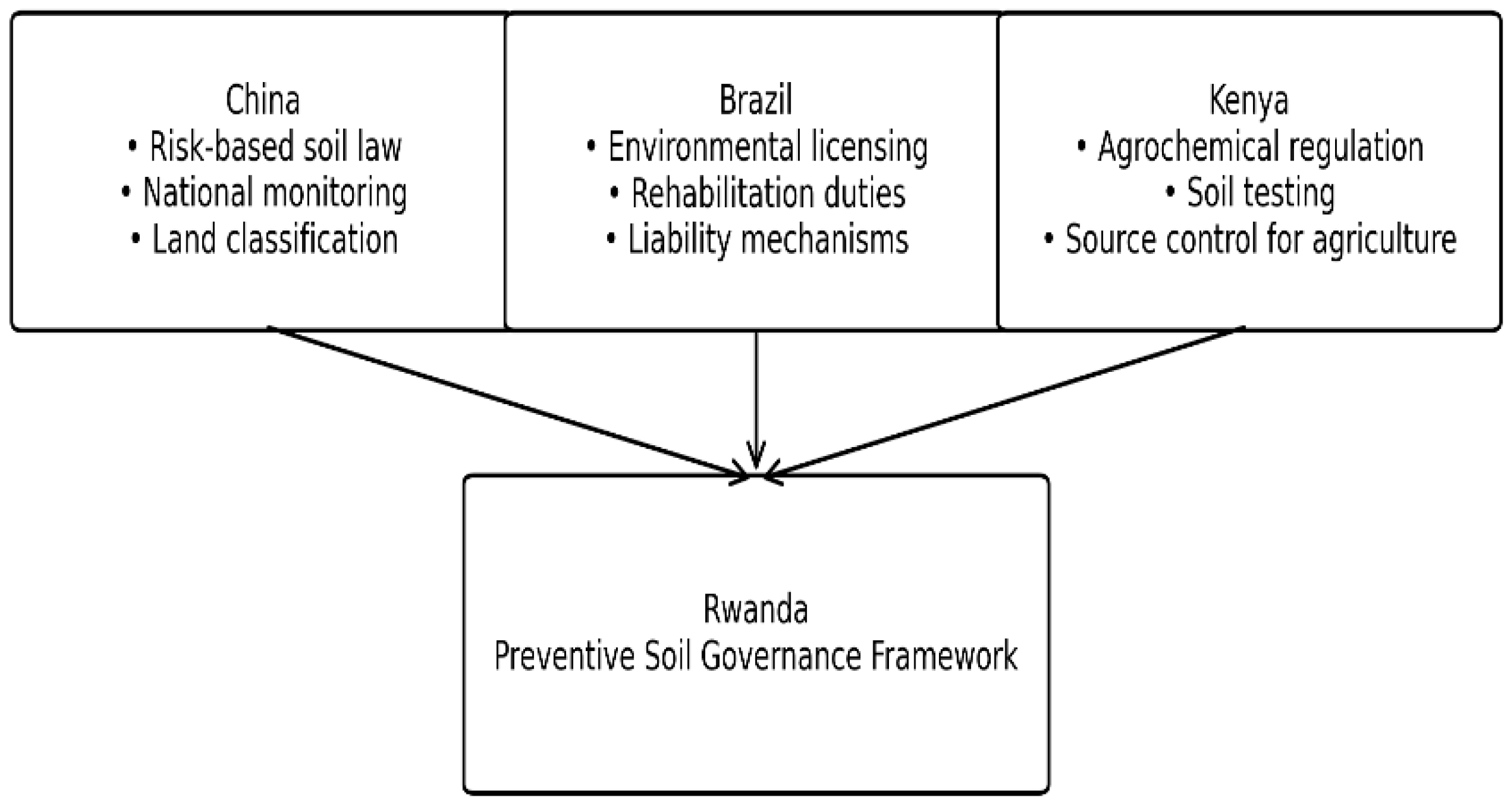
Having established the conceptual boundaries of reactive remediation, the analysis now shifts to comparative legal models to identify specific institutional and regulatory mechanisms that could guide Rwanda’s transition towards preventive soil governance. The primary issue is the absence of a dedicated statute addressing soil pollution. Incorporating soil issues into overarching environmental legislation fails to consider the distinctive characteristics of soil contamination, including its dispersion, accumulation over time, and potential for irreversible damage. Figure 1 illustrates that the experiences of China, Brazil, and Kenya provide comparative legal design lessons that can inform the development of a preventive and context-sensitive soil governance framework for Rwanda.

5.1. The Chinese Model for Risk Management

The 2019 Chinese Soil Pollution Prevention and Control Law serves as an invaluable, requisite, quantifiable, and risk-based framework. Pollution control must be the foremost focus in soil management. Legislation mandates that any building project that uses land and contaminates the soil must undergo an environmental impact assessment. The local government should compile a list of the most significant polluting entities based on the levels and concentrations of hazardous substances they emit, and then monitor them more closely. The State Council conducts a nationwide soil contamination survey at least once per decade. This legislation is founded on the principle of risk-based management. It was implemented to prevent excessive remediation and to shift the emphasis in soil management from merely rectifying contaminated sites to effectively executing the process. In formulating regulations for risk management and control, considerations include soil contamination levels, public health and ecological hazards, technological capacity, and land utilisation [58]. The government has established a system to categorize agricultural land into three classifications: priority protection, safe use, and stringent control. A list-oriented approach is used to manage and remediate soil contamination on development sites. The list is routinely updated according to new risks and remedial evaluations.
This legislation delineates the obligations of all individuals. The local government is responsible for monitoring and regulating soil pollution. The responsible individual or entity must implement measures to remediate soil pollution and restore contaminated regions. If the responsible individual cannot be located, the land-use right holder is accountable. The chain of accountability is intact; hence, no one can evade their obligations regarding soil degradation by delegating their debts. The government will establish a central fund and provincial grants to assist with prevention and control initiatives. The primary objectives of these funds are to mitigate pollution on agricultural property and to oversee the remediation of land under the control of unidentified accountable entities [59].
The Chinese Soil Pollution Prevention and Control Law offers a comprehensive, quantitative framework for prevention, representing a notable contrast to Rwanda’s existing ambiguity. The law’s requirement for baseline soil surveys and a national monitoring network enables the systematic categorization of land into high-, medium-, and low-risk groups according to legally established pollutant concentration thresholds. This technique helps prevent contamination by implementing regulatory measures before thresholds are exceeded, going beyond mere compliance verification [60]. It enforces a stringent polluter-pays principle (PPP), requiring the Responsible Person to implement and finance the cleanup plan. This contrasts sharply with Rwanda’s system, where cleanup responsibilities are ambiguous, often leaving sites unresolved and ultimately burdening public resources. Rwanda might implement this risk-based categorization system to concentrate its efforts and resources on genuinely high-risk sectors, such as mining or industrial clusters. Currently, it cannot do so because there are no explicit legislative criteria.

5.2. The Brazilian Model of Regulatory Governance

Law No. 6.938/1981 formalized Brazil’s environmental licensing framework. This is a fundamental model that illustrates the characteristics of preventive environmental governance at the project’s inception. This framework guides the integration of environmental protections into regulatory systems applicable across various nations, including Rwanda.
In Brazil, obtaining an environmental license is mandatory for projects that may impact the environment. Prior to commencing any actions that may jeopardise or contaminate the environment in Brazil, the law mandates the acquisition of several licenses: Preliminary, Installation, and Operation.
These licenses mandate specific legally enforceable safety protocols, including adherence to monitoring regulations and restrictions on permissible pollutant emissions [61]. Such regulations emphasize the need to develop a robust Environmental Management Plan (EMP), which may be a critical prerequisite for large-scale agricultural, mining, and industrial activities in Rwanda. Enhancing Rwanda’s licensing regime with explicit criteria for assessing soil quality, particularly during project closures, aligns with the Brazilian model and ensures immediate compliance with pollution rules.
The Brazilian environmental legislation incorporates a framework of joint and multiple obligations. All accountable entities are liable for environmental harm, including soil pollution. This strategy promotes collective accountability across intricate supply networks and compels enterprises to collaborate to mitigate issues [62]. This concept could assist Rwanda by facilitating compliance for businesses and farmers while promoting collaboration to safeguard the environment. Brazil’s developed environmental governance structure demonstrates the nation’s intent to reconcile economic expansion with environmental conservation. It underscores the necessity of legal amendments to align with local ecological and social conditions [61]. Incorporating these governance mechanisms into Rwanda’s environmental rules could significantly enhance their efficacy in addressing environmental issues and safeguarding natural resources.
The environmental licensing system in Brazil provides a comprehensive mechanism to prevent environmental degradation at the inception of a project. The existing regulatory framework in Rwanda could be significantly enhanced by incorporating elements of this system, particularly by making EMPs mandatory and implementing joint liability schemes. This would facilitate a more sustainable equilibrium between development and environmental protection.

5.3. The Kenyan Model: Managing Diffuse Agricultural Pollution at the Source

Kenya’s experience offers important insights into managing diffuse pollution from agricultural inputs, especially given Rwanda’s intense land-use pressure and reliance on agriculture. The strategies Kenya has implemented, particularly in agrochemical regulation and integrated soil fertility management (ISFM), provide valuable frameworks that Rwanda could adapt to improve pollution control and promote sustainable farming practices.
In Kenya, the Pest Control Products Act mandates the registration of agrochemicals, supported by comprehensive toxicological and environmental assessments. This regulatory framework has successfully led to the restriction or withdrawal of high-risk pesticides based on their persistence in the environment and their potential to leach into soil and water resources [63]. Such mechanisms ensure that only safe, thoroughly vetted products remain available to farmers, significantly reducing the risk of agrochemical pollution [64]. For Rwanda, adopting a similar risk-based regulatory system is imperative, which entails establishing a legal mandate to assess and restrict Highly Hazardous Pesticides (HHPs) on a case-by-case basis based on their soil-contamination potential. Relying solely on international conventions without local adaptation could be insufficient for Rwanda’s unique agricultural landscape.
Examples from Kenya emphasise the importance of localised regulatory frameworks that consider the socio-economic and environmental contexts of agricultural practices. By instituting equivalent regulations, Rwanda can create effective agrochemical management systems that prevent soil degradation and preserve environmental quality.
Kenya’s commitment to Integrated Soil Fertility Management is underscored by policies promoting soil testing and fertility mapping to optimize inputs [63]. These strategies are critical in safeguarding soil health against contamination by chemical fertilizers, which can lead to increased soil acidification and heavy metal accumulation over time [65]. In Rwanda, integrating ISFM principles into agricultural extension and subsidy programs is necessary. This could involve enforcing mandatory soil testing before fertilizer distribution to ensure that inputs are tailored to the specific nutrients required by the soil, thus minimizing overuse of chemicals [66]. Evidence indicates that adopting such practices enhances soil fertility while mitigating adverse environmental impacts [67]. Implementing ISFM as a legal requirement would provide a systematic approach to soil management that prioritizes crop yields while fostering a sustainable agricultural ecosystem. This holistic approach to soil fertility management reflects a growing understanding of the complex interdependencies in African farming systems, where effective resource use becomes essential as population pressures mount.
Kenya’s regulatory and institutional frameworks for agrochemical management and soil fertility management provide a robust model for Rwanda as it seeks to address the challenges posed by high land-use pressure. By focusing on statutory mandates for monitoring agrochemical use, implementing strict liability for environmental remediation, and embedding source-control mechanisms within agricultural policy, Rwanda can effectively mitigate risks associated with diffuse pollution. This strategic integration of regulation and sustainable practices will safeguard environmental health and enhance agricultural productivity in an increasingly challenging context.
The shift to prevention, along with transformations in law, culture, and institutions, marks a change. It shifts environmental protection from a reactionary administrative task to a proactive governance philosophy (Khanam et al., 2023) [68]. In Rwanda, this change aligns with national priorities outlined in Vision 2050 and the Green Growth and Climate Resilience Strategy (GGCRS), which emphasise sustainable land management and resource efficiency. The preventive approach ensures resilience against future environmental and economic shocks by maintaining the soil as a renewable asset. It reduces dependence on external sources, enhances the quality and safety of products for competitive exportation, and boosts the livelihoods of rural communities. Additionally, it positions Rwanda as a regional leader in sustainable agricultural legislation, supporting the continental goals of Agenda 2063 and the African Union’s African Soil Partnership Framework.

6. Building a Legal Framework for Soil Pollution Risk Management in Rwanda

Building on the diagnostic and comparative analysis above, the findings establish a Rwanda-specific legal framework for preventing soil pollution, detailing the legal mechanisms needed at each stage of the soil risk management cycle. This comprehensive regulatory approach requires that specific legal provisions regulate every part of the risk management process: identification, assessment, mitigation, and long-term adaptive review.

6.1. Legally Mandated Stages of Risk Management Control

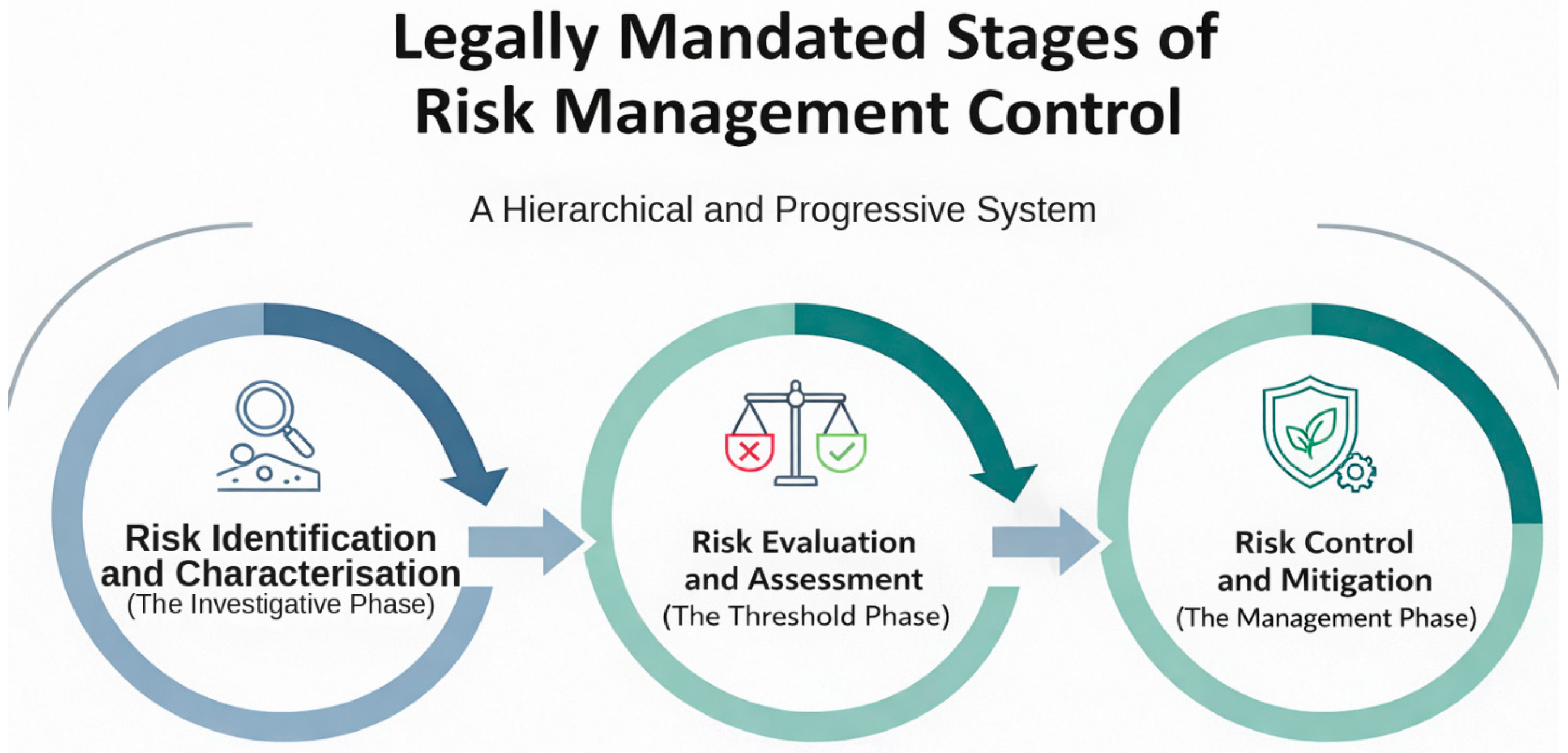
Adequate soil protection necessitates a systematic, scientific, and legally substantiated approach that methodically mitigates environmental risk. This section asserts that the legal framework should be precisely aligned with the internationally recognised stages of environmental risk management, ensuring that regulatory oversight is methodical, enforced, and commensurate with the risk. The incorporation of legislation into this cycle guarantees that environmental policy is not aspirational but is transformed into tangible, legally enforceable acts at each stage of the decision-making process. The following figure (see Figure 2) shows the hierarchical progressive system for the risk management control of the legally mandated stages.
Figure 2. Hierarchical stages of risk-based soil pollution management under a preventive legal framework. AI statement. Figure 2 was generated with the assistance of an AI-based image generation tool to provide a high-quality visual representation of the concept discussed.
Sustainability 18 03458 g002

6.1.1. Risk Identification and Characterisation (The Investigative Phase)

The initial and most critical preventive step involves legally mandating the identification and characterisation of soil contamination risks. Legislation should provide the foundation for research, source tracing, and pollutant monitoring [69]. This necessitates laws mandating baseline soil studies to establish the current physicochemical condition of the soil before any significant agricultural intensification or land-use change occurs. These mandatory studies must be scoped to investigate key pollutants in the Rwandan context, including pesticides, heavy metals, and persistent organic pollutants (POPs). Operational Detail: Implementation could be integrated into the National Environment and Climate Change Policy (2019) regulations, requiring initial, comprehensive soil testing as a prerequisite for issuing environmental approvals for large-scale agricultural or industrial development projects. Once a baseline is established, laws must ensure regular, sustained soil quality assessment in high-risk areas those exposed to intensive agrochemical use. Establishing a national soil monitoring programme through legal mandate would standardize testing processes [68] and provide essential, time-series data to inform both farmers and policymakers of changes in soil health. Furthermore, legislation needs to empower government agencies (e.g., REMA) with the authority to trace and establish the source of pollution, including the right to inspect farmlands and to compel agrochemical manufacturers and importers to disclose data regarding the use and disposal of hazardous materials [70]. This information is then required to be managed through legally mandated data collection and reporting guidelines to ensure soil quality information is uniform, accessible, and exchanged between government agencies, farmers, and the public [71], potentially through a national public soil database.

6.1.2. Risk Evaluation and Assessment (The Threshold Phase)

Following identification, legislation should consider establishing transparent methodologies and legal thresholds for evaluating and quantifying potential soil pollution risks. Laws need to specify a methodology for conducting health and ecological risk assessments in regions prone to contamination, examining the potential harm of pollutants on human health, biodiversity, and crop productivity. Example: Rwanda could legally mandate the application of these risk evaluation concepts when permitting new agricultural enterprises using agrochemicals, ensuring that risks to soil and human health are thoroughly considered. Crucially, it is recommended that legislation establish legally binding limits on pollutant concentrations in farm soils [72]. These thresholds must be science-based and differentiated by land use (e.g., stricter limits for food-production soils versus industrial sites). Example: Agricultural soils in Rwanda should have legal maximum limits for commonly used contaminants, such as nitrate and pesticide residues, that affect food safety. Finally, to integrate assessment into the planning process, Environmental Impact Assessments (EIAs) and Strategic Environmental Assessments (SEAs) must be legally mandatory for any agriculture-related project that poses a significant risk of soil contamination, ensuring these hazards are considered and mitigated before project approval.

6.1.3. Risk Control and Mitigation (The Management Phase)

The legal framework should enable control and mitigation through a hierarchy of preventative measures, authorisation processes, and best management practices (BMPs). Laws are required to regulate the sources of agrochemicals, ensuring that their production, sale, and use are environmentally safe [73]. Rwanda could draft strict pesticide registration legislation, permitting only chemicals that are non-persistent in soil and less toxic, potentially banning harmful substances like specific heavy metals in fertilisers. To control high-risk land uses, such as intensive livestock production or large monocultures, a permitting system requiring environmental analyses and specific measures to reduce soil pollution should be introduced. Furthermore, laws should legally require the adoption of Best Management Practices (BMPs), such as crop rotation and integrated pest management (IPM), to minimize reliance on agrochemicals and enhance soil fertility [50]. Strict policies are also essential for regulating waste production in the farm sector, including mandatory recycling of agrochemical packaging and formalized waste-disposal agreements for large-scale farming units to prevent soil contamination.

6.2. Integrating Law at Every Step: A Unified Regulatory Cycle

To adequately safeguard soil health, we need to change our perspective. Instead of responding to issues as they arise, there should be a cohesive, continuously evolving regulatory framework that is meticulously integrated with all aspects of risk management. This section delineates a framework in which the law is not an external influence but an integral component of every critical phase of preventing, mitigating, and remedying soil pollution. This integrated framework comprises three interconnected tiers: establishing a proactive legal obligation for early detection via mandated monitoring and enhanced Environmental Impact Assessments (EIAs); instituting binding regulations for risk management through enforceable pollution limits, conditional licensing, and stringent liability clauses; and ultimately, institutionalizing long-term evaluation and adaptive governance through post-remediation monitoring, periodic standard revisions, and public accountability. This paradigm transcends mere legal compliance at every stage to establish a robust, self-regulating, and enforced framework crucial for safeguarding long-term environmental and agricultural sustainability.

6.2.1. Legal Framework for Investigation (Pre-Pollution/Early Detection)

The first barrier against soil pollution is a legally integrated framework for proactive monitoring and early detection. Periodic, obligatory soil quality monitoring programs should be put in place, imposing a legal duty on both individuals and the government to test soil quality at regular intervals, particularly in areas of high agrochemical use or industrial proximity [74]. Critically, the legal provision for Environmental Impact Assessments (EIAs) of agricultural projects must be significantly strengthened, ensuring that any large-scale agricultural development or land-use change (e.g., intensive farming or massive irrigation schemes) is closely audited for its specific effects on soil health, such as erosion risk, pesticide overuse, and nutrient depletion [75]. This principle, as demonstrated by Brazil’s application of EIA to large agricultural ventures, ensures that broader ecological matters do not subsume soil protection. Furthermore, the legislation requires establishing instruments to trace the origin of pollutants through monitoring, inspection, and compulsory reporting, compelling agrochemical manufacturers and industrial operations to disclose information on the application and disposal of hazardous materials [37].

6.2.2. Legal Framework for Risk Management (During Pollution/Mitigation)

Once contamination is identified or deemed imminent, the legal structure should guide mitigation and control measures. This refers to the establishment of binding pollution thresholds for agricultural soils, such as allowable levels of heavy metals or pesticide residues, which trigger specific, legally mandated regulatory actions. Example: Rwanda can replicate the Chinese SPPCL model, in which specific legal limits are defined for different land types. Crucially, a system of authorization and licensing is necessary to control risky agricultural activities (e.g., large-scale monoculture), requiring permits conditioned on the implementation of environmental protection measures, such as the use of organic fertilizer and soil conservation techniques [66]. To prevent disproportionate compliance burdens, the law should differentiate between high-capacity, high-risk actors and low-income smallholders, imposing stricter requirements on industrial and commercial polluters while providing technical assistance, extension services, and incentive-based support to smallholder farmers.
Environmental bodies need to be granted explicit statutory powers to inspect, sample soil, and impose fines for violations [37]. The statute should also define a graduated enforcement regime, including compliance notices for initial minor breaches, administrative penalties for ongoing non-compliance, suspension or revocation of environmental licences for repeated violations, and judicial review or tribunal oversight where administrative orders are challenged.
Liability provisions are required to establish strict liability for soil pollution, ensuring that polluters, whether from industrial discharge or inadequate waste management, are held accountable and financially responsible for remediation costs. Finally, laws should enable environmental agencies to issue enforceable remediation and restoration orders in polluted areas, setting clear timelines and requiring the application of approved corrective measures such as phytoremediation or bioremediation.

6.2.3. Legal Framework for Final Evaluation and Adaptive Management (Post-Mitigation/Long-Term)

Risk management is an ongoing, adaptive process that requires legal structures to facilitate continuous improvement. Once mitigation is complete, legislation must mandate continuous post-remediation monitoring to determine the long-term effectiveness of the cleanup and the trajectory of soil recovery [76]. Furthermore, a legal framework should establish a review system to ensure that soil quality standards are periodically updated in light of new scientific data or changing environmental pressures, such as the impacts of climate change or emerging agricultural practices [68]. An adaptive management clause in Rwanda’s soil pollution law would enable future policy revisions informed by monitoring findings and evolving scientific evidence. In practice, the legal framework should be periodically reviewed in light of new soil data, implementation experience, and climate changes affecting erosion, pollution, and soil recovery. Adaptive governance should include flexible responses, regular public reports, and participatory mechanisms for farmers, communities, and civil society to help revise and oversee regulations.
Finally, public reporting on the status of soil pollution, mitigation actions, and the efficacy of risk management measures must be legally required [69], empowering citizens and environmental groups to ensure accountability. Moreover, affected communities, farmer associations, and civil society organisations should have statutory rights to access monitoring data, to lodge objections to licensing decisions that impact high-risk activities, and to petition competent authorities to investigate suspected contamination.
To resolve inevitable disputes, the law should establish a specialised dispute-resolution mechanism (e.g., an environmental tribunal or mediation process) to ensure fair and effective resolution of conflicts between landowners, polluters, and government agencies [77]. This comprehensive legal integration ensures that soil protection is an enduring and unified process, safeguarding long-term environmental and agricultural sustainability.

6.3. A Preventive Soil Pollution Risk Governance Model for Rwanda

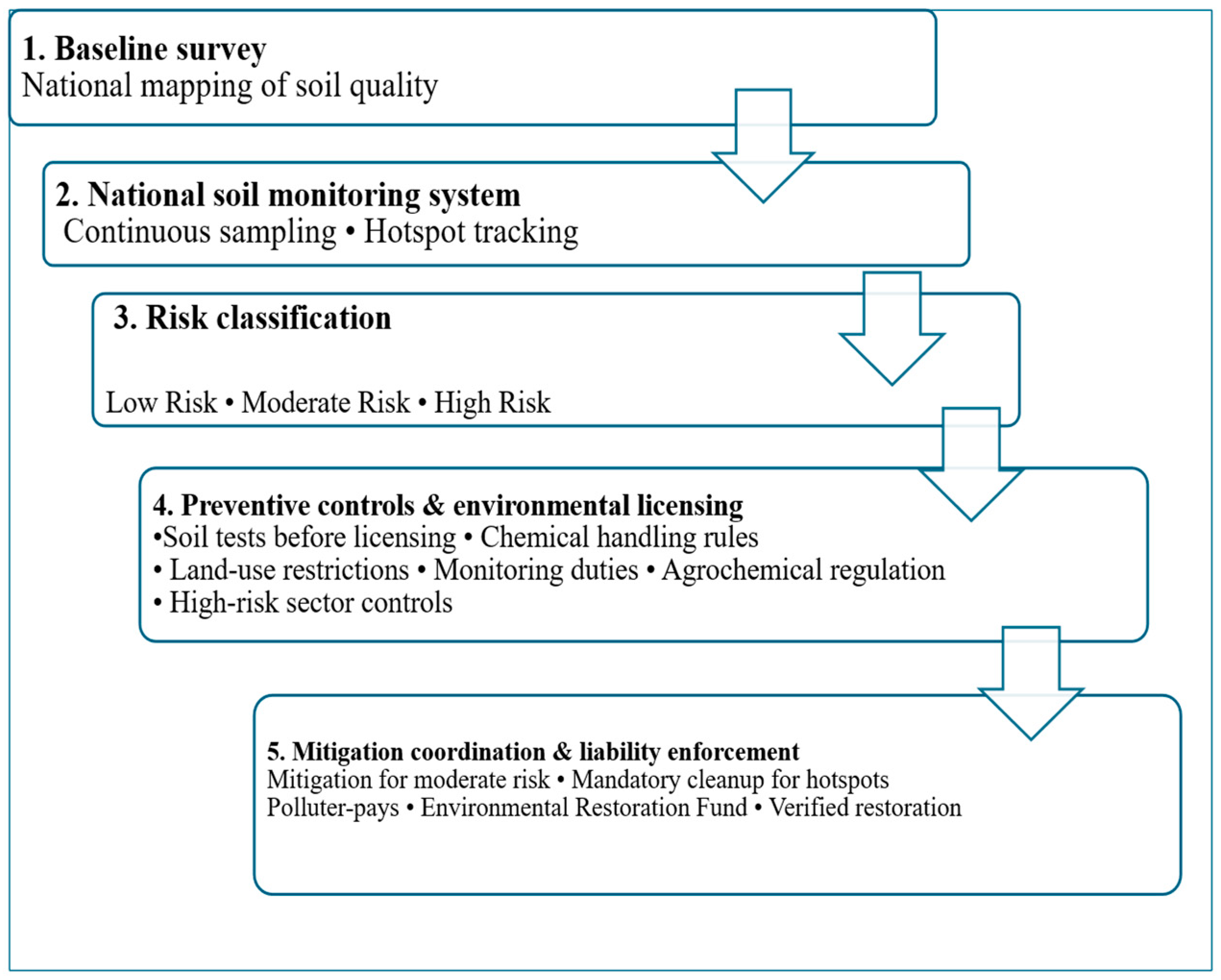
The conceptual framework offers a unified, risk-focused strategy for managing soil pollution in Rwanda (Figure 3). The approach starts with a detailed national baseline study and ongoing monitoring, which provide the evidence needed to set soil quality standards. Once thresholds are established, soils are classified into risk categories that guide regulatory actions. Preventive measures, such as environmental licensing, agrochemical rules, and land-use restrictions, are implemented before contamination occurs, while mitigation and remediation strategies address existing pollution within established liability frameworks. The plan relies on strong institutional collaboration among REMA, RAB, MINAGRI, RLMUA, and district authorities, as well as public access to soil data. In Rwanda, where most farms are under two hectares and smallholder farmers dominate the agricultural landscape, a preventive soil pollution strategy must be both enforceable and socially fair. Therefore, the governance model should implement different compliance requirements based on the size of the operation, the pollution risk, and the economic capacity of the regulated entities. Larger farms, mining companies, agrochemical importers, and industrial operators should face stricter licensing, ongoing monitoring, reporting, and cleanup responsibilities because their activities pose higher concentration and intensity of pollution risks. Conversely, smallholder farmers should mainly be engaged through simplified compliance measures, supported by public extension services, subsidised soil testing, access to safer inputs, integrated pest management training, and targeted financial incentives for sustainable land practices. This tailored approach ensures that preventive regulations do not impose an unfair burden on low-income rural households while still enhancing soil protection. It also operationalises the polluter-pays principle by assigning heavier legal and financial responsibilities to actors with greater capacity and higher pollution impacts. Together, these elements create a comprehensive governance cycle to prevent soil degradation, protect public health, and support Rwanda’s agricultural and environmental sustainability goals.

7. Conclusions

To effectively address the systemic risks associated with soil pollution and transition from a reactive approach, Rwanda has to prioritize the creation of specialized, comprehensive laws aimed at proactive prevention and risk management. The existing fragmented environmental legislation fails to recognize that soil is a resource characterized by distinct hydrological, chemical, and biological intricacies. A special statute, such as the Soil Protection and Pollution Control Act, is required. This legislation should delineate the roles and responsibilities of each government agency (such as REMA and RAB), farmers, and private-sector stakeholders. This will ensure collaborative efforts and eliminate the ambiguity that currently hinders effective law enforcement. This law requires incorporating risk classification and preventive actions from the outset. It should not merely verify compliance; it has to establish source control as the primary operational method.
Robust data and explicit legal boundaries are essential for an effective preventive system. The new regulatory framework should require soil surveillance programs to systematically assess soil health in agricultural and industrial environments. A national soil pollution database should be established to ensure consistent data collection, enhance transparency, and facilitate early pollution detection through temporal and spatial tracking. Simultaneously, Rwanda should establish national criteria for soil quality and risk evaluation. These guidelines, which consider the soil’s distinct characteristics and potential contaminants (such as heavy metals from mining or persistent organic pollutants from agrochemicals), are crucial. They serve as the legal benchmarks for continuous oversight, triggering regulatory measures when thresholds are exceeded. This serves as the foundation for the entire risk-based governance framework. A stringent liability framework must be established to ensure that polluters are entirely accountable for the investigation, remediation, and restoration of polluted sites. This is crucial for reducing the state’s expenditures and promoting adherence.
To mitigate pollution at its primary sources, precise regulations and financial instruments should accompany legislative modifications. Regulations regarding pesticide use have to be enhanced to implement a risk-based registration system that limits or removes compounds based on their soil persistence and leaching potential, in accordance with international best practices. Simultaneously, regulations should consider the risk of soil pollution in land-use and zoning planning. This will prevent high-risk operations from being situated in ecologically sensitive or high-value agricultural regions. Moreover, to mitigate diffuse pollution from agriculture, the government should institutionalize financial incentives, such as subsidies for farmers who adopt organic practices or tax reductions for certified sustainable soil management, to actively encourage environmentally responsible behavior. The necessity to engage in research and development to address soil contamination and devise cost-effective, efficient solutions underpins this twin strategy of regulation and incentives.
This comprehensive plan will be effective only if institutions are fortified, and long-term financial stability is guaranteed. To ensure rigorous implementation and oversight, it is essential to enhance the technical and enforcement capacities of both the environmental agency (REMA) and the agricultural ministry (RAB). This can be accomplished via specialized training and appropriate resource allocation. Rwanda ought to establish a dedicated budget for the prevention and remediation of soil pollution to ensure the system’s sustainability and effectiveness. The Precautionary Principle and the Polluter-Pays Principle in Rwanda should be tailored to fit institutional and socio-economic contexts. Precautions are best implemented mainly through preventive administrative measures. Meanwhile, the polluter-pays approach should be applied selectively, assigning stricter cleanup responsibilities to higher-capacity and higher-risk entities, compared to low-income smallholders or informal operators. This approach helps keep the framework both enforceable and fair.
An important focus is on examining how these reforms affect smallholder farming systems, which are essential to Rwanda’s economy. The proposed framework is designed to integrate seamlessly with the Green Growth and Climate Resilience Strategy (GGCRS), specifically Strategic Objective 2, which advocates for sustainable land use and the preservation of ecosystem services. Rather than creating policy duplication, the proposed soil law addresses the regulatory gap identified in the GGCRS by establishing specific risk-based triggers and remediation obligations. This ensures that soil protection is incorporated into Rwanda’s climate-resilient development pathway, transforming the GGCRS’s voluntary guidelines into a coherent, enforceable legal regime.
Research should prioritise equity to promote a fair transition in environmental governance, seeking ways to avoid marginalising low-income farmers who might encounter high compliance costs or technical challenges under tighter regulations. Finding a balance between environmental safeguards, food security, and rural livelihoods is vital for ongoing evaluation.
Ultimately, maintaining technological sovereignty is vital for sustainable implementation. Future studies should explore strategies for developing local capacity to enable Rwanda to maintain and operate advanced monitoring systems for proactive governance. Achieving technological independence would reduce reliance on external expertise, ensuring that the legal framework for soil protection is underpinned by a resilient, autonomous local administrative infrastructure. Given Rwanda’s resource constraints and smallholder-dominated agricultural system, regulatory evolution should be incremental and responsive to scientific data and administrative capacity. Future interdisciplinary research incorporating empirical institutional analysis and soil monitoring data would further strengthen the operational dimension of this reform trajectory.

Author Contributions

A.C.G.: Conceptualization, Data collection, Methodology, Writing—Original draft, Manuscript Submission; Y.M.: Conceptualization, Supervision, and Review; D.D.: Conceptualization and Review. All authors have read and agreed to the published version of the manuscript.

Funding

This research received no external funding.

Institutional Review Board Statement

Not applicable.

Informed Consent Statement

Not applicable.

Data Availability Statement

The raw data supporting the conclusions of this article will be made available by the authors on request.

Acknowledgments

The author expresses sincere gratitude to the School of Law at Ocean University of China for its invaluable support throughout this research. Special thanks are due to my esteemed colleague, Marie Ange INGABIRE, whose thoughtful discussions and collaboration were instrumental to this project. During the preparation of this manuscript, the authors used ChatGPT (OpenAI, GPT-5.4 Thinking) for the purposes of enhancing the visual quality of Figure 2 for illustrative purposes. The authors have reviewed and edited the output and take full responsibility for the content of this publication.

Conflicts of Interest

The authors declare no conflicts of interest.

Abbreviations

The following abbreviations are used in this manuscript:
BMPBest Management Practice
EIAEnvironmental Impact Assessment
EMCA Environmental Management and Coordination Act
EMP Environmental Management Plan
FAO Food and Agriculture Organization
GGCRSGreen Growth and Climate Resilience Strategy
HHPsHighly Hazardous Pesticides
IPMIntegrated Pest Management
ISFM Integrated Soil Fertility Management
MINAGRIMinistry of Agriculture and Animal Resources (Rwanda)
NISR National Institute of Statistics of Rwanda
NST1 National Strategy for Transformation
POPs Persistent Organic Pollutants
PPP Polluter Pays Principle
RABRwanda Agriculture and Animal Resources Development Board
REMARwanda Environment Management Authority
RLMUARwanda Land Management and Use Authority
SDGs Sustainable Development Goals
SEAStrategic Environmental Assessment
SPPCL Soil Pollution Prevention and Control Law (China)
UNEPUnited Nations Environment Programme

References

  1. National Institute of Statistics of Rwanda. GDP National Accounts (Third Quarter 2025). Available online: https://alpha.statistics.gov.rw/statistical-publications/gross-domestic-product/gdp-national-accounts-third-quarter-2025 (accessed on 11 August 2025).
  2. Kim, S.K.; Marshall, F.; Dawson, N.M. Revisiting Rwanda’s agricultural intensification policy: Benefits of embracing farmer heterogeneity and crop-livestock integration strategies. Food Secur. 2022, 14, 637–656. [Google Scholar] [CrossRef] [Scilit]
  3. Daghighi, E.; Ayugi, V.; Daghighi, E.; Farajpour, A.; Mganga, K.Z.; Orthen, T. Better Soils for Resilient Agricultural Production. 2024. Available online: https://research-portal.uu.nl/en/publications/better-soils-for-resilient-agricultural-production (accessed on 11 February 2025).
  4. Kunzekweguta, M.; Pigeon, M.A.; Micheels, E.; Henry, C.; Nosworthy, M.G. Understanding the role of co-operatives in enhancing food security in East Africa. Food Secur. 2025, 17, 1081–1097. [Google Scholar] [CrossRef] [Scilit]
  5. Niyomugabo, P.; Li, L.; Mind’je, R.; Muhirwa, F.; Maniraho, A.P. Influencing factors of ecosystem services and their spatiotemporal change assessment based on land use in Rwanda. Environ. Monit. Assess. 2025, 197, 721. [Google Scholar] [CrossRef] [Scilit]
  6. Topa, D.C.; Căpșună, S.; Calistru, A.E.; Ailincăi, C. Sustainable practices for enhancing soil health and crop quality in modern agriculture: A review. Agriculture 2025, 15, 998. [Google Scholar] [CrossRef] [Scilit]
  7. Golia, E.E. The impact of heavy metal contamination on soil quality and plant nutrition. Sustainable management of moderate contaminated agricultural and urban soils, using low cost materials and promoting circular economy. Sustain. Chem. Pharm. 2023, 33, 101046. [Google Scholar] [CrossRef] [Scilit]
  8. Ghisman, V.; Muresan, A.C.; Bogatu, N.L.; Herbei, E.E.; Buruiana, D.L. Recent Advances in the Remediation of Degraded and Contaminated Soils: A Review of Sustainable and Applied Strategies. Agronomy 2025, 15, 1920. [Google Scholar] [CrossRef] [Scilit]
  9. Mesele, S.A.; Mechri, M.; Okon, M.A.; Isimikalu, T.O.; Wassif, O.M.; Asamoah, E.; Ahmad, H.A.; Moepi, P.I.; Gabasawa, A.I.; Bello, S.K.; et al. Current problems leading to soil degradation in Africa: Raising awareness and finding potential solutions. Eur. J. Soil Sci. 2025, 76, e70069. [Google Scholar] [CrossRef] [Scilit]
  10. Kwizera, E. Environmental Pollution Through Multiple Integrated Hazard Sources in their Shared Environment: A Case Study of Muvumba Community, Rwanda. East Afr. J. Sci. Technol. Innov. 2025, 6. [Google Scholar] [CrossRef] [Scilit]
  11. van den Broek, S. Closing the Loop: Assessing the Viability and Environmental Risks of Human Excreta-Derived Fertilizers in Sustainable Food Systems. 2025. Available online: https://www.research-collection.ethz.ch/items/01ad0268-6089-48d4-9b95-bd30a747eb2c (accessed on 5 December 2025).
  12. Ozunu, A.; Irankunda, E.; Pop, V.; Cui, Z.; Crăciun, A.-I. The critical analysis of air pollution and soil pollution with microplastics and heavy metal in Rwanda, Roumania and China. Rev. Roum. Chim. 2024, 235, 483–490. [Google Scholar] [CrossRef] [Scilit]
  13. Hirwa, H. Evaluation of Soil Contamination in Mining Areas of Rwanda. Am. J. Water Sci. Eng. 2019, 5, 9. [Google Scholar] [CrossRef] [Scilit]
  14. Pakoksung, K.; Inseeyong, N.; Chawaloesphonsiya, N.; Punyapalakul, P.; Chaiwiwatworakul, P.; Xu, M.; Chuenchum, P. Seasonal Dynamics of Water Quality in Response to Land Use Changes in the Chi and Mun River Basins Thailand. Available online: https://www.nature.com/articles/s41598-025-91820-4 (accessed on 6 March 2026).
  15. Jomova, K.; Alomar, S.Y.; Nepovimova, E.; Kuca, K.; Valko, M. Heavy metals: Toxicity and human health effects. Arch. Toxicol. 2024, 99, 153–209. [Google Scholar] [CrossRef] [Scilit]
  16. Nibeza, S. Sustainable Environment, a Key of Sustainable Development a Case Study of Rwanda. Int. J. Res. Econ. Soc. Sci. 2015, 5, 20–36. Available online: https://www.academia.edu/download/38195711/3ESSJune-2261.pdf (accessed on 7 November 2024).
  17. Rwanda Environmental Management Authority. Available online: https://www.rema.gov.rw/about/overview (accessed on 2 March 2026).
  18. Rwanda Agricultural Board Services. Available online: https://www.rab.gov.rw/about-rab/overview (accessed on 2 March 2026).
  19. Whiteside, K. Precautionary Politics: Principle and Practice in Confronting Environmental Risk. 2006. Available online: https://books.google.com/books?hl=en&lr=&id=yXxzgoLWvc8C&oi=fnd&pg=PR7&dq=the+precautionary+principle,+which+argues+that+a+precaution+should+be+taken+to+ensure+that+harm+is+averted+even+in+cases+where+there+is+a+lack+of+scientific+knowledge&ots=VAXgTNtDJz&sig=a_Yb2f-614Wy3Yc8rIBV3D7W0mY (accessed on 1 March 2026).
  20. Aragão, A. Polluter-Pays Principle; Springer: Berlin/Heidelberg, Germany, 2022; Available online: https://link.springer.com/content/pdf/10.1007/978-3-319-31739-7_163-1.pdf (accessed on 28 February 2026).
  21. Correia, A.A.S.; Rasteiro, M.G. A review of persistent soil contaminants: Assessment and remediation strategies. Environments 2025, 12, 229. [Google Scholar] [CrossRef] [Scilit]
  22. Stockholm Convention on Persistent Organic Pollutants, Stockholm, 2001. Available online: https://treaties.un.org/pages/ViewDetails.aspx?src=TREATY&mtdsg_no=XXVII-15&chapter=27&clang=_en (accessed on 12 December 2025).
  23. Basel Convention on the Control of Transboundary Movements of Hazardous Wastes and Their Disposal. Basel. 1989. Available online: https://treaties.un.org/doc/treaties/1992/05/19920505%2012-51%20pm/ch_xxvii_03p.pdf (accessed on 15 January 2026).
  24. Poderati, G. Analysis of China’s legislation on soil contamination in the light of the realization of an ecological civilization. Ecocycles 2022, 8, 8–15. [Google Scholar] [CrossRef] [Scilit]
  25. Law on Environment Law 48 of 2018. Available online: https://rwandalii.org/akn/rw/act/law/2018/48/eng@2018-09-21/source (accessed on 25 April 2025).
  26. Hutchinson, T.; Duncan, N. Defining and describing what we do: Doctrinal legal research. Deakin Law Rev. 2012, 17, 83–119. [Google Scholar] [CrossRef] [Scilit]
  27. McConville, M.; Chui, W.H. Google Scholar. 2007. Available online: https://www.jstor.org/stable/10.3366/j.ctt1g0b16n (accessed on 1 March 2026).
  28. Örücü, E. The Enigma of Comparative Law: Variations on a Theme for the Twenty-First Century. 2013. Available online: https://books.google.com/books?hl=en&lr=&id=A6K-BwAAQBAJ&oi=fnd&pg=PA1&dq=%C3%96r%C3%BCc%C3%BC,+E.+(2006).+The+Enigma+of+Comparative+Law&ots=2HE6fOOdQM&sig=ZfEY_MsHJ6A_zzbegvLyZefwgKA (accessed on 1 March 2026).
  29. Siems, M.M. Bringing in Foreign Ideas: The Quest for Better Law in Implicit Comparative Law. J. Comp. L. 2014, 9, 119. [Google Scholar] [CrossRef] [Scilit]
  30. Hou, D.; Bolan, N.S.; Tsang, D.C.W.; Kirkham, M.B.; O’Connor, D. Sustainable soil use and management: An interdisciplinary and systematic approach. Sci. Total Environ. 2020, 729, 138961. [Google Scholar] [CrossRef] [Scilit]
  31. Nyiramigisha, P. Harmful Impacts of Heavy Metal Contamination in the Soil and Crops Grown Around Dumpsites. Rev. Agric. Sci. 2021, 9, 271–282. [Google Scholar] [CrossRef] [Scilit]
  32. Yahyah, H.; Ginzky, H.; Kasimbazi, E.; Kibugi, R. Legal Instruments for Sustainable Soil Management in Africa; Springer International: Cham, Switzerland, 2020. [Google Scholar]
  33. Ruppel, O.C. Overview of international soil law. Soil Secur. 2022, 6, 100056. [Google Scholar] [CrossRef] [Scilit]
  34. Ginzky, H.; Dooley, E.; Heuser, I.L.; Kasimbazi, E.; Markus, T.; Qin, T. International Yearbook of Soil Law and Policy 2018; Springer Nature: Cham, Switzerland, 2019; Available online: https://link.springer.com/book/10.1007/978-3-030-00758-4 (accessed on 3 July 2025).
  35. Delang, C. Soil pollution prevention and control measures in China. Forum Geogr. 2018, 17, 5–13. [Google Scholar] [CrossRef] [Scilit]
  36. Awiti, A.; Ndiwa, A.M. Evaluating the Integration of Agroecological Principles into Kenya’s Legal and Policy Framework; CGIAR Agroecology Initiative: Montpellier, France, 2024; Available online: https://farm-d.org/wp-content/uploads/2024/10/Kenya-Legal-Policy-Framework.pdf (accessed on 11 February 2025).
  37. Barroso, G.M.; Custódio, I.G.; Borges, C.E.; dos Santos, E.A.; Pinto, T.A.A.; Soares, M.A.; Duque, T.S.; de Abreu, C.M.; dos Santos, J.B. Pesticide residues in Brazil: Analysis of environmental legislation and regulation and the challenge of sustainable production. Sustainability 2025, 17, 2583. [Google Scholar] [CrossRef] [Scilit]
  38. Ginzky, H.; Ruppel, O.C. Soil Protection Law in Africa: Insights and recommendations based on country studies from Cameroon, Kenya and Zambia. Soil Secur. 2022, 6, 100032. [Google Scholar] [CrossRef] [Scilit]
  39. Ripanda, A.S.; Rwiza, M.J.; Nyanza, E.C.; Njau, K.; Vuai, S.A.H.; Machunda, R.L. A review on contaminants of emerging concern in the environment: A focus on active chemicals in sub-saharan Africa. Appl. Sci. 2022, 12, 56. [Google Scholar] [CrossRef] [Scilit]
  40. Onwudiegwu, C.; Izah, S.C. From Science to Policy: Safeguarding Food Security and Public Health through Strengthened Soil Pollution Regulations. ES Gen. 2024, 7, 1363. [Google Scholar] [CrossRef] [Scilit]
  41. Stankovics, P.; Tóth, G.; Tóth, Z. Identifying Gaps between the Legislative Tools of Soil Protection in the EU Member States for a Common European Soil Protection Legislation. Sustainability 2018, 10, 2886. [Google Scholar] [CrossRef] [Scilit]
  42. Ruppel, O.C.; Ginzky, H. African Soil Protection Law; Nomos: Baden-Baden, Germany, 2021. [Google Scholar] [CrossRef] [Scilit]
  43. Blake, W.H.; Rabinovich, A.; Wynants, M.; Kelly, C.; Nasseri, M.; Ngondya, I.; Patrick, A.; Mtei, K.; Munishi, L.; Boeckx, P.; et al. Soil erosion in East Africa: An interdisciplinary approach to realising pastoral land management change. Environ. Res. Lett. 2018, 13, 124014. [Google Scholar] [CrossRef] [Scilit]
  44. Clay, N.; Zimmerer, K.S. Who is resilient in Africa’s Green Revolution? Sustainable intensification and Climate Smart Agriculture in Rwanda. Land Use Policy 2020, 97, 104558. [Google Scholar] [CrossRef] [Scilit]
  45. Kabera, T.; Mutavu, G. Evaluation of the effectiveness of environmental impact assessment in East Africa: The case of Rwanda. Environ. Qual. Manag. 2023, 32, 83–91. [Google Scholar] [CrossRef] [Scilit]
  46. Mudgal, G.; Sivaji, S.; Kaur, J.; Dhar, S.K.; Ramasamy, V.; Seetharaman, B.; Mishra, R.K.; Govindappa, V.; Bose, J.C.; Singh, G.B.; et al. Strategic Conservation Plan. In Sustainable Remediation for Pollution and Climate Resilience; Springer: Berlin/Heidelberg, Germany, 2025; pp. 139–206. [Google Scholar] [CrossRef] [Scilit]
  47. Sarkar, B.; Mukhopadhyay, R.; Ramanayaka, S.; Bolan, N.; Ok, Y.S. The role of soils in the disposition, sequestration and decontamination of environmental contaminants. Philos. Trans. R. Soc. B Biol. Sci. 2021, 376, 20200177. [Google Scholar] [CrossRef] [Scilit]
  48. Li, Q.; Wang, L.; Fu, Y.; Lin, D.; Hou, M.; Li, X.; Hu, D.; Wang, Z. Transformation of soil organic matter subjected to environmental disturbance and preservation of organic matter bound to soil minerals: A review. J. Soils Sediments 2023, 23, 1485–1500. [Google Scholar] [CrossRef] [Scilit]
  49. Smith, P.; House, J.I.; Bustamante, M.; Sobocká, J.; Harper, R.; Pan, G.; West, P.C.; Clark, J.M.; Adhya, T.; Rumpel, C.; et al. Global change pressures on soils from land use and management. Glob. Change Biol. 2016, 22, 1008–1028. [Google Scholar] [CrossRef] [Scilit]
  50. Sharma, R.; Adhoni, S.A.; Vaijinath, P. Soil Matters: Uncovering the Impact of Contamination on Earth’s Foundation. Google Books. Available online: https://books.google.com/books?hl=en&lr=&id=HmDwEAAAQBAJ&oi=fnd&pg=PR10&dq=a+reactive+framework+ensures+that+when+contamination+is+detected,+the+soil%E2%80%99s+structure+and+microbial+communities+have+frequently+exceeded+an+irreversible+ecological+threshold,+rendering+smallholder+agriculture+functionally+sterile&ots=CBvp7QGm0o&sig=y_ci3v0EqE57u1F5498pXnreSz8#v=onepage&q&f=false (accessed on 11 November 2025).
  51. Sharma, S.; Tiwari, S.; Hasan, A.; Saxena, V.; Pandey, L.M. Recent advances in conventional and contemporary methods for remediation of heavy metal-contaminated soils. 3 Biotech 2018, 8, 216. [Google Scholar] [CrossRef] [Scilit]
  52. Li, X.N.; Jiao, W.T.; Xiao, R.B.; Chen, W.P.; Chang, A.C. Soil pollution and site remediation policies in China: A review. Environ. Rev. 2015, 23, 263–274. [Google Scholar] [CrossRef] [Scilit]
  53. Gomiero, T. Soil Degradation, Land Scarcity and Food Security: Reviewing a Complex Challenge. Sustainability 2016, 8, 281. [Google Scholar] [CrossRef] [Scilit]
  54. Watene, G.; Yu, L.; Nie, Y.; Zhu, J.; Ngigi, T.; Nambajimana, J.d.D.; Kenduiywo, B. Water Erosion Risk Assessment in the Kenya Great Rift Valley Region. Sustainability 2021, 13, 844. [Google Scholar] [CrossRef] [Scilit]
  55. Oliveira, P.T.S.; de Faria Godoi, R.; Colman, C.B.; Motta, J.S.; Sone, J.S.; Almagro, A. Agricultural Land Degradation in Brazil. Handb. Environ. Chem. 2022, 120, 97–127. [Google Scholar] [CrossRef] [Scilit]
  56. Sahdev, H.; Kuldeep, A. A review of soil pollution, causes, and health effects. Sustain. Agri Food Environ. Res. 2024, 12, 2024. [Google Scholar] [CrossRef] [Scilit]
  57. Jennings, A.A.; Li, Z. Worldwide Regulatory Guidance Values Applied to Direct Contact Surface Soil Pesticide Contamination: Part I—Carcinogenic Pesticides. Air Soil Water Res. 2017, 10, 1178622117711930. [Google Scholar] [CrossRef] [Scilit]
  58. Li, L.; Messner, D. Advancing soil governance for sustainable development. Soil Secur. 2021, 5, 100021. [Google Scholar] [CrossRef] [Scilit]
  59. Liu, Z.; Yin, Y.; Zhang, Y.; Shi, S. Legal System of Soil Pollution Remediation in China and Its Regulation and Guidance to Soil Pollution Remediation. Sustainability 2023, 15, 11504. [Google Scholar] [CrossRef] [Scilit]
  60. Feng, L.; Luo, G.; Ioppolo, G.; Zhang, X.; Liao, W. Prevention and control of soil pollution toward sustainable agricultural land use in China: Analysis from legislative and judicial perspectives. Land Use Policy 2025, 151, 107497. Available online: https://www.sciencedirect.com/science/article/pii/S0264837725000304 (accessed on 1 February 2026). [CrossRef] [Scilit]
  61. de Oliveira Pinto Coelho, S.; de Oliveira e Silva, T.D.; de Araujo Serafim, D.H. Environmental Licensing in the Light of Contemporary Constitutionalism: Potential of the Instrument for a Structural Role in the National Environmental Policy. Veredas Do Direito 2023, 20, 1. [Google Scholar] [CrossRef] [Scilit]
  62. Deutsch, S. Populist authoritarian neoliberalism in Brazil: Making sense of Bolsonaro’s antienvironment agenda. J. Political Ecol. 2021, 28, 823–844. [Google Scholar] [CrossRef] [Scilit]
  63. Onyando, Z.O.; Omukunda, E.; Okoth, P.; Khatiebi, S.; Omwoma, S.; Otieno, P.; Osano, O.; Lalah, J. Screening and Prioritization of Pesticide Application for Potential Human Health and Environmental Risks in Largescale Farms in Western Kenya. Agriculture 2023, 13, 1178. [Google Scholar] [CrossRef] [Scilit]
  64. Adolwa, I.S.; Schwarze, S.; Waswa, B.; Buerkert, A. Understanding system innovation adoption: A comparative analysis of integrated soil fertility management uptake in Tamale (Ghana) and Kakamega (Kenya). Renew. Agric. Food Syst. 2019, 34, 313–325. [Google Scholar] [CrossRef] [Scilit]
  65. Rashid, A.; Schutte, B.J.; Ulery, A.; Deyholos, M.K.; Sanogo, S.; Lehnhoff, E.A.; Beck, L. Heavy metal contamination in agricultural soil: Environmental pollutants affecting crop health. Agronomy 2023, 13, 1521. [Google Scholar] [CrossRef] [Scilit]
  66. Nakachew, K.; Yigermal, H.; Assefa, F.; Gelaye, Y.; Ali, S. Review on enhancing the efficiency of fertilizer utilization: Strategies for optimal nutrient management. Open Agric. 2024, 9, 20220356. [Google Scholar] [CrossRef] [Scilit]
  67. Bayu, T. Review on contribution of integrated soil fertility management for climate change mitigation and agricultural sustainability. Cogent Environ. Sci. 2020, 6, 1823631. [Google Scholar] [CrossRef] [Scilit]
  68. Khanam, Z.; Sultana, F.M.; Mushtaq, F. Environmental Pollution Control Measures and Strategies: An Overview of Recent Developments. In Geospatial Analytics for Environmental Pollution Modeling: Analysis, Control and Management; Springer Nature: Cham, Switzerland, 2023; pp. 385–414. [Google Scholar] [CrossRef] [Scilit]
  69. Ramón, F.; Lull, C. Legal measures to prevent and manage soil contamination and to increase food safety for consumer health: The case of Spain. Environ. Pollut. 2019, 250, 883–891. [Google Scholar] [CrossRef] [Scilit] [PubMed]
  70. Loha, K.M.; Lamoree, M.; Weiss, J.M.; de Boer, J. Import, disposal, and health impacts of pesticides in the East Africa Rift(EAR) zone: A review on management and policy analysis. Crop. Prot. 2018, 112, 322–331. [Google Scholar] [CrossRef] [Scilit]
  71. Maniraho, A.P.; Liu, W.; Mupenzi, C.; Mind’jE, R.; Nzabarinda, V.; Gasirabo, A.; Nyirarwasa, N.; Li, L. Mapping soil erosion and analyzing its severity using the RUSLE model and local farmers’ perception in the agricultural area of Rwanda. Model. Earth Syst. Environ. 2023, 9, 1069–1087. [Google Scholar] [CrossRef] [Scilit]
  72. Khominets, S. Legal Support to the Protection of Land and Soil in Light of New Regulations of Ukraine. J. Environ. Law Policy 2021, 1, 35–47. [Google Scholar] [CrossRef] [Scilit]
  73. Uddin, M.K. Agrochemicals and environmental risks. Environ. Policy Law 2018, 48, 91–96. [Google Scholar] [CrossRef] [Scilit]
  74. Ogidi, O.; Izah, S.; Akpan, U.M. Food quality and agrochemical use: Integrated monitoring, assessment, and management policies. In One Health Implications of Agrochemicals and Their Sustainable Alternatives; Springer: Berlin/Heidelberg, Germany, 2023; pp. 411–440. [Google Scholar] [CrossRef] [Scilit]
  75. Borrelli, P.; Robinson, D.A.; Panagos, P.; Lugato, E.; Yang, J.E.; Alewell, C.; Wuepper, D.; Montanarella, L.; Ballabio, C. Land use and climate change impacts on global soil erosion by water (2015–2070). Proc. Natl. Acad. Sci. USA 2020, 117, 21994–22001. [Google Scholar] [CrossRef] [Scilit]
  76. Grifoni, M.; Franchi, E.; Fusini, D.; Vocciante, M.; Barbafieri, M.; Pedron, F.; Rosellini, I.; Petruzzelli, G. Soil Remediation: Towards a Resilient and Adaptive Approach to Deal with the Ever-Changing Environmental Challenges. Environments 2022, 9, 18. [Google Scholar] [CrossRef] [Scilit]
  77. Dutta, B.; Deka, K.; Das, B.K.; Borah, J.; Saloi, H.J.; Medhi, B.K.; Kandali, G.G.; Kalita, R. Soil Pollution and Remediation Strategies: New Approaches for Soil Quality Improvement. J. Adv. Biol. Biotechnol. 2025, 28, 962–992. [Google Scholar] [CrossRef] [Scilit]
Figure 1. Comparative legal lessons for preventive soil governance in Rwanda.
Sustainability 18 03458 g001
Figure 3. Integrated conceptual framework for soil pollution, mitigation, and risk assessment.
Sustainability 18 03458 g003
Disclaimer/Publisher’s Note: The statements, opinions and data contained in all publications are solely those of the individual author(s) and contributor(s) and not of MDPI and/or the editor(s). MDPI and/or the editor(s) disclaim responsibility for any injury to people or property resulting from any ideas, methods, instructions or products referred to in the content.