Article

Spatiotemporal Assessment and Source Contributions of Agricultural Non-Point-Source Pollution in Türkiye: Implications for Sustainable Management


Department of Biosystems Engineering, Faculty of Agriculture, Bursa Uludag University, 16059 Bursa, Türkiye
*
Author to whom correspondence should be addressed.
Sustainability 2026, 18(7), 3453; https://doi.org/10.3390/su18073453
Submission received: 2 February 2026 / Revised: 26 March 2026 / Accepted: 31 March 2026 / Published: 2 April 2026

Abstract

Increasing agricultural productivity is vital for global food security, but it poses significant risks to aquatic ecosystems through diffuse pollution. As Türkiye aims to harmonise its agricultural policies with the European Green Deal, quantifying agricultural non-point-source pollution (ANPSP) is essential for sustainable water management. This study evaluates ANPSP loads, including Total Nitrogen (TN), Total Phosphorus (TP), Chemical Oxygen Demand (COD), and Ammonia Nitrogen (NH3-N), originating from cereal production, fertiliser application, and livestock farming across Türkiye from 2015 to 2024. By employing activity data and pollution load coefficients, the spatiotemporal dynamics of ANPSP were analysed at both national and regional levels. The results demonstrate that cereal production is the predominant source of nutrient loading (60.5% TN, 64.9% TP), whereas livestock activities account for 52.2% of the COD load. Fertiliser use contributed 23.0% and 20.6% to TN and TP loads, respectively. The Marmara, Aegean, and Central Anatolia regions were identified as high-intensity pollution hotspots. These findings provide a robust baseline for developing region-specific mitigation strategies, such as precision fertilisation and circular waste-to-energy systems, to support Türkiye’s transition toward a Zero-Pollution and sustainable agricultural future.

1. Introduction

Concerns over insufficient agricultural production were addressed through the Green Revolution, which began in the 1950s and was driven by the rapid growth of the global population [1]. In developing countries such as Türkiye, this process gained momentum in the 1970s with the widespread use of organic manure, chemical fertilisers, pesticides, herbicides, and fungicides. While these agrochemical inputs substantially increased crop yields, intensive, input-driven agricultural practices have also resulted in significant environmental pollution. Excessive applications of nitrogen, phosphorus, pesticides, and heavy metals lead to their accumulation in soils and transport into aquatic ecosystems, thereby increasing emissions of key greenhouse gases (CH4 and N2O) [2,3]. Furthermore, the contamination of soil and water resources with these pollutants contributes to eutrophication, and the accumulation of heavy metals degrades environmental quality potentially causing long-term or even irreversible damage. Considering Türkiye’s status as a water-stressed country, the accumulation of pollutants in its limited freshwater resources under pressure from climate change poses a dual threat to food security and ecosystem resilience [4]. In this context, Türkiye represents a critical geographical focus where agriculture plays a pivotal role in both crop and livestock production, with approximately 24 million hectares of arable land [5]. The agricultural crop production is dominated by cereals, specifically wheat, barley, and maize, which account for a substantial proportion of the total output. Furthermore, the livestock sector—comprising nearly 17 million cattle and 55 million small ruminants as of 2024 [6]—significantly shapes the country’s agricultural productivity and nutrient management dynamics. These production statistics illustrate the dynamic and intensive nature of agricultural activities in Türkiye, which directly influence nutrient inputs and the potential magnitude of diffuse pollution from agricultural sources.
Water pollution can be broadly classified as point-source or non-point-source pollution [7,8]. Non-point-source pollution, which occurs diffusely over large areas, contributes more substantially to surface and groundwater contamination than point sources [9]. Monitoring and controlling non-point-source pollution is more challenging, particularly when it originates from agricultural activities, as it requires extensive spatial and temporal analyses [10,11]. Non-point-source pollution typically arises from agricultural and industrial runoff, as well as from the atmospheric deposition of pollutants. Therefore, reducing agricultural non-point-source pollution is crucial for mitigating eutrophication, ensuring the quality of drinking water, and protecting aquatic ecosystems.
Agricultural non-point-source pollution (ANPSP), which results from the intensive use of agrochemicals in farming activities, can severely degrade water quality and aquatic ecosystems [12,13,14]. Beyond nitrate (NO3), which is a critical pollutant due to its high leaching potential [15], agricultural non-point-source pollution also comprises significant loads of phosphorus (P), ammonia nitrogen (NH3-N), and organic matter (measured as Chemical Oxygen Demand, COD) [12,16,17]. Phosphorus is a major contributor to freshwater eutrophication, while elevated COD and NH3-N levels, primarily originating from livestock waste, lead to oxygen depletion and toxicity in aquatic habitats. Factors contributing to nitrate leaching include excessive or improper application of chemical fertilisers, overexploitation of farmland, inadequate storage and management of animal manure, and inefficient irrigation practices. Nitrates, primarily sodium nitrate and potassium nitrate, are widely used to enhance crop productivity. Due to their high solubility and mobility, nitrates can rapidly migrate through soil profiles, penetrate deeper layers, and reach surface and groundwater systems [18,19]. In Türkiye, Regulation No. 29779 on the Protection of Waters Against Agricultural Nitrate Pollution, published in the Official Gazette on 23 July 2016, aims to identify, reduce, and prevent water pollution caused by agricultural nitrates [20]. The regulation primarily addresses nitrogen and nitrogen compounds originating from agricultural activities. According to the Regulation, water bodies with nitrate concentrations exceeding 50 mg/L are considered at risk of eutrophication unless preventive measures are implemented. Within this framework, all areas that contribute to pollution or are at risk of eutrophication are designated as sensitive areas. While regional studies on agricultural non-point-source pollution have been conducted in Türkiye, no comprehensive national-scale evaluation has yet been carried out [21,22,23].
In the European Union, the Nitrates Directive (91/676/EEC) establishes a legally binding framework requiring Member States to designate Nitrate Vulnerable Zones (NVZs), develop action programmes, and monitor nitrate levels in water resources [24]. By contrast, the United States primarily regulates nitrate pollution through the Safe Drinking Water Act and the Clean Water Act, which set maximum contaminant levels (MCLs) of 10 mg/L as NO3N and 1 mg/L as NO2N, respectively [25,26]. China has adopted centralised management and relatively strict standards for nitrate concentrations in drinking water (20 mg/L as NO3N), although implementation varies considerably across regions. Previous studies in China have estimated that agricultural sources account for around 81% of total non-point-source (NPS) nitrogen (N) pollution and 53% of total NPS nitrogen loads. For phosphorus (P), agricultural NPSs contribute around 85% of total riverine P and 93% of total NPS phosphorus loads [27]. Building upon these findings, global research has increasingly utilised diversified methodological approaches to map the dynamics of nutrient loading. For instance, empirical assessments in the Yongding River Basin have successfully quantified sectoral contributions using export coefficient models [28], while recent studies in plain river networks have highlighted the critical link between rural transformation and non-point-source pollution shifts [29]. Furthermore, integrated modelling frameworks, such as the combination of SWAT and PLUS models, have been employed to simulate the response of pollutant loads to land-use changes in the Yangtze River Basin [30]. However, while these advanced methodologies have been successfully applied in various international contexts, a significant knowledge gap persists regarding a comprehensive, decadal (2015–2024), and multi-pollutant national inventory for Türkiye, specifically one that aligns with the strategic targets of the European Green Deal. The increasing use of animal feed, chemical fertilisers, and pesticides has substantially enhanced agricultural productivity. However, the excessive application of these inputs, together with livestock waste, has resulted in the significant deterioration of water and soil quality. While non-point-source pollution has been examined in various regional studies in Türkiye, comprehensive nationwide evaluations remain scarce. In Türkiye, agricultural non-point-source pollution studies are mainly conducted at the watershed scale, consistently identifying agriculture as a major contributor to nitrogen and phosphorus loads [31,32,33]. However, the absence of standardised nationwide assessments limits the ability to draw direct comparisons with large-scale international studies, such as those from China. Therefore, quantifying agricultural nutrient loads and their potential impacts on water resources at a national level is essential for developing effective mitigation strategies and aligning with global sustainability frameworks.
Türkiye’s Regulation on the Protection of Waters Against Agricultural Nitrate Pollution is conceptually aligned with the EU Directive through the designation of sensitive areas and the promotion of good agricultural practices [34]. However, its monitoring and enforcement capacity is limited compared to the EU framework. While the Nitrates Directive remains a foundational tool, the European Green Deal, specifically through its Farm to Fork and Biodiversity strategies, sets even more ambitious targets, including reducing chemical pesticide losses and fertiliser use by at least 50% and 20%, respectively, by 2030 [35].
This study, therefore, aims to quantify agricultural non-point-source pollution arising from crop production, the use of chemical fertilisers, and livestock operations. It also seeks to estimate the overall pollution load in Türkiye at a national level over the critical ten-year period from 2015 to 2024. Beyond load quantification, the study seeks to provide a comprehensive assessment that aligns national data with the strategic objectives of the European Green Deal. By identifying regional hotspots and source contributions, the study will support the development of effective control and mitigation strategies, providing a scientific roadmap for the sustainable management of nutrients and the protection of Türkiye’s vulnerable aquatic ecosystems.
In this context, the study seeks to answer the following research questions: (1) How have the spatiotemporal dynamics of agricultural pollutants evolved under increasing production intensity over the last decade? and (2) Which agricultural sectors represent the primary environmental hotspots relative to the targets of the European Green Deal? To address these questions, the specific objectives are to: (i) quantify agricultural non-point-source pollution generated by crop production, fertiliser application, and livestock activities; (ii) estimate the overall national pollution load in Türkiye for the period 2015–2024; and (iii) identify regional hotspots and source contributions to support policy-relevant mitigation strategies.
Furthermore, this study contributes to the achievement of United Nations Sustainable Development Goals (SDGs), specifically SDG 6 (Target 6.3) by addressing water quality through the reduction in pollution and SDG 12 (Target 12.4) by promoting the environmentally sound management of agricultural chemicals and wastes.

2. Materials and Methods

2.1. Study Area

The study area encompasses the entire territory of Türkiye, which is located between latitudes 36° and 42° N and longitudes 26° and 45° E, with an average elevation of 1141 m above sea level and a total area of 783,562 km2 [36]. Based on 50-year climate records, the mean annual temperature ranges from 11.4 to 15.3 °C, annual precipitation from 493.1 to 793.8 mm, mean daily sunshine duration from 6.3 to 7.2 h, relative humidity from 59.6% to 66.7%, and average wind speed from 1.8 to 2.3 m per second [37]. Türkiye is classified as a water-stressed country, with a current renewable water availability of around 1519 m3 per capita per year. However, this value is projected to decline to 1200 m3 by 2030, 1116 m3 by 2040, and 1069 m3 by 2050, primarily due to population growth [38].
Türkiye comprises 25 hydrological basins, with an estimated annual surface water flow of around 186 billion m3 [37,39]. Hydrological yields vary considerably among these basins, with the Euphrates–Tigris Basin alone accounting for nearly 28% of the country’s total water potential [40]. This hydrological heterogeneity is important for understanding the potential environmental implications of diffuse (non-point-source) pollution at a national level. In this study, however, pollution loads are estimated based on agricultural production and input use rather than being explicitly allocated or modelled at the basin level. This national-scale, source-oriented approach enables an overall assessment of agricultural non-point-source pollution across Türkiye.

2.2. Data Sources and Processing

This study included an assessment of the pollution loads associated with wheat, maize, rice, and millet production, but excluded barley due to the absence of appropriate pollution coefficients. Province-level wheat and maize production data were obtained from the Turkish Statistical Institute [41]. Regional production values were calculated by aggregating provincial data according to Türkiye’s geographical regions.
In this study, national-scale fertiliser nutrient data were obtained from the Ministry of Agriculture and Forestry [42]. This data included total nitrogen (TN), total phosphorus (TP), expressed as P2O5, and total potassium (K2O). Total nitrogen values were used directly in the analysis. Phosphorus inputs were converted from P2O5 to elemental P for consistency with water quality assessment frameworks. Potassium (K2O), which is not considered a primary aquatic pollutant, was excluded from pollution load calculations.

2.3. Calculation of Nutrient and Pollution Loads

Although the accumulation of pollutants in soil and their subsequent transport to waterways cannot be directly quantified with high precision, preliminary estimates can be obtained using established pollution production coefficients. In this study, the emission coefficients for livestock categories, chemical fertilisers, and cereal production were adopted from Tao et al. [43], as summarised in Table 1 and Table 2. Due to the absence of nationally defined utilisation-rate coefficients and policy-based environmental management indicators in Türkiye, the policy scenarios and corresponding utilisation rates reported by Tao et al. were adopted as proxy reference scenarios. To ensure methodological consistency over the ten-year study period (2015—2024), these factors were maintained as constants, enabling a robust identification of relative spatial patterns and pollution hotspots. These scenarios were not intended to represent the actual policy framework in Türkiye, but rather to provide a standardised basis for estimating pollution loads at different levels of environmental management. The utilisation rates applied under these proxy policy scenarios are presented in Table 2 [43]. Adopting these coefficients is a key assumption of this study. They were selected as representative proxies because they reflect the spatiotemporal dynamics of regions with comparable levels of intensification and management structures to those found in Türkiye. This approach ensures a standardised and scientifically rigorous estimation of potential pollution loads where localised data are unavailable. Furthermore, the selection of these specific coefficients is justified by structural similarities in agricultural patterns: both regions emphasise intensive cereal-based systems, and nutrient application rates and nitrogen leaching dynamics exhibit comparable behaviour under similar semi-arid and temperate climatic conditions.

2.4. Statistical and Spatial Analysis

Statistical analyses were performed using IBM SPSS Statistics (version 29.0.2.0, IBM Corp., Armonk, NY, USA). One-way analysis of variance (ANOVA) was used to evaluate differences in pollutant loads across regions, years, and contribution types. All statistical tests were conducted at a 95% confidence interval, and a p-value of less than 0.05 (p < 0.05) was considered statistically significant. To identify specific differences between groups, a post hoc Tukey’s HSD (Honestly Significant Difference) test was performed.
In addition to univariate analyses, a one-way Multivariate Analysis of Variance (MANOVA) was employed to evaluate the simultaneous impact of livestock categories and temporal variations (years) on the combined dependent variables (TN, TP, COD, and NH3-N).
Furthermore, to analyse temporal trends and patterns in pollutant loads from 2015 to 2024, ARIMA (Auto-Regressive Integrated Moving Average) modelling was employed using the Expert Modeler in SPSS. This approach allowed for the identification of the best-fitting models for each parameter by accounting for stationarity and potential outliers. All statistical tests were conducted at a 95% confidence interval (p < 0.05).
For spatial resolution, raw pollution data were integrated into a QGIS software (version 3.40.14, Zivilgesetzbuches, Switzerland) environment through attribute-based spatial joining. We utilised graduated symbology and area-weighted intensity mapping (kg ha−1) to identify primary pollution hotspots, providing a high-resolution diagnostic of agricultural pressure across Türkiye’s seven geographical regions.

3. Results

3.1. Pollution Derived from Livestock Production

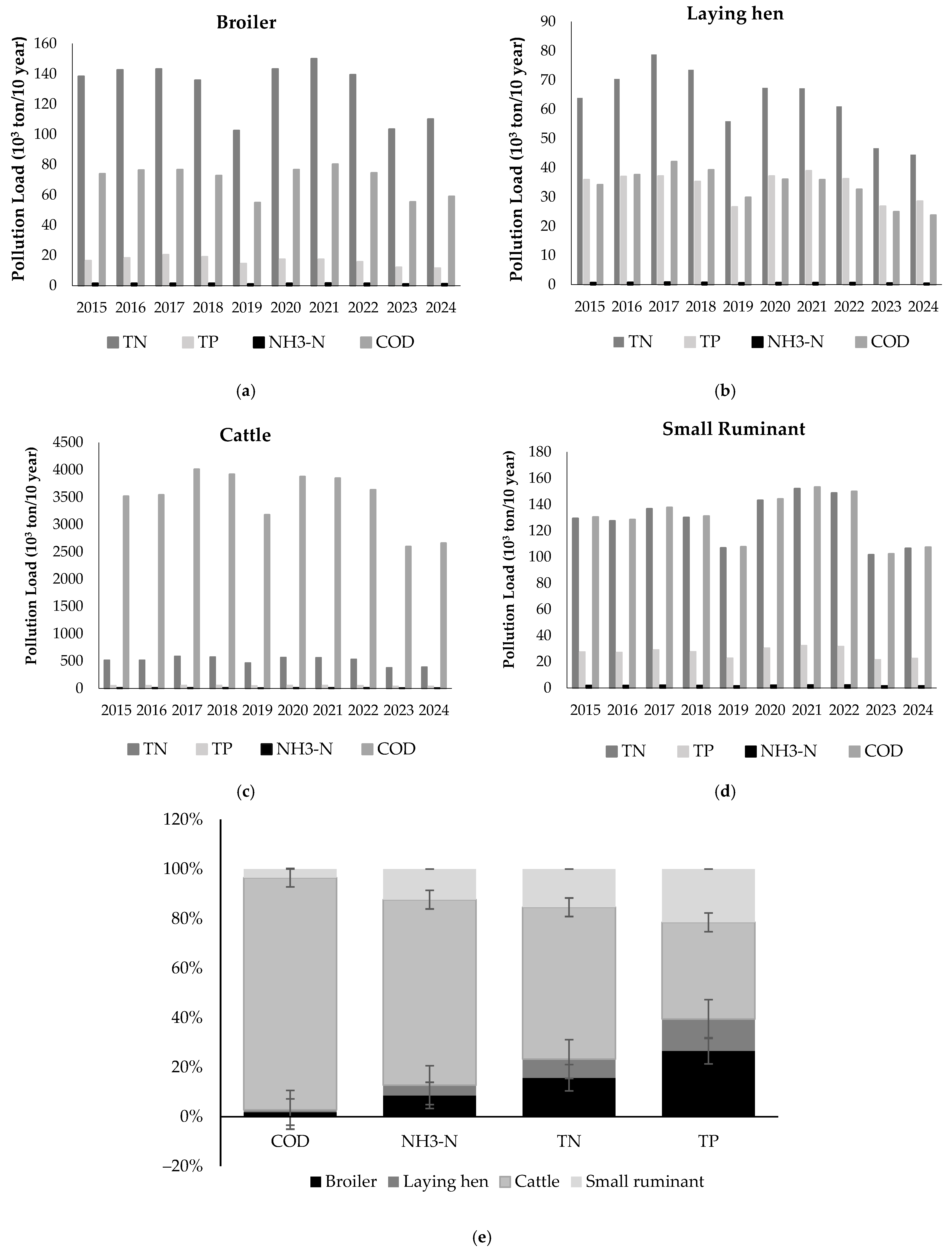
A 10-year cumulative assessment reveals that potential pollution loads from livestock followed a synchronised temporal pattern across all indicators, peaking in 2017 and declining sharply in 2023. Cattle, small ruminant, broilers, and laying hens were found to be responsible for 61%, 15%, 16% and 8% of potential TN pollution, respectively. In terms of total phosphorus pollution, the majority of the load is accounted for by poultry production (broilers: 13%; laying hens: 27%), cattle farming (39%), and small ruminant production (21%). Cattle production was identified as the primary driver of organic and nitrogenous pollution, accounting for 5.08 million tonnes of TN and an enormous 34.8 million tonnes of COD (Figure 1c). Regarding ammonia nitrogen pollution, cattle farming is again the dominant source (75%), while the contributions of poultry and small ruminant farming are comparatively minor (Figure 1a–e).
Cattle farming was identified as the hot spot for organic pollution, contributing an overwhelming 94% of the potential COD load. In contrast, phosphorus loading showed a more heterogeneous distribution, with poultry and small ruminant playing a significant role (Figure 1e). As reflected in the 10—year cumulative data, increases in animal numbers and production levels over time have led to a corresponding rise in potential pollution loads. Of the evaluated pollution indicators, chemical oxygen demand is the most dominant, accounting for 79.2% of non-point-source pollution associated with animal husbandry. Although total nitrogen (TN) and ammonia nitrogen (NH3-N) loads are more evenly distributed among animal categories, cattle farming still represents the largest share. In contrast, TP loads are more evenly distributed, with small ruminant and poultry production systems contributing a relatively higher proportion of the phosphorus load than other parameters.
The spatial distribution maps and the statistical comparative analyses were independently generated using QGIS (version 3.40.14) for geospatial mapping and SPSS (version 29.0.2.0) for descriptive statistics, based on the calculated nutrient loads.
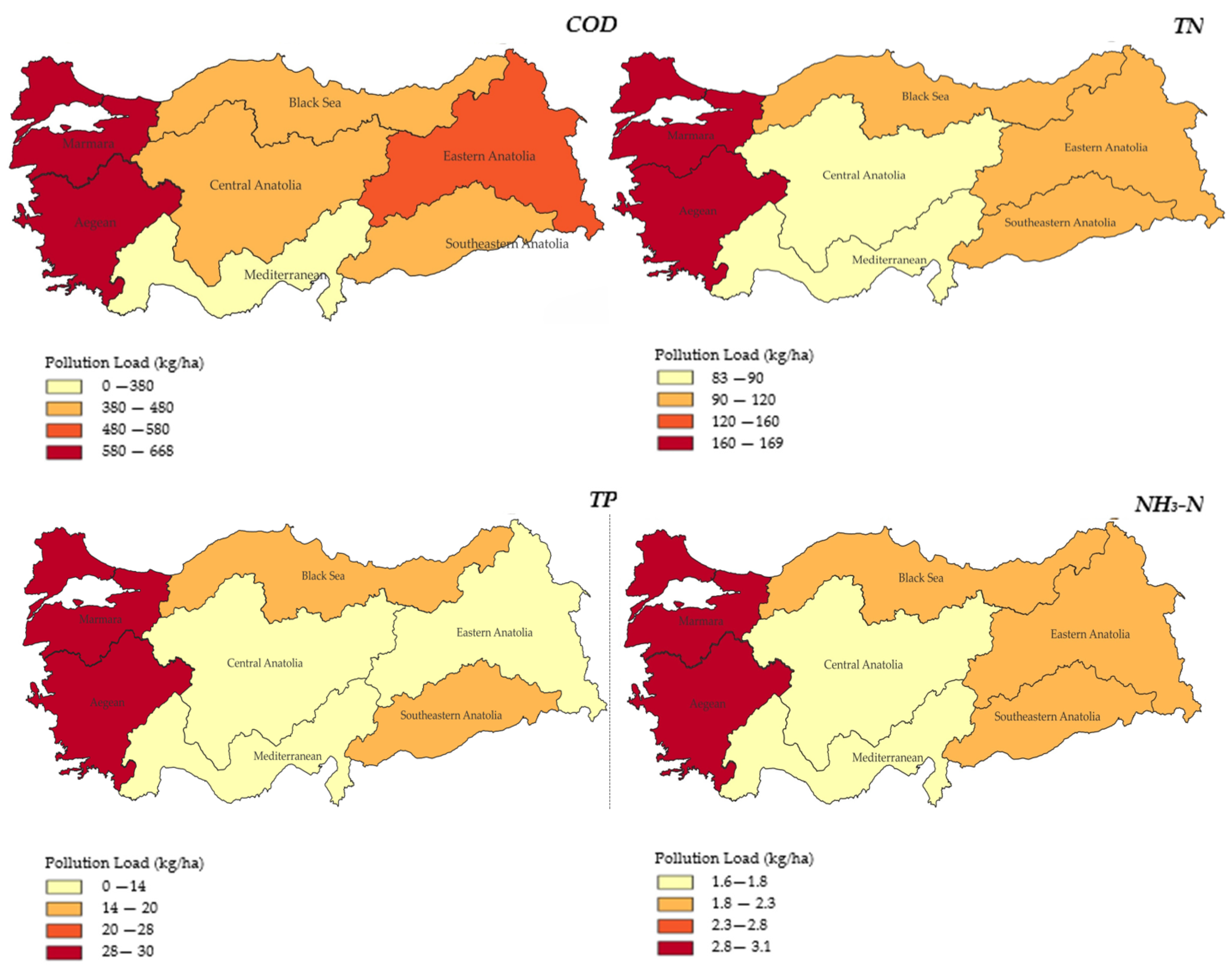
Figure 2 illustrates the 10—year regional differences in area-based pollution loads across Türkiye, utilising QGIS-based spatial attribute mapping to identify key pollution clusters. The analysis reveals a clear spatial disparity between absolute production volume and environmental pressure. The Aegean and Marmara regions consistently exhibited the highest pollution intensities (kg ha−1) for all parameters (COD, NH3-N, TN, and TP), representing statistically significant spatial hotspots of localised environmental pressure. This clustering is associated with intensive livestock production and limited land availability in Western Türkiye.
Conversely, when considering cumulative total loads, Central and Eastern Anatolia emerged as the dominant contributors (COD: 7.87 Mt; NH3-N: 0.03 Mt). This is primarily attributed to their extensive land areas and spatially dispersed production systems. Regarding total nutrient loads, Central Anatolia and the Aegean led in nitrogen loading (>1.5 million tonnes), while phosphorus loads were highest in the Aegean, followed by Central Anatolia and Marmara. These findings demonstrate that while expansive agricultural regions contribute substantially to total loads, the highest-resolution environmental risk (hotspots) is concentrated in the high-intensity clusters of the Aegean and Marmara regions.
As summarised in Table 3, pollutant loads from livestock production in Türkiye show significant variation across categories. Cattle production constitutes the dominant source, contributing the largest share of TN, TP, COD, and NH3-N loads. In contrast, small ruminants and poultry (broilers and laying hens) contribute comparatively lower loads, although their cumulative impact remains non-negligible. These findings highlight livestock production, particularly cattle farming, as a major driver of nutrient pollution due to higher manure generation rates and management practices.
Table 4 summarises the descriptive statistics of the COD, NH3-N, TN, and TP values measured for the different animal types (laying hens, cattle, small ruminant, and broilers), with 70 samples representing each type. Statistical analysis revealed significant differences among animal types at the 95% confidence level for all evaluated parameters.
Cattle exhibited the highest mean COD value by far (497.267 tonnes), which was significantly greater than those observed for small ruminant (18.478 tonnes), broilers (10.007 tonnes), and laying hens (4.806 tonnes). Small ruminant and broilers exhibited intermediate COD levels, while laying hens exhibited the lowest COD values. These results indicate substantial variation in organic load depending on the type of animal.
Regarding NH3-N, cattle again exhibited the highest mean concentration (1.760 tonnes), which was significantly higher than those observed for small ruminant (291 tonnes), broilers (202 tonnes), and laying hens (97 tonnes). Small ruminant and broilers formed distinct statistical groups, while laying hens consistently exhibited the lowest NH3-N concentrations of all the animal types.
A similar trend was observed for TN values. Cattle had the highest mean TN concentration (72.704 tonnes), followed by small ruminant (18.332 tonnes) and broilers (18.700 tonnes), whose values did not differ significantly from each other. Laying hens had significantly lower TN levels (8.980). These results suggest that nitrogen output is strongly influenced by animal species, particularly large ruminants.
For TP, cattle exhibited the highest mean value (7.103 tonnes), which was significantly higher than the values recorded for broiler (4.852 tonnes), small ruminant (3.908 tonnes), and laying hens (2.330 tonnes). Laying hens again exhibited the lowest TP concentrations, while cattle and small ruminants displayed intermediate but statistically distinct values.
Cattle exhibited significantly higher COD, NH3-N, and TN values, while broilers showed the highest TP concentrations. Laying hens consistently exhibited the lowest values for all parameters. These findings demonstrate that animal type has a statistically significant effect on COD, NH3-N, and TN.
The MANOVA results revealed a highly significant multivariate effect for livestock categories on the combined pollutant parameters (Wilks’ λ = 0.031, F (12, 627.3) = 142.88, p < 0.001, Partial η2 = 0.687). This indicates that the type of livestock is the primary driving factor behind the variation in the environmental footprint profile. While the multivariate effect of ‘Year’ was not statistically significant at the p < 0.05 level (Wilks’ λ = 0.927, p = 0.994), the Between-Subjects Effects confirmed that livestock category had a robust and significant influence (p < 0.001) on each individual pollutant parameter (COD, TN, TP, and NH3-N) independently. Detailed multivariate statistical outputs are provided in Supplementary Table S1.
To address the potential for long-term trends and abrupt changes in livestock-related emissions, ARIMA models were developed for each pollutant load (Table 5). The NH3-N emissions were best characterised by an ARIMA (7, 1, 0) model, achieving a high stationary R2 of 0.836. The requirement for first-order differencing (d = 1) in the models for COD, TN, and NH3-N confirms that these emissions are non-stationary, exhibiting a consistent and significant upward trend over the study period rather than fluctuating around a fixed mean. The ARIMA (1, 1, 14) model for COD and ARIMA (0, 1, 8) for TN provided a statistical fit of 0.628, effectively capturing the systematic growth driven by increasing livestock populations. Furthermore, the Ljung–Box Q test for the NH3-N model yielded a non-significant p-value (0.741), indicating that the model successfully captured the underlying temporal structure without leaving significant residual autocorrelation. These results demonstrate that livestock emissions follow a deterministic growth pattern, with no evidence of abrupt stochastic shocks or regime shifts during the analysed decade.

3.2. Pollution Derived from Fertiliser Use

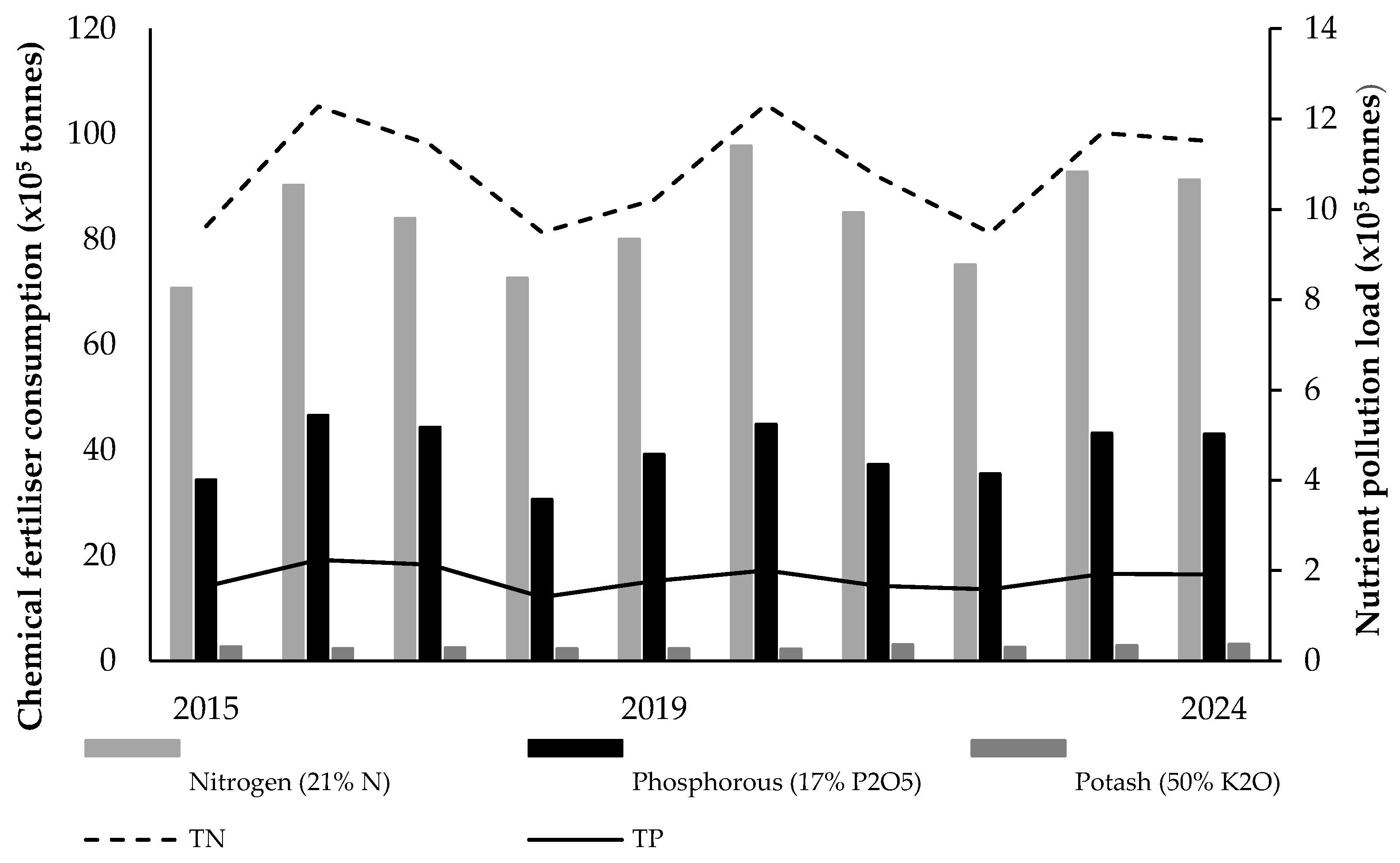
Although the use of chemical fertiliser in Türkiye has fluctuated over the past decade, it has increased by around 28% compared to 2015 levels (Figure 3) [42]. In crop production, nitrogen-based fertilisers account for the largest proportion of total fertiliser consumption (66%) [42]. Phosphorus fertilisers represent 32% of the total application, while potassium-based fertilisers account for the smallest proportion at 2% [42]. Datasets for fertiliser consumption were retrieved from the official records of the Ministry of Agriculture and Forestry [42].
Figure 3 illustrates the evolution of TN and TP pollution levels in relation to the use of chemical fertilisers over time. Although potassium-based fertilisers are widely used in agriculture, they were not included in this study as they do not pose a significant risk of aquatic pollution. Both TN and TP pollution loads exhibited pronounced temporal fluctuations throughout the study period. Total nitrogen pollution peaked at around 1.23 Mt in 2020 and generally remained at elevated levels, typically exceeding one million tonnes per year. Despite interannual variability, total phosphorus loads tended to remain relatively high in the latter part of the study period, particularly after 2022.
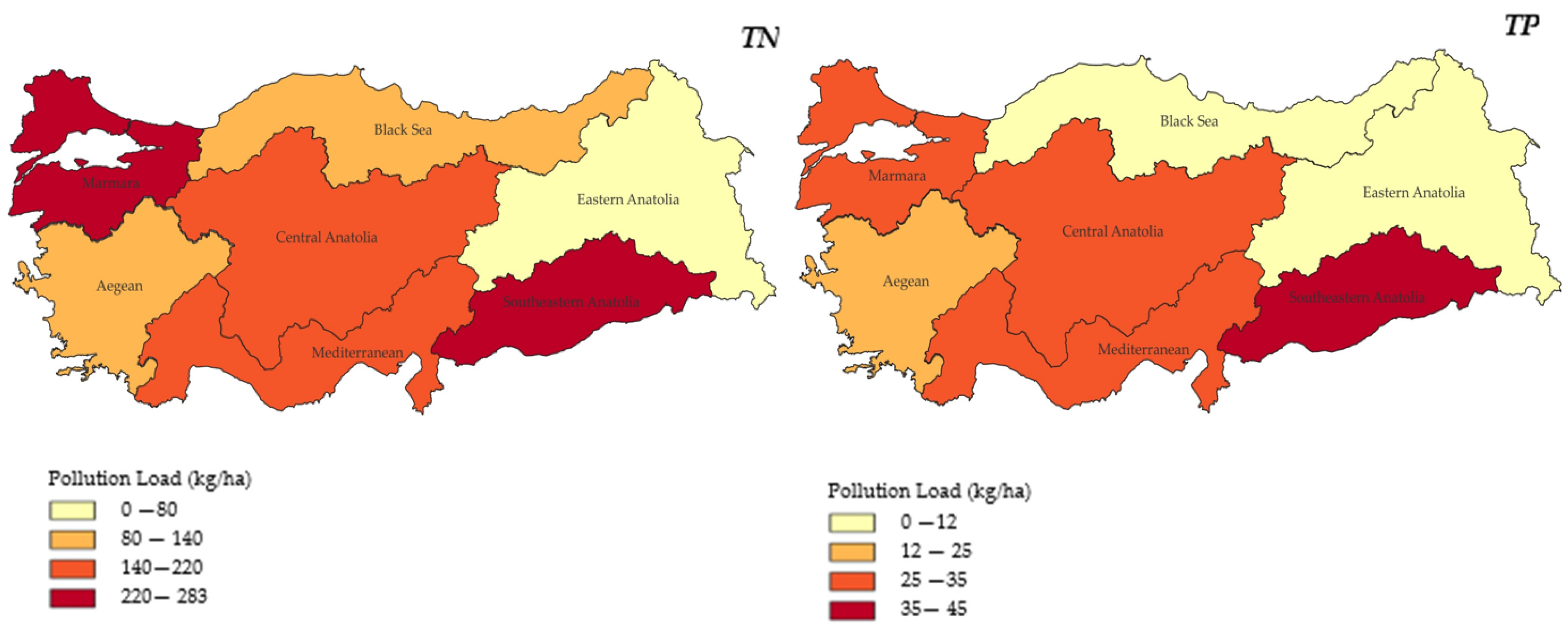
Between 2015 and 2024, TN and TP pollution loads derived from chemical fertiliser use exhibited significant regional variation across Türkiye, characterised by high temporal instability. Based on the intensity mapping (kg ha−1), the Southeastern Anatolia region was identified as the primary pollution hotspot, with peak nutrient intensities of 282.9 kg ha−1 for TN and 45.0 kg ha−1 for TP (Figure 4). This concentrated environmental pressure is linked to large-scale irrigation projects and intensive crop rotation. Marmara emerged as the second-highest intensity area (TN: 235.6 kg ha−1), while Central Anatolia contributed considerably due to its expansive agricultural footprint. In contrast, Eastern Anatolia exhibited the lowest intensities (TN: 22.7 kg ha−1), reflecting reduced agricultural input.
Analysis of the 10-year period indicates that fertiliser-related emissions do not follow a linear growth or decline trend, instead showing a random pattern with irregular annual fluctuations. While total loads in coastal regions appear moderate, the localized accumulation in high-intensity clusters poses a significant risk for nutrient transport to receiving water bodies, potentially triggering eutrophication in sensitive aquatic ecosystems.
Table 6 presents the descriptive statistics for the total nitrogen (TN) and total phosphorus (TP) values measured over ten years, with seven observations taken each year. Statistical analysis indicated that the differences between the years were statistically significant at the 95% confidence level for both the TN and TP parameters.
The highest mean TN values were observed in years 2016, 2017, 2020, 2023, and 2024, forming a statistical group with significantly higher concentrations than the other years. In contrast, years 2015, 2018, and 2022 exhibited the lowest mean TN values, indicating comparatively reduced nitrogen levels during these periods. Year 2021 showed intermediate TN values, while year 2019 was statistically distinct from both the highest and lowest groups, suggesting moderate nitrogen accumulation.
A similar temporal variation was observed for TP. Years 2016 and 2017 exhibited the highest mean TP values, followed by years 2020, 2023 and 2024, which also showed relatively high phosphorus levels. The lowest TP concentrations were recorded in the years 2015, 2021 and 2022, while the year 2018 had the lowest mean TP of all the years. Year 2019 showed intermediate TP values, forming a statistically distinct group.
Consequently, both TN and TP values demonstrated pronounced interannual variability, with several years showing significantly higher nutrient concentrations than others. These findings suggest that temporal factors play a crucial role in influencing nutrient levels, with year-to-year variations in TN and TP being statistically significant at the 95% confidence interval.
The temporal dynamics of nutrient loads from chemical fertilizers were analysed using ARIMA modelling (Table 7). The TN load was best characterized by an ARIMA (0, 0, 1) model with a stationary R2 of 0.281, while the TP load followed an ARIMA (0, 0, 0) model, which indicates a purely stochastic process without a discernible temporal pattern (R2 = 0.000). The absence of a significant trend (d = 0) in both parameters suggests that fertilizer-related emissions did not exhibit a consistent or systematic trajectory over the ten-year period. High residual variance was observed, particularly for the TP load, with an RMSE of 64,714.62 and an MAE of 52,534.49. These results demonstrate that nutrient loads from fertilizer application follow an irregular and non-linear temporal distribution compared to the more structured patterns observed in other agricultural sectors.
Due to the autocorrelation and non-normal distribution inherent in agricultural nutrient loads, MANOVA was not employed as it violates the assumptions of independence and multivariate normality. Instead, ARIMA modelling was utilized for temporal trend decomposition, while one-way ANOVA was used for spatial comparisons. This combined approach provides a more robust analysis of non-linear trends and stochastic patterns than traditional multivariate tests.

3.3. Pollution Derived from Cereal Production

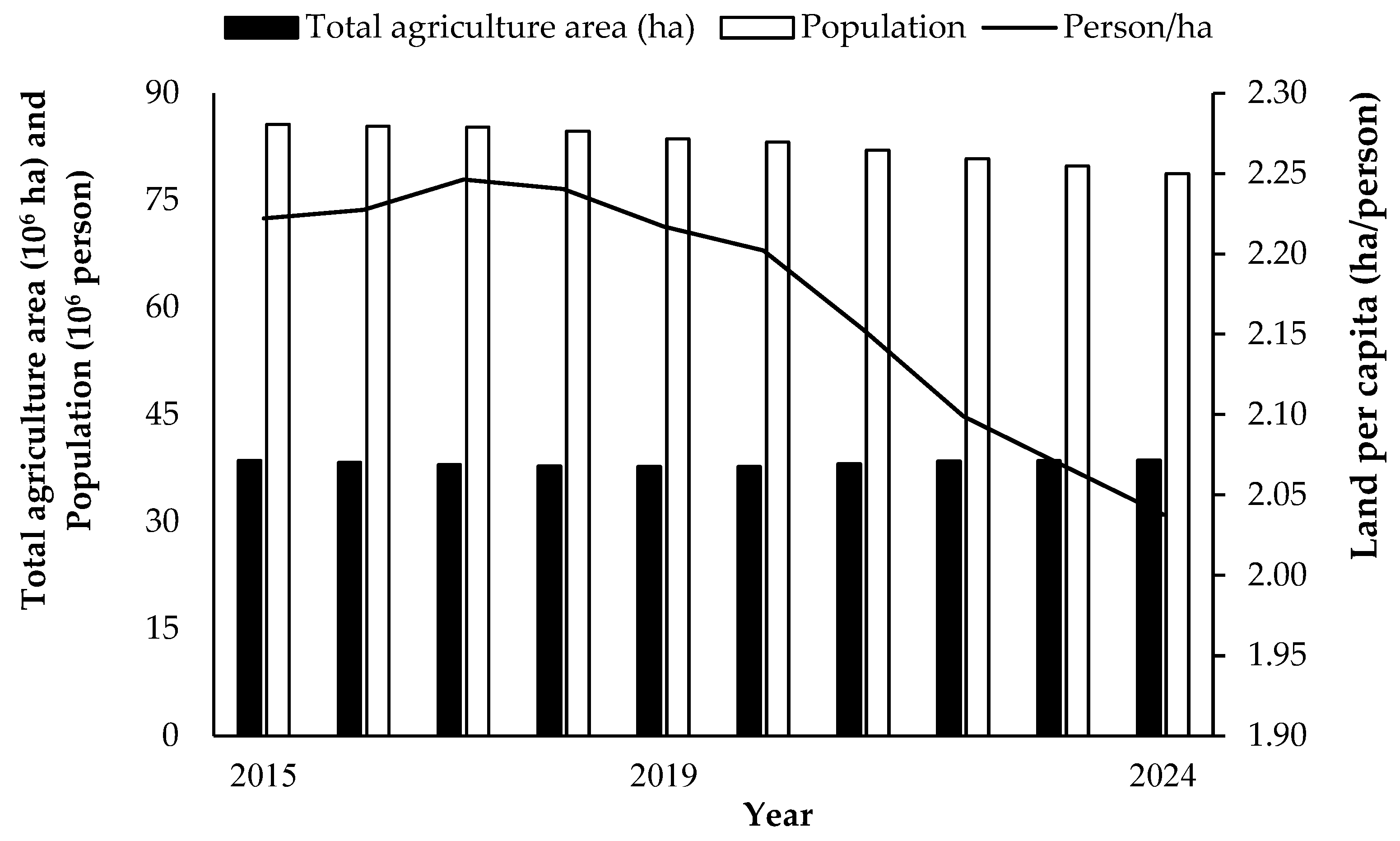
Although the total area of agricultural land in Türkiye decreased between 2015 and 2019, it began to recover slightly after 2020 and exceeded 2015 levels by 2024. As shown in Figure 5, the changing balance between the availability of arable land and demographic growth is clear. Among cereal crops, wheat and maize continue to dominate national production, while crops such as rice and millet remain significant at a regional level.
Consequently, both TN and TP values demonstrated pronounced interannual variability, with several years showing significantly higher nutrient concentrations than others. These findings suggest that temporal factors play a crucial role in influencing nutrient levels, with year-to-year variations in TN and TP being statistically significant at the 95% confidence interval.
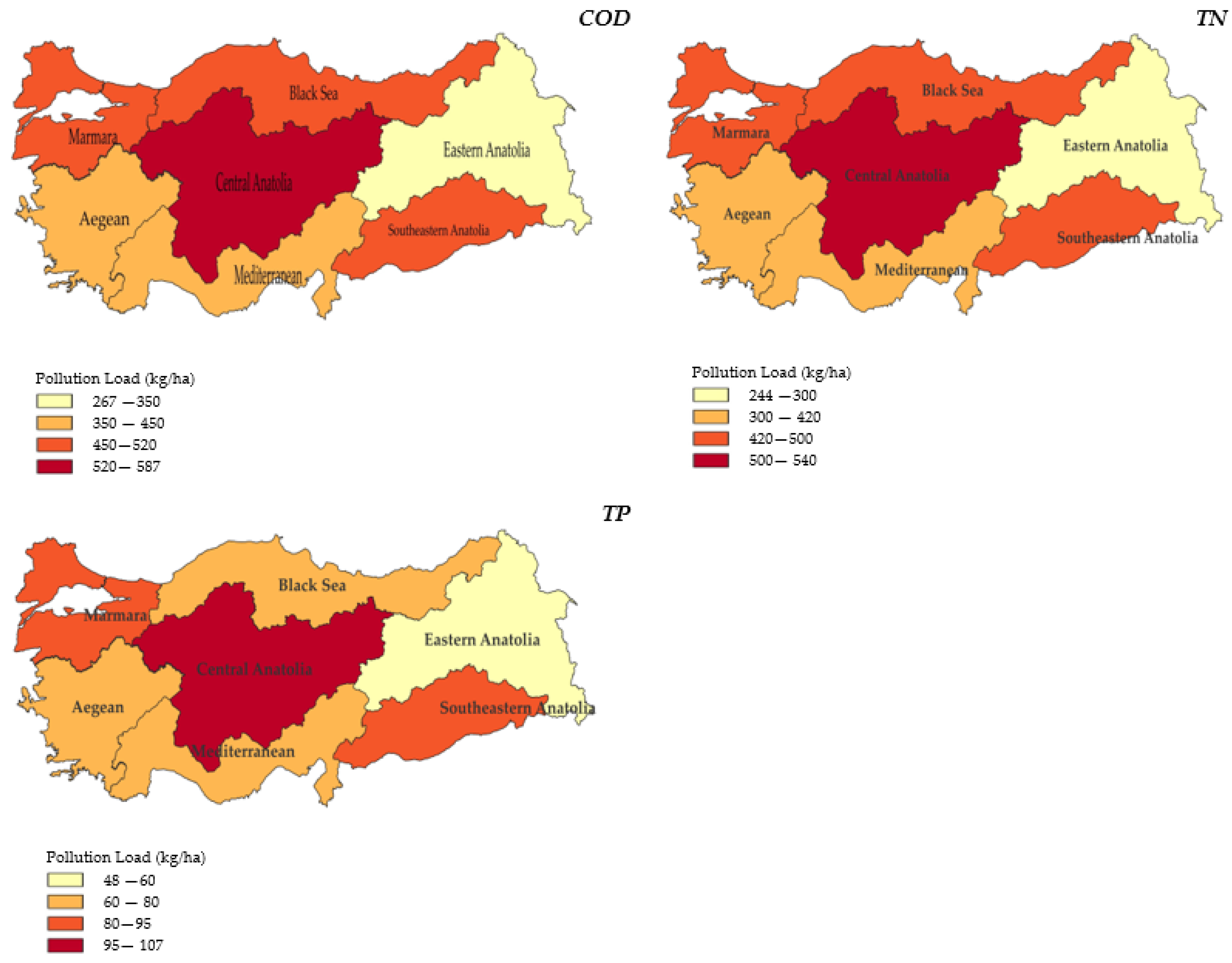
Area-based pollution loads of COD, TN, and TP exhibited significant regional variability across Türkiye, revealing distinct spatial clustering patterns (Figure 6). Utilizing intensity-based mapping, Central and Southeastern Anatolia were identified as the primary pollution hotspots for all three parameters. Central Anatolia recorded peak intensities of 587 kg ha−1 for COD, 540 kg ha−1 for TN, and 106.2 kg ha−1 for TP, representing a concentrated environmental pressure driven by intensive agricultural practices and high nutrient inputs. Similarly, the Marmara and Black Sea regions exhibited elevated COD and TN loads, reflecting intensive land use and organic nutrient concentrations.
In contrast, the lowest pollution intensities were observed in Eastern Anatolia, consistent with its extensive land area and lower production density. While the Mediterranean and Aegean regions contribute significantly to total national loads, their moderate area-based intensities highlight the critical distinction between cumulative pollution volume and localized hotspot pressure. Temporal analysis of these crop-related loads indicates a random annual distribution without a fixed linear trend, suggesting that environmental risks in these hotspots are influenced by variable seasonal factors rather than steady temporal growth.
Table 8 presents the descriptive statistics for the COD, TN, and TP values measured across four different crop types (wheat, maize, rice, and millet), with a sample size of 70 for each type. According to the statistical analysis, significant differences were found among the products for COD, TN, and TP at the 95% confidence level.
For COD, maize exhibited the highest mean value (28.228 kg ha−1), which was significantly higher than the values for wheat (10.552 kg ha−1), rice (4.688 kg ha−1), and millet (1.170 kg ha−1). Wheat showed intermediate COD levels, while rice and millet had significantly lower values, with millet having the lowest COD of all the products.
A similar pattern was observed for TN. Maize had the highest mean TN concentration (26.870 kg ha−1), followed by wheat (8.505 kg ha−1), rice (4.846 kg ha−1), and millet (1.210 kg ha−1). The statistical grouping letters show that all crop types differ significantly from each other, indicating a clear gradient in TN levels among the products.
Regarding TP, maize had the highest mean value (6.008), which was significantly higher than the values for wheat (1.486 kg ha−1), rice (0.350 kg ha−1), and millet (0.087 kg ha−1). Millet had the lowest TP concentration, while wheat and rice exhibited intermediate but statistically distinct values.
Overall, maize consistently exhibited significantly higher COD, TN and TP values than the other crops, whereas millet had the lowest values for all three parameters. These results suggest that crop type has a strong, statistically significant effect on COD, TN, and TP levels.
For crop production, a similar multivariate analysis confirmed that the type of crop product significantly influenced the combined nutrient loads (Wilks’ λ = 0.008, F (9, 579.3) = 405.85, p < 0.001, Partial η2 = 0.801). Interestingly, for this sector, ‘Year’ also showed a significant multivariate impact when considering the Roy’s Largest Root statistic (Value = 0.150, F = 3.99, p < 0.001), suggesting temporal shifts in production patterns over the decade. Detailed multivariate statistical outputs are provided in Supplementary Table S2.
The temporal analysis of pollutant loads from crop production demonstrated a highly structured and systematic pattern (Table 9). The loads for TN, TP, and COD were successfully modelled using ARIMA (0, 0, 10), ARIMA (0, 0, 14), and ARIMA (1, 0, 13), respectively. These models exhibited exceptional explanatory power, with stationary R2 values of 0.932 for TN, 0.974 for TP, and 0.930 for COD. The absence of a differencing operation (d = 0) across all parameters indicates that crop-related emissions followed a stationary yet highly deterministic trajectory over the ten-year period. Despite the high model fit, several outliers were identified and integrated into the models—specifically 7 for TN and 8 for TP—to account for inter-annual variations. The low error metrics, particularly for the TP load (RMSE: 0.416, MAE: 0.252), further confirm the high precision of these time-series models in capturing the emission dynamics of the crop production sector.

4. Discussion

The intensification of agricultural production creates environmental pressure in the form of nutrient and pollutant loads from activities such as the use of animal manure, chemical fertilisers, and crop cultivation. This pressure is closely linked to a decrease in land per capita, forcing agricultural intensification to meet global food demand. These activities result in significant pollution loads that degrade water quality and cause eutrophication [44,45,46,47]. The migration of nitrogen-based pollutants from agricultural fields to water bodies is primarily driven by leaching and surface runoff [48]. Due to the high solubility of nitrates, they easily penetrate the soil profile, reaching groundwater systems, whereas ammonium tends to be adsorbed by soil particles but can still be transported via soil erosion during high-intensity rainfall events [49]. In contrast to nitrogen, phosphorus exhibits lower mobility due to its strong adsorption capacity to soil minerals [50]. Therefore, its entry into aquatic ecosystems is predominantly linked to sediment-associated transport and surface runoff, particularly in regions with high erosion potential, such as the sloping terrains of the Black Sea and Eastern Anatolia basins. The transport of organic matter from livestock operations is largely a function of direct discharge or runoff from poorly managed manure storage facilities, leading to rapid oxygen depletion in receiving water bodies.

4.1. Implications of Pollution from Livestock Production

Between 2015 and 2024, Türkiye’s livestock sector experienced significant growth, with red and white meat production increasing by 77% and 32%, respectively [6]. Increased production and the resulting high volume of manure, coupled with inadequate manure management mechanisms, create problems for production and producers alike, leading to ecological damage [51]. This increase in production quantities corresponds with a consistent rise in livestock numbers, forming the primary baseline for the escalating potential pollution loads identified in this study.
In Türkiye, the cumulative potential pollution load from manure over the past 10 years (8310 Mt TN, 1273 Mt TP, 37,139 Mt COD) underscores the need for effective manure management. The overwhelming dominance of cattle farming in the COD load (94%) identifies large ruminant operations as a critical ‘hotspot’ for managing organic pollution. This disproportionate contribution suggests that the efficiency of manure handling and treatment in cattle systems is more decisive for the risk of aquatic oxygen depletion than in the poultry or small ruminant sectors. Additionally, ammonia nitrogen exhibited distinctly different behaviour, with the entire NH3-N load originating from livestock production. This clearly indicates that ammonia load within the studied agricultural system is directly linked to the management of animal manure.
According to the “Regulation on the Protection of Waters Against Agricultural Nitrate Pollution,” effective storage and management plans are mandatory for farms exceeding specific nitrogen production thresholds (1600 kg N/year in sensitive areas). However, despite these regulations, nutrient surpluses continue to pose a significant environmental problem, particularly in areas with high livestock density. Similarly, in non-nitrate-sensitive areas, livestock farms producing ≥ 3500 kg of nitrogen per year must store animal manure and develop a manure management plan. These regulations aim to limit the uncontrolled transport of nutrient loads from animal production into soil and water environments. Furthermore, the Regulation states that, in nitrate-sensitive areas, the amount of pure nitrogen (N) that can be applied to the soil via animal manure should not exceed 170 kg per hectare per year. This limit must take into account regional, soil, and climate characteristics, as well as plant needs.
Similar to the European Union’s Nitrates Directive, which aims to protect water resources from nitrate pollution caused by agriculture, Türkiye’s Regulation on the Protection of Water Resources from Agricultural Nitrate Pollution also imposes conditions on fertiliser management based on regional sensitivity classifications. Both regulatory frameworks emphasise the importance of adequate storage capacity, controlled soil application, and nutrient management planning, with the aim of minimising nitrogen loss to surface and groundwater systems. However, despite the existence of such regulations, nutrient surpluses resulting from intensive livestock production and excessive fertiliser use continue to pose a significant environmental problem, particularly in areas with high livestock density and limited land available for fertiliser application. This situation highlights the need for better implementation and monitoring of strategies for managing livestock manure, and for these strategies to be integrated with regional nutrient balances.
The dominance of livestock-derived loads, particularly COD from cattle farming, mirrors findings in other regions with high production intensity. For instance, studies in the Yongding River Basin [28] and the Yangtze River Basin [30] have similarly identified livestock as a disproportionate contributor to nutrient and organic matter hotspots. However, the 10-year growth trend observed in Türkiye (77% in red meat) suggests a more rapid intensification compared to some Mediterranean counterparts, necessitating urgent localized manure-to-energy or nutrient recovery solutions.

4.2. Implications of Pollution from Fertiliser Use

The application of chemical fertilisers is critical for crop productivity, yet nitrogen-based fertilisers account for 66% of total consumption in Türkiye [24]. In contrast, potassium-based fertilisers represent the smallest proportion (2%), as Turkish soils generally contain sufficient potassium, reducing the need for additional fertilisation. The cumulative pollution loads estimated in this study suggest that the use of chemical fertiliser in Türkiye has substantially contributed to nutrient enrichment over the last decade, with total nitrogen (TN) and total phosphorus (TP) loads reaching 1102.3 kg/ha and 176.2 kg/ha, respectively. The temporal patterns of TN and TP loads closely followed fluctuations in chemical fertiliser consumption, suggesting a strong link between fertiliser use intensity and nutrient pollution dynamics. While phosphorus fertilisers are applied at moderate levels (32%), they remain significant due to their potential contribution to surface runoff.
Nutrients not absorbed by plants are transported via runoff, contributing to eutrophication and soil salinisation [52,53,54,55]. Of these nutrients, nitrogen is of particular concern due to its high mobility and potential for transformation in soil–water systems. Plant nutrients such as nitrate and ammonium are highly soluble, which facilitates their rapid leaching into surface and groundwater. Under specific environmental conditions, these nitrates can be reduced to nitrites, which can then contribute to the formation of carcinogenic nitrosamines [56].
In Türkiye, the Nitrate Pollution Prevention and Control Regulation, aligned with the EU Nitrates Directive, aims to mitigate this risk. However, the cumulative loads (1102.3 kg/ha TN) identified in our study suggest that achieving the regulatory maximum of 25 mg/L in groundwater requires more than just compliance: a shift towards Nutrient Use Efficiency (NUE) and precision fertilisation is also needed to align with the targets set out in the European Green Deal.

4.3. Implications of Pollution from Cereal Production

Cereal production was identified as a dominant source of national-scale pollution, contributing 60.5% of TN and 64.9% of TP loads. The continuing decrease in cultivated land per capita due to rapid population growth suggests mounting pressure on existing land resources, likely leading to more intensive farming practices to sustain food security. Among cereals, wheat and maize dominate national production.
Notably, due to the absence of specific coefficients for barley, its associated pollution load was excluded from the study to maintain the precision of nutrient loss estimations. The findings indicate that organic pollution (COD) is shared between livestock (52.2%) and cereal cultivation (47.8%), highlighting that crop-based activities are as critical as livestock for managing organic matter loads. In the context of the European Green Deal’s “Farm to Fork” strategy, regional strategies must prioritise the Marmara and Aegean basins, where these drivers have pushed pollution levels toward critical thresholds.
Overall, the contribution of agricultural non-point pollution identified in this study indicates that effective mitigation cannot rely on a single management approach. Improving nutrient use efficiency in crop production systems is essential for reducing nitrogen and phosphorus losses, while improved manure management practices are critical for controlling organic pollution and ammonia. Therefore, an integrated management framework that addresses both livestock and crop production activities is necessary to reduce the cumulative environmental impact of agricultural intensification.
In the context of the European Green Deal, Türkiye’s efforts to mitigate agricultural non-point-source pollution are becoming increasingly important for international trade and environmental compliance. Our results demonstrate that grain production and livestock farming remain the primary drivers of nutrient and organic loads. In order to align with the Farm to Fork objectives of reducing fertiliser runoff and pesticide dependency, regional strategies must prioritise the Marmara and Aegean basins, where pollution levels have reached critical thresholds. The transition to precision agriculture and integrated waste management is an environmental and socio-economic necessity for Türkiye’s integration into global sustainable value chains.

4.4. Limitations and Future Perspectives

This study provides a national-scale baseline of agricultural pollution loads in Türkiye, focusing on spatial patterns and priority regions rather than detailed watershed-level processes. These results serve as a foundation for future fine-scale, process-based studies.
In integrated agricultural systems, livestock and crop production are inherently interconnected through nutrient cycling. Manure generated from livestock production is frequently recycled as organic fertilizer in crop production, a process that can partially mitigate the net pollution load attributed to individual agricultural sectors. Consequently, treating these sectors as independent sources in this study may lead to an overestimation of the net environmental impact. While the synergistic interaction between livestock and crop systems is acknowledged, a full Material Flow Analysis (MFA) or Nutrient Balance approach could not be implemented due to the lack of high-resolution, province-level data on actual manure recovery and recycling efficiency in Türkiye. Therefore, the results presented here should be interpreted as gross potential pollution loads, providing a baseline for environmental risk assessment. Future research should prioritize nutrient flow frameworks to refine these estimates and support more circular agricultural management policies.
While this study establishes a critical national baseline for potential pollution loads, future research can leverage these inventory data as a primary input for basin-scale hydrological models like SWAT. This would allow for site-specific simulations of runoff and leaching processes, building upon the high-resolution spatial diagnostics provided by our current assessment.
In addition to these methodological perspectives, certain limitations regarding the estimation process should be noted. The use of standard emission factors and national-level statistical data involves inherent uncertainties, as these may not fully account for local microclimates, soil variations, and farm-specific management practices. Furthermore, the lack of specific coefficients for certain crops and the potential for under-reported agricultural inputs may lead to conservative estimations. Despite these constraints, the findings offer a robust scientific roadmap for aligning Türkiye’s agricultural policies with the European Green Deal and the UN Sustainable Development Goals.
From a policy implementation perspective, translating these findings into practice requires a regionally differentiated and phased approach tailored to Türkiye’s agricultural structure. Given the spatial heterogeneity of agricultural systems, precision fertilization strategies can be prioritized in crop-intensive western regions, where technological infrastructure and access to advisory services are relatively more developed. In contrast, in livestock-dominated regions, particularly in central and eastern Türkiye, promoting manure management and waste-to-energy technologies (e.g., biogas production) can provide dual benefits of nutrient recycling and renewable energy generation. In the short term, pilot projects supported by existing rural development and agricultural subsidy programs can facilitate technology adoption. Over the medium to long term, integrating crop–livestock systems through nutrient management planning and strengthening extension services will be essential. Aligning these strategies with national agricultural policies and international frameworks can enhance both environmental sustainability and implementation feasibility.

5. Conclusions

In order to assess the impact of pollution loads from various agricultural activities on the aquatic environment by a simple method, this study quantified the total contributions of pollutants from livestock, chemical fertilisers, and cereal production over a decade. The results reveal clear distinctions in the drivers of pollution, showing that livestock production—specifically cattle farming—is the primary source of COD and NH3-N loads, while cereal cultivation dominates nutrient-related (TN and TP) enrichment. These findings emphasise that effective control of agricultural non-point-source pollution requires an integrated management approach combining source control, process control, and regulatory compliance.
The impacts of intensive agriculture on water bodies are multifaceted and encompass nutrient enrichment, pesticide pollution, sedimentation, changes to the hydrological cycle, and biodiversity loss. Addressing these impacts requires a comprehensive, integrated approach that combines sustainable agricultural practices, land use management, and effective monitoring and regulation. Only by implementing such measures can the negative impacts of agricultural intensification on aquatic ecosystems be reduced and the long-term health and sustainability of water resources, as well as the biodiversity they support, be ensured. Furthermore, the results demonstrate that fragmented regulatory frameworks can limit the effectiveness of pollution control efforts and that clearer, more integrated management guidelines could improve implementation at the field level. Future research should integrate nutrient flow frameworks and Material Flow Analysis (MFA) at the basin scale to provide more refined estimates of net pollution loads by considering the circular interaction between livestock and crop production.
In this context, the findings point to potential limitations in existing regulatory frameworks; however, a systematic evaluation of policy effectiveness was beyond the scope of this study. Future research should explicitly assess the role of agricultural and environmental policies in shaping pollution outcomes.

Supplementary Materials

The following supporting information can be downloaded at https://www.mdpi.com/article/10.3390/su18073453/s1, Table S1: Multivariate Analysis of Variance (MANOVA) Results for Livestock-Derived Pollutants; Table S2: Multivariate Analysis of Variance (MANOVA) Results for Cereal Production-Derived Pollutants.

Author Contributions

Conceptualization, B.Y. and I.K.; methodology, B.Y. and I.K.; validation, B.Y. and I.K.; formal analysis, B.Y. and I.K.; investigation, B.Y. and I.K.; writing—original draft preparation, B.Y.; writing—review and editing, B.Y. and I.K.; visualization, B.Y. and I.K.; supervision, I.K. All authors have read and agreed to the published version of the manuscript.

Funding

This research received no external funding.

Institutional Review Board Statement

Not applicable.

Informed Consent Statement

Not applicable.

Data Availability Statement

The original contributions presented in this study are included in the article/Supplementary Material. Further inquiries can be directed to the corresponding author.

Acknowledgments

The authors gratefully acknowledge the technical support provided by engineer Vildan Baris in the preparation of the maps used in this study.

Conflicts of Interest

The authors declare no conflicts of interest.

Abbreviations

The following abbreviations are used in this manuscript:
TNTotal Nitrogen
TPTotal Phosphorus
CODChemical Oxygen Demand
NH3-NAmmonia Nitrogen
ANPSPAgricultural Non-Point-Source Pollution
NVZsNitrate Vulnerable Zones
MCLsMaximum Contaminant Levels

References

  1. Pingali, P.L. Green revolution: Impacts, limits, and the path ahead. Proc. Natl. Acad. Sci. USA 2012, 109, 12302–12308. [Google Scholar] [CrossRef]
  2. Afzal, M.; Muhammad, S.; Tan, D.; Kaleem, S.; Khattak, A.A.; Wang, X.; Chen, X.; Ma, L.; Mo, J.; Muhammad, N.; et al. The effects of heavy metal pollution on soil nitrogen transformation and rice volatile organic compounds under different water management practices. Plants 2024, 13, 871. [Google Scholar] [CrossRef] [PubMed]
  3. Filonchyk, M.; Peterson, M.P.; Zhang, L.; Hurynovich, V.; He, Y. Greenhouse gas emissions and global climate change: Examining the influence of CO2, CH4, and N2O. Sci. Total Environ. 2024, 935, 173359. [Google Scholar] [CrossRef] [PubMed]
  4. Birpinar, M.E.; Tuğaç, C. Impacts of climate change on water resources of Turkey. In Proceedings of the 4th International Conference Water Resources and Wetlands, Tulcea, Romania, 5–9 September 2018. [Google Scholar]
  5. General Directorate of State Hydraulic Works (DSI). Available online: https://www.dsi.gov.tr/Sayfa/Detay/720# (accessed on 16 March 2026).
  6. Turkish Statistical Institute. Livestock Production Statistics. Available online: https://data.tuik.gov.tr/Bulten/Index?p=Hayvansal-%C3%9Cretim-%C4%B0statistikleri-2024-53935&dil=1 (accessed on 10 November 2025).
  7. National Geographic. Point Source and Nonpoint Sources of Pollution. Available online: https://education.nationalgeographic.org/resource/point-source-and-nonpoint-sources-pollution/ (accessed on 15 March 2026).
  8. United States Environmental Protection Agency (EPA). Polluted Runoff: Nonpoint Source (NPS) Pollution. Available online: https://www.epa.gov/nps/basic-information-about-nonpoint-source-nps-pollution (accessed on 15 March 2026).
  9. Wu, Y.; Chen, J. Investigating the effects of point source and nonpoint source pollution on the water quality of the East River (Dongjiang) in South China. Ecol. Indic. 2013, 32, 294–304. [Google Scholar] [CrossRef]
  10. Luo, M.; Liu, X.; Legesse, N.; Liu, Y.; Wu, S.; Han, F.X.; Ma, Y. Evaluation of agricultural non-point source pollution: A Review. Water Air Soil Pollut. 2023, 234, 657. [Google Scholar] [CrossRef]
  11. Hussain, F.; Ahmed, S.; Muhammad Zaigham Abbas Naqvi, S.; Awais, M.; Zhang, Y.; Zhang, H.; Raghavan, V.; Zang, Y.; Zhao, G.; Hu, J. Agricultural non-point source pollution: Comprehensive analysis of sources and assessment methods. Agriculture 2025, 15, 531. [Google Scholar] [CrossRef]
  12. Zou, L.; Liu, Y.; Wang, Y.; Hu, X. Assessment and analysis of agricultural non-point source pollution loads in China: 1978–2017. J. Environ. Manag. 2020, 263, 110400. [Google Scholar] [CrossRef]
  13. Plunge, S.; Gudas, M.; Povilaitis, A. Effectiveness of best management practices for non-point source agricultural water pollution control with changing climate–Lithuania’s case. Agric. Water Manag. 2022, 267, 107635. [Google Scholar] [CrossRef]
  14. Jiang, T.; Shen, J. Spatiotemporal evolution and driving factors of agricultural non-point source pollution in the context of economic green development. J. Environ. Manag. 2025, 380, 124849. [Google Scholar] [CrossRef]
  15. Calabrese, A.; Campanale, M. Agricultural nitrate leaching into groundwater–case of study in Apulia Region. Ecol. Eng. Environ. Technol. 2024, 25, 387–394. [Google Scholar] [CrossRef]
  16. Fan, L.; Yuan, Y.; Ying, Z.; Lam, S.K.; Liu, L.; Zhang, X.; Liu, H.; Gu, B. Decreasing farm number benefits the mitigation of agri-cultural non-point source pollution in China. Environ. Sci. Pollut. Res. 2019, 26, 464–472. [Google Scholar] [CrossRef]
  17. Huan, J.; Fan, Y.; Xu, X.; Zhou, L.; Zhang, H.; Zhang, C.; Hu, Q.; Cai, W.; Ju, H.; Gu, S. Deep learning model based on coupled SWAT and interpretable methods for water quality prediction under the influence of non-point source pollution. Comput. Electron. Agric. 2025, 231, 109985. [Google Scholar] [CrossRef]
  18. Khan, S.; Naushad, M.; Lima, E.C.; Zhang, S.; Shaheen, S.M.; Rinklebe, J. Global soil pollution by toxic elements: Current status and future perspectives on the risk assessment and remediation strategies—A review. J. Hazard. Mater. 2021, 417, 126039. [Google Scholar] [CrossRef] [PubMed]
  19. Alao, J.O. The factors influencing the landfill leachate plume contaminants in soils, surface and groundwater and associated health risks: A geophysical and geochemical view. Public Health Environ. 2025, 1, 20–43. [Google Scholar] [CrossRef]
  20. Ministry of Agriculture and Forestry. Available online: https://resmigazete.gov.tr/eskiler/2016/07/20160723-2.htm (accessed on 17 October 2025).
  21. Haksevenler, B.H.G.; Ayaz, S. The effect of point and diffuse pollution sources on surface water quality, A case study for Alaşehir Aiver sub-basin. Gümüşhane Uni. J. Sci. Technol. 2021, 11, 1258–1268. [Google Scholar] [CrossRef]
  22. Yaylı, B.; Kılıç, I. Determination of environmental distanced pollution load by poultry of Bursa region. Uludağ Uni. J. Fac. Engr. 2023, 28, 41–52. [Google Scholar] [CrossRef]
  23. Muhammetoglu, A.; Akdegirmen, O.; Dugan, S.T.; Orhan, P. A modeling framework for control of nonpoint source pollution and evaluation of best management practices for identification of critical source areas. Environ. Earth Sci. 2025, 84, 257. [Google Scholar] [CrossRef]
  24. European Commission. Nitrates. Available online: https://environment.ec.europa.eu/topics/water/nitrates_en?utm_source (accessed on 30 October 2025).
  25. United States Environmental Protection Agency. National Primary Drinking Water Regulations. Available online: https://www.epa.gov/ground-water-and-drinking-water/national-primary-drinking-water-regulations (accessed on 30 October 2025).
  26. Ransom, K.M.; Nolan, B.T.; Stackelberg, P.E.; Belitz, K.; Fram, M.S. Machine learning predictions of nitrate in groundwater used for drinking supply in the conterminous United States. Sci. Total Environ. 2022, 807, 151065. [Google Scholar] [CrossRef]
  27. Ongley, E.D.; Xiaolan, Z.; Tao, Y. Current status of agricultural and rural non-point source pollution assessment in China. Environ. Pollut. 2010, 158, 1159–1168. [Google Scholar] [CrossRef]
  28. Guo, W.; Fu, Y.; Ruan, B.; Ge, H.; Zhao, N. Agricultural non-point source pollution in the Yongding River Basin. Ecol. Indic. 2014, 36, 254–261. [Google Scholar] [CrossRef]
  29. Chen, T.; Lu, J.; Lu, T.; Yang, X.; Zhong, Z.; Feng, H.; Wang, M.; Yin, J. Agricultural non-point source pollution and rural trans-formation in a plain river network: Insights from Jiaxing city, China. Environ. Pollut. 2023, 333, 121953. [Google Scholar] [CrossRef]
  30. Bi, Y.; Zuo, D.; Song, Y.; Xu, Z.; Wang, J.; Peng, D.; Pang, B.; Sun, W.; Abbaspour, K.C.; Yang, H. The response of non-point source pollution to land use changes based on the SWAT and PLUS models in an agricultural river basin of Yangtze River, China. J. Hydrol. 2025, 663, 134331. [Google Scholar] [CrossRef]
  31. Koç, C. A study on the pollution and water quality modeling of the River Buyuk Menderes, Turkey. Clean–Soil Air Water 2010, 38, 1169–1176. [Google Scholar] [CrossRef]
  32. Ayaz, S.Ç.; Aktaş, Ö.; Dağlı, S.; Aydöner, C.; Aytış, E.A.; Akça, L. Pollution loads and surface water quality in the Kızılırmak Basin, Turkey. Desalin. Water Treat. 2013, 51, 1533–1542. [Google Scholar] [CrossRef]
  33. Ozdemir, S.; Celebi, A.; Dede, G.; Maghrebi, M.; Danandeh Mehr, A. Impact of Land Use Change on Lake Pollution Dynamics: A Case Study of Sapanca Lake, Turkey. Water 2025, 17, 182. [Google Scholar] [CrossRef]
  34. Ministry of Agriculture and Forestry. Regulation on the Protection of Waters Against Agricultural Nitrate Pollution. Official Gazette No. 29779, 23 July 2016. Available online: https://www.resmigazete.gov.tr/eskiler/2016/07/20160723-2.htm (accessed on 15 March 2026).
  35. European Commission. ‘Farm to Fork’ Strategy for a Fair, Healthy and Environmentally Friendly Food System. Available online: https://eur-lex.europa.eu/EN/legal-content/summary/farm-to-fork-strategy-for-a-fair-healthy-and-environmentally-friendly-food-system.html (accessed on 16 March 2026).
  36. Dönmez, A.A.; Yerli, S.V.; Pullaiah, T. Biodiversity in Turkey. In Global Biodiversity; Pullaiah, T., Ed.; Apple Academic Press: Palm Bay, FL, USA, 2019; Volume 2, pp. 397–442, Chapter 11. [Google Scholar]
  37. Turkish State Meteorological Service. Available online: https://mgm.gov.tr/veridegerlendirme/il-ve-ilceler-istatistik.aspx?k=parametrelerinTurkiyeAnalizi (accessed on 10 November 2025).
  38. World Wide Fund for Nature. Available online: https://www.wwf.org.tr/kesfet/tatli_su/turkiyede_su_kaynaklarinin_guncel_durumu/ (accessed on 10 November 2025).
  39. Irvem, A.; Ozbuldu, M. Evaluation of satellite and reanalysis precipitation products using GIS for all basins in Turkey. Adv. Meteorol. 2019, 2019, 4820136. [Google Scholar] [CrossRef]
  40. Republic of Turkey Ministry of Agriculture and Forestry. National Basin Management Strategy (2014–2023). Available online: https://www.tarimorman.gov.tr (accessed on 10 November 2025).
  41. Turkish Statistical Institute. Crop Production Statistics. Available online: https://data.tuik.gov.tr/Bulten/Index?p=Bitkisel-Uretim-Istatistikleri-2024-53447 (accessed on 10 November 2025).
  42. Ministry of Agriculture and Forestry of the Republic of Türkiye. Plant Nutrition Statistics. Available online: https://www.tarimorman.gov.tr/Konular/Bitkisel-Uretim/Bitki-Besleme-ve-Tarimsal-Teknolojiler/Bitki-Besleme-Istatistikleri?utm_source= (accessed on 11 November 2025).
  43. Tao, Y.; Liu, J.; Guan, X.; Chen, H.; Ren, X.; Wang, S.; Ji, M. Estimation of potential agricultural non-point source pollution for Baiyangdian Basin, China, under different environmental protection policies. PLoS ONE 2020, 15, e0239006. [Google Scholar] [CrossRef]
  44. Onyango, J.; Kitaka, N.; van Bruggen, J.J.A.; Irvine, K.; Simaika, J. Agricultural intensification in Lake Naivasha Catchment in Kenya and associated nutrients and pesticides pollution. Sci. Rep. 2024, 14, 18539. [Google Scholar] [CrossRef]
  45. Nuruzzaman, M.; Bahar, M.M.; Naidu, R. Diffuse soil pollution from agriculture: Impacts and remediation. Sci. Total Environ. 2025, 962, 178398. [Google Scholar] [CrossRef]
  46. Zhang, T.; Yang, Y.; Ni, J.; Xie, D. Adoption behavior of cleaner production techniques to control agricultural non-point source pollution: A case study in the Three Gorges Reservoir Area. J. Clean. Prod. 2019, 223, 897–906. [Google Scholar] [CrossRef]
  47. Kılıç, F.N.; Sönmez, O. Pollutant Effects and Management of Animal Manure. Turk. J. Agric.-Food Sci. Technol. 2024, 12, 1467–1475. [Google Scholar] [CrossRef]
  48. Gomes, M.; Ralph, T.J.; Humphries, M.S.; Graves, B.P.; Kobayashi, T.; Gore, D.B. Waterborne contaminants in high intensity agriculture and plant production: A review of on-site and downstream impacts. Sci. Total Environ. 2025, 958, 178084. [Google Scholar] [CrossRef] [PubMed]
  49. Wang, Z.H.; Li, S.X. Nitrate N loss by leaching and surface runoff in agricultural land: A global issue (a review). Adv. Agron. 2019, 156, 159–217. [Google Scholar] [CrossRef]
  50. Schoumans, O.F.; Chardon, W.J.; Bechmann, M.E.; Gascuel-Odoux, C.; Hofman, G.; Kronvang, B.; Rubæk, G.H.; Ulén, B.; Dorioz, J.M. Mitigation options to reduce phosphorus losses from the agricultural sector and improve surface water quality: A review. Sci. Total Environ. 2014, 468, 1255–1266. [Google Scholar] [CrossRef] [PubMed]
  51. Symeon, G.K.; Akamati, K.; Dotas, V.; Karatosidi, D.; Bizelis, I.; Laliotis, G.P. Manure Management as a Potential Mitigation Tool to Eliminate Greenhouse Gas Emissions in Livestock Systems. Sustainability 2025, 17, 586. [Google Scholar] [CrossRef]
  52. Zhan, X.Y.; Zhang, Q.W.; Zhang, H.; Hussain, H.A.; Shaaban, M.; Yang, Z.L. Pathways of nitrogen loss and optimized nitrogen management for a rice cropping system in arid irrigation region, northwest China. J. Environ. Manag. 2020, 268, 110702. [Google Scholar] [CrossRef]
  53. Mandal, S.; Sarkar, B.; Bolan, N.; Novak, J.; Ok, Y.S.; Van Zwieten, L.; Singh, B.P.; Kirkham, M.B.; Choppala, G.; Spokas, K.; et al. Designing advanced biochar products for maximizing greenhouse gas mitigation potential. Crit. Rev. Environ. Sci. Technol. 2016, 46, 1367–1401. [Google Scholar] [CrossRef]
  54. Huang, J.; Xu, C.; Ridoutt, B.G.; Wang, X.; Ren, P. Nitrogen and phosphorus losses and eutrophication potential associated with fertilizer application to cropland in China. J. Clean. Prod. 2017, 159, 171–179. [Google Scholar] [CrossRef]
  55. Yu, X.; Keitel, C.; Zhang, Y.; Wangeci, A.N.; Dijkstra, F.A. Global meta-analysis of nitrogen fertilizer use efficiency in rice, wheat and maize. Agric. Ecosyst. Environ. 2022, 338, 108089. [Google Scholar] [CrossRef]
  56. Yetis, R.; Atasoy, A.D.; Yetis, A.D.; Yesilnacar, M.I. Determination of nitrate and nitrite levels of water resources in Balikligol Basin. Cukurova Univ. J. Fac. Eng. Archit. 2018, 33, 47–54. [Google Scholar] [CrossRef]
Figure 1. Temporal dynamics and sectoral distribution of livestock-derived pollution in Türkiye (2015–2024): (a) Broiler, (b) Laying hen, (c) Cattle, (d) Small ruminant, and (e) cumulative sectoral contributions to the total pollution load over the ten-year study period.
Sustainability 18 03453 g001
Figure 2. Spatial Intensity of Livestock-Derived Pollutants between 2015 and 2024.
Sustainability 18 03453 g002
Figure 3. Temporal synchronisation between chemical fertiliser consumption and estimated nutrient pollution loads in Türkiye (2015–2024).
Sustainability 18 03453 g003
Figure 4. Spatial Intensity of Fertiliser-Derived Pollutants between 2015 and 2024.
Sustainability 18 03453 g004
Figure 5. Temporal changes in agricultural land and population pressure in Türkiye.
Sustainability 18 03453 g005
Figure 6. Spatial COD, TN and TP pollution intensities from cereals production between 2015 and 2024.
Sustainability 18 03453 g006
Table 1. Equations used for estimating the potential pollution of different sources [43].
Pollution SourceEquationsMajor Pollution Index
Chemical fertilisers P F İ = k = 1 n F k   ×   a k
Fk = usage of chemical fertiliser, ak: fertiliser utilization rate
TN, TP, NH3-N
Straw P s i = j = 1 n Y J     R s g , j   ×   C p i , i   ×   ( 1 n s
Yj = Crop yield, Rsg,j = Straw–grain ratio, Cpi,I = production coefficient of pollution index, ns = comprehensive utilisation rate of straw
COD, TN, TP
Livestock and poultry
breeding
P p i = l = 1 p N l   ×   C i , l   ×   ( 1 n p , l
Nl = numbers of livestock and poultry, Ci,l = production coefficient of pollution index, np,l = comprehensive utilisation rate of livestock and poultry breeding
COD, TN, TP,
NH3-N
TN: total nitrogen, TP: total phosphorus, NH3-N: ammonia nitrogen, COD: chemical oxygen demand.
Table 2. Unit pollution load coefficients for livestock and crop production [43].
Livestock and Poultry Species
Pollution IndicatorsSmall RuminantCattlePoultry
COD (kg head−1)8.897120.99
NH3-N (kg head−1)0.142.520.02
TN (kg head−1)8.82104.101.85
TP (kg head−1)1.8810.170.48
Cereals crop
Pollution indicatorsRiceWheatCornMillet
Straw–grain ratio0.900.971.031.6
COD (kg Mg−1)5.636.3911.235.63
TN (kg Mg−1)5.825.1510.695.82
TP (kg Mg−1)0.420.902.390.42
Table 3. Summary of estimated cumulative pollutant loads disaggregated by livestock category in Türkiye (2015–2024).
Livestock CategoryTN (Mt)TP (Mt)COD (Mt)NH3-N (Mt)
Cattle5.090.5034.810.12
Small Ruminant1.280.271.290.02
Broiler1.310.340.700.01
Laying Hen0.630.160.340.01
Total8.311.2737.140.16
Table 4. Livestock production descriptive statistics.
ParameterLivestock SpeciesNMean (Tonnes)Std. DeviationStd. ErrorMinimumMaximum
CODLaying Hens704.806 d37104431.07414.720
Cattle70497.267 a186.65422.309202.285848.621
Small ruminant7018.478 b9.12510914.79836.682
Broiler7010.007 c8.13497219026.715
NH3-N Laying Hens7097 d75922297
Cattle701.760 a661797163.004
Small ruminant70291 b1441776578
Broiler70202 c164204540
TN Laying Hens708980 c6.934829200827.506
Cattle7072.704 a27.2903.26229.576124.075
Small ruminant7018.332 b9.0531.0824.76036.393
Broiler7018.700 b15.2011.81735649.921
TP Laying Hens702.330 d1.7992155217.137
Cattle707.103 a2.6663192.88912.121
Small ruminant703.908 c1.9302311.0157.757
Broiler704.852 b1.027122.82.6623.893
a–d Means followed by different superscript letters indicate statistically significant differences at p < 0.05 according to the post hoc Tukey’s HSD test. Values are presented as means ± standard deviation (SD).
Table 5. ARIMA model results for livestock production.
ParameterBest ModelStationary R2RMSEMAELjung–Box (p)
TNARIMA (0, 1, 8)0.6288679.3485914.926<0.001
TPARIMA (0, 0, 14)0.7221096.014566.281<0.001
CODARIMA (1, 1, 14)0.6281,305,933.443135,768.54<0.001
NH3-NARIMA (7, 1, 0)0.836478.860152.8970.741
Table 6. Statistical summary of chemical fertilizer-derived nutrient loads by year.
ParameterYearNMean (Tonnes)Std. DeviationStd. ErrorMinimumMaximum
TN20157137.473 b64.27924.29529.278223.57
20167175.366 a87.40833.03738.518305.684
20177163.162 a80.62130.47233.371276.881
20187135.522 b64.68224.44732.495229.507
20197145.941 b73.69627.85428.069255.019
20207175.944 a91.39234.54334.018321.439
20217153.201 ab75.07628.37634.857237.088
20227135.376 b73.17227.65627.218240.66
20237166.987 a87.90133.22340.115303.844
20247164.312 a91.37634.53740.255329.766
TP2015723.585 b14.5835.5126.34751.272
2016731.962 a20.2297.6468.98971.14
2017730.445 a18.6617.0539.3566.656
2018720.173 c11.7014.4236.41742.81
2019725.256 b16.116.0896.56155.302
2020728.564 ab17.8426.7448.45759.525
2021723.699 b13.8115.22747.68
2022722.577 b14.9595.6546.22951.228
2023727.525 ab18.9597.1668.80965.746
2024727.411 ab19.0317.1939.12666.577
a–c Means followed by different superscript letters indicate statistically significant differences at p < 0.05 according to the post-hoc Tukey’s HSD test. Values are presented as means ± standard deviation (SD).
Table 7. ARIMA Model Results for Fertilizer Use (2015–2024).
ParameterBest ModelStationary R2RMSEMAELjung-Box (p)
TNARIMA (0, 0, 1)0.28116,060.11912,462.312<0.001
TPARIMA (0, 0, 0)0.00064,714.62252,534.491<0.001
Table 8. Crop production descriptive statistics.
ParameterCropNMean (kg ha−1)Std. DeviationStd. ErrorMinimumMaximum
COD Wheat7010.552 b3.2540.3895.3120.89
Maize7028.228 a7.4570.89112.4343.88
Rice704.688 c4.4710.613014.63
Millet701.170 d0.9340.1120.003.12
TN Wheat708.505 b2.6230.3134.2816.83
Maize7026.870 a7.0990.84811.8341.77
Rice704.846 c4.6560.5560.0015.13
Millet701.210 d0.9660.1150.003.23
TP Wheat701.486 b0.4580.0550.752.94
Maize706.008 a1.5870.1902.649.34
Rice700.350 c0.3360.0400.001.09
Millet700.087 d0.0700.0080.000.23
a–d Means followed by different superscript letters indicate statistically significant differences at p < 0.05 according to the post-hoc Tukey’s HSD test. Values are presented as means ± standard deviation (SD).
Table 9. ARIMA Model Results for Crop Production (2015–2024).
ParameterBest ModelStationary R2RMSEMAELjung-Box (p)
TNARIMA (0, 0, 10)0.9322.8822.081<0.001
TPARIMA (0, 0, 14)0.9740.4160.252<0.001
CODARIMA (1, 0, 13)0.9303.4812.482<0.001
Disclaimer/Publisher’s Note: The statements, opinions and data contained in all publications are solely those of the individual author(s) and contributor(s) and not of MDPI and/or the editor(s). MDPI and/or the editor(s) disclaim responsibility for any injury to people or property resulting from any ideas, methods, instructions or products referred to in the content.