1. Introduction
Adopted by the United Nations General Assembly in 2015, the 2030 Agenda for Sustainable Development represents the most ambitious global framework for promoting inclusive, equitable, and sustainable development. It sets out 17 Sustainable Development Goals and 169 targets aimed at eradicating poverty, protecting the planet, and ensuring prosperity for all. Unlike previous agendas, the 2030 Agenda integrates economic, social, and environmental dimensions within a single framework. It also links development to human rights, intergenerational justice, and long-term planetary sustainability [
1,
2].
Spain has formally committed to this agenda and has taken several institutional steps to align public policies with the Sustainable Development Goals (SDGs). These include establishing the High Commissioner for the 2030 Agenda, integrating the SDGs into national planning instruments, and publishing voluntary national reviews. The Spanish National Statistics Institute (INE) has also developed an official monitoring system comprising over 140 indicators aligned with international standards [
3].
Despite these advances, significant uncertainty remains regarding Spain’s actual progress. Several international reports highlight persistent structural challenges. These include rising inequalities, limited climate action, institutional fragmentation, and delays in addressing key issues such as child poverty, housing affordability, biodiversity loss, and democratic governance [
2,
4,
5]. The socio-economic effects of the COVID-19 pandemic have further exacerbated these challenges, particularly in relation to mental health, poverty, youth employment, and gender equality [
6].
Research on SDG implementation has developed unevenly. Global comparative analyses are widely available, particularly from organisations such as the Sustainable Development Solutions Network (SDSN), the OECD, and Eurostat. However, systematic studies at the national and subnational levels remain limited. In Spain, most research focuses on specific policy sectors, regional initiatives, or municipal case studies. Few studies provide comprehensive national-level assessments based on official indicator systems and longitudinal analysis. Some studies analyse SDG progress in urban contexts [
7], others examine regional initiatives without integrating statistical dimensions [
8], and others focus on sectoral applications such as employment and cohesion policies [
9]. This fragmentation limits the identification of structural patterns, policy bottlenecks, and long-term implementation dynamics.
This study addresses this gap by providing a systematic evaluation of Spain’s progress towards the SDGs between 2015 and 2024. It uses the official SDG indicator system developed by the Spanish National Statistics Institute (INE) as its primary data source. The analysis applies three complementary criteria: trend direction, distance to targets, and statistical coverage. It groups the SDGs into social, economic, and environmental dimensions and classifies them according to performance.
Beyond the quantitative analysis, this article offers a structural interpretation of the results. It examines not only which goals are advancing or stagnating, but also the institutional, economic, and statistical factors that explain these patterns.
This work contributes to the literature in three ways. First, it provides new empirical evidence on SDG implementation in Spain using official data and a longitudinal perspective. Second, it proposes a transparent and replicable methodological framework that can be applied to other national or regional contexts. Third, it links indicator-based monitoring to a broader discussion of sustainability governance, highlighting the gap between formal commitment and transformative capacity.
With fewer than five years remaining until the 2030 deadline, and in a context marked by overlapping environmental, energy, demographic, and institutional challenges, this type of analysis is not only relevant but urgent.
2. Conceptual Framework and State of the Debate
The 2030 Agenda has attracted extensive attention in international academic literature. Scholars widely recognise it as a politically ambitious framework. At the same time, they highlight persistent challenges in its practical implementation. Its adoption by 193 United Nations member states marked, in the words of [
10], the emergence of a new architecture of global governance aimed at transforming development models. However, its voluntary and non-binding nature, together with its strong dependence on national contexts, has constrained its real-world impact.
From a conceptual perspective, the SDGs define a system of universal and interdependent targets. Achieving them requires policy coherence, integrated planning, and strong institutional frameworks [
11]. Compared to the Millennium Development Goals, the SDGs expand both scope and complexity. They explicitly incorporate structural dimensions such as gender equality, climate change, institutional governance, and international partnerships.
The literature identifies several recurring structural limitations in SDG implementation. These include weak alignment with budgetary frameworks, gaps in statistical systems, limited cross-sectoral integration, and insufficient multi-level coordination capacity [
5,
12,
13]. The Global Sustainable Development Report warned that without systemic changes in public policy and institutional structures, the 2030 Agenda risks becoming a mere “wish list” without transformative power [
14].
Recent studies also show that countries often adopt the SDGs selectively. Governments tend to prioritise goals that align with national economic agendas, while neglecting others—particularly those related to governance, responsible consumption, or structural equity [
2,
15]. This “cherry-picking” pattern becomes more pronounced in contexts characterised by institutional fragmentation or political polarisation.
At the same time, scholars emphasise the strong interdependence between SDGs. Progress in one goal may generate positive spillovers for others. In contrast, trade-offs may also emerge. For example, economic growth strategies can conflict with environmental sustainability when they rely on resource-intensive sectors. Similarly, environmental policies may generate short-term economic or social adjustment costs. These interactions highlight the need for analytical frameworks capable of identifying both synergies and tensions across goals [
15,
16,
17,
18].
Effective SDG governance, therefore, requires more than formal institutionalisation. It depends on accountability mechanisms, social participation, independent monitoring, and alignment with public policies and financial resources [
13,
19]. In this context, ref. [
20] stress the importance of participation, policy coherence, and democratic institutions as key conditions for successful implementation.
A central debate in the literature concerns how to measure actual progress towards the SDGs. Existing approaches can be grouped into three main methodological traditions.
First, composite index approaches aggregate multiple indicators into synthetic measures. These tools facilitate cross-country comparisons but may mask internal disparities [
2,
21].
Second, distance-to-target methodologies assess progress by comparing current values with predefined benchmarks. These approaches are widely used by organisations such as the OECD and Eurostat, although they often rely on normative assumptions regarding target selection [
5].
Third, systemic approaches focus on interlinkages, synergies, and trade-offs across SDGs. They provide a more integrated perspective but require more complex data and modelling frameworks [
12,
15].
Recent contributions emphasise the value of multidimensional approaches that go beyond single-indicator frameworks. For example, ref. [
22] highlight the integration of quantitative and qualitative dimensions to provide a more comprehensive assessment of progress. Similarly, ref. [
23] incorporate resilience into SDG evaluation, arguing that adaptive capacity is essential for long-term sustainability.
Despite their contributions, these approaches also present important limitations. These include aggregation bias, normative assumptions, and methodological complexity. Indicator-based frameworks, in particular, may oversimplify socio-ecological dynamics and conceal structural inequalities behind aggregate measures [
24,
25]. In response, recent studies call for more integrated analytical frameworks that combine statistical monitoring with structural interpretation [
2,
12,
21,
26]. Building on this perspective, the present study proposes a multidimensional approach that integrates trend analysis, distance-to-target metrics, and statistical coverage, while incorporating a structural reading of SDG implementation.
At the European level, Eurostat has led major efforts to harmonise SDG monitoring systems across member states. However, methodological inconsistencies and comparability issues persist. The Europe Sustainable Development Report 2023/24 shows that progress in the European Union remains uneven. While countries have advanced in areas such as health, education, and renewable energy, setbacks in inequality, biodiversity, and climate action continue to raise concerns [
21].
Moreover, several scholars question the technical neutrality of the SDG indicator framework. They argue that its predominantly quantitative design may obscure complex trade-offs, particularly those between economic growth and environmental sustainability [
24,
25]. Similar critiques emphasise the need to incorporate alternative and context-sensitive indicators. These include measures of subjective well-being, climate justice, and institutional trust [
15,
27].
In Spain, the 2030 Agenda has been progressively embedded into institutional frameworks. This process includes the creation of governance structures, the adoption of national strategies, and the development of an official statistical system managed by the Spanish National Statistics Institute (INE). However, performance remains uneven. According to the 2023 Sustainable Development Report, Spain ranks 20th out of 166 countries, reflecting medium–high but unbalanced progress [
2]. The country performs well in areas such as health and energy, but it lags in poverty reduction, climate action, biodiversity, and equality. Similarly, the SDG Index Europe indicates that Spain remains below the European average in several key goals [
21].
The literature also identifies persistent structural constraints in the Spanish case. These include territorial disparities in SDG implementation, weak alignment between public budgets and sustainability targets, and gaps in key indicators related to governance, citizen perceptions, and ecosystem impacts.
Against this backdrop, there is a clear need for a rigorous and systematic assessment of Spain’s progress towards the SDGs. Such an approach should go beyond institutional declarations. It should identify structural gaps, long-term trends, and policy priorities. It should also be methodologically transparent, comparative, and sensitive to territorial variation.
3. Methodology
3.1. Data Source
The empirical basis for this analysis relies on the most recent update of Spain’s national SDG indicator system published by the Spanish National Statistics Institute (INE). The dataset used corresponds to the latest update available at the time of writing (January 2026). The analysis covers the period 2015–2024, which corresponds to the implementation period of the 2030 Agenda for which consistent time-series data are currently available. This platform comprises 143 indicators, organised by goal, target, and subdimension, and is largely aligned with the methodological standards established by the United Nations and Eurostat. For this study, only indicators that met the following three criteria were selected:
Availability of at least five annual observations between 2015 and 2024.
Methodological consistency across time (i.e., uninterrupted time series).
Strategic relevance to the SDG concerned.
This filtering process yielded a final analytical sample of 91 indicators, covering all 17 SDGs and ensuring broad thematic representation. The selected indicators span key policy areas, including poverty, employment, education, public health, energy access, biodiversity conservation, climate action, and institutional quality.
The use of the official SDG indicator system developed by the Spanish National Statistics Institute (INE) guarantees methodological consistency with international statistical standards. The full list of indicators, along with their corresponding metadata, codes, and associated SDG targets, is publicly available through the INE SDG platform (
https://www.ine.es/dyngs/ODS/en/index.htm, accessed on 25 February 2026), which provides open access to all underlying data and time series used in this study.
Indicator selection was based on the filtering criteria described above—data availability, methodological consistency, and analytical relevance—and each selected indicator can be identified within the platform using its official metadata. This approach ensures full transparency and replicability of the analytical sample, while avoiding the inclusion of extensive tabular material in the manuscript. Each SDG is represented by multiple indicators capturing its core dimensions, allowing for a comprehensive and balanced assessment across goals.
3.2. Evaluation Criteria
This study proposes a rigorous and replicable methodology for assessing Spain’s progress toward achieving the SDGs over the 2015–2024 period. In contrast to many official reports or sectoral studies, which often offer fragmented or aggregate assessments, this approach adopts a multidimensional and integrated perspective, combining:
- (a)
Time trend analysis of individual indicators.
- (b)
Estimation of distance to target (Gap Score).
- (c)
Evaluation of statistical coverage.
- (d)
Comparative classification by sustainability dimension (social, economic, environmental).
This strategy not only allows the identification of which SDGs are progressing or stagnating but also helps explain the structural and statistical reasons behind those trends, in line with international best practices [
2,
5,
12].
3.2.1. Time Trend Analysis
For each indicator with a valid time series (i.e., several consecutive years of data), two complementary tools were used to assess the direction and magnitude of change:
A linear regression model was estimated for each indicator, where
The independent variable is time (t, corresponding to the year: 2015, 2016, …, 2024).
The dependent variable is the value of the indicator.
The model takes the following form:
where
i denotes the indicator and t the time period;
Yi,t: value of indicator i at time t;
αi: intercept term specific to indicator i;
βi: slope coefficient capturing the direction and magnitude of change over time for each indicator;
εi,t: random error term.
Interpretation:
βi > 0, statistically significant → upward trend (favourable);
βi < 0, statistically significant → downward trend (unfavourable);
βi not significant → no clear trend (stagnation).
The regression model is estimated separately for each indicator time series. In this specification, the dependent variable corresponds to the value of the indicator in year t, while the independent variable represents time. The estimated slope coefficient (βi), therefore, captures the average annual change in the indicator over the observation period.
Indicators are subsequently grouped by SDG (g), allowing aggregation of results at the goal level after individual estimation.
The objective of this regression analysis is not predictive modelling but the identification of statistically significant directional trends in the evolution of each indicator over time. Accordingly, the regression is used as a simple and transparent diagnostic tool rather than as a fully specified econometric model. Given the relatively short time series available for most indicators (typically between 5 and 10 annual observations), the analysis focuses on the sign and statistical significance of βi, which are sufficient for the classification procedure applied.
This approach is consistent with widely used practices in SDG monitoring, where simple linear trend estimation is employed to identify general patterns of progress rather than to construct predictive statistical models.
To provide additional transparency regarding the regression-based trend analysis, summary statistics of the estimated models were examined across all indicators. Overall, more than 60% of indicators exhibited statistically significant slope coefficients (βi) at conventional levels (p < 0.05), supporting the identification of directional trends. This approach is consistent with standard practices in SDG monitoring, where the objective is to identify general patterns of progress rather than to estimate predictive models. Additional details are summarised at the aggregate level within the study.
More advanced time-series approaches (e.g., VAR models or structural break analysis) could be explored in future research, but are not suitable in this context due to the short time series available for most indicators.
The classification results presented in Table 2 are directly derived from the aggregation of these indicator-level trend assessments.
It is important to note that the analysed period includes the COVID-19 pandemic, which generated significant socio-economic disruptions affecting several SDG indicators. Rather than modelling this shock explicitly, the objective of the trend analysis is to capture the overall direction of change across the entire period. Consequently, temporary fluctuations associated with exceptional events such as the pandemic may influence short-term variations but do not fundamentally alter the long-term trends identified in the analysis.
Given the relatively short time series available for most SDG indicators, linear trend estimation provides a transparent and easily interpretable approach for identifying progress, stagnation, or decline.
This measure estimates the average annual rate of increase or decrease over the observed period, calculated as:
where:
The CAGR indicator is used as a complementary measure to the regression slope in order to capture the average rate of change across the observation period. While this measure may be sensitive to extreme initial or final values, combining CAGR with regression analysis reduces this limitation and allows a more robust interpretation of the overall trend. Accordingly, CAGR results are interpreted with caution, particularly in cases where initial or final values may introduce distortions in the estimated growth rate.
Interpretation:
Positive CAGR → sustained growth;
Negative CAGR → sustained decline;
CAGR ≈ 0 → relative stability;
Trend Classification.
By combining regression analysis and CAGR, each indicator was categorised into one of three trend types:
Favourable trend: βi > 0 and CAGR > 0, both statistically significant.
Stagnant trend: non-significant βi or CAGR ≈ 0.
Unfavourable trend: βi < 0 or CAGR < 0, both statistically significant.
This dual approach strengthens the robustness of the analysis, capturing both the direction and intensity of change while reducing distortion from outliers or short-term fluctuations.
Statistical significance was assessed using the estimated regression coefficient (βi) for each indicator time series. When the slope was significantly different from zero, and the CAGR showed consistent directional change, the indicator was classified as exhibiting a favourable or unfavourable trend. In cases where the slope coefficient was not statistically significant and the CAGR remained close to zero, the indicator was classified as stagnant.
3.2.2. Distance to Target (Gap Score)
To estimate the progress made toward each SDG target, a simple percentage-based gap formula was applied. Target values are derived from the reference thresholds defined in the official SDG indicator framework used by the Spanish National Statistics Institute (INE), which is aligned with Eurostat and United Nations monitoring standards. When explicit national targets are not available, internationally recognised benchmark values or policy targets adopted at the European level are used as reference points.
- (a)
If the desired outcome is an increase (e.g., recycling rates), the formula is applied as is.
- (b)
If the desired outcome is a decrease (e.g., poverty rates), the formula is inverted:
Interpretation:
≥80% → High progress (close to target);
50–79% → Moderate progress (room for improvement);
<50% → Significant shortfall (far from target).
The classification thresholds applied in this study follow a pragmatic approach similar to those used in several SDG monitoring frameworks, where ranges are used to differentiate between high, moderate, and low progress toward targets. While any threshold-based classification involves a degree of simplification, the use of clear ranges improves comparability across goals and facilitates the interpretation of results for policy analysis.
3.2.3. Statistical Coverage
Statistical coverage refers to the share of SDG targets for which at least one valid, up-to-date indicator is available.
This measure reflects how well each SDG is represented in terms of available data and helps identify “statistical blind spots”.
3.2.4. Comparative Classification by Dimension
Although the SDGs are grouped into analytical dimensions for comparative purposes, several goals have inherently cross-cutting characteristics. In particular, SDG 12 (Responsible Consumption and Production) is closely linked to both economic and environmental sustainability, as it promotes resource efficiency, circular economy practices, and the decoupling of economic growth from environmental degradation.
For analytical purposes, the SDGs are grouped into three core dimensions of sustainable development:
Social: SDG 1 (poverty), 2 (hunger), 3 (health), 4 (education), 5 (gender equality), 10 (inequality), 16 (institutions).
Economic: SDG 8 (decent work), 9 (industry and innovation), 17 (partnerships).
Environmental: SDG 6 (clean water), 7 (affordable energy), 11 (sustainable cities), 12 (responsible consumption and production), 13 (climate action), 14 (life below water), 15 (life on land).
For each dimension, the average Gap Score is calculated across the relevant SDGs to provide an aggregate measure of progress.
3.3. Final Classification of the SDGs
This classification represents the final step of the methodological framework. By integrating the three analytical criteria described above—trend direction, distance to target, and statistical coverage—the framework provides a structured approach for assessing the level of SDG achievement and identifying structural implementation gaps.
Based on the integration of the three analytical criteria—trend direction, distance to target, and statistical coverage—a typology was developed to classify each SDG according to its level of progress.
Table 1 outlines the minimum criteria required for each classification category.
This typology was used to classify each of the national SDGs according to their current values.
Table 2 shows the consolidated results.
3.4. Graphical Representation of Results
To enhance the interpretation of aggregated data and allow for comparison across SDGs, three complementary visualisations have been produced.
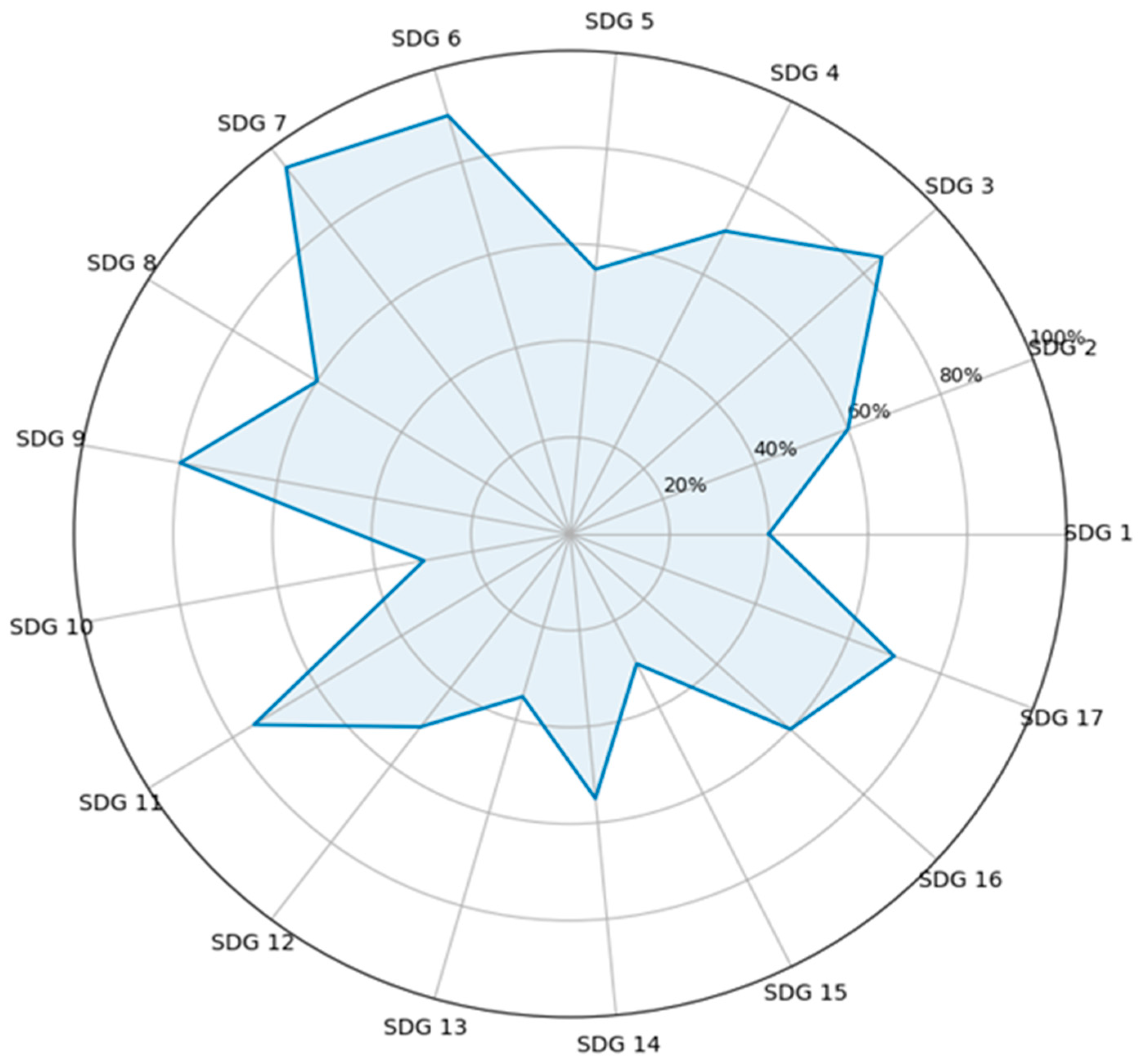
Figure 1 displays the 17 SDGs on a circular axis, illustrating the percentage of progress each has made toward its 2030 target. Goals with the highest levels of achievement (e.g., SDGs 6, 7, and 3) appear on the outer edge, while those showing the greatest lag (e.g., SDGs 15, 13, and 1) are positioned closer to the centre.
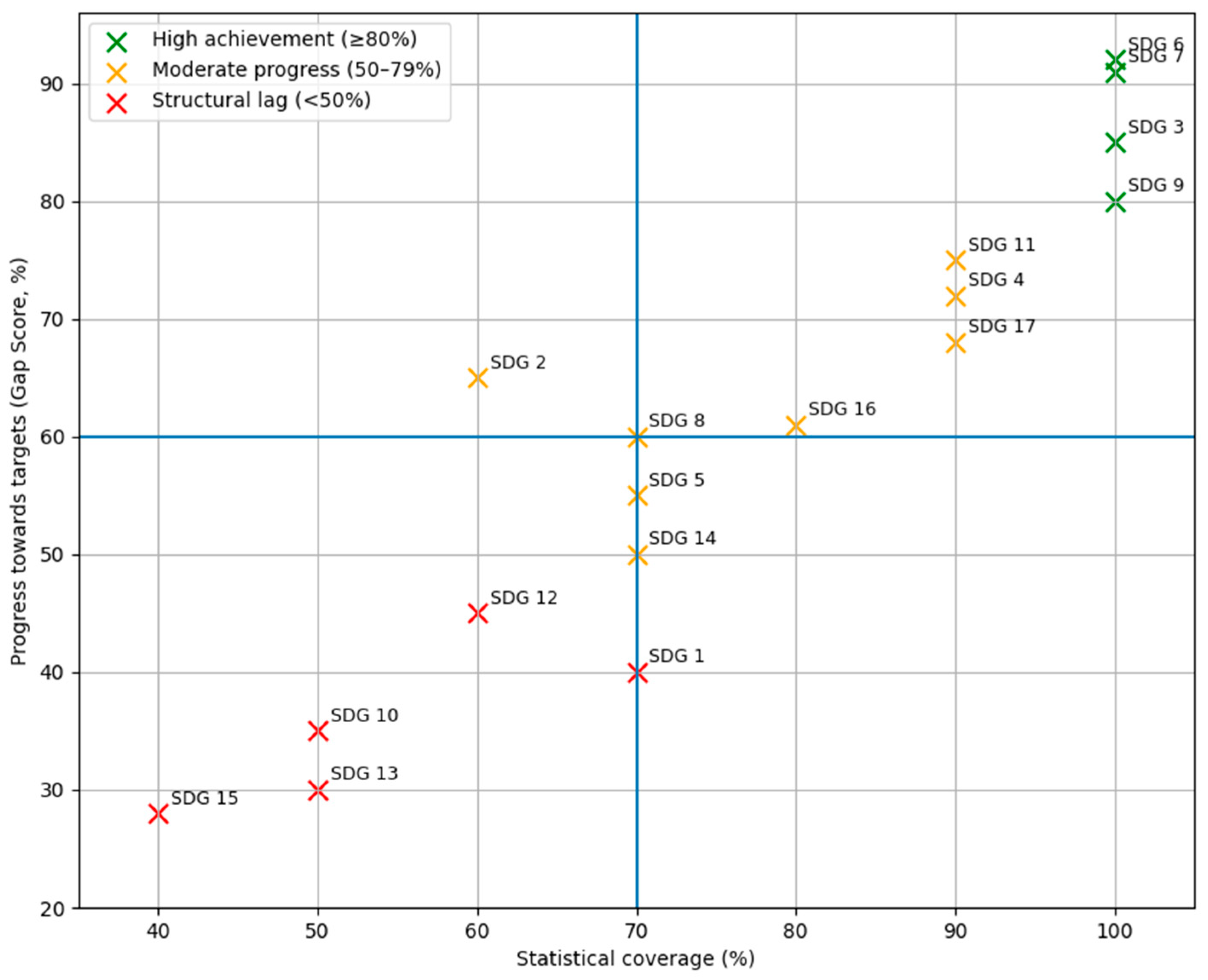
Figure 2 presents each SDG as a single data point. The position of each point reflects both its statistical coverage and its level of achievement.
Points located in the lower quadrants (low coverage and low achievement) may indicate areas at risk of neglect or statistical invisibility.
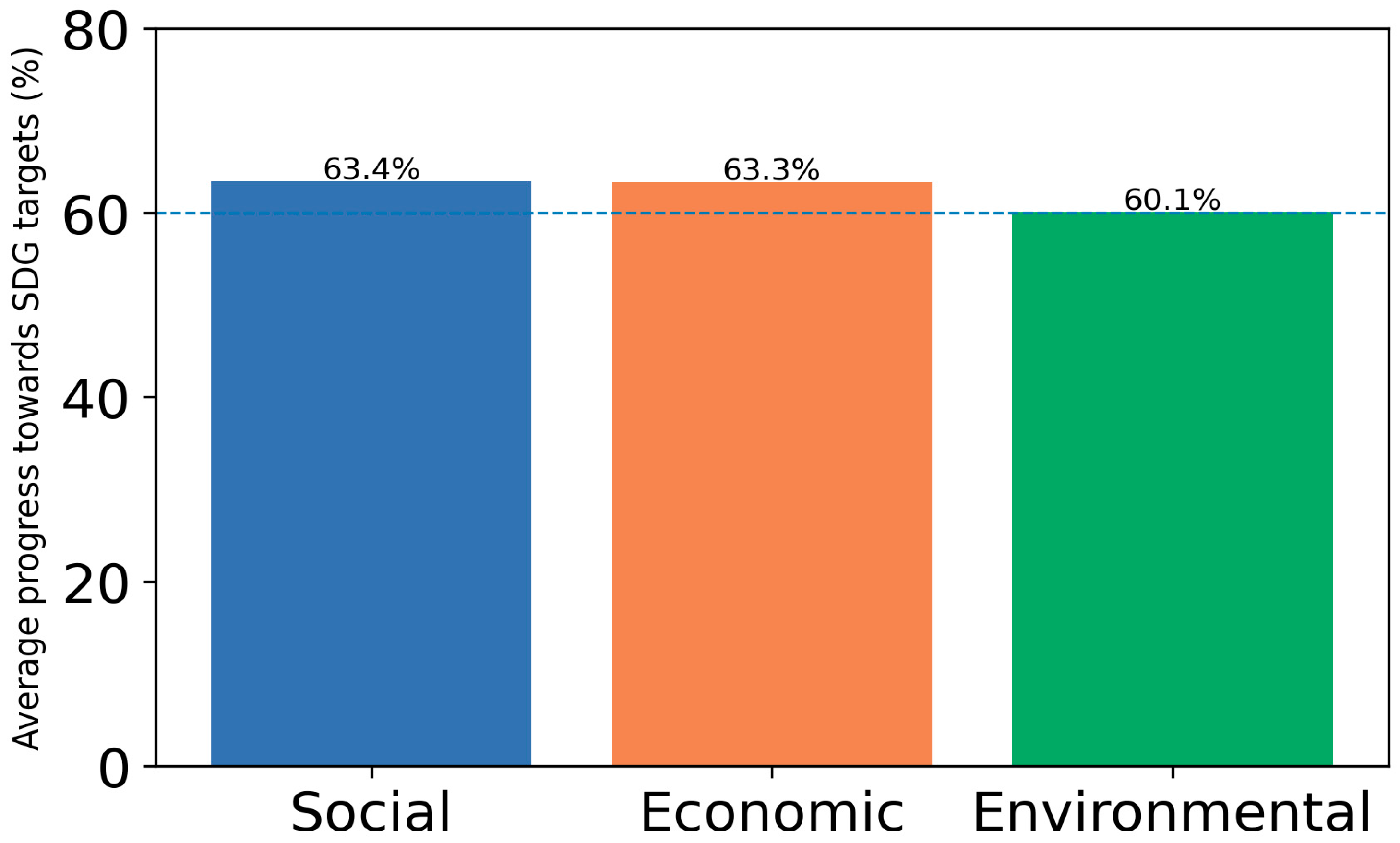
Figure 3 presents a comparative map summarising the average performance of the SDGs, grouped according to the three core dimensions of sustainable development: social, economic, and environmental.
This visualisation enables a comparative assessment across the three dimensions, offering a systemic view of national progress and supporting the identification of political and budgetary priorities. While average performance levels across the social, economic, and environmental dimensions appear relatively similar, this aggregation conceals substantial internal disparities.
In particular, the environmental dimension emerges as the most structurally lagging. It concentrates a majority of SDGs with low levels of achievement (below 50%) and unfavourable trends, notably SDG 13 (climate action) and SDG 15 (life on land), reflecting persistent challenges in Spain’s ecological transition. At the same time, this dimension also includes better-performing goals, such as SDG 6 (clean water) and SDG 7 (affordable and clean energy), which exhibit high achievement levels and favourable trends.
A similar pattern of internal heterogeneity is observed within the social dimension. While SDG 3 (health) shows strong progress, SDG 1 (poverty) and SDG 10 (inequality) remain structurally lagging, highlighting enduring redistributive constraints. By contrast, the economic and social dimensions overall display more stable performance, although still insufficient to fully meet the 2030 targets.
These results underline that aggregate averages mask significant variation across goals, reinforcing the need for disaggregated analysis to properly identify structural imbalances and policy priorities.
4. Results and Discussion: Performance Patterns and Structural Causes
The empirical analysis reveals not only varying levels of progress across the SDGs in Spain but also underlying structural patterns that help explain these differences. These patterns are not random. They reflect deeper structural characteristics of Spain’s economic model, institutional governance, and environmental pressures. The results stem from a combined analytical approach that integrates quantitative metrics—trend direction, distance-to-target (Gap Score), and statistical coverage—with a critical interpretation grounded in the political economy of sustainable development.
Part of the variation observed in several indicators may also reflect major external shocks affecting the European economy during the analysed period, particularly the COVID-19 pandemic and the geopolitical disruptions following the Russia–Ukraine war. These events influenced energy prices, employment dynamics, and inflationary pressures across the European Union.
This section provides an in-depth interpretation of the findings, contrasts them with international literature, and puts forward recommendations based on a contextual analytical perspective.
Since 2015, Spain has shown a notable normative and institutional commitment to the SDGs. The approval of the 2030 Sustainable Development Strategy and the voluntary national reviews submitted to the United Nations reflect this engagement. However, one of the key findings of this study is the marked asymmetry between Spain’s formal commitment to the 2030 Agenda and its actual capacity to implement it coherently. While the SDGs have been incorporated into national planning frameworks [
28], implementation continues to suffer from a lack of cross-sectoral coordination, limited funding, and insufficient multi-level governance. This tension is well documented in international assessments [
2,
5].
Recent studies argue that, across Europe, effective SDG implementation requires rethinking governance frameworks, rather than merely integrating targets into strategic documents [
5,
29]. Spain is no exception. Implementation remains highly dependent on political will and multi-level coordination, both of which are not yet fully institutionalised [
7,
30].
As [
31] points out, many European countries—including Spain—operate within a logic of declarative compliance, where institutional rhetoric is not necessarily matched by structural transformation. This disconnect is particularly evident in SDGs related to environmental sustainability and structural equity. Indeed, as noted by [
13,
31], there is a growing gap between the normative framework adopted and the actual capacity for transformative implementation. This gap is reflected in fragmented planning, weak budget alignment, and limited sectoral integration.
Specifically, our analysis highlights chronic underperformance in environmental SDGs (notably SDGs 12, 13, and 15) and in goals related to structural equity (1 and 10). These patterns are not the result of statistical inertia but stem from persistent structural barriers.
Environmental challenges: Spain continues to rely heavily on resource-intensive sectors such as tourism, construction, agro-industry, and several manufacturing industries including chemicals, food processing and construction materials. These sectors play an important role in the national economy but also generate significant environmental pressures, particularly in terms of land use, water consumption, emissions and biodiversity loss. Although these industries operate under European environmental regulations such as the Integrated Pollution Prevention and Control (IPPC) Directive and the Best Available Techniques (BAT) framework—implemented in Spain through Royal Legislative Decree 1/2016—the ecological transition remains gradual and insufficiently transformative [
32,
33]. This structural dependence on resource-intensive sectors illustrates the potential trade-offs between economic growth and environmental sustainability that have been widely discussed in the SDG literature [
16,
24].
These environmental pressures also illustrate the interdependence between several SDGs. Progress in SDG 12 (responsible consumption and production) can contribute directly to achieving SDG 13 (climate action) by reducing greenhouse gas emissions associated with production systems. At the same time, pollution prevention and improved resource management support biodiversity protection, which is central to SDG 15 (life on land). Conversely, insufficient progress in responsible production patterns may reinforce negative trends in both climate mitigation and ecosystem conservation.
Equity challenges: Redistributive policies have not significantly altered the regressive structure of income and wealth distribution in Spain, contributing to persistent inequalities that affect progress toward SDGs related to poverty reduction and social inclusion [
24,
34].
These structural gaps reflect governance failures, rather than merely technical or financial shortcomings [
35].
This pattern mirrors trends observed in other countries [
2,
36]. However, in Spain, these shortcomings are compounded by context-specific factors:
A resource-intensive economic model, highly dependent on tourism, construction, and agro-industry [
37].
Historical deficits in effective income redistribution and social protection [
33].
Limited uptake of the SDGs in subnational political agendas, particularly at local and regional levels [
38].
Together, these factors form a structurally reproduced lag that cannot be reversed without significant reforms in fiscal policy, institutional design, and territorial governance. Uneven statistical coverage across SDGs also poses a notable methodological risk. As shown in
Figure 2, SDGs with less data tend to be poorly assessed or left out of comparative analysis. This phenomenon of statistical invisibility is identified as a major barrier in several studies [
39,
40]. Reference [
40] warns that lack of data not only hampers technical monitoring but can also create a political bias—where more measurable SDGs attract more policy attention, while complex or less prioritized goals are neglected. This bias especially impacts politically marginalized goals, such as SDG 14 (Life Below Water) and SDG 16 (Peace, Justice and Strong Institutions), creating a cycle of underinvestment that weakens the system’s capacity to detect emerging gaps. The case of SDG 16 deserves particular attention. Although Spain reaches a moderate Gap Score (61%) and relatively high statistical coverage, the stagnant trend observed in several indicators reflects persistent governance challenges. These include declining levels of institutional trust, administrative fragmentation across territorial levels, and difficulties in coordinating sustainability policies across sectors. This situation illustrates how formal institutional capacity does not always translate into effective governance outcomes.
At the same time, limitations in the availability and disaggregation of governance-related indicators complicate the assessment of institutional performance. Overcoming this challenge requires broadening the data sources used in sustainability analysis, ranging from administrative records to remote sensing, big data, and citizen science [
41]. It is also crucial to support territorial and demographic disaggregation in order to reveal inequalities that remain hidden in national aggregates.
In this regard, the INE has made significant progress in national monitoring of the SDGs. However, limitations remain in terms of territorial and sectoral disaggregation, and the integration of alternative data sources such as administrative registries, satellite data, and citizen-generated information [
2,
41].
The results also reveal a lack of policy coherence between stated commitments and actual policy implementation. Despite the existence of national SDG strategies, many fiscal, budgetary and regulatory decisions remain misaligned with the principles of sustainable development.
As [
36] warn, without a profound transformation that respects the planet’s ecological limits—such as climate stability, biodiversity protection, and pollution control—while also ensuring social justice, SDG achievement will remain, at best, partial or even illusory. In Spain, this incoherence is reflected in fragmented planning and weak cross-sectoral coordination, which hamper effective implementation.
Indeed, recent studies on subnational SDG implementation in Spain show that many autonomous communities and municipalities still lack clear localisation strategies [
19,
30], contributing to fragmentation of collective efforts and reduced political effectiveness.
This study demonstrates that SDG implementation cannot be reduced to a technical monitoring exercise. Rather, it must be embedded within a transformative approach to public policy. As [
36] emphasise, only a structural transformation of Spain’s economic, territorial and productive model will enable real progress towards sustainability—without compromising ecological thresholds or social cohesion.
These findings have important policy implications, which are discussed in greater detail in the
Section 5.
5. Conclusions, Implications, Limitations and Future Research
This study provides a systematic and replicable evaluation of Spain’s progress towards the SDGs between 2015 and 2024. It combines quantitative metrics—trend analysis, indicator coverage, and distance to targets—with a structural perspective. This approach makes it possible to identify not only which SDGs are advancing or stagnating, but also why. The results highlight the institutional, statistical, and economic factors that shape these patterns.
The findings reveal partial and uneven progress. Spain performs well in areas such as health, education, and access to basic services. However, significant structural gaps persist. These are particularly visible in environmental, governance, and equity-related goals. SDGs 13 and 15 show especially weak performance, while SDGs 14, 1, and 10 continue to lag behind.
The analysis also exposes a clear misalignment between formal commitment and implementation capacity. Spain has adopted the 2030 Agenda at the institutional level. Yet this commitment has not translated into a fully transformative policy framework. Fragmented governance, weak coordination across territorial levels, and siloed policy planning continue to limit progress. In addition, the limited integration of SDGs into strategic decision-making and budgetary processes reduces their practical impact. The study also identifies a pattern of statistical invisibility. Under-prioritised goals receive less attention due to gaps in data availability. This bias reinforces structural inequalities and weakens evidence-based policymaking.
From a public policy perspective, the findings call for a qualitative shift in sustainability governance. First, governments should integrate the SDGs more effectively into policy design, implementation, and evaluation. This includes tools such as SDG impact assessments, SDG-based budget tagging, and the expansion of territorial monitoring systems. Second, stronger multi-level governance structures are required. National, regional, and local administrations must share responsibility and coordinate their actions. Subnational governments also need sufficient autonomy, resources, and technical capacity. Third, statistical systems must be strengthened. This involves improving data coverage, quality, and disaggregation, as well as incorporating new data sources such as open data, citizen science, satellite information, and advanced analytics.
From an academic perspective, this study makes three main contributions. First, it provides new empirical evidence on SDG implementation in Spain based on official indicators and a longitudinal approach. Second, it proposes a transparent and replicable methodological framework that can be applied to other countries, regions, or cities. Third, it connects quantitative monitoring with structural analysis, moving beyond purely technocratic or reporting-oriented approaches. It also places the Spanish case in a broader European context, offering insights that may inform comparative research and international policy evaluation.
This study also faces several limitations. First, the lack of territorial disaggregation prevents analysis at the level of autonomous communities or municipalities. Second, data gaps remain significant for some SDGs, particularly SDGs 14 and 16. Third, many indicators lack clearly defined national targets, which complicates the estimation of distance-to-target measures. In addition, the use of linear trend analysis may not fully capture the effects of major disruptions such as the COVID-19 pandemic. Future research could address this limitation by applying more advanced time-series methods capable of identifying structural breaks or nonlinear dynamics.
These limitations reinforce the need to strengthen statistical systems, improve methodological transparency, and promote more coherent multi-level governance aligned with the principles of the 2030 Agenda.
This study also opens several avenues for future research. One priority is the territorial analysis of SDG performance, which would make it possible to identify disparities across regions, provinces, and cities. Another important line of research involves the development of participatory and qualitative approaches that incorporate the perspectives of social, institutional, and community actors. Further work is also needed to analyse interlinkages between SDGs using network analysis and simulation models. These approaches can help identify synergies, bottlenecks, and unintended effects. In addition, future studies should examine the international spillovers of national policies, particularly in areas such as trade, ecological footprints, and development cooperation.
Comparative research between Spain and other Southern European countries—such as Italy, Portugal, and Greece—offers a promising avenue. These countries share structural characteristics, including decentralised governance systems, tourism-dependent economies, and similar environmental pressures. This makes them suitable cases for testing the replicability of the proposed framework.
In conclusion, evaluating the SDGs requires more than tracking statistical progress. It demands a critical examination of public policies, data systems, and institutional structures. This study therefore provides both an empirical assessment and a conceptual contribution. It offers a framework for rethinking public action through the lenses of sustainability, social justice, and transformative coherence.