1. Introduction
Urban studies literature has predominantly approached urban change through the lens of large-scale redevelopment, urban regeneration programmes, and formal planning interventions. Urban transformation is often conceptualized as a visible and disruptive process involving demolition, reconstruction, and spatial restructuring. Although these methodologies have yielded significant insights concerning planning instruments and institutional frameworks, they have a tendency to prioritize episodic redevelopment events as opposed to the gradual transformations that occur within quotidian urban environments over extended time periods [
1,
2].
Recent studies have increasingly recognized that urban transformation frequently occurs through incremental and cumulative processes embedded in everyday spatial practices, governance arrangements, and institutional adjustments. Rather than being triggered by singular redevelopment interventions, urban change may emerge through dispersed and small-scale modifications in land use, management structures, and spatial practices [
1,
3]. These modifications may progressively reshape the functioning of urban environments [
4,
5,
6]. From this perspective, cities can be conceptualized as dynamic socio-spatial systems, wherein transformation occurs through the interaction between institutional change, spatial practices, and socio-economic pressures [
7,
8,
9]. This shift in focus entails a transition from the examination of redevelopment projects to the nuanced and yet profound processes through which urban environments undergo transformation over extended periods.
Planned satellite towns emerged historically as part of broader suburbanization processes associated with metropolitan expansion and population redistribution. These developments were typically implemented through large-scale mass housing projects designed to provide integrated residential environments combining housing provision, open spaces, and social amenities. As such, satellite towns offer a particularly relevant setting for examining how incremental spatial and institutional transformations unfold over time within environments originally conceived through comprehensive planning principles.
Within such planned residential environments, governance arrangements play a particularly significant role in shaping how collective spaces are managed, accessed, and transformed over time. In the context of contemporary urban transformation, governance has emerged as a pivotal analytical framework. A considerable body of urban governance literature highlights how shifts associated with neoliberal urban governance—including institutional fragmentation, hybrid public–private management arrangements, and market-oriented urban development strategies—have profoundly reshaped the governance and management of urban space [
10,
11]. In many cases, these transformations are closely associated with market-driven development dynamics that gradually reshape land use priorities and the management of collective urban spaces. The aforementioned governance transformations frequently manifest through dispersed decision-making processes across a multitude of actors and institutional levels. This phenomenon often gives rise to intricate and, at times, fragmented management structures for urban resources and infrastructures [
12,
13]. Consequently, spatial transformation may occur not only through physical redevelopment but also through incremental changes in governance arrangements that gradually redefine the accessibility, maintenance, and everyday functioning of collective open spaces. Within the context of contemporary cities, governance restructuring emerges as a pivotal mechanism through which spatial transformation is both produced and negotiated.
These dynamics are particularly evident in the management of urban open spaces. In many planned residential environments, open spaces were originally conceptualized as shared amenities designed to support environmental quality, social interaction, and neighborhood cohesion. Nonetheless, the extant studies on urban commons suggest that the long-term sustainability of collectively used spaces is contingent not only on their physical design, but also on governance arrangements that regulate access, maintenance, and stewardship [
14,
15]. This perspective builds on classical commons theory, which emphasizes that shared resources require institutional arrangements capable of coordinating collective action.
According to classical commons theory, governance structures are required for shared resources in order to prevent overuse, exclusion, and institutional breakdown. These governance structures must be capable of coordinating collective action and regulating use [
16]. Contemporary urban studies extend this perspective to the city, highlighting how urban land, public spaces, and shared infrastructures increasingly function as contested commons within complex governance environments [
17,
18,
19,
20]. In this context, processes such as commercialization, regulatory adjustments, or changes in management responsibility may gradually reshape the collective character of open spaces without necessarily altering their physical form. Consequently, the transformation of urban commons may unfold incrementally through shifts in governance arrangements rather than through explicit privatization or redevelopment.
These governance-driven transformations carry significant ramifications for urban quality of life. The concept of quality of life (QoL) has been understood as a multidimensional phenomenon, integrating objective living conditions with subjective perceptions of well-being [
21,
22,
23,
24,
25,
26]. In the domain of urban studies, research has repeatedly underscored the pivotal role of neighborhood environments, housing conditions, accessibility, and everyday spatial experiences in shaping residents’ evaluations of their living environments [
27,
28]. Residential open spaces play a particularly pivotal role in this framework, as they serve as mediators between built form, environmental quality, and everyday social practices [
29,
30,
31,
32].
Empirical studies have demonstrated that well-designed and accessible open spaces can strengthen social interaction, support physical and mental health, and contribute to residents’ sense of safety and belonging [
33,
34,
35,
36]. Nevertheless, a considerable number of these studies assume relatively stable spatial and governance arrangements over time. When interpreted through the lens of incremental urban transformation, it becomes evident that small shifts in governance, accessibility, and spatial management can accumulate and significantly reshape everyday urban experience. Changes in land-use regulation, the commercialization of communal spaces, or the fragmentation of management responsibilities may gradually alter how residents interact with public space and with one another.
Within this framework, residential open spaces occupy a critical position as mediators between urban form and social life. Research on liveable neighbourhoods and human-scale urban environments has shown that well-designed open spaces support social interaction, foster a sense of belonging, and enhance perceived safety [
37,
38,
39,
40,
41]. Concepts such as defensible space [
42], spatial configuration [
43], and neighbourhood attachment [
44] further demonstrate that spatial continuity and accessibility are closely linked to social cohesion and everyday urban experience. However, while these studies acknowledge the importance of open spaces, they often assume a relative stability in spatial arrangements over time.
This study builds on existing literature by conceptualizing what we term incremental governance erosion as a subtle but cumulative mechanism through which planned residential environments may undergo transformation without large-scale demolition or formal urban renewal. Rather than occurring through singular redevelopment interventions, such transformations often emerge gradually through small institutional adjustments and evolving governance arrangements.
From this perspective, changes in residential open spaces can be interpreted as a gradual erosion of urban commons, driven by incremental shifts in governance and spatial management. Rather than emphasizing solely on visible redevelopment processes, this perspective underscores the notion that cumulative institutional changes may progressively reshape the social and spatial functionality of collective open spaces.
Planned satellite towns offer particularly revealing settings for observing these dynamics because their spatial organization and collective amenities were originally designed around shared governance arrangements. The case of Bahçeşehir offers a significant empirical context for examining the evolution of planned mass housing environments under shifting governance conditions. This study also explores the impact of these incremental transformations on residents’ perceptions of urban quality of life.
The present study is guided by three interrelated research questions:
What is the nature of the evolution of residential open spaces in Bahçeşehir since the project’s inception? Secondly, the investigation will explore how these changes have affected residents’ everyday experiences and perceptions of urban quality of life. It is imperative to elucidate the manner in which planning intentions, governance arrangements, and market dynamics interact to influence these outcomes.
By addressing these questions, the article contributes to ongoing debates on incremental urban transformation, the governance of collective open spaces, and the long-term evolution of planned satellite towns.
Taken together, these perspectives provide a coherent analytical lens for examining how incremental governance shifts, spatial transformations, and ownership dynamics interact to reshape everyday urban experiences in originally planned residential environments, as explored in the case of Bahçeşehir.
2. Materials and Methods
This study employs a qualitative case study design grounded in an interpretivist research paradigm. The objective of this study is to examine how incremental governance shifts reshape collective open spaces and how these transformations are perceived by long-term residents.
The analytical strategy combines deductive and inductive thematic analysis techniques. The initial framework derived from urban quality of life literature structured the data collection process. Subsequently, iterative coding enabled the emergence of transformation-oriented themes beyond the original parameter structure.
At the outset of the broader doctoral research, an extensive literature review was conducted on urban quality of life in mass housing open spaces. Through a multi-stage analytical filtering process, an initial pool of conceptual variables was synthesized and consolidated into eight primary analytical parameters (
Appendix A). It is imperative to acknowledge that these parameters may not necessarily align with the findings of this study. Instead, they function as an analytical lens that guides data collection and first-cycle coding.
The parameters functioned as a deductive starting framework; nevertheless, they were not regarded as fixed analytical outcomes. During the coding process, categories underwent restructuring, merging, and refinement in response to empirical evidence, thereby enabling the emergence of governance-driven incremental transformation patterns.
Originally celebrated as a model planned satellite town, Bahçeşehir provides a unique longitudinal setting to examine how institutional restructuring gradually alters collectively designed open spaces without large-scale demolition.
The development of Bahçeşehir commenced in 1994 as one of the inaugural large-scale planned satellite town initiatives in Turkey. The project was implemented on a 4.7 million m
2 site and envisioned the construction of approximately 15,400 housing units under the coordination of the Real Estate Bank of Türkiye in partnership with Mesa–Nurol. Bahçeşehir was conceived as a comprehensive suburban settlement integrating residential clusters, social infrastructure, and extensive open spaces. It was promoted as a model for mass housing development in the national planning agenda [
45,
46].
The planning approach employed in this project has garnered international acclaim, as evidenced by the United Nations Habitat II “Best Practices” Award in 1996 and the “New Urban Settlement Understanding” Award in Canada in 1997. Bahçeşehir’s achievements have garnered recognition as a paradigm of meticulously planned suburban development, grounded in collective spatial principles and coordinated institutional management.
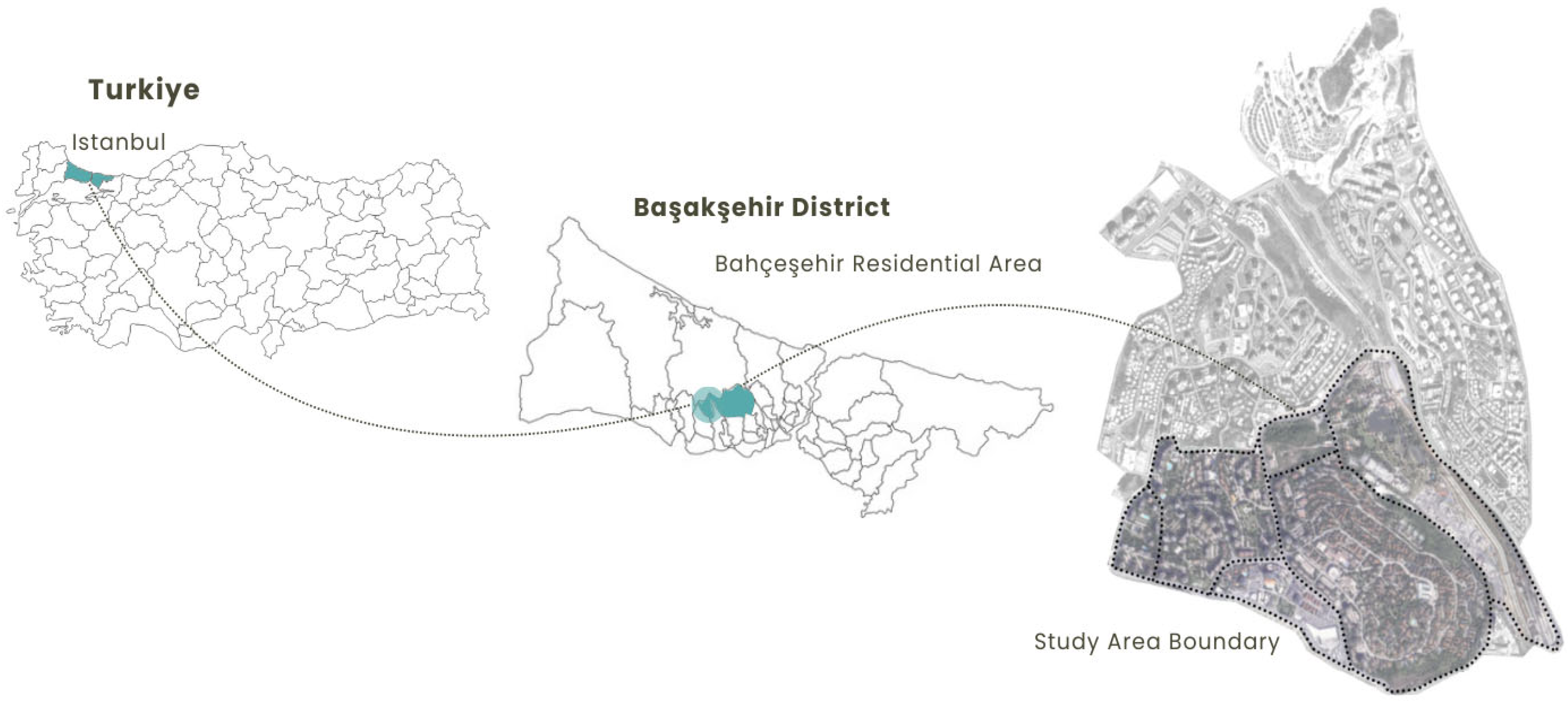
Figure 1 presents the location of Bahçeşehir within Turkey and the Istanbul metropolitan area, together with a detailed view of the study area boundary.
Administratively, Bahçeşehir is currently located within the Başakşehir District of Istanbul. The analysis focuses on the first development phase of Bahçeşehir, where the original planning principles and spatial intentions were most clearly articulated and systematically implemented.
Over time, however, subsequent development phases—particularly those implemented under different institutional arrangements, including later housing production by TOKİ—introduced new governance configurations and spatial dynamics. As of 2023, the combined population of Bahçeşehir’s first and second sections exceeds 96,000 inhabitants, reflecting significant demographic growth and spatial intensification since the original settlement phase.
Originally celebrated as a model planned satellite town, Bahçeşehir offers a unique longitudinal setting through which to examine how institutional restructuring and incremental governance shifts gradually reconfigure collectively designed open spaces without large-scale demolition. This temporal depth enables the study to trace transformation not as a singular redevelopment event, but as a cumulative process embedded in evolving administrative, managerial, and spatial practices.
This study employed purposive sampling targeting long-term residents with direct experience of spatial and governance changes since the mid-1990s. Snowball sampling was subsequently used to reach additional actors embedded in local governance networks.
Participants’ length of residence ranged from approximately 20 years to over 30 years, with several individuals residing in Bahçeşehir since its initial development phase.
Participants represented both villa-type housing clusters and multi-family apartment complexes, ensuring spatial heterogeneity in lived experiences. Thematic saturation was reached after the ninth interview.
Empirical data were generated through eleven semi-structured in-depth interviews conducted with long-term residents and actors embedded in local governance and open space management networks. The participants of this study had resided in Bahçeşehir since its early development phase in the mid-1990s, thereby offering longitudinal experiential insights into spatial and institutional change. The interviews were designed to explore perceptions of open space use, governance arrangements, accessibility, and evolving community dynamics.
In order to complement the data from the interviews and enhance the analytical robustness, multiple sources of qualitative evidence were incorporated. These encompassed systematic field observations conducted across various residential clusters, photographic documentation of spatial modifications, historical and current planning maps, and relevant archival materials pertaining to the settlement’s development trajectory.
The integration of these sources enabled methodological triangulation. The credibility of the interpretations was strengthened by cross-checking interview narratives against observable spatial transformations and documented planning decisions. Rather than relying solely on self-reported perceptions, the study situates residents’ accounts within material and institutional evidence, allowing for a more comprehensive examination of incremental transformation processes.
All qualitative materials were imported into MAXQDA Analytics Pro 2025 for systematic analysis. The coding process proceeded in three stages:
First-cycle coding: deductive coding based on eight predefined analytical parameters.
Second-cycle coding: identification of sub-codes and relational clustering across parameters.
Thematic consolidation: synthesis of cross-cutting patterns reflecting incremental transformation dynamics.
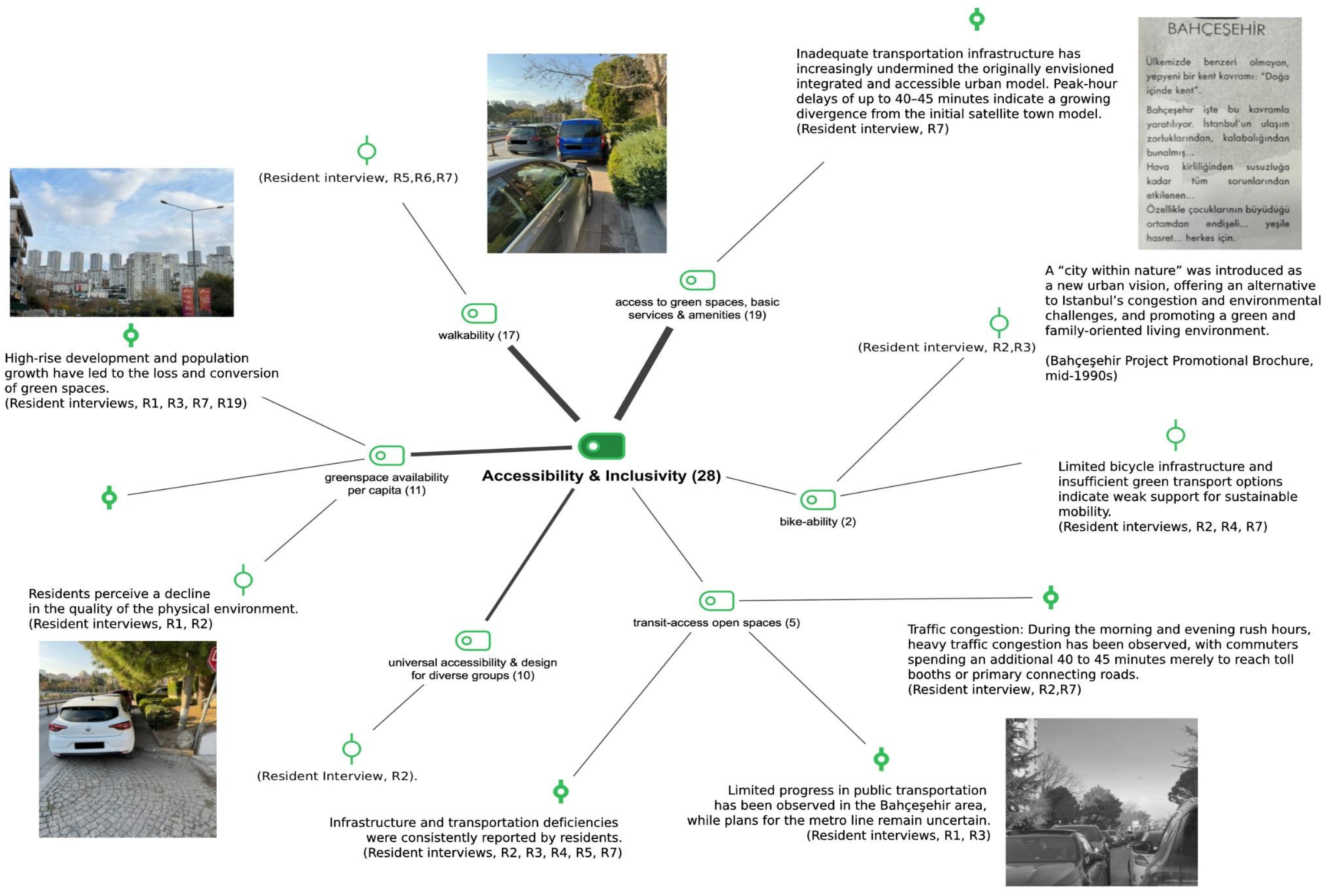
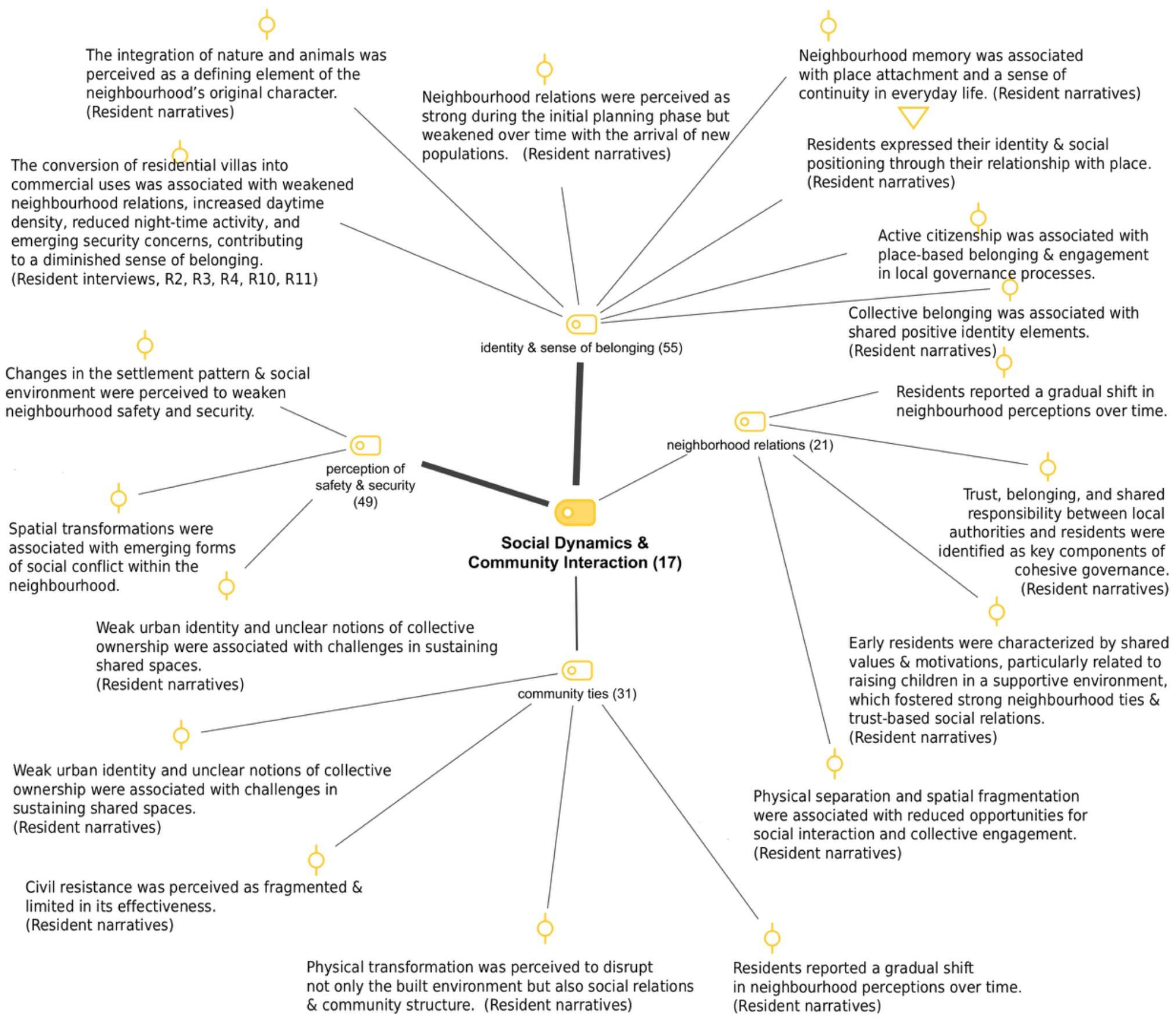
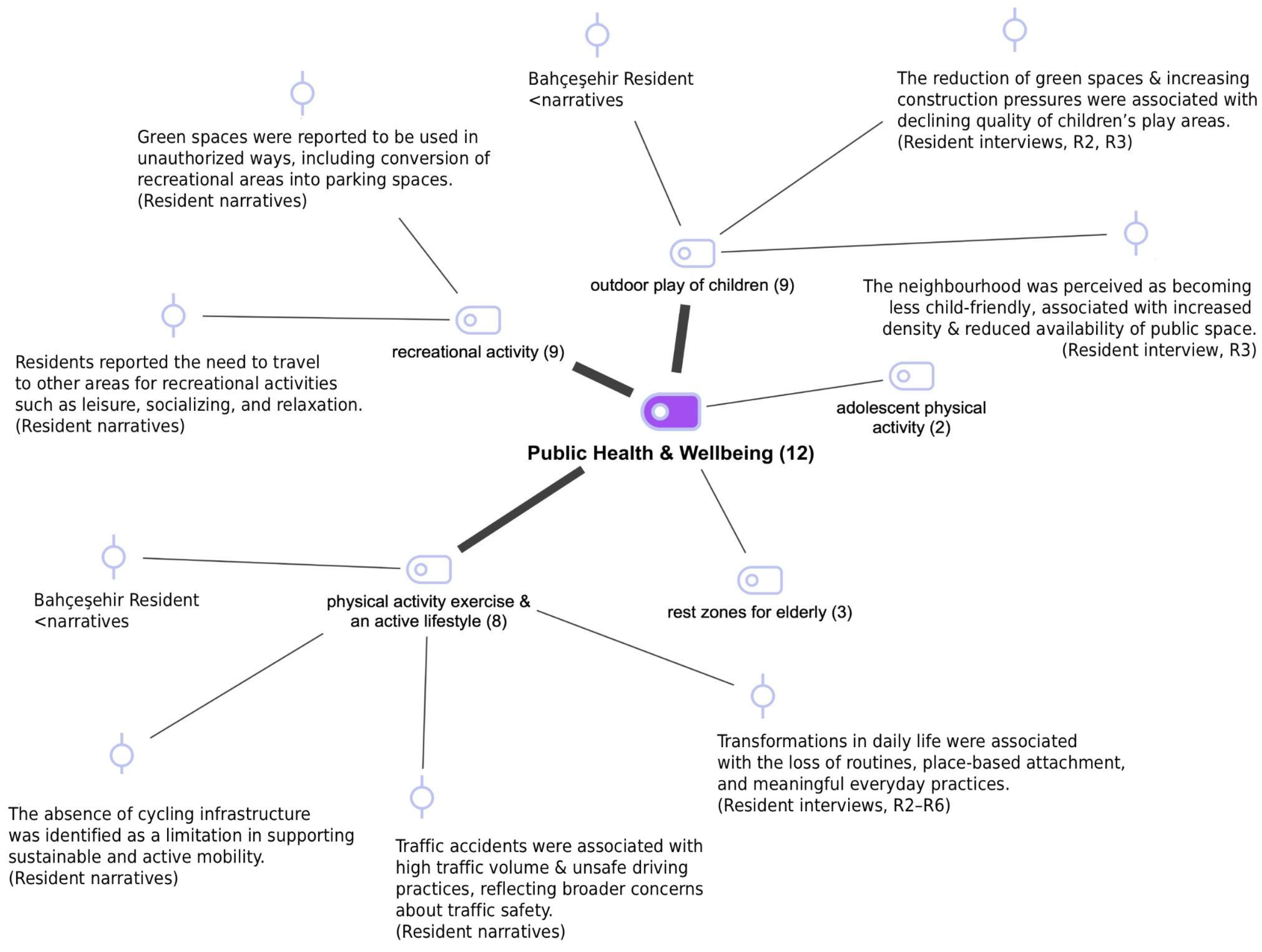
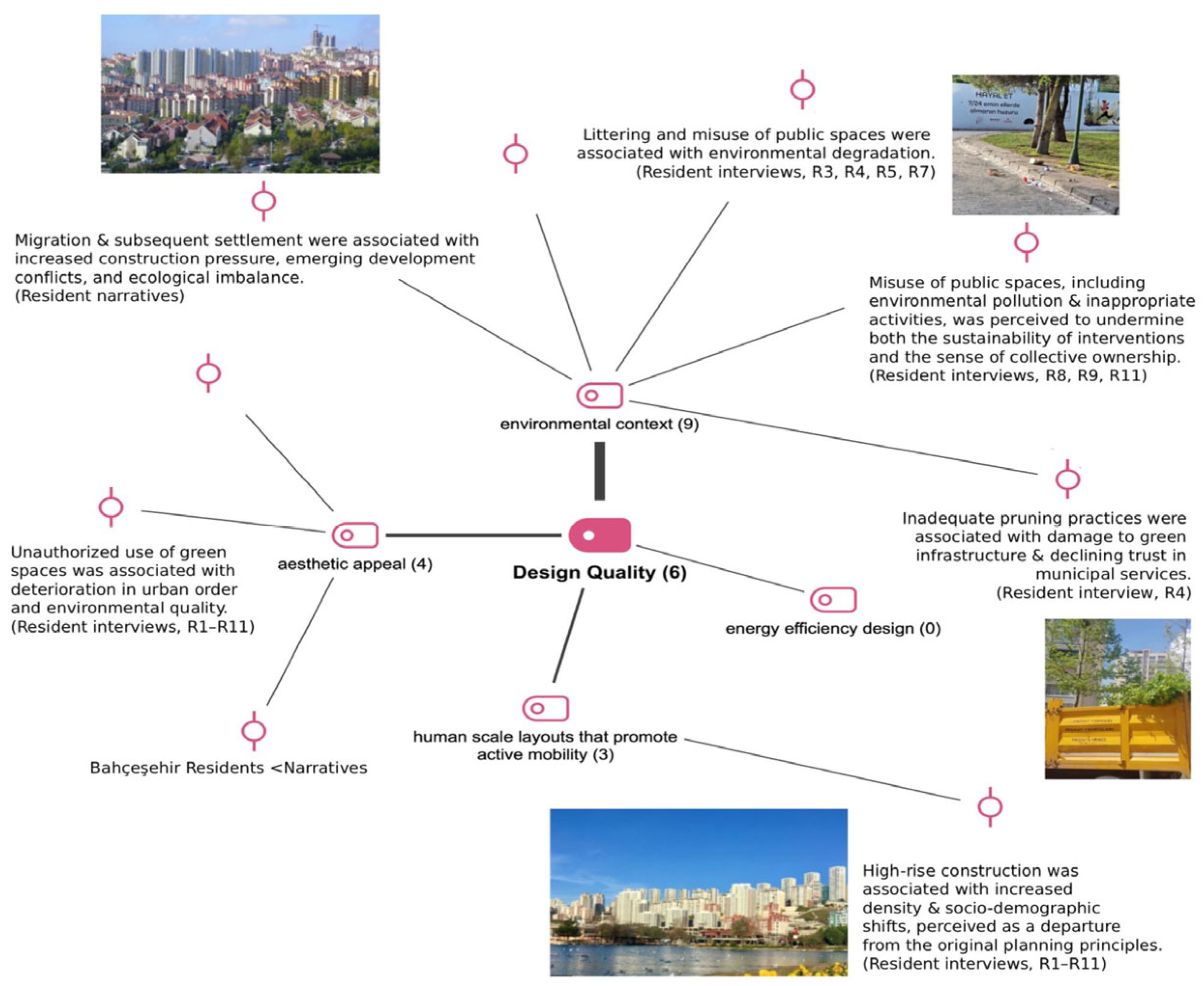
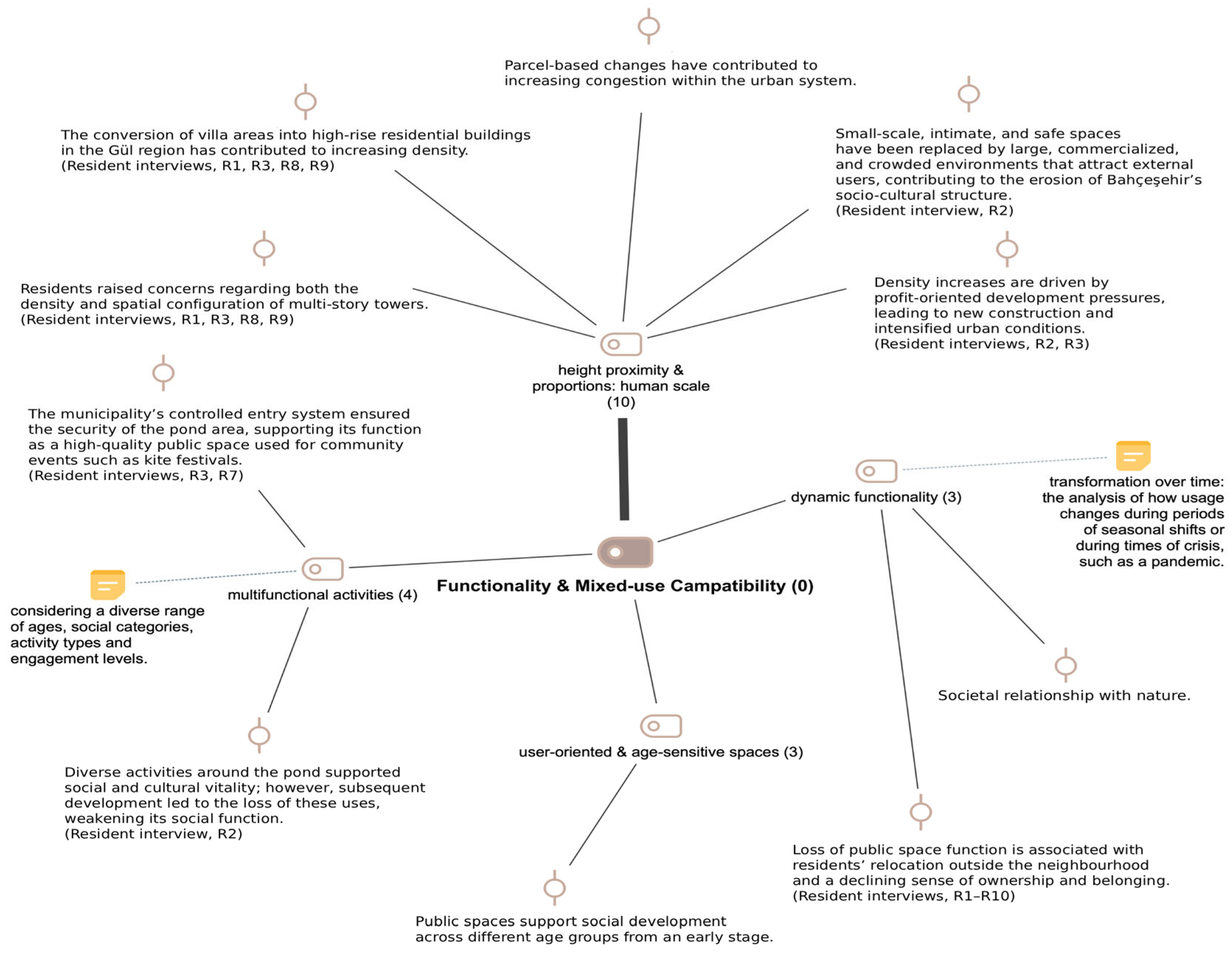
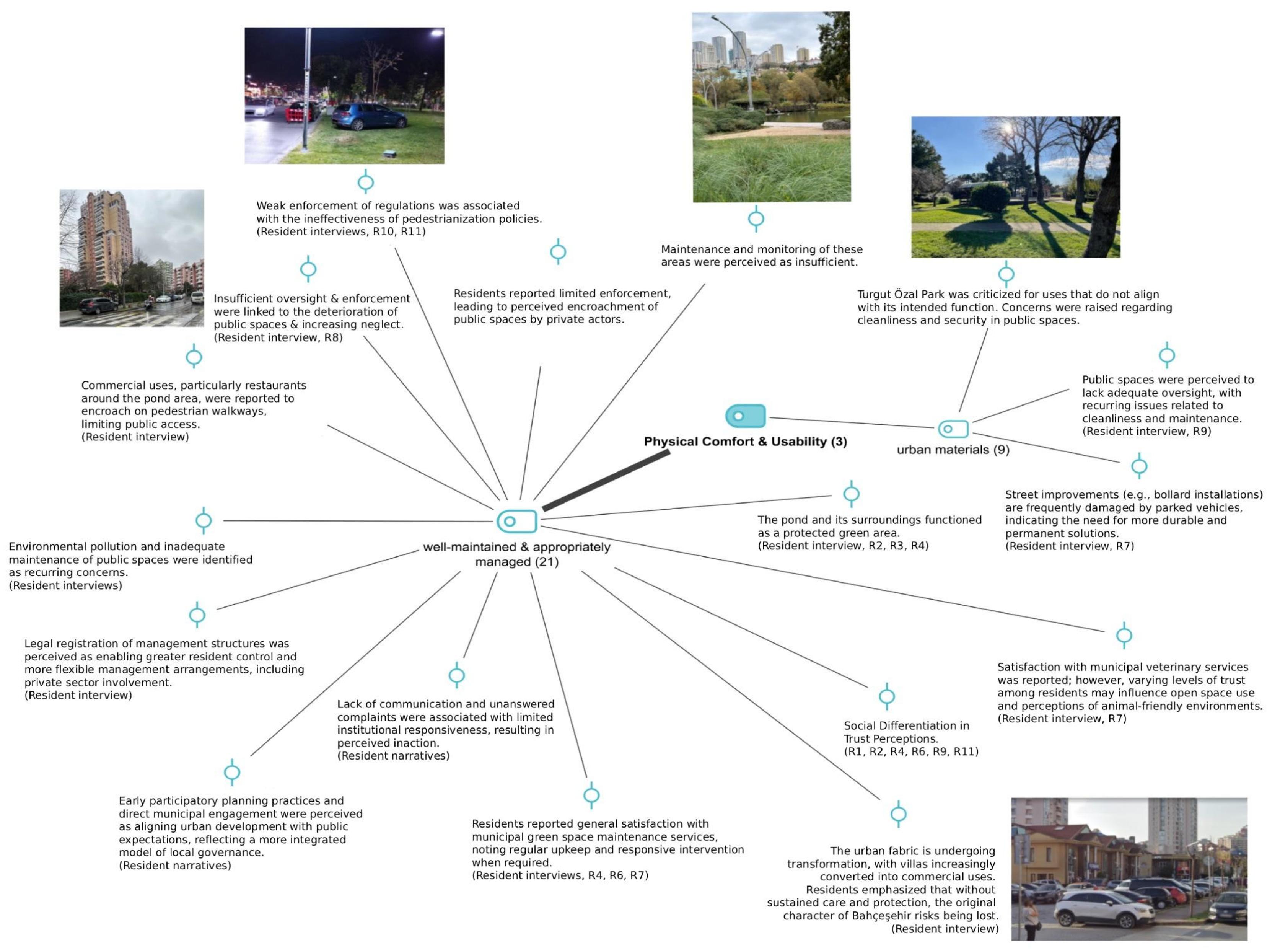
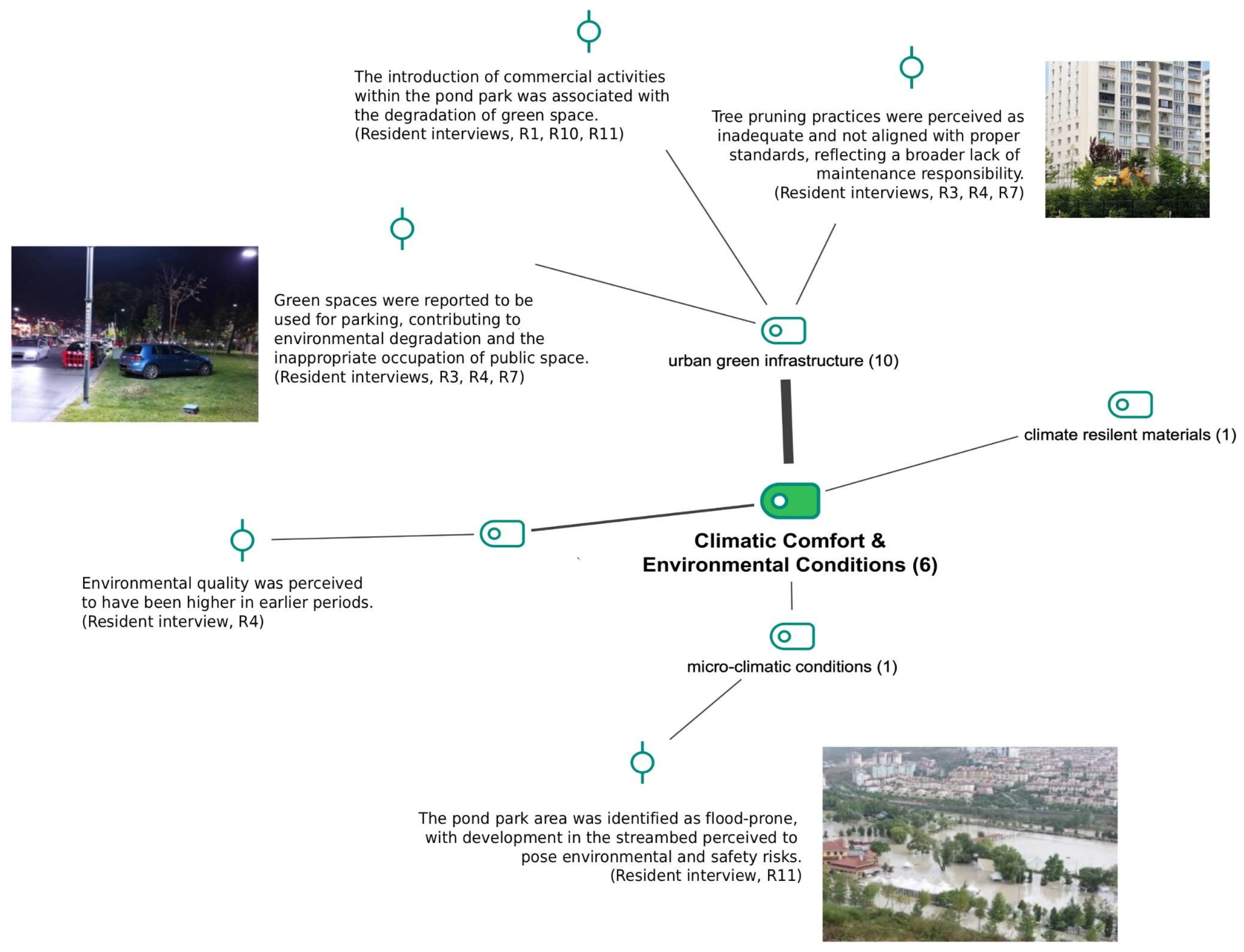
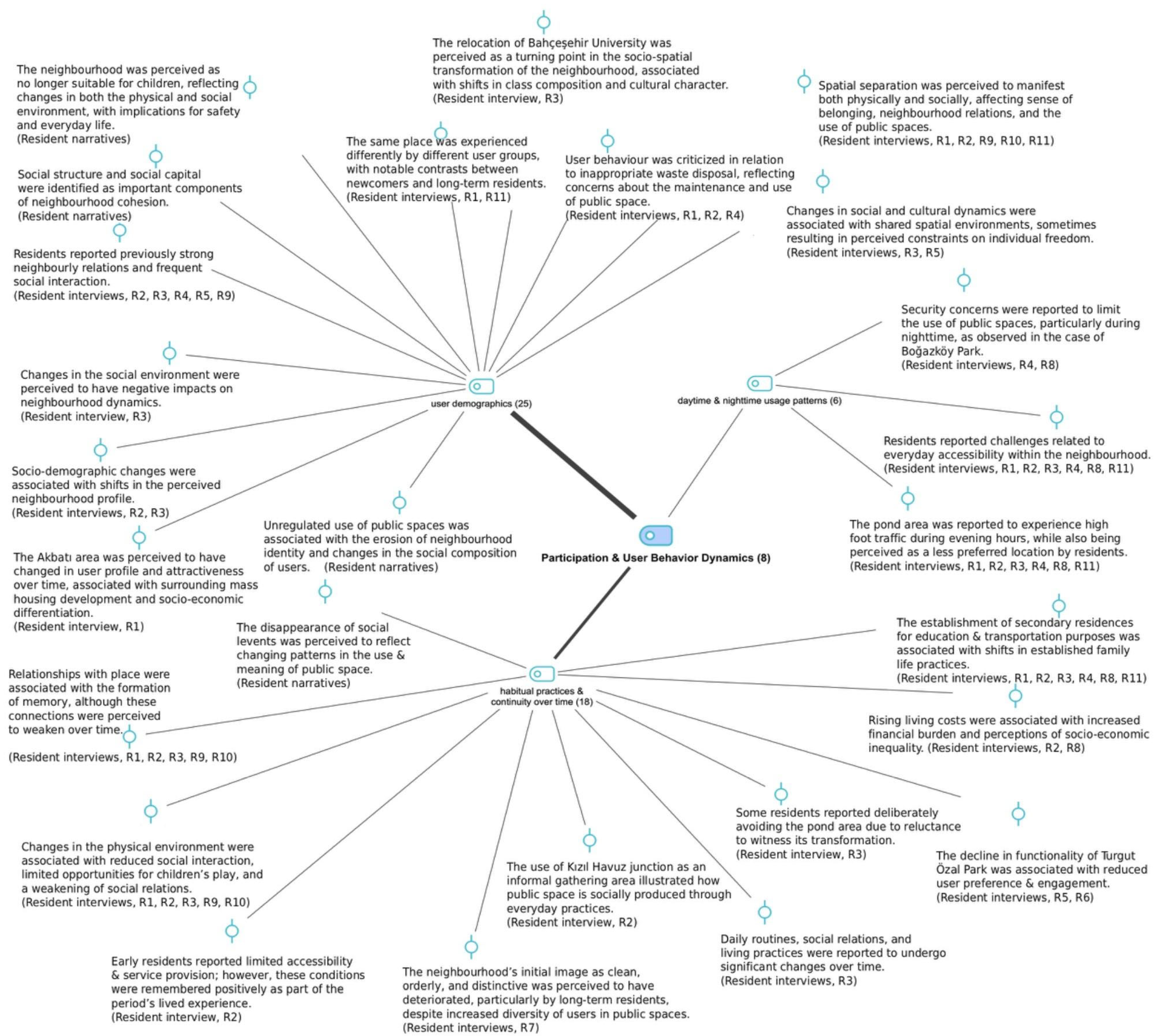
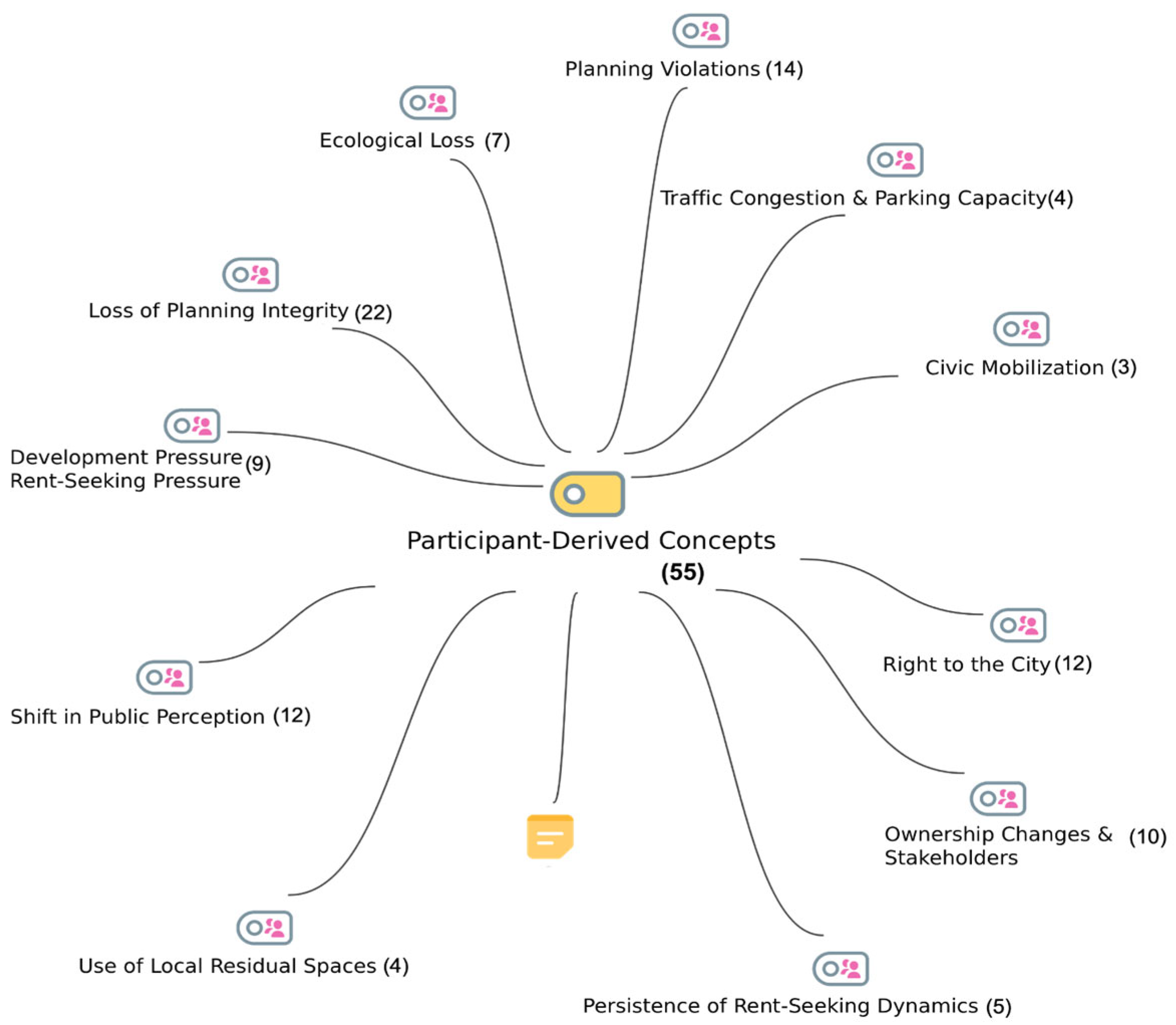
The initial coding structure yielded eight primary code families with multiple sub-codes. In addition to the predefined analytical parameters, the coding process also revealed a set of participant-derived expressions reflecting local perceptions of governance and planning processes (see
Appendix B). However, an iterative comparison revealed that many sub-codes converged around governance restructuring, functional reconfiguration of open spaces, and shifts in accessibility and social cohesion. This process resulted in four overarching analytical themes that form the core findings of this article.
To enhance analytical rigor, the study employed triangulation across multiple data sources, including interview transcripts, field observations, spatial documentation, and archival materials. The qualitative analysis followed an iterative coding process, in which themes were progressively refined through repeated comparison across data sources. Reflexive memoing was used throughout the coding process to document emerging interpretations and maintain analytical transparency. In addition, spatial claims derived from interview narratives were cross-verified with archival records and planning documents to strengthen the credibility of the findings. In addition, the relative prominence of themes and spatial references was assessed based on their recurrence across interview narratives, providing a qualitative indication of their significance. A generative AI tool was used solely for language editing and improving clarity. It was not involved in data collection, analysis, or interpretation.
This approach ensured analytical rigor and transparency in linking empirical observations with conceptual interpretation.
3. Results
This section presents the main findings on the incremental transformation of the Bahçeşehir Housing Project, with a focus on the spatial, social, and governance dimensions of residential open spaces. The findings are analytically interconnected and reflect the cumulative nature of incremental transformation processes. The findings are derived from qualitative fieldwork, including in-depth interviews, field observations, and visual–spatial documentation, which were systematically analysed through thematic coding in MAXQDA. These themes emerged through iterative coding and comparison across interview narratives, spatial observations, and archival materials.
The analysis identified three overarching themes that structure the presentation of the results: (1) Original Planning Vision and Early Spatial Configuration, (2) Governance Shifts in the Management of Residential Open Spaces, and (3) Ownership Ambiguity and Emerging Challenges in Collective Space Governance. These themes reflect how gradual spatial and institutional transformations have reshaped the everyday use and perception of residential open spaces in Bahçeşehir.
Illustrative quotations and selected visual materials are used throughout this section to support the empirical findings and to provide insight into residents’ lived experiences of these transformations.
3.1. Original Planning Vision and Early Spatial Configuration
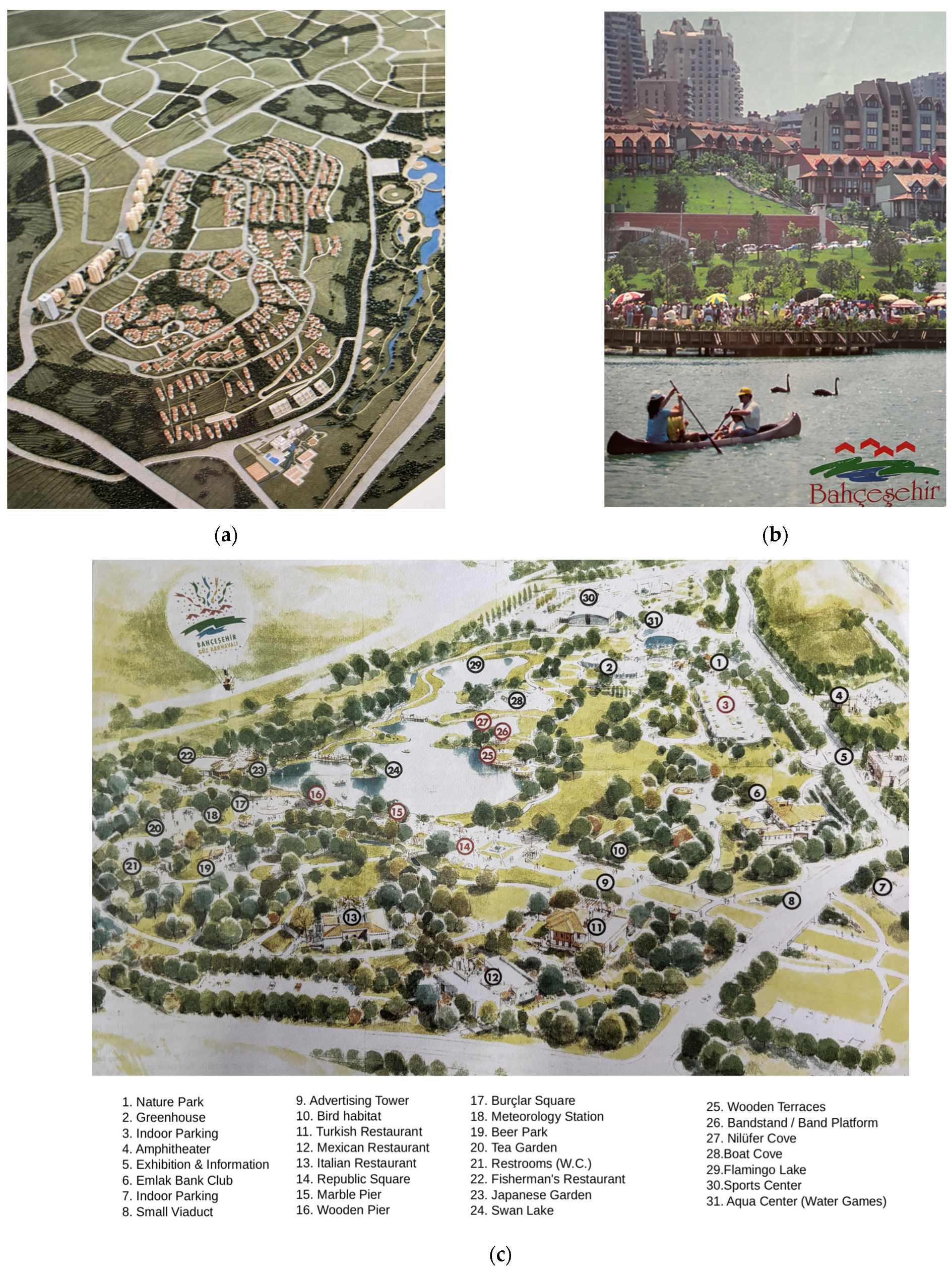
The Bahçeşehir Mass Housing Project represents one of Turkey’s earliest large-scale experiments in planned suburban development, as documented in planning reports and corroborated by residents’ narratives. The initial planning framework aimed to combine high living standards with ecological sensitivity and collective well-being. The urban layout was shaped by the site’s natural topography, with low-rise residential units clustered around an artificial pond in order to preserve extensive open and green spaces. Planning documents designated an allocation of approximately 15 m
2 of green space per capita (
Figure 2).
This early vision, supported by institutional actors such as Emlak Bank and the Prime Ministry Housing Administration, extended beyond physical design principles and articulated the ambition of establishing a planned and self-sufficient residential community. The project included a 350-hectare cultural and recreational zone comprising gardens, ponds, amphitheaters, sports facilities, and educational institutions. These amenities formed a key component of the project’s social infrastructure, intended to reinforce environmental quality, everyday social interaction, and long-term urban quality of life. As one long-term resident recalled, “when we first moved here, the open spaces and the lake area were the heart of everyday life.” As illustrated in
Figure 2, the original planning concept emphasized the integration of residential units, open spaces, and recreational amenities.
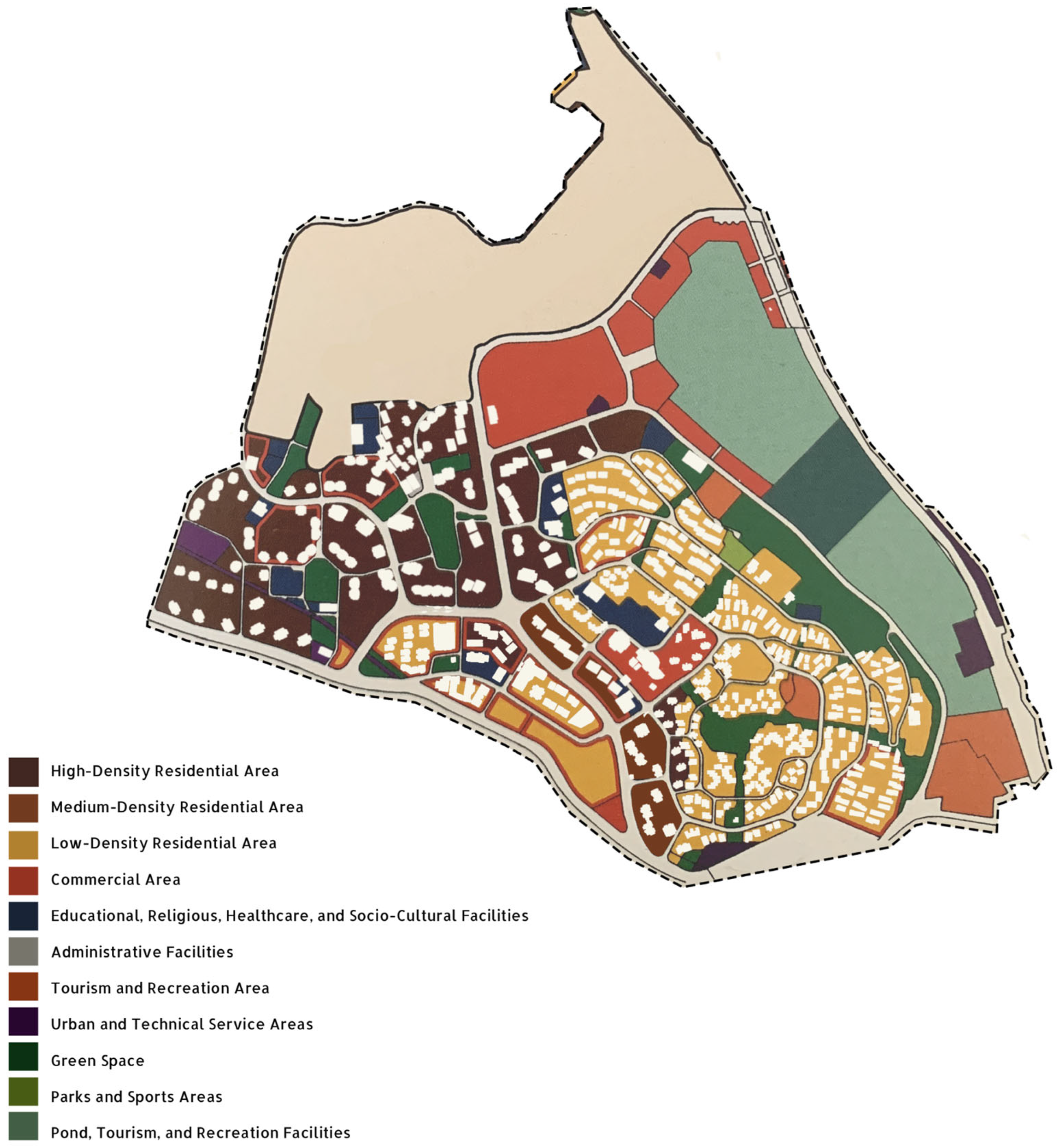
The project comprises several neighbourhoods characterized by a diversity of housing typologies and density levels. These residential areas can broadly be categorized into three density patterns. High-density developments, primarily consisting of high-rise apartment blocks, are located along the upper sections of the topography, while medium and low-density settlements extend toward the inner and southern parts of the site. Overall, the development is largely defined by low-density row houses and villas, reflecting the original planning emphasis on a balanced and human-scale residential environment.
Housing density is closely integrated with the provision of educational, healthcare, and social infrastructure. Recreational areas, playgrounds for different age groups, and sports facilities are embedded within the residential fabric to support everyday use and social interaction. While row houses and villas follow a relatively standardized prototype, apartment buildings display variations in floor plans and building heights. As illustrated in
Figure 3, the settlement is organized around a central artificial pond, with social facilities concentrated in its immediate surroundings. The topography gradually rises away from the pond, where low-rise residential units are arranged along this gradient, while high-density development is concentrated at the periphery, defined by 18 and 22 story residential blocks forming the outer boundary of the settlement.
Together, this spatial configuration and density hierarchy reflect the original planning vision that linked housing typologies, open space distribution, and everyday social life. This configuration provides an important baseline for understanding the spatial and institutional transformations that unfolded in later phases of development.
3.2. Governance Shifts in the Management of Residential Open Spaces
The governance structure of Bahçeşehir did not change abruptly through a single institutional reform; rather, it evolved through a series of gradual institutional adjustments that progressively altered its founding governance model. These transitions—spanning centrally coordinated planning, a period of autonomous local governance, and eventual integration into metropolitan administration—reshaped the management of open spaces and weakened mechanisms of shared stewardship.
Following two periods of municipal governance, the 2009 administrative reform reclassified Bahçeşehir as a neighbourhood within the newly established Başakşehir district. These shifts—from national oversight to local autonomy and eventually to metropolitan integration—introduced notable institutional discontinuities. As responsibilities for open space maintenance, infrastructure and communal amenities became increasingly dispersed across administrative actors, the original integrated governance model fragmented. This process was frequently described by interview participants as creating uncertainty regarding responsibility for the management and protection of shared spaces. As long-term residents and local association members emphasized that “it gradually became unclear who was responsible for maintaining these areas.”
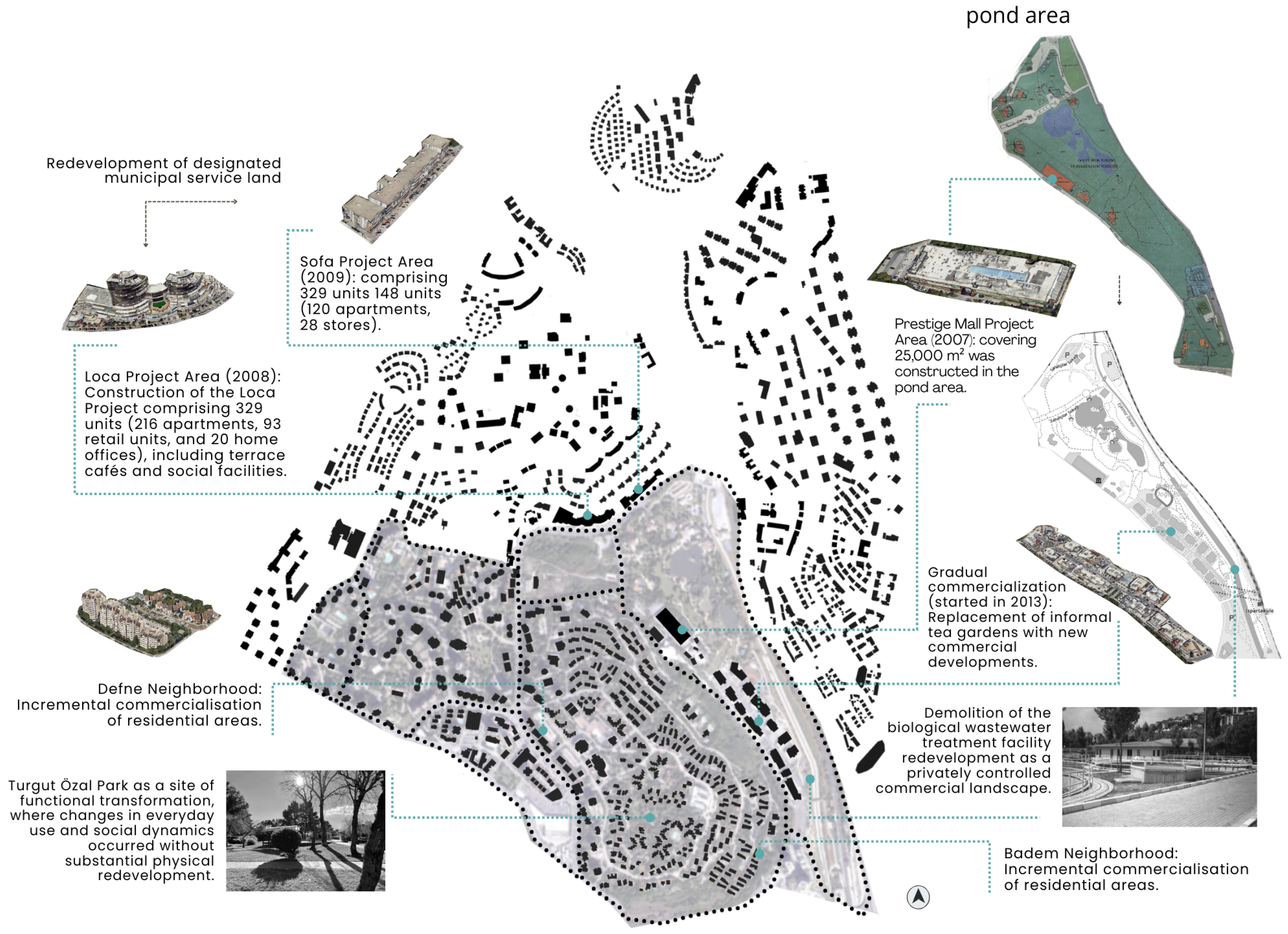
As governance arrangements shifted, several open spaces originally designed as communal amenities became focal points of transformation in residents’ narratives. Interview analysis revealed a recurring set of locations that participants consistently identified when describing these changes. These spaces provide concrete examples of how broader institutional shifts translated into everyday spatial experiences.
Table 1 summarises the open spaces most frequently referenced in the interviews, indicating their original planning functions, observed transformations, and the recurrent perceptions expressed by residents. These patterns were consistently identified across interviews, with several key locations being repeatedly mentioned by a majority of participants, indicating their relative prominence within residents’ narratives.
Interview data indicate that residents were most affected by changes related to the management, accessibility, and everyday use of specific open spaces. Across multiple interviews, transformations such as the privatization of green areas, increased commercial use, and reduced continuity of pedestrian spaces were repeatedly highlighted. These changes were most frequently associated with the pond surroundings, central pedestrian corridors, and formerly communal green spaces. Residents described how these spatial shifts altered daily routines, reduced spontaneous social interaction, and generated feelings of loss and frustration.
Taken together, these findings indicate that gradual spatial changes had tangible effects on residents’ everyday practices and perceptions of urban quality of life.
Figure 4 illustrates the key open spaces most frequently referenced by residents, highlighting how governance-related transformations became spatially concentrated around specific locations.
The case of Turgut Özal Park demonstrates that not all transformations occurred through visible physical redevelopment. Although the park’s physical layout remained largely intact, interview data indicate that changes in maintenance practices, surrounding commercial activity, and user composition reshaped residents’ engagement with the space and influenced perceptions of safety and accessibility.
As illustrated in
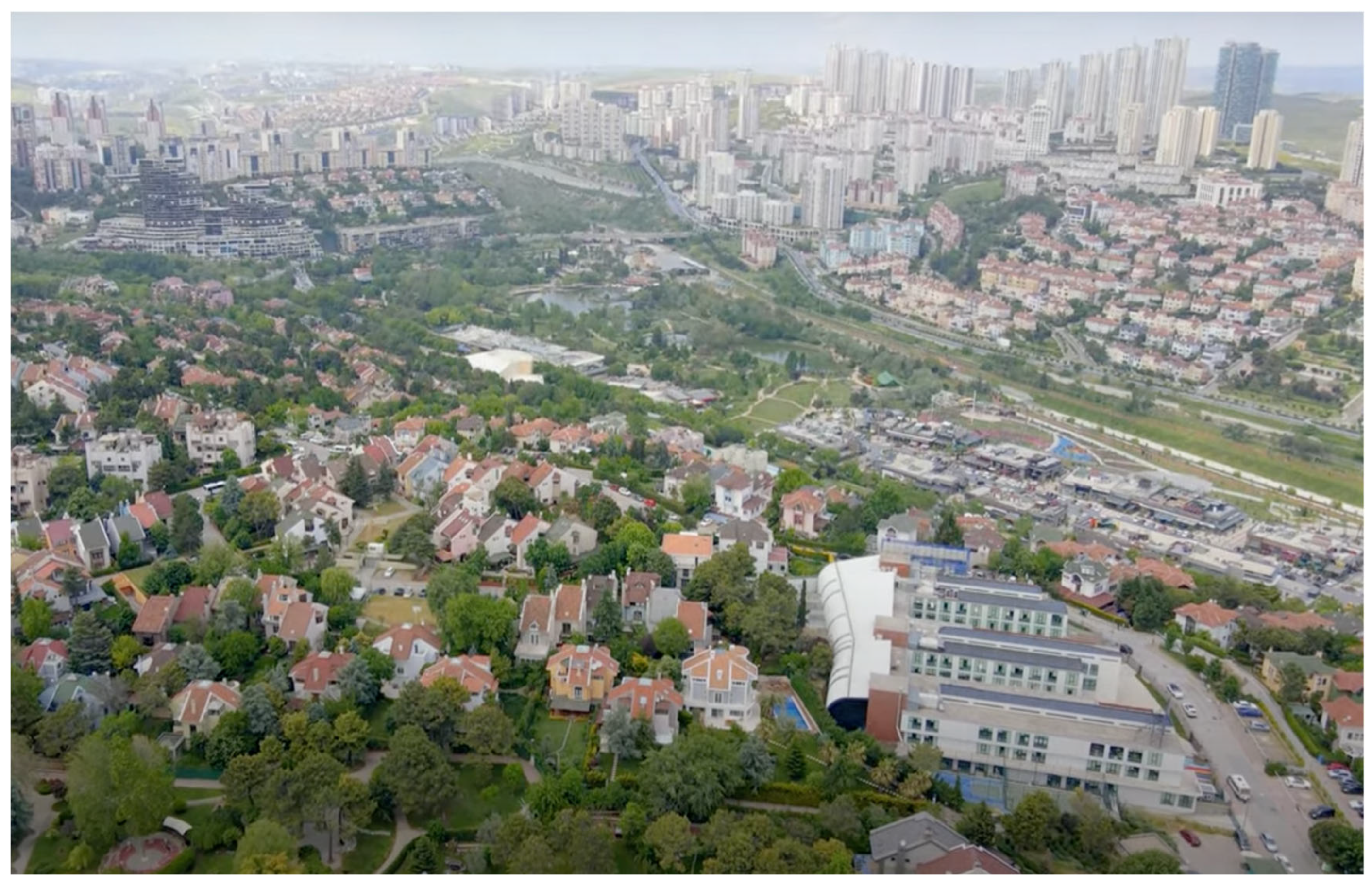
Figure 4, the surrounding residential development is also depicted. Interviewees frequently interpreted the transformation of specific open spaces in relation to the rapid densification of surrounding residential areas. The contrast between Bahçeşehir’s original low-rise residential fabric and adjacent high-rise developments intensified perceptions of overcrowding and spatial pressure. This contrast is further illustrated in
Figure 5, which shows the relationship between the planned low- and medium-density structure of Bahçeşehir and the high-rise residential developments that emerged in surrounding areas over time.
As governance boundaries evolved, responsibilities for open space management, infrastructure, and communal amenities became increasingly dispersed across administrative actors. This process unfolded gradually through cumulative institutional adjustments that fragmented the original integrated governance model. Ambiguous property ownership and weakened institutional oversight facilitated the gradual reallocation of spaces initially intended for collective use. As a result, the spatial continuity of open spaces diminished, and residents increasingly described declining trust in local institutional arrangements.
3.3. Ownership Ambiguity and Challenges in Collective Space Management
As discussed in the previous section, shifts in governance structures were accompanied by a gradual erosion of collective ownership and shared responsibility. During the early phases, homeowners perceived themselves as partners in a collective enterprise, embracing shared stewardship over parks, open spaces, and community facilities. However, these areas were never formally transferred into public ownership. Instead, land parcels and facilities remained under the jurisdiction of multiple institutional actors, including project developers, financial bodies, and municipal authorities. According to interviewees, the management framework involved a complex and opaque set of ownership arrangements that residents did not fully understand at the time of purchase.
Over time, community-based management gradually gave way to a fragmented property regime. Homeowners increasingly became aware of their limited agency over collective spaces, exposing a growing tension between the ideal of a “planned community” and the realities of market-oriented governance arrangements. The Bahçeşehir case demonstrates how incremental institutional shifts and ambiguous ownership arrangements can erode the foundations of communal living, generating both spatial and social fragmentation that directly shapes residents’ perceptions of urban quality of life. In this context, incremental institutional shifts and ambiguous ownership arrangements contributed to the weakening of shared spatial management and the emergence of spatial and social fragmentation affecting residents’ perceptions of urban quality of life. Similar governance-related dynamics have been discussed in the urban governance literature [
1,
2,
48,
49,
50].
The analysis of Bahçeşehir’s development reveals three interrelated dimensions shaping the current conditions of open space management and communal life.
First, although the original development emphasized self-financing and professional management, later phases lacked an integrated institutional framework capable of sustaining this model over time. The gradual weakening of shared spatial management contributed to increasing physical fragmentation and reduced opportunities for everyday social interaction among residents.
Second, open spaces originally conceptualized as shared commons gradually fragmented into semi-private or neglected areas. Transformations through neglect, enclosure, or functional change intensified residents’ perceptions of insecurity, detachment, and declining comfort in shared environments.
Third, evolving governance arrangements reshaped patterns of civic participation, resulting in uneven levels of trust toward local institutions and weakening the project’s initial model of community-based responsibility.
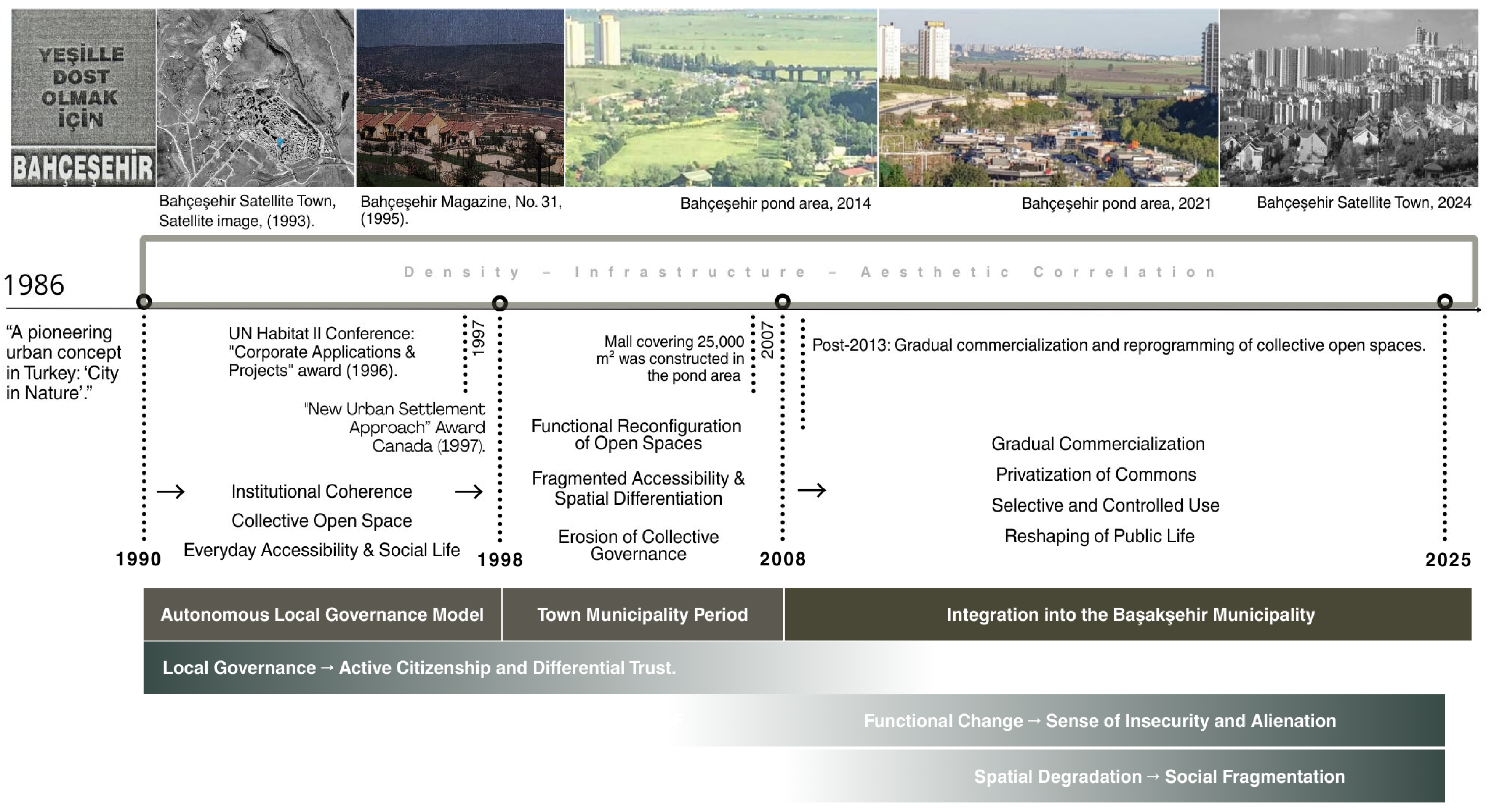
Figure 6 synthesizes these dynamics by illustrating how the analytical parameters evolved across three historical phases. The figure highlights the gradual shift from collectively coordinated governance arrangements toward increasingly fragmented and privatized forms of management.
In its initial phase, Bahçeşehir’s spatial and social coherence was sustained through the alignment of institutional coordination, collectively accessible open spaces, and everyday social practices. Open spaces functioned as shared commons, supporting informal social interaction and a strong sense of belonging.
The second phase was characterized by the gradual destabilization of the integrated model. Incremental governance shifts, emerging ambiguities regarding ownership structures, and functional changes in open spaces began to weaken collective use.
The third phase reflects the consolidation of commercialization processes through which formerly collective spaces were progressively privatized or functionally restricted. Patterns of use became increasingly privatized or functionally restricted. Patterns of use became more selective and regulated, gradually transforming everyday public life within the settlement.
In addition to governance-related transformations, interview data and the visual analysis indicate a growing relationship between increasing residential density, infrastructural pressure, and perceived aesthetic degradation. This dynamic is particularly visible at the interface between Bahçeşehir’s original low-rise residential fabric and adjacent high-rise developments. Residents frequently associated densification with declining environmental quality, visual disruption, and reduced everyday comfort.
Taken together, these findings suggest that the transformation of Bahçeşehir unfolded through cumulative and incremental processes rather than a single intervention or policy shift. The erosion of open space continuity, ambiguities in governance and ownership, and shifting patterns of everyday use collectively reshaped residents’ perceptions of urban quality of life. These empirical findings provide the basis for the following discussion, which situates the Bahçeşehir case within broader debates on incremental urban transformation, governance fragmentation, and the long-term sustainability of planned satellite towns.
4. Discussion
This progression reflects a shift from planning coherence to governance-driven fragmentation, highlighting how transformation unfolds through institutional processes rather than visible physical change. The empirical findings presented in the previous section reveal a gradual transformation process linking planning ideals, governance restructuring, and ownership ambiguity to changes in everyday spatial practices and residents’ perceptions of QoL. Instead of being the result of a single intervention, these transformations unfolded cumulatively through incremental institutional and spatial adjustments. Notably, the recurring emphasis on particular open spaces and governance-related issues across interview narratives suggests that these transformations were not perceived as isolated incidents, but as collectively experienced and structurally embedded processes shaping everyday urban life. Bahçeşehir was initially structured around a coordinated governance model that aligned spatial design with collective management. The early phase demonstrates how centralized yet participatory arrangements sustained open space integrity and reinforced social cohesion. These findings align with literature emphasizing the interdependence between spatial continuity, collective stewardship, and neighbourhood attachment [
8,
21,
22,
48,
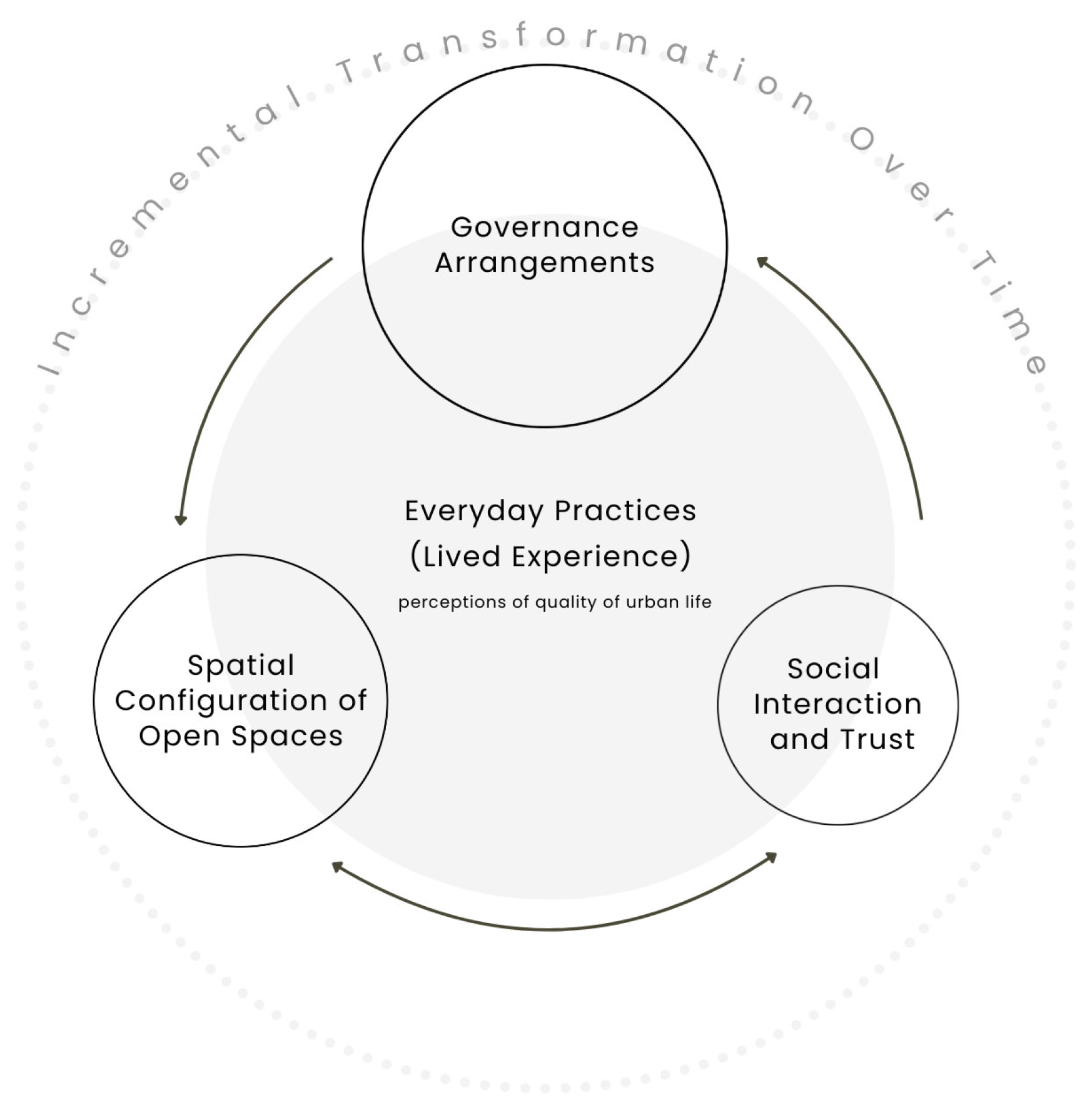
51]. However, the subsequent fragmentation of governance responsibilities marked a structural shift rather than a singular planning failure. Institutional rescaling, changing administrative actors, and market-oriented interventions progressively disrupted the coherence of spatial management. This case therefore illustrates how transformation may occur not through demolition but through governance reconfiguration that gradually alters spatial order. The findings reveal a sequential relationship in which initial planning principles are progressively reconfigured through governance shifts and ownership ambiguities, ultimately reshaping residents’ perceptions of urban quality of life. These interrelated dynamics are conceptually illustrated in
Figure 7, which synthesizes the relationships between governance arrangements, spatial configuration of open spaces, and evolving patterns of social interaction observed in the Bahçeşehir case. This progression reflects a shift from planning coherence to governance-driven fragmentation, highlighting how transformation unfolds through institutional processes rather than visible physical change.
The empirical findings demonstrate that open space transformation in Bahçeşehir did not primarily manifest through large-scale redevelopment, but through cumulative and dispersed interventions: commercialization of green areas, access restrictions around water bodies, functional repurposing of playgrounds, and densification pressures.
The concentration of these experiences around specific spaces further reinforces this interpretation. These processes reflect what urban commons literature conceptualizes as soft enclosure, whereby spaces originally designed for collective use are gradually redefined through regulatory adjustments, managerial decisions, and changing patterns of access. Rather than being physically enclosed, these transformations occur through governance mechanisms that subtly reshape the boundaries of shared urban space [
14,
15].
Rather than immediate spatial rupture, incremental modifications accumulated over time, reshaping patterns of access, use, and social interaction. The interrelations between governance change, spatial reconfiguration, and social consequences are synthesized in
Table 2, which summarizes the core mechanisms, empirical observations, and their broader implications for the evolution of Bahçeşehir. This supports recent studies emphasizing slow and process-based forms of urban transformation [
10,
11].
When interpreted through the lens of urban quality of life, these governance-driven transformations reveal multidimensional consequences. Declining spatial continuity, reduced night-time accessibility, and weakened collective management contributed to altered perceptions of safety and belonging.
The decommissioning of the biological wastewater facility illustrates this dynamic: beyond its technical function, the facility symbolized coordinated environmental stewardship. Its removal marked a transition from collective infrastructure to fragmented responsibility, exemplifying how institutional change reshapes everyday urban metabolism.
The case demonstrates that the deterioration of urban quality of life cannot be attributed solely to physical densification. Rather, it emerges from the interaction between governance fragmentation, infrastructural withdrawal, and shifting ownership regimes.
The Bahçeşehir case reinforces arguments in neoliberal urbanism literature suggesting that transformation increasingly operates through governance restructuring rather than through singular redevelopment projects [
10,
11,
50].
Unlike conventional urban renewal narratives, Bahçeşehir’s transformation unfolded through cumulative adjustments in institutional responsibility, access regimes, and market-driven insertions. This gradual process produced systemic effects: spatial degradation, social fragmentation, weakened civic trust, and reduced collective agency.
The study therefore refines the understanding of urban transformation by conceptualizing incremental governance erosion as a subtle yet powerful mechanism capable of reshaping planned residential environments over time.
The Bahçeşehir case demonstrates that the long-term transformation of planned satellite towns may occur not through singular redevelopment interventions but through cumulative governance adjustments that gradually reconfigure open spaces, everyday spatial practices, and residents’ perceptions of urban quality of life.
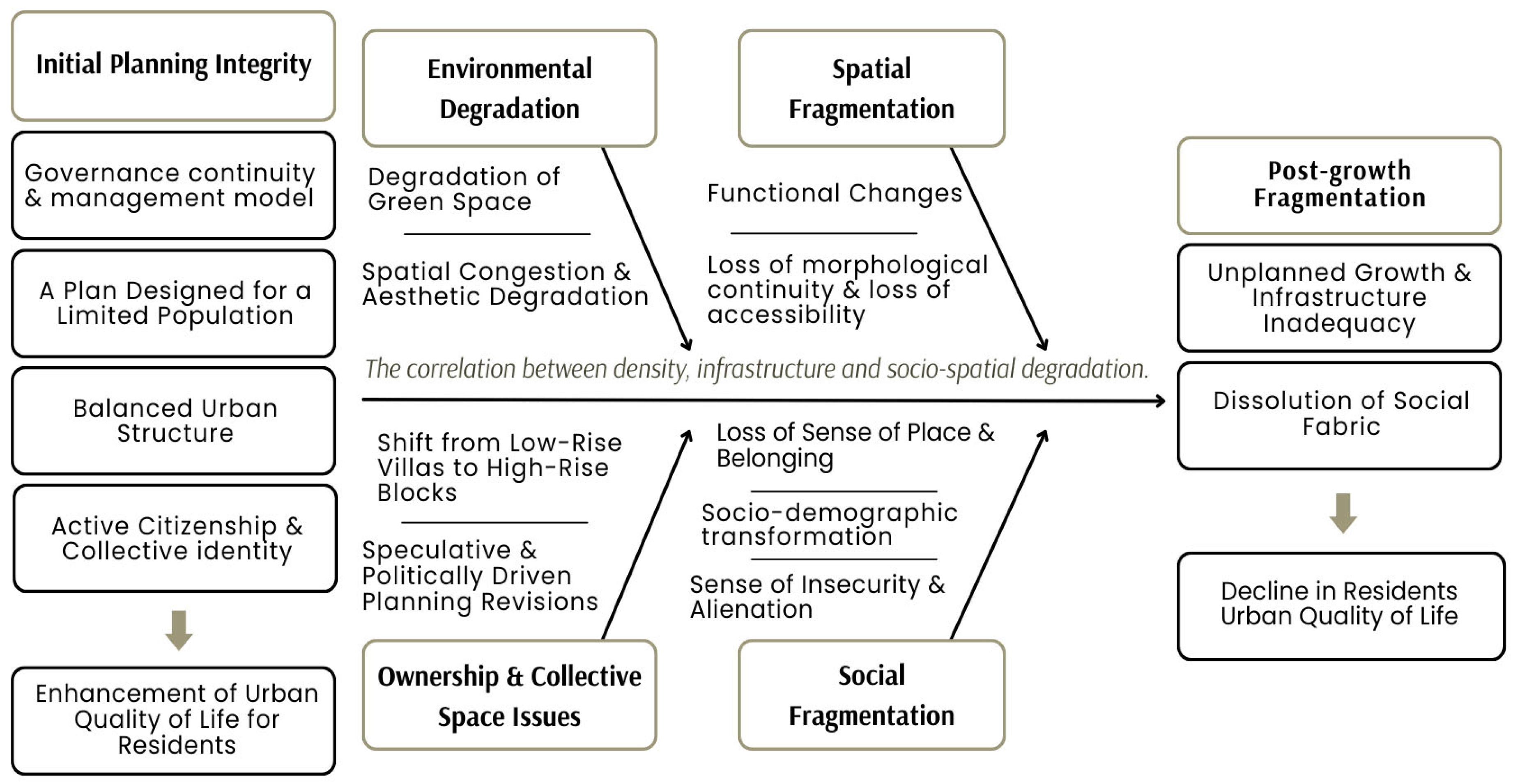
Figure 8 synthesizes these dynamics into a systemic model, illustrating how incremental governance shifts, spatial fragmentation, and evolving ownership regimes cumulatively reshaped the suburban environment and residents’ perceived urban quality of life.
These transformations often remain largely invisible within apparently stable urban forms while progressively reshaping governance structures, spatial practices, and social life.
Building on the empirical findings, this study conceptualizes governance-driven incremental transformation as a mechanism through which planned residential environments gradually evolve without large-scale redevelopment. In this process, small institutional adjustments—such as changes in administrative authority, property regimes, and management responsibilities—accumulate over time, subtly reconfiguring the governance of shared open spaces. These incremental shifts alter patterns of access, everyday spatial practices, and ultimately residents’ perceptions of urban quality of life.
By highlighting this mechanism, the study contributes to debates on urban transformation and suburban development by demonstrating how the long-term evolution of planned satellite towns may occur through cumulative governance adjustments rather than through singular redevelopment interventions.
5. Conclusions
This study examined Bahçeşehir as a case of incremental urban transformation unfolding through governance restructuring rather than large-scale physical redevelopment. The findings demonstrate that cumulative institutional adjustments, fragmented management arrangements, and market-oriented interventions gradually redefined collectively designed open spaces. Over time, these shifts altered spatial accessibility, everyday practices, and residents’ perceptions of safety and belonging, producing significant implications for urban quality of life.
Rather than interpreting transformation solely as demolition-driven regeneration, the analysis highlights how subtle governance reconfigurations can operate as powerful spatial mechanisms. The case of Bahçeşehir illustrates that incremental changes in institutional responsibility, infrastructure management, and land-use regulation progressively eroded the coherence of an originally integrated planning model without visibly disrupting its physical form. Transformation, in this sense, is embedded in governance processes as much as in built structures.
The study contributes to urban transformation studies in three ways. First, it advances the understanding of incremental urban change by conceptualizing governance-driven incremental transformation as a non-demolition pathway of spatial restructuring. Second, it empirically demonstrates how governance fragmentation and ownership ambiguity reshape collectively designed open spaces in a planned satellite town context. Third, it positions urban quality of life as an outcome of the dynamic interaction between governance arrangements, spatial practices, and institutional continuity, rather than as a static evaluative framework.
From a policy perspective, the findings underscore the importance of sustained institutional stewardship, transparent governance mechanisms, and participatory oversight in protecting shared open spaces within planned residential developments. The long-term resilience of such environments depends not only on initial design principles but also on the continuity and adaptability of governance structures that maintain spatial integrity and collective access.
While this study focuses on a single case, it forms part of a broader doctoral research framework examining incremental transformation processes across multiple planned residential environments. Future research could build on this framework through comparative analyses and the integration of quantitative spatial indicators to further investigate the long-term dynamics of governance-driven urban change.
Ultimately, the case of Bahçeşehir demonstrates that the transformation of an originally planned satellite town may unfold through gradual and often imperceptible governance adjustments that cumulatively reshape spatial practices, social relations, and everyday urban experience. By foregrounding governance as a central driver of incremental transformation, this study contributes to a more process-oriented understanding of how urban environments evolve over time.