How Does Multidimensional Poverty Affect Sustainable Well-Being Associated with Elderly Cognitive Function? Evidence from the 2018 CLHLS Survey in China



Abstract
1. Introduction
2. Literature Review and Theoretical Hypotheses
2.1. Literature Review
2.1.1. Cognitive Impairment: Research Status, Influencing Factors, and the Underexplored Role of Multidimensional Poverty in China
2.1.2. Multidimensional Poverty: Theoretical Evolution, Measurement Innovations, and Its Application in Assessing Elderly Cognitive Health Contexts
2.1.3. Potential Mechanisms Linking Multidimensional Family Poverty to Elderly Cognitive Function
3. Research Design and Methodology
3.1. Empirical Strategy and Model Specification
3.1.1. Baseline Regression Model
3.1.2. Mediating Effect Model
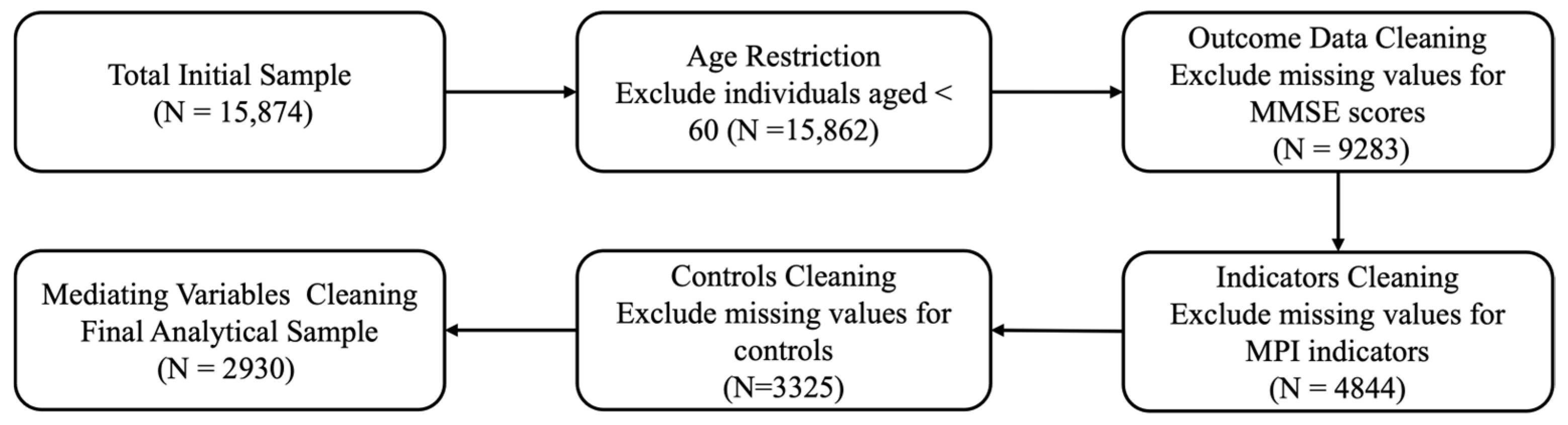
3.2. Data Sources and Study Samples
3.3. Variable Measurement and Description
3.3.1. Dependent Variable: Cognitive Function
3.3.2. Explanatory Variable: Multidimensional Poverty
3.3.3. Mediating Variables: Self-Reported Quality of Life and Mental Health
3.3.4. Control Variables
4. Results and Analysis
4.1. Baseline Regression Results
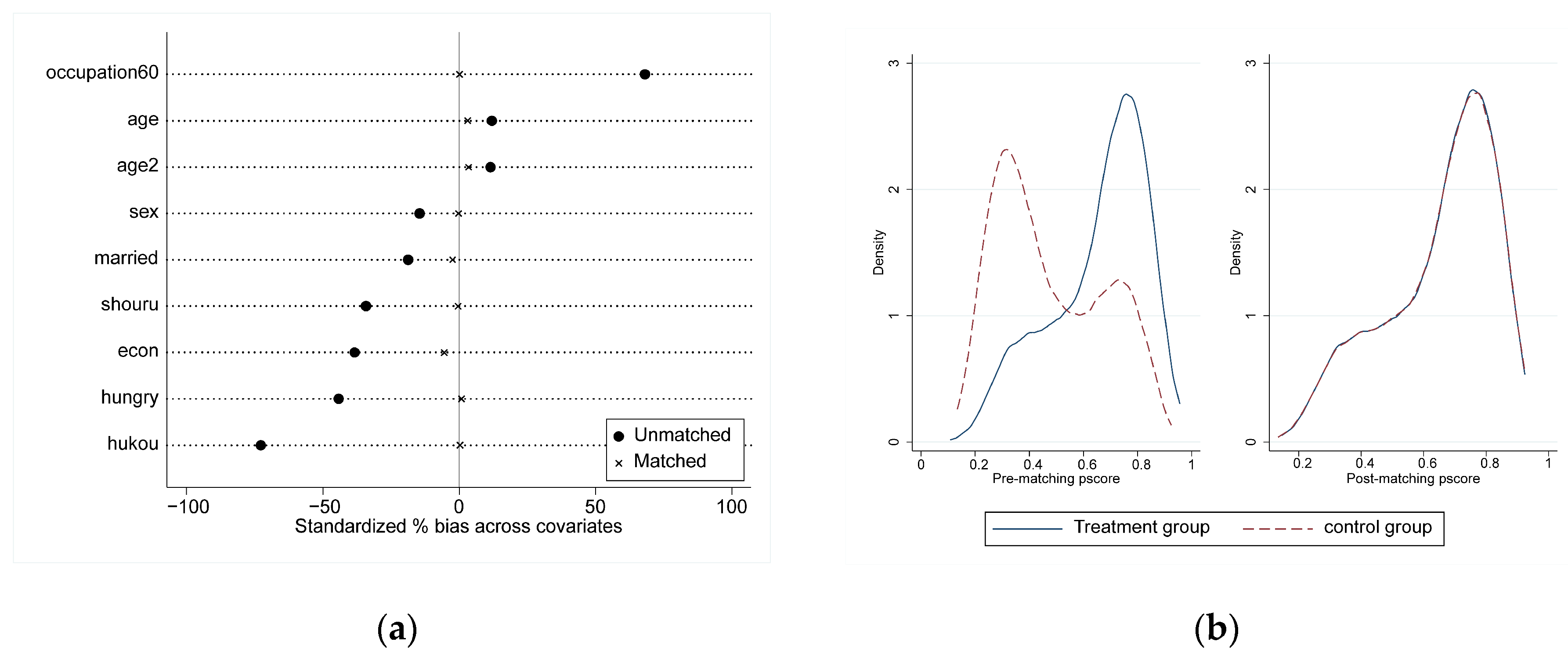
4.2. Robustness Test
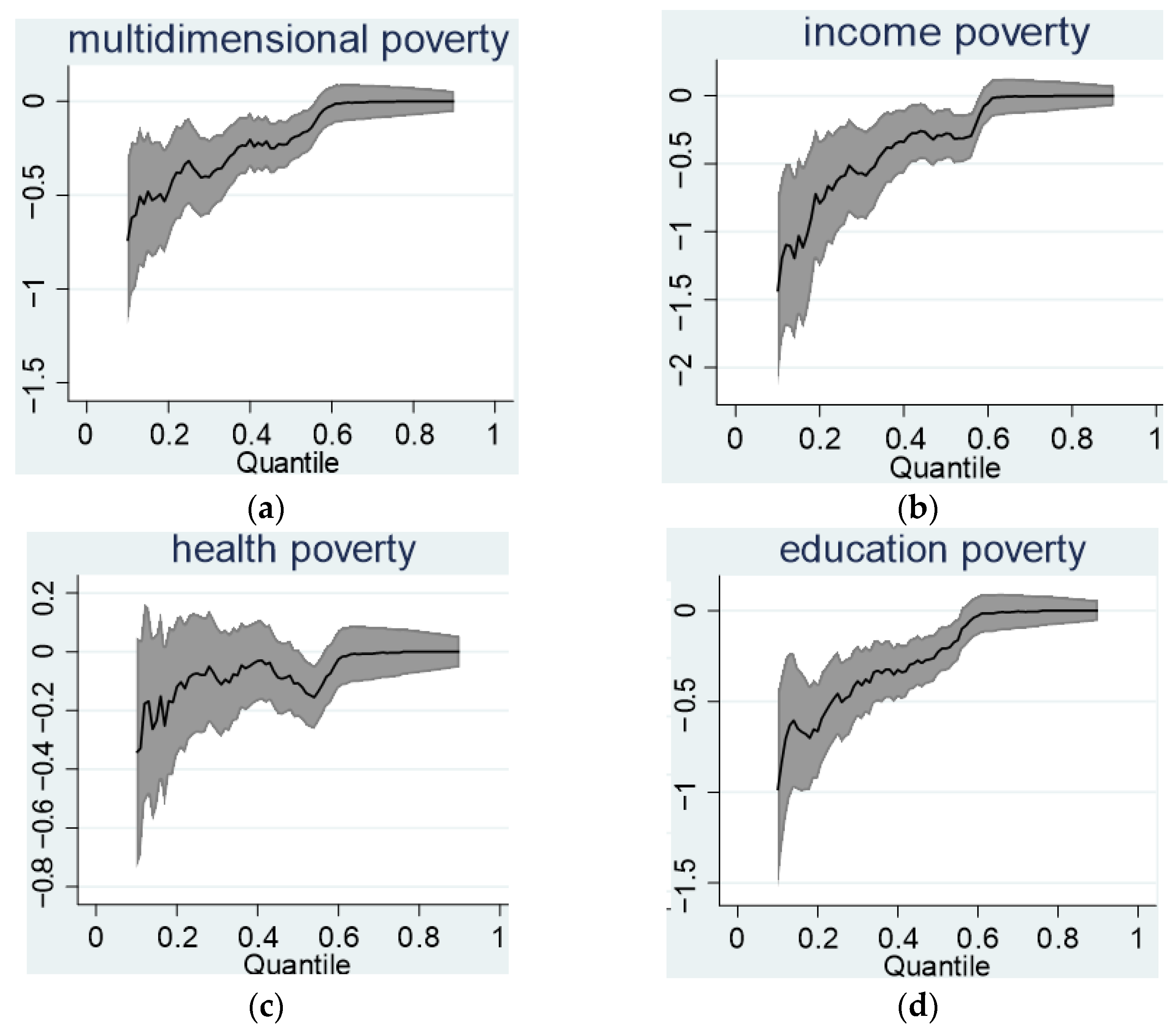
4.3. Quantile Regression Results
4.4. Heterogeneity Analysis
4.5. Mediation Effect Analysis
4.5.1. Meditating Role of Self-Reported Quality of Life
4.5.2. Meditating Role of Mental Health
5. Discussions
6. Conclusions and Policy Implications
Author Contributions
Funding
Institutional Review Board Statement
Informed Consent Statement
Data Availability Statement
Conflicts of Interest
Appendix A

| Cognitive Disorders Score | Self-Reported Quality of Life | Cognitive Disorders Score | |
|---|---|---|---|
| Panel A | |||
| multidimensional poverty | −0.268 *** | −0.105 *** | −0.237 ** |
| (−2.62) | (−3.37) | (−2.33) | |
| self-reported quality of life | 0.285 *** | ||
| −4.66 | |||
| Panel B | |||
| Income poverty | −0.525 *** | −0.157 *** | −0.482 *** |
| (−4.11) | (−4.00) | (−3.77) | |
| self-reported quality of life | 0.276 *** | ||
| −4.52 | |||
| Panel C | |||
| Life quality poverty | −0.059 | −0.113 *** | −0.025 |
| (−0.55) | (−3.45) | (−0.24) | |
| self-reported quality of life | 0.293 *** | ||
| −4.78 | |||
| Panel D | |||
| Health poverty | −0.188 * | −0.187 *** | −0.134 |
| (−1.91) | (−6.18) | (−1.36) | |
| self-reported quality of life | 0.285 *** | ||
| −4.62 | |||
| Panel E | |||
| Security poverty | 0.12 | −0.121 *** | 0.157 |
| −1.18 | (−3.85) | −1.53 | |
| self-reported quality of life | 0.301 *** | ||
| −4.91 | |||
| Panel F | |||
| Education poverty | −0.281 ** | 0.076 ** | −0.303 ** |
| (−2.28) | −2.01 | (−2.47) | |
| self-reported quality of life | 0.300 *** | ||
| −4.91 | |||
| Control variables | yes | yes | yes |
| N | 2930 | 2930 | 2930 |
| Cognitive Disorders Score | Mental Health | Cognitive Disorders Score | |
|---|---|---|---|
| Panel A | |||
| multidimensional poverty | −0.265 *** | −1.118 *** | −0.234 ** |
| (−2.61) | (−3.25) | (−2.30) | |
| Mental health | 0.028 *** | ||
| −5.1 | |||
| Panel B | |||
| Income poverty | −0.483 *** | −1.020 ** | −0.497 *** |
| (−3.91) | (−2.36) | (−3.90) | |
| Mental health | 0.028 *** | ||
| −5.08 | |||
| Panel C | |||
| Life quality poverty | −0.078 | −1.051 *** | −0.026 |
| (−0.75) | (−2.93) | (−0.24) | |
| Mental health | 0.029 *** | ||
| −5.22 | |||
| Panel D | |||
| Health poverty | −0.191 ** | −2.813 *** | −0.111 |
| (−1.99) | (−8.57) | (−1.12) | |
| Mental health | 0.028 *** | ||
| −5 | |||
| Panel E | |||
| Security poverty | 0.114 | 0.688 ** | 0.145 |
| −1.15 | −2 | −1.43 | |
| Mental health | −0.030 *** | ||
| (−5.29) | |||
| Panel F | |||
| Education poverty | −0.275 ** | 0.569 | −0.303 ** |
| (−2.30) | −1.37 | (−2.48) | |
| Mental health | 0.030 *** | ||
| −5.31 | |||
| Control variables | Yes | Yes | Yes |
| N | 2930 | 2930 | 2930 |
References
- Asi, Y.M.; Williams, C. The role of digital health in making progress toward Sustainable Development Goal (SDG) 3 in conflict-affected populations. Int. J. Med. Inform. 2018, 114, 114–120. [Google Scholar] [CrossRef] [PubMed]
- Gouela, M.; Vassilakou, T.; Chaida, A.; Argiriou, A. The impact of sustainable diets on cognitive function in an aging society: A mini-review. Maturitas 2024, 176, 107952. [Google Scholar] [CrossRef] [PubMed]
- Trani, J.-F.; Zhu, Y.; Park, S.; Khuram, D.; Azami, R.; Fazal, M.R.; Babulalet, G.M. Multidimensional poverty is associated with dementia among adults in Afghanistan. EClinicalMedicine 2023, 57, 101906, Erratum in EClinicalMedicine 2024, 74, 102704. https://doi.org/10.1016/j.eclinm.2024.102704. [Google Scholar] [CrossRef] [PubMed]
- Chen, L.; Cao, Q. Poverty increases the risk of incident cognitive impairment among older adults: A longitudinal study in China. Aging Ment. Health 2020, 24, 1822–1827. [Google Scholar] [CrossRef]
- Ali, Z.; Zhu, Y.; Park, S.; Babulal, G.M. Is Multidimensional Poverty Associated to Dementia Risk? The Case of Older Adults in Pakistan. Innov. Aging 2024, 8, igae007. [Google Scholar] [CrossRef]
- Shi, Z.; Zhang, Y.; Yue, W.; Liu, M.; Huo, Y.R.; Liu, S.; Liu, S.; Xiang, L.; Liu, P.; Lu, H.; et al. Prevalence and Clinical Predictors of Cognitive Impairment in Individuals Aged 80 Years and Older in Rural China. Dement. Geriatr. Cogn. Disord. 2013, 36, 171–178. [Google Scholar] [CrossRef]
- Alzheimer’s Disease International. World Alzheimer Report 2023: The Global Impact of Dementia; Alzheimer’s Disease International: London, UK, 2023. [Google Scholar]
- National Bureau of Statistics of China. China Statistical Yearbook 2023. 2023. Available online: https://data.stats.gov.cn/ (accessed on 22 March 2026).
- Brodaty, H.; Connors, M.H.; Ames, D.; Woodward, M.; PRIME Study Group. Progression from mild cognitive impairment to dementia: A 3-year longitudinal study. Aust. N. Z. J. Psychiatry 2014, 48, 1137–1142. [Google Scholar] [CrossRef]
- Johnson, D.R.; Wiste, H.J.; Lowe, V.; Schwarz, C.G.; Knopman, D.S.; Vemuri, P.; Kantarci, K.; Boeve, B.F.; Graff-Radford, J.; Cogswell, P.M.; et al. Staging Alzheimer’s disease through amyloid and tau PET. Brain 2026, 149, 1023–1034. [Google Scholar] [CrossRef]
- Bermudez, C.; Syrjanen, J.A.; Attia, Z.I.; Friedman, P.A.; Lopez-Jimenez, F.; Hu, M.; Petersen, R.C.; Knopman, D.S.; Ramanan, V.K.; Jack, C.R., Jr.; et al. Older predicted age using AI EKG—Based age prediction is associated with higher Alzheimer’s disease neuropathologic change. Alzheimer’s Dement. 2024, 20, e088037. [Google Scholar] [CrossRef]
- Jia, L.; Quan, M.; Fu, Y.; Zhao, T.; Li, Y.; Wei, C.; Tang, Y.; Qin, Q.; Wang, F.; Qiao, Y.; et al. Dementia in China: Epidemiology, clinical management, and research advances. Lancet Neurol. 2020, 19, 81–92. [Google Scholar] [CrossRef]
- Mackin, R.S.; Areán, P.A. Incidence and documentation of cognitive impairment among older adults with severe mental illness in a community mental health setting. Am. J. Geriatr. Psychiatry 2009, 17, 75–82. [Google Scholar] [CrossRef]
- Jia, L.; Du, Y.; Chu, L.; Zhang, Z.; Li, F.; Lyu, D.; Li, Y.; Li, Y.; Zhu, M.; Jiao, H.; et al. Prevalence, risk factors, and management of dementia and mild cognitive impairment in adults aged 60 years or older in China: A cross-sectional study. Lancet Public Health 2020, 5, e661–e671. [Google Scholar] [CrossRef]
- Mian, M.; Tahiri, J.; Eldin, R.; Altabaa, M.; Sehar, U.; Reddy, P.H. Overlooked cases of mild cognitive impairment: Implications to early Alzheimer’s disease. Aging Res. Rev. 2024, 98, 102335. [Google Scholar] [CrossRef]
- Jack, C.R., Jr.; Hu, M.; Wiste, H.J.; Knopman, D.S.; Vemuri, P.; Graff-Radford, J.; Lowe, V.J.; Vassilaki, M.; Cogswell, P.M.; Schwarz, C.G.; et al. Lifetime and 10-year absolute risk of cognitive impairment in relation to amyloid PET severity: A retrospective, longitudinal cohort study. Lancet Neurol. 2025, 24, 1016–1025. [Google Scholar] [CrossRef] [PubMed]
- Cogswell, P.M.; Lundt, E.S.; Therneau, T.M.; Hu, M.; Griswold, M.E.; Wiste, H.J.; Machulda, M.M.; Stricker, N.H.; Braunstein, J.B.; West, T.; et al. Modelling the temporal evolution of plasma p-tau217, amyloid PET, tau PET and cognition. Brain 2026. online ahead of print. [Google Scholar] [CrossRef] [PubMed]
- Sivayokan, B.; Somasiri, N.C.; Maheswaran, T.; Mahendrarajah, N.; Gunarathna, A.I.; Coonghe, P.A.; Suganthan, N.; Sivayokan, S. Depression, Disability, and Cognitive Impairment Among Elders with Medical Illnesses Attending Follow-Up Clinics at a Tertiary Care Hospital in Northern Sri Lanka. Cureus 2022, 14, e32379. [Google Scholar] [CrossRef] [PubMed]
- Araújo, R.B.; Dalpubel, D.; Ribeiro, E.B.; Almeida, M.L.; Carvalho Vale, F.A.; Ansai, J.H. Relationship between Cognitive Disorder and Metabolic Syndrome in Elders in a Brazilian Community. Alzheimer’s Dement. 2017, 13, P721. [Google Scholar] [CrossRef]
- Yu, X.; Hu, M.; Przybelski, S.A.; Reid, R.I.; Vassilaki, M.; Graff-Radford, J.; Petersen, R.; Jack, C.R., Jr.; Vemuri, P.; Raghavan, S. Brain changes associated with HbA1c and systolic blood pressure observed using NODDI contribute to prediction of cognition. Alzheimer’s Dement. 2025, 21, e103713. [Google Scholar] [CrossRef]
- Hu, M.; Moloney, C.M.; Przybelski, S.A.; Algeciras-Schimnich, A.; Fought, A.J.; Rothberg, D.M.; Nguyen, A.T.; Reichard, R.R.; Dickson, D.W.; Knopman, D.S.; et al. Plasma and MRI biomarkers predict post-mortem tau pathology. Alzheimer’s Dement. 2024, 20, e093893. [Google Scholar] [CrossRef]
- Hu, M.; Moloney, C.M.; Przybelski, S.A.; Algeciras-Schimnich, A.; Therneau, T.M.; Fought, A.J.; Rothberg, D.M.; Nguyen, A.T.; Reichard, R.R.; Dickson, D.W.; et al. Association between antemortem plasma and structural MRI biomarkers and postmortem tau pathology in the Mayo Clinic Study of Aging. Alzheimer’s Res. Ther. 2025, 17, 224. [Google Scholar] [CrossRef]
- Vemuri, P.; Hu, M.; Lundt, E.S.; Kamykowski, M.G.; Reid, R.I.; Therneau, T.M.; Raghavan, S.; Cogswell, P.M.; Griswold, M.; Windham, B.G.; et al. Diffusion MRI based biomarkers reveal a prolonged pre-lesional phase of cerebral small vessel disease. bioRxiv 2026. [Google Scholar] [CrossRef]
- Reyes, C.D.; Gebre, R.K.; Gunter, J.L.; Hu, M.; Schwarz, C.G.; Meyer, N.K.; Reid, R.I.; Kantarci, K.; Jack, C.R., Jr.; Vemuri, P. Harmonization remains unresolved: The case of white matter hyperintensity using combat and deming regression. Alzheimers Dement. 2025, 21, e108630. [Google Scholar] [CrossRef]
- Gao, Q.; Zang, E.; Bi, J.; Dubrow, R.; Lowe, S.R.; Chen, H.; Zeng, Y.; Shi, L.; Chen, K. Long-term ozone exposure and cognitive impairment among Chinese older adults: A cohort study. Environ. Int. 2022, 160, 107072. [Google Scholar] [CrossRef]
- Li, K.; Ye, H.; Dong, Z.; Amujilite; Zhao, M.; Xu, Q.; Xu, J. The health and economic burden of ozone pollution on Alzheimer’s disease and mild cognitive impairment in China. Environ. Res. 2024, 259, 119506. [Google Scholar] [CrossRef] [PubMed]
- Lee, J.J.; Park, M.K.; Kim, N.; Kim, L.; Kim, G.S. Longitudinal Relationship Between Baseline Social Frailty and Cognitive Impairment in Older Adults: 14-Year Follow-Up Results from the Korean Longitudinal Study of aging. J. Am. Med. Dir. Assoc. 2024, 25, 105124. [Google Scholar] [CrossRef]
- Shi, L.; Tao, L.; Chen, N.; Liang, H. Relationship between socioeconomic status and cognitive ability among Chinese older adults: The moderating role of social support. Int. J. Equity Health 2023, 22, 70. [Google Scholar] [CrossRef]
- Hu, M.; Zhang, Y.; Dowling, N.M. An analysis of factors predicting memory loss in Alzheimer’s disease prevention. In Proceedings of the 2017 International Joint Conference on Neural Networks (IJCNN), Anchorage, AL, USA, 14–19 May 2017; pp. 1281–1288. [Google Scholar]
- Trani, J.F.; Zhu, Y.; Babulal, G.M.; Moodley, J.; Fazal, M.R.; Azami, R.; Park, S. Multidimensional poverty increases dementia risk in South Africa, Afghanistan, and Pakistan among adults age 50 and older. Alzheimer’s Dement. 2023, 19, e082882. [Google Scholar] [CrossRef]
- Trani, J.F.; Moodley, J.; Maw, M.T.T.; Babulal, G.M. Association of Multidimensional Poverty with Dementia in Adults Aged 50 Years or Older in South Africa. JAMA Netw. Open 2022, 5, e224160. [Google Scholar] [CrossRef]
- Singh, V.B.; Meena, B. A study of mild cognitive impairment, diabetes mellitus, and socio-economic status in an indian elderly population. Alzheimer’s Dement. 2015, 11, P464. [Google Scholar] [CrossRef]
- Chen, J.; Zhang, Z. Family poverty and adolescents’ cognitive and noncognitive outcomes: Evidence from China. Econ. Hum. Biol. 2024, 54, 101402. [Google Scholar] [CrossRef]
- Sen, A. Development as Freedom; Oxford University Press: Oxford, UK, 1999. [Google Scholar]
- Alkire, S.; Foster, J. Counting and multidimensional poverty measurement. J. Public. Econ. 2011, 95, 476–487. [Google Scholar] [CrossRef]
- Alkire, S.; Foster, J.; Seth, S.; Santos, M.E.; Roche, J.M.; Ballon, P. Multidimensional Poverty Measurement and Analysis; Oxford University Press: Oxford, UK, 2015. [Google Scholar]
- Butt, S.A.; Retamales, M.T.; Javed, Z.; Hagan, K.; Arshad, H.B.; Khan, S.; Acquah, I.; Nikoloski, Z.; Mossialos, E.; Cainzos-Achirica, M. Multidimensional Poverty and Risk of Atherosclerotic Cardiovascular Disease: A U.S. National Study. JACC Adv. 2024, 3, 100928. [Google Scholar] [CrossRef] [PubMed]
- Yunbo, Z.; Xingzi, H.; Yangyang, S.; Liu, T. Does targeted poverty alleviation policy lead to happy life? Evidence from rural China. China Econ. Rev. 2023, 81, 102037. [Google Scholar] [CrossRef]
- Jinxian, W.; Chen, W.; Sihao, L.; Zhi, L. Measurement of relative welfare poverty and its impact on happiness in China: Evidence from CGSS. China Econ. Rev. 2021, 69, 101687. [Google Scholar] [CrossRef]
- Ma, Y.H.; Yang, Y.X.; Shen, X.N.; Chen, S.-D.; Tan, L.; Dong, Q.; Yu, J.-T. Evaluation relationships between subjective well-being, personality traits, and Alzheimer’s disease: A two-sample Mendelian randomization study. J. Psychiatr. Res. 2021, 137, 498–505. [Google Scholar] [CrossRef]
- Peitsch, L.; Tyas, S.L.; Menec, V.H.; St John, P.D. General life satisfaction predicts dementia in community living older adults: A prospective cohort study. Int. Psychogeriatr. 2016, 28, 1101–1109. [Google Scholar] [CrossRef]
- Díaz, Y.; Hessel, P.; Avendano, M.; Evans-Lacko, S. Multidimensional poverty and adolescent mental health: Unpacking the relationship. Soc. Sci. Med. 2022, 311, 115324. [Google Scholar] [CrossRef]
- Hasan, M.S.; Ghosal, S. Unveiling the mechanism(s) Between Poverty, Deprivation, and Depression in Older Indian Adults: Findings from a Nationwide Survey. J. Aging Health 2024, 37, 567–581. [Google Scholar] [CrossRef]
- Kuo, C.T.; Chiang, T.L. The association between relative deprivation and self-rated health, depressive symptoms, and smoking behavior in Taiwan. Soc. Sci. Med. 2013, 89, 39–44. [Google Scholar] [CrossRef]
- Pauls, C.; Fleischmann, M.; Klein, M.; Bouwhuis, S.; Bosmans, J.E. Subjective household poverty as a moderator for the association between employment precariousness and mental health across five European welfare state types. SSM Popul. Health 2024, 27, 101696. [Google Scholar] [CrossRef]
- Kromydas, T.; Thomson, R.M.; Pulford, A.; Green, M.J.; Katikireddi, S.V. Which is most important for mental health: Money, poverty, or paid work? A fixed-effects analysis of the UK Household Longitudinal Study. SSM Popul. Health 2021, 15, 100909. [Google Scholar] [CrossRef] [PubMed]
- Kubzansky, L.D.; Huffman, J.C.; Boehm, J.K.; Hernandez, R.; Kim, E.S.; Koga, H.K.; Feig, E.H.; Lloyd-Jones, D.M.; Seligman, M.E.P.; Labarthe, D.R. Positive Psychological Well-Being and Cardiovascular Disease: JACC Health Promotion Series. J. Am. Coll. Cardiol. 2018, 72, 1382–1396. [Google Scholar] [CrossRef] [PubMed]
- Bell, G.; Singham, T.; Saunders, R.; John, A.; Stott, J. Positive psychological constructs and association with reduced risk of mild cognitive impairment and dementia in older adults: A systematic review and meta-analysis. Aging Res. Rev. 2022, 77, 101594. [Google Scholar] [CrossRef] [PubMed]
- Perin, S.; Lai, J.; Pase, M.; Bransby, L.; Buckley, R.; Yassi, N.; Pietrzak, R.H.; Maruff, P.; Lim, Y.Y. Elucidating the association between depression, anxiety, and cognition in middle-aged adults: Application of dimensional and categorical approaches. J. Affect. Disord. 2022, 296, 559–566. [Google Scholar] [CrossRef]
- Grool, A.M.; van der Graaf, Y.; Visseren, F.L.; de Borst, G.J.; Algra, A.; Geerlings, M.I.; SMART Study Group. Self-rated health status as a risk factor for future vascular events and mortality in patients with symptomatic and asymptomatic atherosclerotic disease: The SMART study. J. Intern. Med. 2012, 272, 277–286. [Google Scholar] [CrossRef]
- Baron, R.M.; Kenny, D.A. The moderator-mediator variable distinction in social psychological research: Conceptual, strategic, and statistical considerations. J. Pers. Soc. Psychol. 1986, 51, 1173–1182. [Google Scholar] [CrossRef]
- Zeng, W.; Zhao, P.; Zhao, Y.; Saddique, R. The multidimensional relative poverty of rural older adults in China and the effect of the health poverty alleviation policy. Front. Public. Health 2022, 10, 793673. [Google Scholar] [CrossRef]
- Olivera, J.; Tournier, I. Successful ageing and multidimensional poverty: The case of Peru. Ageing Soc. 2016, 36, 1690–1714. [Google Scholar] [CrossRef]


| Target | Level 1 Indicators | Secondary Indicators | Weight |
|---|---|---|---|
| multidimensional poverty | Income poverty | Per capita family income | 1/15 |
| Life quality poverty | Living conditions | 1/15 | |
| Drinking water | 1/15 | ||
| Cooking fuel | 1/15 | ||
| Life satisfaction | 1/15 | ||
| Health poverty | Self-assessed health status | 1/15 | |
| Individual medical expenses | 1/15 | ||
| BMI | 1/15 | ||
| Eye-sight level | 1/15 | ||
| Dental health | 1/15 | ||
| Nutrition | 1/15 | ||
| Security poverty | Old-age insurance | 1/15 | |
| Medical insurance | 1/15 | ||
| Timely medical treatment | 1/15 | ||
| Educational poverty | Educational attainment | 1/15 |
| Variable | N = 2930 | |
|---|---|---|
| Cognitive Function Score | Mean (SD) | 28.30 (2.67) |
| Multidimensional poverty | Mean (SD) | 0.58 (0.50) |
| Gender (male = 1, female = 0) | Male, N (%) | 1685 (57.51%) |
| Female, N (%) | 1245 (42.49%) | |
| Age | Mean (SD) | 78.23 (9.95) |
| Age2 | Mean (SD) | 6218.82 (1624.46) |
| Is all of the financial support sufficient to pay for daily expenses? | Yes, N (%) | 2632 (89.83%) |
| No, N (%) | 298 (10.17%) | |
| Current marital status | Currently with spouse, N (%) | 942 (32.15%) |
| Others, N (%) | 1988 (67.85%) | |
| Household type | Urban, N (%) | 1193 (40.72%) |
| Rural, N (%) | 1737 (59.28%) | |
| How do you rate your economic status compared with other local people? | Very rich, N (%) | 80 (2.73%) |
| Rich, N (%) | 602 (20.58%) | |
| So so, N (%) | 2039 (69.59%) | |
| Poor, N (%) | 187 (6.38%) | |
| Very poor, N (%) | 21 (0.72%) | |
| Often went to bed hungry as a child | Yes, N (%) | 1930 (65.87%) |
| No, N (%) | 1000 (34.13%) | |
| Main occupation before age 60 | Agriculture, forestry, animal husbandry, fishery, N (%) | 1441 (49.18) |
| Others, N (%) | 1489 (50.82%) |
| Cognitive Function Score (β, 95%CI) | ||||||
|---|---|---|---|---|---|---|
| Multidimensional poverty | −0.291 *** | |||||
| (−0.49, −0.97) | ||||||
| Income poverty | −0.483 *** | |||||
| (−0.72, −0.24) | ||||||
| Life quality poverty | −0.078 | |||||
| (−0.28, −0.13) | ||||||
| Health poverty | −0.191 ** | |||||
| (−0.38, −0.00) | ||||||
| Security poverty | 0.114 | |||||
| (−0.08, 0.31) | ||||||
| Education poverty | −0.275 ** | |||||
| (−0.51, −0.04) | ||||||
| Control variables | Yes | Yes | Yes | Yes | Yes | Yes |
| N | 2930 | 2930 | 2930 | 2930 | 2930 | 2930 |
| r2_a | 0.18 | 0.18 | 0.17 | 0.18 | 0.17 | 0.18 |
| F | 63.79 | 64.61 | 62.82 | 63.23 | 62.91 | 63.39 |
| Matching Methods | k-Nearest Neighbors Matching (n = 5) | Radius Matching | Nearest Neighbors Matching with Caliper | Kernel Matching |
|---|---|---|---|---|
| _treated | −0.28 ** | −0.31 *** | −0.28 ** | −0.31 *** |
| (−2.32) | (−2.82) | (−2.32) | (−2.78) | |
| N | 2912 | 2912 | 2912 | 2912 |
| Gender | Household Type | Region | ||||||
|---|---|---|---|---|---|---|---|---|
| Female | Male | Rural Residents | Urban Residents | East | Central | West | Northeast | |
| Cognitive Function Score | ||||||||
| Multi-dimensional poverty | −0.34 ** | −0.28 ** | −0.22 | −0.46 *** | −0.30 ** | −0.53 ** | −0.11 | −0.38 |
| (−0.67, −0.01) | (−0.51, −0.04) | (−0.49, 0.06) | (−0.72, −0.19) | (−0.57, −0.02) | (−0.97, −0.09) | (−0.51, 0.29) | (−1.20, 0.44) | |
| _cons | 24.54 *** | 36.73 *** | 25.31 *** | 34.32 *** | 27.00 *** | 35.54 *** | 32.27 *** | 28.72 ** |
| (17.01, 34.06) | (30.02, 43.44) | (18.10, 32.52) | (26.57, 42.07) | (19.07, 34.92) | (22.84, 48.25) | (22.55, 42.00) | (6.31, 51.12) | |
| N | 1245 | 1685 | 1737 | 1193 | 1395 | 587 | 770 | 178 |
| r2_a | 0.23 | 0.11 | 0.20 | 0.14 | 0.17 | 0.19 | 0.19 | 0.19 |
| F | 42.18 | 23.38 | 48.44 | 22.32 | 29.34 | 14.90 | 19.29 | 5.03 |
| Mediation Variables | Poverty Dimensions | z | p > |z| | Percentile 95% CI | Proportion of Mediation Effects | Sobel Z | ||
|---|---|---|---|---|---|---|---|---|
| self-reported quality of life | multidimensional poverty | Ind. | −2.73 | 0.006 | −0.054 | −0.010 | 11.3% | −2.729 *** |
| Dir | −2.37 | 0.018 | −0.426 | −0.040 | ||||
| Income poverty | Ind. | −2.96 | 0.003 | −0.075 | −0.019 | 8.3% | −2.998 *** | |
| Dir | −3.14 | 0.002 | −0.784 | −0.204 | ||||
| Life quality poverty | Ind. | −2.61 | 0.009 | −0.061 | −0.012 | 56.69% | −2.801 *** | |
| Dir | −0.24 | 0.809 | −0.222 | 0.180 | ||||
| Health poverty | Ind. | −3.65 | 0.000 | −0.082 | −0.026 | 28.3% | −3.701 *** | |
| Dir | −1.35 | 0.175 | −0.330 | 0.058 | ||||
| Security poverty | Ind. | −2.99 | 0.003 | −0.062 | −0.016 | −30.3% | −3.03 *** | |
| Dir | 1.58 | 0.113 | −0.026 | 0.349 | ||||
| Education poverty | Ind. | 1.76 | 0.079 | 0.001 | 0.050 | −8.1% | 1.858 * | |
| Dir | −2.96 | 0.003 | −0.497 | −0.084 | ||||
| Mediation Variables | Poverty Dimensions | z | p > |z| | Percentile 95% CI | Proportion of Mediation Effects | Sobel Z | ||
|---|---|---|---|---|---|---|---|---|
| Mental health | multidimensional poverty | Ind. | −2.55 | 0.011 | −0.056 | −0.008 | 12.0% | −2.742 *** |
| Dir | −2.66 | 0.008 | −0.422 | −0.046 | ||||
| Income poverty | Ind. | −2.17 | 0.030 | −0.055 | −0.002 | 5.5% | −2.142 ** | |
| Dir | −3.39 | 0.001 | −0.783 | −0.210 | ||||
| Life quality poverty | Ind. | −2.34 | 0.019 | −0.056 | −0.005 | 54.5% | −2.553 ** | |
| Dir | −0.25 | 0.804 | −0.228 | 0.177 | ||||
| Health poverty | Ind. | −3.70 | 0.000 | −0.122 | −0.037 | 41.7% | −4.317 *** | |
| Dir | −1.13 | 0.258 | −0.304 | 0.081 | ||||
| Security poverty | Ind. | −1.82 | 0.069 | −0.042 | 0.001 | −16.3% | −1.87 ** | |
| Dir | 1.47 | 0.142 | −0.049 | 0.339 | ||||
| Education poverty | Ind. | 1.26 | 0.207 | −0.009 | 0.043 | −5.9% | 1.328 | |
| Dir | −2.80 | 0.005 | −0.516 | −0.091 | ||||
Disclaimer/Publisher’s Note: The statements, opinions and data contained in all publications are solely those of the individual author(s) and contributor(s) and not of MDPI and/or the editor(s). MDPI and/or the editor(s) disclaim responsibility for any injury to people or property resulting from any ideas, methods, instructions or products referred to in the content. |
© 2026 by the authors. Licensee MDPI, Basel, Switzerland. This article is an open access article distributed under the terms and conditions of the Creative Commons Attribution (CC BY) license.
Share and Cite
Zhao, L.; Wang, X.; Wang, H.; Jiang, Q. How Does Multidimensional Poverty Affect Sustainable Well-Being Associated with Elderly Cognitive Function? Evidence from the 2018 CLHLS Survey in China. Sustainability 2026, 18, 3295. https://doi.org/10.3390/su18073295
Zhao L, Wang X, Wang H, Jiang Q. How Does Multidimensional Poverty Affect Sustainable Well-Being Associated with Elderly Cognitive Function? Evidence from the 2018 CLHLS Survey in China. Sustainability. 2026; 18(7):3295. https://doi.org/10.3390/su18073295
Chicago/Turabian StyleZhao, Lingdi, Xueting Wang, Haixia Wang, and Qutu Jiang. 2026. "How Does Multidimensional Poverty Affect Sustainable Well-Being Associated with Elderly Cognitive Function? Evidence from the 2018 CLHLS Survey in China" Sustainability 18, no. 7: 3295. https://doi.org/10.3390/su18073295
APA StyleZhao, L., Wang, X., Wang, H., & Jiang, Q. (2026). How Does Multidimensional Poverty Affect Sustainable Well-Being Associated with Elderly Cognitive Function? Evidence from the 2018 CLHLS Survey in China. Sustainability, 18(7), 3295. https://doi.org/10.3390/su18073295